

Harmonic Rotary Actuators for Semiconductor Equipment: Precision Motion, Hollow-Shaft Design and FOC Control
Hello everyone, I’m Theodore Li, Technical Director at HONPINE.
Today, I would like to talk about a motion component that is becoming increasingly important in semiconductor manufacturing equipment: the harmonic rotary actuator.
In semiconductor equipment, a rotary actuator is rarely used simply to make a mechanism rotate. The real engineering requirements are much more demanding. The actuator may need to operate inside a limited installation space, pass cables or vacuum lines through the center, connect directly to a customer's mechanical structure, maintain stable low-speed motion, and respond accurately to continuously changing motion commands.
From my experience working on precision transmission and motion-control systems, I believe that the value of a harmonic rotary actuator in semiconductor equipment does not come from the harmonic reducer alone. The complete motion system, including the motor, encoder, FOC control, transmission structure, output interface and mechanical integration, determines whether the actuator can really meet the requirements of semiconductor equipment.
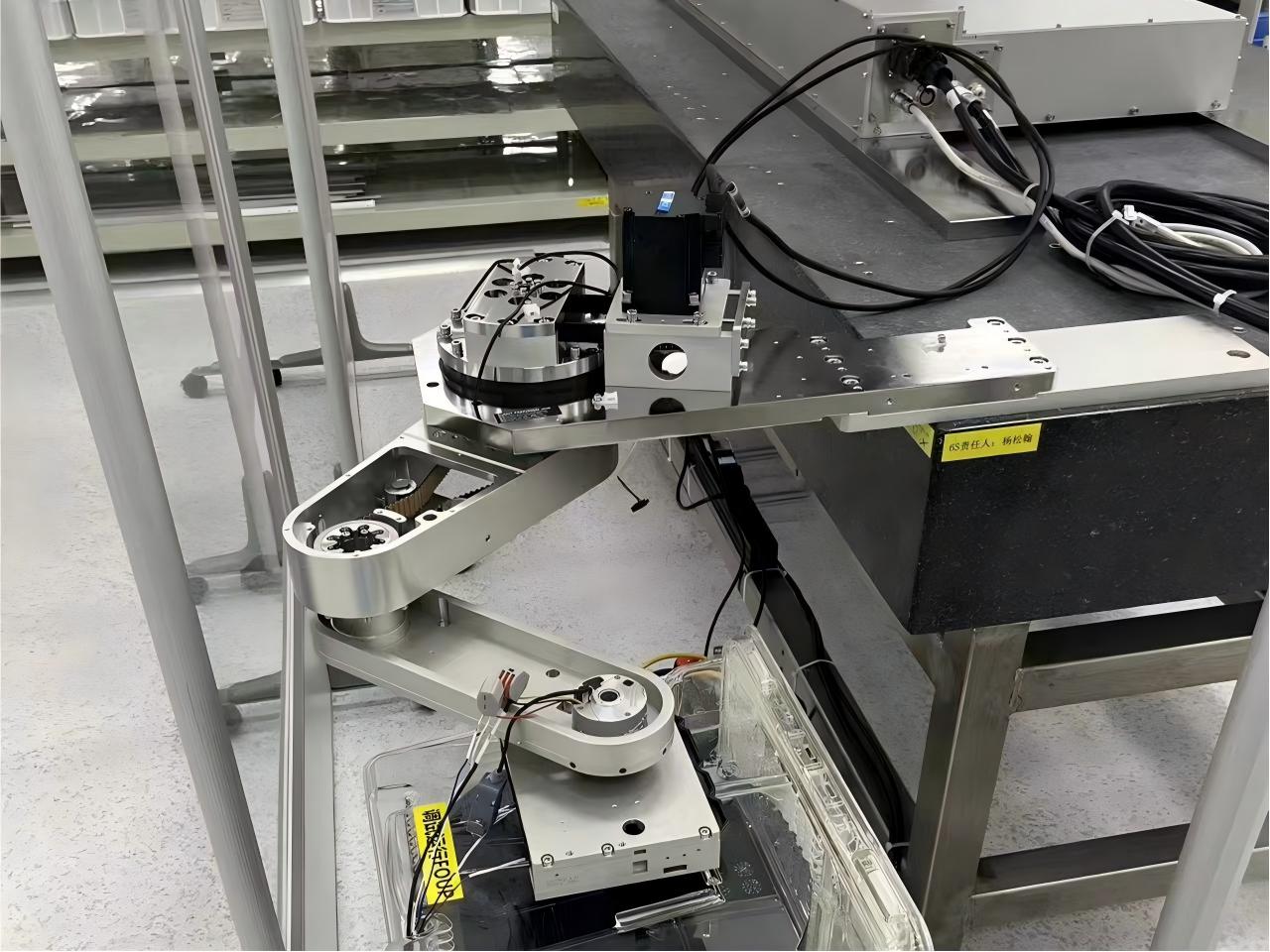
At HONPINE, our harmonic rotary actuators have been applied in several semiconductor-related applications, including developing equipment, overhead transport systems, wafer handling equipment, cleaning equipment and crystal-growth equipment. These applications have also helped us understand why semiconductor equipment manufacturers often require a very different type of rotary actuator from those used in general industrial automation.
Why Semiconductor Equipment Requires High-Precision Rotary Motion?
Semiconductor manufacturing involves highly automated processes in which wafers, substrates, carriers and other components must be transferred or positioned repeatedly.
In many mechanisms, even a relatively small positioning deviation can accumulate and affect the next process. At the same time, semiconductor equipment is usually designed around a very compact mechanical layout. There may be cables, pneumatic lines, sensors, vacuum components or other mechanisms that need to pass through the center of a rotary axis.
This creates several engineering requirements for the rotary actuator.
The actuator must provide accurate rotational motion while maintaining sufficient rigidity. It needs to fit into a limited installation space and, in many cases, provide a hollow shaft for routing cables or other components. The output interface must also be easy to integrate with the customer's mechanism.
Another important consideration is motion smoothness. Semiconductor equipment frequently performs repeated acceleration, deceleration, indexing and low-speed positioning. Therefore, the control system is just as important as the mechanical transmission.
This is one reason why we pay particular attention to FOC-based motor control when developing harmonic rotary actuator systems.
FOC Control for Precise and Adjustable Rotary Motion
FOC, or Field-Oriented Control, is an important part of the electrical control system in a servo-type rotary actuator.
In simple terms, FOC allows the motor to respond more precisely to the target command by controlling the motor's magnetic field and torque-producing current.
For semiconductor equipment, I consider the ability to control speed continuously to be particularly important.
The required motion is not always simply “rotate” or “stop.” A typical process may require the actuator to accelerate smoothly, rotate at a defined speed, reduce speed when approaching a target position, perform precise positioning and then hold its position.
With FOC-based control, the target speed can be continuously adjusted according to the operating condition. For example, the actuator may operate at a higher speed during a transfer operation and then reduce its speed during the positioning stage.
This is particularly useful when the equipment requires different motion profiles during one operating cycle.
The control system can continuously compare the commanded motion with feedback from the encoder and regulate the motor accordingly. This creates a closed-loop motion process rather than simply applying a fixed voltage or frequency to the motor.
For semiconductor equipment, this can help improve low-speed stability, acceleration and deceleration smoothness, speed tracking and repeatable motion.
Why Low-Speed Control Matters?
Many semiconductor mechanisms require slow and stable movement near the final positioning point.
If the actuator does not have sufficient control resolution at low speed, the mechanism may experience speed fluctuation or mechanical vibration. This can make precise positioning more difficult, especially when the load changes during operation.
The combination of a high-reduction-ratio harmonic transmission, encoder feedback and FOC motor control provides a practical way to address this problem.
The harmonic transmission provides high reduction and high positioning capability, while the motor control system determines how smoothly and accurately the actuator follows the commanded motion.
From my perspective, this is an important distinction: precision transmission and precision control need to work together.
Large Hollow Shaft Design for Semiconductor Equipment
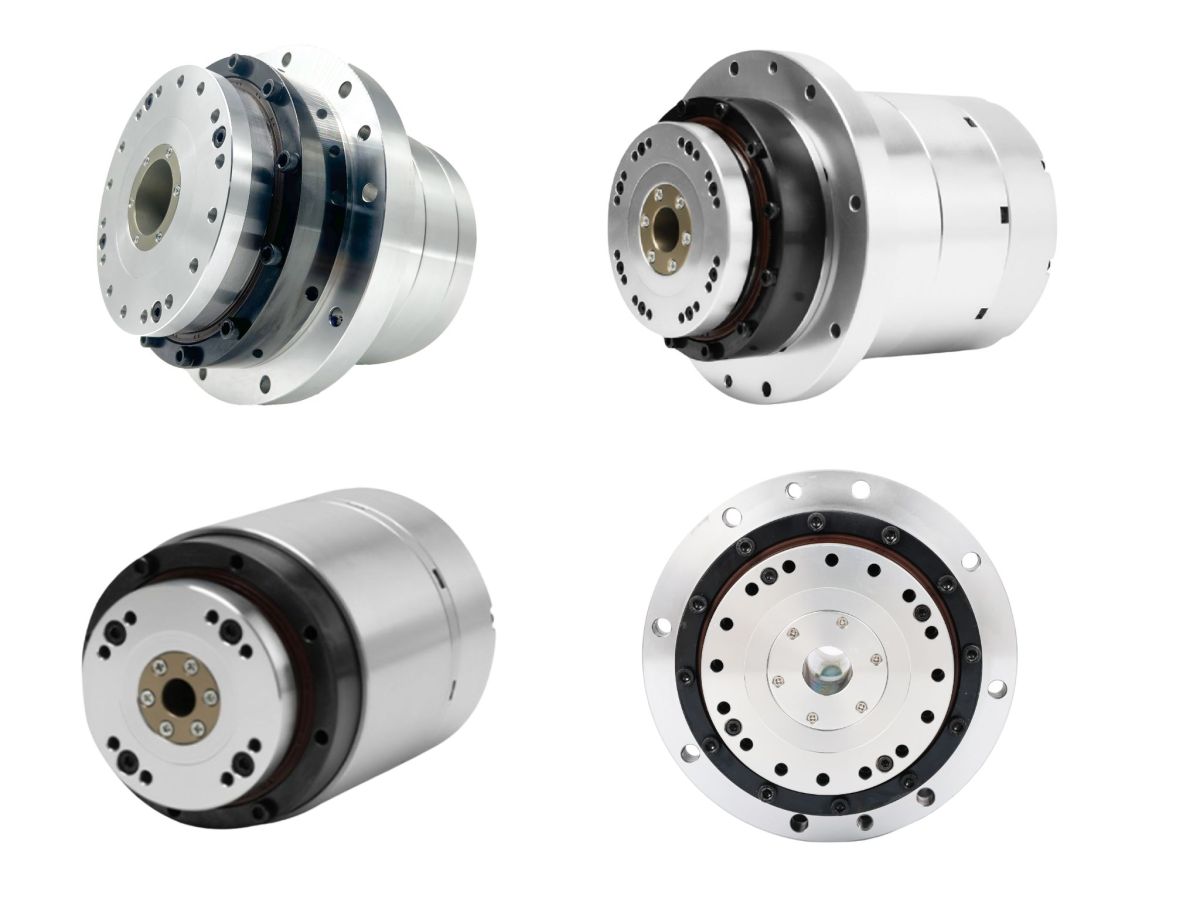
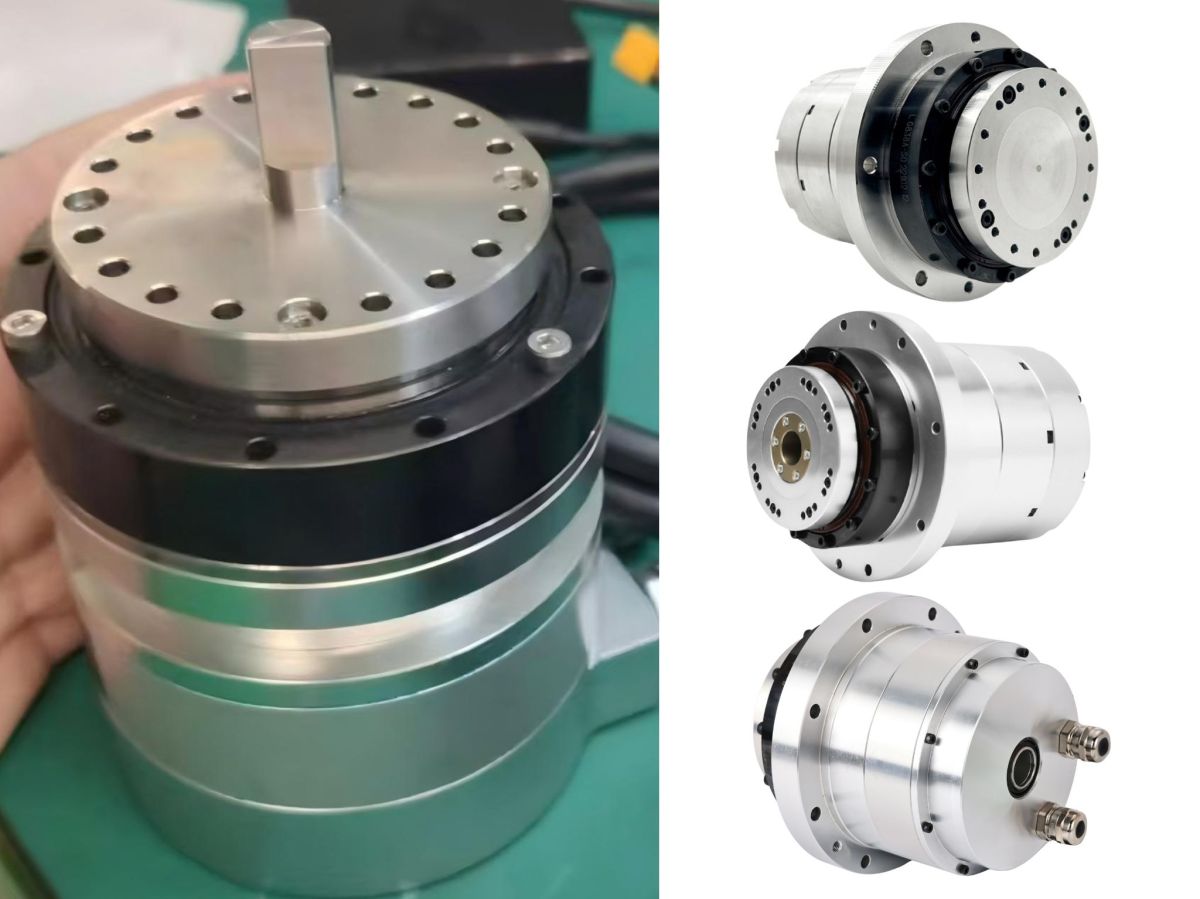
One of the most useful mechanical features of our harmonic rotary actuators is the large hollow shaft structure.
In semiconductor equipment, the center of a rotary axis is often not available simply for the actuator itself. Cables, optical components, pneumatic tubes, vacuum lines, sensors or other mechanical elements may need to pass through the center.
A large hollow shaft can therefore provide much more freedom for equipment design.
Instead of placing cables and tubes around the outside of the rotary actuator, the equipment designer can route them through the center of the actuator when the mechanical structure allows it.
This can help reduce interference between moving and stationary components and make the overall mechanism more compact.
For equipment manufacturers, I think this is more than a product specification. The hollow structure can directly affect the architecture of the machine.
Suggested image caption: Large hollow-shaft harmonic rotary actuator integrated into semiconductor equipment
Flange Structure for Easier Mechanical Integration
Another important feature is the flange structure.
Semiconductor equipment manufacturers often have their own mechanical architecture and do not necessarily want to redesign the entire mechanism around a standard actuator.
A flange-type output structure can provide a more convenient mechanical interface between the actuator and the customer's equipment.
The actuator can be mounted directly into the designed mechanical structure, while the output side can be connected to the customer's rotary mechanism.
This is particularly useful for equipment manufacturers who already have a mature mechanical design but need a compact precision rotary drive.
In actual projects, mechanical integration is often more complicated than selecting a reducer based only on torque and reduction ratio. Installation dimensions, flange dimensions, shaft dimensions, cable routing, bearing arrangement and available space all need to be considered together.
That is why we pay attention to the mechanical interface during actuator development.
Custom Shaft Machining for Different Semiconductor Equipment
Another question we frequently encounter is the output shaft.
Different semiconductor machines can have completely different connection structures. One customer may need a specific shaft diameter, another may require a keyway, threaded section or special mounting interface.
Our harmonic rotary actuator can support customized shaft machining according to the actual application.
In many cases, customers can also perform the final shaft machining themselves when their manufacturing process and tolerance requirements allow it.
I think this flexibility is valuable because it allows the actuator to become part of the customer's mechanical system instead of forcing the customer to completely redesign the system around a standard shaft.
For precision equipment, however, shaft customization should not be considered separately from the bearing structure, output load, allowable moment load, concentricity and required accuracy.
When we discuss customization with customers, we therefore look at the complete mechanical interface rather than only changing the shaft diameter.
Harmonic Rotary Actuators for Semiconductor Developing Equipment
Developing equipment is one of the semiconductor applications where precise rotary motion can be important.
The actuator may be used for positioning, rotation, transfer or adjustment mechanisms depending on the specific equipment architecture.
In these applications, the motion profile can include repeated indexing and positioning cycles. The actuator needs to maintain stable operation over a large number of repeated cycles.
The combination of harmonic transmission and servo control provides the mechanical and electrical foundation for this type of motion.
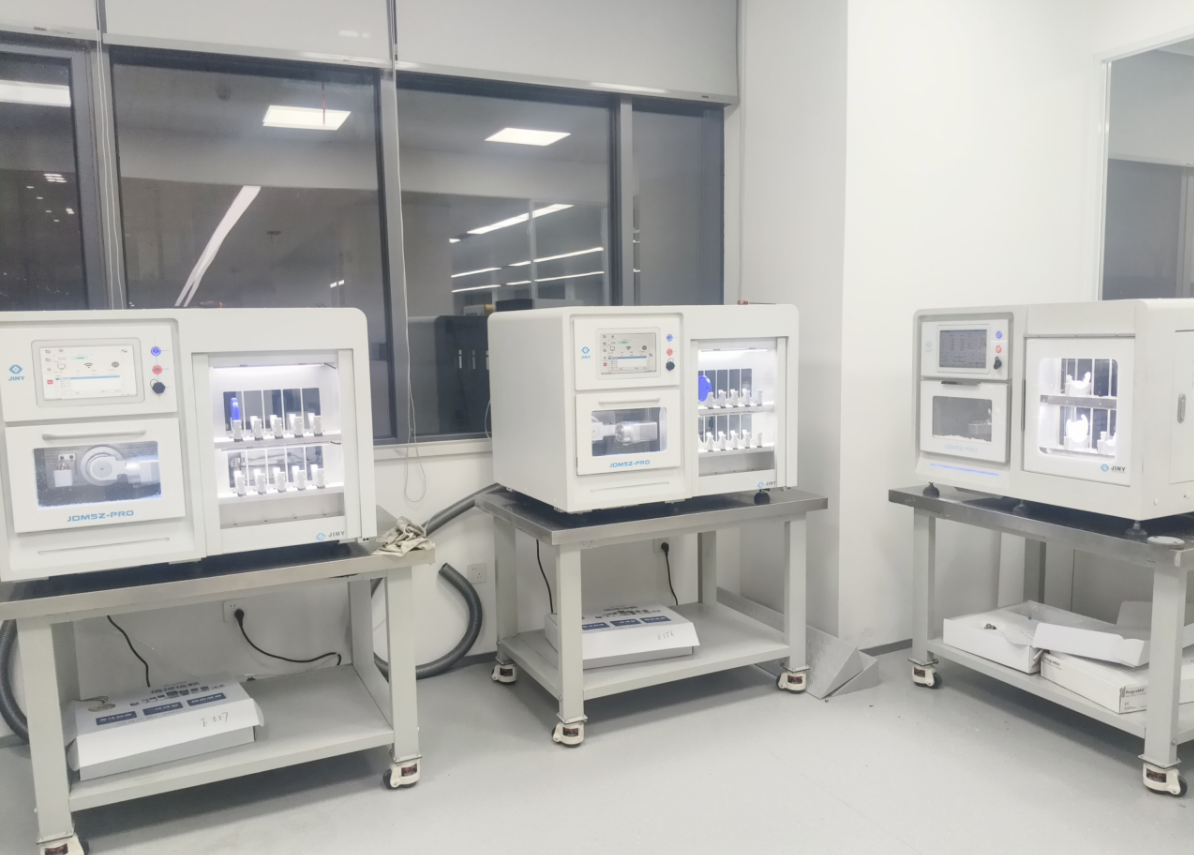
Suggested image caption: HONPINE harmonic rotary actuator used in semiconductor developing equipment
Harmonic Rotary Actuators for Overhead Transport and Wafer Handling
Semiconductor factories use highly automated material handling systems to transfer wafer carriers and other production materials between processes.
In overhead transport equipment and wafer handling mechanisms, rotary motion can be required for positioning, orientation, transfer or other movement functions.
The mechanical structure is often compact, and the actuator may need to operate repeatedly within a limited installation space.
This is where the hollow-shaft structure can become particularly useful. When the mechanical architecture requires cables or other components to pass through the rotary axis, the hollow design provides additional integration possibilities.
At the same time, the FOC control system can provide flexible speed control for different stages of the movement.
Suggested image caption: Harmonic rotary actuator applied to semiconductor overhead transport or wafer handling equipment
Harmonic Rotary Actuators for Semiconductor Cleaning Equipment
Cleaning equipment has its own motion requirements.
Depending on the equipment design, rotary mechanisms may need to operate repeatedly while maintaining stable speed and positioning.
In these systems, smooth rotation can be important because sudden acceleration, deceleration or unstable low-speed motion may affect the mechanical process.
This is another situation where I believe the combination of harmonic transmission and FOC control is useful.
The harmonic reducer provides the required mechanical reduction and stiffness, while the servo control system manages the motor's dynamic response.
The result is a rotary actuator that can be controlled according to the actual process rather than simply operating at one fixed speed.
Suggested image caption: HONPINE harmonic rotary actuator integrated into semiconductor cleaning equipment
Harmonic Rotary Actuators for Crystal Growth Equipment
Crystal growth equipment, including equipment used in semiconductor material production, can also require controlled rotary motion.
The actuator may be integrated into mechanisms that require continuous rotation, positioning or speed adjustment.
In this type of application, the required speed may not remain constant throughout the entire process. The control system may need to adjust the rotational speed according to the process stage.
This makes adjustable-speed servo control particularly important.
From an engineering perspective, the actuator needs to provide not only sufficient torque but also stable and predictable motion over the required operating range.
Suggested image caption: Harmonic rotary actuator applied to semiconductor crystal-growth equipment
Why We Combine Harmonic Transmission with Servo Control?
I often see harmonic reducers and servo motors discussed as separate components.
For semiconductor equipment, I believe it is more useful to consider them as one motion system.
The harmonic reducer determines the mechanical transmission characteristics, including reduction ratio, output torque, rigidity and backlash characteristics.
The motor determines the available speed and torque.
The encoder provides motion feedback.
FOC controls the motor according to the command and feedback.
The mechanical interface determines how easily the complete actuator can be integrated into the customer's equipment.
Only when these elements work together can the actuator deliver the expected performance in a real machine.
This is why our development of harmonic rotary actuators is not limited to the gearbox itself.
What Semiconductor Equipment Manufacturers Should Consider When Selecting a Rotary Actuator?
When selecting a harmonic rotary actuator for semiconductor equipment, I recommend starting with the actual motion requirements rather than selecting a model based only on rated torque.
The first question is the required output speed. The second is the continuous and peak torque required by the mechanism. After that, we need to consider the duty cycle, acceleration and deceleration, positioning accuracy, allowable radial and axial loads, moment load and installation space.
The hollow shaft is another important consideration when cables, tubes or other components need to pass through the rotary axis.
The flange interface and shaft dimensions should also be considered at the beginning of the mechanical design process.
For semiconductor equipment, environmental requirements may also be important. Depending on the application, the equipment manufacturer may have requirements related to cleanliness, temperature, vacuum conditions or other environmental factors. These requirements should be confirmed according to the actual machine design rather than assumed to be the same for every semiconductor application.
Why Customization Is Important in Semiconductor Motion Systems?
There is no single mechanical architecture that fits every semiconductor machine.
This is one of the reasons we receive customization requests from semiconductor equipment manufacturers.
Sometimes the customer needs a different shaft configuration. Sometimes the installation flange needs to match an existing structure. In other cases, the hollow diameter or overall dimensions are more important than using a completely standard actuator.
In many projects, customers can complete some shaft machining themselves, which can make integration easier and allow the actuator to fit directly into their existing mechanism.
Our role is not simply to provide a standard gearbox. We need to understand how the actuator will be installed, what load it will carry, how it will move and how it will interact with the rest of the machine.
That engineering communication is often more important than the product model number itself.
HONPINE Harmonic Rotary Actuator: Designed Around the Application
At HONPINE, we focus on precision transmission and motion-control solutions.
Our harmonic rotary actuator solutions combine harmonic transmission technology with motor control and mechanical integration features required by practical automation applications.
For semiconductor equipment, three characteristics are particularly useful.
The first is the large hollow shaft, which provides additional space for cables, tubes and other components passing through the rotary axis.
The second is the flange structure, which provides a practical mechanical interface for equipment integration.
The third is flexible shaft machining, allowing the output interface to be adapted to different customer mechanisms. In applications where customers prefer to complete the final shaft machining themselves, the actuator can also be designed around that integration requirement.
Combined with FOC-based servo control, these mechanical features allow the actuator to address both the transmission and motion-control requirements of semiconductor equipment.
From One Application to a Broader Semiconductor Motion Solution
Our experience in semiconductor applications covers developing equipment, overhead transport and handling systems, cleaning equipment and crystal-growth equipment.
These applications are different from each other, but they share a common requirement: the motion system must be compact, controllable and reliable enough to become part of a highly automated production process.
This experience has also reinforced one point for me.
A good actuator is not simply a motor combined with a reducer.
The real value comes from how the transmission, motor, encoder, control algorithm and mechanical interface work together inside the customer's equipment.
For semiconductor equipment, the ability to adjust speed, control acceleration and deceleration, provide a large hollow shaft, adapt the output interface and integrate with the customer's mechanical structure can be just as important as the rated torque or reduction ratio.
Conclusion
From my perspective as a technical director, the application of harmonic rotary actuators in semiconductor equipment is a combination of precision transmission and practical engineering integration.
The harmonic transmission provides high reduction and precision motion characteristics. FOC-based control allows the actuator to respond to changing speed commands and achieve smoother closed-loop motion. The large hollow shaft provides additional freedom for cable and tube routing. The flange structure simplifies mechanical integration, while customizable shaft machining allows the actuator to adapt to different equipment architectures.
More importantly, our experience in developing, overhead transport, handling, cleaning and crystal-growth applications
has shown us that semiconductor equipment manufacturers need motion components that can be adapted to real machines, not simply standard products selected from a catalog.
At HONPINE, we will continue to develop harmonic rotary actuator solutions around these practical engineering requirements.
I’m Theodore Li, Technical Director at HONPINE. Thank you for reading, and I hope this technical discussion gives you a clearer understanding of how harmonic rotary actuators can be used in semiconductor equipment and what factors should be considered when designing a precision rotary motion system.

About Author
Theodore Li serves as the Technical Director at HONPINE, overseeing the R&D strategy for replication products, guiding team selection, and managing both pre-sales and after-sales operations.

Read More
Learn more about the story of HONPINE and industry trends related to precision transmission.
 What is robot joint actuator?How to Choose the Best Robot Rotary Joint Actuator?In core robot joint transmission solutions, planetary and harmonic rotary actuators each have their own strengths. Choosing the right type based on application requirements is essential to achieve the optimal balance between performance and cost.
 DD Motors VS Harmonic Rotary ActuatorsThis article provides an in-depth comparison between Direct Drive (DD) motors and harmonic rotary actuators, covering their transmission principles, advantages and disadvantages, and typical application fields.
 OMG Ultra Compact Harmonic Drive Joint Module with Built-in Torque SensorHONPINE TCHL series harmonic drive joint module is a game-changing product that achieves disruptive improvements in multiple aspects such as lightweight design, integration level, and connection convenience. This article will analyze its revolutionary enhancements with you.
 The Role of Harmonic Drive Gears in Achieving 5–10 μm Accuracy in Dental Milling MachinesA dental milling machine is a CNC machining system used to directly process digital dental models into restorations such as crowns, bridges, veneers, inlays, and implant abutments. Dental milling machines require far higher operational accuracy and motion stability than ordinary equipment. This article explains how harmonic drive gear help dental milling machines achieve stable, continuous, and controllable operation.
 Why Are Harmonic Rotary Actuators Perfect for Medical Equipment?Harmonic rotary actuators (typically integrated systems consisting of a harmonic drive reducer, frameless torque motor, encoder, and optional brake) are regarded as key components in medical equipment. The core reason is that they simultaneously meet the most stringent medical requirements for precision, compact size, safety, and controllability. The following explanation is structured from three perspectives: technical characteristics, application scenarios, and medical value.
 High-Precision RV Reducers Perfectly Matched for Walking RobotsThe walking axis of a robot is a core component for power transmission and support. RV reducers provide extremely high rigidity, precision, and torque while maintaining a compact size and exceptional reliability, making them an ideal match for the demanding requirements of walking robot joints in terms of load capacity, impact resistance, and precision.
 Why Are Harmonic Drive Actuators Ideal for Space-Constrained Industrial Automation Equipment?In modern industrial automation, limited installation space often makes mechanical design more challenging. Harmonic drive actuators offer a compact motion-control solution by integrating key drive components into a single unit. Their high reduction ratios, streamlined mechanical structures, and flexible mounting options can help equipment manufacturers reduce space requirements, simplify assembly, and optimize internal layouts. This article explores four ways integrated harmonic drive actuators support space-saving designs in industrial automation equipment.
 AGV Robot Steering Drive Wheel: A Comprehensive Guide to Components, Applications, and SelectionAn AGV steering drive wheel integrates traction and active steering to support flexible movement in industrial mobile robots. This guide explains its main components, working principles, industrial applications, and key selection factors, including load capacity, traction torque, steering torque, wheel diameter, speed, and control interfaces. Discover how to choose a suitable steering drive module for AGVs, AMRs, autonomous forklifts, and heavy-duty material handling systems.
 How Does a Harmonic Joint Actuator with a Torque Sensor Improve Robot Force Control?Learn how the HONPINE TCHL harmonic joint actuator uses an integrated output torque sensor to support force feedback, collision detection, compliant assembly, rehabilitation robotics, and teleoperation.
 Ultra-Compact Harmonic Joint Module with a 6 mm Hollow ShaftAs humanoid robots and compact robotic systems evolve, joint modules must deliver high torque density, precise motion control, and flexible cable routing within increasingly limited installation space. The HONPINE HPJM-RE30-40-PRO harmonic joint module addresses these challenges with a compact design, a 6 mm hollow shaft, dual-encoder feedback, and an integrated motor and FOC drive. In this article, we explore its key design features and explain how its hollow-shaft structure, EtherCAT connectivity, and flexible mounting options support the development of humanoid robots, drones, optical platforms, and precision automation equipment.
 How Does the HONPINE HPG Backlash-Free Planetary Rotary Actuator Balance CNC Accuracy and Rigidity?Discover the HONPINE HPG precision backlash-free planetary rotary actuator for CNC rotary tables. Explore positioning accuracy, torsional rigidity, low backlash, and drive selection.
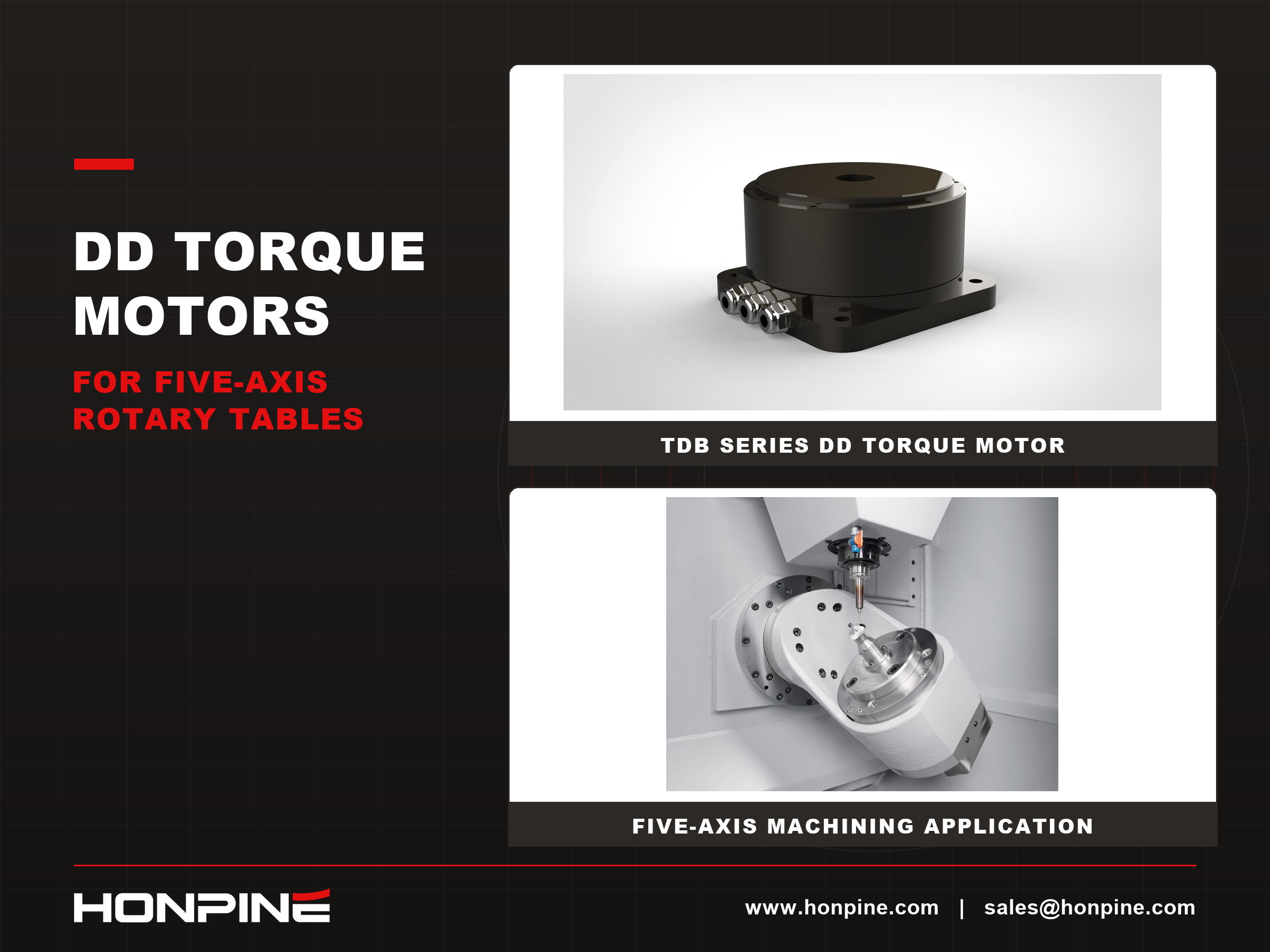
 Why Are DD Torque Motors Ideal for High-End Five-Axis Rotary Tables?Choosing the right drive mechanism is critical to the performance of a five-axis rotary table. Worm gears, cam roller drives, harmonic reducers, RV cycloidal reducers, and DD torque motors each offer different advantages in positioning accuracy, torsional stiffness, speed, and cost. For high-end CNC machining, the challenge is not simply achieving low backlash, but maintaining accuracy under cutting loads and during continuous multi-axis motion. This article compares five common drive technologies and explains why direct-drive torque motors are an attractive option for applications requiring high dynamic response, reduced transmission errors, and consistent machining performance.
Double Click
We provide harmonic drive reducer,planetary reducer,robot joint motor,robot rotary actuators,RV gear reducer,robot end effector,dexterous robot hand
 The Role of Harmonic Drive Gears in Achieving 5–10 μm Accuracy in Dental Milling MachinesA dental milling machine is a CNC machining system used to directly process digital dental models into restorations such as crowns, bridges, veneers, inlays, and implant abutments. Dental milling machines require far higher operational accuracy and motion stability than ordinary equipment. This article explains how harmonic drive gear help dental milling machines achieve stable, continuous, and controllable operation.
 Why Are Harmonic Rotary Actuators Perfect for Medical Equipment?Harmonic rotary actuators (typically integrated systems consisting of a harmonic drive reducer, frameless torque motor, encoder, and optional brake) are regarded as key components in medical equipment. The core reason is that they simultaneously meet the most stringent medical requirements for precision, compact size, safety, and controllability. The following explanation is structured from three perspectives: technical characteristics, application scenarios, and medical value.
 High-Precision RV Reducers Perfectly Matched for Walking RobotsThe walking axis of a robot is a core component for power transmission and support. RV reducers provide extremely high rigidity, precision, and torque while maintaining a compact size and exceptional reliability, making them an ideal match for the demanding requirements of walking robot joints in terms of load capacity, impact resistance, and precision.
 Why Bedside Physical Therapy Robots Need Force-Controlled Joint Modules?A therapy robot does not sell a robot arm; it sells a force applied to a human body. Pressure, rhythm and depth are the prescription, and position control cannot deliver them: soft tissue is compliant and time-varying, so one position command yields contact forces that differ several-fold between muscle and bone. Force-controlled harmonic joint modules turn contact force into a closed-loop variable - the only way to make dose repeatable, human contact safe and a therapist's technique teachable. Starting from one site photo of a bedside therapy robot, this article reads the configuration, sets out five reasons force control is unavoidable, settles HONPINE's TCHL-versus-HAG choice criterion by criterion, and gives the torque sensor resolution budget that picks the frame sizes.
 Harmonic Rotary Actuator for Lithium Battery Roller Press EquipmentLithium battery manufacturing equipment requires higher precision, stability, and integration efficiency as production processes continue to evolve. In roller press equipment, accurate roller positioning, pressure control, and dynamic response are critical for ensuring electrode quality and consistency.
HONPINE harmonic rotary actuators provide high precision, high rigidity, fast response, and compact integration for lithium battery roller press equipment. With near-zero backlash, high torque density, and reliable motion control performance, they help improve equipment accuracy and production stability. Harmonic Robot Joint Actuators for Pipeline Robots and Other Special-Purpose EquipmentPipeline robots operate in narrow and complex environments where limited installation space, high load requirements, cable routing, and precise motion control are critical challenges. A reliable joint actuator must provide high torque output, compact dimensions, and stable performance while adapting to demanding operating conditions. Harmonic robot joint actuators integrate precision transmission, motor drive, and sensing capabilities into a compact motion unit, making them suitable for pipeline robots and other special-purpose robotic systems. This article explores the key design requirements of pipeline robots and explains how HONPINE HPJM harmonic robot joint modules help achieve compact, high-performance, and reliable robotic solutions.
 Harmonic Actuator for Lift Equipment: Precision, Torque Density and Compact Motion Control IntroductionModern lifting equipment requires more than simply moving a load vertically. Robotic lift axes, AGV and AMR lift modules, semiconductor equipment, inspection platforms, and specialized winches increasingly demand high torque density, precise positioning, low backlash, high rigidity, and compact motion control. A harmonic actuator integrates a harmonic drive with a motor and, depending on the configuration, encoders, brakes, servo drives, and communication interfaces into a compact motion module. This article explores how harmonic actuators can be applied to different lifting systems and why their combination of precision, torque density, rigidity, and integration makes them suitable for automated lifting and positioning applications.
 Harmonic Rotary Actuators for Semiconductor Equipment: Precision Motion, Hollow-Shaft Design and FOC ControlHello everyone, I’m Theodore Li, Technical Director at HONPINE. In semiconductor manufacturing equipment, rotary motion is not simply about making a mechanism rotate. Limited installation space, cable and tube routing, low-speed stability, precise positioning and continuously adjustable motion profiles can all influence the performance of the machine. This is why harmonic rotary actuators are becoming an important motion solution for semiconductor equipment. In this article, I will discuss how harmonic transmission, FOC-based motor control, encoder feedback, large hollow-shaft design and flexible mechanical interfaces work together to meet practical semiconductor motion requirements, based on our experience with developing equipment, overhead transport, wafer handling, cleaning and crystal-growth applications.
 Miniature Harmonic Drive for Minimally Invasive Surgical RobotsMinimally invasive surgical robots require highly compact transmission systems that can deliver precise motion within extremely limited mechanical spaces. As robotic instruments become smaller and more dexterous, conventional transmission architectures can face challenges related to size, tendon elasticity, friction, hysteresis, and mechanical integration. A miniature harmonic drive offers one potential approach by providing high-ratio precision transmission, low backlash, and compact dimensions in a small mechanical envelope. In this article, I will explain why miniature harmonic transmission is relevant to surgical robotics, compare external tendon-driven and distal transmission architectures, and discuss the key engineering considerations behind HONPINE’s CSF-mini miniature harmonic reducer for compact robotic joints, flexible robotic instruments, and other precision mechanisms.
 Why Laser Wobble Welding Systems Need a High-Precision Harmonic Rotary Actuator?Laser wobble welding is increasingly used in battery manufacturing, busbar welding, electronics, medical devices, robotic welding, and other precision manufacturing applications where beam movement must remain accurate and repeatable. In mechanical wobble welding systems, however, weld quality depends not only on laser parameters but also on the precision of the rotary motion mechanism driving the wobble head. Backlash, insufficient torsional rigidity, limited torque density, and positioning errors can directly affect the actual beam trajectory and molten pool stability. This is why a high-precision rotary motion solution is becoming an important part of modern laser wobble welding equipment. A Harmonic Rotary Actuator combines precision transmission, high rigidity, low backlash, and compact integration, making it well suited for mechanical wobble heads that require controlled rotary motion under dynamic loads.
 When Does Outboard Motor Steering Require a Harmonic Rotary Actuator?Electric outboard motor steering is evolving from a simple mechanical function into a precision motion-control application. This article explains when a Harmonic Rotary Actuator becomes a suitable solution and examines the role of precision transmission, low backlash, high torque density, encoder feedback, and compact mechanical integration. It also explores applications in electric boats, autonomous surface vessels, unmanned boats, marine robotics, and electric marine propulsion, helping engineers understand how to select the right rotary actuator according to steering torque, speed, positioning accuracy, operating conditions, and installation requirements.
 How to Choose the Right Robot Joint Actuator for Specialized Robotic Applications?Choosing the right robot joint actuator is no longer simply a matter of comparing torque specifications or selecting a motor and gearbox separately. As humanoid robots, collaborative robots, industrial robotic arms, medical robots, mobile manipulators, and specialized robotic systems become more diverse, robot manufacturers must balance torque, speed, precision, stiffness, weight, installation space, feedback, communication, and safety at the same time. This article explains how engineers can select the right harmonic joint actuator or robot joint motor by starting with the actual application problem and building a joint-level solution that matches the mechanical structure and control requirements of the complete robot.