

AGV Robot Steering Drive Wheel: A Comprehensive Guide to Components, Applications, and Selection
As smart manufacturing continues to evolve and flexible intralogistics becomes increasingly important, Automated Guided Vehicles (AGVs) and Autonomous Mobile Robots (AMRs) have become essential for automated material handling. The AGV steering drive wheel is a key component of the mobile robot chassis, integrating traction and steering functions into a single drive assembly. It plays an important role in autonomous forklifts, heavy-duty mobile robots, and other industrial material-handling equipment.
By combining propulsion and active steering in one integrated module, an AGV steering drive wheel functions much like the robot's intelligent feet and automatic steering system, enabling flexible movement and precise navigation in complex industrial environments.
What Is an AGV Steering Drive Wheel?
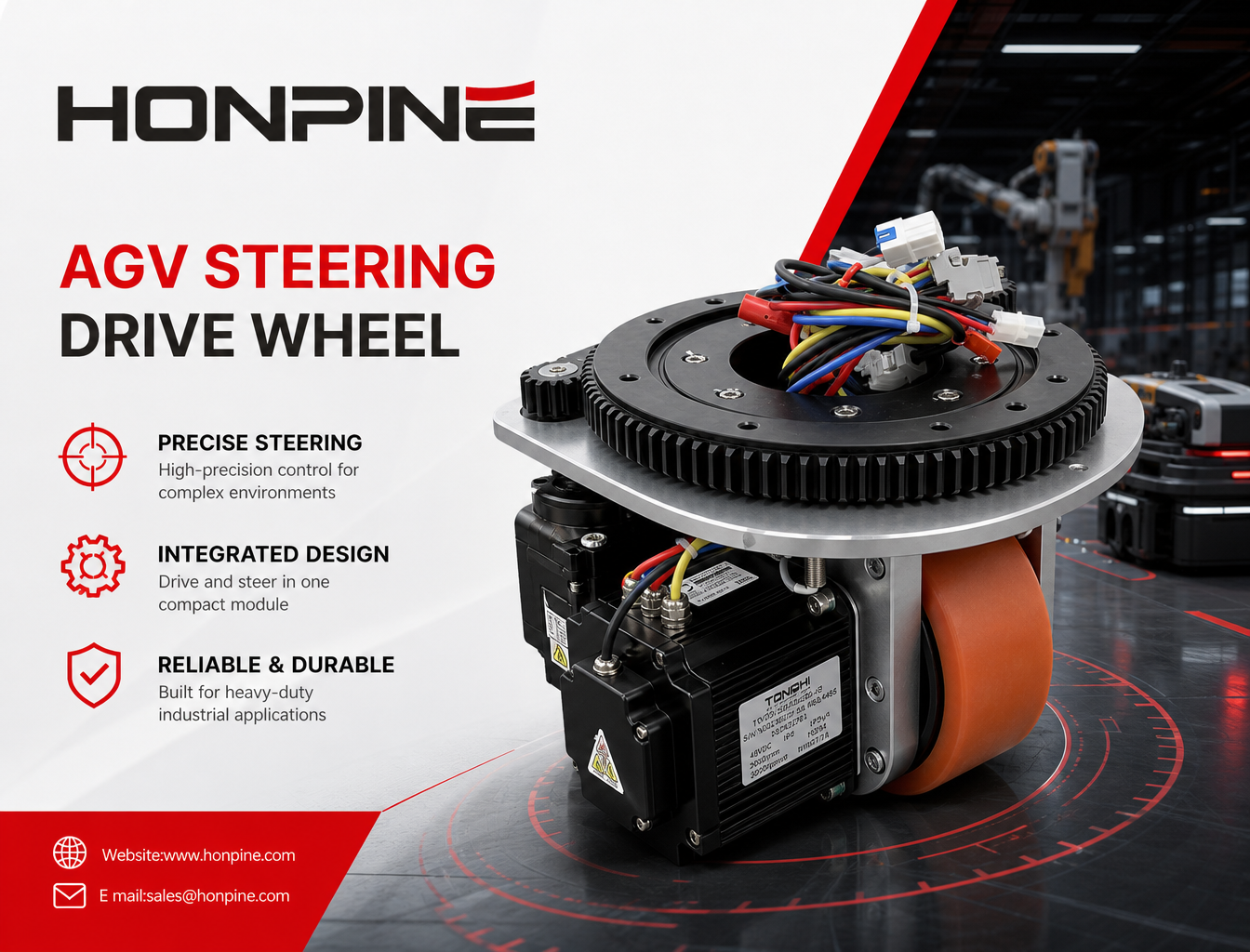
An AGV steering drive wheel is an integrated drive module that combines a powered wheel and an active steering mechanism. Unlike conventional differential-drive wheels or passive caster wheels, it can independently control both wheel rotation and steering angle.
This design allows the AGV to move forward and backward, change direction precisely, and, when the chassis is equipped with a suitable wheel configuration and motion-control system, perform lateral translation, diagonal movement, and in-place rotation.
With its highly integrated modular design, the steering drive wheel eliminates the need for equipment manufacturers to select and assemble separate motors, gearboxes, bearings, and other drive components. This simplifies chassis design, mechanical assembly, and commissioning, making it a widely used drive solution for industrial mobile robots, heavy-duty AGVs, and autonomous forklifts.
What Are the Main Components of an AGV Steering Drive Wheel?
1. Traction Servo System
The traction system typically consists of a dedicated traction servo motor and a planetary gearbox. It generates the driving force required for forward and backward movement, delivering stable traction and controlled speed for material handling.
The motor and gearbox must be matched to the vehicle's load, acceleration requirements, operating speed, and floor conditions.
2. Steering Servo System
The steering system consists of an independent steering servo motor and a precision reduction mechanism. It controls the steering angle of the wheel assembly, allowing the AGV to change direction accurately and respond quickly to motion commands.
Precise steering control helps the vehicle follow its planned path and maneuver through narrow aisles, workstations, and other confined spaces.
3. Slewing Bearing
The slewing bearing supports the rotating wheel assembly and enables steering rotation. It must withstand the combined loads generated during vehicle operation, including radial loads, axial loads, and overturning moments, depending on the mechanical design.
A properly selected slewing bearing contributes to smooth steering, reliable load support, and long-term durability under frequent operating cycles.
4. Sensors and Braking Components
The steering drive wheel may incorporate separate encoders for traction and steering. These sensors provide feedback on wheel speed or motor position and steering angle, enabling closed-loop control when integrated with the appropriate servo controller.
An electromagnetic brake may also be included to hold the wheel or prevent unintended movement when power is removed, depending on the brake design and system configuration.
For heavy-duty applications, the braking system should be selected and validated according to the vehicle's load, slope, stopping distance, and safety requirements. A brake should not be assumed to eliminate all risks of vehicle drift under every operating condition.
5. Wheel and Mounting Base
The wheel commonly uses a polyurethane tread or coating, which can provide a balance of wear resistance, traction, and noise reduction on suitable industrial floors.
An integrated mounting flange or base simplifies installation on the AGV chassis and helps standardize mechanical interfaces. Wheel material, diameter, hardness, and tread design should be matched to floor conditions, load capacity, cleanliness requirements, and expected service life.
Why Choose AGV Steering Drive Wheels for Industrial Mobile Robots?
1. Flexible Movement in Confined Spaces
An active steering drive module allows the vehicle to control its travel direction independently of wheel speed. Depending on the number and arrangement of steering drive wheels, the AGV can support tight turns, diagonal movement, lateral translation, or rotation in place.
These capabilities are particularly useful in narrow factory aisles, densely arranged workstations, and space-constrained warehouses.
2. Solutions for Different Payload Requirements
AGV steering drive wheels are available in different sizes and load capacities, supporting applications ranging from light-duty material transport to heavy-duty pallet, tooling, and mold handling.
Selecting the appropriate module requires consideration of the vehicle's total mass, payload distribution, wheel load, acceleration, floor conditions, and duty cycle.
3. Integrated Design for Easier System Integration
A modular steering drive wheel combines key mechanical and electromechanical components into a compact assembly. This reduces the need to design interfaces between separately sourced motors, gearboxes, bearings, and steering mechanisms.
For AGV manufacturers, a suitable integrated module can simplify mechanical design, shorten assembly and commissioning time, and reduce development effort.
4. Closed-Loop Servo Control for Stable Motion
With suitable servo drives and feedback devices, the traction and steering systems can regulate wheel speed and steering position in closed loop.
This supports controlled acceleration and deceleration, accurate steering, and repeatable motion. Actual positioning performance and operational stability depend on the control system, sensor resolution, mechanical tolerances, floor conditions, and vehicle configuration.
Where Are AGV Steering Drive Wheels Used?
AGV steering drive wheels are used across industrial automation and intralogistics applications where controlled movement, flexible navigation, and reliable material transport are important.
1. New Energy Manufacturing
In lithium battery, photovoltaic, and energy storage production facilities, AGVs transport materials, pallets, fixtures, and work-in-process between production stations.
Steering drive wheels help vehicles maneuver through production lines and adapt to changing material flow requirements.
2. Automotive and Automotive Parts Manufacturing
Automotive factories use AGVs to transport components, tooling, molds, and workpieces between assembly stations and manufacturing areas.
The steering drive module supports flexible routing and maneuverability in production environments where vehicle paths and workstation layouts may change.
3. Smart Warehousing and Intralogistics
Steering drive wheels can be used in autonomous forklifts, under-riding AGVs, warehouse transport robots, and other automated material-handling vehicles.
Depending on the vehicle design, they support pallet transport, rack handling, goods transfer, and movement through narrow warehouse aisles.
4. Electronics, Pharmaceutical, and Food Manufacturing
In electronics production and selected pharmaceutical or food-processing environments, AGVs may be used to move components, containers, and production materials.
Wheel material, surface cleanliness, noise, and resistance to cleaning agents should be selected according to the actual environment. Applications requiring cleanroom or hygienic operation may need specialized wheel materials and sealing arrangements.
5. Mechanical Processing and Heavy-Duty Material Handling
Manufacturing facilities use heavy-duty AGVs to move molds, metal workpieces, machine components, and other high-mass loads.
For these applications, the steering drive wheel must provide sufficient load capacity and traction while meeting the required steering precision, braking performance, and operating duty cycle.
How to Select the Right AGV Steering Drive Wheel?
Selecting an AGV steering drive wheel requires matching the module to the vehicle's mechanical design, payload, motion profile, and operating environment.
1. Rated Load Capacity
Determine the total vehicle mass and payload, then calculate the load carried by each wheel under realistic operating conditions. Consider uneven load distribution, acceleration, braking, floor joints, and other dynamic effects rather than dividing the total load equally among the wheels without verification.
2. Traction Torque
Traction torque must be sufficient to accelerate the vehicle, overcome rolling resistance, and climb any required slope. The calculation should account for wheel radius, total mass, target acceleration, floor conditions, and the required duty cycle.
3. Steering Torque
Steering torque depends on wheel load, tire-floor friction, steering-axis geometry, and the resistance encountered during steering. The selected module must provide enough torque to turn the wheel assembly reliably under the expected operating conditions.
4. Wheel Diameter and Installation Dimensions
Wheel diameter affects ground clearance, obstacle negotiation, rolling resistance, and the relationship between wheel speed and vehicle speed. The mounting interface, overall height, flange dimensions, and available installation space must also match the chassis.
5. Maximum Travel Speed and Steering Speed
Check both maximum travel speed and steering response requirements. The module must support the AGV's planned speed, acceleration, turning maneuvers, and positioning accuracy without exceeding its permitted operating limits.
6. Operating Voltage and Control Interface
Confirm that the module's rated voltage is compatible with the vehicle's power system. Also verify the servo drive, encoder type, communication protocol, wiring, brake control, and integration requirements of the vehicle controller.
7. Steering Range and Motion Configuration
Determine whether the application requires a limited steering angle or continuous rotation. Also verify whether the complete AGV chassis can perform lateral movement, diagonal travel, or in-place rotation. These capabilities depend on the overall wheel arrangement and motion-control strategy, not solely on the steering drive wheel.
8. Operating Environment and Duty Cycle
Consider floor material, dust, moisture, temperature, cleaning procedures, operating hours, and maintenance access. For continuous industrial operation, evaluate thermal performance, braking requirements, bearing life, wheel wear, and serviceability.
Conclusion
AGV steering drive wheelsare important components in modern mobile robot platforms, combining traction and active steering in an integrated module. Their flexibility, modular construction, and compatibility with closed-loop servo control make them suitable for a broad range of applications, from factory intralogistics and autonomous forklifts to heavy-duty material transport.
The right selection depends on more than payload alone. Traction torque, steering torque, wheel diameter, speed, steering range, electrical compatibility, and operating conditions all influence vehicle performance and reliability.
As smart manufacturing and flexible logistics continue to develop, well-matched AGV steering drive wheels can help mobile robot manufacturers simplify integration, improve maneuverability, and build more adaptable automated material-handling systems.
Read More
Learn more about the story of HONPINE and industry trends related to precision transmission.
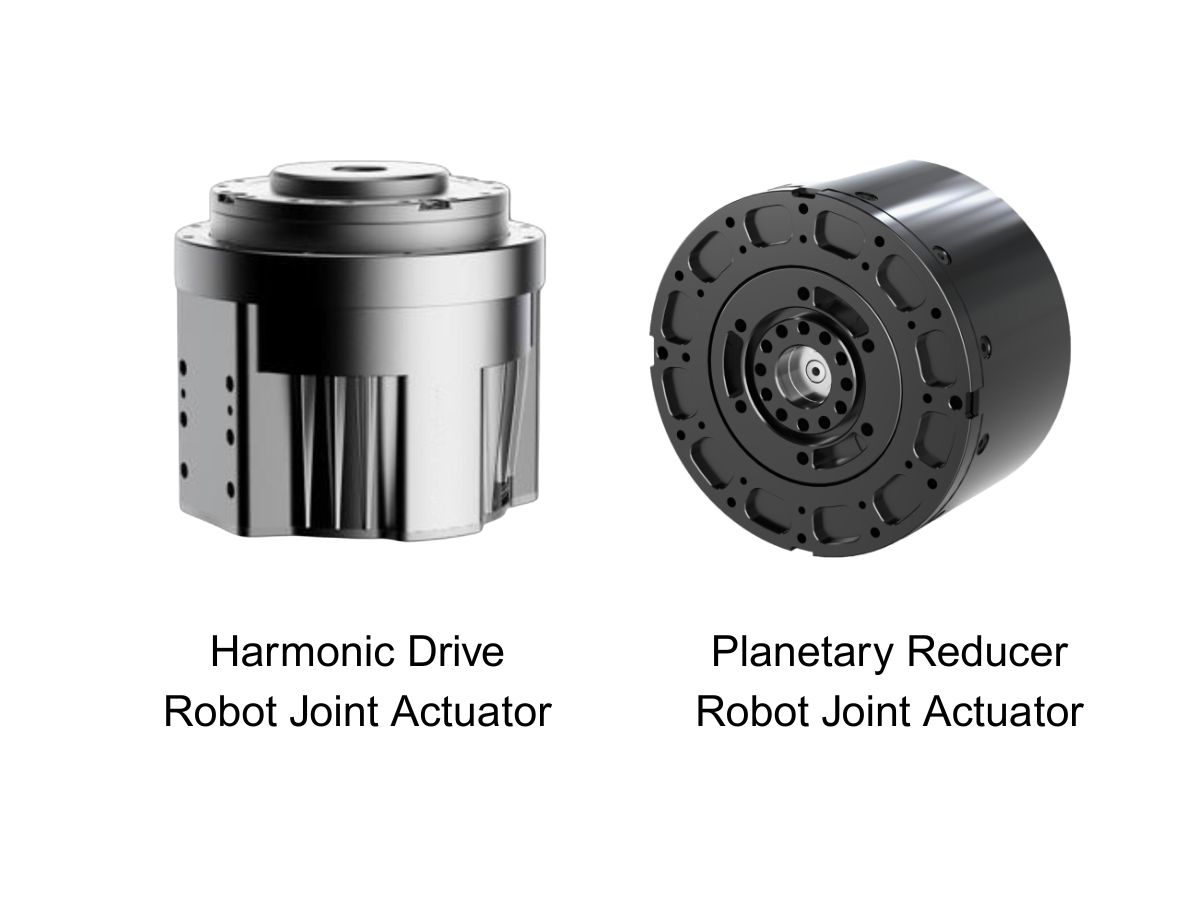
 What is robot joint actuator?How to Choose the Best Robot Rotary Joint Actuator?In core robot joint transmission solutions, planetary and harmonic rotary actuators each have their own strengths. Choosing the right type based on application requirements is essential to achieve the optimal balance between performance and cost.
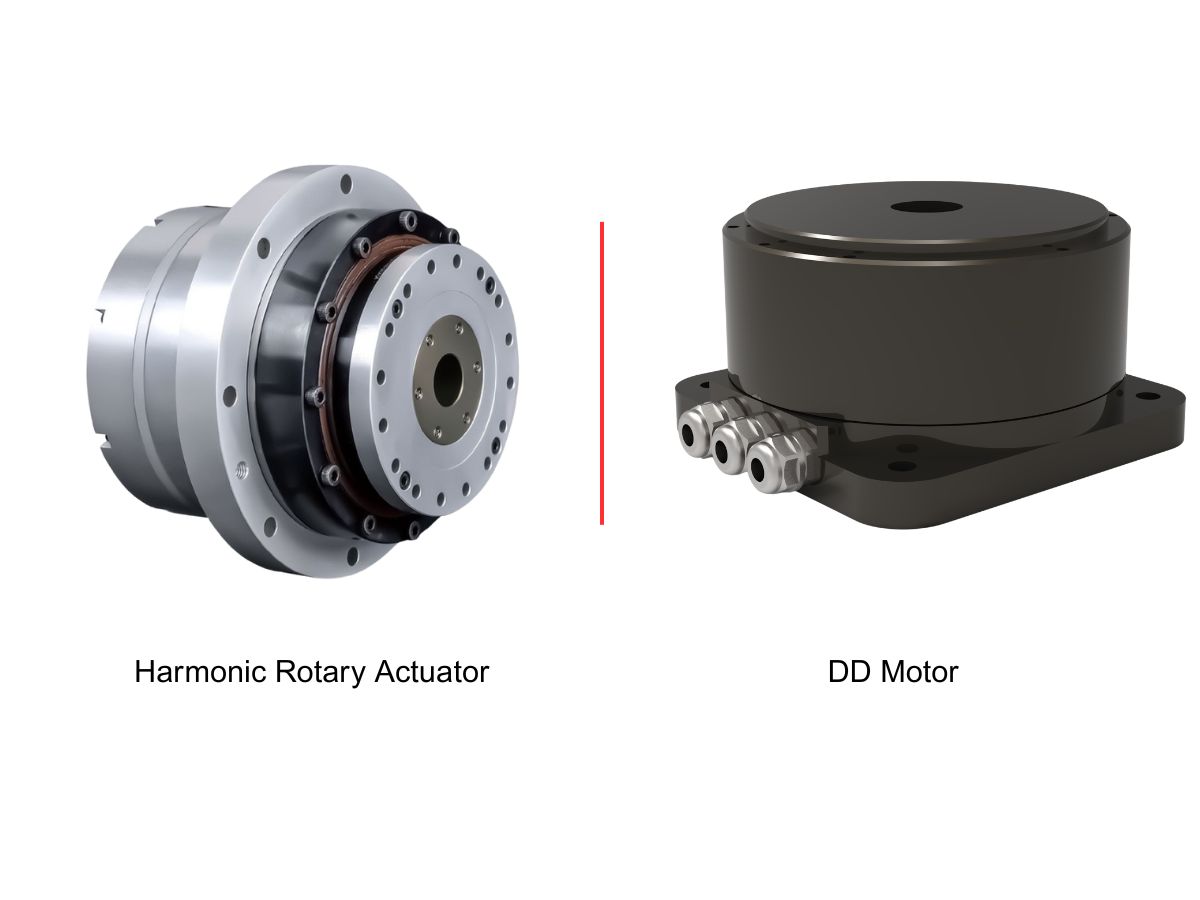
 DD Motors VS Harmonic Rotary ActuatorsThis article provides an in-depth comparison between Direct Drive (DD) motors and harmonic rotary actuators, covering their transmission principles, advantages and disadvantages, and typical application fields.
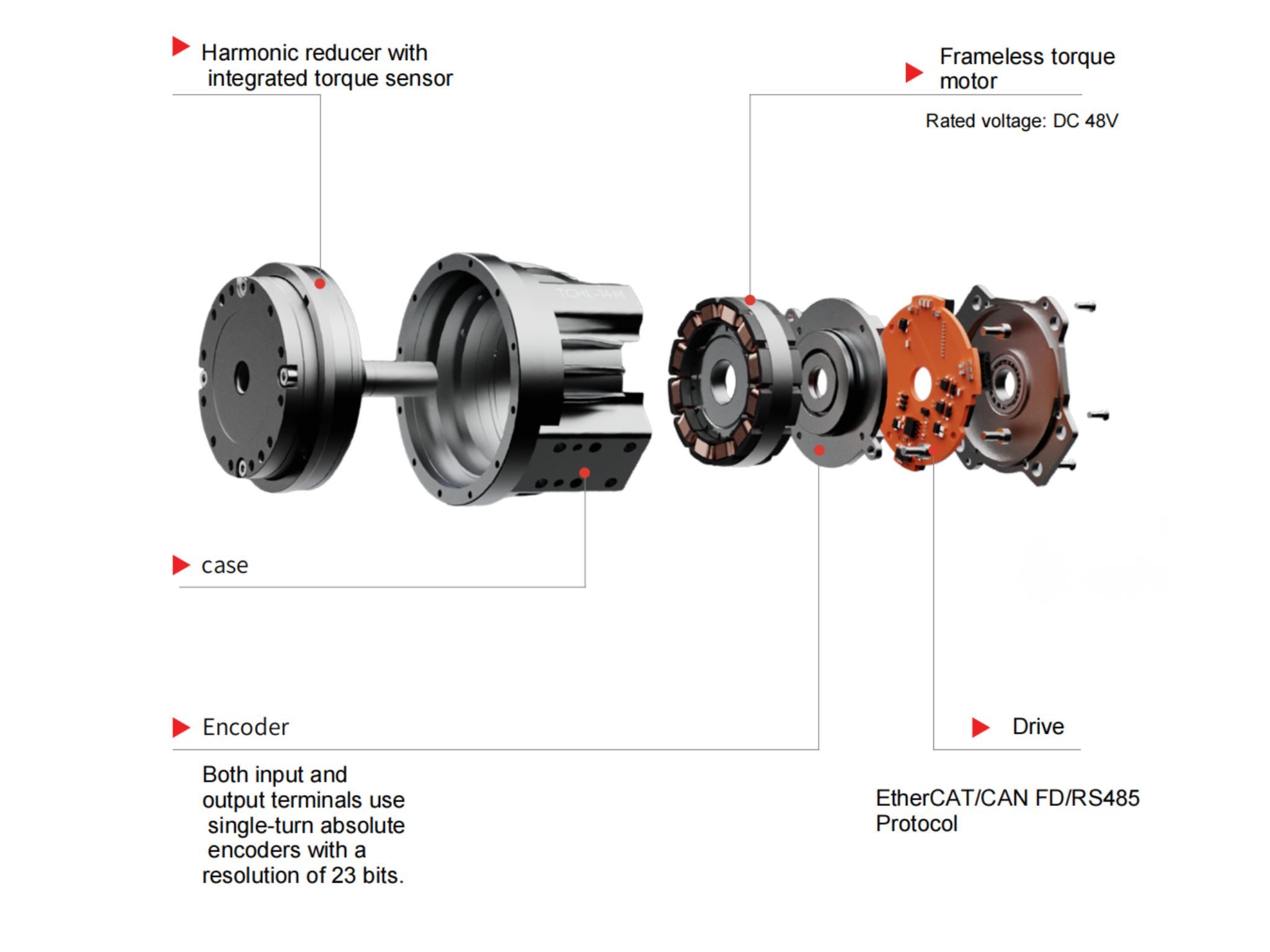
 OMG Ultra Compact Harmonic Drive Joint Module with Built-in Torque SensorHONPINE TCHL series harmonic drive joint module is a game-changing product that achieves disruptive improvements in multiple aspects such as lightweight design, integration level, and connection convenience. This article will analyze its revolutionary enhancements with you.
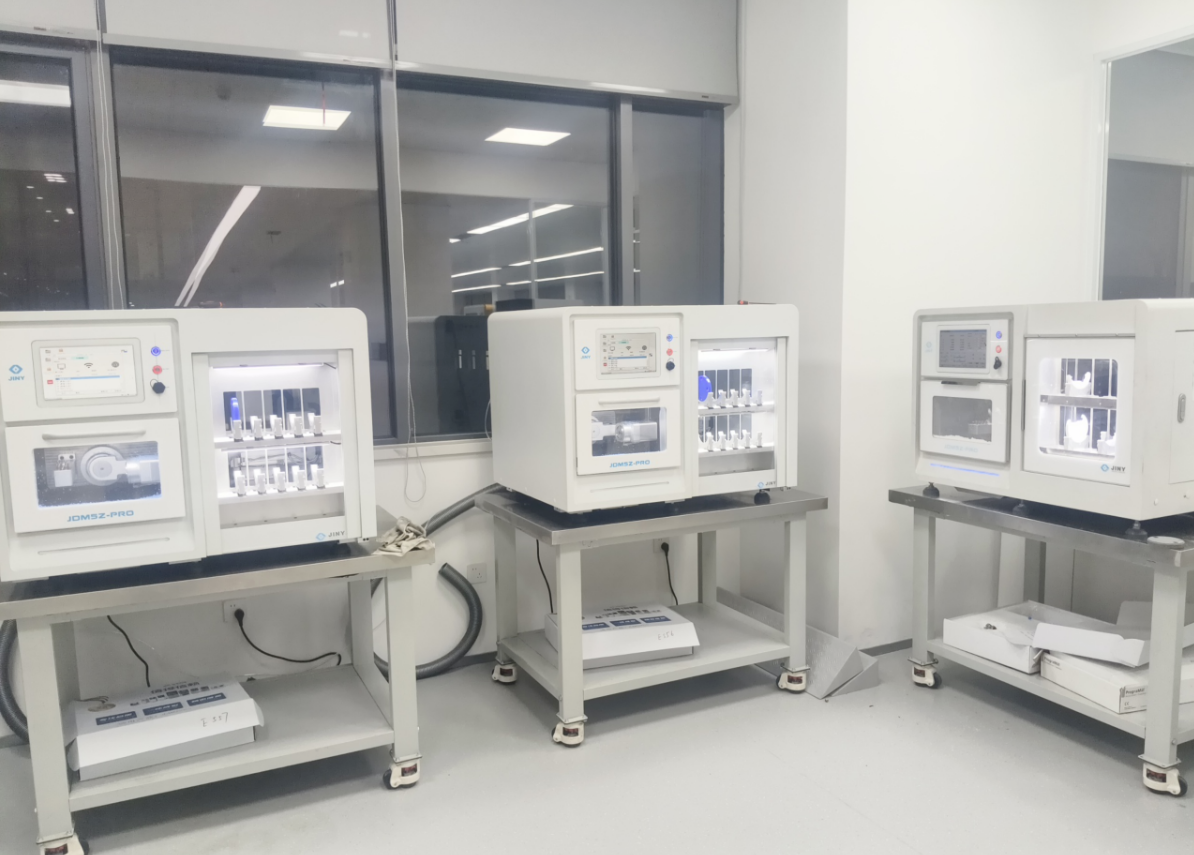
 The Role of Harmonic Drive Gears in Achieving 5–10 μm Accuracy in Dental Milling MachinesA dental milling machine is a CNC machining system used to directly process digital dental models into restorations such as crowns, bridges, veneers, inlays, and implant abutments. Dental milling machines require far higher operational accuracy and motion stability than ordinary equipment. This article explains how harmonic drive gear help dental milling machines achieve stable, continuous, and controllable operation.
 Why Are Harmonic Rotary Actuators Perfect for Medical Equipment?Harmonic rotary actuators (typically integrated systems consisting of a harmonic drive reducer, frameless torque motor, encoder, and optional brake) are regarded as key components in medical equipment. The core reason is that they simultaneously meet the most stringent medical requirements for precision, compact size, safety, and controllability. The following explanation is structured from three perspectives: technical characteristics, application scenarios, and medical value.
 High-Precision RV Reducers Perfectly Matched for Walking RobotsThe walking axis of a robot is a core component for power transmission and support. RV reducers provide extremely high rigidity, precision, and torque while maintaining a compact size and exceptional reliability, making them an ideal match for the demanding requirements of walking robot joints in terms of load capacity, impact resistance, and precision.
 Why Are Harmonic Drive Actuators Ideal for Space-Constrained Industrial Automation Equipment?In modern industrial automation, limited installation space often makes mechanical design more challenging. Harmonic drive actuators offer a compact motion-control solution by integrating key drive components into a single unit. Their high reduction ratios, streamlined mechanical structures, and flexible mounting options can help equipment manufacturers reduce space requirements, simplify assembly, and optimize internal layouts. This article explores four ways integrated harmonic drive actuators support space-saving designs in industrial automation equipment.
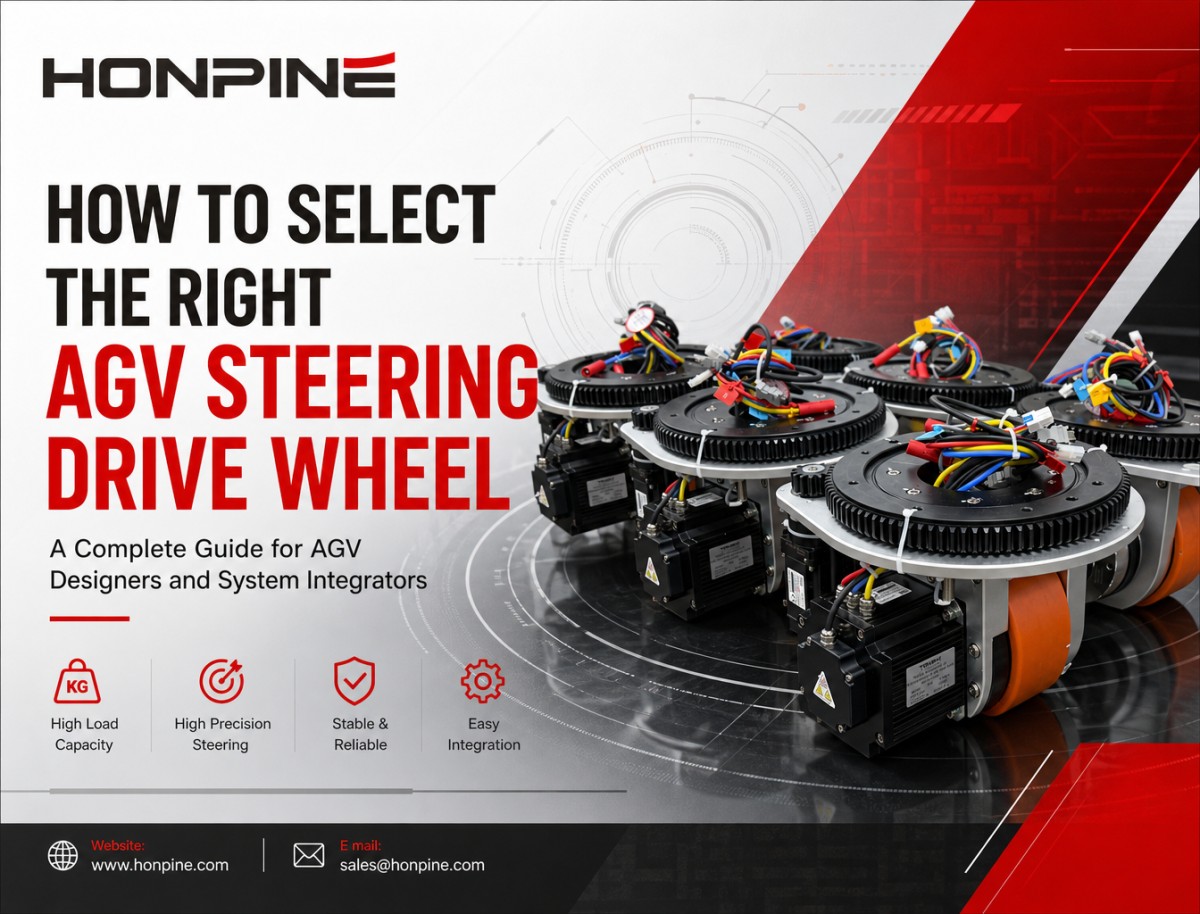
 AGV Robot Steering Drive Wheel: A Comprehensive Guide to Components, Applications, and SelectionAn AGV steering drive wheel integrates traction and active steering to support flexible movement in industrial mobile robots. This guide explains its main components, working principles, industrial applications, and key selection factors, including load capacity, traction torque, steering torque, wheel diameter, speed, and control interfaces. Discover how to choose a suitable steering drive module for AGVs, AMRs, autonomous forklifts, and heavy-duty material handling systems.
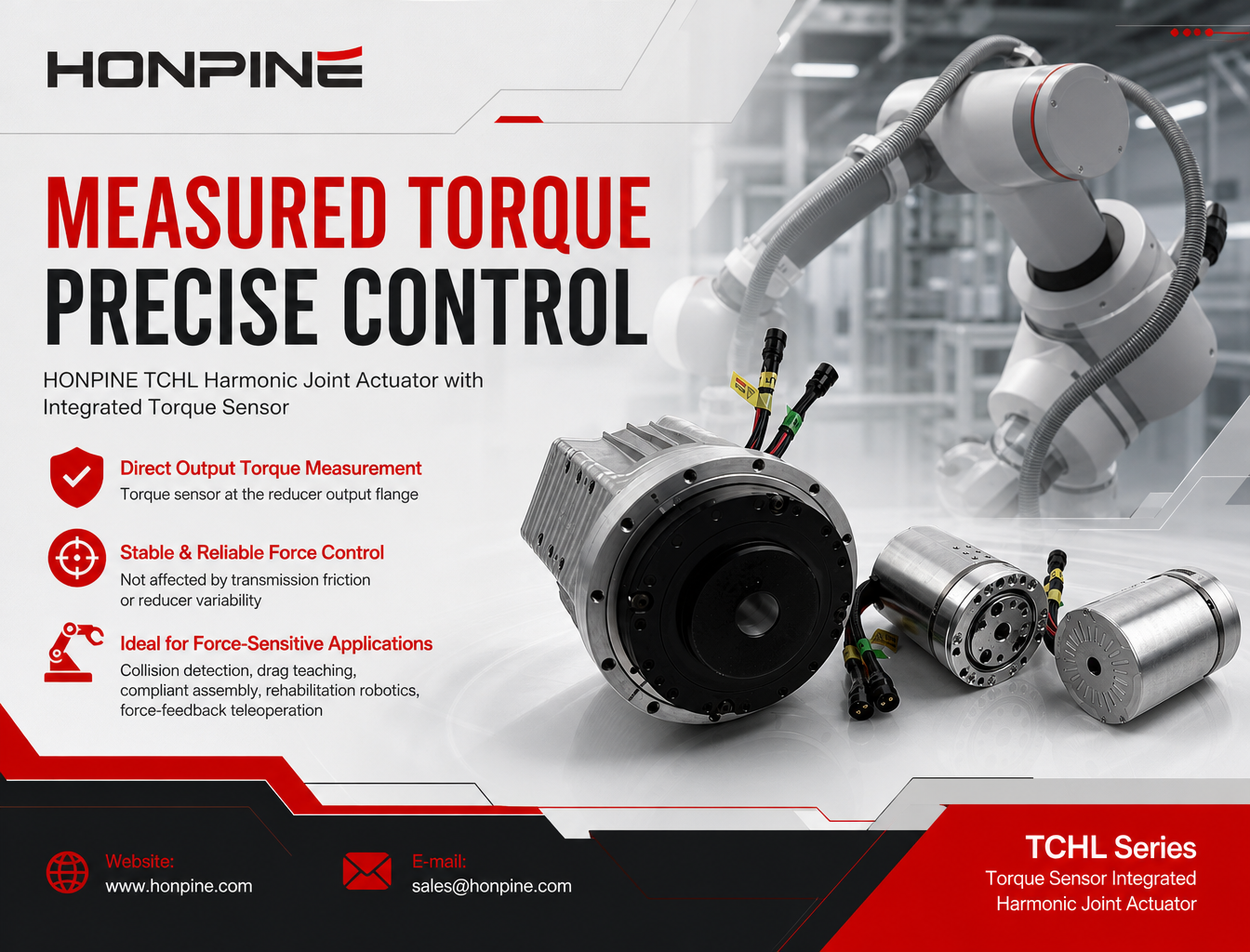
 How Does a Harmonic Joint Actuator with a Torque Sensor Improve Robot Force Control?Learn how the HONPINE TCHL harmonic joint actuator uses an integrated output torque sensor to support force feedback, collision detection, compliant assembly, rehabilitation robotics, and teleoperation.
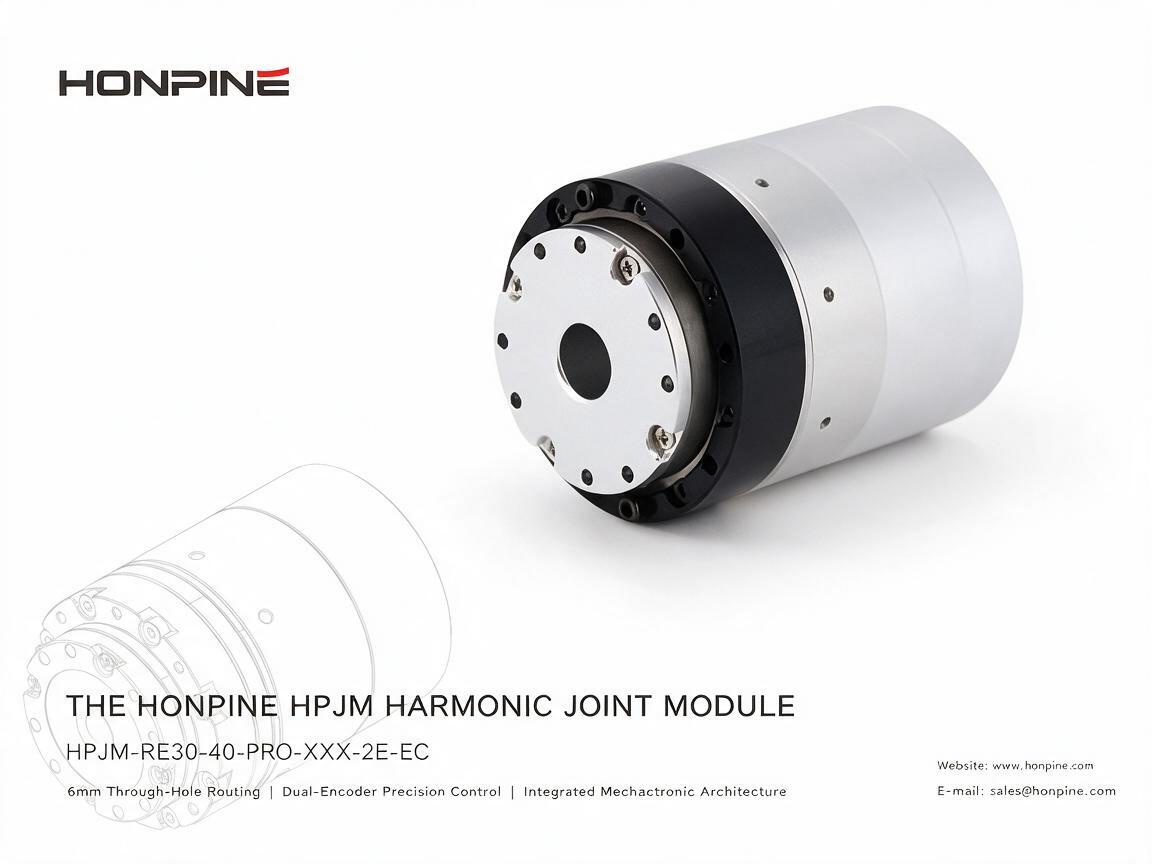
 Ultra-Compact Harmonic Joint Module with a 6 mm Hollow ShaftAs humanoid robots and compact robotic systems evolve, joint modules must deliver high torque density, precise motion control, and flexible cable routing within increasingly limited installation space. The HONPINE HPJM-RE30-40-PRO harmonic joint module addresses these challenges with a compact design, a 6 mm hollow shaft, dual-encoder feedback, and an integrated motor and FOC drive. In this article, we explore its key design features and explain how its hollow-shaft structure, EtherCAT connectivity, and flexible mounting options support the development of humanoid robots, drones, optical platforms, and precision automation equipment.
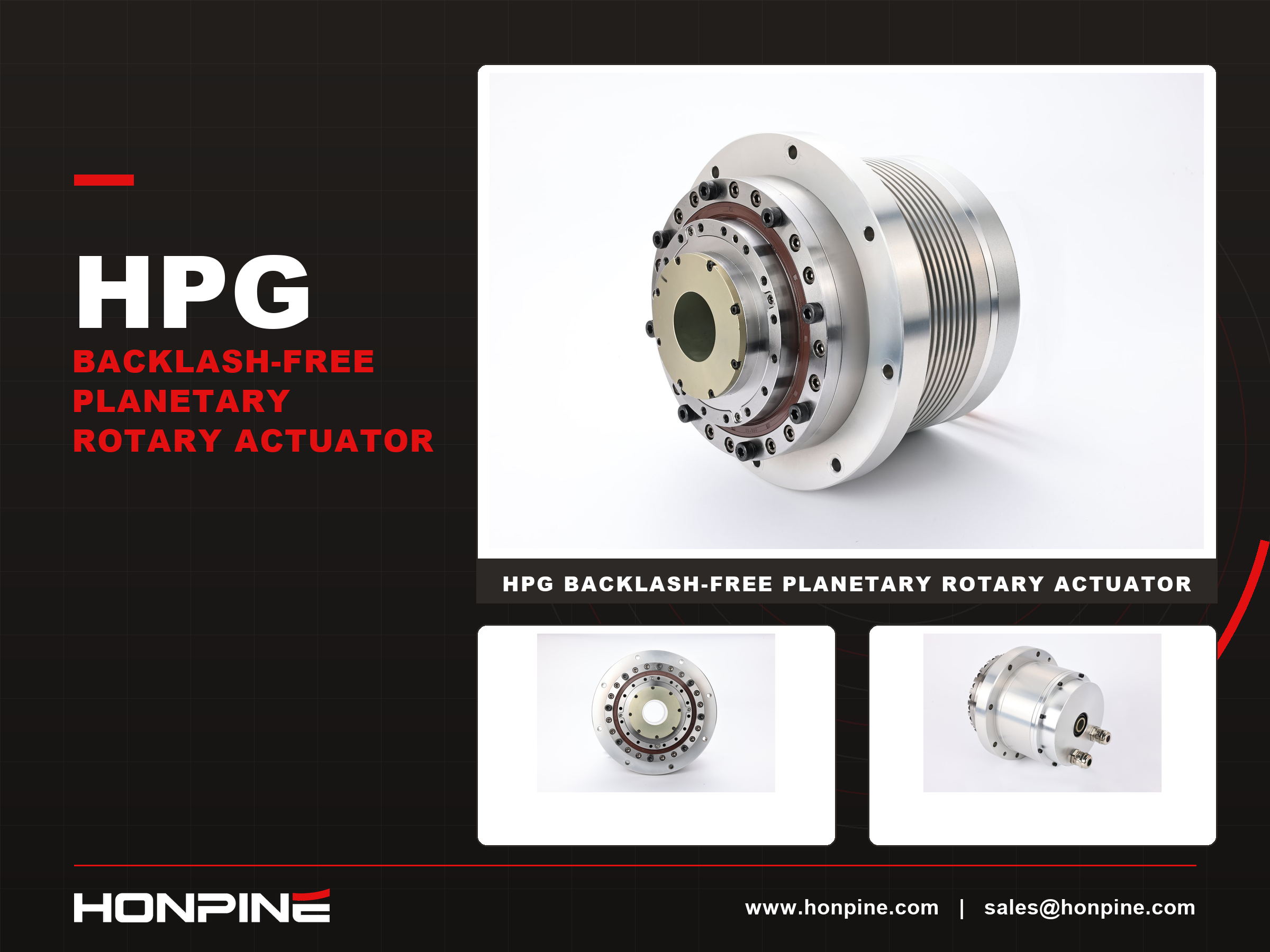
 How Does the HONPINE HPG Backlash-Free Planetary Rotary Actuator Balance CNC Accuracy and Rigidity?Discover the HONPINE HPG precision backlash-free planetary rotary actuator for CNC rotary tables. Explore positioning accuracy, torsional rigidity, low backlash, and drive selection.
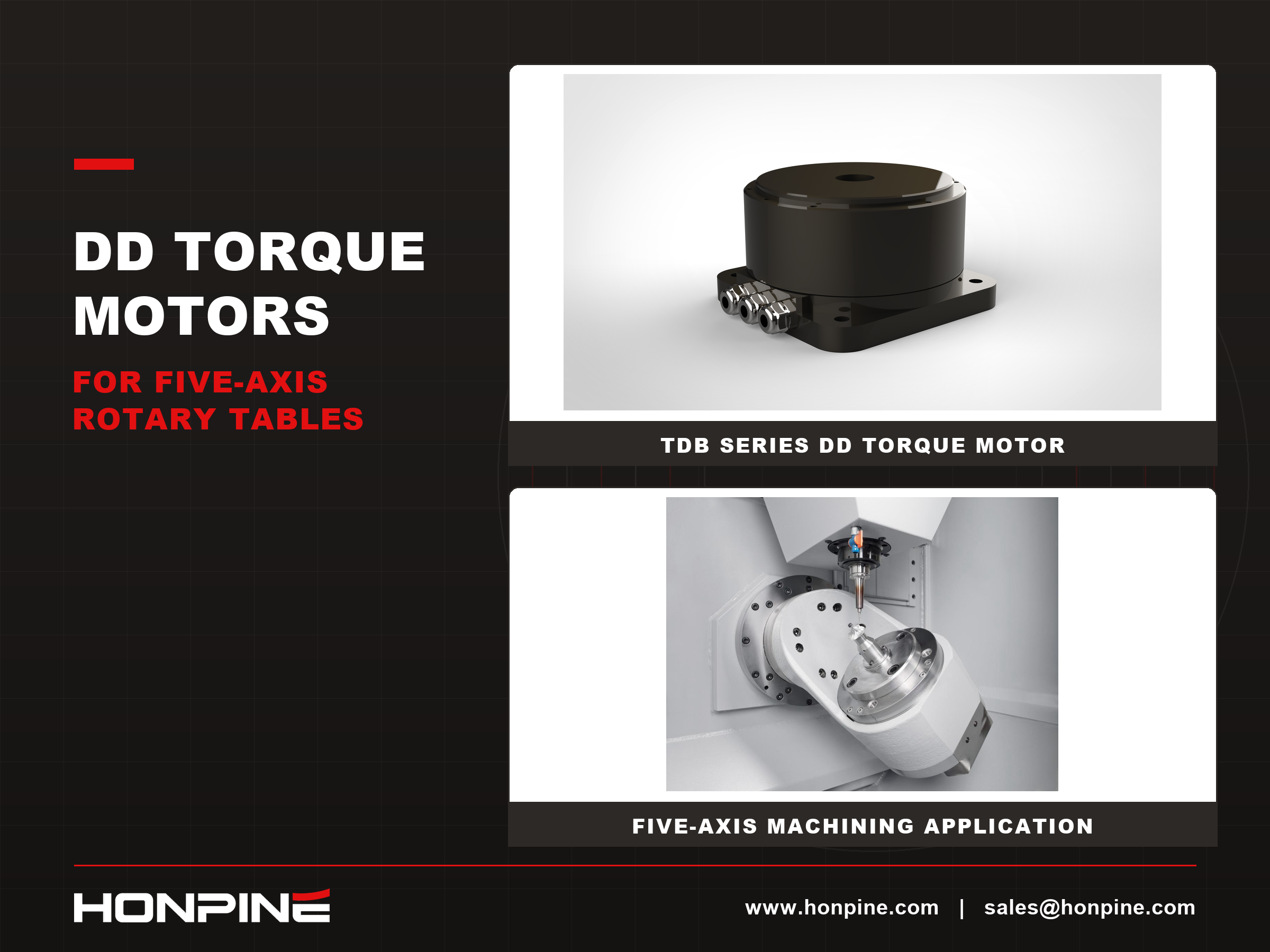
 Why Are DD Torque Motors Ideal for High-End Five-Axis Rotary Tables?Choosing the right drive mechanism is critical to the performance of a five-axis rotary table. Worm gears, cam roller drives, harmonic reducers, RV cycloidal reducers, and DD torque motors each offer different advantages in positioning accuracy, torsional stiffness, speed, and cost. For high-end CNC machining, the challenge is not simply achieving low backlash, but maintaining accuracy under cutting loads and during continuous multi-axis motion. This article compares five common drive technologies and explains why direct-drive torque motors are an attractive option for applications requiring high dynamic response, reduced transmission errors, and consistent machining performance.
Double Click
We provide harmonic drive reducer,planetary reducer,robot joint motor,robot rotary actuators,RV gear reducer,robot end effector,dexterous robot hand
 What is robot joint actuator?How to Choose the Best Robot Rotary Joint Actuator?In core robot joint transmission solutions, planetary and harmonic rotary actuators each have their own strengths. Choosing the right type based on application requirements is essential to achieve the optimal balance between performance and cost.
 DD Motors VS Harmonic Rotary ActuatorsThis article provides an in-depth comparison between Direct Drive (DD) motors and harmonic rotary actuators, covering their transmission principles, advantages and disadvantages, and typical application fields.
 OMG Ultra Compact Harmonic Drive Joint Module with Built-in Torque SensorHONPINE TCHL series harmonic drive joint module is a game-changing product that achieves disruptive improvements in multiple aspects such as lightweight design, integration level, and connection convenience. This article will analyze its revolutionary enhancements with you.
 Why Are Harmonic Drive Actuators Ideal for Space-Constrained Industrial Automation Equipment?In modern industrial automation, limited installation space often makes mechanical design more challenging. Harmonic drive actuators offer a compact motion-control solution by integrating key drive components into a single unit. Their high reduction ratios, streamlined mechanical structures, and flexible mounting options can help equipment manufacturers reduce space requirements, simplify assembly, and optimize internal layouts. This article explores four ways integrated harmonic drive actuators support space-saving designs in industrial automation equipment.
 AGV Robot Steering Drive Wheel: A Comprehensive Guide to Components, Applications, and SelectionAn AGV steering drive wheel integrates traction and active steering to support flexible movement in industrial mobile robots. This guide explains its main components, working principles, industrial applications, and key selection factors, including load capacity, traction torque, steering torque, wheel diameter, speed, and control interfaces. Discover how to choose a suitable steering drive module for AGVs, AMRs, autonomous forklifts, and heavy-duty material handling systems.
 How Does a Harmonic Joint Actuator with a Torque Sensor Improve Robot Force Control?Learn how the HONPINE TCHL harmonic joint actuator uses an integrated output torque sensor to support force feedback, collision detection, compliant assembly, rehabilitation robotics, and teleoperation.
 Ultra-Compact Harmonic Joint Module with a 6 mm Hollow ShaftAs humanoid robots and compact robotic systems evolve, joint modules must deliver high torque density, precise motion control, and flexible cable routing within increasingly limited installation space. The HONPINE HPJM-RE30-40-PRO harmonic joint module addresses these challenges with a compact design, a 6 mm hollow shaft, dual-encoder feedback, and an integrated motor and FOC drive. In this article, we explore its key design features and explain how its hollow-shaft structure, EtherCAT connectivity, and flexible mounting options support the development of humanoid robots, drones, optical platforms, and precision automation equipment.
 How Does the HONPINE HPG Backlash-Free Planetary Rotary Actuator Balance CNC Accuracy and Rigidity?Discover the HONPINE HPG precision backlash-free planetary rotary actuator for CNC rotary tables. Explore positioning accuracy, torsional rigidity, low backlash, and drive selection.
 Why Are DD Torque Motors Ideal for High-End Five-Axis Rotary Tables?Choosing the right drive mechanism is critical to the performance of a five-axis rotary table. Worm gears, cam roller drives, harmonic reducers, RV cycloidal reducers, and DD torque motors each offer different advantages in positioning accuracy, torsional stiffness, speed, and cost. For high-end CNC machining, the challenge is not simply achieving low backlash, but maintaining accuracy under cutting loads and during continuous multi-axis motion. This article compares five common drive technologies and explains why direct-drive torque motors are an attractive option for applications requiring high dynamic response, reduced transmission errors, and consistent machining performance.
 Harmonic Drive Actuator Accuracy: Why It Should Be Evaluated at Four LevelsHarmonic drive actuator accuracy involves more than encoder resolution. Why should engineers evaluate it at four levels? Resolution, repeatability, unidirectional positioning accuracy, and bidirectional positioning accuracy describe different aspects of motion performance. Understanding these differences helps engineers select harmonic rotary actuators for semiconductor equipment, EFEM systems, and 3C automation without confusing theoretical encoder increments with actual positioning performance.
 Why Do Many Customers Choose HONPINE HPJM Harmonic Joint Modules for Just 2 mm More Hollow Bore Diameter?Why do many customers choose HONPINE HPJM harmonic joint modules for just 2 mm more hollow bore diameter? In compact robotic joints, this small dimensional difference can create a surprisingly large increase in available space. Because the cross-sectional area of a circular bore increases with the square of its diameter, an extra 2 mm can significantly improve internal cable routing and simplify system integration. This article examines the impact of hollow bore diameter, compares selected HONPINE HPJM models with comparable harmonic joint modules, and explains why bore size matters in humanoid robots, collaborative robots, and industrial automation.
 Harmonic Drive Backlash in Arcmin: What the Specification Really Tells YouChoosing the right force control harmonic joint actuator involves more than comparing torque and dimensions. Torque sensor specifications, encoder feedback, communication protocols, functional safety, and hollow-shaft size can all affect system integration and control performance. In this guide, HONPINE Technical Director compares the TCHL and HAG harmonic joint actuator series, explaining their key differences and providing a practical selection framework for humanoid robots, collaborative manipulators, precision assembly, polishing, and other force-controlled applications.