

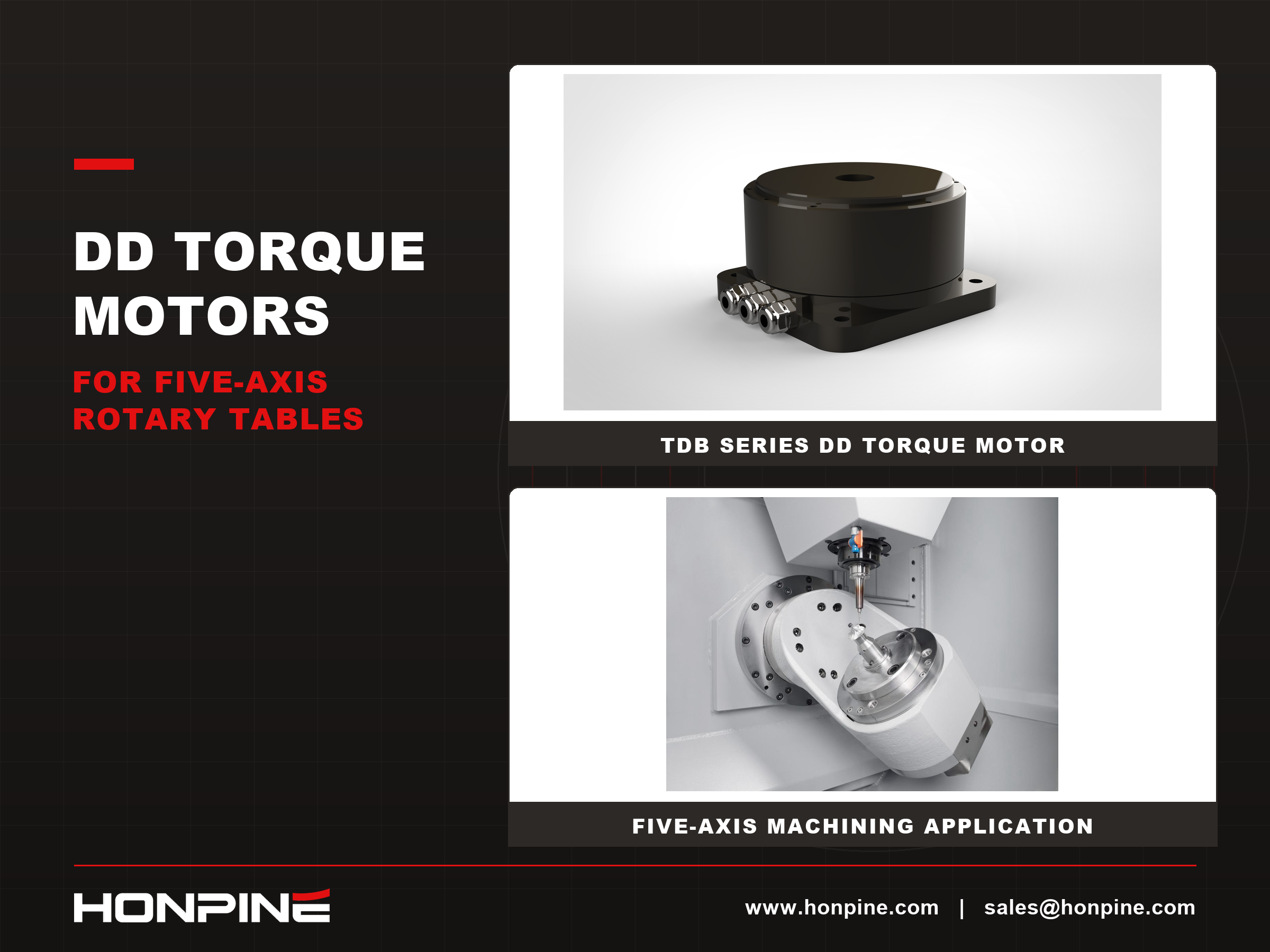
Why Are DD Torque Motors Ideal for High-End Five-Axis Rotary Tables?
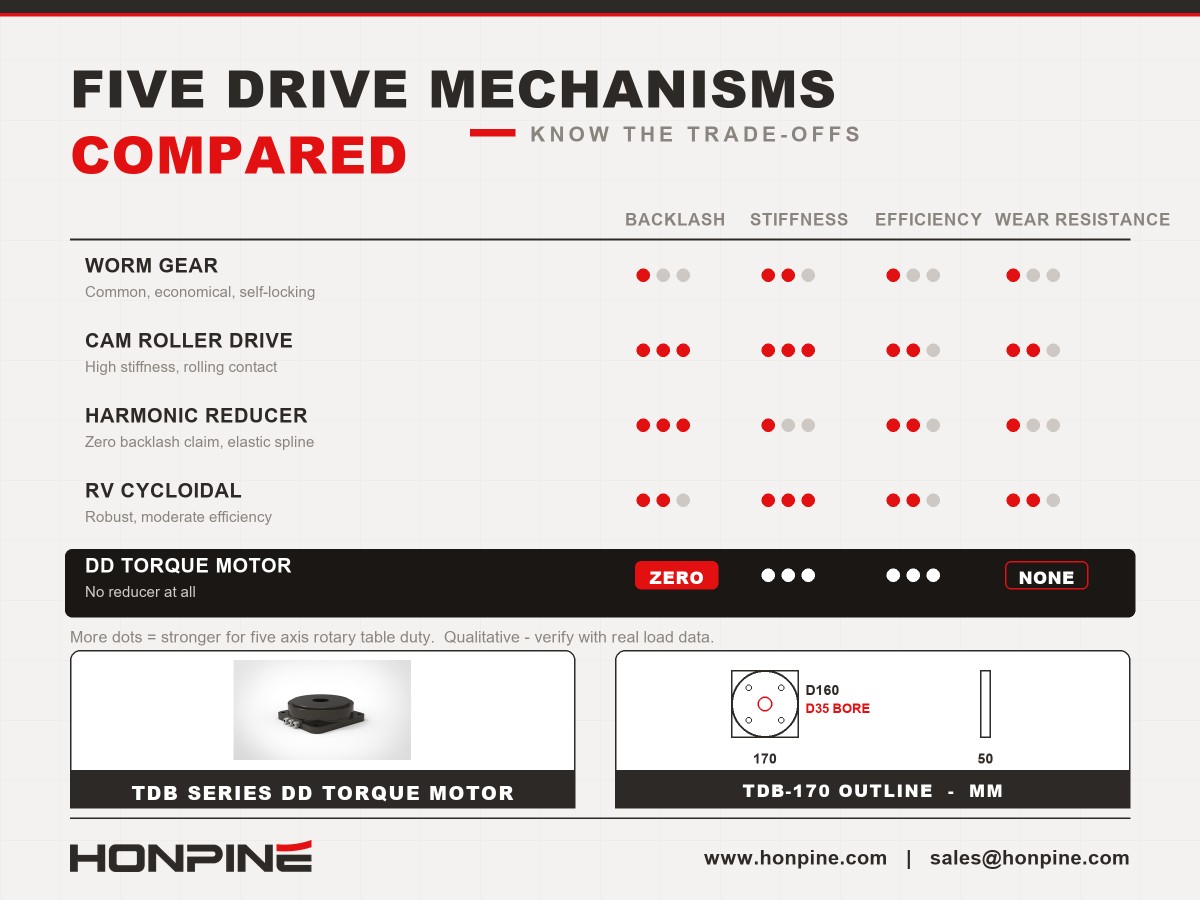
Comparing Five Drive Mechanisms for Five-Axis Rotary Tables
Five-axis rotary tables can use different drive mechanisms, including worm gears, cam roller drives, harmonic reducers, RV cycloidal reducers, and direct-drive (DD) torque motors. Each solution offers a different balance of positioning accuracy, torsional stiffness, load capacity, transmission efficiency, and long-term reliability.
Understanding these differences is essential when selecting a drive system for high-precision CNC machining, particularly in applications where contour accuracy, surface finish, and long-term positioning stability are critical.
Why Do High-End Five-Axis Rotary Tables Often Use DD Motors Instead of Harmonic Reducers?
A conventional mechanical transmission chain introduces multiple potential sources of positioning error, including reducer backlash, transmission errors, torsional compliance, bearing-related errors, assembly misalignment, and wear.
A direct-drive system eliminates the mechanical reducer and its associated transmission errors. In a simplified comparison, this reduces the main error sources to bearing-related errors and encoder measurement or feedback errors, although the actual error budget also depends on structural deformation, thermal effects, servo control, and installation quality.
The key advantage is the elimination of reducer-related wear. Unlike a mechanical transmission that relies on contacting and deforming components, a DD torque motor drives the rotary axis directly, without an intermediate reduction mechanism. This helps reduce mechanical complexity and maintain consistent positioning performance over extended service periods.
For high-end machine tools, this makes a direct-drive solution attractive when long-term accuracy, dynamic response, and machining consistency are priorities. However, a claim such as “no accuracy degradation over ten years” should be supported by application-specific testing and service-life data rather than assumed from the drive architecture alone.
Zero Backlash Does Not Mean Zero Lost Motion
Harmonic reducers are often promoted as offering “zero backlash.” However, backlash and lost motion are not the same thing.
Backlash generally refers to the angular clearance between mating transmission components when the direction of motion reverses. Lost motion is a broader measure of positioning deviation during reversal and can include the effects of elastic deformation, torsional compliance, hysteresis, and other mechanical factors.
A harmonic reducer can achieve very low backlash, but this does not eliminate elastic deformation under load. Because its flexible spline undergoes repeated elastic deformation during operation, the transmission system still has finite torsional stiffness and may exhibit load-dependent angular displacement.
This distinction matters in five-axis CNC machining. A rotary axis may pass a backlash inspection yet still exhibit angular deviations during simultaneous multi-axis interpolation or changes in cutting load. Under demanding machining conditions, these deviations can contribute to contour errors, surface waviness, or inconsistent surface finish.
For this reason, engineers should evaluate not only backlash specifications but also lost motion, torsional stiffness, load-dependent positioning error, and dynamic performance when selecting a rotary table drive.
When Is a Harmonic Reducer a Suitable Choice?
Harmonic reducers remain a practical option for five-axis rotary tables and precision rotary mechanisms where compact dimensions, high reduction ratios, and low backlash are important.
They can be suitable for applications involving graphite electrodes, jewelry, small medical components, and other relatively small workpieces where installation space is limited and cutting loads are moderate.
However, harmonic reducers transmit motion through the controlled elastic deformation of a flexible spline. Their torsional stiffness and load-dependent deformation characteristics must therefore be considered in the context of the actual machining process.
During heavy cutting or interrupted cutting, cutting forces and torque fluctuations can cause elastic angular displacement in the transmission system. If this displacement exceeds the application's error budget, it may affect contour accuracy and surface finish. Repeated high-load operation can also contribute to fatigue-related durability concerns, depending on the reducer design, loading conditions, and maintenance practices.
A harmonic reducer is therefore not inherently unsuitable for every demanding machining application. Its suitability depends on the required stiffness, torque capacity, duty cycle, impact loading, accuracy, and service life. For applications involving heavy cutting, substantial torque fluctuations, or particularly stringent long-term accuracy requirements, a DD torque motor may offer a more suitable drive architecture.
What Does a DD Torque Motor Mean for High-End Machine Tools?
A DD torque motor directly drives the rotary axis without an intermediate gearbox. This eliminates reducer backlash and reducer-related transmission compliance, creating a shorter mechanical transmission chain.
For high-end five-axis rotary tables, the benefits can include:
High positioning accuracy
Eliminating the reducer removes a major source of transmission-related errors.
High torsional stiffness at the system level
With an appropriately designed motor, bearing arrangement, and rotary structure, the drive can provide strong resistance to angular displacement under cutting loads.
Smooth motion and dynamic response
Direct drive avoids the additional mechanical interfaces and transmission dynamics associated with a reducer.
Reduced mechanical wear
Eliminating the reducer removes wear and fatigue mechanisms associated with its internal transmission components.
Consistent machining performance: Reduced transmission-related errors can help improve contour consistency and surface finish when the entire machine structure and control system are properly designed.
The practical value of a DD torque motor depends on the complete rotary axis, not just the motor itself. Bearing stiffness, structural rigidity, encoder resolution and accuracy, thermal management, servo tuning, and installation quality all contribute to the final machining performance.
Why Is the A-Axis Particularly Important?
The direct-drive advantage is especially significant for the A-axis, which commonly tilts the workpiece around a horizontal axis.
An A-axis rotary table often uses a cantilevered structure and must resist substantial overturning moments generated by the workpiece, fixture, and cutting forces. Any angular deformation in the support structure or drive train can be amplified by the distance between the rotation axis and the cutting point.
In simplified terms, the farther the cutting point is from the rotation axis, the greater the linear positioning deviation produced by a given angular error.
This is why some five-axis machine tool designs prioritize DD motors or cam roller drives on the A-axis while using worm gear drives on the C-axis. Such a configuration is not necessarily a compromise in design quality. It can be a deliberate allocation of drive technology based on each axis's load conditions, stiffness requirements, and accuracy targets.
The A-axis may require greater resistance to overturning moments and angular deformation, while the C-axis may operate under different load and stiffness requirements. Selecting different drive mechanisms for the two axes can therefore be a rational engineering decision.
How to Choose the Right DD Torque Motor for a Five-Axis Rotary Table?
When selecting a DD torque motor for a high-precision five-axis rotary table, engineers should evaluate the following factors:
Required torque: Consider continuous torque, peak torque, acceleration torque, and cutting-load fluctuations.
Torsional stiffness: Assess the stiffness of the complete rotary axis, including bearings, mounting interfaces, and structural components.
Positioning and contour accuracy: Evaluate encoder accuracy, servo performance, thermal drift, and simultaneous five-axis machining requirements.
Thermal performance: Check heat generation and temperature-related deformation during continuous operation.
Load and moment capacity: Verify axial and radial loads, overturning moments, and the stiffness of the bearing arrangement.
Control compatibility: Confirm that the motor, encoder, and servo drive meet the machine tool's control and interpolation requirements.
Long-term reliability: Consider operating conditions, maintenance requirements, and validated service-life data.
A DD torque motor is not automatically the best choice for every rotary table. However, when high stiffness, precise contour control, smooth motion, and long-term positioning stability are essential, direct drive offers important advantages over mechanical reduction systems.
Looking for a DD Torque Motor for Your Five-Axis Rotary Table?
If you are developing a high-precision five-axis rotary table or evaluating a direct-drive solution for CNC machining, contact HONPINE to learn more about DD torque motor selection, drive configuration, and precision motion-control solutions.
Read More
Learn more about the story of HONPINE and industry trends related to precision transmission.
 What is robot joint actuator?How to Choose the Best Robot Rotary Joint Actuator?In core robot joint transmission solutions, planetary and harmonic rotary actuators each have their own strengths. Choosing the right type based on application requirements is essential to achieve the optimal balance between performance and cost.
 DD Motors VS Harmonic Rotary ActuatorsThis article provides an in-depth comparison between Direct Drive (DD) motors and harmonic rotary actuators, covering their transmission principles, advantages and disadvantages, and typical application fields.
 OMG Ultra Compact Harmonic Drive Joint Module with Built-in Torque SensorHONPINE TCHL series harmonic drive joint module is a game-changing product that achieves disruptive improvements in multiple aspects such as lightweight design, integration level, and connection convenience. This article will analyze its revolutionary enhancements with you.
 The Role of Harmonic Drive Gears in Achieving 5–10 μm Accuracy in Dental Milling MachinesA dental milling machine is a CNC machining system used to directly process digital dental models into restorations such as crowns, bridges, veneers, inlays, and implant abutments. Dental milling machines require far higher operational accuracy and motion stability than ordinary equipment. This article explains how harmonic drive gear help dental milling machines achieve stable, continuous, and controllable operation.
 Why Are Harmonic Rotary Actuators Perfect for Medical Equipment?Harmonic rotary actuators (typically integrated systems consisting of a harmonic drive reducer, frameless torque motor, encoder, and optional brake) are regarded as key components in medical equipment. The core reason is that they simultaneously meet the most stringent medical requirements for precision, compact size, safety, and controllability. The following explanation is structured from three perspectives: technical characteristics, application scenarios, and medical value.
 High-Precision RV Reducers Perfectly Matched for Walking RobotsThe walking axis of a robot is a core component for power transmission and support. RV reducers provide extremely high rigidity, precision, and torque while maintaining a compact size and exceptional reliability, making them an ideal match for the demanding requirements of walking robot joints in terms of load capacity, impact resistance, and precision.
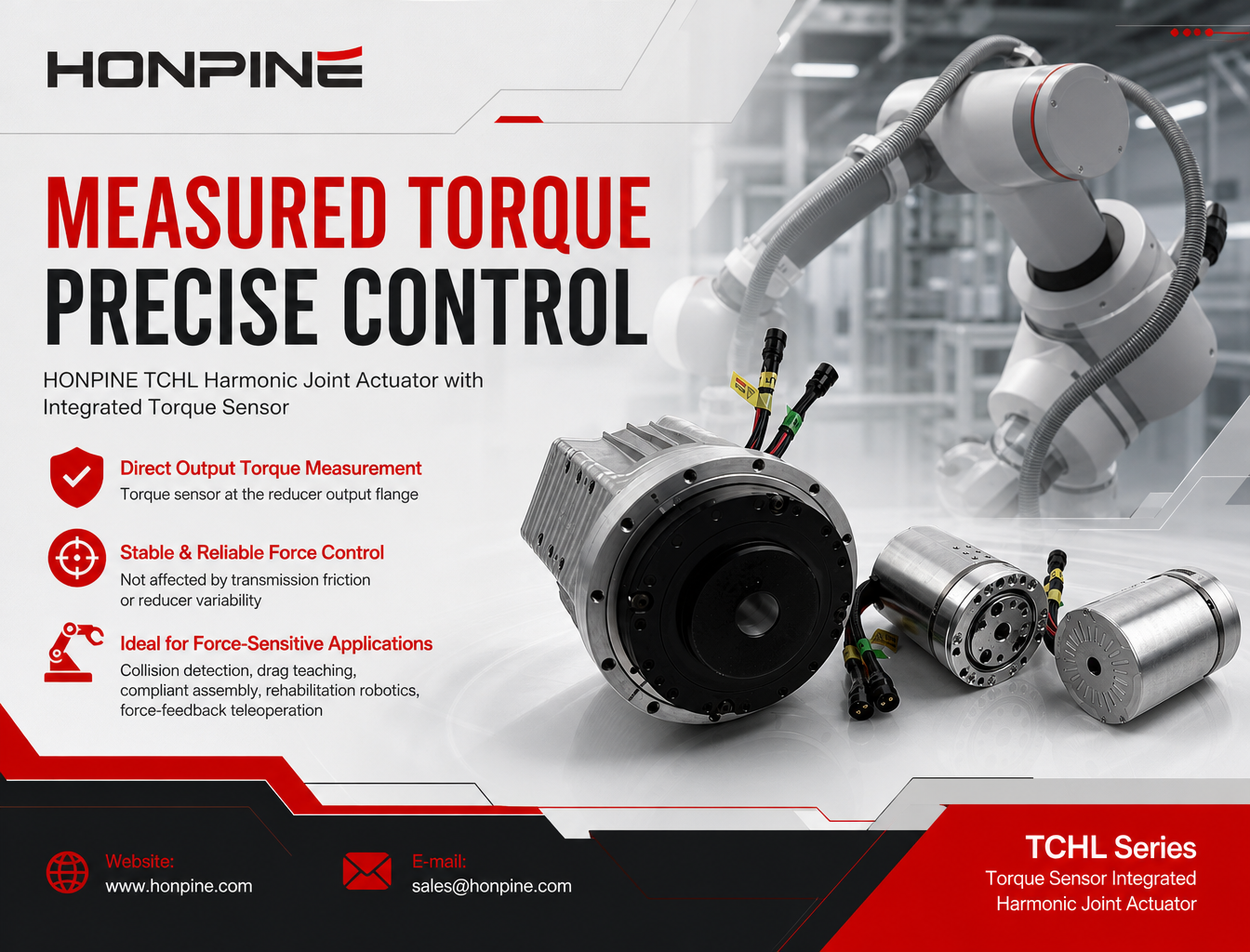
 How Does a Harmonic Joint Actuator with a Torque Sensor Improve Robot Force Control?Learn how the HONPINE TCHL harmonic joint actuator uses an integrated output torque sensor to support force feedback, collision detection, compliant assembly, rehabilitation robotics, and teleoperation.
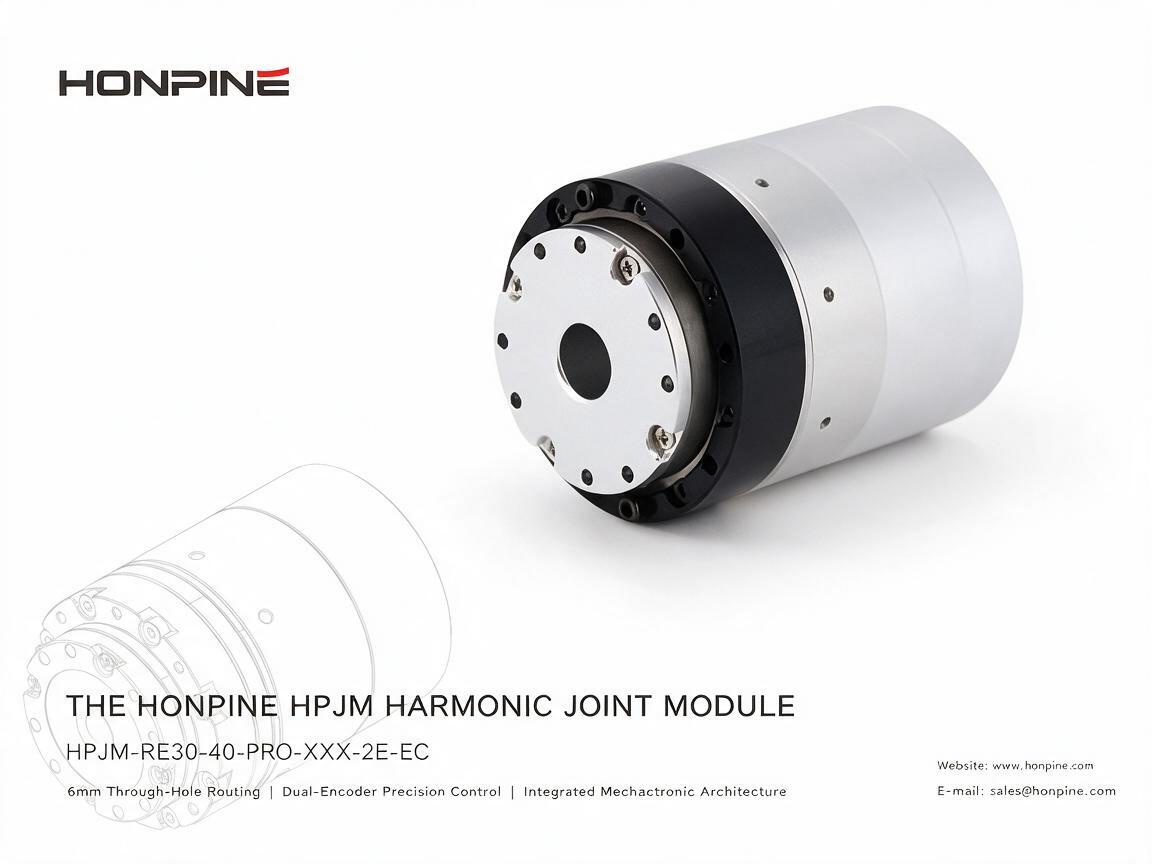
 Ultra-Compact Harmonic Joint Module with a 6 mm Hollow ShaftAs humanoid robots and compact robotic systems evolve, joint modules must deliver high torque density, precise motion control, and flexible cable routing within increasingly limited installation space. The HONPINE HPJM-RE30-40-PRO harmonic joint module addresses these challenges with a compact design, a 6 mm hollow shaft, dual-encoder feedback, and an integrated motor and FOC drive. In this article, we explore its key design features and explain how its hollow-shaft structure, EtherCAT connectivity, and flexible mounting options support the development of humanoid robots, drones, optical platforms, and precision automation equipment.
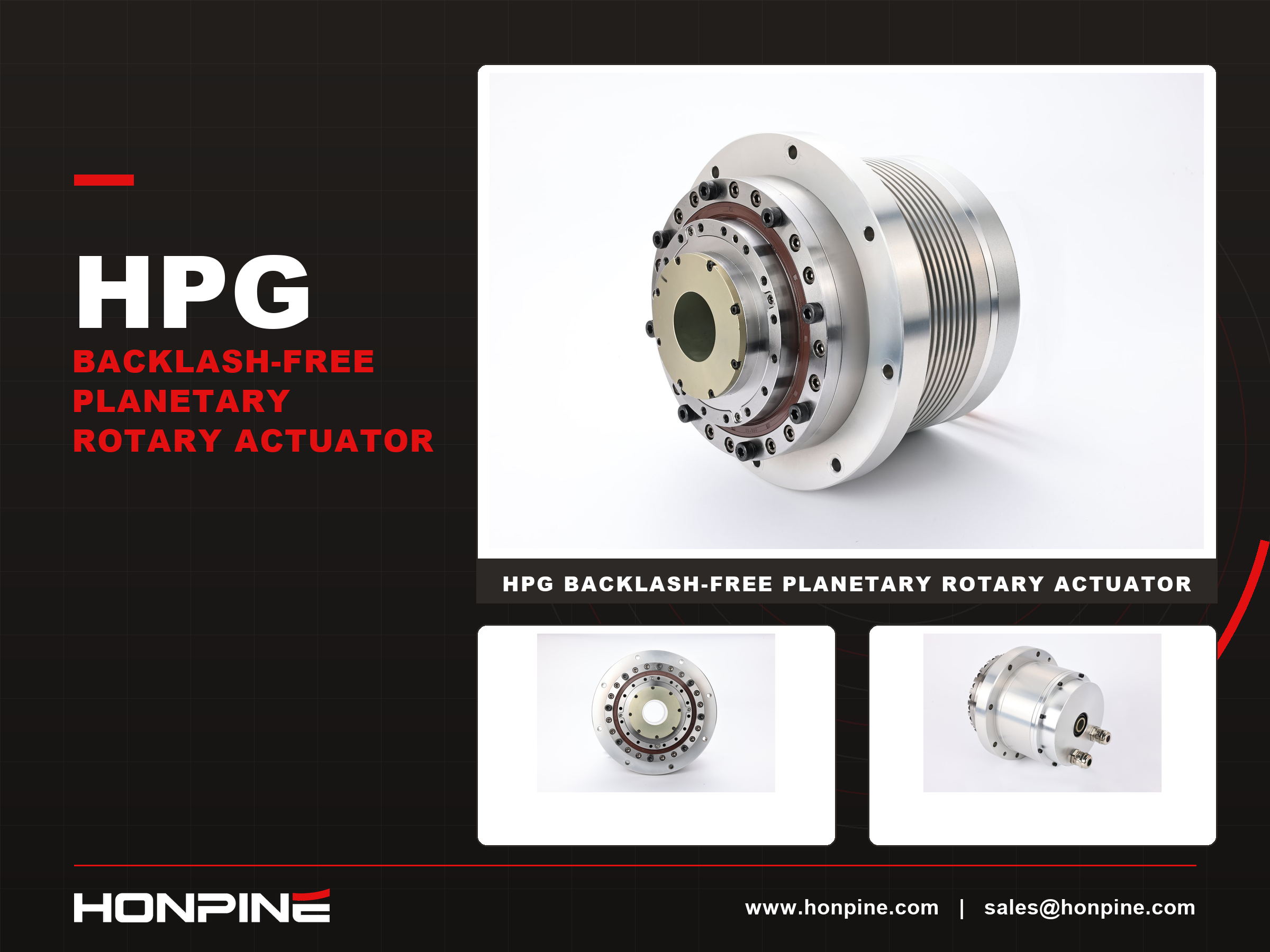
 How Does the HONPINE HPG Backlash-Free Planetary Rotary Actuator Balance CNC Accuracy and Rigidity?Discover the HONPINE HPG precision backlash-free planetary rotary actuator for CNC rotary tables. Explore positioning accuracy, torsional rigidity, low backlash, and drive selection.
 Why Are DD Torque Motors Ideal for High-End Five-Axis Rotary Tables?Choosing the right drive mechanism is critical to the performance of a five-axis rotary table. Worm gears, cam roller drives, harmonic reducers, RV cycloidal reducers, and DD torque motors each offer different advantages in positioning accuracy, torsional stiffness, speed, and cost. For high-end CNC machining, the challenge is not simply achieving low backlash, but maintaining accuracy under cutting loads and during continuous multi-axis motion. This article compares five common drive technologies and explains why direct-drive torque motors are an attractive option for applications requiring high dynamic response, reduced transmission errors, and consistent machining performance.
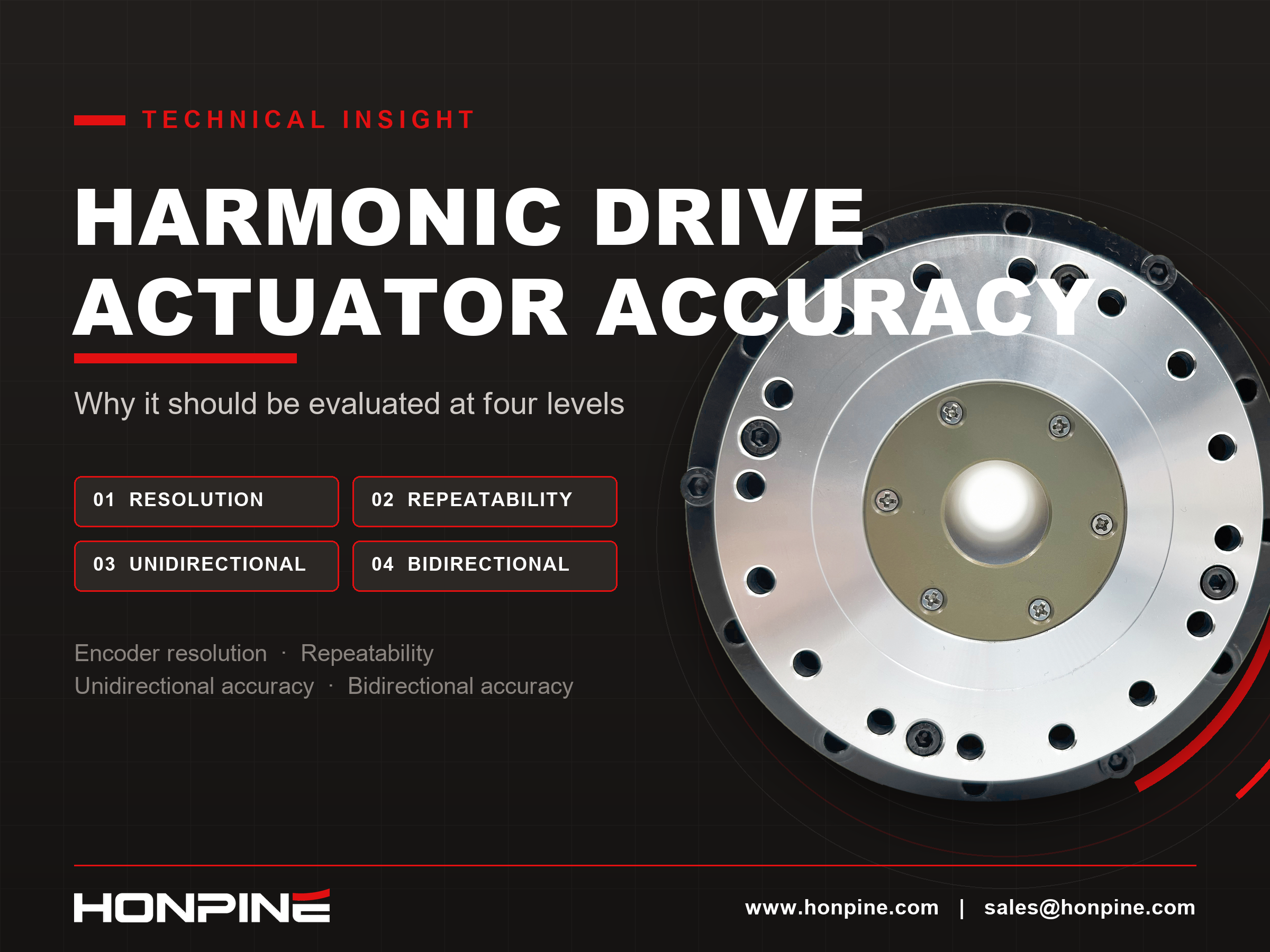
 Harmonic Drive Actuator Accuracy: Why It Should Be Evaluated at Four LevelsHarmonic drive actuator accuracy involves more than encoder resolution. Why should engineers evaluate it at four levels? Resolution, repeatability, unidirectional positioning accuracy, and bidirectional positioning accuracy describe different aspects of motion performance. Understanding these differences helps engineers select harmonic rotary actuators for semiconductor equipment, EFEM systems, and 3C automation without confusing theoretical encoder increments with actual positioning performance.
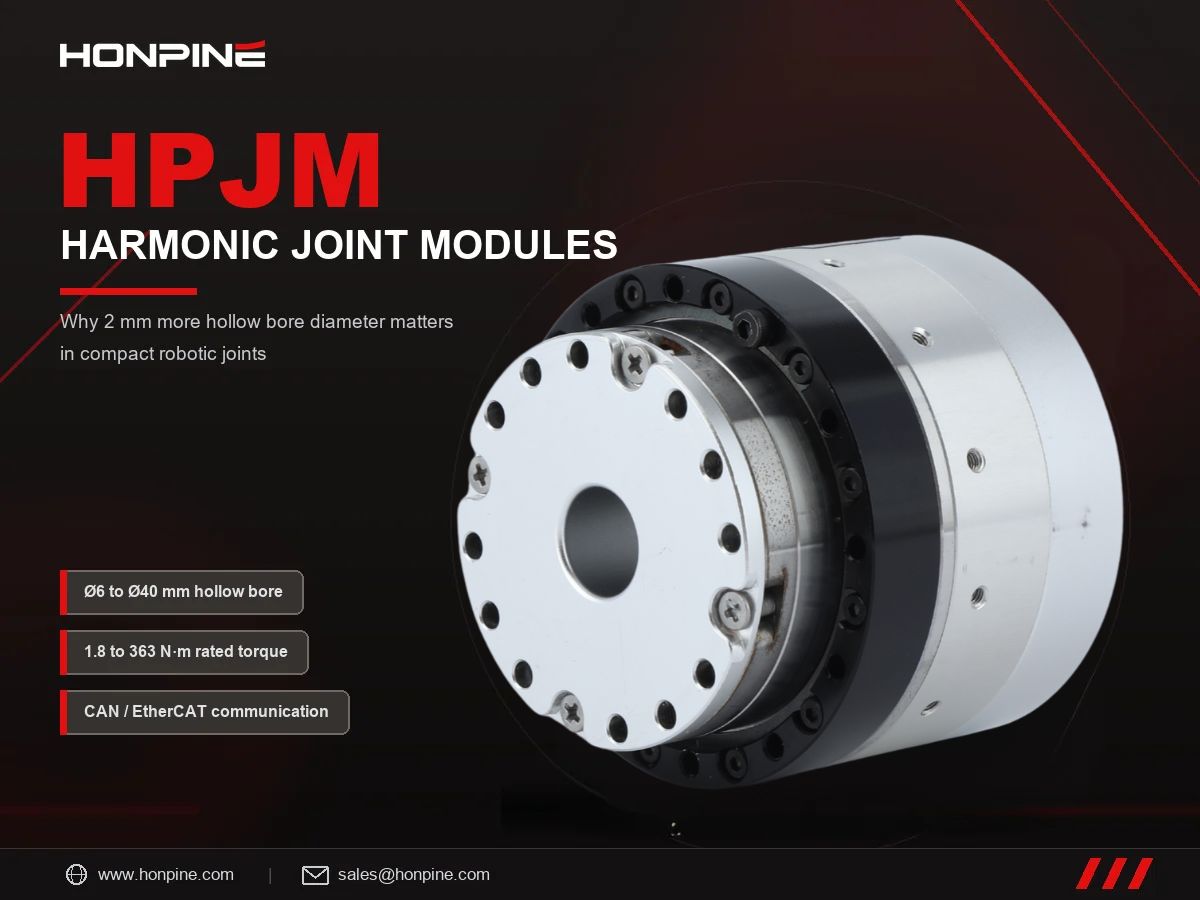
 Why Do Many Customers Choose HONPINE HPJM Harmonic Joint Modules for Just 2 mm More Hollow Bore Diameter?Why do many customers choose HONPINE HPJM harmonic joint modules for just 2 mm more hollow bore diameter? In compact robotic joints, this small dimensional difference can create a surprisingly large increase in available space. Because the cross-sectional area of a circular bore increases with the square of its diameter, an extra 2 mm can significantly improve internal cable routing and simplify system integration. This article examines the impact of hollow bore diameter, compares selected HONPINE HPJM models with comparable harmonic joint modules, and explains why bore size matters in humanoid robots, collaborative robots, and industrial automation.
Double Click
We provide harmonic drive reducer,planetary reducer,robot joint motor,robot rotary actuators,RV gear reducer,robot end effector,dexterous robot hand
 What is robot joint actuator?How to Choose the Best Robot Rotary Joint Actuator?In core robot joint transmission solutions, planetary and harmonic rotary actuators each have their own strengths. Choosing the right type based on application requirements is essential to achieve the optimal balance between performance and cost.
 DD Motors VS Harmonic Rotary ActuatorsThis article provides an in-depth comparison between Direct Drive (DD) motors and harmonic rotary actuators, covering their transmission principles, advantages and disadvantages, and typical application fields.
 OMG Ultra Compact Harmonic Drive Joint Module with Built-in Torque SensorHONPINE TCHL series harmonic drive joint module is a game-changing product that achieves disruptive improvements in multiple aspects such as lightweight design, integration level, and connection convenience. This article will analyze its revolutionary enhancements with you.
 How Does a Harmonic Joint Actuator with a Torque Sensor Improve Robot Force Control?Learn how the HONPINE TCHL harmonic joint actuator uses an integrated output torque sensor to support force feedback, collision detection, compliant assembly, rehabilitation robotics, and teleoperation.
 Ultra-Compact Harmonic Joint Module with a 6 mm Hollow ShaftAs humanoid robots and compact robotic systems evolve, joint modules must deliver high torque density, precise motion control, and flexible cable routing within increasingly limited installation space. The HONPINE HPJM-RE30-40-PRO harmonic joint module addresses these challenges with a compact design, a 6 mm hollow shaft, dual-encoder feedback, and an integrated motor and FOC drive. In this article, we explore its key design features and explain how its hollow-shaft structure, EtherCAT connectivity, and flexible mounting options support the development of humanoid robots, drones, optical platforms, and precision automation equipment.
 How Does the HONPINE HPG Backlash-Free Planetary Rotary Actuator Balance CNC Accuracy and Rigidity?Discover the HONPINE HPG precision backlash-free planetary rotary actuator for CNC rotary tables. Explore positioning accuracy, torsional rigidity, low backlash, and drive selection.
 Why Are DD Torque Motors Ideal for High-End Five-Axis Rotary Tables?Choosing the right drive mechanism is critical to the performance of a five-axis rotary table. Worm gears, cam roller drives, harmonic reducers, RV cycloidal reducers, and DD torque motors each offer different advantages in positioning accuracy, torsional stiffness, speed, and cost. For high-end CNC machining, the challenge is not simply achieving low backlash, but maintaining accuracy under cutting loads and during continuous multi-axis motion. This article compares five common drive technologies and explains why direct-drive torque motors are an attractive option for applications requiring high dynamic response, reduced transmission errors, and consistent machining performance.
 Harmonic Drive Actuator Accuracy: Why It Should Be Evaluated at Four LevelsHarmonic drive actuator accuracy involves more than encoder resolution. Why should engineers evaluate it at four levels? Resolution, repeatability, unidirectional positioning accuracy, and bidirectional positioning accuracy describe different aspects of motion performance. Understanding these differences helps engineers select harmonic rotary actuators for semiconductor equipment, EFEM systems, and 3C automation without confusing theoretical encoder increments with actual positioning performance.
 Why Do Many Customers Choose HONPINE HPJM Harmonic Joint Modules for Just 2 mm More Hollow Bore Diameter?Why do many customers choose HONPINE HPJM harmonic joint modules for just 2 mm more hollow bore diameter? In compact robotic joints, this small dimensional difference can create a surprisingly large increase in available space. Because the cross-sectional area of a circular bore increases with the square of its diameter, an extra 2 mm can significantly improve internal cable routing and simplify system integration. This article examines the impact of hollow bore diameter, compares selected HONPINE HPJM models with comparable harmonic joint modules, and explains why bore size matters in humanoid robots, collaborative robots, and industrial automation.
 Harmonic Drive Backlash in Arcmin: What the Specification Really Tells YouChoosing the right force control harmonic joint actuator involves more than comparing torque and dimensions. Torque sensor specifications, encoder feedback, communication protocols, functional safety, and hollow-shaft size can all affect system integration and control performance. In this guide, HONPINE Technical Director compares the TCHL and HAG harmonic joint actuator series, explaining their key differences and providing a practical selection framework for humanoid robots, collaborative manipulators, precision assembly, polishing, and other force-controlled applications.
 How to Choose a Force Control Harmonic Joint Actuator? An In-Depth Comparison of HONPINE TCHL and HAGChoosing the right force control harmonic joint actuator involves more than comparing torque and dimensions. Torque sensor specifications, encoder feedback, communication protocols, functional safety, and hollow-shaft size can all affect system integration and control performance. In this guide, HONPINE Technical Director compares the TCHL and HAG harmonic joint actuator series, explaining their key differences and providing a practical selection framework for humanoid robots, collaborative manipulators, precision assembly, polishing, and other force-controlled applications.
 HONPINE TCHL Harmonic Joint Modules: Robotic Force Control and Real-World ApplicationsHello everyone, I’m Theodore Li, Technical Director at HONPINE.
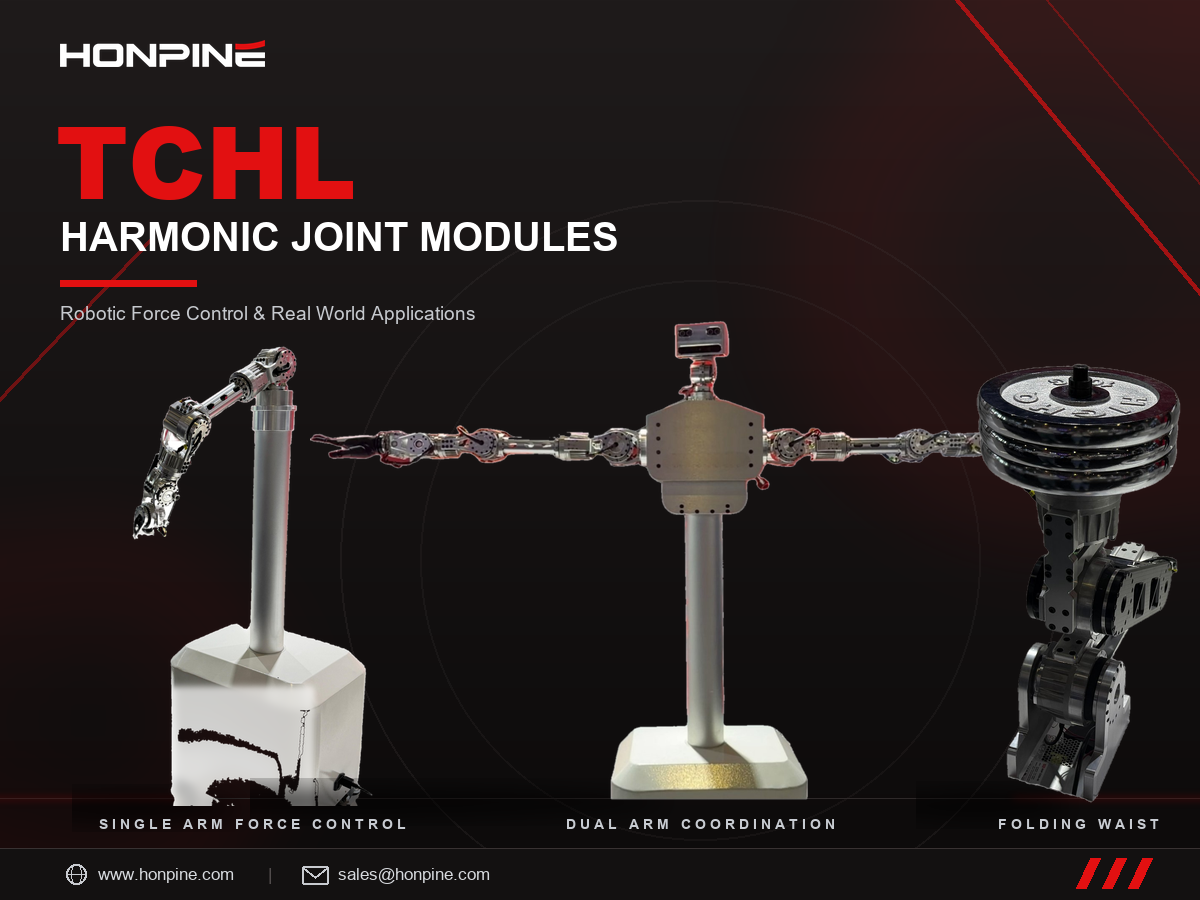
HONPINE TCHL harmonic joint modules have been deployed in a range of robotic motion-control applications, including dual-arm humanoid robots, single-arm compliant force control, and folding waist mechanisms for wheeled humanoid robots. As integrated motion components, they support a wide range of applications in robotics, intelligent manufacturing, and industrial automation.
From core components to integrated motion units, HONPINE showcases the possibilities of precision transmission technology across different robotic applications through a diverse product portfolio and practical motion demonstrations.