






Deep Sea Waterproof Robotic Arm
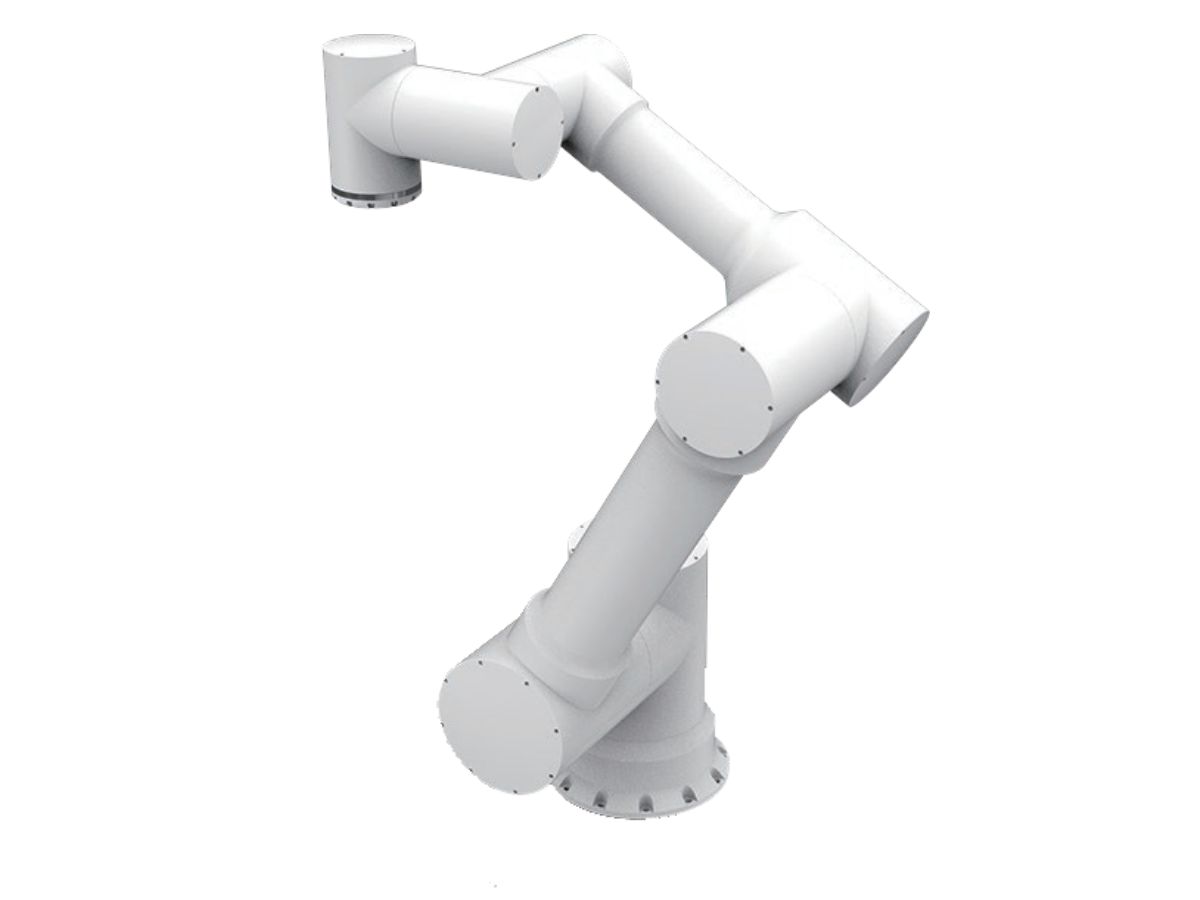
 HONPINE X Series High-Precision Underwater Robotic ManipulatorThe HONPINE X Series underwater robotic system is a flagship solution for high-precision subsea operations, offering four models—X5, X10, X18, and X25—with 6 DOF (excluding gripper). It covers a 5–25 kg payload range and 750–1500 mm working radius for precision and heavy-duty underwater tasks.
The system achieves up to ±0.05 mm repeatability (X5/X10) and ±0.2 mm (X18/X25), placing it among the most precise heavy-duty underwater robotic arms. Rated for 300 m depth, it uses servo motors, supports position control, and enables master-slave teleoperation with flexible control interfaces.
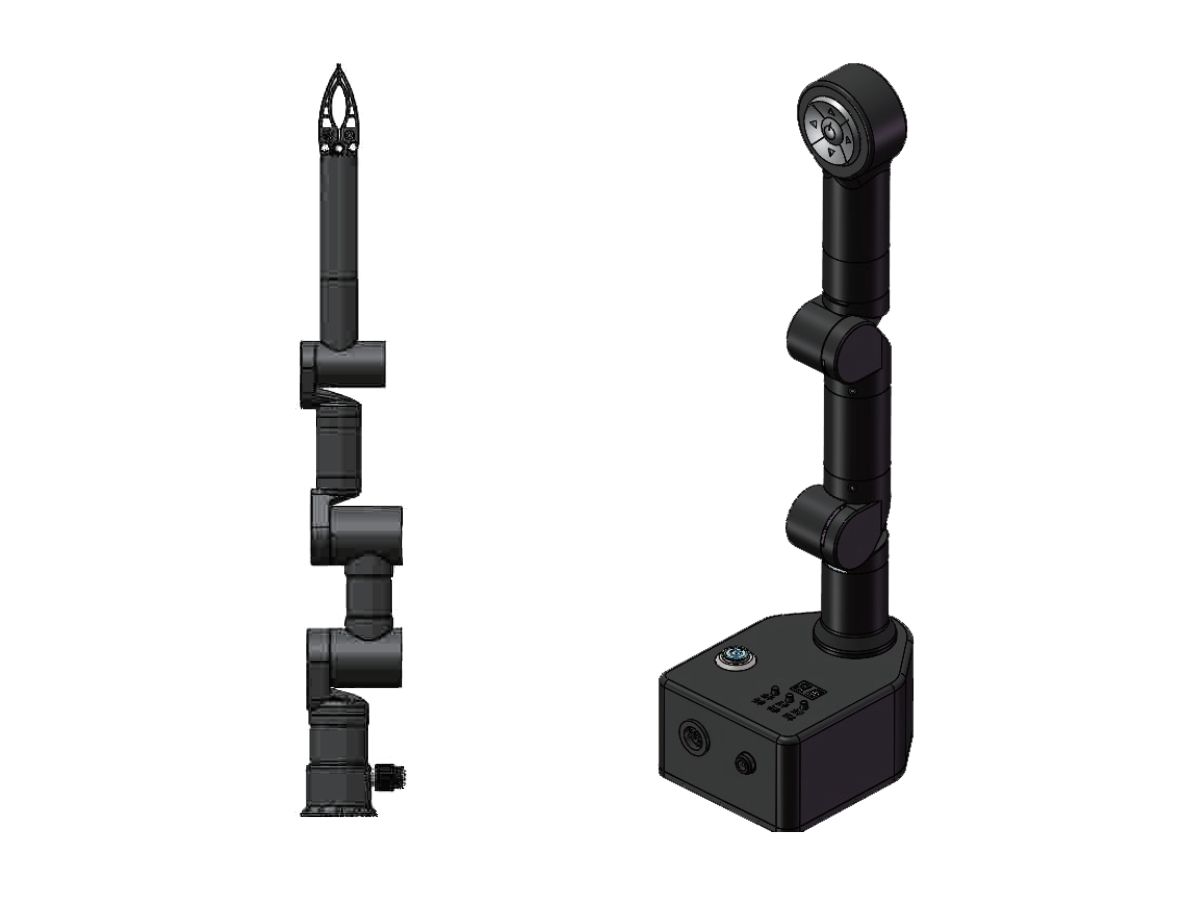
Built from lightweight high-strength materials, it weighs 23–82 kg in air and as low as 9 kg underwater (X5), significantly reducing ROV load. It combines precision, reach, and payload capacity for offshore applications such as pipeline alignment, valve operation, cable installation, and structural maintenance.Details- HONPINE S Series Underwater Collaborative RobotThe HONPINE S Series underwater collaborative robot is designed for a wide range of subsea operations, covering tasks from flexible cooperation to precision manipulation with a scalable 2+1 to 6+1 DOF architecture. Built from AL6061 hard anodized aluminum alloy, it supports up to 300 m waterproof depth while maintaining very low underwater weight of 1.9–3.3 kg and a 3 kg payload capacity for stable compact deployment.
The S3 offers a balanced weight-to-performance design for installation and cutting assistance. The S5 is optimized for grasping and non-destructive testing with underwater payload exceeding its dry weight. The S7 delivers ≤0.1 mm repeatability, ROS support, and flexible mounting for high-precision control. Together, the S Series covers cooperative handling to advanced subsea manipulation.
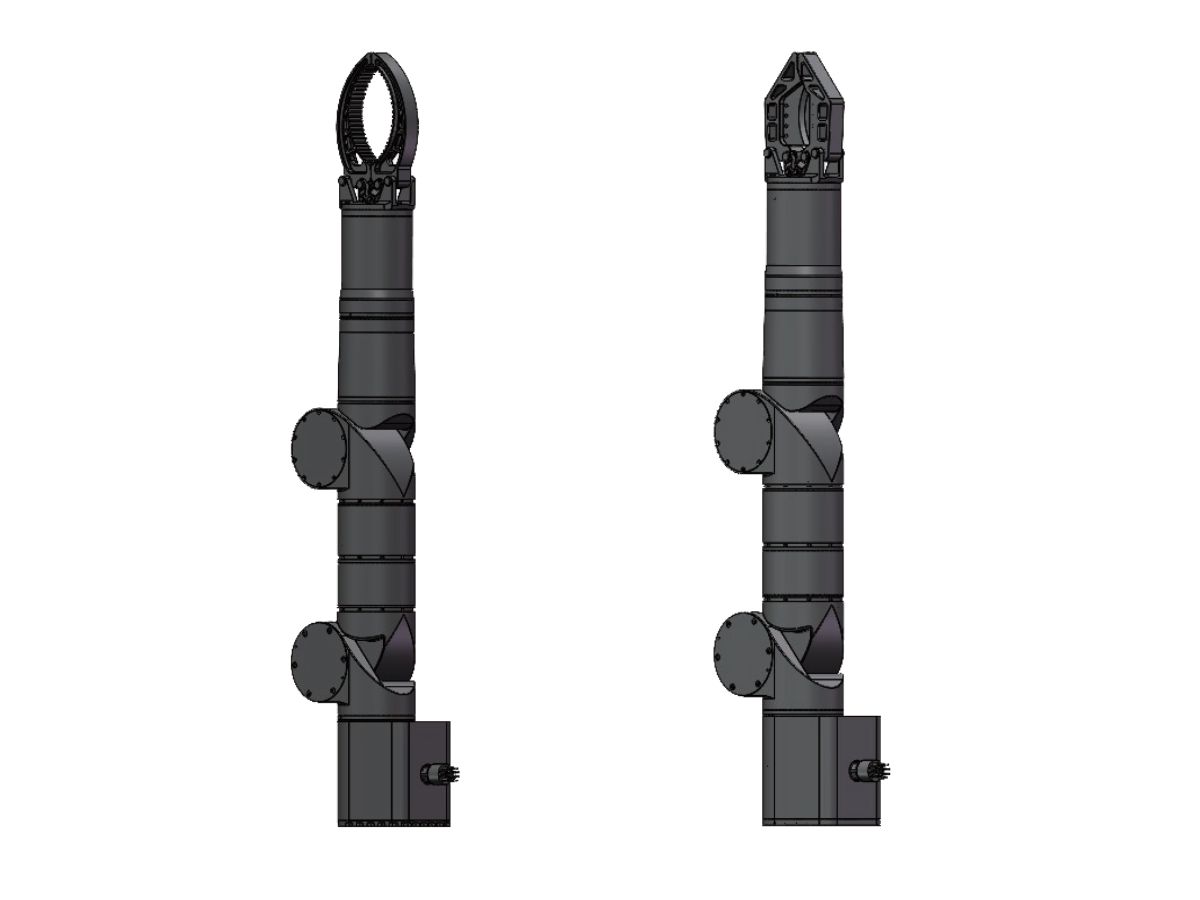
This underwater collaborative robotic system is designed for marine engineering, research, and underwater maintenance applications requiring flexibility and precision.Details - HONPINE M Series Heavy-Duty Underwater Collaborative RobotThe HONPINE M Series underwater collaborative robot is a heavy-duty subsea system for offshore operations, featuring a 4+1 DOF design for high-load tasks such as component handling, installation, and subsea cutting.
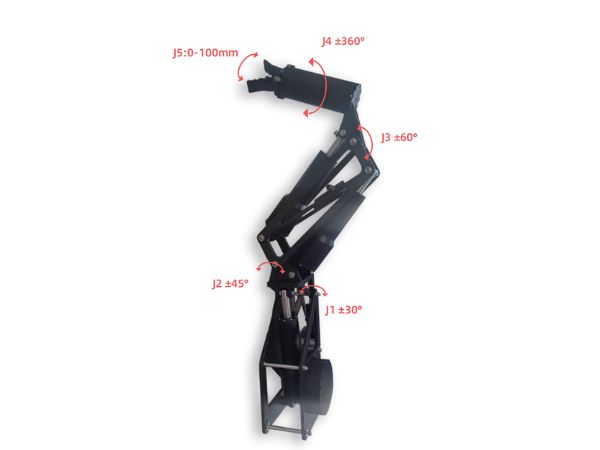
Made from AL6061 aerospace-grade aluminum with hard anodized treatment, it offers strong corrosion resistance. The system weighs 15 kg in air and 8 kg underwater, reducing ROV load, while delivering 12 kg payload, 1000 N gripping force, 1500 N cutting force, and 30 N·m wrist torque. The J5 joint provides a 0–200 mm range, and it operates at depths up to 300 m.
It uses servo motors, supports position control and ROS integration, and is compatible with master-slave teleoperation for intuitive remote operation. This underwater robotic arm system is designed for high-intensity offshore applications requiring strength, precision, and flexible control.Details  HONPINE L Series Underwater Robotic ManipulatorThe HONPINE L Series is a light-duty underwater robotic manipulator for subsea operations, available in L10, L20, and L40 models with 5-DOF design. It covers 10–40 kg payloads and 800–1200 mm reach options for flexible deployment.
Rated for 300 m depth, it uses servo drive and supports point-to-point and trajectory control, with teach, offline, and drag programming modes.
Built from lightweight materials, it weighs 24–45 kg in air and as low as 16 kg underwater (L10), reducing ROV load. It provides up to 10 N·m wrist torque and 2500 N gripping force (L40) for stable operation.
With an X86 controller supporting EtherCAT and CANopen, it enables dual-robot control and open API integration for inspection, assembly, cleaning, and cutting tasks.Details
Deep-Sea Waterproof Robotic Arm
The Deep-Sea Waterproof Robotic Arm is a specialized underwater robotic manipulator designed for integration with ROVs (Remotely Operated Vehicles), AUVs (Autonomous Underwater Vehicles), crewed submersibles, and other marine robotic platforms. Featuring advanced sealing technology and corrosion-resistant construction, it performs complex underwater operations in high-pressure, high-salinity, and harsh deep-sea environments, replacing manual intervention where human access is difficult or impossible.
As a critical subsea automation solution, it serves as an indispensable tool for deep-ocean exploration, offshore engineering, underwater inspection, marine resource development, and scientific research.
Structural Features of HONPINE Underwater Cobots
Advanced Waterproof Sealing
The robotic arm utilizes zero-leakage dynamic dry sealing technology combined with specialized sealing materials across all mechanical interfaces, effectively preventing seawater intrusion. Selected models are designed to operate at depths of up to 1,000 meters.
Corrosion- and Pressure-Resistant Construction
The main structure is manufactured from high-strength titanium alloys, stainless steel, and other marine-grade corrosion-resistant materials, providing excellent resistance to seawater corrosion and extreme hydrostatic pressure while ensuring long-term operational reliability.
Highly Flexible Modular Joint Design
Its modular joint architecture integrates high-precision rotary and linear transmission mechanisms, allowing multiple degrees of freedom for complex bending, extension, and manipulation tasks. Certain models incorporate embedded joint sensors for overload protection, condition monitoring, and fault self-diagnosis.
Electric and Hydraulic Drive Options
The underwater manipulator is available in two drive configurations:
- Electric Drive – Compact, lightweight, and highly precise, ideal for small underwater vehicles and scientific platforms.
- Hydraulic Drive – Delivers high output force and rapid response, making it suitable for large ROVs, AUVs, and crewed deep-sea submersibles performing heavy-duty underwater operations.
Key Advantages of Deep Water Cobots
Outstanding Performance in Extreme Marine Environments
Engineered for reliable operation in deep-water environments of up to 1,000 meters, the manipulator withstands extreme pressure, seawater corrosion, and strong ocean currents, enabling underwater tasks far beyond the limits of human diving.
High Payload with Precision Manipulation
Mainstream domestic models can achieve payload capacities of up to 100 kg while maintaining millimeter-level positioning accuracy, providing an ideal combination of heavy-load handling and precision underwater manipulation.
Safe, Efficient, and Environmentally Friendly
The robotic arm can safely access confined, hazardous, or difficult-to-reach underwater locations, significantly reducing risks associated with deep-sea diving while improving operational efficiency several times over. Compared with conventional oil-filled wet sealing systems, its dry-sealing technology eliminates the risk of hydraulic oil leakage, helping protect fragile marine ecosystems.
Applications of underwater cobot
Deep-Sea Resource Exploration
Collects minerals, biological specimens, geological samples, and seabed materials with high precision, supporting marine scientific research and deep-sea mineral resource exploration.
Offshore and Subsea Engineering
Performs critical underwater tasks including:
- Subsea pipeline installation and connection
- Underwater valve operation
- Offshore wind turbine installation
- Inspection and maintenance of subsea infrastructure
- Deep-water oil and gas field development
- Underwater Search, Rescue, and Salvage
Supports rapid localization and recovery of sunken vessels, disabled submersibles, and underwater equipment, while performing emergency response and deep-sea salvage missions.
Marine Environmental Protection
Precisely removes abandoned fishing gear, marine debris, and underwater waste, helping reduce ocean pollution and protect sensitive marine habitats.
Underwater Robotic Arm FAQ
Honpine Underwater Robotic Arms can be customized to meet different application requirements. Our standard underwater robotic arm supports operating depths from 0 to 1,000 meters. For projects requiring greater depths or specialized subsea environments, our engineering team can develop customized solutions based on your application.
Yes. Our underwater robotic arm is designed for continuous underwater operation. Depending on the working environment, operating cycle, and mission profile, we can recommend the most suitable configuration to ensure reliable long-term performance.
The pressure resistance of each underwater robotic manipulator is designed according to its intended operating depth. Honpine provides customized pressure-resistant designs to meet different underwater application requirements.
Yes. Our deep-sea robotic arm is suitable for underwater operations at depths of up to 1,000 meters, making it ideal for offshore engineering, subsea inspection, marine research, and other professional underwater applications.
Yes. The underwater robot arm is specifically designed for seawater environments and is widely used in offshore engineering, marine inspection, subsea maintenance, and other ocean applications.
Yes. The marine robotic arm can be configured to operate in low-temperature and high-pressure underwater environments. The design can be optimized according to the specific operating conditions of each project.
The underwater robotic arm is designed with an IP67 protection rating and incorporates professional sealing technology to provide reliable protection in underwater operating environments.
Honpine underwater robotic manipulators utilize advanced Dry Dynamic Sealing Technology, which effectively protects critical internal components and ensures stable performance during underwater operation.
Our underwater manipulator features a professionally engineered sealing structure. Critical transmission components are fully sealed to prevent seawater ingress, improving reliability and extending service life.
The underwater robotic arm uses an integrated internal cable routing design. All cable connectors are located inside the robotic arm, reducing external connection points and improving waterproof performance and long-term reliability.
Yes. Every underwater robotic arm undergoes long-term immersion and reliability testing during product development to ensure dependable performance in demanding underwater environments.
To ensure reliable operation in marine environments, Honpine optimizes material selection, structural design, and sealing solutions to improve the corrosion resistance of every marine robotic arm.
The underwater robotic arm currently supports Ethernet communication, allowing easy integration with underwater control systems, automation platforms, and subsea robotic solutions.
Yes. The performance of the underwater robot arm in ocean currents depends on factors such as payload, installation platform, and operating conditions. Our engineering team can recommend the appropriate model based on your project requirements.
Yes. The underwater robotic arm is suitable for turbid water and low-visibility underwater environments. The overall operational performance depends on the vision, sonar, or sensing equipment integrated into the system.
Yes. Honpine can customize the deep-sea robotic arm according to the required operating depth and pressure conditions, ensuring reliable performance in high-pressure underwater environments.
Yes. We provide customized underwater robotic arm solutions for various operating depths to meet the specific requirements of different underwater projects.
Yes. Honpine offers customized underwater robotic manipulators with different degrees of freedom (DOF) to suit various underwater manipulation tasks and operational requirements.
Yes. The payload of the underwater robot arm can be customized according to the weight of the tools, objects, and operational requirements of your application.
Yes. The reach and working radius of our underwater robotic arm can be customized to accommodate different installation spaces and underwater operating environments.
Honpine specializes in the design and manufacturing of high-performance Underwater Robotic Arms and Underwater Robotic Manipulators. We provide professional robotic arm solutions while supporting interface integration with customer ROV, AUV, and underwater robotic systems.
Yes. Our ROV manipulator and AUV manipulator solutions feature open interface designs, enabling seamless integration with various Remotely Operated Vehicles (ROVs), Autonomous Underwater Vehicles (AUVs), and other subsea robotic platforms.