








In-Depth Analysis of Core AGV Mobility Components: Technical Applications and Selection Logic of Drive Wheels, Steering Wheels, and Casters
The article analyzes the technical characteristics, advantages, limitations, and selection logic of AGV drive wheels, steering wheels, and casters, explaining how these three core mobility components determine AGV precision, flexibility, load capacity, and overall system performance.
In intelligent manufacturing and intralogistics automation scenarios, the mobility system of an AGV (Automated Guided Vehicle) directly determines its motion accuracy, load capacity, spatial adaptability, and overall cost efficiency.
As the three core components of AGV mobility systems, drive wheels, steering wheels, and casters play a critical role in AGV design and application. Their technical characteristics, application suitability, and selection logic are key engineering considerations.
Differential Drive Systems: Technical Characteristics and Application Boundaries
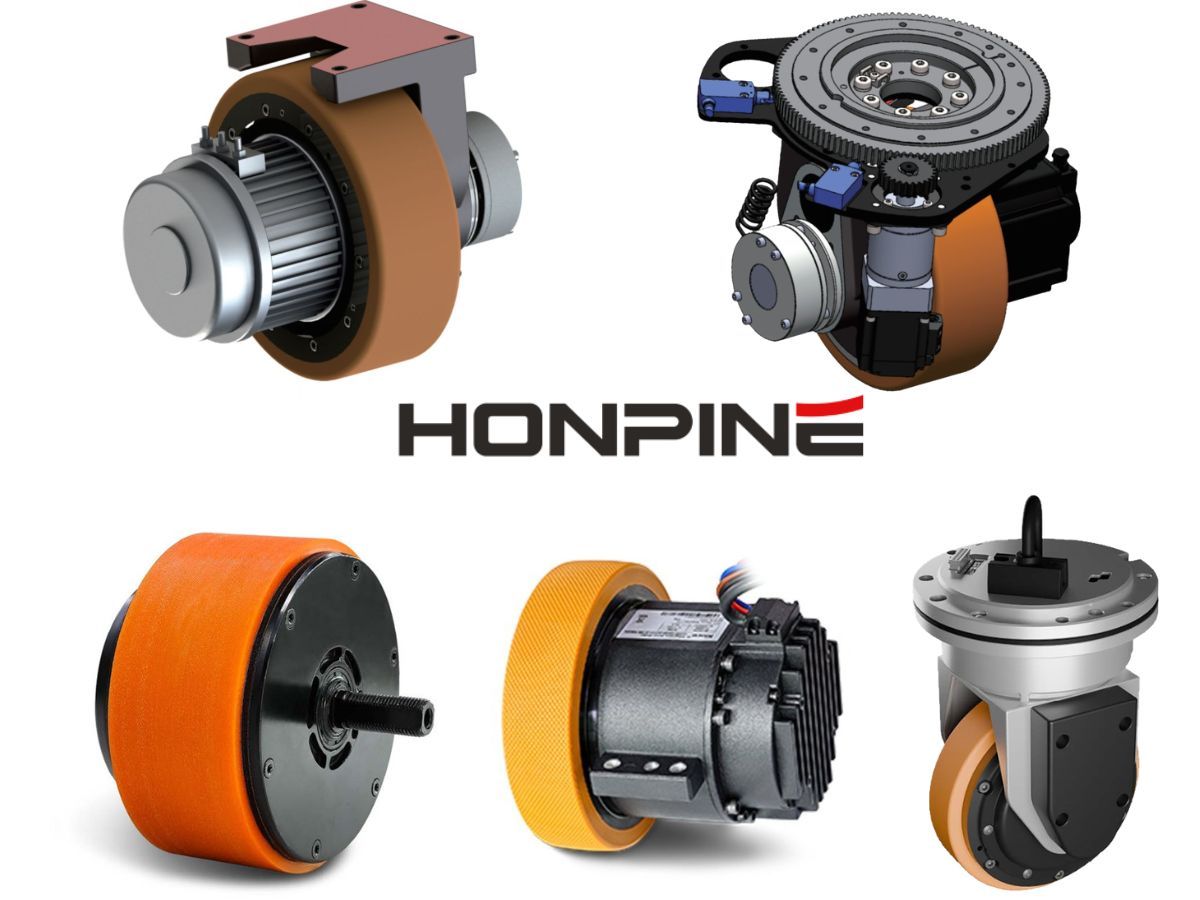
Drive wheels are the core power output components of an AGV. Differential drive is currently the most mainstream motion solution for small and medium-load AGVs, enabling steering and movement control through the speed difference between the left and right wheels.
1. Core Motion Principle of Differential Drive
In a differential-drive AGV, actions such as steering, straight-line movement, and zero-radius rotation are entirely determined by the linear velocity difference between the two wheels.
The core motion relationship is:
ΔV = VL − VR
Where:
ΔV = linear velocity difference between the two wheels
VL = linear velocity of the left drive wheel
VR = linear velocity of the right drive wheel
When the two wheels rotate in opposite directions at equal speed, the AGV can achieve zero-radius rotation. The angular velocity satisfies:
ω = (VL − VR) / L
Where:
ω = angular velocity
L = center distance between the two drive wheels
2. Technical Advantages and Disadvantages of Differential Drive Wheels
Core Advantages
High motion flexibility
Supports zero-radius rotation and small turning radius, making it suitable for narrow workshop environments.
Low control complexity
Requires relatively lower motor precision and servo control capability, without the need for an independent steering mechanism.
Significant cost advantage
Simple structure and high component standardization help reduce overall BOM cost.
Core Limitations
Limited positioning accuracy
Wheel speed deviations and uneven floor friction can accumulate positioning errors, making it unsuitable for high-precision docking applications.
Restricted motion stability
Side slip can occur during high-speed turning, and trajectory deviation becomes more pronounced under heavy loads.
Weak scalability
Forward/reverse motion often requires redundant drive assemblies, and omnidirectional movement cannot be achieved.
3. Typical Applications of Differential Drive Wheels
Small and medium-load AGVs (≤500 kg) with relatively low positioning accuracy requirements
Early-stage line-following and towing AGVs
Cost-sensitive and simple automation retrofit projects
Steering Wheels: The High-End Integrated Driving and Steering Solution
AGV steering wheels integrate driving, steering, and load-bearing functions into a highly integrated module. They are the core solution for omnidirectional AGV movement and represent one of the most iconic technologies in high-end AGVs.
4,Key Technical Reasons for the Limited Early Adoption of Steering Wheels
1. Size and Installation Height Constraints
Early imported steering wheel modules typically had a minimum installation height exceeding 200 mm, while low-profile latent AGVs generally required chassis heights below 150 mm with payloads below 500 kg. The dimensional mismatch limited practical integration.
2. Limited Functional Demand in Early Applications
In early automotive manufacturing scenarios, single-direction line following was dominant, and differential drive systems were sufficient.
Bidirectional motion required dual differential drive assemblies, increasing both cost and complexity, which reduced the practical advantages of steering wheel systems at the time.
3, Core Technical Advantages of Steering Wheels
Omnidirectional movement capability
Independent steering and driving functions support 360° steering, enabling lateral movement, diagonal movement, and zero-radius rotation for extremely confined spaces.
High motion accuracy
Integrated servo steering systems can achieve positioning accuracy up to ±5 mm, meeting high-precision production line docking requirements.
High structural integration
A single steering wheel module can replace multiple differential drive assemblies, simplifying chassis structures and improving space utilization.
Strong load adaptability
Suitable for applications ranging from light-duty AGVs to heavy-duty industrial AGVs with outstanding industrial-grade reliability.
4, Development Trends of Steering Wheel Technology
Miniaturization
Domestic manufacturers have overcome height limitations and introduced ultra-low-profile steering wheel modules below 100 mm, suitable for latent AGVs.
Modularization
Integrated designs combining drive, steering, braking, and sensing functions enable plug-and-play deployment.
Higher precision
With absolute encoders, steering repeatability can reach ≤ ±0.1°.
5,Typical Applications of Steering Wheels
Omnidirectional latent AGVs
Lift-type AGVs
Automotive manufacturing, 3C electronics, and new energy industries requiring high precision and compact maneuverability
Heavy-duty AGVs with payloads ≥1000 kg
Casters: Critical Supporting Components for AGV Stability
Casters (idler wheels) are passive components without driving or steering capability. They mainly provide load support, stability, and following motion functions, serving as essential stabilizing components in AGV mobility systems.
Caster selection directly affects overall vehicle smoothness, service life, and operational stability.
6,Key Technical Considerations for Caster Selection
Material Selection
PU (polyurethane) wheels are suitable for cleanroom environments; rubber wheels for rough floors; nylon wheels for heavy-load applications.
Structural Configuration
Fixed casters improve straight-line stability, while swivel casters enhance maneuverability. Appropriate combinations should be selected according to
application requirements.
Precision
Bearing precision and wheel roundness directly affect operating noise and trajectory deviation.
7,Typical Applications of Casters
Passive support for all AGV chassis systems
Fully passive lightweight AGV platforms (without powered drive wheels)
Auxiliary load-bearing components in heavy-duty AGVs
Technical Comparison and Selection Guide for the Three Core Components
Component Type Motion Capability Control Accuracy Cost Level Suitable Load
Core Selection Principles
Cost priority with low precision requirements
→ Differential drive wheels + swivel casters
Limited space with high precision requirements
→ Steering wheels + fixed casters
Heavy-duty and large-tonnage applications
→ Multiple steering wheel modules + heavy-duty casters
Future Trends in AGV Mobility Systems
The evolution of AGV mobility systems is essentially driven by continuous performance improvements and optimization of drive wheels, steering wheels, and caster technologies.
Differential drive wheels dominate the low-end market due to their cost advantages.
Steering wheels have become the core technology of high-end AGVs because of their omnidirectional and high-precision capabilities.
Casters continue to play an indispensable supporting role across all AGV platforms.
Under the trend of intelligent manufacturing upgrades, steering wheel technology is rapidly evolving toward:
Miniaturization
Integration
Higher precision
Meanwhile:
Differential drive systems are becoming more application-specific and cost-focused.
Casters are advancing toward higher load capacity, lower noise, and longer service life.
The collaborative optimization of these three core components represents the key technological pathway for improving overall AGV performance.
Read More
Learn more about the story of HONPINE and industry trends related to precision transmission.
 What is robot joint actuator?How to Choose the Best Robot Rotary Joint Actuator?In core robot joint transmission solutions, planetary and harmonic rotary actuators each have their own strengths. Choosing the right type based on application requirements is essential to achieve the optimal balance between performance and cost.
 DD Motors VS Harmonic Rotary ActuatorsThis article provides an in-depth comparison between Direct Drive (DD) motors and harmonic rotary actuators, covering their transmission principles, advantages and disadvantages, and typical application fields.
 OMG Ultra Compact Harmonic Drive Joint Module with Built-in Torque SensorHONPINE TCHL series harmonic drive joint module is a game-changing product that achieves disruptive improvements in multiple aspects such as lightweight design, integration level, and connection convenience. This article will analyze its revolutionary enhancements with you.
 The Role of Harmonic Drive Gears in Achieving 5–10 μm Accuracy in Dental Milling MachinesA dental milling machine is a CNC machining system used to directly process digital dental models into restorations such as crowns, bridges, veneers, inlays, and implant abutments. Dental milling machines require far higher operational accuracy and motion stability than ordinary equipment. This article explains how harmonic drive gear help dental milling machines achieve stable, continuous, and controllable operation.
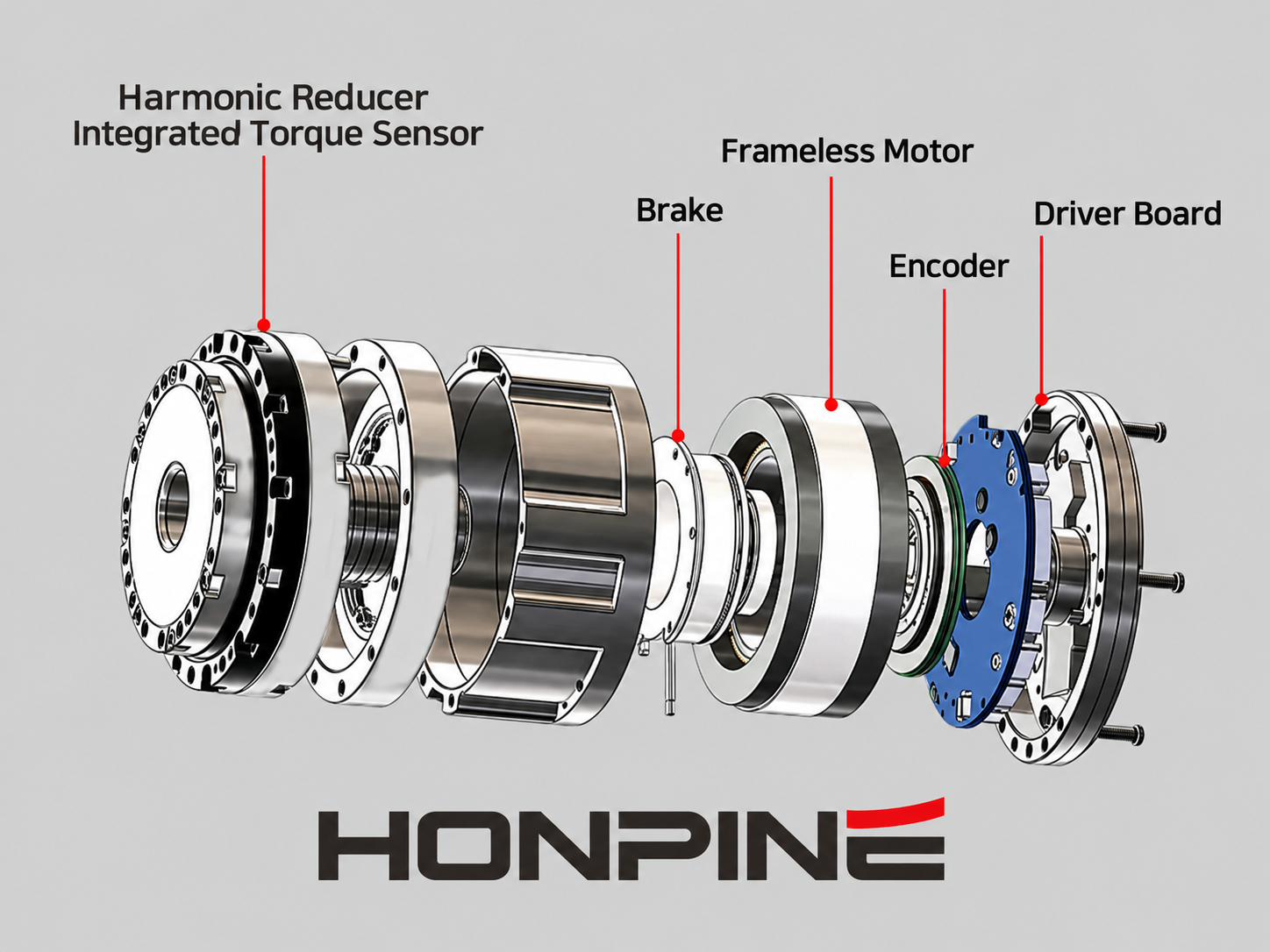
 Why Are Harmonic Rotary Actuators Perfect for Medical Equipment?Harmonic rotary actuators (typically integrated systems consisting of a harmonic drive reducer, frameless torque motor, encoder, and optional brake) are regarded as key components in medical equipment. The core reason is that they simultaneously meet the most stringent medical requirements for precision, compact size, safety, and controllability. The following explanation is structured from three perspectives: technical characteristics, application scenarios, and medical value.
 High-Precision RV Reducers Perfectly Matched for Walking RobotsThe walking axis of a robot is a core component for power transmission and support. RV reducers provide extremely high rigidity, precision, and torque while maintaining a compact size and exceptional reliability, making them an ideal match for the demanding requirements of walking robot joints in terms of load capacity, impact resistance, and precision.
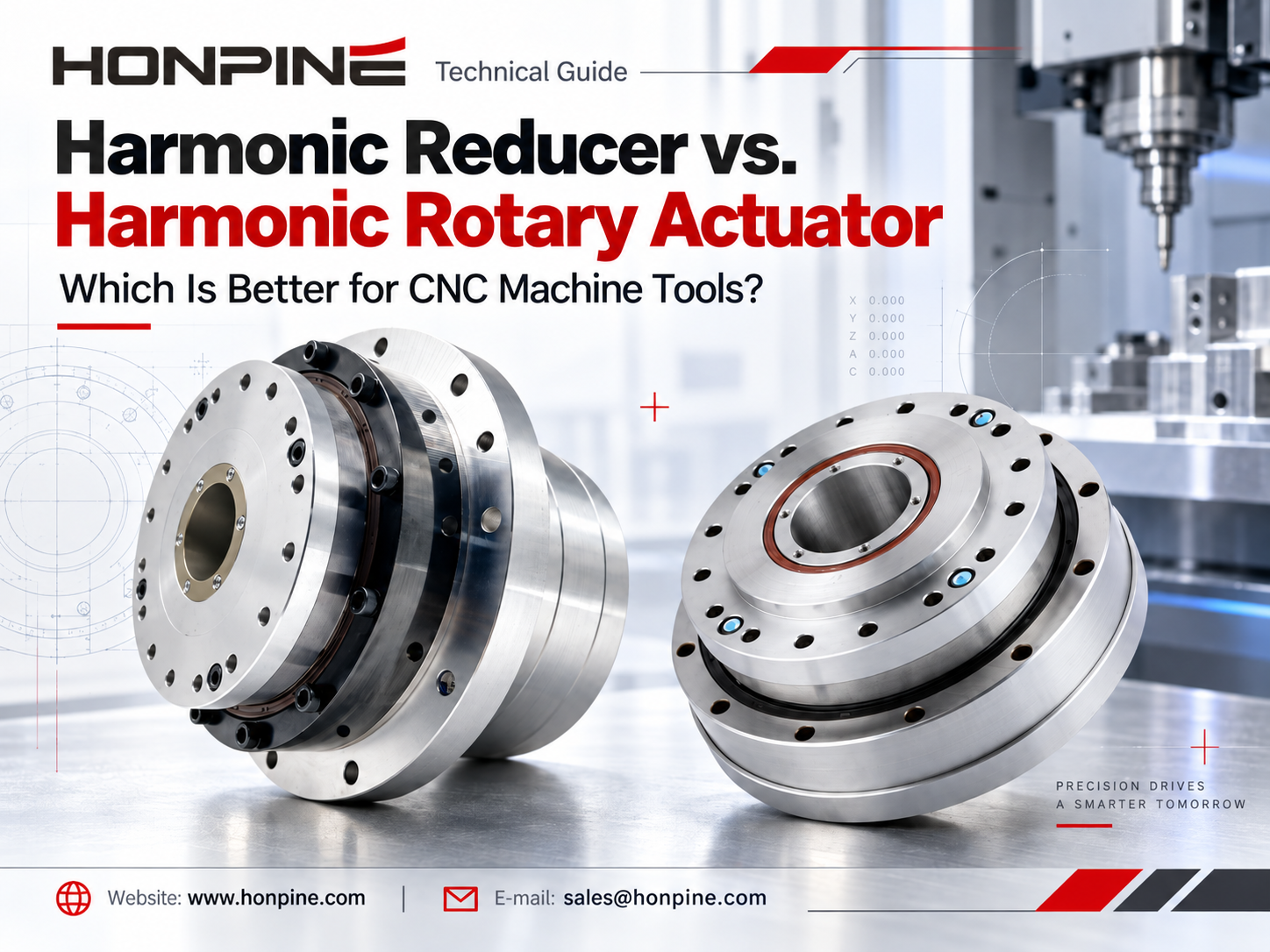
 Harmonic Reducer vs. Harmonic Rotary Actuator: Which Is Better for CNC Machine Tools?Choosing between a harmonic reducer and a harmonic rotary actuator is an important decision in CNC machine tool design. Both solutions offer high-precision motion control, but they differ in integration, installation requirements, rigidity, and system flexibility. For CNC fourth-axis rotary tables and compact five-axis machining systems, selecting the right harmonic drive can significantly influence machine performance. In this article, HONPINE Technical Director Theodore Li compares harmonic reducers and harmonic rotary actuators to help engineers identify the most suitable solution for their CNC applications.
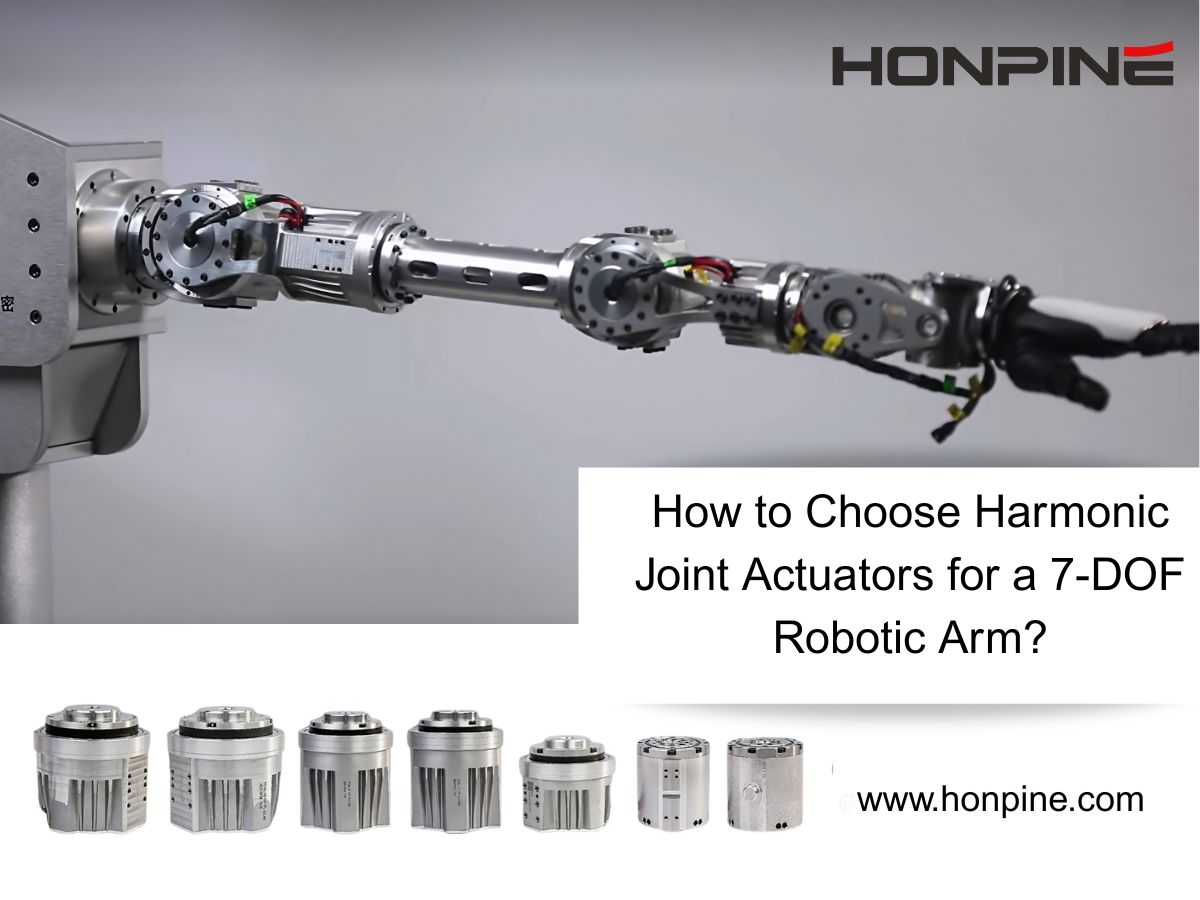
 How to Choose Harmonic Joint Actuators for a 7-DOF Robotic Arm?I'm Theodore Li, Technical Director at HONPINE. Choosing harmonic joint actuators for a 7-DOF robotic arm starts with the torque, weight, and installation needs of each joint. This guide uses a TCHL 20 shoulder and TCHL 14 wrist configuration as an example, then explores torque sensing, compliant control, and HAG Series considerations for demanding robotic applications.
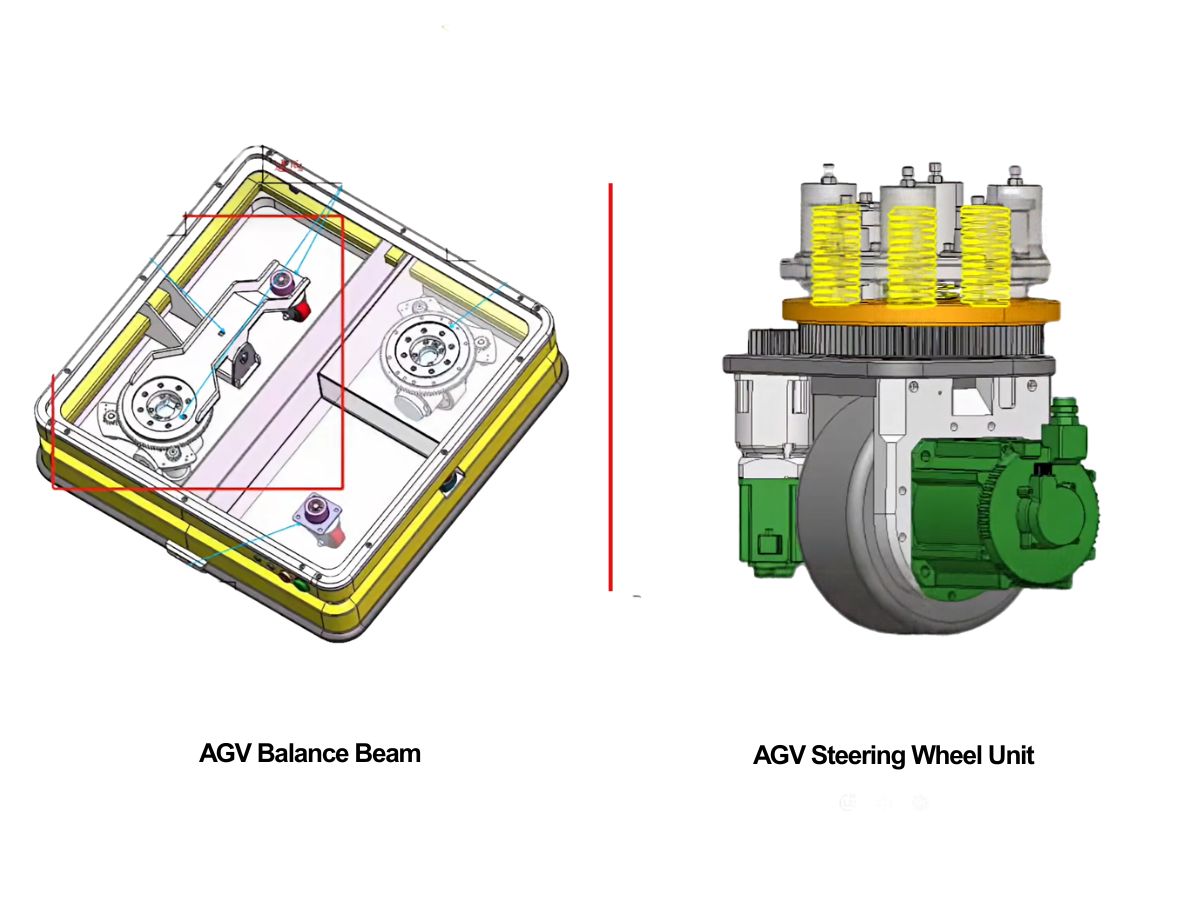
 AGV Suspension: Should You Choose a Balance Beam or a Spring-Loaded Steering Drive Unit?Choosing an AGV suspension system starts with the vehicle’s load range and floor conditions. Balance beams and spring-loaded steering drive units offer different approaches to maintaining wheel contact and managing wheel loads. This HONPINE guide compares both options and explains how to evaluate traction, suspension travel, installation space, and maintenance before choosing a configuration.
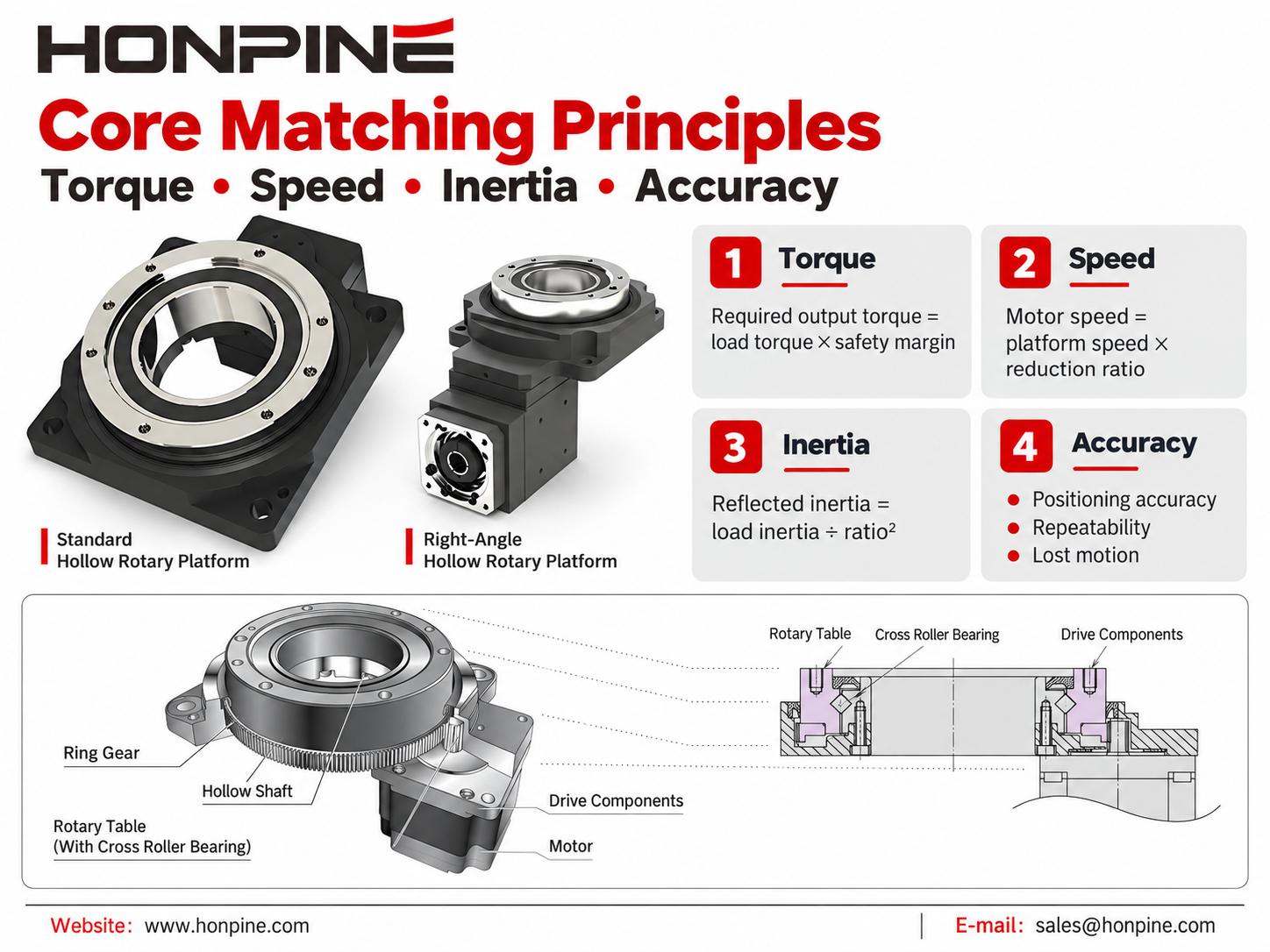
 Hollow Rotary Platform Motor Matching: A Complete GuideSelecting the right motor for a hollow rotary platform is essential for achieving precise positioning, stable operation, and efficient automation. This guide explains how to match servo motors, stepper motors, and brushless DC motors with hollow rotary platforms based on torque, speed, inertia, accuracy, and installation requirements. Explore practical motor selection guidelines, typical application combinations, and space-saving mounting solutions to find the right configuration for your automation project.
 Can Robots Feel Touch? HONPINE HAG Force-Controlled Harmonic Robot Joint MotorsCan robots respond to a gentle touch? The HONPINE HAG robot joint motor with torque sensor combines a harmonic reducer, integrated torque sensing, and closed-loop control to detect external forces and support smooth, compliant motion. In this article, HONPINE founder Allen Li demonstrates the module's response to light contact and hand-guided movement, explains its key force-control technologies, and shares the vision behind joint modules designed for practical industrial robotics.
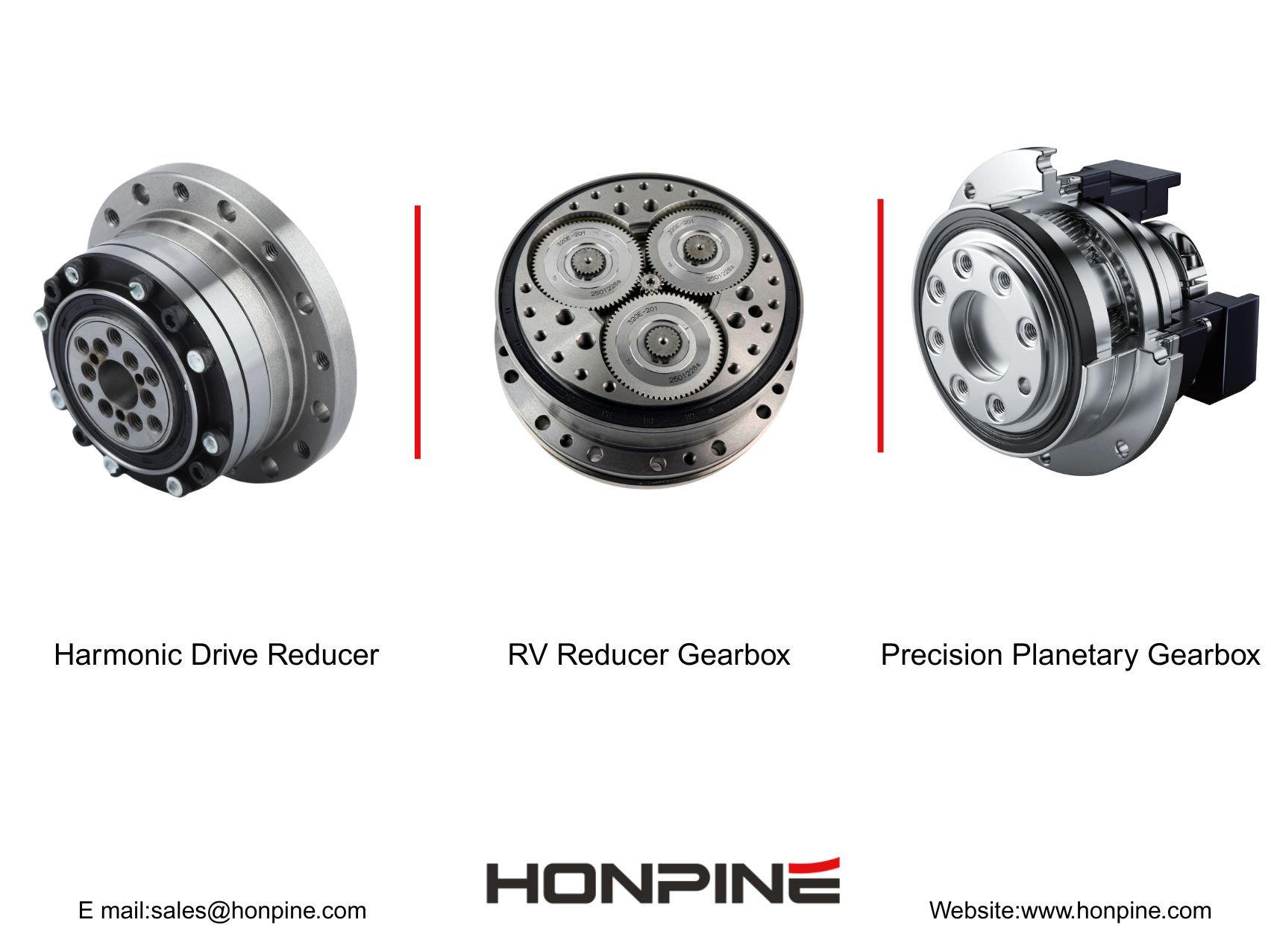
 Does a Higher Gearbox Ratio Mean More Torque? Planetary, Harmonic, and RV Gearboxes ExplainedDoes a higher gearbox ratio mean more torque? This engineering guide explains the relationship between gearbox ratio, output torque, and output speed, and compares planetary gearboxes, harmonic gearboxes, and RV gearboxes. Learn why reduction ratio alone cannot determine gearbox torque capacity, efficiency, dynamic response, precision, or service life, and what engineers should consider when selecting a gearbox for robotics, CNC machines, servo systems, and industrial motion control.
Double Click
We provide harmonic drive reducer,planetary reducer,robot joint motor,robot rotary actuators,RV gear reducer,robot end effector,dexterous robot hand
 What is robot joint actuator?How to Choose the Best Robot Rotary Joint Actuator?In core robot joint transmission solutions, planetary and harmonic rotary actuators each have their own strengths. Choosing the right type based on application requirements is essential to achieve the optimal balance between performance and cost.
 DD Motors VS Harmonic Rotary ActuatorsThis article provides an in-depth comparison between Direct Drive (DD) motors and harmonic rotary actuators, covering their transmission principles, advantages and disadvantages, and typical application fields.
 OMG Ultra Compact Harmonic Drive Joint Module with Built-in Torque SensorHONPINE TCHL series harmonic drive joint module is a game-changing product that achieves disruptive improvements in multiple aspects such as lightweight design, integration level, and connection convenience. This article will analyze its revolutionary enhancements with you.
 Harmonic Reducer vs. Harmonic Rotary Actuator: Which Is Better for CNC Machine Tools?Choosing between a harmonic reducer and a harmonic rotary actuator is an important decision in CNC machine tool design. Both solutions offer high-precision motion control, but they differ in integration, installation requirements, rigidity, and system flexibility. For CNC fourth-axis rotary tables and compact five-axis machining systems, selecting the right harmonic drive can significantly influence machine performance. In this article, HONPINE Technical Director Theodore Li compares harmonic reducers and harmonic rotary actuators to help engineers identify the most suitable solution for their CNC applications.
 How to Choose Harmonic Joint Actuators for a 7-DOF Robotic Arm?I'm Theodore Li, Technical Director at HONPINE. Choosing harmonic joint actuators for a 7-DOF robotic arm starts with the torque, weight, and installation needs of each joint. This guide uses a TCHL 20 shoulder and TCHL 14 wrist configuration as an example, then explores torque sensing, compliant control, and HAG Series considerations for demanding robotic applications.
 AGV Suspension: Should You Choose a Balance Beam or a Spring-Loaded Steering Drive Unit?Choosing an AGV suspension system starts with the vehicle’s load range and floor conditions. Balance beams and spring-loaded steering drive units offer different approaches to maintaining wheel contact and managing wheel loads. This HONPINE guide compares both options and explains how to evaluate traction, suspension travel, installation space, and maintenance before choosing a configuration.
 Hollow Rotary Platform Motor Matching: A Complete GuideSelecting the right motor for a hollow rotary platform is essential for achieving precise positioning, stable operation, and efficient automation. This guide explains how to match servo motors, stepper motors, and brushless DC motors with hollow rotary platforms based on torque, speed, inertia, accuracy, and installation requirements. Explore practical motor selection guidelines, typical application combinations, and space-saving mounting solutions to find the right configuration for your automation project.
 Can Robots Feel Touch? HONPINE HAG Force-Controlled Harmonic Robot Joint MotorsCan robots respond to a gentle touch? The HONPINE HAG robot joint motor with torque sensor combines a harmonic reducer, integrated torque sensing, and closed-loop control to detect external forces and support smooth, compliant motion. In this article, HONPINE founder Allen Li demonstrates the module's response to light contact and hand-guided movement, explains its key force-control technologies, and shares the vision behind joint modules designed for practical industrial robotics.
 Does a Higher Gearbox Ratio Mean More Torque? Planetary, Harmonic, and RV Gearboxes ExplainedDoes a higher gearbox ratio mean more torque? This engineering guide explains the relationship between gearbox ratio, output torque, and output speed, and compares planetary gearboxes, harmonic gearboxes, and RV gearboxes. Learn why reduction ratio alone cannot determine gearbox torque capacity, efficiency, dynamic response, precision, or service life, and what engineers should consider when selecting a gearbox for robotics, CNC machines, servo systems, and industrial motion control.
 High-Precision Hollow Harmonic Rotary Actuator for CNC Machines and Heavy-Duty Rotary AxesHONPINE 58 Series Hollow Harmonic Rotary Actuator is designed for CNC rotary tables, precision rotary axes, laser processing equipment, and heavy-duty rotary positioning applications. With a 50 mm hollow bore, up to 2,722 N·m peak torque, integrated crossed roller bearing, multi-turn absolute encoder options, positioning accuracy below 30 arcsec, and repeat positioning accuracy below 5 arcsec, it combines high torque capacity with precision rotary motion and flexible mechanical integration.
 How Does the HONPINE JRM Planetary Robot Joint Module Address Temperature Rise in Continuous Operation?HONPINE JRM planetary robot joint modules are designed for long-duration and high-load robotic operation. This article examines how motor electromagnetic optimization, high-efficiency planetary transmission, GaN-based drive technology, and system-level low-loss design help control temperature rise. Using the C6345 planetary robot joint module as a test example, HONPINE also presents full-load thermal validation under continuous operation, including motor efficiency up to 92%, planetary gearbox efficiency up to 97%, and a final equilibrium temperature of 61.42°C at a 25°C ambient temperature.
 Direct Drive Motor Sizing: A Complete Guide to Torque Calculation and SelectionSelecting a direct drive motor for a precision rotary system requires more than matching motor torque to the equipment weight. Engineers need to evaluate gravity torque, inertial torque, wind torque, friction, rotational inertia, speed, acceleration, duty cycle, and positioning requirements. In this guide, Theodore Li, Technical Director at HONPINE, explains a practical approach to direct drive motor sizing and torque calculation using an azimuth and elevation turntable as an engineering example. The article covers continuous and peak torque calculation, motor selection criteria, and the application of frameless direct drive motors in integrated rotary systems.