








ECHA Flags PFAS Risk in Harmonic Joint Motors
The timing of the broader regulatory outcome is not yet explicit in the available information, but the issue has become relevant after ECHA released a technical notice on July 4, 2026 targeting harmonic joint motors with fluoropolymer coatings for focused PFAS screening. Because these components are typically used in collaborative robot wrist assemblies, the development deserves attention from motor suppliers, robot manufacturers, procurement teams, compliance functions, and downstream buyers that may face new REACH-related information duties and declaration requirements if the substance review leads to SVHC candidate listing in the fourth quarter of 2026.
What the technical notice confirms at this stage
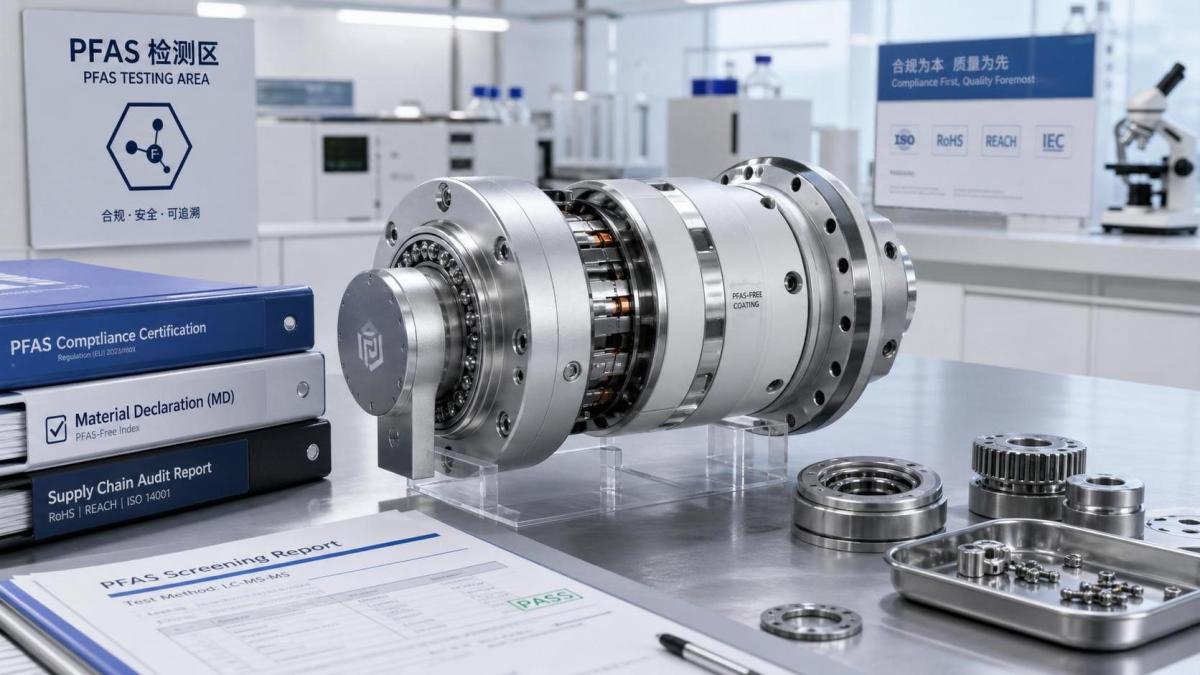
According to the provided information, the European Chemicals Agency (ECHA) issued a technical notice on July 4, 2026 and placed harmonic joint motors containing fluoropolymer coatings under key PFAS screening. The products referenced are described as typical for use in collaborative robot wrist applications.
The same information indicates that the assessment is expected to be completed in the fourth quarter of 2026, and that the reviewed substances may then be added to the SVHC candidate list. If that listing occurs, EU REACH supply-chain information communication obligations and downstream product compliance declaration requirements would be triggered.
Where the commercial and compliance pressure may appear first
Component suppliers may face earlier material disclosure requests
Analysis shows that suppliers of affected harmonic joint motors could be the first point of pressure because they are closest to the material composition and coating information. The practical impact is likely to center on substance identification, technical file completeness, customer declarations, and the ability to answer PFAS-related information requests in a form procurement and compliance teams can use.
Robot manufacturers may need to revisit product-level documentation
From an industry perspective, manufacturers using these motors in collaborative robot wrist assemblies may need to pay closer attention to how component-level substance information flows into product-level compliance records. What deserves closer attention is not only the component itself, but also whether downstream product declarations, tender documents, and delivery documentation remain aligned if the screening leads to candidate-list inclusion.
Procurement and sourcing teams may need tighter supplier review
For procurement functions, the issue is less about an immediate confirmed ban and more about screening exposure in the supply base. Observably, sourcing teams may need to check which suppliers can provide sufficiently clear coating and substance information, whether current purchase specifications are detailed enough, and how future delivery commitments could be affected if additional compliance statements become necessary.
Trade and supply-chain service providers may see more document-sensitive transactions
Exporters, distributors, and supply-chain service providers may also be affected where shipment files, customer declarations, and after-sales records depend on accurate material compliance statements. If the candidate-list step occurs, documentation quality and traceability may become more important in cross-border delivery and downstream customer communication.
What companies should monitor before Q4 2026
Check whether current compliance files can support substance-level inquiries
Analysis shows that companies handling the affected motors or products containing them should review whether existing technical documents, supplier statements, and internal compliance records are detailed enough to respond to PFAS-related questions. The current information does not confirm an executed listing yet, so this is best treated as preparation rather than proof of a final compliance outcome.
Track the exact wording of any later ECHA or REACH-related update
What deserves closer attention is the official wording that may follow the screening stage. If the review progresses toward SVHC candidate listing, the exact regulatory phrasing will matter for how companies interpret information transmission duties, downstream declarations, and product-level communication responsibilities.
Review contracts, specifications, and tender materials for disclosure gaps
Companies involved in purchasing, project delivery, or bid support may need to examine whether current specifications and tender files clearly address material disclosure responsibilities. This is particularly relevant where the affected motors are embedded into larger robotic systems and compliance responsibilities are split across several parties.
Prepare for possible effects on delivery planning and after-sales traceability
Observably, even before any formal listing outcome, companies may want to assess whether future delivery schedules, replacement-part planning, and after-sales traceability could become more document-intensive. That is not yet a confirmed market outcome, but it is a reasonable area for internal review given the stated screening focus.
Why this currently looks more like a regulatory signal than a finished rule change
It is more appropriate to understand this as a regulatory signal with practical implications rather than a fully settled compliance endpoint. The confirmed fact is that ECHA has started targeted PFAS screening for the specified motor category and indicated a possible Q4 2026 SVHC candidate-list outcome. Analysis shows that the market significance lies in the forward compliance consequences that could follow if that step is taken, especially for supply-chain information flow and downstream declarations.
From an industry perspective, continued attention is warranted because implementation pressure often appears first in customer questionnaires, procurement review, specification updates, and document requests, even before businesses see a final operational consensus across the market.
How this update is best interpreted now
At this stage, the development should be read as an early but concrete compliance warning for businesses connected to harmonic joint motors with fluoropolymer coatings. It does not yet confirm a final listing result, but it clearly signals that PFAS-related scrutiny is moving closer to a component category used in collaborative robotics. A measured reading is therefore appropriate: the rule consequence is conditional, while the need for document readiness and supplier visibility is immediate enough to justify attention now.
Basis of this article and points still requiring verification
This article is generated from the user-provided news title, event timing field, and event summary. The specific official source link was not provided in the input, so the exact originating document link still requires follow-up verification. For this type of development, commonly relevant source categories may include official regulatory notices, publications from supervisory authorities, trade or customs authority information, industry association updates, standard-setting documents, and reporting by authoritative sector media.
Further observation is still needed on any later policy detail, execution wording, certification or declaration practice, tender document changes, industry feedback, and how companies in the supply chain ultimately implement the requirements if the expected Q4 2026 review leads to SVHC candidate-list inclusion.
Read More
Learn more about the story of HONPINE and industry trends related to precision transmission.
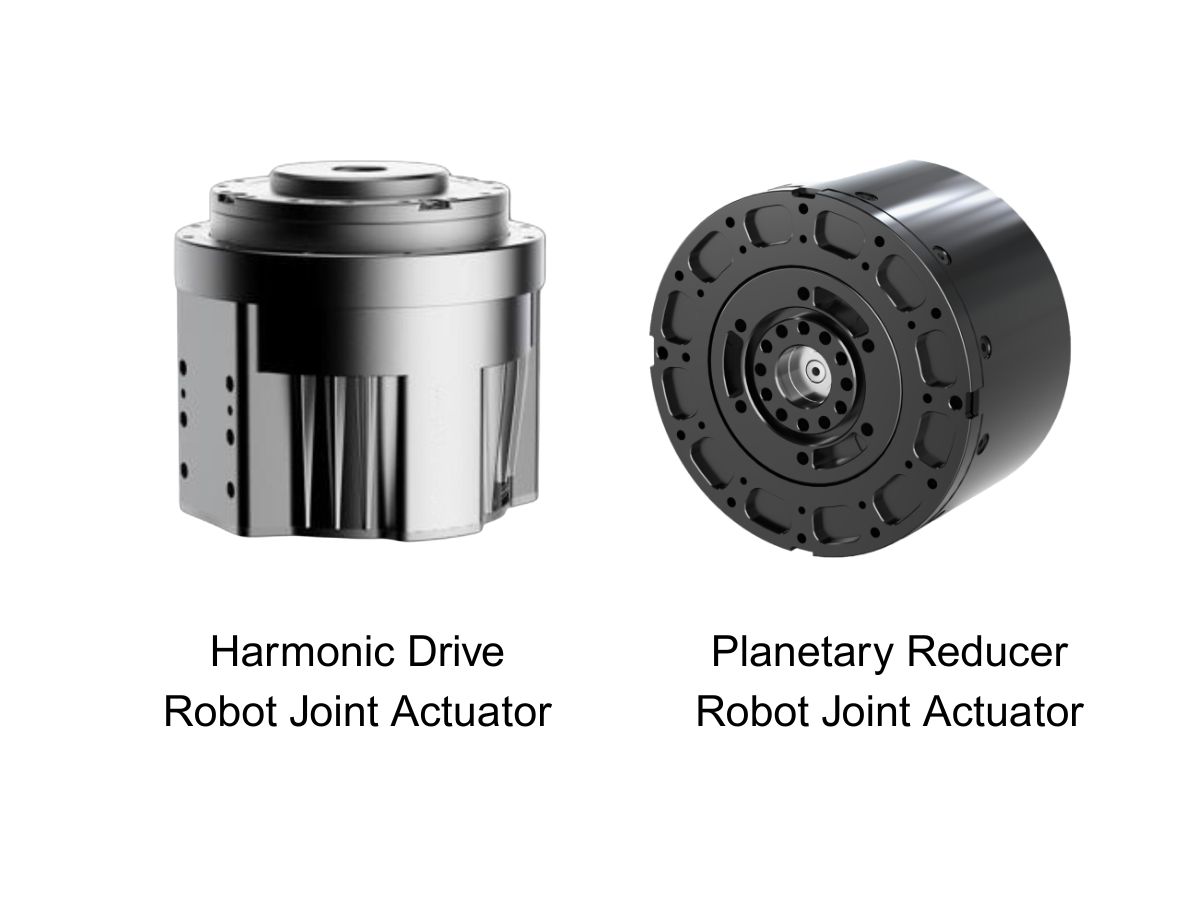
 What is robot joint actuator?How to Choose the Best Robot Rotary Joint Actuator?In core robot joint transmission solutions, planetary and harmonic rotary actuators each have their own strengths. Choosing the right type based on application requirements is essential to achieve the optimal balance between performance and cost.
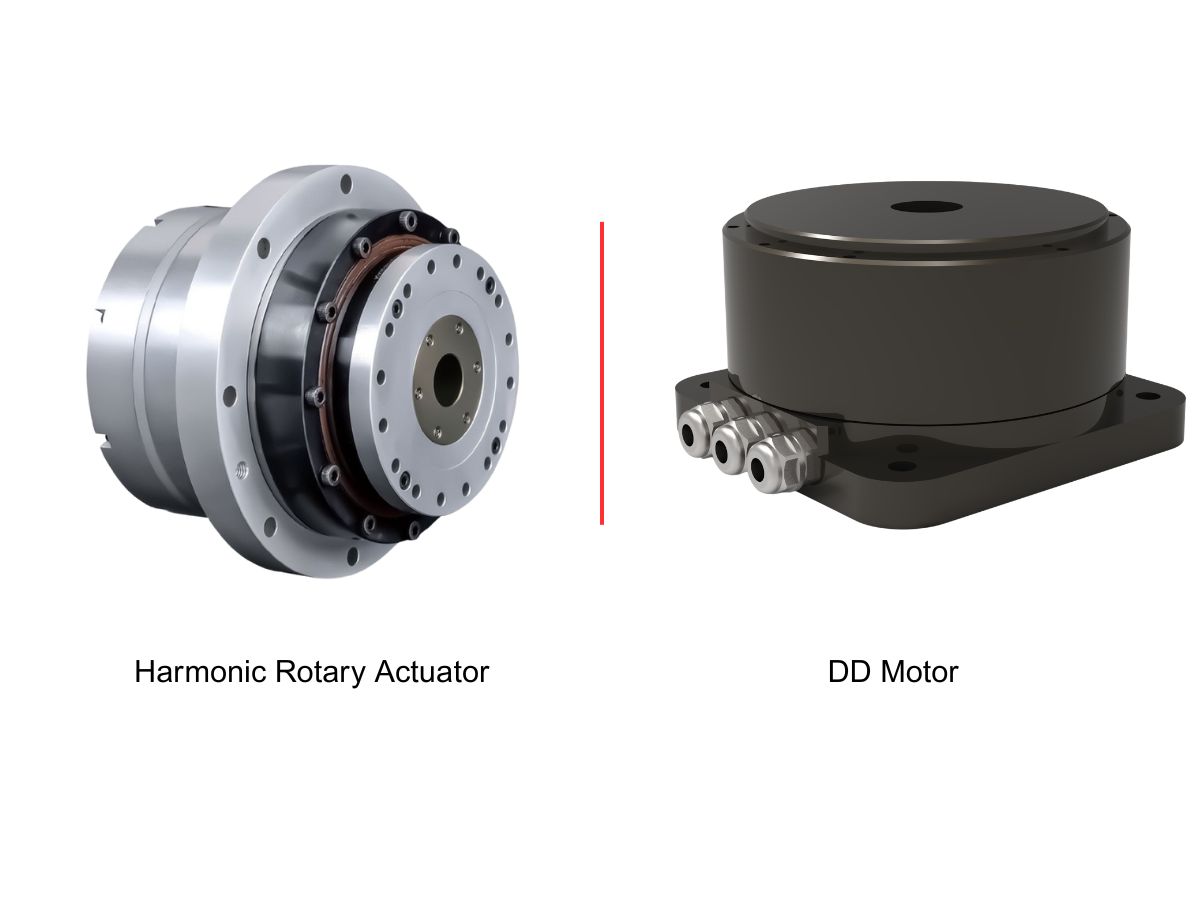
 DD Motors VS Harmonic Rotary ActuatorsThis article provides an in-depth comparison between Direct Drive (DD) motors and harmonic rotary actuators, covering their transmission principles, advantages and disadvantages, and typical application fields.
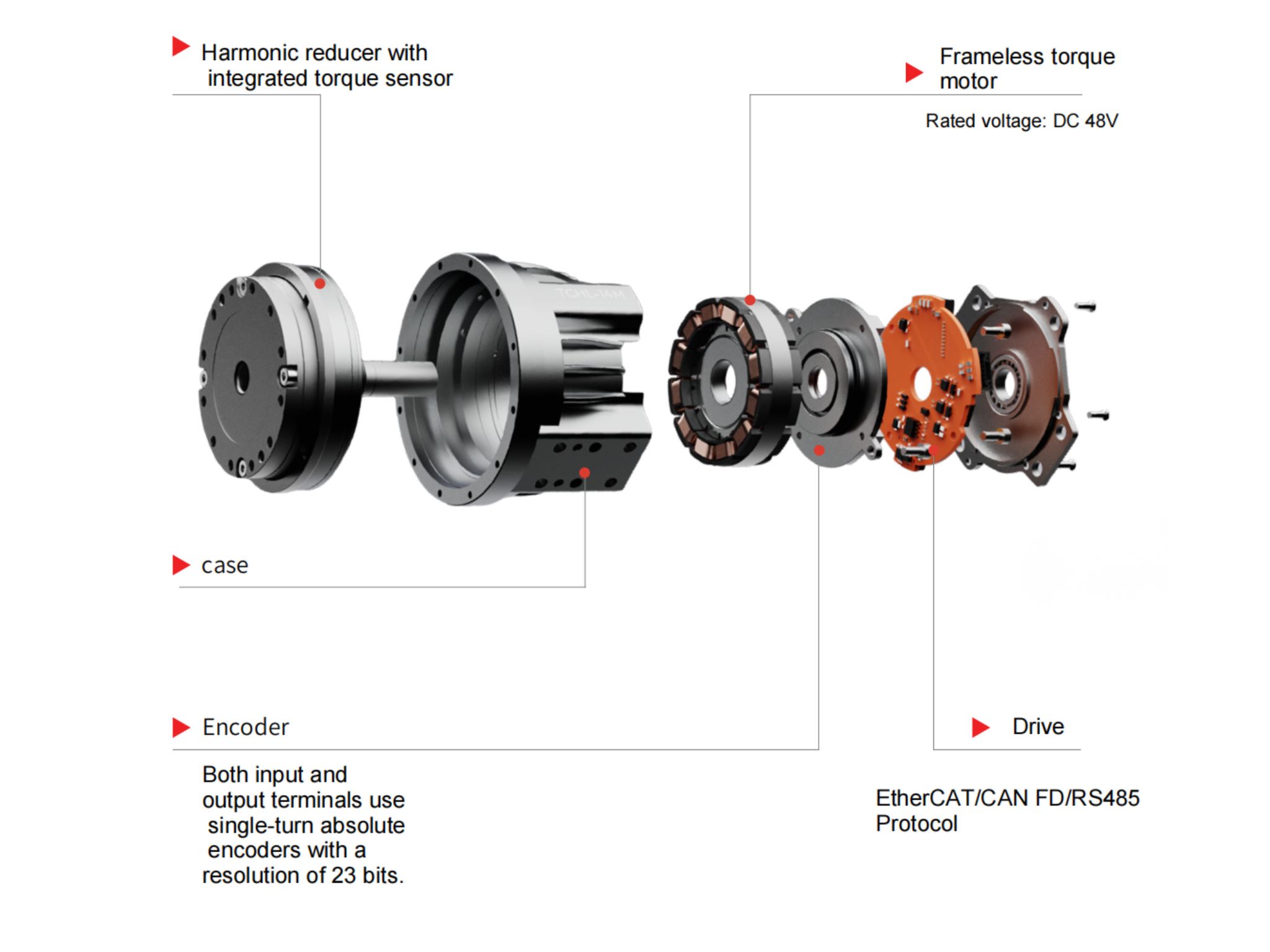
 OMG Ultra Compact Harmonic Drive Joint Module with Built-in Torque SensorHONPINE TCHL series harmonic drive joint module is a game-changing product that achieves disruptive improvements in multiple aspects such as lightweight design, integration level, and connection convenience. This article will analyze its revolutionary enhancements with you.
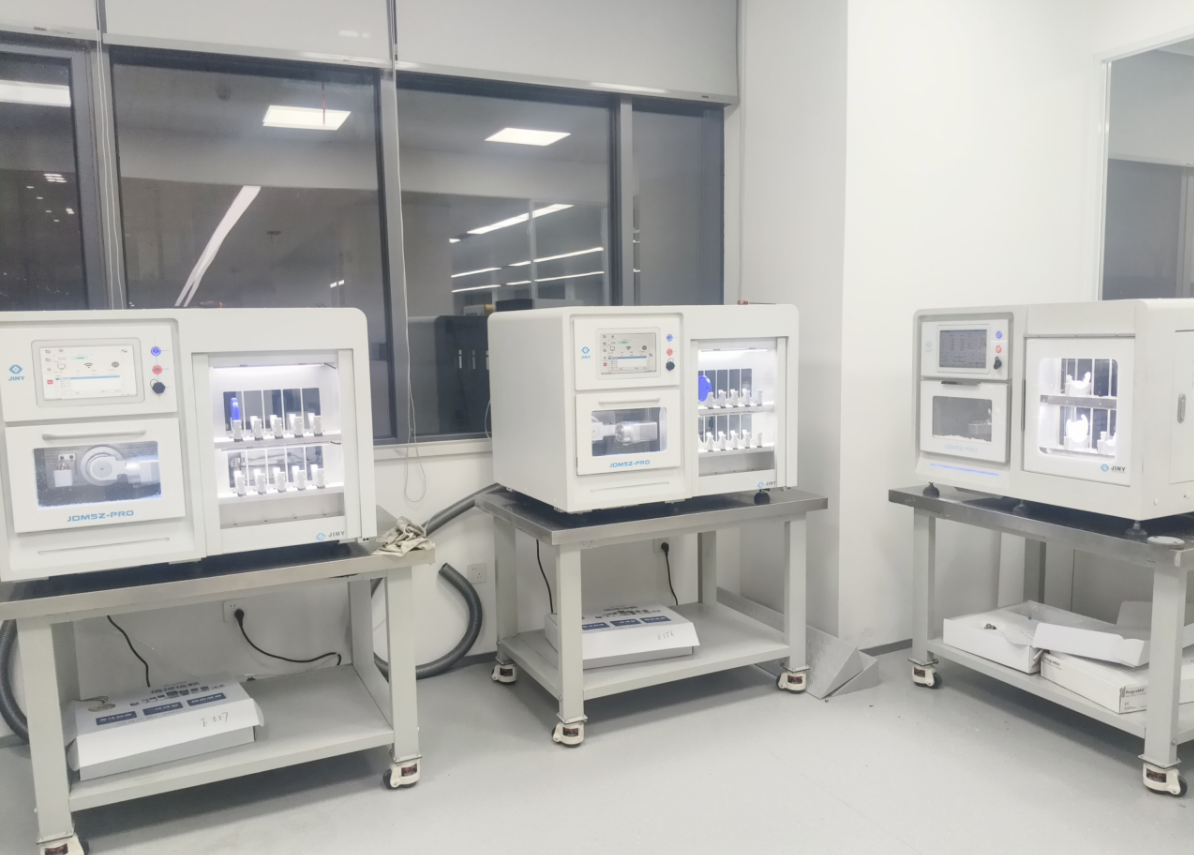
 The Role of Harmonic Drive Gears in Achieving 5–10 μm Accuracy in Dental Milling MachinesA dental milling machine is a CNC machining system used to directly process digital dental models into restorations such as crowns, bridges, veneers, inlays, and implant abutments. Dental milling machines require far higher operational accuracy and motion stability than ordinary equipment. This article explains how harmonic drive gear help dental milling machines achieve stable, continuous, and controllable operation.
 Why Are Harmonic Rotary Actuators Perfect for Medical Equipment?Harmonic rotary actuators (typically integrated systems consisting of a harmonic drive reducer, frameless torque motor, encoder, and optional brake) are regarded as key components in medical equipment. The core reason is that they simultaneously meet the most stringent medical requirements for precision, compact size, safety, and controllability. The following explanation is structured from three perspectives: technical characteristics, application scenarios, and medical value.
 High-Precision RV Reducers Perfectly Matched for Walking RobotsThe walking axis of a robot is a core component for power transmission and support. RV reducers provide extremely high rigidity, precision, and torque while maintaining a compact size and exceptional reliability, making them an ideal match for the demanding requirements of walking robot joints in terms of load capacity, impact resistance, and precision.
 Does a Higher Gearbox Ratio Mean More Torque? Planetary, Harmonic, and RV Gearboxes ExplainedDoes a higher gearbox ratio mean more torque? This engineering guide explains the relationship between gearbox ratio, output torque, and output speed, and compares planetary gearboxes, harmonic gearboxes, and RV gearboxes. Learn why reduction ratio alone cannot determine gearbox torque capacity, efficiency, dynamic response, precision, or service life, and what engineers should consider when selecting a gearbox for robotics, CNC machines, servo systems, and industrial motion control.
 How Does the HONPINE JRM Planetary Robot Joint Module Address Temperature Rise in Continuous Operation?HONPINE JRM planetary robot joint modules are designed for long-duration and high-load robotic operation. This article examines how motor electromagnetic optimization, high-efficiency planetary transmission, GaN-based drive technology, and system-level low-loss design help control temperature rise. Using the C6345 planetary robot joint module as a test example, HONPINE also presents full-load thermal validation under continuous operation, including motor efficiency up to 92%, planetary gearbox efficiency up to 97%, and a final equilibrium temperature of 61.42°C at a 25°C ambient temperature.
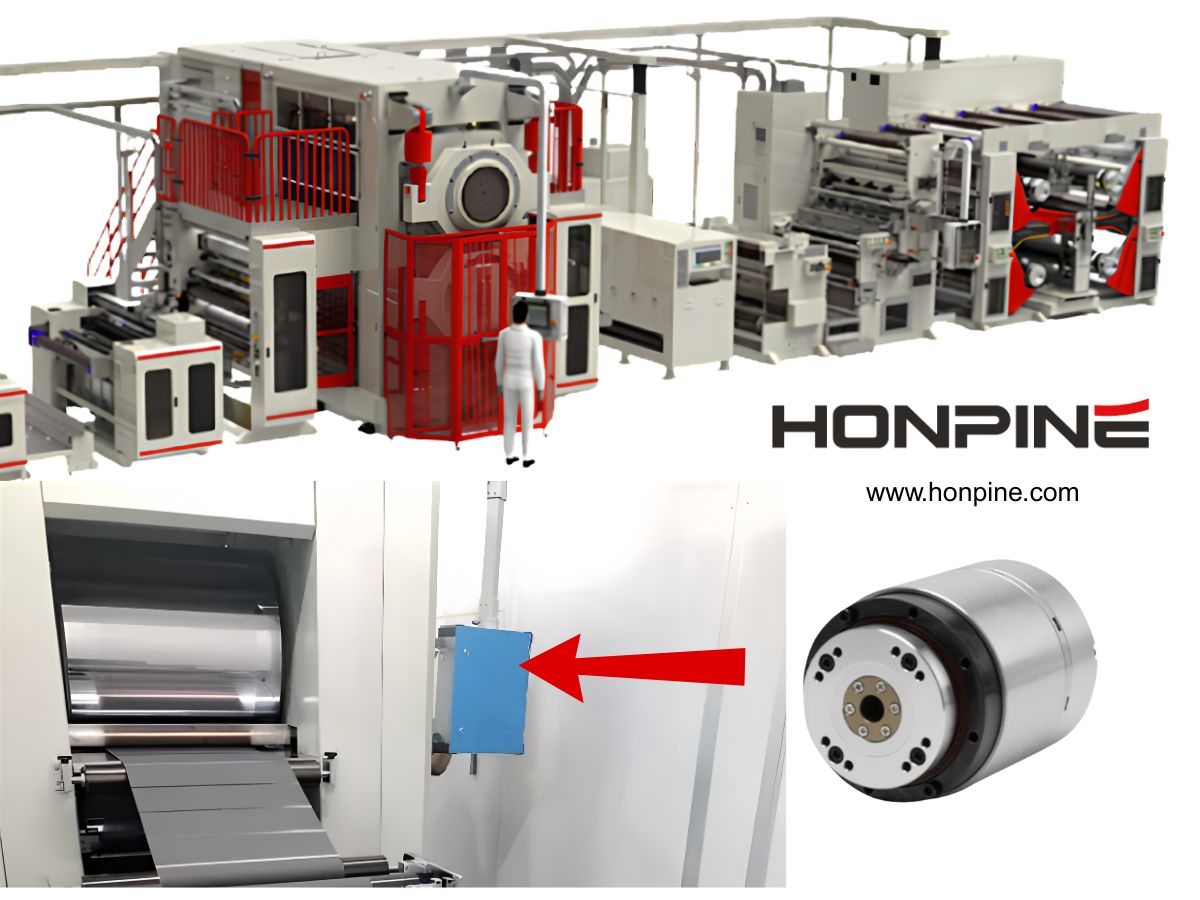
 Harmonic Rotary Actuator for Lithium Battery Roller Press EquipmentLithium battery manufacturing equipment requires higher precision, stability, and integration efficiency as production processes continue to evolve. In roller press equipment, accurate roller positioning, pressure control, and dynamic response are critical for ensuring electrode quality and consistency.
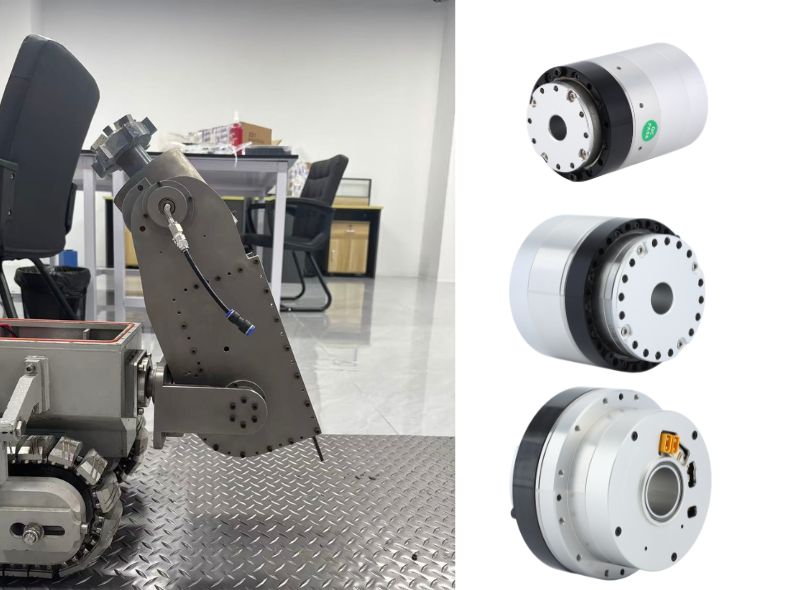
HONPINE harmonic rotary actuators provide high precision, high rigidity, fast response, and compact integration for lithium battery roller press equipment. With near-zero backlash, high torque density, and reliable motion control performance, they help improve equipment accuracy and production stability. Harmonic Robot Joint Actuators for Pipeline Robots and Other Special-Purpose EquipmentPipeline robots operate in narrow and complex environments where limited installation space, high load requirements, cable routing, and precise motion control are critical challenges. A reliable joint actuator must provide high torque output, compact dimensions, and stable performance while adapting to demanding operating conditions. Harmonic robot joint actuators integrate precision transmission, motor drive, and sensing capabilities into a compact motion unit, making them suitable for pipeline robots and other special-purpose robotic systems. This article explores the key design requirements of pipeline robots and explains how HONPINE HPJM harmonic robot joint modules help achieve compact, high-performance, and reliable robotic solutions.
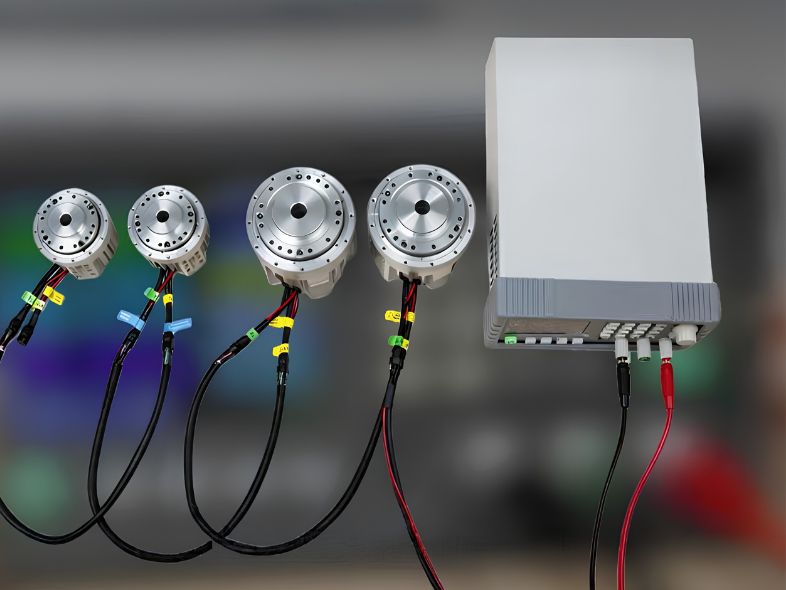
 How Integrated Robot Joint Modules Are Reshaping Robot Wiring and Control Architecture?Integrated robot joint modules are changing how robots are designed by combining the motor, reducer, drive, encoder, and sensing components into a compact motion unit. Compared with traditional distributed architectures, this integrated approach can reduce cable complexity, simplify power and communication connections, and support more compact robot structures. As humanoid robots demand higher levels of motion coordination, response speed, precision, and integration, robot joint modules are becoming an increasingly important interface between intelligent control systems and physical movement. This article explains how integrated robot joint modules reshape robot wiring and control architecture, using the HONPINE TCHL harmonic drive robot joint module as an example.
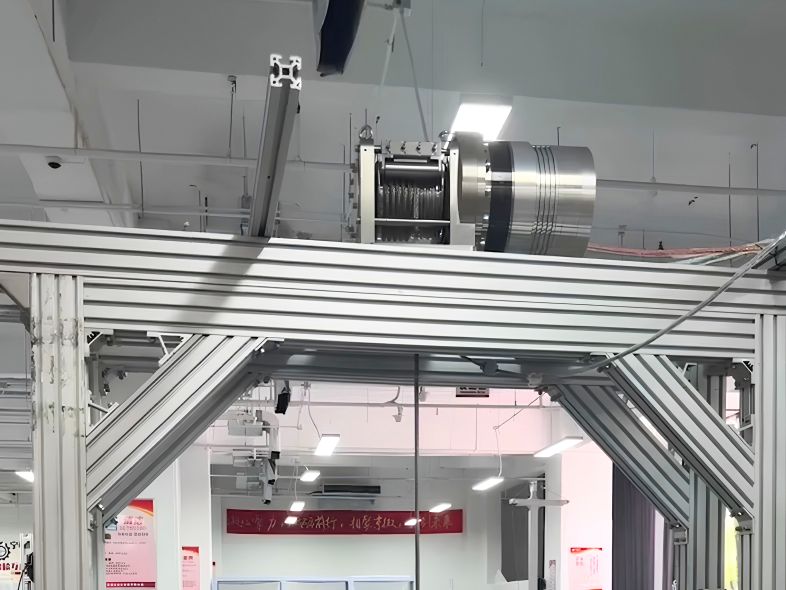
 Harmonic Actuator for Lift Equipment: Precision, Torque Density and Compact Motion Control IntroductionModern lifting equipment requires more than simply moving a load vertically. Robotic lift axes, AGV and AMR lift modules, semiconductor equipment, inspection platforms, and specialized winches increasingly demand high torque density, precise positioning, low backlash, high rigidity, and compact motion control. A harmonic actuator integrates a harmonic drive with a motor and, depending on the configuration, encoders, brakes, servo drives, and communication interfaces into a compact motion module. This article explores how harmonic actuators can be applied to different lifting systems and why their combination of precision, torque density, rigidity, and integration makes them suitable for automated lifting and positioning applications.
Double Click
We provide harmonic drive reducer,planetary reducer,robot joint motor,robot rotary actuators,RV gear reducer,robot end effector,dexterous robot hand
 China Tightens Export Filing for CNC Machine ToolsCNC machine tools exporters and buyers should prepare now: China tightens export filing for lathes, milling and grinding machines from June 30, 2026, raising compliance and customs demands.
 Japan Tightens Export Review for High-End Five-Axis Machine ToolsFive-axis CNC machine tools face stricter Japan export review from August 16, 2026. Learn how longer approvals may disrupt supply, procurement, and sourcing strategy.
 Japan Tightens Approvals for High-End Five-Axis ExportsFive-axis CNC machine tool exports from Japan face tighter approvals, longer lead times, and higher risk. Learn how this shift impacts buyers, distributors, and supply chains.
 China Curbs Dual-Use Exports to 14 EU EntitiesChina curbs dual-use exports to 14 EU entities, disrupting CNC machine tool supply chains, servo motor sourcing, and compliance planning. Learn the immediate risks and actions now.
 UL 1604:2026 Tightens Dust Rules for Robot Joint MotorsUL 1604:2026 Tightens Dust Rules for Robot Joint Motors with new dust-environment, temperature-group, and IP6X checks. Learn how this impacts OEM exports, sourcing, and certification planning.
 EU EN IEC 61800-3:2025 Takes Effect for Harmonic DrivesEN IEC 61800-3:2025 reshapes EU EMC compliance for harmonic drives. Learn how CE marking, Class A/B testing, certification, and delivery timelines may impact exporters and buyers.
 EU Mandates EMC Testing for Harmonic Drive ReducersHarmonic drive reducers face new EU EMC testing rules from Aug 1, 2026. Learn how the mandate impacts packaging machinery exports, compliance, customs clearance and market access.
 Top Motion Control Technologies for Humanoid Robots in 2026Top motion control technologies for humanoid robots in 2026: discover how MPC, torque control, sensor fusion, and real-time coordination improve machine tool automation, safety, and uptime.
 Hollow Shaft Harmonic Gear Reducer Explained: Structure, Benefits & ApplicationsHollow Shaft Harmonic Gear Reducer explained for machine tool equipment—discover its structure, precision benefits, compact design advantages, and key applications for smarter motion control.
 How to Choose a Joint Motor for High-Speed ApplicationsJoint motor for high-speed applications: learn how to choose the right solution for machine tools with better precision, cooling, torque, and stability to boost performance.
 Why Harmonic Drive Actuators Improve the Performance of Microscope Optical PlatformsHarmonic Drive Actuators improve microscope optical platforms with near-zero backlash, high precision, low vibration, and compact design—ideal for stable imaging and repeatable motion.
 METI Adds HAG Harmonic Drives to Export License ListHAG harmonic drives now face METI export license controls. Learn how the July 8 update affects OEM delivery, procurement timing, and shipments to China, Vietnam, and Mexico.