





Humanoid Joint Motor: Why Joint Design Matters More Than Motor Power
A humanoid robot does not achieve better performance simply by using a more powerful motor. The real engineering challenge is how to convert limited electrical power, mechanical space, and overall robot weight into controlled, precise, and reliable joint motion.
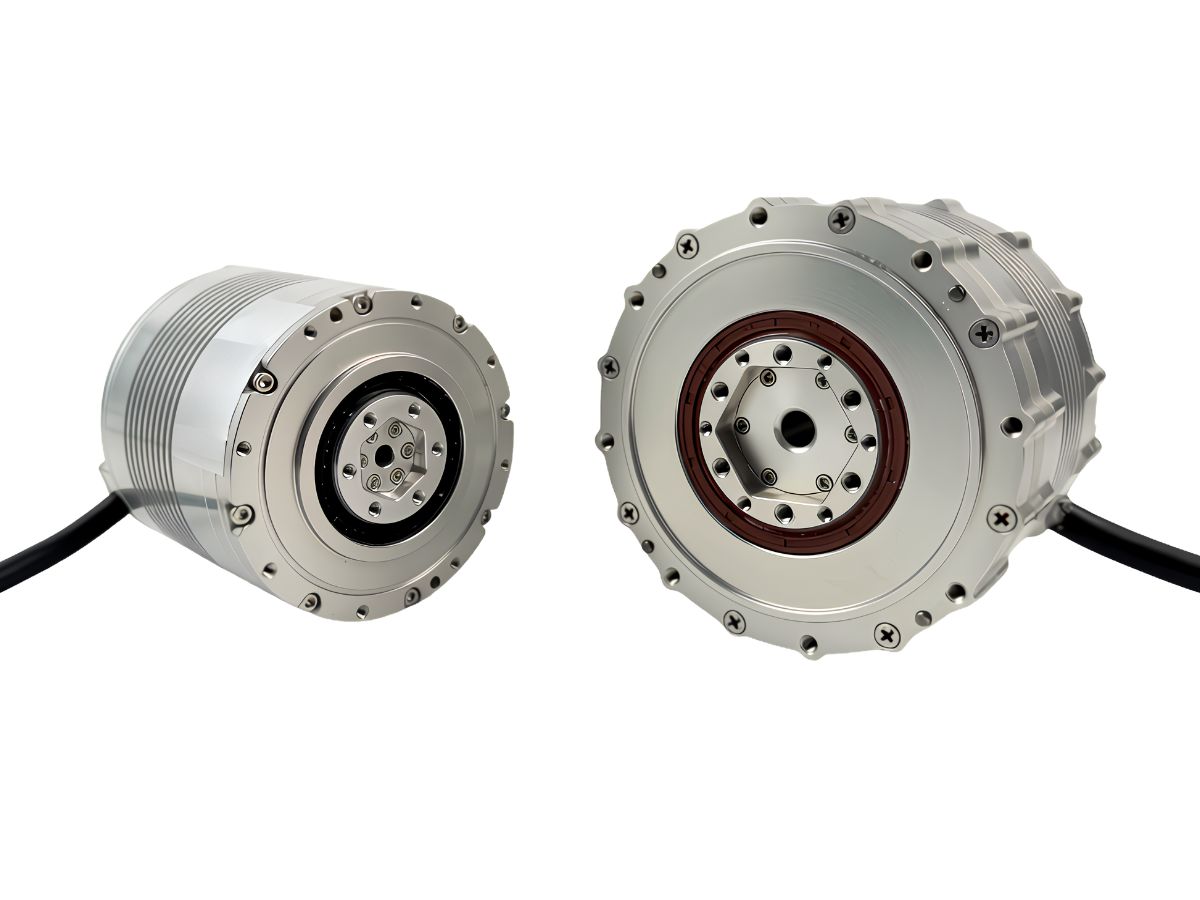
A humanoid joint motor is therefore much more than an electric motor. It is an integrated motion system in which the motor, reducer, encoder, driver, bearing system, brake, and mechanical housing work together to meet the requirements of a specific robot joint.
As humanoid robots move from prototypes toward commercial production, actuator design is increasingly focused on the overall balance between torque, speed, weight, size, precision, efficiency, thermal performance, and control response, rather than simply maximizing motor power.
A Humanoid Joint Motor Is a System-Level Trade-Off
One of the most common mistakes when comparing humanoid robot actuators is focusing on a single specification, especially peak torque. An actuator capable of producing 300 Nm is not necessarily a better choice than one producing 200 Nm if it is significantly heavier, larger, or less efficient.
Weight is particularly important in humanoid robots because the robot has to carry and move its own actuators. A heavier shoulder actuator increases the inertia of the arm, while a heavier leg actuator increases the load that the hip and knee joints need to control.
The same principle applies to transmission design. A high reduction ratio can provide high output torque from a relatively compact motor, but it also influences backdrivability, efficiency, reflected inertia, and dynamic response.
For this reason, the right question is not simply how much torque an actuator can produce. Engineers need to determine whether the humanoid joint motor can provide the required torque and speed within the available weight, volume, thermal capacity, and control bandwidth of the target joint.
Why Torque Density Matters More Than Maximum Torque?
Traditional industrial equipment can often accommodate a larger motor or gearbox when additional torque is required. Humanoid robots have much tighter limitations because every actuator becomes part of the robot's moving mass.
This makes torque density particularly important. Instead of looking only at absolute output torque, engineers need to consider how much useful torque an actuator can provide relative to its weight and volume.
High torque density is especially valuable in shoulder, elbow, wrist, and other compact humanoid joints where available installation space is limited. A compact actuator that provides sufficient torque can help reduce robot mass while maintaining the required motion capability.
This is one reason why architectures combining frameless torque motors, precision harmonic reducers, and integrated feedback systems are attracting increasing attention in humanoid robotics. The objective is not simply to make the motor stronger, but to obtain more usable joint torque from a smaller mechanical package.
The Reducer Does More Than Increase Torque
A reducer is often described simply as a component that reduces motor speed and increases output torque. While technically correct, this explanation does not fully describe its importance in a humanoid joint.
The transmission ratio and reducer architecture influence several characteristics of the joint, including output speed, torque, backlash, mechanical stiffness, efficiency, backdrivability, reflected inertia, and dynamic response.
For example, a higher reduction ratio can allow a relatively small motor to generate high output torque. However, the highest available ratio is not necessarily the best choice for every joint.
A precision wrist joint may prioritize low backlash, compact dimensions, and accurate positioning, while a dynamic leg joint may place greater emphasis on output speed, efficiency, continuous torque, thermal performance, and dynamic response.
The reducer should therefore be selected according to the motion profile and operating conditions of the specific humanoid joint, rather than simply choosing the highest reduction ratio.
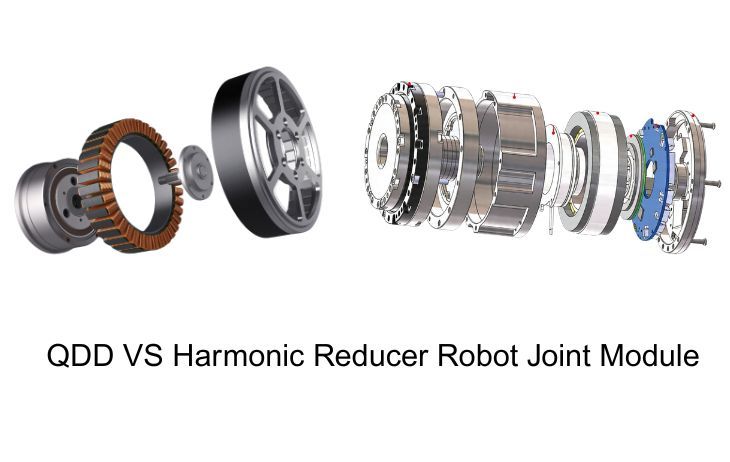
Harmonic Reducers and QDD Solve Different Actuator Problems
The comparison between harmonic-drive-based actuators and QDD, or quasi-direct-drive actuators, is often simplified into a question of which technology is better. In reality, they represent different approaches to the motor-transmission trade-off.
Harmonic Reducer-Based Actuators
A harmonic reducer uses a relatively high reduction ratio to convert the speed and torque characteristics of a motor into the output requirements of a robot joint. This architecture can provide high torque density, low backlash, high positioning precision, and compact packaging.
These characteristics make harmonic transmission particularly attractive for precision robotic joints where space, accuracy, and output torque are important.
QDD Actuators
QDD architectures generally use a relatively low reduction ratio together with a high-torque-density motor. The design places greater emphasis on preserving motor dynamics, backdrivability, and control responsiveness.
Therefore, the meaningful engineering question is not whether harmonic reducers or QDD actuators are universally better. The more useful question is which transmission architecture provides the right balance of torque, speed, backdrivability, efficiency, and control response for a particular humanoid joint.
Why Different Humanoid Joints Need Different Actuator Designs?
A humanoid robot may contain dozens of actuated degrees of freedom, but this does not mean that every joint should use exactly the same actuator.
Different joints operate under very different mechanical conditions.
A hip joint may require high continuous torque, high peak torque, and strong thermal capacity. A wrist joint may place greater emphasis on compact dimensions, low backlash, positioning accuracy, and hollow cable routing. A finger joint may prioritize extremely small diameter and low weight because the size of the actuator directly affects the overall dimensions and dexterity of the robotic hand.
Using one oversized actuator architecture throughout the robot can therefore increase unnecessary weight and cost.
A more efficient approach is to develop or select joint-specific actuator platforms according to torque, speed, size, duty cycle, and control requirements. This allows robot manufacturers to optimize the complete robot rather than forcing every joint to use the same specification.
Thermal Performance May Matter More Than Peak Torque
Peak torque is one of the easiest specifications to compare between actuator products, but humanoid robots do not operate continuously at peak torque.
Walking, standing, squatting, carrying objects, climbing, and manipulating tools require joints to operate repeatedly over time. This makes continuous torque and thermal performance particularly important.
An actuator may deliver a very high peak torque for a short period, but if the motor, driver, or reducer reaches its thermal limits during continuous operation, that peak specification has limited practical value.
The challenge becomes even greater when the motor, reducer, driver, and feedback components are integrated into a compact joint module. Less available space can make heat dissipation more difficult.
For this reason, engineers evaluating a humanoid joint motor should consider not only peak torque, but also continuous torque, duty cycle, thermal resistance, cooling method, and operating temperature.
Control Bandwidth Influences How a Humanoid Robot Moves
Another important characteristic is control bandwidth. Two actuators with similar torque and speed ratings can produce very different motion characteristics because their transmission, feedback, and control architectures may respond differently to changes in load and motion.
Humanoid robots continuously respond to changes in body acceleration, external disturbances, contact forces, and balance conditions. The joint therefore needs more than accurate position control. It must also respond quickly to changes in torque, speed, and position.
This makes the relationship between reduction ratio, encoder feedback, backdrivability, driver response, and control bandwidth increasingly important.
For dynamic humanoid applications, actuator performance should therefore be evaluated not only by how much torque the joint can produce, but also by how quickly and accurately the joint can change its motion and torque state.
Integration Is More Than Saving Space
Integrated actuator design is often promoted simply because it reduces installation space. While compactness is important, system integration provides additional advantages.
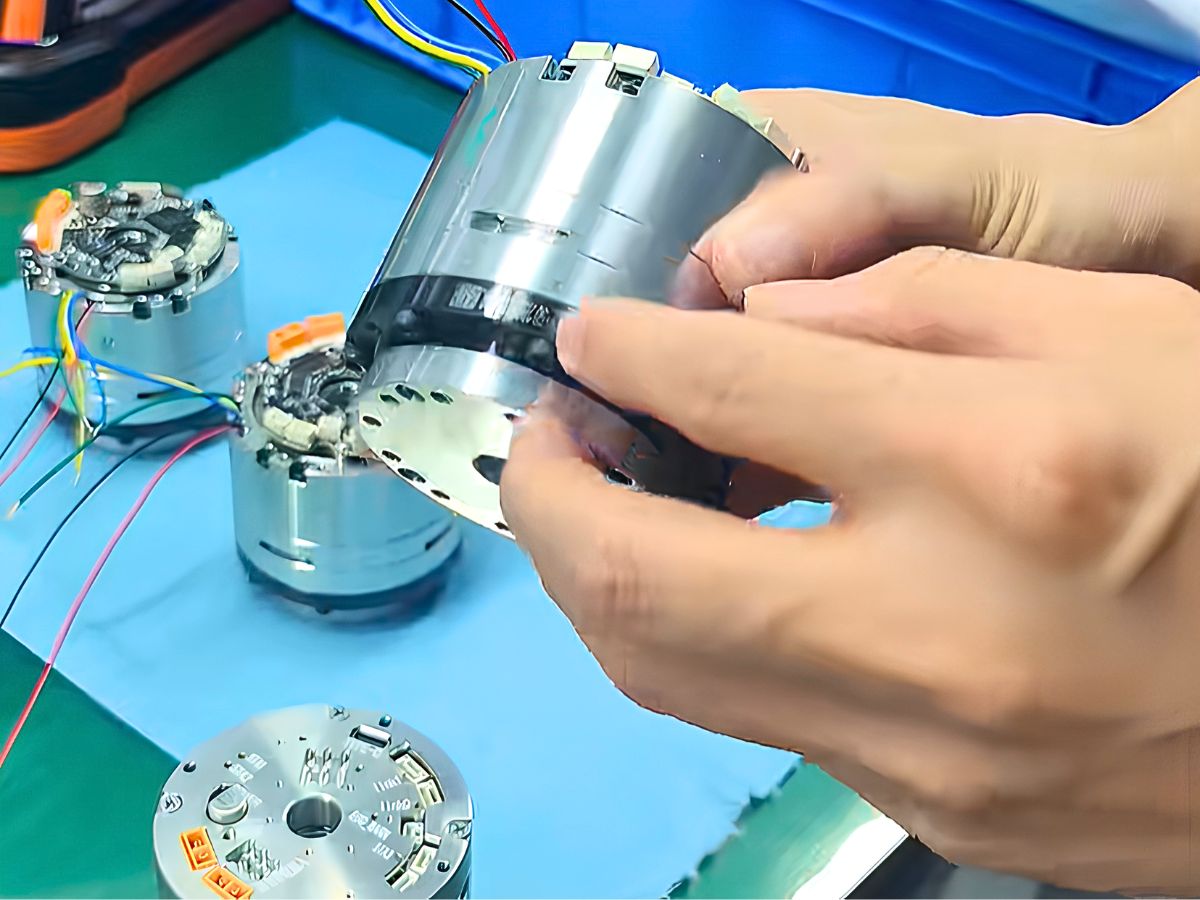
When the motor, reducer, encoder, driver, brake, bearings, and housing are designed as a single joint system, the interfaces between these components can be optimized from the beginning.
The encoder can be positioned according to the actual feedback requirements of the joint. The driver can be matched to the electrical characteristics of the motor. The housing can be designed simultaneously for bearing support, structural stiffness, heat dissipation, motor mounting, and cable routing.
This creates an important difference between simply assembling components and designing an integrated joint system.
For humanoid robots, the latter approach can help reduce mechanical complexity while improving packaging, reliability, and overall system performance.
Why Hollow-Shaft Design Matters in Humanoid Robots?
Humanoid robots contain a large number of power cables, encoder cables, communication lines, and sensor connections. These cables must move together with the robot's joints throughout repeated cycles of rotation.
External cable routing can introduce bending, tension, wear, and interference, particularly around continuously moving joints.
A hollow-shaft architecture allows cables to pass through the center of the transmission. This can simplify internal cable routing and reduce interference around shoulder, wrist, and other rotary joints.
For this reason, a hollow harmonic joint motor should not be viewed simply as a packaging solution. Hollow-shaft design can influence the robot's internal cable architecture, assembly process, maintenance requirements, and overall mechanical layout.
Higher Reduction Ratio Does Not Automatically Mean Higher Precision
Another common misconception is that a higher reduction ratio automatically creates a more precise humanoid joint.
A high reduction ratio can increase output torque and improve the effective angular resolution at the joint output, but it also affects backdrivability, efficiency, reflected inertia, and dynamic response.
The correct approach is therefore to first determine the required output torque, output speed, motion range, and control characteristics of the joint, and then select an appropriate transmission ratio.
This is particularly important when comparing harmonic reducer-based actuators with low-ratio QDD architectures. Different joints may require very different combinations of torque density, precision, dynamic response, and interaction capability.
The Future of Humanoid Joint Motors Will Be More Application-Specific
The future of humanoid robotics is unlikely to depend on one universal actuator architecture for every joint. Instead, robot manufacturers are likely to use different actuator platforms optimized for different parts of the robot.
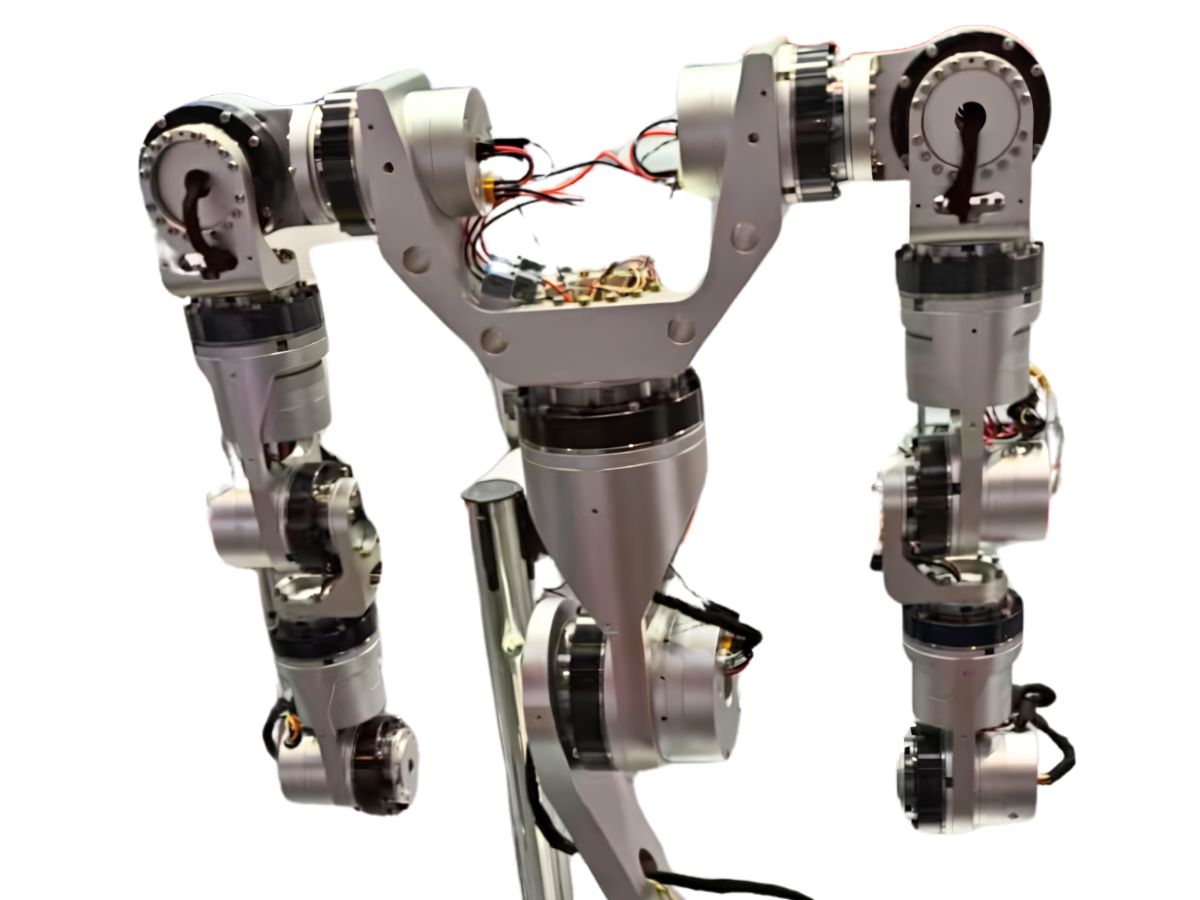
High-torque joint modules may be developed for hips and knees, while compact precision harmonic joint modules can be used for shoulders, elbows, and wrists. Miniature harmonic transmission systems can serve robotic hands and fingers, while low-ratio motor architectures may be preferred in joints where dynamic response and backdrivability are more important.
This application-specific approach allows engineers to optimize the entire humanoid robot instead of optimizing every joint around the same actuator specification.
What Should Engineers Compare When Selecting a Humanoid Joint Motor?
Rated torque alone is not enough to evaluate a humanoid joint motor. Engineers should consider the actuator as a complete system and compare parameters such as torque-to-weight ratio, torque-to-volume ratio, continuous and peak torque, output speed, reduction ratio, backlash, backdrivability, control bandwidth, thermal capacity, encoder configuration, joint stiffness, hollow bore size, brake configuration, communication interface, and total joint weight.
For example, a 200 Nm actuator is not automatically better than a 100 Nm actuator. If the 200 Nm actuator is twice as heavy and requires more complex thermal management, the lighter actuator may provide a better overall solution for the robot.
The best actuator is therefore the one that provides the required performance within the mechanical and electrical constraints of the target joint.
HONPINE: Developing the Joint as a Complete Motion System
For HONPINE, a humanoid joint motor is more than a motor combined with a reducer. The objective is to develop an integrated motion system around the requirements of the robot joint.
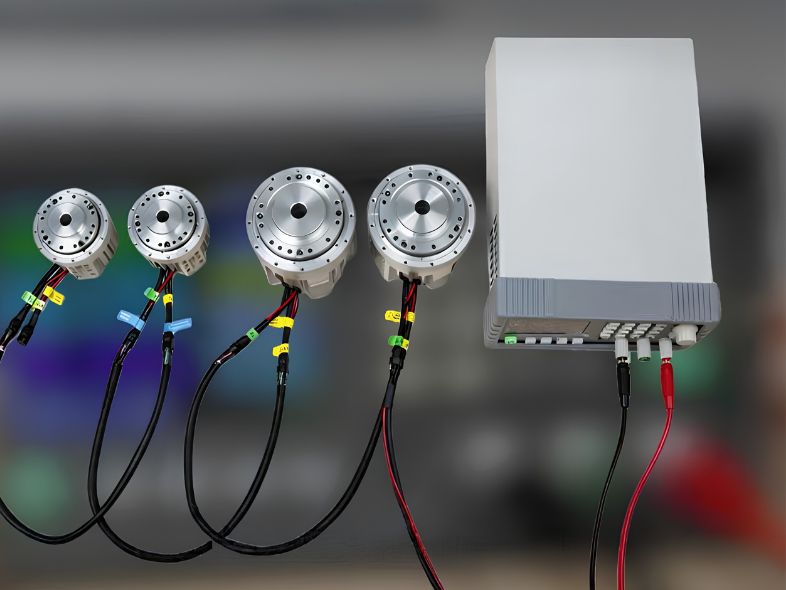
HONPINE's robotic joint solutions can integrate technologies including frameless torque motors, harmonic reducers, encoders, brakes, drivers, and sensors into compact actuator architectures.
This integrated approach allows different joint modules to be developed according to different requirements for torque, speed, weight, size, precision, and control response.
For humanoid robots, this distinction is important. The objective is not simply to install a stronger motor, but to create a joint that provides the right combination of power, transmission, feedback, and control for its specific position in the robot.
Conclusion: The Best Humanoid Joint Motor Is Not Simply the Strongest One
Humanoid robotics is changing the way engineers evaluate motors and actuators.
Instead of asking only, “How much torque can this motor produce?”, engineers increasingly need to ask how efficiently the complete joint can convert electrical power into precise, controllable, and repeatable mechanical motion.
A high-performance humanoid joint motor therefore needs to balance torque density, transmission ratio, precision, backdrivability, control bandwidth, thermal performance, weight, and integration.
A harmonic reducer may be the right solution for one joint, while a QDD architecture may be more suitable for another. A miniature harmonic transmission may be more valuable for a robotic finger than maximum torque, while continuous torque and thermal capacity may be more important for a hip or knee joint.
There is no single actuator that is best for every humanoid joint. The best solution is the actuator architecture that matches the requirements of the specific joint.
This application-specific and system-level approach will become increasingly important as humanoid robots move from demonstration prototypes toward reliable, lightweight, and commercially scalable products.
Read More
Learn more about the story of HONPINE and industry trends related to precision transmission.
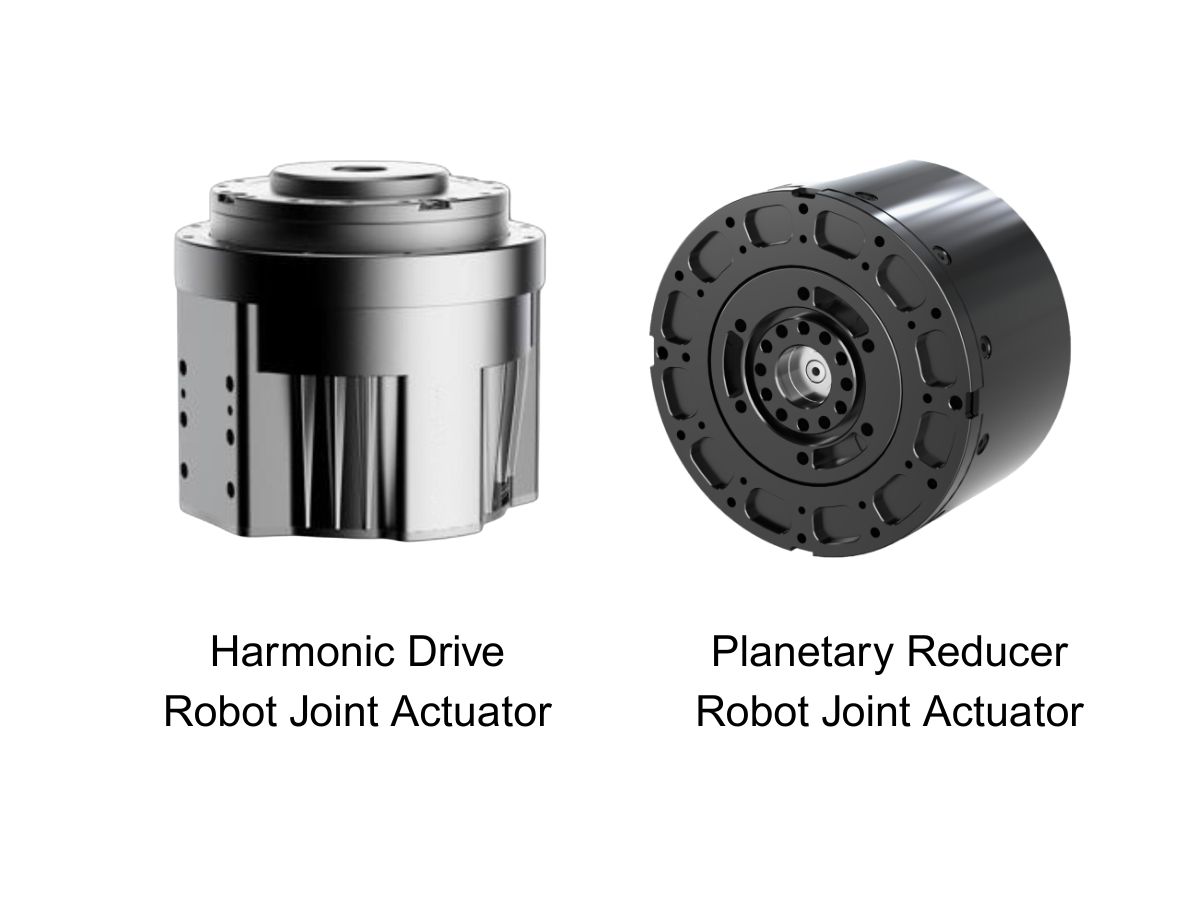
 What is robot joint actuator?How to Choose the Best Robot Rotary Joint Actuator?In core robot joint transmission solutions, planetary and harmonic rotary actuators each have their own strengths. Choosing the right type based on application requirements is essential to achieve the optimal balance between performance and cost.
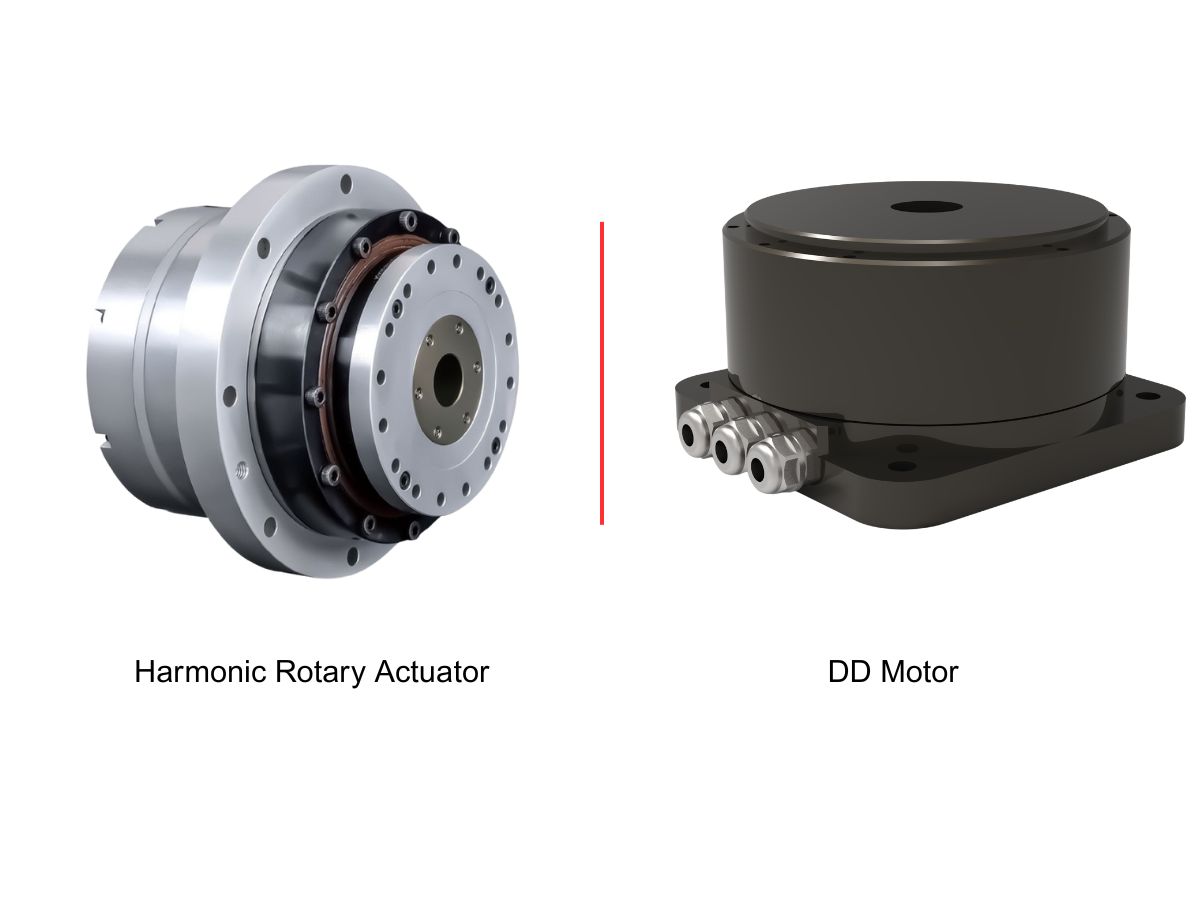
 DD Motors VS Harmonic Rotary ActuatorsThis article provides an in-depth comparison between Direct Drive (DD) motors and harmonic rotary actuators, covering their transmission principles, advantages and disadvantages, and typical application fields.
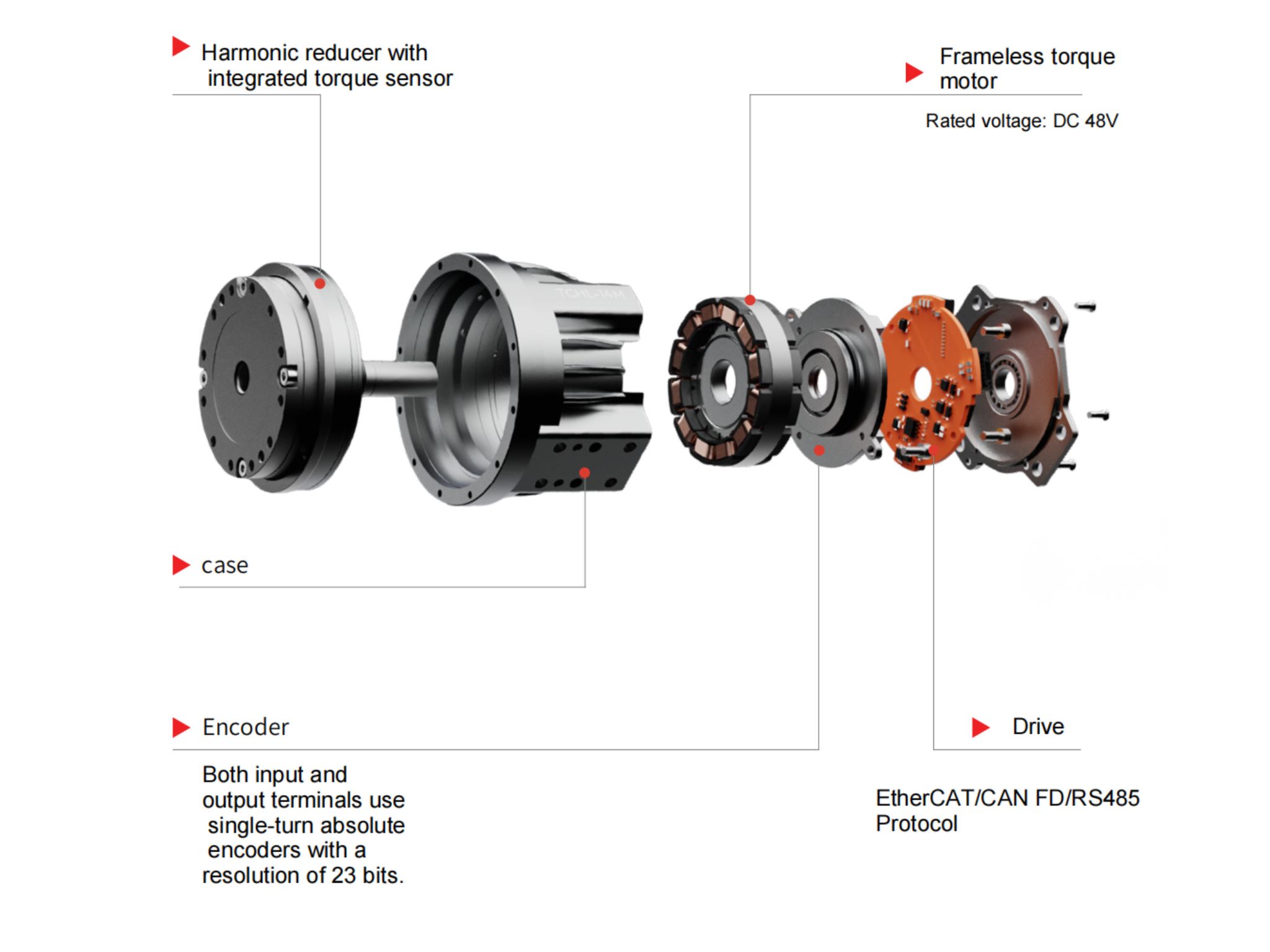
 OMG Ultra Compact Harmonic Drive Joint Module with Built-in Torque SensorHONPINE TCHL series harmonic drive joint module is a game-changing product that achieves disruptive improvements in multiple aspects such as lightweight design, integration level, and connection convenience. This article will analyze its revolutionary enhancements with you.
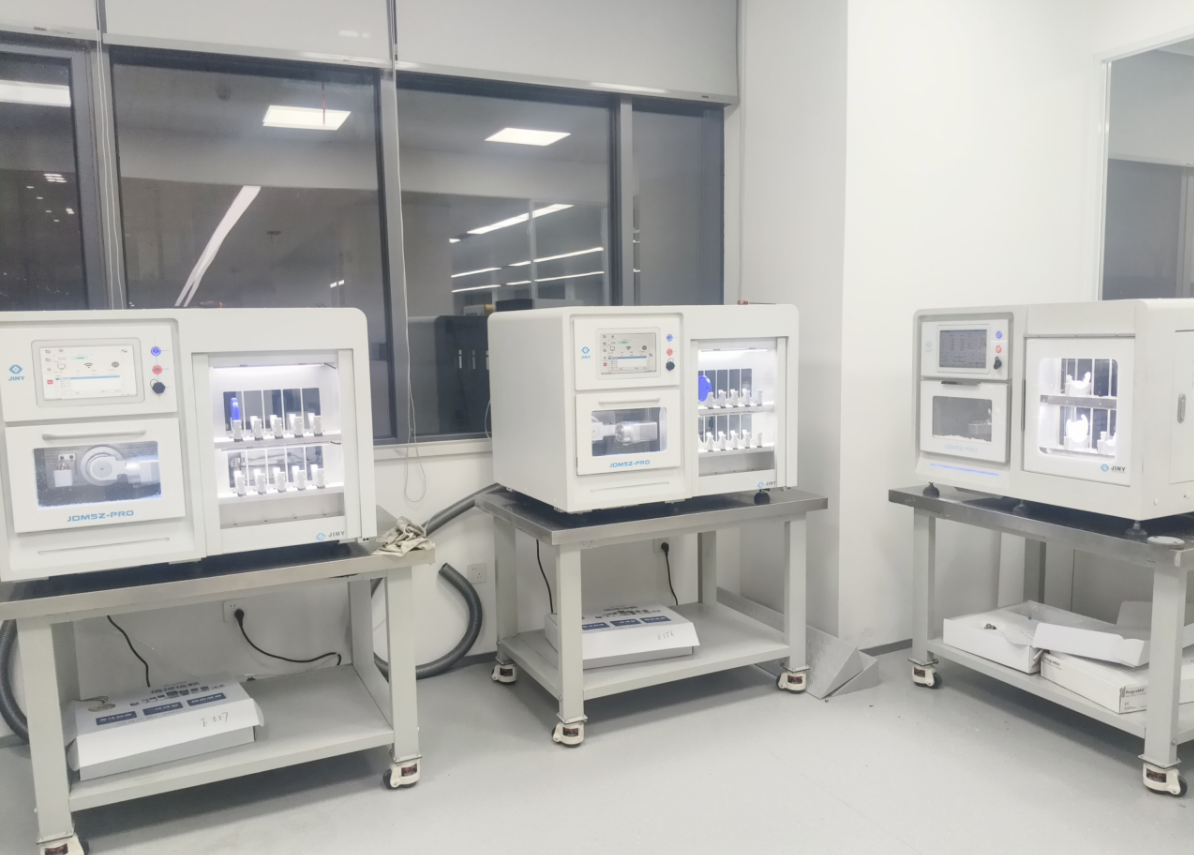
 The Role of Harmonic Drive Gears in Achieving 5–10 μm Accuracy in Dental Milling MachinesA dental milling machine is a CNC machining system used to directly process digital dental models into restorations such as crowns, bridges, veneers, inlays, and implant abutments. Dental milling machines require far higher operational accuracy and motion stability than ordinary equipment. This article explains how harmonic drive gear help dental milling machines achieve stable, continuous, and controllable operation.
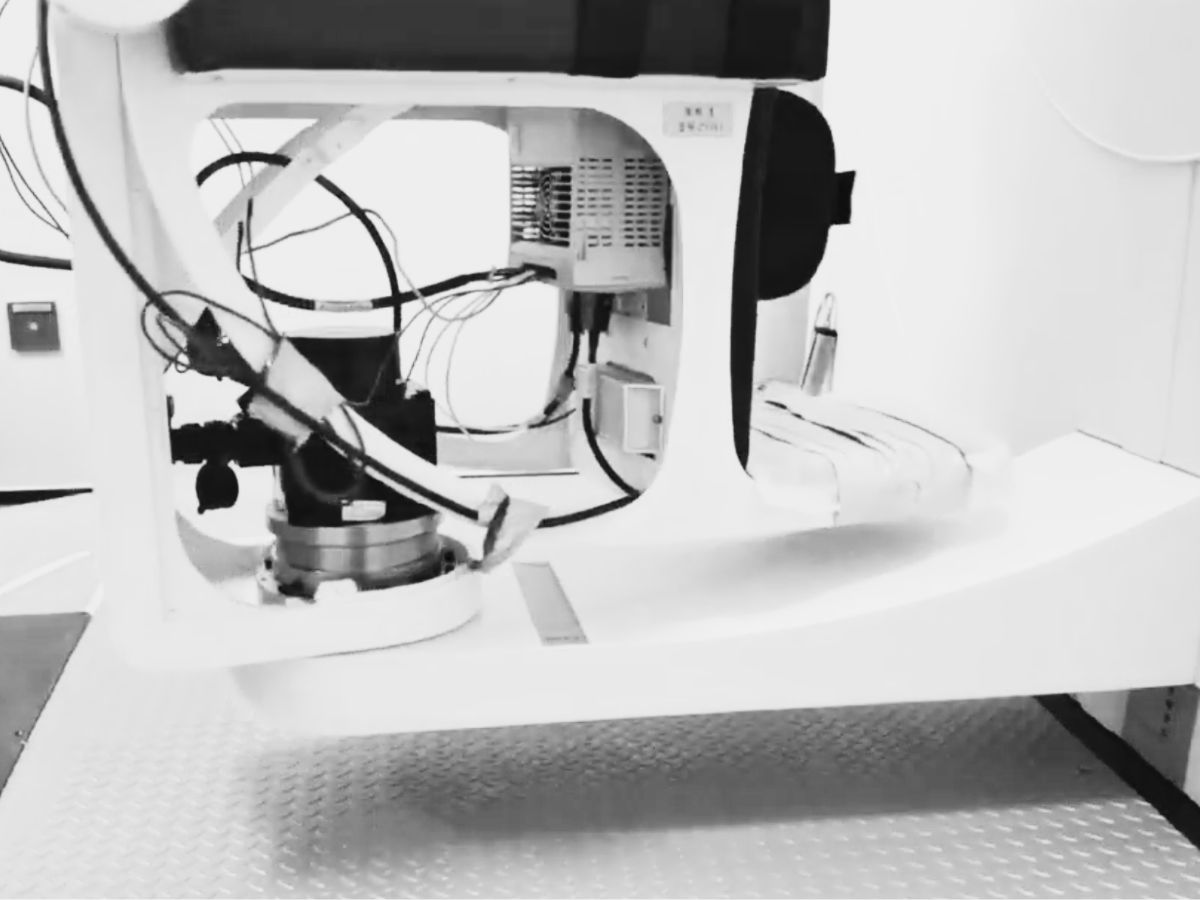
 Why Are Harmonic Rotary Actuators Perfect for Medical Equipment?Harmonic rotary actuators (typically integrated systems consisting of a harmonic drive reducer, frameless torque motor, encoder, and optional brake) are regarded as key components in medical equipment. The core reason is that they simultaneously meet the most stringent medical requirements for precision, compact size, safety, and controllability. The following explanation is structured from three perspectives: technical characteristics, application scenarios, and medical value.
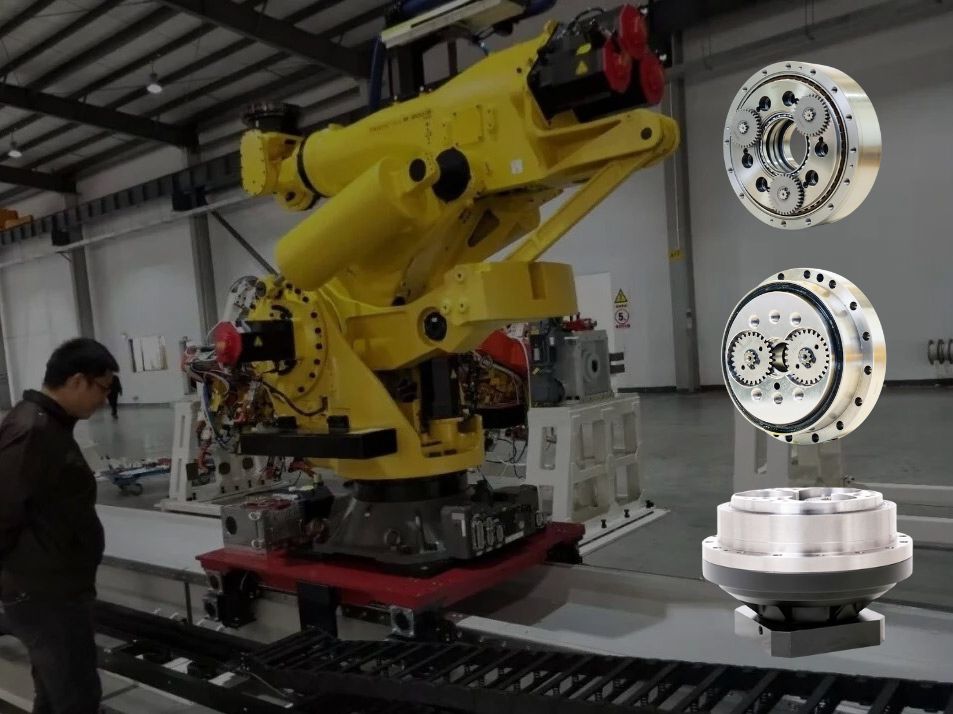
 High-Precision RV Reducers Perfectly Matched for Walking RobotsThe walking axis of a robot is a core component for power transmission and support. RV reducers provide extremely high rigidity, precision, and torque while maintaining a compact size and exceptional reliability, making them an ideal match for the demanding requirements of walking robot joints in terms of load capacity, impact resistance, and precision.
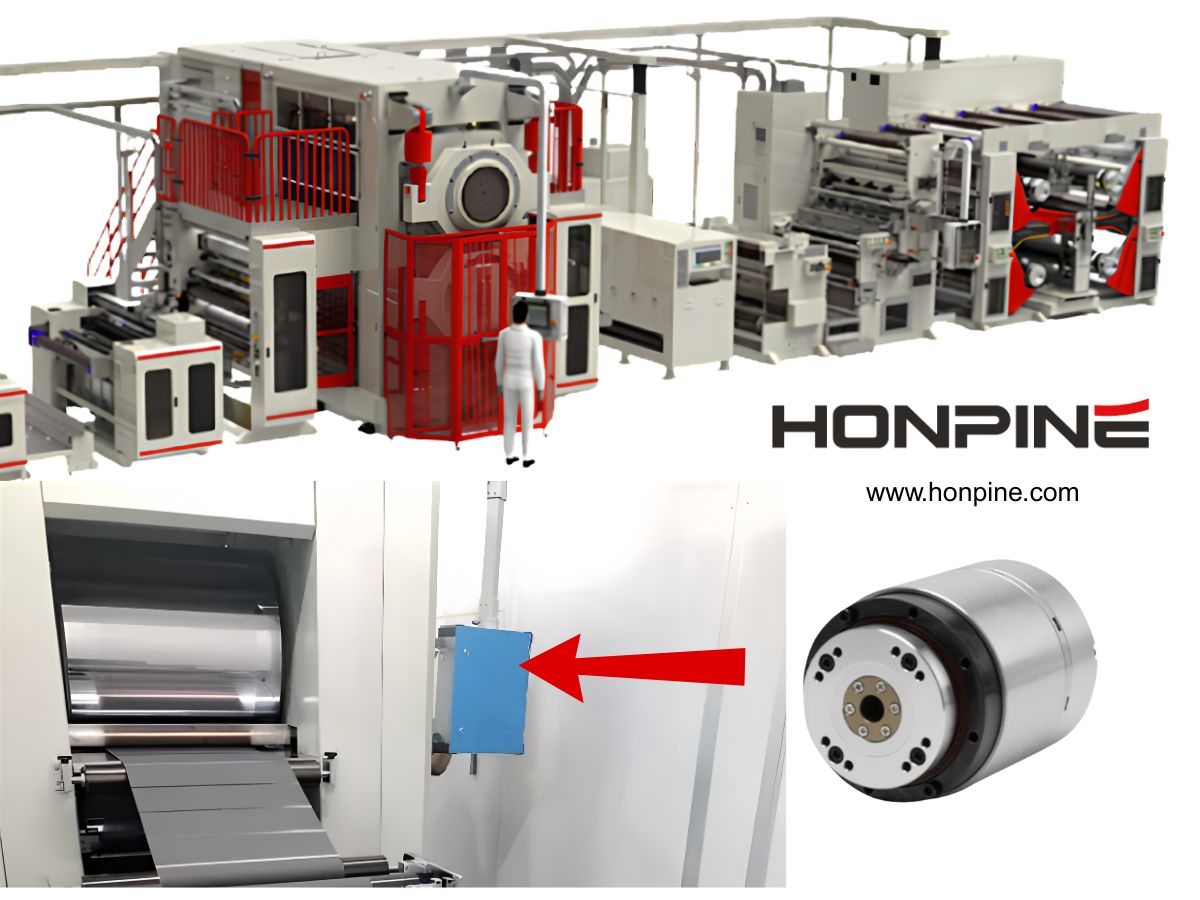
 Harmonic Rotary Actuator for Lithium Battery Roller Press EquipmentLithium battery manufacturing equipment requires higher precision, stability, and integration efficiency as production processes continue to evolve. In roller press equipment, accurate roller positioning, pressure control, and dynamic response are critical for ensuring electrode quality and consistency.
HONPINE harmonic rotary actuators provide high precision, high rigidity, fast response, and compact integration for lithium battery roller press equipment. With near-zero backlash, high torque density, and reliable motion control performance, they help improve equipment accuracy and production stability. How Integrated Robot Joint Modules Are Reshaping Robot Wiring and Control Architecture?Integrated robot joint modules are changing how robots are designed by combining the motor, reducer, drive, encoder, and sensing components into a compact motion unit. Compared with traditional distributed architectures, this integrated approach can reduce cable complexity, simplify power and communication connections, and support more compact robot structures. As humanoid robots demand higher levels of motion coordination, response speed, precision, and integration, robot joint modules are becoming an increasingly important interface between intelligent control systems and physical movement. This article explains how integrated robot joint modules reshape robot wiring and control architecture, using the HONPINE TCHL harmonic drive robot joint module as an example.
 Force-Controlled Harmonic Joint Modules: A Key Solution for Robot CommercializationAs robots move from precise positioning toward physical interaction, joint-level torque feedback is becoming increasingly important. A force-controlled robot joint module allows the robot to sense changes in output torque and respond more appropriately to external loads, supporting compliant motion, contact detection, and force-controlled applications. HONPINE HAG and HAU harmonic joint modules integrate torque sensing directly into the joint, enabling torque closed-loop control, 360° continuous output rotation, less than 1% torque control accuracy, and a 50 Hz torque bandwidth. This integrated design also maintains consistent dimensions between force-controlled and non-force-controlled configurations, providing a flexible joint platform for robot manufacturers.
 6 Key Advantages of the HONPINE JRM Planetary Joint ModuleHigh-performance quadruped robots require joint modules that can respond quickly, maintain precise positioning, withstand repeated impacts, and deliver stable torque under demanding operating conditions. The HONPINE JRM planetary joint module combines high positioning accuracy, low backlash, fast three-loop response, high static rigidity, strong overload capability, and a wide operating temperature range. With clearly defined continuous and overload operating limits, the JRM is designed to balance dynamic performance with long-term reliability. This article introduces six key advantages of the HONPINE JRM planetary joint module and explains why it is suitable for industrial inspection quadrupeds, specialized inspection robots, explosion-proof quadruped robots, and other high-performance robotic platforms.
 Robot Joint Module Solutions for Humanoid Robot Arms and LegsHumanoid robots require different joint characteristics across the shoulder, elbow, wrist, hip, knee, and ankle. Smaller joints prioritize low weight and fast response, while larger joints require higher torque density, load capacity, and reliability. A suitable robot joint module should therefore be matched to the specific torque, weight, range of motion, and control requirements of each joint. In this article, HONPINE uses the HPJM harmonic joint module series as an example to present a joint configuration solution for humanoid robot upper and lower limbs, covering torque requirements from small wrist and finger joints to high-load hip joints.
 Why Does an RV Reducer Need Profile Modification? How to Further Reduce Backlash and Transmission Error?An RV Reducer is designed to deliver high torque, high stiffness, and precise motion for demanding applications such as robotic joints, industrial rotary tables, and precision machinery. However, achieving low backlash and stable transmission accuracy requires more than high-precision machining. Cycloidal profile modification must also account for manufacturing tolerances, assembly errors, load-induced deformation, thermal expansion, and lubrication conditions. In this article, we examine why RV reducers require profile modification, how different modification methods affect meshing, and how engineers can further control backlash and transmission error through profile design, error budgeting, structural analysis, precision manufacturing, and validation testing.
Double Click
We provide harmonic drive reducer,planetary reducer,robot joint motor,robot rotary actuators,RV gear reducer,robot end effector,dexterous robot hand
 What is robot joint actuator?How to Choose the Best Robot Rotary Joint Actuator?In core robot joint transmission solutions, planetary and harmonic rotary actuators each have their own strengths. Choosing the right type based on application requirements is essential to achieve the optimal balance between performance and cost.
 DD Motors VS Harmonic Rotary ActuatorsThis article provides an in-depth comparison between Direct Drive (DD) motors and harmonic rotary actuators, covering their transmission principles, advantages and disadvantages, and typical application fields.
 OMG Ultra Compact Harmonic Drive Joint Module with Built-in Torque SensorHONPINE TCHL series harmonic drive joint module is a game-changing product that achieves disruptive improvements in multiple aspects such as lightweight design, integration level, and connection convenience. This article will analyze its revolutionary enhancements with you.
 How Integrated Robot Joint Modules Are Reshaping Robot Wiring and Control Architecture?Integrated robot joint modules are changing how robots are designed by combining the motor, reducer, drive, encoder, and sensing components into a compact motion unit. Compared with traditional distributed architectures, this integrated approach can reduce cable complexity, simplify power and communication connections, and support more compact robot structures. As humanoid robots demand higher levels of motion coordination, response speed, precision, and integration, robot joint modules are becoming an increasingly important interface between intelligent control systems and physical movement. This article explains how integrated robot joint modules reshape robot wiring and control architecture, using the HONPINE TCHL harmonic drive robot joint module as an example.
 Force-Controlled Harmonic Joint Modules: A Key Solution for Robot CommercializationAs robots move from precise positioning toward physical interaction, joint-level torque feedback is becoming increasingly important. A force-controlled robot joint module allows the robot to sense changes in output torque and respond more appropriately to external loads, supporting compliant motion, contact detection, and force-controlled applications. HONPINE HAG and HAU harmonic joint modules integrate torque sensing directly into the joint, enabling torque closed-loop control, 360° continuous output rotation, less than 1% torque control accuracy, and a 50 Hz torque bandwidth. This integrated design also maintains consistent dimensions between force-controlled and non-force-controlled configurations, providing a flexible joint platform for robot manufacturers.
 6 Key Advantages of the HONPINE JRM Planetary Joint ModuleHigh-performance quadruped robots require joint modules that can respond quickly, maintain precise positioning, withstand repeated impacts, and deliver stable torque under demanding operating conditions. The HONPINE JRM planetary joint module combines high positioning accuracy, low backlash, fast three-loop response, high static rigidity, strong overload capability, and a wide operating temperature range. With clearly defined continuous and overload operating limits, the JRM is designed to balance dynamic performance with long-term reliability. This article introduces six key advantages of the HONPINE JRM planetary joint module and explains why it is suitable for industrial inspection quadrupeds, specialized inspection robots, explosion-proof quadruped robots, and other high-performance robotic platforms.
 Robot Joint Module Solutions for Humanoid Robot Arms and LegsHumanoid robots require different joint characteristics across the shoulder, elbow, wrist, hip, knee, and ankle. Smaller joints prioritize low weight and fast response, while larger joints require higher torque density, load capacity, and reliability. A suitable robot joint module should therefore be matched to the specific torque, weight, range of motion, and control requirements of each joint. In this article, HONPINE uses the HPJM harmonic joint module series as an example to present a joint configuration solution for humanoid robot upper and lower limbs, covering torque requirements from small wrist and finger joints to high-load hip joints.
 Why Does an RV Reducer Need Profile Modification? How to Further Reduce Backlash and Transmission Error?An RV Reducer is designed to deliver high torque, high stiffness, and precise motion for demanding applications such as robotic joints, industrial rotary tables, and precision machinery. However, achieving low backlash and stable transmission accuracy requires more than high-precision machining. Cycloidal profile modification must also account for manufacturing tolerances, assembly errors, load-induced deformation, thermal expansion, and lubrication conditions. In this article, we examine why RV reducers require profile modification, how different modification methods affect meshing, and how engineers can further control backlash and transmission error through profile design, error budgeting, structural analysis, precision manufacturing, and validation testing.
 How to Choose a Hollow Rotary Platform: A Complete Selection Guide?A hollow rotary platform is widely used in precision automation where rotary positioning, compact integration, and cable routing through the rotation axis are required. However, choosing the right platform involves more than comparing rated torque or maximum speed. Load, eccentricity, overturning moment, inertia, positioning accuracy, hollow bore, acceleration, duty cycle, and installation conditions all affect the actual performance of the rotary system. This guide explains the key parameters engineers should consider when selecting a hollow rotary platform for CNC indexing, wafer handling, vision inspection, laser processing, dispensing, and other precision rotary applications.
 Hollow Robot Joint Module: Why Cable Routing Matters in Robotic Joints?A hollow robot joint module provides an internal passage for power cables, signal lines, pneumatic tubes, and other end-effector connections. Compared with external cable routing, a hollow joint module can help reduce cable exposure, improve system integration, and create a cleaner motion path for robotic arms. This article explains why internal cable routing matters in robotic joints and what to consider when selecting a hollow joint module for robotic applications.
 Precision Reducers for Industrial Robots: From Conventional Transmission to Self-Compensating Backlash TechnologyHello everyone, I’m Theodore Li, Technical Director at HONPINE. Today, I would like to discuss precision reducers for industrial robots and the challenges of maintaining transmission accuracy over long-term operation. Harmonic, RV, cycloidal, and planetary transmissions each offer different combinations of precision, rigidity, torque density, and compactness, making reducer selection highly dependent on robot architecture and joint requirements. However, initial backlash is only part of the problem. As transmission components wear, changes in mechanical clearance can gradually affect positioning performance. This article examines the major precision transmission technologies used in industrial robots and introduces HONPINE’s self-compensating backlash technology, which is designed to address precision retention throughout the operating life of a transmission.
 Large-Bore Harmonic Joint Actuator for Humanoid Robot Waist Joints: A Practical Selection GuideThe humanoid robot waist joint is one of the most demanding motion joints in a humanoid robot. Unlike conventional robotic arm joints, it supports the upper body while handling bending, twisting, posture transitions, and continuously changing dynamic loads. At the same time, the limited internal space must accommodate power cables, signal lines, sensors, and structural components. These requirements make a large-bore harmonic joint actuator an important option for humanoid robot waist joints. This article explains how to select a suitable harmonic joint actuator by considering hollow bore size, dynamic torque, reduction ratio, mechanical rigidity, integration, and service life.