

Why Is EtherCAT Becoming the Mainstream Communication Bus for Robotic Joint Modules?
The rapid development of humanoid robots, collaborative robots, and high-precision automation equipment is driving integrated intelligent robotic joint modules toward multi-axis coordination, high-frequency real-time control, flexible force interaction, and high-precision trajectory tracking.
Traditional communication buses such as RS485 and CANopen can no longer fully meet the control requirements of next-generation intelligent joints in terms of synchronization accuracy, communication bandwidth, real-time performance, and multi-axis scalability.
Based on the communication architecture, control modes, PDO mapping, Distributed Clocks, and troubleshooting framework described in the official TCHL series joint modulemanual, EtherCAT has become a mainstream communication solution for high-end robotic joint modules. Its widespread adoption is not simply the result of following an industry trend. Rather, it reflects the strong compatibility between the advanced control requirements of modern robots and the technical architecture of EtherCAT.
This article examines the key reasons behind the widespread use of EtherCAT in intelligent robotic joint modules, drawing on the technical features documented in the TCHL series manual.
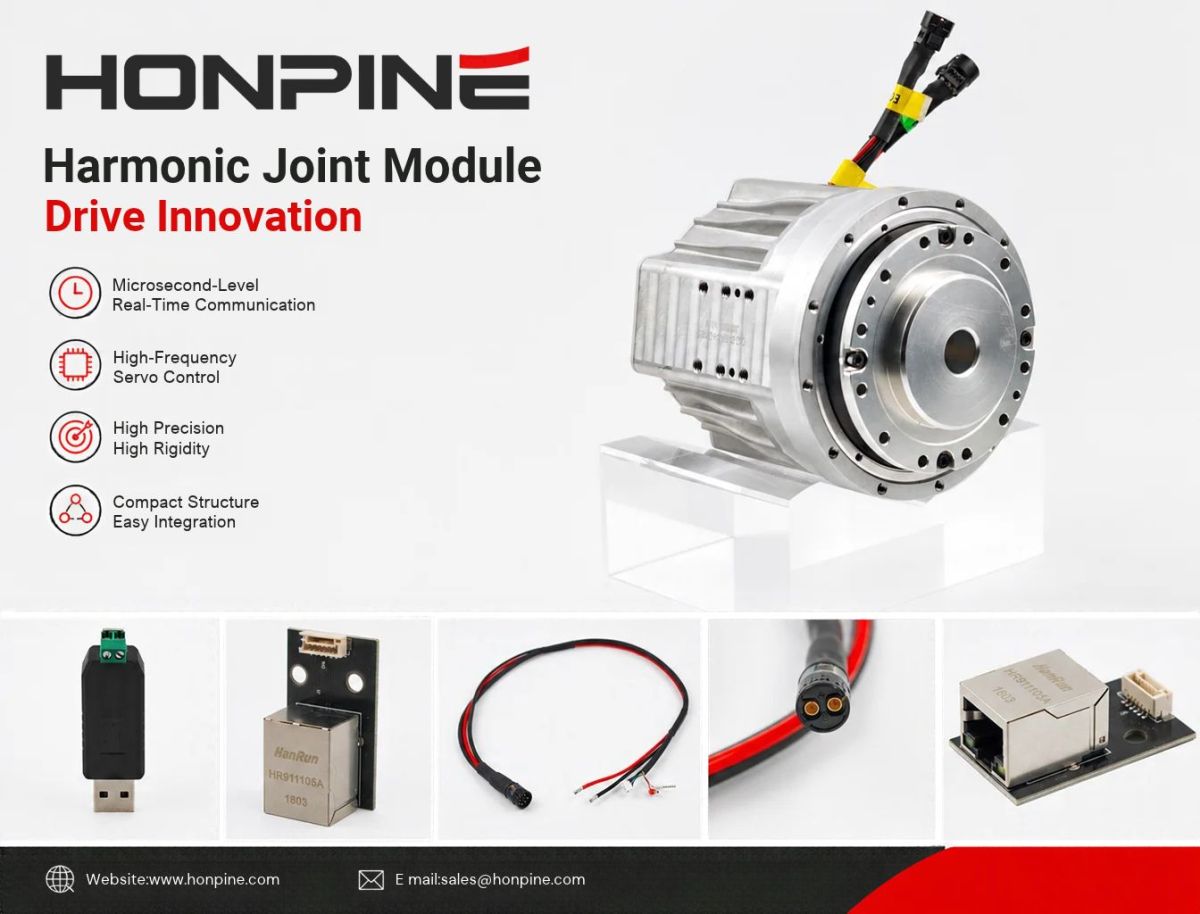
1. Microsecond-Level Real-Time Communication for High-Frequency Servo Control
Position, velocity, current, and torque feedback loops in robotic joints place extremely high demands on communication cycle times and real-time performance.
The TCHL joint modulemanual explicitly supports several high-precision real-time control modes, including:
Cyclic Synchronous Position Mode (CSP)
Cyclic Synchronous Velocity Mode (CSV)
Cyclic Synchronous Torque Mode (CST)
These control modes rely on extremely low communication latency and stable synchronization cycles.
Traditional serial communication and RS485 generally use a polling mechanism, which can result in higher latency and greater jitter. Although CANopen supports synchronous communication, its communication cycle is typically at the millisecond level and can become significantly longer as more axes are connected.
By contrast, EtherCAT uses a hardware-based processing mechanism. Its slave devices process data directly through hardware Fieldbus Memory Management Units (FMMUs), without requiring the processor to interpret each message in software. This architecture enables microsecond-level communication cycles and synchronization jitter.
According to the parameters documented in the TCHL module manual, EtherCAT supports stable synchronization cycles of 1 ms, 2 ms, and 3 ms. These cycles are suitable for high-frequency servo closed-loop control, torque sampling, and dynamic trajectory updates, providing a foundation for high-precision motion control.
2. Distributed Clocks Enable High-Precision Multi-Axis Synchronization
Multi-degree-of-freedom robotic arms and humanoid robots contain multiple interconnected joints. Position feedback, velocity feedback, and torque sensor data from different joints must share a unified time reference to ensure accurate dynamic calculations, inertia compensation, collision detection, and force-control algorithms.
The TCHL joint module manual specifically introduces the configuration of EtherCAT Distributed Clocks (DC), one of the key advantages that distinguishes EtherCAT from traditional communication buses.
How EtherCAT Distributed Clocks Synchronize Multiple Joints
The EtherCAT DC mechanism provides a unified hardware clock across all joint modules on the network. Encoder sampling, torque sampling, and control command updates across different axes can therefore be synchronized with high precision, minimizing timing discrepancies between axes at the hardware level.
In contrast, CANopen and RS485 generally rely on software-based broadcast synchronization signals rather than the same type of hardware clock synchronization. This can result in greater synchronization jitter and timing discrepancies.
During multi-axis coordinated motion, such timing errors can contribute to trajectory misalignment, force-control oscillations, and increased dynamic tracking errors.
For robotic systems that require coordinated movement across multiple joints, precise synchronization is essential to maintaining motion accuracy and control stability.
3. Standardized CiA 402 Protocol Improves Compatibility and Interoperability
The object dictionary, state machine, and control mode definitions in the TCHL module manual reflect the common EtherCAT communication architecture used in robotic joints: CoE (CANopen over EtherCAT), which is compatible with the CiA 402 drive and motion control device profile.
CiA 402 is a widely established standard for industrial servo devices. It defines standardized drive state transitions, control words, status words, operation modes, and data objects.
Standardized Object Dictionary Simplifies Integration
Under this architecture, core control and feedback data—including target position, target velocity, target torque, actual position, actual torque, and error codes—are defined through standardized object dictionary indexes.
Examples include:
0x6040: Controlword
0x607A: Target Position
0x6071: Target Torque
0x303A: Torque Sensor Feedback
Standardized communication protocols improve the compatibility and interchangeability of joint modules from different manufacturers. Developers can reduce the need to adapt to proprietary communication protocols when integrating different devices, switching control modes, commissioning equipment, or migrating programs.
For joint module manufacturers, developing products based on an established standard also helps reduce development complexity and trial-and-error costs. This standardization is another important factor contributing to the adoption of EtherCAT-based joint modules.
4. High-Bandwidth PDO Transmission Supports Multi-Dimensional Sensor Data
Next-generation integrated joint modules are no longer simple motion execution units. They are intelligent sensing systems that may integrate dual encoders, output-side torque sensors, temperature monitoring, fault detection, and vibration acquisition.
Compared with traditional servo systems, intelligent joints need to transmit significantly more real-time data, including position, velocity, torque, temperature, fault codes, and offset compensation values.
Flexible RxPDO and TxPDO Mapping
According to the PDO mapping section of the TCHL manual, EtherCAT supports multiple groups of customizable RxPDO and TxPDO mappings. This allows the controller to transmit commands to the joint module and receive multi-dimensional status feedback within a single communication cycle.
EtherCAT uses an Ethernet-based physical layer with sufficient bandwidth to carry large volumes of data within high-frequency synchronization cycles. This helps prevent communication congestion and the need to reduce sampling frequency when multiple sensor signals are transmitted simultaneously.
Traditional communication buses have more limited bandwidth. When handling multiple data acquisition tasks, they may require lower sampling frequencies, potentially compromising force-control accuracy and dynamic response speed.
This makes them less suitable for advanced intelligent joint applications equipped with torque sensors and other integrated sensing functions.
5. Daisy-Chain Topology Simplifies Multi-Axis Wiring and Expansion
Humanoid robots and six-axis robotic arms typically contain 6 to 16 joint modules. Their internal spaces are compact, making cable routing and system integration challenging.
EtherCAT supports a daisy-chain topology, allowing multiple joint modules to be connected sequentially through their network interfaces. This simplifies network wiring and reduces the need for separate communication lines from each joint to the controller.
Flexible IN/OUT Connections for Robotic Integration
The EtherCAT IN/OUT interface arrangement and daisy-chain connection method support multi-stage module installation and cable routing through hollow structures.
This is particularly suitable for the compact mechanical layouts of robotic joints, where space for wiring is limited.
Compared with the node limitations and expansion constraints of CANopen networks, as well as the lower polling efficiency of RS485 networks, EtherCAT offers strong multi-axis scalability. Adding more axes does not necessarily cause a significant increase in communication cycle time, making it well suited to coordinated control across multiple robotic joints.
6. Comprehensive Fault Diagnosis Improves System Reliability and Maintenance
The EtherCAT troubleshooting guidance and alarm system described in the TCHL module manual demonstrate the bus's comprehensive state management and fault diagnosis capabilities.
EtherCAT defines four main communication states:
Init: Initialization
Pre-Operational: Pre-operation
Safe-Operational: Safe operation
Operational: Fully operational
These states help developers identify communication issues related to device initialization, PDO mapping, synchronization, and network disconnection or lost frames.
The system can also report fault information such as following errors, synchronization deviations, and PDO reception abnormalities in real time.
This allows developers to identify and troubleshoot communication problems more efficiently, reducing commissioning time and after-sales maintenance complexity. Its comprehensive diagnostic capabilities make EtherCAT well suited to industrial automation systems and robotic equipment that require long-term stable operation.
7. A Mature EtherCAT Ecosystem Reduces Development and Integration Costs
EtherCAT has developed a mature ecosystem covering a wide range of industrial applications. Multiple mainstream master controller solutions are available, including Beckhoff TwinCAT, SOEM, IgH, and real-time Linux-based platforms.
These solutions support different hardware platforms, including PLCs, industrial PCs, and embedded controllers.
In addition, professional tools are available for commissioning, packet capture, and parameter configuration. Developers can monitor synchronization cycles, DC offsets, PDO data, and bus states, making system development and troubleshooting more straightforward.
For equipment manufacturers, EtherCAT offers a high degree of standardization, strong portability, and a well-established talent pool. Compared with proprietary communication buses, it can help reduce development, commissioning, training, and replacement costs, making it more suitable for large-scale production and commercial deployment.
Conclusion: Why EtherCAT Is Becoming the Mainstream Choice for Robotic Joint Communication
The widespread adoption of EtherCAT is fundamentally driven by the inability of traditional low-speed communication buses to fully meet the advanced control requirements of intelligent robotic joints.
With microsecond-level hardware-based real-time communication, high-precision Distributed Clock synchronization, standardized CiA 402 servo protocols, high-bandwidth PDO data transmission, simplified multi-axis networking, and comprehensive fault diagnosis, EtherCAT is well suited to next-generation integrated joint modules featuring torque sensing, multi-axis coordination, flexible force control, and high-precision trajectory tracking.
As humanoid robots, collaborative robots, and high-end automation equipment continue to develop, EtherCAT has become a leading mainstream communication solution for robotic joint modules.
Read More
Learn more about the story of HONPINE and industry trends related to precision transmission.
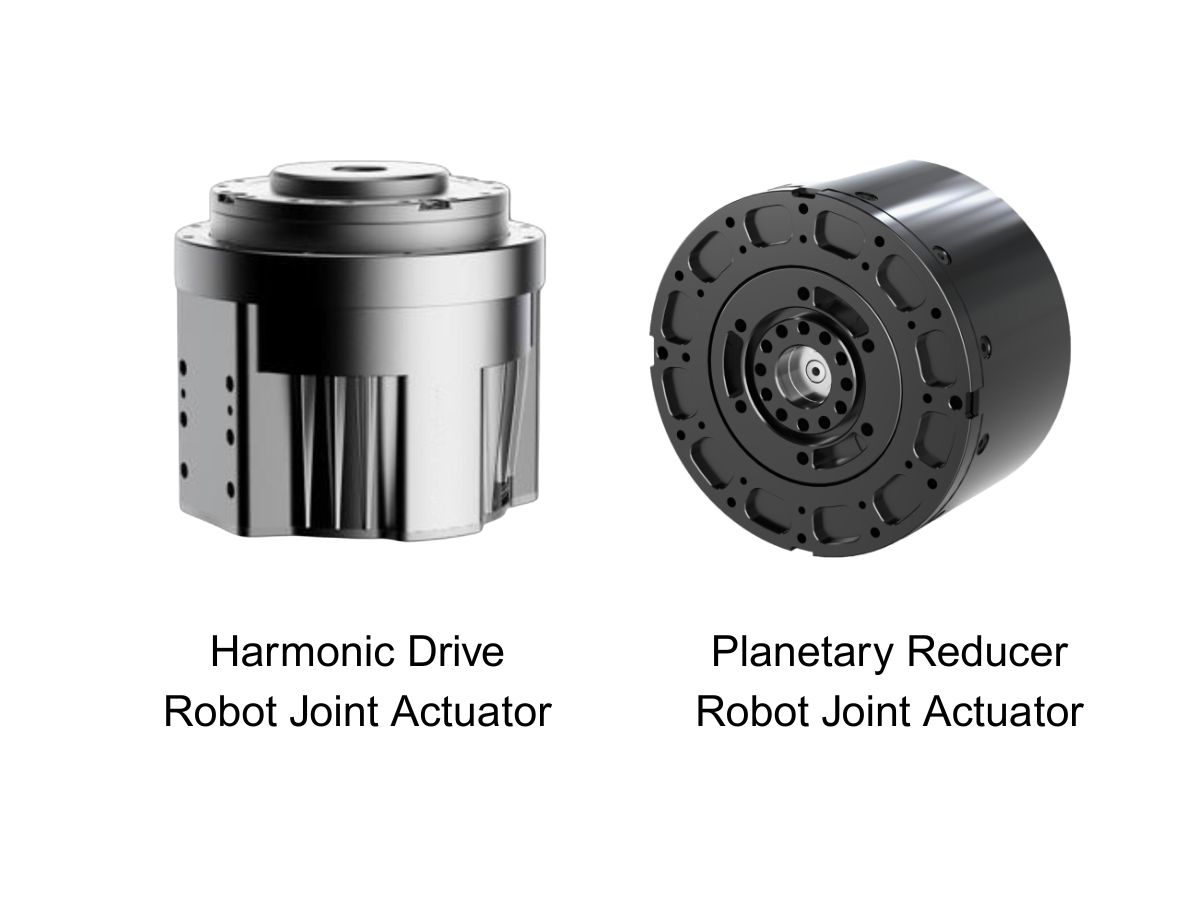
 What is robot joint actuator?How to Choose the Best Robot Rotary Joint Actuator?In core robot joint transmission solutions, planetary and harmonic rotary actuators each have their own strengths. Choosing the right type based on application requirements is essential to achieve the optimal balance between performance and cost.
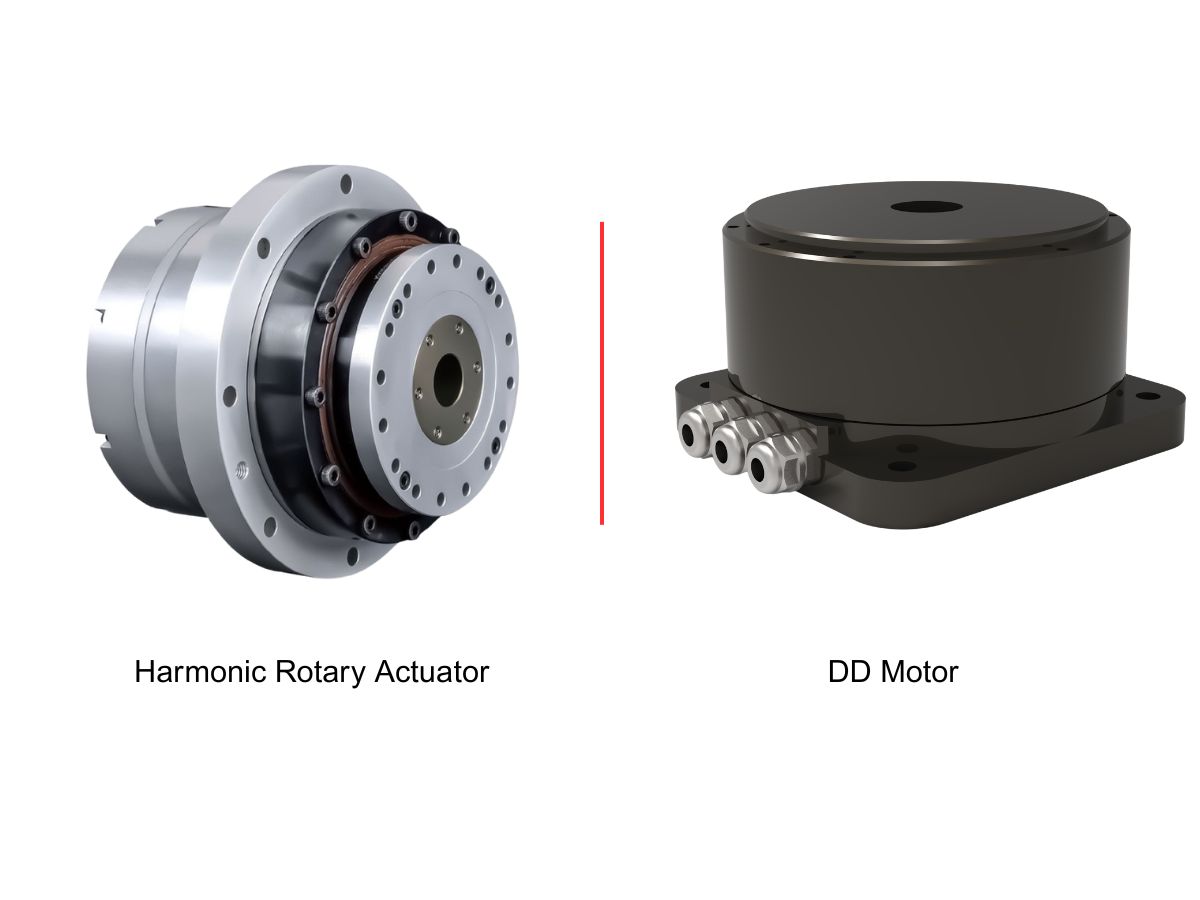
 DD Motors VS Harmonic Rotary ActuatorsThis article provides an in-depth comparison between Direct Drive (DD) motors and harmonic rotary actuators, covering their transmission principles, advantages and disadvantages, and typical application fields.
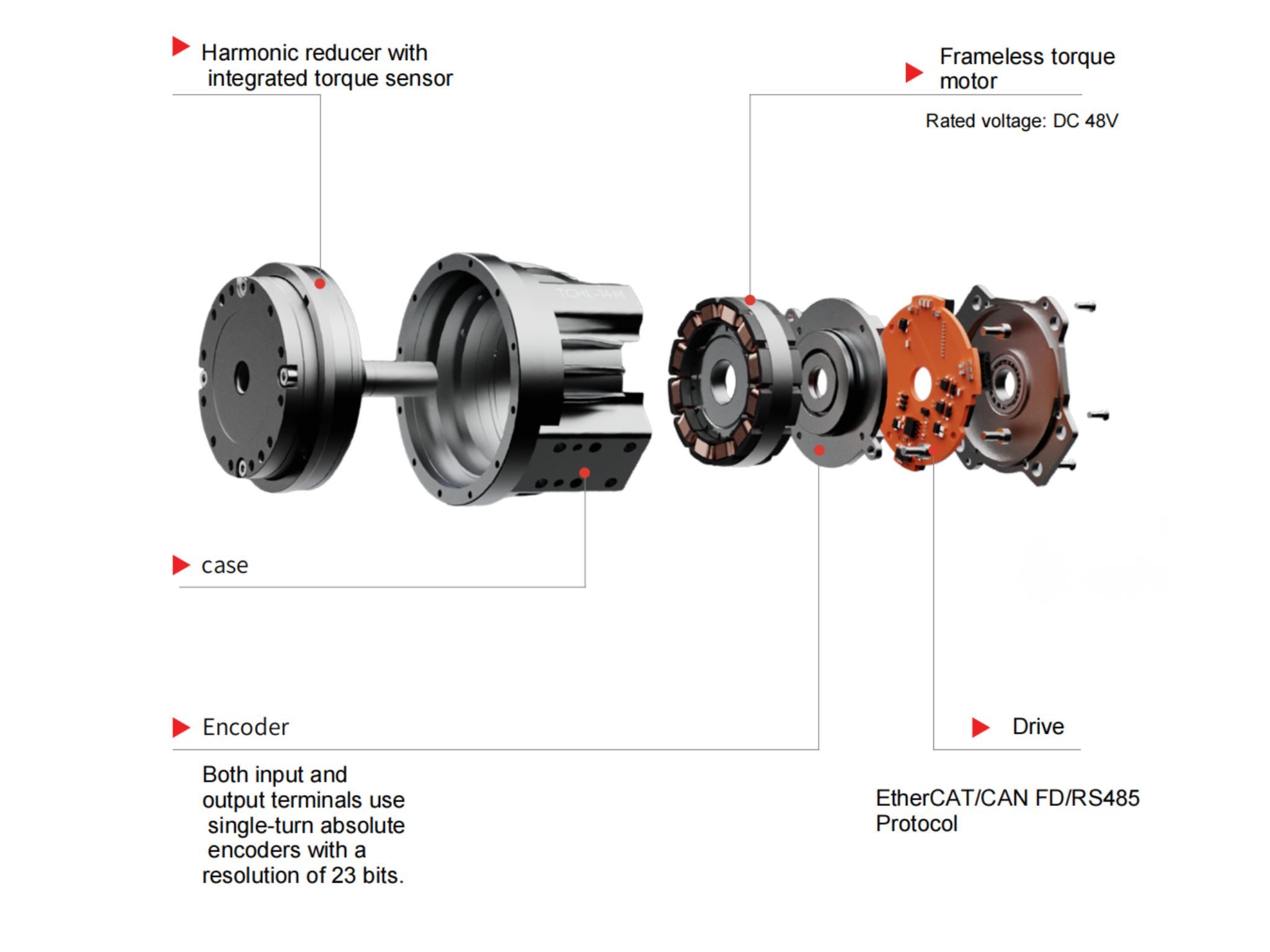
 OMG Ultra Compact Harmonic Drive Joint Module with Built-in Torque SensorHONPINE TCHL series harmonic drive joint module is a game-changing product that achieves disruptive improvements in multiple aspects such as lightweight design, integration level, and connection convenience. This article will analyze its revolutionary enhancements with you.
 The Role of Harmonic Drive Gears in Achieving 5–10 μm Accuracy in Dental Milling MachinesA dental milling machine is a CNC machining system used to directly process digital dental models into restorations such as crowns, bridges, veneers, inlays, and implant abutments. Dental milling machines require far higher operational accuracy and motion stability than ordinary equipment. This article explains how harmonic drive gear help dental milling machines achieve stable, continuous, and controllable operation.
 Why Are Harmonic Rotary Actuators Perfect for Medical Equipment?Harmonic rotary actuators (typically integrated systems consisting of a harmonic drive reducer, frameless torque motor, encoder, and optional brake) are regarded as key components in medical equipment. The core reason is that they simultaneously meet the most stringent medical requirements for precision, compact size, safety, and controllability. The following explanation is structured from three perspectives: technical characteristics, application scenarios, and medical value.
 High-Precision RV Reducers Perfectly Matched for Walking RobotsThe walking axis of a robot is a core component for power transmission and support. RV reducers provide extremely high rigidity, precision, and torque while maintaining a compact size and exceptional reliability, making them an ideal match for the demanding requirements of walking robot joints in terms of load capacity, impact resistance, and precision.
 Why Is EtherCAT Becoming the Mainstream Communication Bus for Robotic Joint Modules?Why is EtherCAT becoming the mainstream communication solution for intelligent robotic joint modules? This article explores seven key advantages, including microsecond-level real-time communication, Distributed Clock synchronization, CiA 402 standardization, high-bandwidth PDO transmission, multi-axis networking, fault diagnosis, and a mature development ecosystem. Learn how EtherCAT supports the advanced control requirements of humanoid robots, collaborative robots, and high-precision automation equipment.
 Robot Joint Module Selection Guide: How to Choose the Right Joint Module Based on Load, Precision, Force Control, and Motion RequirementsRobot Joint Module Selection Guide covering torque, speed, reducers, encoders, torque sensors, drive systems, and thermal management for collaborative and humanoid robots.
 How to Choose a High-Precision Rotary Actuator for Industrial Applications?Choosing the right precision rotary actuator requires more than checking rated torque. This guide explains how to calculate load torque, select the appropriate gear ratio, and evaluate structural configurations, mounting flanges, electromagnetic brakes, encoder resolution, and cable exit directions. Discover how HONPINE HAS, HAT, HAM, and HPG rotary actuator series meet different industrial motion control and precision positioning requirements.
 What Kind of Robot Joint Module Should You Choose for High-Precision Humanoid Robot Control?As humanoid robots move beyond basic walking and demonstration tasks toward complex real-world applications, their joint modules must deliver more than just high torque. Precise positioning, accurate torque control, structural stiffness, and dynamic response all play important roles in performing delicate operations. So, what kind of joint module should you choose for a humanoid robot designed to handle high-precision tasks? In this article, Theodore Li, Technical Director at HONPINE, introduces the HAG Harmonic Joint Module and explains five key features that make it suitable for demanding humanoid robot applications.
 HONPINE HPJM Harmonic Joint Motor: Position Mode vs. Speed Mode – How to Choose the Right Control Mode?Position mode and speed mode serve different motion-control requirements in robotic systems. Using the HONPINE HPJM harmonic joint motor as an example, this article explains their control architectures, operating principles, key differences, and application scenarios. From humanoid robot joints and rehabilitation exoskeletons to mobile robot drive wheels and continuous-rotation test systems, discover how to select the appropriate control mode based on motion objectives, mechanical loads, and system safety requirements.
 How Are Robot Industry Trends Shaping the Demand for Integrated Joint Modules and Hub Motors in 2026?The robotics industry is entering a new stage of development in 2026, with applications expanding from humanoid and quadruped robots to mobile manipulators, collaborative robots, and specialized robotic systems. As manufacturers move from prototype development toward commercialization and mass production, the demands on robotic drive systems are also changing. In this article, Allen Li, Founder of HONPINE, shares his observations on the evolving robotics market and explains why integrated joint modules and hub motors are becoming increasingly important for improving system integration, product consistency, and long-term operating reliability.
Double Click
We provide harmonic drive reducer,planetary reducer,robot joint motor,robot rotary actuators,RV gear reducer,robot end effector,dexterous robot hand
 What is robot joint actuator?How to Choose the Best Robot Rotary Joint Actuator?In core robot joint transmission solutions, planetary and harmonic rotary actuators each have their own strengths. Choosing the right type based on application requirements is essential to achieve the optimal balance between performance and cost.
 DD Motors VS Harmonic Rotary ActuatorsThis article provides an in-depth comparison between Direct Drive (DD) motors and harmonic rotary actuators, covering their transmission principles, advantages and disadvantages, and typical application fields.
 OMG Ultra Compact Harmonic Drive Joint Module with Built-in Torque SensorHONPINE TCHL series harmonic drive joint module is a game-changing product that achieves disruptive improvements in multiple aspects such as lightweight design, integration level, and connection convenience. This article will analyze its revolutionary enhancements with you.
 Why Is EtherCAT Becoming the Mainstream Communication Bus for Robotic Joint Modules?Why is EtherCAT becoming the mainstream communication solution for intelligent robotic joint modules? This article explores seven key advantages, including microsecond-level real-time communication, Distributed Clock synchronization, CiA 402 standardization, high-bandwidth PDO transmission, multi-axis networking, fault diagnosis, and a mature development ecosystem. Learn how EtherCAT supports the advanced control requirements of humanoid robots, collaborative robots, and high-precision automation equipment.
 Robot Joint Module Selection Guide: How to Choose the Right Joint Module Based on Load, Precision, Force Control, and Motion RequirementsRobot Joint Module Selection Guide covering torque, speed, reducers, encoders, torque sensors, drive systems, and thermal management for collaborative and humanoid robots.
 How to Choose a High-Precision Rotary Actuator for Industrial Applications?Choosing the right precision rotary actuator requires more than checking rated torque. This guide explains how to calculate load torque, select the appropriate gear ratio, and evaluate structural configurations, mounting flanges, electromagnetic brakes, encoder resolution, and cable exit directions. Discover how HONPINE HAS, HAT, HAM, and HPG rotary actuator series meet different industrial motion control and precision positioning requirements.
 What Kind of Robot Joint Module Should You Choose for High-Precision Humanoid Robot Control?As humanoid robots move beyond basic walking and demonstration tasks toward complex real-world applications, their joint modules must deliver more than just high torque. Precise positioning, accurate torque control, structural stiffness, and dynamic response all play important roles in performing delicate operations. So, what kind of joint module should you choose for a humanoid robot designed to handle high-precision tasks? In this article, Theodore Li, Technical Director at HONPINE, introduces the HAG Harmonic Joint Module and explains five key features that make it suitable for demanding humanoid robot applications.
 HONPINE HPJM Harmonic Joint Motor: Position Mode vs. Speed Mode – How to Choose the Right Control Mode?Position mode and speed mode serve different motion-control requirements in robotic systems. Using the HONPINE HPJM harmonic joint motor as an example, this article explains their control architectures, operating principles, key differences, and application scenarios. From humanoid robot joints and rehabilitation exoskeletons to mobile robot drive wheels and continuous-rotation test systems, discover how to select the appropriate control mode based on motion objectives, mechanical loads, and system safety requirements.
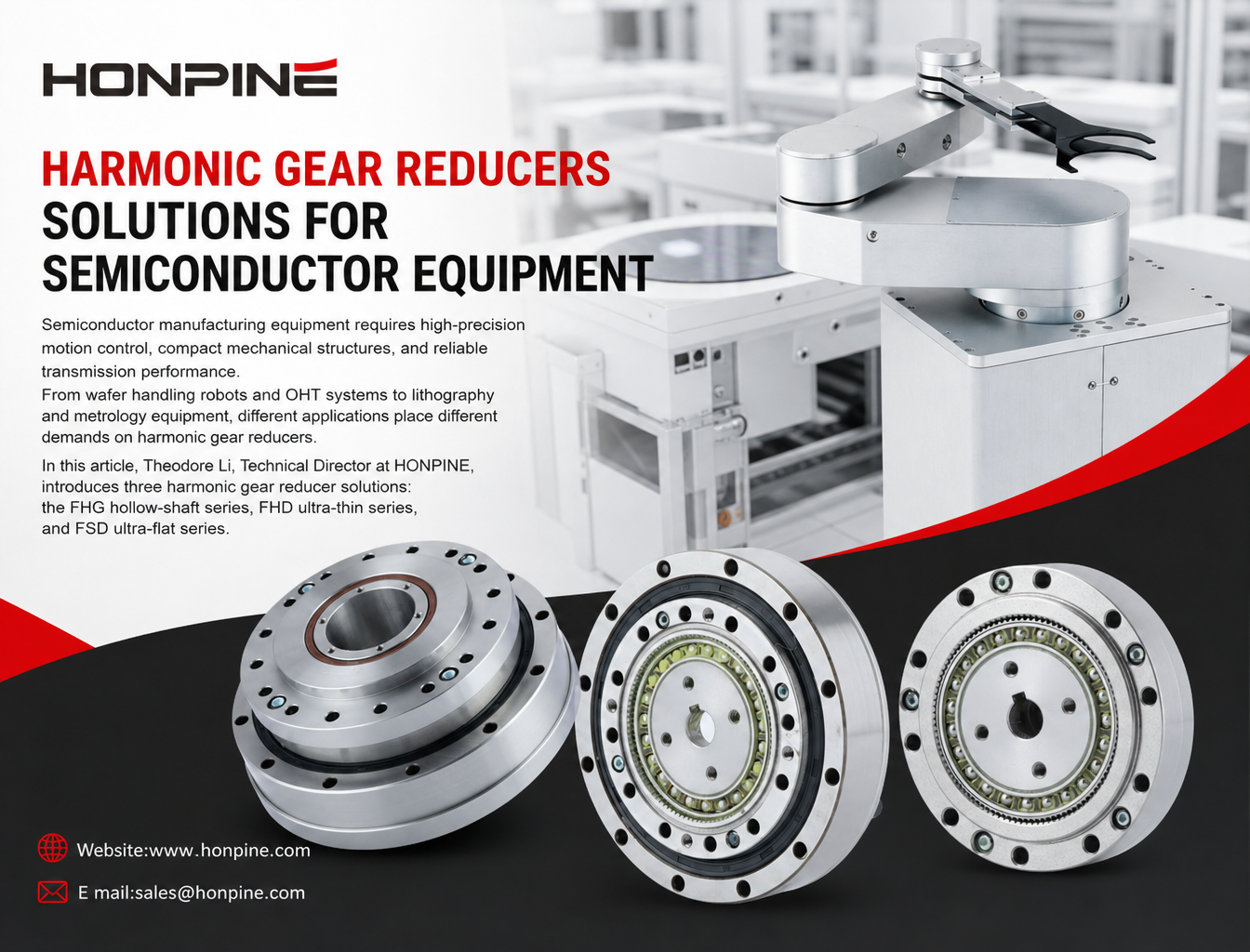
 3 Best Harmonic Gear Reducers for Semiconductor EquipmentSemiconductor manufacturing equipment requires high-precision motion control, compact mechanical structures, and reliable transmission performance. From wafer handling robots and OHT systems to lithography and metrology equipment, different applications place different demands on harmonic gear reducers. In this article, Theodore Li, Technical Director at HONPINE, introduces three harmonic gear reducer solutions: the FHG hollow-shaft series, FHD ultra-thin series, and FSD ultra-flat series. We will also examine 10 key technical parameters engineers should consider when selecting a harmonic gear reducer for semiconductor equipment, including rated torque, backlash, torsional rigidity, hollow shaft diameter, and permissible moment load.
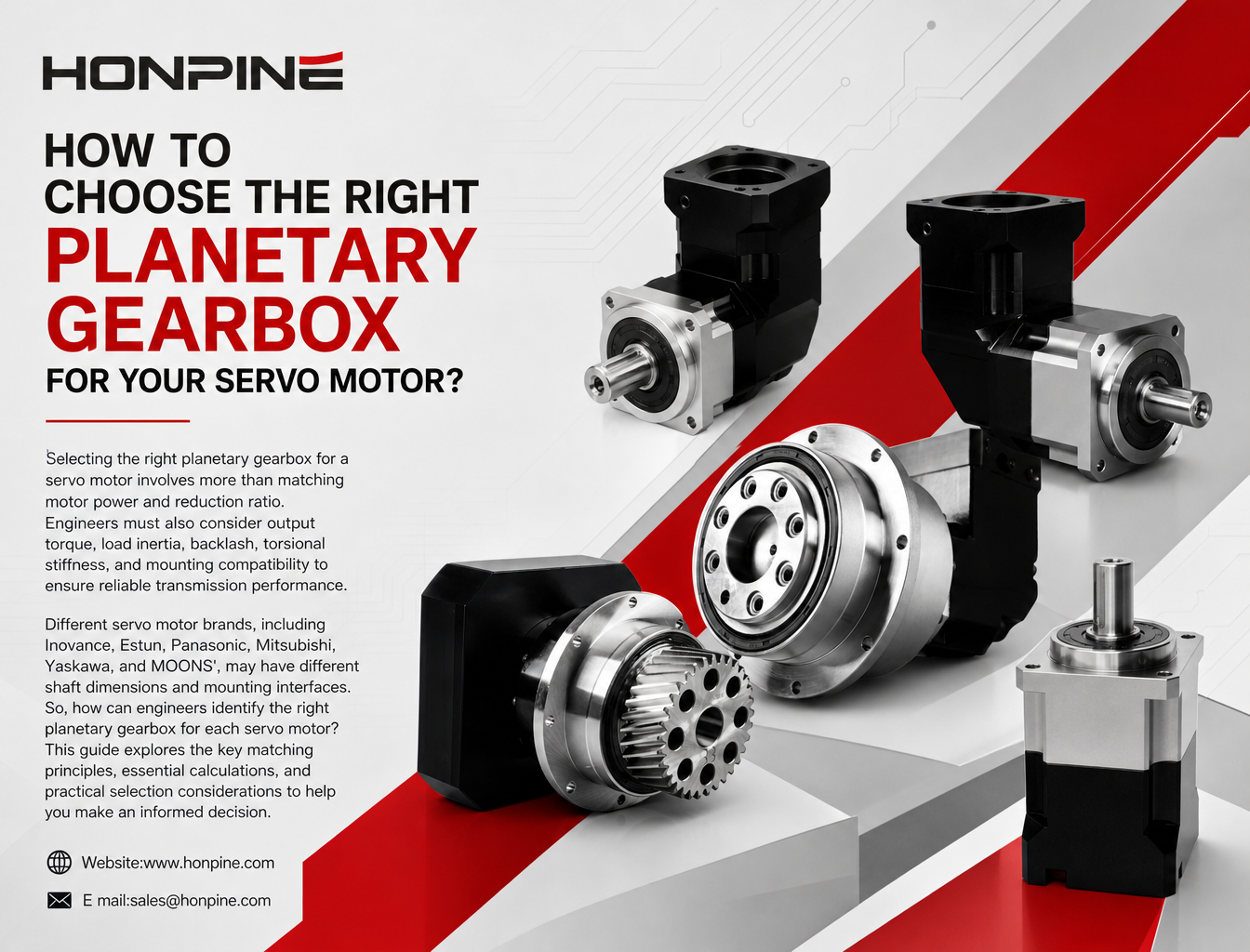
 How to Match Planetary Gearboxes with Servo Motors from 6 Major Brands?Selecting the right planetary gearbox for a servo motor involves more than matching motor power and reduction ratio. Engineers must also consider output torque, load inertia, backlash, torsional stiffness, and mounting compatibility to ensure reliable transmission performance. Different servo motor brands, including Inovance, Estun, Panasonic, Mitsubishi, Yaskawa, and MOONS', may have different shaft dimensions and mounting interfaces. So, how can engineers identify the right planetary gearbox for each servo motor? This guide explores the key matching principles, essential calculations, and practical selection considerations to help you make an informed decision.
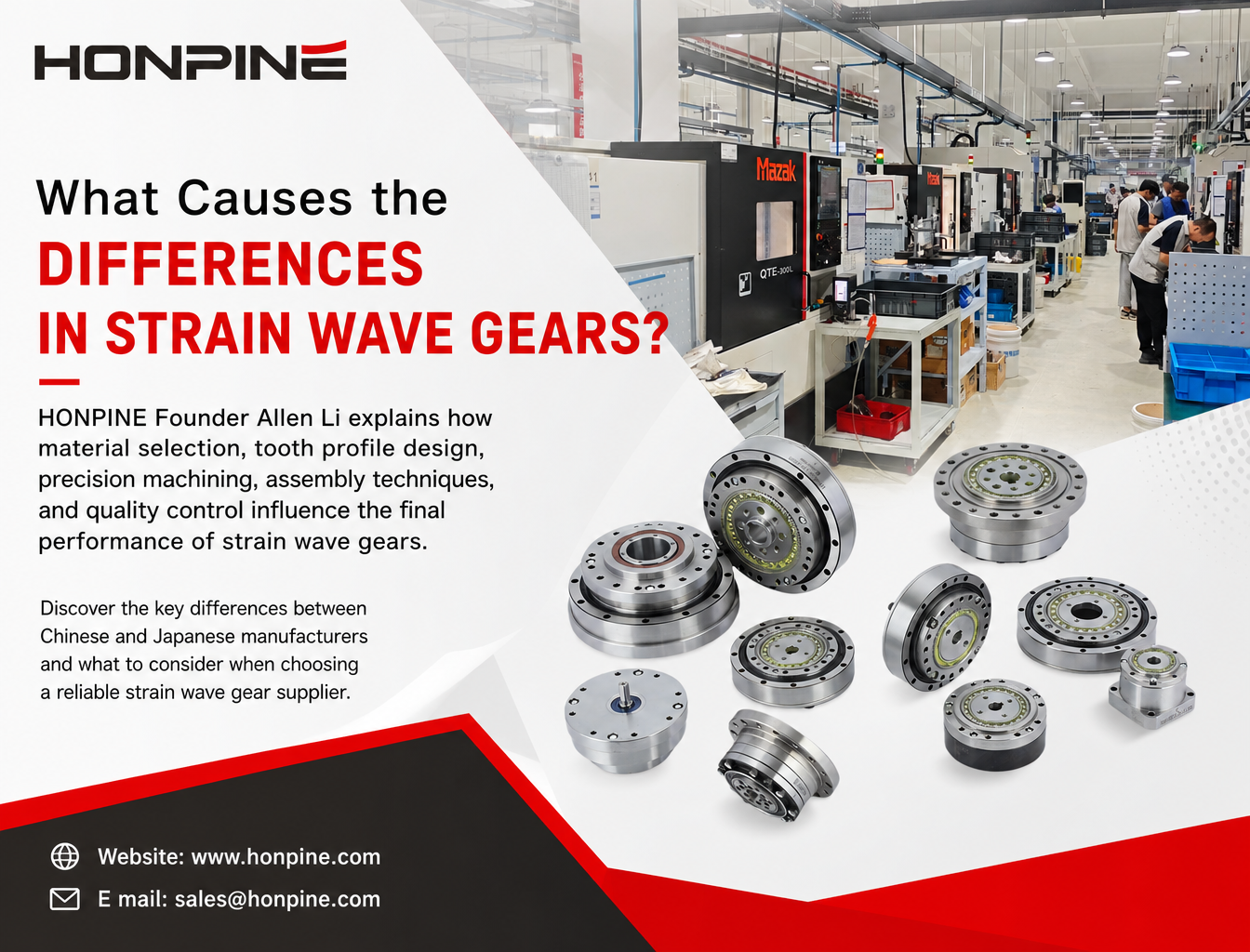
 Why Do Strain Wave Gear Manufacturers Produce Products with Such Different Levels of Quality and Precision?Strain wave gears share the same operating principle, but their quality, precision, and service life can vary significantly between manufacturers. What causes these differences? HONPINE Founder Allen Li explains how material selection, tooth profile design, precision machining, assembly techniques, and quality control influence the final performance of strain wave gears. Discover the key differences between Chinese and Japanese manufacturers and what to consider when choosing a reliable strain wave gear supplier.
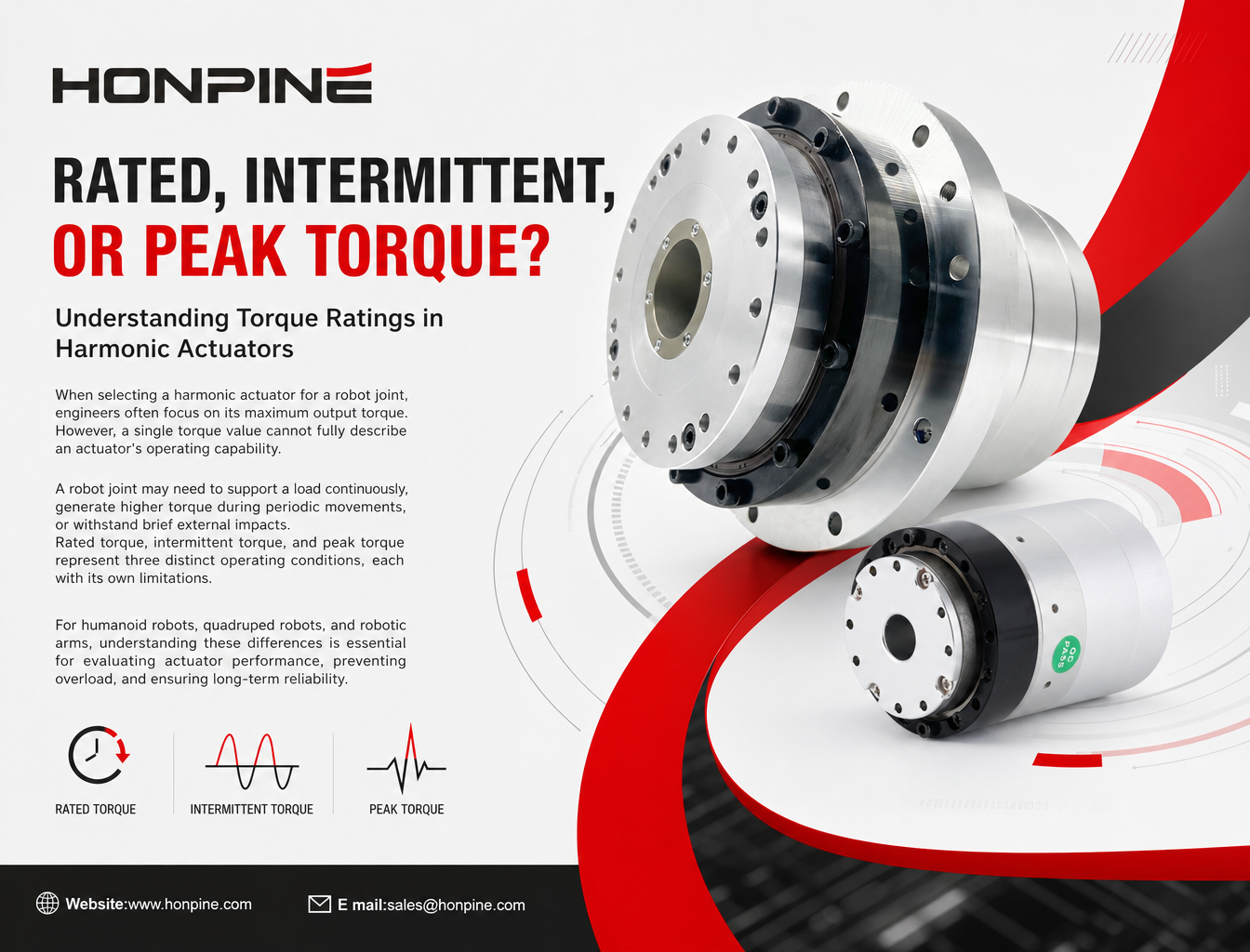
 What Are Rated, Intermittent, and Peak Torque in a Harmonic Actuator?When selecting a harmonic actuator for a robot joint, engineers often focus on its maximum output torque. However, a single torque value cannot fully describe an actuator's operating capability. A robot joint may need to support a load continuously, generate higher torque during periodic movements, or withstand brief external impacts. Rated torque, intermittent torque, and peak torque represent three distinct operating conditions, each with its own limitations. For humanoid robots, quadruped robots, and robotic arms, understanding these differences is essential for evaluating actuator performance, preventing overload, and ensuring long-term reliability.