





Cup Type vs. Hat Type vs. Pancake Harmonic Reducer: How to Choose the Right Strain Wave Gear Introduction
The flexspline is one of the most critical components of a strain wave gear, and its structural design has a direct influence on the reducer's axial length, torque capacity, torsional rigidity, hollow configuration, and installation method. As industrial equipment continues to become more compact and highly integrated, different flexspline and harmonic reducerconfigurations have been developed to meet different mechanical requirements.
Among the most commonly discussed configurations are the cup type strain wave gear, hat type strain wave gear, and pancake harmonic reducer. These three designs share the same fundamental strain wave transmission principle, but their mechanical structures are optimized for different priorities. Cup type designs emphasize mature technology and balanced performance, hat type designs provide improved axial packaging and mechanical integration, while pancake harmonic reducers focus on minimizing axial height.
For engineers working with 3C automation, semiconductor equipment, CNC machinery, precision inspection systems, and other industrial motion applications, understanding these structural differences is important when selecting a harmonic reducer. The smallest reducer is not necessarily the best choice. The correct configuration depends on the required torque, rotational inertia, positioning accuracy, torsional rigidity, installation space, hollow diameter, operating cycle, and service life.
Why Flexspline Design Matters in a Harmonic Reducer?
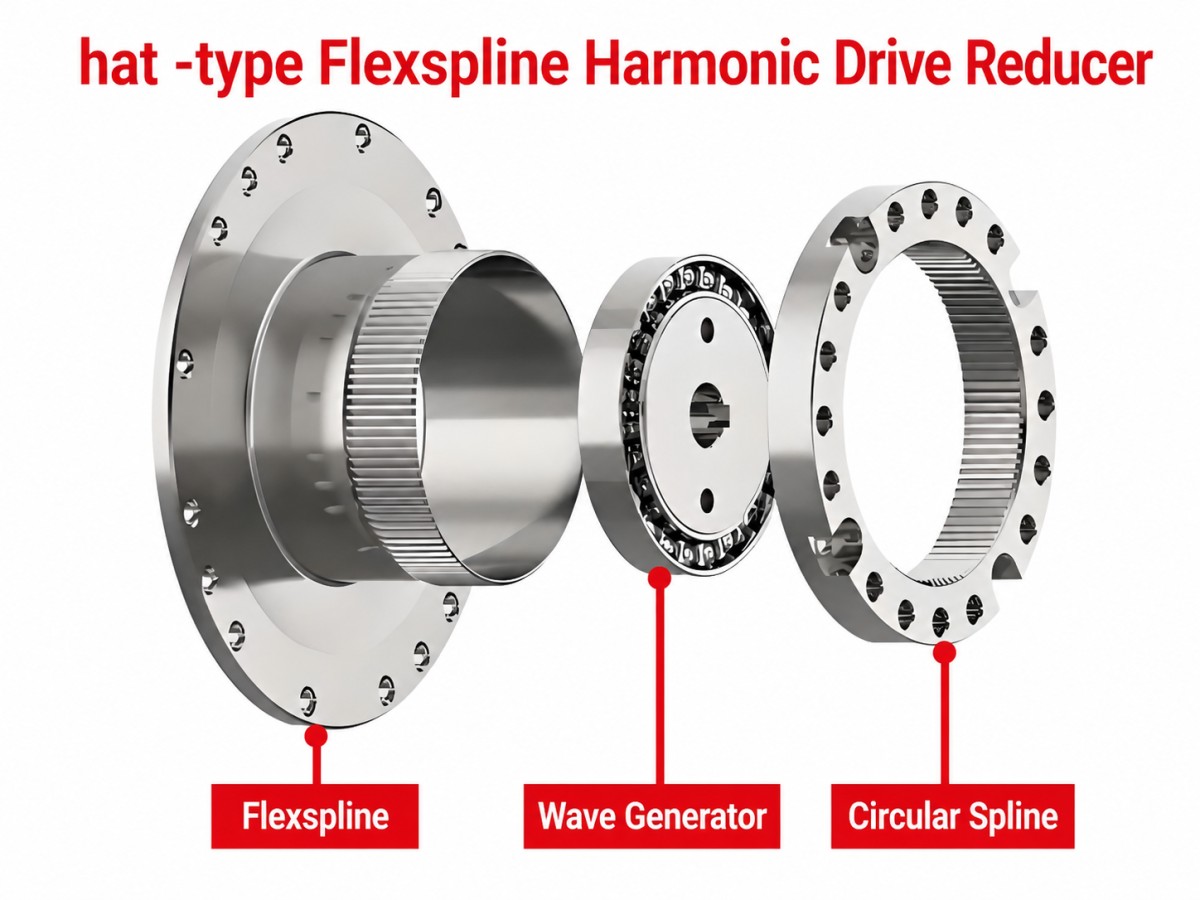
A strain wave gear generally consists of a wave generator, flexspline, and circular spline. During operation, the wave generator forces the flexspline to deform into an elliptical shape, allowing it to engage with the circular spline. Because the two splines have different numbers of teeth, this controlled deformation generates a high reduction ratio.
The flexspline has to perform two demanding functions at the same time. It must be flexible enough to deform repeatedly under the wave generator while remaining strong enough to transmit torque and withstand a large number of deformation cycles. As a result, its geometry has a direct relationship with the overall performance of the harmonic reducer.
The flexspline structure can affect the reducer's axial dimensions, torque transmission, torsional rigidity, fatigue strength, output flange arrangement, hollow space, bearing configuration, and mechanical integration. This is why cup, hat, and pancake configurations should be regarded as different engineering solutions rather than simply different external shapes.
Three Major Harmonic Reducer Configurations
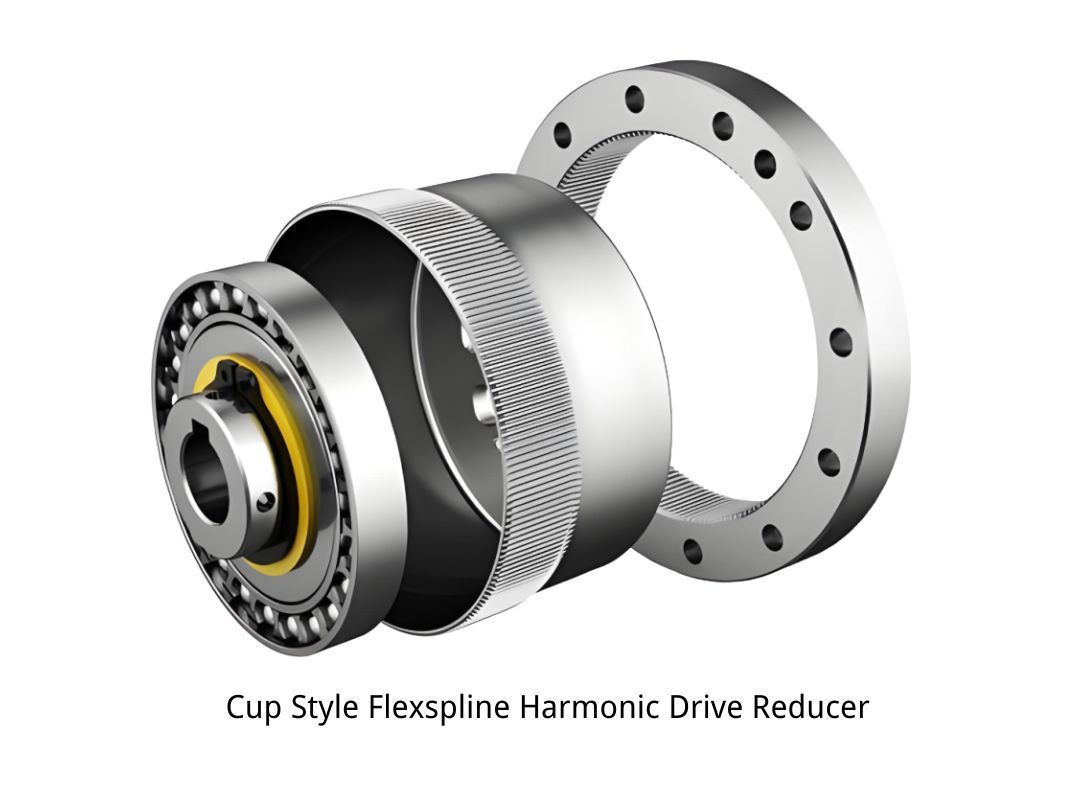
Cup Type Strain Wave Gear
The cup type flexspline is one of the most mature and widely used strain wave gear configurations. Its flexible body has a cup-shaped structure, with the gear teeth located around the open end and the closed end connected to the output structure. The wave generator is installed inside the flexspline and produces the elastic deformation required for transmission.
The main advantage of the cup type design is its mature and balanced engineering characteristics. Manufacturing technology is well established, and the structure can provide high reduction ratios, low backlash, high positioning accuracy, and reliable torque transmission. It is also available in a wide range of sizes and specifications, making it suitable for many general-purpose precision transmission applications.
The main limitation is axial length. Because the flexspline has a relatively long cup-shaped body and a closed bottom, a conventional cup type reducer may require more axial installation space than some flattened configurations. The bottom structure can also occupy part of the internal space, which can limit the design of large through-holes.
For applications where axial height is not the primary limitation, however, the cup type remains a practical and cost-effective option. It can be used in industrial automation, 3C assembly equipment, precision positioning mechanisms, CNC auxiliary axes, inspection equipment, and other industrial machinery.
Hat Type Strain Wave Gear
The hat type flexspline was developed to achieve a more compact mechanical arrangement than the conventional cup structure. Its profile resembles a hat or bell, with the output flange and flexible section arranged differently from the cup type.
One of the major advantages of this configuration is improved axial packaging. Depending on the specific design, a hat type strain wave gear can significantly reduce overall axial length while maintaining high reduction ratios, low backlash, and precise rotary transmission. Its output flange and housing arrangement can also provide greater flexibility when integrating the reducer into a compact machine structure.
Hat type designs can also be advantageous when the rotary mechanism requires a central passage for cables, sensors, pneumatic tubing, or other internal components. A suitable hollow configuration can simplify cable routing and reduce interference between moving cables and surrounding mechanical components.
However, the more complex geometry can increase manufacturing and inspection requirements. The final performance also depends on the flexspline material, heat treatment, tooth accuracy, bearing structure, housing rigidity, and output flange design.
Hat type strain wave gears are therefore particularly attractive for compact industrial rotary mechanisms, precision automation equipment, semiconductor machinery, 3C manufacturing equipment, and space-constrained positioning systems.
Pancake Harmonic Reducer
A pancake harmonic reducer is primarily designed to minimize axial height. Its relatively flat, disc-like structure allows the transmission to occupy less space along the rotary axis while maintaining the basic advantages of strain wave gearing.
This low-profile configuration can be particularly valuable when the equipment has sufficient radial space but very limited axial space. Typical applications include thin rotary stages, compact indexing mechanisms, semiconductor equipment, optical inspection systems, precision automation machinery, and low-profile rotary platforms.
The main advantage of a pancake harmonic reducer is therefore not necessarily higher torque or higher precision. Its key value is mechanical packaging efficiency. By reducing axial height, the designer can integrate the rotary transmission into equipment where a conventional cup type reducer may be too long.
At the same time, reducing the axial dimensions introduces additional design challenges. Flexspline geometry, load distribution, bearing arrangement, torsional rigidity, fatigue strength, and output torque all need to be carefully optimized. Therefore, a pancake harmonic reducer should not be selected simply because it is thinner.
For high-load industrial applications, engineers should pay particular attention to rated torque, peak torque, torsional rigidity, radial load, axial load, allowable moment, backlash, and service life.
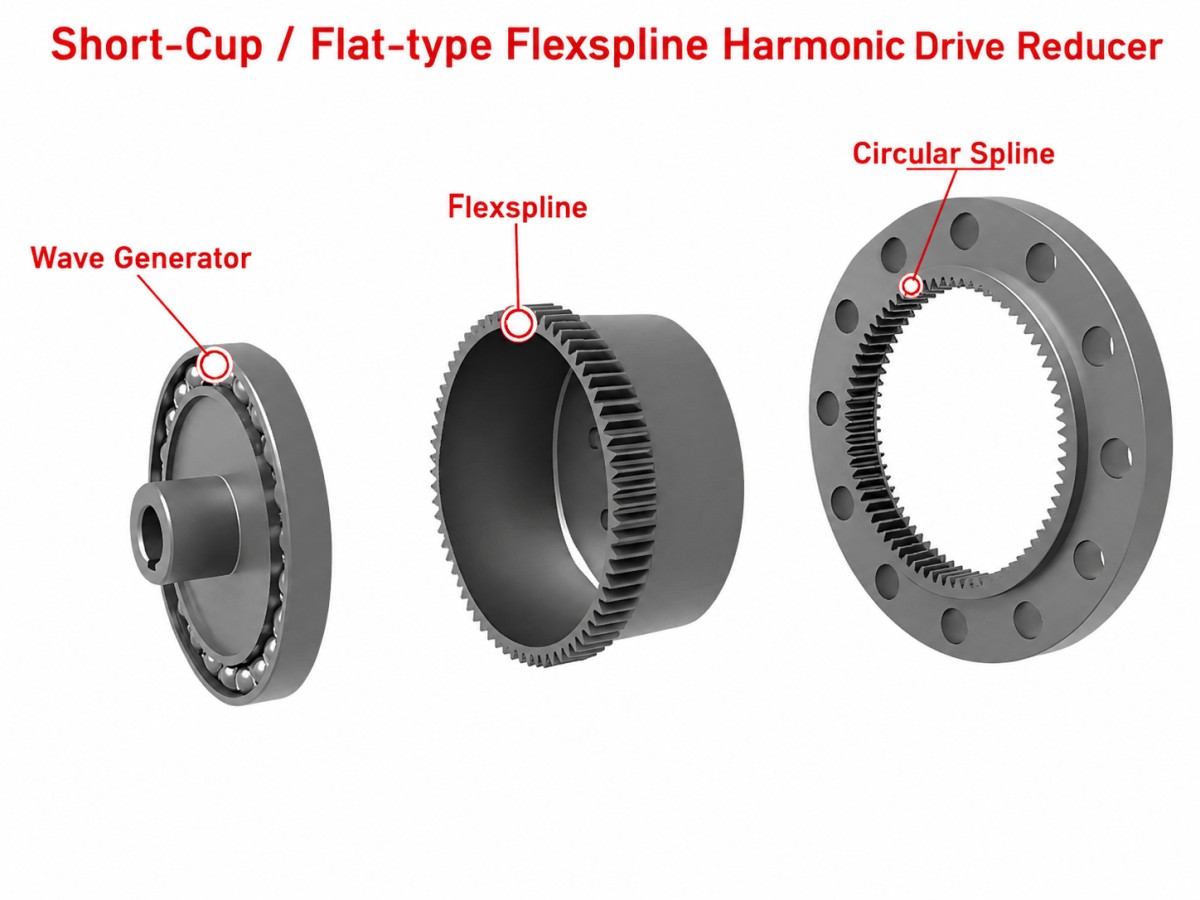
Cup Type vs. Hat Type vs. Pancake Harmonic Reducer
The three configurations can be compared from an engineering perspective:
This table represents general structural characteristics rather than absolute product performance. Actual torque capacity, rigidity, backlash, and service life can vary significantly between manufacturers and individual product series.
How Structure Affects Torque, Rigidity and Accuracy?
A common mistake in harmonic reducer selection is to compare products only by outer diameter or reduction ratio. The structural configuration should also be evaluated against the actual load and motion profile.
Torque capacity depends on factors such as flexspline geometry, material, heat treatment, tooth engagement, wave generator design, bearing capacity, and housing rigidity. The same outer diameter does not necessarily mean the same output torque.
Torsional rigidity is especially important in high-precision industrial equipment. A rotary axis used in semiconductor machinery or CNC equipment may experience external forces that cause angular deformation. In these applications, the designer needs to evaluate not only rated torque but also torsional stiffness, radial load, axial load, and allowable moment.
Positioning accuracy is also a system-level characteristic. Although strain wave gears are known for very low backlash, the final positioning accuracy of a machine also depends on encoder resolution, servo control, bearing clearance, housing rigidity, mounting accuracy, and external loads.
Therefore, a pancake harmonic reducer should not automatically be considered more precise simply because it is thinner, and a hat type reducer should not automatically be considered more rigid simply because it has a larger mounting flange. The complete mechanical system determines the final result.
Which Harmonic Reducer Is Suitable for Different Industrial Applications?
3C Automation
3C manufacturing equipment often requires fast and repeatable rotary positioning within a compact machine structure. The reducer may operate through a large number of motion cycles, making backlash, repeatability, speed, service life, and cost important selection factors.
A cup type strain wave gear can provide a good balance between performance and cost when sufficient axial space is available. A hat type can be considered when the rotary mechanism needs to be shorter and more highly integrated. A pancake harmonic reducer becomes attractive when equipment height is particularly restricted.
Semiconductor Equipment
Semiconductor equipment places demanding requirements on positioning stability, repeatability, vibration, structural rigidity, and thermal behavior. The reducer must maintain stable transmission performance under long operating cycles.
Hat type and pancake configurations can provide useful packaging advantages in compact semiconductor mechanisms. However, the selection should be based on the complete mechanical requirements rather than axial size alone. Torsional rigidity, moment load, thermal stability, and long-term reliability remain important.
CNC Machinery
CNC rotary mechanisms can experience considerably higher external loads than many general positioning systems. In addition to backlash and positioning accuracy, engineers should carefully evaluate output torque, torsional rigidity, radial load, axial load, and allowable moment.
A cup type configuration can be suitable when there is sufficient installation space and a balanced transmission solution is required. Hat type designs may be advantageous when compactness and mechanical integration are important. Pancake designs can solve severe axial-space limitations, but their load and rigidity specifications should be carefully checked before selection.
Precision Inspection Equipment
Precision inspection systems often combine rotary positioning with cameras, optical components, sensors, or measurement devices. Low backlash and repeatability are important, while the mechanical structure may also have strict dimensional limitations.
Hat type and pancake harmonic reducers can be useful when the transmission needs to be integrated into a compact inspection mechanism. The final selection should consider the payload, moment load, required angular accuracy, vibration, and installation envelope.
How to Choose the Right Harmonic Reducer Structure?
A practical selection process can begin with the application rather than the reducer model.
First, calculate the load. Determine the total mass, rotational inertia, radial load, axial load, moment load, and external process forces.
Second, define the motion profile. The required output speed, acceleration, deceleration, positioning angle, cycle time, and duty cycle will determine the actual transmission requirements.
Third, establish the precision requirements. Backlash, positioning accuracy, repeatability, and torsional rigidity should be defined before selecting the reducer.
Fourth, determine the mechanical envelope. Check the maximum outer diameter, available axial length, required hollow diameter, output flange dimensions, motor installation space, and cable routing requirements.
Finally, compare the complete performance and cost. The selection should balance torque, rigidity, precision, compactness, service life, and cost rather than optimizing a single parameter.
In general, a cup type strain wave gear is attractive when mature technology, balanced performance, and cost efficiency are priorities. A hat type strain wave gear is more suitable when axial compactness and mechanical integration are important. A pancake harmonic reducer should be considered when extremely low axial height is the primary mechanical requirement.
Quick Selection Guide
The actual hollow diameter and load capacity should always be confirmed from the manufacturer's technical data.
Is a Pancake Harmonic Reducer Always Better Because It Is Smaller?
No.
The primary advantage of a pancake harmonic reducer is its low axial height, not automatically higher torque, rigidity, or accuracy.
For example, a high-load CNC rotary axis may benefit more from a slightly longer reducer with higher torsional rigidity and moment capacity. On the other hand, a thin precision rotary stage may gain a significant mechanical advantage from a pancake design because axial space is the main limitation.
This is why compactness should be treated as an application requirement, rather than a universal performance ranking.
The same principle applies to cup and hat configurations. A cup type reducer is not inferior simply because it is longer, and a hat type reducer is not automatically better simply because it is more compact.
The right structure is the one that provides the required performance within the available mechanical envelope.
The Development of Compact Harmonic Reducer Structures
The development of strain wave gears is increasingly focused on improving torque density, compactness, rigidity, and system integration.
Advances in flexspline materials, tooth profiles, heat treatment, wave generator design, bearing technology, and precision manufacturing are helping manufacturers achieve higher performance within smaller packages.
At the same time, the trend toward highly integrated automation equipment is increasing the demand for low-profile and application-specific transmission structures.
Rather than replacing one configuration with another, the market is likely to continue developing different solutions for different requirements:
Cup Type — balanced performance and cost
Hat Type — compactness and mechanical integration
Pancake Type — ultra-low axial height
This gives machine designers more flexibility when optimizing the complete motion system.
HONPINE Precision Harmonic Reducer Solutions
HONPINE develops precision harmonic transmission products and rotary motion solutions for industrial automation, 3C manufacturing, semiconductor equipment, CNC machinery, precision inspection, and other high-precision applications.
When selecting a harmonic reducer, HONPINE can evaluate key parameters including:
Output torque
Reduction ratio
Backlash
Torsional rigidity
Maximum input speed
Installation dimensions
Hollow requirements
Radial and axial loads
Allowable moment
Duty cycle
Service life
The goal is not simply to select the smallest or highest-torque reducer. A suitable harmonic transmission should provide the required precision, rigidity, torque capacity, durability, and mechanical integration while fitting efficiently into the overall machine architecture.
Conclusion
Cup type, hat type, and pancake harmonic reducers represent three different approaches to optimizing strain wave transmission.
The cup type strain wave gear is a mature and economical configuration that provides a strong balance between torque capacity, precision, reliability, and manufacturing cost.
The hat type strain wave gear focuses on improved axial packaging and mechanical integration, making it attractive for compact industrial rotary mechanisms.
The pancake harmonic reducer takes low-profile design further by minimizing axial height, making it particularly useful for thin rotary stages and equipment with severe height restrictions.
There is no universally superior configuration.
For 3C automation, semiconductor equipment, CNC machinery, precision inspection, and other high-precision industrial applications, the right choice should be based on the actual mechanical requirements.
Engineers should evaluate:
Torque + Rotational Inertia + Rigidity + Backlash + Axial Space + Hollow Requirements + Duty Cycle + Service Life + Cost
The best harmonic reducer is therefore not necessarily the smallest, most expensive, or highest-rated product.
It is the configuration that best matches the application's mechanical requirements.
Read More
Learn more about the story of HONPINE and industry trends related to precision transmission.
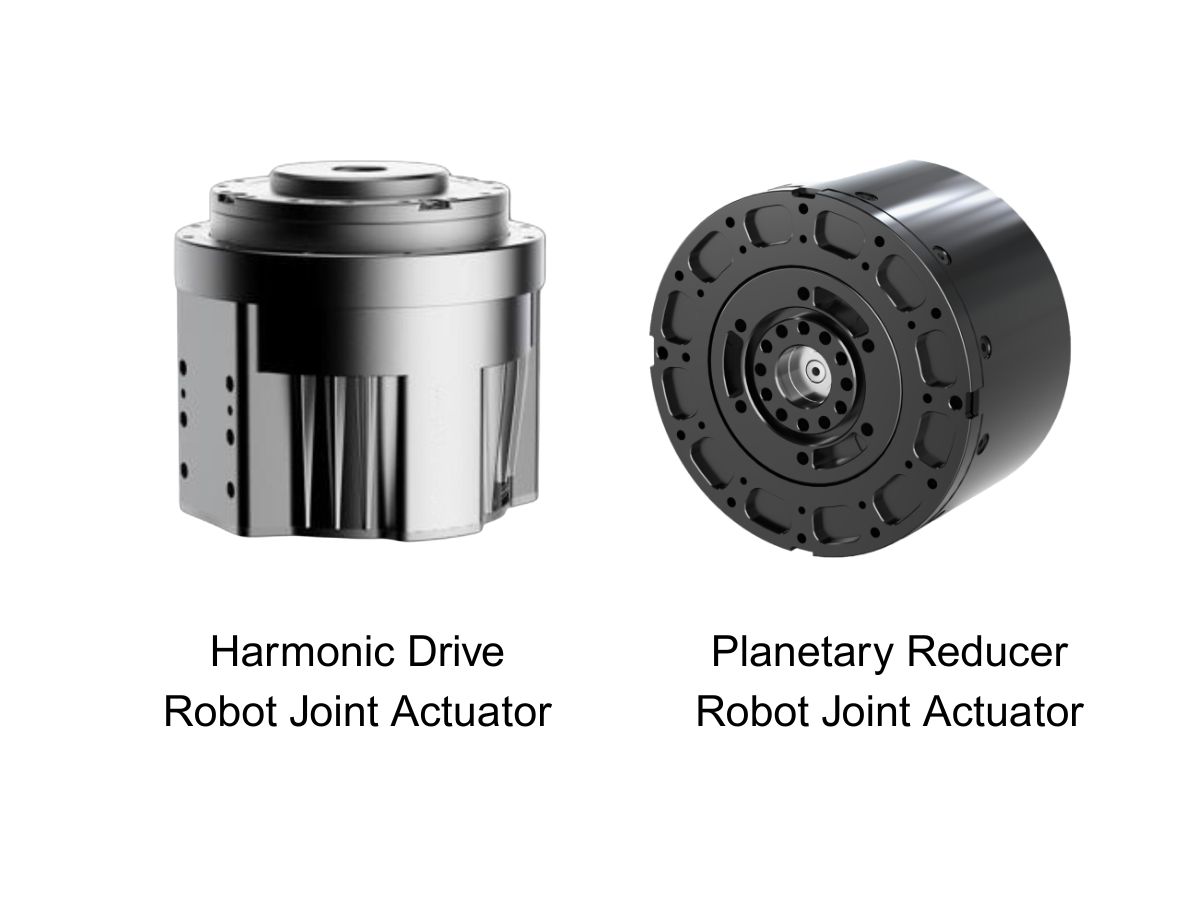
 What is robot joint actuator?How to Choose the Best Robot Rotary Joint Actuator?In core robot joint transmission solutions, planetary and harmonic rotary actuators each have their own strengths. Choosing the right type based on application requirements is essential to achieve the optimal balance between performance and cost.
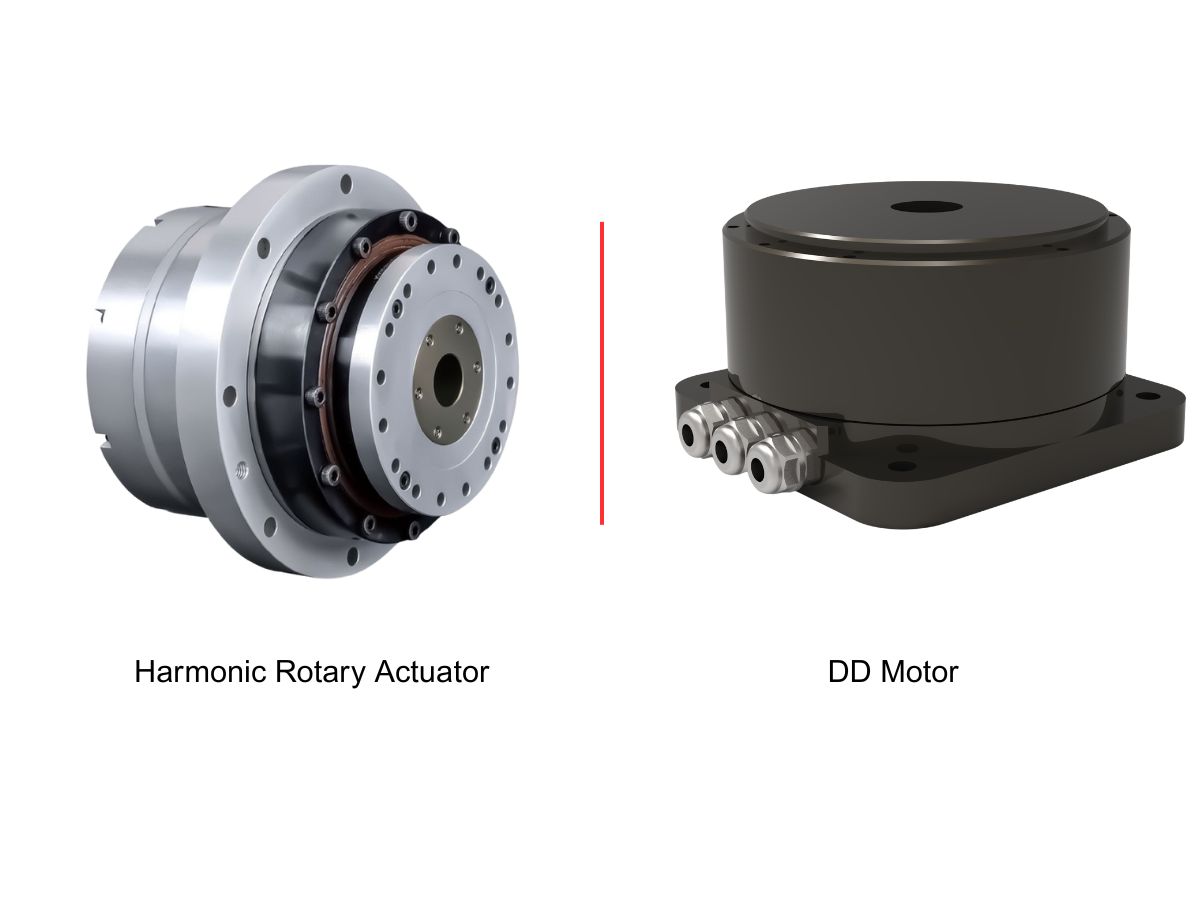
 DD Motors VS Harmonic Rotary ActuatorsThis article provides an in-depth comparison between Direct Drive (DD) motors and harmonic rotary actuators, covering their transmission principles, advantages and disadvantages, and typical application fields.
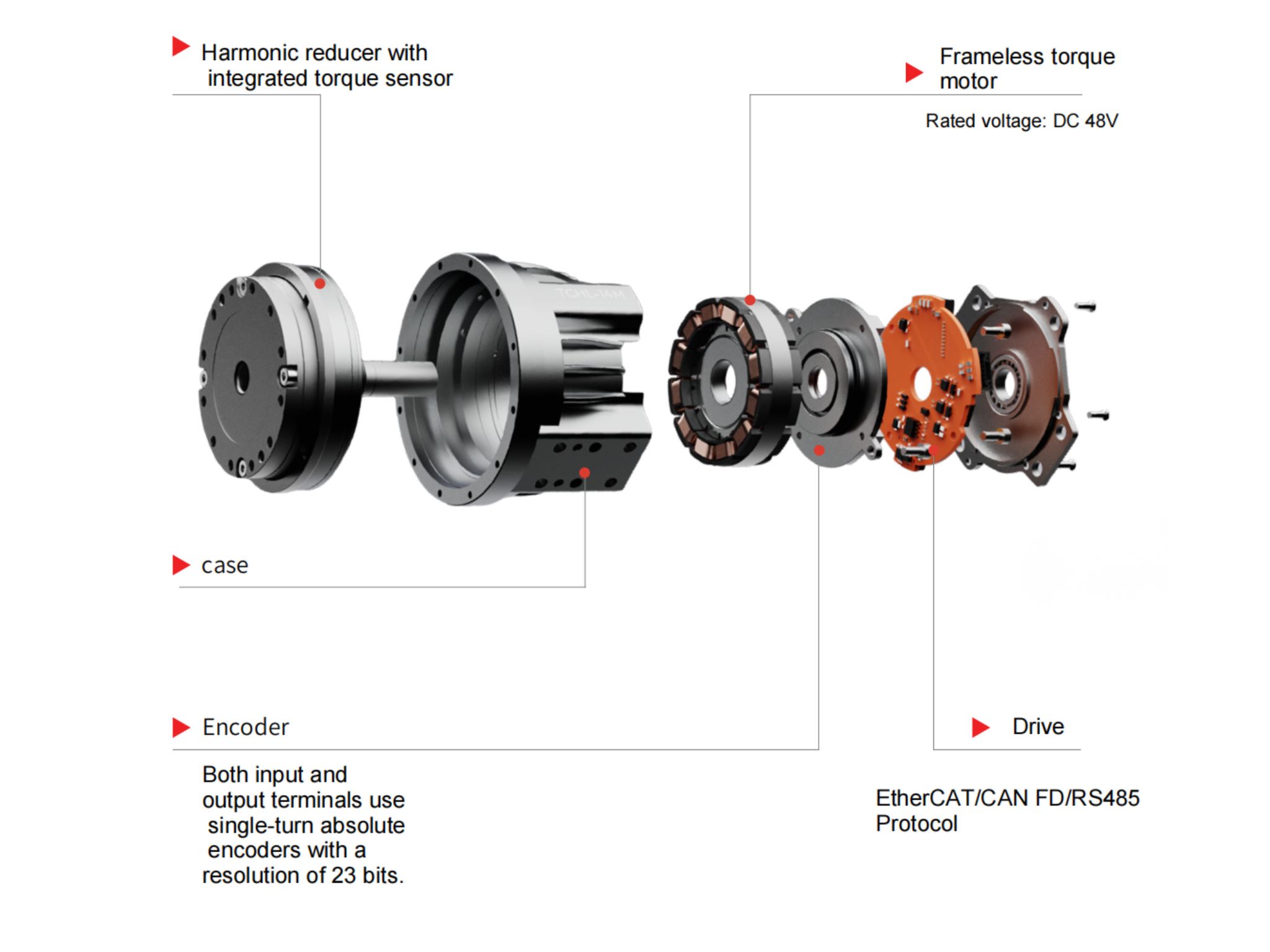
 OMG Ultra Compact Harmonic Drive Joint Module with Built-in Torque SensorHONPINE TCHL series harmonic drive joint module is a game-changing product that achieves disruptive improvements in multiple aspects such as lightweight design, integration level, and connection convenience. This article will analyze its revolutionary enhancements with you.
 The Role of Harmonic Drive Gears in Achieving 5–10 μm Accuracy in Dental Milling MachinesA dental milling machine is a CNC machining system used to directly process digital dental models into restorations such as crowns, bridges, veneers, inlays, and implant abutments. Dental milling machines require far higher operational accuracy and motion stability than ordinary equipment. This article explains how harmonic drive gear help dental milling machines achieve stable, continuous, and controllable operation.
 Why Are Harmonic Rotary Actuators Perfect for Medical Equipment?Harmonic rotary actuators (typically integrated systems consisting of a harmonic drive reducer, frameless torque motor, encoder, and optional brake) are regarded as key components in medical equipment. The core reason is that they simultaneously meet the most stringent medical requirements for precision, compact size, safety, and controllability. The following explanation is structured from three perspectives: technical characteristics, application scenarios, and medical value.
 High-Precision RV Reducers Perfectly Matched for Walking RobotsThe walking axis of a robot is a core component for power transmission and support. RV reducers provide extremely high rigidity, precision, and torque while maintaining a compact size and exceptional reliability, making them an ideal match for the demanding requirements of walking robot joints in terms of load capacity, impact resistance, and precision.
 How Does the HONPINE JRM Planetary Robot Joint Module Address Temperature Rise in Continuous Operation?HONPINE JRM planetary robot joint modules are designed for long-duration and high-load robotic operation. This article examines how motor electromagnetic optimization, high-efficiency planetary transmission, GaN-based drive technology, and system-level low-loss design help control temperature rise. Using the C6345 planetary robot joint module as a test example, HONPINE also presents full-load thermal validation under continuous operation, including motor efficiency up to 92%, planetary gearbox efficiency up to 97%, and a final equilibrium temperature of 61.42°C at a 25°C ambient temperature.
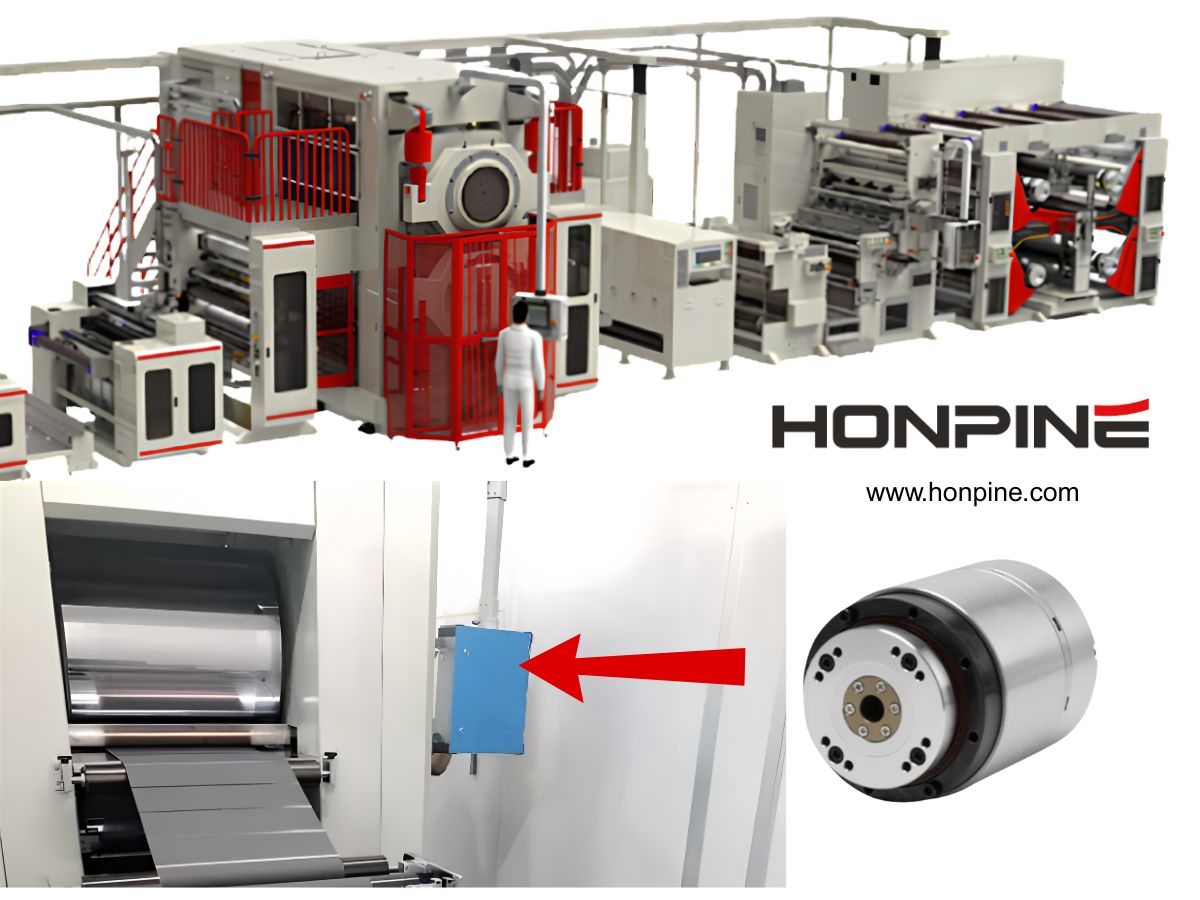
 Harmonic Rotary Actuator for Lithium Battery Roller Press EquipmentLithium battery manufacturing equipment requires higher precision, stability, and integration efficiency as production processes continue to evolve. In roller press equipment, accurate roller positioning, pressure control, and dynamic response are critical for ensuring electrode quality and consistency.
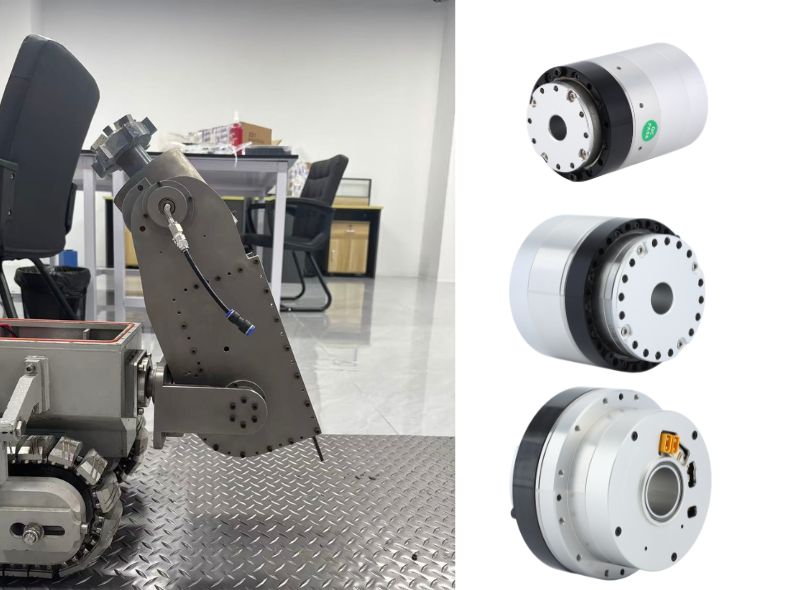
HONPINE harmonic rotary actuators provide high precision, high rigidity, fast response, and compact integration for lithium battery roller press equipment. With near-zero backlash, high torque density, and reliable motion control performance, they help improve equipment accuracy and production stability. Harmonic Robot Joint Actuators for Pipeline Robots and Other Special-Purpose EquipmentPipeline robots operate in narrow and complex environments where limited installation space, high load requirements, cable routing, and precise motion control are critical challenges. A reliable joint actuator must provide high torque output, compact dimensions, and stable performance while adapting to demanding operating conditions. Harmonic robot joint actuators integrate precision transmission, motor drive, and sensing capabilities into a compact motion unit, making them suitable for pipeline robots and other special-purpose robotic systems. This article explores the key design requirements of pipeline robots and explains how HONPINE HPJM harmonic robot joint modules help achieve compact, high-performance, and reliable robotic solutions.
 How Integrated Robot Joint Modules Are Reshaping Robot Wiring and Control Architecture?Integrated robot joint modules are changing how robots are designed by combining the motor, reducer, drive, encoder, and sensing components into a compact motion unit. Compared with traditional distributed architectures, this integrated approach can reduce cable complexity, simplify power and communication connections, and support more compact robot structures. As humanoid robots demand higher levels of motion coordination, response speed, precision, and integration, robot joint modules are becoming an increasingly important interface between intelligent control systems and physical movement. This article explains how integrated robot joint modules reshape robot wiring and control architecture, using the HONPINE TCHL harmonic drive robot joint module as an example.
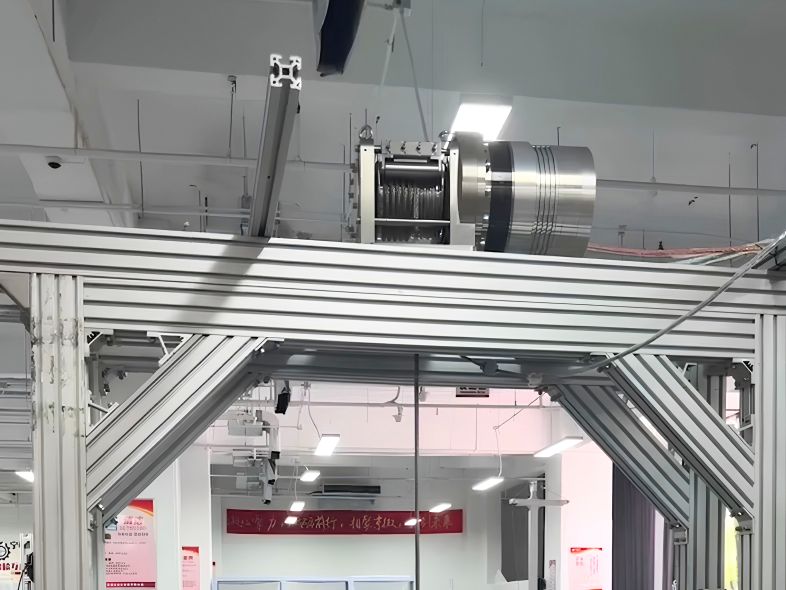
 Harmonic Actuator for Lift Equipment: Precision, Torque Density and Compact Motion Control IntroductionModern lifting equipment requires more than simply moving a load vertically. Robotic lift axes, AGV and AMR lift modules, semiconductor equipment, inspection platforms, and specialized winches increasingly demand high torque density, precise positioning, low backlash, high rigidity, and compact motion control. A harmonic actuator integrates a harmonic drive with a motor and, depending on the configuration, encoders, brakes, servo drives, and communication interfaces into a compact motion module. This article explores how harmonic actuators can be applied to different lifting systems and why their combination of precision, torque density, rigidity, and integration makes them suitable for automated lifting and positioning applications.
 Force-Controlled Harmonic Joint Modules: A Key Solution for Robot CommercializationAs robots move from precise positioning toward physical interaction, joint-level torque feedback is becoming increasingly important. A force-controlled robot joint module allows the robot to sense changes in output torque and respond more appropriately to external loads, supporting compliant motion, contact detection, and force-controlled applications. HONPINE HAG and HAU harmonic joint modules integrate torque sensing directly into the joint, enabling torque closed-loop control, 360° continuous output rotation, less than 1% torque control accuracy, and a 50 Hz torque bandwidth. This integrated design also maintains consistent dimensions between force-controlled and non-force-controlled configurations, providing a flexible joint platform for robot manufacturers.
Double Click
We provide harmonic drive reducer,planetary reducer,robot joint motor,robot rotary actuators,RV gear reducer,robot end effector,dexterous robot hand
 What is robot joint actuator?How to Choose the Best Robot Rotary Joint Actuator?In core robot joint transmission solutions, planetary and harmonic rotary actuators each have their own strengths. Choosing the right type based on application requirements is essential to achieve the optimal balance between performance and cost.
 DD Motors VS Harmonic Rotary ActuatorsThis article provides an in-depth comparison between Direct Drive (DD) motors and harmonic rotary actuators, covering their transmission principles, advantages and disadvantages, and typical application fields.
 OMG Ultra Compact Harmonic Drive Joint Module with Built-in Torque SensorHONPINE TCHL series harmonic drive joint module is a game-changing product that achieves disruptive improvements in multiple aspects such as lightweight design, integration level, and connection convenience. This article will analyze its revolutionary enhancements with you.
 How Does the HONPINE JRM Planetary Robot Joint Module Address Temperature Rise in Continuous Operation?HONPINE JRM planetary robot joint modules are designed for long-duration and high-load robotic operation. This article examines how motor electromagnetic optimization, high-efficiency planetary transmission, GaN-based drive technology, and system-level low-loss design help control temperature rise. Using the C6345 planetary robot joint module as a test example, HONPINE also presents full-load thermal validation under continuous operation, including motor efficiency up to 92%, planetary gearbox efficiency up to 97%, and a final equilibrium temperature of 61.42°C at a 25°C ambient temperature.
 How Integrated Robot Joint Modules Are Reshaping Robot Wiring and Control Architecture?Integrated robot joint modules are changing how robots are designed by combining the motor, reducer, drive, encoder, and sensing components into a compact motion unit. Compared with traditional distributed architectures, this integrated approach can reduce cable complexity, simplify power and communication connections, and support more compact robot structures. As humanoid robots demand higher levels of motion coordination, response speed, precision, and integration, robot joint modules are becoming an increasingly important interface between intelligent control systems and physical movement. This article explains how integrated robot joint modules reshape robot wiring and control architecture, using the HONPINE TCHL harmonic drive robot joint module as an example.
 Force-Controlled Harmonic Joint Modules: A Key Solution for Robot CommercializationAs robots move from precise positioning toward physical interaction, joint-level torque feedback is becoming increasingly important. A force-controlled robot joint module allows the robot to sense changes in output torque and respond more appropriately to external loads, supporting compliant motion, contact detection, and force-controlled applications. HONPINE HAG and HAU harmonic joint modules integrate torque sensing directly into the joint, enabling torque closed-loop control, 360° continuous output rotation, less than 1% torque control accuracy, and a 50 Hz torque bandwidth. This integrated design also maintains consistent dimensions between force-controlled and non-force-controlled configurations, providing a flexible joint platform for robot manufacturers.
 6 Key Advantages of the HONPINE JRM Planetary Joint ModuleHigh-performance quadruped robots require joint modules that can respond quickly, maintain precise positioning, withstand repeated impacts, and deliver stable torque under demanding operating conditions. The HONPINE JRM planetary joint module combines high positioning accuracy, low backlash, fast three-loop response, high static rigidity, strong overload capability, and a wide operating temperature range. With clearly defined continuous and overload operating limits, the JRM is designed to balance dynamic performance with long-term reliability. This article introduces six key advantages of the HONPINE JRM planetary joint module and explains why it is suitable for industrial inspection quadrupeds, specialized inspection robots, explosion-proof quadruped robots, and other high-performance robotic platforms.
 Robot Joint Module Solutions for Humanoid Robot Arms and LegsHumanoid robots require different joint characteristics across the shoulder, elbow, wrist, hip, knee, and ankle. Smaller joints prioritize low weight and fast response, while larger joints require higher torque density, load capacity, and reliability. A suitable robot joint module should therefore be matched to the specific torque, weight, range of motion, and control requirements of each joint. In this article, HONPINE uses the HPJM harmonic joint module series as an example to present a joint configuration solution for humanoid robot upper and lower limbs, covering torque requirements from small wrist and finger joints to high-load hip joints.
 Why Does an RV Reducer Need Profile Modification? How to Further Reduce Backlash and Transmission Error?An RV Reducer is designed to deliver high torque, high stiffness, and precise motion for demanding applications such as robotic joints, industrial rotary tables, and precision machinery. However, achieving low backlash and stable transmission accuracy requires more than high-precision machining. Cycloidal profile modification must also account for manufacturing tolerances, assembly errors, load-induced deformation, thermal expansion, and lubrication conditions. In this article, we examine why RV reducers require profile modification, how different modification methods affect meshing, and how engineers can further control backlash and transmission error through profile design, error budgeting, structural analysis, precision manufacturing, and validation testing.
 How to Choose a Hollow Rotary Platform: A Complete Selection Guide?A hollow rotary platform is widely used in precision automation where rotary positioning, compact integration, and cable routing through the rotation axis are required. However, choosing the right platform involves more than comparing rated torque or maximum speed. Load, eccentricity, overturning moment, inertia, positioning accuracy, hollow bore, acceleration, duty cycle, and installation conditions all affect the actual performance of the rotary system. This guide explains the key parameters engineers should consider when selecting a hollow rotary platform for CNC indexing, wafer handling, vision inspection, laser processing, dispensing, and other precision rotary applications.
 Hollow Robot Joint Module: Why Cable Routing Matters in Robotic Joints?A hollow robot joint module provides an internal passage for power cables, signal lines, pneumatic tubes, and other end-effector connections. Compared with external cable routing, a hollow joint module can help reduce cable exposure, improve system integration, and create a cleaner motion path for robotic arms. This article explains why internal cable routing matters in robotic joints and what to consider when selecting a hollow joint module for robotic applications.
 Precision Reducers for Industrial Robots: From Conventional Transmission to Self-Compensating Backlash TechnologyHello everyone, I’m Theodore Li, Technical Director at HONPINE. Today, I would like to discuss precision reducers for industrial robots and the challenges of maintaining transmission accuracy over long-term operation. Harmonic, RV, cycloidal, and planetary transmissions each offer different combinations of precision, rigidity, torque density, and compactness, making reducer selection highly dependent on robot architecture and joint requirements. However, initial backlash is only part of the problem. As transmission components wear, changes in mechanical clearance can gradually affect positioning performance. This article examines the major precision transmission technologies used in industrial robots and introduces HONPINE’s self-compensating backlash technology, which is designed to address precision retention throughout the operating life of a transmission.