

Why Are End Effectors in 3C Automation Shifting from Pneumatic Grippers to Electric Grippers?
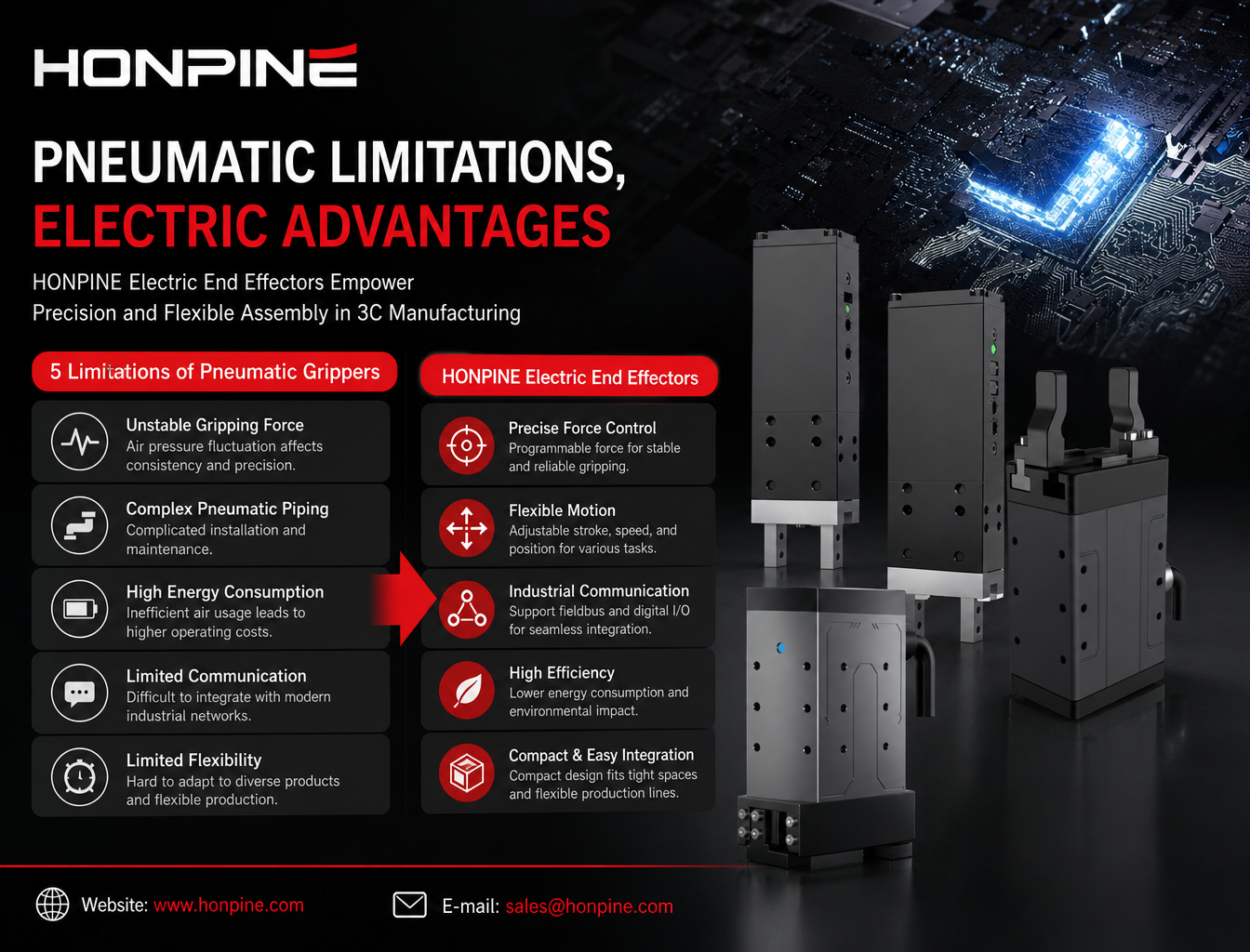
The 3C manufacturing industry (computers, communications, and consumer electronics) is currently characterized by three major production requirements that traditional pneumatic systems struggle to meet.
Three Key Manufacturing Trends Driving the Shift to Electric Grippers
1. Thin and Fragile Workpieces Require Extremely Precise Force Control
Components used in 3C manufacturing, such as smartphone FPC flexible circuits, camera foam pads, optical lenses, TPU films, and miniature copper spring contacts, are often less than 1 mm thick. Even slight fluctuations in gripping pressure can cause surface damage, wrinkles, cracks, or deformation, directly reducing product yield.
Traditional pneumatic grippers lack precise, programmable force control. Even small fluctuations in air pressure can affect gripping performance and potentially damage delicate workpieces, making this a persistent quality challenge in 3C manufacturing.
2. Frequent Product Changeovers Require Highly Flexible Production Lines
The product development cycle for consumer electronics has shortened to approximately 3–6 months. Manufacturers increasingly need production lines capable of handling multiple product models with minimal changeover time.
Traditional pneumatic grippers generally have fixed gripping force and stroke configurations. When switching between product models, operators often need to manually adjust pressure regulators or replace grippers. These adjustments increase setup time, reduce production efficiency, and negatively affect equipment utilization.
3. Carbon Reduction and Digital Manufacturing Create New Requirements
On one hand, manufacturers face increasingly strict energy consumption targets. Air compressors operating continuously, even under low-load conditions, together with air leakage throughout pneumatic pipelines, contribute to high overall energy consumption.
On the other hand, smart manufacturing requires equipment to transmit operational data in real time. Pneumatic components relying primarily on basic I/O signals cannot provide comprehensive digital feedback on force, position, and fault conditions, making integration with MES systems and production data management more difficult.
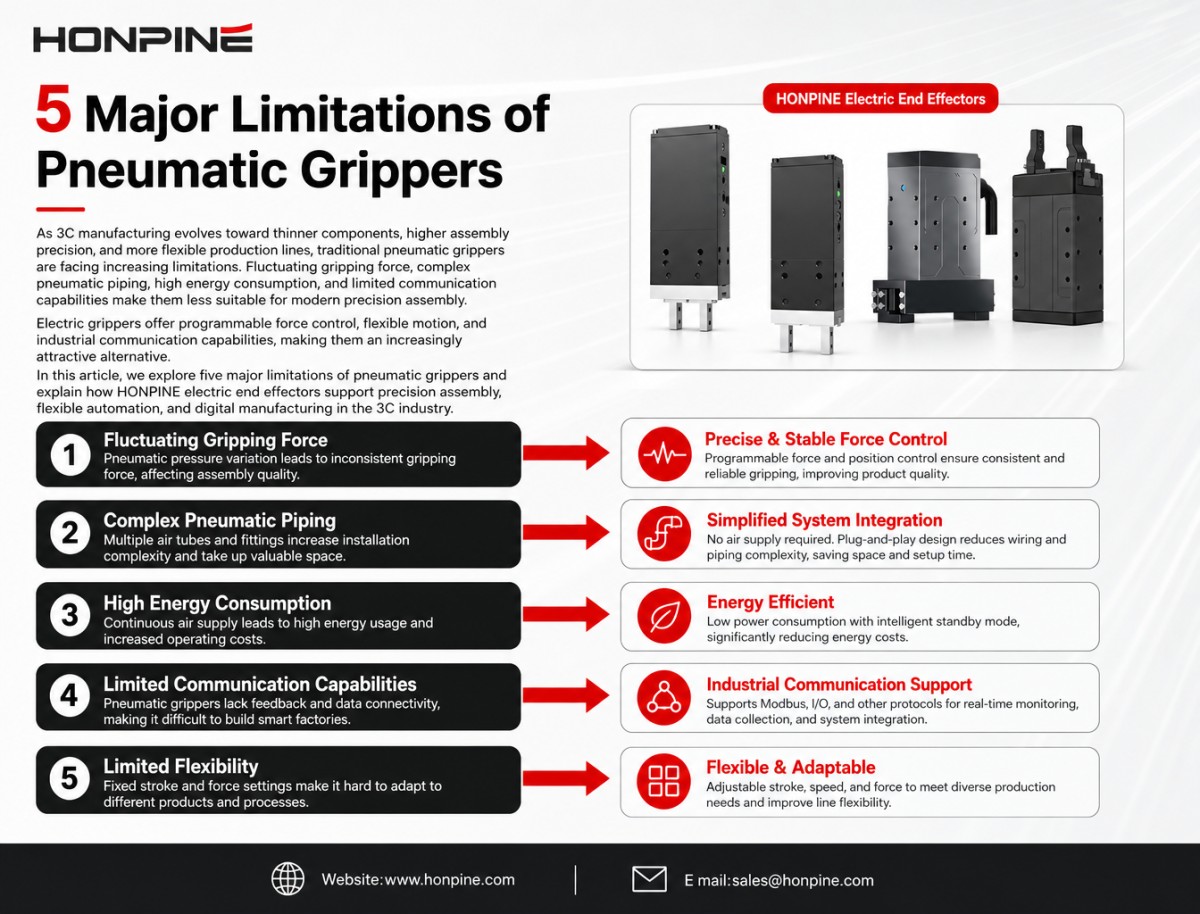
Five Major Limitations of Pneumatic Grippers Are Accelerating the Adoption of Electric Grippers
By examining the complete architecture of traditional pneumatic systems, we can identify five practical challenges commonly encountered on manufacturing floors.
1. Complex Auxiliary Components, Cluttered Equipment Wiring, and High Maintenance Costs
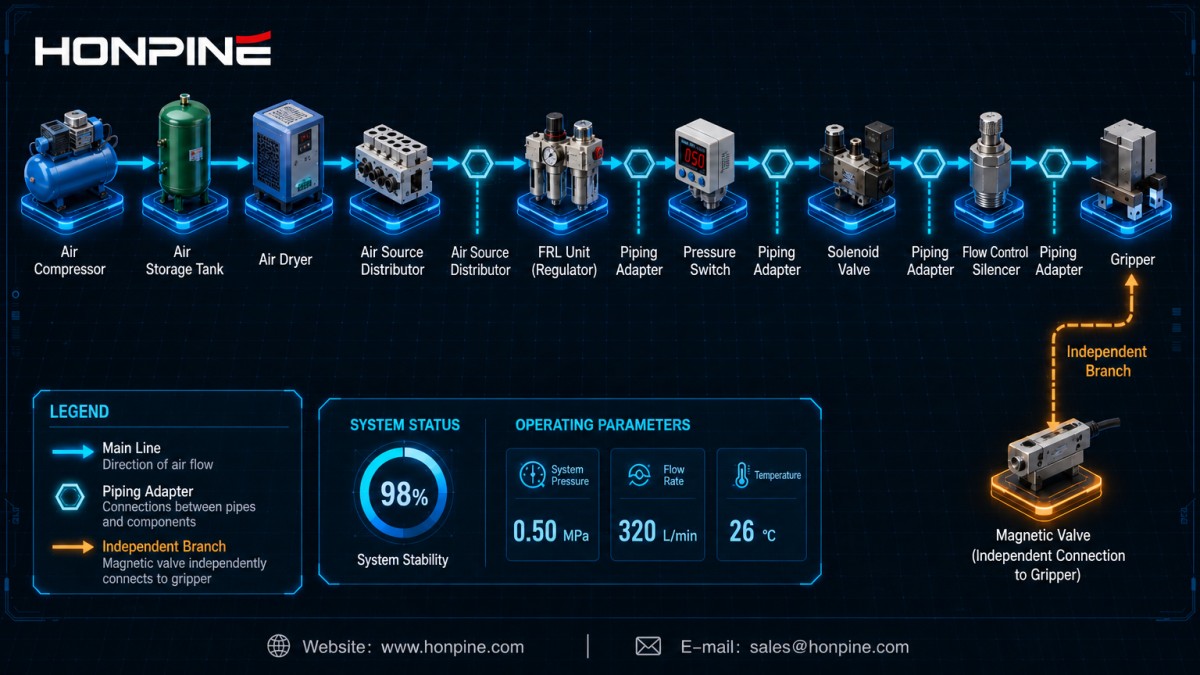
A complete pneumatic system typically requires an air compressor, air storage tank, air dryer, filter-regulator-lubricator unit (FRL), solenoid valves, pneumatic tubing, connectors, silencers, pressure switches, and numerous other auxiliary components.
The extensive network of pneumatic tubing occupies valuable installation space inside equipment. This creates significant layout challenges for high-density, multi-station pick-and-place machines.
Over time, pneumatic connectors and tubing can wear out and develop air leaks. With numerous potential failure points, equipment engineers often spend considerable time locating leaks and replacing components.
In comparison, all HONPINE electric grippers, LRA series linear-rotary actuators, and ELS series electric linear stages adopt an integrated drive and control design with a 24V low-voltage power supply. They require only two cables: a power cable and a communication cable.
Without the need for external pneumatic supply systems, these products simplify internal equipment layouts and significantly reduce system integration and long-term maintenance complexity.
2. Lack of Precise Force Control Places Continuous Pressure on Assembly Yield
The gripping force of pneumatic grippers can only be adjusted approximately through pressure regulators. They cannot deliver precisely quantified and programmable gripping forces, resulting in limited force control accuracy.
In processes such as camera module assembly, FPC placement, and earphone film bonding, insufficient gripping force can cause workpieces to slip or fall, while excessive force can damage delicate components.
HONPINE's independently developed servo FOC (Field-Oriented Control) algorithm enables precision force control at the ±0.1 N level.
LRA Linear-Rotary Actuators: Force control accuracy reaches 20±3 g. Built-in soft-landing cushioning automatically reduces speed and impact during placement, helping prevent damage when handling lenses and thin films.
EPG and ERG Series Electric Grippers: Gripping force can be adjusted in multiple levels. The 0.5 N micro-force setting is suitable for handling ultra-thin foam pads, flexible circuits, and other delicate components.
3. No Protection During Power Loss Can Lead to Mass Product Damage During Unexpected Shutdowns
When a pneumatic system loses power, the air supply may be interrupted and pressure can be released, causing the gripping force to disappear. Workpieces being handled, such as smartphone frames, camera modules, and precision metal contacts, may fall directly onto the equipment.
This can result in multiple damaged products and potentially damage fixtures and tooling.
All HONPINE electric grippers feature a mechanical self-locking structure that maintains the gripping position during power loss. In the event of an emergency stop or unexpected power interruption, the gripper mechanically locks its opening and closing position, helping prevent workpieces from falling.
This provides an important safety advantage over conventional pneumatic gripping solutions.
4. High Energy Consumption and Noise Create a Less Favorable Manufacturing Environment
Continuous air compressor operation and compressed air losses throughout pneumatic pipelines reduce overall system energy efficiency. The overall energy utilization rate of traditional pneumatic systems can be below 50%.
In addition, noise from air compressors and pneumatic exhaust silencers can cause factory noise levels to exceed 75 dB, creating challenges for noise-sensitive cleanrooms and precision manufacturing environments.
HONPINE electric servo products achieve electrical energy utilization rates above 90%, with operating noise below 50 dB. By eliminating the need for continuous air compressor operation, they help reduce factory energy consumption and improve the working environment.
5. Limited Communication Capabilities Prevent Closed-Loop Digital Manufacturing
Traditional pneumatic components primarily support basic I/O switching signals. They can perform simple opening and closing operations but cannot independently provide real-time feedback on gripping force, gripping position, workpiece presence, or equipment fault conditions.
As a result, integrating pneumatic systems into intelligent manufacturing platforms and establishing comprehensive production data tracking becomes more difficult.
HONPINE electric end effectors support multiple industrial communication protocols, including EtherCAT, PROFINET, CAN, and Modbus RTU.
Gripping status, force values, rotation angles, and fault codes can be transmitted to the upper-level control system in real time and integrated with MES platforms, enabling production line data connectivity and supporting the digital transformation of manufacturing facilities.
HONPINE Electric Grippers Provide a Complete End-Effector Solution for 3C Automation
HONPINE focuses on the development of electric servo end effectors, covering a wide range of 3C manufacturing processes, including precision placement, material handling, gripping, rotation, and vacuum picking.
Its product portfolio provides alternatives to traditional pneumatic units across different automation applications.
LRA Series Linear-Rotary Actuators
The LRA series integrates two-axis motion capabilities: linear movement and 360° rotation.
With micron-level positioning accuracy, these actuators are designed for precision placement applications such as camera module assembly, FPC flexible circuit placement, and smartphone metal contact positioning.
They have been adopted in production applications at leading smartphone and TWS earphone contract manufacturers.
EPG Series Electric Parallel Grippers
The EPG series includes three main product categories:
EPG-ST Series: Ultra-thin miniature electric grippers.
EPG-HP Series: High-precision electric grippers.
EPG-T Series: Long-stroke electric grippers.
The series covers gripping requirements for miniature electronic components, smartphone frames, battery accessories, and various other workpieces.
The ultra-thin models have a body thickness of only 18 mm, making them suitable for installation in space-constrained automation equipment.
ERG / ERG-HP Series Electric Rotary Grippers
The ERG series combines gripping and rotary functions into a single unit.
The ERG-HP series achieves rotary repeatability of ±0.01°, making it suitable for assembly applications requiring precise rotational positioning, such as TPU film handling for Bluetooth earphones and rotary laser marking of camera lenses.
The series also supports multi-device networking through industrial communication buses, enabling coordinated operation across multiple automation units.
ELS Series Electric Linear Stages
The ELS series features a compact electric servo actuator with an integrated drive and control design.
With repeatability of ±0.02 mm, it is suitable for flexible loading and unloading applications involving camera modules, auxiliary material trays, and other precision components.
Compared with conventional fixed mechanical mechanisms, the ELS series helps address challenges associated with product changeovers and limited production flexibility.
EVS Electric Vacuum Actuators
The EVS series features a built-in vacuum pump, eliminating the need for an external compressed air supply.
With multiple independently controlled vacuum channels, it is suitable for handling lightweight and delicate materials such as smartphone frames, optical glass, and protective films.
Real-time vacuum level compensation helps maintain stable suction performance while significantly reducing the cost of additional vacuum supply equipment.
How Do HONPINE Electric Grippers Enable a Closed-Loop Digital Manufacturing System?
Leading 3C manufacturers are increasingly implementing MES platforms, digital twins, and intelligent warehousing systems. These developments require equipment across the production line to communicate and exchange operational data.
Traditional pneumatic components primarily rely on basic I/O switching signals. They can perform simple cylinder opening and closing operations but cannot independently transmit critical data such as gripping force, gripping position, workpiece presence, equipment faults, and rotation angles in real time.
This limits full-process production traceability and automatic fault warnings, making conventional pneumatic components a potential bottleneck in digital factory upgrades.
HONPINE's electric end-effector portfolio supports multiple industrial communication protocols, including EtherCAT, PROFINET, CAN, and Modbus RTU, addressing the communication requirements of intelligent production lines.
Real-Time, Multi-Dimensional Operational Data Feedback
During equipment operation, parameters such as gripping force, stroke position, rotation angle, vacuum pressure, temperature, and fault codes can be transmitted to the upper-level control system in milliseconds.
The system can automatically record assembly data for individual workpieces, enabling product lifecycle traceability and supporting the quality audit requirements of the electronics manufacturing industry.
Synchronized Networking and Multi-Unit Motion Control
The ERG, LRA, and EPG-T series support high-speed EtherCAT communication, allowing a single controller to centrally manage dozens of end effectors.
Multiple stations can operate in synchronization. For example, seven LRA units can work together to complete smartphone metal contact loading operations, maintaining consistent cycle times and improving coordination between different workstations.
Intelligent Fault Detection and Automatic Alarms
Built-in drop detection and pressure monitoring functions help identify abnormal operating conditions.
When workpiece detachment, abnormal force values, or overload faults occur, the system can immediately send alarm signals to the PLC or MES platform. The equipment can then stop automatically to help prevent the production of large batches of defective products.
In comparison, traditional pneumatic systems generally lack independent monitoring capabilities, meaning that many faults can only be identified through manual inspection.
Conclusion
3C manufacturing has moved beyond the era when basic gripping capability was sufficient for automation equipment. Precision force control, micron-level positioning, and digital communication have become increasingly important requirements for modern precision production lines.
Due to their operating principles and structural limitations, traditional pneumatic systems face significant challenges in meeting all three requirements simultaneously.
HONPINE's electric servo end effectors with integrated drive and control technology address the demands of micron-level assembly in 3C manufacturing through their mechanical architecture, control algorithms, and communication systems.
By combining precision force control, flexible motion capabilities, and industrial communication, HONPINE electric grippers provide an end-effector solution designed to improve production yield, enhance manufacturing flexibility, and support the digital transformation of 3C production lines.
Read More
Learn more about the story of HONPINE and industry trends related to precision transmission.
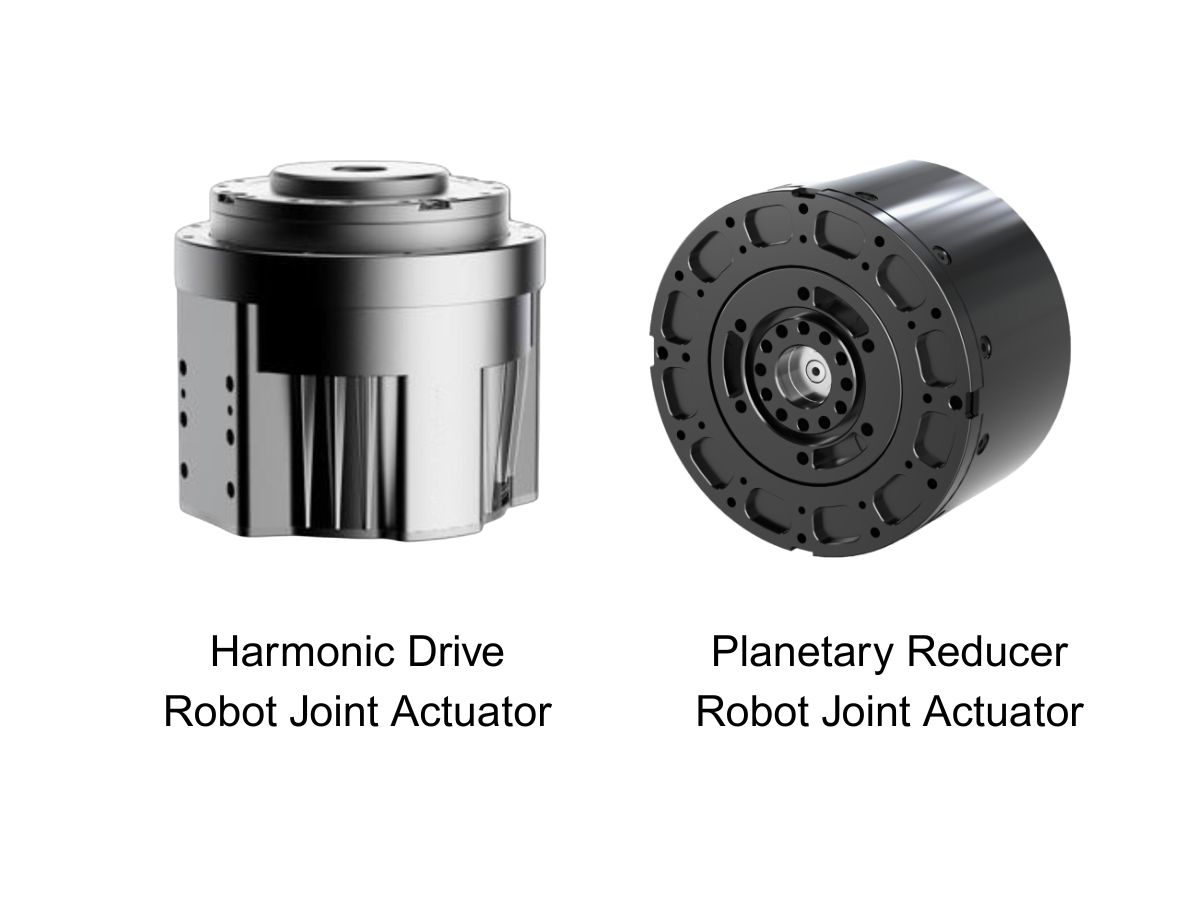
 What is robot joint actuator?How to Choose the Best Robot Rotary Joint Actuator?In core robot joint transmission solutions, planetary and harmonic rotary actuators each have their own strengths. Choosing the right type based on application requirements is essential to achieve the optimal balance between performance and cost.
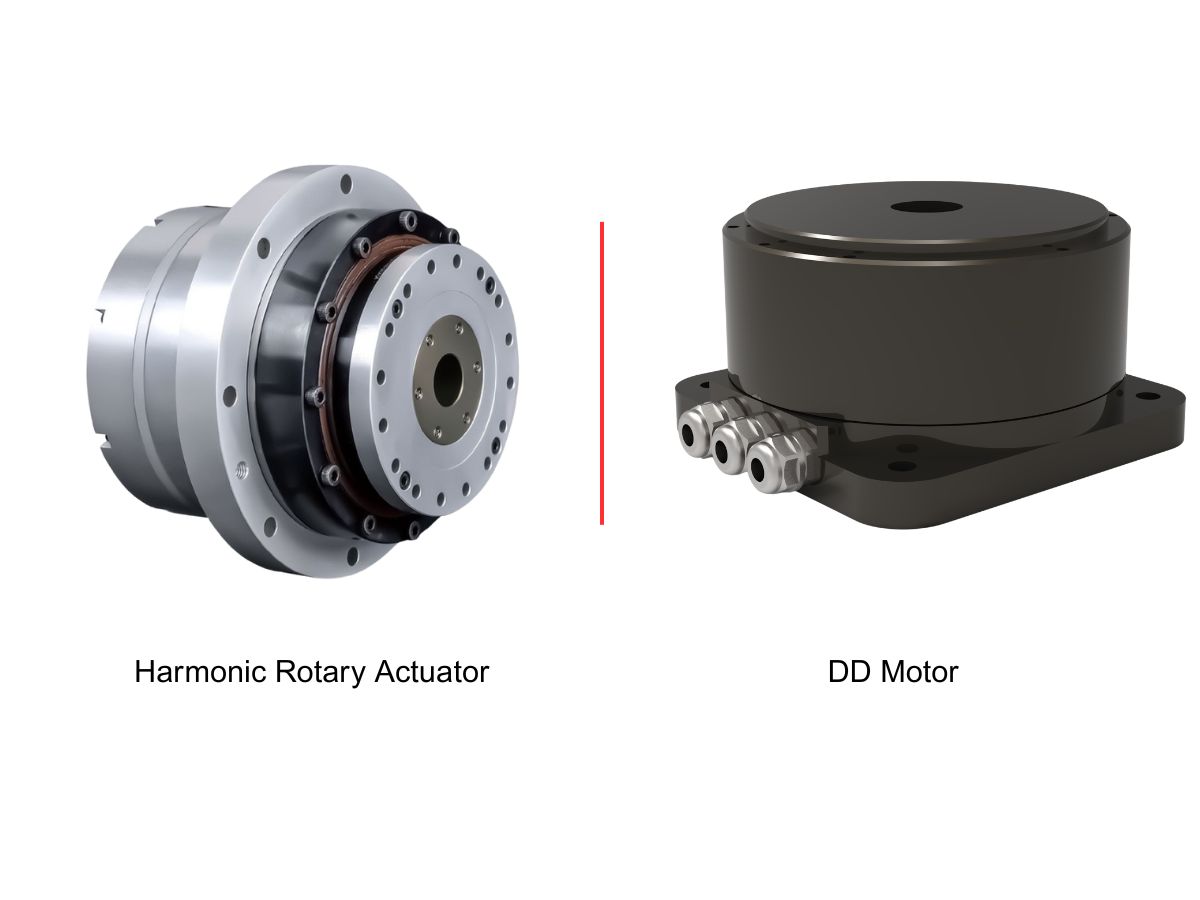
 DD Motors VS Harmonic Rotary ActuatorsThis article provides an in-depth comparison between Direct Drive (DD) motors and harmonic rotary actuators, covering their transmission principles, advantages and disadvantages, and typical application fields.
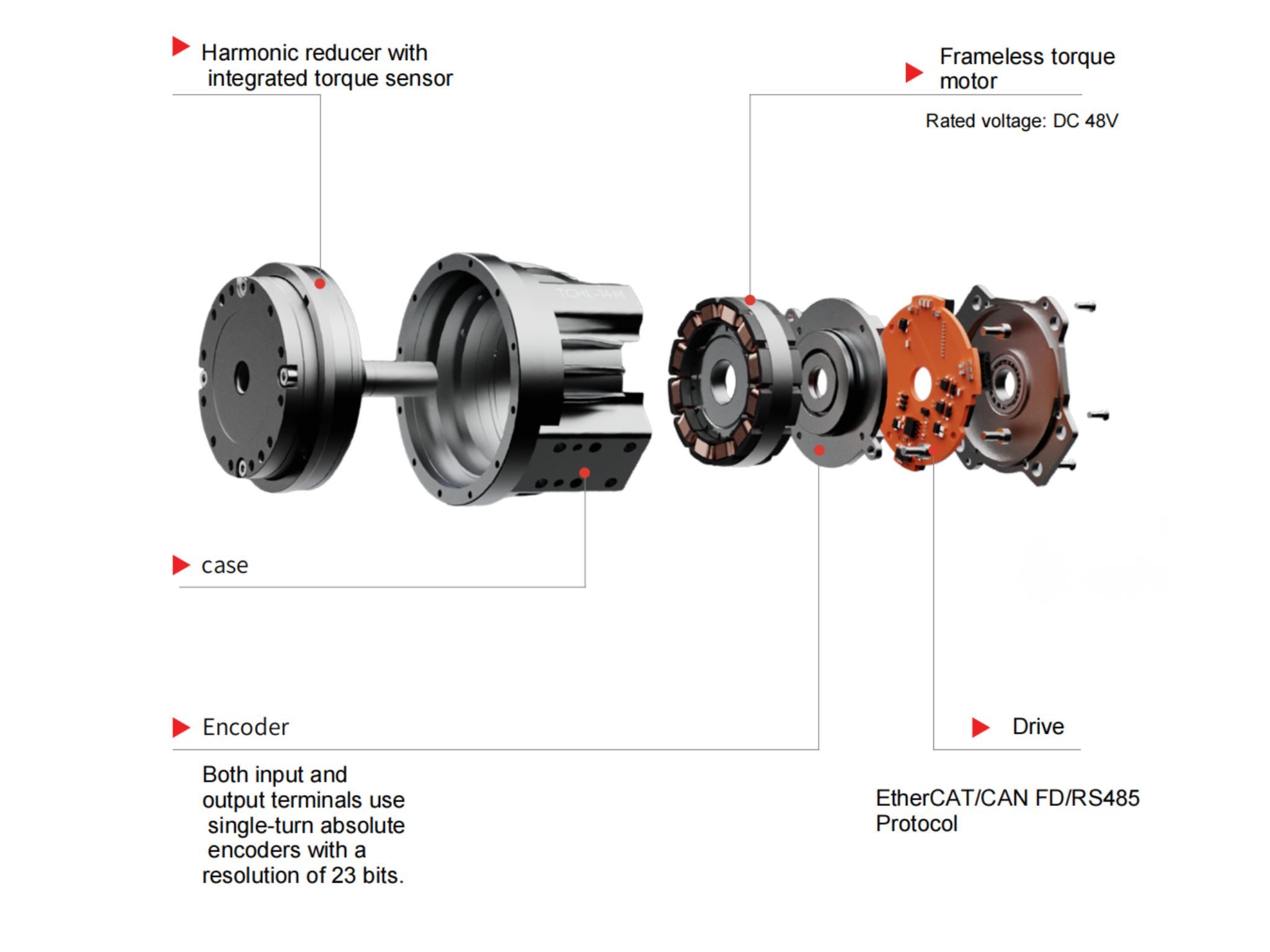
 OMG Ultra Compact Harmonic Drive Joint Module with Built-in Torque SensorHONPINE TCHL series harmonic drive joint module is a game-changing product that achieves disruptive improvements in multiple aspects such as lightweight design, integration level, and connection convenience. This article will analyze its revolutionary enhancements with you.
 The Role of Harmonic Drive Gears in Achieving 5–10 μm Accuracy in Dental Milling MachinesA dental milling machine is a CNC machining system used to directly process digital dental models into restorations such as crowns, bridges, veneers, inlays, and implant abutments. Dental milling machines require far higher operational accuracy and motion stability than ordinary equipment. This article explains how harmonic drive gear help dental milling machines achieve stable, continuous, and controllable operation.
 Why Are Harmonic Rotary Actuators Perfect for Medical Equipment?Harmonic rotary actuators (typically integrated systems consisting of a harmonic drive reducer, frameless torque motor, encoder, and optional brake) are regarded as key components in medical equipment. The core reason is that they simultaneously meet the most stringent medical requirements for precision, compact size, safety, and controllability. The following explanation is structured from three perspectives: technical characteristics, application scenarios, and medical value.
 High-Precision RV Reducers Perfectly Matched for Walking RobotsThe walking axis of a robot is a core component for power transmission and support. RV reducers provide extremely high rigidity, precision, and torque while maintaining a compact size and exceptional reliability, making them an ideal match for the demanding requirements of walking robot joints in terms of load capacity, impact resistance, and precision.
 Why Is EtherCAT Becoming the Mainstream Communication Bus for Robotic Joint Modules?Why is EtherCAT becoming the mainstream communication solution for intelligent robotic joint modules? This article explores seven key advantages, including microsecond-level real-time communication, Distributed Clock synchronization, CiA 402 standardization, high-bandwidth PDO transmission, multi-axis networking, fault diagnosis, and a mature development ecosystem. Learn how EtherCAT supports the advanced control requirements of humanoid robots, collaborative robots, and high-precision automation equipment.
 Why Are End Effectors in 3C Automation Shifting from Pneumatic Grippers to Electric Grippers?As 3C manufacturing evolves toward thinner components, higher assembly precision, and more flexible production lines, traditional pneumatic grippers are facing increasing limitations. Fluctuating gripping force, complex pneumatic piping, high energy consumption, and limited communication capabilities make them less suitable for modern precision assembly. Electric grippers offer programmable force control, flexible motion, and industrial communication capabilities, making them an increasingly attractive alternative. In this article, we explore five major limitations of pneumatic grippers and explain how HONPINE electric end effectors support precision assembly, flexible automation, and digital manufacturing in the 3C industry.
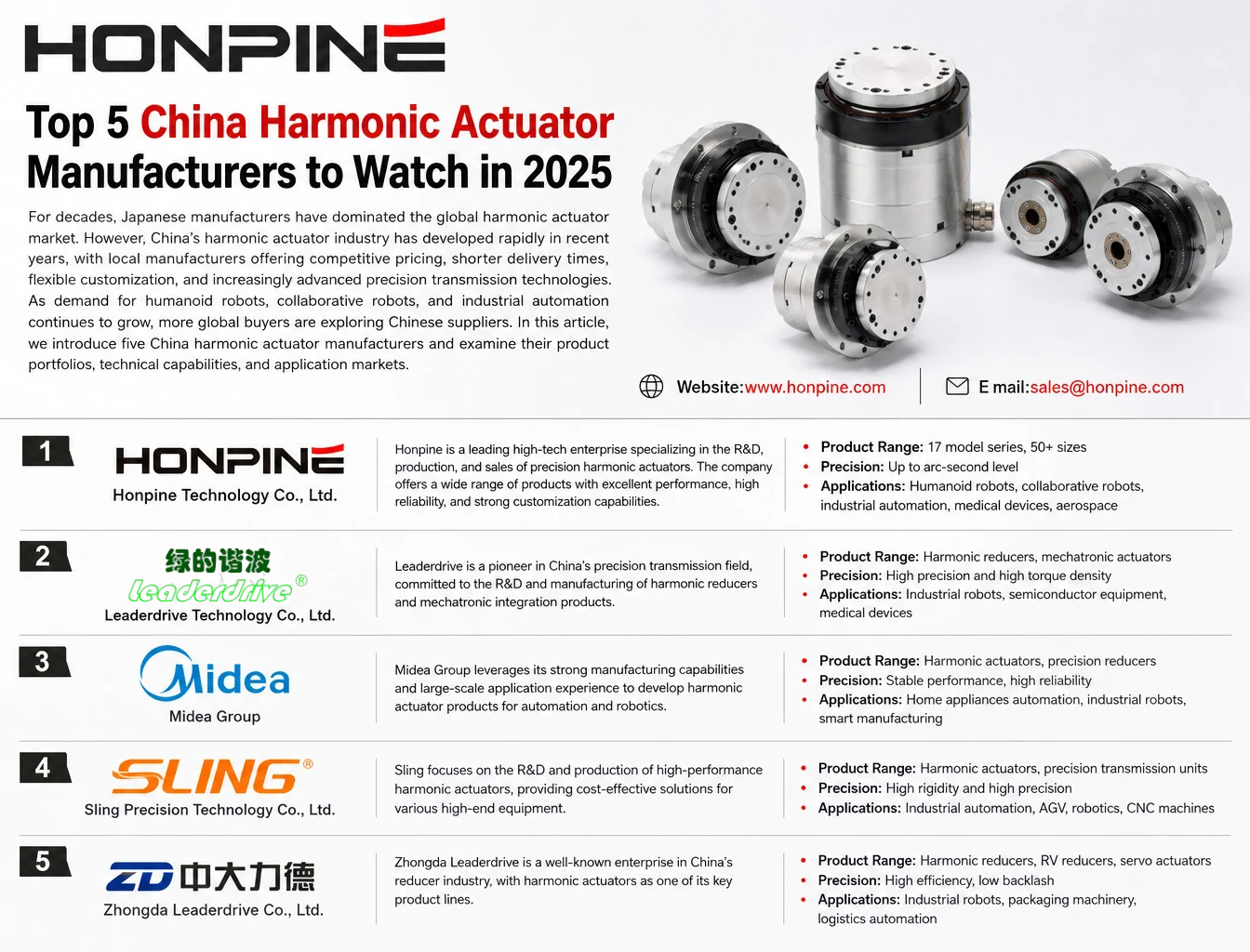
 Top 5 China Harmonic Actuator Manufacturers in 2026For decades, Japanese manufacturers have been well known in the global harmonic actuator market. However, China's harmonic actuator industry has developed rapidly in recent years, with local manufacturers offering competitive pricing, shorter delivery times, and increasingly advanced precision transmission technologies. As demand for humanoid robots, collaborative robots, and industrial automation continues to grow, more global buyers are exploring Chinese suppliers. In this article, we introduce five China harmonic actuator manufacturers and examine their products, technical capabilities, and application markets.
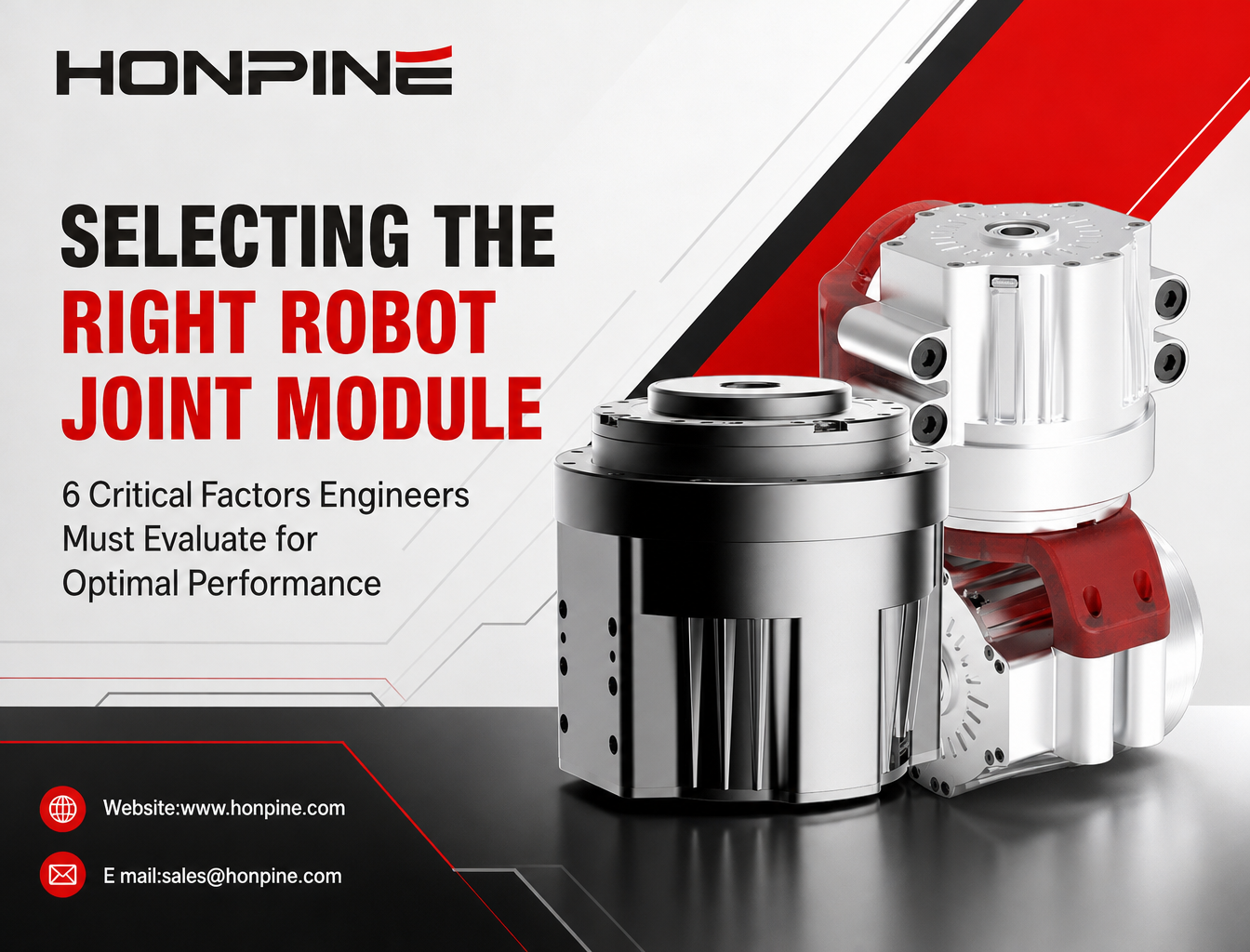
 Robot Joint Module Selection Guide: How to Choose the Right Joint Module Based on Load, Precision, Force Control, and Motion RequirementsRobot Joint Module Selection Guide covering torque, speed, reducers, encoders, torque sensors, drive systems, and thermal management for collaborative and humanoid robots.
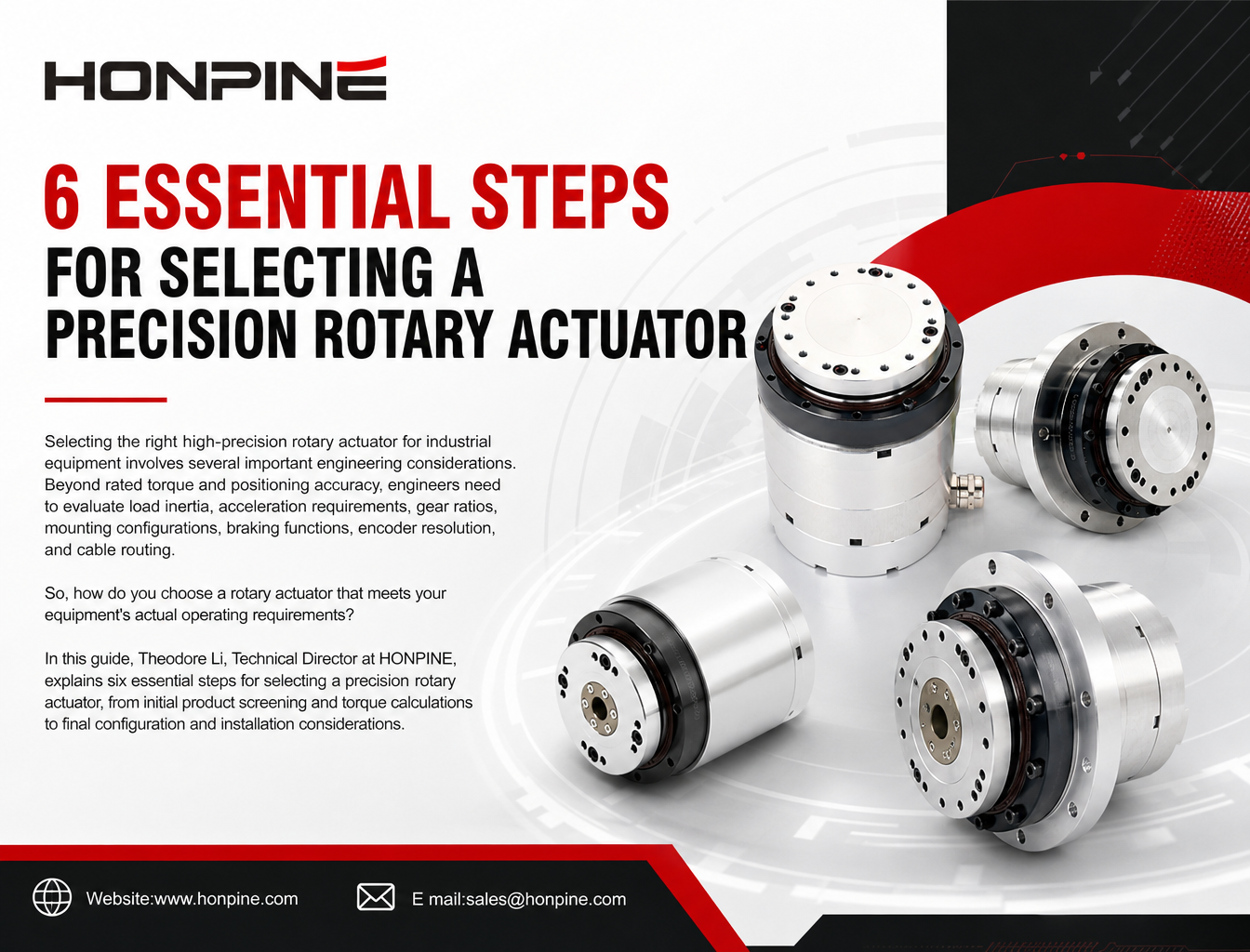
 How to Choose a High-Precision Rotary Actuator for Industrial Applications?Choosing the right precision rotary actuator requires more than checking rated torque. This guide explains how to calculate load torque, select the appropriate gear ratio, and evaluate structural configurations, mounting flanges, electromagnetic brakes, encoder resolution, and cable exit directions. Discover how HONPINE HAS, HAT, HAM, and HPG rotary actuator series meet different industrial motion control and precision positioning requirements.
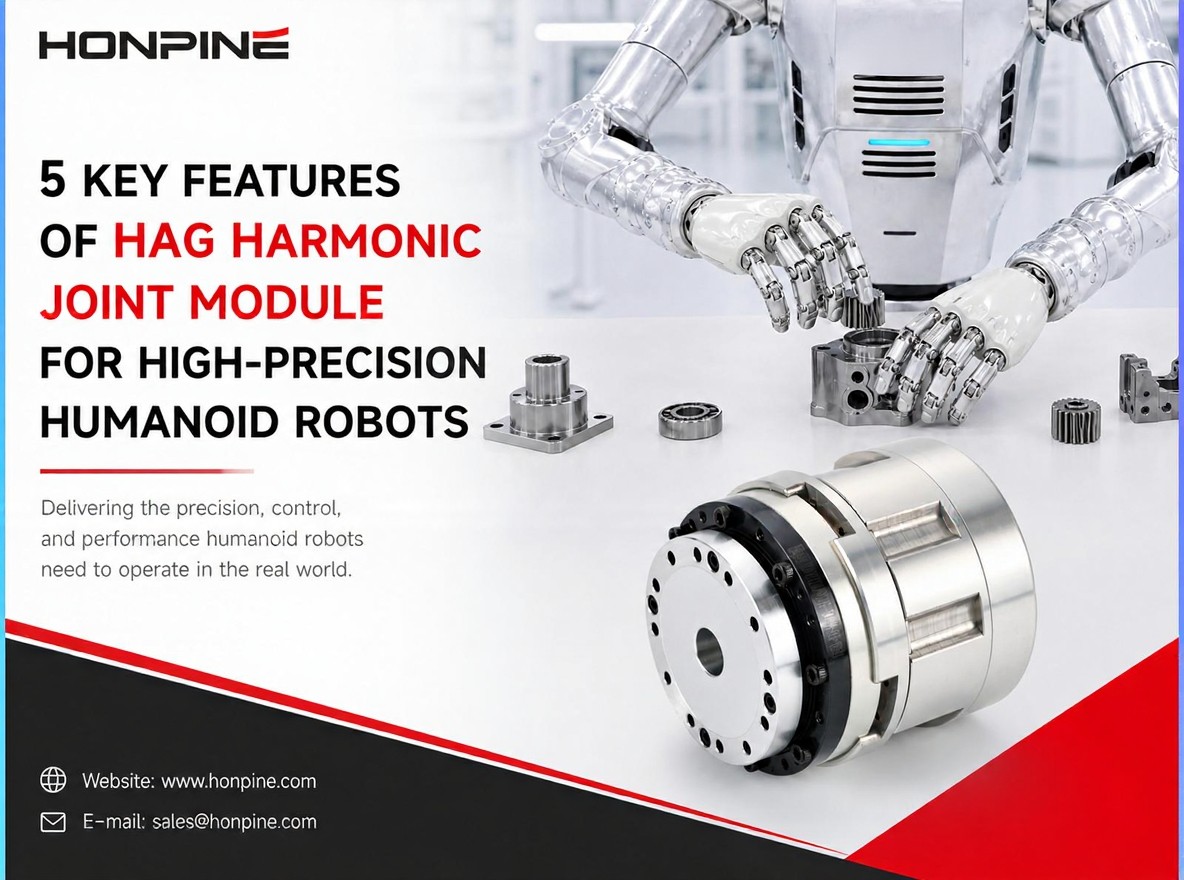
 What Kind of Robot Joint Module Should You Choose for High-Precision Humanoid Robot Control?As humanoid robots move beyond basic walking and demonstration tasks toward complex real-world applications, their joint modules must deliver more than just high torque. Precise positioning, accurate torque control, structural stiffness, and dynamic response all play important roles in performing delicate operations. So, what kind of joint module should you choose for a humanoid robot designed to handle high-precision tasks? In this article, Theodore Li, Technical Director at HONPINE, introduces the HAG Harmonic Joint Module and explains five key features that make it suitable for demanding humanoid robot applications.
Double Click
We provide harmonic drive reducer,planetary reducer,robot joint motor,robot rotary actuators,RV gear reducer,robot end effector,dexterous robot hand
 What is robot joint actuator?How to Choose the Best Robot Rotary Joint Actuator?In core robot joint transmission solutions, planetary and harmonic rotary actuators each have their own strengths. Choosing the right type based on application requirements is essential to achieve the optimal balance between performance and cost.
 DD Motors VS Harmonic Rotary ActuatorsThis article provides an in-depth comparison between Direct Drive (DD) motors and harmonic rotary actuators, covering their transmission principles, advantages and disadvantages, and typical application fields.
 OMG Ultra Compact Harmonic Drive Joint Module with Built-in Torque SensorHONPINE TCHL series harmonic drive joint module is a game-changing product that achieves disruptive improvements in multiple aspects such as lightweight design, integration level, and connection convenience. This article will analyze its revolutionary enhancements with you.
 Why Is EtherCAT Becoming the Mainstream Communication Bus for Robotic Joint Modules?Why is EtherCAT becoming the mainstream communication solution for intelligent robotic joint modules? This article explores seven key advantages, including microsecond-level real-time communication, Distributed Clock synchronization, CiA 402 standardization, high-bandwidth PDO transmission, multi-axis networking, fault diagnosis, and a mature development ecosystem. Learn how EtherCAT supports the advanced control requirements of humanoid robots, collaborative robots, and high-precision automation equipment.
 Why Are End Effectors in 3C Automation Shifting from Pneumatic Grippers to Electric Grippers?As 3C manufacturing evolves toward thinner components, higher assembly precision, and more flexible production lines, traditional pneumatic grippers are facing increasing limitations. Fluctuating gripping force, complex pneumatic piping, high energy consumption, and limited communication capabilities make them less suitable for modern precision assembly. Electric grippers offer programmable force control, flexible motion, and industrial communication capabilities, making them an increasingly attractive alternative. In this article, we explore five major limitations of pneumatic grippers and explain how HONPINE electric end effectors support precision assembly, flexible automation, and digital manufacturing in the 3C industry.
 Top 5 China Harmonic Actuator Manufacturers in 2026For decades, Japanese manufacturers have been well known in the global harmonic actuator market. However, China's harmonic actuator industry has developed rapidly in recent years, with local manufacturers offering competitive pricing, shorter delivery times, and increasingly advanced precision transmission technologies. As demand for humanoid robots, collaborative robots, and industrial automation continues to grow, more global buyers are exploring Chinese suppliers. In this article, we introduce five China harmonic actuator manufacturers and examine their products, technical capabilities, and application markets.
 Robot Joint Module Selection Guide: How to Choose the Right Joint Module Based on Load, Precision, Force Control, and Motion RequirementsRobot Joint Module Selection Guide covering torque, speed, reducers, encoders, torque sensors, drive systems, and thermal management for collaborative and humanoid robots.
 How to Choose a High-Precision Rotary Actuator for Industrial Applications?Choosing the right precision rotary actuator requires more than checking rated torque. This guide explains how to calculate load torque, select the appropriate gear ratio, and evaluate structural configurations, mounting flanges, electromagnetic brakes, encoder resolution, and cable exit directions. Discover how HONPINE HAS, HAT, HAM, and HPG rotary actuator series meet different industrial motion control and precision positioning requirements.
 What Kind of Robot Joint Module Should You Choose for High-Precision Humanoid Robot Control?As humanoid robots move beyond basic walking and demonstration tasks toward complex real-world applications, their joint modules must deliver more than just high torque. Precise positioning, accurate torque control, structural stiffness, and dynamic response all play important roles in performing delicate operations. So, what kind of joint module should you choose for a humanoid robot designed to handle high-precision tasks? In this article, Theodore Li, Technical Director at HONPINE, introduces the HAG Harmonic Joint Module and explains five key features that make it suitable for demanding humanoid robot applications.
 HONPINE HPJM Harmonic Joint Motor: Position Mode vs. Speed Mode – How to Choose the Right Control Mode?Position mode and speed mode serve different motion-control requirements in robotic systems. Using the HONPINE HPJM harmonic joint motor as an example, this article explains their control architectures, operating principles, key differences, and application scenarios. From humanoid robot joints and rehabilitation exoskeletons to mobile robot drive wheels and continuous-rotation test systems, discover how to select the appropriate control mode based on motion objectives, mechanical loads, and system safety requirements.
 3 Best Harmonic Gear Reducers for Semiconductor EquipmentSemiconductor manufacturing equipment requires high-precision motion control, compact mechanical structures, and reliable transmission performance. From wafer handling robots and OHT systems to lithography and metrology equipment, different applications place different demands on harmonic gear reducers. In this article, Theodore Li, Technical Director at HONPINE, introduces three harmonic gear reducer solutions: the FHG hollow-shaft series, FHD ultra-thin series, and FSD ultra-flat series. We will also examine 10 key technical parameters engineers should consider when selecting a harmonic gear reducer for semiconductor equipment, including rated torque, backlash, torsional rigidity, hollow shaft diameter, and permissible moment load.
 How to Match Planetary Gearboxes with Servo Motors from 6 Major Brands?Selecting the right planetary gearbox for a servo motor involves more than matching motor power and reduction ratio. Engineers must also consider output torque, load inertia, backlash, torsional stiffness, and mounting compatibility to ensure reliable transmission performance. Different servo motor brands, including Inovance, Estun, Panasonic, Mitsubishi, Yaskawa, and MOONS', may have different shaft dimensions and mounting interfaces. So, how can engineers identify the right planetary gearbox for each servo motor? This guide explores the key matching principles, essential calculations, and practical selection considerations to help you make an informed decision.