





Hollow Shaft Harmonic Gear Reducer Explained: Structure, Benefits & Applications
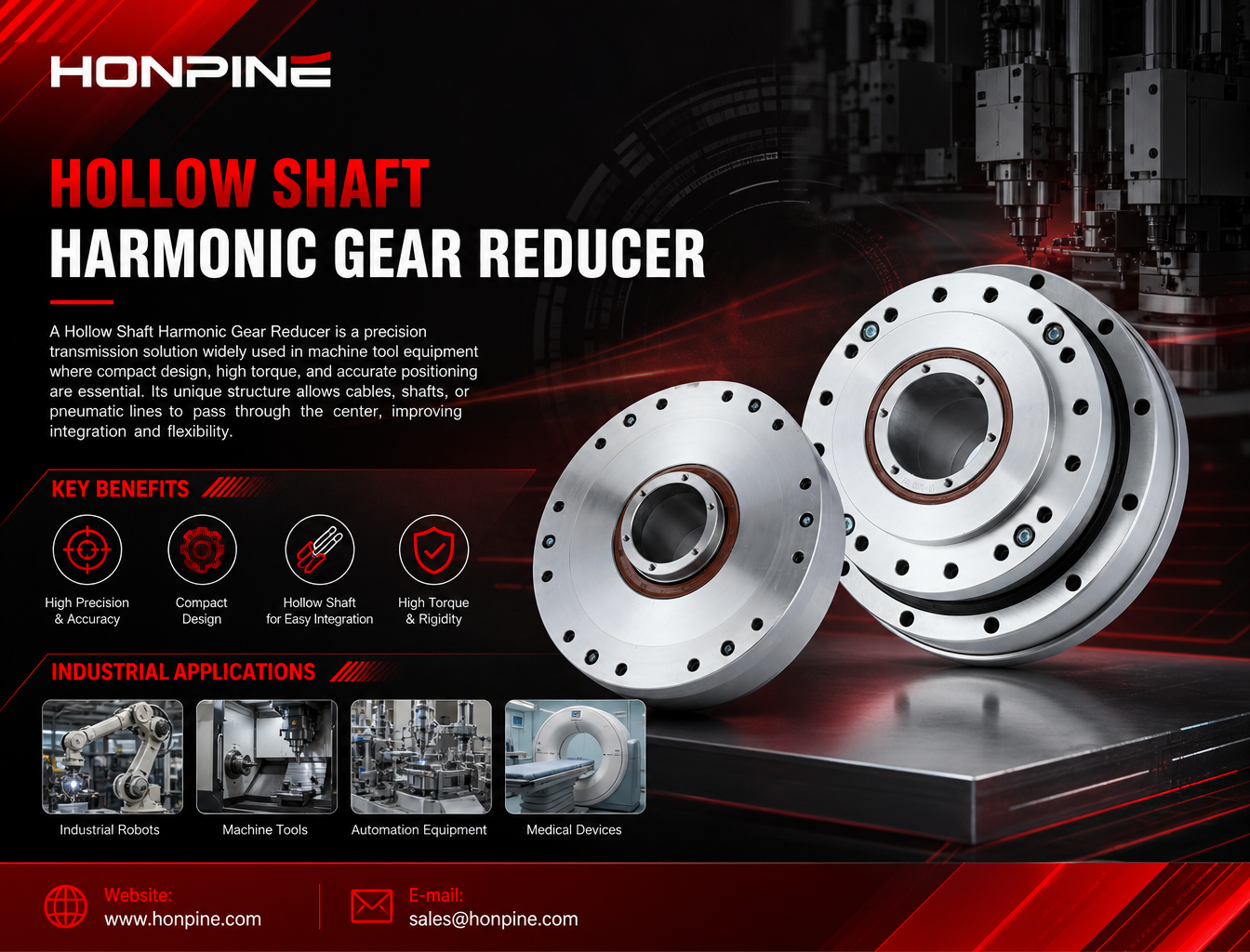
A Hollow Shaft Harmonic Gear Reducer is a precision transmission solution widely used in machine tool equipment where compact design, high torque, and accurate positioning are essential. Its unique structure allows cables, shafts, or pneumatic lines to pass through the center, improving integration and flexibility. In this article, we explain how a Hollow Shaft Harmonic Gear Reducer works, its key benefits, and the industrial applications that make it a preferred choice.
What Is a Hollow Shaft Harmonic Gear Reducer and Why Does It Matter in Machine Tool Equipment?
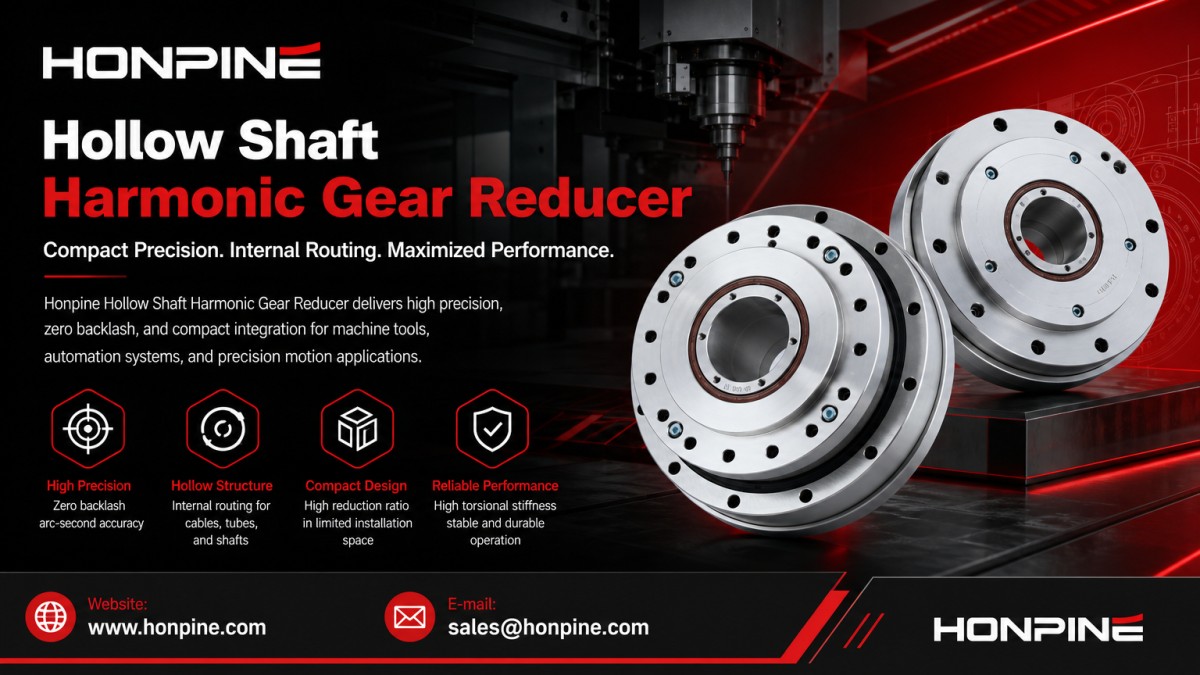
In machine tool equipment, motion transmission is not only about reducing speed. It is about preserving positioning accuracy, minimizing backlash, and fitting powerful drive performance into limited installation space. That is where the Hollow Shaft Harmonic Gear Reducer becomes highly relevant.
A harmonic gear reducer typically uses three core elements: a wave generator, a flexspline, and a circular spline. When this mechanism is designed with a hollow center, the reducer adds a practical routing channel for cables, rotary unions, sensor wiring, air tubes, or central shafts.
For machine tool builders, this structure solves a common integration problem. Axis modules, rotary tables, tool changers, and compact automation units often require both high-precision rotation and internal passage space. A standard solid-shaft reducer may force a more complex layout, while a Hollow Shaft Harmonic Gear Reducer can simplify the design.
- It supports compact mechanical layouts where available space around the spindle or rotary axis is limited.
- It helps reduce external cable loops that can interfere with axis movement or maintenance access.
- It improves system integration for high-precision motion units that need clean internal routing.
- It enables high reduction ratios in a compact body, which is valuable for controlled motion in machine tool equipment.
This is why buyers and design engineers often evaluate a Hollow Shaft Harmonic Gear Reducer not simply as a gearbox, but as a precision integration component. Its value depends on structure, torque characteristics, torsional stiffness, mounting accuracy, and suitability for the intended axis.
How the internal mechanism works
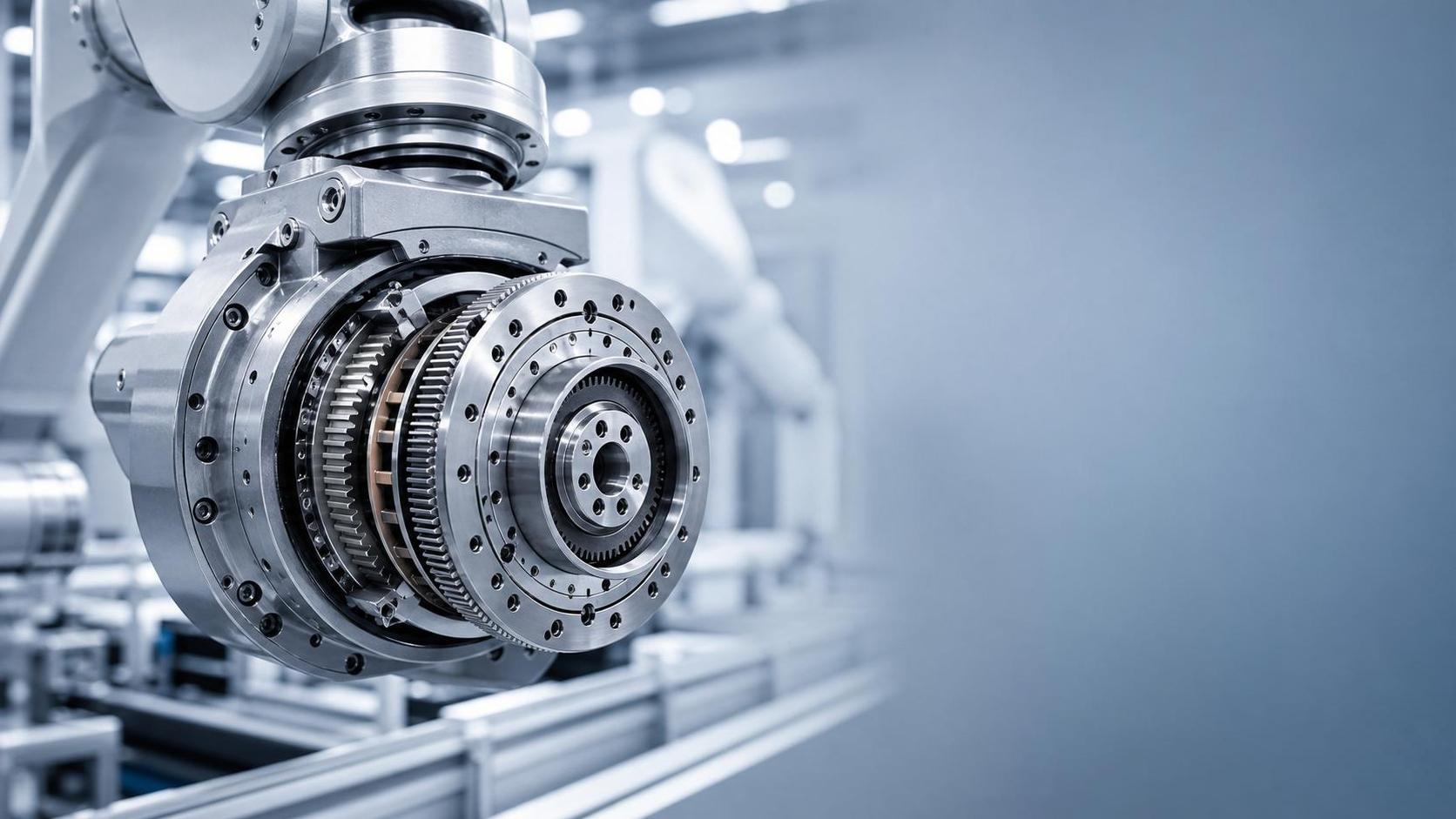
The wave generator deforms the flexspline into an elliptical shape, causing controlled engagement with the circular spline. Because the number of teeth differs slightly between these elements, each rotation produces a reduction effect. This principle creates a compact transmission with low backlash and high positional repeatability.
In a hollow shaft version, the center space is preserved without losing the main reduction principle. That combination is especially attractive in rotary axes where internal routing and precise angular control must coexist.
Which Structural Features Directly Affect Performance?
When evaluating a Hollow Shaft Harmonic Gear Reducer for machine tool equipment, buyers should not stop at the reduction ratio. Structural details have a direct impact on machining stability, servo response, and maintenance needs. The table below highlights the features that usually matter most during technical review.
A practical point often overlooked is the relationship between hollow diameter and structural rigidity. A larger internal passage is useful, but engineers still need enough stiffness and torque capacity for the specific machine tool axis. The best choice is rarely the largest opening; it is the most balanced structure.
Why compact size does not mean lower duty value
Many machine tool systems now integrate more functions into smaller footprints. Rotary tables, tilting heads, tool magazines, and automated loading modules all compete for space. A Hollow Shaft Harmonic Gear Reducer allows drive performance and routing efficiency to coexist, which reduces the need for bulky external transmission arrangements.
This space-saving effect can also improve service access. Cleaner cable routing means fewer exposed lines, less risk of interference, and often a more reliable installation in repeated motion applications.
Where Is a Hollow Shaft Harmonic Gear Reducer Used in Machine Tool Equipment?
The strongest demand for a Hollow Shaft Harmonic Gear Reducer appears where compact precision rotation is required. In machine tool equipment, these applications are not limited to one axis type. They span indexing, tool handling, rotary positioning, and auxiliary automation functions.
Typical application scenarios
- Rotary tables and indexing units, where accurate angular positioning and stable torque transmission affect part orientation and machining consistency.
- Automatic tool changers, where compact transmission and internal routing can simplify rotating arm structures and sensor integration.
- Tilting heads and auxiliary rotary axes, where low backlash helps maintain angular precision during contour machining.
- Material handling modules connected to machine tools, especially compact robotic or semi-automatic loading devices that require reliable repeat positioning.
- Inspection or probing stations integrated into machine cells, where routing metrology signals through the hollow center improves layout control.
In many of these cases, the reducer is chosen not only for gear reduction but also for system packaging. That distinction matters during procurement, because a lower-cost transmission may appear acceptable at component level while creating major integration difficulties at machine level.
The following table compares common machine tool application demands and the corresponding selection focus for a Hollow Shaft Harmonic Gear Reducer.
This comparison shows why application context matters. The same Hollow Shaft Harmonic Gear Reducer may perform well in one rotary module but be unsuitable in another if the duty cycle, external load, or routing requirements are different.
How Does It Compare with Other Reducer Options?
Procurement teams often compare a Hollow Shaft Harmonic Gear Reducer with planetary gearboxes, cycloidal reducers, or direct-drive solutions. Each option has a different value profile. The right choice depends on precision target, installation space, budget, and system architecture.
Comparison points that affect purchasing decisions
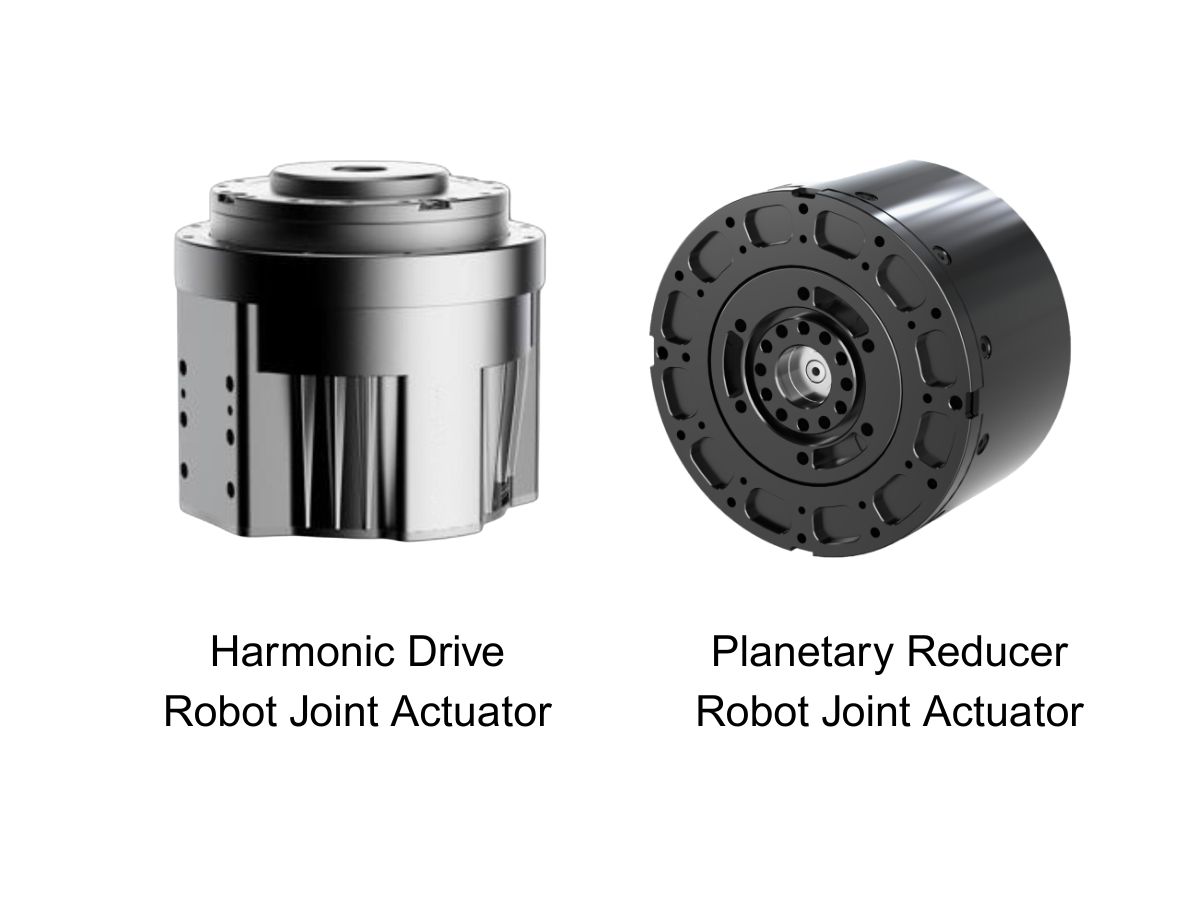
- Compared with planetary gearboxes, harmonic reducers usually offer lower backlash and higher reduction in a compact package, but application-specific torque evaluation is essential.
- Compared with cycloidal reducers, they may be more attractive for compact precision axes, especially when a hollow center is needed for integrated routing.
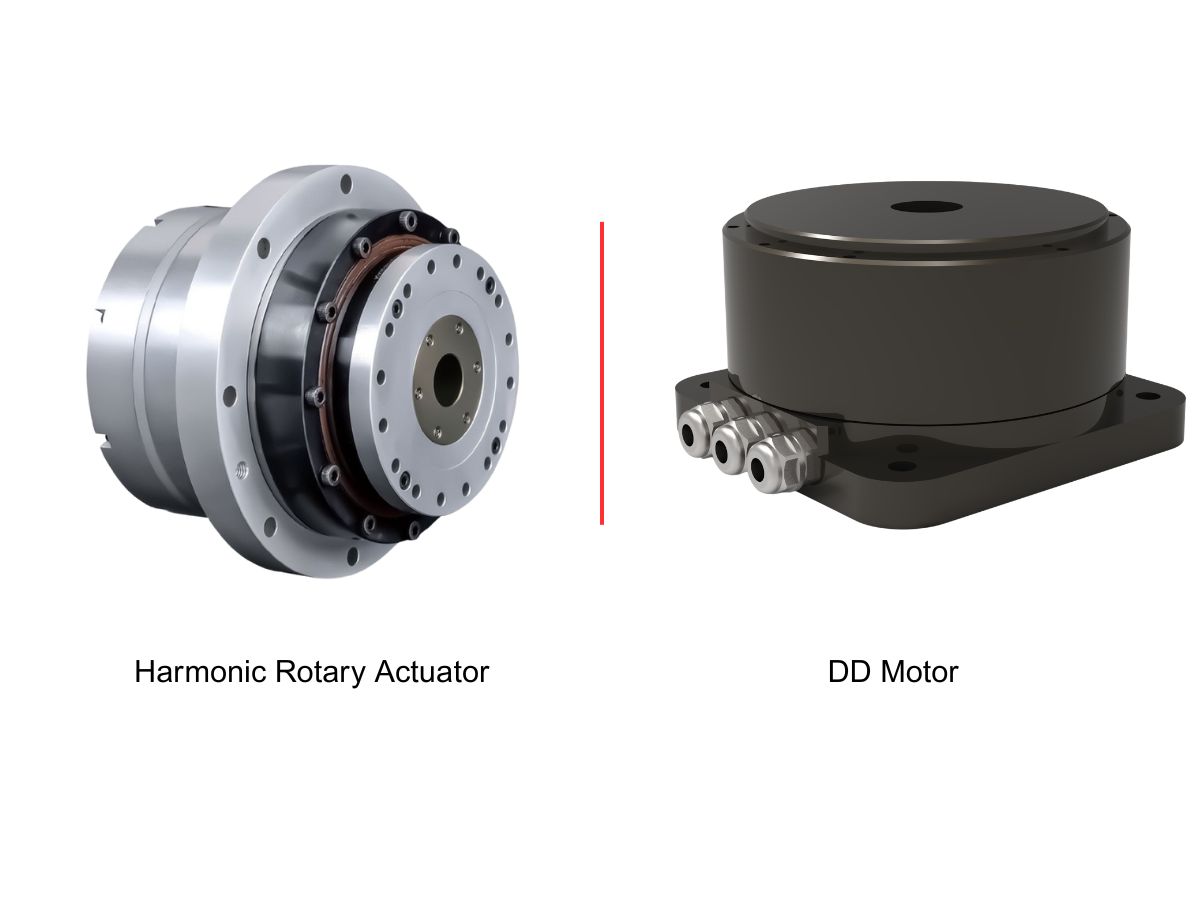
- Compared with direct-drive motors, they can reduce motor size and system cost in some cases, though direct drive may still be preferred for specific ultra-smooth or zero-transmission architectures.
A common mistake is comparing only purchase price. In machine tool equipment, total engineering cost includes mounting complexity, servo tuning effort, occupied space, maintenance accessibility, and the risk of lost accuracy under load. A Hollow Shaft Harmonic Gear Reducer often justifies its place when integration value is calculated honestly.
What Should Buyers Check Before Selecting a Model?
Selection mistakes usually happen when teams start with catalog ratio and flange size, then discover later that the reducer cannot support cable routing, peak torque, or mounting conditions. A better method is to confirm the full axis requirement before locking the reducer specification.
A practical selection checklist
- Define the motion task clearly: continuous rotation, indexing, oscillation, or intermittent reversal. Motion pattern strongly affects load assessment.
- Calculate rated torque and peak torque, including acceleration load, inertia mismatch, and any process-related disturbance from cutting or clamping.
- Confirm required accuracy: backlash expectation, lost motion tolerance, repeatability target, and positioning stability over the duty cycle.
- Check the hollow shaft requirement carefully: internal passage diameter, cable quantity, hose bend radius, and whether future upgrades need spare passage capacity.
- Review motor compatibility and mounting interface, including flange dimensions, shaft coupling, encoder layout, and brake options where needed.
- Consider maintenance and assembly access. A compact reducer that is difficult to service can increase downtime in high-usage machine tool equipment.
If the project has a tight delivery schedule, buyers should also ask about production lead time, customization range, and whether drawing confirmation is needed before manufacturing. These practical questions are often more important than small theoretical performance differences.
Selection table for fast internal review
For engineering, procurement, and project teams working together, the following review table can speed up decision-making when selecting a Hollow Shaft Harmonic Gear Reducer.
This type of structured review reduces the chance of selecting a reducer that looks correct on paper but creates delays during assembly or commissioning.
What Are the Main Risks, Misconceptions, and Cost Considerations?
A Hollow Shaft Harmonic Gear Reducer is often chosen for precision, but precision alone does not guarantee system success. In machine tool equipment, the main risks usually come from incorrect load assumptions, insufficient mounting rigidity, or ignoring routing and thermal conditions.
Common misconceptions
- “Low backlash means it fits every precision axis.” In reality, stiffness, bearing arrangement, and load direction are equally important.
- “A larger reduction ratio automatically improves control.” Excessive ratio can affect speed range, thermal behavior, and servo response if not matched to the application.
- “The hollow shaft is only a convenience feature.” In many machine tool designs, it is actually a key integration requirement that avoids major layout compromises.
- “The lowest component price lowers project cost.” Engineering changes, installation difficulty, and downtime risk can easily outweigh the initial price difference.
From a cost perspective, buyers should compare not only the reducer price but also assembly time, adapter requirements, cable routing complexity, motor size impact, and expected service intervals. A more suitable Hollow Shaft Harmonic Gear Reducer may reduce total machine build cost even if the unit price is higher.
Standards and compliance considerations
Specific certifications depend on the final machine and market destination, but general compliance thinking still matters. For export-oriented machine tool equipment, engineering teams should verify dimensional consistency, material and documentation traceability where required, and compatibility with the broader machine safety and electrical design framework.
If the reducer will be integrated into CE-oriented machine systems or other regulated export equipment, buyers should ask in advance about technical drawings, installation instructions, and product documentation needed for internal compliance files.
FAQ: What Do Buyers Most Often Ask?
How do I know whether a Hollow Shaft Harmonic Gear Reducer is suitable for my rotary axis?
Start with four checks: required torque, positioning accuracy, available installation space, and internal routing need. If your axis needs compact high-ratio transmission, low backlash, and a central passage for cables or air lines, this reducer type is often a strong candidate. Final confirmation should include inertia, duty cycle, and mounting analysis.
Which machine tool applications benefit the most from the hollow shaft design?
Rotary tables, tool changers, swivel heads, and integrated automation units benefit most. These applications often need both precise rotation and internal passage space. The hollow shaft design reduces routing conflicts and helps build a cleaner, more compact mechanical structure.
What should I prepare before requesting a quotation?
Prepare target ratio, rated and peak torque, motor information, mounting drawings if available, hollow passage requirement, operating duty cycle, and any accuracy expectations. If the project involves export machine tool equipment, also mention documentation or compliance expectations early.
Is customization usually necessary?
Not always, but it is common in machine tool projects. Custom flange interfaces, shaft connections, sealing details, and hollow passage adaptation may be needed to fit a specific axis design. Early confirmation helps avoid delays later in assembly.
Why Contact Us for Selection Support and Project Planning?
Choosing a Hollow Shaft Harmonic Gear Reducer for machine tool equipment is rarely a one-line catalog decision. The right selection depends on torque demand, axis precision, internal routing, installation envelope, and delivery schedule. If any of these are unclear, project risk increases quickly.
You can contact us for practical support on parameter confirmation, reducer selection, motor matching, hollow shaft sizing, drawing review, customization feasibility, expected lead time, sample planning, and quotation communication. If your project involves a rotary table, tool changer, tilting axis, or compact automation module, sharing application details early will speed up technical evaluation.
A clearer specification at the beginning usually means fewer design changes, faster procurement alignment, and a better fit between the Hollow Shaft Harmonic Gear Reducer and the actual machine tool application. If you are comparing options now, it is worth discussing the load case, accuracy target, and integration constraints before placing an order.
Read More
Learn more about the story of HONPINE and industry trends related to precision transmission.
 What is robot joint actuator?How to Choose the Best Robot Rotary Joint Actuator?In core robot joint transmission solutions, planetary and harmonic rotary actuators each have their own strengths. Choosing the right type based on application requirements is essential to achieve the optimal balance between performance and cost.
 DD Motors VS Harmonic Rotary ActuatorsThis article provides an in-depth comparison between Direct Drive (DD) motors and harmonic rotary actuators, covering their transmission principles, advantages and disadvantages, and typical application fields.
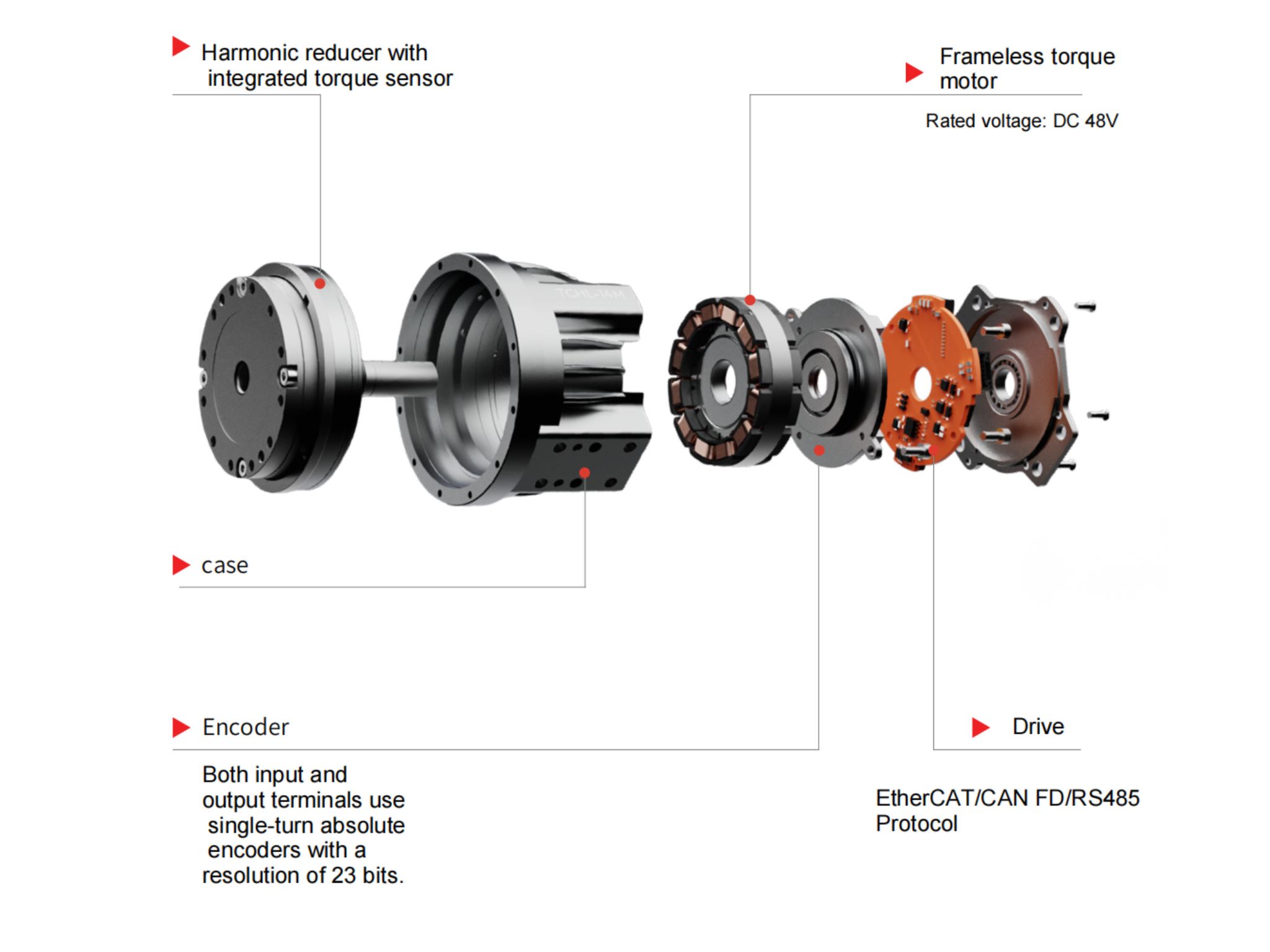
 OMG Ultra Compact Harmonic Drive Joint Module with Built-in Torque SensorHONPINE TCHL series harmonic drive joint module is a game-changing product that achieves disruptive improvements in multiple aspects such as lightweight design, integration level, and connection convenience. This article will analyze its revolutionary enhancements with you.
 The Role of Harmonic Drive Gears in Achieving 5–10 μm Accuracy in Dental Milling MachinesA dental milling machine is a CNC machining system used to directly process digital dental models into restorations such as crowns, bridges, veneers, inlays, and implant abutments. Dental milling machines require far higher operational accuracy and motion stability than ordinary equipment. This article explains how harmonic drive gear help dental milling machines achieve stable, continuous, and controllable operation.
 Why Are Harmonic Rotary Actuators Perfect for Medical Equipment?Harmonic rotary actuators (typically integrated systems consisting of a harmonic drive reducer, frameless torque motor, encoder, and optional brake) are regarded as key components in medical equipment. The core reason is that they simultaneously meet the most stringent medical requirements for precision, compact size, safety, and controllability. The following explanation is structured from three perspectives: technical characteristics, application scenarios, and medical value.
 High-Precision RV Reducers Perfectly Matched for Walking RobotsThe walking axis of a robot is a core component for power transmission and support. RV reducers provide extremely high rigidity, precision, and torque while maintaining a compact size and exceptional reliability, making them an ideal match for the demanding requirements of walking robot joints in terms of load capacity, impact resistance, and precision.
 Why Laser Wobble Welding Systems Need a High-Precision Harmonic Rotary Actuator?Laser wobble welding is increasingly used in battery manufacturing, busbar welding, electronics, medical devices, robotic welding, and other precision manufacturing applications where beam movement must remain accurate and repeatable. In mechanical wobble welding systems, however, weld quality depends not only on laser parameters but also on the precision of the rotary motion mechanism driving the wobble head. Backlash, insufficient torsional rigidity, limited torque density, and positioning errors can directly affect the actual beam trajectory and molten pool stability. This is why a high-precision rotary motion solution is becoming an important part of modern laser wobble welding equipment. A Harmonic Rotary Actuator combines precision transmission, high rigidity, low backlash, and compact integration, making it well suited for mechanical wobble heads that require controlled rotary motion under dynamic loads.
 How to Choose a Robot Joint Motor for Better End-Effector Performance?
Choosing a robot joint motor is not only about selecting the highest torque or the smallest joint. The performance of a robotic arm is ultimately determined by what happens at the end-effector. Tool mass, payload, center of gravity, rotational inertia, motion speed, acceleration, and settling performance can all influence the requirements of each robot joint. Depending on the application, a harmonic joint motor or planetary joint motor may provide a different balance between torque, speed, compactness, and system dynamics. This article explains how to select a robot joint motor by starting with end-effector requirements and evaluating the complete robotic arm as a motion system. How to Size Robot Joint Modules for a Robotic Arm? A Practical Engineering Guide?Choosing a suitable robot joint module is one of the most important decisions when designing a robotic arm. The right selection is not determined by payload or rated torque alone. Link mass, center of gravity, rotational inertia, acceleration, joint weight, torque density, installation space, and operating cycle can all affect the final joint requirements. An oversized joint may increase the robot's mass and inertia, while an undersized joint can limit motion performance and reliability. This guide explains a practical engineering approach to selecting a robot joint module, helping robotic arm designers evaluate torque, weight, dimensions, dynamic performance, and system integration before finalizing their joint architecture.
 Ultra-Thin Direct Drive Rotary Actuator for High-Precision Automation and InspectionDiscover how an ultra-thin direct drive rotary actuator and direct drive rotary motor improve positioning accuracy, smooth motion, and compact machine integration for semiconductor inspection, AOI systems, optical alignment, chip sorting, photovoltaic wafer inspection, and precision automation equipment.
 Robot Joint Motor with Dual Encoders: How to Reduce Harmonic Reducer Backlash and Improve Position AccuracyA high-performance robot joint motor is more than a motor combined with a harmonic reducer. Actual robot joint position accuracy depends on the complete motion chain, including transmission characteristics, mechanical stiffness, encoder feedback, load variation, and control performance. Although a harmonic reducer can achieve extremely low backlash, low backlash does not automatically guarantee perfect output accuracy. A dual encoder robot joint motor adds direct output-side feedback to motor-side position measurement, allowing the control system to better understand actual joint movement and reduce the effects of transmission error and load-dependent deformation. This article explains how dual encoders can improve robot joint position accuracy in high-precision and high-dynamic applications.
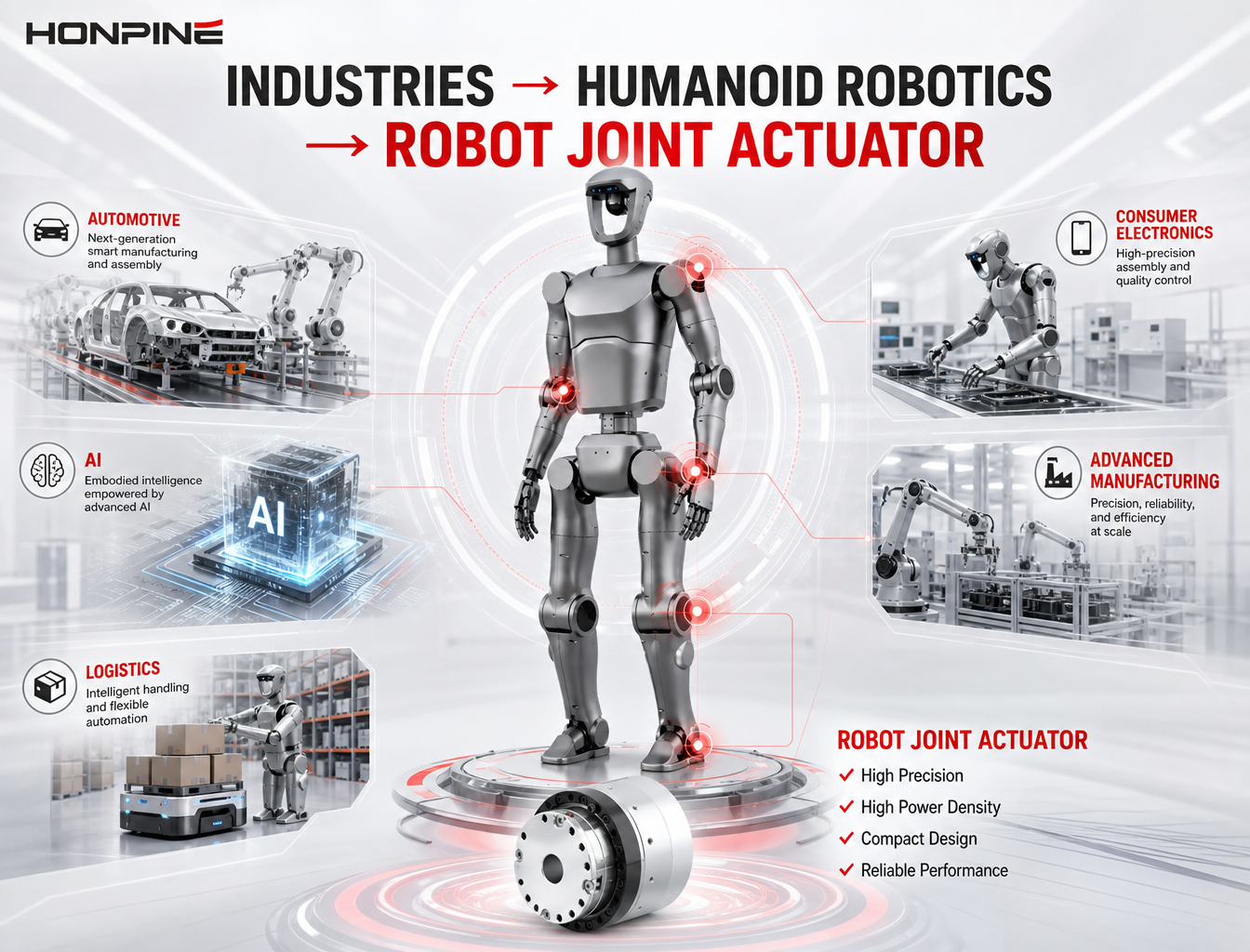
 Why Humanoid Robot Joint Actuators Are Becoming Critical as More Industries Enter Humanoid Robotics?Humanoid robotics is no longer driven only by traditional robot manufacturers. Automotive companies, AI companies, logistics providers, consumer electronics manufacturers, and advanced technology enterprises are increasingly entering the humanoid robot market. However, artificial intelligence can only create real value when digital intelligence can be converted into reliable physical movement. This makes the humanoid robot joint actuator a critical interface between AI, motion control, and the physical robot body. This article explores why harmonic drive actuators, high torque density, low backlash, integrated feedback, and scalable joint architectures are becoming increasingly important as humanoid robotics moves from prototype development toward large-scale commercialization.
Double Click
We provide harmonic drive reducer,planetary reducer,robot joint motor,robot rotary actuators,RV gear reducer,robot end effector,dexterous robot hand
 China Tightens Export Filing for CNC Machine ToolsCNC machine tools exporters and buyers should prepare now: China tightens export filing for lathes, milling and grinding machines from June 30, 2026, raising compliance and customs demands.
 Japan Tightens Export Review for High-End Five-Axis Machine ToolsFive-axis CNC machine tools face stricter Japan export review from August 16, 2026. Learn how longer approvals may disrupt supply, procurement, and sourcing strategy.
 Japan Tightens Approvals for High-End Five-Axis ExportsFive-axis CNC machine tool exports from Japan face tighter approvals, longer lead times, and higher risk. Learn how this shift impacts buyers, distributors, and supply chains.
 China Curbs Dual-Use Exports to 14 EU EntitiesChina curbs dual-use exports to 14 EU entities, disrupting CNC machine tool supply chains, servo motor sourcing, and compliance planning. Learn the immediate risks and actions now.
 UL 1604:2026 Tightens Dust Rules for Robot Joint MotorsUL 1604:2026 Tightens Dust Rules for Robot Joint Motors with new dust-environment, temperature-group, and IP6X checks. Learn how this impacts OEM exports, sourcing, and certification planning.
 EU EN IEC 61800-3:2025 Takes Effect for Harmonic DrivesEN IEC 61800-3:2025 reshapes EU EMC compliance for harmonic drives. Learn how CE marking, Class A/B testing, certification, and delivery timelines may impact exporters and buyers.
 EU Mandates EMC Testing for Harmonic Drive ReducersHarmonic drive reducers face new EU EMC testing rules from Aug 1, 2026. Learn how the mandate impacts packaging machinery exports, compliance, customs clearance and market access.
 Top Motion Control Technologies for Humanoid Robots in 2026Top motion control technologies for humanoid robots in 2026: discover how MPC, torque control, sensor fusion, and real-time coordination improve machine tool automation, safety, and uptime.
 Hollow Shaft Harmonic Gear Reducer Explained: Structure, Benefits & ApplicationsHollow Shaft Harmonic Gear Reducer explained for machine tool equipment—discover its structure, precision benefits, compact design advantages, and key applications for smarter motion control.
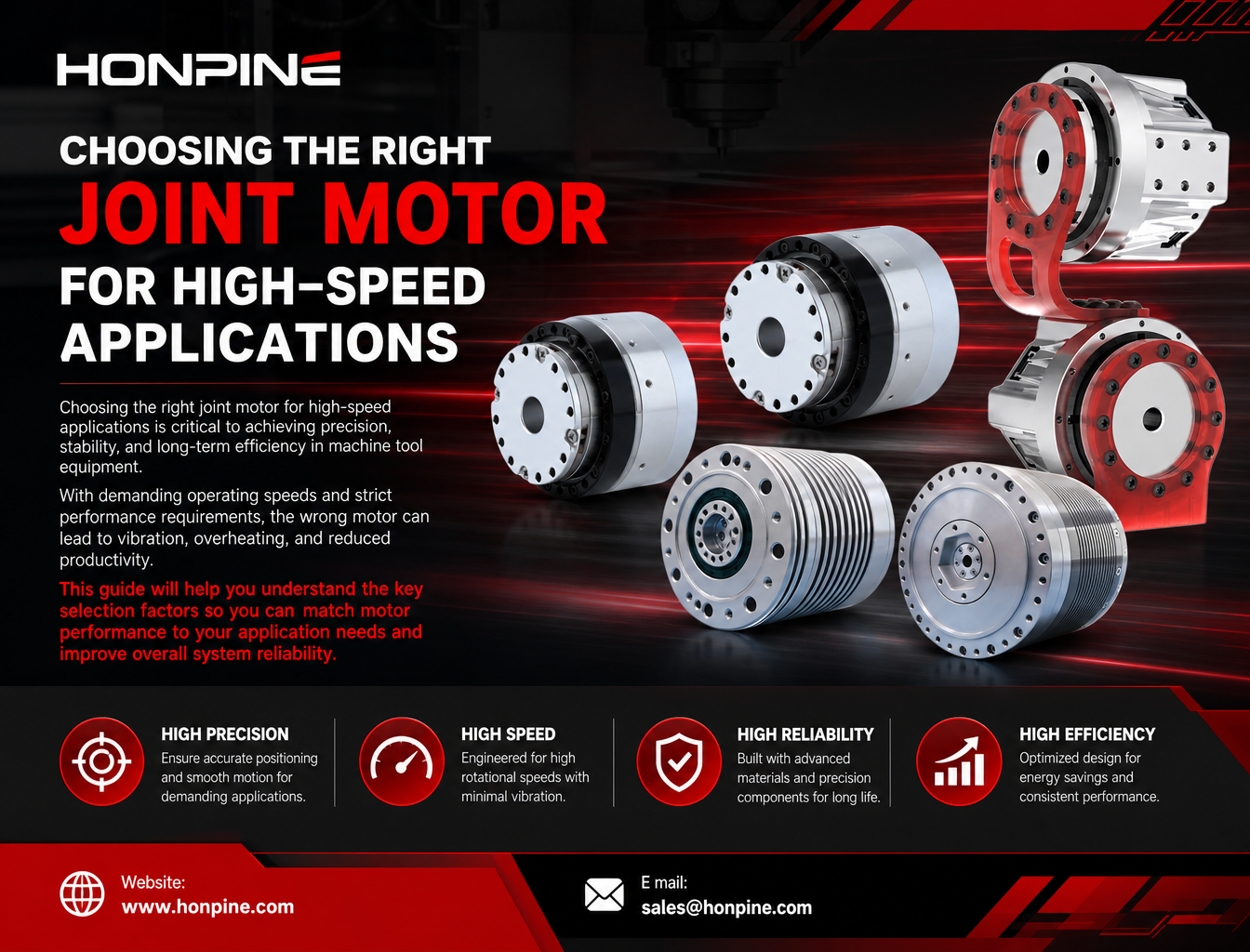
 How to Choose a Joint Motor for High-Speed ApplicationsJoint motor for high-speed applications: learn how to choose the right solution for machine tools with better precision, cooling, torque, and stability to boost performance.
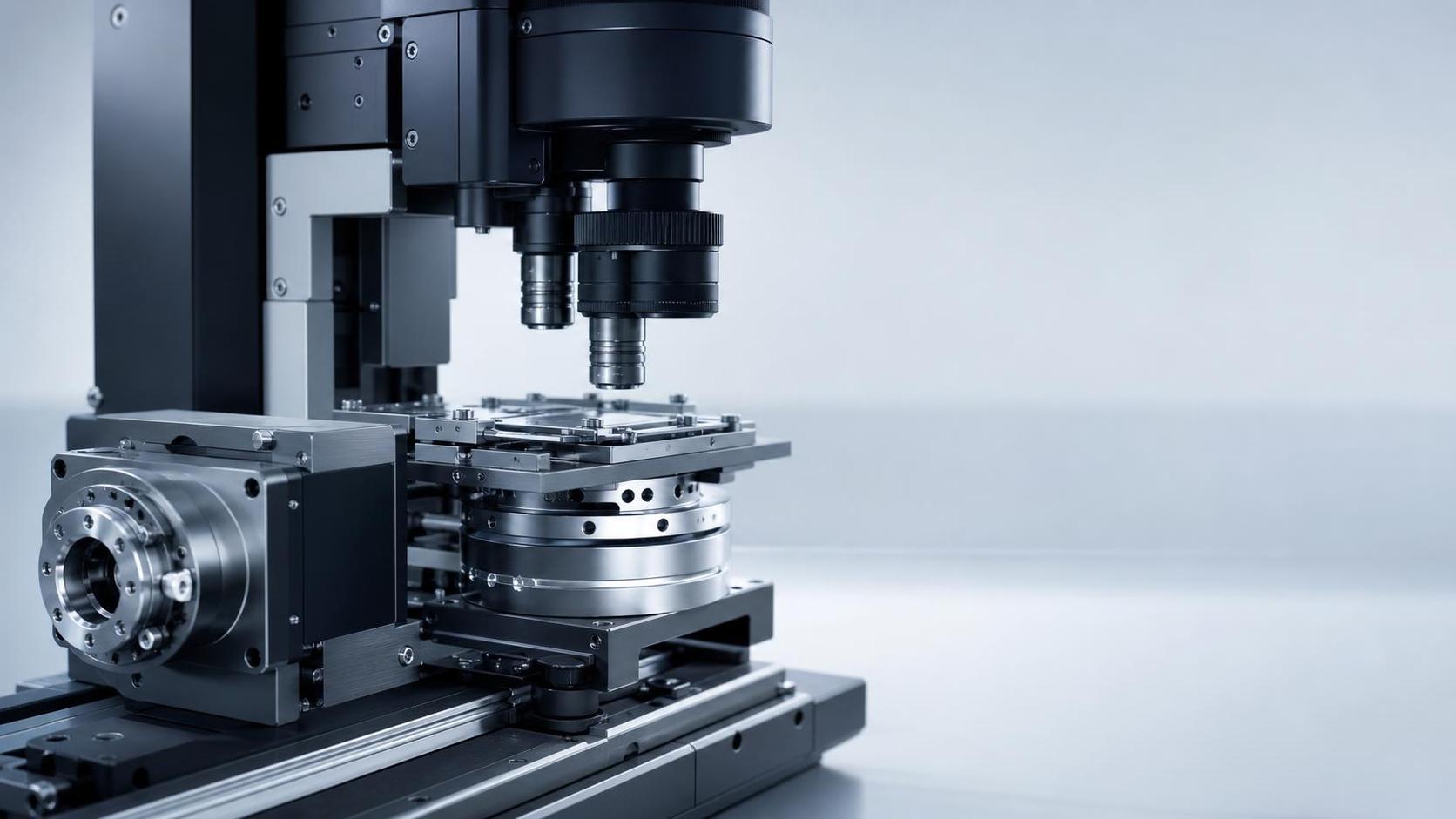
 Why Harmonic Drive Actuators Improve the Performance of Microscope Optical PlatformsHarmonic Drive Actuators improve microscope optical platforms with near-zero backlash, high precision, low vibration, and compact design—ideal for stable imaging and repeatable motion.
 METI Adds HAG Harmonic Drives to Export License ListHAG harmonic drives now face METI export license controls. Learn how the July 8 update affects OEM delivery, procurement timing, and shipments to China, Vietnam, and Mexico.