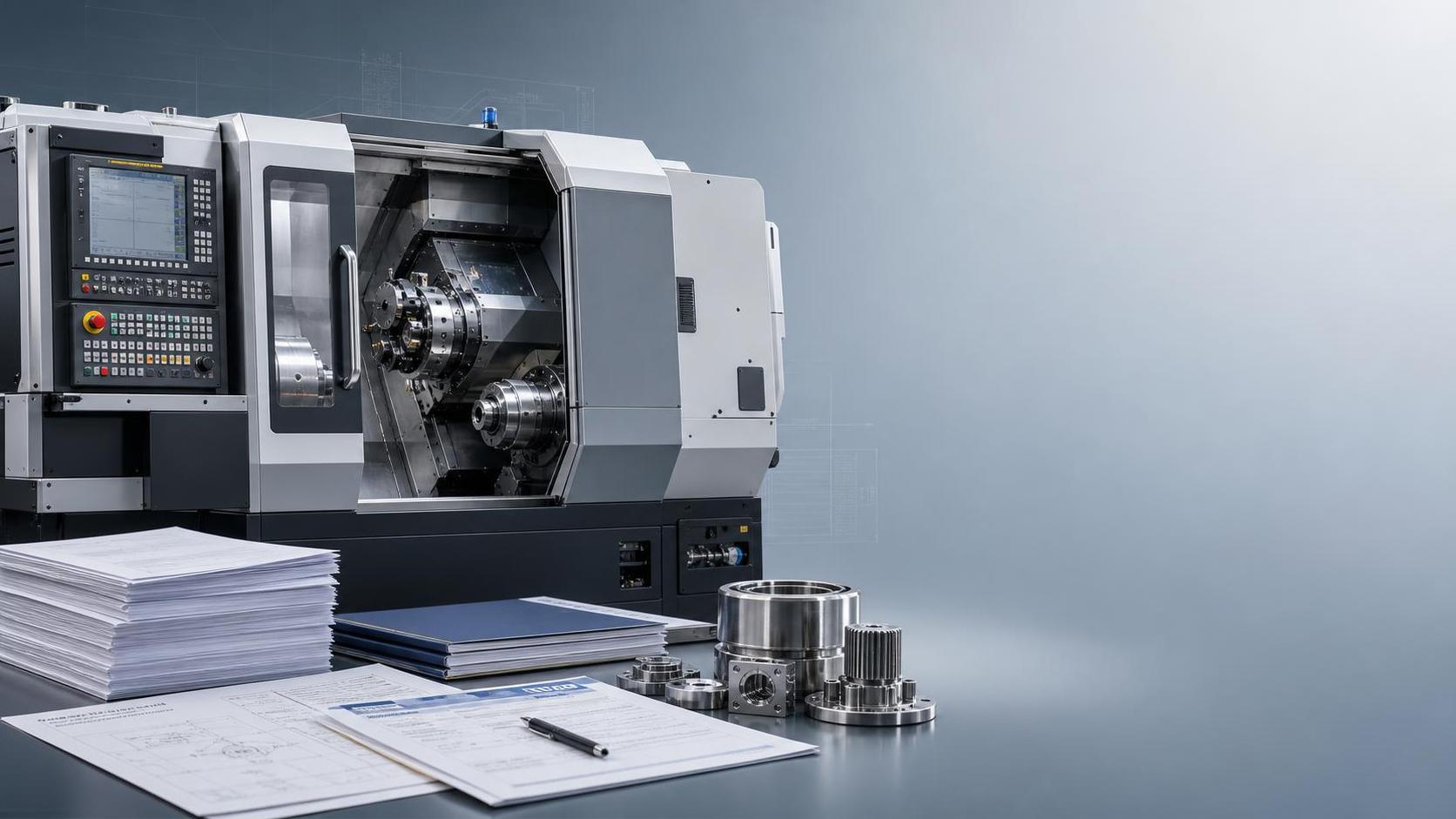


How to Choose a Joint Motor for High-Speed Applications
Choosing the right joint motor for high-speed applications is critical to achieving precision, stability, and long-term efficiency in machine tool equipment. With demanding operating speeds and strict performance requirements, the wrong motor can lead to vibration, overheating, and reduced productivity. This guide will help you understand the key selection factors so you can match motor performance to your application needs and improve overall system reliability.
How does a joint motor for high-speed applications affect machine tool performance?
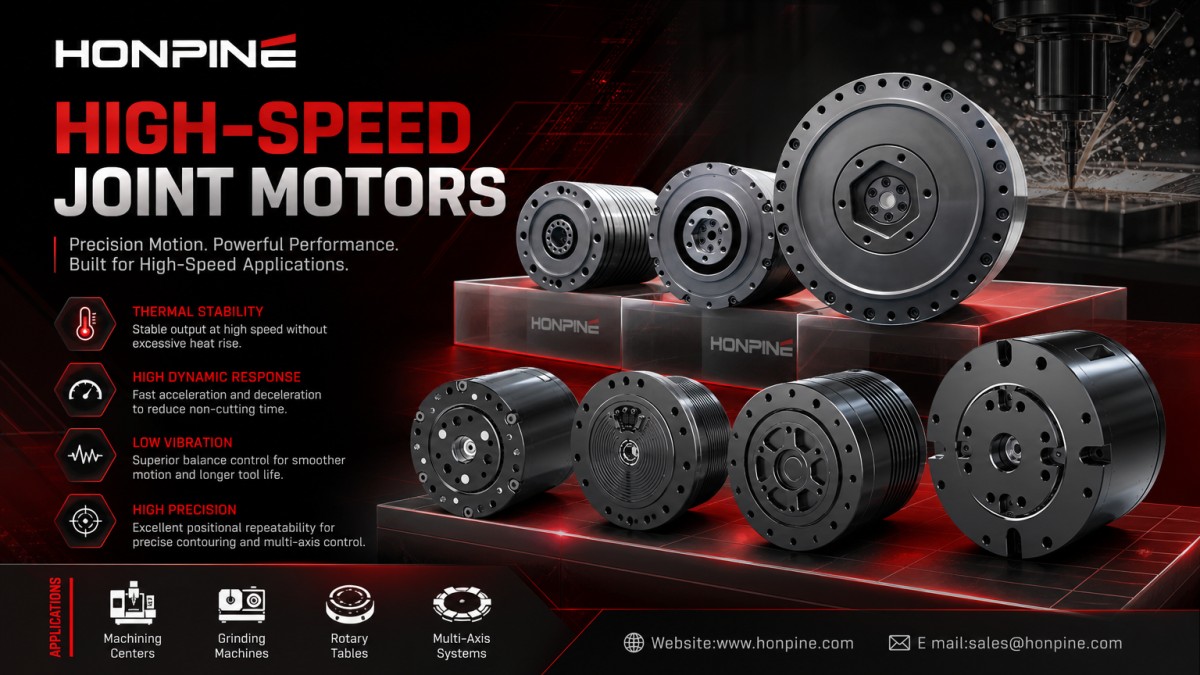
In machine tool equipment, a joint motor for high-speed applications is not just a power source. It directly influences axis response, contour accuracy, thermal stability, and the surface finish of the machined part.
High-speed motion amplifies every weakness in the drive system. Small rotor imbalance, insufficient torque reserve, encoder mismatch, or poor cooling can become visible as chatter marks, positioning drift, or premature bearing wear.
This is especially important in machining centers, grinding machines, rotary tables, and multi-axis systems where compact structure and rapid acceleration must exist together. In those environments, motor selection becomes a productivity decision, not only a technical one.
What the motor must deliver in real production
- Stable output at high rotational speed without excessive heat rise that affects nearby mechanical components.
- Fast acceleration and deceleration to shorten non-cutting time and improve machine throughput.
- Low vibration behavior to protect tool life, spindle dynamics, and finished workpiece quality.
- Strong positional repeatability for indexing, contouring, and synchronized movement across multiple axes.
Which machine tool scenarios need a specialized joint motor for high-speed applications?
Not every motion axis requires the same motor architecture. A specialized joint motor for high-speed applications becomes valuable when the machine combines compact installation space, rapid cycle time, and strict motion consistency.
Typical application scenarios
- Rotary axes in machining centers that need quick indexing and short settling time between tool paths.
- Gantry and multi-axis cutting systems where coordinated motion must remain smooth at high feed rates.
- Grinding and polishing equipment where vibration control is essential for micron-level finish quality.
- Compact automation modules integrated into machine tools, especially where gearbox space is limited.
If your process runs at high duty cycles, handles frequent starts and stops, or requires constant precision across long shifts, motor selection should focus on dynamic behavior and thermal performance rather than rated power alone.
What technical parameters matter most during motor selection?
Buyers often compare only speed and torque, but a reliable joint motor for high-speed applications must be evaluated across several linked parameters. The table below highlights the factors that most influence machine tool performance.
The best selection method is to assess these parameters together. A motor with impressive maximum speed may still fail in production if its continuous torque, cooling path, or encoder quality cannot support sustained high-speed operation.
Key data to request before approval
- Torque-speed curve under realistic duty conditions.
- Temperature rise data at continuous load.
- Feedback type, resolution, and controller compatibility.
- Bearing arrangement, balancing approach, and vibration information.
How to compare direct drive, geared, and servo-based solutions?
When selecting a joint motor for high-speed applications, many buyers compare direct-drive designs with geared solutions or conventional servo motors. The right choice depends on stiffness, maintenance planning, response speed, and machine layout.
For high-speed indexing, contouring, and precision rotary control, direct-drive style solutions usually provide the cleanest motion chain. However, if the axis carries a large inertial load and installation changes must be minimized, a geared solution may still be practical with proper backlash control.
What are the most common selection mistakes?
Many machine builders face delays because the chosen joint motor for high-speed applications looks acceptable on paper but does not match real operating conditions. Most failures come from incomplete system-level evaluation.
Mistakes that increase risk
- Selecting by maximum speed only, without checking continuous torque across the full motion profile.
- Ignoring heat dissipation inside enclosed machine structures where ambient temperature rises during long shifts.
- Overlooking load inertia mismatch, which leads to slow settling, overshoot, and difficult servo tuning.
- Assuming all encoders behave the same, even though resolution and communication compatibility vary significantly.
- Failing to review cable routing, connector durability, and contamination exposure in coolant-rich environments.
A strong selection process should include the full mechanical transmission path, duty cycle, control architecture, enclosure conditions, and maintenance expectations. This prevents repeated redesign after assembly or field testing.
How should buyers build a practical procurement checklist?
Purchasing teams need more than a catalog comparison. For a joint motor for high-speed applications, procurement should translate process requirements into measurable approval points that engineering, production, and sourcing can verify together.
Recommended evaluation checklist
- Define the axis duty cycle, including operating speed range, acceleration target, holding requirement, and cycle frequency.
- Confirm load data such as inertia, moment arm, external shock, and whether cutting force affects the axis directly.
- Check controller integration, feedback protocol, brake need, and emergency stop behavior.
- Review installation constraints, including flange size, cabling direction, cooling space, and sealing expectations.
- Ask for delivery lead time, spare part availability, sample support, and commissioning guidance before final approval.
This approach helps buyers avoid a common problem in machine tool projects: selecting a motor that meets speed targets but creates integration trouble, repeated tuning work, or late-stage thermal instability.
How do cost, lifecycle, and alternatives influence the final decision?
Initial price matters, but it should not be the only filter. In high-speed machine tool systems, the true cost of a joint motor for high-speed applications includes tuning time, downtime risk, spare parts, maintenance frequency, and product quality impact.
A lower-cost motor may look attractive if the machine runs at moderate speed for short intervals. Yet in continuous production, extra heat, inconsistent response, or bearing stress can increase maintenance cost and reduce output stability.
When alternatives make sense
- Choose a conventional servo solution if the axis has modest speed demand and backlash is not critical to process quality.
- Consider a geared architecture when installation reuse is more important than maximum dynamic performance.
- Invest in a specialized joint motor if short cycle time, high repeatability, and compact integration directly affect machine competitiveness.
For many OEMs, the most economical option over time is the motor that reduces tuning complexity and protects machining consistency, even if its purchase price is not the lowest.
Which standards and compliance points should be reviewed?
In machine tool applications, compliance review is part of risk control. While exact requirements vary by market and machine type, buyers should verify basic electrical, thermal, and environmental suitability before approving a high-speed joint motor.
Useful compliance checkpoints
- Electrical insulation class and temperature rise suitability for continuous industrial duty.
- Ingress protection level where coolant mist, oil vapor, or fine particles are present.
- Feedback and drive interface compatibility with the target CNC or servo platform.
- General alignment with applicable safety and machinery integration practices in the destination market.
If your project has export requirements or customer-specific compliance documents, it is wise to confirm them early. This avoids selecting a motor that performs well technically but delays the full machine approval process.
FAQ: what do buyers usually ask before ordering?
How do I know whether I need a dedicated joint motor for high-speed applications?
If your axis requires frequent acceleration, short settling time, compact installation, and repeatable precision at elevated speed, a dedicated solution is usually worth evaluating. Standard servo motors may work for basic motion, but they can become limiting in advanced machine tool cycles.
What matters more, peak torque or continuous torque?
For machine tool production, continuous torque is often more important because it reflects what the motor can sustain without overheating. Peak torque is still useful for acceleration bursts, but it cannot compensate for weak thermal capacity during long shifts.
Can a high-speed motor solve vibration problems by itself?
Not by itself. A good motor helps, especially with balancing and smooth control response, but vibration also depends on bearing condition, structural rigidity, coupling quality, servo tuning, and the load path of the entire axis.
What information should I prepare before requesting a quotation?
Prepare target speed, required torque, duty cycle, load inertia, installation drawing, controller type, ambient conditions, and any cooling or sealing constraints. With this information, suppliers can recommend a more accurate joint motor for high-speed applications and reduce revision cycles.
Why choose us for joint motor selection support?
For machine tool equipment, the right recommendation depends on matching motion demand, thermal behavior, installation limits, and controller compatibility. We focus on practical selection support rather than generic catalog advice, helping you narrow options based on real operating conditions.
You can contact us for parameter confirmation, joint motor for high-speed applications selection advice, delivery lead time discussion, integration checks, customization direction, sample evaluation support, and quotation communication based on your axis requirements.
If you are comparing multiple solutions, send your speed range, torque target, duty cycle, machine structure, and control platform. We can help you review whether a direct-drive, geared, or servo-based solution is more suitable for your machine tool project and procurement timeline.
Read More
Learn more about the story of HONPINE and industry trends related to precision transmission.
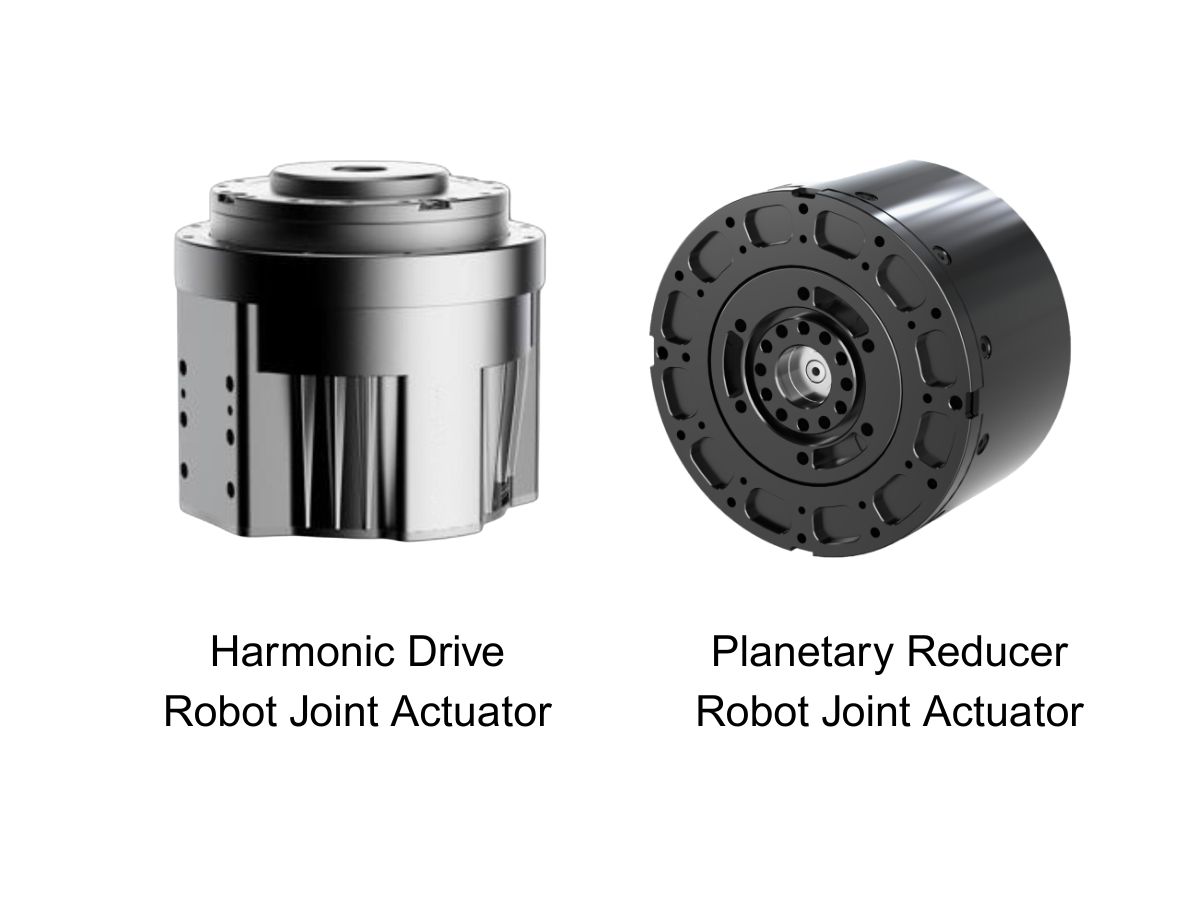
 What is robot joint actuator?How to Choose the Best Robot Rotary Joint Actuator?In core robot joint transmission solutions, planetary and harmonic rotary actuators each have their own strengths. Choosing the right type based on application requirements is essential to achieve the optimal balance between performance and cost.
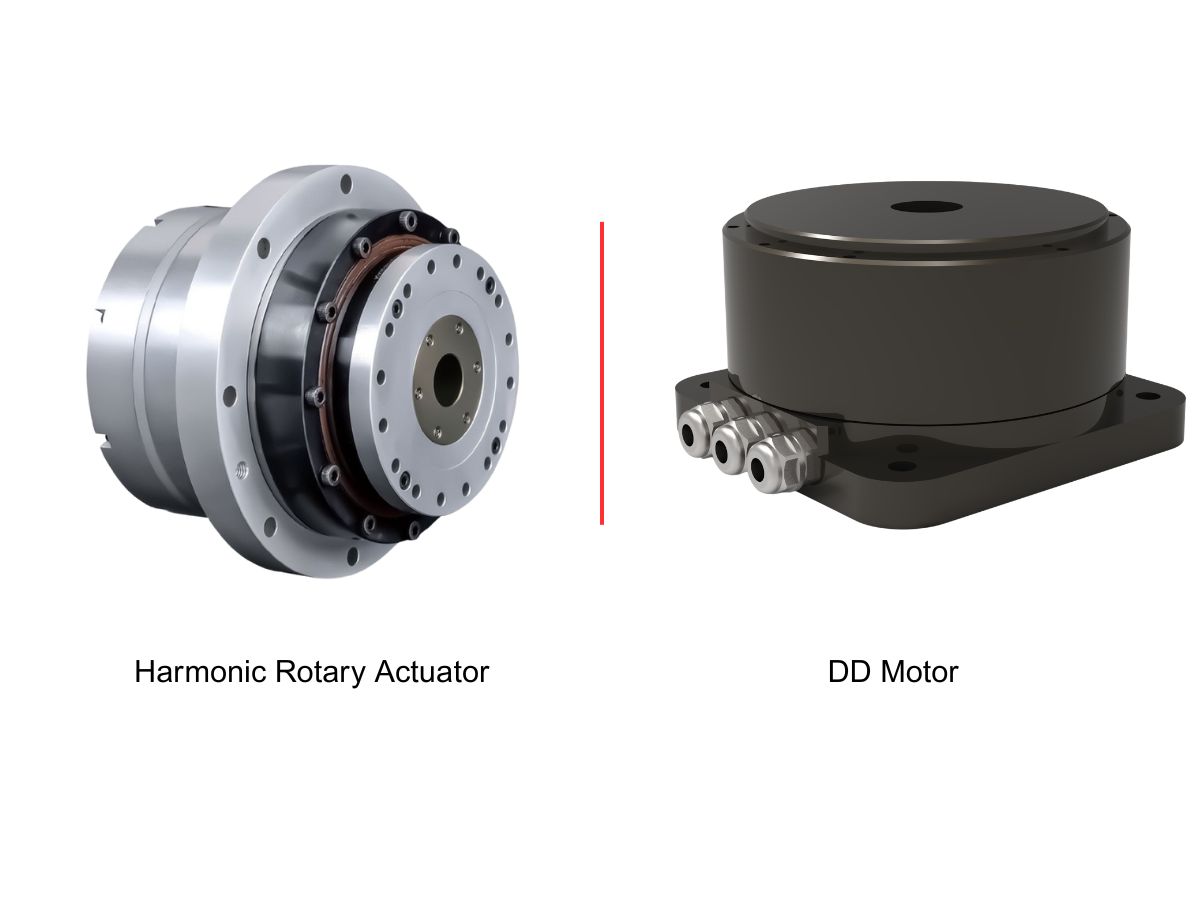
 DD Motors VS Harmonic Rotary ActuatorsThis article provides an in-depth comparison between Direct Drive (DD) motors and harmonic rotary actuators, covering their transmission principles, advantages and disadvantages, and typical application fields.
 OMG Ultra Compact Harmonic Drive Joint Module with Built-in Torque SensorHONPINE TCHL series harmonic drive joint module is a game-changing product that achieves disruptive improvements in multiple aspects such as lightweight design, integration level, and connection convenience. This article will analyze its revolutionary enhancements with you.
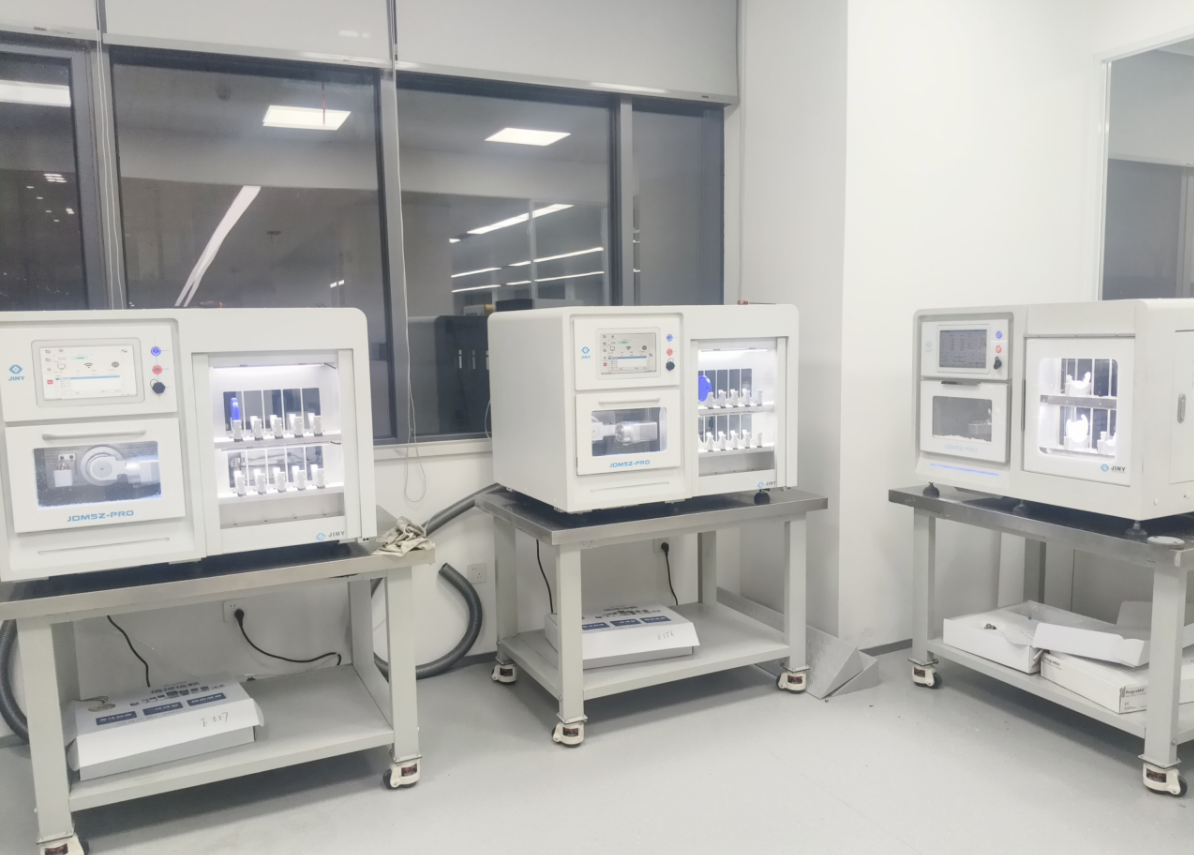
 The Role of Harmonic Drive Gears in Achieving 5–10 μm Accuracy in Dental Milling MachinesA dental milling machine is a CNC machining system used to directly process digital dental models into restorations such as crowns, bridges, veneers, inlays, and implant abutments. Dental milling machines require far higher operational accuracy and motion stability than ordinary equipment. This article explains how harmonic drive gear help dental milling machines achieve stable, continuous, and controllable operation.
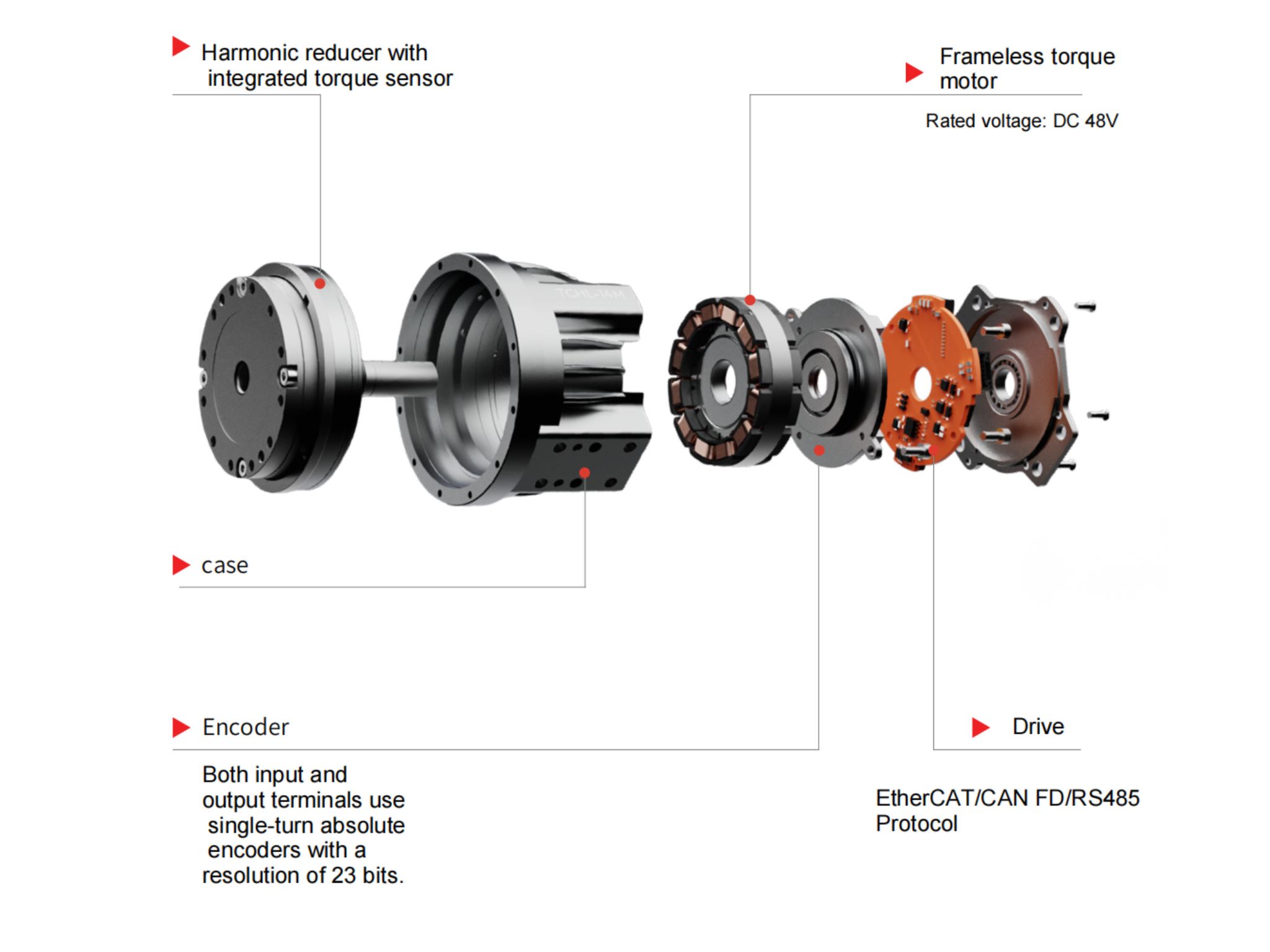
 Why Are Harmonic Rotary Actuators Perfect for Medical Equipment?Harmonic rotary actuators (typically integrated systems consisting of a harmonic drive reducer, frameless torque motor, encoder, and optional brake) are regarded as key components in medical equipment. The core reason is that they simultaneously meet the most stringent medical requirements for precision, compact size, safety, and controllability. The following explanation is structured from three perspectives: technical characteristics, application scenarios, and medical value.
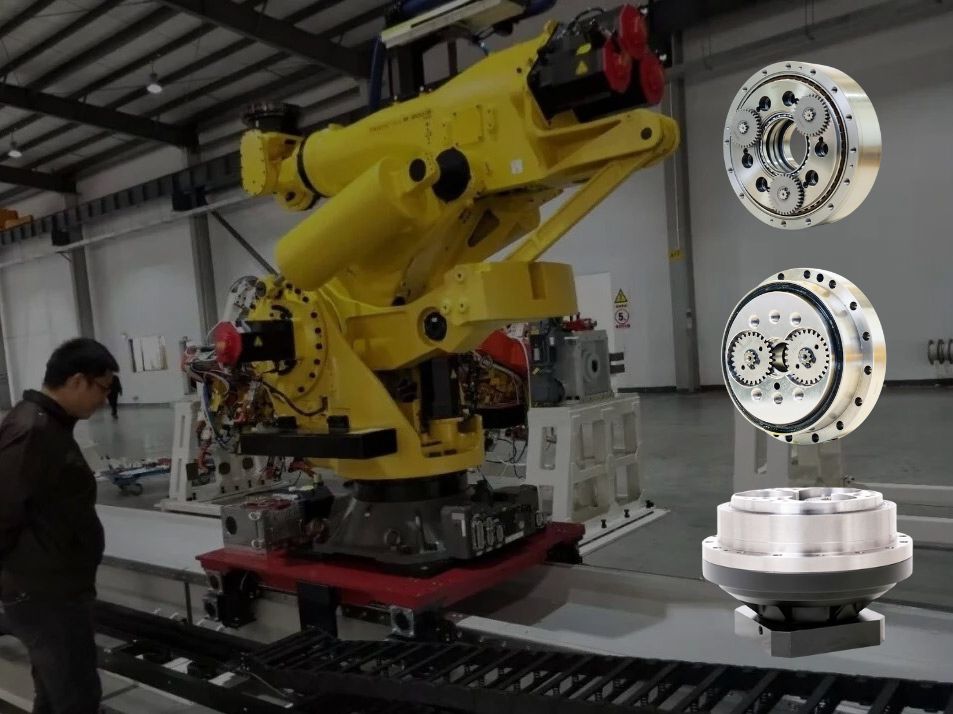
 High-Precision RV Reducers Perfectly Matched for Walking RobotsThe walking axis of a robot is a core component for power transmission and support. RV reducers provide extremely high rigidity, precision, and torque while maintaining a compact size and exceptional reliability, making them an ideal match for the demanding requirements of walking robot joints in terms of load capacity, impact resistance, and precision.
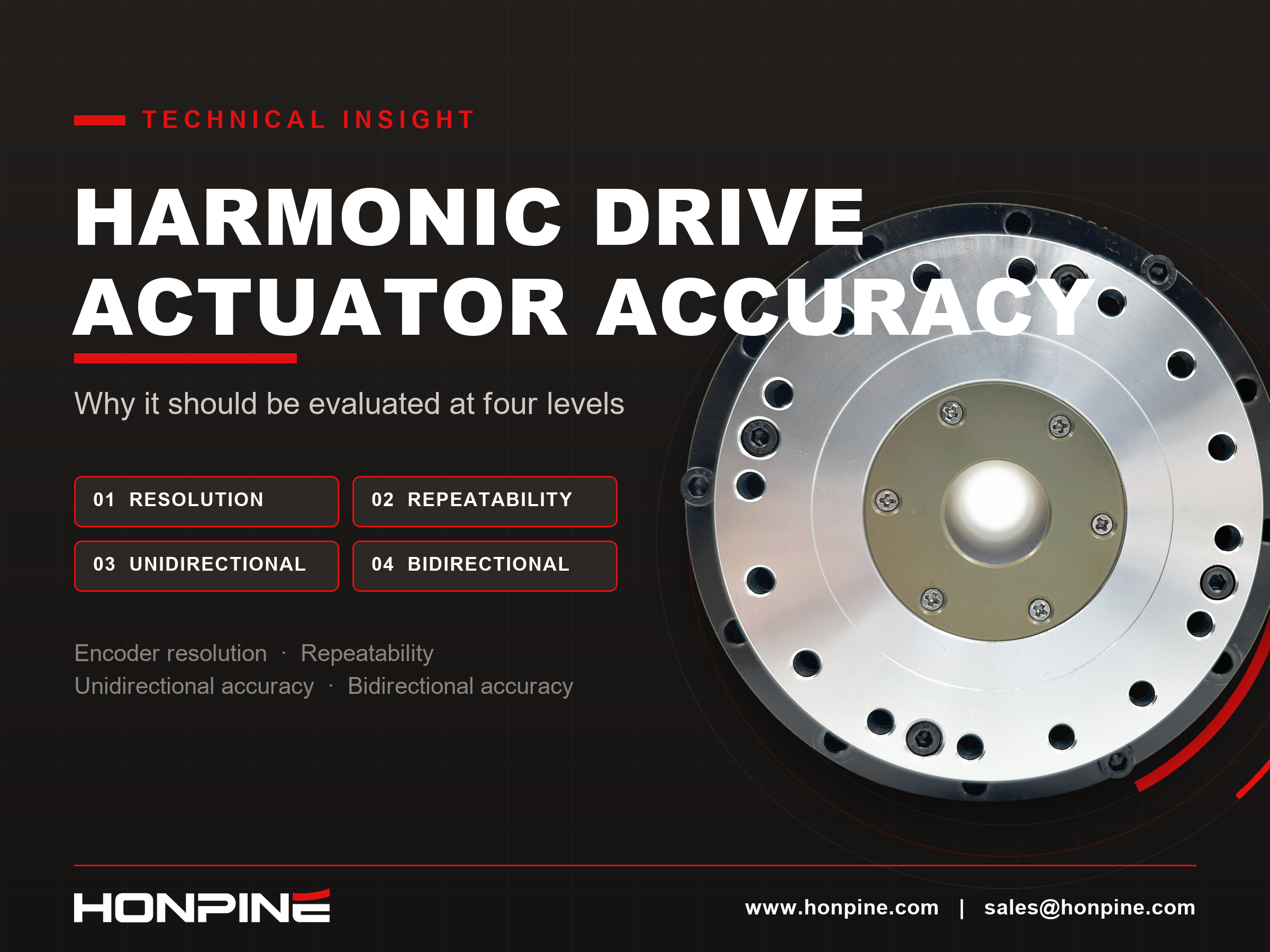
 Harmonic Drive Actuator Accuracy: Why It Should Be Evaluated at Four LevelsHarmonic drive actuator accuracy involves more than encoder resolution. Why should engineers evaluate it at four levels? Resolution, repeatability, unidirectional positioning accuracy, and bidirectional positioning accuracy describe different aspects of motion performance. Understanding these differences helps engineers select harmonic rotary actuators for semiconductor equipment, EFEM systems, and 3C automation without confusing theoretical encoder increments with actual positioning performance.
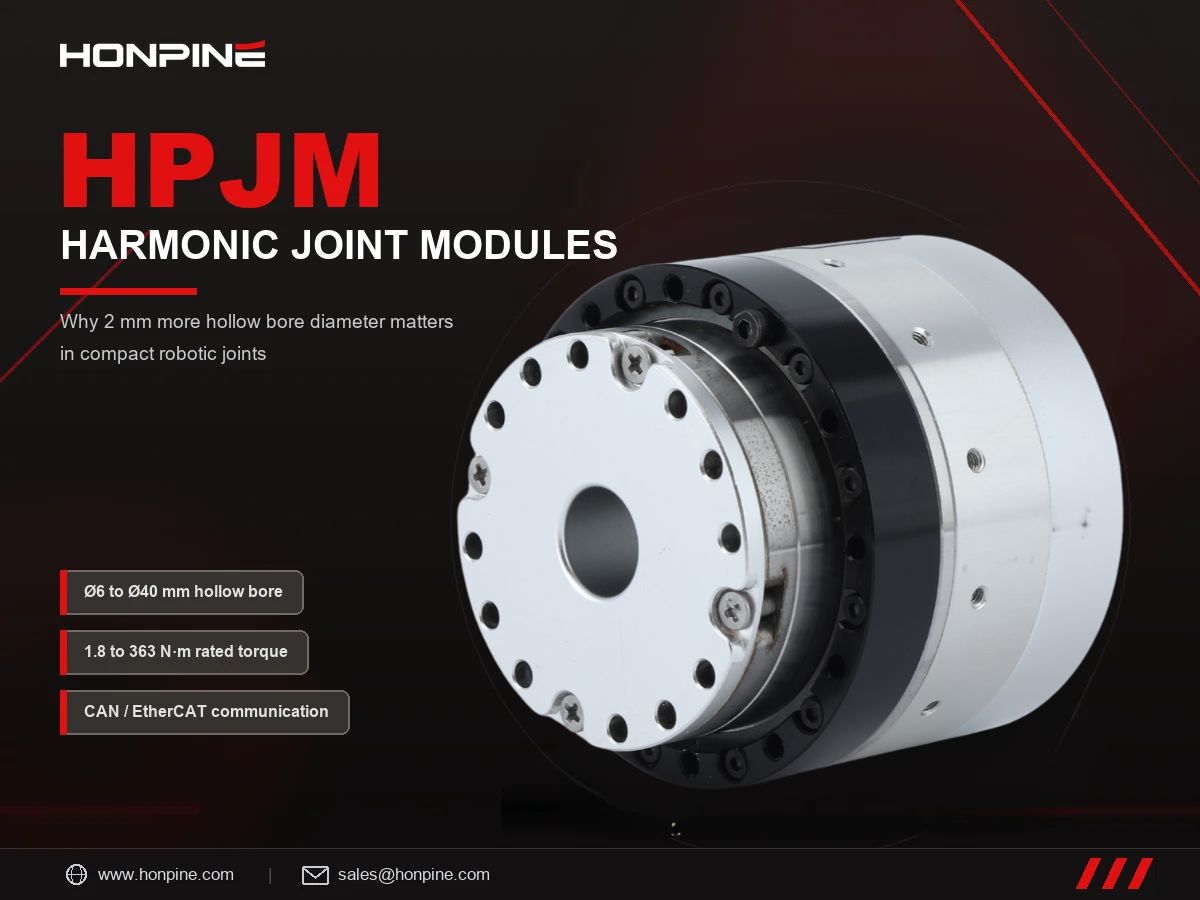
 Why Do Many Customers Choose HONPINE HPJM Harmonic Joint Modules for Just 2 mm More Hollow Bore Diameter?Why do many customers choose HONPINE HPJM harmonic joint modules for just 2 mm more hollow bore diameter? In compact robotic joints, this small dimensional difference can create a surprisingly large increase in available space. Because the cross-sectional area of a circular bore increases with the square of its diameter, an extra 2 mm can significantly improve internal cable routing and simplify system integration. This article examines the impact of hollow bore diameter, compares selected HONPINE HPJM models with comparable harmonic joint modules, and explains why bore size matters in humanoid robots, collaborative robots, and industrial automation.
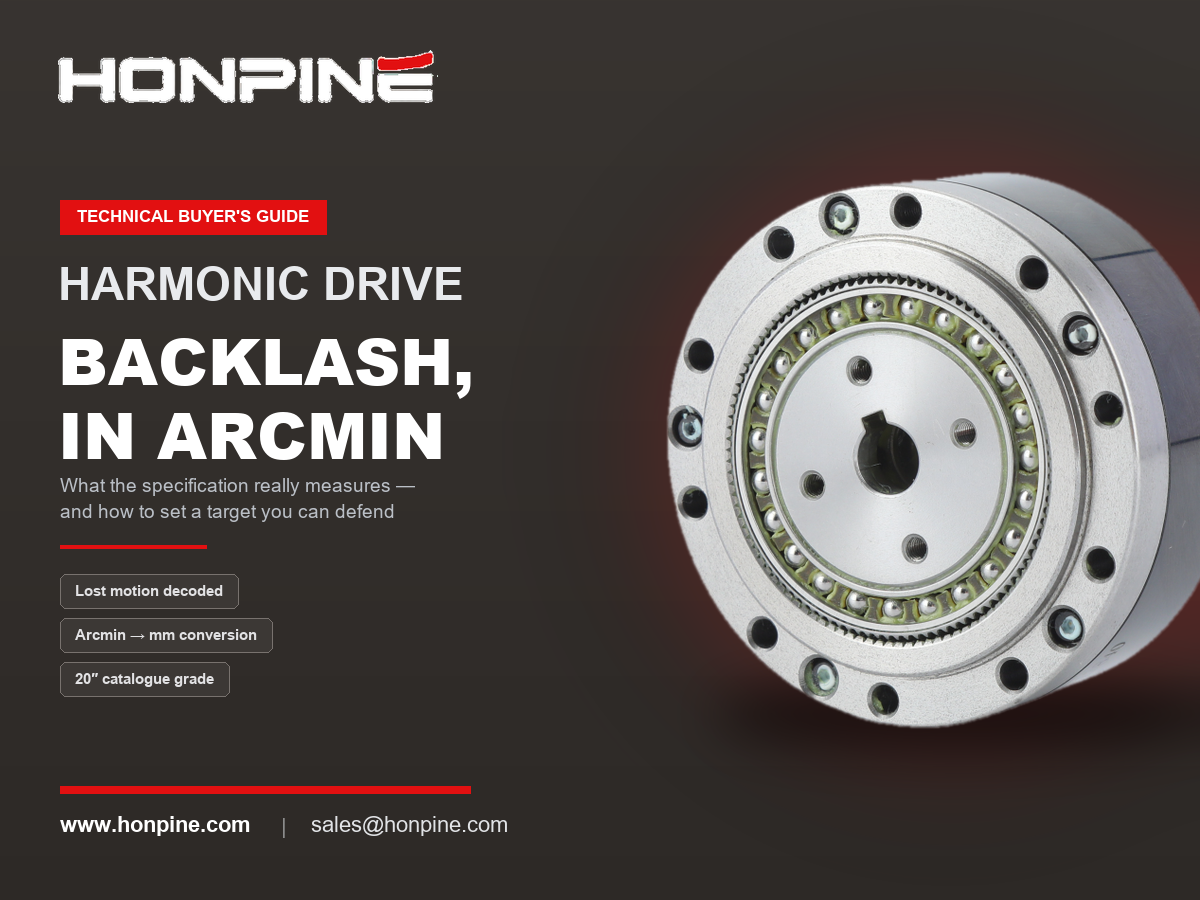
 Harmonic Drive Backlash in Arcmin: What the Specification Really Tells YouChoosing the right force control harmonic joint actuator involves more than comparing torque and dimensions. Torque sensor specifications, encoder feedback, communication protocols, functional safety, and hollow-shaft size can all affect system integration and control performance. In this guide, HONPINE Technical Director compares the TCHL and HAG harmonic joint actuator series, explaining their key differences and providing a practical selection framework for humanoid robots, collaborative manipulators, precision assembly, polishing, and other force-controlled applications.
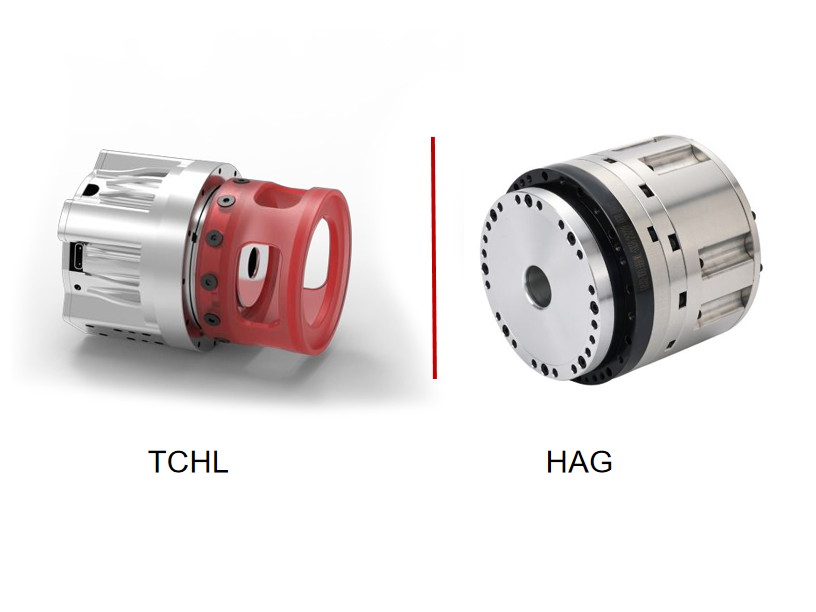
 How to Choose a Force Control Harmonic Joint Actuator? An In-Depth Comparison of HONPINE TCHL and HAGChoosing the right force control harmonic joint actuator involves more than comparing torque and dimensions. Torque sensor specifications, encoder feedback, communication protocols, functional safety, and hollow-shaft size can all affect system integration and control performance. In this guide, HONPINE Technical Director compares the TCHL and HAG harmonic joint actuator series, explaining their key differences and providing a practical selection framework for humanoid robots, collaborative manipulators, precision assembly, polishing, and other force-controlled applications.
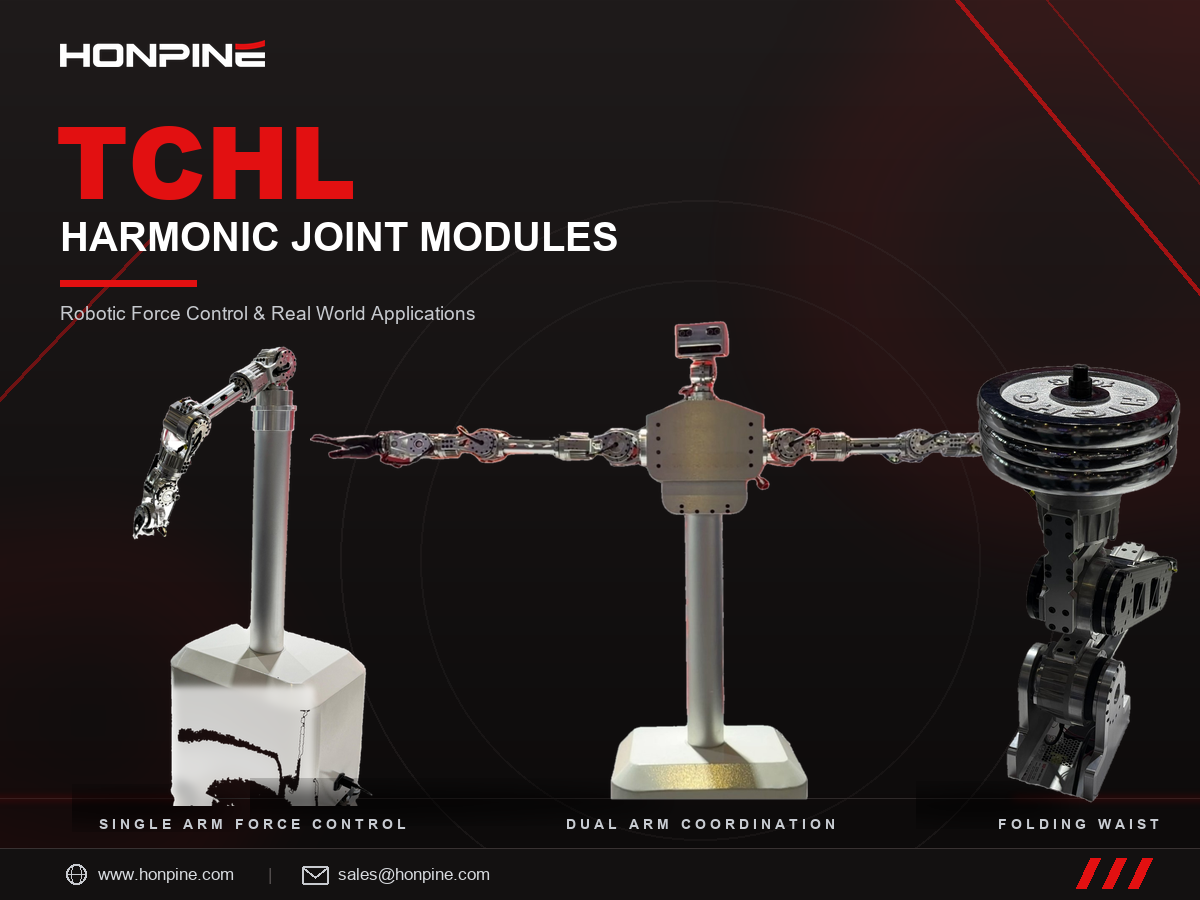
 HONPINE TCHL Harmonic Joint Modules: Robotic Force Control and Real-World ApplicationsHello everyone, I’m Theodore Li, Technical Director at HONPINE.
HONPINE TCHL harmonic joint modules have been deployed in a range of robotic motion-control applications, including dual-arm humanoid robots, single-arm compliant force control, and folding waist mechanisms for wheeled humanoid robots. As integrated motion components, they support a wide range of applications in robotics, intelligent manufacturing, and industrial automation.
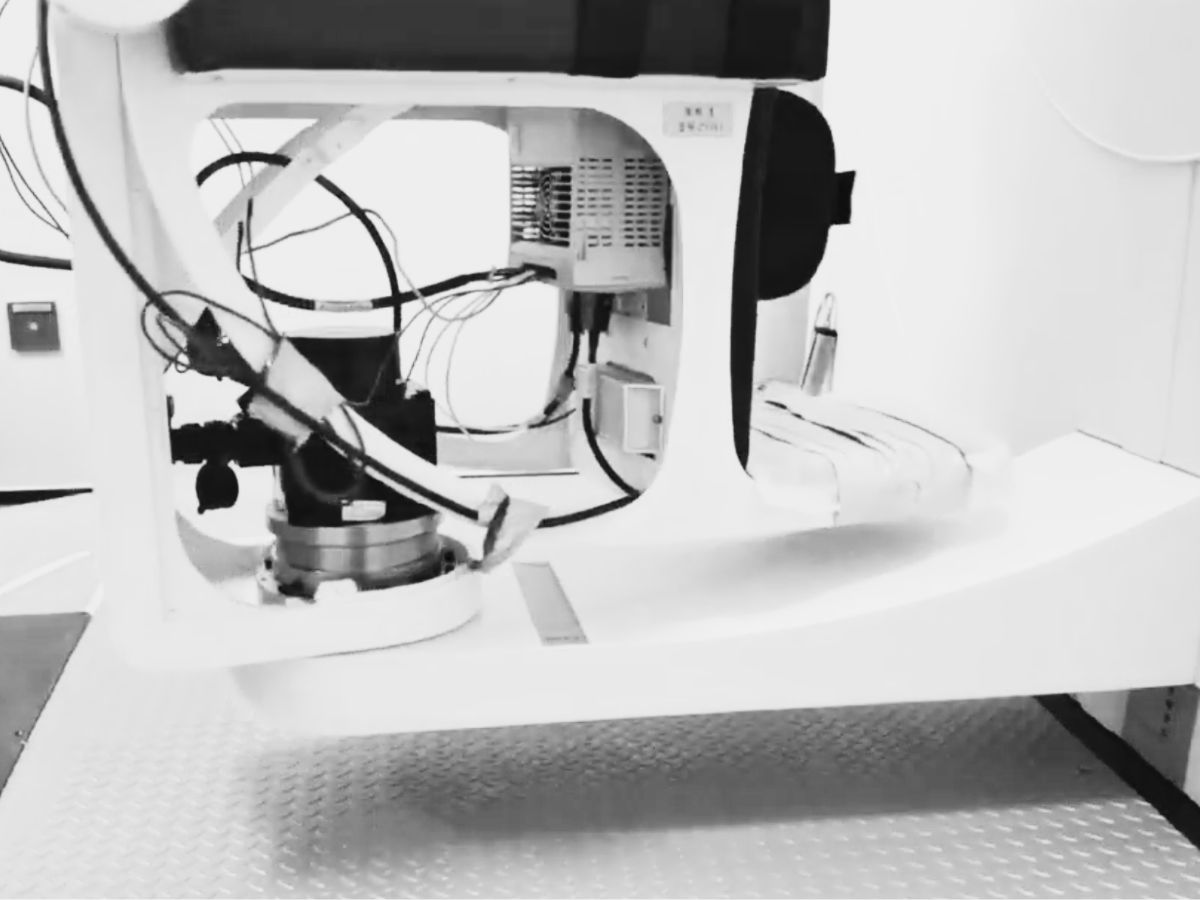
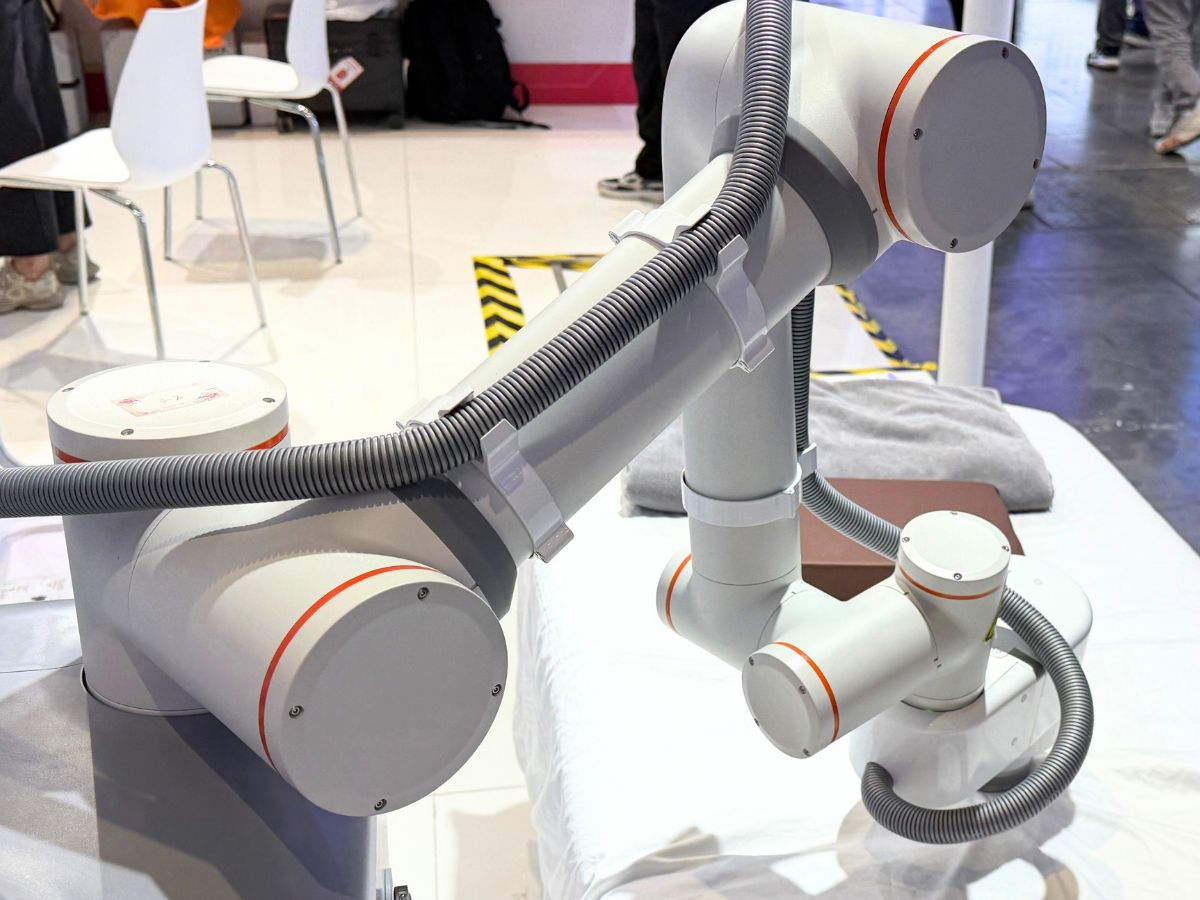
From core components to integrated motion units, HONPINE showcases the possibilities of precision transmission technology across different robotic applications through a diverse product portfolio and practical motion demonstrations. Why Bedside Physical Therapy Robots Need Force-Controlled Joint Modules?A therapy robot does not sell a robot arm; it sells a force applied to a human body. Pressure, rhythm and depth are the prescription, and position control cannot deliver them: soft tissue is compliant and time-varying, so one position command yields contact forces that differ several-fold between muscle and bone. Force-controlled harmonic joint modules turn contact force into a closed-loop variable - the only way to make dose repeatable, human contact safe and a therapist's technique teachable. Starting from one site photo of a bedside therapy robot, this article reads the configuration, sets out five reasons force control is unavoidable, settles HONPINE's TCHL-versus-HAG choice criterion by criterion, and gives the torque sensor resolution budget that picks the frame sizes.
Double Click
We provide harmonic drive reducer,planetary reducer,robot joint motor,robot rotary actuators,RV gear reducer,robot end effector,dexterous robot hand
![]() Japan’s WinTest Enters AMR Sales Business with China’s Youibot RoboticsWinTest’s entry into AMR sales with Youibot Robotics targets Japan’s industrial automation market. Explore what semiconductor factory buyers should verify before placing orders.
Japan’s WinTest Enters AMR Sales Business with China’s Youibot RoboticsWinTest’s entry into AMR sales with Youibot Robotics targets Japan’s industrial automation market. Explore what semiconductor factory buyers should verify before placing orders.![]() Chinese Forklift Leaders Expand into Smart Logistics and Robotics, Donghai SaysChinese forklift leaders Hangcha and Anhui Heli are expanding into smart logistics and robotics. Explore Donghai’s insights on investment plans and their potential impact on logistics automation.
Chinese Forklift Leaders Expand into Smart Logistics and Robotics, Donghai SaysChinese forklift leaders Hangcha and Anhui Heli are expanding into smart logistics and robotics. Explore Donghai’s insights on investment plans and their potential impact on logistics automation.![]() Ningbo Dongli Hits Limit Up on Robot Reducer Business and Strong First-Half EarningsExplore Ningbo Dongli's reported limit-up rally, robot reducer business and strong first-half earnings, plus essential supplier checks for equipment buyers.
Ningbo Dongli Hits Limit Up on Robot Reducer Business and Strong First-Half EarningsExplore Ningbo Dongli's reported limit-up rally, robot reducer business and strong first-half earnings, plus essential supplier checks for equipment buyers.![]() Humanoid Robot Stocks Surge as Demand for Harmonic Reducers and Other Key Parts AcceleratesHumanoid robot stocks surge as harmonic reducer demand gains momentum. Explore sourcing risks, supplier readiness and procurement insights to plan your next move.
Humanoid Robot Stocks Surge as Demand for Harmonic Reducers and Other Key Parts AcceleratesHumanoid robot stocks surge as harmonic reducer demand gains momentum. Explore sourcing risks, supplier readiness and procurement insights to plan your next move.![]() CNC Maker 07688.HK Announces Deal to Acquire at Least 70% of Machine Tool FirmCNC maker 07688.HK announces a deal to acquire at least 70% of a machine tool firm. Explore its five-axis expansion plans and what buyers should verify before ordering.
CNC Maker 07688.HK Announces Deal to Acquire at Least 70% of Machine Tool FirmCNC maker 07688.HK announces a deal to acquire at least 70% of a machine tool firm. Explore its five-axis expansion plans and what buyers should verify before ordering.![]() Nidec Machine Tool Launches MVR-5X Gantry-Type Five-Axis MachineDiscover Nidec Machine Tool's MVR-5X gantry-type five-axis machine, featuring a compact head with approximately 20 times its predecessor's spindle torque. Explore its machining potential.
Nidec Machine Tool Launches MVR-5X Gantry-Type Five-Axis MachineDiscover Nidec Machine Tool's MVR-5X gantry-type five-axis machine, featuring a compact head with approximately 20 times its predecessor's spindle torque. Explore its machining potential.![]() Wuhan’s Taiyi Servo Drive Chip Applied in Robot Joints in ShenzhenTaiyi servo drive chip powers robot joints in Shenzhen with over 4 kW instantaneous output and over 30% lower switching losses. Discover what this means for robot joint design.
Wuhan’s Taiyi Servo Drive Chip Applied in Robot Joints in ShenzhenTaiyi servo drive chip powers robot joints in Shenzhen with over 4 kW instantaneous output and over 30% lower switching losses. Discover what this means for robot joint design.![]() FAIRINO Raises Nearly RMB 1bn; Harmonic Reducer Materials Patent Application PublishedFAIRINO Robotics raises nearly RMB 1bn as a harmonic reducer materials patent application is published. Explore what buyers should verify on durability, IP and supplier qualification.
FAIRINO Raises Nearly RMB 1bn; Harmonic Reducer Materials Patent Application PublishedFAIRINO Robotics raises nearly RMB 1bn as a harmonic reducer materials patent application is published. Explore what buyers should verify on durability, IP and supplier qualification.![]() 23rd China (Yuhuan) International Machine Tool Exhibition Opens October 23Explore the 23rd China (Yuhuan) International Machine Tool Exhibition, October 23–26, 2026. Discover CNC machine tools and automation solutions to match your production needs.
23rd China (Yuhuan) International Machine Tool Exhibition Opens October 23Explore the 23rd China (Yuhuan) International Machine Tool Exhibition, October 23–26, 2026. Discover CNC machine tools and automation solutions to match your production needs.![]() 140th Canton Fair First Phase Closes After Showcasing CNC Machine ToolsExplore CNC machine tools at the 140th Canton Fair, from precision cutting to robotic arms and industrial 3D printing. Discover capabilities to assess for your production needs.
140th Canton Fair First Phase Closes After Showcasing CNC Machine ToolsExplore CNC machine tools at the 140th Canton Fair, from precision cutting to robotic arms and industrial 3D printing. Discover capabilities to assess for your production needs.![]() Metal-Cutting Machine Tool Output Rises 12.5% to 80,000 Units in September 2026Metal-cutting machine tool output rose 12.5% to 80,000 units in September 2026. Explore production trends and potential implications for equipment suppliers and manufacturing demand.
Metal-Cutting Machine Tool Output Rises 12.5% to 80,000 Units in September 2026Metal-cutting machine tool output rose 12.5% to 80,000 units in September 2026. Explore production trends and potential implications for equipment suppliers and manufacturing demand. China Tightens Export Filing for CNC Machine ToolsCNC machine tools exporters and buyers should prepare now: China tightens export filing for lathes, milling and grinding machines from June 30, 2026, raising compliance and customs demands.