


Ultra-Thin Direct Drive Rotary Actuator for High-Precision Automation and Inspection
Introduction
As semiconductor inspection, optical inspection, chip sorting, AOI systems, and other precision automation equipment become increasingly compact, the rotary motion system inside the machine faces a difficult combination of requirements: it must provide precise angular positioning while occupying very little installation space. Traditional rotary mechanisms can require additional gearboxes, transmission components, couplings, and external structures, making it difficult to maintain both compactness and motion accuracy.
An Ultra-Thin Direct Drive Rotary Actuator provides a different approach. By integrating a direct drive motor into a flat rotary platform, the drive torque can be transmitted directly to the rotating table without an intermediate reduction mechanism. This eliminates mechanical transmission stages that can introduce backlash and simplifies the overall motion architecture.
For equipment manufacturers developing compact semiconductor inspection machines, optical alignment systems, chip sorting stations, photovoltaic wafer inspection equipment, or laboratory calibration platforms, this type of Direct Drive Rotary Motor can provide a practical solution when high positioning accuracy, smooth low-speed motion, compact dimensions, and simplified mechanical integration are required.
Why Compact Automation Equipment Needs a Different Rotary Motion Solution?
In a conventional rotary mechanism, the motor is often connected to the load through a gearbox, belt, coupling, or other transmission components. While this architecture can provide the required torque and speed conversion, every additional mechanical component introduces potential sources of error, mechanical clearance, assembly tolerance, vibration, or maintenance requirements.
This becomes particularly important in precision inspection equipment. When a camera, optical lens, semiconductor wafer, or precision workpiece needs to be rotated by a very small angle, the rotary drive must not only reach the commanded position but also maintain smooth and repeatable motion throughout the inspection process.
The challenge becomes even greater when the equipment itself has a highly compact mechanical layout. There may be limited space below the working platform, while cables, optical components, sensors, and other mechanisms must be installed around the rotary axis.
In these situations, reducing the overall height of the rotary mechanism can be just as important as increasing its positioning accuracy.
This is where an ultra-thin direct drive rotary actuator becomes particularly valuable.
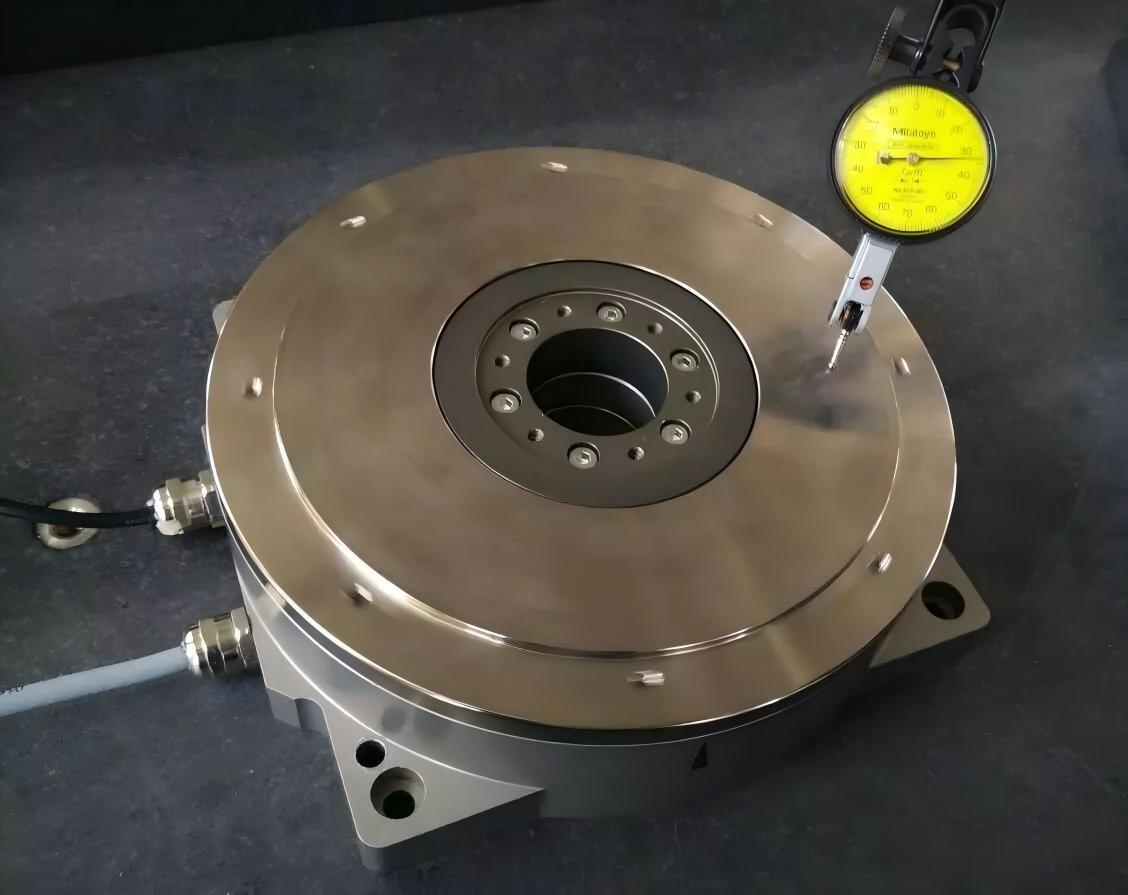
Direct Drive Eliminates the Transmission Stage Between the Motor and Rotary Table
The fundamental advantage of a DD Motor, or Direct Drive Motor, is that the motor directly drives the rotary load instead of relying on a conventional mechanical reduction stage.
This architecture can significantly simplify the transmission chain. Because there is no intermediate reduction gearbox between the motor and the rotary table, the system avoids the backlash and transmission errors associated with mechanical reduction components.
For precision rotary positioning, this means the commanded angular movement can be transferred directly to the working platform.
This is particularly useful when the application requires extremely small angular adjustments rather than simply high rotational speed. For example, during semiconductor wafer inspection, the rotary table may need to rotate at a controlled speed while the vision system continuously captures images from different angular positions. A stable direct-drive system helps maintain consistent motion without introducing additional transmission stages between the motor and the workpiece.
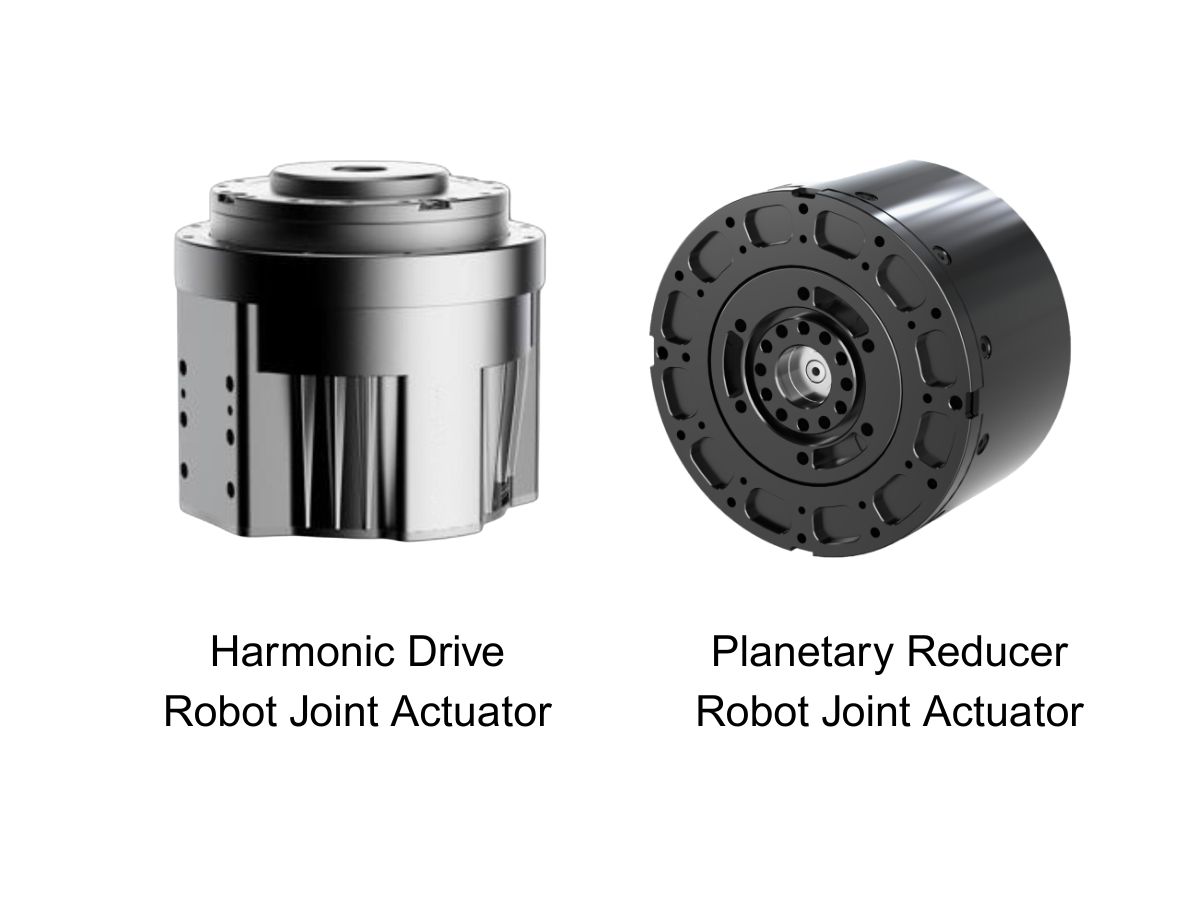
It is important to distinguish direct drive from a geared rotary actuator. A harmonic reducer or planetary reducer can provide high output torque through speed reduction, while a DD motor generates torque directly at the rotary axis. Therefore, the appropriate architecture depends on the application's torque, speed, inertia, accuracy, and available installation space.
Ultra-Thin Design Solves Installation-Space Problems
For many automation machines, the available installation space is determined by the entire machine rather than the rotary axis itself. A conventional rotary mechanism may require considerable vertical space because the motor, gearbox, coupling, and supporting structure are arranged along the transmission path.
An ultra-thin rotary table uses a flat disc-shaped structure to reduce the height of the complete rotary unit. This makes it easier to embed the rotary mechanism directly into the equipment platform instead of mounting a large actuator underneath it.
This structural advantage is particularly useful for compact inspection machines and laboratory equipment where the available Z-direction space is limited.
The solid rotary table also provides a stable working surface. Standardized mounting holes can be arranged on the platform, allowing workpieces, fixtures, optical components, or inspection tooling to be mounted directly on the rotary surface.
Instead of designing an additional mechanical mounting structure around the motor, equipment manufacturers can integrate the rotary unit directly into the machine architecture.
High-Precision Rotation Without Mechanical Backlash
Backlash is one of the important factors affecting rotary positioning accuracy.
In a conventional geared rotary mechanism, mechanical clearance between transmission components can create a difference between the commanded movement and the actual output movement, especially when the direction of rotation changes.
A direct-drive rotary table removes the mechanical reduction stage from the transmission path. As a result, there is no gearbox backlash between the motor and the rotary platform.
This makes the architecture particularly attractive for applications involving frequent small-angle movements, bidirectional positioning, and continuous scanning.
For example, in an optical alignment system, the rotary table may repeatedly move forward and backward by very small angles while the vision system monitors the alignment result. A direct-drive architecture can provide smoother bidirectional motion without introducing the mechanical backlash associated with a reduction gearbox.
For semiconductor and optical applications, where angular errors can directly affect inspection results, this can become a significant system-level advantage.
Why Direct Drive Is Valuable for Semiconductor Wafer Inspection?
Semiconductor inspection is a good example of where compactness and precision need to be achieved simultaneously.
During wafer inspection, the workpiece may need to rotate continuously or incrementally while a camera, microscope, or optical inspection system captures images. The rotary motion needs to be stable enough to maintain image quality while also providing accurate angular positioning.
An ultra-thin direct drive rotary table can be integrated directly into the inspection platform. The wafer or fixture can be mounted on the solid rotary table, while the direct-drive motor provides controlled angular movement.
This architecture can help address several common equipment-design challenges, including limited installation space, unwanted transmission backlash, mechanical vibration, complicated transmission structures, and difficult cable management.
For high-speed inspection equipment, the benefit is not simply “high precision.” The more important advantage is that the rotary motion system can become a simpler part of the overall machine architecture.
Application in High-Speed Chip Sorting Equipment
Chip sorting systems place different demands on rotary motion.
The rotary axis may need to perform repeated indexing movements, rapid acceleration and deceleration, and accurate positioning before a chip is inspected, sorted, picked, or transferred.
In such applications, reducing the mechanical transmission chain can help simplify the motion system. The direct-drive architecture allows the rotary platform to respond directly to motor commands without waiting for a reduction mechanism to transmit motion.
The result is a compact rotary motion solution suitable for automation stations where high-speed indexing and precise positioning need to coexist.
The flat structure also makes it easier to integrate the rotary platform into compact equipment layouts, particularly where multiple inspection or sorting mechanisms must be arranged around a small working area.
Optical Lens Alignment Requires Smooth Micro-Motion
Optical systems often require extremely fine angular adjustment.
During lens alignment or coaxial calibration, the system may need to make very small movements while monitoring the optical signal or image captured by a sensor.
A rotary mechanism that produces vibration, mechanical backlash, or inconsistent low-speed motion can make this process more difficult.
A Direct Drive Rotary Motor provides torque directly at the rotary axis, making it suitable for applications where smooth low-speed rotation and fine angular adjustment are more important than mechanical reduction.
The compact structure also allows the rotary axis to be positioned close to the optical components, helping equipment designers reduce the size of the complete alignment mechanism.
Stable Rotation for AOI Inspection Systems
AOI equipment requires consistent image acquisition across the entire inspection area.
When a display panel, electronic component, or other workpiece is mounted on a rotary platform, the rotary motion needs to remain smooth while the vision system continuously captures images.
A sudden change in velocity or small mechanical errors can affect image quality and inspection consistency.
An ultra-thin direct drive rotary table can provide continuous rotary motion while maintaining a compact machine structure. The solid platform provides a stable mounting surface for the workpiece or fixture, while the direct-drive architecture avoids the transmission backlash of a conventional geared mechanism.
This makes the architecture suitable for AOI inspection, optical inspection, electronic component inspection, and precision vision systems.
A Compact Solution for Photovoltaic Wafer Inspection
The same motion requirements can be found in photovoltaic wafer inspection.
Silicon wafers and other thin workpieces may require multi-angle inspection to identify surface defects, dimensional deviations, or other manufacturing abnormalities.
The rotary table needs to provide stable motion without occupying excessive space around the inspection area.
An ultra-thin direct-drive rotary platform can be embedded directly into compact photovoltaic inspection equipment, allowing the wafer fixture and inspection system to remain close together.
For equipment manufacturers, the benefit is therefore not simply the motor itself. It is the ability to create a smaller and simpler rotary inspection architecture.
When Should Engineers Choose a Direct Drive Rotary Table?
A direct-drive rotary table is particularly worth considering when the machine has several requirements at the same time.
If the equipment requires high angular positioning accuracy, frequent bidirectional movement, smooth low-speed rotation, a compact vertical installation space, and a simple mechanical transmission structure, direct drive can be a strong candidate.
By contrast, if the application requires extremely high output torque at low motor speed, significant mechanical reduction, or a large load-to-motor ratio, a geared solution such as a harmonic reducer or precision planetary reducer may be more appropriate.
The choice should therefore be based on the actual motion profile rather than simply selecting the technology with the highest nominal accuracy.
Direct Drive Rotary Table vs. Geared Rotary Mechanisms
For equipment designers, the key difference is the transmission architecture.
A geared rotary mechanism uses a motor together with a reducer to convert speed into output torque. This can provide high torque density and a compact radial structure, making harmonic and planetary transmission attractive for many automation applications.
A direct-drive rotary table removes the reduction stage and places the motor directly at the rotary axis. This can reduce mechanical transmission errors and provide highly responsive rotary motion.
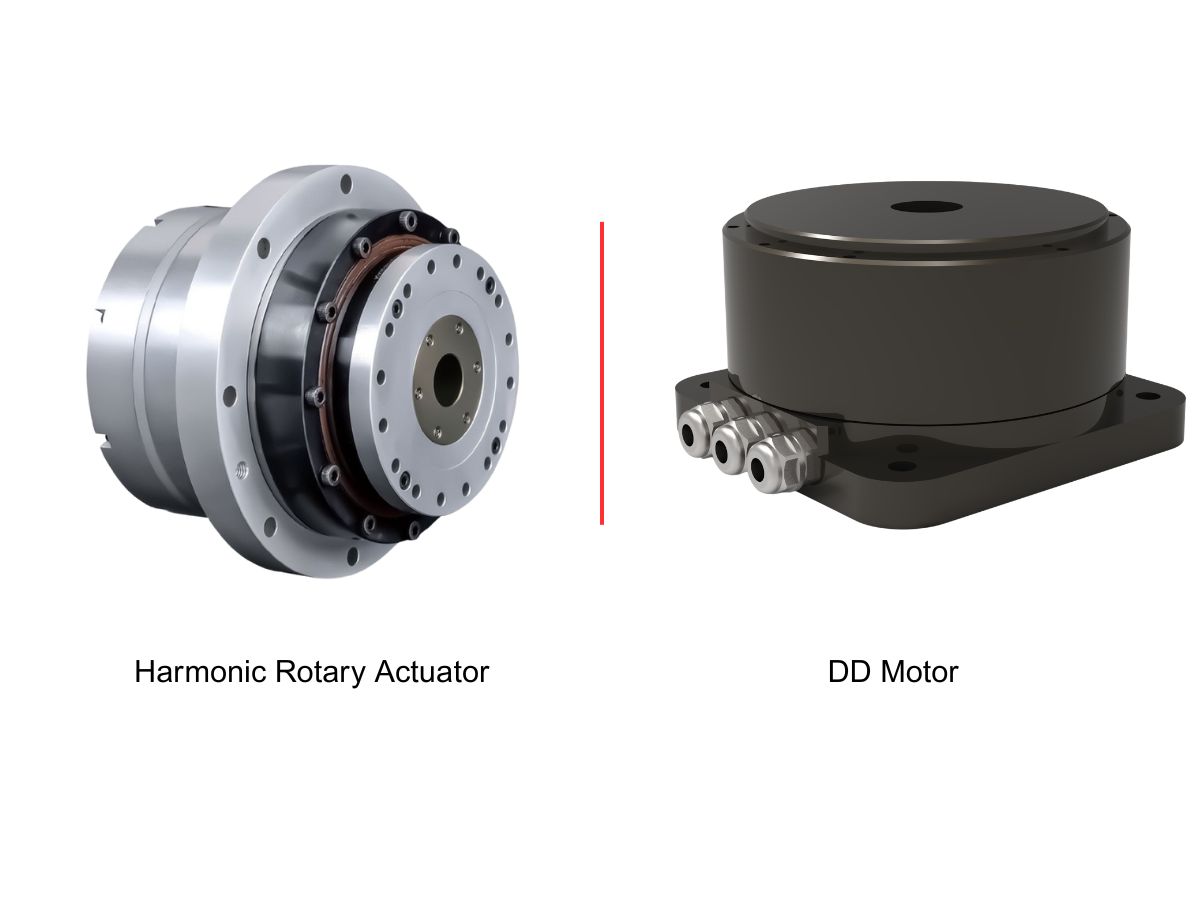
Therefore, Direct Drive Motor and Harmonic Drive are not competing technologies in every application. They solve different engineering problems.
For precision inspection systems where low backlash, direct torque transmission, smooth motion, and ultra-thin construction are critical, direct drive can be highly advantageous. For applications requiring high output torque, high reduction ratios, and greater mechanical load capacity, a harmonic or planetary solution may be more suitable.
This distinction also gives equipment manufacturers more flexibility when designing different generations of automation equipment.
Designed for Integration Into Compact Automation Equipment
One of the most practical advantages of an ultra-thin direct drive rotary table is that it can be treated as a motion module rather than simply a motor.
The rotary platform provides a direct mounting surface, while the flat structure allows the unit to be integrated into the machine frame. Standard mounting holes simplify fixture installation, and the solid platform can directly support the workpiece or tooling.
This reduces the need for additional couplings, mounting brackets, and transmission structures.
For machine builders, this can translate into a cleaner mechanical design, easier assembly, reduced installation space, and greater freedom when arranging sensors and inspection components.
HONPINE Direct Drive Motion Solutions for Precision Equipment
HONPINE develops precision motion components for robotics, automation, semiconductor equipment, optical systems, CNC equipment, and other high-precision applications.
For applications requiring direct rotary motion, DD Motor technology provides a solution for high-speed and high-precision rotary movement without an intermediate reduction stage.
When the application requires higher reduction ratios and output torque, HONPINE also provides Harmonic Reducers and Harmonic Rotary Actuators. For applications where high torque density and precision transmission are required but the motion architecture is better suited to a geared solution, Precision Planetary Reducers provide another option.
For robotic applications, these technologies can further be combined with HONPINE's Robot Joint Motors and integrated Robot Joint Modules, allowing equipment manufacturers to select a motion architecture according to the actual requirements of each axis.
This makes the selection process less about choosing a single “best” transmission technology and more about matching the right motion solution to the application.
Conclusion
The development of compact semiconductor, optical, AOI, photovoltaic, and laboratory automation equipment is creating new requirements for rotary motion systems. Engineers increasingly need to achieve high positioning accuracy without sacrificing machine compactness, response speed, or mechanical simplicity.
An Ultra-Thin Direct Drive Rotary Table addresses these requirements by combining a flat, space-saving structure with direct torque transmission and backlash-free rotary motion. Its solid working platform and standardized mounting interface also make it easier to integrate directly into compact automation equipment.
For semiconductor wafer inspection, chip sorting, optical lens alignment, AOI inspection, photovoltaic wafer inspection, and precision calibration systems, the key question is not simply how much torque a rotary motor can produce. The more important question is whether the entire rotary architecture can provide the required accuracy, smoothness, responsiveness, and installation efficiency within the available machine space.
That is where an ultra-thin Direct Drive Rotary Motor and Rotary Table can provide a meaningful engineering advantage.
Read More
Learn more about the story of HONPINE and industry trends related to precision transmission.
 What is robot joint actuator?How to Choose the Best Robot Rotary Joint Actuator?In core robot joint transmission solutions, planetary and harmonic rotary actuators each have their own strengths. Choosing the right type based on application requirements is essential to achieve the optimal balance between performance and cost.
 DD Motors VS Harmonic Rotary ActuatorsThis article provides an in-depth comparison between Direct Drive (DD) motors and harmonic rotary actuators, covering their transmission principles, advantages and disadvantages, and typical application fields.
 OMG Ultra Compact Harmonic Drive Joint Module with Built-in Torque SensorHONPINE TCHL series harmonic drive joint module is a game-changing product that achieves disruptive improvements in multiple aspects such as lightweight design, integration level, and connection convenience. This article will analyze its revolutionary enhancements with you.
 The Role of Harmonic Drive Gears in Achieving 5–10 μm Accuracy in Dental Milling MachinesA dental milling machine is a CNC machining system used to directly process digital dental models into restorations such as crowns, bridges, veneers, inlays, and implant abutments. Dental milling machines require far higher operational accuracy and motion stability than ordinary equipment. This article explains how harmonic drive gear help dental milling machines achieve stable, continuous, and controllable operation.
 Why Are Harmonic Rotary Actuators Perfect for Medical Equipment?Harmonic rotary actuators (typically integrated systems consisting of a harmonic drive reducer, frameless torque motor, encoder, and optional brake) are regarded as key components in medical equipment. The core reason is that they simultaneously meet the most stringent medical requirements for precision, compact size, safety, and controllability. The following explanation is structured from three perspectives: technical characteristics, application scenarios, and medical value.
 High-Precision RV Reducers Perfectly Matched for Walking RobotsThe walking axis of a robot is a core component for power transmission and support. RV reducers provide extremely high rigidity, precision, and torque while maintaining a compact size and exceptional reliability, making them an ideal match for the demanding requirements of walking robot joints in terms of load capacity, impact resistance, and precision.
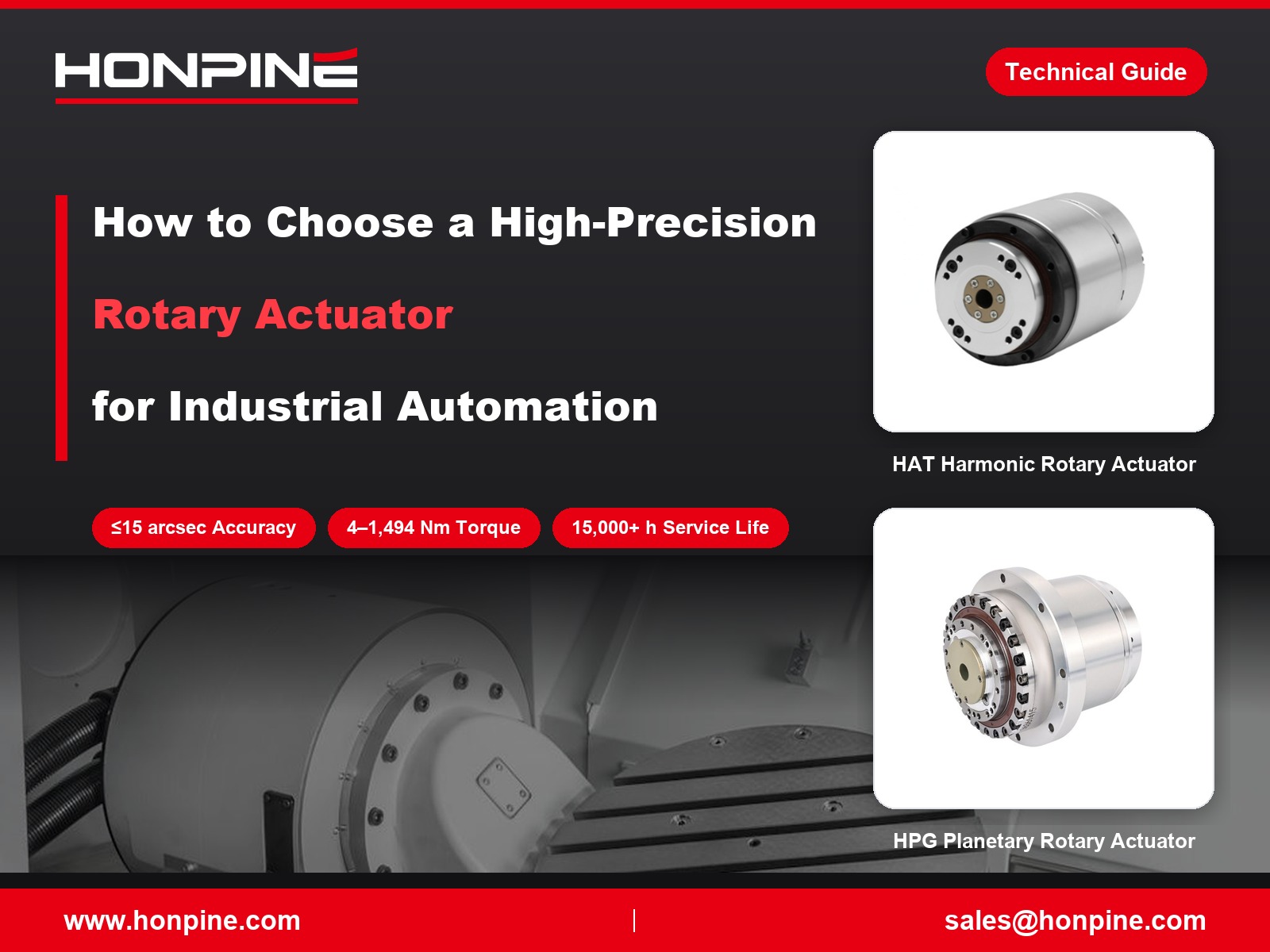
 How to Choose High-Precision Rotary Actuators for Industrial Automation?High-precision rotary actuators play an important role in industrial automation, where positioning accuracy, repeatability, durability and installation flexibility directly affect equipment performance. HONPINE offers four main series of precision rotary actuators, including HAT, HAM and HAS harmonic rotary actuators and HPG low-backlash planetary actuators. With torque ratings ranging from 4 to 1,494 Nm across the product range, these solutions are designed for applications in semiconductor manufacturing, 3C automation, laser processing and CNC machine tools. Learn how to identify the right rotary actuator based on operating conditions, precision requirements and mechanical integration needs.
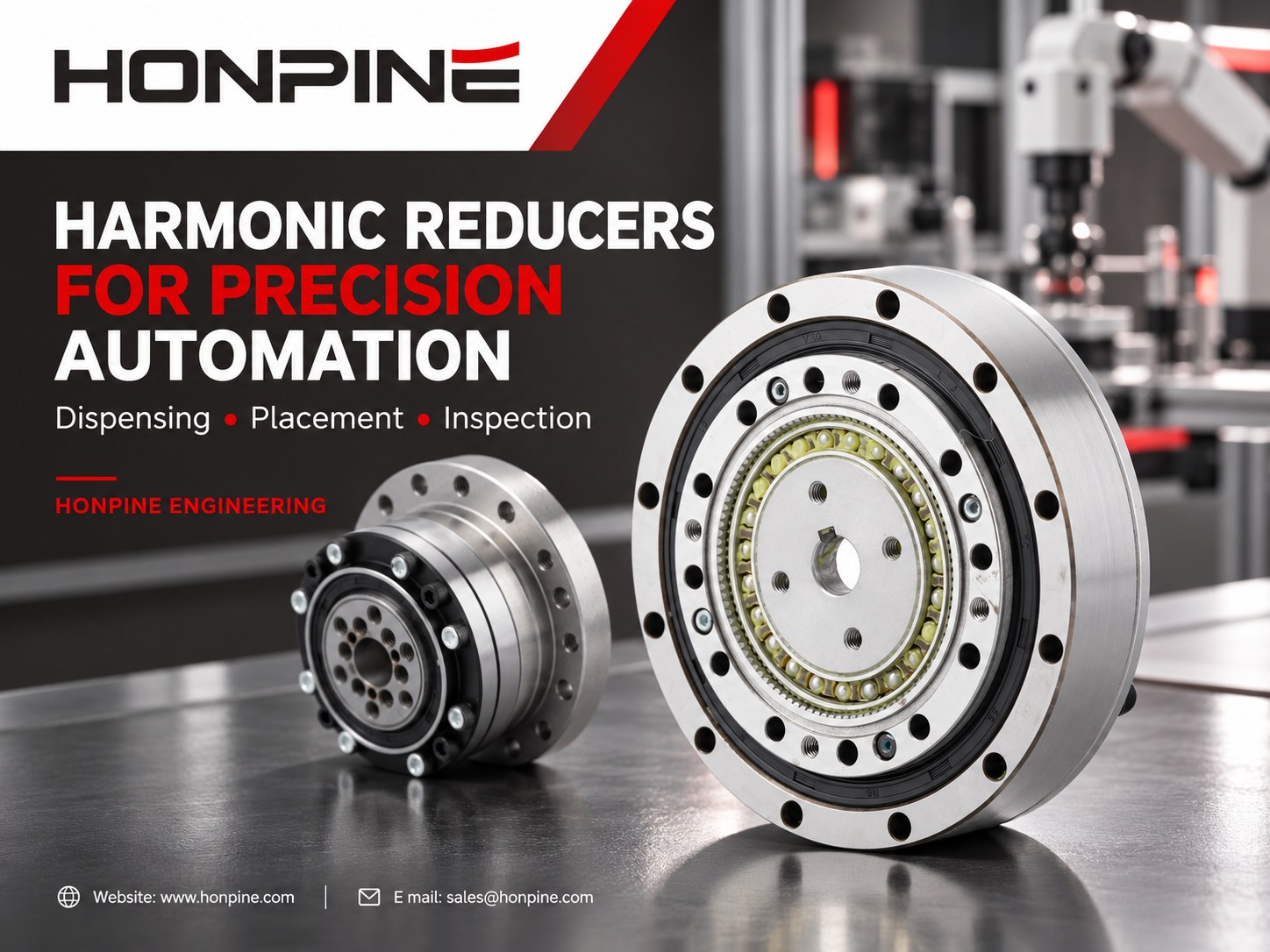
 Why Are Harmonic Reducers Suitable for High-Precision Automation Equipment?Precision automation equipment depends on consistent rotary motion, reliable positioning and compact transmission design. From dispensing head orientation and component angular alignment to automated inspection indexing, harmonic reducers offer a practical solution for applications requiring low backlash and high reduction ratios in limited installation space. This article explains how harmonic reducers support repeatable motion, compares key design configurations, and outlines how to select a suitable reduction ratio and reducer structure based on load, speed, accuracy and machine cycle-time requirements.
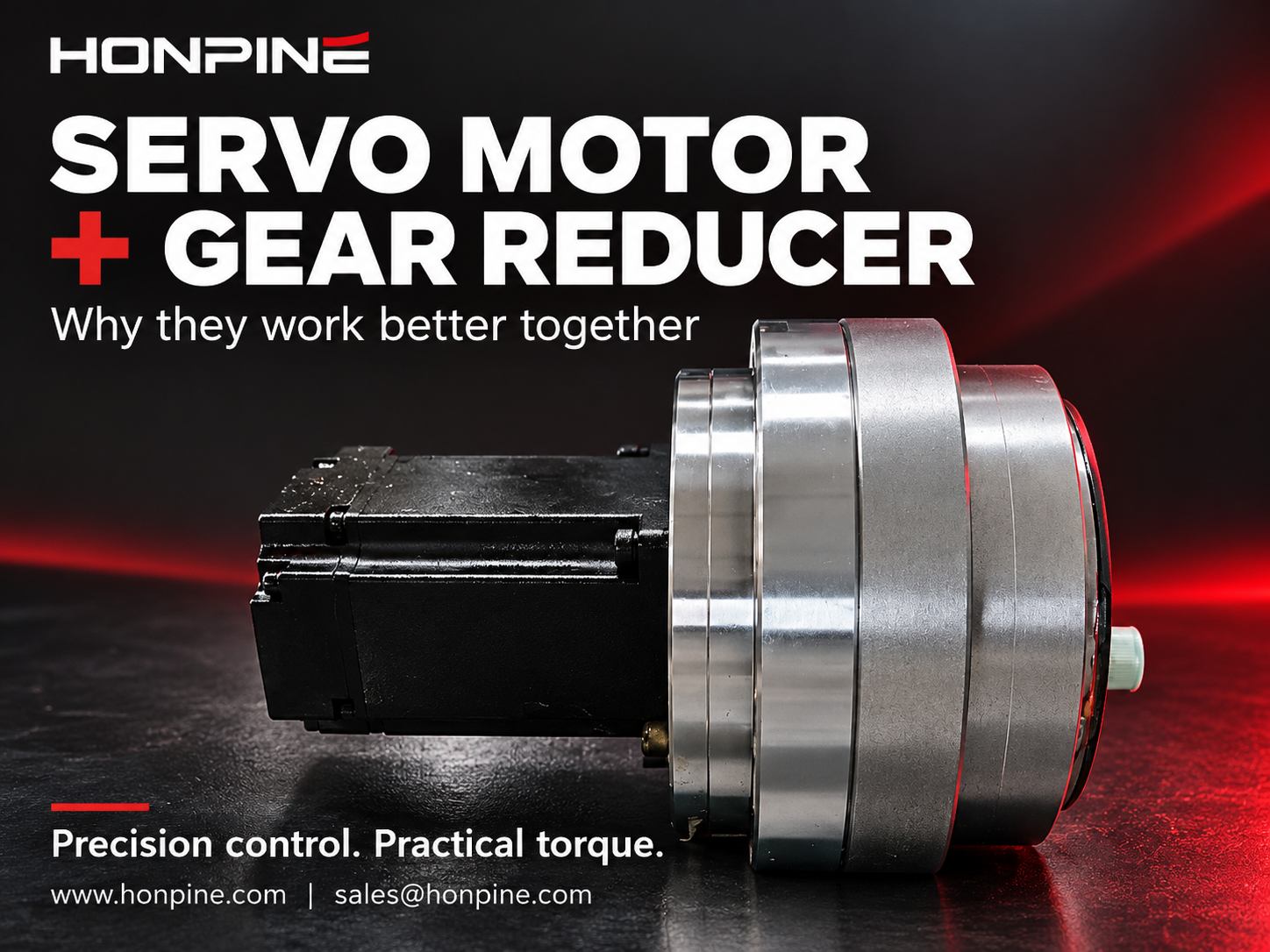
 Why Are Servo Motors and Gear Reducers an Ideal Match?Servo motors provide fast, precise motion control, while gear reducers adapt their speed and torque to the load. This guide explains how servo motors and gear reducers work together through torque multiplication, reflected inertia reduction and finer theoretical position resolution. Learn how inertia matching, backlash, torsional stiffness and reduction ratio influence performance in robotics and industrial automation.
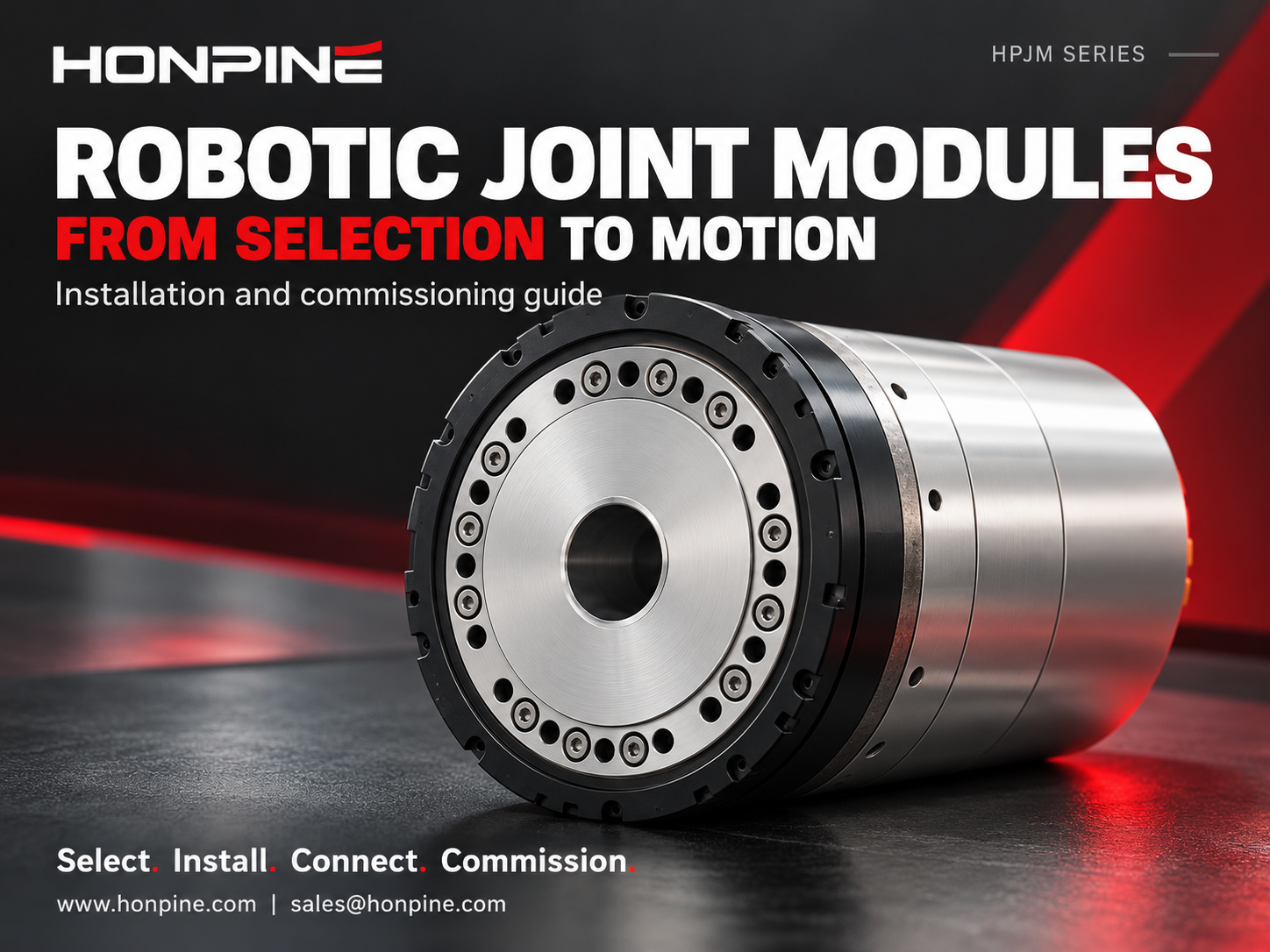
 How to Select and Use Robotic Joint Modules?How do you take robotic joint modules from selection to controlled motion? Using the HONPINE HPJM harmonic joint module as an example, Technical Director Theodore Li explains the key steps in mechanical installation, electrical wiring, CAN and EtherCAT configuration, and control commissioning. Learn what to confirm before integration and how to approach setup so each joint can respond correctly to your controller.
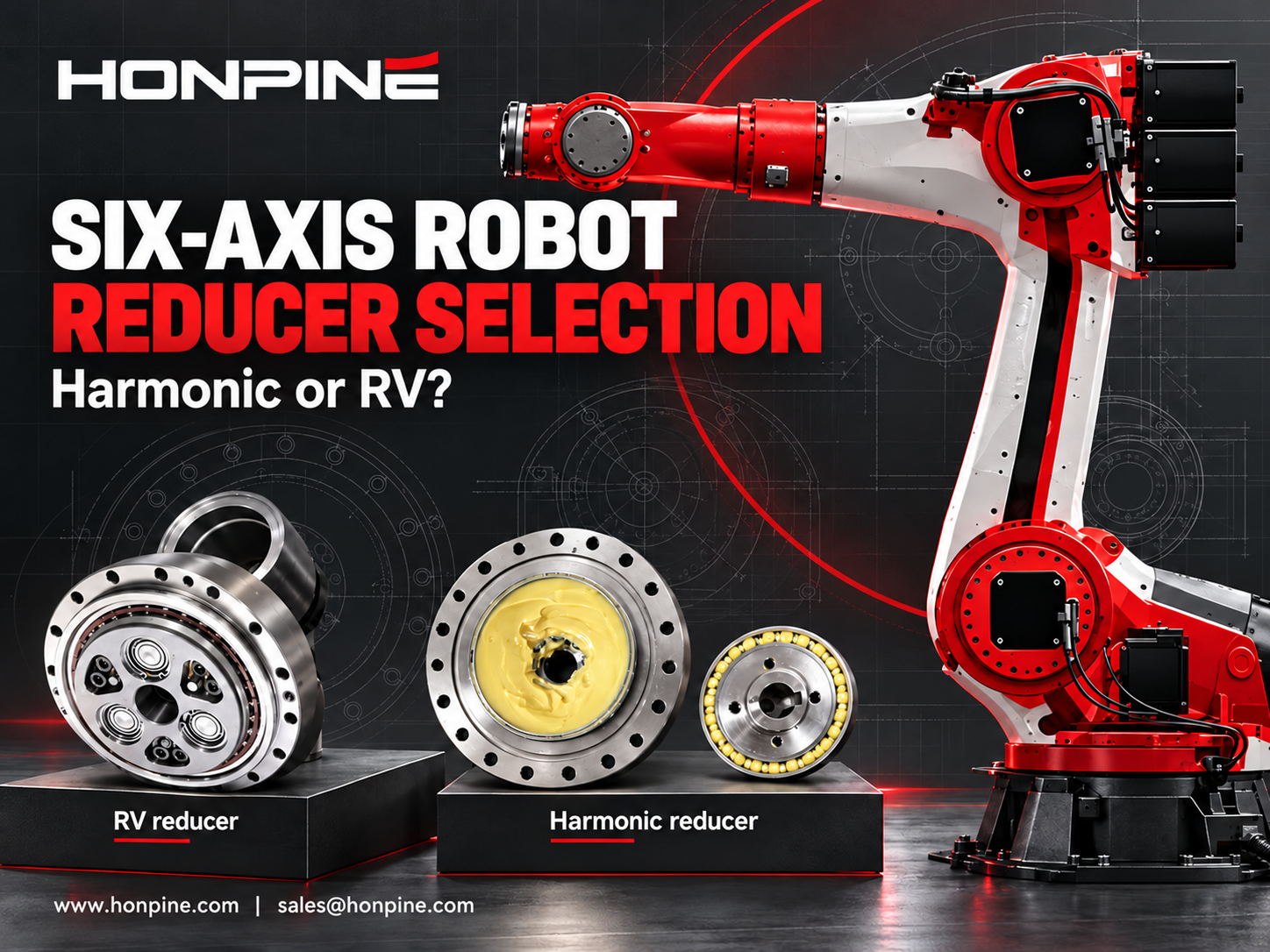
 How to Select Harmonic and RV Reducers for Each Axis of a Six-Axis Robot?What determines whether a six-axis robot joint needs a harmonic reducer or an RV reducer? The answer depends on torque, inertia, impact loads, bearing loads and installation space. This guide explains how to evaluate harmonic and RV reducers for the base, shoulder, elbow and wrist, with practical checks for stiffness, backlash and service life. Use the requirements of each axis to select a suitable reducer configuration.
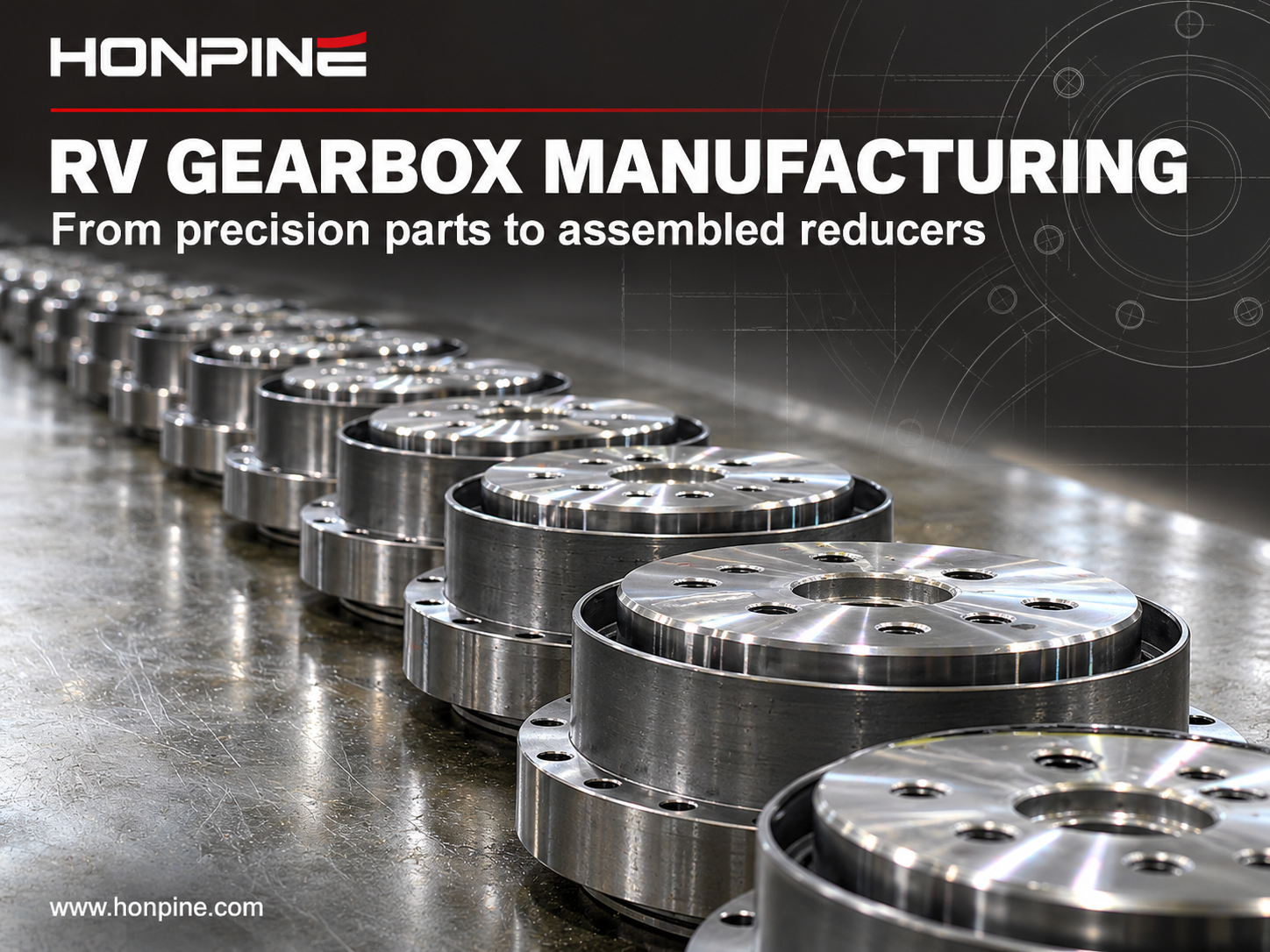
 Top 7 RV Reducer Gearbox Manufacturers: Why Does Nabtesco Still Dominate?What sets RV reducer gearbox manufacturers apart, and why does Nabtesco remain a benchmark in this market? RV reducer production demands precise component machining, careful assembly and extensive engineering know-how. This article introduces seven manufacturers across RV reducers and related transmission technologies, examines the strengths behind Nabtesco's position, and explores HONPINE's development capabilities to help you understand the supplier landscape.
Double Click
We provide harmonic drive reducer,planetary reducer,robot joint motor,robot rotary actuators,RV gear reducer,robot end effector,dexterous robot hand
 What is robot joint actuator?How to Choose the Best Robot Rotary Joint Actuator?In core robot joint transmission solutions, planetary and harmonic rotary actuators each have their own strengths. Choosing the right type based on application requirements is essential to achieve the optimal balance between performance and cost.
 DD Motors VS Harmonic Rotary ActuatorsThis article provides an in-depth comparison between Direct Drive (DD) motors and harmonic rotary actuators, covering their transmission principles, advantages and disadvantages, and typical application fields.
 OMG Ultra Compact Harmonic Drive Joint Module with Built-in Torque SensorHONPINE TCHL series harmonic drive joint module is a game-changing product that achieves disruptive improvements in multiple aspects such as lightweight design, integration level, and connection convenience. This article will analyze its revolutionary enhancements with you.
 How to Choose High-Precision Rotary Actuators for Industrial Automation?High-precision rotary actuators play an important role in industrial automation, where positioning accuracy, repeatability, durability and installation flexibility directly affect equipment performance. HONPINE offers four main series of precision rotary actuators, including HAT, HAM and HAS harmonic rotary actuators and HPG low-backlash planetary actuators. With torque ratings ranging from 4 to 1,494 Nm across the product range, these solutions are designed for applications in semiconductor manufacturing, 3C automation, laser processing and CNC machine tools. Learn how to identify the right rotary actuator based on operating conditions, precision requirements and mechanical integration needs.
 Why Are Harmonic Reducers Suitable for High-Precision Automation Equipment?Precision automation equipment depends on consistent rotary motion, reliable positioning and compact transmission design. From dispensing head orientation and component angular alignment to automated inspection indexing, harmonic reducers offer a practical solution for applications requiring low backlash and high reduction ratios in limited installation space. This article explains how harmonic reducers support repeatable motion, compares key design configurations, and outlines how to select a suitable reduction ratio and reducer structure based on load, speed, accuracy and machine cycle-time requirements.
 Why Are Servo Motors and Gear Reducers an Ideal Match?Servo motors provide fast, precise motion control, while gear reducers adapt their speed and torque to the load. This guide explains how servo motors and gear reducers work together through torque multiplication, reflected inertia reduction and finer theoretical position resolution. Learn how inertia matching, backlash, torsional stiffness and reduction ratio influence performance in robotics and industrial automation.
 How to Select and Use Robotic Joint Modules?How do you take robotic joint modules from selection to controlled motion? Using the HONPINE HPJM harmonic joint module as an example, Technical Director Theodore Li explains the key steps in mechanical installation, electrical wiring, CAN and EtherCAT configuration, and control commissioning. Learn what to confirm before integration and how to approach setup so each joint can respond correctly to your controller.
 How to Select Harmonic and RV Reducers for Each Axis of a Six-Axis Robot?What determines whether a six-axis robot joint needs a harmonic reducer or an RV reducer? The answer depends on torque, inertia, impact loads, bearing loads and installation space. This guide explains how to evaluate harmonic and RV reducers for the base, shoulder, elbow and wrist, with practical checks for stiffness, backlash and service life. Use the requirements of each axis to select a suitable reducer configuration.
 Top 7 RV Reducer Gearbox Manufacturers: Why Does Nabtesco Still Dominate?What sets RV reducer gearbox manufacturers apart, and why does Nabtesco remain a benchmark in this market? RV reducer production demands precise component machining, careful assembly and extensive engineering know-how. This article introduces seven manufacturers across RV reducers and related transmission technologies, examines the strengths behind Nabtesco's position, and explores HONPINE's development capabilities to help you understand the supplier landscape.
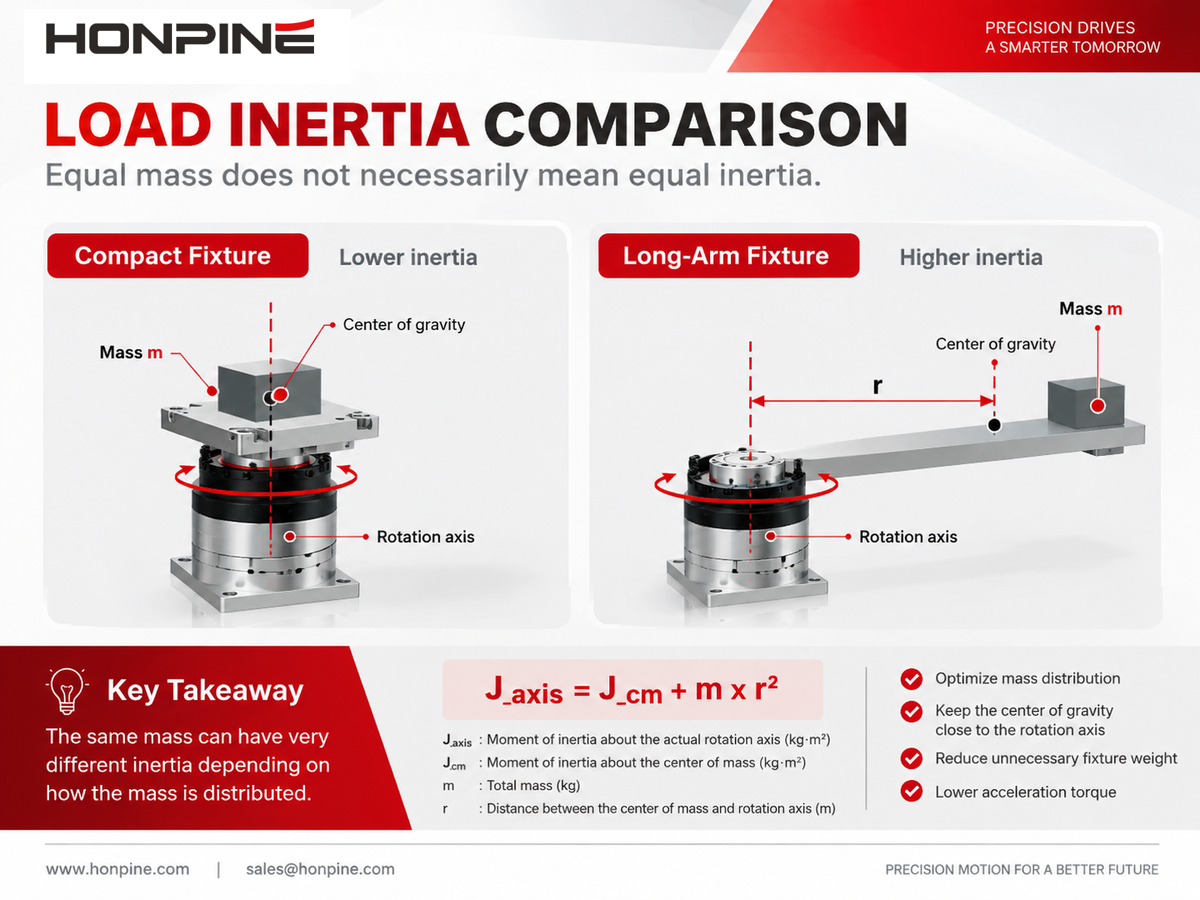
 How to Calculate Torque for a Harmonic Rotary Actuator in a Flipping Mechanism?How much torque does a harmonic rotary actuator need to flip a 10 kg load through 180 degrees? The answer depends on more than weight. Center-of-gravity offset, load inertia, acceleration and operating frequency all affect actuator selection. In this guide, Theodore Li, Technical Director at HONPINE, explains the calculation process using a horizontal-axis flipping example and outlines the checks needed for peak torque, continuous operation, output speed and bearing loads.
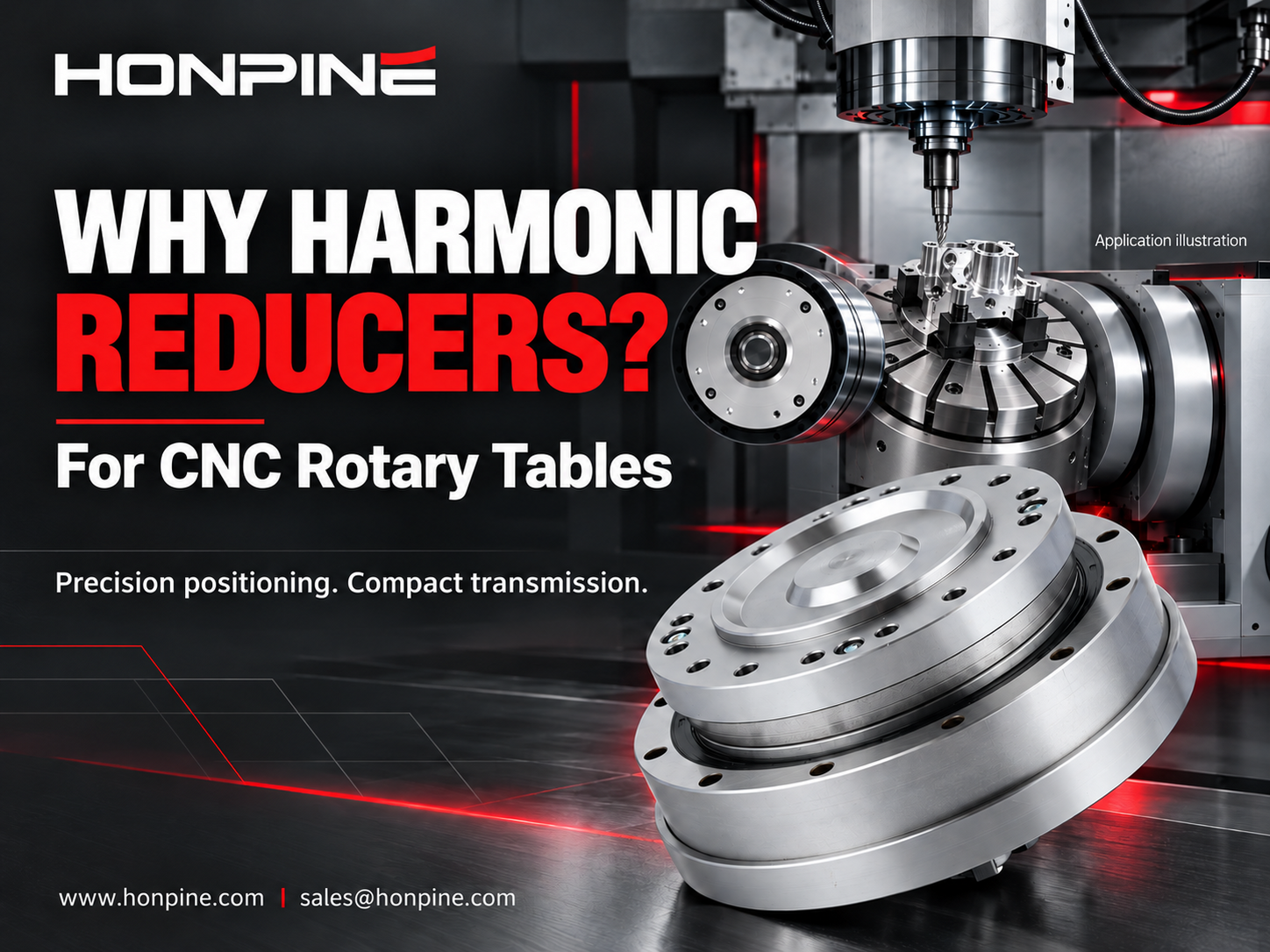
 Why Are Harmonic Reducers Suitable for CNC Machine Tool Rotary Tables?Why choose harmonic reducers for CNC rotary tables? Accurate indexing depends on more than the motor: backlash, torsional stiffness and torque capacity all affect how reliably a rotary table holds its position during machining. This guide explains the key transmission requirements of fourth and fifth axis rotary tables, explores common machine tool applications, and introduces HONPINE harmonic reducer configurations for different installation and load requirements.
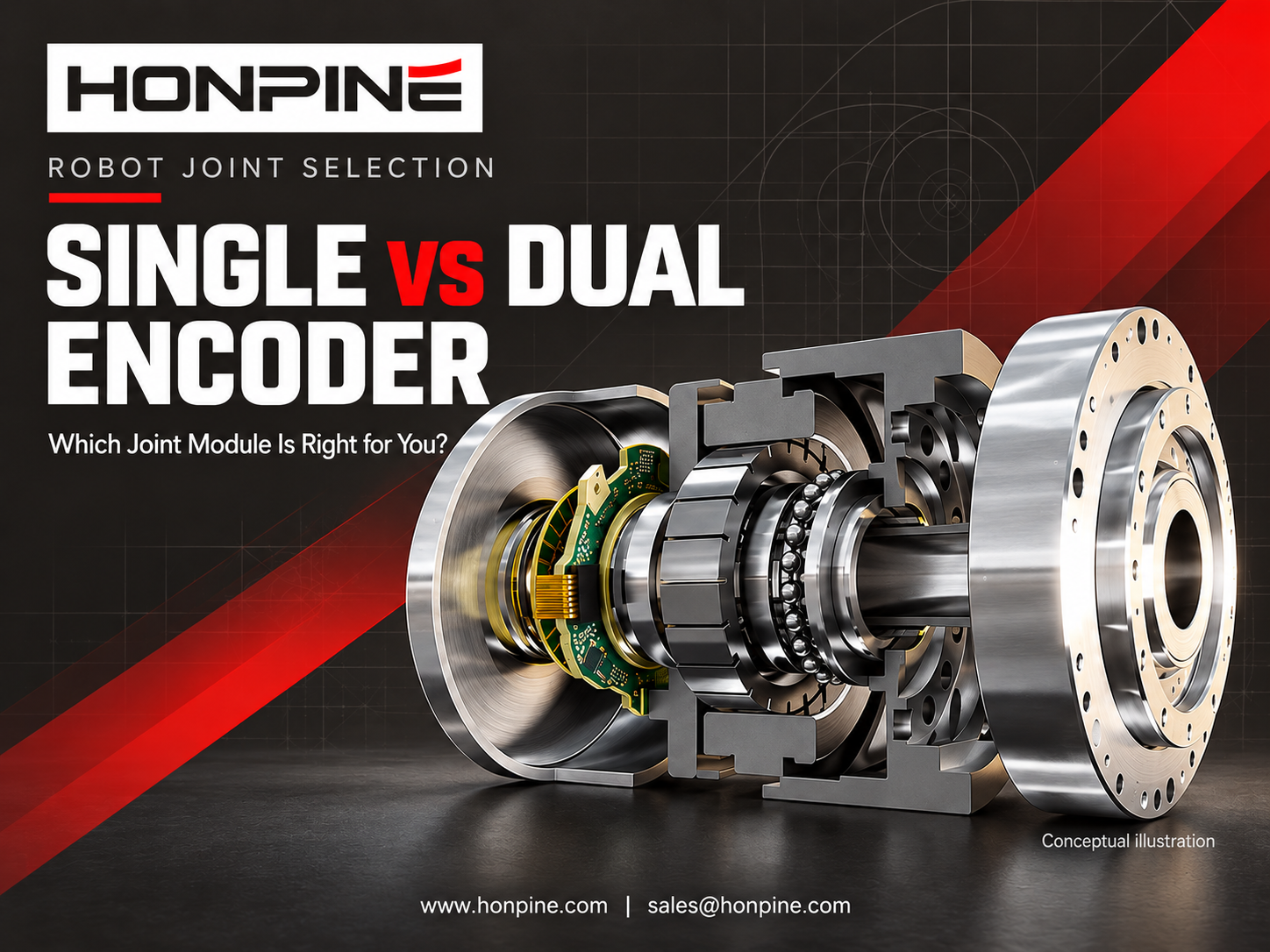
 What’s the Difference Between Single and Dual Encoder Robot Joint Modules?Does your robot need a dual encoder joint module, or is a single encoder enough? The answer depends on positioning requirements, transmission behavior, force control strategy and budget. This guide compares motor-side and output-side feedback, explains where dual encoders can improve control, and examines their costs and limitations. Learn when a single encoder can meet your needs and when additional output feedback is worth considering.
- harmonic reducer
- harmonic drive
- planetary reducer
- precision planetary reducer
- honpine
- precision transmission
- harmonic reducers
- robot joint
- joint motors
- rotary actuator
- harmonic
- small
- planetary
- actuator
- robot joint motors
- harmonic rotary actuators
- direct drive motor
- dd motor
- dd
- direct drive rotary motor
- direct drive rotary actuator