








Why Are Harmonic Reducers Suitable for High-Precision Automation Equipment?
In dispensing, precision placement and automated inspection equipment, motion mechanisms often need to perform frequent starts, stops, angular adjustments and repeated positioning within limited installation space. Reaching the target once is only the starting point. The greater challenge is maintaining consistent motion throughout continuous production.
With low backlash, a compact structure and high single-stage reduction ratios, harmonic reducers offer a practical transmission option for precision rotary axes. Their characteristics can support applications such as dispensing head orientation, placement head angular correction and inspection table indexing.
Why Does Positioning Repeatability Matter in Precision Automation?
Positioning repeatability describes how consistently a mechanism returns to the same target position under specified conditions.
It differs from absolute positioning accuracy. A mechanism may repeatedly stop at almost the same location while still having an offset from its theoretical target. Equipment designers therefore need to consider repeatability alongside transmission error, calibration and actual loading conditions.
The following applications illustrate why consistent rotary motion matters:
In these applications, the reducer does more than lower motor speed. It helps transfer commanded motion consistently from the motor to the working mechanism.
How Do Harmonic Reducers Support Precision Motion?
Low Backlash Helps Reduce Reversal Deadband
In a mechanism that frequently changes direction, transmission clearance can allow the input to move before the output responds. This makes small angular corrections more difficult to control.
Harmonic gearing uses the elastic deformation of a flexspline to engage its teeth with a circular spline. This engagement principle helps minimize tooth clearance, making it useful for rotary axes that require frequent reversals and fine angular adjustments.
However, low backlash does not mean that the entire transmission is free from error. Couplings, torsional compliance and hysteresis can still affect the output position. Selection should therefore be based on the performance data of the specific model, rather than a “zero backlash” description alone.
High Reduction Ratios Support Fine Angular Motion
A reduction mechanism converts a relatively large motor rotation into a smaller movement at the output.
For example, with a theoretical reduction ratio of 100:1, a motor rotation of 1° corresponds to an output rotation of 0.01°. This relationship supports fine angular command increments, but it does not mean that the equipment will automatically achieve a positioning accuracy of 0.01°.
Actual performance also depends on encoder feedback, transmission error, mechanical stiffness and the control system.
A Compact Structure Simplifies Equipment Integration
Dispensing heads, placement heads and inspection stations often need to accommodate cameras, lighting, sensors, pneumatic lines and cables. The space available for the transmission can be limited.
Harmonic reducers provide high reduction ratios within a compact package. Their multiple-tooth engagement also supports load transmission within relatively small dimensions.
For equipment manufacturers, these characteristics allow a compact drive arrangement around the working mechanism while leaving space for process components.
Applications in Dispensing, Placement and Inspection Equipment
The following examples describe potential applications based on equipment motion requirements and harmonic gearing characteristics. Suitability should be confirmed against the actual machine design and operating conditions.
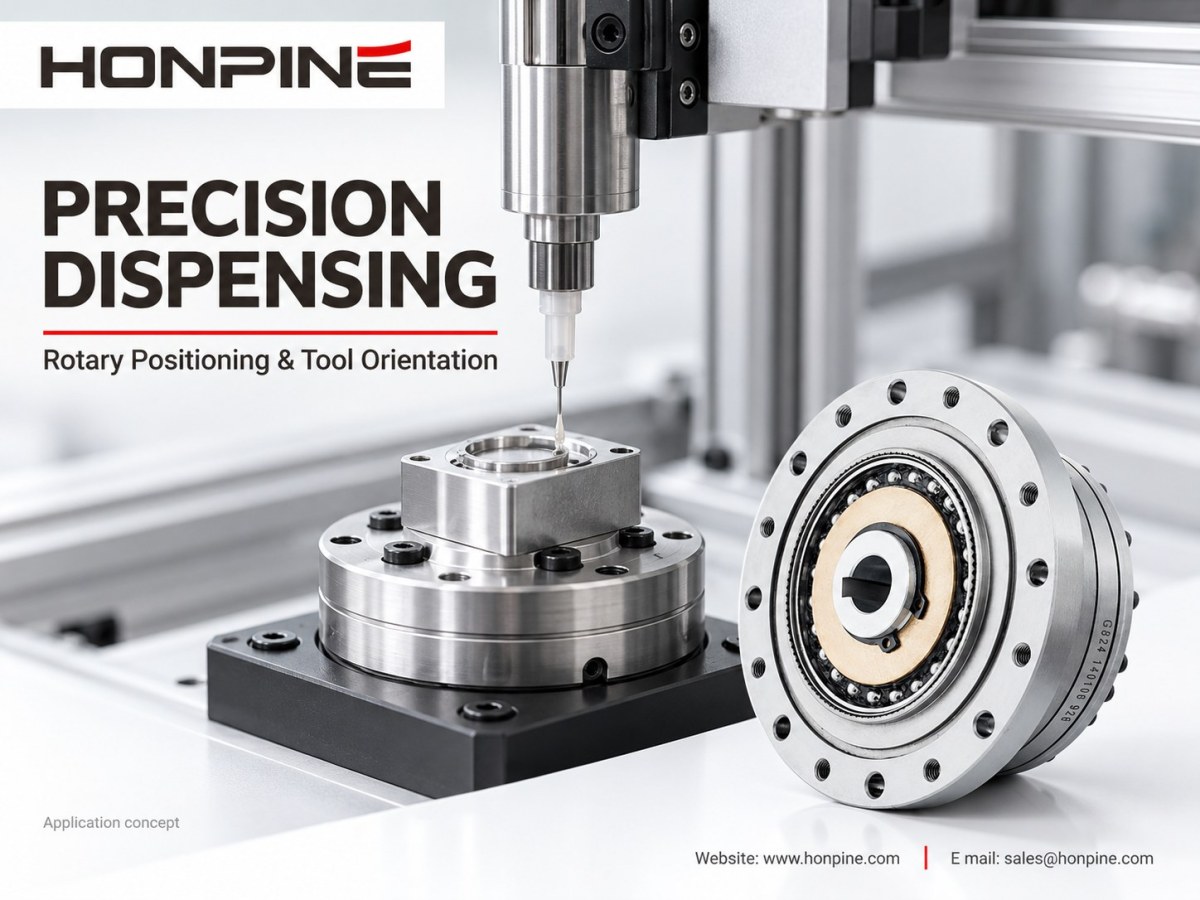
Dispensing Equipment: Rotary Positioning and Tool Orientation
Some dispensing processes require the nozzle to approach a workpiece from different directions. Others require the workpiece itself to rotate or tilt during processing.
In these situations, rotary-axis repeatability affects the relative orientation between the dispensing needle and the workpiece.
Harmonic reducers can be considered for dispensing head rotary axes, rotating workholding fixtures and robotic dispensing joints. They help the mechanism perform angular adjustments and return consistently to programmed positions.
Dispensing quality also depends on supply pressure, fluid viscosity, needle height and travel speed. The reducer supports the mechanical motion; it does not independently determine bead quality.
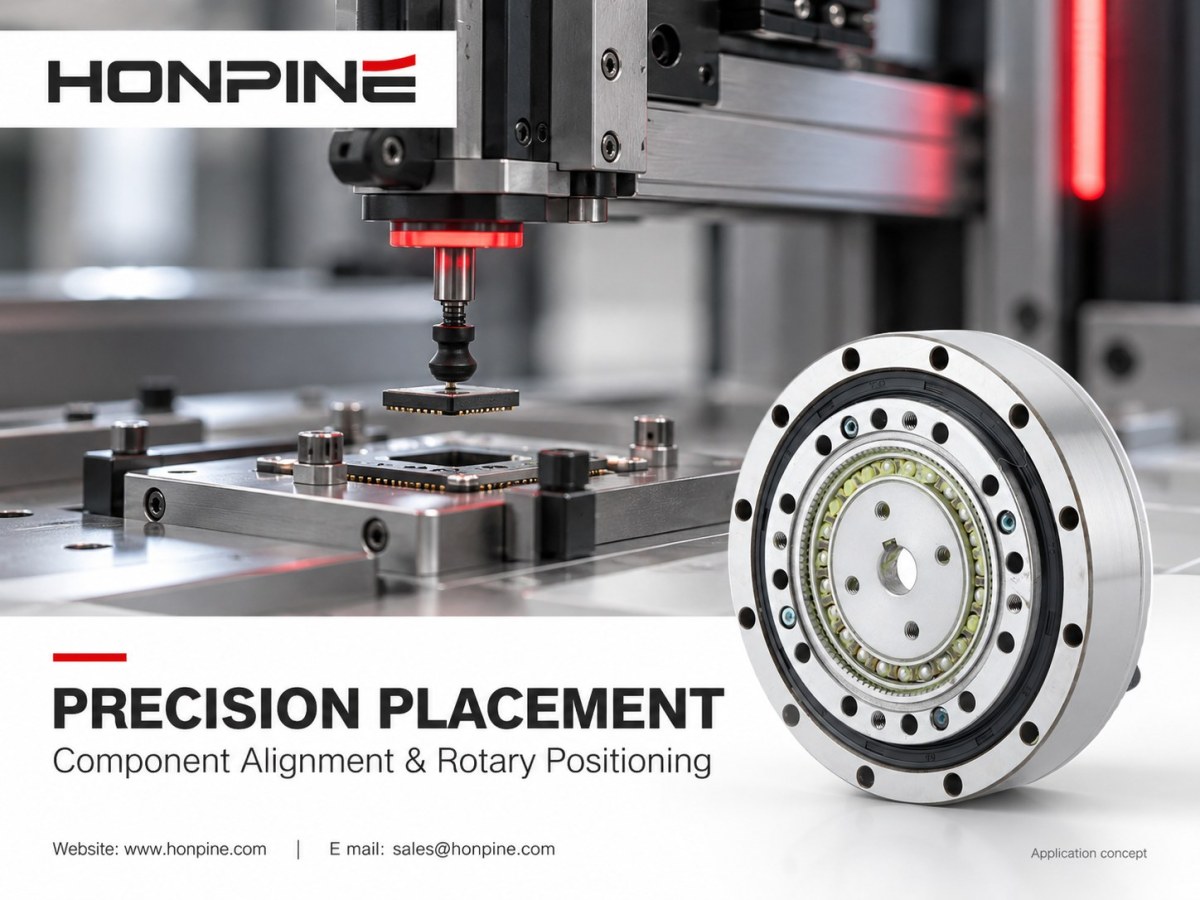
Precision Placement Equipment: Component Angular Alignment
During precision placement, a component may need to rotate according to vision-system feedback before being aligned with its target.
For theta axes, rotating fixtures and compact assembly mechanisms suited to geared transmission, low backlash helps reduce the influence of mechanical clearance during angular correction. A compact reducer also supports integration within limited installation space.
When an application demands exceptionally high speed, acceleration or short cycle times, designers should also evaluate alternatives such as direct drive. Response and settling time should be verified under the actual load.
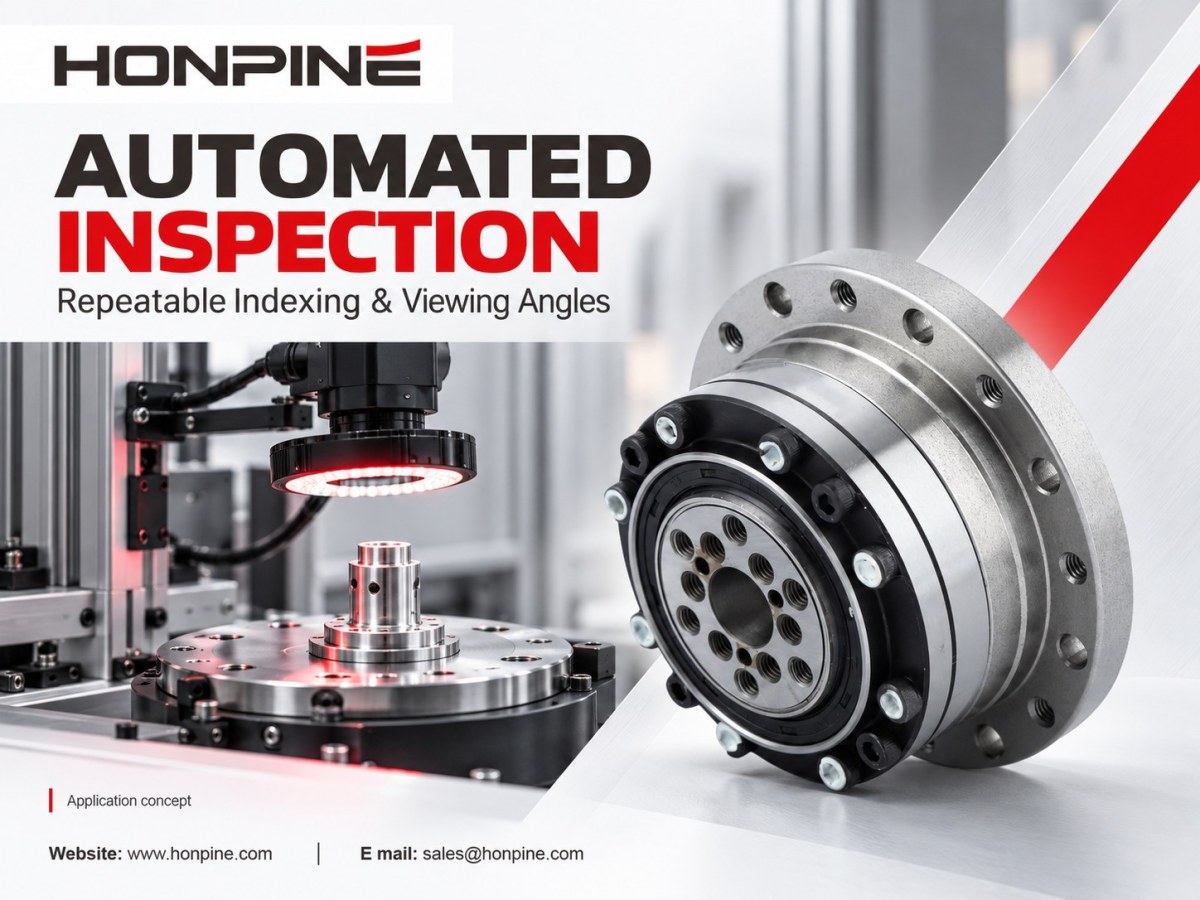
Automated Inspection Equipment: Repeatable Indexing and Viewing Angles
Visual inspection, dimensional measurement and multi-angle imaging may require a workpiece to rotate through a series of inspection positions.
A harmonic reducer can be used in an inspection turntable or orientation axis to position the workpiece at programmed angles. For applications that compare images across production batches, consistent mechanical positioning helps maintain repeatable image acquisition conditions.
Overall inspection accuracy still depends on the mechanical platform, vision or measurement system, and calibration method.
How Should You Select a Reduction Ratio Between 30:1 and 160:1?
For these applications, 30:1 to 160:1 can serve as an initial range for discussion, followed by selection from the ratios available in the relevant product series.
Different HONPINE series offer different ratio combinations. Not every size or structural configuration is available with every ratio in this range.
The first step is to confirm whether the output speed can meet the required machine cycle time. At the same motor speed, a higher reduction ratio produces a lower output speed.
For example, assuming an input speed of 3,000 rpm:
These values illustrate the transmission relationship only. Actual operation must remain within the input speed, load and duty-cycle limits of the selected model.
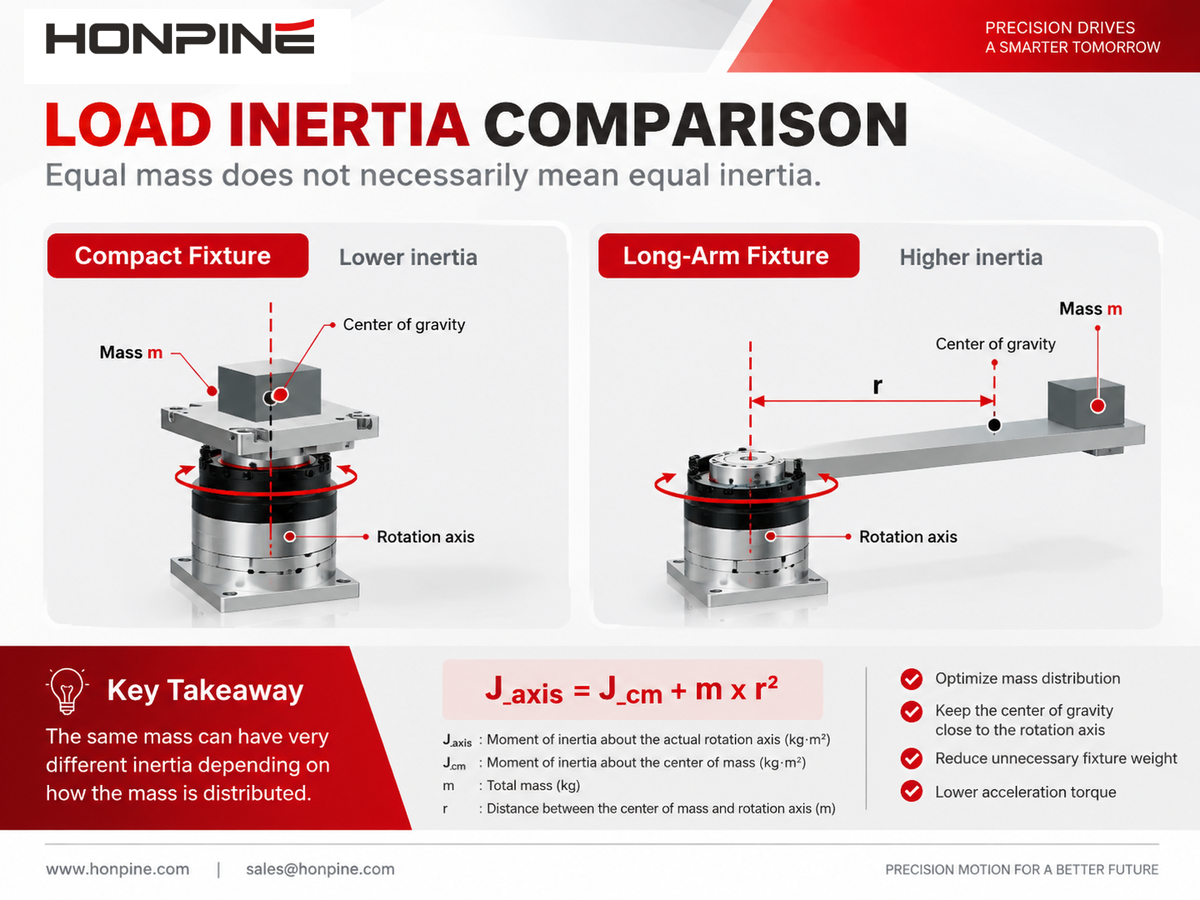
The next step is to evaluate load inertia, acceleration and deceleration torque, continuous operating torque and peak loads. A higher reduction ratio may help with torque and inertia matching, but it also changes motor speed requirements and system dynamics.
Reduction ratio is not an accuracy grade. A 160:1 reducer should not automatically be assumed to provide better positioning repeatability than a 50:1 reducer. The appropriate choice must satisfy precision, load and cycle-time requirements together.
Understanding Cup-Type Flexsplines and Integrated Gear Units
“Cup-type flexspline” and “integrated gear unit” describe different aspects of a harmonic reducer. They can therefore apply to the same product.
Cup-Type Flexsplines Describe the Flexspline Geometry
A cup-type flexspline has a thin-walled, cup-shaped structure and is a common configuration in harmonic gearing.
When assessing its suitability for a rotary axis, designers should consider axial length, mounting interfaces, torque requirements and stiffness.
The flexspline shape alone does not establish whether a reducer is the best fit for a particular application. It must be evaluated as part of the complete transmission design.
Integrated Gear Units Describe the Level of Integration
An integrated gear unit, also described as a combination-type harmonic reducer, typically combines the gearing components with elements such as output support bearings. The inclusion of a housing, mounting flange and particular bearing arrangement depends on the model.
For equipment manufacturers, a more integrated product can reduce some of the work involved in designing separate support structures and assembling individual components.
A component set, by contrast, provides greater freedom to integrate the gearing into a custom housing or machine structure.
Selection therefore involves two separate questions: whether the flexspline configuration suits the space and load requirements, and whether the level of integration matches the equipment design and assembly approach.
What Information Is Needed to Select a Precision Harmonic Reducer?
To help a harmonic reducer deliver the intended performance, provide the supplier with the following application information:
A reducer experiences some torsional deflection under load, and changes in load can affect the output position. For demanding applications, torsional stiffness and hysteresis should be assessed across the actual operating range, rather than relying only on no-load performance.
Installation concentricity, mounting surface quality and lubrication also influence performance and service life. Even a correctly specified reducer may not deliver the expected machine performance if it is installed incorrectly.
Selecting a Harmonic Reducer for Your Automation Equipment
Dispensing, placement and inspection equipment usually require a balance between repeatable positioning, compact installation, load capacity and production cycle time.
The low-backlash and compact transmission characteristics of harmonic reducers make them a worthwhile option for precision rotary axes. Selection should begin with the actual motion requirements, followed by the appropriate reduction ratio, flexspline configuration, output support and motor arrangement.
If you are developing precision automation equipment, share your motion profile, load parameters, accuracy targets and installation drawings with HONPINE. Our technical team can work with you to evaluate a suitable harmonic reducer configuration for your application.
Read More
Learn more about the story of HONPINE and industry trends related to precision transmission.
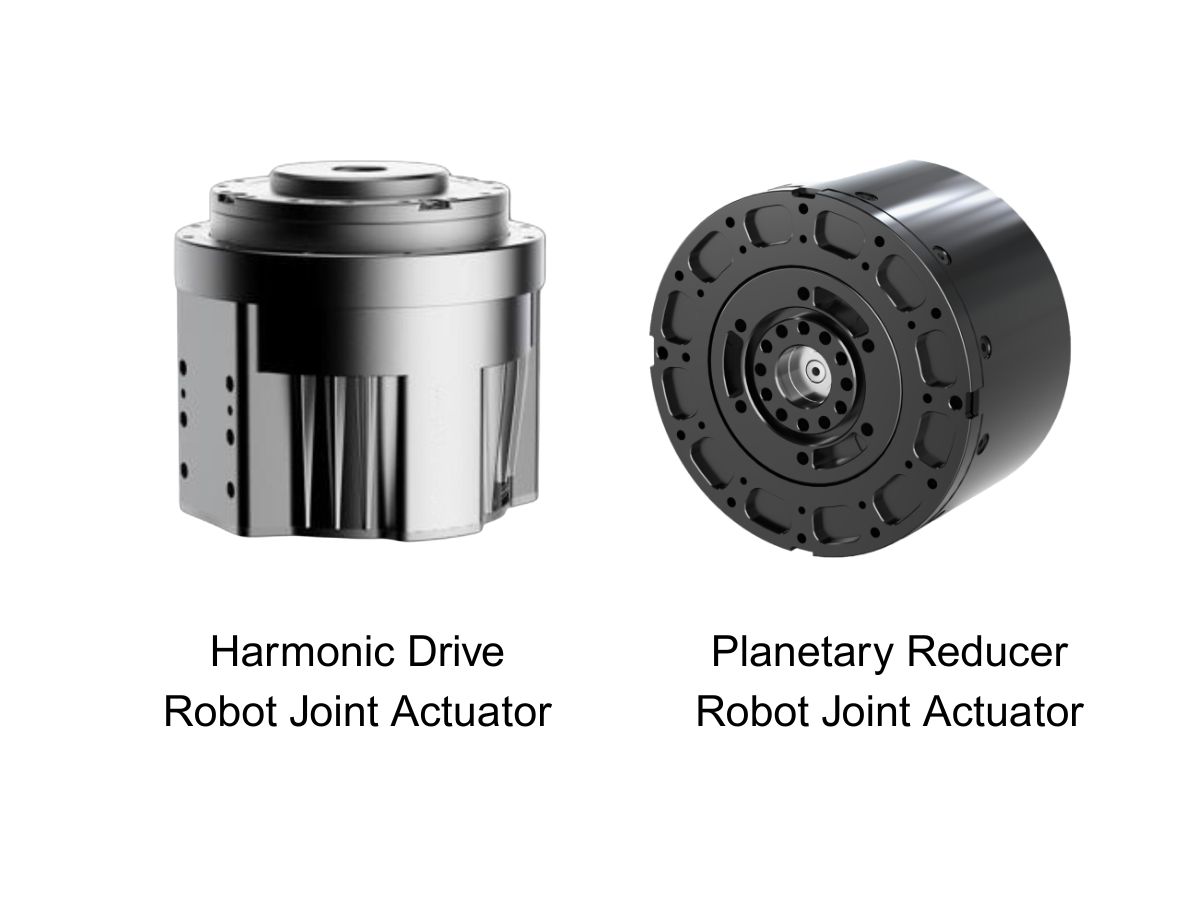
 What is robot joint actuator?How to Choose the Best Robot Rotary Joint Actuator?In core robot joint transmission solutions, planetary and harmonic rotary actuators each have their own strengths. Choosing the right type based on application requirements is essential to achieve the optimal balance between performance and cost.
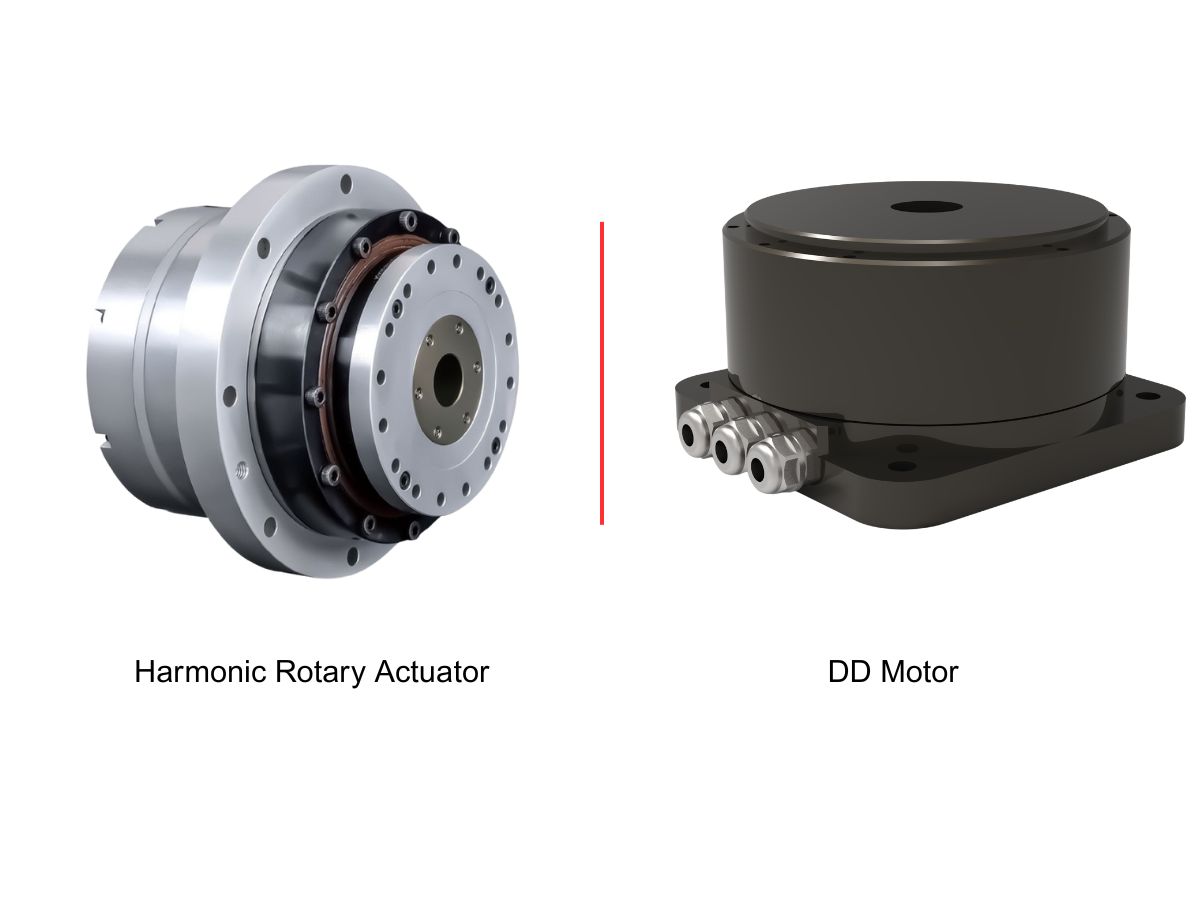
 DD Motors VS Harmonic Rotary ActuatorsThis article provides an in-depth comparison between Direct Drive (DD) motors and harmonic rotary actuators, covering their transmission principles, advantages and disadvantages, and typical application fields.
 OMG Ultra Compact Harmonic Drive Joint Module with Built-in Torque SensorHONPINE TCHL series harmonic drive joint module is a game-changing product that achieves disruptive improvements in multiple aspects such as lightweight design, integration level, and connection convenience. This article will analyze its revolutionary enhancements with you.
 The Role of Harmonic Drive Gears in Achieving 5–10 μm Accuracy in Dental Milling MachinesA dental milling machine is a CNC machining system used to directly process digital dental models into restorations such as crowns, bridges, veneers, inlays, and implant abutments. Dental milling machines require far higher operational accuracy and motion stability than ordinary equipment. This article explains how harmonic drive gear help dental milling machines achieve stable, continuous, and controllable operation.
 Why Are Harmonic Rotary Actuators Perfect for Medical Equipment?Harmonic rotary actuators (typically integrated systems consisting of a harmonic drive reducer, frameless torque motor, encoder, and optional brake) are regarded as key components in medical equipment. The core reason is that they simultaneously meet the most stringent medical requirements for precision, compact size, safety, and controllability. The following explanation is structured from three perspectives: technical characteristics, application scenarios, and medical value.
 High-Precision RV Reducers Perfectly Matched for Walking RobotsThe walking axis of a robot is a core component for power transmission and support. RV reducers provide extremely high rigidity, precision, and torque while maintaining a compact size and exceptional reliability, making them an ideal match for the demanding requirements of walking robot joints in terms of load capacity, impact resistance, and precision.
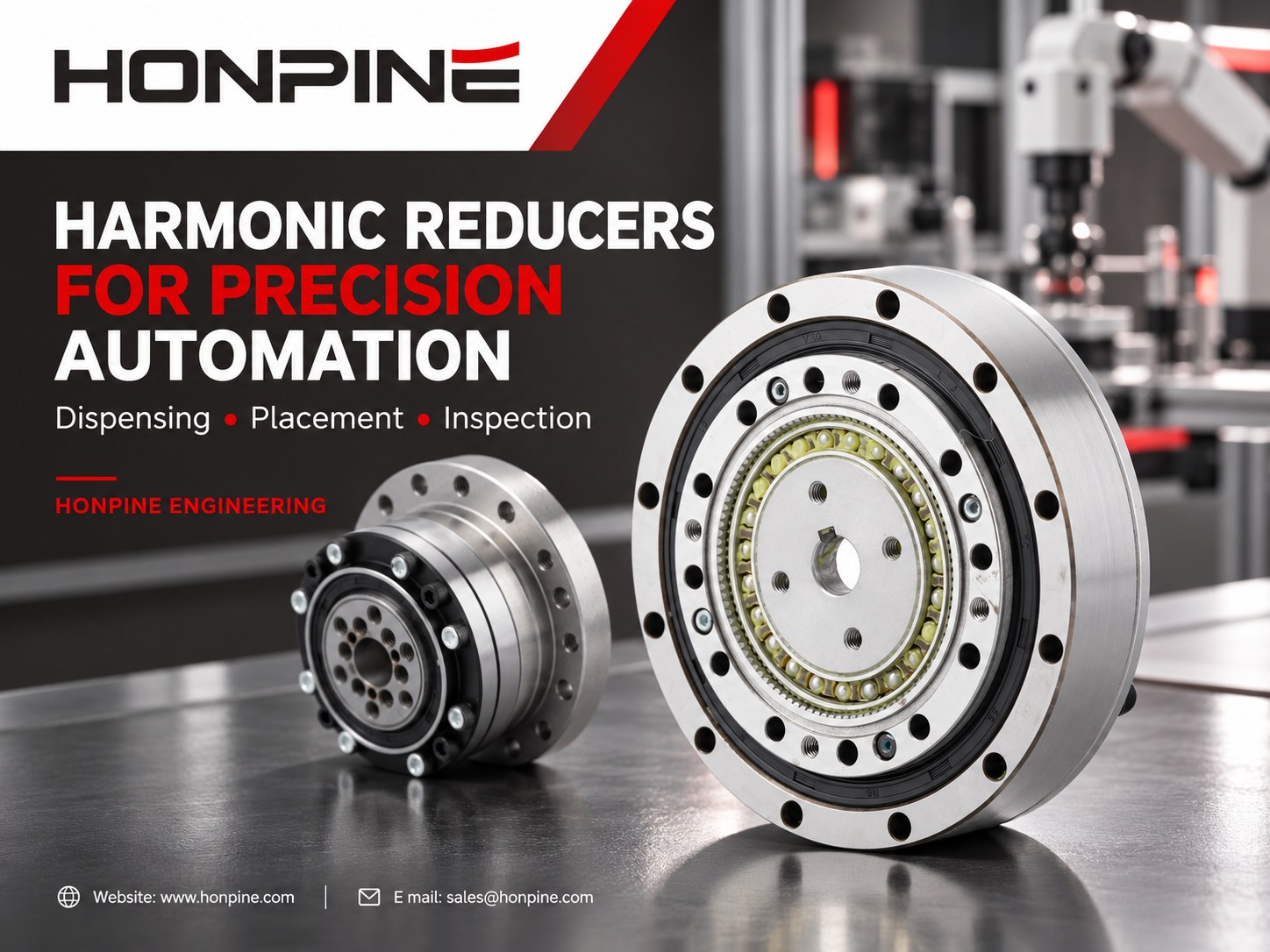
 Why Are Harmonic Reducers Suitable for High-Precision Automation Equipment?Precision automation equipment depends on consistent rotary motion, reliable positioning and compact transmission design. From dispensing head orientation and component angular alignment to automated inspection indexing, harmonic reducers offer a practical solution for applications requiring low backlash and high reduction ratios in limited installation space. This article explains how harmonic reducers support repeatable motion, compares key design configurations, and outlines how to select a suitable reduction ratio and reducer structure based on load, speed, accuracy and machine cycle-time requirements.
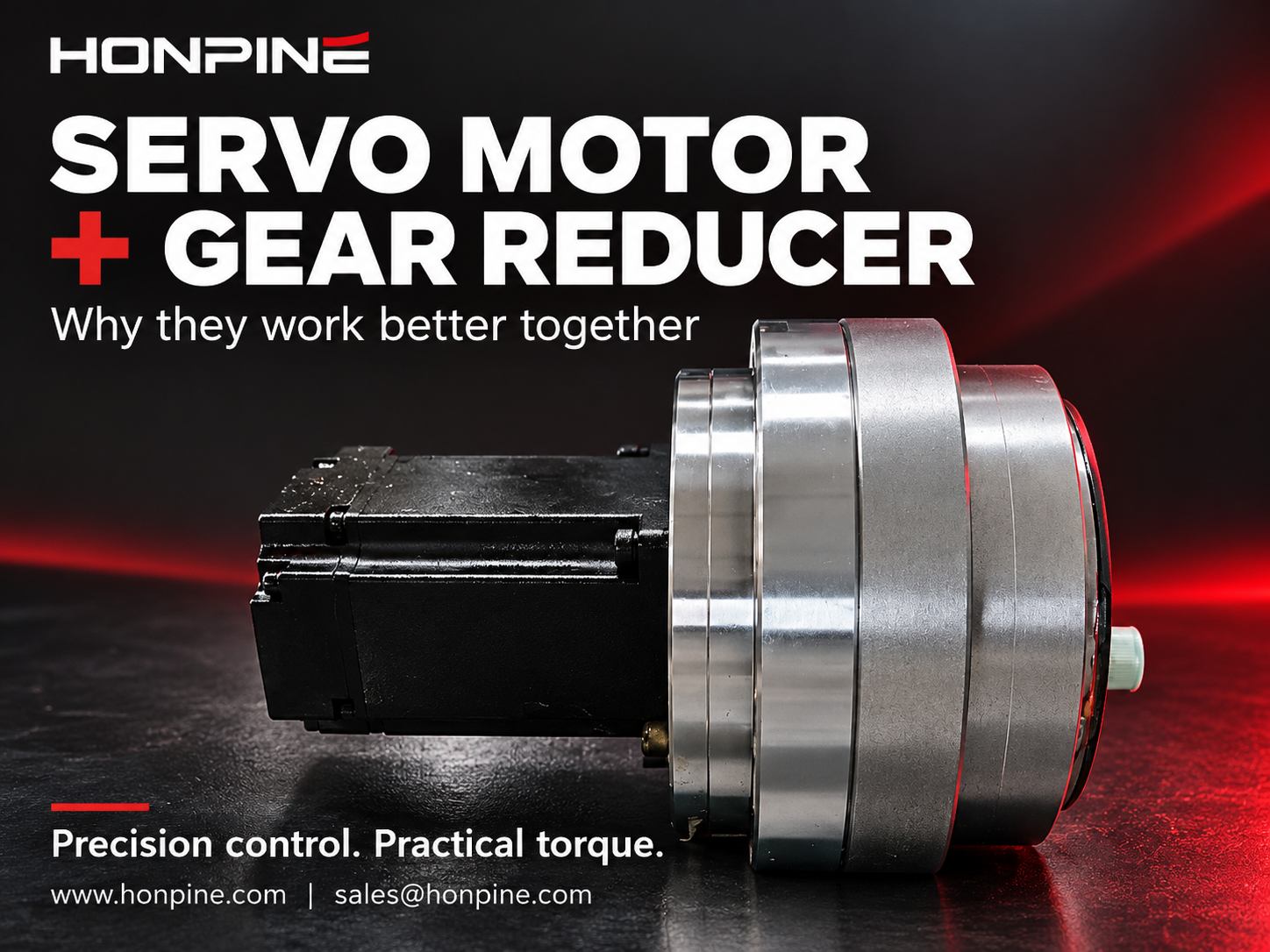
 Why Are Servo Motors and Gear Reducers an Ideal Match?Servo motors provide fast, precise motion control, while gear reducers adapt their speed and torque to the load. This guide explains how servo motors and gear reducers work together through torque multiplication, reflected inertia reduction and finer theoretical position resolution. Learn how inertia matching, backlash, torsional stiffness and reduction ratio influence performance in robotics and industrial automation.
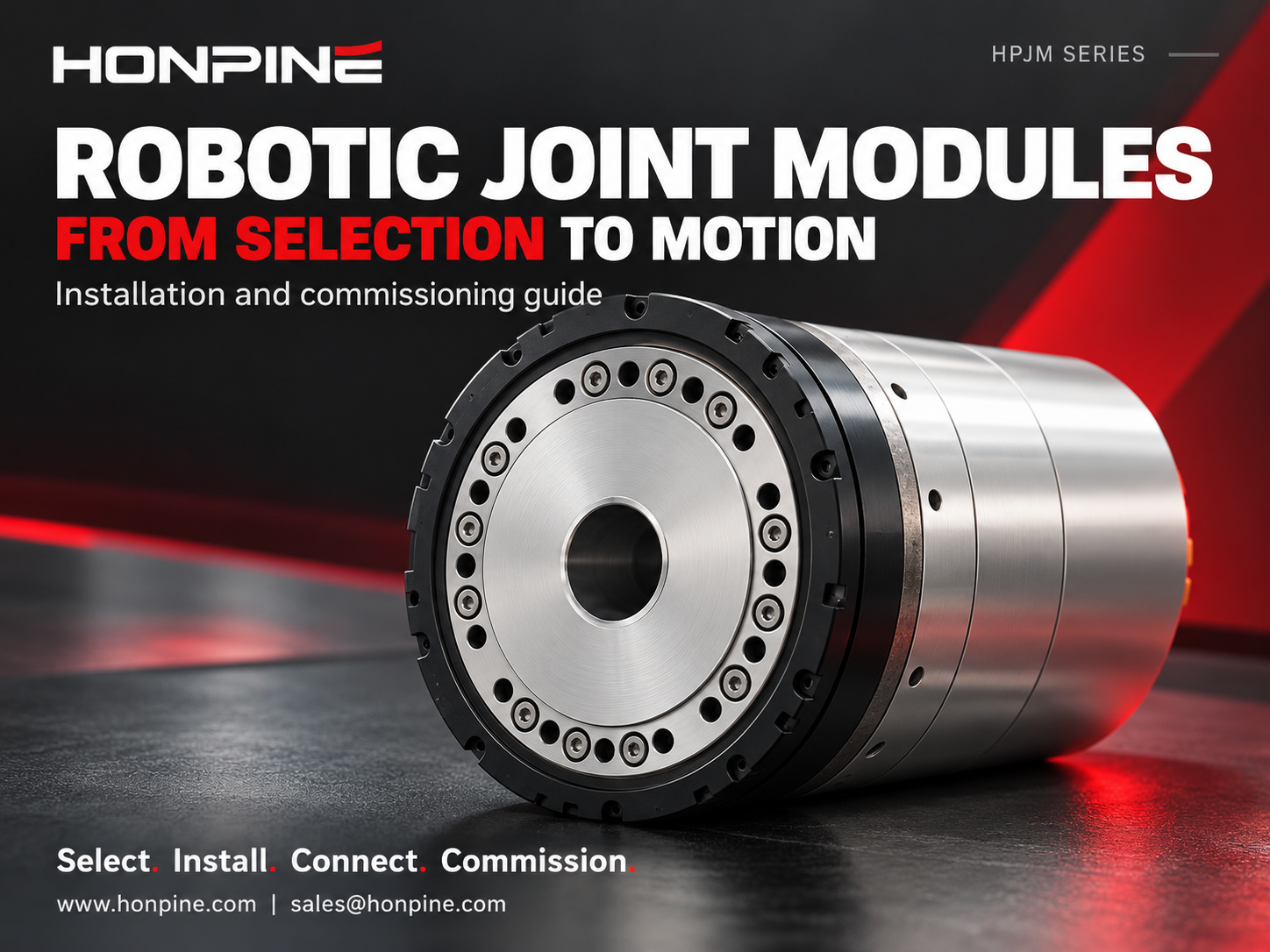
 How to Select and Use Robotic Joint Modules?How do you take robotic joint modules from selection to controlled motion? Using the HONPINE HPJM harmonic joint module as an example, Technical Director Theodore Li explains the key steps in mechanical installation, electrical wiring, CAN and EtherCAT configuration, and control commissioning. Learn what to confirm before integration and how to approach setup so each joint can respond correctly to your controller.
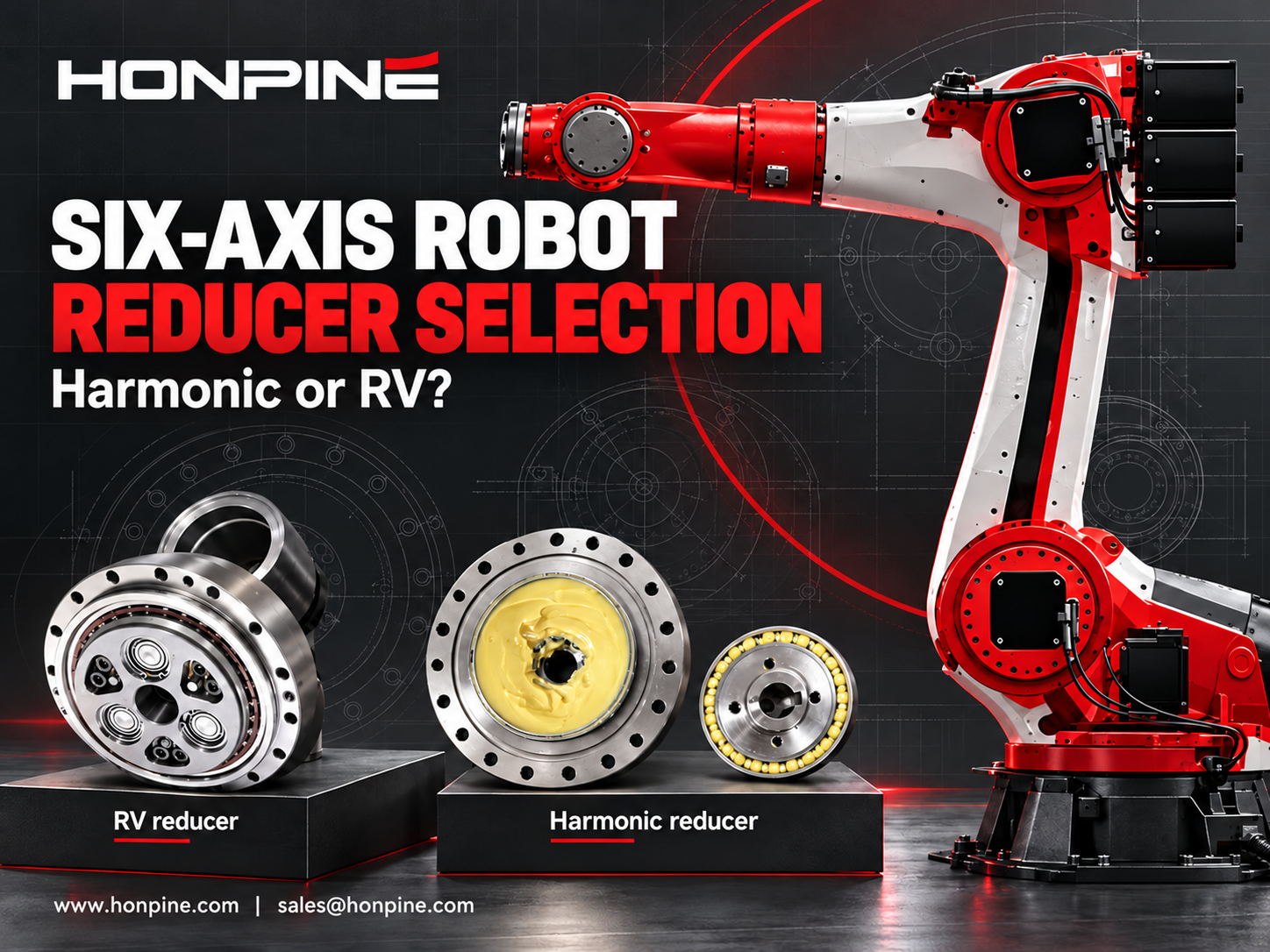
 How to Select Harmonic and RV Reducers for Each Axis of a Six-Axis Robot?What determines whether a six-axis robot joint needs a harmonic reducer or an RV reducer? The answer depends on torque, inertia, impact loads, bearing loads and installation space. This guide explains how to evaluate harmonic and RV reducers for the base, shoulder, elbow and wrist, with practical checks for stiffness, backlash and service life. Use the requirements of each axis to select a suitable reducer configuration.
 Top 7 RV Reducer Gearbox Manufacturers: Why Does Nabtesco Still Dominate?What sets RV reducer gearbox manufacturers apart, and why does Nabtesco remain a benchmark in this market? RV reducer production demands precise component machining, careful assembly and extensive engineering know-how. This article introduces seven manufacturers across RV reducers and related transmission technologies, examines the strengths behind Nabtesco's position, and explores HONPINE's development capabilities to help you understand the supplier landscape.
 How to Calculate Torque for a Harmonic Rotary Actuator in a Flipping Mechanism?How much torque does a harmonic rotary actuator need to flip a 10 kg load through 180 degrees? The answer depends on more than weight. Center-of-gravity offset, load inertia, acceleration and operating frequency all affect actuator selection. In this guide, Theodore Li, Technical Director at HONPINE, explains the calculation process using a horizontal-axis flipping example and outlines the checks needed for peak torque, continuous operation, output speed and bearing loads.
Double Click
We provide harmonic drive reducer,planetary reducer,robot joint motor,robot rotary actuators,RV gear reducer,robot end effector,dexterous robot hand
 What is robot joint actuator?How to Choose the Best Robot Rotary Joint Actuator?In core robot joint transmission solutions, planetary and harmonic rotary actuators each have their own strengths. Choosing the right type based on application requirements is essential to achieve the optimal balance between performance and cost.
 DD Motors VS Harmonic Rotary ActuatorsThis article provides an in-depth comparison between Direct Drive (DD) motors and harmonic rotary actuators, covering their transmission principles, advantages and disadvantages, and typical application fields.
 OMG Ultra Compact Harmonic Drive Joint Module with Built-in Torque SensorHONPINE TCHL series harmonic drive joint module is a game-changing product that achieves disruptive improvements in multiple aspects such as lightweight design, integration level, and connection convenience. This article will analyze its revolutionary enhancements with you.
 Why Are Harmonic Reducers Suitable for High-Precision Automation Equipment?Precision automation equipment depends on consistent rotary motion, reliable positioning and compact transmission design. From dispensing head orientation and component angular alignment to automated inspection indexing, harmonic reducers offer a practical solution for applications requiring low backlash and high reduction ratios in limited installation space. This article explains how harmonic reducers support repeatable motion, compares key design configurations, and outlines how to select a suitable reduction ratio and reducer structure based on load, speed, accuracy and machine cycle-time requirements.
 Why Are Servo Motors and Gear Reducers an Ideal Match?Servo motors provide fast, precise motion control, while gear reducers adapt their speed and torque to the load. This guide explains how servo motors and gear reducers work together through torque multiplication, reflected inertia reduction and finer theoretical position resolution. Learn how inertia matching, backlash, torsional stiffness and reduction ratio influence performance in robotics and industrial automation.
 How to Select and Use Robotic Joint Modules?How do you take robotic joint modules from selection to controlled motion? Using the HONPINE HPJM harmonic joint module as an example, Technical Director Theodore Li explains the key steps in mechanical installation, electrical wiring, CAN and EtherCAT configuration, and control commissioning. Learn what to confirm before integration and how to approach setup so each joint can respond correctly to your controller.
 How to Select Harmonic and RV Reducers for Each Axis of a Six-Axis Robot?What determines whether a six-axis robot joint needs a harmonic reducer or an RV reducer? The answer depends on torque, inertia, impact loads, bearing loads and installation space. This guide explains how to evaluate harmonic and RV reducers for the base, shoulder, elbow and wrist, with practical checks for stiffness, backlash and service life. Use the requirements of each axis to select a suitable reducer configuration.
 Top 7 RV Reducer Gearbox Manufacturers: Why Does Nabtesco Still Dominate?What sets RV reducer gearbox manufacturers apart, and why does Nabtesco remain a benchmark in this market? RV reducer production demands precise component machining, careful assembly and extensive engineering know-how. This article introduces seven manufacturers across RV reducers and related transmission technologies, examines the strengths behind Nabtesco's position, and explores HONPINE's development capabilities to help you understand the supplier landscape.
 How to Calculate Torque for a Harmonic Rotary Actuator in a Flipping Mechanism?How much torque does a harmonic rotary actuator need to flip a 10 kg load through 180 degrees? The answer depends on more than weight. Center-of-gravity offset, load inertia, acceleration and operating frequency all affect actuator selection. In this guide, Theodore Li, Technical Director at HONPINE, explains the calculation process using a horizontal-axis flipping example and outlines the checks needed for peak torque, continuous operation, output speed and bearing loads.
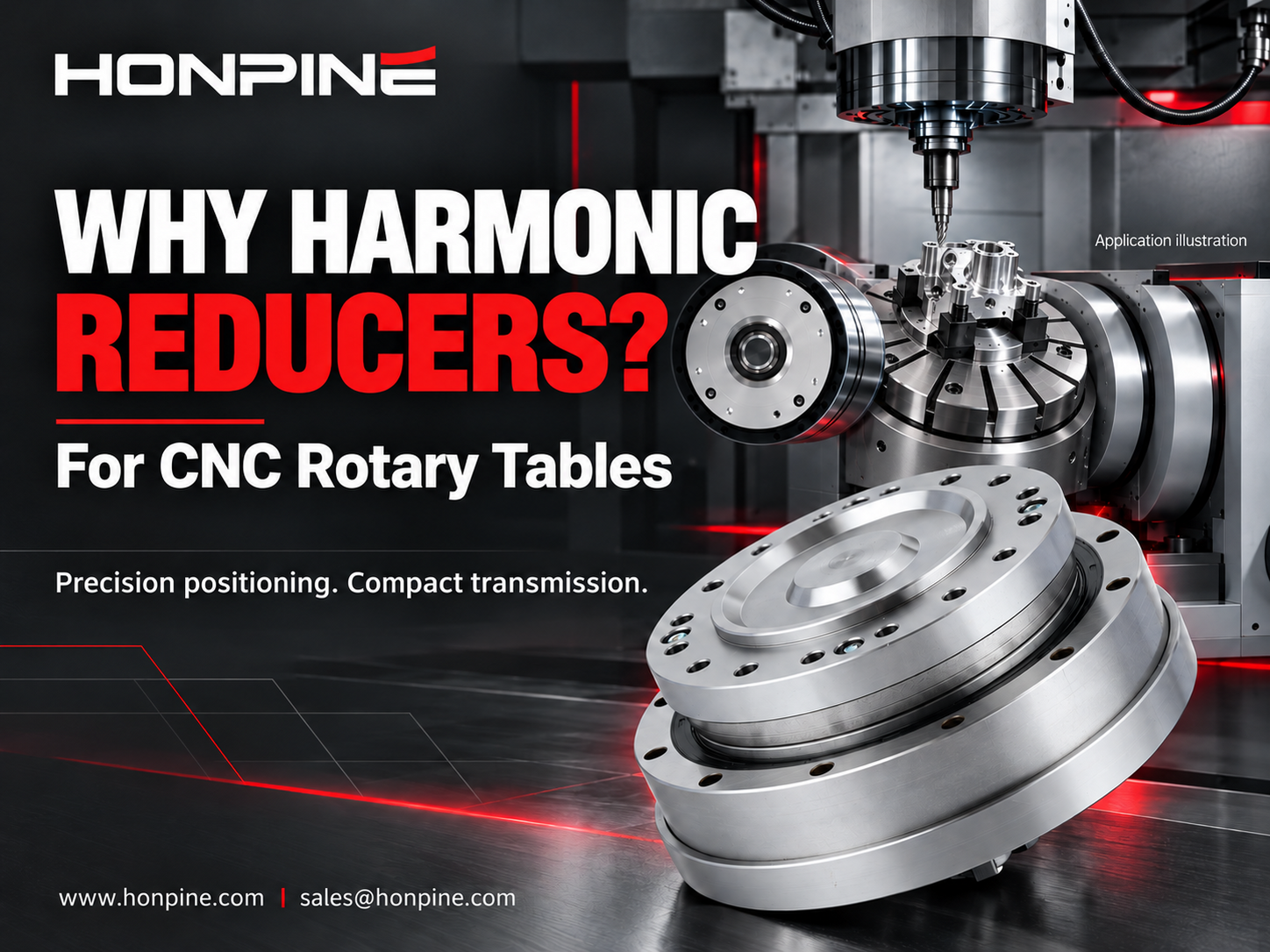
 Why Are Harmonic Reducers Suitable for CNC Machine Tool Rotary Tables?Why choose harmonic reducers for CNC rotary tables? Accurate indexing depends on more than the motor: backlash, torsional stiffness and torque capacity all affect how reliably a rotary table holds its position during machining. This guide explains the key transmission requirements of fourth and fifth axis rotary tables, explores common machine tool applications, and introduces HONPINE harmonic reducer configurations for different installation and load requirements.
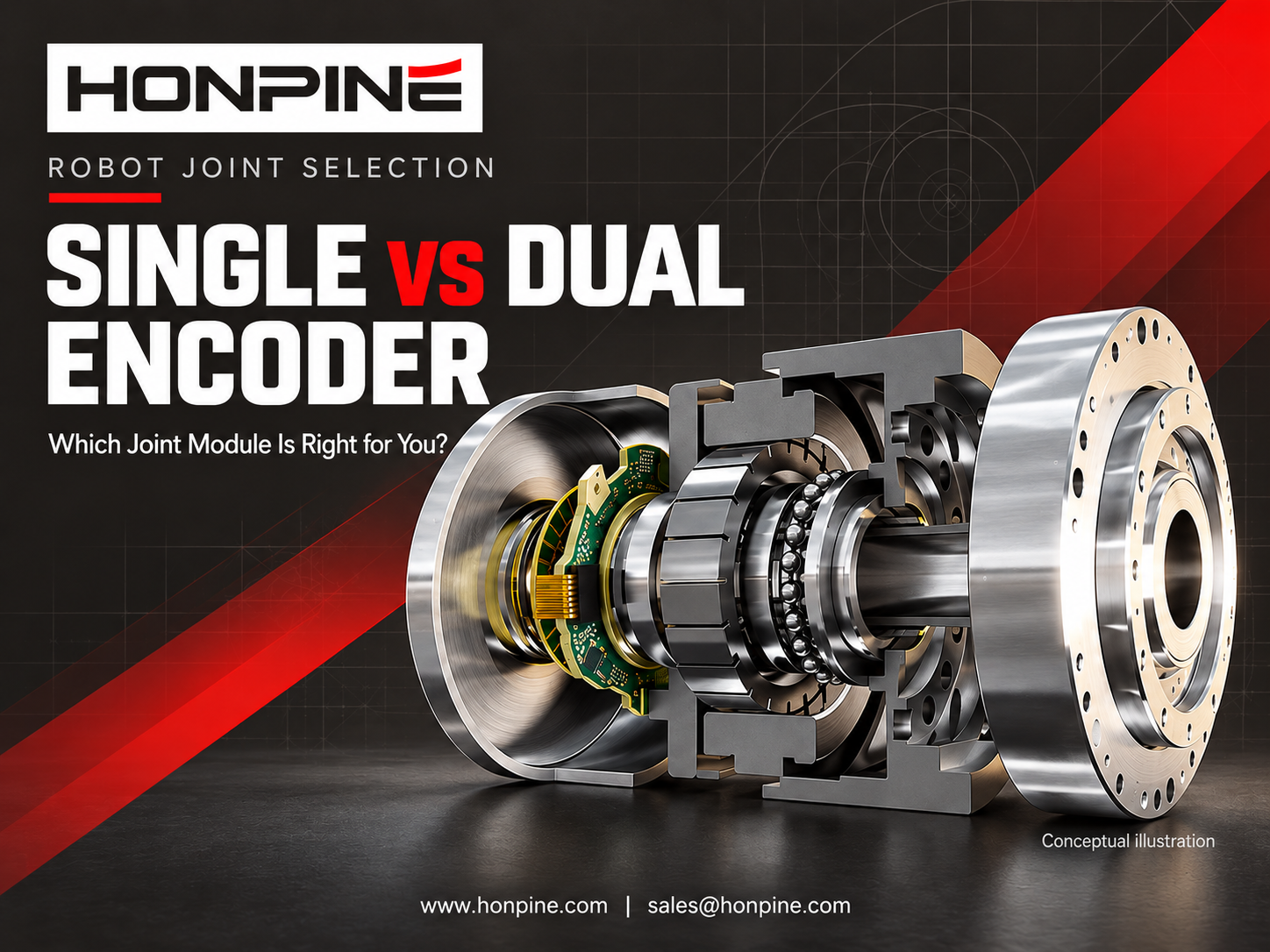
 What’s the Difference Between Single and Dual Encoder Robot Joint Modules?Does your robot need a dual encoder joint module, or is a single encoder enough? The answer depends on positioning requirements, transmission behavior, force control strategy and budget. This guide compares motor-side and output-side feedback, explains where dual encoders can improve control, and examines their costs and limitations. Learn when a single encoder can meet your needs and when additional output feedback is worth considering.
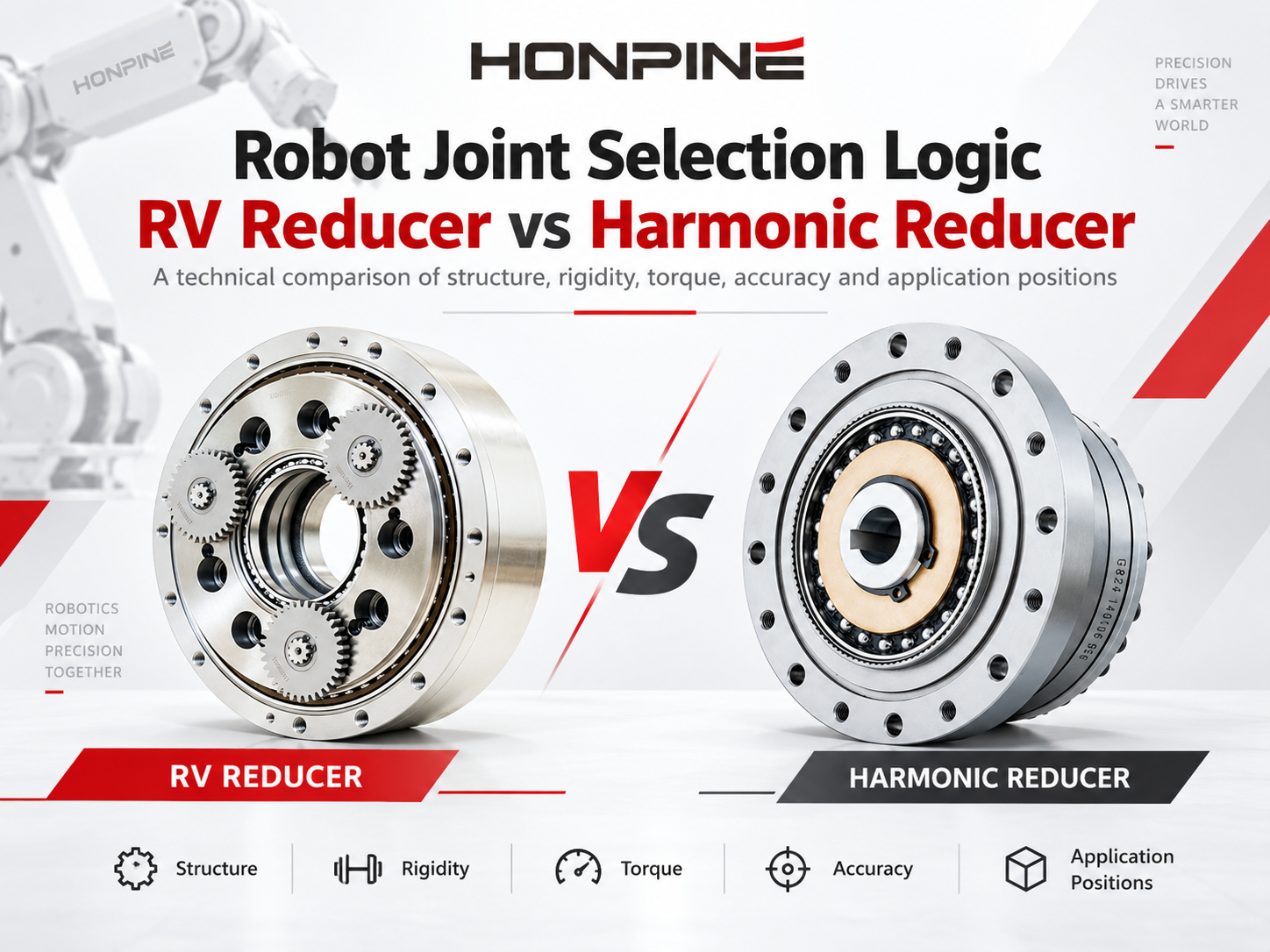
 RV vs Harmonic Reducer: How to Choose the Right Gearbox for Robot Joints?RV vs harmonic reducer: which gearbox is right for your robot joint? The answer depends on torque, rigidity, accuracy, installation space and operating conditions. This guide compares their working principles and five key performance factors, then explains how to evaluate joint loads, reducer life, temperature and lubrication. Whether you are designing a robot base, shoulder, elbow or wrist, use these considerations to match the reducer to the requirements of each joint.