








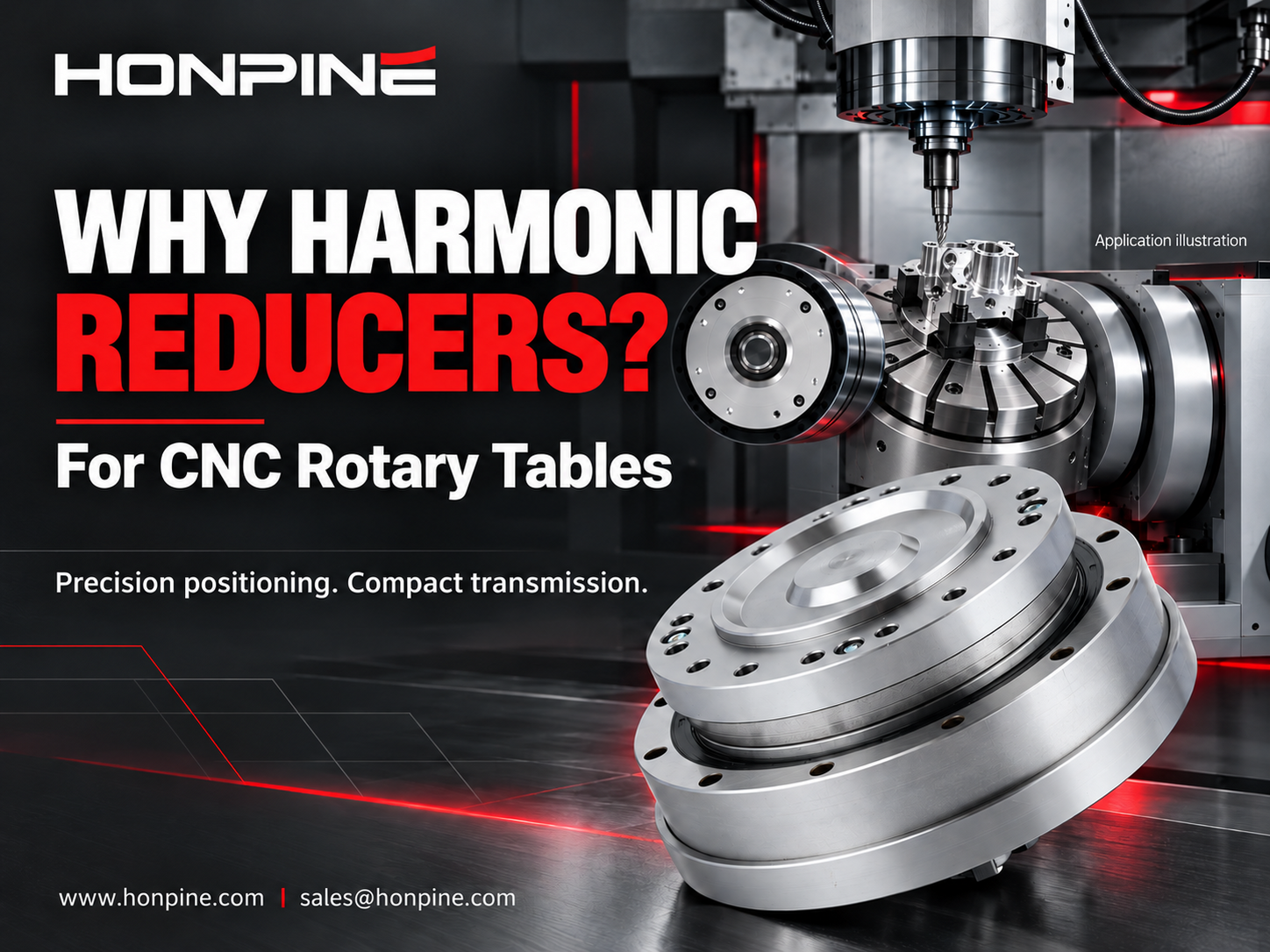
Why Are Harmonic Reducers Suitable for CNC Machine Tool Rotary Tables?
The machine tool industry has a straightforward way of evaluating transmission components: do the finished parts meet specifications?
With zero-backlash performance, high rigidity, and a comprehensive range of sizes, HONPINE harmonic reducers offer a reliable transmission solution for machine tool rotary tables, particularly fourth- and fifth-axis rotary tables on CNC machines.
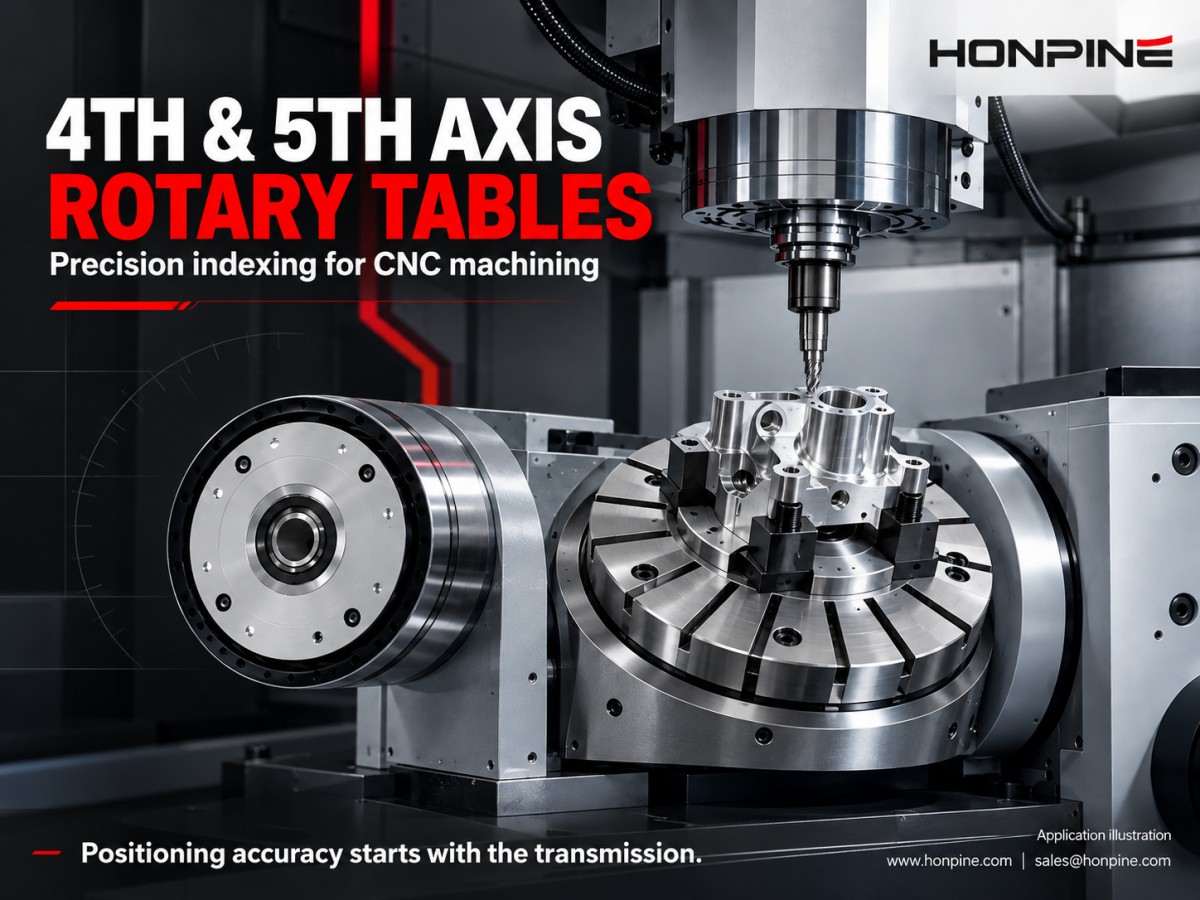
Unlike robot joints, machine tool rotary tables typically operate at relatively low speeds but require extremely high positioning accuracy. They may also carry heavy loads while withstanding continuously varying cutting forces. Any backlash in the transmission can translate directly into machining errors on the workpiece.
HONPINE offers harmonic reducers with outer diameters ranging from 13 mm to 246 mm, supporting applications from compact precision rotary tables to large machining centers.
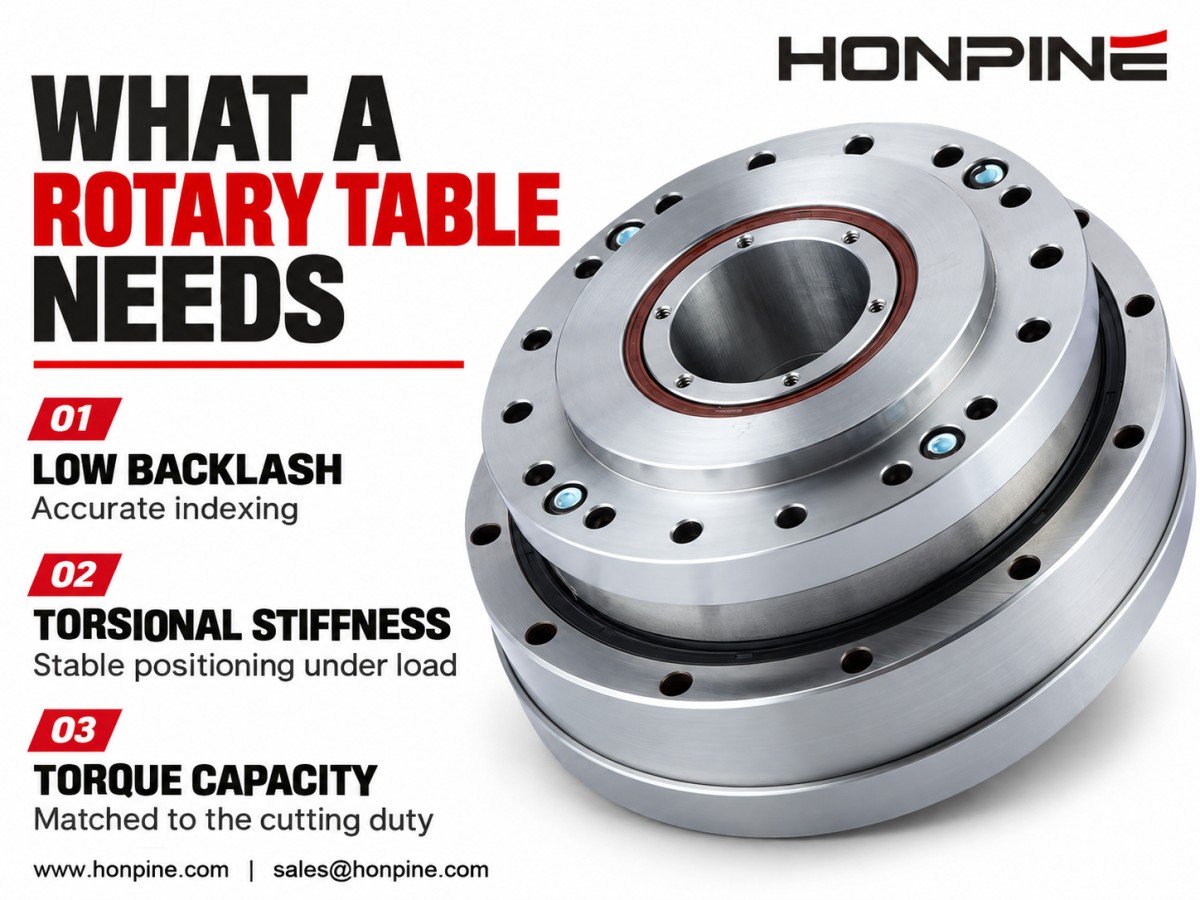
Three Core Requirements for Rotary Table Transmission Components
Zero Backlash
Indexing accuracy depends heavily on backlash within the transmission system.
Harmonic drives engage multiple teeth simultaneously, allowing backlash to be kept extremely low. Standard models can achieve backlash as low as approximately 15 arcseconds. In rotary table applications, this means very little lost motion between the commanded movement and the actual rotation.
High Torsional Stiffness
During heavy cutting, forces from the cutting tool pass through the workpiece into the rotary table, causing torsional deformation.
Insufficient stiffness can allow small changes in workpiece position during machining, affecting surface finish and dimensional accuracy. Harmonic reducers used in rotary tables therefore typically require high-rigidity crossed roller bearings to provide a sufficiently rigid overall assembly.
Load Capacity
Rotary table loading depends on the weight of the workpiece and fixture, as well as the cutting conditions. Required torque capacity can range from tens of newton-meters to more than 1,000 N·m.
Suppliers must therefore offer a sufficiently broad range of reducer sizes and torque ratings to match different machine tool requirements.
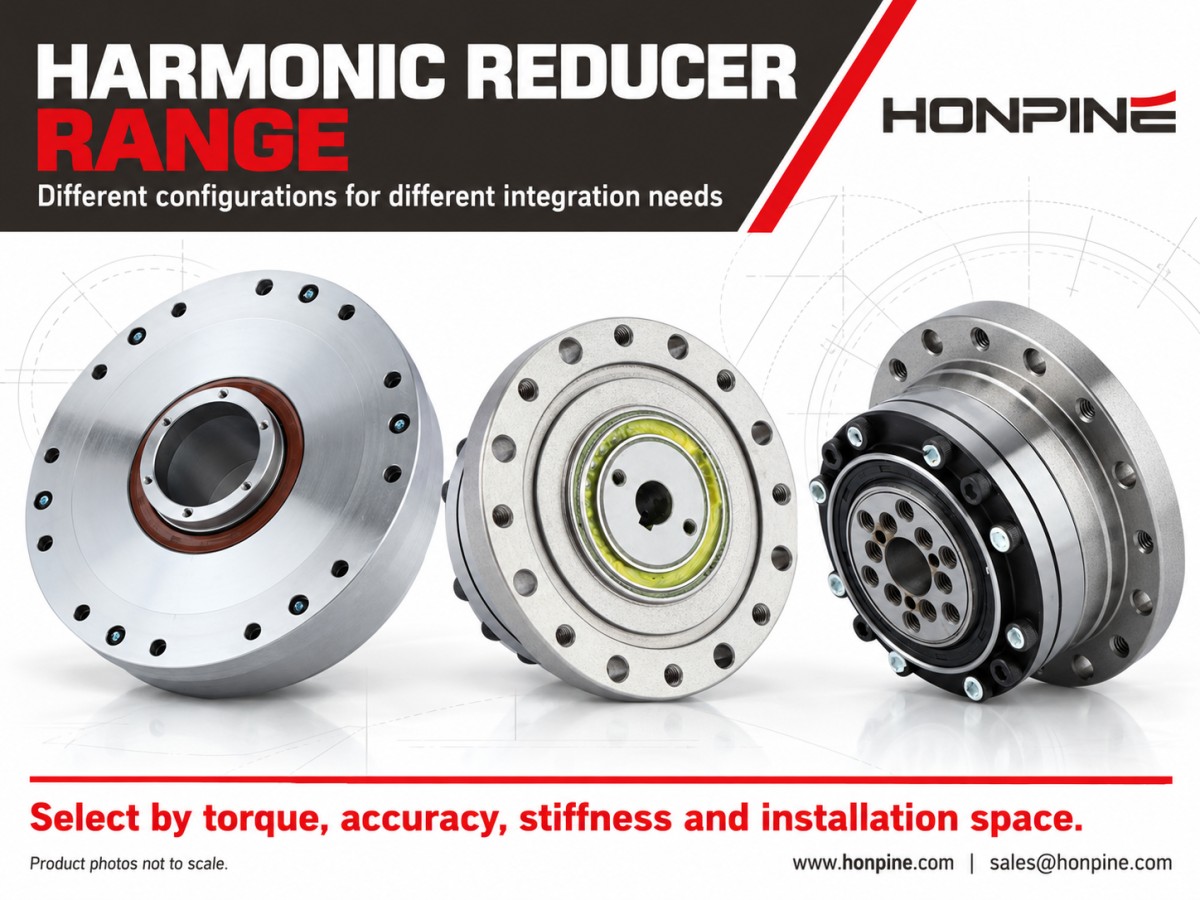
Harmonic Reducer Options for Machine Tool Applications
Machine tool applications require harmonic reducers across a wide range of sizes.
Fourth- and fifth-axis rotary tables are widely used in medium and large machining centers, with different machines requiring different reducer sizes and configurations.
With outer diameters ranging from 13 mm to 246 mm, HONPINE harmonic reducers cover applications from small precision rotary tables to larger machining center assemblies.
What Makes HONPINE Harmonic Reducers Suitable for Demanding Machining Applications?
High-Torque Applications and Heavy Cutting
For demanding cutting conditions, HONPINE’s high-torque harmonic reducer series offers significantly greater torque capacity than standard models.
Combined with high-rigidity crossed roller bearings, these reducers are suitable for indexing drives used in machining precision molds, new energy equipment components, and medical devices.
Compact Engraving and Milling Machines
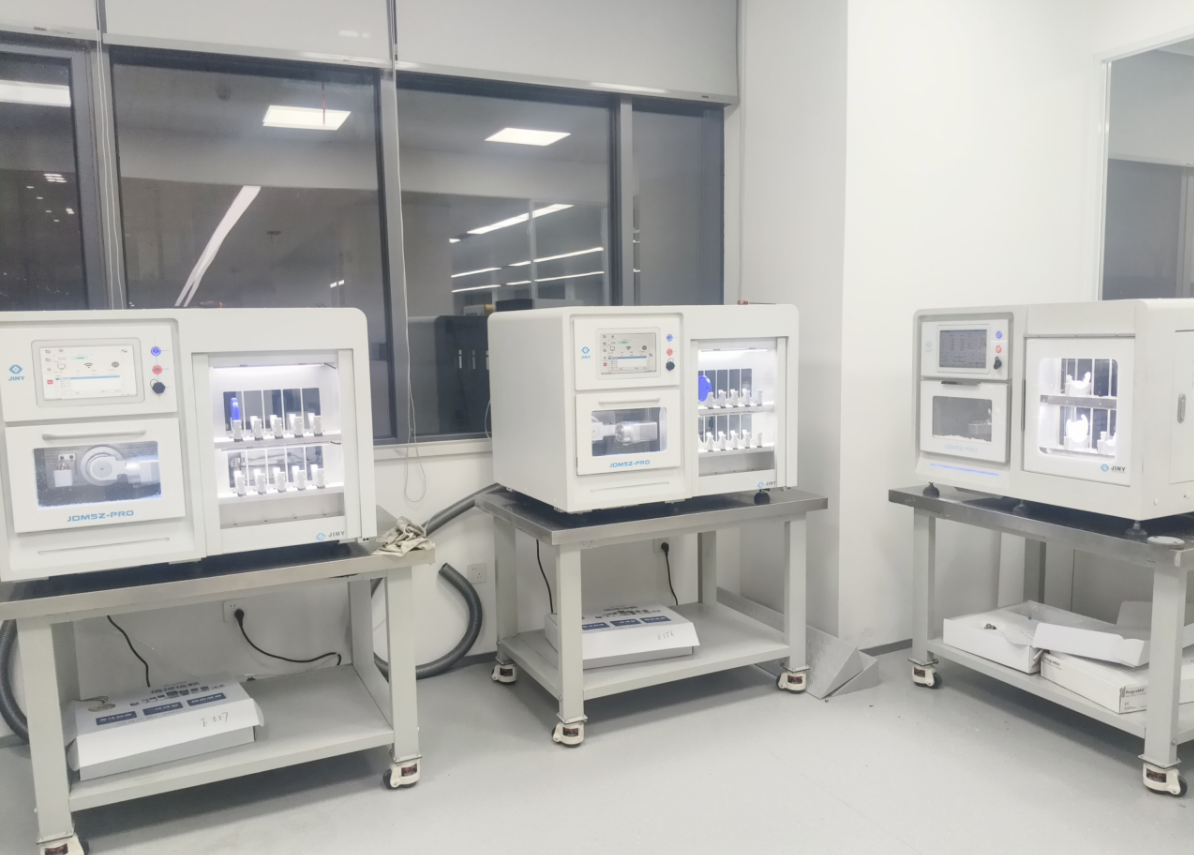
Small engraving and milling machines, including dental milling machines, typically require smaller reducer sizes.
With their compact dimensions, high precision, and stable performance, HONPINE’s miniature harmonic reducers are used across this specialized market.
Tool Magazines and Tilting Mechanisms
Tool magazines and tilting mechanisms also require fast, accurate position control.
In tool magazine applications, harmonic reducers support rapid and precise tool changes, improving machining efficiency and tool positioning accuracy.
In large gantry machining centers, cup-type harmonic reducers provide stable torque output and high rigidity for rotary tables and spindle head tilting mechanisms.
Waterjet Cutting and Woodworking Equipment
Waterjet machines used for stone cutting and steel plate profiling, along with woodworking engraving and milling equipment, represent additional applications for harmonic reducers.
A single machine may use several harmonic reducers, often in hat-type configurations.
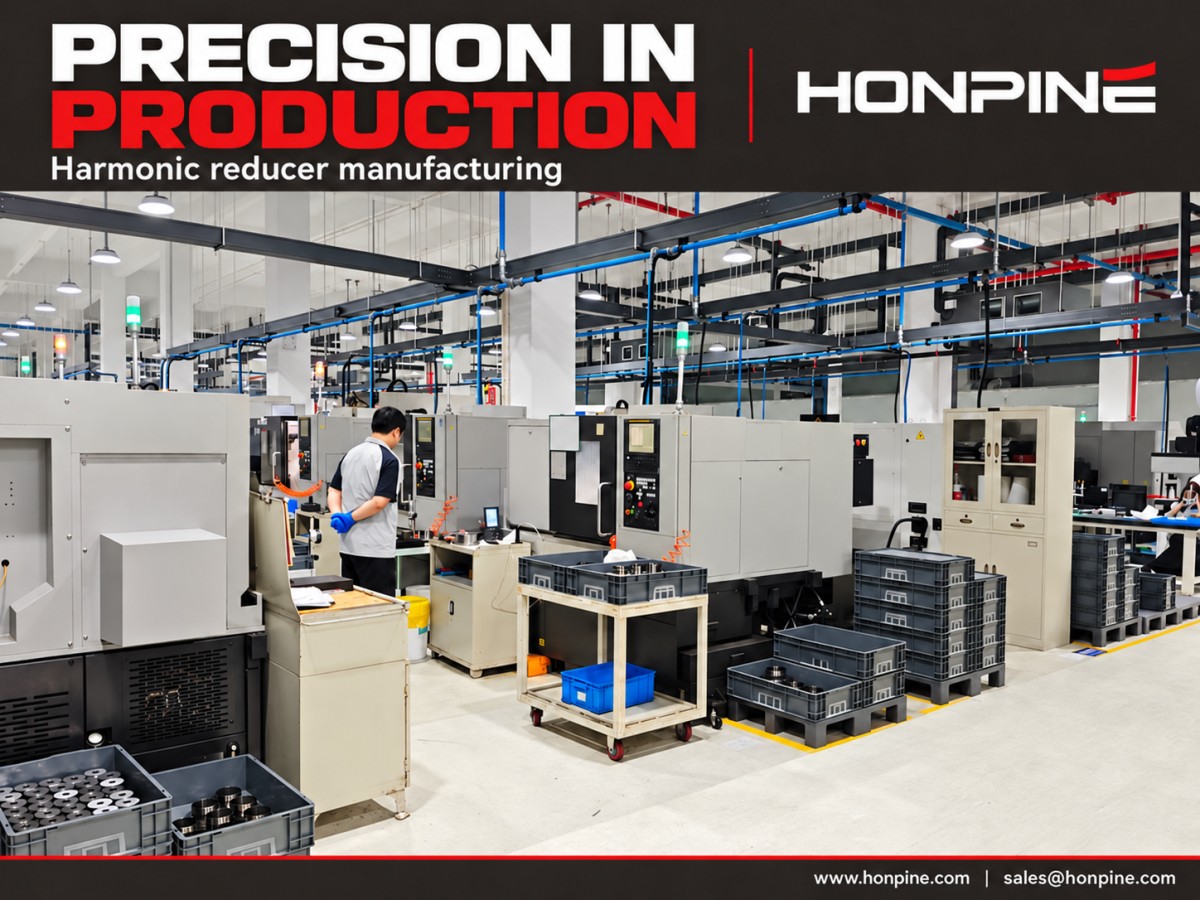
Across these applications, the value of a transmission component ultimately comes down to one question: can the machine consistently produce parts that meet specifications?
How Do Accuracy and Service Life Support Consistent Machining Performance?
Machine tools are designed for long-term service. Customers therefore expect rotary tables to deliver accurate positioning when new and retain that accuracy throughout extended operation.
HONPINE harmonic reducers achieve positioning accuracy of ±15 arcseconds and have a design service life of 10,000 to 15,000 hours.
Compared with conventional double circular-arc tooth profiles, HONPINE’s δ tooth profile technology provides:
- A 15%–30% increase in load capacity.
- An 8–10°C reduction in temperature rise.
- A reduction of more than 30% in the contact area affected by gear fatigue pitting.
- More than 15,000 hours of continuous running during testing.
Improved temperature control is particularly valuable in machine tool applications. Temperature changes cause thermal deformation, which can undermine machining accuracy even when mechanical positioning appears stable.
The low starting torque of harmonic drives also offers advantages in precision machining. During low-speed, fine-feed movements, smoother and more controllable motion helps maintain consistent surface quality.
Why Choose HONPINE Harmonic Reducers for Machine Tool Rotary Tables?
Machine tool rotary tables place demanding requirements on transmission components. Positioning errors directly affect machining results, while long-term operation reveals how well the transmission retains its performance.
HONPINE’s suitability for these applications is supported by its comprehensive size range, high-torque product series, compatibility with high-rigidity crossed roller bearings, and a design service life of 10,000 to 15,000 hours.
Although these capabilities were not developed exclusively for machine tools, they demonstrate how well-engineered transmission products can meet demanding requirements across multiple industries.
Read More
Learn more about the story of HONPINE and industry trends related to precision transmission.
 What is robot joint actuator?How to Choose the Best Robot Rotary Joint Actuator?In core robot joint transmission solutions, planetary and harmonic rotary actuators each have their own strengths. Choosing the right type based on application requirements is essential to achieve the optimal balance between performance and cost.
 DD Motors VS Harmonic Rotary ActuatorsThis article provides an in-depth comparison between Direct Drive (DD) motors and harmonic rotary actuators, covering their transmission principles, advantages and disadvantages, and typical application fields.
 OMG Ultra Compact Harmonic Drive Joint Module with Built-in Torque SensorHONPINE TCHL series harmonic drive joint module is a game-changing product that achieves disruptive improvements in multiple aspects such as lightweight design, integration level, and connection convenience. This article will analyze its revolutionary enhancements with you.
 The Role of Harmonic Drive Gears in Achieving 5–10 μm Accuracy in Dental Milling MachinesA dental milling machine is a CNC machining system used to directly process digital dental models into restorations such as crowns, bridges, veneers, inlays, and implant abutments. Dental milling machines require far higher operational accuracy and motion stability than ordinary equipment. This article explains how harmonic drive gear help dental milling machines achieve stable, continuous, and controllable operation.
 Why Are Harmonic Rotary Actuators Perfect for Medical Equipment?Harmonic rotary actuators (typically integrated systems consisting of a harmonic drive reducer, frameless torque motor, encoder, and optional brake) are regarded as key components in medical equipment. The core reason is that they simultaneously meet the most stringent medical requirements for precision, compact size, safety, and controllability. The following explanation is structured from three perspectives: technical characteristics, application scenarios, and medical value.
 High-Precision RV Reducers Perfectly Matched for Walking RobotsThe walking axis of a robot is a core component for power transmission and support. RV reducers provide extremely high rigidity, precision, and torque while maintaining a compact size and exceptional reliability, making them an ideal match for the demanding requirements of walking robot joints in terms of load capacity, impact resistance, and precision.
 How to Select Harmonic and RV Reducers for Each Axis of a Six-Axis Robot?What determines whether a six-axis robot joint needs a harmonic reducer or an RV reducer? The answer depends on torque, inertia, impact loads, bearing loads and installation space. This guide explains how to evaluate harmonic and RV reducers for the base, shoulder, elbow and wrist, with practical checks for stiffness, backlash and service life. Use the requirements of each axis to select a suitable reducer configuration.
 How to Calculate Torque for a Harmonic Rotary Actuator in a Flipping Mechanism?How much torque does a harmonic rotary actuator need to flip a 10 kg load through 180 degrees? The answer depends on more than weight. Center-of-gravity offset, load inertia, acceleration and operating frequency all affect actuator selection. In this guide, Theodore Li, Technical Director at HONPINE, explains the calculation process using a horizontal-axis flipping example and outlines the checks needed for peak torque, continuous operation, output speed and bearing loads.
 Why Are Harmonic Reducers Suitable for CNC Machine Tool Rotary Tables?Why choose harmonic reducers for CNC rotary tables? Accurate indexing depends on more than the motor: backlash, torsional stiffness and torque capacity all affect how reliably a rotary table holds its position during machining. This guide explains the key transmission requirements of fourth and fifth axis rotary tables, explores common machine tool applications, and introduces HONPINE harmonic reducer configurations for different installation and load requirements.
 What’s the Difference Between Single and Dual Encoder Robot Joint Modules?Does your robot need a dual encoder joint module, or is a single encoder enough? The answer depends on positioning requirements, transmission behavior, force control strategy and budget. This guide compares motor-side and output-side feedback, explains where dual encoders can improve control, and examines their costs and limitations. Learn when a single encoder can meet your needs and when additional output feedback is worth considering.
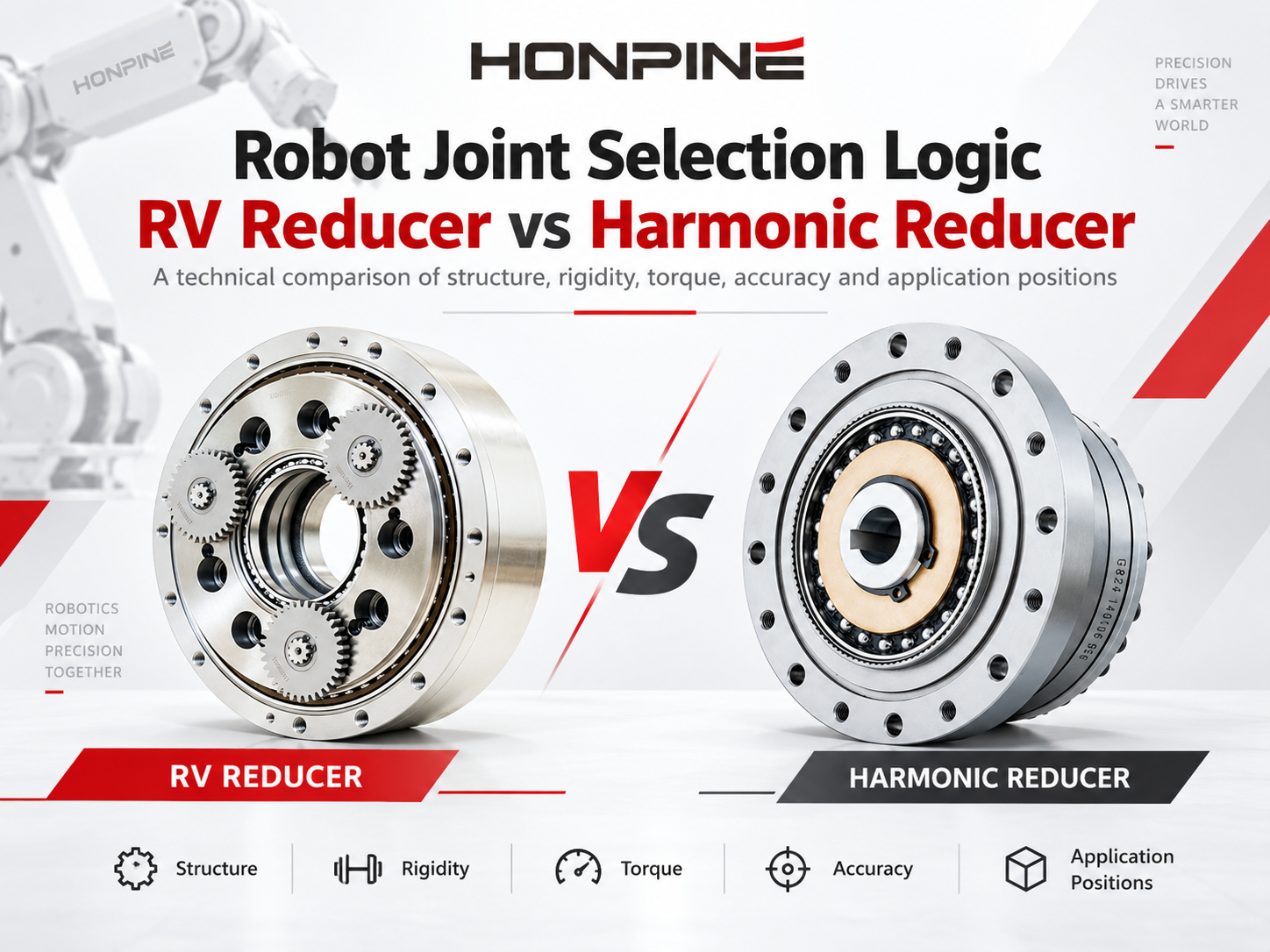
 RV vs Harmonic Reducer: How to Choose the Right Gearbox for Robot Joints?RV vs harmonic reducer: which gearbox is right for your robot joint? The answer depends on torque, rigidity, accuracy, installation space and operating conditions. This guide compares their working principles and five key performance factors, then explains how to evaluate joint loads, reducer life, temperature and lubrication. Whether you are designing a robot base, shoulder, elbow or wrist, use these considerations to match the reducer to the requirements of each joint.
 How to Find a Reliable Robotic Joint Actuator Supplier?Choosing the right robotic joint actuator supplier is essential for reliable performance, smooth integration and long-term project success. Beyond product specifications, you need to understand a supplier’s technical expertise, production capacity and after-sales support. In this guide, Allen Li, Founder of HONPINE, explains how to assess these three factors when sourcing harmonic and planetary joint actuators for robotics and industrial automation.
Double Click
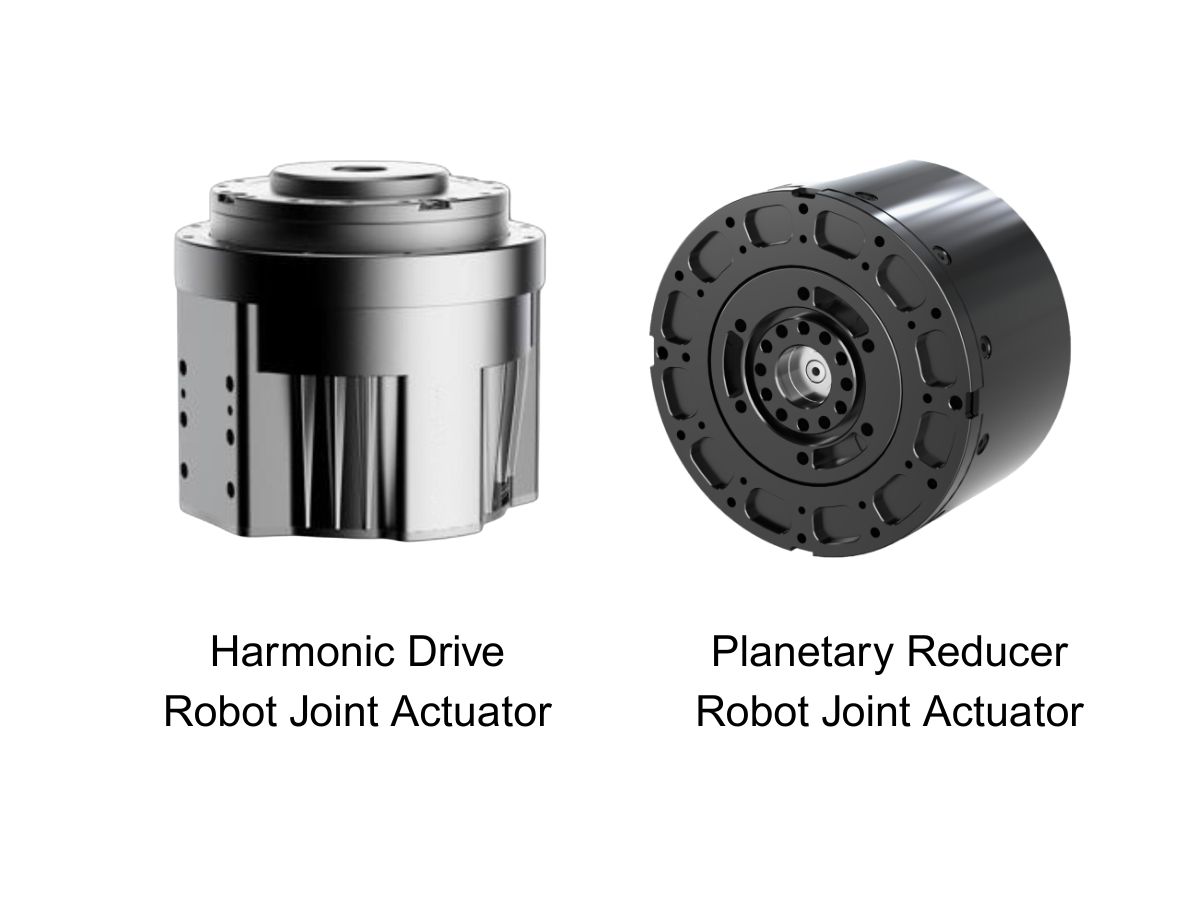
We provide harmonic drive reducer,planetary reducer,robot joint motor,robot rotary actuators,RV gear reducer,robot end effector,dexterous robot hand
 What is robot joint actuator?How to Choose the Best Robot Rotary Joint Actuator?In core robot joint transmission solutions, planetary and harmonic rotary actuators each have their own strengths. Choosing the right type based on application requirements is essential to achieve the optimal balance between performance and cost.
 DD Motors VS Harmonic Rotary ActuatorsThis article provides an in-depth comparison between Direct Drive (DD) motors and harmonic rotary actuators, covering their transmission principles, advantages and disadvantages, and typical application fields.
 OMG Ultra Compact Harmonic Drive Joint Module with Built-in Torque SensorHONPINE TCHL series harmonic drive joint module is a game-changing product that achieves disruptive improvements in multiple aspects such as lightweight design, integration level, and connection convenience. This article will analyze its revolutionary enhancements with you.
 How to Select Harmonic and RV Reducers for Each Axis of a Six-Axis Robot?What determines whether a six-axis robot joint needs a harmonic reducer or an RV reducer? The answer depends on torque, inertia, impact loads, bearing loads and installation space. This guide explains how to evaluate harmonic and RV reducers for the base, shoulder, elbow and wrist, with practical checks for stiffness, backlash and service life. Use the requirements of each axis to select a suitable reducer configuration.
 How to Calculate Torque for a Harmonic Rotary Actuator in a Flipping Mechanism?How much torque does a harmonic rotary actuator need to flip a 10 kg load through 180 degrees? The answer depends on more than weight. Center-of-gravity offset, load inertia, acceleration and operating frequency all affect actuator selection. In this guide, Theodore Li, Technical Director at HONPINE, explains the calculation process using a horizontal-axis flipping example and outlines the checks needed for peak torque, continuous operation, output speed and bearing loads.
 Why Are Harmonic Reducers Suitable for CNC Machine Tool Rotary Tables?Why choose harmonic reducers for CNC rotary tables? Accurate indexing depends on more than the motor: backlash, torsional stiffness and torque capacity all affect how reliably a rotary table holds its position during machining. This guide explains the key transmission requirements of fourth and fifth axis rotary tables, explores common machine tool applications, and introduces HONPINE harmonic reducer configurations for different installation and load requirements.
 What’s the Difference Between Single and Dual Encoder Robot Joint Modules?Does your robot need a dual encoder joint module, or is a single encoder enough? The answer depends on positioning requirements, transmission behavior, force control strategy and budget. This guide compares motor-side and output-side feedback, explains where dual encoders can improve control, and examines their costs and limitations. Learn when a single encoder can meet your needs and when additional output feedback is worth considering.
 RV vs Harmonic Reducer: How to Choose the Right Gearbox for Robot Joints?RV vs harmonic reducer: which gearbox is right for your robot joint? The answer depends on torque, rigidity, accuracy, installation space and operating conditions. This guide compares their working principles and five key performance factors, then explains how to evaluate joint loads, reducer life, temperature and lubrication. Whether you are designing a robot base, shoulder, elbow or wrist, use these considerations to match the reducer to the requirements of each joint.
 How to Find a Reliable Robotic Joint Actuator Supplier?Choosing the right robotic joint actuator supplier is essential for reliable performance, smooth integration and long-term project success. Beyond product specifications, you need to understand a supplier’s technical expertise, production capacity and after-sales support. In this guide, Allen Li, Founder of HONPINE, explains how to assess these three factors when sourcing harmonic and planetary joint actuators for robotics and industrial automation.
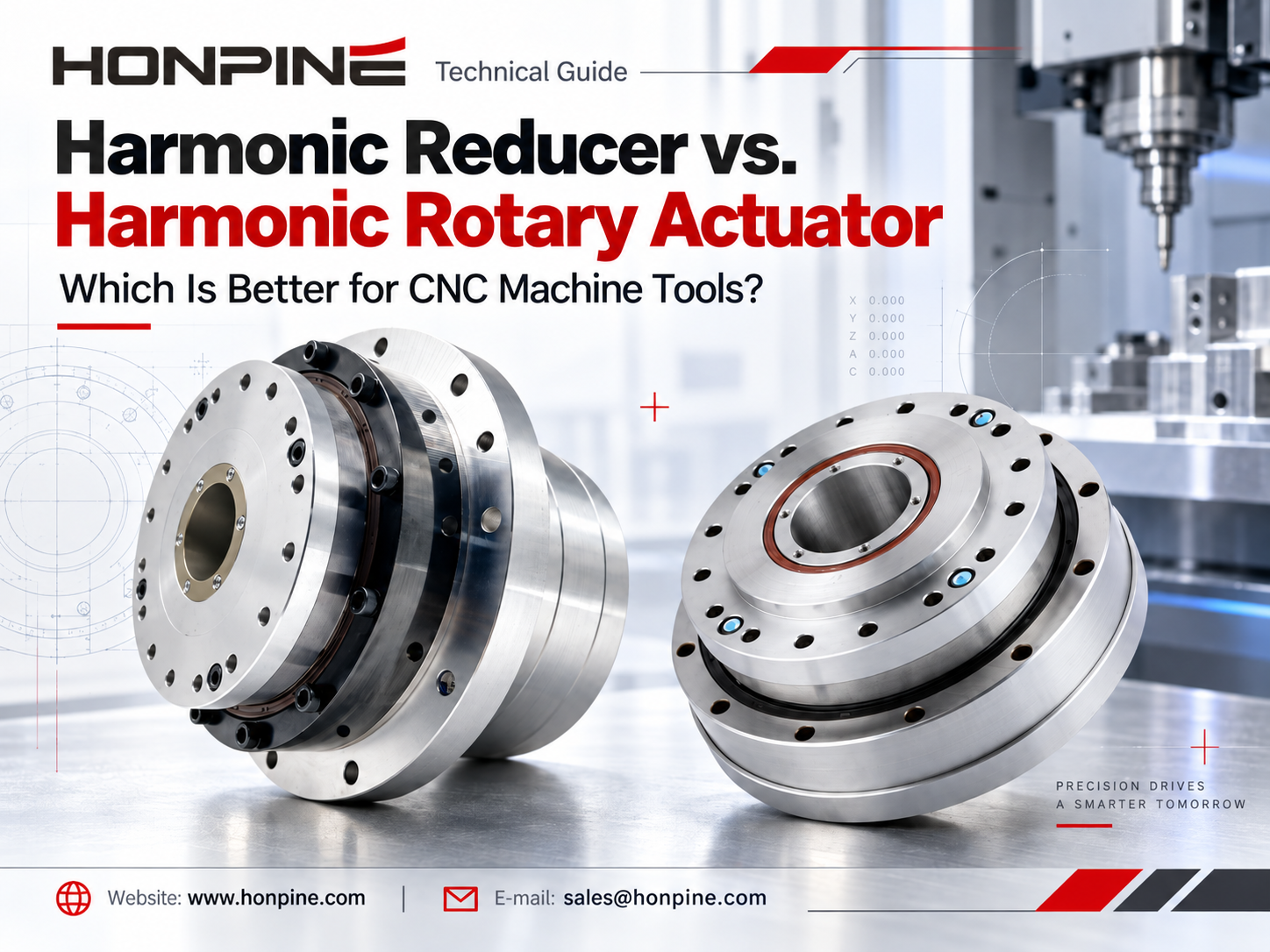
 Harmonic Reducer vs. Harmonic Rotary Actuator: Which Is Better for CNC Machine Tools?Choosing between a harmonic reducer and a harmonic rotary actuator is an important decision in CNC machine tool design. Both solutions offer high-precision motion control, but they differ in integration, installation requirements, rigidity, and system flexibility. For CNC fourth-axis rotary tables and compact five-axis machining systems, selecting the right harmonic drive can significantly influence machine performance. In this article, HONPINE Technical Director Theodore Li compares harmonic reducers and harmonic rotary actuators to help engineers identify the most suitable solution for their CNC applications.
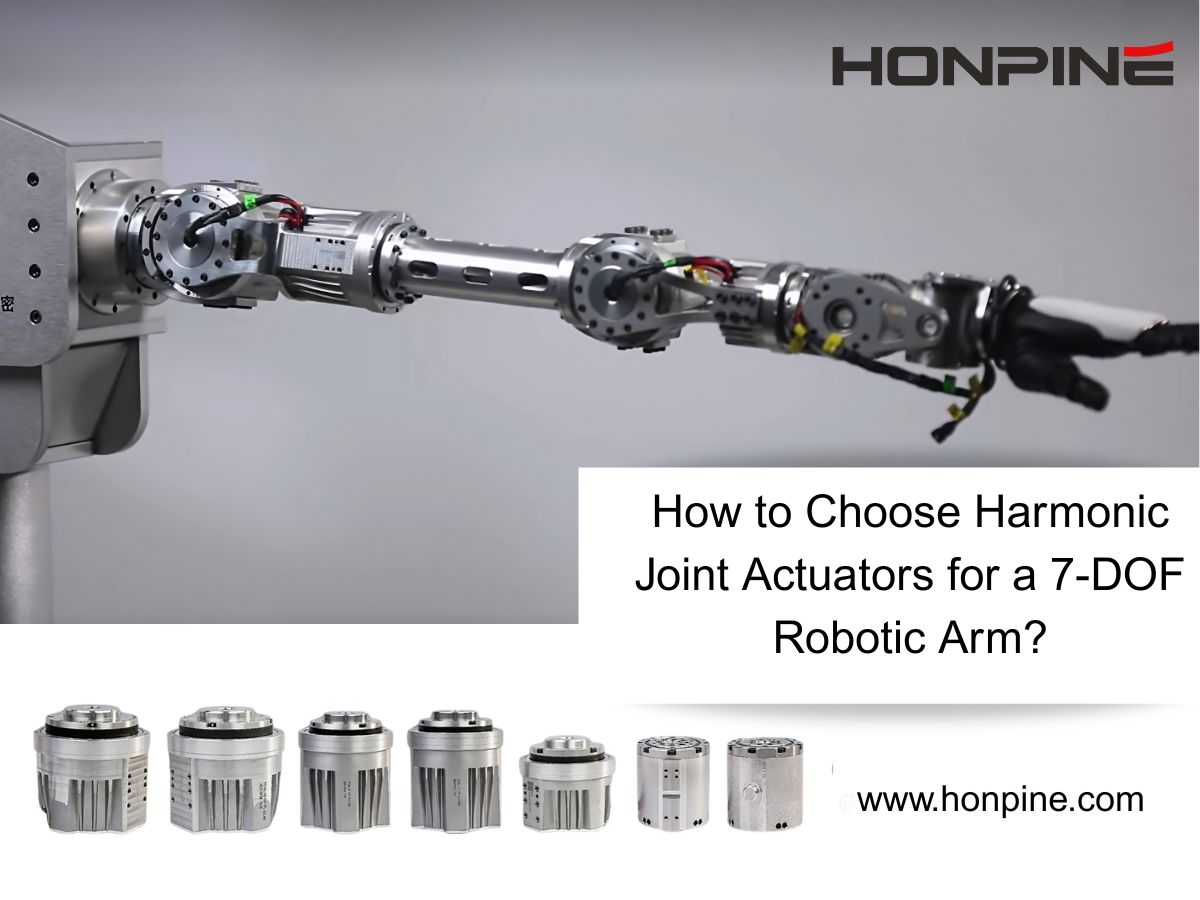
 How to Choose Harmonic Joint Actuators for a 7-DOF Robotic Arm?I'm Theodore Li, Technical Director at HONPINE. Choosing harmonic joint actuators for a 7-DOF robotic arm starts with the torque, weight, and installation needs of each joint. This guide uses a TCHL 20 shoulder and TCHL 14 wrist configuration as an example, then explores torque sensing, compliant control, and HAG Series considerations for demanding robotic applications.
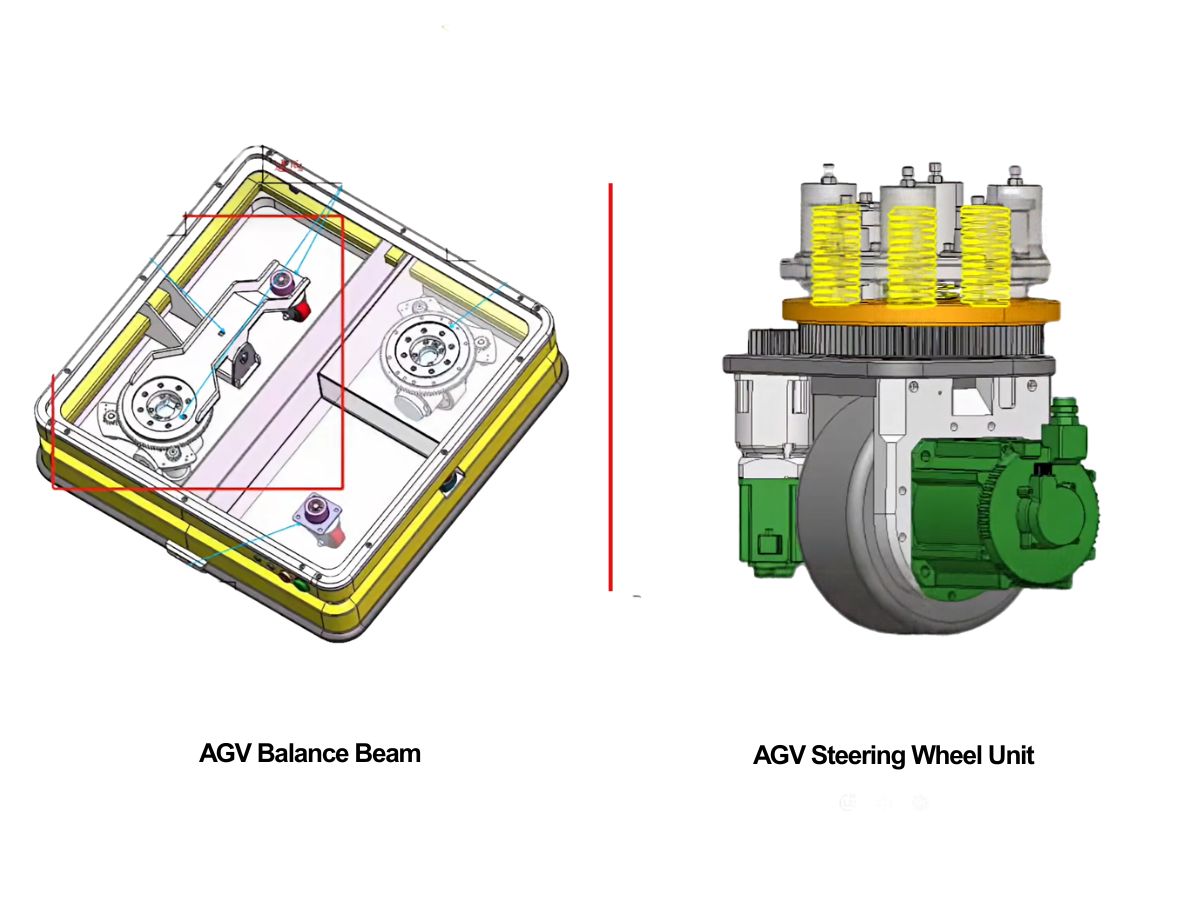
 AGV Suspension: Should You Choose a Balance Beam or a Spring-Loaded Steering Drive Unit?Choosing an AGV suspension system starts with the vehicle’s load range and floor conditions. Balance beams and spring-loaded steering drive units offer different approaches to maintaining wheel contact and managing wheel loads. This HONPINE guide compares both options and explains how to evaluate traction, suspension travel, installation space, and maintenance before choosing a configuration.