

Why Is It So Difficult for the Price of High-Performance Humanoid Robots to Decrease?And Why Are Harmonic Joint Modules Still Irreplaceable?
When Will Humanoid Robots Be Commercialized, and Why Is Their Price So Hard to Reduce?
With massive capital pouring into the humanoid robotics industry, humanoid robots are clearly moving toward large-scale mass production. Yet a fundamental question remains: why is their price still so difficult to bring down?
Even China—often called the world’s factory—has not been able to produce truly low-cost humanoid robots.
For example, Unitree H1 is priced at around RMB 650,000, while Unitree G1, which removes the expensive dexterous hands (and therefore cannot strictly be considered a full humanoid robot) and significantly reduces degrees of freedom, still costs RMB 99,000.
The core reason lies in one unavoidable requirement: high degrees of freedom.
High DOF is essential for humanoid robots, and this directly leads to joint modules accounting for a consistently high proportion of total system value.
What Makes Humanoid Robots So Expensive?
In humanoid robots, joints account for approximately 60%–70% of the total cost.
Taking Tesla Optimus as a representative example:
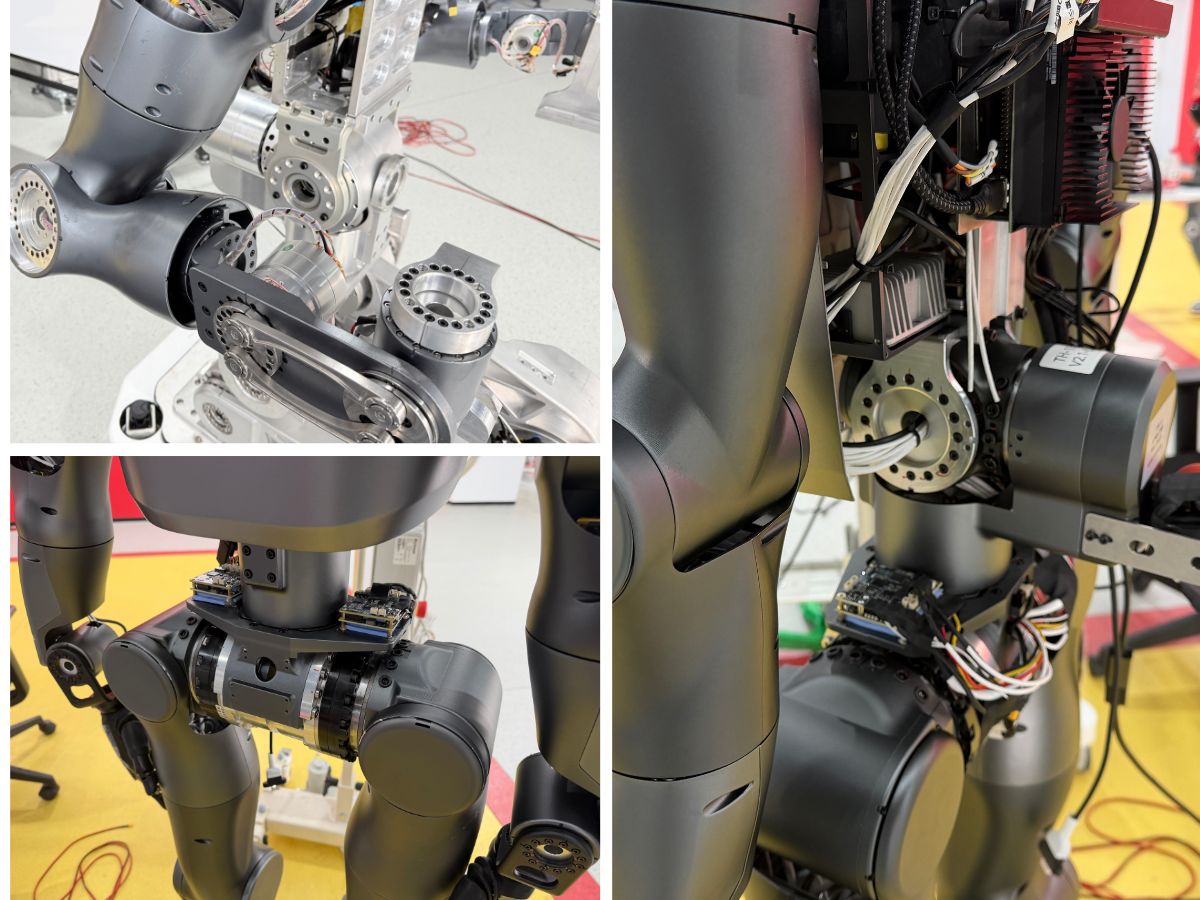
A typical humanoid robot features 28 actuators, evenly split between linear actuators and rotary actuators.
Rotary actuators mainly consist of:
frameless servo motor + harmonic reducer + motor driver + clutch + force sensor + encoder
Linear actuators, similar to human muscles, mainly consist of:
frameless servo motor + planetary roller screw / trapezoidal screw + motor driver + force sensor + encoder
All 28 joints of Tesla Optimus use frameless torque motors as the primary power source.
Among them:
14 rotary joints adopt frameless torque motor + harmonic reducer
14 linear joints adopt frameless torque motor + planetary roller screw
The Unitree G1 basic version is equipped with 23 frameless motors, each priced at approximately USD 190–285, resulting in a total joint motor cost of around USD 4,300–6,900.
Why Are Joints So Critical in Humanoid Robots?
Robot joints are the core enablers of humanoid motion.
Only joint modules with ultra-high reduction ratios, extremely high torque density, and near-zero backlash—namely harmonic joint modules—can enable truly humanoid, natural movements.
Although joint modules contribute significantly to the overall cost, at the current stage of technology, harmonic joint modules remain the only solution that achieves the optimal balance between size, weight, precision, and torque. This makes them irreplaceable.
Why Are Frameless Torque Motors So Important in Humanoid Robot Joints?
The humanoid robotics industry almost exclusively uses frameless motors in joints.
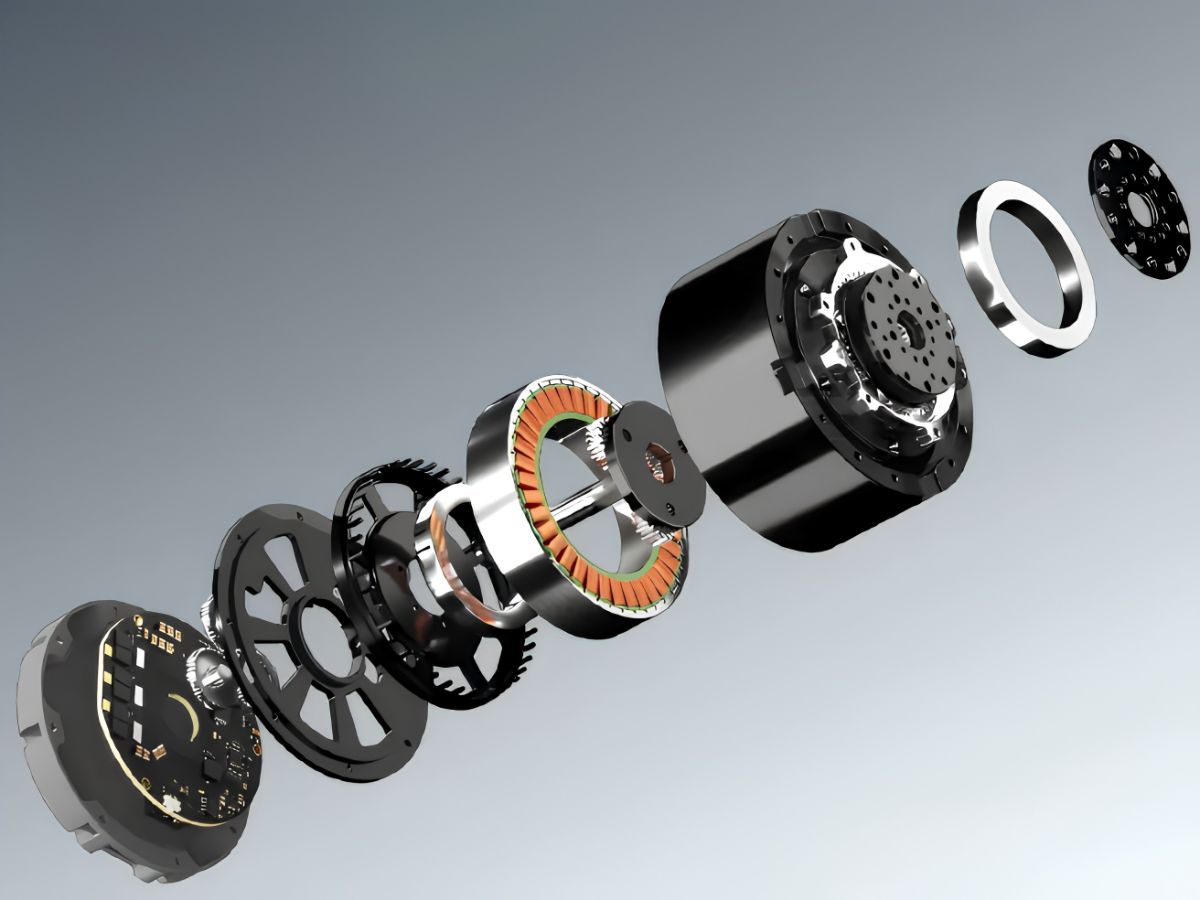
A frameless torque motor is a type of permanent magnet synchronous motor that retains only the torque- and speed-generating core of a traditional motor—without a shaft, bearings, housing, or end caps.
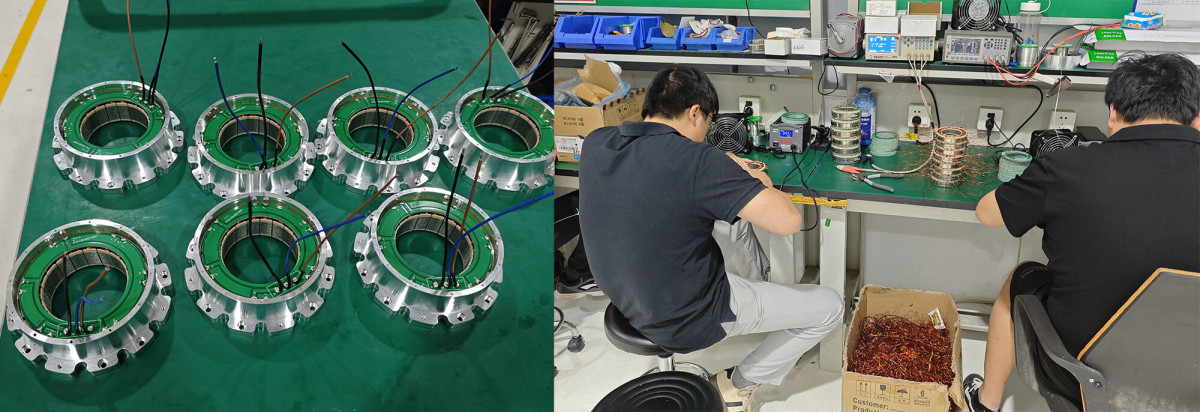
A frameless motor consists of only two parts:
Rotor: an internal rotating steel ring with permanent magnets, mounted directly onto the machine shaft
Stator: an external component with laminated steel and copper windings, mounted tightly inside the mechanical housing to generate electromagnetic force
Unlike conventional servo motors, which are evaluated mainly by output power, frameless torque motors are evaluated by output torque.
Powered by a drive unit, the driver controls the UVW three-phase currents to generate a magnetic field that drives the permanent-magnet rotor. Feedback can be provided via Hall sensors or external encoders, allowing the drive to compare actual feedback with target values and precisely adjust rotor position to achieve servo control.
The key advantage of frameless motors lies in their high torque and power density and excellent volume and weight efficiency.
By increasing stator slot fill (embedding more copper windings) and optimizing structural design (lightweight, thin profiles), frameless motors deliver powerful torque within limited space—making them ideal for humanoid robots, where size, weight, and dynamic performance are critical.
Their high-density characteristics include:Higher power output within the same volume,Smaller size for the same power level,Lower temperature rise
Thanks to integrated design and optimized potting processes, energy efficiency and reliability are also significantly improved.
Why Are Gear Reducers So Important in Humanoid Robot Joints?
When comparing harmonic reducers, RV reducers, and planetary reducers, harmonic reducers are currently the optimal solution for humanoid robot upper-limb joints.
In harmonic drives:30%–50% of the total teeth are engaged simultaneously,Errors are averaged across multiple teeth, providing mutual compensation,Transmission accuracy is extremely high, with backlash controllable within 1 arc-minute,Under the same gear accuracy grade, transmission error is roughly one-quarter that of conventional cylindrical gear systems.
By slightly adjusting the radius of the wave generator to increase flexspline deformation, backlash can be reduced to near zero, or even completely eliminated—making harmonic drives especially suitable for frequent reversing motion.
How Harmonic Drives Reducers Work?
Harmonic transmission is based on the interaction between the wave generator and the flexible gear.
As the wave generator rotates, its elliptical profile causes periodic elastic deformation of the flexspline. Because the flexspline and circular spline differ in tooth count (typically by two teeth), the meshing position shifts continuously.
For every 180 degrees of wave generator rotation, the flexspline’s engagement position moves by one tooth pitch along the circumference. This accumulated relative displacement creates a speed difference between the flexspline and circular spline.
As a result, when the wave generator completes one full rotation, the flexspline rotates only
(tooth difference / circular spline teeth) × 360 degrees,
achieving a very high reduction ratio.
The harmonic reducer is a critical component of the harmonic joint module.
Motor and harmonic reducer must be properly power-matched—neither undersized nor oversized. In joint design, the reducer’s parameters (torque, speed) must be determined first, and then the motor is selected accordingly.
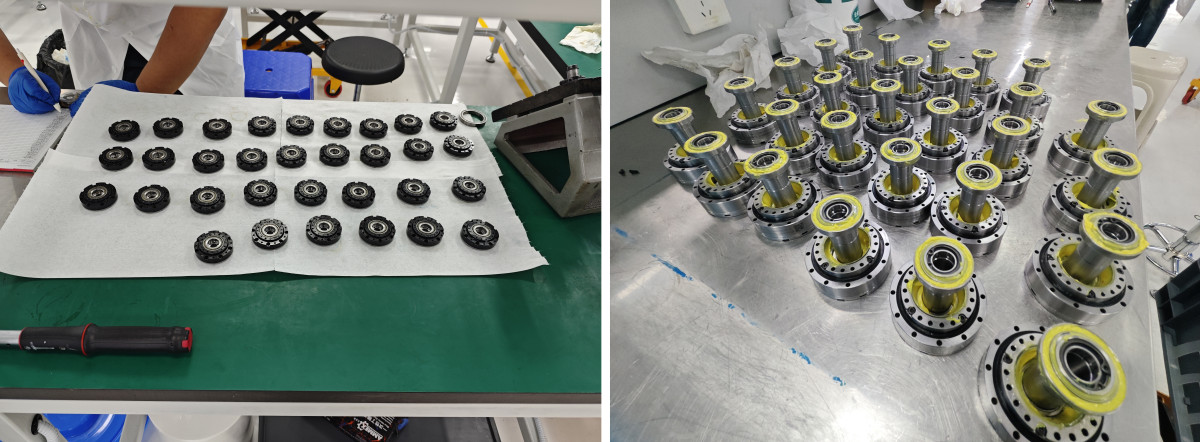
The high price of humanoid robots is not caused by brand premiums, but by engineering complexity and the difficulty of precision manufacturing.
Each joint in a humanoid robot must simultaneously achieve:High precision,Lightweight design,High torque output,Long-term reliability.
Only when every joint meets these stringent requirements can the entire robot operate smoothly, safely, and naturally.This is the fundamental reason why the cost of high-performance humanoid robots remains difficult to reduce.
Read More
Learn more about the story of HONPINE and industry trends related to precision transmission.
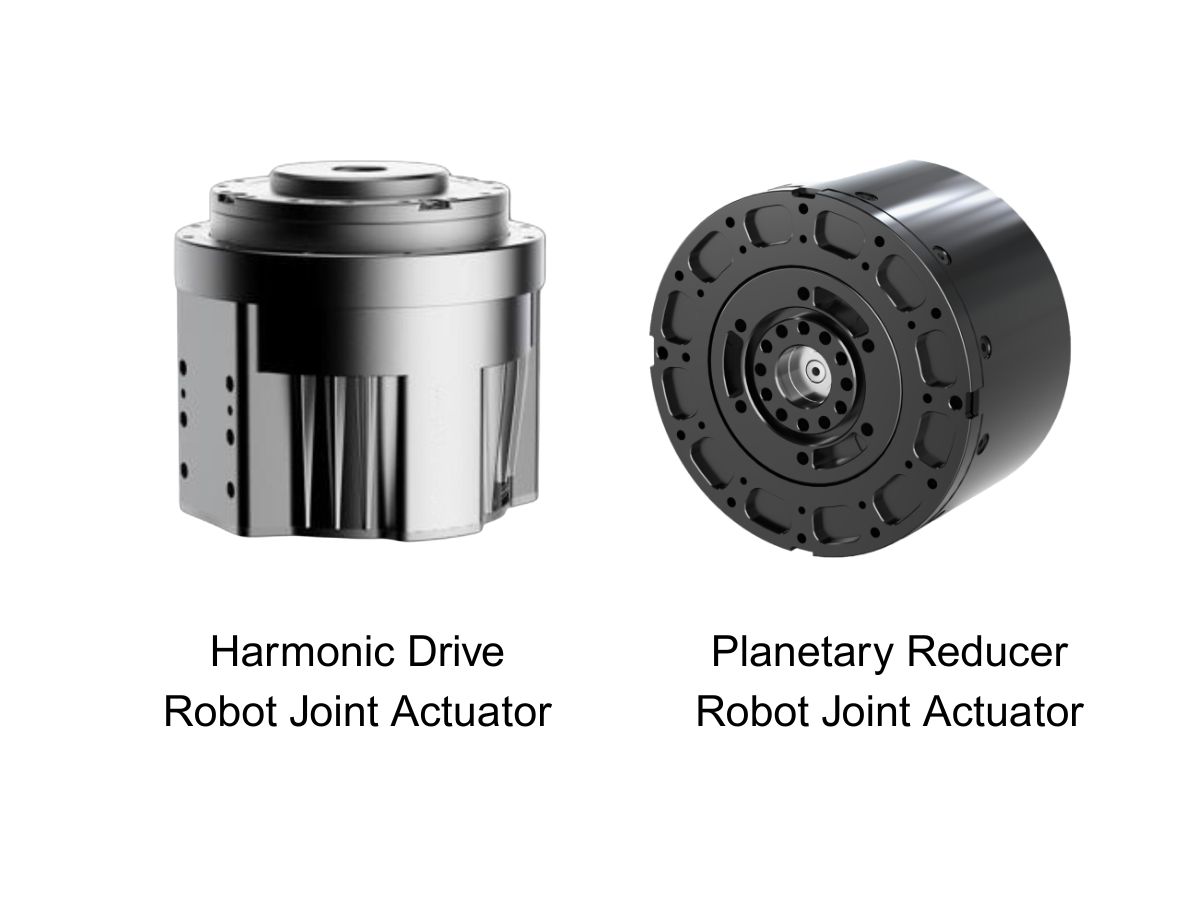
 What is robot joint actuator?How to Choose the Best Robot Rotary Joint Actuator?In core robot joint transmission solutions, planetary and harmonic rotary actuators each have their own strengths. Choosing the right type based on application requirements is essential to achieve the optimal balance between performance and cost.
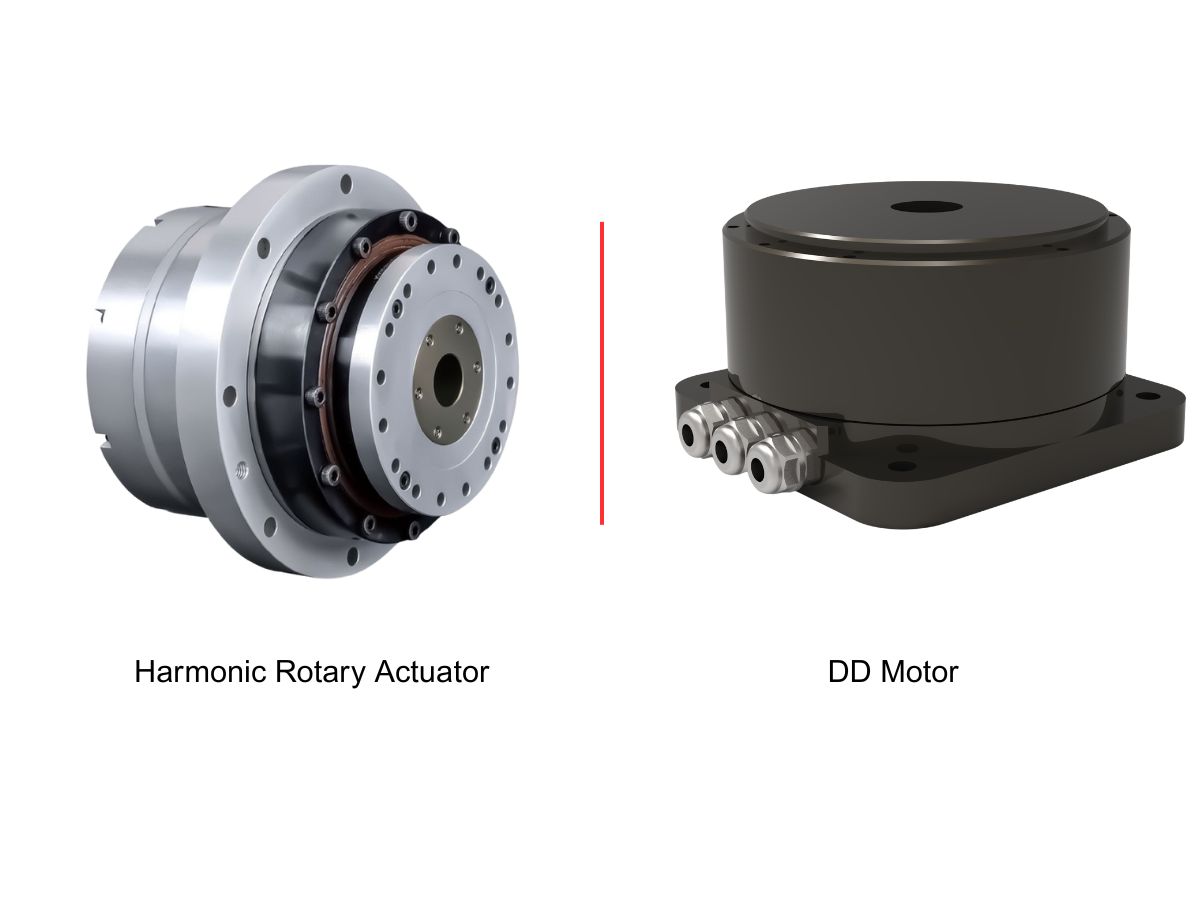
 DD Motors VS Harmonic Rotary ActuatorsThis article provides an in-depth comparison between Direct Drive (DD) motors and harmonic rotary actuators, covering their transmission principles, advantages and disadvantages, and typical application fields.
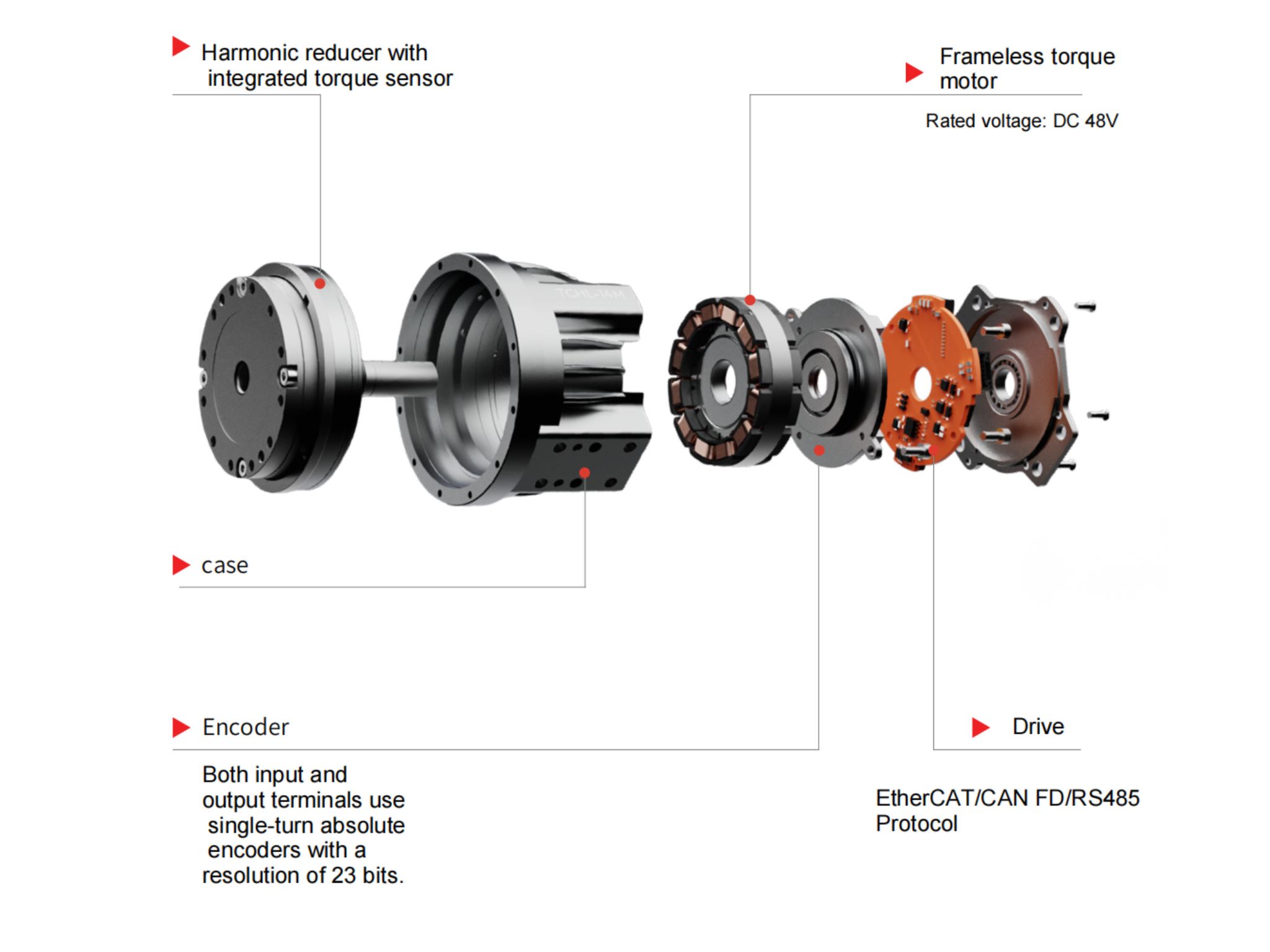
 OMG Ultra Compact Harmonic Drive Joint Module with Built-in Torque SensorHONPINE TCHL series harmonic drive joint module is a game-changing product that achieves disruptive improvements in multiple aspects such as lightweight design, integration level, and connection convenience. This article will analyze its revolutionary enhancements with you.
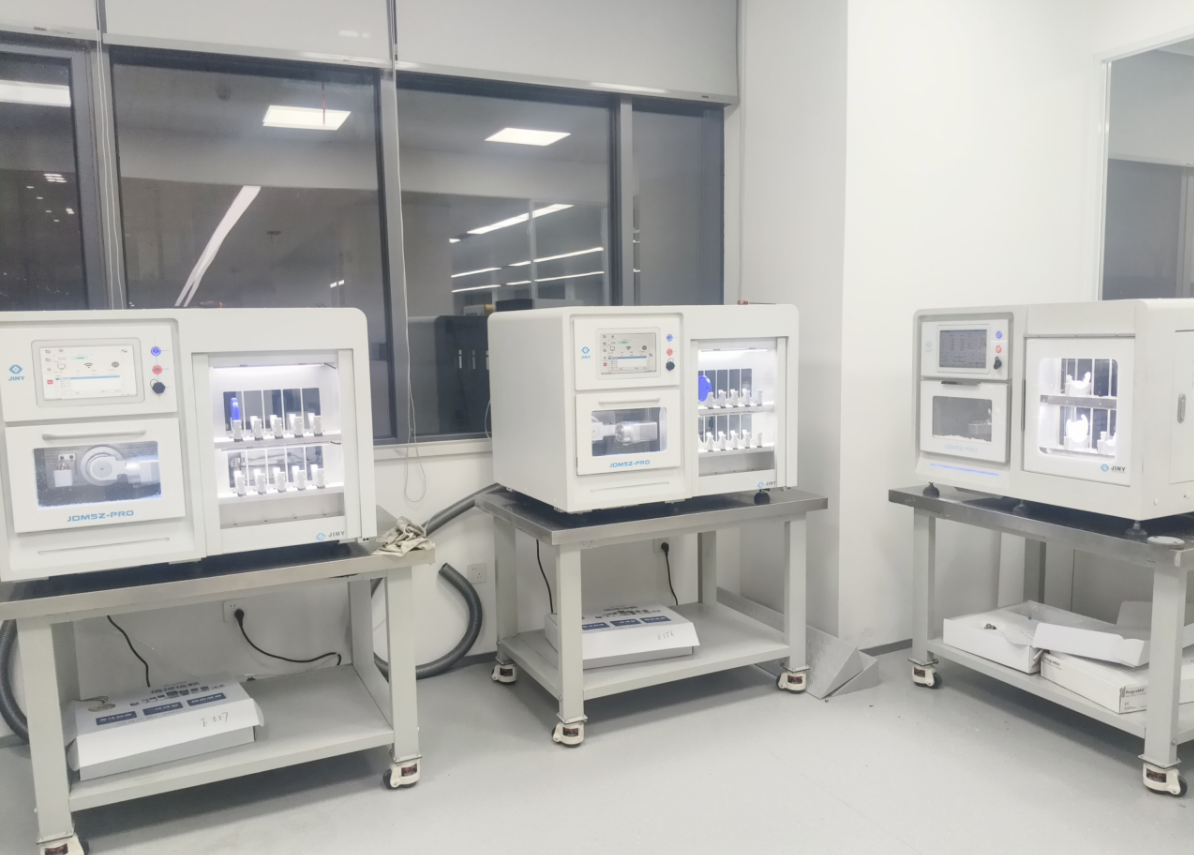
 The Role of Harmonic Drive Gears in Achieving 5–10 μm Accuracy in Dental Milling MachinesA dental milling machine is a CNC machining system used to directly process digital dental models into restorations such as crowns, bridges, veneers, inlays, and implant abutments. Dental milling machines require far higher operational accuracy and motion stability than ordinary equipment. This article explains how harmonic drive gear help dental milling machines achieve stable, continuous, and controllable operation.
 Why Are Harmonic Rotary Actuators Perfect for Medical Equipment?Harmonic rotary actuators (typically integrated systems consisting of a harmonic drive reducer, frameless torque motor, encoder, and optional brake) are regarded as key components in medical equipment. The core reason is that they simultaneously meet the most stringent medical requirements for precision, compact size, safety, and controllability. The following explanation is structured from three perspectives: technical characteristics, application scenarios, and medical value.
 High-Precision RV Reducers Perfectly Matched for Walking RobotsThe walking axis of a robot is a core component for power transmission and support. RV reducers provide extremely high rigidity, precision, and torque while maintaining a compact size and exceptional reliability, making them an ideal match for the demanding requirements of walking robot joints in terms of load capacity, impact resistance, and precision.
 How to Choose High-Precision Rotary Actuators for Industrial Automation?High-precision rotary actuators play an important role in industrial automation, where positioning accuracy, repeatability, durability and installation flexibility directly affect equipment performance. HONPINE offers four main series of precision rotary actuators, including HAT, HAM and HAS harmonic rotary actuators and HPG low-backlash planetary actuators. With torque ratings ranging from 4 to 1,494 Nm across the product range, these solutions are designed for applications in semiconductor manufacturing, 3C automation, laser processing and CNC machine tools. Learn how to identify the right rotary actuator based on operating conditions, precision requirements and mechanical integration needs.
 Why Are Harmonic Reducers Suitable for High-Precision Automation Equipment?Precision automation equipment depends on consistent rotary motion, reliable positioning and compact transmission design. From dispensing head orientation and component angular alignment to automated inspection indexing, harmonic reducers offer a practical solution for applications requiring low backlash and high reduction ratios in limited installation space. This article explains how harmonic reducers support repeatable motion, compares key design configurations, and outlines how to select a suitable reduction ratio and reducer structure based on load, speed, accuracy and machine cycle-time requirements.
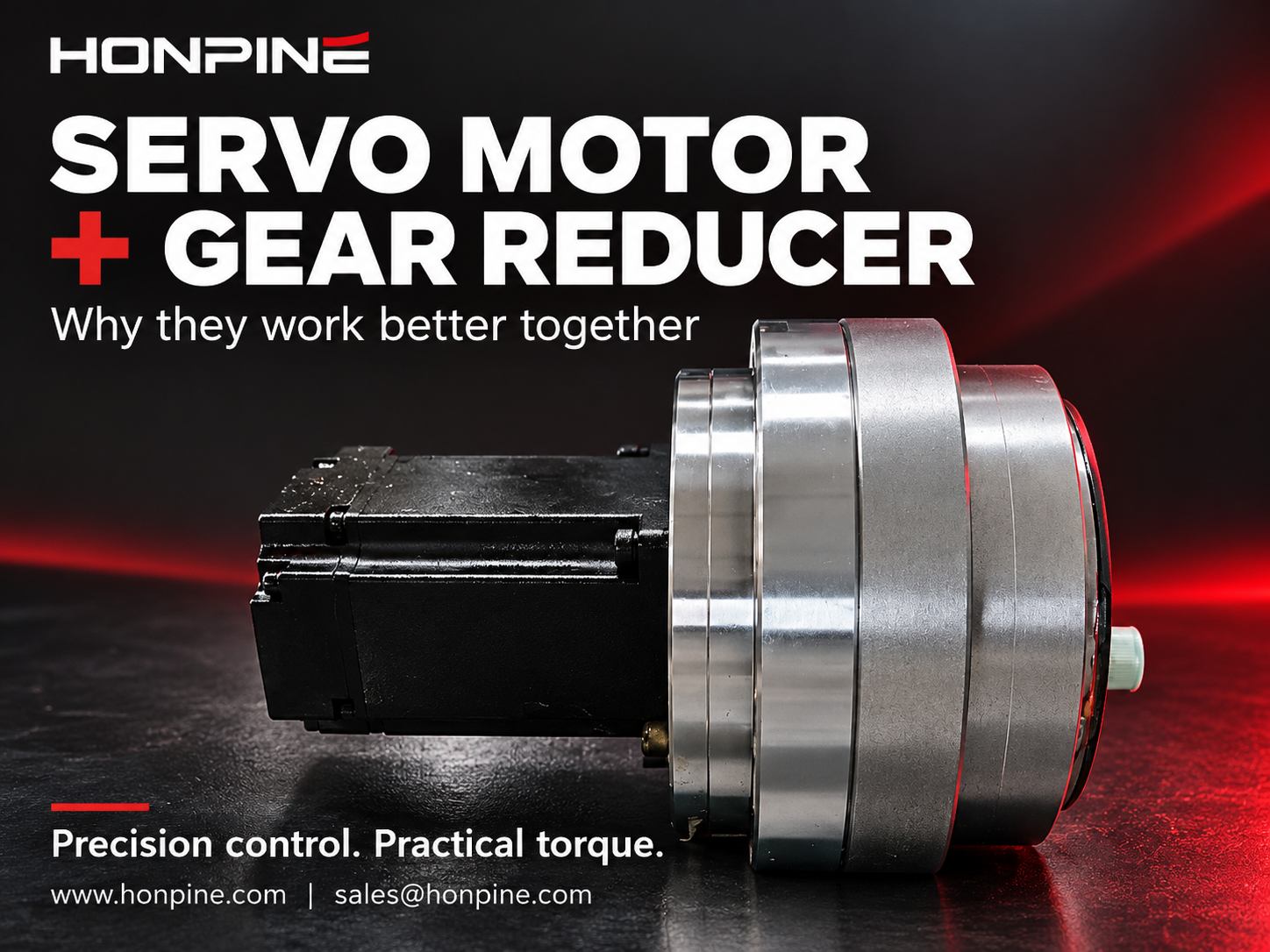
 Why Are Servo Motors and Gear Reducers an Ideal Match?Servo motors provide fast, precise motion control, while gear reducers adapt their speed and torque to the load. This guide explains how servo motors and gear reducers work together through torque multiplication, reflected inertia reduction and finer theoretical position resolution. Learn how inertia matching, backlash, torsional stiffness and reduction ratio influence performance in robotics and industrial automation.
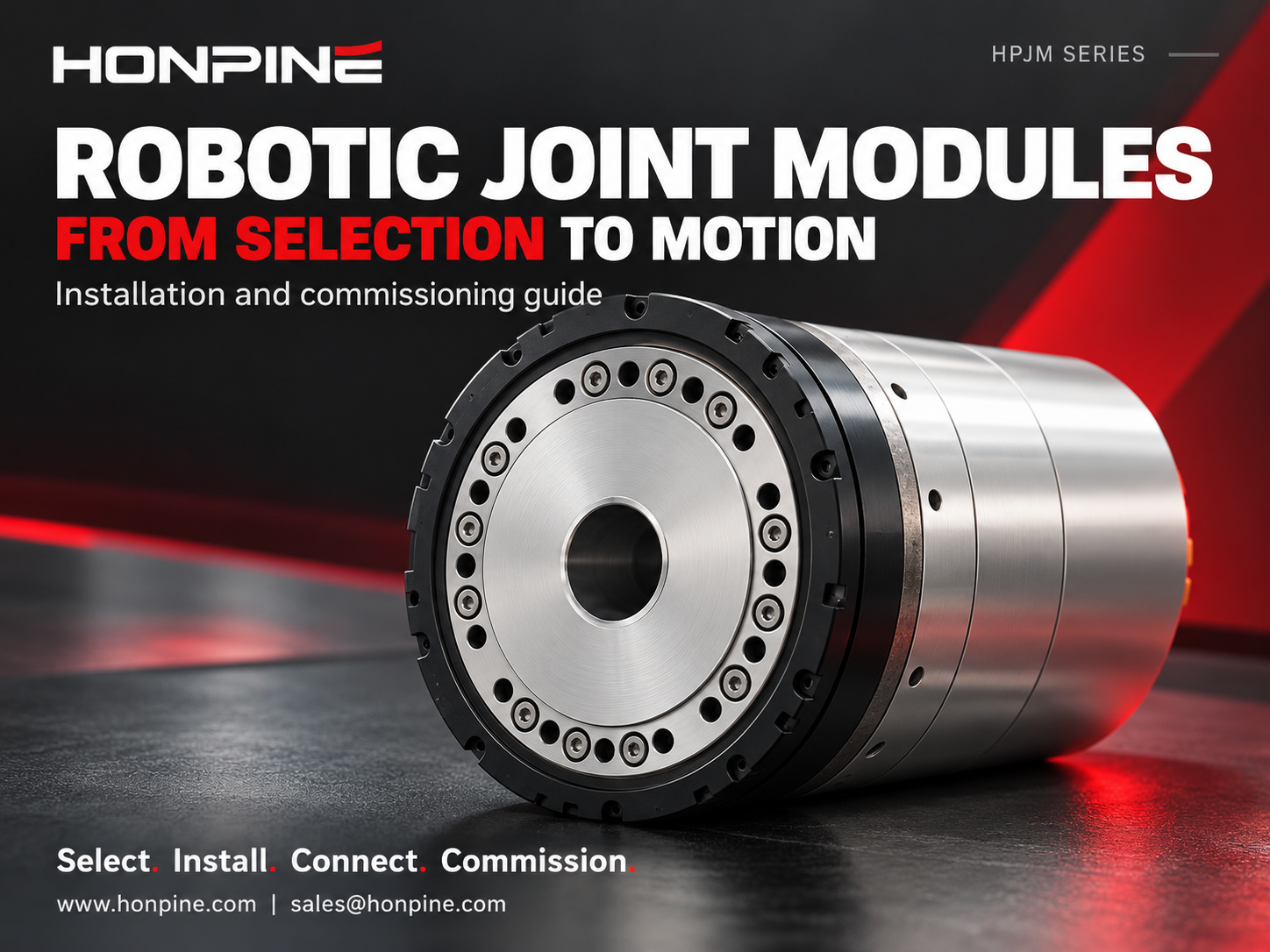
 How to Select and Use Robotic Joint Modules?How do you take robotic joint modules from selection to controlled motion? Using the HONPINE HPJM harmonic joint module as an example, Technical Director Theodore Li explains the key steps in mechanical installation, electrical wiring, CAN and EtherCAT configuration, and control commissioning. Learn what to confirm before integration and how to approach setup so each joint can respond correctly to your controller.
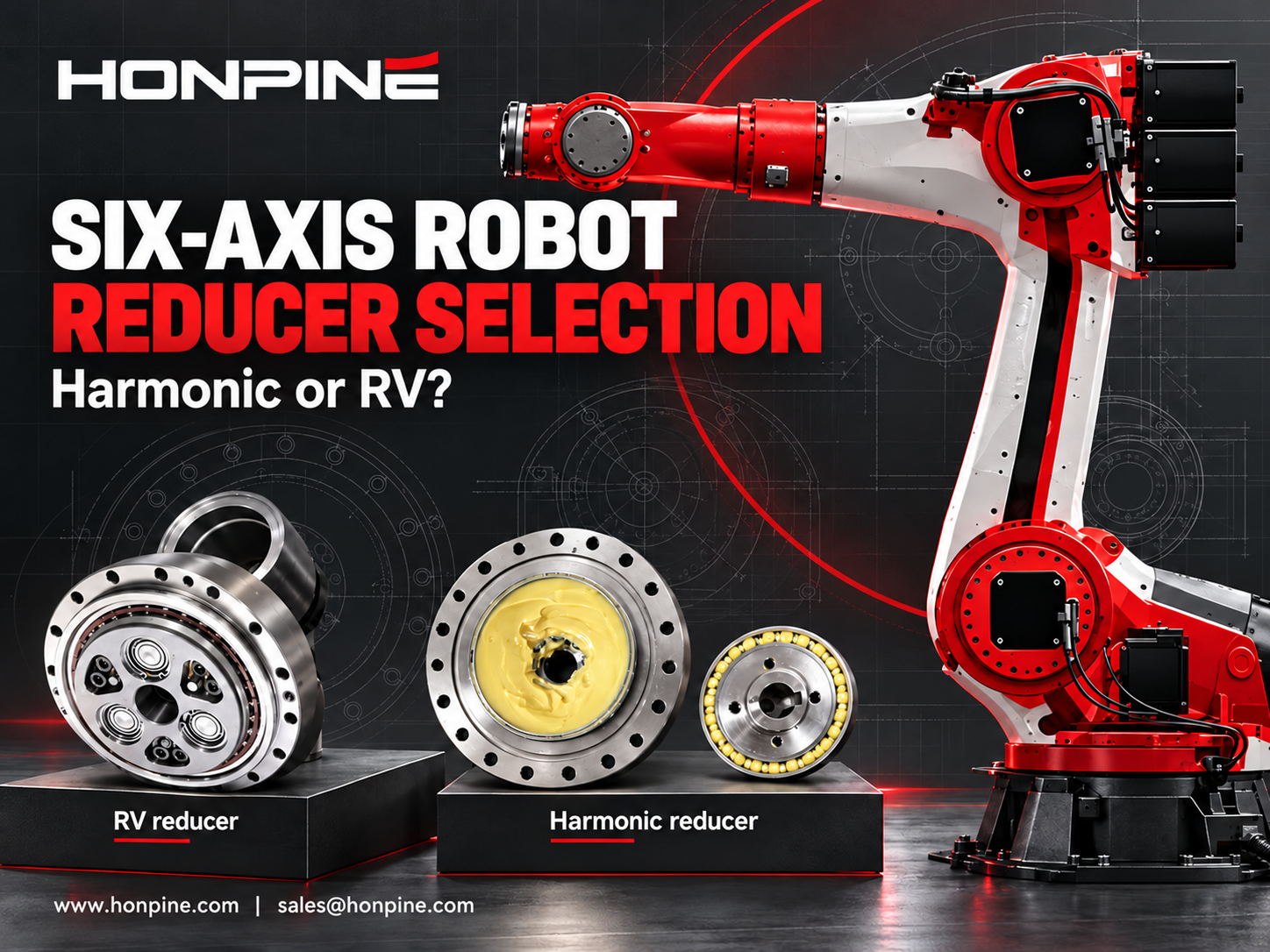
 How to Select Harmonic and RV Reducers for Each Axis of a Six-Axis Robot?What determines whether a six-axis robot joint needs a harmonic reducer or an RV reducer? The answer depends on torque, inertia, impact loads, bearing loads and installation space. This guide explains how to evaluate harmonic and RV reducers for the base, shoulder, elbow and wrist, with practical checks for stiffness, backlash and service life. Use the requirements of each axis to select a suitable reducer configuration.
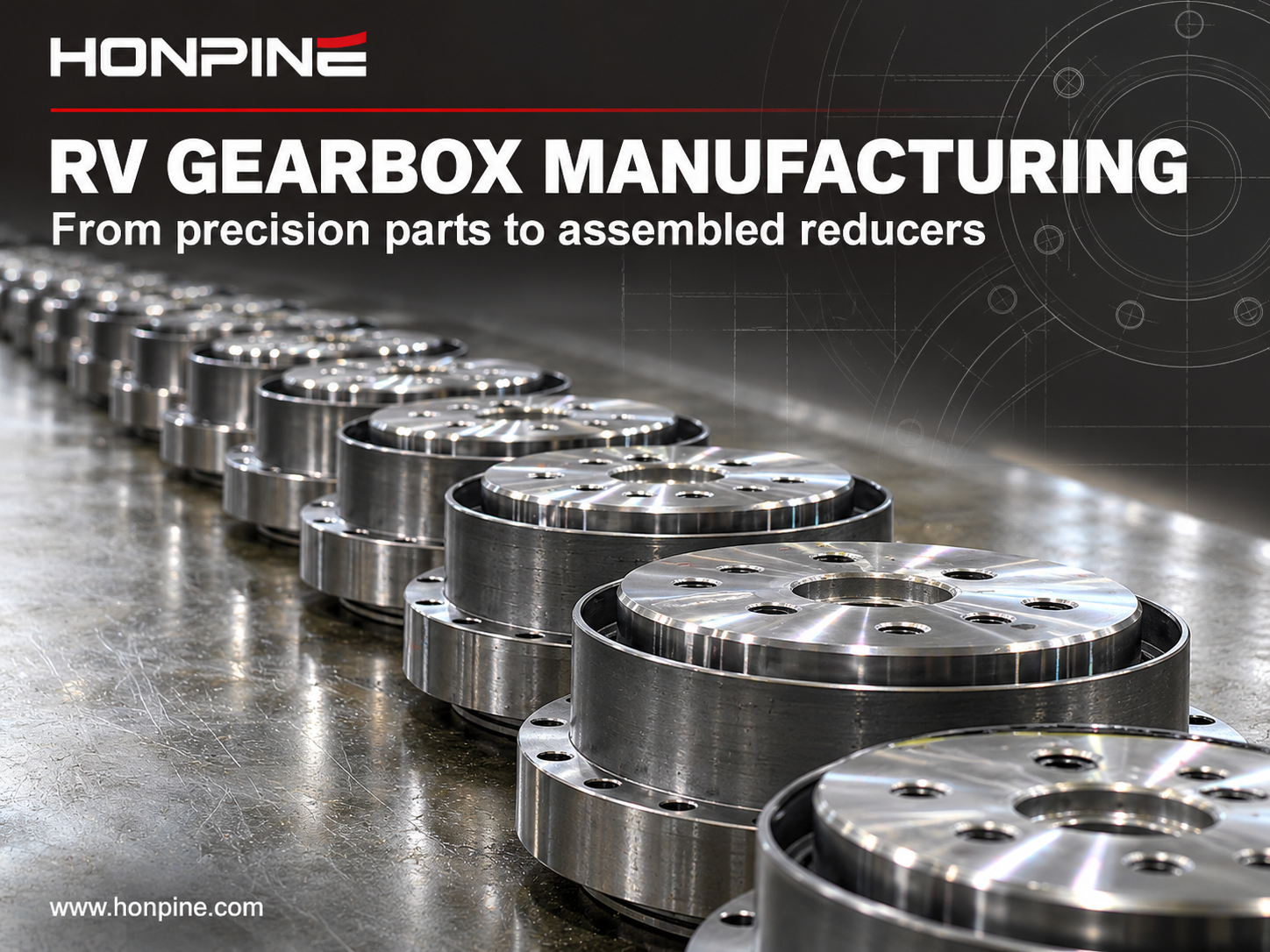
 Top 7 RV Reducer Gearbox Manufacturers: Why Does Nabtesco Still Dominate?What sets RV reducer gearbox manufacturers apart, and why does Nabtesco remain a benchmark in this market? RV reducer production demands precise component machining, careful assembly and extensive engineering know-how. This article introduces seven manufacturers across RV reducers and related transmission technologies, examines the strengths behind Nabtesco's position, and explores HONPINE's development capabilities to help you understand the supplier landscape.
Double Click
We provide harmonic drive reducer,planetary reducer,robot joint motor,robot rotary actuators,RV gear reducer,robot end effector,dexterous robot hand
 What is robot joint actuator?How to Choose the Best Robot Rotary Joint Actuator?In core robot joint transmission solutions, planetary and harmonic rotary actuators each have their own strengths. Choosing the right type based on application requirements is essential to achieve the optimal balance between performance and cost.
 OMG Ultra Compact Harmonic Drive Joint Module with Built-in Torque SensorHONPINE TCHL series harmonic drive joint module is a game-changing product that achieves disruptive improvements in multiple aspects such as lightweight design, integration level, and connection convenience. This article will analyze its revolutionary enhancements with you.
 What’s the Difference Between Single and Dual Encoder Robot Joint Modules?Does your robot need a dual encoder joint module, or is a single encoder enough? The answer depends on positioning requirements, transmission behavior, force control strategy and budget. This guide compares motor-side and output-side feedback, explains where dual encoders can improve control, and examines their costs and limitations. Learn when a single encoder can meet your needs and when additional output feedback is worth considering.
 How to Find a Reliable Robotic Joint Actuator Supplier?Choosing the right robotic joint actuator supplier is essential for reliable performance, smooth integration and long-term project success. Beyond product specifications, you need to understand a supplier’s technical expertise, production capacity and after-sales support. In this guide, Allen Li, Founder of HONPINE, explains how to assess these three factors when sourcing harmonic and planetary joint actuators for robotics and industrial automation.
 How Integrated Robot Joint Modules Are Reshaping Robot Wiring and Control Architecture?Integrated robot joint modules are changing how robots are designed by combining the motor, reducer, drive, encoder, and sensing components into a compact motion unit. Compared with traditional distributed architectures, this integrated approach can reduce cable complexity, simplify power and communication connections, and support more compact robot structures. As humanoid robots demand higher levels of motion coordination, response speed, precision, and integration, robot joint modules are becoming an increasingly important interface between intelligent control systems and physical movement. This article explains how integrated robot joint modules reshape robot wiring and control architecture, using the HONPINE TCHL harmonic drive robot joint module as an example.
 Large-Bore Harmonic Joint Actuator for Humanoid Robot Waist Joints: A Practical Selection GuideThe humanoid robot waist joint is one of the most demanding motion joints in a humanoid robot. Unlike conventional robotic arm joints, it supports the upper body while handling bending, twisting, posture transitions, and continuously changing dynamic loads. At the same time, the limited internal space must accommodate power cables, signal lines, sensors, and structural components. These requirements make a large-bore harmonic joint actuator an important option for humanoid robot waist joints. This article explains how to select a suitable harmonic joint actuator by considering hollow bore size, dynamic torque, reduction ratio, mechanical rigidity, integration, and service life.
 Robot Joint Actuator Selection: From Inertia Matching to System-Level OptimizationSelecting a robot joint actuator is not simply a matter of matching motor torque or achieving a suitable inertia ratio. In a real robotic system, reduction ratio, load spectrum, thermal performance, mechanical stiffness, transmission nonlinearity, encoder architecture, control bandwidth, and service life all interact to determine the final result. A joint may meet its peak torque requirement and still experience vibration, overheating, positioning errors, or premature wear in real operation. This article examines the engineering logic behind robot joint actuator selection and explains why moving from single-parameter matching to system-level optimization can lead to more reliable and predictable robotic joint performance.
 HONPINE HAG Robot Joint Module Undergoing Pre-Shipment InspectionThe HONPINE HAG Robot Joint Module is currently undergoing pre-shipment inspection before delivery.
 How to Choose a Reliable Robot Joint Motor Manufacturer for Humanoid Robots?Choosing a reliable robot joint motor manufacturer is a critical step when developing humanoid robots and other advanced robotic systems. A robotic joint must balance torque, speed, precision, torque density, thermal performance, feedback, mechanical stiffness, and long-term reliability within a compact structure. For B2B robotics companies, supplier evaluation should therefore go beyond a product datasheet and consider engineering capability, manufacturing capacity, joint integration, testing, and production scalability. In this article, Allen Li, Founder of HONPINE, explains the key factors to consider when selecting a robot joint motor manufacturer and how integrated harmonic robot joint technology can support humanoid robot development.
 Lightweight Humanoid Robots Start with Precision TransmissionAs humanoid robots move from experimental prototypes toward practical applications, lightweight design, energy efficiency, motion performance, and long-term reliability are becoming increasingly important. At the center of these challenges is precision transmission. From harmonic reducers and lightweight robot joints to integrated development kits, the design of each core component directly affects the overall performance of a humanoid robot. In this article, Allen Li, Founder of HONPINE, shares his perspective on how precision transmission technology can support the development of lightweight humanoid robots and how HONPINE is extending its expertise from harmonic reducers toward lightweight robot joints and integrated robotics solutions.
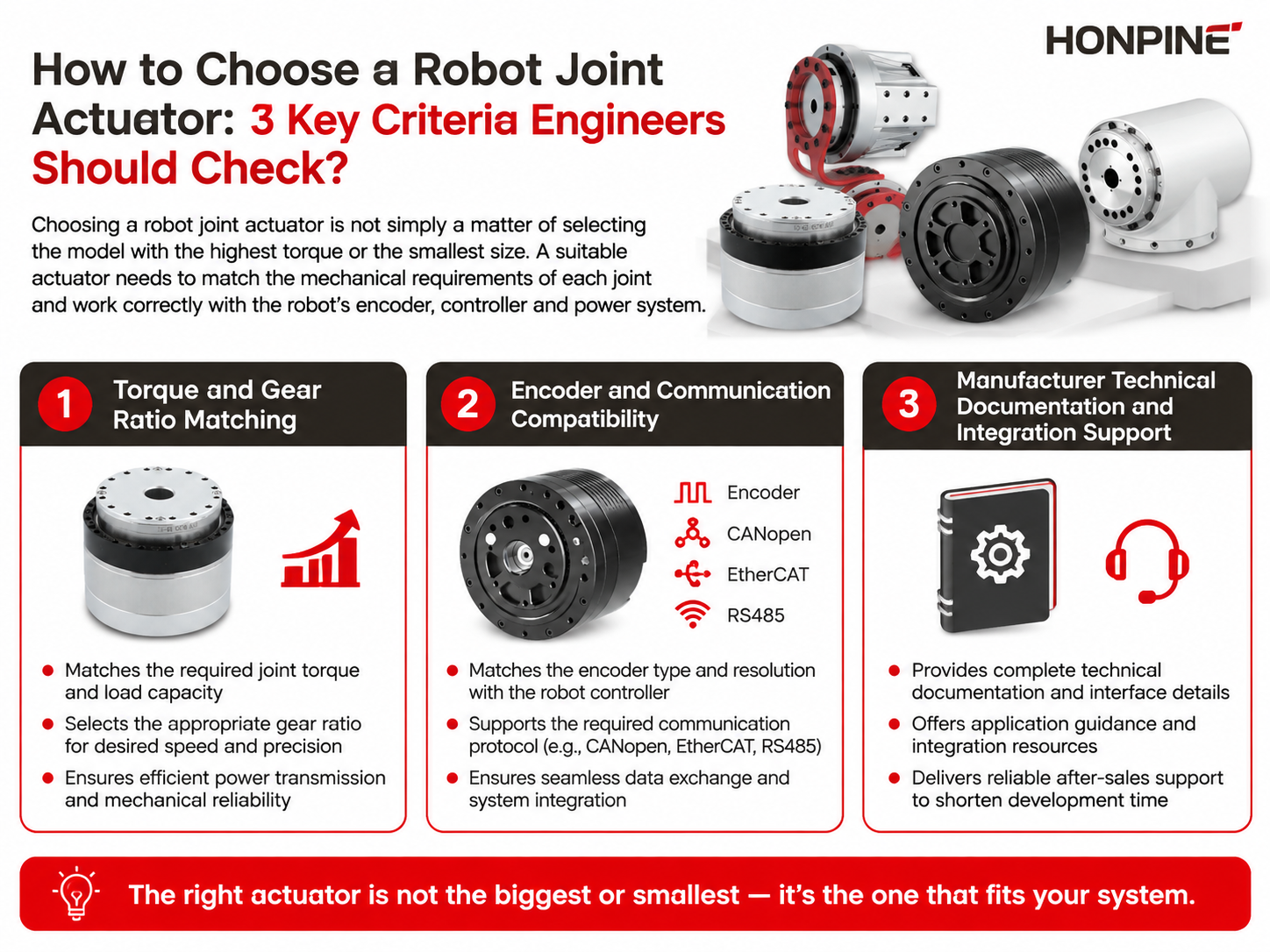
 How to Choose a Robot Joint Actuator: 3 Key Criteria Engineers Should Check?Choosing a robot joint actuator is an engineering decision that affects not only torque and motion performance, but also control stability, mechanical integration, and development time. For industrial robots, collaborative robots, humanoid robots, and other robotic systems, the right actuator must match the actual requirements of each joint while remaining compatible with the robot’s motor, encoder, controller, communication network, and power architecture. In this article, I will explain three key criteria engineers should evaluate when selecting a robot joint actuator: torque and gear ratio matching, encoder and communication compatibility, and the manufacturer’s technical documentation and engineering support.
 Outdoor Robot Joint Solution: Harmonic Joint Module with Built-in Torque SensorHello everyone, I’m Theodore Li, Technical Director at HONPINE. As robots move beyond controlled factory environments, outdoor robotic applications are creating new requirements for robot joint design. Rain, dust, humidity, temperature fluctuations, low-temperature conditions, and unpredictable external loads can all affect how a robotic joint performs in the field. In these environments, a joint needs to provide more than precise rotation. It also needs reliable torque feedback, suitable environmental protection, stable operation under changing temperatures, and practical mechanical integration. In this article, I will explain the key engineering considerations behind our outdoor robot joint solution, including the harmonic joint module, built-in torque sensor, IP65 protection, low-temperature lubrication, cable outlet protection, and mechanical integration, based on our experience with outdoor robotic applications such as solar panel installation, construction, and cleaning robots.