

How Joint Motors Are Redefining the Future of Robotic Arms?
The rise of embodied intelligence is pushing the design of robotic arms toward an entirely new paradigm. No longer are they merely tools for executing preprogrammed trajectories; instead, they are becoming extensions of an intelligent agent’s “proprioceptive body” in the physical world—capable of active exploration, dexterous manipulation, and safe interaction. This fundamental shift in objectives places unprecedentedly stringent demands on the underlying hardware architecture, control logic, and software ecosystem of robotic arms. So what kind of joint motors will future robotic arms need to use?
Operating Principles of Robotic Arms and Motors
In terms of working principles, robotic arms rely on the coordinated operation of motors, drivers, and high-precision sensors. Motors act as the power source, providing the driving force for motion. Drivers are responsible for precisely regulating the motor’s speed and torque to ensure that the arm’s movements achieve the desired accuracy. Sensors continuously monitor information such as joint position and applied force; once a deviation is detected, feedback is rapidly sent to the control system so that adjustments can be made.
For example, when a robotic arm needs to grasp a fragile object, sensors detect the applied force and immediately relay this information to the control system, allowing the arm to apply force gently and avoid damaging the object.
Core Factors in Selecting Robotic Arm Joint Motors
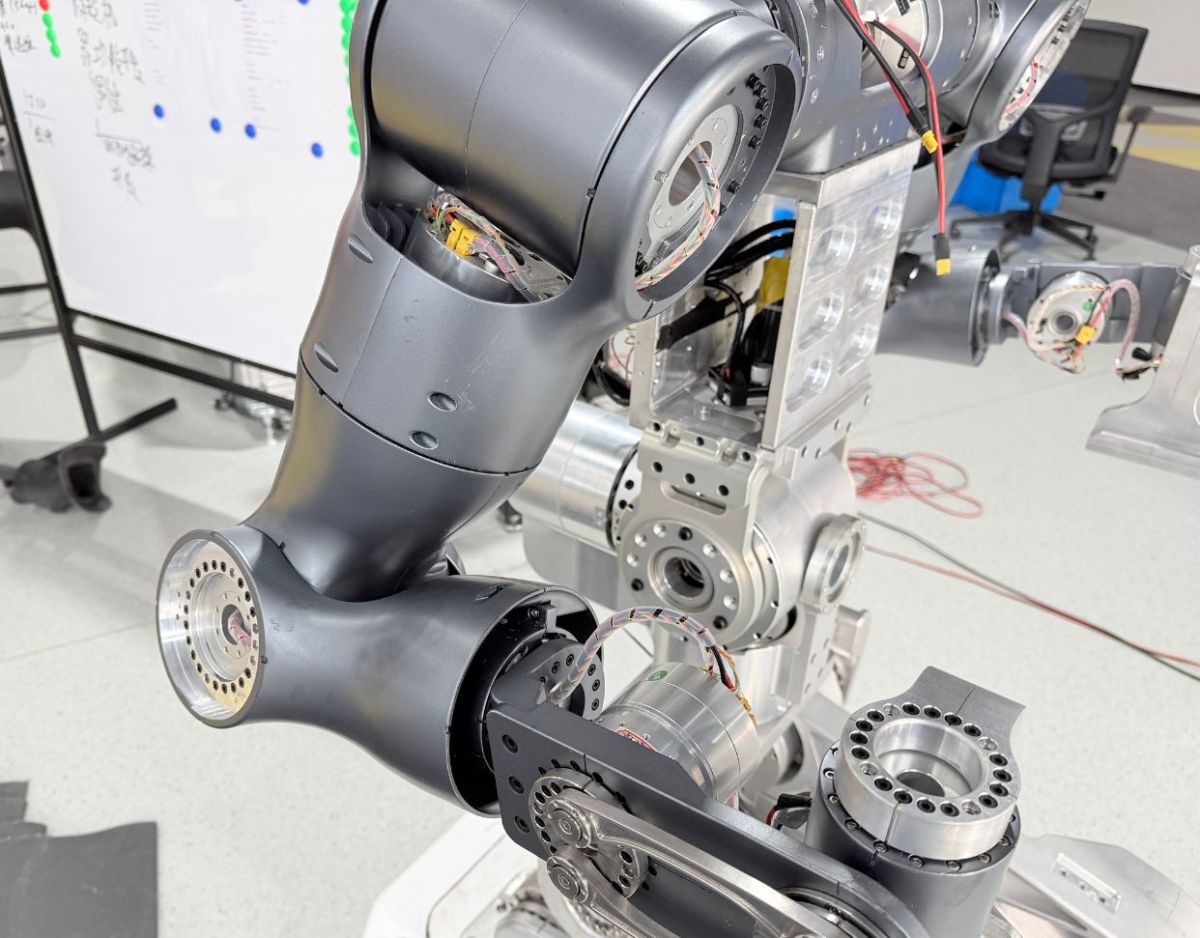
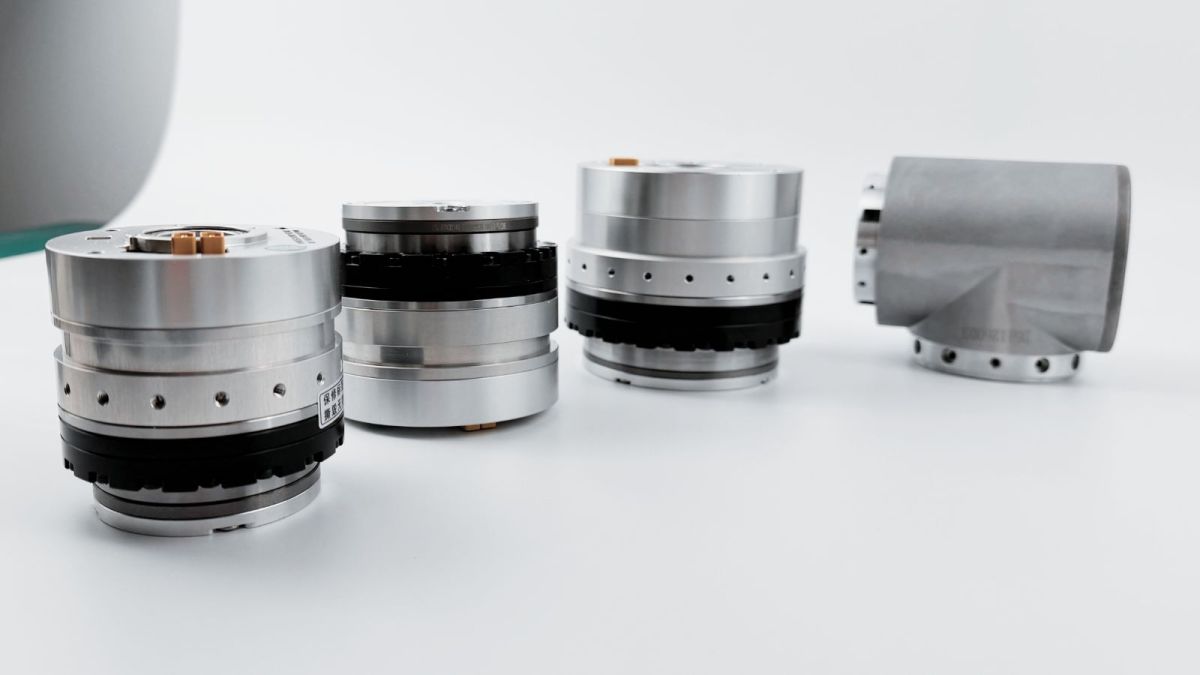
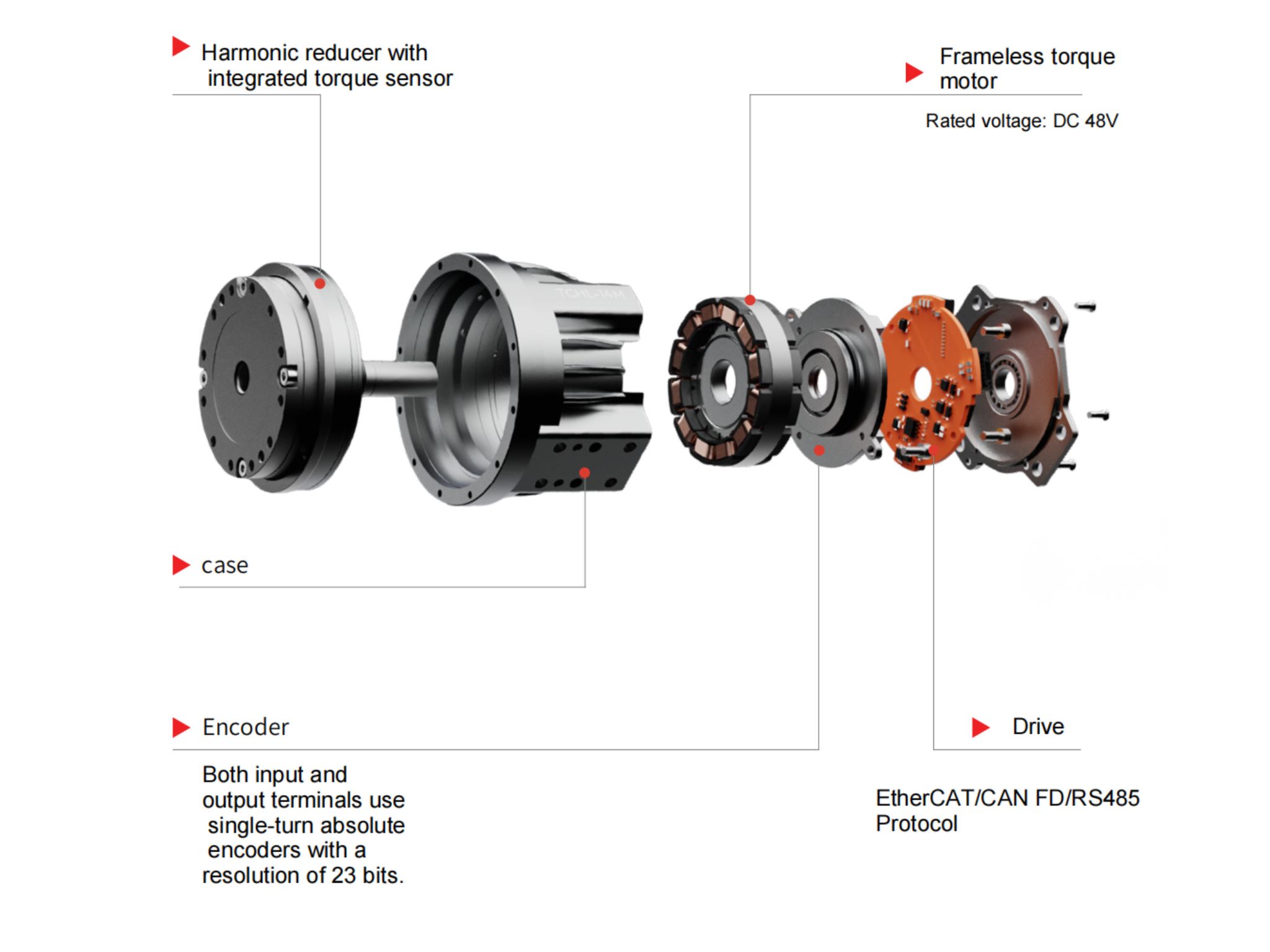
Joint motors (this article mainly discusses rotary types) generally integrate a motor, a driver PCB, a reducer, an encoder, and a brake.
Brake
The function of the brake module is to maintain posture during power loss or faults, preventing falling or collapse that could cause danger or damage (especially for vertical joints). In simple terms, it determines whether the robotic arm will drop under gravity once power is cut. For industrial robotic arms, brakes are indispensable—no one wants a massive arm in a factory to crash downward during a power outage. However, in the era of embodied intelligence, lightweight robotic arms have relatively low mass and therefore often do not include brakes in their joint motors.
Reducer
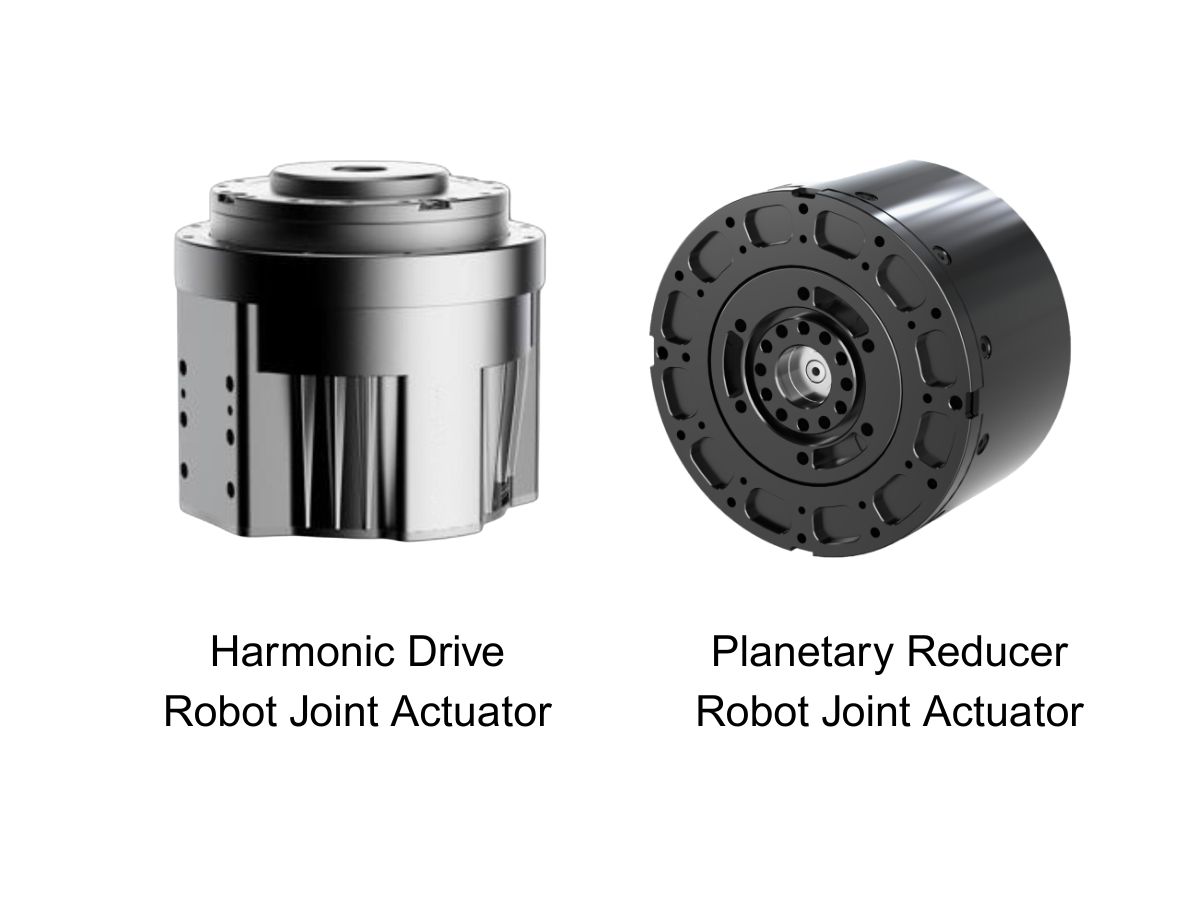
There are generally three commonly used types of reducers: harmonic, RV, and planetary gear reducers. For lightweight robotic arms, harmonic reducers or planetary reducers are most commonly used. Harmonic reducers can achieve high reduction ratios in a single stage but are more expensive. Planetary reducers (especially standard types) typically have much larger backlash than harmonic reducers.
Backlash can be likened to the wobble of a loose door hinge, or the slack in a bicycle chain where pressing the pedal does not immediately move the wheel. In precision machinery, even such small looseness directly affects positioning accuracy.
Encoder
Encoders are mainly used for precise sensing of joint rotation angles. A key parameter is encoder resolution, such as 14-bit resolution. This means that one full revolution is represented by 2¹⁴ = 16,384 pulses, corresponding to a positioning resolution of 360 / 16,384 = 0.02197 degrees.
For robotic arms, absolute encoders are essential: even after power loss, the system still knows the current joint angle. Otherwise, the arm would need to return to a zero position every time it powers up.
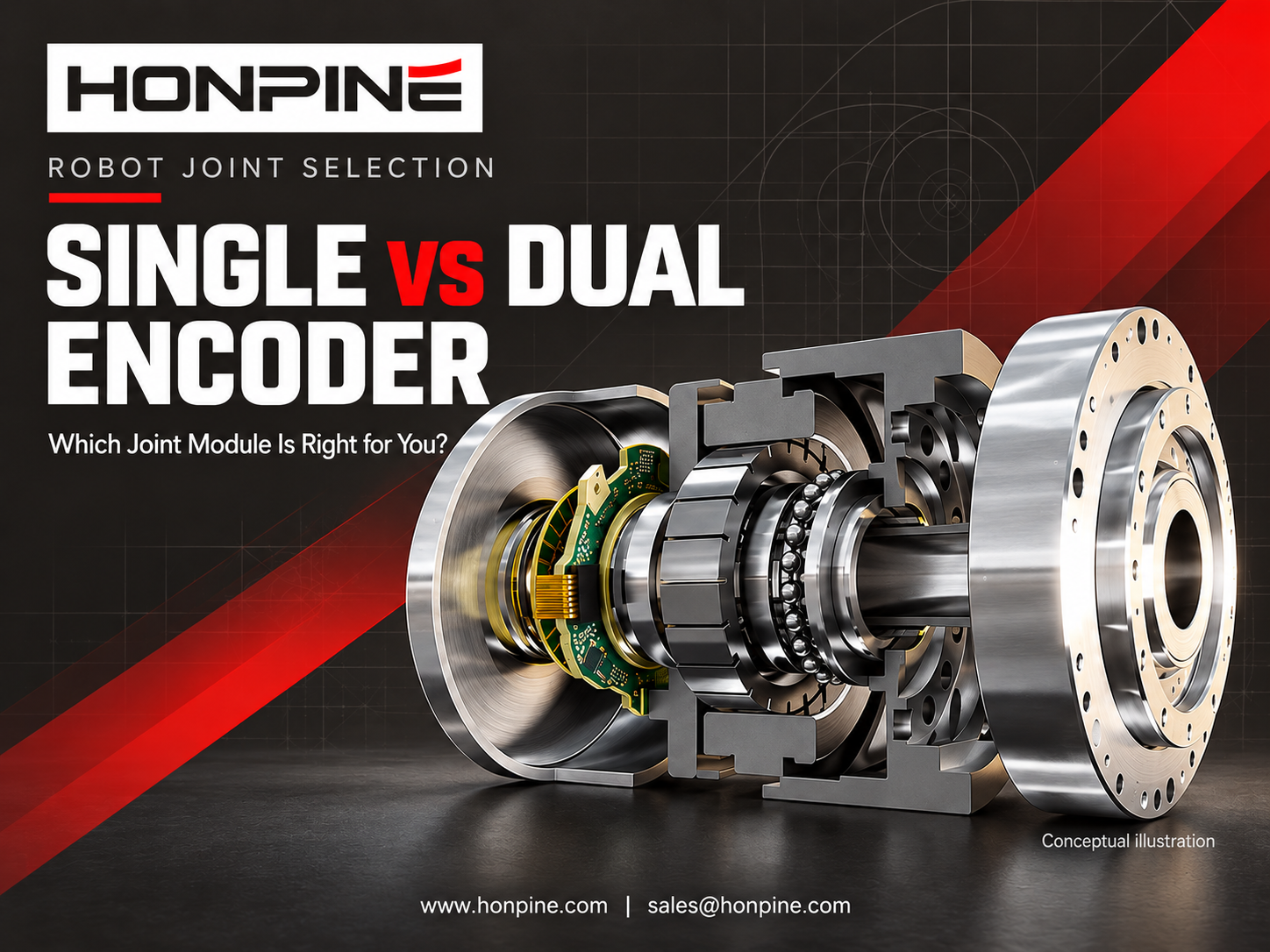
Most joint motors use a single encoder on the motor side, which allows precise control of the motor rotor’s position and speed. However, this configuration cannot sense errors introduced by the transmission chain between the motor and the load (such as backlash, elastic deformation, torsional vibration, thermal expansion, or wear in reducers, couplings, belts, or lead screws).
To improve sensing accuracy, some joint motors adopt a dual-encoder scheme: one encoder on the motor rotor side and another on the output shaft after the reducer. By fusing data from both encoders, the system can improve absolute positioning accuracy and repeatability, even in the presence of backlash, compliance, or wear in the transmission chain.
Hollow-shaft motors
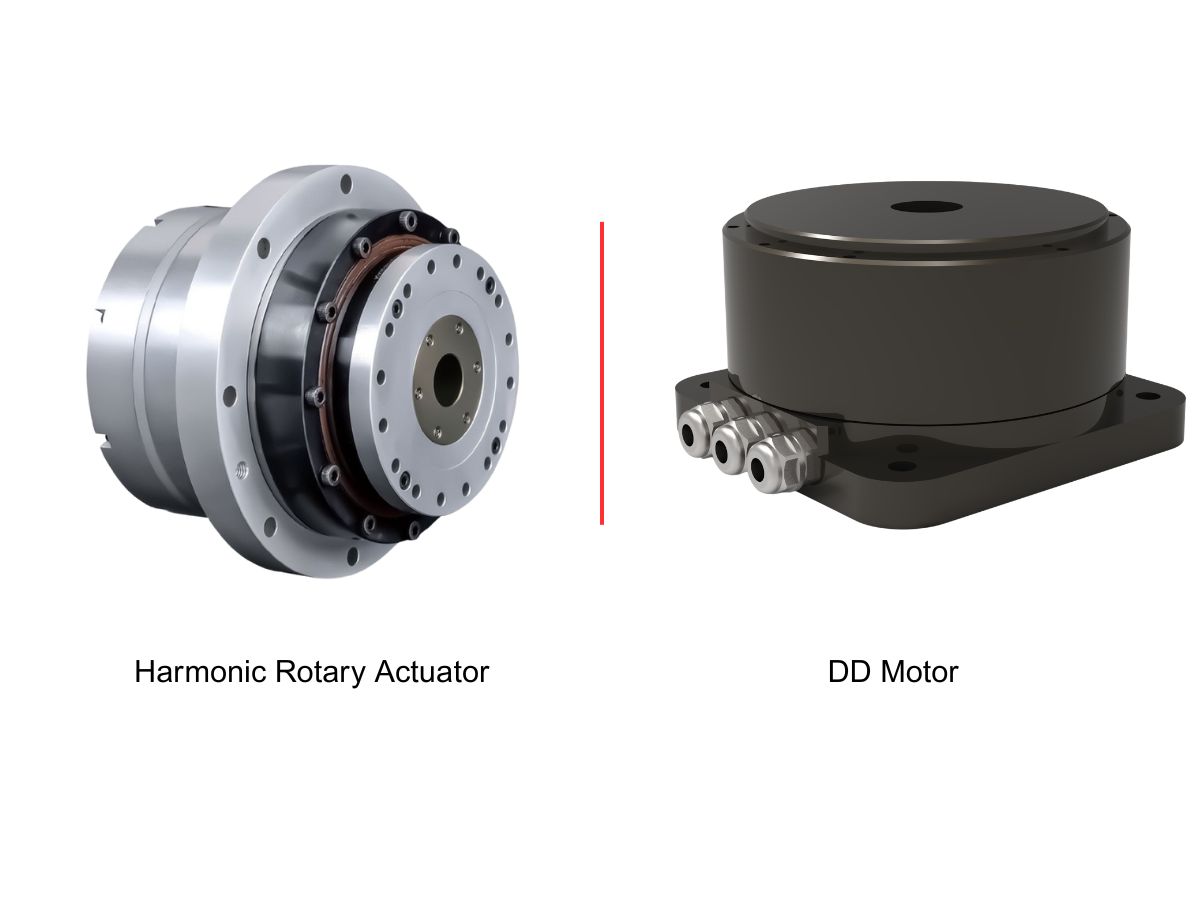
A hollow-shaft motor has a central through-hole along its axis, primarily to facilitate cable routing. Wires can pass directly through the center of the motor, avoiding external cable exposure. However, hollow-shaft motors are generally more expensive.
How Do Joint Motors Control a Robotic Arm?
As the most direct actuators in a robotic arm, all control ultimately boils down to joint control.
The most common approach is the three-loop motor control structure:
Position loop: Input = target position; feedback = actual position; output = desired speed (based on position error).
Velocity loop: Input = desired speed; feedback = actual speed; output = desired current (based on speed error).
Current loop: Input = desired current; feedback = actual current; output = adjusted driver voltage (based on current error), directly controlling torque (current is approximately linearly related to torque).
MIT control mode
MIT mode enables mixed control of torque, position, and velocity. Its control block diagram is shown in.
Communication Protocols
Because robots typically have multiple joints and require high-frequency control, communication protocols usually employ CAN bus or EtherCAT. The maximum baud rate of CAN is 1 Mbps. To achieve closed-loop control above 1 kHz, EtherCAT—with maximum rates up to 100 Mbps—is required.
Generally, for a 6-axis joint motor system using CAN bus at 1 Mbps, the maximum achievable control frequency is around 300–500 Hz, which is sufficient for collaborative robots. However, to fully exploit force control at 1 kHz, multiple CAN channels are needed, with each CAN channel driving three motors (as commonly seen in quadruped robot designs).
Selecting robot joint motors is a comprehensive process that balances torque, speed, precision, size, cost, and reliability. From brushed to brushless motors, from stepper motors to servo motors, and from discrete designs to highly integrated joint modules, ongoing technological evolution continues to drive improvements in robotic performance.
Read More
Learn more about the story of HONPINE and industry trends related to precision transmission.
 What is robot joint actuator?How to Choose the Best Robot Rotary Joint Actuator?In core robot joint transmission solutions, planetary and harmonic rotary actuators each have their own strengths. Choosing the right type based on application requirements is essential to achieve the optimal balance between performance and cost.
 DD Motors VS Harmonic Rotary ActuatorsThis article provides an in-depth comparison between Direct Drive (DD) motors and harmonic rotary actuators, covering their transmission principles, advantages and disadvantages, and typical application fields.
 OMG Ultra Compact Harmonic Drive Joint Module with Built-in Torque SensorHONPINE TCHL series harmonic drive joint module is a game-changing product that achieves disruptive improvements in multiple aspects such as lightweight design, integration level, and connection convenience. This article will analyze its revolutionary enhancements with you.
 The Role of Harmonic Drive Gears in Achieving 5–10 μm Accuracy in Dental Milling MachinesA dental milling machine is a CNC machining system used to directly process digital dental models into restorations such as crowns, bridges, veneers, inlays, and implant abutments. Dental milling machines require far higher operational accuracy and motion stability than ordinary equipment. This article explains how harmonic drive gear help dental milling machines achieve stable, continuous, and controllable operation.
 Why Are Harmonic Rotary Actuators Perfect for Medical Equipment?Harmonic rotary actuators (typically integrated systems consisting of a harmonic drive reducer, frameless torque motor, encoder, and optional brake) are regarded as key components in medical equipment. The core reason is that they simultaneously meet the most stringent medical requirements for precision, compact size, safety, and controllability. The following explanation is structured from three perspectives: technical characteristics, application scenarios, and medical value.
 High-Precision RV Reducers Perfectly Matched for Walking RobotsThe walking axis of a robot is a core component for power transmission and support. RV reducers provide extremely high rigidity, precision, and torque while maintaining a compact size and exceptional reliability, making them an ideal match for the demanding requirements of walking robot joints in terms of load capacity, impact resistance, and precision.
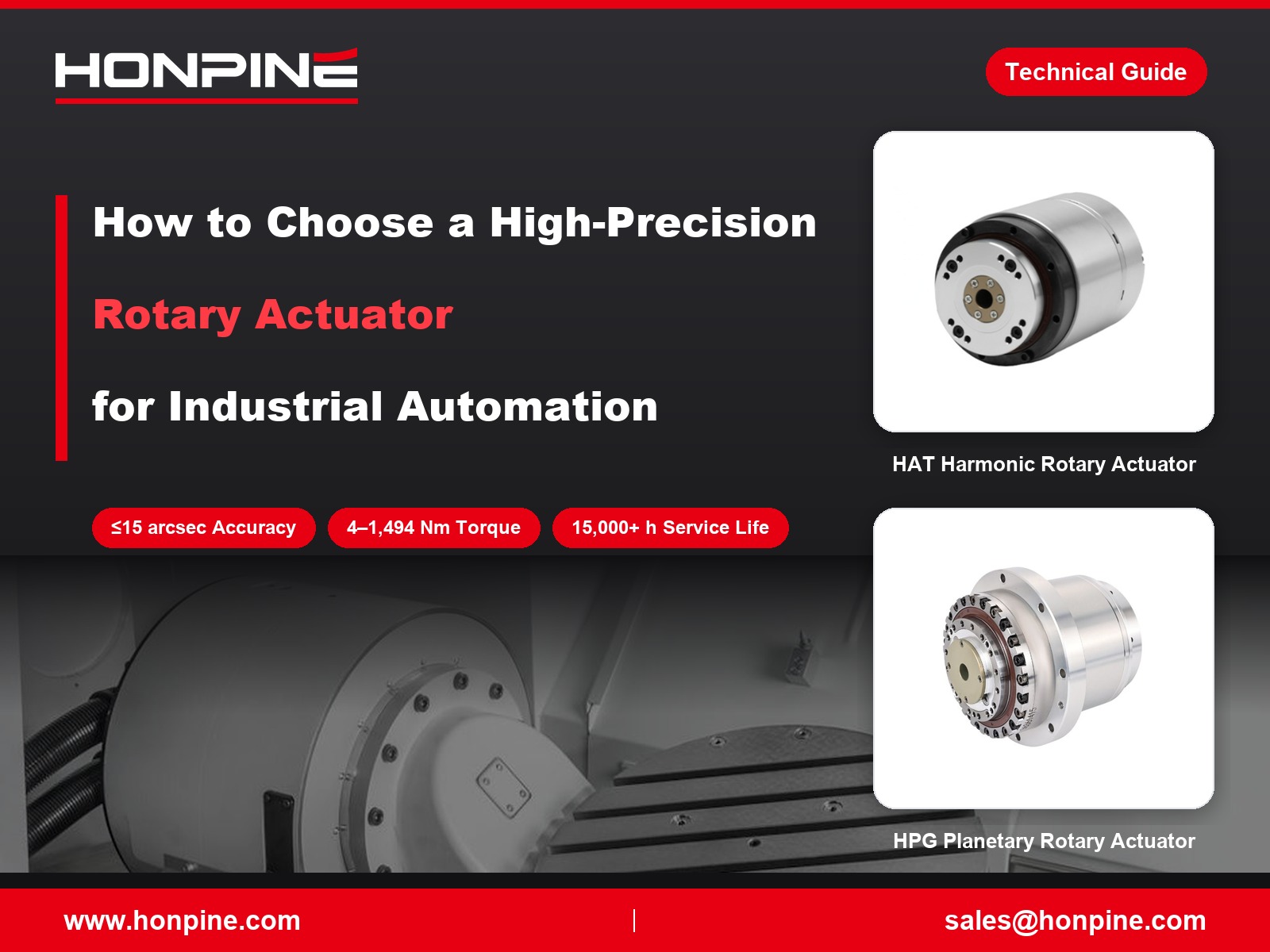
 How to Choose High-Precision Rotary Actuators for Industrial Automation?High-precision rotary actuators play an important role in industrial automation, where positioning accuracy, repeatability, durability and installation flexibility directly affect equipment performance. HONPINE offers four main series of precision rotary actuators, including HAT, HAM and HAS harmonic rotary actuators and HPG low-backlash planetary actuators. With torque ratings ranging from 4 to 1,494 Nm across the product range, these solutions are designed for applications in semiconductor manufacturing, 3C automation, laser processing and CNC machine tools. Learn how to identify the right rotary actuator based on operating conditions, precision requirements and mechanical integration needs.
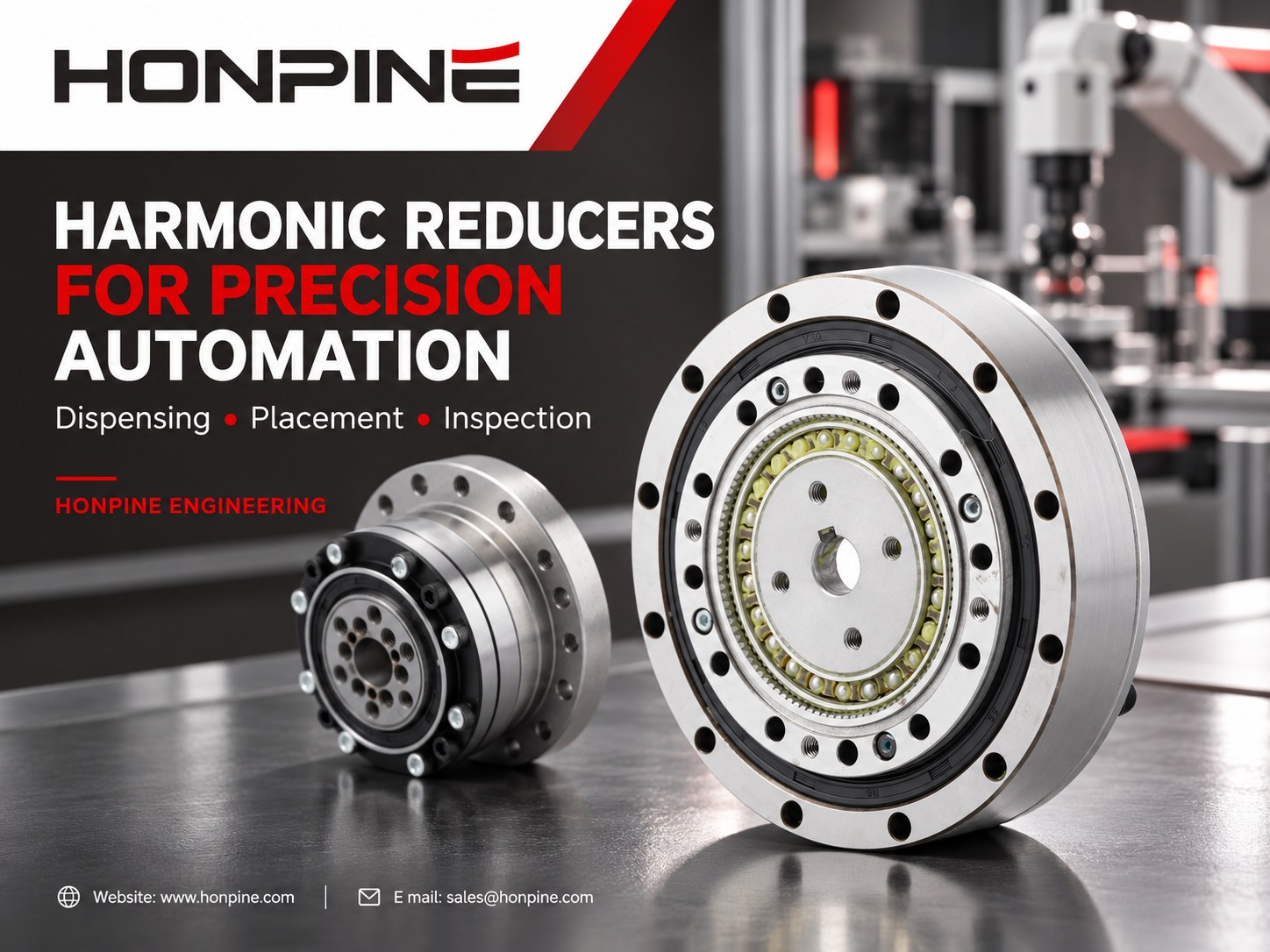
 Why Are Harmonic Reducers Suitable for High-Precision Automation Equipment?Precision automation equipment depends on consistent rotary motion, reliable positioning and compact transmission design. From dispensing head orientation and component angular alignment to automated inspection indexing, harmonic reducers offer a practical solution for applications requiring low backlash and high reduction ratios in limited installation space. This article explains how harmonic reducers support repeatable motion, compares key design configurations, and outlines how to select a suitable reduction ratio and reducer structure based on load, speed, accuracy and machine cycle-time requirements.
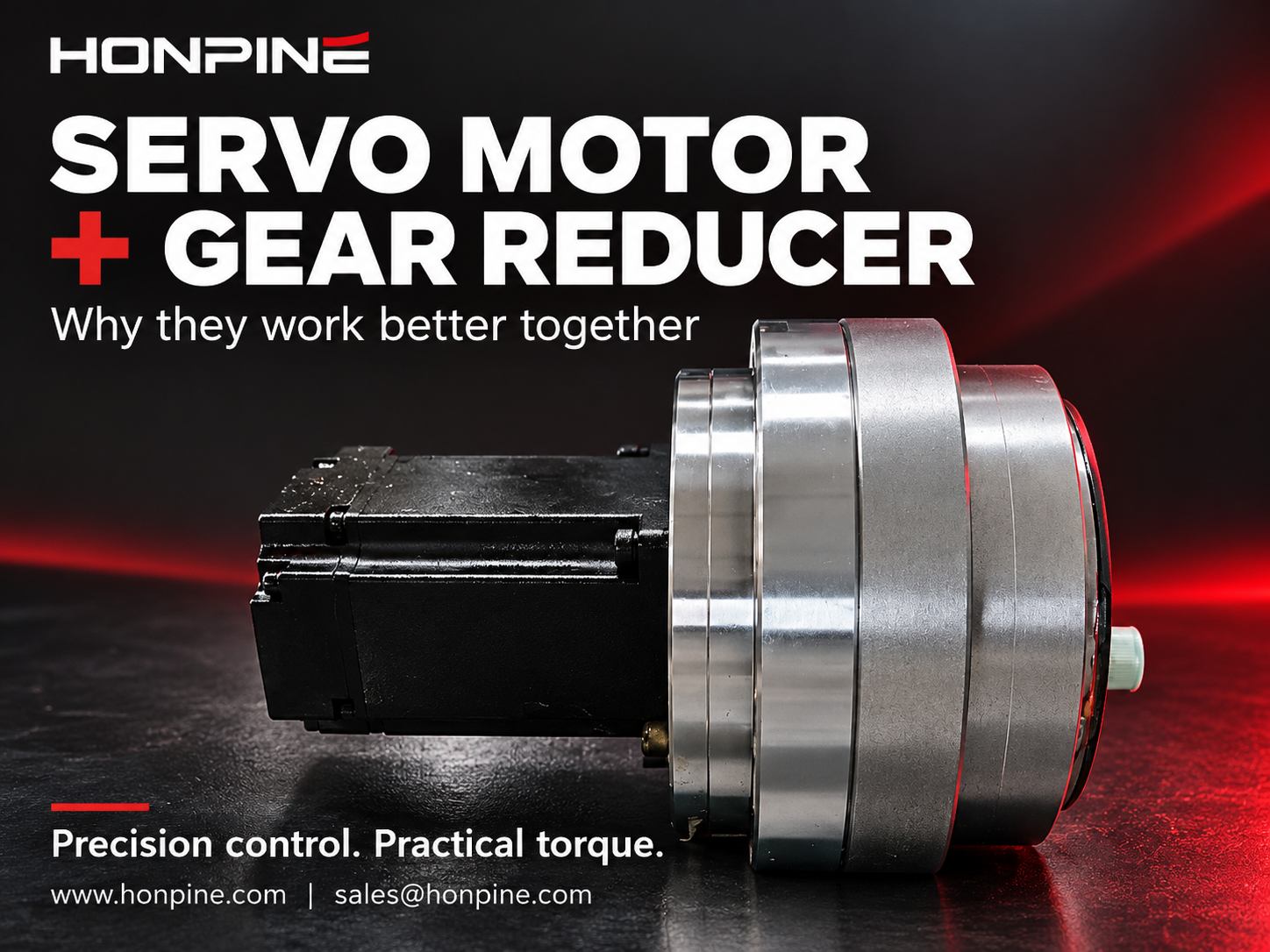
 Why Are Servo Motors and Gear Reducers an Ideal Match?Servo motors provide fast, precise motion control, while gear reducers adapt their speed and torque to the load. This guide explains how servo motors and gear reducers work together through torque multiplication, reflected inertia reduction and finer theoretical position resolution. Learn how inertia matching, backlash, torsional stiffness and reduction ratio influence performance in robotics and industrial automation.
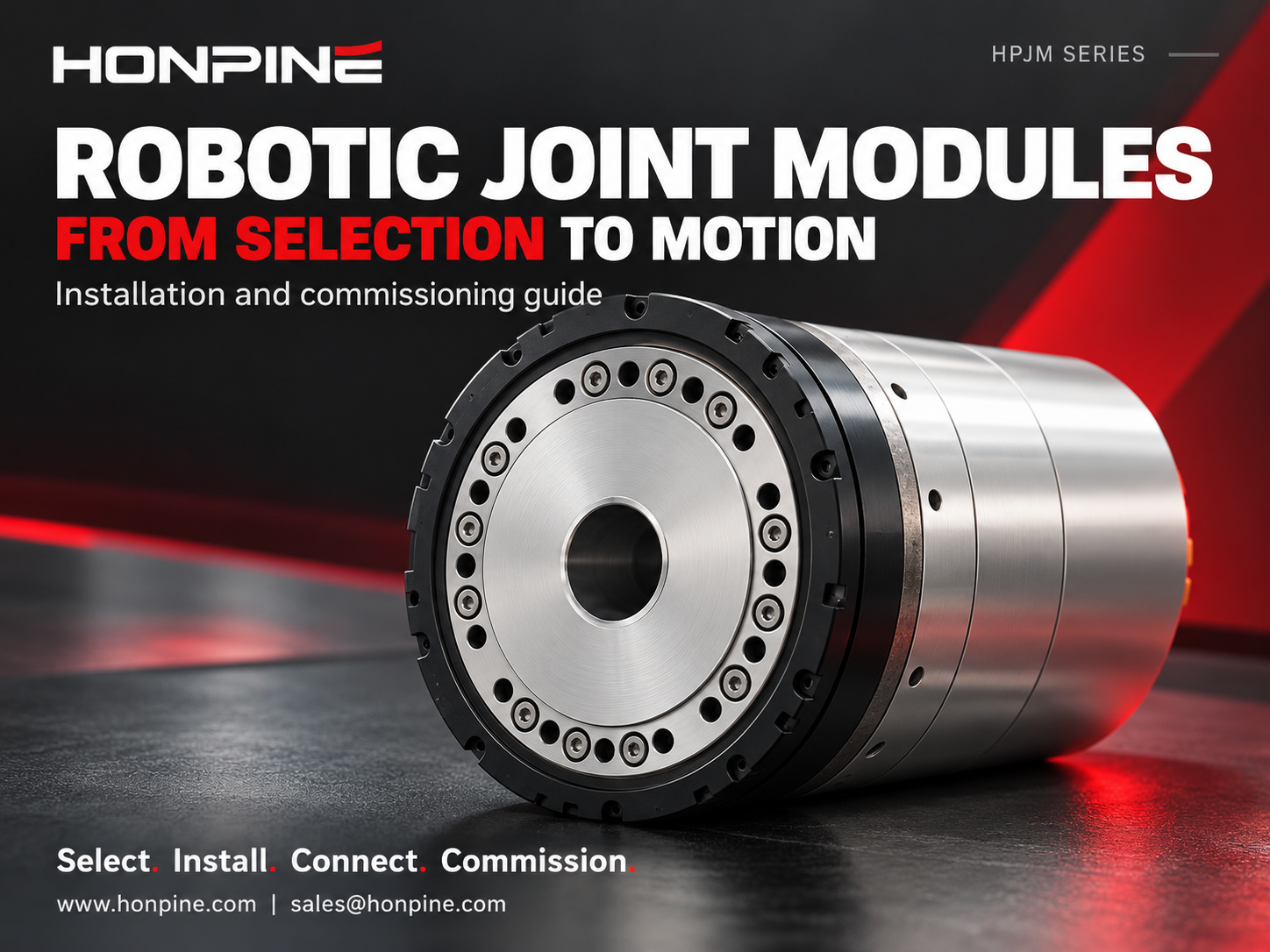
 How to Select and Use Robotic Joint Modules?How do you take robotic joint modules from selection to controlled motion? Using the HONPINE HPJM harmonic joint module as an example, Technical Director Theodore Li explains the key steps in mechanical installation, electrical wiring, CAN and EtherCAT configuration, and control commissioning. Learn what to confirm before integration and how to approach setup so each joint can respond correctly to your controller.
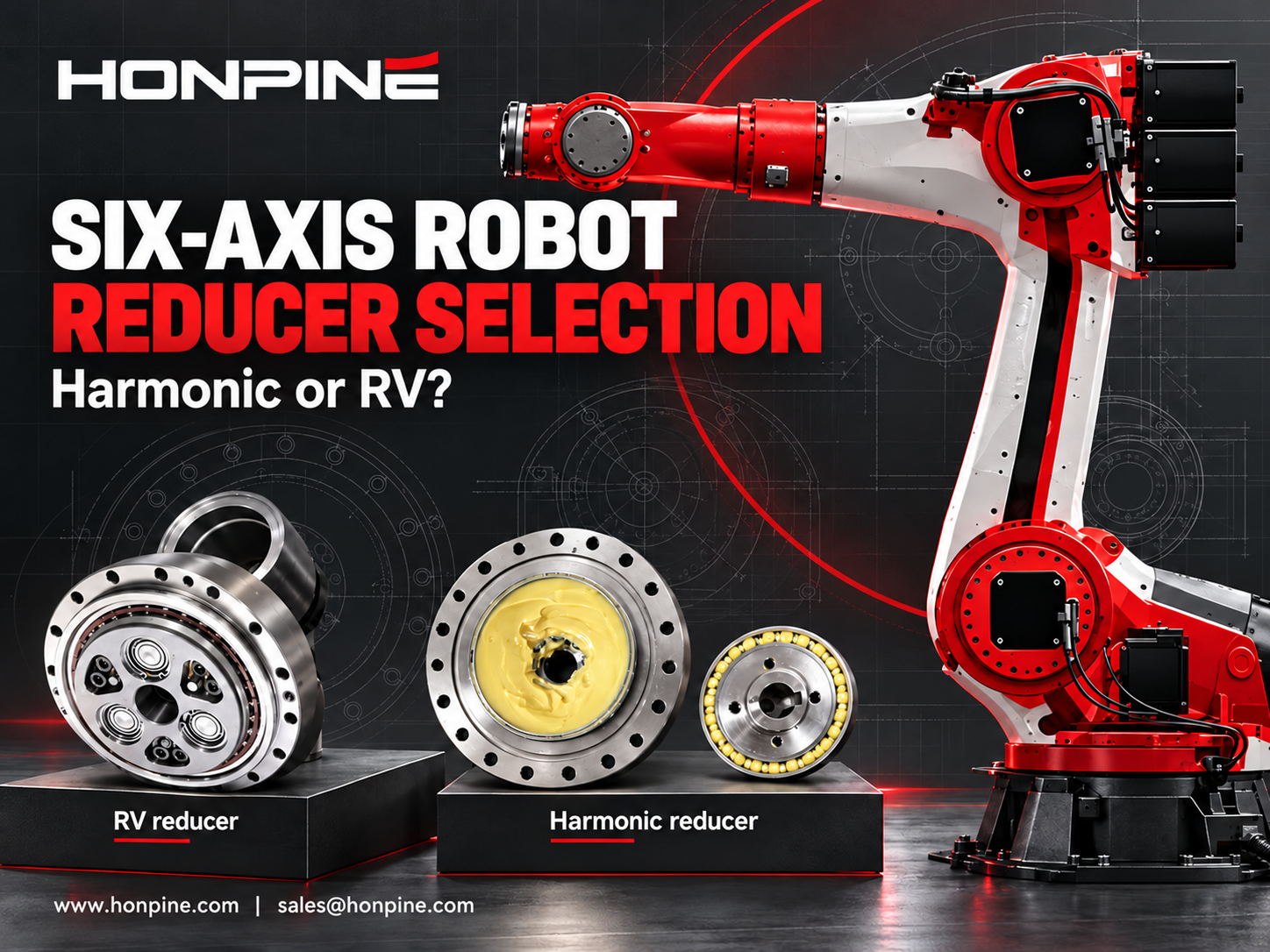
 How to Select Harmonic and RV Reducers for Each Axis of a Six-Axis Robot?What determines whether a six-axis robot joint needs a harmonic reducer or an RV reducer? The answer depends on torque, inertia, impact loads, bearing loads and installation space. This guide explains how to evaluate harmonic and RV reducers for the base, shoulder, elbow and wrist, with practical checks for stiffness, backlash and service life. Use the requirements of each axis to select a suitable reducer configuration.
 Top 7 RV Reducer Gearbox Manufacturers: Why Does Nabtesco Still Dominate?What sets RV reducer gearbox manufacturers apart, and why does Nabtesco remain a benchmark in this market? RV reducer production demands precise component machining, careful assembly and extensive engineering know-how. This article introduces seven manufacturers across RV reducers and related transmission technologies, examines the strengths behind Nabtesco's position, and explores HONPINE's development capabilities to help you understand the supplier landscape.
Double Click
We provide harmonic drive reducer,planetary reducer,robot joint motor,robot rotary actuators,RV gear reducer,robot end effector,dexterous robot hand
 What is robot joint actuator?How to Choose the Best Robot Rotary Joint Actuator?In core robot joint transmission solutions, planetary and harmonic rotary actuators each have their own strengths. Choosing the right type based on application requirements is essential to achieve the optimal balance between performance and cost.
 DD Motors VS Harmonic Rotary ActuatorsThis article provides an in-depth comparison between Direct Drive (DD) motors and harmonic rotary actuators, covering their transmission principles, advantages and disadvantages, and typical application fields.
 OMG Ultra Compact Harmonic Drive Joint Module with Built-in Torque SensorHONPINE TCHL series harmonic drive joint module is a game-changing product that achieves disruptive improvements in multiple aspects such as lightweight design, integration level, and connection convenience. This article will analyze its revolutionary enhancements with you.
 How to Choose High-Precision Rotary Actuators for Industrial Automation?High-precision rotary actuators play an important role in industrial automation, where positioning accuracy, repeatability, durability and installation flexibility directly affect equipment performance. HONPINE offers four main series of precision rotary actuators, including HAT, HAM and HAS harmonic rotary actuators and HPG low-backlash planetary actuators. With torque ratings ranging from 4 to 1,494 Nm across the product range, these solutions are designed for applications in semiconductor manufacturing, 3C automation, laser processing and CNC machine tools. Learn how to identify the right rotary actuator based on operating conditions, precision requirements and mechanical integration needs.
 Why Are Harmonic Reducers Suitable for High-Precision Automation Equipment?Precision automation equipment depends on consistent rotary motion, reliable positioning and compact transmission design. From dispensing head orientation and component angular alignment to automated inspection indexing, harmonic reducers offer a practical solution for applications requiring low backlash and high reduction ratios in limited installation space. This article explains how harmonic reducers support repeatable motion, compares key design configurations, and outlines how to select a suitable reduction ratio and reducer structure based on load, speed, accuracy and machine cycle-time requirements.
 Why Are Servo Motors and Gear Reducers an Ideal Match?Servo motors provide fast, precise motion control, while gear reducers adapt their speed and torque to the load. This guide explains how servo motors and gear reducers work together through torque multiplication, reflected inertia reduction and finer theoretical position resolution. Learn how inertia matching, backlash, torsional stiffness and reduction ratio influence performance in robotics and industrial automation.
 How to Select and Use Robotic Joint Modules?How do you take robotic joint modules from selection to controlled motion? Using the HONPINE HPJM harmonic joint module as an example, Technical Director Theodore Li explains the key steps in mechanical installation, electrical wiring, CAN and EtherCAT configuration, and control commissioning. Learn what to confirm before integration and how to approach setup so each joint can respond correctly to your controller.
 How to Select Harmonic and RV Reducers for Each Axis of a Six-Axis Robot?What determines whether a six-axis robot joint needs a harmonic reducer or an RV reducer? The answer depends on torque, inertia, impact loads, bearing loads and installation space. This guide explains how to evaluate harmonic and RV reducers for the base, shoulder, elbow and wrist, with practical checks for stiffness, backlash and service life. Use the requirements of each axis to select a suitable reducer configuration.
 Top 7 RV Reducer Gearbox Manufacturers: Why Does Nabtesco Still Dominate?What sets RV reducer gearbox manufacturers apart, and why does Nabtesco remain a benchmark in this market? RV reducer production demands precise component machining, careful assembly and extensive engineering know-how. This article introduces seven manufacturers across RV reducers and related transmission technologies, examines the strengths behind Nabtesco's position, and explores HONPINE's development capabilities to help you understand the supplier landscape.
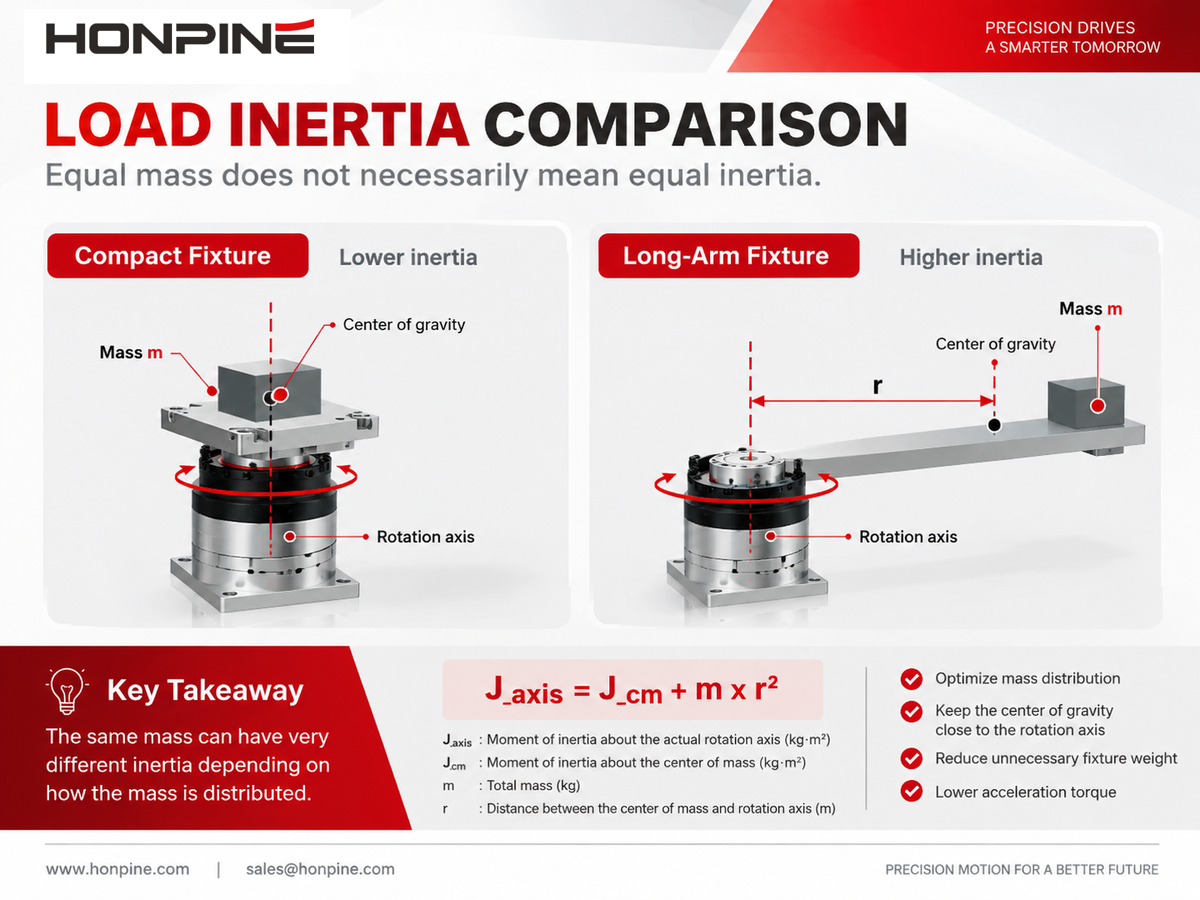
 How to Calculate Torque for a Harmonic Rotary Actuator in a Flipping Mechanism?How much torque does a harmonic rotary actuator need to flip a 10 kg load through 180 degrees? The answer depends on more than weight. Center-of-gravity offset, load inertia, acceleration and operating frequency all affect actuator selection. In this guide, Theodore Li, Technical Director at HONPINE, explains the calculation process using a horizontal-axis flipping example and outlines the checks needed for peak torque, continuous operation, output speed and bearing loads.
 Why Are Harmonic Reducers Suitable for CNC Machine Tool Rotary Tables?Why choose harmonic reducers for CNC rotary tables? Accurate indexing depends on more than the motor: backlash, torsional stiffness and torque capacity all affect how reliably a rotary table holds its position during machining. This guide explains the key transmission requirements of fourth and fifth axis rotary tables, explores common machine tool applications, and introduces HONPINE harmonic reducer configurations for different installation and load requirements.
 What’s the Difference Between Single and Dual Encoder Robot Joint Modules?Does your robot need a dual encoder joint module, or is a single encoder enough? The answer depends on positioning requirements, transmission behavior, force control strategy and budget. This guide compares motor-side and output-side feedback, explains where dual encoders can improve control, and examines their costs and limitations. Learn when a single encoder can meet your needs and when additional output feedback is worth considering.