

STO vs. Holding Brake in Robot Joint Modules: What Is the Difference for Robot Safe Control?
As robot safety becomes increasingly important in industrial automation, humanoid robots, collaborative robots, and other robotic systems, engineers need to understand the role of each safety-related component in a robot joint module. Should you choose a joint module with Safe Torque Off (STO), a holding brake, or both?
Hello, I'm Theodore Li, Technical Director at HONPINE. In this article, I'll explain the differences between STO and holding brakes, how they work, and when each function is needed. Using the HONPINE HAG harmonic integrated joint actuator as an example, we'll explore how these two functions serve different purposes and how they can work together as part of a properly designed robot safety system.
What Is STO (Safe Torque Off)?
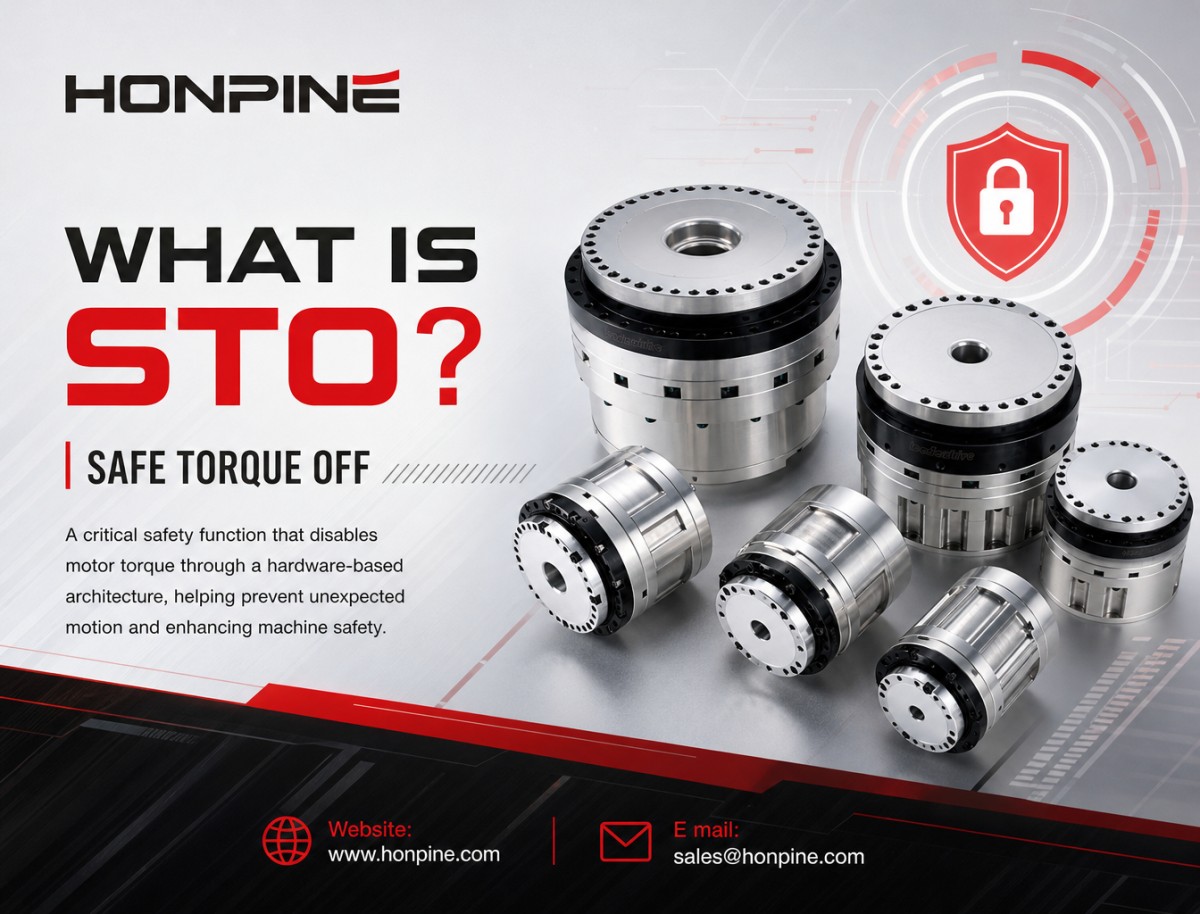
STO, or Safe Torque Off, is a safety function that prevents a motor from generating driving torque by disabling the drive's power output through a safety-related hardware architecture.
On the HONPINE HAG series, STO is implemented as a hardware-based drive safety function. When the STO inputs are activated correctly, the drive prevents the motor from generating torque. Unlike an ordinary software stop command, a properly implemented STO function is designed to operate independently of normal motion-control commands and communication instructions.
This helps reduce the risk of unintended motor torque caused by certain control software faults or communication failures.
How Does STO Work?
When the STO function is triggered, the drive disables the power stage's ability to produce motor torque. The motor can no longer actively generate driving torque through the drive.
However, STO does not mechanically lock the joint shaft or guarantee that the robot will stop immediately. The joint may continue moving due to inertia, gravity, an external force, or another source of mechanical energy.
For example, if a robot arm is moving when STO is activated, it may coast to a stop. If the arm has a vertically oriented joint carrying a suspended load, gravity may cause the joint to move downward once the motor can no longer generate supporting torque.
What Are the Main Benefits of STO?
STO provides a safety-related means of preventing the motor from generating torque without relying on an ordinary software motion command.
Typical applications include safety-related responses to guard-door interlocks, emergency-stop systems, and maintenance access, provided the overall safety system has been designed and validated for the intended application.
STO is particularly useful for reducing the risk of unintended motor torque resulting from certain drive-control faults.
What Are the Limitations of STO?
STO prevents the drive from generating motor torque, but it does not provide a mechanical holding force.
For robot joints carrying suspended loads, vertical axes, or other gravity-loaded mechanisms, STO alone may not prevent the joint from moving. Additional measures, such as a suitably rated holding brake or another mechanical load-retention device, may be required.
STO also does not automatically guarantee a particular stopping time or stopping distance. These depend on the mechanical system and the overall safety design.
What Is a Holding Brake in a Robot Joint Module?
A holding brake is a mechanical device designed to hold a motor shaft or joint in position when the brake is engaged. In many integrated robot joint actuators, the brake is an electromagnetic, spring-applied mechanism.
In a typical design, electrical power releases the brake, while removing power allows a spring mechanism to engage it. The exact operating principle depends on the brake design.
For the HONPINE HAG series, the holding brake can be configured to support joint-position retention when the motor is disabled or the system loses power, subject to the brake's specifications and correct installation.
How Does a Holding Brake Work?
A typical electromagnetic holding brake operates as follows:
Drive enabled: The brake receives power to release, allowing the motor and joint to rotate.
Drive disabled: The brake is commanded to engage, according to the configured control sequence.
Power loss: A spring-applied, power-released brake normally engages when its release power is removed, helping hold the joint in position.
On the HONPINE HAG series, brake opening and closing can be controlled through EtherCAT or CANopen SDO commands, depending on the configuration.
The brake's mechanical response is not instantaneous. According to the HAG operating parameters provided for this article, the physical brake actuation time is approximately 150 ms. The specified minimum interval between disabling and re-enabling the drive is 300 ms, and a waiting period of at least 500 ms after enabling is required before issuing motion commands.
These values are product-specific operating requirements, not universal timings for all robot joint modules. Always verify the latest HAG manual and the configured drive parameters before commissioning a system.
What Are the Main Benefits of a Holding Brake?
The primary benefit of a holding brake is its ability to provide mechanical resistance to joint movement when the motor is not actively driving the load.
Typical applications include:
Holding a vertical robot joint against gravity when the motor is disabled.
Maintaining a joint's position during standby or power-off conditions.
Helping prevent a suspended load from descending when motor torque is unavailable.
Retaining position during maintenance or other operating states, where supported by the system's safety design.
What Are the Limitations of a Holding Brake?
A holding brake is not a substitute for STO.
If a drive continues to generate motor torque while the brake is engaged, the resulting force may exceed the brake's rated holding capacity. This can cause brake wear, overheating, mechanical damage, or loss of holding capability.
A conventional holding brake is also generally designed for static holding rather than repeatedly stopping a rapidly moving joint. Using it for dynamic emergency braking requires a brake specifically rated for that duty and a validated system design.
A brake should therefore not be treated as the only protection against unintended motor torque.
STO vs. Holding Brake: Key Differences
STO and holding brakes serve different functions in a robot joint module. The following comparison summarizes their main differences.
The key distinction is simple: STO prevents the motor from generating torque, while a holding brake provides mechanical resistance to joint movement. Neither function automatically replaces the other.
What Happens If a Robot Joint Module Uses Only STO or Only a Holding Brake?
Understanding the limitations of each function is essential when designing a safe robot joint, especially when the mechanism supports a vertical load.
Scenario 1 — Using STO Without a Holding Brake
Why Can a Vertical Robot Joint Descend After STO Is Activated?
When STO disables the motor's ability to generate torque, a vertical joint may lose the motor torque needed to counteract gravity.
If the joint has no other effective load-retention mechanism, the arm or payload may descend. The resulting movement can damage equipment, compromise the robot's position, or injure nearby personnel.
For this reason, a robot joint that must safely retain a gravity-loaded mechanism cannot rely on STO alone unless another suitable mechanical or system-level measure provides the required protection.
Suitable applications: STO can be part of a safety solution for preventing unintended motor torque during maintenance access, safety-guard events, or other safety-related conditions. The complete safety system must still account for residual motion, gravity, and external forces.
Limitation: STO does not mechanically lock the shaft or hold a suspended load.
Scenario 2 — Using a Holding Brake Without STO
Why Is a Holding Brake Not Enough to Prevent Unintended Motor Torque?
A holding brake can keep a joint in position when it is engaged and the applied load remains within its rated capacity. However, it does not prevent a faulty drive from attempting to generate motor torque.
If a drive fault causes the motor to produce torque while the brake remains engaged, excessive torque may damage the brake or other mechanical components. If the brake's holding capacity is exceeded, the joint may move unexpectedly.
A holding brake therefore cannot independently provide the same protection against unintended motor torque as a properly implemented STO function.
Suitable applications: Holding brakes are useful for retaining the position of vertical joints, maintaining a suspended load, and holding a mechanism when the motor is disabled.
Limitation: A conventional holding brake should not be treated as the primary means of preventing unintended motor torque or as a dynamic emergency stop unless it has been specifically designed and rated for that purpose.
How Should STO and a Holding Brake Work Together?
For robot joints carrying gravity loads, combining STO with a suitably rated holding brake can provide complementary protection. However, simply installing both components does not automatically make the entire robot safe. Their control sequence must be designed around the actual mechanical system and the required safety functions.
Recommended Safety-Control Principles
A typical safety design should address the following stages:
Detect the safety event. A safety-related input, such as an emergency-stop circuit or guard interlock, initiates the required response.
Control the joint's motion when required. If the risk assessment requires a controlled deceleration, the system must use an appropriate validated stopping function rather than immediately removing motor torque without considering the resulting motion.
Engage the holding brake at the appropriate time. The brake must be applied according to the manufacturer's requirements and the validated safety sequence. The design must prevent a gravity-loaded joint from descending during the brake's engagement delay.
Apply STO as required by the safety design. Once the required stopping and load-retention conditions are achieved, STO can prevent further motor torque generation. For an emergency requiring immediate torque removal, the safety design must account for the resulting coasting or gravity-driven movement.
Verify the complete system. Brake timing, load capacity, stopping distance, fault response, and restart conditions must be validated for the actual robot and its operating environment.
Important: There is no single sequence that is correct for every robot. In particular, triggering STO and then waiting for the joint to stop before engaging the brake can be unsafe for a gravity-loaded axis if the joint begins to descend during that interval. The correct sequence depends on the risk assessment, available safety functions, brake characteristics, and applicable standards.
Which Robot Applications Benefit from Both STO and a Holding Brake?
Using STO and a holding brake together is worth considering whenever a robot must prevent unintended motor torque while also retaining a mechanically loaded joint.
Humanoid Robots
Humanoid robots contain multiple joints that may support body weight or carry loads in different orientations. A holding brake can help retain a joint when motor torque is unavailable, while STO can prevent unintended motor torque when its safety function is activated.
The required configuration depends on the joint's role, the robot's posture, and the consequences of losing motor torque.
Collaborative Robots
Collaborative robots may operate close to people and frequently transition between motion, standby, and maintenance states. STO and holding brakes can address different hazards, but the complete robot must also incorporate the appropriate safeguarding, safety control, and risk-reduction measures.
Neither function alone establishes that a robot is safe for collaborative operation.
Industrial Robotic Arms
Industrial robotic arms often include vertical axes and joints carrying substantial payloads. For these mechanisms, designers must consider gravity, stopping behavior, brake holding capacity, and the consequences of drive faults.
A properly engineered combination of STO and mechanical load retention can help address these different hazards.
Medical, Educational, and Research Robots
Medical robots and laboratory or research platforms may require controlled movement, predictable stopping behavior, and secure position retention. The appropriate safety architecture depends on the application's specific risks, including whether a joint supports a suspended load or operates near people.
STO and holding brakes should be selected as part of the complete system design rather than treated as interchangeable options.
HONPINE HAG Harmonic Integrated Joint Actuator: STO and Holding Brake Options
The HONPINE HAG harmonic integrated joint actuator can be configured with STO and a holding brake to support different motion-control and safety-related design requirements.
By integrating the harmonic transmission and motor-drive functions within a compact joint module, the HAG series provides a practical platform for robotic joint applications. STO and the holding brake serve different purposes within the system: STO addresses the prevention of motor torque generation, while the brake supports mechanical position retention.
When selecting a HAG configuration, engineers should evaluate the following factors:
Joint orientation and load: Determine whether the joint supports a vertical axis, suspended payload, or other gravity-loaded mechanism.
Brake holding capacity: Confirm that the brake's rated holding torque is sufficient for the worst-case load and mechanical conditions.
Drive and communication configuration: Verify the available STO implementation, brake-control method, and supported EtherCAT or CANopen functions for the selected model.
Stopping and restart behavior: Check the required brake actuation times, drive-enable sequence, and permitted motion commands.
System-level safety requirements: Assess the complete robot, including its safety controller, power architecture, mechanical structure, and foreseeable failure conditions.
The correct configuration depends on the robot's actual operating conditions and safety requirements. STO and a holding brake are complementary functions, not interchangeable features.
Conclusion: STO Prevents Motor Torque; a Holding Brake Retains Mechanical Position
For robot joint modules, STO and holding brakes solve two different problems.
STO prevents the drive from generating motor torque when the safety function is activated. A holding brake provides mechanical resistance to joint movement and can help retain a gravity-loaded mechanism when the motor is disabled.
For applications involving vertical joints or suspended loads, relying on only one of these functions may leave important hazards unaddressed. Combining them can provide a more complete solution when the functions are correctly selected, sequenced, and validated as part of the robot's overall safety design.
At HONPINE, we provide harmonic integrated joint actuators for humanoid robots, collaborative robots, industrial automation, and other precision motion-control applications.
Contact HONPINE to learn more about the HAG harmonic integrated joint actuator and discuss the STO and holding-brake configuration suited to your robot joint application.

About Author
Theodore Li serves as the Technical Director at HONPINE, overseeing the R&D strategy for replication products, guiding team selection, and managing both pre-sales and after-sales operations.

Read More
Learn more about the story of HONPINE and industry trends related to precision transmission.
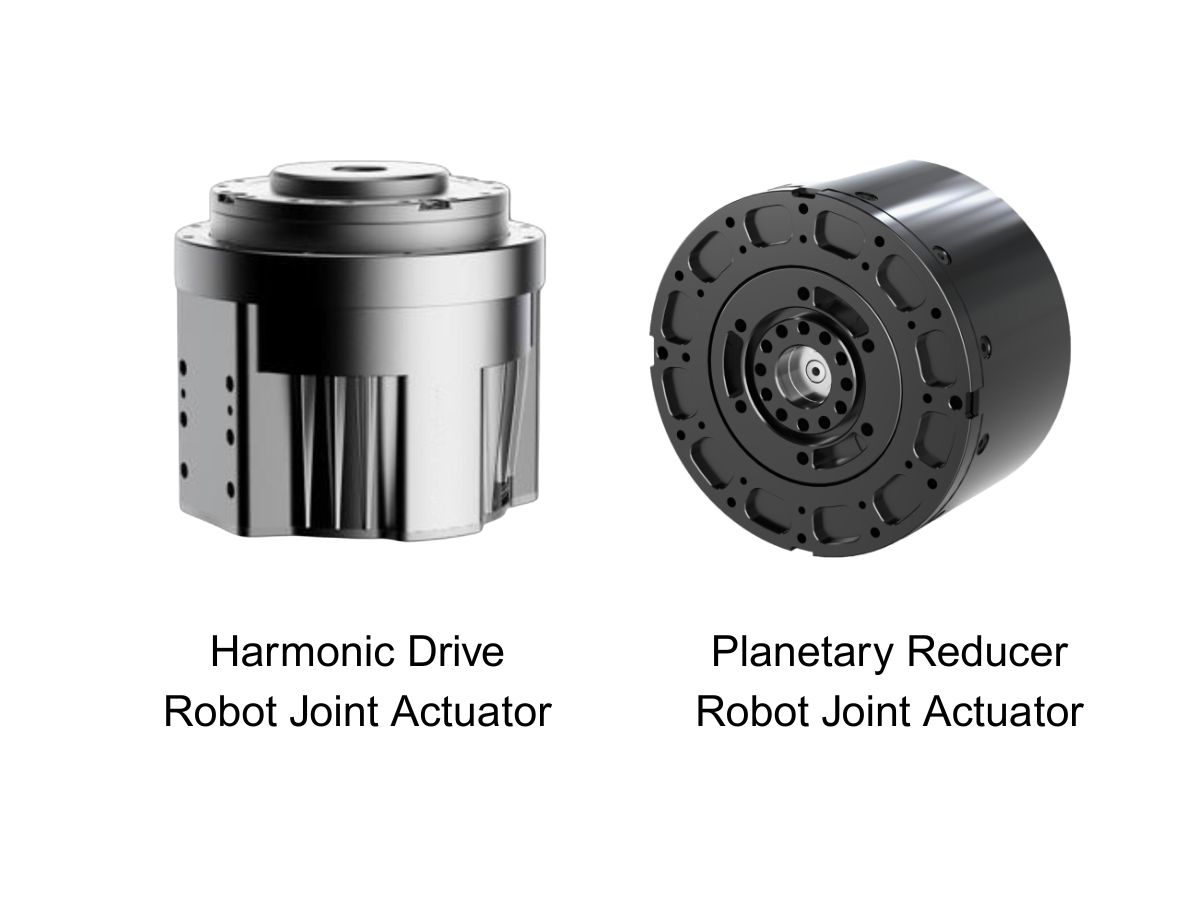
 What is robot joint actuator?How to Choose the Best Robot Rotary Joint Actuator?In core robot joint transmission solutions, planetary and harmonic rotary actuators each have their own strengths. Choosing the right type based on application requirements is essential to achieve the optimal balance between performance and cost.
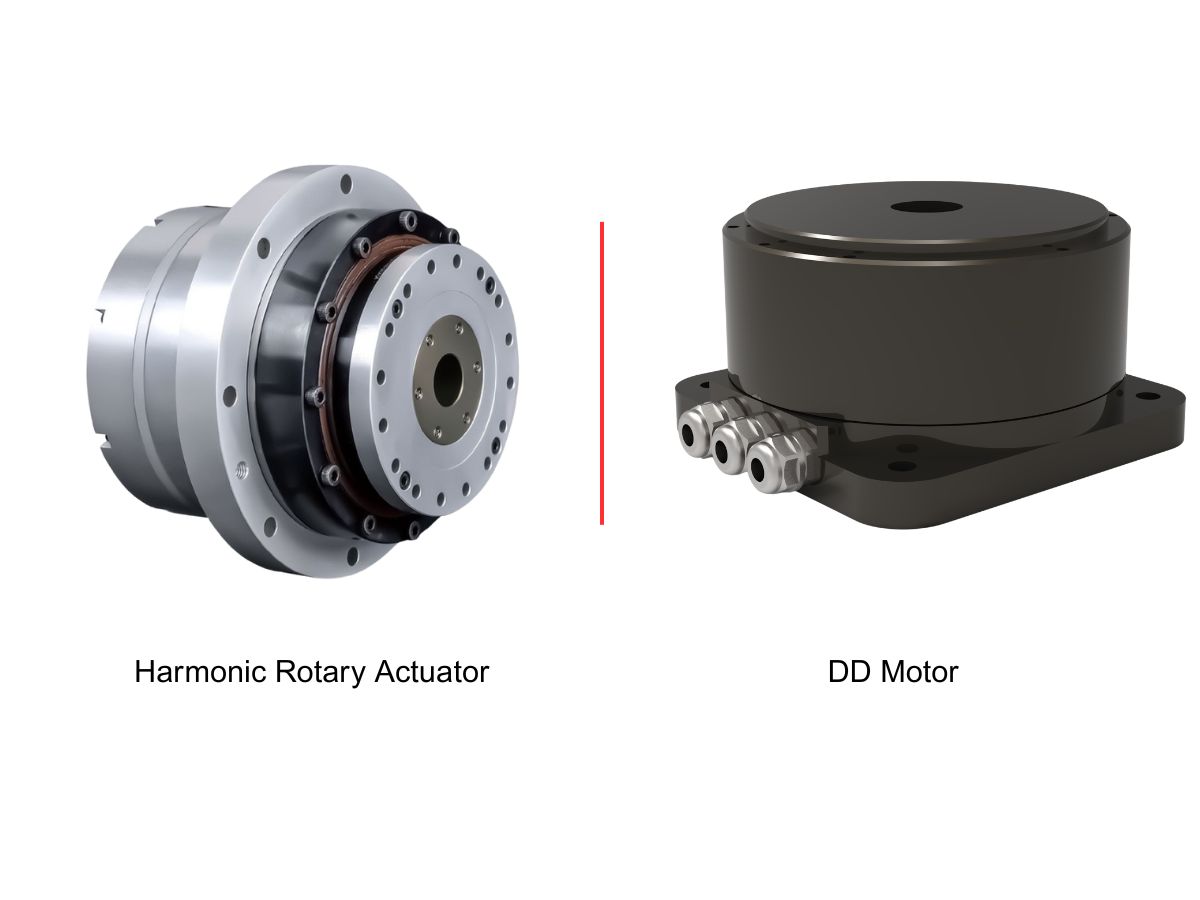
 DD Motors VS Harmonic Rotary ActuatorsThis article provides an in-depth comparison between Direct Drive (DD) motors and harmonic rotary actuators, covering their transmission principles, advantages and disadvantages, and typical application fields.
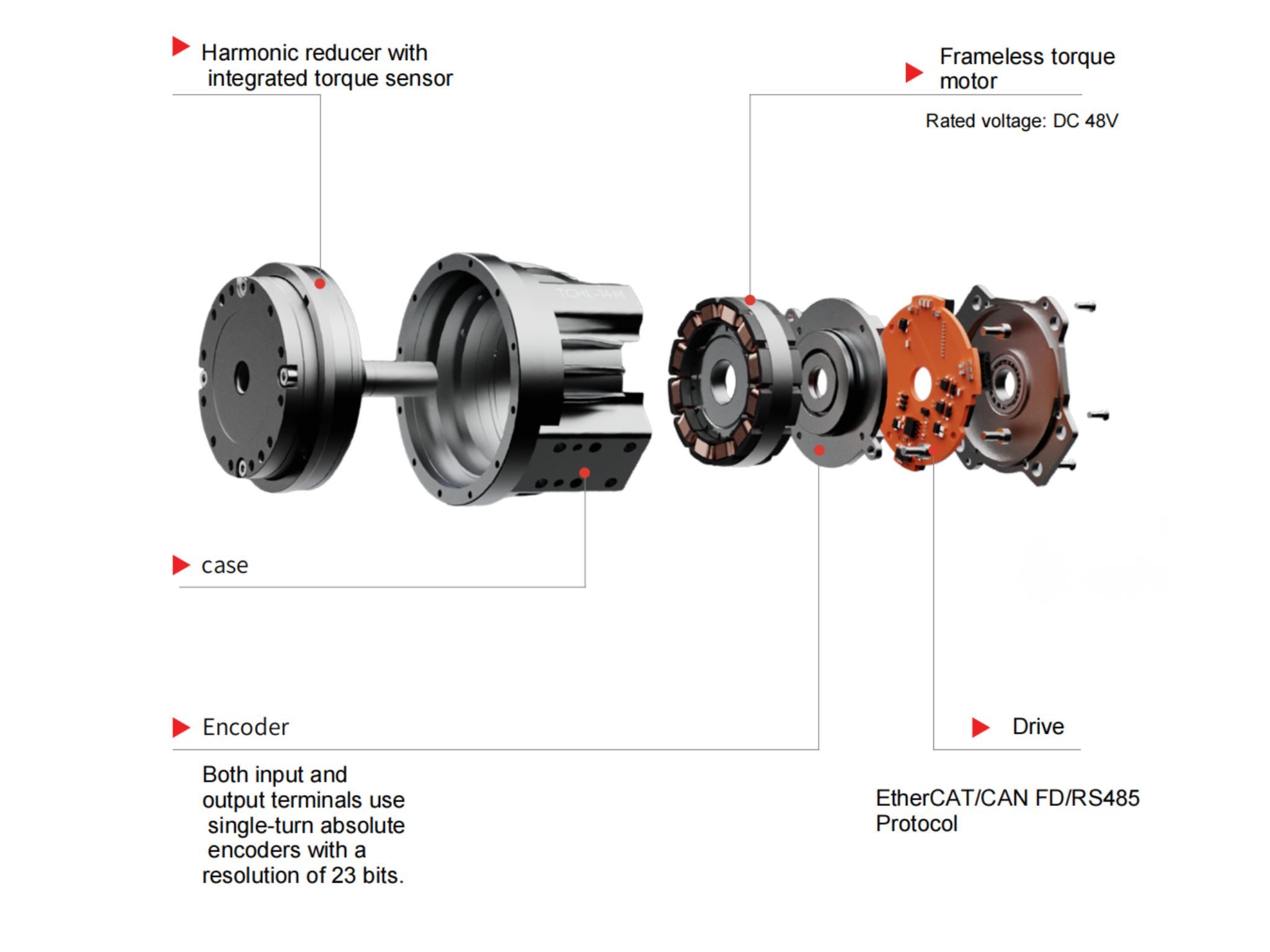
 OMG Ultra Compact Harmonic Drive Joint Module with Built-in Torque SensorHONPINE TCHL series harmonic drive joint module is a game-changing product that achieves disruptive improvements in multiple aspects such as lightweight design, integration level, and connection convenience. This article will analyze its revolutionary enhancements with you.
 The Role of Harmonic Drive Gears in Achieving 5–10 μm Accuracy in Dental Milling MachinesA dental milling machine is a CNC machining system used to directly process digital dental models into restorations such as crowns, bridges, veneers, inlays, and implant abutments. Dental milling machines require far higher operational accuracy and motion stability than ordinary equipment. This article explains how harmonic drive gear help dental milling machines achieve stable, continuous, and controllable operation.
 Why Are Harmonic Rotary Actuators Perfect for Medical Equipment?Harmonic rotary actuators (typically integrated systems consisting of a harmonic drive reducer, frameless torque motor, encoder, and optional brake) are regarded as key components in medical equipment. The core reason is that they simultaneously meet the most stringent medical requirements for precision, compact size, safety, and controllability. The following explanation is structured from three perspectives: technical characteristics, application scenarios, and medical value.
 High-Precision RV Reducers Perfectly Matched for Walking RobotsThe walking axis of a robot is a core component for power transmission and support. RV reducers provide extremely high rigidity, precision, and torque while maintaining a compact size and exceptional reliability, making them an ideal match for the demanding requirements of walking robot joints in terms of load capacity, impact resistance, and precision.
 The Complete Harmonic Joint Actuator Solution for Humanoid Robots: HPJM Series Selection GuideA complete guide to selecting harmonic joint actuators for humanoid robots. Explore HONPINE HPJM models for wrist, elbow, shoulder, waist, hip, knee, and ankle joints, with practical considerations for torque capacity, reduction ratios, dynamic response, and holding brake configurations.
 Why Are Harmonic Drive Actuators Ideal for Space-Constrained Industrial Automation Equipment?In modern industrial automation, limited installation space often makes mechanical design more challenging. Harmonic drive actuators offer a compact motion-control solution by integrating key drive components into a single unit. Their high reduction ratios, streamlined mechanical structures, and flexible mounting options can help equipment manufacturers reduce space requirements, simplify assembly, and optimize internal layouts. This article explores four ways integrated harmonic drive actuators support space-saving designs in industrial automation equipment.
 STO vs. Holding Brake in Robot Joint Modules: What Is the Difference for Robot Safe Control?STO (Safe Torque Off) and holding brakes play different roles in robot joint safety. While STO prevents a motor from generating driving torque, a holding brake mechanically resists joint movement and helps retain loads when the motor is disabled. Understanding the difference is essential when selecting a robot joint module for humanoid robots, collaborative robots, and industrial automation. In this article, Theodore Li, Technical Director at HONPINE, explains how these functions work, their limitations, and when both should be considered in a harmonic integrated joint actuator such as the HONPINE HAG series.
 AGV Robot Steering Drive Wheel: A Comprehensive Guide to Components, Applications, and SelectionAn AGV steering drive wheel integrates traction and active steering to support flexible movement in industrial mobile robots. This guide explains its main components, working principles, industrial applications, and key selection factors, including load capacity, traction torque, steering torque, wheel diameter, speed, and control interfaces. Discover how to choose a suitable steering drive module for AGVs, AMRs, autonomous forklifts, and heavy-duty material handling systems.
 How Does a Harmonic Joint Actuator with a Torque Sensor Improve Robot Force Control?Learn how the HONPINE TCHL harmonic joint actuator uses an integrated output torque sensor to support force feedback, collision detection, compliant assembly, rehabilitation robotics, and teleoperation.
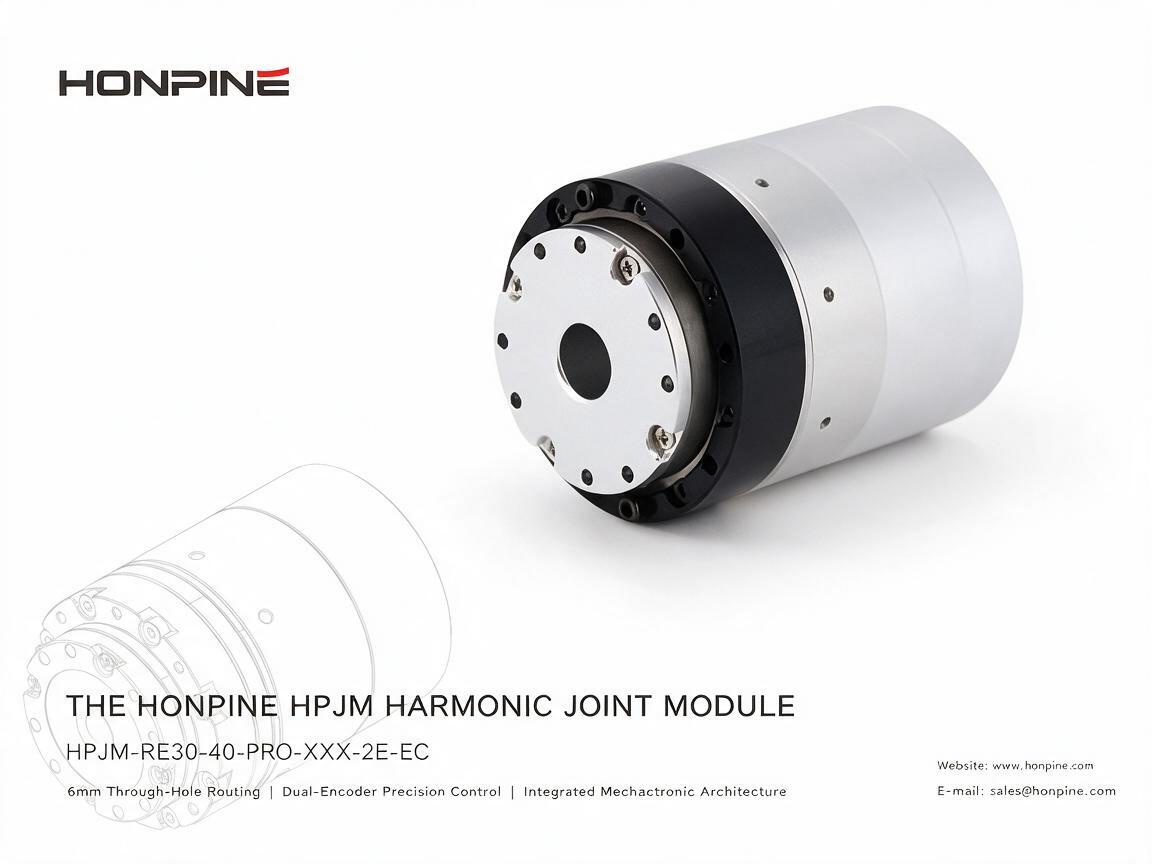
 Ultra-Compact Harmonic Joint Module with a 6 mm Hollow ShaftAs humanoid robots and compact robotic systems evolve, joint modules must deliver high torque density, precise motion control, and flexible cable routing within increasingly limited installation space. The HONPINE HPJM-RE30-40-PRO harmonic joint module addresses these challenges with a compact design, a 6 mm hollow shaft, dual-encoder feedback, and an integrated motor and FOC drive. In this article, we explore its key design features and explain how its hollow-shaft structure, EtherCAT connectivity, and flexible mounting options support the development of humanoid robots, drones, optical platforms, and precision automation equipment.
Double Click
We provide harmonic drive reducer,planetary reducer,robot joint motor,robot rotary actuators,RV gear reducer,robot end effector,dexterous robot hand
 What is robot joint actuator?How to Choose the Best Robot Rotary Joint Actuator?In core robot joint transmission solutions, planetary and harmonic rotary actuators each have their own strengths. Choosing the right type based on application requirements is essential to achieve the optimal balance between performance and cost.
 DD Motors VS Harmonic Rotary ActuatorsThis article provides an in-depth comparison between Direct Drive (DD) motors and harmonic rotary actuators, covering their transmission principles, advantages and disadvantages, and typical application fields.
 OMG Ultra Compact Harmonic Drive Joint Module with Built-in Torque SensorHONPINE TCHL series harmonic drive joint module is a game-changing product that achieves disruptive improvements in multiple aspects such as lightweight design, integration level, and connection convenience. This article will analyze its revolutionary enhancements with you.
 The Complete Harmonic Joint Actuator Solution for Humanoid Robots: HPJM Series Selection GuideA complete guide to selecting harmonic joint actuators for humanoid robots. Explore HONPINE HPJM models for wrist, elbow, shoulder, waist, hip, knee, and ankle joints, with practical considerations for torque capacity, reduction ratios, dynamic response, and holding brake configurations.
 Why Are Harmonic Drive Actuators Ideal for Space-Constrained Industrial Automation Equipment?In modern industrial automation, limited installation space often makes mechanical design more challenging. Harmonic drive actuators offer a compact motion-control solution by integrating key drive components into a single unit. Their high reduction ratios, streamlined mechanical structures, and flexible mounting options can help equipment manufacturers reduce space requirements, simplify assembly, and optimize internal layouts. This article explores four ways integrated harmonic drive actuators support space-saving designs in industrial automation equipment.
 STO vs. Holding Brake in Robot Joint Modules: What Is the Difference for Robot Safe Control?STO (Safe Torque Off) and holding brakes play different roles in robot joint safety. While STO prevents a motor from generating driving torque, a holding brake mechanically resists joint movement and helps retain loads when the motor is disabled. Understanding the difference is essential when selecting a robot joint module for humanoid robots, collaborative robots, and industrial automation. In this article, Theodore Li, Technical Director at HONPINE, explains how these functions work, their limitations, and when both should be considered in a harmonic integrated joint actuator such as the HONPINE HAG series.
 AGV Robot Steering Drive Wheel: A Comprehensive Guide to Components, Applications, and SelectionAn AGV steering drive wheel integrates traction and active steering to support flexible movement in industrial mobile robots. This guide explains its main components, working principles, industrial applications, and key selection factors, including load capacity, traction torque, steering torque, wheel diameter, speed, and control interfaces. Discover how to choose a suitable steering drive module for AGVs, AMRs, autonomous forklifts, and heavy-duty material handling systems.
 How Does a Harmonic Joint Actuator with a Torque Sensor Improve Robot Force Control?Learn how the HONPINE TCHL harmonic joint actuator uses an integrated output torque sensor to support force feedback, collision detection, compliant assembly, rehabilitation robotics, and teleoperation.
 Ultra-Compact Harmonic Joint Module with a 6 mm Hollow ShaftAs humanoid robots and compact robotic systems evolve, joint modules must deliver high torque density, precise motion control, and flexible cable routing within increasingly limited installation space. The HONPINE HPJM-RE30-40-PRO harmonic joint module addresses these challenges with a compact design, a 6 mm hollow shaft, dual-encoder feedback, and an integrated motor and FOC drive. In this article, we explore its key design features and explain how its hollow-shaft structure, EtherCAT connectivity, and flexible mounting options support the development of humanoid robots, drones, optical platforms, and precision automation equipment.
 How Does the HONPINE HPG Backlash-Free Planetary Rotary Actuator Balance CNC Accuracy and Rigidity?Discover the HONPINE HPG precision backlash-free planetary rotary actuator for CNC rotary tables. Explore positioning accuracy, torsional rigidity, low backlash, and drive selection.
 Why Are DD Torque Motors Ideal for High-End Five-Axis Rotary Tables?Choosing the right drive mechanism is critical to the performance of a five-axis rotary table. Worm gears, cam roller drives, harmonic reducers, RV cycloidal reducers, and DD torque motors each offer different advantages in positioning accuracy, torsional stiffness, speed, and cost. For high-end CNC machining, the challenge is not simply achieving low backlash, but maintaining accuracy under cutting loads and during continuous multi-axis motion. This article compares five common drive technologies and explains why direct-drive torque motors are an attractive option for applications requiring high dynamic response, reduced transmission errors, and consistent machining performance.
 Harmonic Drive Actuator Accuracy: Why It Should Be Evaluated at Four LevelsHarmonic drive actuator accuracy involves more than encoder resolution. Why should engineers evaluate it at four levels? Resolution, repeatability, unidirectional positioning accuracy, and bidirectional positioning accuracy describe different aspects of motion performance. Understanding these differences helps engineers select harmonic rotary actuators for semiconductor equipment, EFEM systems, and 3C automation without confusing theoretical encoder increments with actual positioning performance.