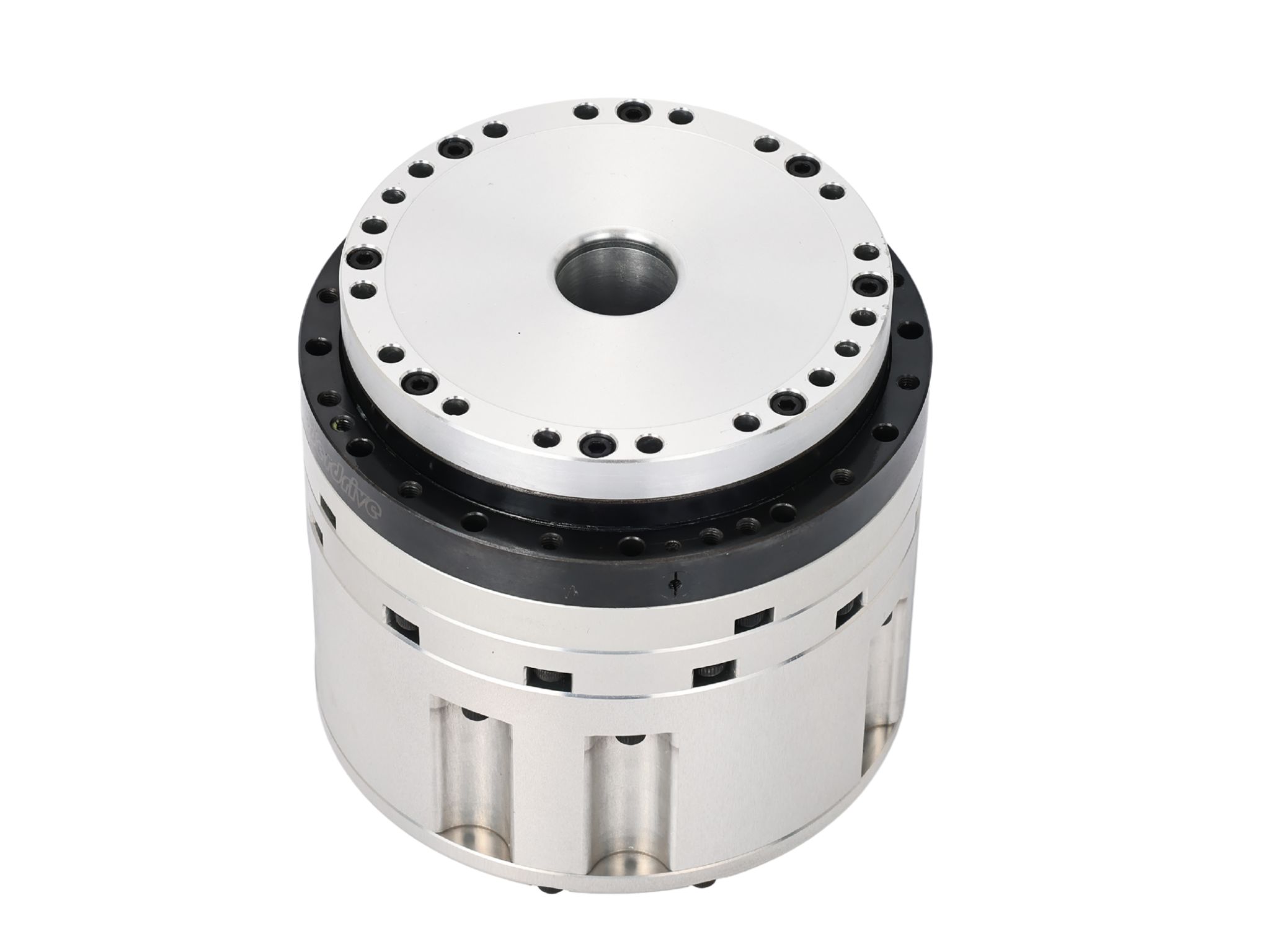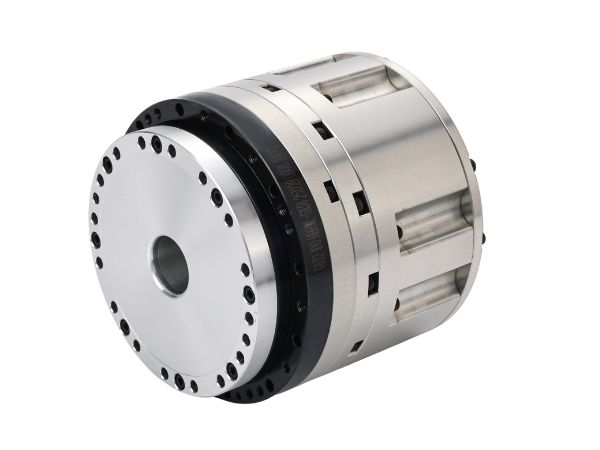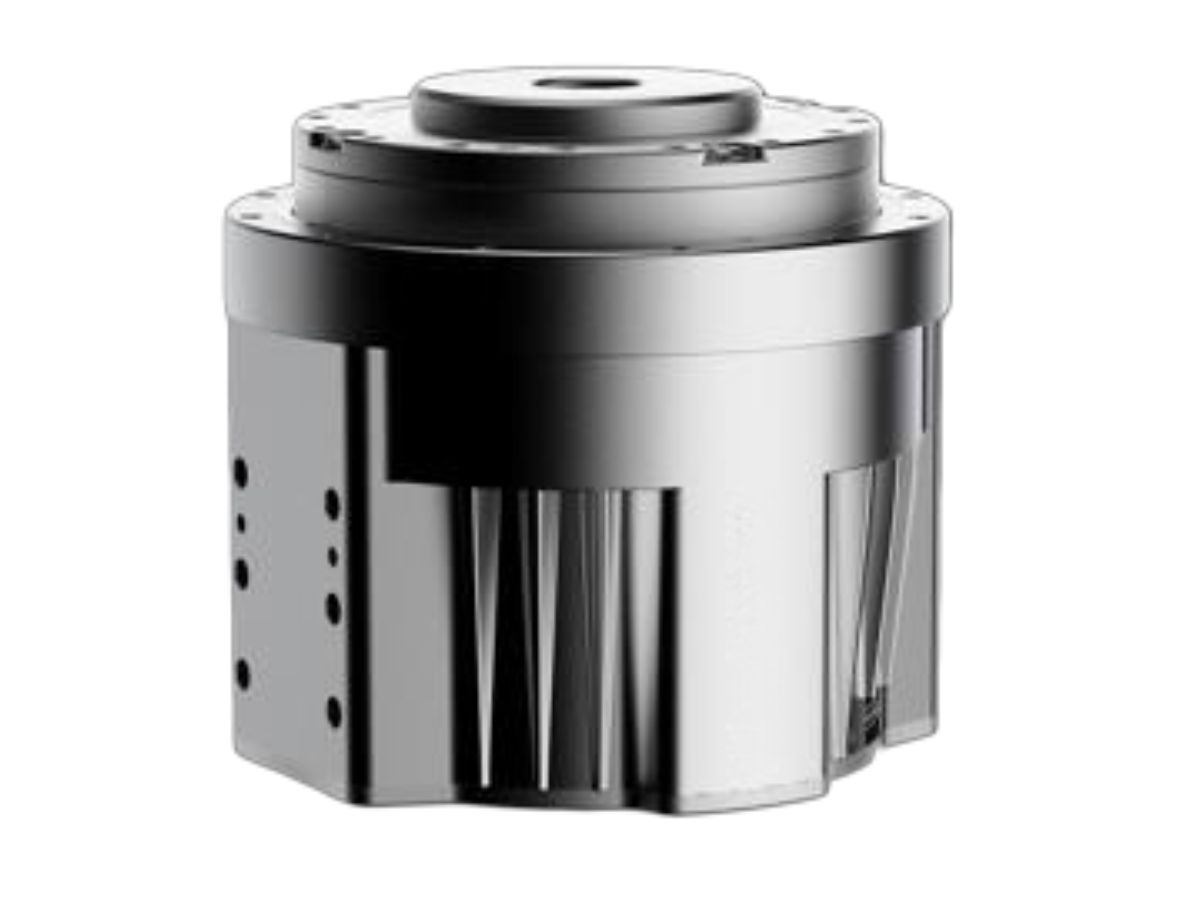









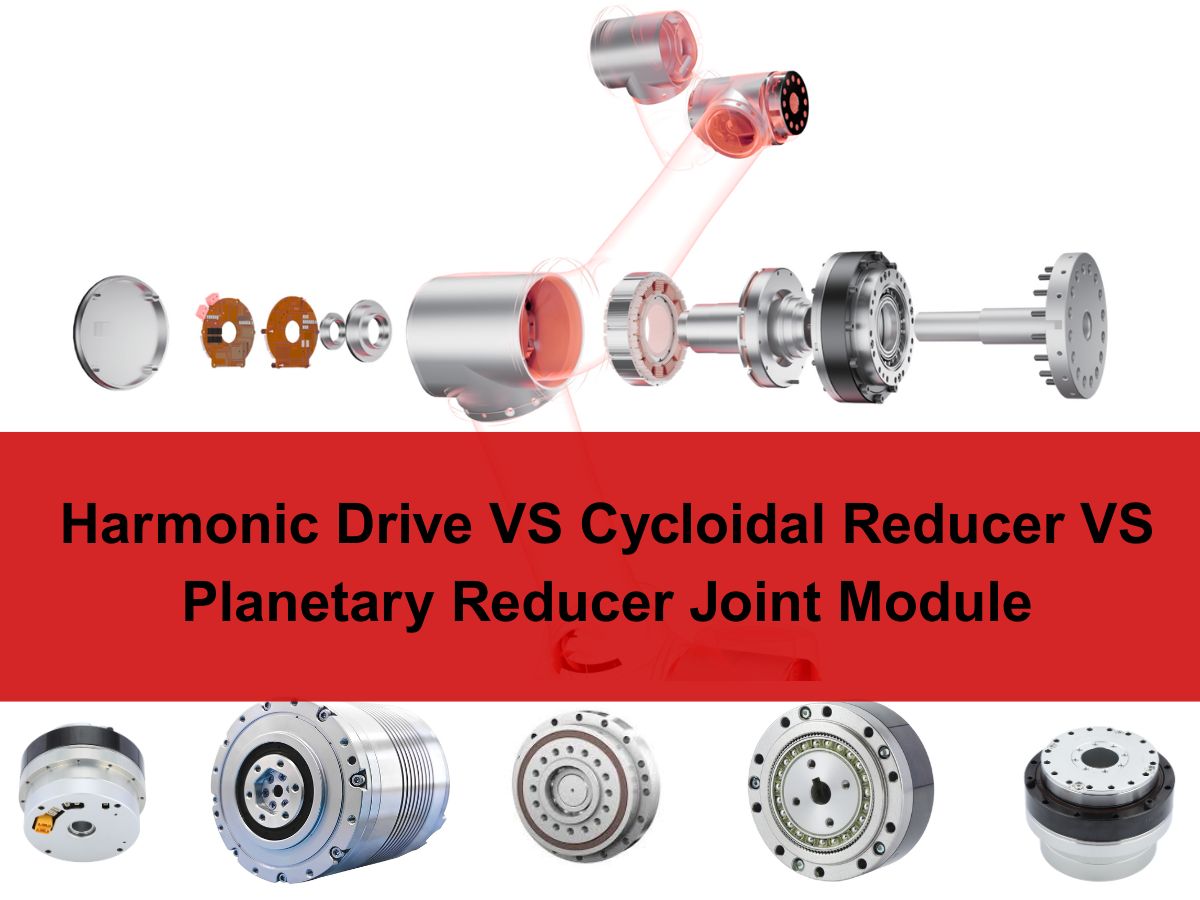
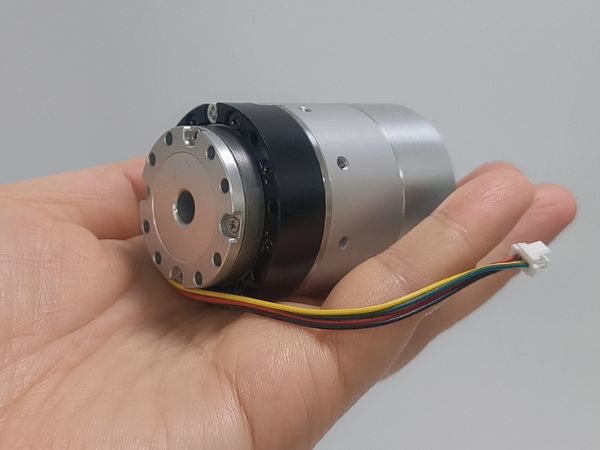
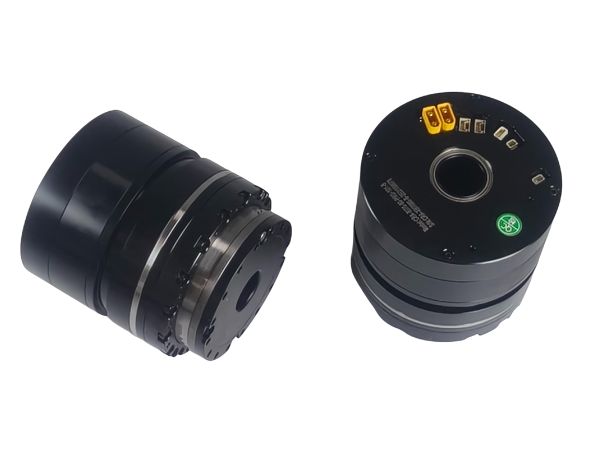
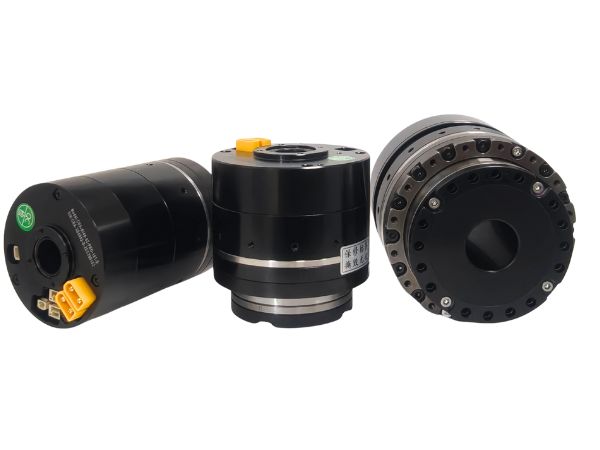
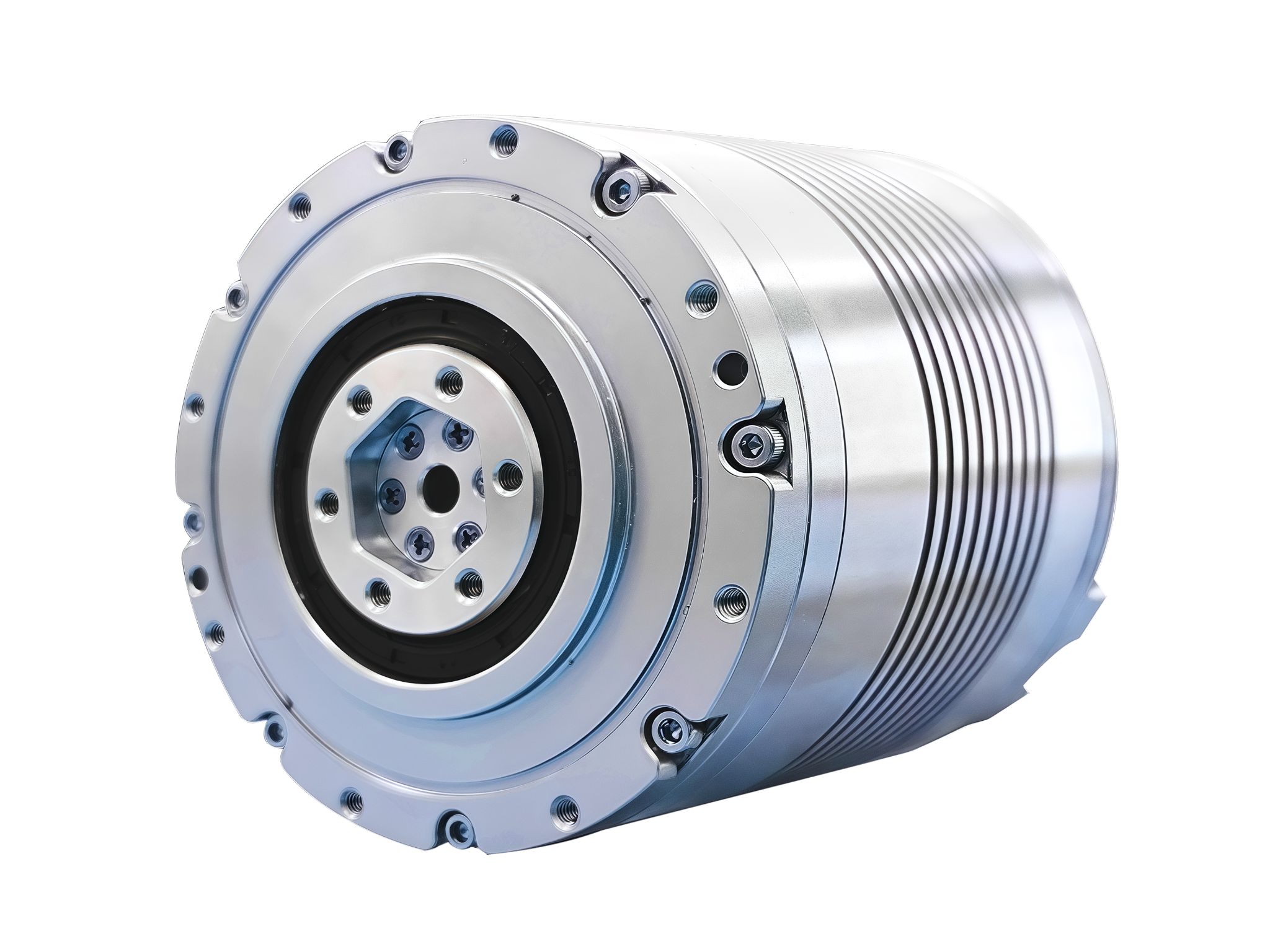
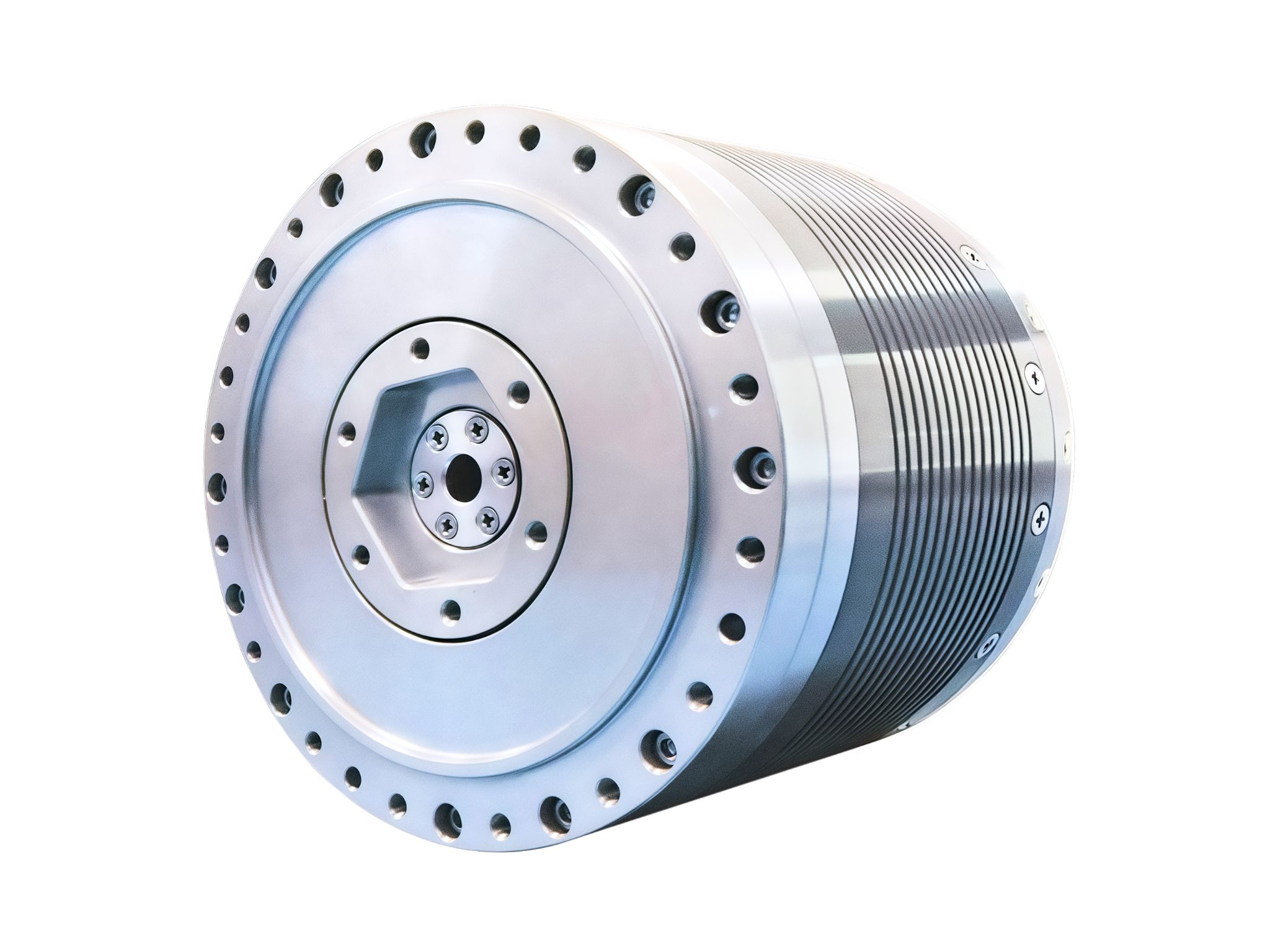
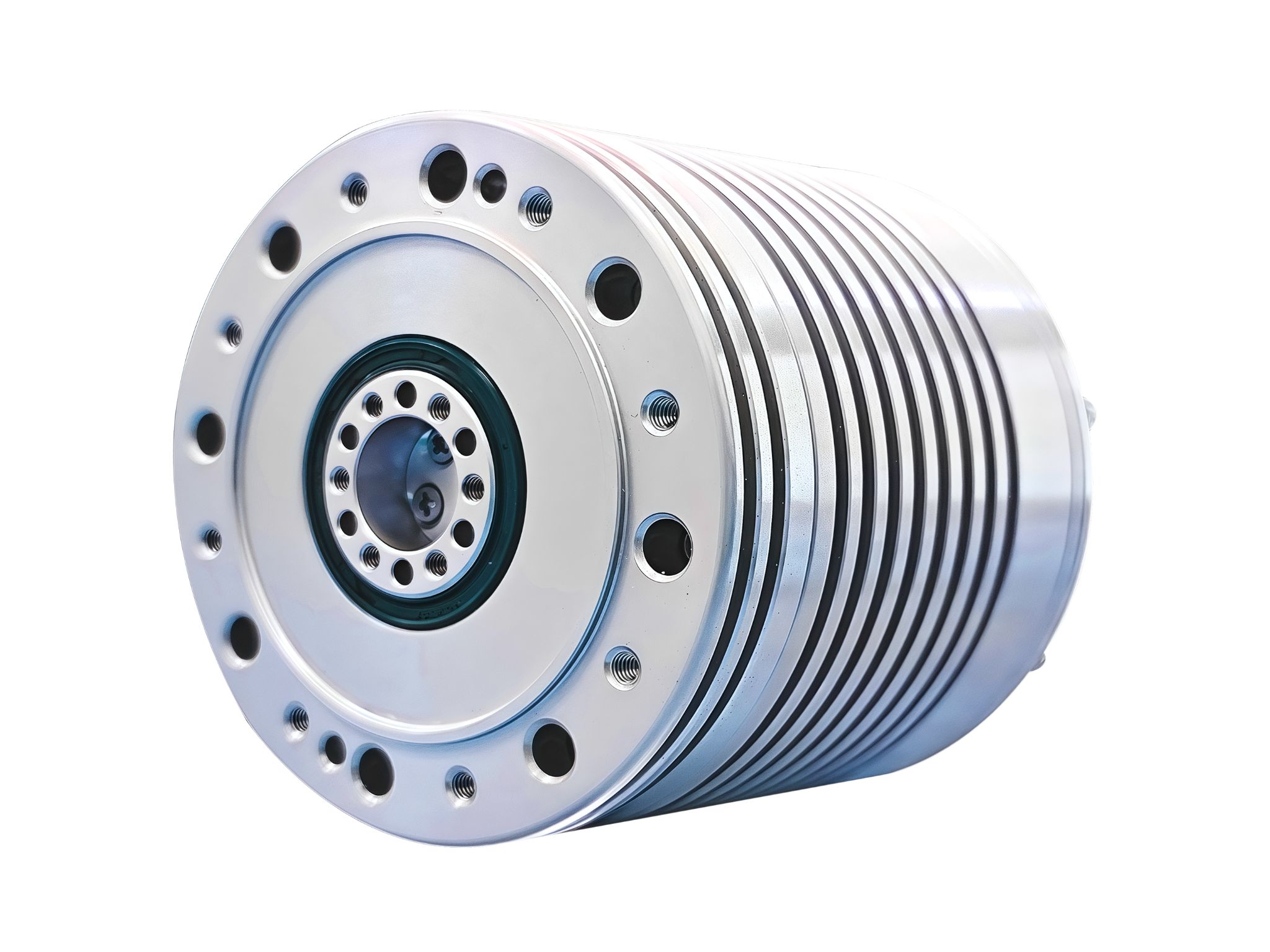
Planetary reducer robot joint motors and harmonic drive robot joint motors each exhibit unique characteristics in different applications. The differences between planetary reducers and harmonic drives directly impact the precision, lifespan, and applicable scenarios of the joint motors.
Harmonic drive reducer for joint motor
Harmonic drive reducers stand out due to their unique structural design. They primarily consist of a flexible spline, a rigid spline, and a wave generator. During operation, the wave generator causes the flexible spline to undergo elastic deformation, creating a meshing engagement with the rigid spline, thus achieving speed reduction. This design offers numerous advantages. Firstly, it boasts an extremely high transmission ratio, easily reaching 50-300 in a single stage, meaning significant speed reduction can be achieved within a limited space. Furthermore, it offers exceptional precision, allowing for precise control of robot joint rotation angles, with a repeatable positioning accuracy of ±0.01mm. In addition, harmonic drive reducers are compact and lightweight, making them particularly suitable for applications with strict space and weight constraints, such as the joints of collaborative robots. However, they also have drawbacks. The flexible spline is subjected to alternating stress over time, making it susceptible to fatigue damage and resulting in a relatively shorter lifespan. Furthermore, poor heat dissipation requires extra attention during continuous high-load operation.
Planetary reducers for joint motor
The structure of a planetary reducer is based on a planetary gear system, including a sun gear, planetary gears, a planet carrier, and an internal ring gear. When the sun gear rotates, it drives the planetary gears to roll between the sun gear and the internal ring gear, thereby achieving speed reduction. Planetary reducers also have outstanding advantages: high transmission efficiency, reaching 90%-95%, and low energy loss. They have a compact structure, small size, light weight, and are easy to install. At the same time, they are highly stable, less prone to overshoot and impact forces during operation, and less affected by temperature, allowing them to operate normally over a wide temperature range. However, their precision is slightly inferior to that of harmonic drive gearboxes, and they may not be suitable for some applications requiring extremely high precision.
Planetary Reducer Robot Joint Motor and Harmonic Drive Robot Joint Motor Applications
From an overall perspective, joint modules using harmonic reducers offer high precision and compact size, enabling fine movements, and perform exceptionally well in fields such as medical surgical robots and semiconductor precision positioning equipment. Joint modules using planetary reducers, on the aid of their high efficiency and stability, play a crucial role in scenarios requiring high stability and efficiency, such as industrial automation production lines and logistics AGVs.
- What is robot joint actuator?How to Choose the Best Robot Rotary Joint Actuator?Apr 14, 2026In core robot joint transmission solutions, planetary and harmonic rotary actuators each have their own strengths. Choosing the right type based on application requirements is essential to achieve the optimal balance between performance and cost.
- DD Motors VS Harmonic Rotary ActuatorsApr 01, 2026This article provides an in-depth comparison between Direct Drive (DD) motors and harmonic rotary actuators, covering their transmission principles, advantages and disadvantages, and typical application fields.
- OMG Ultra Compact Harmonic Drive Joint Module with Built-in Torque SensorJan 27, 2026HONPINE TCHL series harmonic drive joint module is a game-changing product that achieves disruptive improvements in multiple aspects such as lightweight design, integration level, and connection convenience. This article will analyze its revolutionary enhancements with you.
- Why Does an RV Reducer Need Profile Modification? How to Further Reduce Backlash and Transmission Error?Sep 22, 2026An RV Reducer is designed to deliver high torque, high stiffness, and precise motion for demanding applications such as robotic joints, industrial rotary tables, and precision machinery. However, achieving low backlash and stable transmission accuracy requires more than high-precision machining. Cycloidal profile modification must also account for manufacturing tolerances, assembly errors, load-induced deformation, thermal expansion, and lubrication conditions. In this article, we examine why RV reducers require profile modification, how different modification methods affect meshing, and how engineers can further control backlash and transmission error through profile design, error budgeting, structural analysis, precision manufacturing, and validation testing.
- How to Choose a Hollow Rotary Platform: A Complete Selection Guide?Sep 22, 2026A hollow rotary platform is widely used in precision automation where rotary positioning, compact integration, and cable routing through the rotation axis are required. However, choosing the right platform involves more than comparing rated torque or maximum speed. Load, eccentricity, overturning moment, inertia, positioning accuracy, hollow bore, acceleration, duty cycle, and installation conditions all affect the actual performance of the rotary system. This guide explains the key parameters engineers should consider when selecting a hollow rotary platform for CNC indexing, wafer handling, vision inspection, laser processing, dispensing, and other precision rotary applications.