

Rotary Joints for Robots: Which Joint Architecture Fits Your Robot Design?
Introduction: Why Robot Rotary Joints Are Becoming More Important
Robots cannot move without joints, but the role of a robot joint has changed significantly as robotic systems have become more compact, intelligent, and application-specific.
In a traditional robot, a rotary joint is often built by combining several independent components, including a motor, gear reducer, encoder, servo drive, brake, and sometimes a torque sensor. Each component performs a specific function, while the robot manufacturer is responsible for integrating them into a complete joint.
This approach remains practical for many conventional industrial robots. However, the requirements of modern robots are becoming increasingly demanding. Humanoid robots need compact and lightweight actuators. Collaborative robots require safe and responsive motion control. Medical robots often have strict requirements for size, precision, and cleanliness. Special-purpose robotic arms may require unusual mechanical interfaces, internal cable routing, or customized joint dimensions.
As a result, the question facing robot manufacturers is no longer simply which motor or gearbox to choose.
The more important question is:
What type of robot joint architecture should be used for each axis of the robot?
This is where integrated robot joint modules are becoming increasingly valuable.
What Is a Rotary Joint for a Robot?
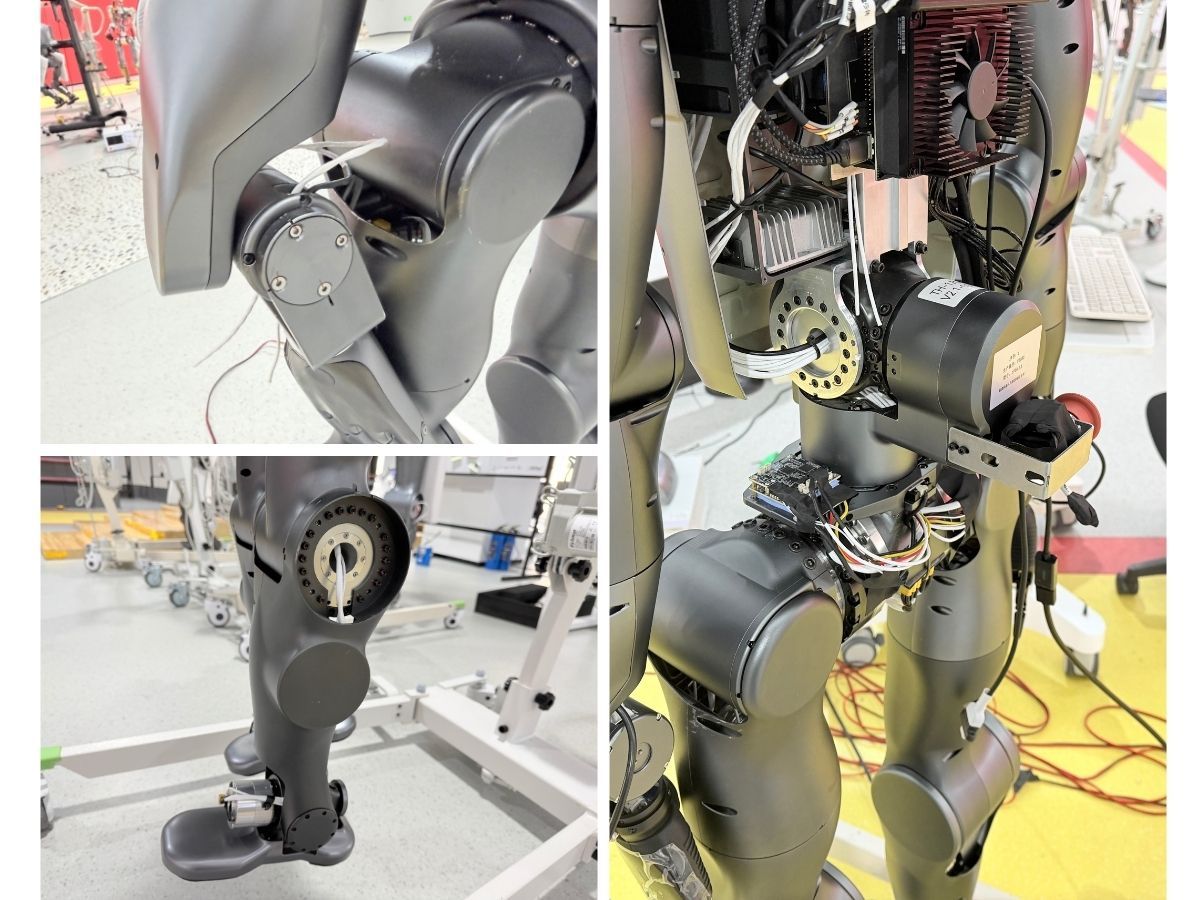
A rotary joint enables one robot link to rotate relative to another. From a mechanical perspective, this sounds straightforward. In a modern robotic system, however, the joint often has to perform several functions simultaneously.
The joint must generate torque, transmit motion, provide accurate position feedback, communicate with the robot controller, and respond dynamically to changing loads. Depending on the application, it may also need braking, torque sensing, temperature monitoring, or other safety functions.
For this reason, a modern robot rotary joint should increasingly be considered a complete mechatronic motion unit rather than simply a motor or gearbox.
This distinction becomes particularly important when designing robots with multiple axes. Every additional component installed around a joint affects the available space, total weight, wiring arrangement, mechanical structure, and control architecture of the robot.
The joint therefore becomes an important part of the overall robot design rather than an isolated component.
The Traditional Approach: Building a Robot Joint from Individual Components
For many years, robot manufacturers have designed rotary joints by selecting individual components and integrating them internally.
A motor is selected according to the required speed and torque. A gear reducer is then matched to the motor and required output performance. An encoder is added for position feedback, while the servo drive is usually installed outside the joint. Depending on the application, the design may also require a brake, torque sensor, additional connectors, and other electronic components.
This architecture provides flexibility because engineers can select each component independently.
However, the flexibility also creates additional engineering work.
The motor and reducer must be properly matched. Mechanical interfaces must be designed. Encoder signals need to be connected to the control system. The drive must be configured and tuned. Power and communication cables must be routed through the robot. Thermal management must also be considered.
As robot structures become smaller and more integrated, the space available for these components decreases.
The result is a common engineering problem: the individual components may all meet their specifications, but integrating them into a compact and reliable robot joint becomes increasingly difficult.
Why Integrated Robot Joint Modules Are Changing Robot Design?
An integrated robot joint module takes a different approach.
Instead of treating the motor, transmission, encoder, drive, and other functions as completely independent components, they can be designed as parts of one coordinated motion unit.
The purpose is not simply to put several products inside the same housing.
The real objective is to optimize the mechanical, electrical, and control interfaces between these functions.
This can reduce the number of external components required around the joint and simplify the overall robot architecture. It can also make it easier for robot manufacturers to standardize their mechanical and electrical interfaces across different robot platforms.
For companies developing several types of robots, this can become particularly valuable. Different robot axes may require different torque levels, dimensions, transmission technologies, or sensing configurations, while still using a common joint-module development approach.
This creates a more modular way of developing robots.
A Robot Does Not Need the Same Joint Architecture on Every Axis
One of the most important considerations when selecting robot joint modules is that different axes of the same robot may have completely different requirements.
A shoulder joint may need high output torque and high structural rigidity because it supports several downstream links. An elbow joint may require a balance between torque, speed, weight, and dynamic response. A wrist joint may prioritize low inertia and compact dimensions because it is located at the end of the robot arm.
Humanoid robots make this difference even more obvious. Hip and knee joints may require substantial torque capacity, while wrist and hand joints may place greater emphasis on compactness, low weight, and responsive motion.
The same principle applies to industrial robots, collaborative robots, medical systems, mobile manipulators, and special-purpose robotic arms.
Therefore, choosing a robot joint should begin with the function of the axis rather than simply selecting the same actuator for the entire robot.
Harmonic and Planetary Joint Modules Provide Different Design Options
An integrated robot joint does not have to use one specific transmission technology.
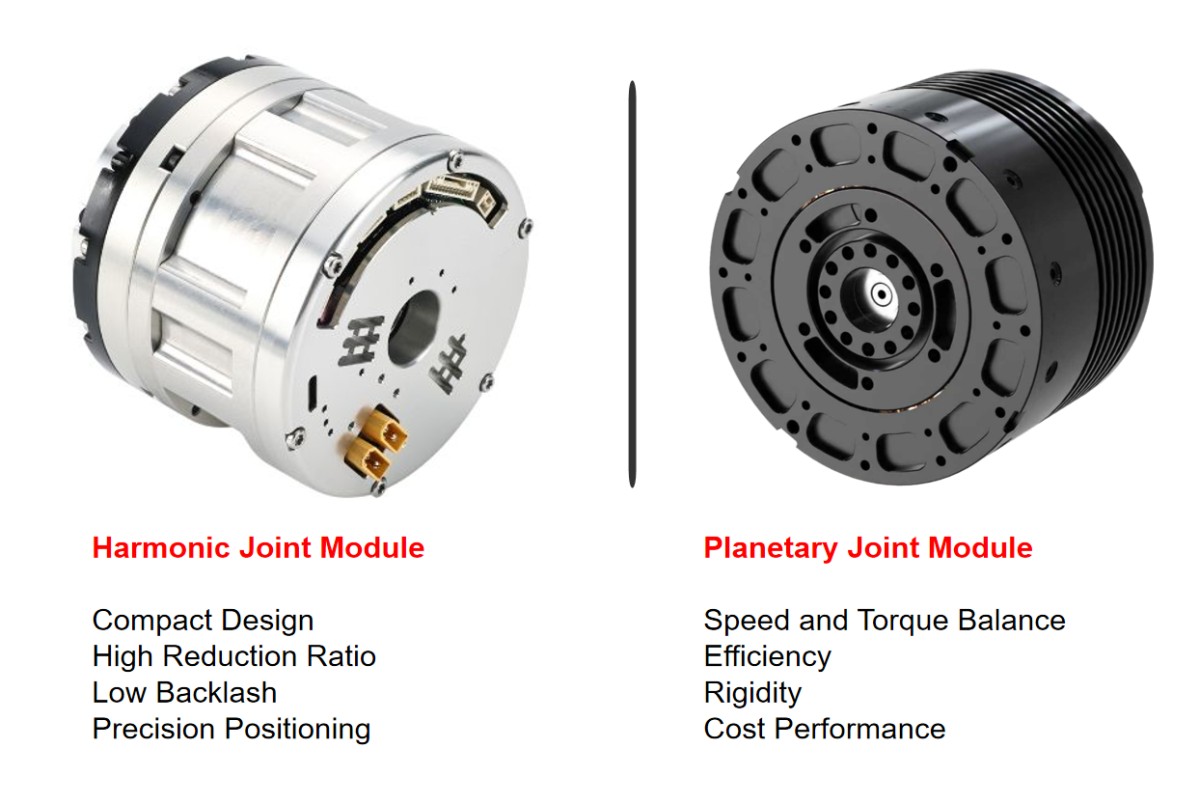
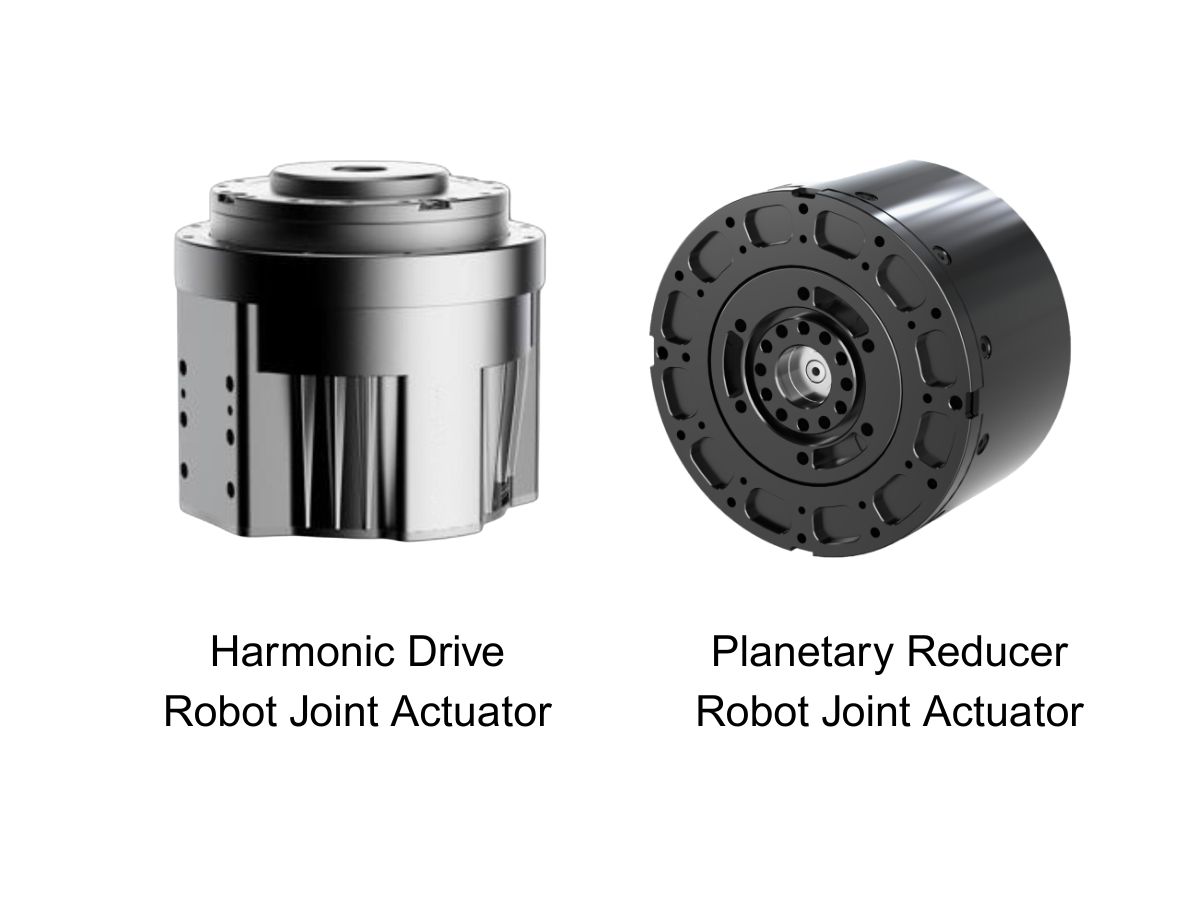
Different transmission architectures can provide different combinations of performance characteristics, which is why both harmonic and planetary joint modules have important roles in robotic systems.
A harmonic joint module can be an effective solution when the application requires high reduction ratios, compact dimensions, low backlash, and precise positioning. These characteristics make harmonic transmission particularly attractive for many robotic joints where installation space and positioning performance are critical.
A planetary joint module provides another approach for applications where the required balance between speed, torque, efficiency, rigidity, and overall system cost is better suited to planetary transmission.
The important point is that robot manufacturers do not need to start by deciding which gearbox technology to use.
A better engineering approach is to first define the requirements of the joint and then select the appropriate actuator architecture.
This makes the transmission technology part of the solution rather than the starting constraint.
What Problems Can an Integrated Robot Joint Module Solve?
The value of an integrated robot joint module becomes clearer when it is viewed from the perspective of the engineering problems it can solve.
One major challenge is mechanical integration. When multiple components are designed as one actuator, fewer external mechanical interfaces may be required. This can simplify the joint housing and make the surrounding robot structure easier to design.
Another challenge is wiring. Modern robots may contain power cables, encoder connections, communication lines, pneumatic tubing, and sensor wiring. Hollow-shaft joint architectures and integrated connectors can provide more practical routing options, particularly in robots with multiple rotary axes.
A third challenge is control integration. When drive electronics and communication interfaces are integrated into the joint, the external control architecture can potentially become more compact and easier to standardize.
There is also the issue of weight and inertia. Components located farther from the robot base can have a significant influence on the dynamic load of the entire system. A lighter integrated joint can therefore provide benefits beyond the joint itself.
Finally, integrated modules can reduce the amount of repetitive engineering work required during robot development. Instead of integrating the same combination of motor, reducer, encoder, and drive for every new robot platform, manufacturers can work from an established joint-module architecture.
Why Lightweight Robot Joints Matter More in Compact Robots?
Weight reduction becomes particularly important when the robot has several moving links.
A joint located near the end of a robot arm contributes not only its own weight but also affects the load seen by the joints closer to the base.
This is especially important for humanoid robots and compact robotic arms, where the available motor torque and battery capacity are limited.
For example, reducing the mass of a wrist joint can influence the load requirements of the elbow and shoulder joints. The same principle applies to compact collaborative robots and lightweight medical manipulators.
This is why lightweight design should not be evaluated only by looking at the weight of one actuator.
The more useful question is how the selected joint influences the complete robot's mass distribution and dynamic performance.
HONPINE's TCHL platform is designed around this requirement, combining a compact structure with integrated sensing and flexible mechanical installation options for applications where space and weight are particularly constrained.
When the Priority Shifts to Torque and Rigidity?
Lightweight design is not always the highest priority.
Industrial robots, heavy-duty manipulators, welding systems, palletizing equipment, and other high-load machines may require substantially higher output torque and structural rigidity.
In these applications, selecting an extremely small actuator simply to reduce weight may create a different problem.
The joint must be capable of handling the required load while maintaining sufficient stiffness and positioning performance.
HONPINE's HAG platform addresses this type of requirement by providing different joint sizes and torque levels, together with configurable functions such as braking and torque sensing.
HPJM-PRO provides another integrated architecture for high-performance applications where torque density, precision feedback, dynamic response, and drive integration are important.
The objective is therefore not to make every robot joint as small or as light as possible.
The objective is to find the appropriate balance between torque capacity, rigidity, speed, weight, precision, and system integration for each specific axis.
Torque Sensing Adds Another Layer of Intelligence to the Robot Joint
Some robotic applications require more information than position and velocity feedback can provide.
When a robot performs precision assembly, polishing, grinding, compliant manipulation, or physical interaction with humans, the control system may need to understand the force or torque acting on the joint.
This creates demand for integrated torque sensing.
Instead of adding a separate torque-sensing structure around the robot joint, an actuator can be designed with torque measurement as part of its overall architecture.
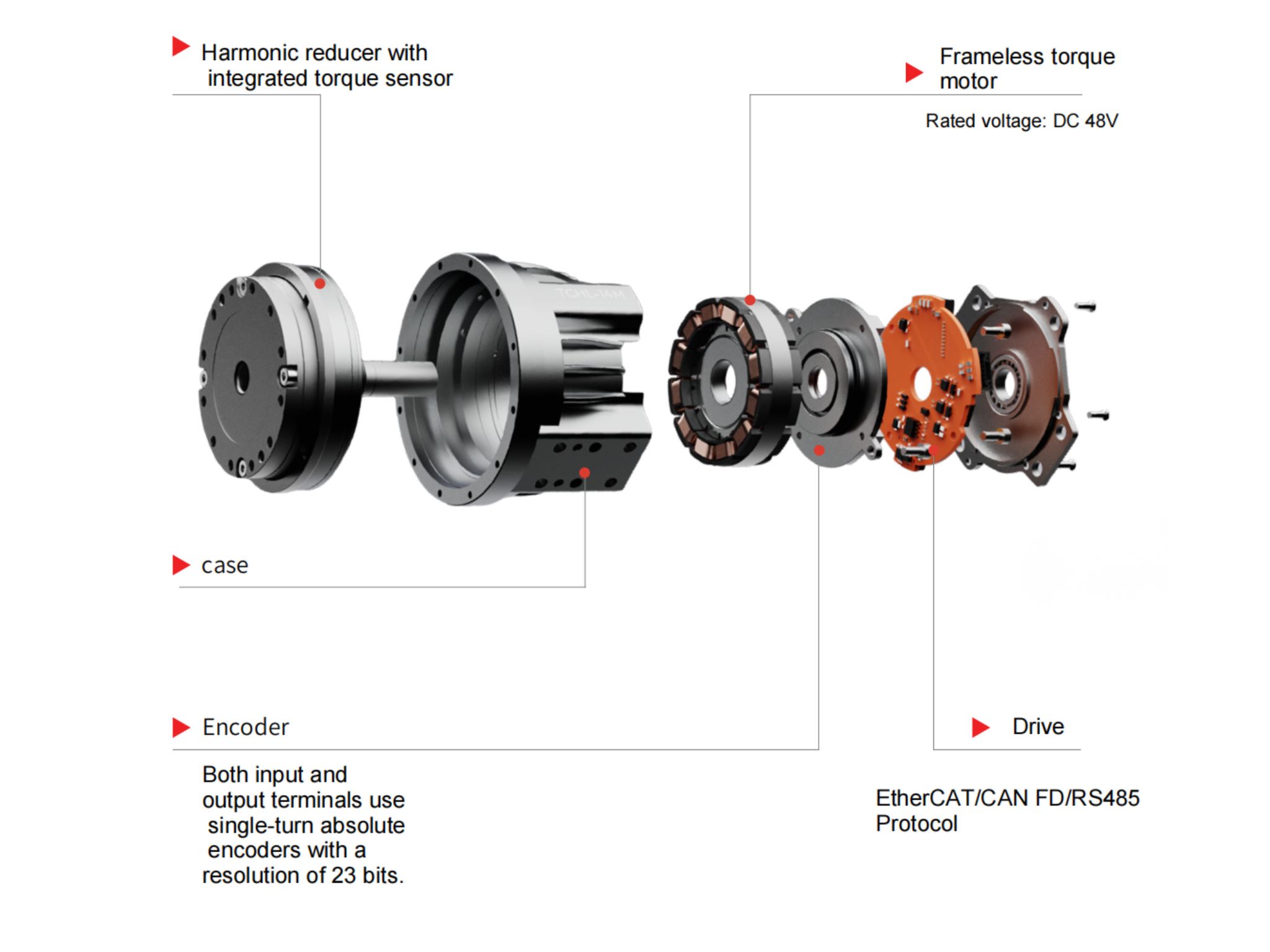
HONPINE's TCHL joint module provides an example of this approach, with an output-side torque sensor integrated into the joint structure.
The benefit is not simply that the robot gains another sensor.
The larger advantage is that force sensing becomes part of the actuator itself, making it easier to develop closed-loop force and position control for applications that require responsive physical interaction.
This can be particularly valuable for collaborative robots, medical robots, humanoid robots, research platforms, and other systems where contact with the environment is an important part of the task.
Flexible Mechanical Installation Can Be Critical for Special Robot Designs
Not every robot can use a conventional joint mounting structure.
Special-purpose robotic arms, medical equipment, research platforms, and customized automation systems may have unusual mechanical constraints.
The actuator may need to be installed from a specific direction.
The cable may need to pass through the center of the joint.
The joint may need to connect directly to a customized robot link.
In these situations, the mechanical interface of the joint can become just as important as its torque and speed specifications.
A joint module with multiple installation configurations can give engineers more freedom when developing the surrounding robot structure.
This is one reason why HONPINE's TCHL platform incorporates flexible installation configurations rather than being designed around only one mounting method.
For customized robots, this type of flexibility can reduce the amount of mechanical redesign required around the actuator.
When Should the Drive Be Integrated into the Robot Joint?
Whether the drive should be integrated into the joint depends on the robot architecture.
For some robots, external servo drives provide sufficient flexibility and may be preferred because the manufacturer already has an established control cabinet and electrical architecture.
For compact robots, however, external drives can create additional space and wiring requirements.
An integrated drive can move part of the electronics into the actuator itself, reducing the amount of equipment that needs to be installed around the joint.
This can be useful for robots with distributed architectures, compact control systems, or limited installation space.
HONPINE's integrated joint platforms provide different levels of drive and communication integration, allowing the actuator architecture to be selected according to the control requirements of the robot rather than forcing every application to use the same configuration.
Why a Joint Module Platform Is More Valuable Than a Single Joint Model?
Robot manufacturers rarely develop only one robot forever.
A company may start with a lightweight robotic arm and later develop a larger collaborative robot. Another company may develop a humanoid platform with different requirements for the hip, knee, shoulder, elbow, and wrist.
If every new robot requires a completely new actuator architecture, development time and engineering resources can increase significantly.
A joint module platform provides another approach.
The manufacturer can select different actuator sizes and configurations while maintaining a common development framework.
For example, a compact robot axis may use a lightweight joint architecture, while a higher-load axis uses a larger joint with greater torque capacity. A joint requiring physical interaction may add torque sensing, while another axis may prioritize speed and low inertia.
This allows the robot manufacturer to build a family of products around a scalable joint architecture.
That is a major reason why the concept of a robot joint module platform is becoming increasingly important.
HONPINE's Integrated Robot Joint Module Approach
HONPINE approaches robot joint development from the perspective of different robot requirements rather than a single transmission technology.
The company's integrated joint portfolio includes harmonic joint modules and planetary joint module solutions, allowing different transmission architectures to be considered according to the application.
For highly compact and lightweight robot structures, the TCHL platform focuses on compact integration, flexible installation, and optional torque sensing.
For high-performance robotic applications, HPJM-PRO combines the motor, transmission, feedback, and drive functions into a compact joint architecture designed for demanding motion-control requirements.
For industrial robots and higher-load applications, the HAG platform provides a wider range of torque capacities and configurable functions such as braking and torque sensing.
HONPINE also develops planetary joint module solutions for applications where a planetary transmission architecture provides a better fit for the required performance and system design.
The purpose of this product strategy is not to make every robot use the same joint.
It is to provide robot manufacturers with different actuator architectures so that the joint can be selected according to the actual requirements of each robot axis.
Integrated Joint Modules Can Change the Way Robots Are Developed
The most important change brought by integrated robot joint modules is not simply product integration.
It is a change in the engineering process.
With a traditional component-based approach, mechanical engineers, electrical engineers, and control engineers often need to coordinate several independent components during joint development.
With an integrated joint module, more of these interfaces can be defined at the actuator level.
This can allow the robot manufacturer to focus more heavily on the robot's core functions, including mechanical structure, motion planning, control algorithms, perception, software, and application development.
For companies entering a new robotics market, this can be especially valuable.
A company may have strong capabilities in artificial intelligence, machine vision, logistics automation, industrial software, or application engineering without having extensive experience in developing motors, reducers, encoders, drives, and robotic actuators from scratch.
An integrated robot joint module can provide a more complete hardware foundation for building the robot platform.
How to Select the Right Rotary Joint for a Robot?
The correct robot rotary joint should be selected according to the complete requirements of the robot axis.
The first consideration is usually output torque, but torque alone is not enough.
The required speed, acceleration, allowable weight, installation space, positioning performance, structural rigidity, transmission architecture, and duty cycle all influence the final selection.
The control architecture must also be considered. Some robots may require an external drive, while others can benefit from an integrated drive and communication interface.
If the robot performs physical interaction, force or torque sensing may become an important requirement. If the joint is installed in a vertical axis, a brake may also be necessary for safety.
Mechanical installation should not be overlooked either. Hollow-shaft routing, connector location, mounting direction, and available installation space can significantly affect the practicality of a joint.
For this reason, selecting a robot joint is ultimately a system-level engineering decision rather than a simple comparison of individual specifications.
The Future of Rotary Joints for Robots
The future development of rotary joints for robots is likely to move toward greater integration, modularity, and application-specific configuration.
However, this does not mean that one transmission technology will replace all others.
Harmonic transmission will continue to play an important role in applications requiring compact dimensions, high reduction ratios, low backlash, and precision motion.
Planetary transmission will remain valuable where its characteristics provide a better combination of speed, torque, efficiency, rigidity, and cost performance.
At the same time, motors, encoders, drives, communication interfaces, brakes, and sensing technologies will increasingly become integrated into complete joint-level platforms.
The industry is therefore moving from component selection toward joint architecture selection.
This is an important change for robot manufacturers.
Instead of asking which individual component should be installed in a robot, engineers can begin by defining what the complete joint needs to accomplish.
Conclusion: Choosing the Right Robot Joint Architecture
A modern robot rotary joint is much more than a motor connected to a gearbox.
It can be a complete motion unit that combines power generation, transmission, feedback, control, sensing, communication, braking, and mechanical integration.
For some robot axes, an integrated harmonic joint module may provide the most appropriate combination of precision, compactness, and reduction ratio.
For other applications, a planetary joint module may provide a better balance of speed, torque, efficiency, rigidity, and system requirements.
The important point is not to force every robot to use the same actuator architecture.
The better approach is to select the appropriate joint architecture for each axis according to the robot's actual requirements.
This is the direction HONPINE is pursuing with its integrated robot joint module portfolio.
By combining harmonic joint modules, planetary joint module solutions, different torque ranges, sensing options, drive configurations, and mechanical interfaces, HONPINE can support robot manufacturers looking for more than an individual motor or gearbox.
The goal is to provide a complete robot joint solution that can be adapted to the structure, control system, and application requirements of the robot.
The future of rotary joints for robots is not about finding one universal actuator. It is about choosing the right joint architecture for the robot.
Read More
Learn more about the story of HONPINE and industry trends related to precision transmission.
 What is robot joint actuator?How to Choose the Best Robot Rotary Joint Actuator?In core robot joint transmission solutions, planetary and harmonic rotary actuators each have their own strengths. Choosing the right type based on application requirements is essential to achieve the optimal balance between performance and cost.
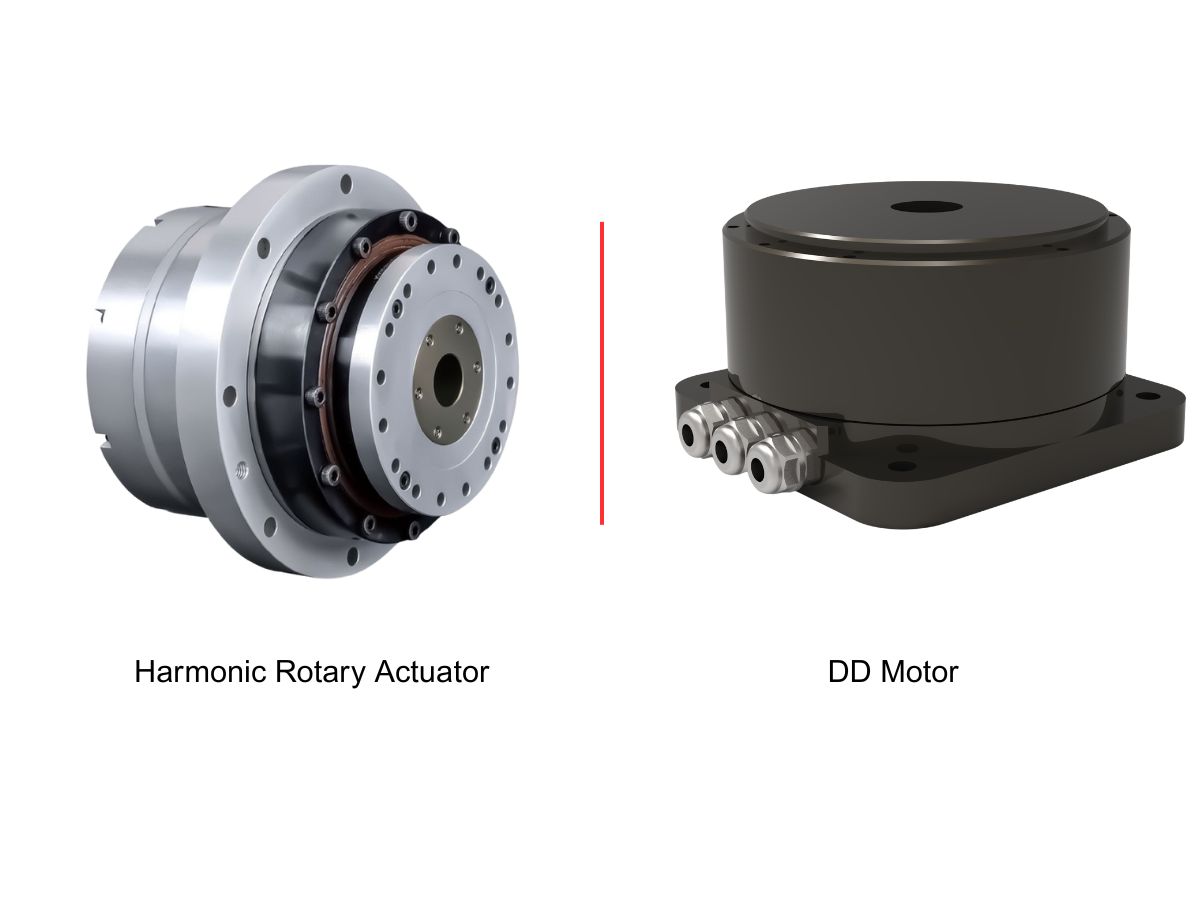
 DD Motors VS Harmonic Rotary ActuatorsThis article provides an in-depth comparison between Direct Drive (DD) motors and harmonic rotary actuators, covering their transmission principles, advantages and disadvantages, and typical application fields.
 OMG Ultra Compact Harmonic Drive Joint Module with Built-in Torque SensorHONPINE TCHL series harmonic drive joint module is a game-changing product that achieves disruptive improvements in multiple aspects such as lightweight design, integration level, and connection convenience. This article will analyze its revolutionary enhancements with you.
 The Role of Harmonic Drive Gears in Achieving 5–10 μm Accuracy in Dental Milling MachinesA dental milling machine is a CNC machining system used to directly process digital dental models into restorations such as crowns, bridges, veneers, inlays, and implant abutments. Dental milling machines require far higher operational accuracy and motion stability than ordinary equipment. This article explains how harmonic drive gear help dental milling machines achieve stable, continuous, and controllable operation.
 Why Are Harmonic Rotary Actuators Perfect for Medical Equipment?Harmonic rotary actuators (typically integrated systems consisting of a harmonic drive reducer, frameless torque motor, encoder, and optional brake) are regarded as key components in medical equipment. The core reason is that they simultaneously meet the most stringent medical requirements for precision, compact size, safety, and controllability. The following explanation is structured from three perspectives: technical characteristics, application scenarios, and medical value.
 High-Precision RV Reducers Perfectly Matched for Walking RobotsThe walking axis of a robot is a core component for power transmission and support. RV reducers provide extremely high rigidity, precision, and torque while maintaining a compact size and exceptional reliability, making them an ideal match for the demanding requirements of walking robot joints in terms of load capacity, impact resistance, and precision.
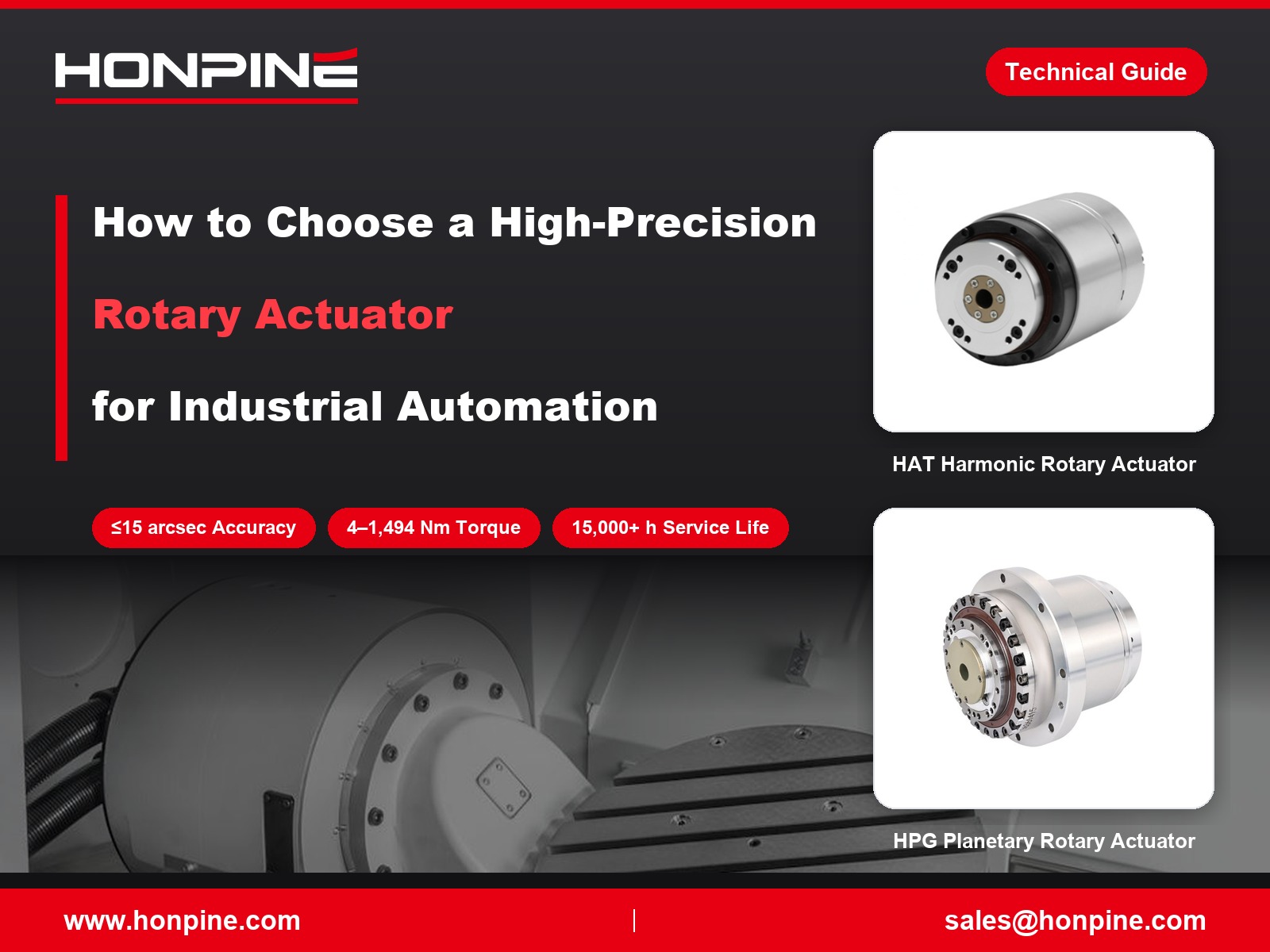
 How to Choose High-Precision Rotary Actuators for Industrial Automation?High-precision rotary actuators play an important role in industrial automation, where positioning accuracy, repeatability, durability and installation flexibility directly affect equipment performance. HONPINE offers four main series of precision rotary actuators, including HAT, HAM and HAS harmonic rotary actuators and HPG low-backlash planetary actuators. With torque ratings ranging from 4 to 1,494 Nm across the product range, these solutions are designed for applications in semiconductor manufacturing, 3C automation, laser processing and CNC machine tools. Learn how to identify the right rotary actuator based on operating conditions, precision requirements and mechanical integration needs.
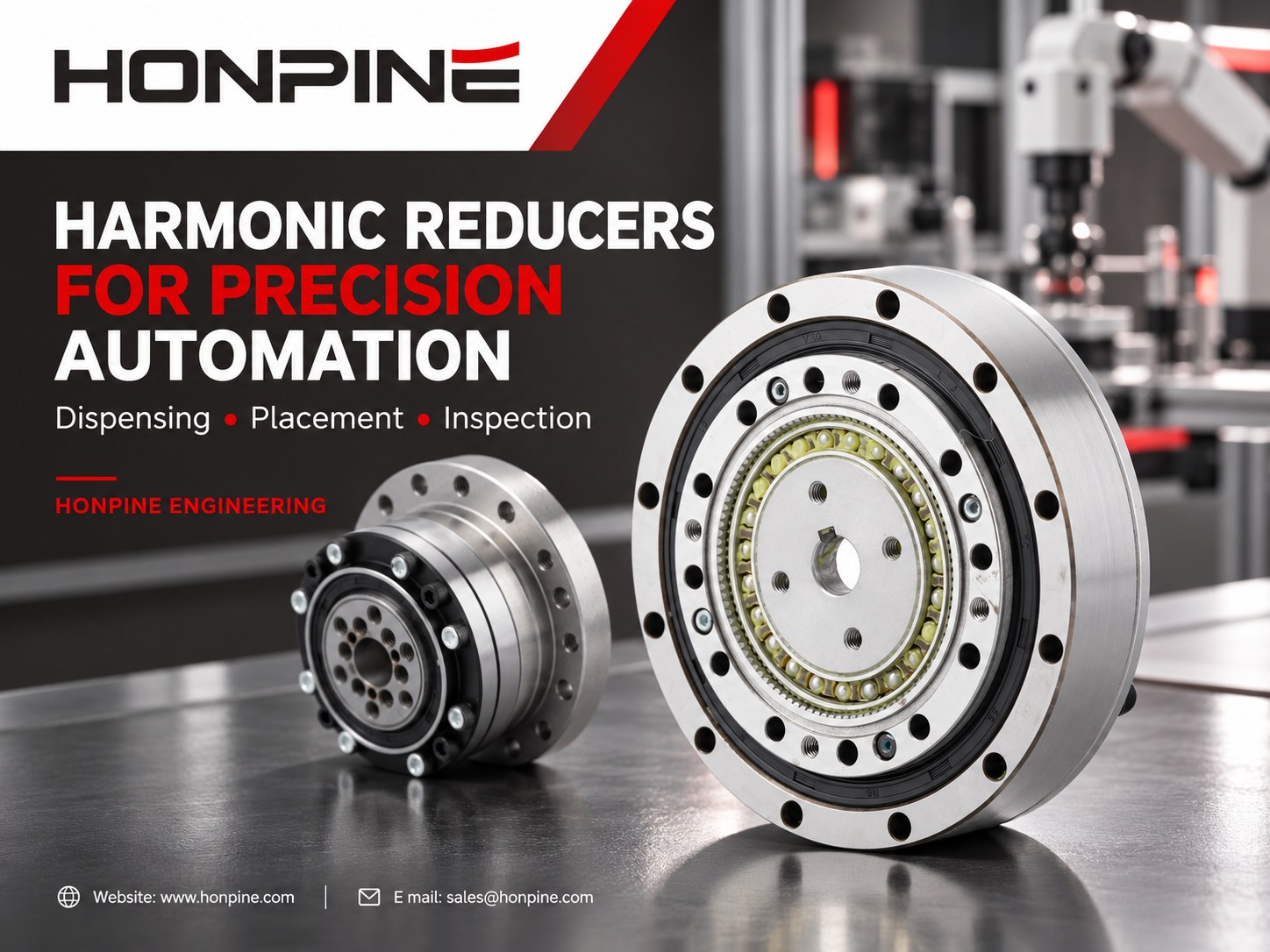
 Why Are Harmonic Reducers Suitable for High-Precision Automation Equipment?Precision automation equipment depends on consistent rotary motion, reliable positioning and compact transmission design. From dispensing head orientation and component angular alignment to automated inspection indexing, harmonic reducers offer a practical solution for applications requiring low backlash and high reduction ratios in limited installation space. This article explains how harmonic reducers support repeatable motion, compares key design configurations, and outlines how to select a suitable reduction ratio and reducer structure based on load, speed, accuracy and machine cycle-time requirements.
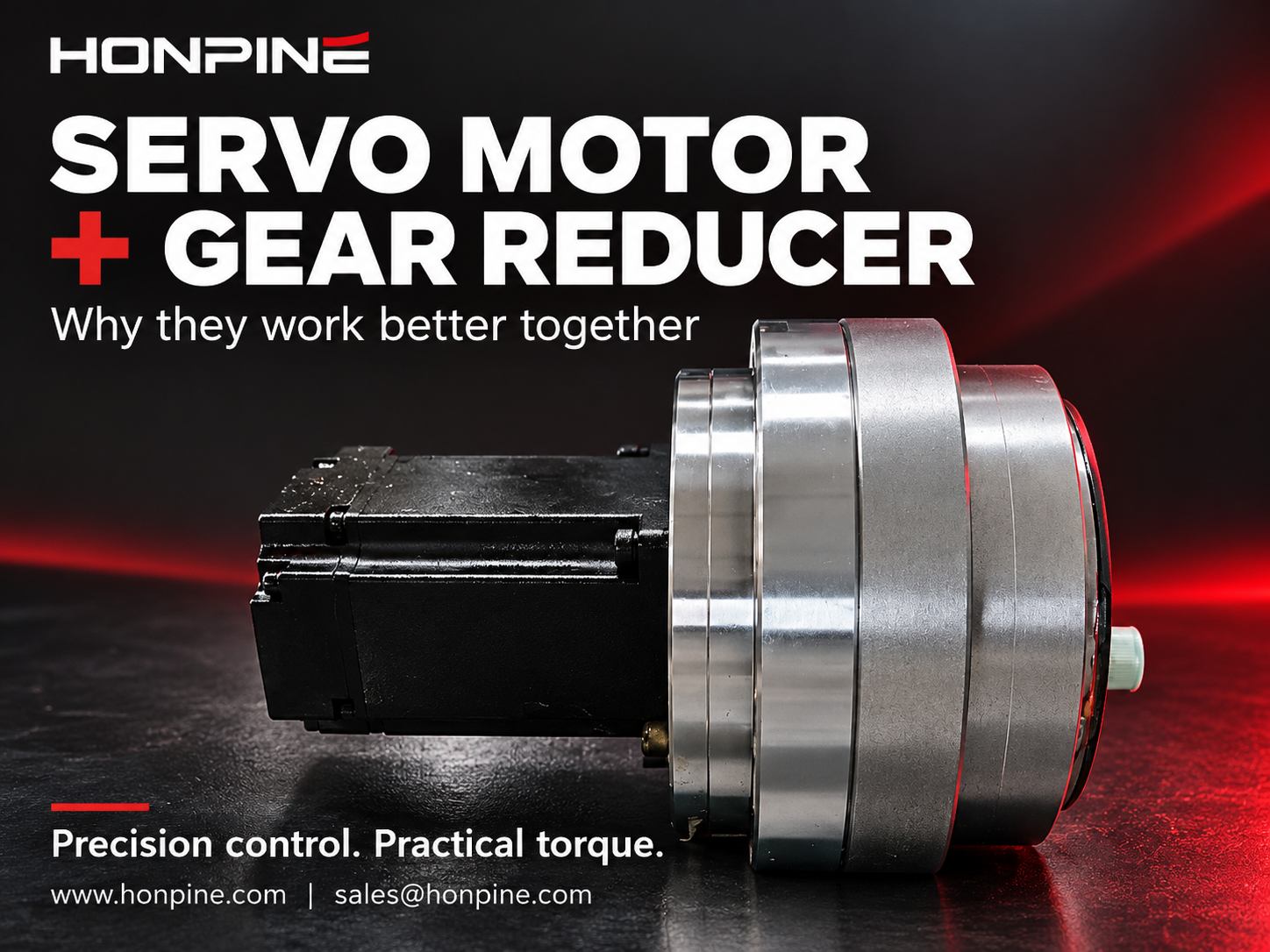
 Why Are Servo Motors and Gear Reducers an Ideal Match?Servo motors provide fast, precise motion control, while gear reducers adapt their speed and torque to the load. This guide explains how servo motors and gear reducers work together through torque multiplication, reflected inertia reduction and finer theoretical position resolution. Learn how inertia matching, backlash, torsional stiffness and reduction ratio influence performance in robotics and industrial automation.
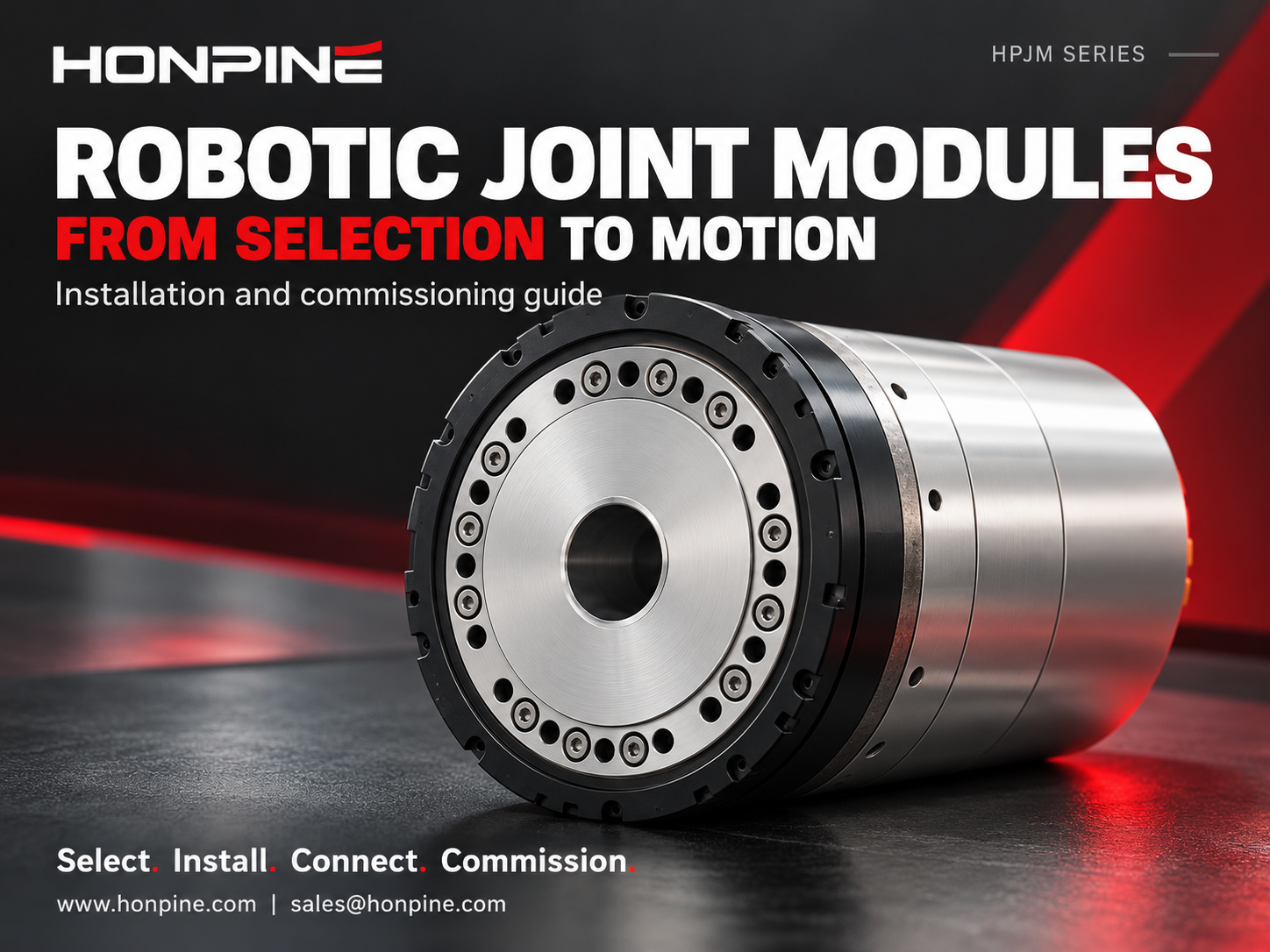
 How to Select and Use Robotic Joint Modules?How do you take robotic joint modules from selection to controlled motion? Using the HONPINE HPJM harmonic joint module as an example, Technical Director Theodore Li explains the key steps in mechanical installation, electrical wiring, CAN and EtherCAT configuration, and control commissioning. Learn what to confirm before integration and how to approach setup so each joint can respond correctly to your controller.
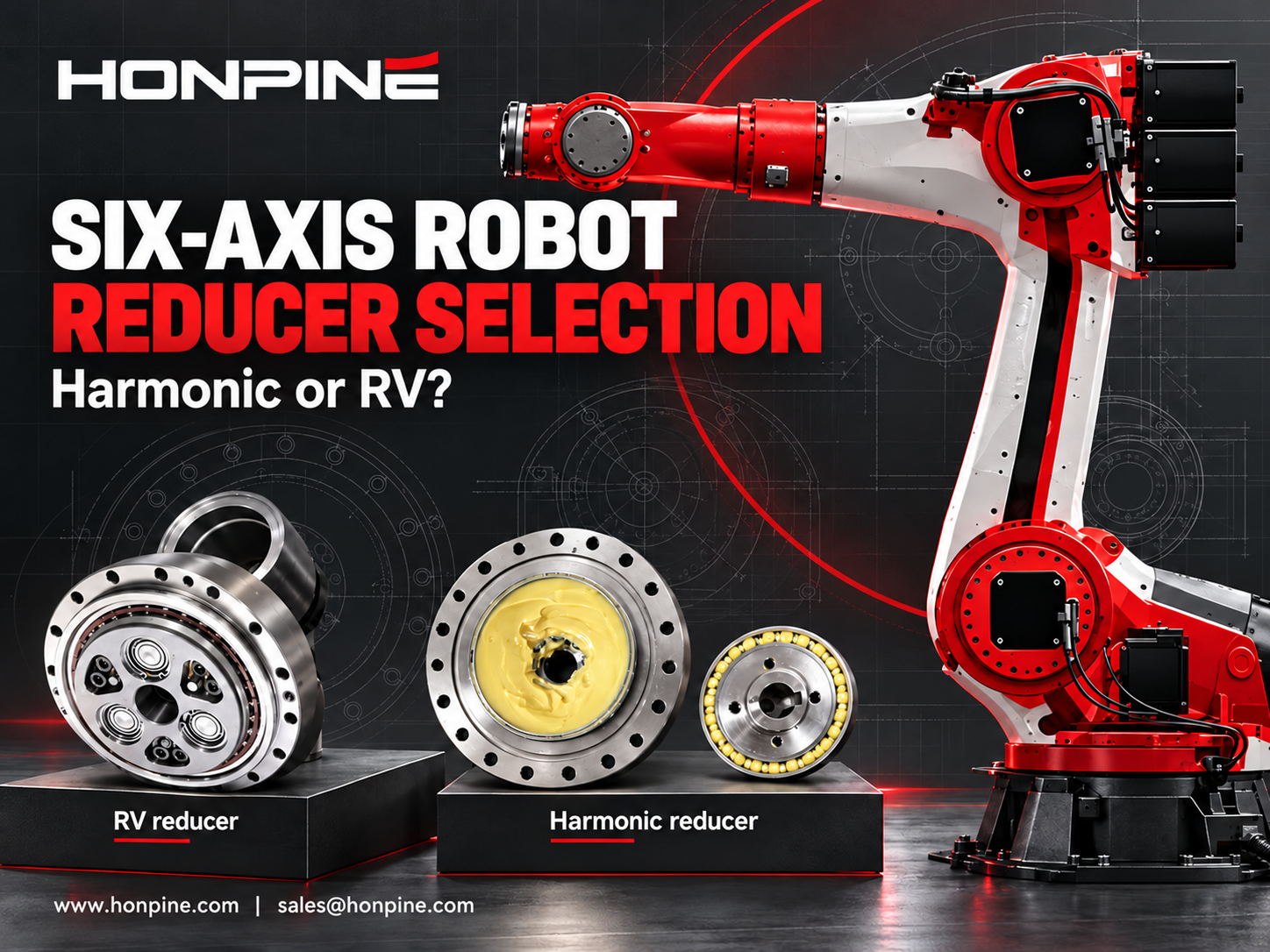
 How to Select Harmonic and RV Reducers for Each Axis of a Six-Axis Robot?What determines whether a six-axis robot joint needs a harmonic reducer or an RV reducer? The answer depends on torque, inertia, impact loads, bearing loads and installation space. This guide explains how to evaluate harmonic and RV reducers for the base, shoulder, elbow and wrist, with practical checks for stiffness, backlash and service life. Use the requirements of each axis to select a suitable reducer configuration.
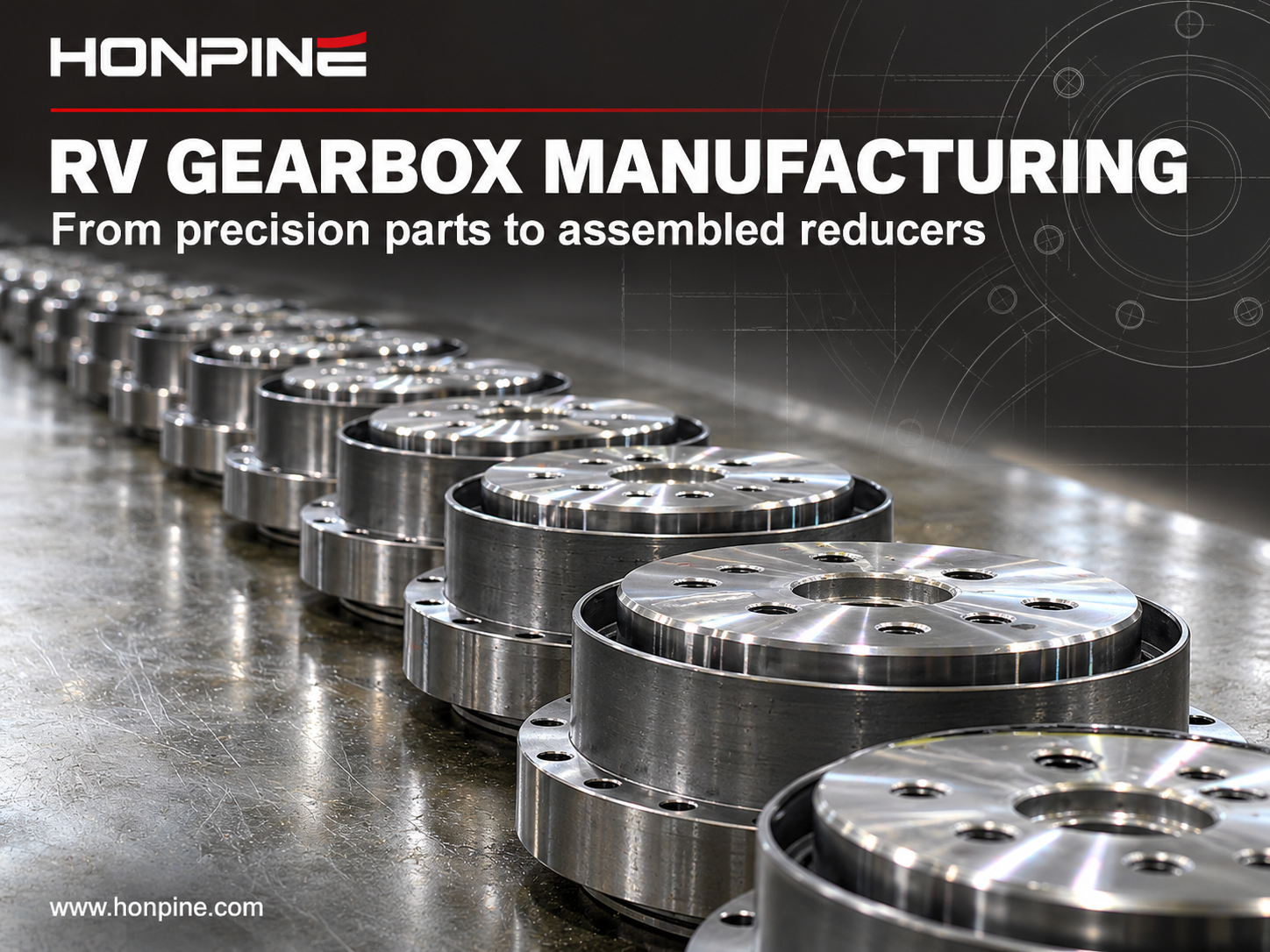
 Top 7 RV Reducer Gearbox Manufacturers: Why Does Nabtesco Still Dominate?What sets RV reducer gearbox manufacturers apart, and why does Nabtesco remain a benchmark in this market? RV reducer production demands precise component machining, careful assembly and extensive engineering know-how. This article introduces seven manufacturers across RV reducers and related transmission technologies, examines the strengths behind Nabtesco's position, and explores HONPINE's development capabilities to help you understand the supplier landscape.
Double Click
We provide harmonic drive reducer,planetary reducer,robot joint motor,robot rotary actuators,RV gear reducer,robot end effector,dexterous robot hand
 What is robot joint actuator?How to Choose the Best Robot Rotary Joint Actuator?In core robot joint transmission solutions, planetary and harmonic rotary actuators each have their own strengths. Choosing the right type based on application requirements is essential to achieve the optimal balance between performance and cost.
 DD Motors VS Harmonic Rotary ActuatorsThis article provides an in-depth comparison between Direct Drive (DD) motors and harmonic rotary actuators, covering their transmission principles, advantages and disadvantages, and typical application fields.
 OMG Ultra Compact Harmonic Drive Joint Module with Built-in Torque SensorHONPINE TCHL series harmonic drive joint module is a game-changing product that achieves disruptive improvements in multiple aspects such as lightweight design, integration level, and connection convenience. This article will analyze its revolutionary enhancements with you.
 How to Choose High-Precision Rotary Actuators for Industrial Automation?High-precision rotary actuators play an important role in industrial automation, where positioning accuracy, repeatability, durability and installation flexibility directly affect equipment performance. HONPINE offers four main series of precision rotary actuators, including HAT, HAM and HAS harmonic rotary actuators and HPG low-backlash planetary actuators. With torque ratings ranging from 4 to 1,494 Nm across the product range, these solutions are designed for applications in semiconductor manufacturing, 3C automation, laser processing and CNC machine tools. Learn how to identify the right rotary actuator based on operating conditions, precision requirements and mechanical integration needs.
 Why Are Harmonic Reducers Suitable for High-Precision Automation Equipment?Precision automation equipment depends on consistent rotary motion, reliable positioning and compact transmission design. From dispensing head orientation and component angular alignment to automated inspection indexing, harmonic reducers offer a practical solution for applications requiring low backlash and high reduction ratios in limited installation space. This article explains how harmonic reducers support repeatable motion, compares key design configurations, and outlines how to select a suitable reduction ratio and reducer structure based on load, speed, accuracy and machine cycle-time requirements.
 Why Are Servo Motors and Gear Reducers an Ideal Match?Servo motors provide fast, precise motion control, while gear reducers adapt their speed and torque to the load. This guide explains how servo motors and gear reducers work together through torque multiplication, reflected inertia reduction and finer theoretical position resolution. Learn how inertia matching, backlash, torsional stiffness and reduction ratio influence performance in robotics and industrial automation.
 How to Select and Use Robotic Joint Modules?How do you take robotic joint modules from selection to controlled motion? Using the HONPINE HPJM harmonic joint module as an example, Technical Director Theodore Li explains the key steps in mechanical installation, electrical wiring, CAN and EtherCAT configuration, and control commissioning. Learn what to confirm before integration and how to approach setup so each joint can respond correctly to your controller.
 How to Select Harmonic and RV Reducers for Each Axis of a Six-Axis Robot?What determines whether a six-axis robot joint needs a harmonic reducer or an RV reducer? The answer depends on torque, inertia, impact loads, bearing loads and installation space. This guide explains how to evaluate harmonic and RV reducers for the base, shoulder, elbow and wrist, with practical checks for stiffness, backlash and service life. Use the requirements of each axis to select a suitable reducer configuration.
 Top 7 RV Reducer Gearbox Manufacturers: Why Does Nabtesco Still Dominate?What sets RV reducer gearbox manufacturers apart, and why does Nabtesco remain a benchmark in this market? RV reducer production demands precise component machining, careful assembly and extensive engineering know-how. This article introduces seven manufacturers across RV reducers and related transmission technologies, examines the strengths behind Nabtesco's position, and explores HONPINE's development capabilities to help you understand the supplier landscape.
 How to Calculate Torque for a Harmonic Rotary Actuator in a Flipping Mechanism?How much torque does a harmonic rotary actuator need to flip a 10 kg load through 180 degrees? The answer depends on more than weight. Center-of-gravity offset, load inertia, acceleration and operating frequency all affect actuator selection. In this guide, Theodore Li, Technical Director at HONPINE, explains the calculation process using a horizontal-axis flipping example and outlines the checks needed for peak torque, continuous operation, output speed and bearing loads.
 Why Are Harmonic Reducers Suitable for CNC Machine Tool Rotary Tables?Why choose harmonic reducers for CNC rotary tables? Accurate indexing depends on more than the motor: backlash, torsional stiffness and torque capacity all affect how reliably a rotary table holds its position during machining. This guide explains the key transmission requirements of fourth and fifth axis rotary tables, explores common machine tool applications, and introduces HONPINE harmonic reducer configurations for different installation and load requirements.
 What’s the Difference Between Single and Dual Encoder Robot Joint Modules?Does your robot need a dual encoder joint module, or is a single encoder enough? The answer depends on positioning requirements, transmission behavior, force control strategy and budget. This guide compares motor-side and output-side feedback, explains where dual encoders can improve control, and examines their costs and limitations. Learn when a single encoder can meet your needs and when additional output feedback is worth considering.