

How to Select Robot Joint Modules for Arms, Torso, Head, and Legs in AGV and Humanoid Robots
Robot AGV platforms, lifting legs, folding legs, torso, head, and dual arms each have different functional requirements. Therefore, different types of harmonic gear joint modules and planetary joint modules should be selected accordingly.
This article explains how to choose the most suitable joint modules for each robot subsystem.
What Functional Requirements Do Different Robot Subsystems Have?
1) Dual Arms (Shoulder, Elbow, Wrist)
Key requirements:
Low backlash, low friction (for force control and teaching), high torque density, lightweight design, cable-routing capability (hollow shaft or side exit), and low noise.
Critical risks:
Insufficient rated torque may cause overheating
Backlash and friction lead to instability in force control
Low repeatability and insufficient rigidity may cause end-effector vibration or positioning drift
2) Torso (Waist Yaw / Pitch / Roll, Chest Rotation)
Key requirements:
High axial and radial load capacity, structural rigidity, thermal stability, and strong impact resistance.
Critical risks:
The waist joint carries the combined load and moment of the upper body and dual arms, requiring extremely high structural strength and robust output bearing systems.
3) Head (Gimbal / Sensor Rotation Unit)
Key requirements:
Miniaturization, low noise, low vibration, and smooth low-speed motion for precise control.
Critical risks:
Motor cogging torque and encoder noise may cause micro-vibration
Electromagnetic or cable interference may affect precision sensors such as cameras and IMUs
4) Lower Limbs
A. Lifting Legs (Extension, Support, Posture Adjustment)
Typical implementations:
Electric actuators such as ball screw systems, belt-driven lifting systems, rack-and-pinion mechanisms, or scissor lift structures. Rotational joint modules are mainly used for auxiliary actuation or posture adjustment.
Key requirements:
Reliable self-locking/braking, impact resistance, long service life, high transmission efficiency, IP protection, high low-speed torque, and long-term thermal stability.
B. Folding Legs (Hip, Knee, Ankle Joints)
Key requirements:
High peak torque, excellent impact resistance, high structural rigidity, low backlash, reliable braking/holding mechanisms, and overload protection.
Module requirements:
These joints are close to primary load-bearing joints and require strong focus on structural strength, bearing system design, and output interface robustness.
2,How to Select Joint Modules for Different Robot Subsystems?
Dual Arms (Shoulder / Elbow / Wrist)
Arm Joints (Shoulder & Elbow)
Arm joints require high torque density, precise motion control, and reliable force-control capability. They also need lightweight construction and support for human–robot interaction through integrated sensing.
High torque density enables precise motion control
Integrated torque sensor supports force control and human–robot interaction
Lightweight and compact design is essential for robotic arm optimization
Recommended solution:
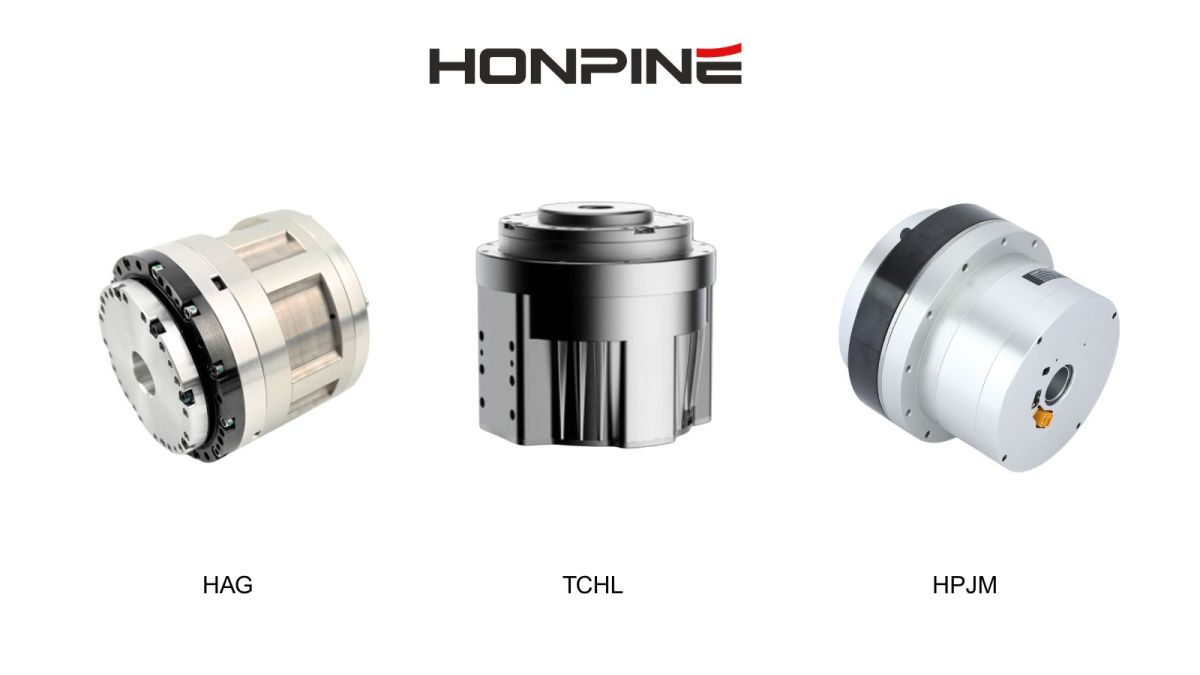
The TCHL harmonic gear motor is recommended for shoulder and elbow joints.
Torso (Waist Joint)
The torso (waist joint) requires high structural rigidity, high torque output, and strong load-bearing capability, as it supports the entire upper body and dual arms. Cable routing and system integration are also critical.
Large hollow structure enables internal cable routing and integration
High torque output ensures stable upper-body support
High structural rigidity improves overall system stability
Recommended solution:
The HPJM harmonic joint motor is preferred for the robot torso (waist).
Head Module
The head joint requires miniaturization, low vibration, and smooth motion control, especially for vision and sensor stability.
Low noise operation ensures sensor stability
Minimal vibration improves imaging and perception accuracy
Smooth low-speed motion enables precise positioning
Recommended solution:
Compact TCHL harmonic joint module
Lifting Legs
Lifting legs require high load capacity, reliable vertical motion, long service life, and strong impact resistance for posture adjustment and support.
High load reliability under continuous operation
Strong impact resistance for dynamic movement
High efficiency and long service life
Actuation systems may include linear or rotary solutions depending on design.
Recommended solutions:
Electric cylinders
Ball screw linear actuators
Upcoming HPJM planetary joint motor
Folding Legs (Hip & Knee Joints)
Hip and knee joints require extremely high peak torque, high structural stiffness, and strong impact resistance, as they are the primary load-bearing joints in locomotion.
High peak torque for dynamic motion
High structural rigidity for load support
Reliable braking or holding capability
Strong impact resistance for walking and running conditions
Recommended solution:
The HPJM harmonic joint motor is the preferred choice for high-load leg joints.
Summary of Robot Joint Selection Principles
Robot joint module selection should be based on the following key engineering factors:Torque requirements,Precision requirements,Impact resistance,Control strategy (force control vs position control),Structural space constraints,Cost optimization
For detailed joint module selection guidance and customized robot solutions, please contact us.
HONPINE provides one-to-one technical consultation for robot joint module selection, system design, and integration support.
Read More
Learn more about the story of HONPINE and industry trends related to precision transmission.
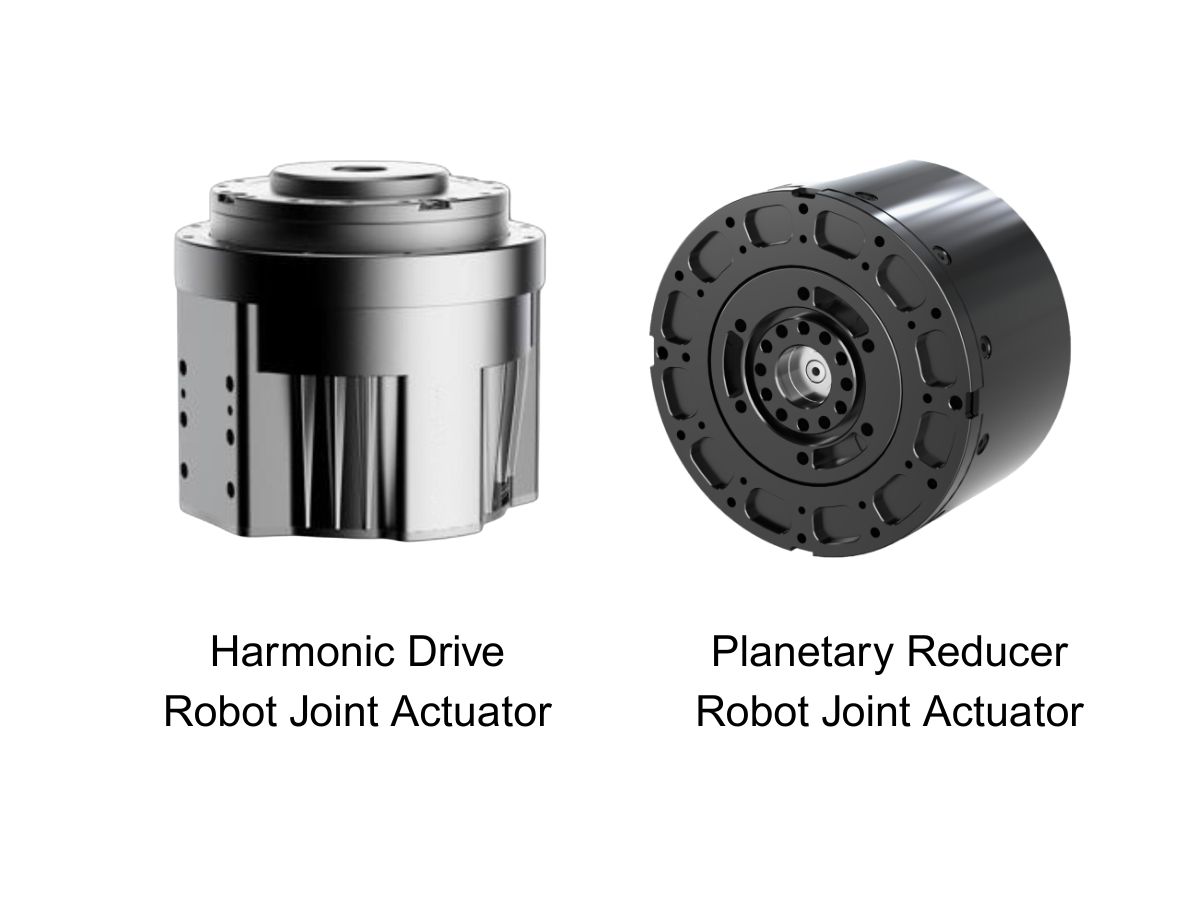
 What is robot joint actuator?How to Choose the Best Robot Rotary Joint Actuator?In core robot joint transmission solutions, planetary and harmonic rotary actuators each have their own strengths. Choosing the right type based on application requirements is essential to achieve the optimal balance between performance and cost.
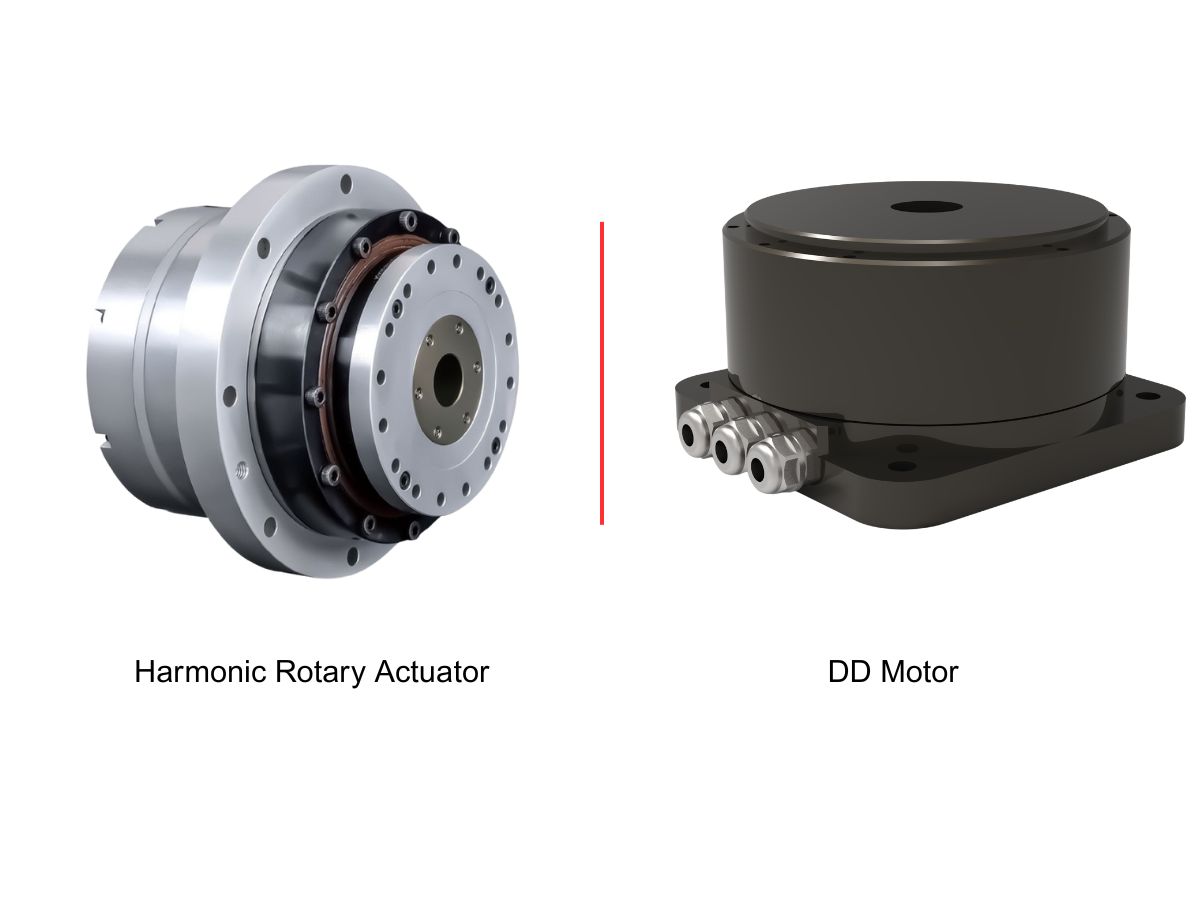
 DD Motors VS Harmonic Rotary ActuatorsThis article provides an in-depth comparison between Direct Drive (DD) motors and harmonic rotary actuators, covering their transmission principles, advantages and disadvantages, and typical application fields.
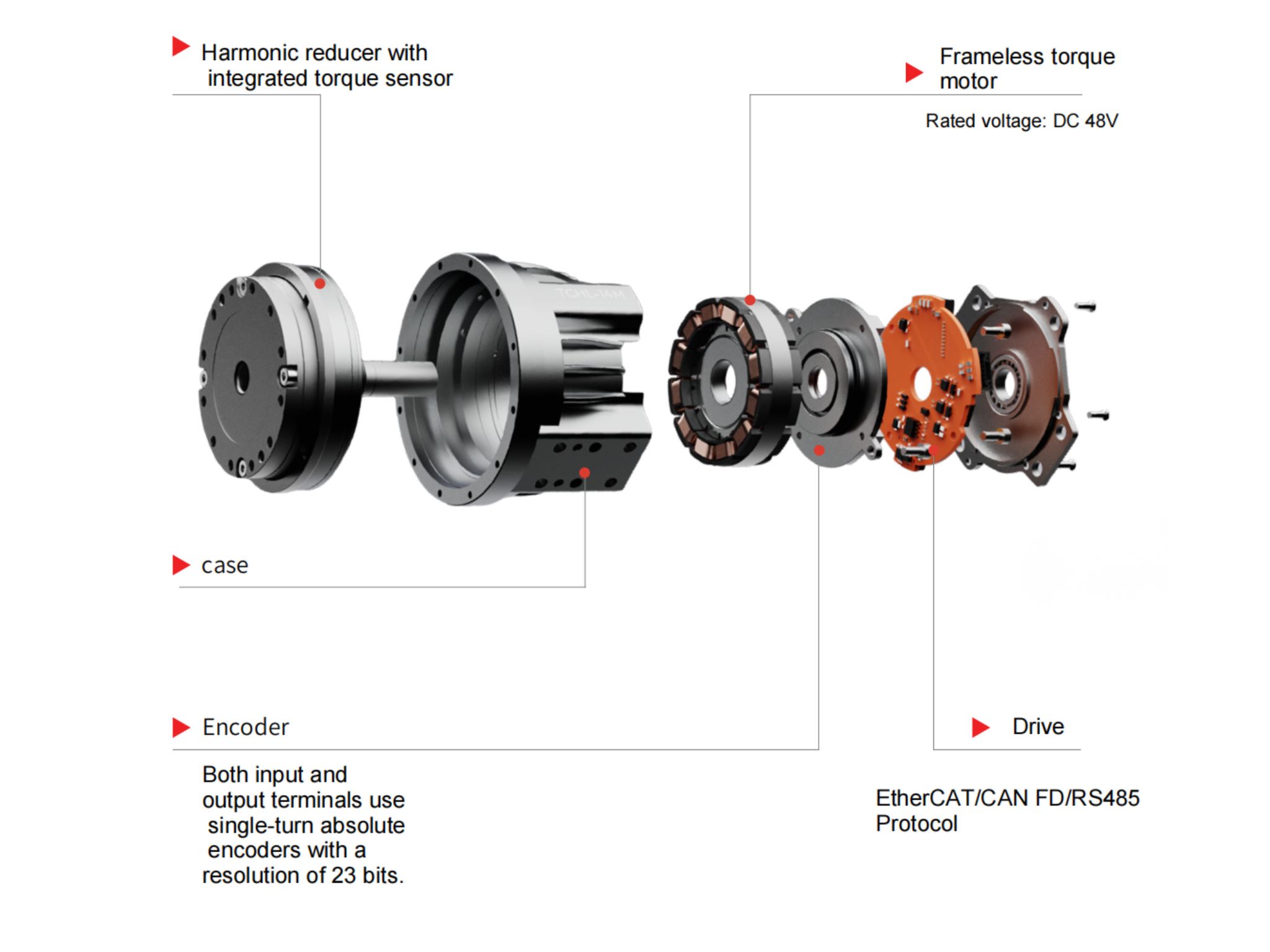
 OMG Ultra Compact Harmonic Drive Joint Module with Built-in Torque SensorHONPINE TCHL series harmonic drive joint module is a game-changing product that achieves disruptive improvements in multiple aspects such as lightweight design, integration level, and connection convenience. This article will analyze its revolutionary enhancements with you.
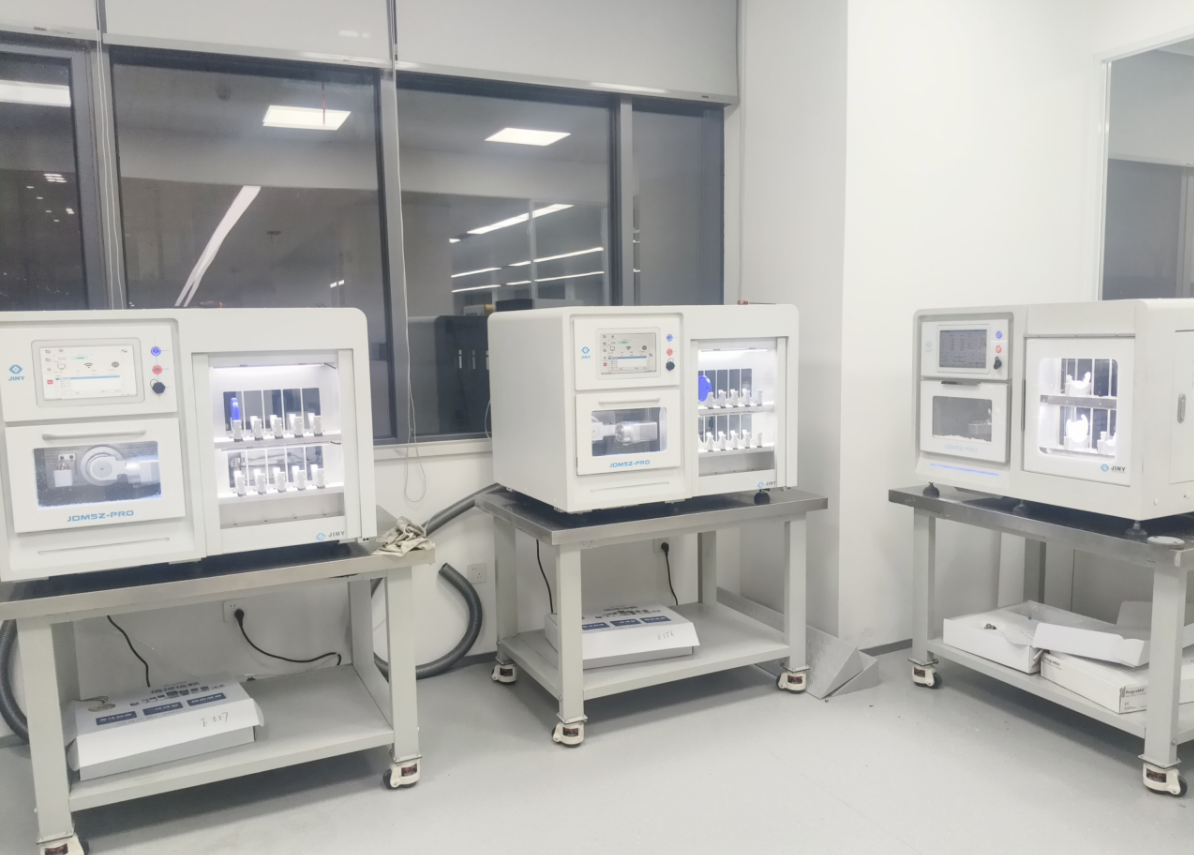
 The Role of Harmonic Drive Gears in Achieving 5–10 μm Accuracy in Dental Milling MachinesA dental milling machine is a CNC machining system used to directly process digital dental models into restorations such as crowns, bridges, veneers, inlays, and implant abutments. Dental milling machines require far higher operational accuracy and motion stability than ordinary equipment. This article explains how harmonic drive gear help dental milling machines achieve stable, continuous, and controllable operation.
 Why Are Harmonic Rotary Actuators Perfect for Medical Equipment?Harmonic rotary actuators (typically integrated systems consisting of a harmonic drive reducer, frameless torque motor, encoder, and optional brake) are regarded as key components in medical equipment. The core reason is that they simultaneously meet the most stringent medical requirements for precision, compact size, safety, and controllability. The following explanation is structured from three perspectives: technical characteristics, application scenarios, and medical value.
 High-Precision RV Reducers Perfectly Matched for Walking RobotsThe walking axis of a robot is a core component for power transmission and support. RV reducers provide extremely high rigidity, precision, and torque while maintaining a compact size and exceptional reliability, making them an ideal match for the demanding requirements of walking robot joints in terms of load capacity, impact resistance, and precision.
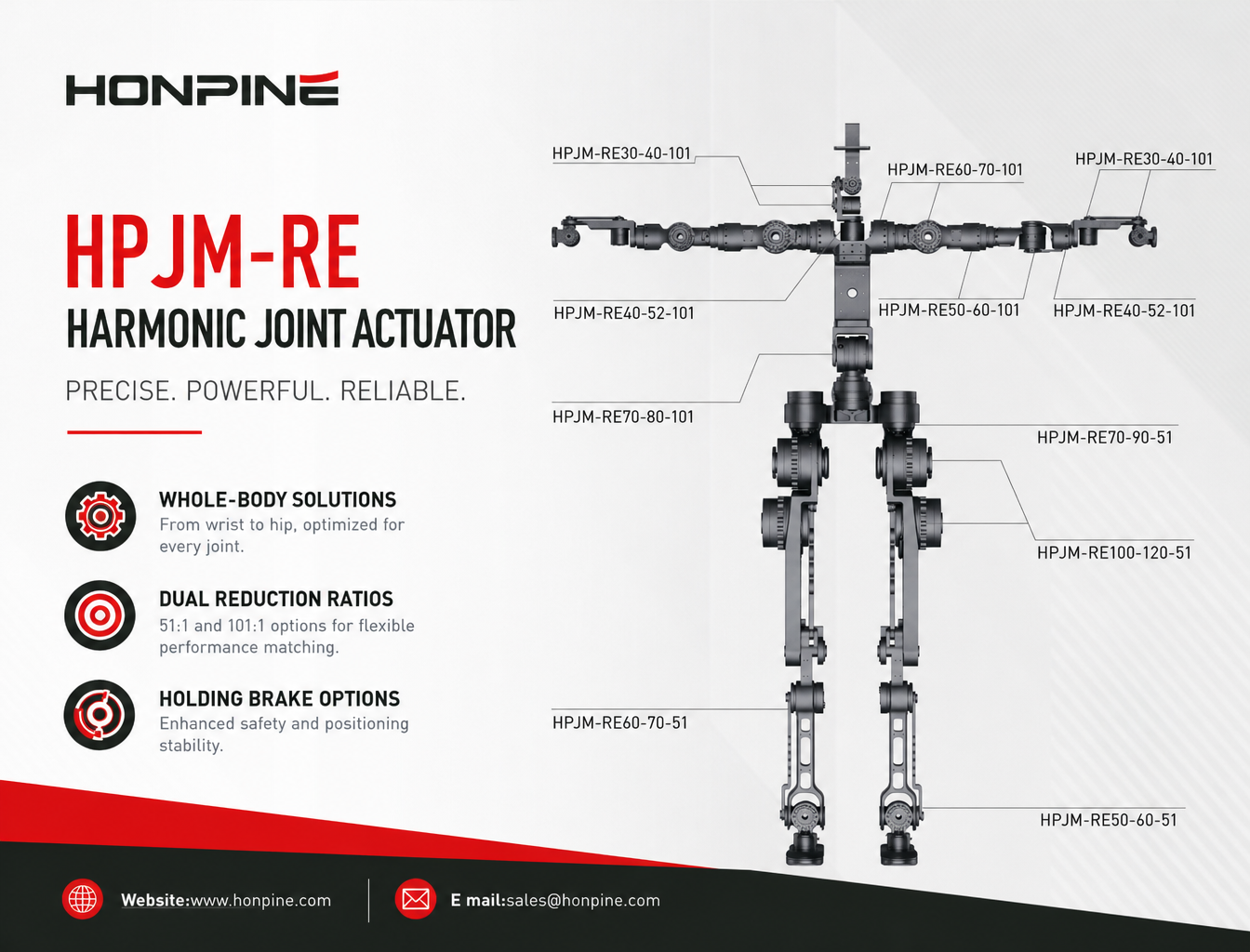
 The Complete Harmonic Joint Actuator Solution for Humanoid Robots: HPJM Series Selection GuideA complete guide to selecting harmonic joint actuators for humanoid robots. Explore HONPINE HPJM models for wrist, elbow, shoulder, waist, hip, knee, and ankle joints, with practical considerations for torque capacity, reduction ratios, dynamic response, and holding brake configurations.
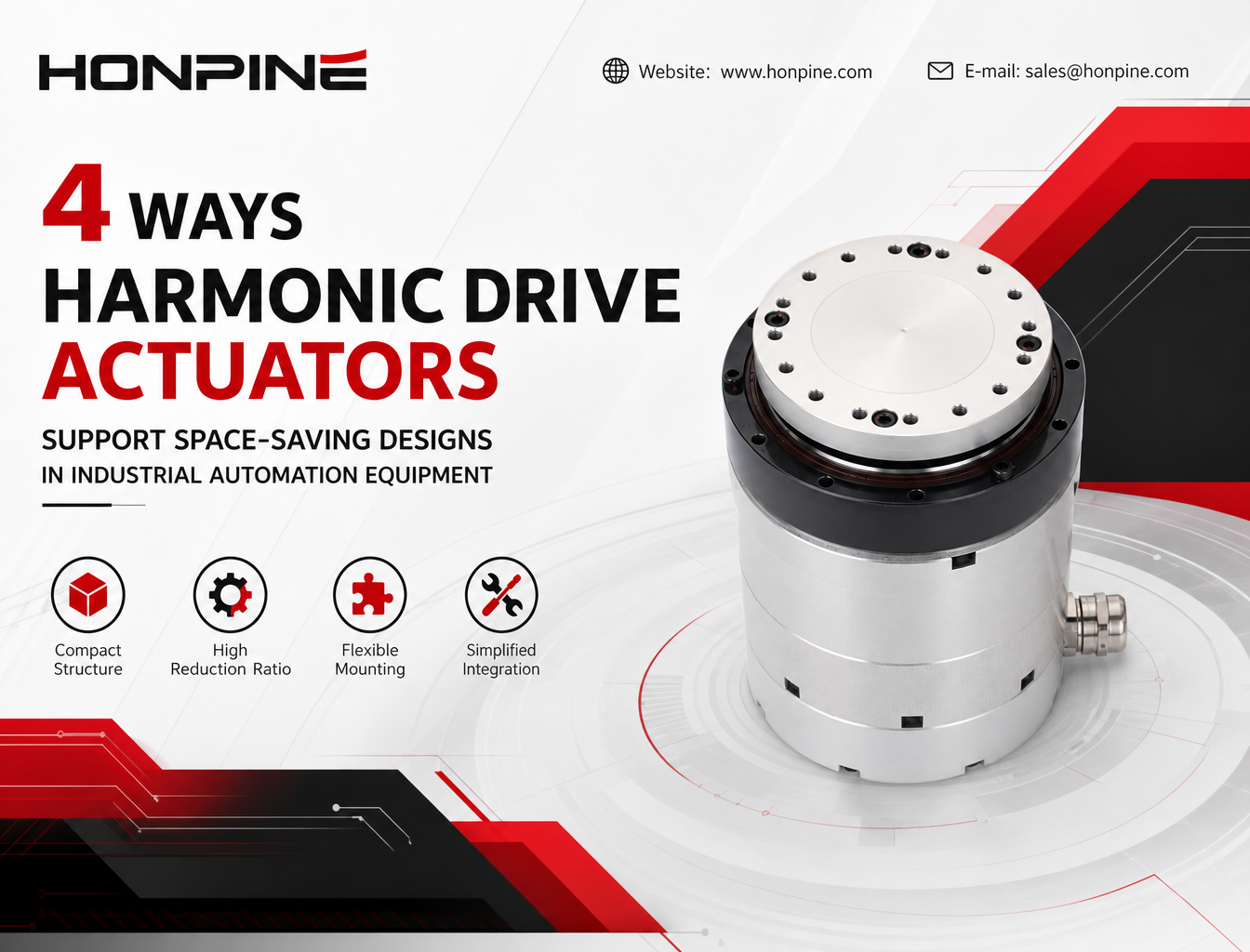
 Why Are Harmonic Drive Actuators Ideal for Space-Constrained Industrial Automation Equipment?In modern industrial automation, limited installation space often makes mechanical design more challenging. Harmonic drive actuators offer a compact motion-control solution by integrating key drive components into a single unit. Their high reduction ratios, streamlined mechanical structures, and flexible mounting options can help equipment manufacturers reduce space requirements, simplify assembly, and optimize internal layouts. This article explores four ways integrated harmonic drive actuators support space-saving designs in industrial automation equipment.
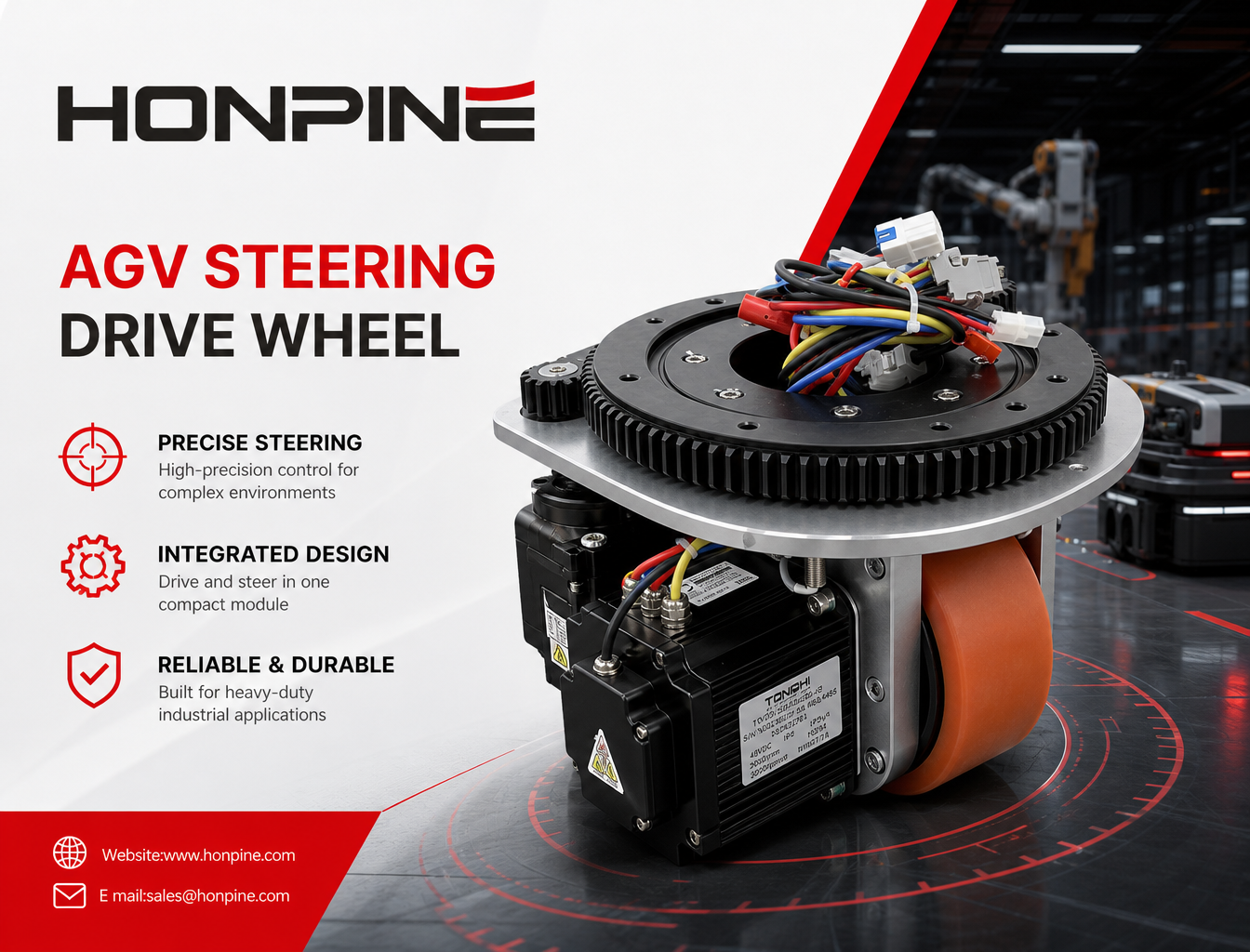
 AGV Robot Steering Drive Wheel: A Comprehensive Guide to Components, Applications, and SelectionAn AGV steering drive wheel integrates traction and active steering to support flexible movement in industrial mobile robots. This guide explains its main components, working principles, industrial applications, and key selection factors, including load capacity, traction torque, steering torque, wheel diameter, speed, and control interfaces. Discover how to choose a suitable steering drive module for AGVs, AMRs, autonomous forklifts, and heavy-duty material handling systems.
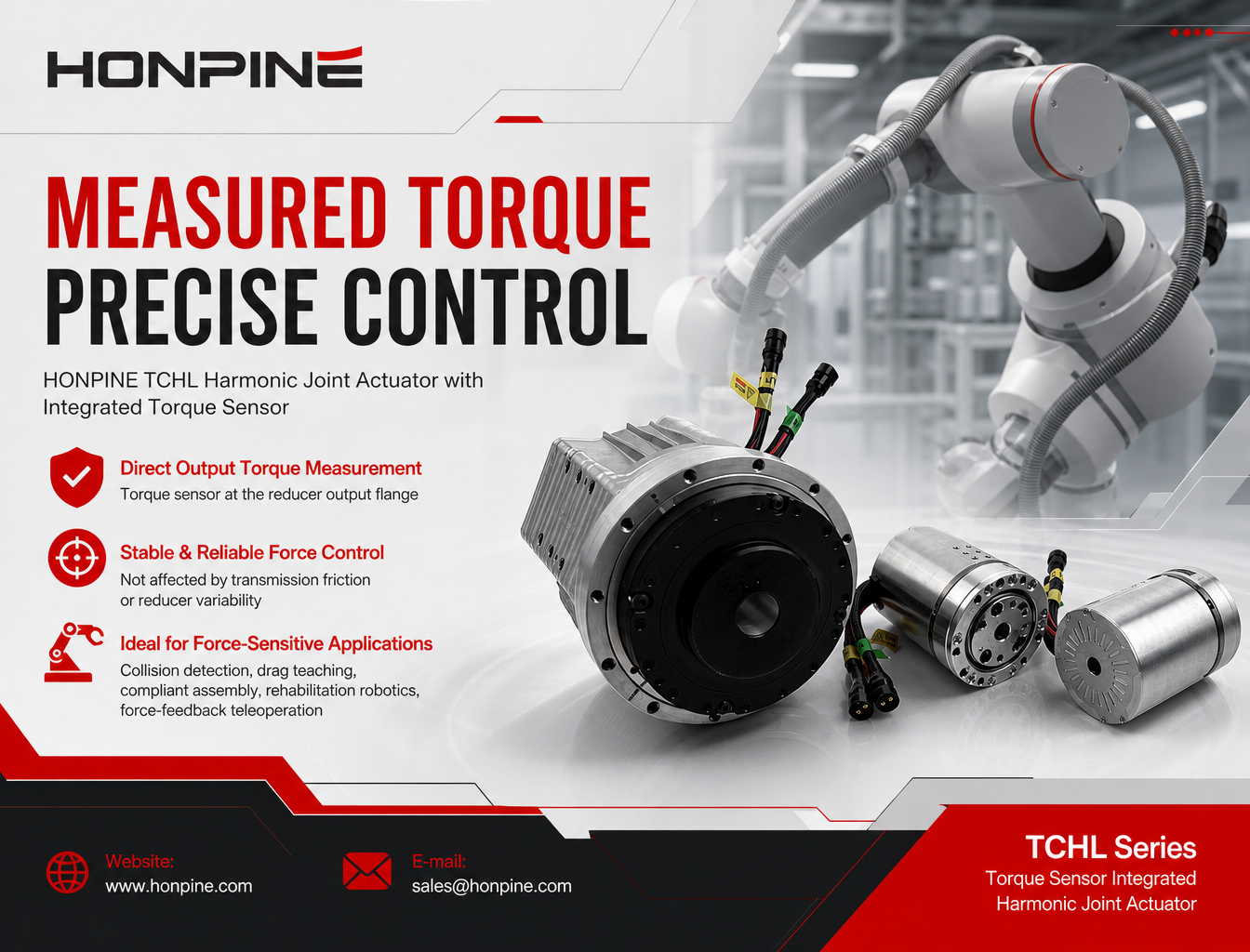
 How Does a Harmonic Joint Actuator with a Torque Sensor Improve Robot Force Control?Learn how the HONPINE TCHL harmonic joint actuator uses an integrated output torque sensor to support force feedback, collision detection, compliant assembly, rehabilitation robotics, and teleoperation.
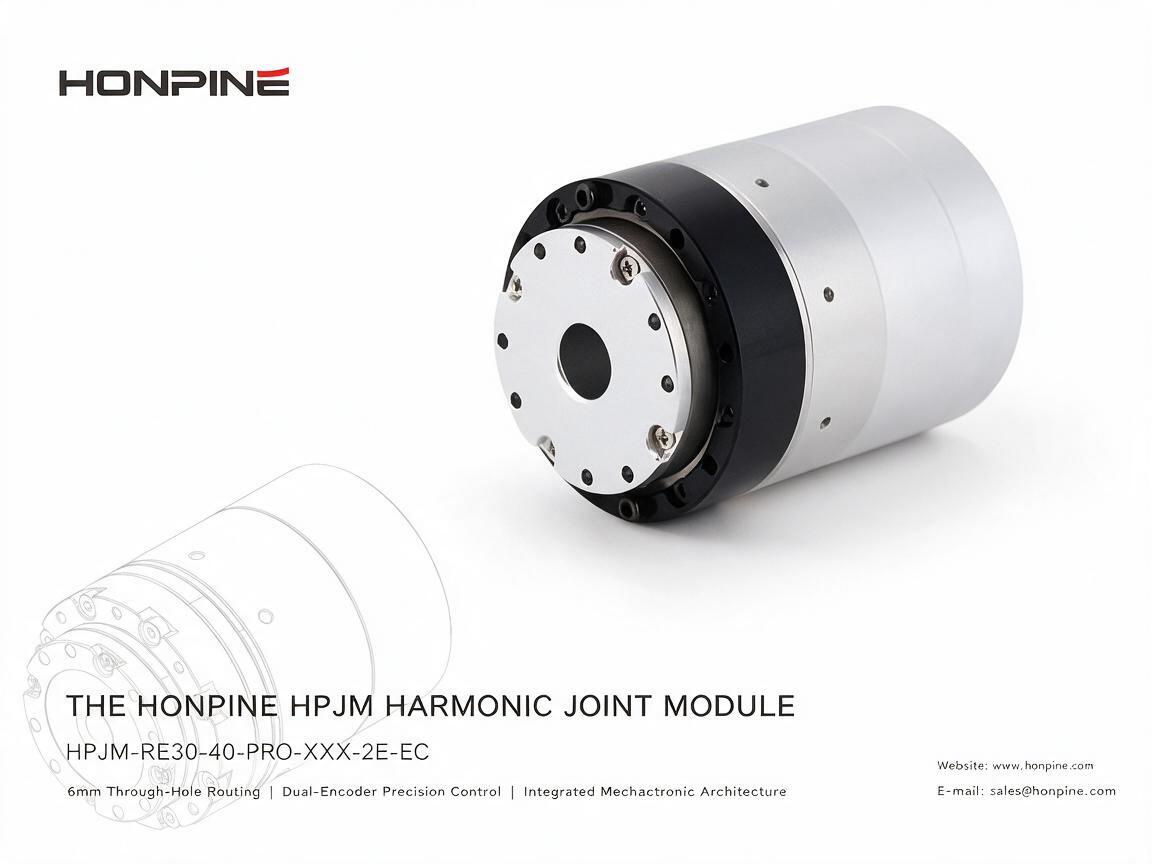
 Ultra-Compact Harmonic Joint Module with a 6 mm Hollow ShaftAs humanoid robots and compact robotic systems evolve, joint modules must deliver high torque density, precise motion control, and flexible cable routing within increasingly limited installation space. The HONPINE HPJM-RE30-40-PRO harmonic joint module addresses these challenges with a compact design, a 6 mm hollow shaft, dual-encoder feedback, and an integrated motor and FOC drive. In this article, we explore its key design features and explain how its hollow-shaft structure, EtherCAT connectivity, and flexible mounting options support the development of humanoid robots, drones, optical platforms, and precision automation equipment.
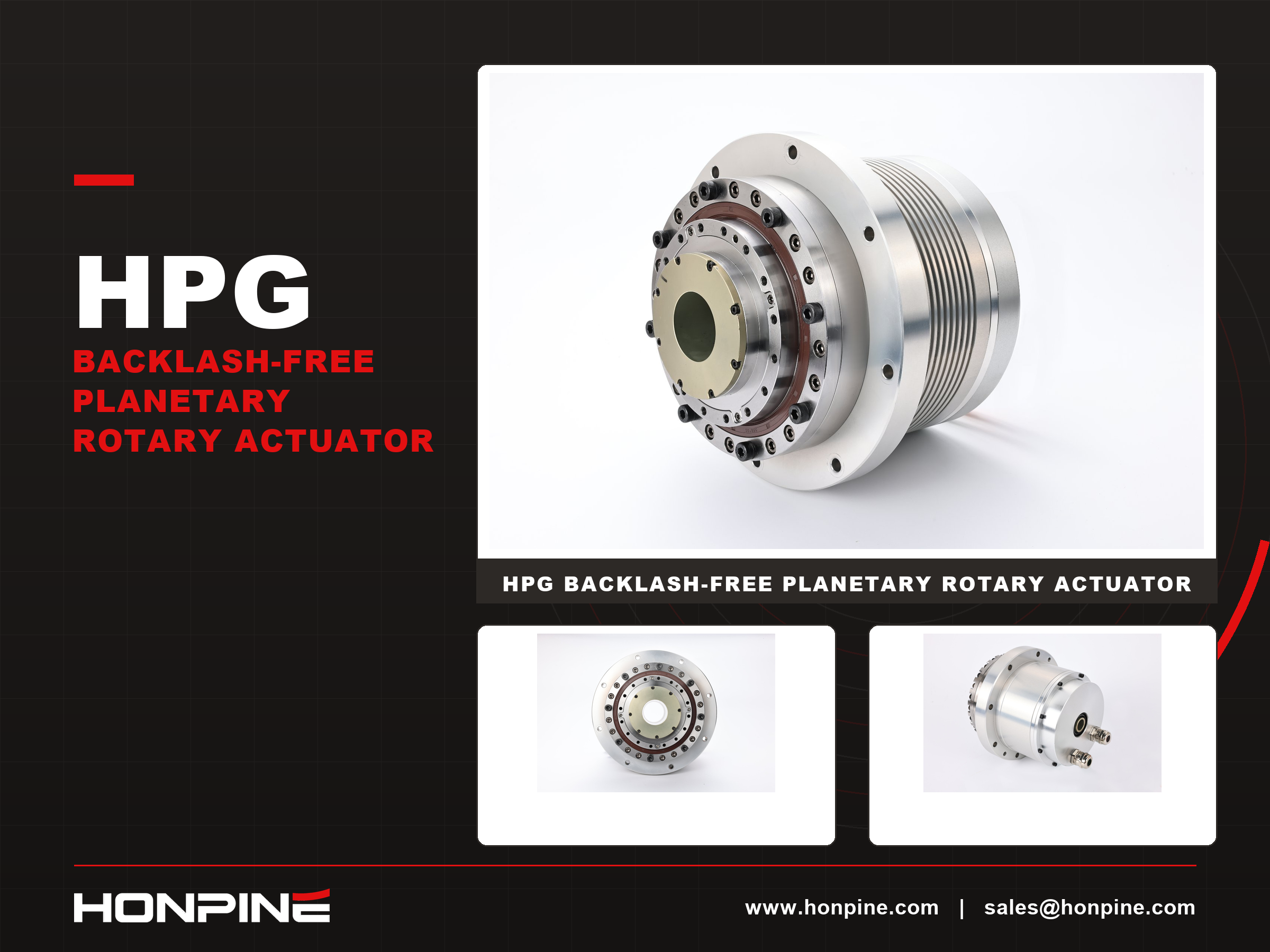
 How Does the HONPINE HPG Backlash-Free Planetary Rotary Actuator Balance CNC Accuracy and Rigidity?Discover the HONPINE HPG precision backlash-free planetary rotary actuator for CNC rotary tables. Explore positioning accuracy, torsional rigidity, low backlash, and drive selection.
Double Click
We provide harmonic drive reducer,planetary reducer,robot joint motor,robot rotary actuators,RV gear reducer,robot end effector,dexterous robot hand
 What is robot joint actuator?How to Choose the Best Robot Rotary Joint Actuator?In core robot joint transmission solutions, planetary and harmonic rotary actuators each have their own strengths. Choosing the right type based on application requirements is essential to achieve the optimal balance between performance and cost.
 DD Motors VS Harmonic Rotary ActuatorsThis article provides an in-depth comparison between Direct Drive (DD) motors and harmonic rotary actuators, covering their transmission principles, advantages and disadvantages, and typical application fields.
 OMG Ultra Compact Harmonic Drive Joint Module with Built-in Torque SensorHONPINE TCHL series harmonic drive joint module is a game-changing product that achieves disruptive improvements in multiple aspects such as lightweight design, integration level, and connection convenience. This article will analyze its revolutionary enhancements with you.
 The Complete Harmonic Joint Actuator Solution for Humanoid Robots: HPJM Series Selection GuideA complete guide to selecting harmonic joint actuators for humanoid robots. Explore HONPINE HPJM models for wrist, elbow, shoulder, waist, hip, knee, and ankle joints, with practical considerations for torque capacity, reduction ratios, dynamic response, and holding brake configurations.
 Why Are Harmonic Drive Actuators Ideal for Space-Constrained Industrial Automation Equipment?In modern industrial automation, limited installation space often makes mechanical design more challenging. Harmonic drive actuators offer a compact motion-control solution by integrating key drive components into a single unit. Their high reduction ratios, streamlined mechanical structures, and flexible mounting options can help equipment manufacturers reduce space requirements, simplify assembly, and optimize internal layouts. This article explores four ways integrated harmonic drive actuators support space-saving designs in industrial automation equipment.
 AGV Robot Steering Drive Wheel: A Comprehensive Guide to Components, Applications, and SelectionAn AGV steering drive wheel integrates traction and active steering to support flexible movement in industrial mobile robots. This guide explains its main components, working principles, industrial applications, and key selection factors, including load capacity, traction torque, steering torque, wheel diameter, speed, and control interfaces. Discover how to choose a suitable steering drive module for AGVs, AMRs, autonomous forklifts, and heavy-duty material handling systems.
 How Does a Harmonic Joint Actuator with a Torque Sensor Improve Robot Force Control?Learn how the HONPINE TCHL harmonic joint actuator uses an integrated output torque sensor to support force feedback, collision detection, compliant assembly, rehabilitation robotics, and teleoperation.
 Ultra-Compact Harmonic Joint Module with a 6 mm Hollow ShaftAs humanoid robots and compact robotic systems evolve, joint modules must deliver high torque density, precise motion control, and flexible cable routing within increasingly limited installation space. The HONPINE HPJM-RE30-40-PRO harmonic joint module addresses these challenges with a compact design, a 6 mm hollow shaft, dual-encoder feedback, and an integrated motor and FOC drive. In this article, we explore its key design features and explain how its hollow-shaft structure, EtherCAT connectivity, and flexible mounting options support the development of humanoid robots, drones, optical platforms, and precision automation equipment.
 How Does the HONPINE HPG Backlash-Free Planetary Rotary Actuator Balance CNC Accuracy and Rigidity?Discover the HONPINE HPG precision backlash-free planetary rotary actuator for CNC rotary tables. Explore positioning accuracy, torsional rigidity, low backlash, and drive selection.
 Why Are DD Torque Motors Ideal for High-End Five-Axis Rotary Tables?Choosing the right drive mechanism is critical to the performance of a five-axis rotary table. Worm gears, cam roller drives, harmonic reducers, RV cycloidal reducers, and DD torque motors each offer different advantages in positioning accuracy, torsional stiffness, speed, and cost. For high-end CNC machining, the challenge is not simply achieving low backlash, but maintaining accuracy under cutting loads and during continuous multi-axis motion. This article compares five common drive technologies and explains why direct-drive torque motors are an attractive option for applications requiring high dynamic response, reduced transmission errors, and consistent machining performance.
 Harmonic Drive Actuator Accuracy: Why It Should Be Evaluated at Four LevelsHarmonic drive actuator accuracy involves more than encoder resolution. Why should engineers evaluate it at four levels? Resolution, repeatability, unidirectional positioning accuracy, and bidirectional positioning accuracy describe different aspects of motion performance. Understanding these differences helps engineers select harmonic rotary actuators for semiconductor equipment, EFEM systems, and 3C automation without confusing theoretical encoder increments with actual positioning performance.
 Why Do Many Customers Choose HONPINE HPJM Harmonic Joint Modules for Just 2 mm More Hollow Bore Diameter?Why do many customers choose HONPINE HPJM harmonic joint modules for just 2 mm more hollow bore diameter? In compact robotic joints, this small dimensional difference can create a surprisingly large increase in available space. Because the cross-sectional area of a circular bore increases with the square of its diameter, an extra 2 mm can significantly improve internal cable routing and simplify system integration. This article examines the impact of hollow bore diameter, compares selected HONPINE HPJM models with comparable harmonic joint modules, and explains why bore size matters in humanoid robots, collaborative robots, and industrial automation.