

German Motor Industry Leader Visits HONPINE Robotic joint actuators Factory in Shanghai to Explore Strategic Cooperation
Integrated robotic joint actuators account for approximately 40%–50% of the total cost of a robot, making them a critical factor in reducing the overall cost of robotic systems.
Compared with overseas markets, China enjoys significant advantages in the robotic joint actuator sector, including a well-established supporting industrial ecosystem and abundant rare-earth resources. These strengths provide tremendous growth potential and have attracted increasing interest from international companies seeking mutually beneficial partnerships and collaboration opportunities.
Market Outlook for Humanoid Robots
The year 2025 marks the beginning of mass production for humanoid robots. Leading companies are rapidly improving production lines and strengthening core component supply chains, with annual output expected to exceed 18,000 units.
In the near future, the industry is expected to transition from pilot projects to large-scale commercial deployment. Application scenarios will continue to mature, and sustainable business models will gradually take shape. Industry forecasts suggest that annual production could surpass 250,000 units by 2030.
As one of the most critical components of humanoid robots, integrated joint actuators are expected to benefit directly from this rapid market expansion.
Currently, humanoid robot manufacturers typically adopt one of three approaches for sourcing joint actuators:
In-house development and manufacturing
Third-party procurement based on proprietary designs (contract manufacturing)
Direct third-party procurement of standardized products
At present, approximately 63% of joint actuators are sourced from third-party suppliers, and this proportion is expected to continue increasing in the coming years.
Potential Cooperation Between HONPINE and a German Motor Brand
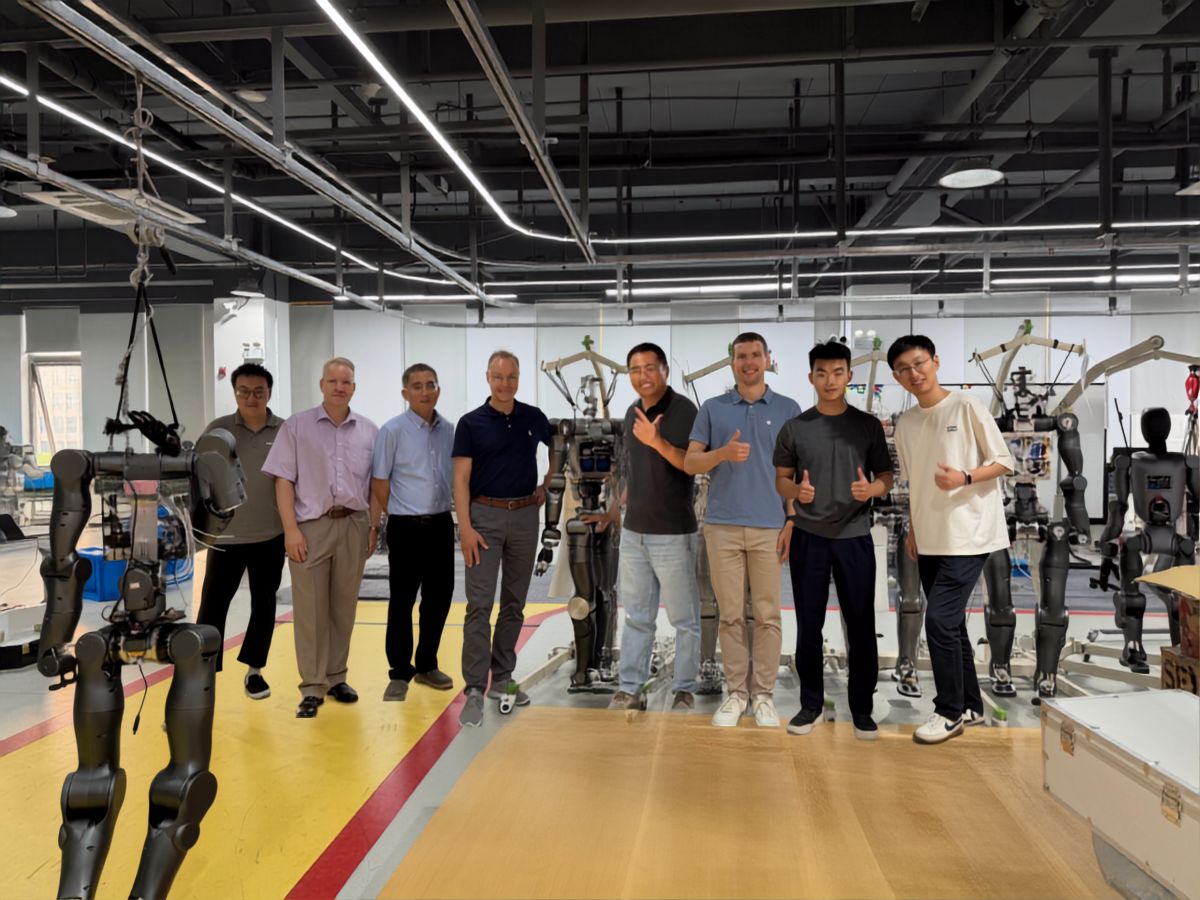
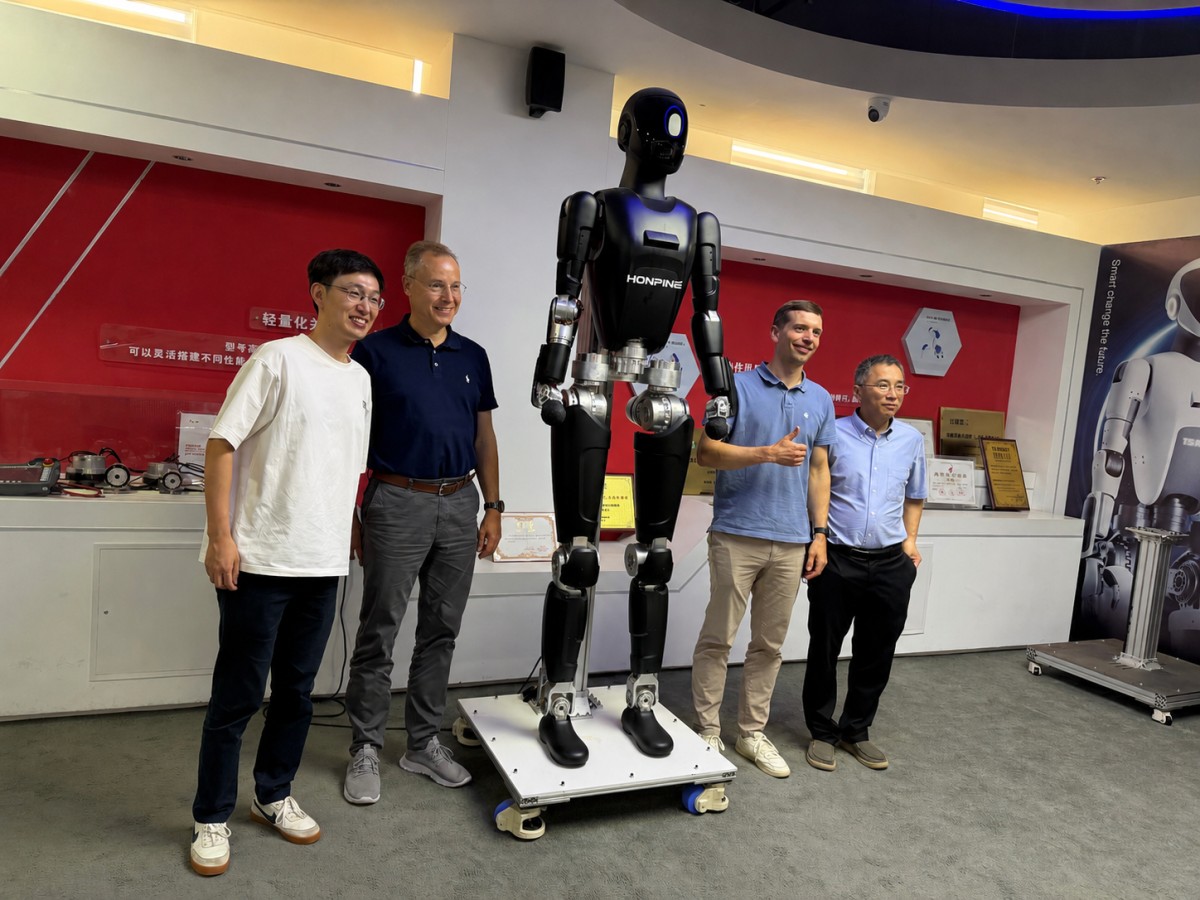
Recently, a well-known German motor manufacturer visited the HONPINE Robot Joint Motor Factory to explore potential cooperation opportunities.
Both parties agreed that robotic joint actuators have entered the era of integrated drive-and-control architecture, where motors, drives, and control systems are increasingly combined into highly integrated solutions.
Future competition in the joint actuator industry will focus on several key factors:
Mass-production consistency
Supply reliability and delivery stability
Manufacturing yield rates
Cost-control capabilities
A future strategic partnership between the two companies could create significant synergies, delivering mutual benefits and shared growth opportunities.
What Does the Future Hold for Robotic Joint Actuators?
Looking ahead to 2026 and beyond, the robotic joint actuator industry will be shaped by three decisive factors:
Technology roadmap determines product competitiveness.
Industrialization capability determines the speed of mass production.
Supply-chain positioning determines market influence and bargaining power.
In this increasingly competitive landscape, only companies that accurately identify industry trends and continuously invest in core technologies will be able to secure a leading position in the rapidly evolving humanoid robotics market.
As humanoid robots move closer to large-scale commercialization, integrated joint actuators will become one of the most important enabling technologies, driving improvements in performance, reliability, and affordability across the entire industry.
What are your thoughts on the future of humanoid robots and integrated robotic joint actuators?
We welcome your insights and perspectives on this exciting technological transformation.
Read More
Learn more about the story of HONPINE and industry trends related to precision transmission.
 What is robot joint actuator?How to Choose the Best Robot Rotary Joint Actuator?In core robot joint transmission solutions, planetary and harmonic rotary actuators each have their own strengths. Choosing the right type based on application requirements is essential to achieve the optimal balance between performance and cost.
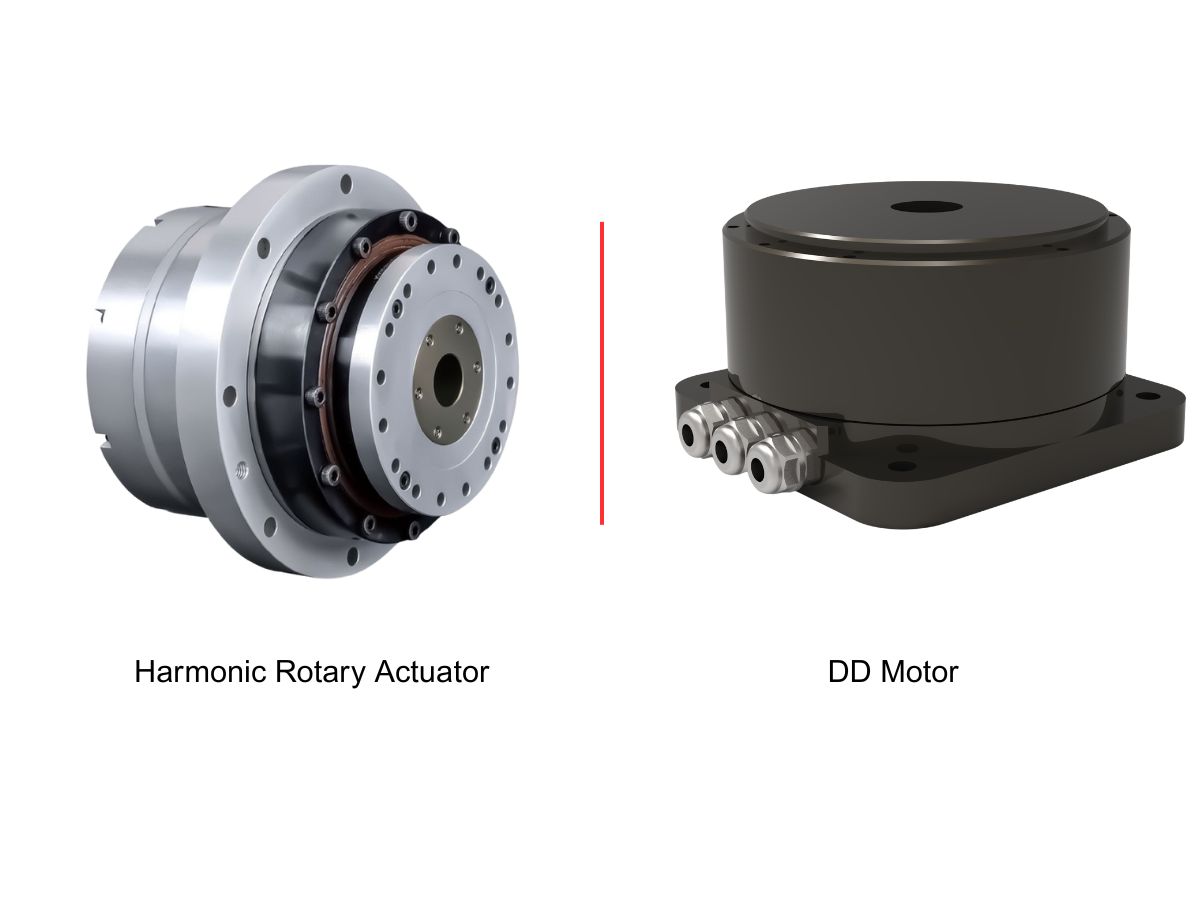
 DD Motors VS Harmonic Rotary ActuatorsThis article provides an in-depth comparison between Direct Drive (DD) motors and harmonic rotary actuators, covering their transmission principles, advantages and disadvantages, and typical application fields.
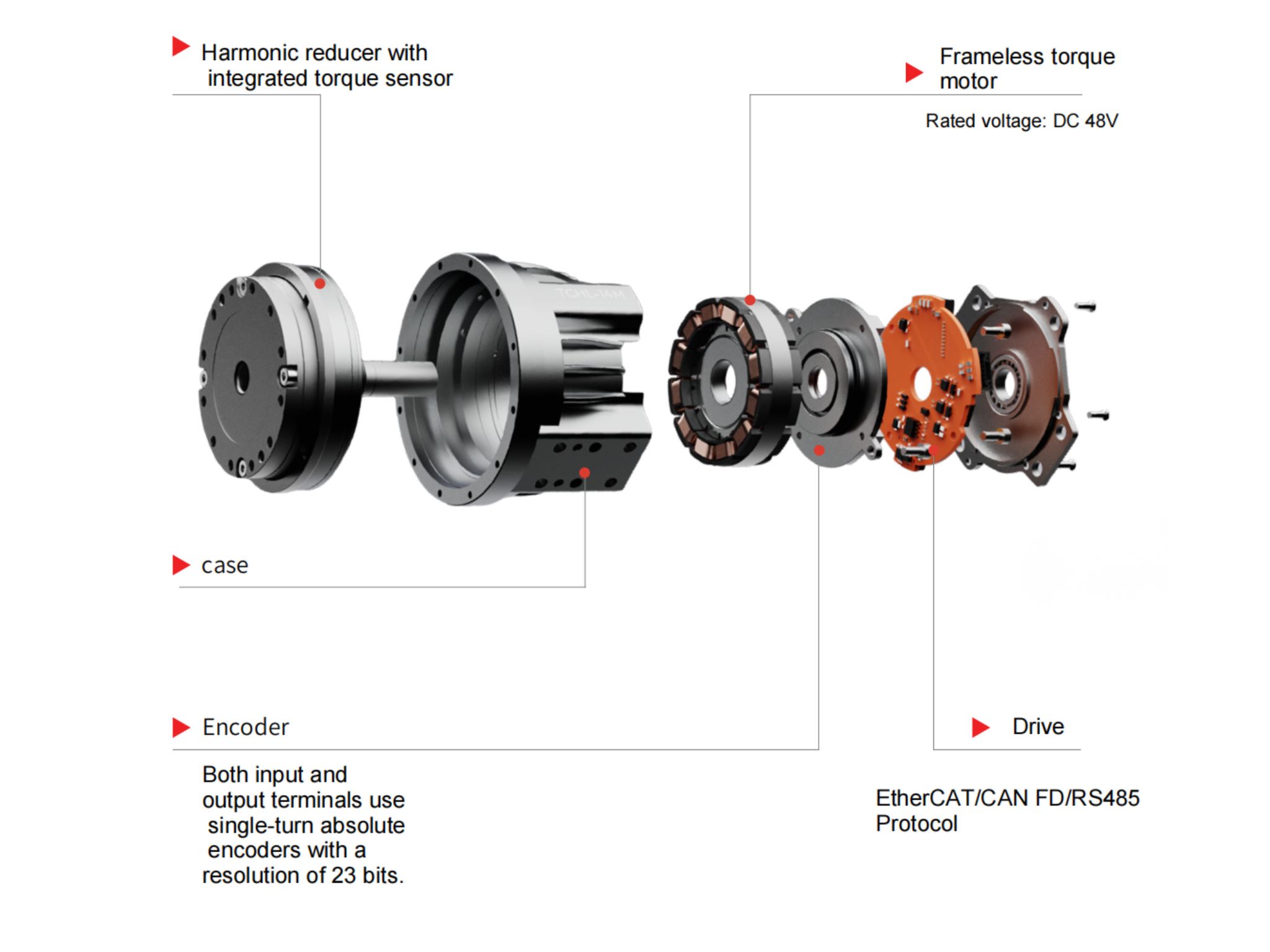
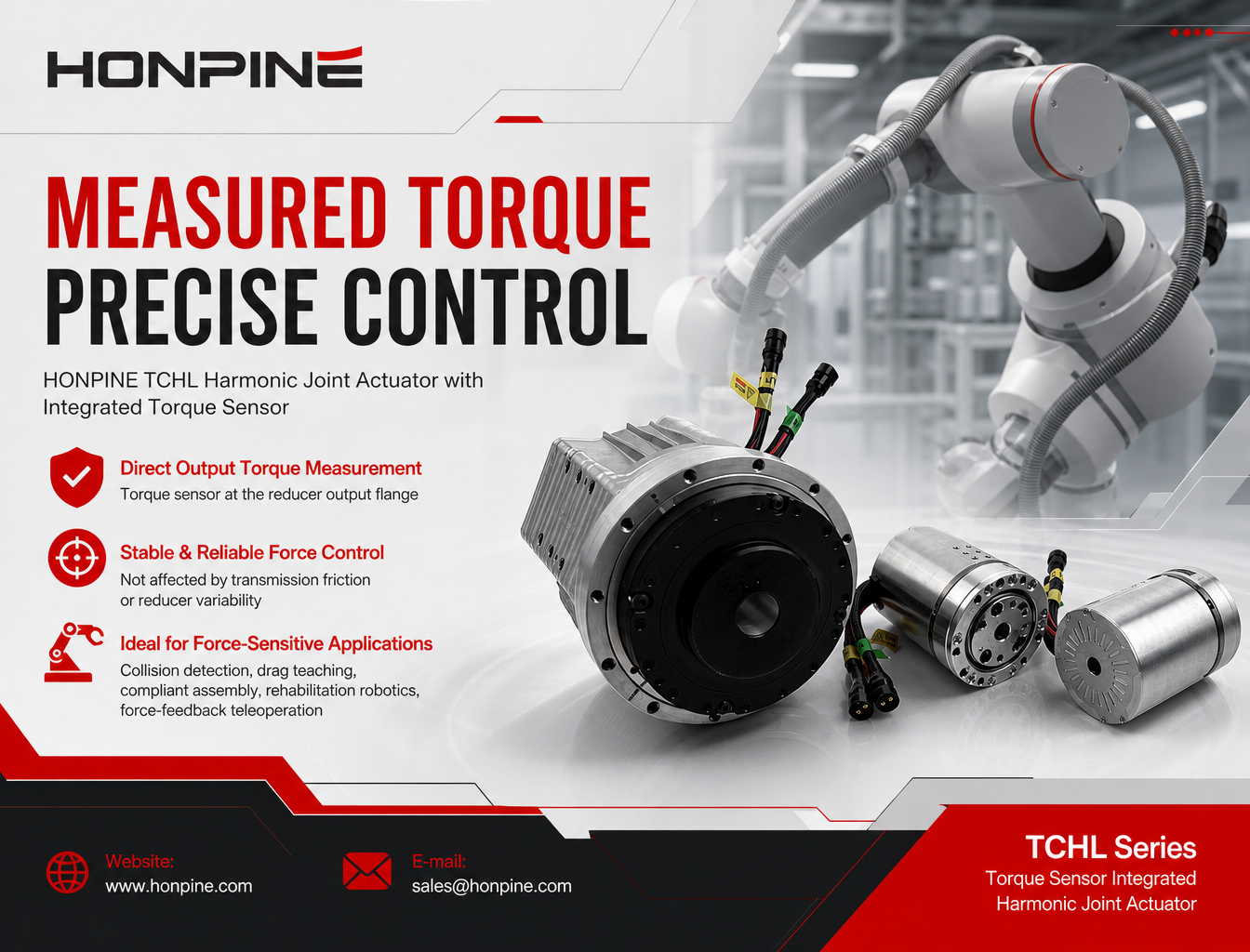
 OMG Ultra Compact Harmonic Drive Joint Module with Built-in Torque SensorHONPINE TCHL series harmonic drive joint module is a game-changing product that achieves disruptive improvements in multiple aspects such as lightweight design, integration level, and connection convenience. This article will analyze its revolutionary enhancements with you.
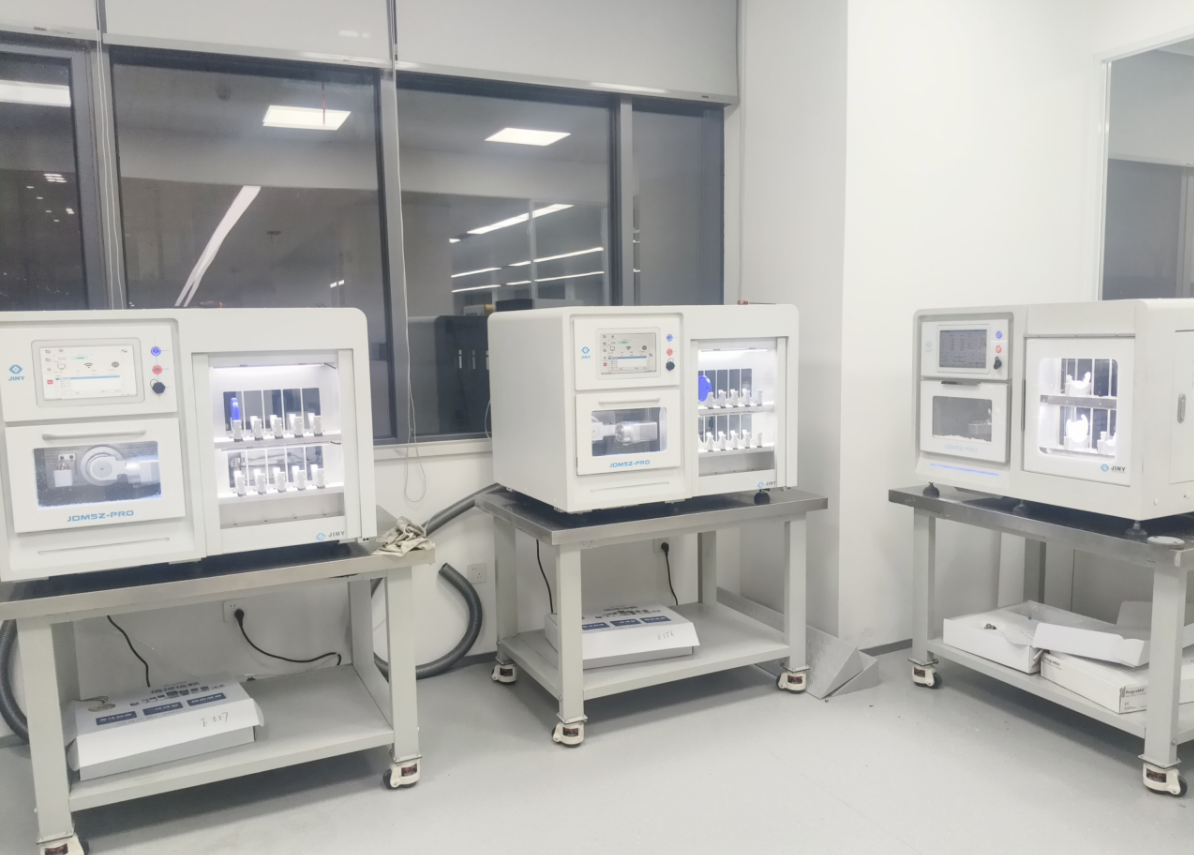
 The Role of Harmonic Drive Gears in Achieving 5–10 μm Accuracy in Dental Milling MachinesA dental milling machine is a CNC machining system used to directly process digital dental models into restorations such as crowns, bridges, veneers, inlays, and implant abutments. Dental milling machines require far higher operational accuracy and motion stability than ordinary equipment. This article explains how harmonic drive gear help dental milling machines achieve stable, continuous, and controllable operation.
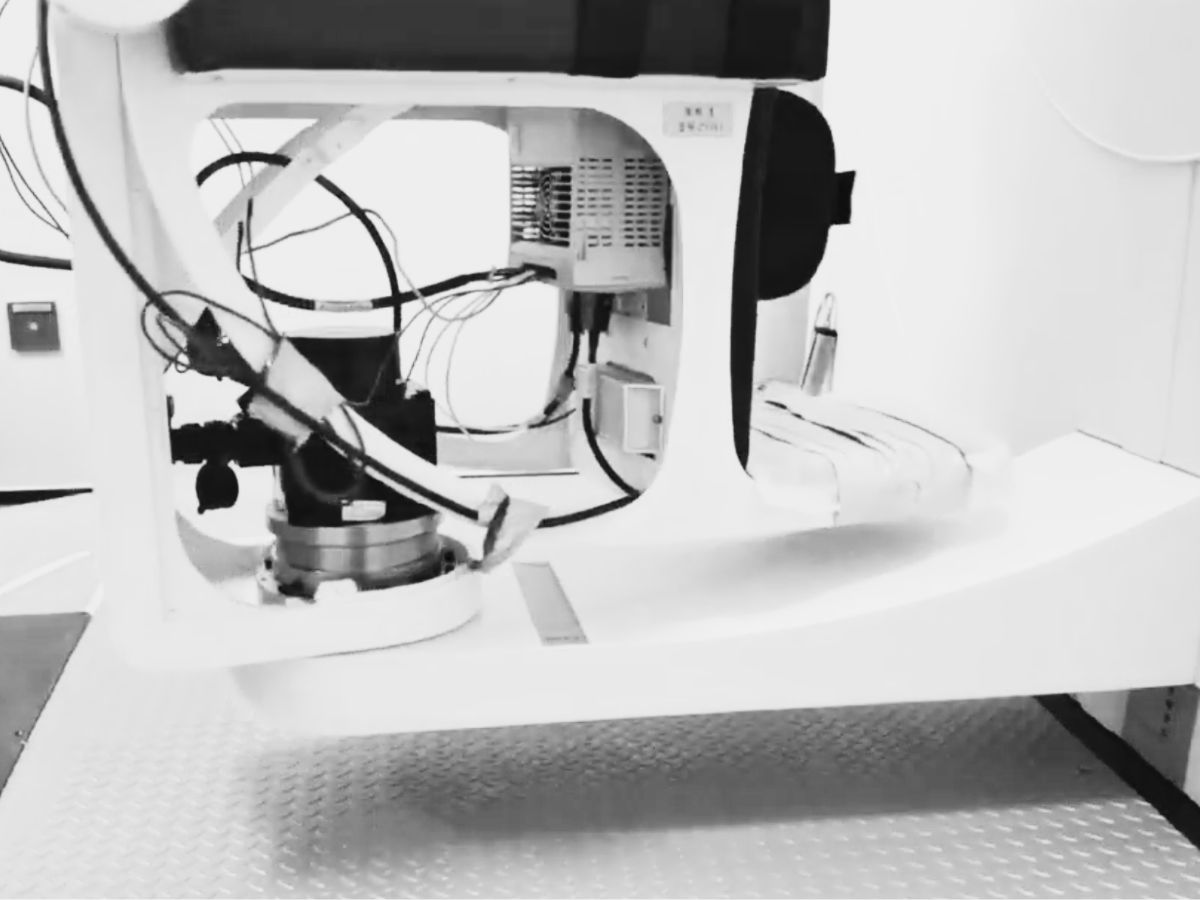
 Why Are Harmonic Rotary Actuators Perfect for Medical Equipment?Harmonic rotary actuators (typically integrated systems consisting of a harmonic drive reducer, frameless torque motor, encoder, and optional brake) are regarded as key components in medical equipment. The core reason is that they simultaneously meet the most stringent medical requirements for precision, compact size, safety, and controllability. The following explanation is structured from three perspectives: technical characteristics, application scenarios, and medical value.
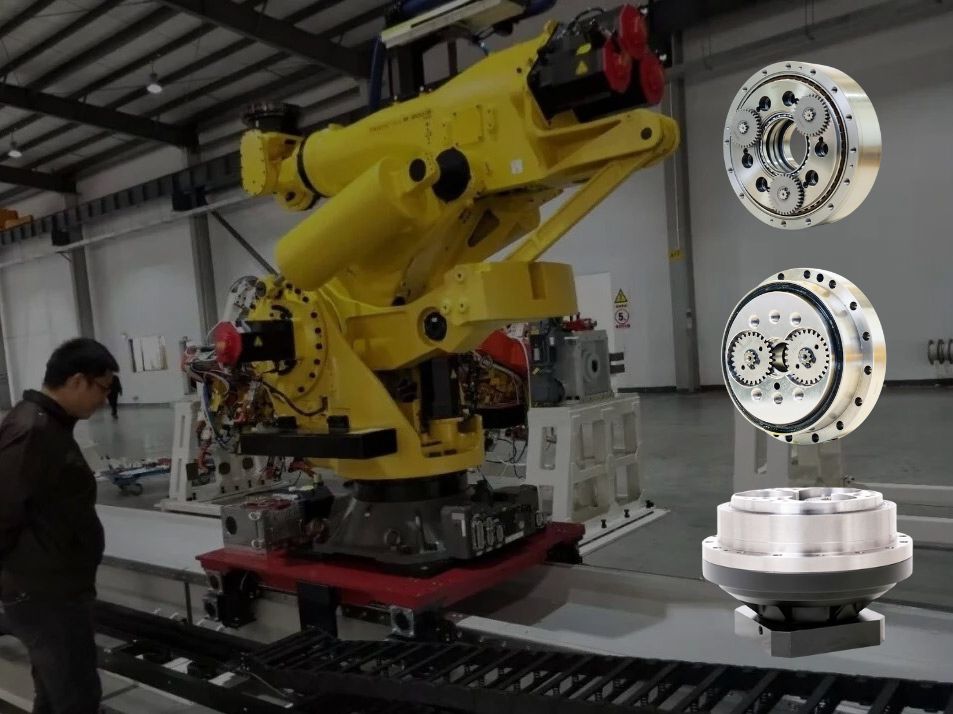
 High-Precision RV Reducers Perfectly Matched for Walking RobotsThe walking axis of a robot is a core component for power transmission and support. RV reducers provide extremely high rigidity, precision, and torque while maintaining a compact size and exceptional reliability, making them an ideal match for the demanding requirements of walking robot joints in terms of load capacity, impact resistance, and precision.
 How Does a Harmonic Joint Actuator with a Torque Sensor Improve Robot Force Control?Learn how the HONPINE TCHL harmonic joint actuator uses an integrated output torque sensor to support force feedback, collision detection, compliant assembly, rehabilitation robotics, and teleoperation.
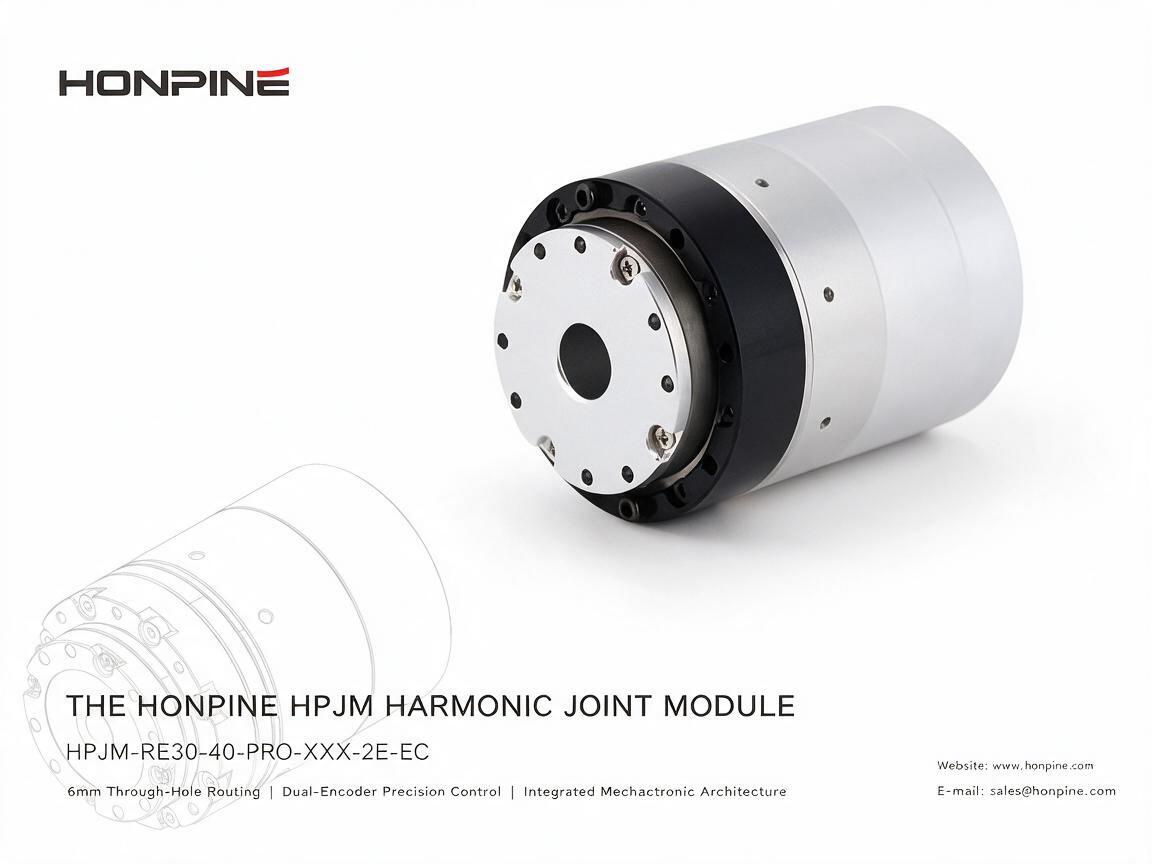
 Ultra-Compact Harmonic Joint Module with a 6 mm Hollow ShaftAs humanoid robots and compact robotic systems evolve, joint modules must deliver high torque density, precise motion control, and flexible cable routing within increasingly limited installation space. The HONPINE HPJM-RE30-40-PRO harmonic joint module addresses these challenges with a compact design, a 6 mm hollow shaft, dual-encoder feedback, and an integrated motor and FOC drive. In this article, we explore its key design features and explain how its hollow-shaft structure, EtherCAT connectivity, and flexible mounting options support the development of humanoid robots, drones, optical platforms, and precision automation equipment.
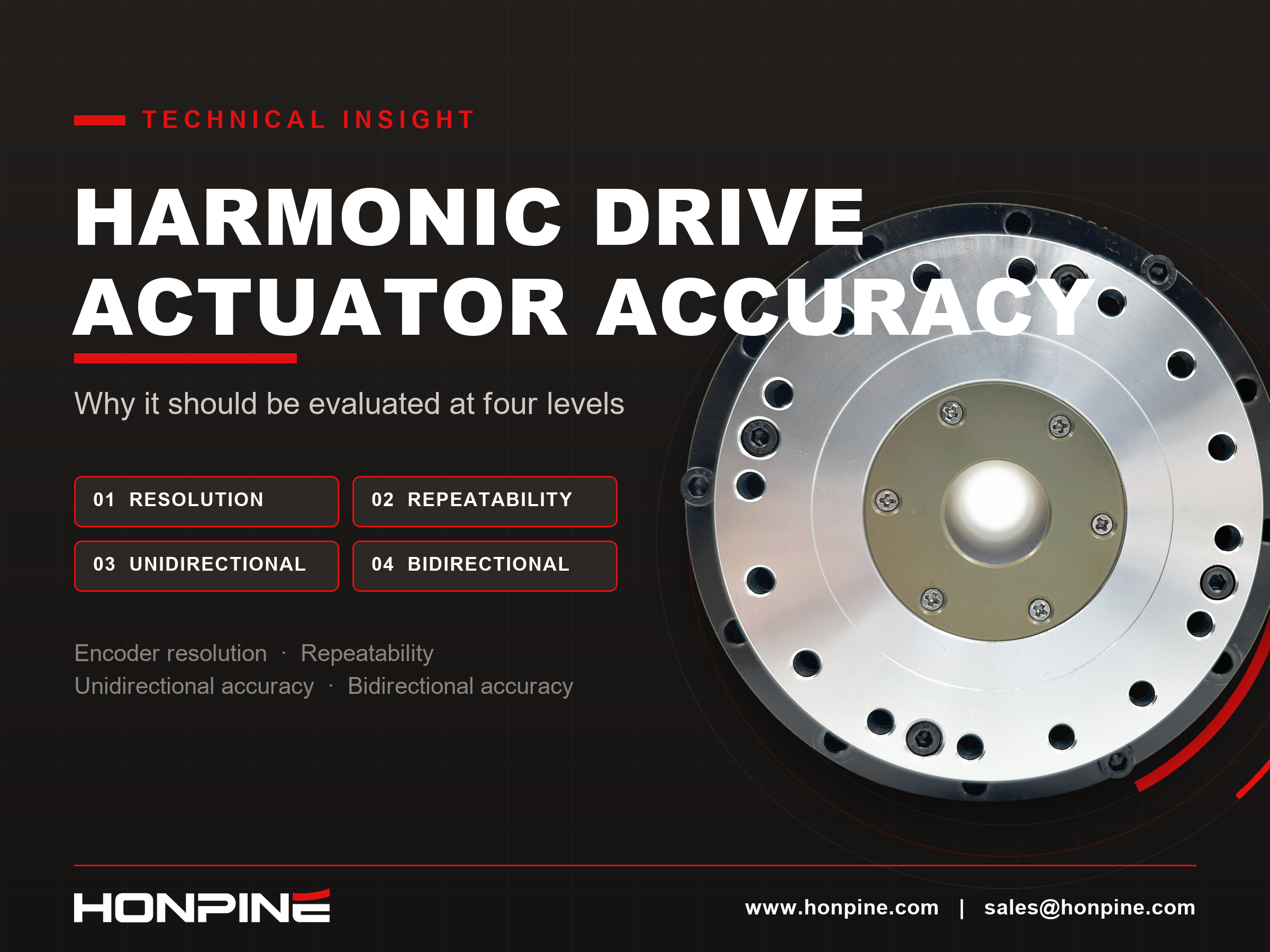
 Harmonic Drive Actuator Accuracy: Why It Should Be Evaluated at Four LevelsHarmonic drive actuator accuracy involves more than encoder resolution. Why should engineers evaluate it at four levels? Resolution, repeatability, unidirectional positioning accuracy, and bidirectional positioning accuracy describe different aspects of motion performance. Understanding these differences helps engineers select harmonic rotary actuators for semiconductor equipment, EFEM systems, and 3C automation without confusing theoretical encoder increments with actual positioning performance.
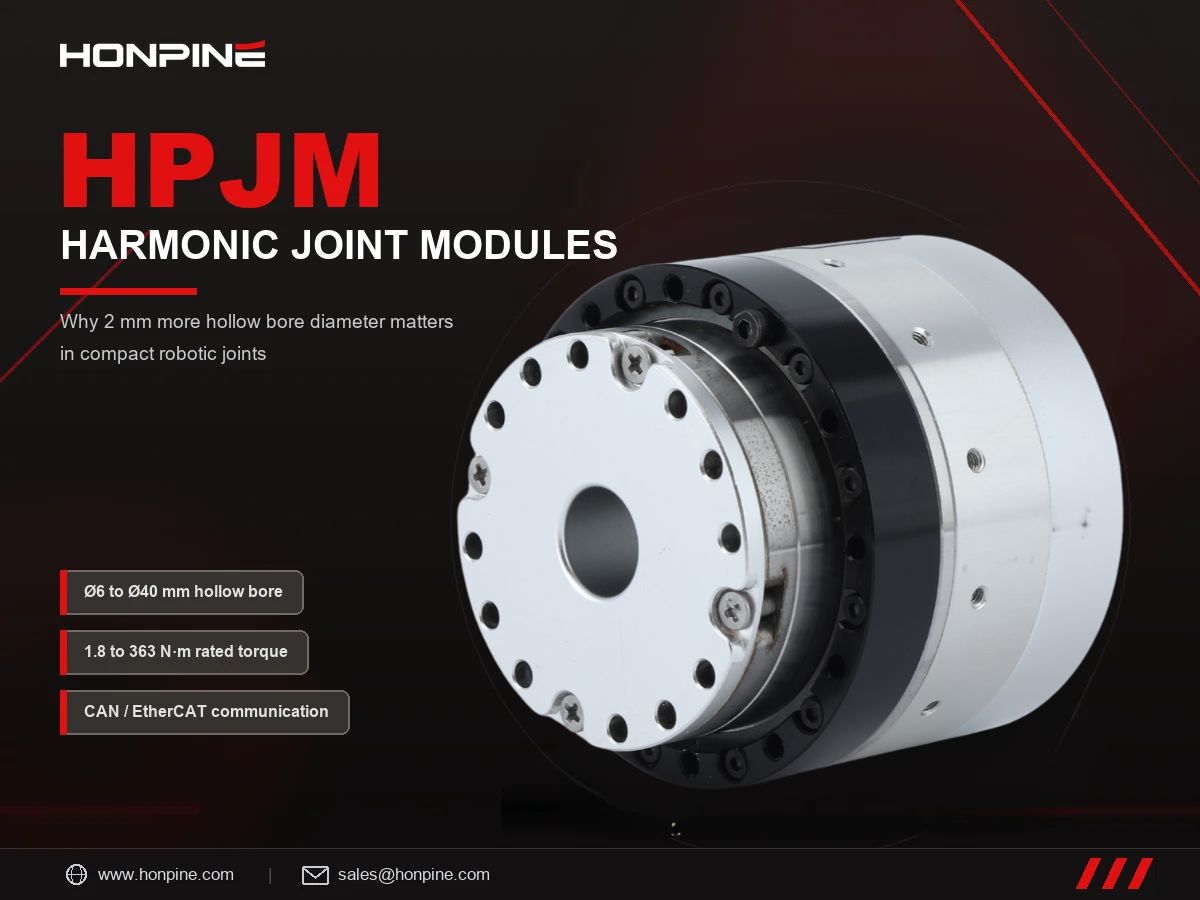
 Why Do Many Customers Choose HONPINE HPJM Harmonic Joint Modules for Just 2 mm More Hollow Bore Diameter?Why do many customers choose HONPINE HPJM harmonic joint modules for just 2 mm more hollow bore diameter? In compact robotic joints, this small dimensional difference can create a surprisingly large increase in available space. Because the cross-sectional area of a circular bore increases with the square of its diameter, an extra 2 mm can significantly improve internal cable routing and simplify system integration. This article examines the impact of hollow bore diameter, compares selected HONPINE HPJM models with comparable harmonic joint modules, and explains why bore size matters in humanoid robots, collaborative robots, and industrial automation.
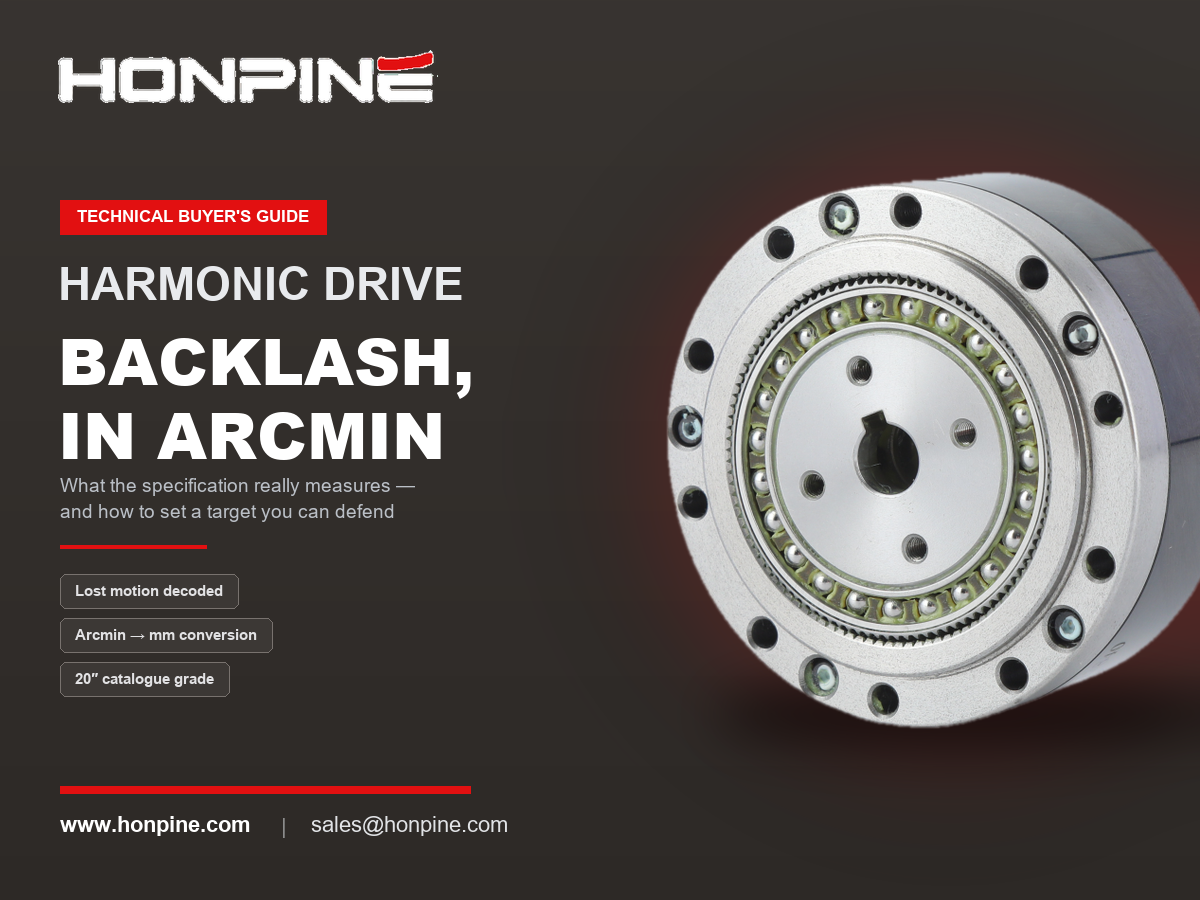
 Harmonic Drive Backlash in Arcmin: What the Specification Really Tells YouChoosing the right force control harmonic joint actuator involves more than comparing torque and dimensions. Torque sensor specifications, encoder feedback, communication protocols, functional safety, and hollow-shaft size can all affect system integration and control performance. In this guide, HONPINE Technical Director compares the TCHL and HAG harmonic joint actuator series, explaining their key differences and providing a practical selection framework for humanoid robots, collaborative manipulators, precision assembly, polishing, and other force-controlled applications.
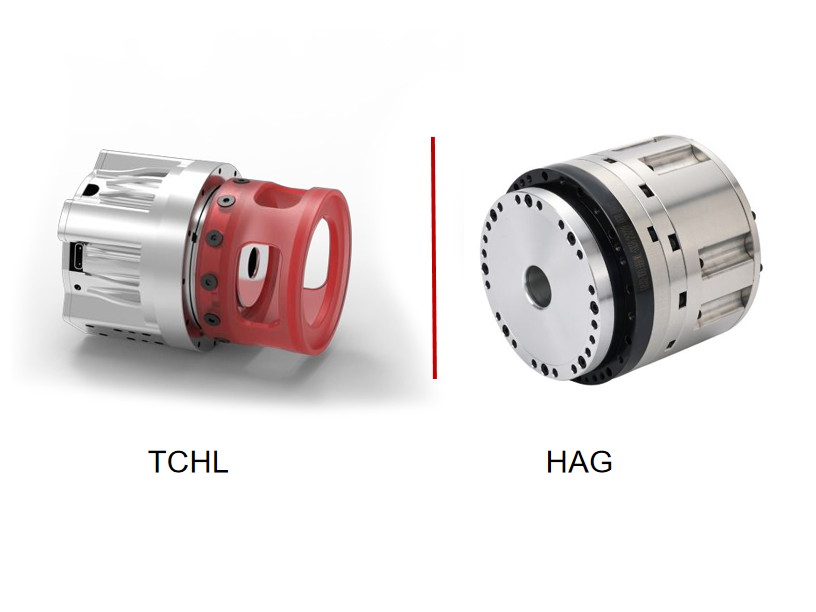
 How to Choose a Force Control Harmonic Joint Actuator? An In-Depth Comparison of HONPINE TCHL and HAGChoosing the right force control harmonic joint actuator involves more than comparing torque and dimensions. Torque sensor specifications, encoder feedback, communication protocols, functional safety, and hollow-shaft size can all affect system integration and control performance. In this guide, HONPINE Technical Director compares the TCHL and HAG harmonic joint actuator series, explaining their key differences and providing a practical selection framework for humanoid robots, collaborative manipulators, precision assembly, polishing, and other force-controlled applications.
Double Click
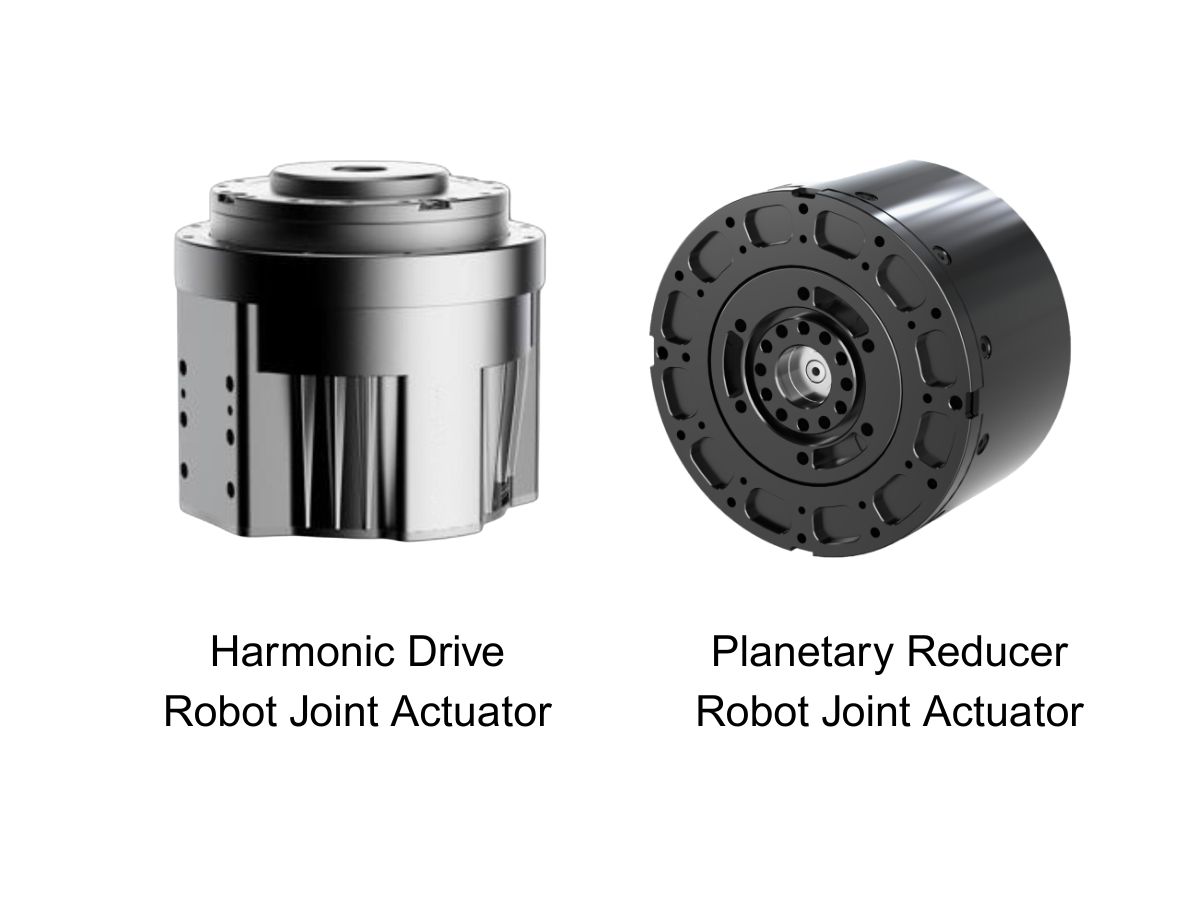
We provide harmonic drive reducer,planetary reducer,robot joint motor,robot rotary actuators,RV gear reducer,robot end effector,dexterous robot hand
 HONPINE HAG Robot Joint Module Undergoing Pre-Shipment InspectionThe HONPINE HAG Robot Joint Module is currently undergoing pre-shipment inspection before delivery.
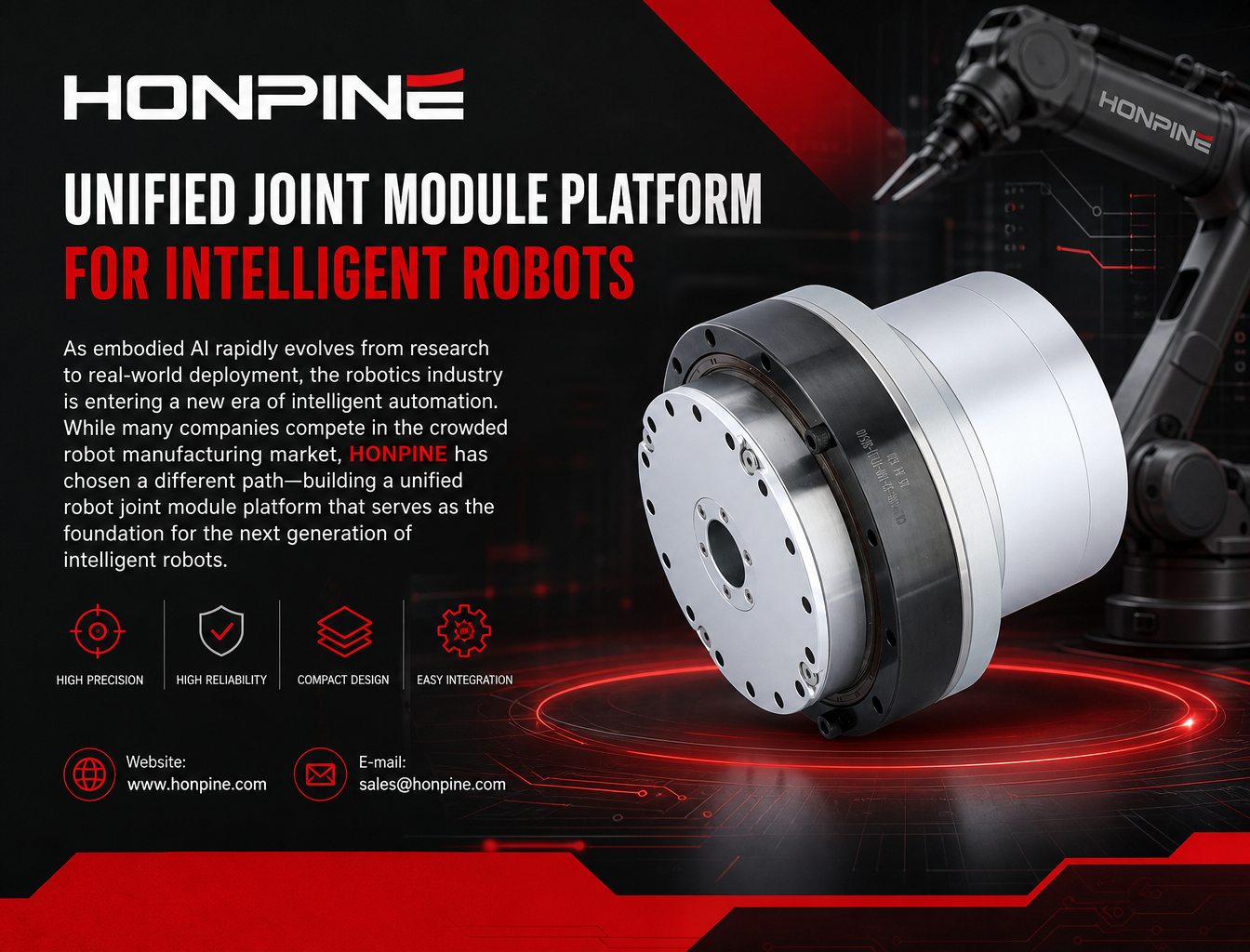
 Why HONPINE Is Building a Unified Robot Joint Module Platform to Accelerate Embodied AI?As embodied AI rapidly evolves from research to real-world deployment, the robotics industry is entering a new era of intelligent automation. While many companies compete in the crowded robot manufacturing market, HONPINE has chosen a different path—building a unified robot joint module platform that serves as the foundation for the next generation of intelligent robots.
According to HONPINE Founder, the company's long-term vision is clear: to become the "power heart" and hardware foundation of the robotics era. German Motor Industry Leader Visits HONPINE Robotic joint actuators Factory in Shanghai to Explore Strategic CooperationIntegrated robotic joint actuators account for approximately 40%–50% of the total cost of a robot, making them a critical factor in reducing the overall cost of robotic systems.Compared with overseas markets, China enjoys significant advantages in the robotic joint actuator sector, including a well-established supporting industrial ecosystem and abundant rare-earth resources.A leading German motor manufacturer visited Honpine Robot Actuator today to discuss potential cooperation.
 Next-Generation Humanoid Robot Joint Design: HONPINE HPJM with Harmonic Drive, Hollow Shaft, and Integrated Encoder ModuleFrom May 8 to 11, 2026, the 22nd Zhengzhou Industrial Equipment Expo (ZIF) was grandly held at the Zhengzhou Zhongyuan International Convention and Exhibition Center (Airport Zone). As one of the highlights of the robotics exhibition hall, HONPINE showcased its latest HPJM Integrated Joint Module series.
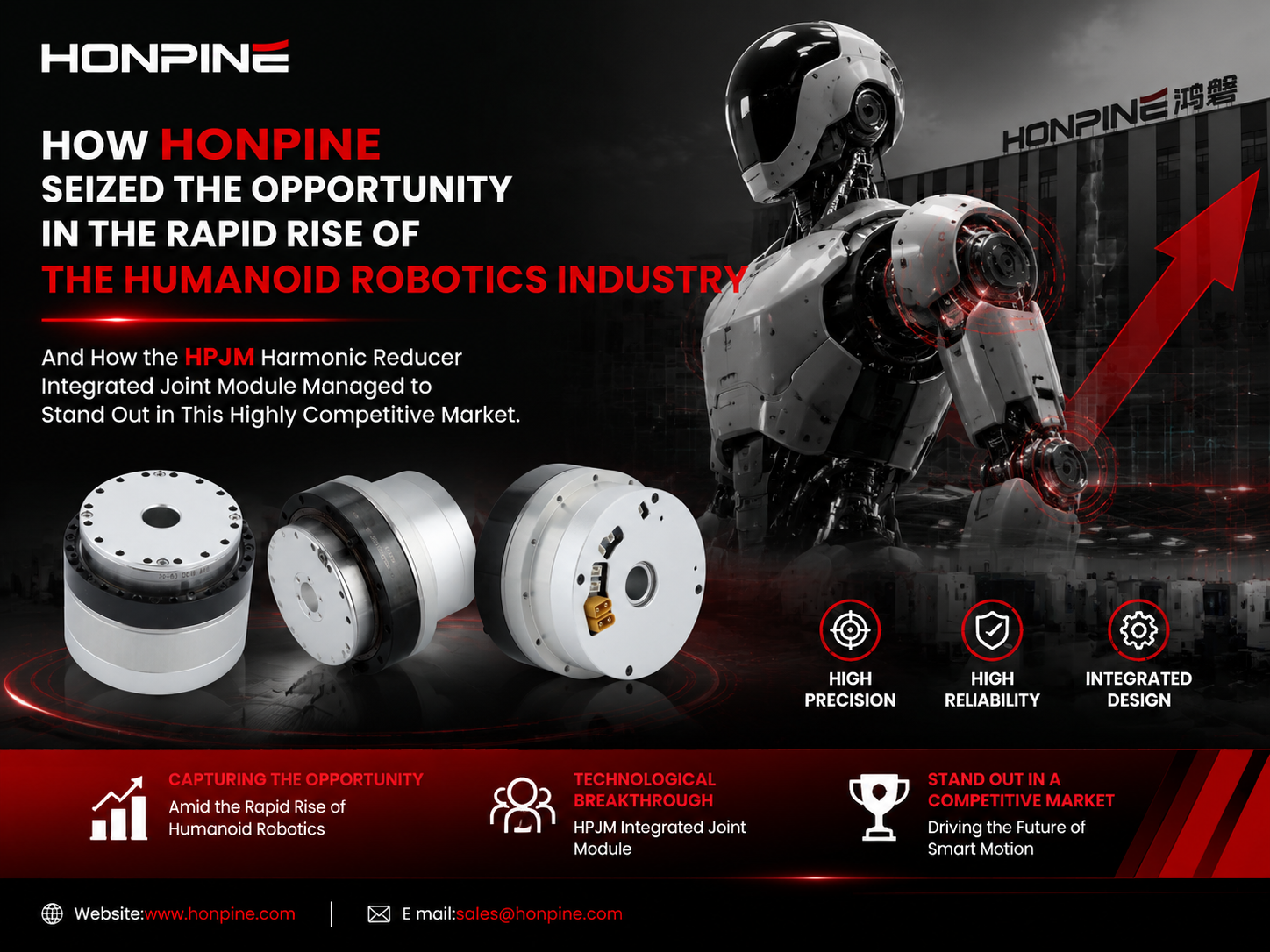
 How Did the HONPINE HPJM Humanoid Robot Harmonic Reducer Integrated Joint Module Win the Attention of Humanoid Robot Manufacturers?Hello everyone, I’m Allen Li, founder of HONPINE. Today, I’d like to talk about how HONPINE seized the opportunity during the rapid rise of the humanoid robotics industry and how the HPJM harmonic reducer integrated joint module managed to stand out in this highly competitive market.
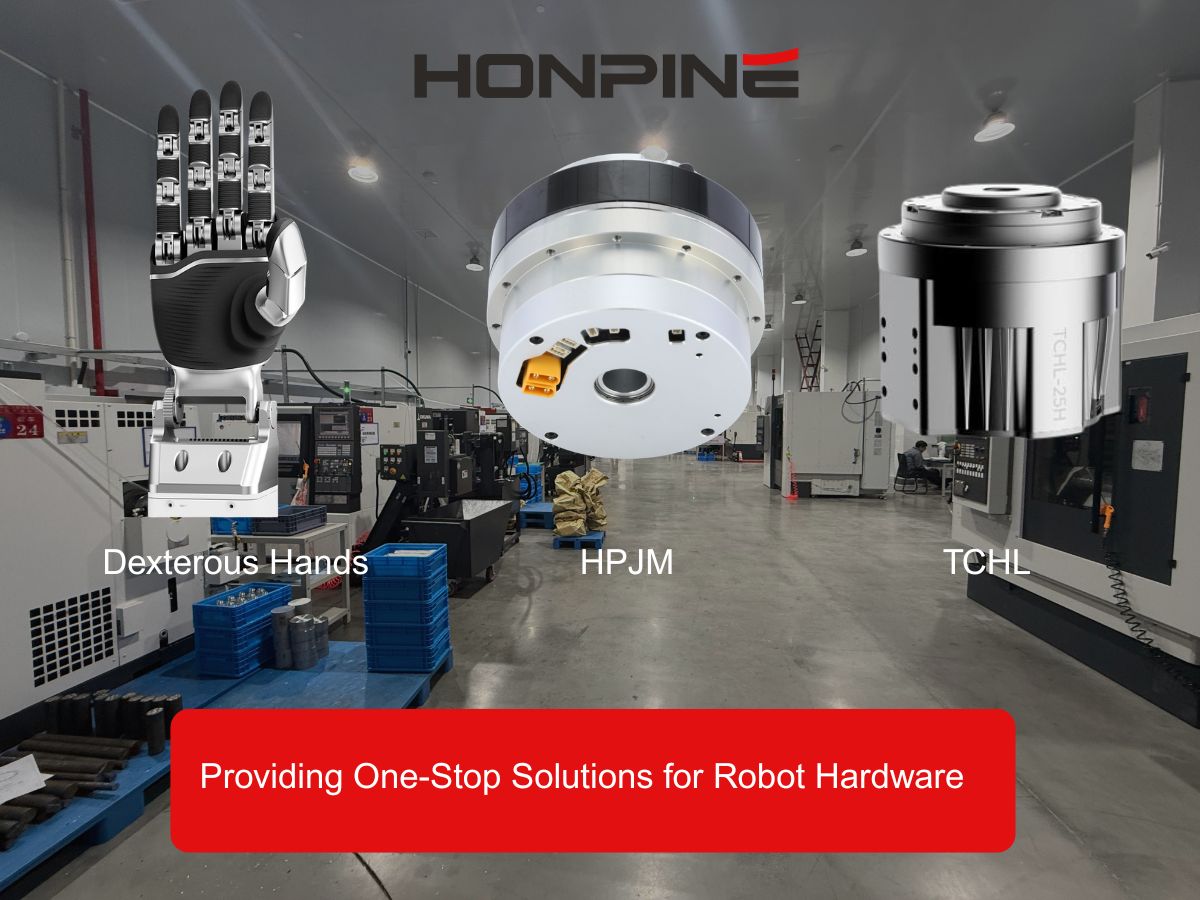
 HONPINE’s New Factory: Building the Future of Robot Joint Actuators and Dexterous HandsHONPINE is set to establish a new factory in Yuhang, Hangzhou, China, focusing on the development, manufacturing, and sales of robot joint actuators,dexterous hands and other high-end robotic hardware, while providing integrated solutions.
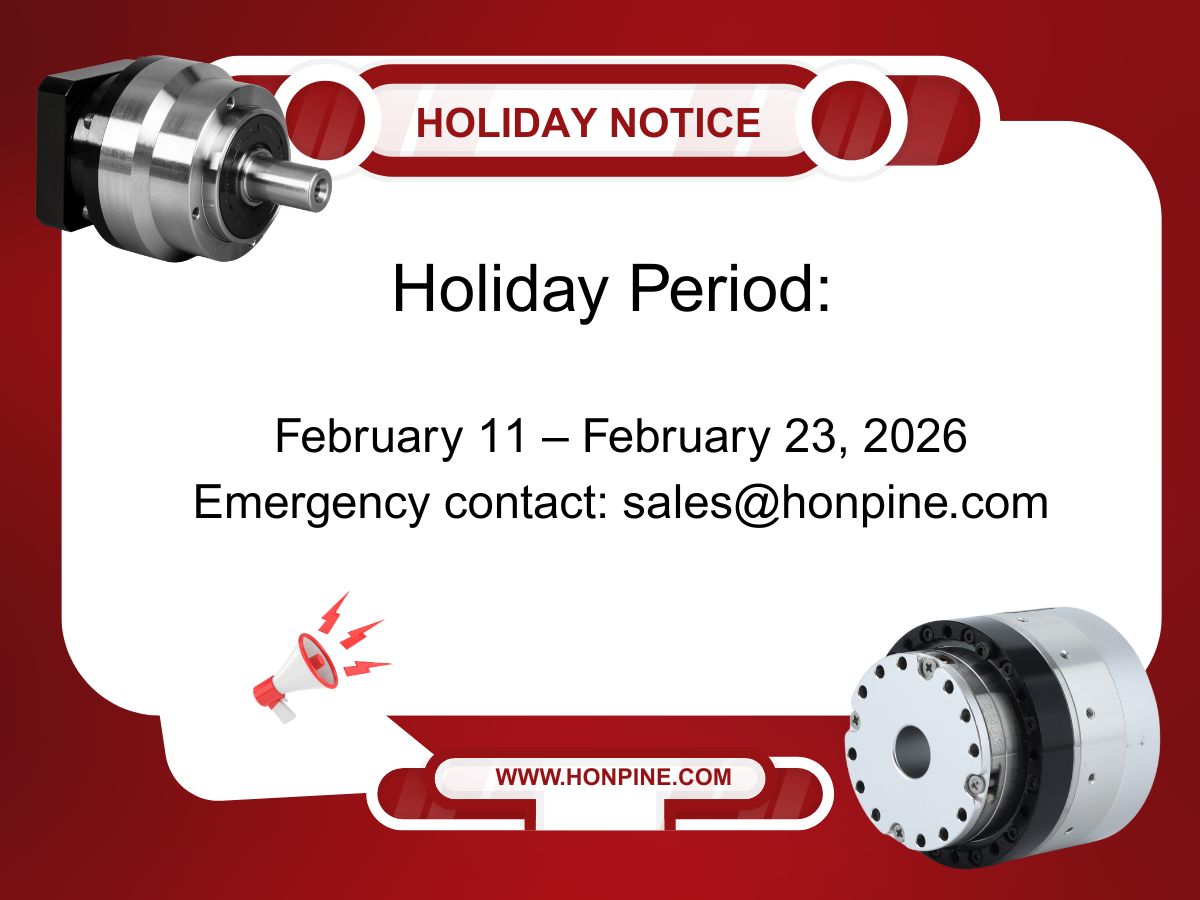
 HONPINE 2026 Chinese New Year Holiday NoticeAs the Chinese New Year (Spring Festival) approaches, HONPINE will observe a holiday from February 11 to February 23, 2026
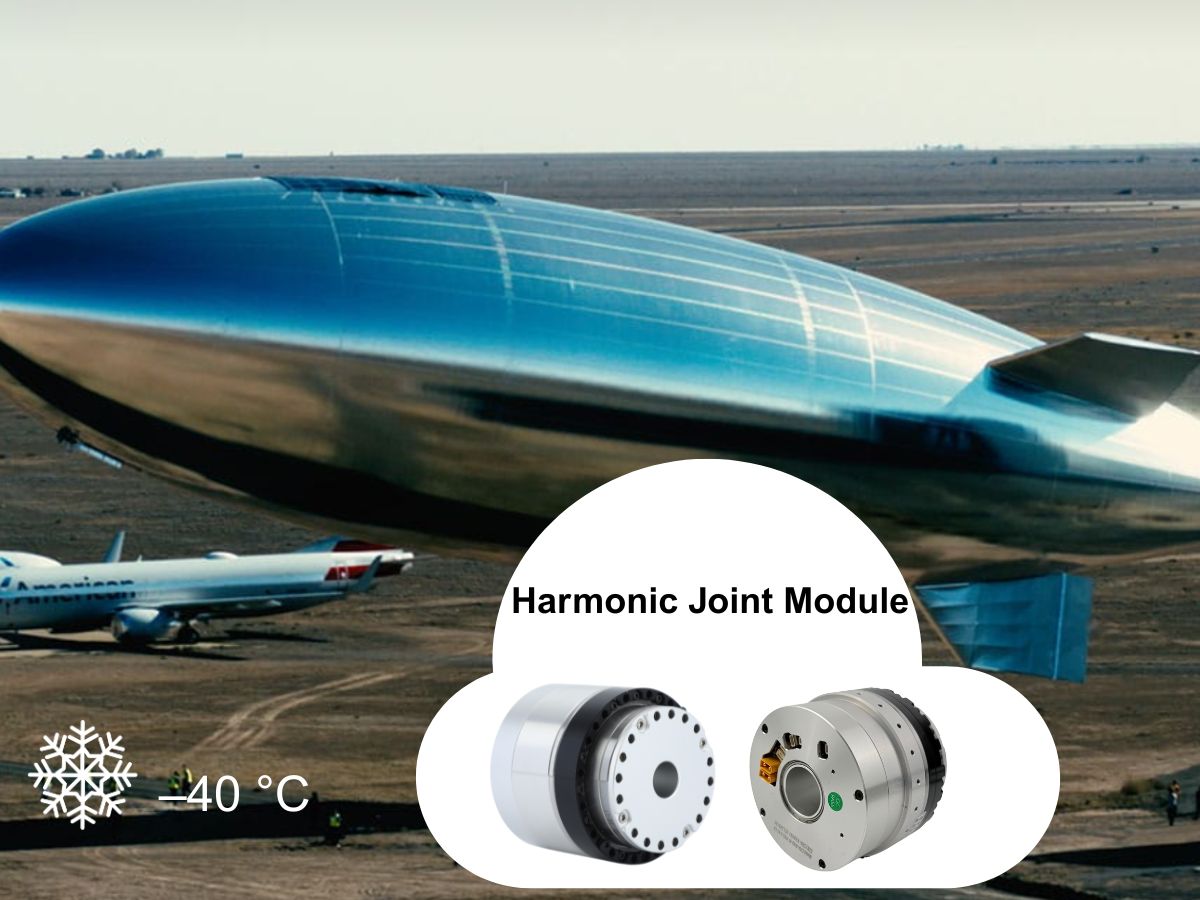
 HONPINE Harmonic Joint Modules Empower Airplanes & Drones to Operate in the Stratosphere and Extreme Space-Like EnvironmentsHONPINE harmonic joint modules are now widely used in humanoid robots, exoskeleton robots, medical devices, and industrial automation systems, supporting a wide range of high-precision applications.At the same time, HONPINE is actively providing solutions and customized services for aerospace operations, underwater robots, and other extreme-environment precision applications.
 HONPINE combines Christmas celebrations with team buildingWith a strong spirit of unity and collaboration, this dedicated team at HONPINE is committed to delivering precision transmission solutions to customers around the world.
 HONPINE Harmonic Joint Motor Powers the World’s First Offshore Robot BarA humanoid robot server has made its debut at the Laohutan Offshore Bar, attracting visitors eager to experience this innovative setup. With smooth and natural movements, the robot delivers drinks to customers—even while operating in a dynamic offshore environment. Behind its stable and precise performance is the HONPINE Harmonic Joint Motor, providing the core motion capability that enables reliable operation at sea.
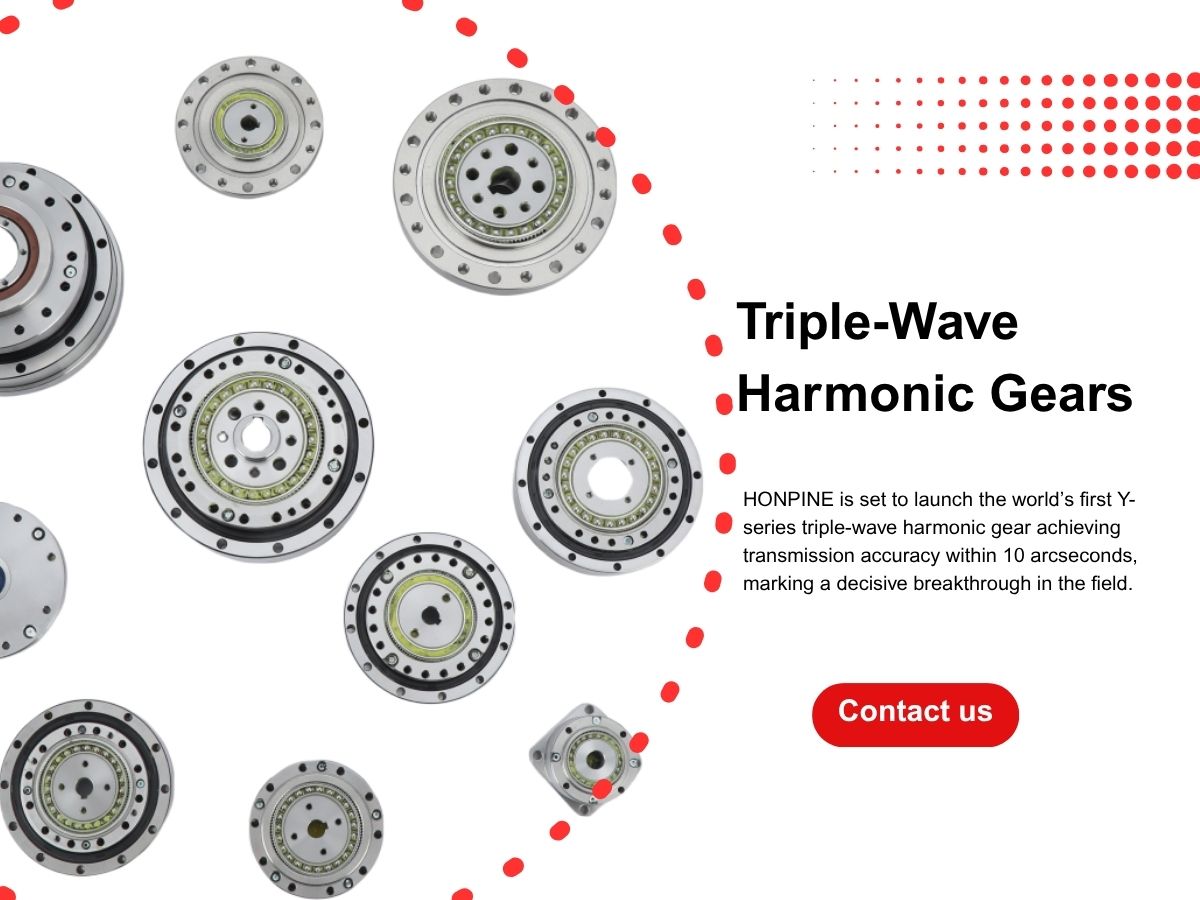
 Triple-Wave Harmonic Gear: A Dual Breakthrough in Precision and RigidityAs the “joints” of robots, harmonic gears directly determine the motion accuracy and stability of robotic systems. For years, the market has been dominated by second-harmonic technology. Now, HONPINE is set to launch the world’s first Y-series triple-wave harmonic gear achieving transmission accuracy within 10 arcseconds, marking a decisive breakthrough in the field.
 HONPINE Extends Thanksgiving Gratitude to Every Employee Dedicated to the Precision Transmission IndustryDuring this Thanksgiving season, HONPINE would like to express our sincere gratitude to every employee who has contributed to the field of precision transmission.