









How to Choose a Reliable Robot Joint Motor Manufacturer for Humanoid Robots?
As humanoid robots move from research laboratories toward commercial deployment, robot manufacturers are facing a challenge that goes far beyond selecting a suitable motor or gearbox. The performance of every robotic joint directly affects the robot's torque output, motion accuracy, dynamic response, energy consumption, and overall reliability.
For robot developers, therefore, choosing a robot joint motor manufacturer is not simply a matter of comparing torque specifications. A reliable supplier needs to provide consistent joint performance, engineering support, manufacturing capacity, customization capabilities, and long-term production scalability.
This becomes even more important when a project requires OEM, ODM, or JDM cooperation, because the joint supplier may become an important part of the robot manufacturer's product development and supply chain.
HONPINE focuses on the development and manufacturing of integrated robotic joint modules, providing motion solutions for humanoid robots, robotic arms, collaborative robots, and other advanced robotic systems.
What Makes a Reliable Robot Joint Motor Manufacturer?
A robot joint motor is a highly integrated motion component. Depending on the product architecture, it may combine a motor, precision reduction mechanism, encoder, drive electronics, communication interface, brake, torque sensing, and other control or safety functions.
This means that the supplier's capabilities cannot be evaluated by looking at a single parameter such as rated torque.
For a B2B robotics project, a more complete evaluation should include five areas: engineering capability, product performance, manufacturing capability, customization capability, and commercial scalability.
A supplier with strong capabilities in all five areas can provide much more value than a manufacturer that only supplies standard motors.
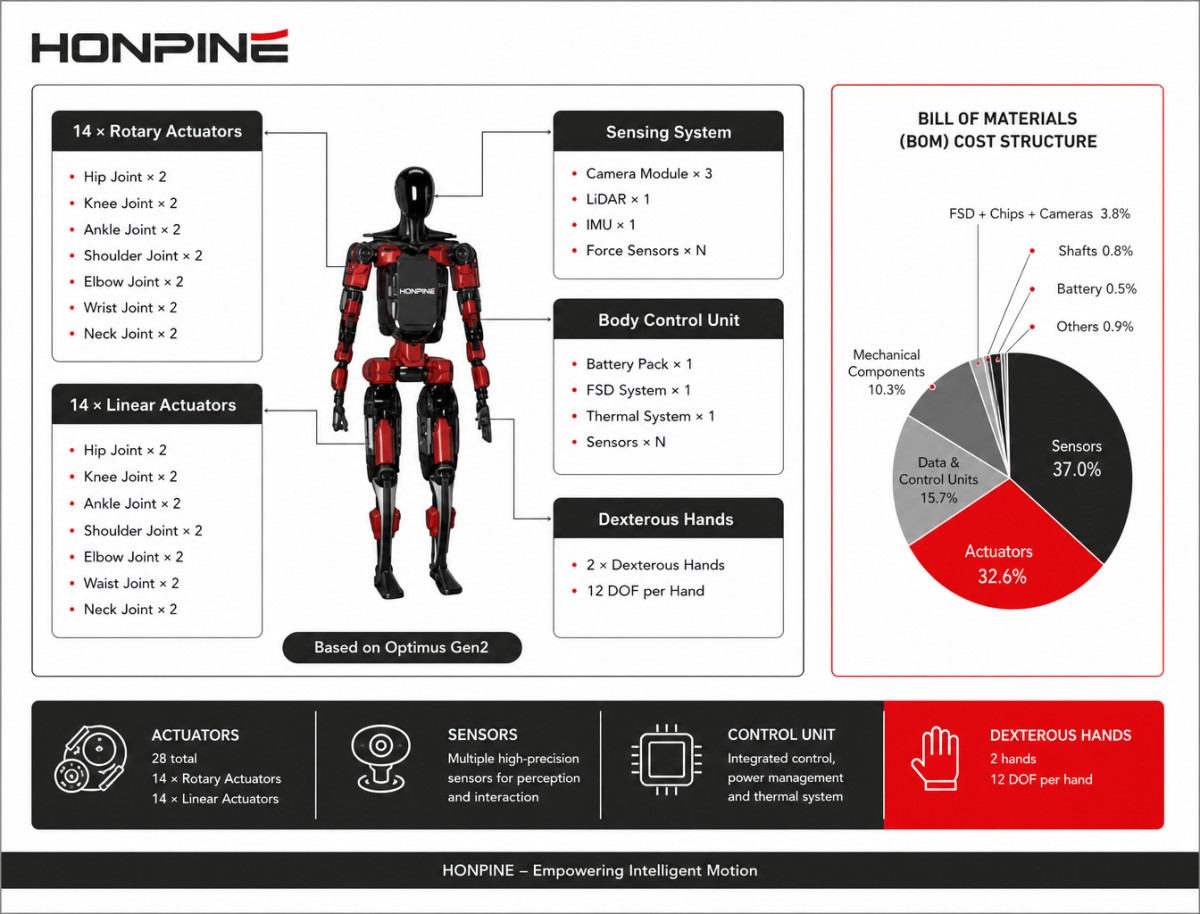
Integrated Robot Joint Motor Design for Humanoid Robots
Humanoid robots require multiple compact joints to be integrated into a relatively small body structure. Shoulder, elbow, wrist, hip, knee, and ankle joints all have different mechanical requirements.
An integrated robot joint motor can combine the motor, precision transmission, encoder, and control components into a single compact assembly. This can simplify mechanical integration and reduce the number of external components required by the robot manufacturer.
For example, a humanoid robot joint may need to provide high torque while maintaining a limited outer diameter. At the same time, the joint must provide accurate position feedback and respond quickly to commands from the robot controller.
The integration of these functions is particularly valuable when the robot manufacturer wants to reduce mechanical development time and simplify the overall joint architecture.
However, integration should not mean sacrificing flexibility. Different robot joints may require different torque ranges, reduction ratios, encoder configurations, communication protocols, braking systems, or safety functions.
Therefore, a capable robot joint motor manufacturer should be able to provide multiple joint configurations rather than a single fixed product.
Why Harmonic Transmission Is Important for Robot Joint Motors?
For many compact robotic joints, harmonic transmission provides an attractive combination of high reduction ratio, low backlash, compact dimensions, and high torque density.
These characteristics are particularly useful in robotic arms, humanoid robots, collaborative robots, and precision automation systems.
In a robotic joint, backlash can directly influence the relationship between motor movement and output movement. When the robot changes direction, excessive mechanical clearance can reduce positioning accuracy and make precise motion control more difficult.
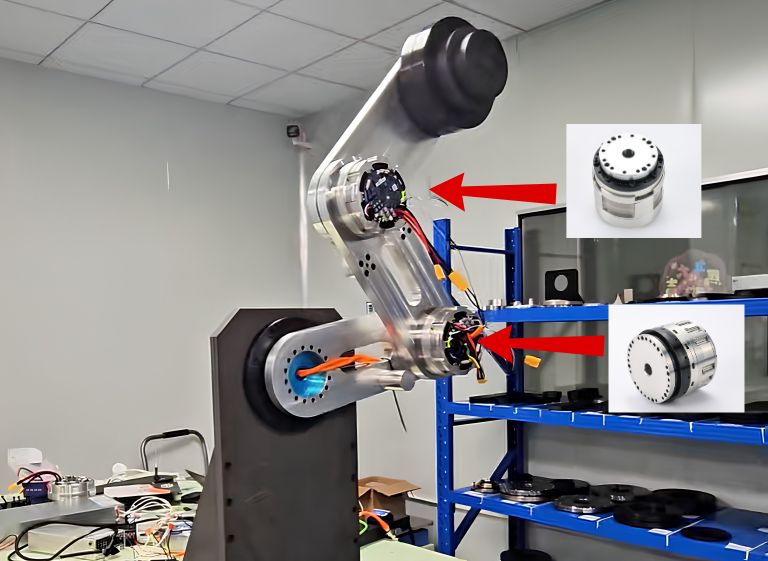
A harmonic gear robotic joint motor can reduce this mechanical play while providing a high reduction ratio within a compact structure.
For applications where joint size and weight are critical, this can be especially valuable because the actuator must provide sufficient torque without unnecessarily increasing the mass of the robotic structure.
Robot Joint Motor Performance Must Be Evaluated at the System Level
A professional robot joint motor specification should not be evaluated by torque alone.
For example, a joint may have sufficient peak torque but still fail to meet the robot's requirements if its thermal performance is inadequate during continuous operation.
Similarly, a high-resolution encoder does not automatically guarantee high positioning accuracy if transmission backlash, torsional deformation, mechanical stiffness, or control response are not properly managed.
For this reason, robot manufacturers should evaluate:
Rated torque, peak torque, speed, reduction ratio, backlash, torsional rigidity, encoder resolution, thermal performance, mechanical strength, communication interface, and control response.
The relationship between these parameters determines how the joint will actually perform inside the robot.
Encoder Configuration Is Critical for Robotic Joint Control
The encoder system is another important factor when selecting a robot joint motor manufacturer.
A motor-side encoder can provide high-speed feedback for motor control and field-oriented control, while an output-side encoder can directly monitor the position of the joint output.
For high-performance robotic joints, dual-encoder architecture can provide more comprehensive feedback because the controller can monitor both motor-side and output-side motion.
This can be valuable for applications requiring precise positioning, motion compensation, backdrivability evaluation, or advanced joint control.
Depending on the robot architecture, manufacturers may also require absolute encoders, multi-turn position feedback, or customized encoder configurations.
Therefore, when evaluating a robot joint motor supplier, it is important to ask not only "how many bits is the encoder?" but also where the encoder is installed and what role it plays in the control system.
Torque Density Matters in Humanoid Robot Joint Motors
Humanoid robots are highly sensitive to actuator weight.
An actuator installed in the shoulder or leg does not only contribute its own weight. Its mass also becomes part of the load that downstream joints must move.
This creates a cascading effect throughout the robot.
For example, increasing the mass of a shoulder actuator can increase the load on the elbow and wrist. Increasing the mass of a leg joint can affect the dynamic requirements of the joints below it.
This is why torque density is an important design parameter for humanoid robot joint motors.
A high torque-density actuator can provide the required joint torque while helping the robot maintain a relatively compact and lightweight mechanical structure.
For this reason, robot joint motor manufacturers serving humanoid robot developers need to consider not only output torque but also actuator diameter, length, mass, thermal capacity, and mechanical integration.
Different Robot Joints Require Different Actuator Designs
A humanoid robot does not need the same joint motor specification at every axis.
The wrist usually prioritizes compactness, low backlash, low inertia, and precise position control.
The elbow requires higher torque while still maintaining a relatively compact structure.
The shoulder must handle greater downstream inertia and may require substantially higher torque and stiffness.
The hip and knee are even more demanding because they contribute to body support, walking, acceleration, deceleration, and dynamic balance.
Therefore, a professional robot joint motor manufacturer should be able to provide a family of joint actuators covering different torque and dimensional requirements.
This approach allows the robot manufacturer to optimize each joint instead of selecting an oversized actuator for the entire robot.
From Robot Joint Module to Complete Humanoid Robot
For B2B robotics customers, another important consideration is the supplier's engineering scope.
A supplier may provide only individual motors.
Another supplier may provide motors together with precision reducers.
A more capable robotics manufacturer can provide integrated joint modules and support their integration into robotic arms or complete humanoid robots.
This difference can significantly affect project development.
A company developing a humanoid robot may need support at multiple levels, including:
Joint actuator design
Mechanical integration
Motor and transmission selection
Encoder configuration
Drive and communication interfaces
Joint control
Robotic arm integration
Humanoid robot hardware
Prototype manufacturing
Mass production
When these capabilities are available within the same engineering organization, communication between mechanical, electrical, and control teams can become more efficient.
OEM, ODM, and JDM Cooperation for Robot Joint Motors
Large robotics projects often require more than purchasing standard products.
A robot manufacturer may have its own mechanical architecture and require a customized joint motor.
In an OEM project, the supplier may manufacture products according to the customer's specifications, branding, and production requirements.
In an ODM project, the supplier can contribute more design and engineering capabilities to develop a product that meets the customer's functional requirements.
In a JDM project, both companies can participate in product development, combining the customer's application knowledge with the supplier's hardware engineering and manufacturing capabilities.
For humanoid robotics, JDM can be particularly valuable because joint actuators are closely connected to the robot's mechanical architecture.
The joint diameter, output shaft, mounting interface, encoder, cable routing, torque range, thermal management, and communication system may all need to be coordinated with the robot's overall design.
A robot joint motor manufacturer with customization and engineering capabilities can therefore become a development partner rather than simply a component supplier.
Manufacturing Capability Matters for Robot Joint Motor Suppliers
Engineering performance is only one part of the supplier evaluation.
Once a robotic joint enters commercial production, manufacturing consistency becomes equally important.
A supplier should have sufficient control over critical manufacturing processes, assembly, testing, quality control, and production capacity.
For B2B customers, several questions are particularly important:
Can the manufacturer produce the required volume?
Can prototype production transition smoothly into mass production?
Can product consistency be maintained across multiple production batches?
Does the supplier have its own manufacturing facilities?
Does it have dedicated testing equipment for joint modules?
Can production capacity be expanded when the robot project enters commercialization?
These questions are particularly important for humanoid robots because production demand can increase rapidly once a robot platform moves from prototype development to commercial deployment.
HONPINE's Manufacturing and R&D Capability
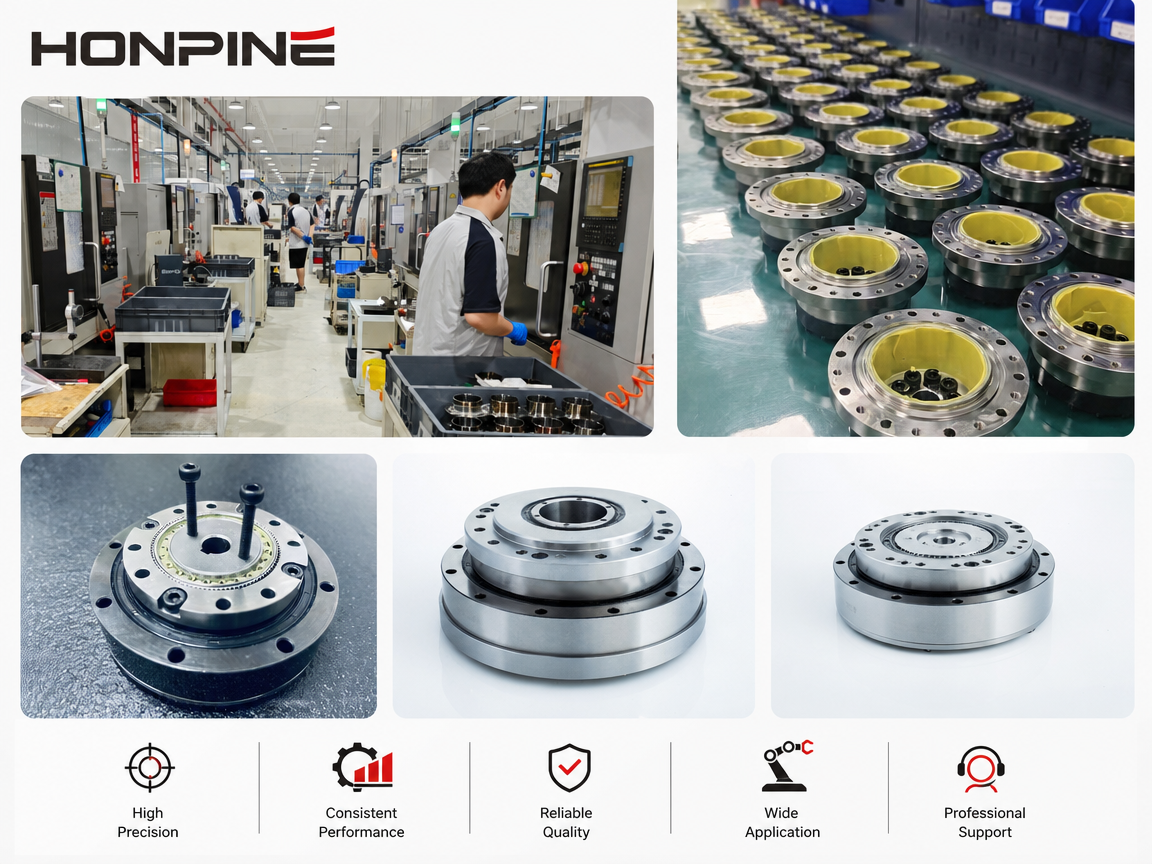
HONPINE has approximately 400 employees, including around 50 hardware R&D engineers and 90 software development engineers.
The company operates its own manufacturing facilities with a manufacturing area of more than 10,000 square meters, supported by approximately 150 production employees.
This combination of hardware engineering, software development, and in-house manufacturing allows HONPINE to approach robotic joint development as a complete motion-control system rather than as an isolated motor component.
HONPINE has produced more than 300,000 joint modules, with more than 1,200 humanoid robot sets and more than 3,000 total robot sets produced over the past three years.
These production capabilities provide experience across both robotic joint modules and complete robotic systems.
From Prototype Validation to Mass Production
One of the most important differences between a component supplier and a strategic robotics partner is the ability to support the complete product lifecycle.
A typical robotics project may progress through several stages:
Concept design → Joint selection → Prototype development → Engineering validation → Robot integration → Pilot production → Mass production
At each stage, the requirements can change.
During the prototype phase, flexibility and engineering response may be more important.
During validation, reliability, thermal performance, control compatibility, and mechanical durability become critical.
During mass production, manufacturing consistency, quality control, delivery capability, and cost optimization become increasingly important.
A robot joint motor manufacturer that can support all these stages can significantly reduce supply-chain and engineering risks for the robot developer.
Supporting International Robotics Customers
Global robotics projects also require effective international communication.
HONPINE has experience serving overseas customers, with engineering and sales teams capable of communicating with international customers in English.
Its existing customer base includes leading companies and organizations in China and overseas markets, including China Mobile, Alibaba, State Grid, Amazon, CERN, WSP, Vingroup, and Samsung.
For international robotics developers, this experience can simplify technical communication, product specification confirmation, engineering coordination, and commercial project management.
Building a Long-Term Robot Joint Motor Supply Chain
Humanoid robots are moving toward a stage where supply-chain stability will become increasingly important.
A robot manufacturer may initially require only dozens or hundreds of joint modules for development and testing. Once the platform enters commercial deployment, demand can increase significantly.
This means that supplier selection should consider not only the current prototype requirements but also future production scalability.
A reliable robot joint motor manufacturer should be able to support:
Prototype quantities → Small-batch production → Pilot production → Mass production → Capacity expansion
The supplier should also be capable of continuing product optimization as the robot platform evolves.
For example, the second-generation joint may require lower weight, higher torque density, improved thermal performance, better feedback, or a new communication architecture.
A long-term engineering relationship allows these improvements to be developed together rather than forcing the robot manufacturer to restart the supply chain for every product generation.
Beyond Hardware: A Collaborative Hardware-Software Model
Humanoid robotics requires close coordination between hardware and software.
The joint module is responsible for the physical execution of motion, while higher-level software determines how the robot understands its environment, makes decisions, plans tasks, and interacts with users.
For this reason, an effective collaboration model does not necessarily require one supplier to provide every layer of the robot technology stack.
A hardware-focused manufacturer can provide the complete robotic hardware platform and foundational joint-control software, while the robot developer contributes its expertise in higher-level AI, perception, navigation, task planning, and application-specific algorithms.
This complementary model can allow both parties to focus on their strongest technical capabilities.
What Should You Ask a Robot Joint Motor Manufacturer?
Before selecting a supplier, robot manufacturers should evaluate more than a product datasheet.
Important questions include:
Does the supplier have its own R&D team?
Can it customize the joint motor according to the robot's mechanical architecture?
Does it have its own manufacturing facilities?
What is its existing production volume?
Can it support prototype development and mass production?
What encoder and communication options are available?
Can it provide OEM, ODM, or JDM cooperation?
Does it have experience with complete robotic systems?
Can its engineering team communicate effectively with international customers?
These questions provide a much more complete picture of whether a supplier can support a long-term robotics project.
Why Choose HONPINE as a Robot Joint Motor Manufacturer?
HONPINE's core expertise is centered on integrated robotic joint modules, supported by capabilities in precision transmission, motor systems, encoder feedback, drive technology, control software, and robotic hardware integration.
Rather than focusing only on supplying a standard motor, HONPINE works toward providing motion solutions that can be adapted to different robotic architectures.
Its product capabilities extend from individual joint modules to dexterous hands, 7-DOF robotic arms, and complete humanoid robots.
This broader product experience helps HONPINE understand the relationship between the joint actuator and the complete robotic system.
For customers developing humanoid robots, collaborative robots, industrial robotic arms, or other advanced robotic platforms, HONPINE can support projects ranging from customized joint development to OEM, ODM, and JDM manufacturing cooperation.
Conclusion
Selecting a robot joint motor manufacturer is a strategic decision for any robotics company developing a new robot platform.
The right supplier should provide more than high torque or a compact motor. It should combine robot joint engineering, precision transmission, encoder and control technology, manufacturing capability, customization, quality management, and production scalability.
For humanoid robots in particular, the ability to develop different joint configurations, optimize torque density, integrate feedback and control systems, and scale production can have a direct impact on the competitiveness of the final robot.
HONPINE combines integrated joint module development with in-house R&D and manufacturing capabilities, supporting customers from joint-level engineering through robotic system development and mass production.
Read More
Learn more about the story of HONPINE and industry trends related to precision transmission.
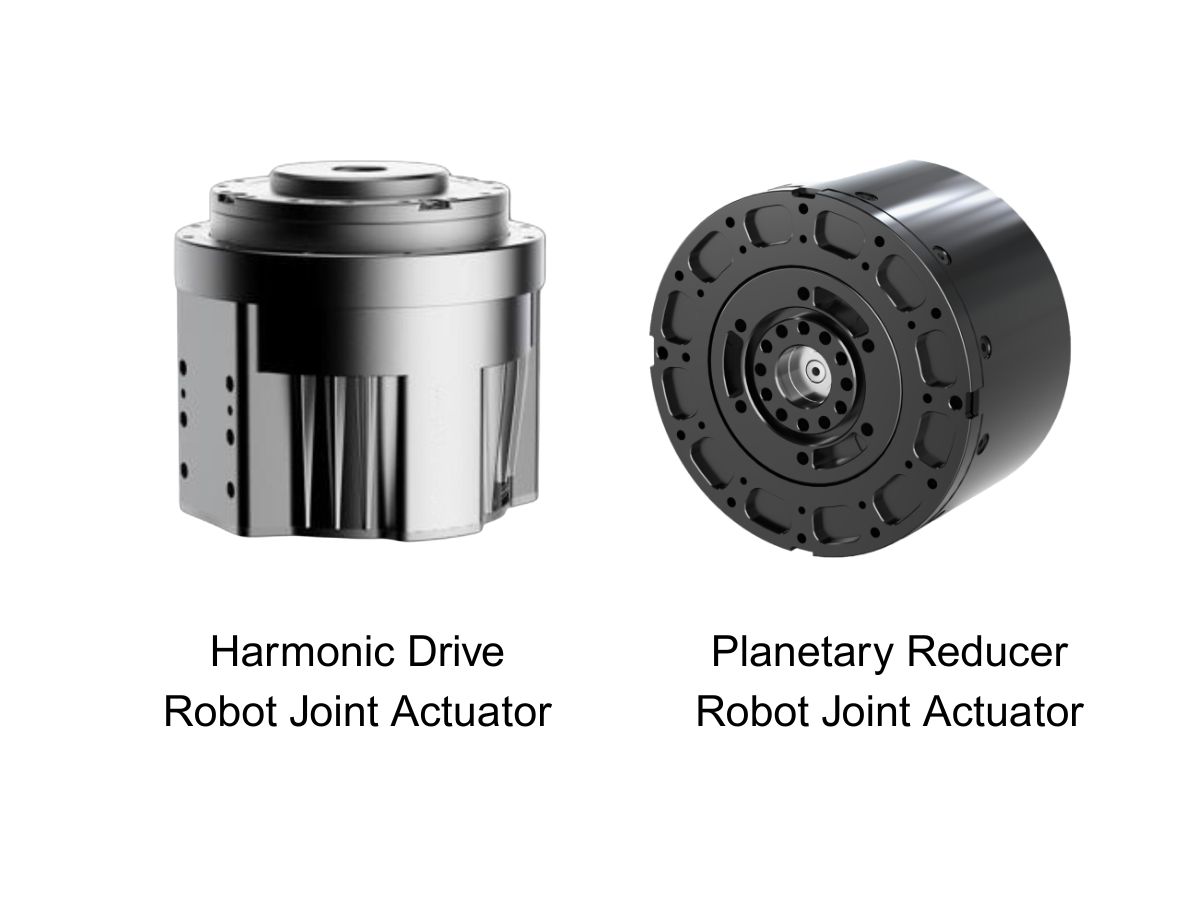
 What is robot joint actuator?How to Choose the Best Robot Rotary Joint Actuator?In core robot joint transmission solutions, planetary and harmonic rotary actuators each have their own strengths. Choosing the right type based on application requirements is essential to achieve the optimal balance between performance and cost.
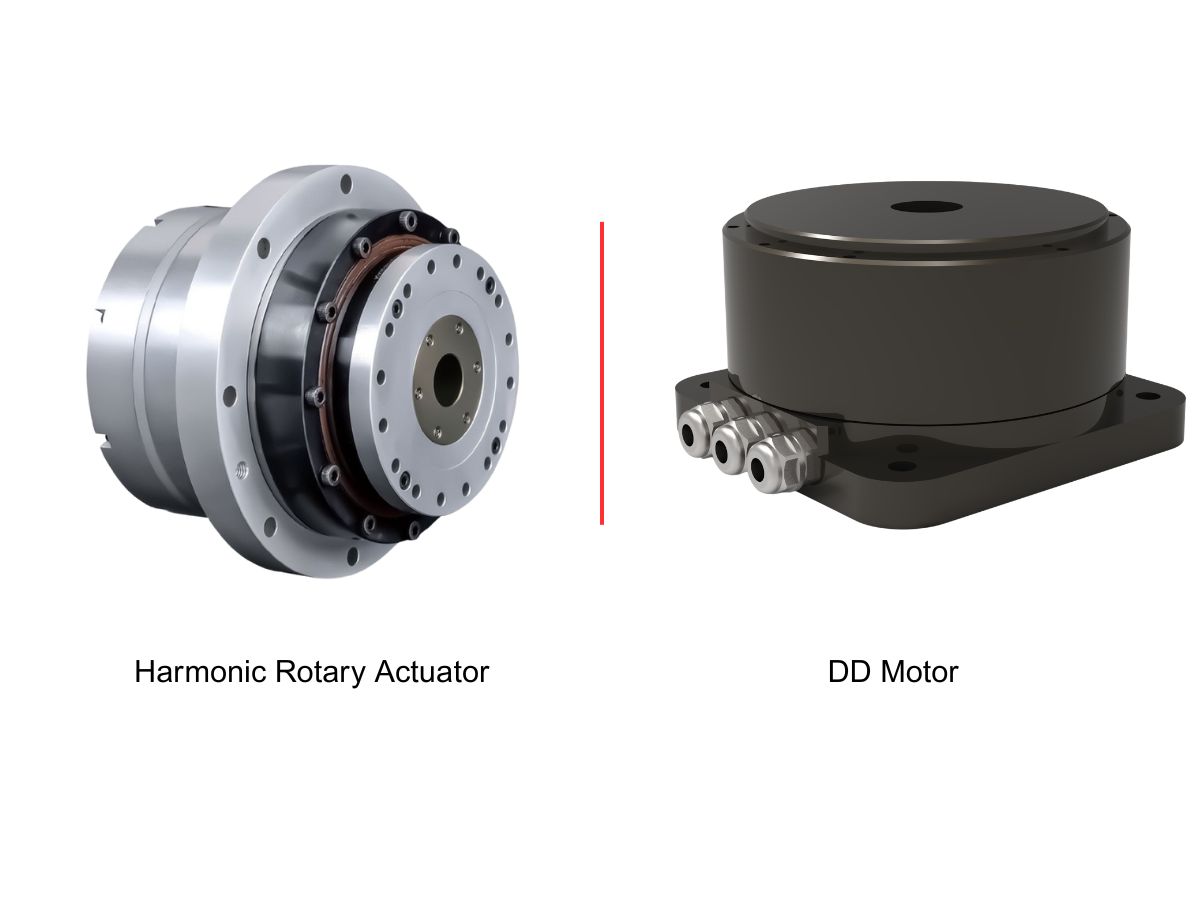
 DD Motors VS Harmonic Rotary ActuatorsThis article provides an in-depth comparison between Direct Drive (DD) motors and harmonic rotary actuators, covering their transmission principles, advantages and disadvantages, and typical application fields.
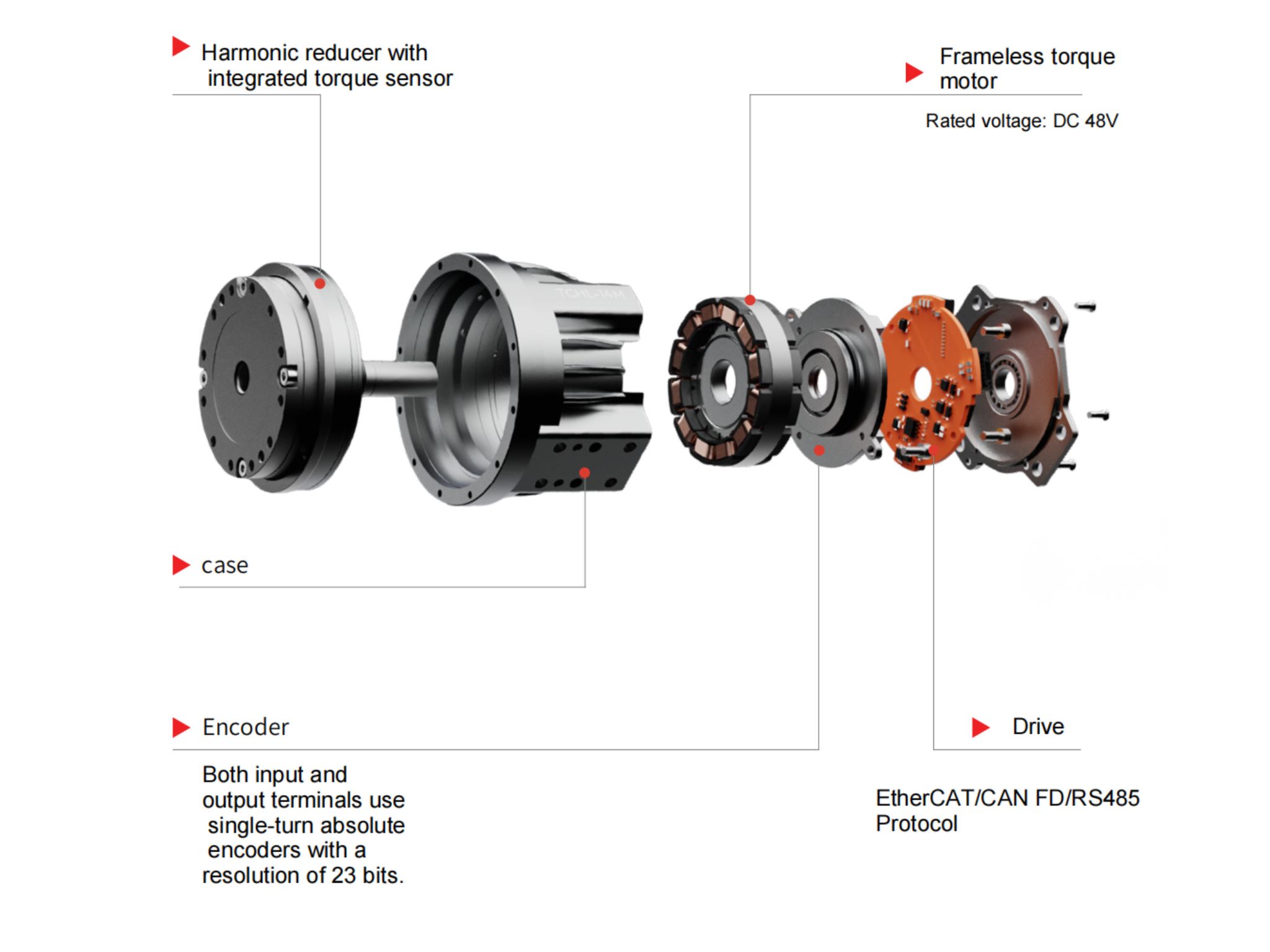
 OMG Ultra Compact Harmonic Drive Joint Module with Built-in Torque SensorHONPINE TCHL series harmonic drive joint module is a game-changing product that achieves disruptive improvements in multiple aspects such as lightweight design, integration level, and connection convenience. This article will analyze its revolutionary enhancements with you.
 The Role of Harmonic Drive Gears in Achieving 5–10 μm Accuracy in Dental Milling MachinesA dental milling machine is a CNC machining system used to directly process digital dental models into restorations such as crowns, bridges, veneers, inlays, and implant abutments. Dental milling machines require far higher operational accuracy and motion stability than ordinary equipment. This article explains how harmonic drive gear help dental milling machines achieve stable, continuous, and controllable operation.
 Why Are Harmonic Rotary Actuators Perfect for Medical Equipment?Harmonic rotary actuators (typically integrated systems consisting of a harmonic drive reducer, frameless torque motor, encoder, and optional brake) are regarded as key components in medical equipment. The core reason is that they simultaneously meet the most stringent medical requirements for precision, compact size, safety, and controllability. The following explanation is structured from three perspectives: technical characteristics, application scenarios, and medical value.
 High-Precision RV Reducers Perfectly Matched for Walking RobotsThe walking axis of a robot is a core component for power transmission and support. RV reducers provide extremely high rigidity, precision, and torque while maintaining a compact size and exceptional reliability, making them an ideal match for the demanding requirements of walking robot joints in terms of load capacity, impact resistance, and precision.
 How to Choose a Reliable Robot Joint Motor Manufacturer for Humanoid Robots?Choosing a reliable robot joint motor manufacturer is a critical step when developing humanoid robots and other advanced robotic systems. A robotic joint must balance torque, speed, precision, torque density, thermal performance, feedback, mechanical stiffness, and long-term reliability within a compact structure. For B2B robotics companies, supplier evaluation should therefore go beyond a product datasheet and consider engineering capability, manufacturing capacity, joint integration, testing, and production scalability. In this article, Allen Li, Founder of HONPINE, explains the key factors to consider when selecting a robot joint motor manufacturer and how integrated harmonic robot joint technology can support humanoid robot development.
 Lightweight Humanoid Robots Start with Precision TransmissionAs humanoid robots move from experimental prototypes toward practical applications, lightweight design, energy efficiency, motion performance, and long-term reliability are becoming increasingly important. At the center of these challenges is precision transmission. From harmonic reducers and lightweight robot joints to integrated development kits, the design of each core component directly affects the overall performance of a humanoid robot. In this article, Allen Li, Founder of HONPINE, shares his perspective on how precision transmission technology can support the development of lightweight humanoid robots and how HONPINE is extending its expertise from harmonic reducers toward lightweight robot joints and integrated robotics solutions.
 Harmonic Rotary Actuators for Semiconductor Equipment: Precision Motion, Hollow-Shaft Design and FOC ControlHello everyone, I’m Theodore Li, Technical Director at HONPINE. In semiconductor manufacturing equipment, rotary motion is not simply about making a mechanism rotate. Limited installation space, cable and tube routing, low-speed stability, precise positioning and continuously adjustable motion profiles can all influence the performance of the machine. This is why harmonic rotary actuators are becoming an important motion solution for semiconductor equipment. In this article, I will discuss how harmonic transmission, FOC-based motor control, encoder feedback, large hollow-shaft design and flexible mechanical interfaces work together to meet practical semiconductor motion requirements, based on our experience with developing equipment, overhead transport, wafer handling, cleaning and crystal-growth applications.
 Miniature Harmonic Drive for Minimally Invasive Surgical RobotsMinimally invasive surgical robots require highly compact transmission systems that can deliver precise motion within extremely limited mechanical spaces. As robotic instruments become smaller and more dexterous, conventional transmission architectures can face challenges related to size, tendon elasticity, friction, hysteresis, and mechanical integration. A miniature harmonic drive offers one potential approach by providing high-ratio precision transmission, low backlash, and compact dimensions in a small mechanical envelope. In this article, I will explain why miniature harmonic transmission is relevant to surgical robotics, compare external tendon-driven and distal transmission architectures, and discuss the key engineering considerations behind HONPINE’s CSF-mini miniature harmonic reducer for compact robotic joints, flexible robotic instruments, and other precision mechanisms.
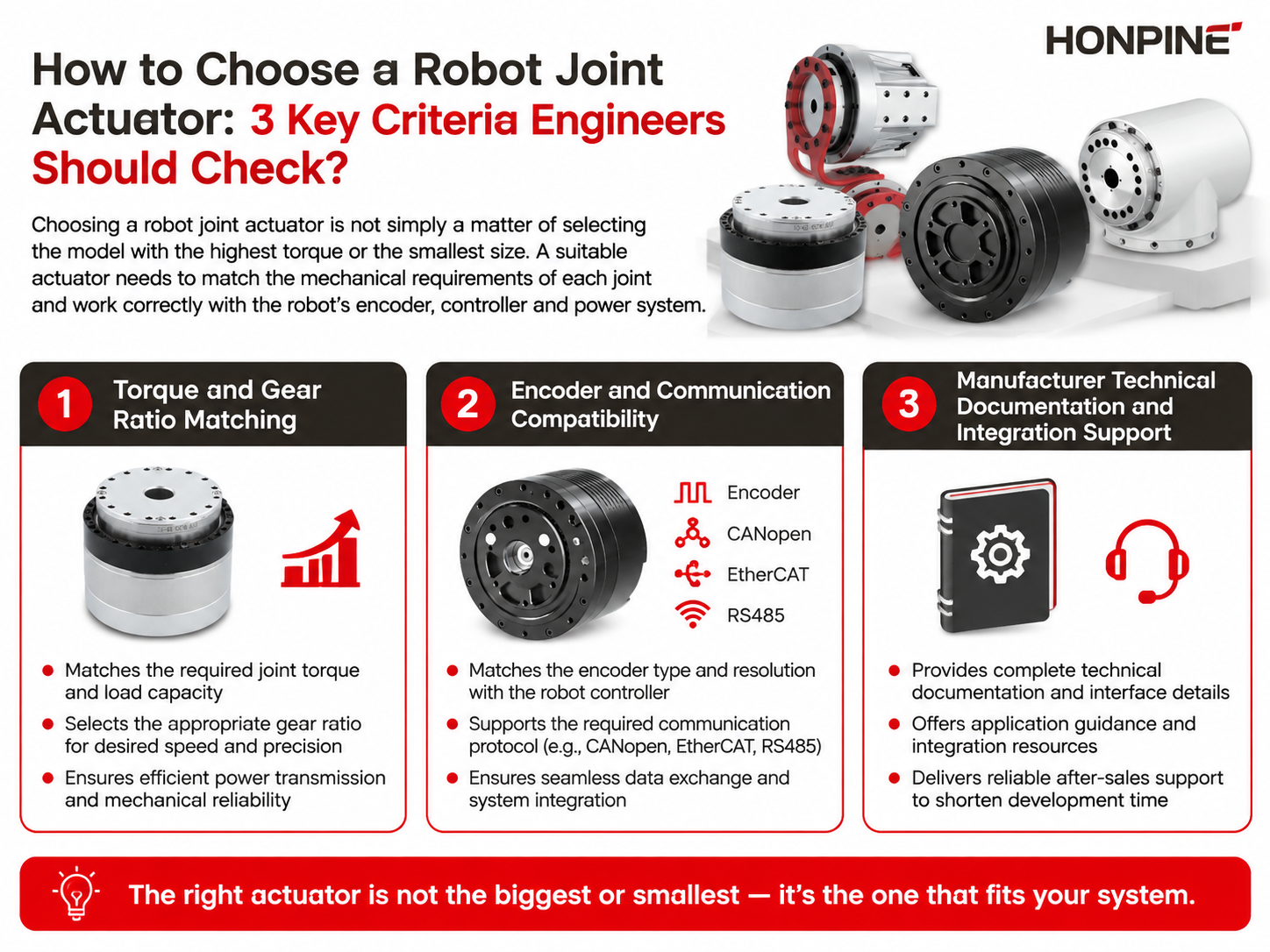
 How to Choose a Robot Joint Actuator: 3 Key Criteria Engineers Should Check?Choosing a robot joint actuator is an engineering decision that affects not only torque and motion performance, but also control stability, mechanical integration, and development time. For industrial robots, collaborative robots, humanoid robots, and other robotic systems, the right actuator must match the actual requirements of each joint while remaining compatible with the robot’s motor, encoder, controller, communication network, and power architecture. In this article, I will explain three key criteria engineers should evaluate when selecting a robot joint actuator: torque and gear ratio matching, encoder and communication compatibility, and the manufacturer’s technical documentation and engineering support.
 Outdoor Robot Joint Solution: Harmonic Joint Module with Built-in Torque SensorHello everyone, I’m Theodore Li, Technical Director at HONPINE. As robots move beyond controlled factory environments, outdoor robotic applications are creating new requirements for robot joint design. Rain, dust, humidity, temperature fluctuations, low-temperature conditions, and unpredictable external loads can all affect how a robotic joint performs in the field. In these environments, a joint needs to provide more than precise rotation. It also needs reliable torque feedback, suitable environmental protection, stable operation under changing temperatures, and practical mechanical integration. In this article, I will explain the key engineering considerations behind our outdoor robot joint solution, including the harmonic joint module, built-in torque sensor, IP65 protection, low-temperature lubrication, cable outlet protection, and mechanical integration, based on our experience with outdoor robotic applications such as solar panel installation, construction, and cleaning robots.

Double Click
We provide harmonic drive reducer,planetary reducer,robot joint motor,robot rotary actuators,RV gear reducer,robot end effector,dexterous robot hand
 What is robot joint actuator?How to Choose the Best Robot Rotary Joint Actuator?In core robot joint transmission solutions, planetary and harmonic rotary actuators each have their own strengths. Choosing the right type based on application requirements is essential to achieve the optimal balance between performance and cost.
 DD Motors VS Harmonic Rotary ActuatorsThis article provides an in-depth comparison between Direct Drive (DD) motors and harmonic rotary actuators, covering their transmission principles, advantages and disadvantages, and typical application fields.
 OMG Ultra Compact Harmonic Drive Joint Module with Built-in Torque SensorHONPINE TCHL series harmonic drive joint module is a game-changing product that achieves disruptive improvements in multiple aspects such as lightweight design, integration level, and connection convenience. This article will analyze its revolutionary enhancements with you.
 How to Choose a Reliable Robot Joint Motor Manufacturer for Humanoid Robots?Choosing a reliable robot joint motor manufacturer is a critical step when developing humanoid robots and other advanced robotic systems. A robotic joint must balance torque, speed, precision, torque density, thermal performance, feedback, mechanical stiffness, and long-term reliability within a compact structure. For B2B robotics companies, supplier evaluation should therefore go beyond a product datasheet and consider engineering capability, manufacturing capacity, joint integration, testing, and production scalability. In this article, Allen Li, Founder of HONPINE, explains the key factors to consider when selecting a robot joint motor manufacturer and how integrated harmonic robot joint technology can support humanoid robot development.
 Lightweight Humanoid Robots Start with Precision TransmissionAs humanoid robots move from experimental prototypes toward practical applications, lightweight design, energy efficiency, motion performance, and long-term reliability are becoming increasingly important. At the center of these challenges is precision transmission. From harmonic reducers and lightweight robot joints to integrated development kits, the design of each core component directly affects the overall performance of a humanoid robot. In this article, Allen Li, Founder of HONPINE, shares his perspective on how precision transmission technology can support the development of lightweight humanoid robots and how HONPINE is extending its expertise from harmonic reducers toward lightweight robot joints and integrated robotics solutions.
 How to Choose a Robot Joint Actuator: 3 Key Criteria Engineers Should Check?Choosing a robot joint actuator is an engineering decision that affects not only torque and motion performance, but also control stability, mechanical integration, and development time. For industrial robots, collaborative robots, humanoid robots, and other robotic systems, the right actuator must match the actual requirements of each joint while remaining compatible with the robot’s motor, encoder, controller, communication network, and power architecture. In this article, I will explain three key criteria engineers should evaluate when selecting a robot joint actuator: torque and gear ratio matching, encoder and communication compatibility, and the manufacturer’s technical documentation and engineering support.
 Outdoor Robot Joint Solution: Harmonic Joint Module with Built-in Torque SensorHello everyone, I’m Theodore Li, Technical Director at HONPINE. As robots move beyond controlled factory environments, outdoor robotic applications are creating new requirements for robot joint design. Rain, dust, humidity, temperature fluctuations, low-temperature conditions, and unpredictable external loads can all affect how a robotic joint performs in the field. In these environments, a joint needs to provide more than precise rotation. It also needs reliable torque feedback, suitable environmental protection, stable operation under changing temperatures, and practical mechanical integration. In this article, I will explain the key engineering considerations behind our outdoor robot joint solution, including the harmonic joint module, built-in torque sensor, IP65 protection, low-temperature lubrication, cable outlet protection, and mechanical integration, based on our experience with outdoor robotic applications such as solar panel installation, construction, and cleaning robots.
 RV Reducer for Welding Positioners: Selection and Torque Calculation for Heavy-Duty Welding ApplicationsSelecting the right RV reducer for a welding positioner requires more than simply matching the reducer to the workpiece weight. A heavy-duty welding positioner must provide sufficient output torque, high torsional rigidity, stable low-speed rotation, accurate positioning, and reliable performance during acceleration, deceleration, and reversing. In this article, we explain how to select an RV reducer and servo motor for a welding positioner by calculating output speed, reduction ratio, workpiece inertia, gravity load torque, acceleration torque, motor torque, and peak torque. A practical 500 kg welding positioner example is also used to show how these parameters affect RV reducer selection.
 Types of Robot Joint Motors: Model Selection, Advantages and DisadvantagesRobot joint motors are one of the key components that determine the performance, precision, efficiency, and load capacity of a robot. Depending on the application, robot joints can use electric, hydraulic, pneumatic, or other drive technologies. Among them, electric-drive solutions have become the mainstream choice for modern robots, especially humanoid robots, industrial robots, collaborative robots, and mobile robots. Electric robot joint motors can be further divided according to their transmission methods, including harmonic drive, planetary reducer, cycloidal reducer, ball screw, and direct drive solutions. Each type has its own advantages and disadvantages in terms of precision, torque density, efficiency, impact resistance, size, cost, and backdrivability. Understanding these differences is essential for selecting the right robot joint motor for a specific application.
 Hollow Rotary Platform vs. Harmonic Rotary Actuator: Application Comparison and InterchangeabilityHello everyone, I’m Theodore Li, Technical Director at HONPINE. For engineers designing precision rotary stations for industrial automation, one question often comes up: when a machine requires high-precision rotation, indexing, or rotary positioning, should you choose a hollow rotary platform or a harmonic rotary actuator? Can they be used interchangeably? Although both are precision rotary motion solutions, their mechanical structures and application characteristics are quite different. In actual equipment, choosing the wrong solution can lead to insufficient load capacity, inadequate rigidity, vibration, speed limitations, or reduced service life. In this article, I’ll compare their application characteristics and explain where they can be used interchangeably, where one is more suitable than the other, and what engineers should check before making a replacement.
 How HONPINE Manufactures Precision Harmonic Reducers: Technology, Quality and Manufacturing Challenges?A precision harmonic reducer is more than a compact high-ratio transmission component. Its actual performance depends on how accurately every critical component is designed, manufactured, assembled, and tested. Tooth profile accuracy, flexspline material, heat treatment, machining tolerances, wave generator geometry, assembly precision, and production consistency can all influence backlash, torsional stiffness, efficiency, durability, and positioning accuracy. For robotics, CNC equipment, semiconductor manufacturing, optical inspection, and other precision automation applications, these factors become even more important. This article explores how HONPINE manufactures precision harmonic reducers, the key technologies and manufacturing challenges involved, and why stable production capability is essential for achieving reliable transmission performance at scale.
 HONPINE HAG Harmonic Joint Actuator Real Load Test for Heavy Duty Robot ArmTest the HONPINE HAG40 harmonic joint actuator with an 80 kg payload, 800 N·m peak torque and 557 N·m rated torque for heavy-duty robotic arms.
- harmonic gear
- harmonic transmission
- robot joint motor
- robot joint module
- joint motor
- joint module
- honpine
- precision transmission
- robot joint
- joint motors
- harmonic
- small
- harmonic gear robotic
- 90
- dexterous hands
- robotic joint
- humanoid robot
- actuator
- robot joint motors
- joint actuator
- joint actuators
- robot joint motor manufacturer
- integrated joint module
- robotic joint motor
- robotic arm