

Harmonic Rotary Actuator for Medical Equipment: ≤10 Arcsec Repeatability and High Overturning Stiffness
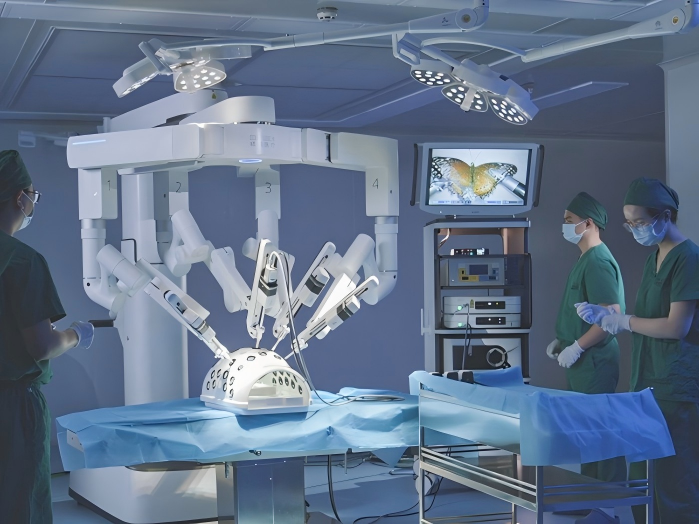
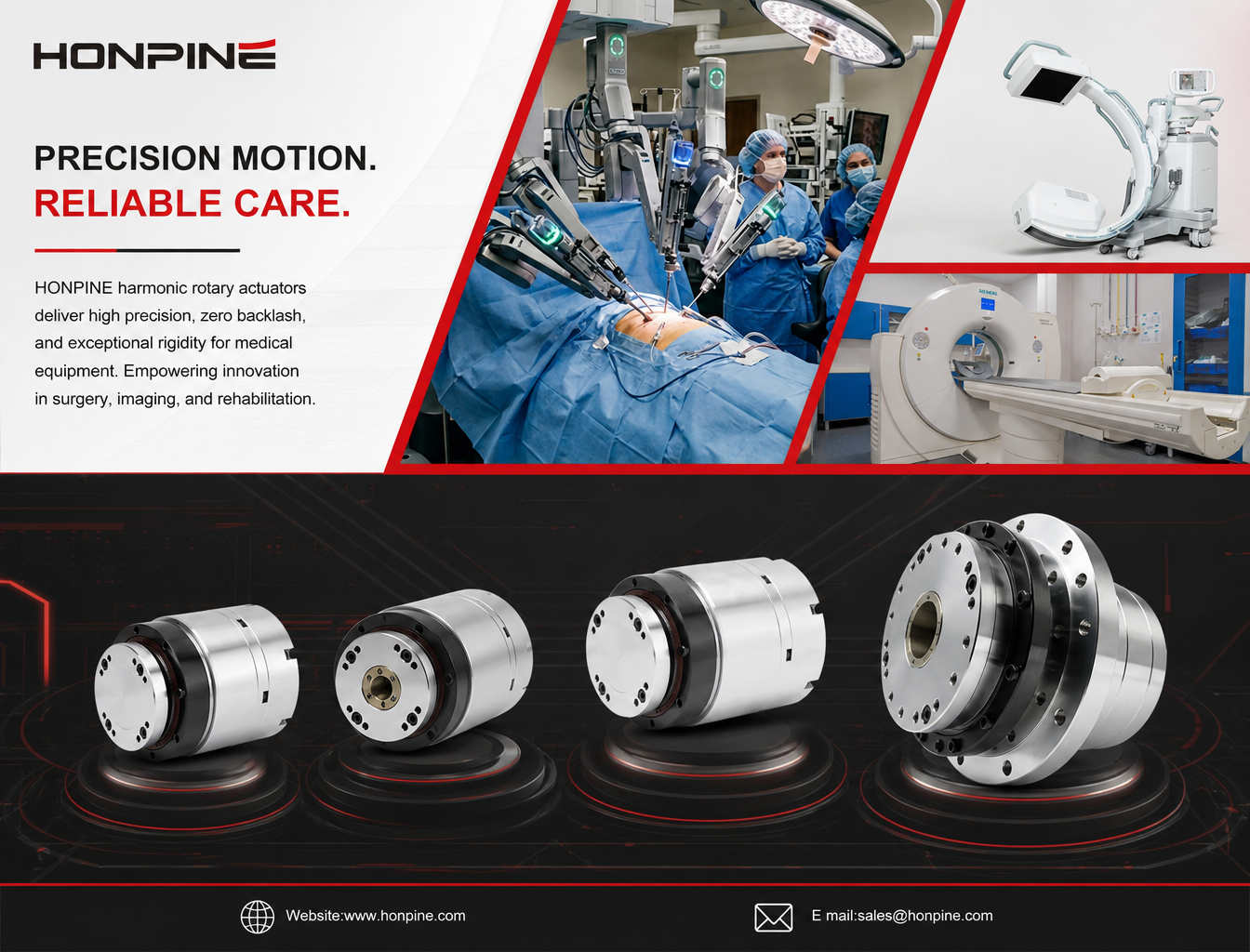
Medical equipment requires motion transmission systems that deliver exceptional positioning accuracy, structural stability, and operational safety. From surgical robots and medical imaging systems to rehabilitation devices, even minor positioning deviations or mechanical deflections can affect equipment performance.
How can medical equipment manufacturers achieve precise, stable, and reliable rotational motion?
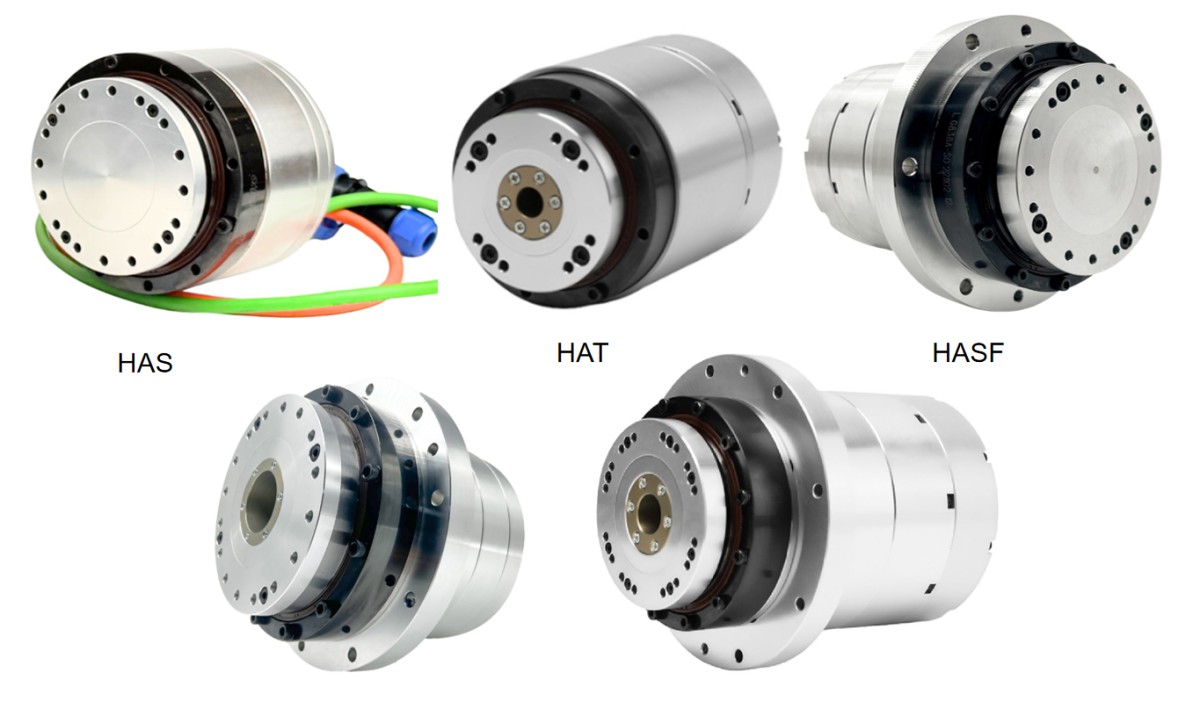
HONPINE HAS, HAT, and HAM harmonic rotary actuators feature high repeatability of up to ≤10 arcsec, zero-backlash transmission, high overturning stiffness, and hollow-shaft configurations to address the demanding motion control requirements of modern medical equipment.
1. Safety Is the First Priority in Medical Equipment
During surgical robot operations or CT and MRI scanning procedures, an unexpected power failure can create serious safety risks. For example, an uncontrolled robotic arm may drop under gravity, while a scanning table may slide out of position, potentially endangering patients.
Medical equipment manufacturers therefore need motion transmission solutions with reliable braking, accurate position retention, and predictable behavior during power interruptions.
A. Permanent Magnet Brakes for Fail-Safe Holding
HONPINE harmonic rotary actuators with external drivers can be optionally equipped with permanent magnet brakes.
Unlike conventional spring-applied electromagnetic brakes, permanent magnet brakes use magnetic force to engage the braking mechanism when power is removed, helping lock the output shaft and maintain its mechanical position during unexpected power interruptions.
Reduced Heat Generation and Energy Consumption
Depending on the brake design, the permanent magnet brake does not require continuous electrical power to maintain its released state. This helps reduce brake-related heat generation and power consumption, supporting the thermal management requirements of medical equipment designed for extended operating periods.
Considerations for Electromagnetic Compatibility
For medical equipment operating in environments with strong magnetic fields, such as MRI systems, brake selection requires careful evaluation. Magnetic materials, residual magnetic fields, electromagnetic compatibility, and MRI safety requirements must all be assessed to ensure that the complete actuator assembly is suitable for the intended installation environment.
B. Absolute Encoders and Zero-Backlash Transmission for Position Retention
HONPINE harmonic rotary actuators with external drivers can be configured with absolute encoders and zero-backlash transmission.
An absolute encoder retains position information within its specified operating conditions, allowing the control system to identify the actuator's position after a power interruption without necessarily performing a conventional homing operation.
Combined with the zero-backlash characteristics of harmonic transmission, the actuator helps minimize motion errors caused by mechanical backlash.
This is particularly important for medical equipment requiring precise and repeatable movements, such as minimally invasive surgical robots, biopsy positioning systems, and medical imaging mechanisms.
C. Hollow-Shaft Design Prevents Cable Interference
Medical equipment often contains complex internal wiring and fluid or pneumatic lines.
For example, endoscopic surgical robots require space for camera cables and pneumatic lines, while large medical imaging systems may need to accommodate cooling pipes and electrical wiring. During repeated rotational movements, externally routed cables can become twisted, tangled, or damaged.
For medical equipment requiring internal cable routing, the HONPINE HAT Series features a hollow-shaft design with a central through-hole, allowing cables and other components to pass through the actuator's center and reducing external cable interference.
For applications requiring greater load-bearing capability, the HONPINE HAM Series features a large hollow-shaft structure and high overturning stiffness. This helps maintain rotational stability under heavy loads and reduces angular deflection in long cantilevered structures.
2. High Repeatability Determines Medical Positioning Accuracy
Positioning accuracy is a critical performance factor in surgical robots, biopsy systems, ophthalmic surgical equipment, and high-precision medical imaging devices.
For these applications, the actuator must not only reach a target position but also return to the same position consistently over repeated operating cycles.
A. Repeatability and Uni-directional Positioning Accuracy
HONPINE harmonic rotary actuators offer the following positioning performance, depending on the model and configuration:
Uni-directional positioning accuracy: ≤30–90 arcsec
Repeatability: ≤10–20 arcsec
How Does High Repeatability Benefit Medical Equipment?
Typical applications include:
Robotic arms for minimally invasive surgery
Ophthalmic surgical equipment
Dental implant positioning and navigation systems
Medical biopsy positioning mechanisms
Repeatability of ≤10 arcsec means that the actuator can return to nearly the same position when repeatedly executing the same movement under specified test conditions.
This is particularly valuable for medical robotic systems that need to perform precise movements within confined anatomical spaces, where positioning deviations may affect the accuracy of surgical instruments.
For engineers developing medical robotic equipment, high repeatability helps improve motion consistency and provides a more reliable mechanical foundation for precise positioning control.
3. High Overturning Stiffness Improves Structural Stability Under Heavy Loads
Medical equipment, especially large imaging systems and surgical support mechanisms, often features long cantilevered structures carrying relatively heavy loads.
When a cantilevered arm extends outward, gravity and external forces generate an overturning moment at the actuator. Insufficient structural stiffness can cause angular deflection, affecting the positioning stability of the equipment.
HONPINE harmonic rotary actuators are designed to address these mechanical challenges through high structural rigidity and bearing support.
A. High Overturning Stiffness for Long Cantilevered Structures
Typical medical applications include:
Cantilevered DR and X-ray imaging systems
Surgical microscope support arms
Large rehabilitation and exoskeleton equipment
Why Is Overturning Stiffness Important?
The longer the cantilevered structure, the greater the potential angular deflection under an external load.
High overturning stiffness, supported by the actuator's structural design and cross-roller bearing arrangement, helps resist external overturning moments and minimize unwanted angular displacement.
For medical imaging equipment, this contributes to more stable positioning of the imaging assembly and helps reduce motion-related image deviations.
For surgical microscope support arms and rehabilitation equipment, improved structural rigidity also helps maintain stable positioning during operation.
The actual load capacity and allowable overturning moment should be evaluated according to the selected actuator model, mounting configuration, and operating conditions.
4. Why Choose HONPINE Harmonic Rotary Actuators for Medical Equipment?
HONPINE HAS, HAT, and HAM harmonic rotary actuators combine precision harmonic transmission, integrated mechanical structures, and flexible configuration options to address the motion control requirements of medical equipment manufacturers.
Key advantages include:
High repeatability: Repeatability of ≤10–20 arcsec, depending on the model.
Zero-backlash transmission: Helps minimize mechanical positioning errors caused by backlash.
High overturning stiffness: Supports long cantilevered structures and external loading.
Hollow-shaft options: Simplifies internal cable routing and reduces cable interference.
Optional braking solutions: Supports position holding during power interruptions.
Absolute encoder options: Helps retain position information and simplify system recovery after power interruptions.
If you are developing surgical robots, medical imaging systems, rehabilitation equipment, or other precision medical devices, contact HONPINE to request the latest harmonic rotary actuator catalog and discuss a suitable transmission solution for your application.
5. Frequently Asked Questions About Harmonic Rotary Actuators for Medical Equipment
Q1. How Do You Select a Harmonic Rotary Actuator for Medical Equipment?
Selecting a harmonic rotary actuator requires evaluating several factors, including required output torque, radial and axial loads, overturning moment, positioning accuracy, repeatability, rotational speed, and installation space. Engineers should also consider cable routing requirements, braking configurations, encoder types, and the operating environment. The actuator should be selected based on the actual mechanical and motion control requirements of the complete medical device.
Q2. What Is the Difference Between Repeatability and Positioning Accuracy in a Rotary Actuator?
Repeatability describes how consistently an actuator returns to the same position when performing repeated movements. Positioning accuracy describes how closely the actual position matches the commanded target position. Both parameters are important in medical equipment, but they evaluate different aspects of motion performance. Engineers should consider both when selecting actuators for surgical robots and precision medical positioning systems.
Q3. How Does a Hollow-Shaft Harmonic Rotary Actuator Simplify Medical Equipment Design?
A hollow-shaft harmonic rotary actuator provides a central passage for electrical cables, signal lines, pneumatic tubes, or other components. This design can simplify mechanical integration in rotating medical mechanisms, reduce external cable interference, and provide greater flexibility for equipment layout.
Q4. What Should Engineers Consider When Using Rotary Actuators in MRI Equipment?
Actuator selection for MRI equipment requires special attention to magnetic compatibility. Engineers should evaluate the magnetic properties of the motor, brake, encoder, bearings, and other components, as well as electromagnetic interference and MRI safety requirements. Standard permanent magnet brakes and conventional actuator configurations should not be assumed to be MRI-compatible without appropriate assessment and validation.
Q5. Why Should the Allowable Overturning Moment Be Considered When Selecting a Medical Rotary Actuator?
In medical equipment with long cantilevered arms, external loads generate overturning moments at the actuator mounting interface. If the allowable moment is insufficient, the structure may experience excessive angular deflection, affecting positioning stability. Engineers should evaluate the actuator's allowable overturning moment, bearing stiffness, load distribution, and mounting conditions rather than considering output torque alone.
Read More
Learn more about the story of HONPINE and industry trends related to precision transmission.
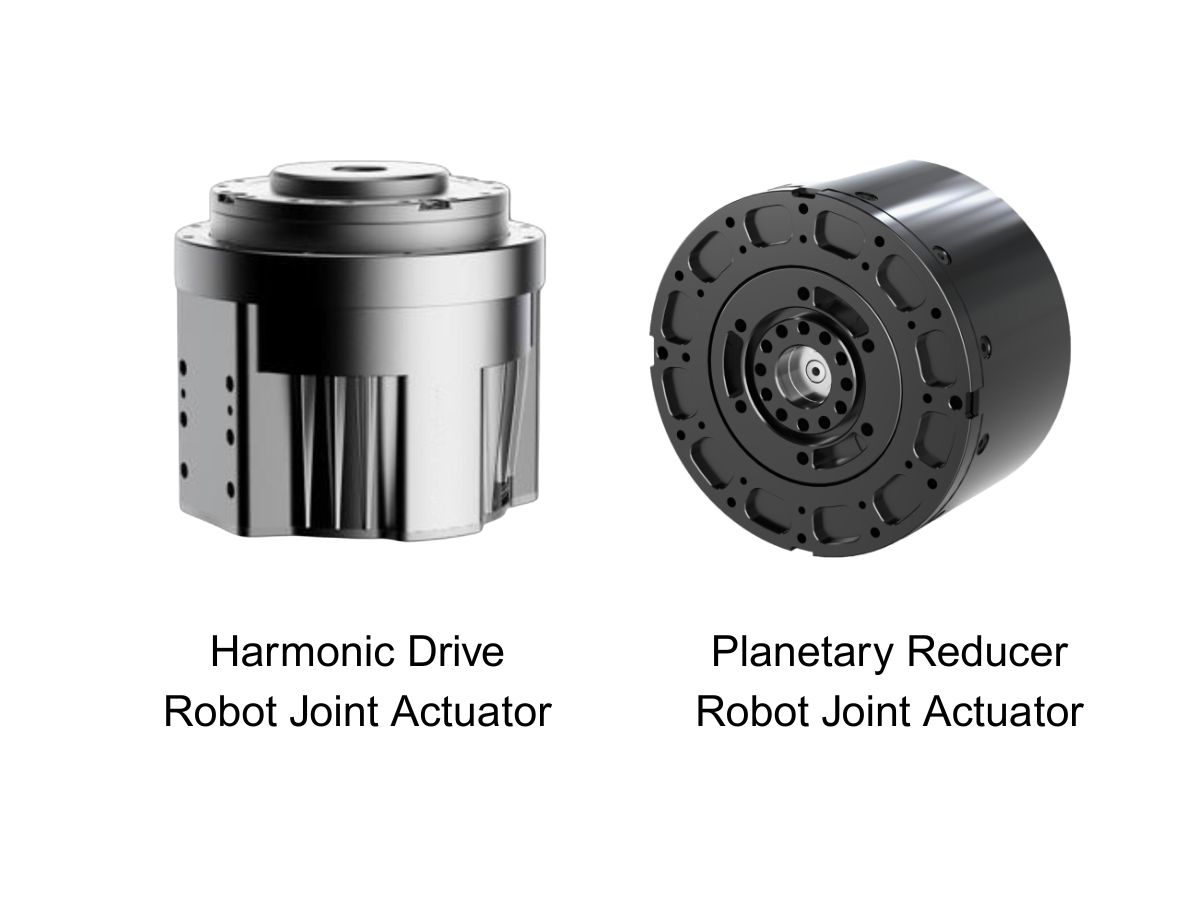
 What is robot joint actuator?How to Choose the Best Robot Rotary Joint Actuator?In core robot joint transmission solutions, planetary and harmonic rotary actuators each have their own strengths. Choosing the right type based on application requirements is essential to achieve the optimal balance between performance and cost.
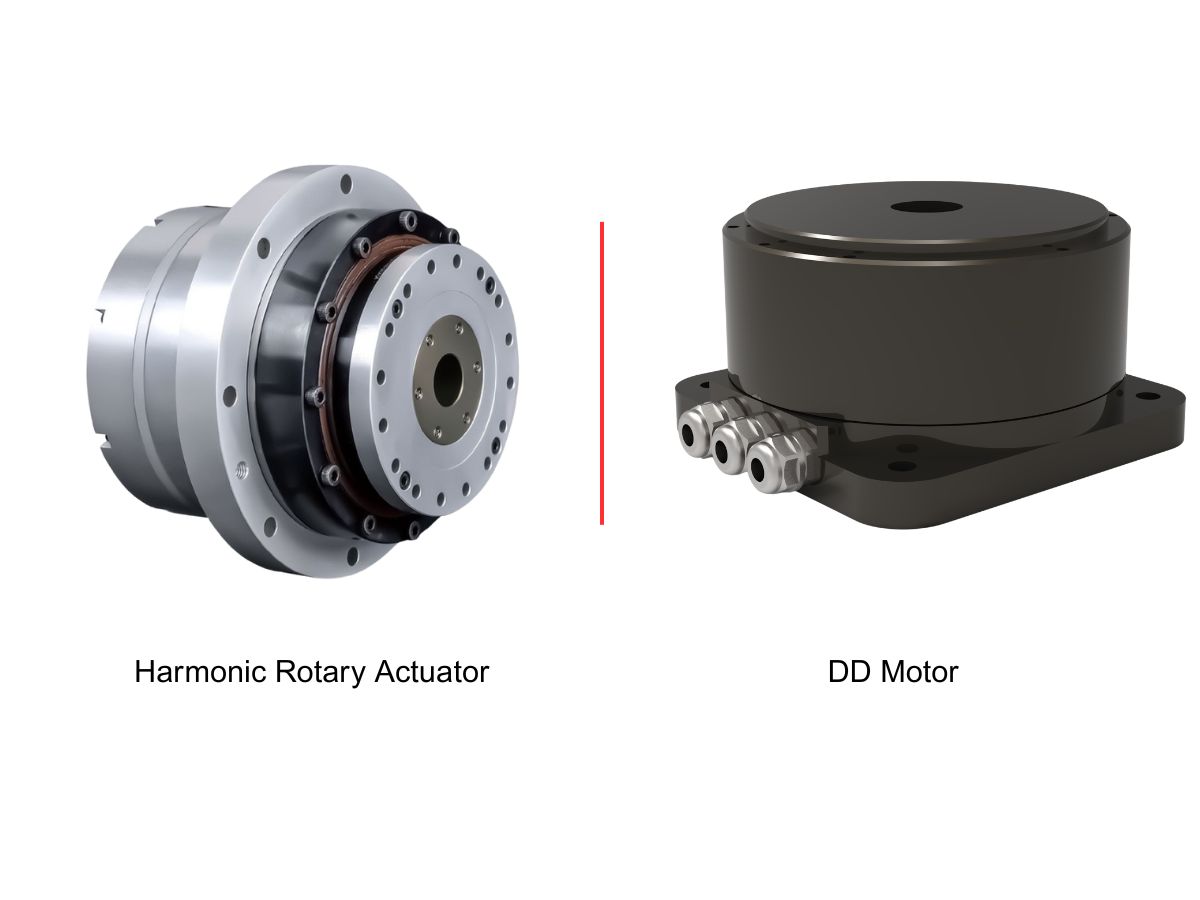
 DD Motors VS Harmonic Rotary ActuatorsThis article provides an in-depth comparison between Direct Drive (DD) motors and harmonic rotary actuators, covering their transmission principles, advantages and disadvantages, and typical application fields.
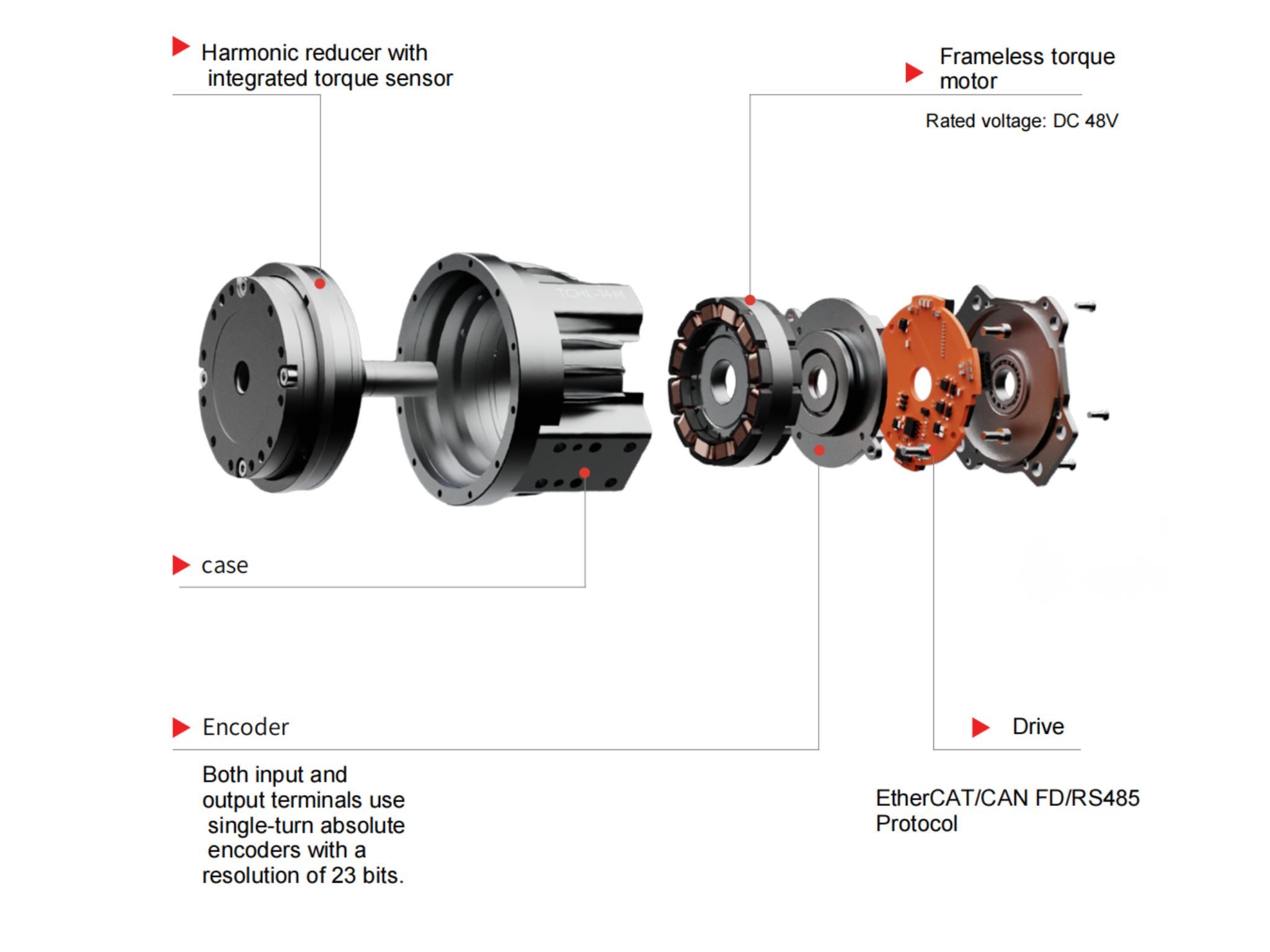
 OMG Ultra Compact Harmonic Drive Joint Module with Built-in Torque SensorHONPINE TCHL series harmonic drive joint module is a game-changing product that achieves disruptive improvements in multiple aspects such as lightweight design, integration level, and connection convenience. This article will analyze its revolutionary enhancements with you.
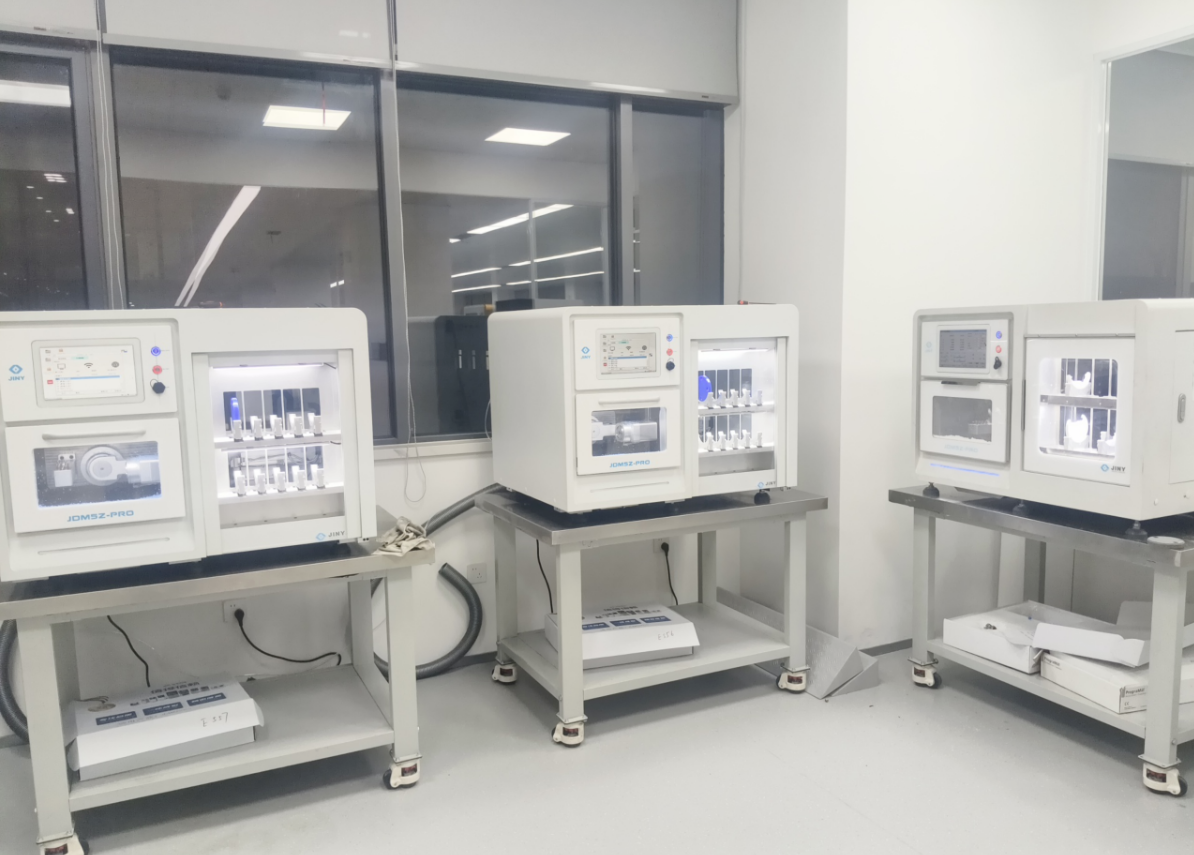
 The Role of Harmonic Drive Gears in Achieving 5–10 μm Accuracy in Dental Milling MachinesA dental milling machine is a CNC machining system used to directly process digital dental models into restorations such as crowns, bridges, veneers, inlays, and implant abutments. Dental milling machines require far higher operational accuracy and motion stability than ordinary equipment. This article explains how harmonic drive gear help dental milling machines achieve stable, continuous, and controllable operation.
 Why Are Harmonic Rotary Actuators Perfect for Medical Equipment?Harmonic rotary actuators (typically integrated systems consisting of a harmonic drive reducer, frameless torque motor, encoder, and optional brake) are regarded as key components in medical equipment. The core reason is that they simultaneously meet the most stringent medical requirements for precision, compact size, safety, and controllability. The following explanation is structured from three perspectives: technical characteristics, application scenarios, and medical value.
 High-Precision RV Reducers Perfectly Matched for Walking RobotsThe walking axis of a robot is a core component for power transmission and support. RV reducers provide extremely high rigidity, precision, and torque while maintaining a compact size and exceptional reliability, making them an ideal match for the demanding requirements of walking robot joints in terms of load capacity, impact resistance, and precision.
 Sumitomo Heavy Industries Reports ¥55 Billion Operating Profit as Robot Gear Business ReboundsSumitomo Heavy Industries reports ¥55 billion in operating profit as robot gear demand rebounds. Explore what the results mean for CNC and robotics suppliers.
 Harmonic Rotary Actuator for Medical Equipment: ≤10 Arcsec Repeatability and High Overturning StiffnessMedical equipment demands exceptional precision, structural stability, and operational safety from its motion transmission systems. From surgical robots and CT imaging systems to rehabilitation equipment, actuators must deliver consistent positioning accuracy while supporting complex mechanical loads. How can manufacturers achieve both high repeatability and structural rigidity in medical applications? HONPINE harmonic rotary actuators offer repeatability of up to ≤10 arcsec, zero-backlash transmission, high overturning stiffness, and hollow-shaft configurations, providing reliable motion control solutions for next-generation medical equipment.
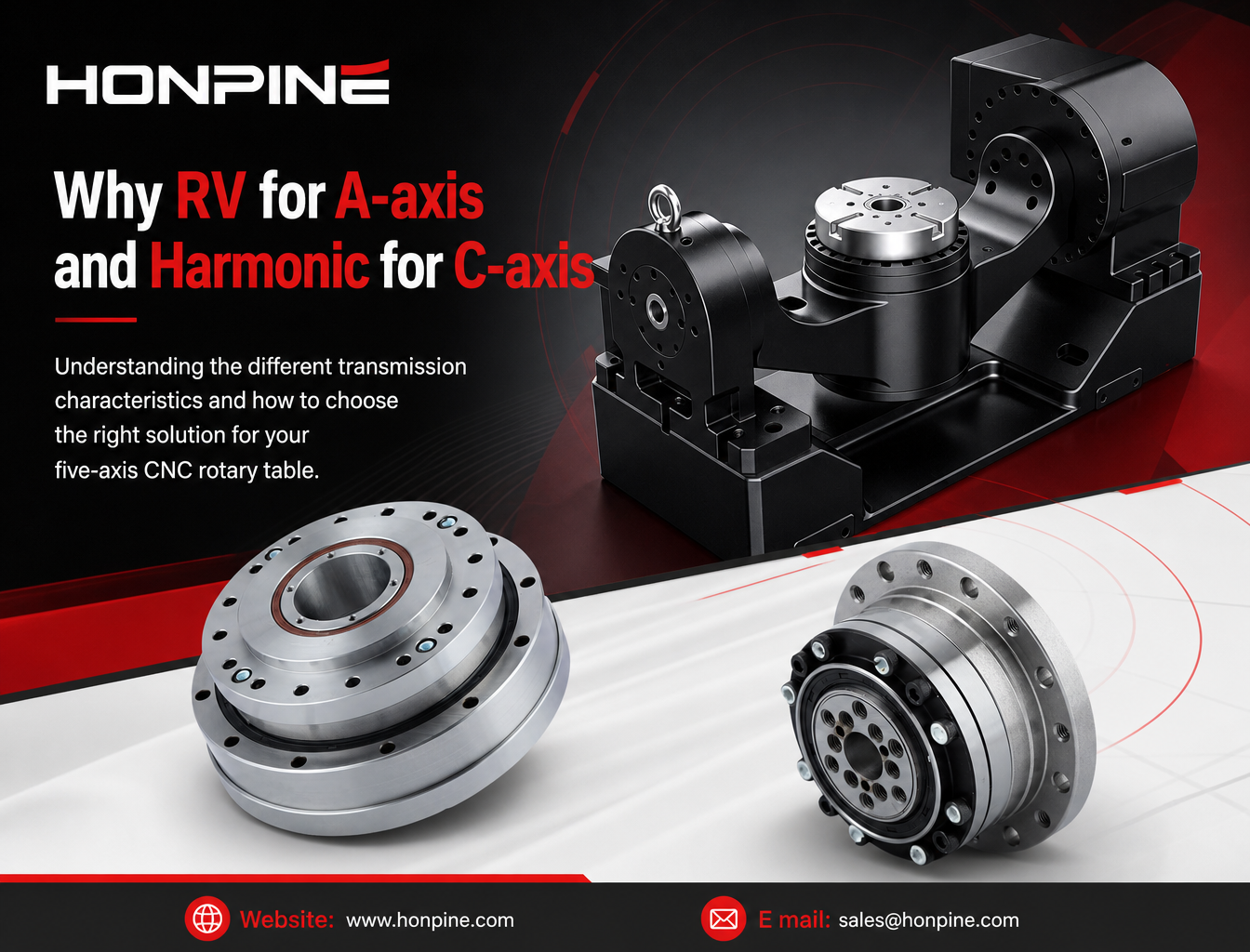
 Why Do Five-Axis CNC Rotary Tables Use Different Reducers for the A-Axis and C-Axis?Five-axis CNC rotary tables require different transmission characteristics for the A-axis and C-axis. While the A-axis often needs high torsional stiffness and load-bearing capacity to support the cradle assembly and workpiece, the C-axis places greater emphasis on low backlash, angular positioning accuracy, and dynamic response. This article explains why RV reducers are often considered for A-axis applications and harmonic reducers for C-axis applications, covering their working principles, mechanical advantages, output-side feedback, and key selection criteria for CNC machine tool manufacturers.
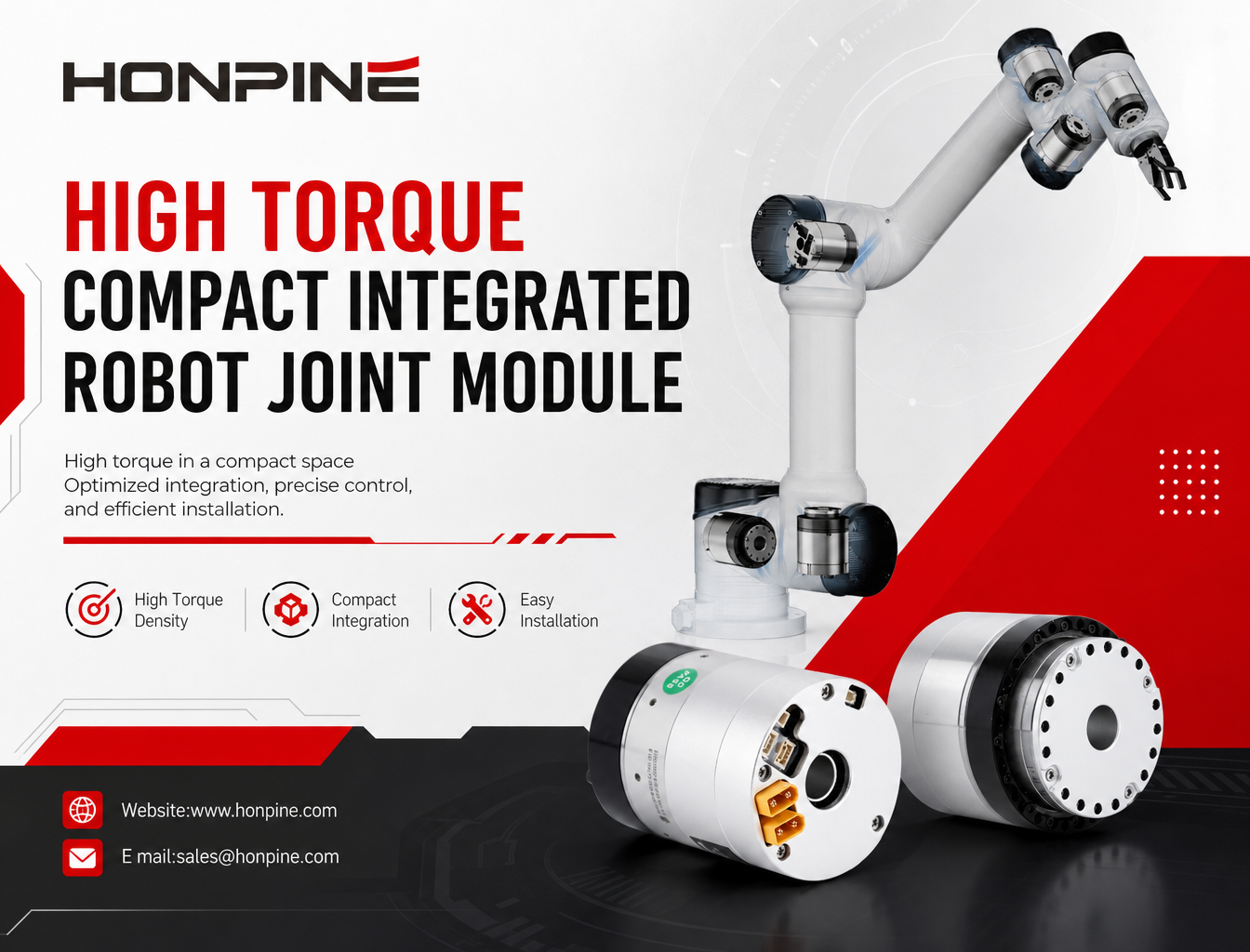
 How Does the HONPINE HPJM Integrated Robot Joint Module Deliver High Torque in a Compact Space?Learn how to optimize installation space while achieving high torque density in robotic joints. This article explores how the HONPINE HPJM integrated robot joint module uses integrated components, hollow-shaft cable routing, compact electrical connectors, and optimized mechanical mounting structures to reduce unnecessary space in humanoid robots and robotic arms.
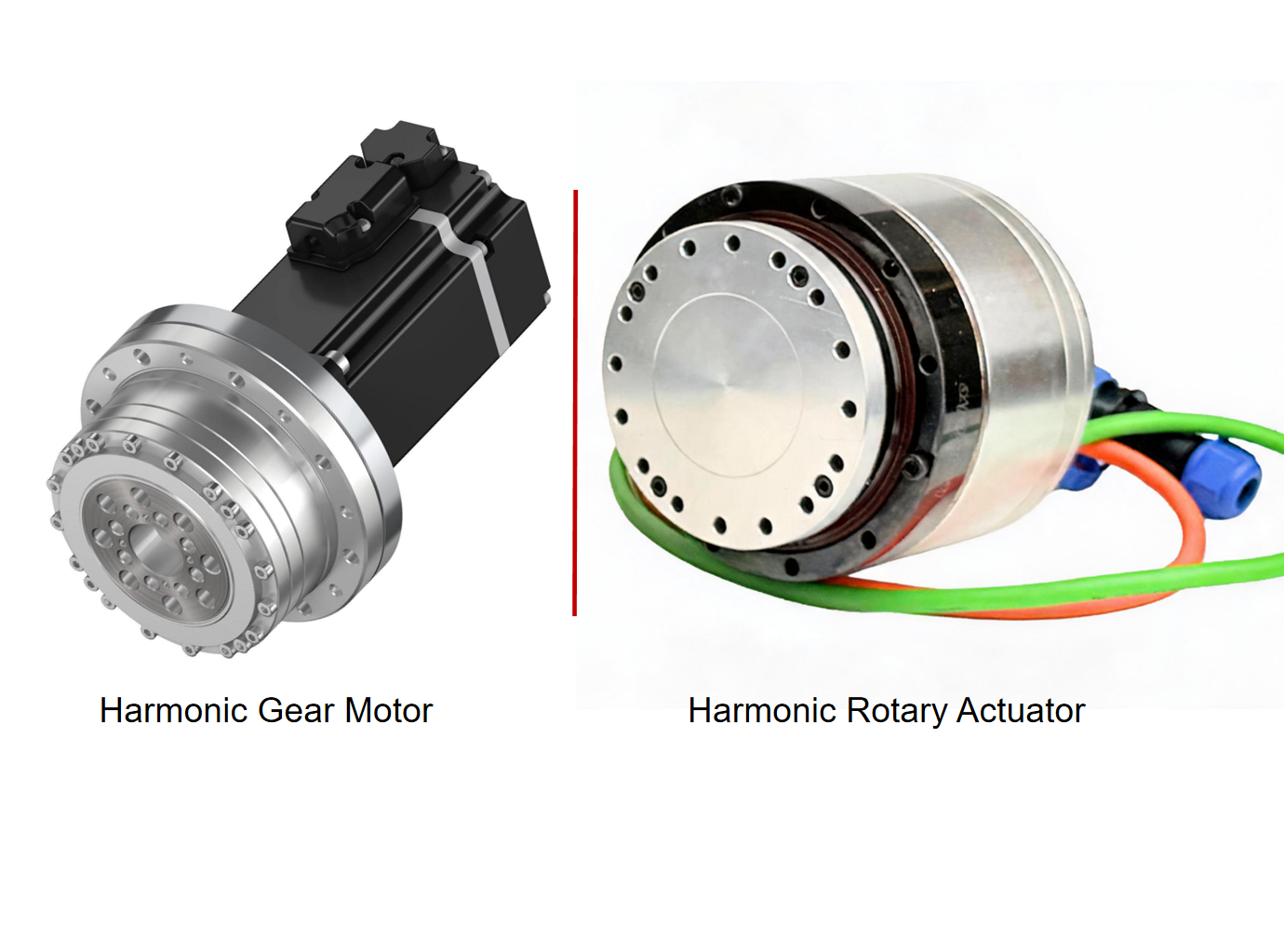
 Harmonic Gear Motor vs. Harmonic Actuator: What Are the Differences?This article explains the differences between harmonic gear motors and harmonic actuators from the perspectives of product design, system integration, feedback and control functions, installation, and application requirements. Since manufacturers may use these product names differently, it also explores how to evaluate their actual configurations and select the right precision motion solution for robotics and industrial automation.
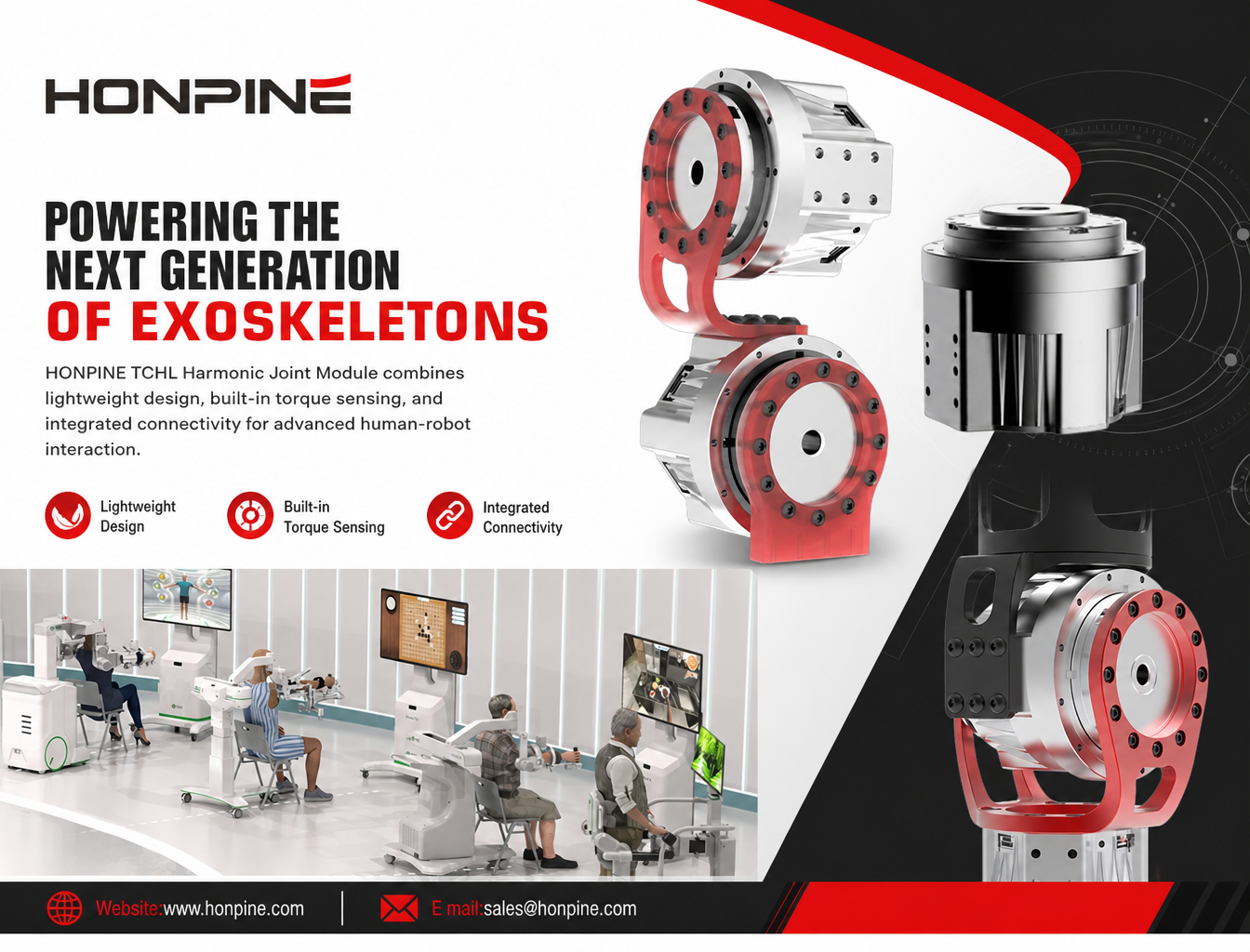
 Why Is the HONPINE TCHL Harmonic Joint Module Suitable for Exoskeleton Robots?The HONPINE TCHL Harmonic Joint Module is designed for exoskeleton robots that require lightweight construction, compact mechanical integration, and responsive human-robot interaction. Featuring a built-in output-side torque sensor, a highly integrated structure, and flexible connection configurations, the TCHL provides a joint drive solution for lower-limb exoskeletons, upper-limb assistive robots, rehabilitation equipment, and industrial wearable robots.
Double Click
We provide harmonic drive reducer,planetary reducer,robot joint motor,robot rotary actuators,RV gear reducer,robot end effector,dexterous robot hand
 The Role of Harmonic Drive Gears in Achieving 5–10 μm Accuracy in Dental Milling MachinesA dental milling machine is a CNC machining system used to directly process digital dental models into restorations such as crowns, bridges, veneers, inlays, and implant abutments. Dental milling machines require far higher operational accuracy and motion stability than ordinary equipment. This article explains how harmonic drive gear help dental milling machines achieve stable, continuous, and controllable operation.
 Why Are Harmonic Rotary Actuators Perfect for Medical Equipment?Harmonic rotary actuators (typically integrated systems consisting of a harmonic drive reducer, frameless torque motor, encoder, and optional brake) are regarded as key components in medical equipment. The core reason is that they simultaneously meet the most stringent medical requirements for precision, compact size, safety, and controllability. The following explanation is structured from three perspectives: technical characteristics, application scenarios, and medical value.
 High-Precision RV Reducers Perfectly Matched for Walking RobotsThe walking axis of a robot is a core component for power transmission and support. RV reducers provide extremely high rigidity, precision, and torque while maintaining a compact size and exceptional reliability, making them an ideal match for the demanding requirements of walking robot joints in terms of load capacity, impact resistance, and precision.
 Harmonic Rotary Actuator for Medical Equipment: ≤10 Arcsec Repeatability and High Overturning StiffnessMedical equipment demands exceptional precision, structural stability, and operational safety from its motion transmission systems. From surgical robots and CT imaging systems to rehabilitation equipment, actuators must deliver consistent positioning accuracy while supporting complex mechanical loads. How can manufacturers achieve both high repeatability and structural rigidity in medical applications? HONPINE harmonic rotary actuators offer repeatability of up to ≤10 arcsec, zero-backlash transmission, high overturning stiffness, and hollow-shaft configurations, providing reliable motion control solutions for next-generation medical equipment.
 Why Is the HONPINE TCHL Harmonic Joint Module Suitable for Exoskeleton Robots?The HONPINE TCHL Harmonic Joint Module is designed for exoskeleton robots that require lightweight construction, compact mechanical integration, and responsive human-robot interaction. Featuring a built-in output-side torque sensor, a highly integrated structure, and flexible connection configurations, the TCHL provides a joint drive solution for lower-limb exoskeletons, upper-limb assistive robots, rehabilitation equipment, and industrial wearable robots.
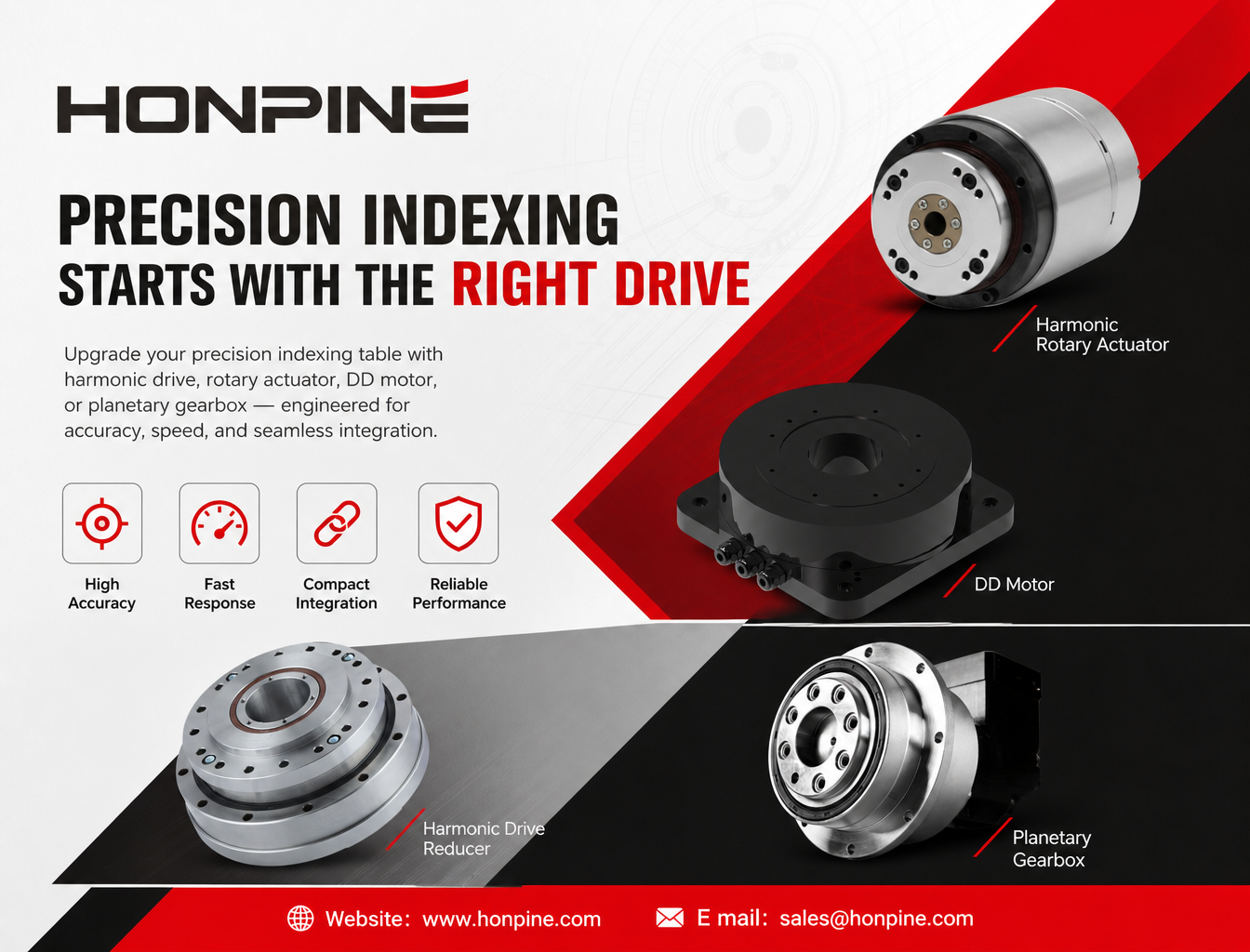
 How Can Precision Reducers, Harmonic Rotary Actuators, and Direct-Drive Motors Upgrade Precision Indexing Tables?How can manufacturers improve the accuracy, dynamic response, and integration of precision indexing tables? As flexible manufacturing continues to evolve, traditional transmission systems may face challenges such as backlash, long settling times, and complex mechanical integration. This article explores how harmonic drive reducers, harmonic rotary actuators, direct-drive (DD) torque motors, and planetary gearboxes provide practical upgrade solutions for different operating conditions. By matching the transmission architecture to positioning accuracy, indexing cycle time, load inertia, and installation constraints, manufacturers can develop more efficient and reliable precision indexing systems.
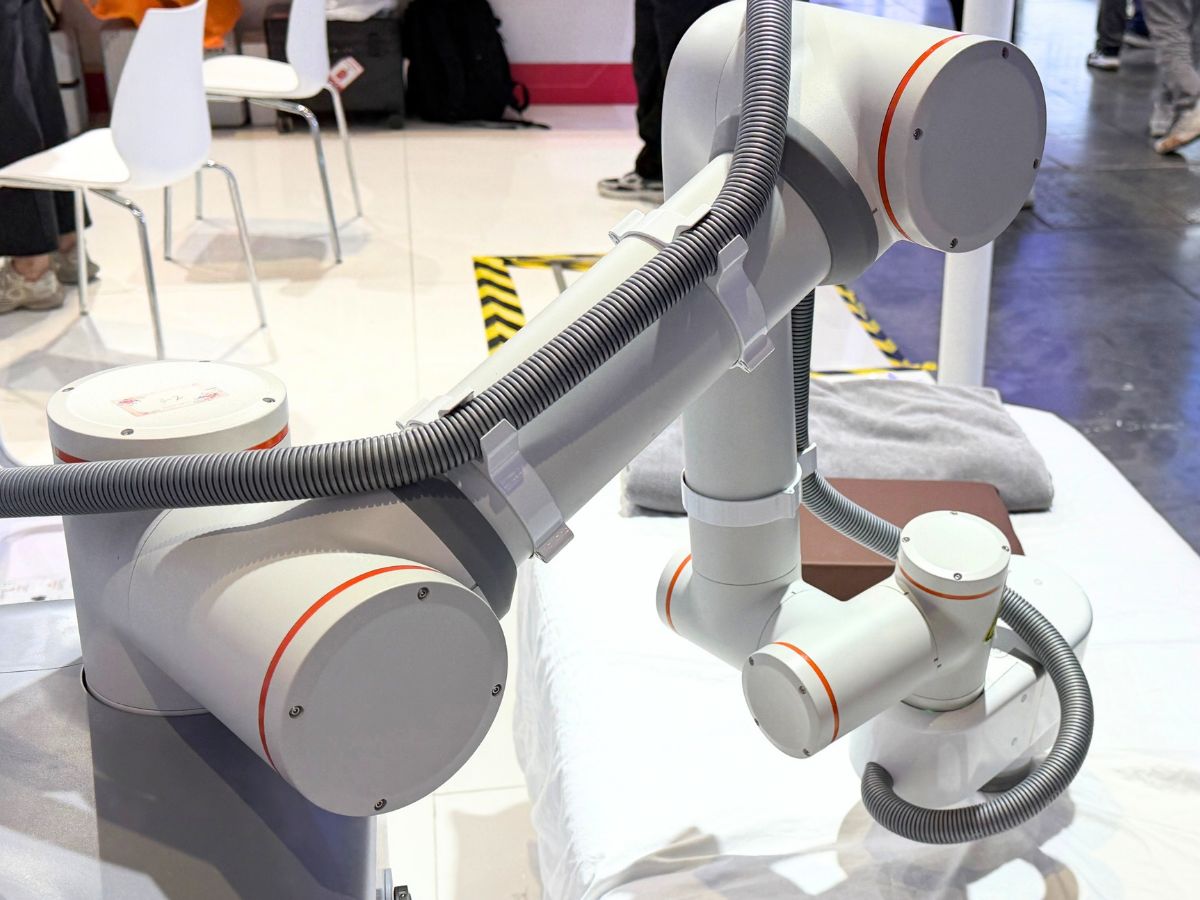
 Why Bedside Physical Therapy Robots Need Force-Controlled Joint Modules?A therapy robot does not sell a robot arm; it sells a force applied to a human body. Pressure, rhythm and depth are the prescription, and position control cannot deliver them: soft tissue is compliant and time-varying, so one position command yields contact forces that differ several-fold between muscle and bone. Force-controlled harmonic joint modules turn contact force into a closed-loop variable - the only way to make dose repeatable, human contact safe and a therapist's technique teachable. Starting from one site photo of a bedside therapy robot, this article reads the configuration, sets out five reasons force control is unavoidable, settles HONPINE's TCHL-versus-HAG choice criterion by criterion, and gives the torque sensor resolution budget that picks the frame sizes.
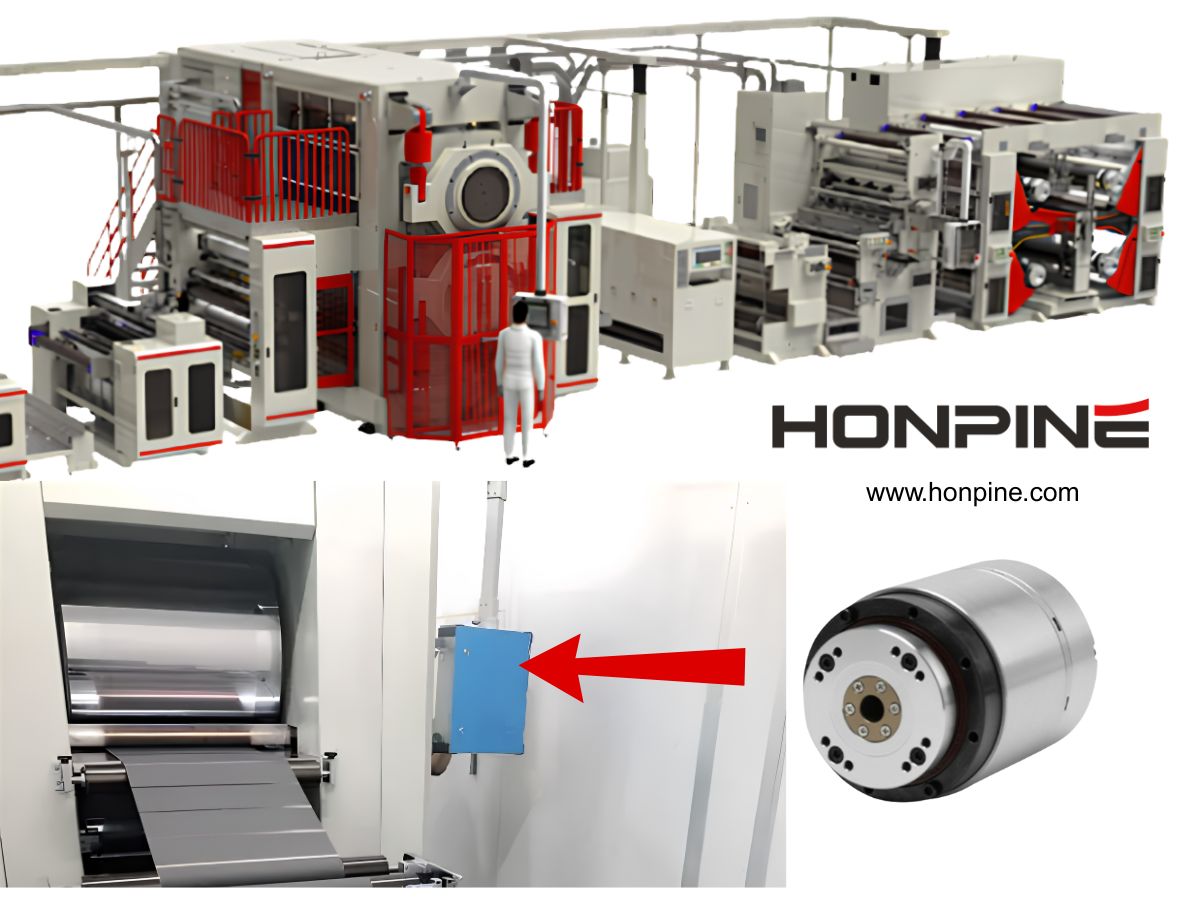
 Harmonic Rotary Actuator for Lithium Battery Roller Press EquipmentLithium battery manufacturing equipment requires higher precision, stability, and integration efficiency as production processes continue to evolve. In roller press equipment, accurate roller positioning, pressure control, and dynamic response are critical for ensuring electrode quality and consistency.
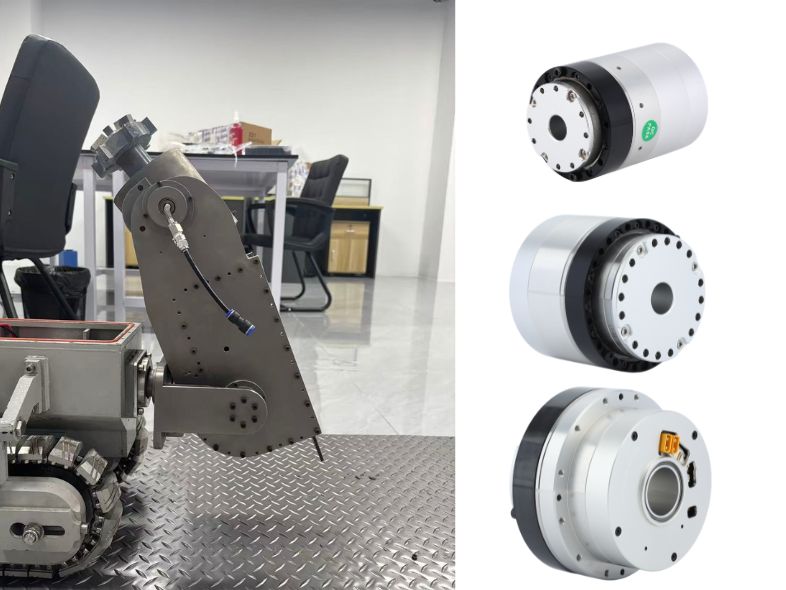
HONPINE harmonic rotary actuators provide high precision, high rigidity, fast response, and compact integration for lithium battery roller press equipment. With near-zero backlash, high torque density, and reliable motion control performance, they help improve equipment accuracy and production stability. Harmonic Robot Joint Actuators for Pipeline Robots and Other Special-Purpose EquipmentPipeline robots operate in narrow and complex environments where limited installation space, high load requirements, cable routing, and precise motion control are critical challenges. A reliable joint actuator must provide high torque output, compact dimensions, and stable performance while adapting to demanding operating conditions. Harmonic robot joint actuators integrate precision transmission, motor drive, and sensing capabilities into a compact motion unit, making them suitable for pipeline robots and other special-purpose robotic systems. This article explores the key design requirements of pipeline robots and explains how HONPINE HPJM harmonic robot joint modules help achieve compact, high-performance, and reliable robotic solutions.
 Harmonic Actuator for Lift Equipment: Precision, Torque Density and Compact Motion Control IntroductionModern lifting equipment requires more than simply moving a load vertically. Robotic lift axes, AGV and AMR lift modules, semiconductor equipment, inspection platforms, and specialized winches increasingly demand high torque density, precise positioning, low backlash, high rigidity, and compact motion control. A harmonic actuator integrates a harmonic drive with a motor and, depending on the configuration, encoders, brakes, servo drives, and communication interfaces into a compact motion module. This article explores how harmonic actuators can be applied to different lifting systems and why their combination of precision, torque density, rigidity, and integration makes them suitable for automated lifting and positioning applications.
 Harmonic Rotary Actuators for Semiconductor Equipment: Precision Motion, Hollow-Shaft Design and FOC ControlHello everyone, I’m Theodore Li, Technical Director at HONPINE. In semiconductor manufacturing equipment, rotary motion is not simply about making a mechanism rotate. Limited installation space, cable and tube routing, low-speed stability, precise positioning and continuously adjustable motion profiles can all influence the performance of the machine. This is why harmonic rotary actuators are becoming an important motion solution for semiconductor equipment. In this article, I will discuss how harmonic transmission, FOC-based motor control, encoder feedback, large hollow-shaft design and flexible mechanical interfaces work together to meet practical semiconductor motion requirements, based on our experience with developing equipment, overhead transport, wafer handling, cleaning and crystal-growth applications.
 Miniature Harmonic Drive for Minimally Invasive Surgical RobotsMinimally invasive surgical robots require highly compact transmission systems that can deliver precise motion within extremely limited mechanical spaces. As robotic instruments become smaller and more dexterous, conventional transmission architectures can face challenges related to size, tendon elasticity, friction, hysteresis, and mechanical integration. A miniature harmonic drive offers one potential approach by providing high-ratio precision transmission, low backlash, and compact dimensions in a small mechanical envelope. In this article, I will explain why miniature harmonic transmission is relevant to surgical robotics, compare external tendon-driven and distal transmission architectures, and discuss the key engineering considerations behind HONPINE’s CSF-mini miniature harmonic reducer for compact robotic joints, flexible robotic instruments, and other precision mechanisms.