





Harmonic Rotary Actuator for CNC Rotary Axis: A Precision Solution for Engraving Machines
CNC engraving machines are no longer limited to flat or simple three-axis machining. As applications expand to cylindrical workpieces, curved surfaces, multi-sided components, and complex three-dimensional structures, rotary axes have become an important part of many CNC engraving systems.
A rotary axis allows the workpiece or tool to rotate during machining, making it possible to engrave around cylindrical surfaces, reach multiple faces without manual repositioning, and perform more complex multi-axis interpolation.
However, adding a rotary axis is not simply a matter of installing a motor. The rotary transmission must handle the workpiece inertia, cutting loads, positioning requirements, speed, and available installation space while maintaining stable motion throughout the machining process.
For 4-axis and 5-axis CNC engraving machines, a harmonic rotary actuator can provide a compact and highly precise drive solution for the rotary axis. By integrating the motor, harmonic transmission, encoder feedback, and supporting mechanical components into a compact assembly, it can simplify rotary-axis design while providing the positioning performance required for precision engraving.
Why CNC Engraving Machines Need a High-Precision Rotary Axis?
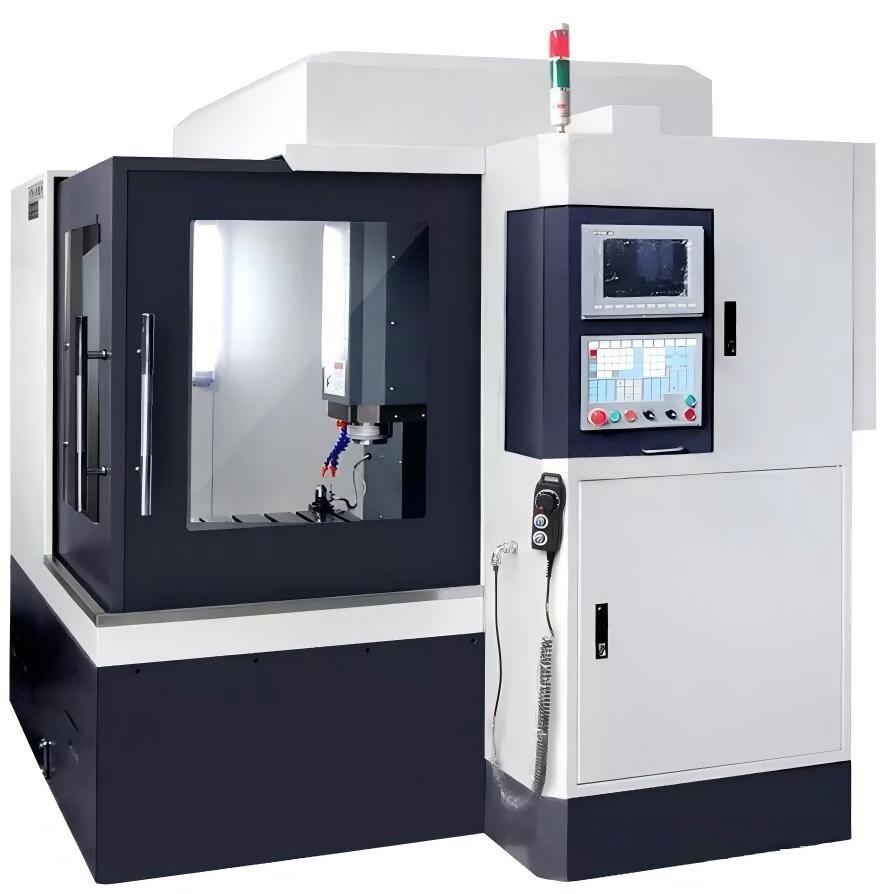
A conventional 3-axis CNC engraving machine controls movement along the X, Y, and Z axes. This configuration works well for flat surfaces and many standard three-dimensional machining operations.
The limitation appears when the workpiece has a cylindrical, curved, or multi-sided geometry.
A rotary axis introduces an additional rotational degree of freedom, allowing the workpiece or tool to rotate during machining.
This is particularly useful when machining:
Cylindrical workpieces
Round bars and tubes
Curved surfaces
Multi-sided components
Decorative patterns around a workpiece
Complex three-dimensional surfaces
Parts requiring machining from several directions
For these applications, the rotary axis directly influences the final machining result.
If the axis has excessive backlash, insufficient rigidity, poor repeatability, or unstable rotation, errors can accumulate during interpolation between the rotary and linear axes.
The result may appear as inaccurate contours, uneven engraving depth, visible transition marks, or reduced surface quality.
Therefore, the rotary axis should be considered as part of the overall machining system rather than simply as an additional motorized axis.
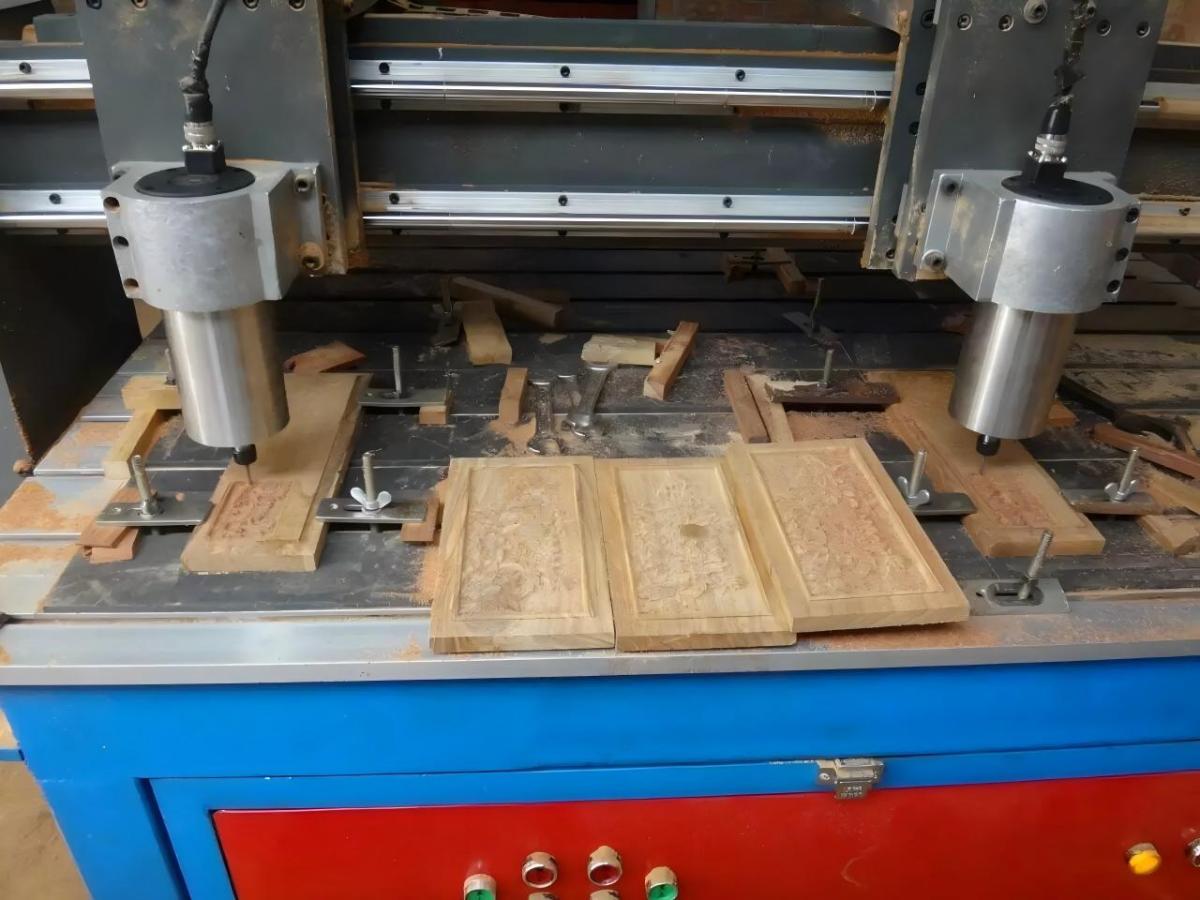
Where Rotary Axes Are Used in CNC Engraving Machines?
The requirements of a rotary axis vary according to the machine configuration and workpiece geometry. In practice, 4-axis and 5-axis CNC engraving machines represent two important application categories.
4-Axis CNC Engraving
In a typical 4-axis CNC engraving machine, the additional rotary axis is commonly used to rotate the workpiece around a horizontal axis.
This configuration is particularly useful for cylindrical or elongated workpieces.
Instead of machining one surface and manually repositioning the part, the rotary axis can continuously rotate the workpiece while the cutting tool moves along the required linear path.
Typical applications include cylindrical engraving, round metal components, wooden columns, tubes and pipes, cylindrical molds, and decorative components.
For this type of machine, the rotary drive needs to provide accurate angular positioning while maintaining stable torque during continuous rotation.
A compact harmonic rotary actuator can be integrated directly into the rotary-axis mechanism, reducing the amount of mechanical transmission required between the servo motor and the output shaft.
5-Axis CNC Engraving
5-axis engraving machines add another rotational or tilting axis to provide greater freedom of tool or workpiece orientation.
This configuration is useful when the machining surface is highly curved or when the tool needs to approach the workpiece from different directions.
The rotary and tilting axes must work together with the X, Y, and Z linear axes. As a result, errors in the rotary mechanism can become more noticeable during simultaneous multi-axis interpolation.
For these machines, the rotary-axis drive needs to balance angular positioning accuracy, repeatability, torsional rigidity, rotational smoothness, response to control commands, and compact mechanical integration.
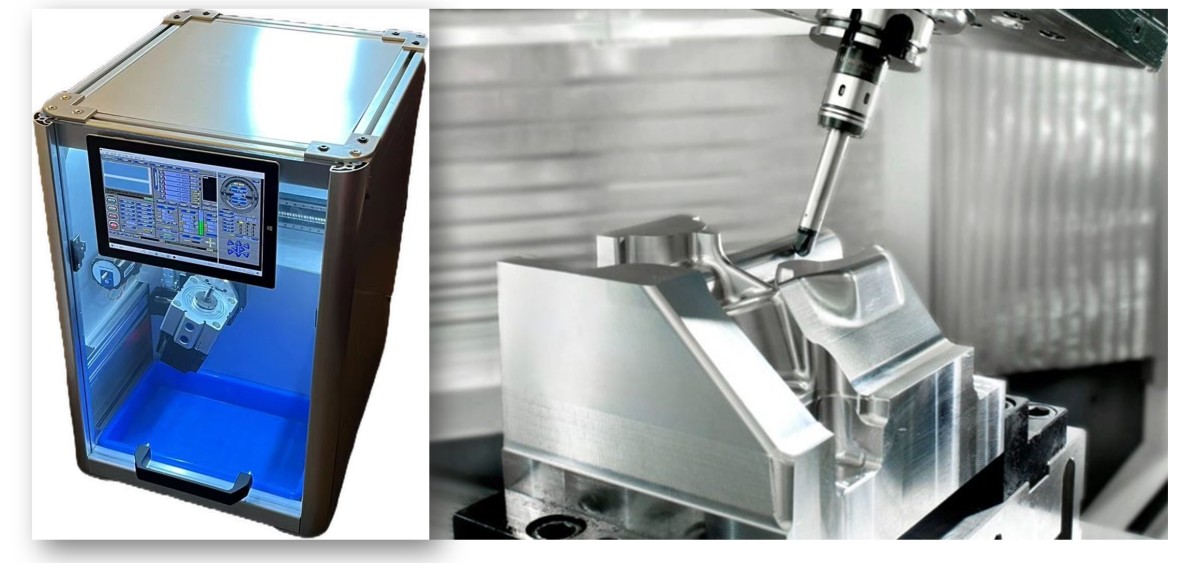
Rotary Tables for CNC Engraving
A rotary table is another common configuration.
Instead of directly rotating a small spindle or tool, the rotary table rotates the workpiece.
This allows the machine to perform indexing, continuous rotation, or multi-sided machining without removing the workpiece from the fixture.
For rotary-table applications, the drive system needs to consider not only the required torque but also the combined inertia of the table, fixture, and workpiece.
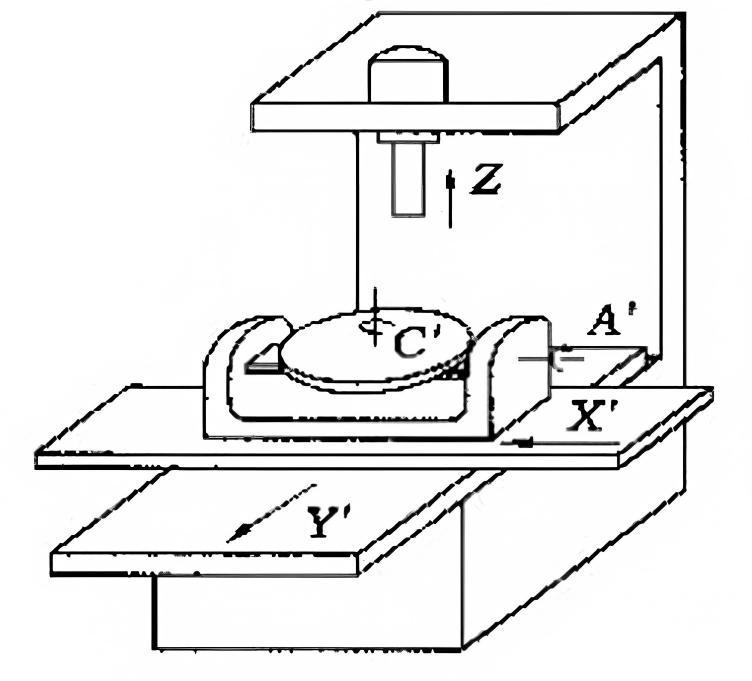
Engraving Cylindrical and Complex-Shaped Workpieces
Cylindrical engraving is one of the clearest examples of where a rotary axis adds value.
The rotary axis continuously changes the angular position of the workpiece while the linear axes control the tool path.
For more complex geometries, the machine controller may coordinate several axes simultaneously.
In these applications, rotary-axis smoothness and positioning accuracy become increasingly important because even small angular errors can affect the relationship between the tool and the workpiece surface.
What Should Be Considered When Designing a CNC Engraving Rotary Axis?
There is no single rotary-axis configuration that is suitable for every CNC engraving machine.
The correct drive should be selected according to the workpiece, machining process, machine structure, and motion requirements.
Workpiece Weight and Inertia
The weight of the workpiece is only one part of the calculation.
Its position relative to the rotational center also affects the required torque.
A workpiece with a large diameter or a center of gravity far from the rotational axis can have significantly higher rotational inertia than a compact workpiece with the same mass.
For this reason, rotary-axis sizing should consider workpiece mass, fixture mass, rotary table mass, center of gravity, rotational inertia, and acceleration and deceleration requirements.
Required Rotary Speed
Different engraving processes require different rotary speeds.
A rotary axis used for indexing may operate very differently from one used for continuous cylindrical engraving.
The required speed should therefore be considered together with workpiece diameter, cutting speed, tool diameter, machining material, interpolation requirements, and acceleration.
Positioning Accuracy and Repeatability
When the rotary axis is used for indexing or multi-axis interpolation, angular positioning accuracy becomes critical.
The machine may need to move to a specific angular position and repeatedly return to that position during production.
For continuous machining, the relationship between the rotary position and the linear tool path must also remain stable.
Rigidity Under Cutting Loads
A CNC engraving rotary axis does not operate under purely static conditions.
Cutting forces can introduce torque fluctuations and vibration into the transmission system.
If the rotary mechanism is not sufficiently rigid, these forces may result in angular deflection, vibration, tool-path deviation, and reduced repeatability.
For precision engraving, the actuator and supporting mechanical structure should therefore be considered together.
Installation Space and Cable Routing
The available installation space is another important factor.
Compact CNC machines often have limited space around the rotary axis, while 5-axis systems may require cables, pneumatic lines, or other components to pass through or around the rotational structure.
A hollow rotary actuator can simplify this type of mechanical integration by providing a central passage for cables or other components.
How Harmonic Rotary Actuators Fit into CNC Engraving Rotary Axis Design?
For CNC engraving applications where compact dimensions, precise angular positioning, and low backlash are important, a harmonic rotary actuator can provide an integrated drive solution.
Rather than designing the rotary axis around separate transmission components, motor, encoder, and supporting mechanisms, an integrated actuator combines key motion components into one assembly.
A typical configuration can be represented as:
Servo Motor → Harmonic Transmission → Rotary Output → Workpiece
with encoder feedback used to monitor the motion and support closed-loop control.
This approach can simplify the mechanical design of the rotary axis and reduce the number of components that need to be individually aligned.
For machine builders, the main value is not simply the harmonic transmission itself. It is the ability to integrate a precision rotary drive into the machine architecture while maintaining the required torque, accuracy, and compactness.
Harmonic Rotary Actuator Solutions for Different CNC Engraving Applications
Different engraving machines place different demands on their rotary axes. The actuator should therefore be selected according to the actual operating conditions rather than simply choosing the largest available model.
For 4-Axis CNC Engraving Machines
A 4-axis engraving machine typically requires continuous or indexed rotation around an additional axis.
A harmonic rotary actuator can be used as the drive mechanism for this rotary axis when the application requires precise angular positioning, low backlash, compact integration, stable continuous rotation, and high torque density.
For 5-Axis CNC Engraving Machines
5-axis machines generally place higher demands on the rotary mechanism because multiple axes may move simultaneously.
The rotary and tilting axes must respond accurately to commands from the CNC controller while maintaining synchronization with the linear axes.
For these applications, an integrated harmonic rotary actuator can help reduce the size and complexity of the rotary-axis transmission.
Where cable routing or mechanical integration through the rotation center is required, a hollow rotary actuator can offer an additional structural advantage.
For Heavy-Duty CNC Engraving
Heavy workpieces and large rotary tables require a different approach.
The required torque can increase substantially with workpiece inertia, especially when the center of gravity is far from the rotational axis.
In such cases, the machine designer should evaluate continuous torque, peak torque, output bearing capacity, torsional rigidity, acceleration requirements, duty cycle, and thermal performance.
For higher-load applications, a precision planetary rotary actuator or other high-rigidity transmission solution may be more appropriate depending on the machine architecture.
How Rotary Axis Performance Affects CNC Engraving Quality?
The quality of the rotary axis can directly influence the quality of the finished workpiece.
Backlash and Contouring Accuracy
When the rotary axis changes direction, mechanical backlash can create a difference between commanded and actual angular position.
This becomes particularly important when machining contours that require frequent changes in rotational direction.
Low-backlash transmission helps maintain a more predictable relationship between the CNC command and the actual rotary position.
Rigidity and Cutting Stability
A rigid rotary axis can better resist torque generated during machining.
If the axis deflects under cutting forces, the tool position relative to the workpiece can change.
For precision engraving, this can contribute to dimensional errors and inconsistent surface quality.
Positioning Repeatability
For indexing applications, the rotary axis may repeatedly move between predefined angular positions.
High repeatability is particularly important when machining multiple faces of the same workpiece.
Rotational Smoothness
Continuous cylindrical engraving requires stable rotation rather than simply accurate positioning.
Torque fluctuations, mechanical vibration, or unstable servo control can affect the consistency of the tool path.
Encoder Feedback and Motion Control
Encoder feedback allows the control system to monitor the position of the rotary axis.
For multi-axis CNC applications, accurate feedback is important because the CNC controller needs reliable position information when coordinating the rotary axis with X, Y, and Z movements.
Choosing the Right Rotary Axis Solution for Your CNC Engraving Machine
The best rotary-axis solution depends on the machine's actual requirements.
Instead of selecting a drive solely according to motor power or reduction ratio, machine builders should evaluate the complete motion system.
CNC Engraving Requirement Key Rotary-Axis Consideration
For a machine builder, the selection process should therefore begin with the machining task rather than the actuator model.
First determine the workpiece inertia, required rotary speed, torque, positioning accuracy, duty cycle, and installation constraints. Then select the transmission and actuator configuration that can satisfy those requirements.
HONPINE Rotary Motion Solutions for CNC Engraving Machines
HONPINE provides precision rotary motion solutions that can be configured for CNC machine tools, rotary tables, 4-axis and 5-axis equipment, and other automated machining systems.
For CNC engraving applications, the solution can be selected according to the requirements of the rotary axis rather than applying one actuator to every machine.
Harmonic rotary actuators are suitable for applications where compact integration, precise positioning, low backlash, and high torque density are important.
Hollow harmonic rotary actuators can provide additional flexibility where cables, pneumatic lines, or other components need to pass through the center of the rotary axis.
For applications requiring higher load capacity or a different combination of speed, rigidity, and torque, precision planetary rotary actuators and other rotary transmission solutions can also be considered.
The final actuator selection should be based on the actual workpiece inertia, required torque, rotary speed, positioning requirements, duty cycle, and mechanical installation conditions.
Conclusion
For modern CNC engraving machines, the rotary axis plays a much more important role than simply providing an additional rotational movement.
In 4-axis machines, it enables continuous or indexed machining of cylindrical and multi-sided workpieces. In 5-axis systems, it becomes part of a coordinated multi-axis motion system for complex surfaces and more demanding machining paths.
As these applications become more precise, the rotary axis must provide not only sufficient torque, but also stable rotation, low backlash, high rigidity, accurate positioning, and reliable feedback.
A harmonic rotary actuator can provide an integrated solution for CNC rotary axes where these characteristics are important. When combined with the appropriate mechanical structure, encoder feedback, and CNC control system, it can help machine builders create compact and precise rotary-axis solutions for engraving and precision machining applications.
The right solution, however, always starts with the application: workpiece inertia, cutting load, rotary speed, accuracy, rigidity, and installation requirements should determine the rotary-axis configuration. HONPINE can support machine builders in selecting and configuring the appropriate rotary motion solution for their CNC engraving equipment.
Read More
Learn more about the story of HONPINE and industry trends related to precision transmission.
 What is robot joint actuator?How to Choose the Best Robot Rotary Joint Actuator?In core robot joint transmission solutions, planetary and harmonic rotary actuators each have their own strengths. Choosing the right type based on application requirements is essential to achieve the optimal balance between performance and cost.
 DD Motors VS Harmonic Rotary ActuatorsThis article provides an in-depth comparison between Direct Drive (DD) motors and harmonic rotary actuators, covering their transmission principles, advantages and disadvantages, and typical application fields.
 OMG Ultra Compact Harmonic Drive Joint Module with Built-in Torque SensorHONPINE TCHL series harmonic drive joint module is a game-changing product that achieves disruptive improvements in multiple aspects such as lightweight design, integration level, and connection convenience. This article will analyze its revolutionary enhancements with you.
 The Role of Harmonic Drive Gears in Achieving 5–10 μm Accuracy in Dental Milling MachinesA dental milling machine is a CNC machining system used to directly process digital dental models into restorations such as crowns, bridges, veneers, inlays, and implant abutments. Dental milling machines require far higher operational accuracy and motion stability than ordinary equipment. This article explains how harmonic drive gear help dental milling machines achieve stable, continuous, and controllable operation.
 Why Are Harmonic Rotary Actuators Perfect for Medical Equipment?Harmonic rotary actuators (typically integrated systems consisting of a harmonic drive reducer, frameless torque motor, encoder, and optional brake) are regarded as key components in medical equipment. The core reason is that they simultaneously meet the most stringent medical requirements for precision, compact size, safety, and controllability. The following explanation is structured from three perspectives: technical characteristics, application scenarios, and medical value.
 High-Precision RV Reducers Perfectly Matched for Walking RobotsThe walking axis of a robot is a core component for power transmission and support. RV reducers provide extremely high rigidity, precision, and torque while maintaining a compact size and exceptional reliability, making them an ideal match for the demanding requirements of walking robot joints in terms of load capacity, impact resistance, and precision.
 RV vs Harmonic Reducer: How to Choose the Right Gearbox for Robot Joints?RV vs harmonic reducer: which gearbox is right for your robot joint? The answer depends on torque, rigidity, accuracy, installation space and operating conditions. This guide compares their working principles and five key performance factors, then explains how to evaluate joint loads, reducer life, temperature and lubrication. Whether you are designing a robot base, shoulder, elbow or wrist, use these considerations to match the reducer to the requirements of each joint.
 How to Find a Reliable Robotic Joint Actuator Supplier?Choosing the right robotic joint actuator supplier is essential for reliable performance, smooth integration and long-term project success. Beyond product specifications, you need to understand a supplier’s technical expertise, production capacity and after-sales support. In this guide, Allen Li, Founder of HONPINE, explains how to assess these three factors when sourcing harmonic and planetary joint actuators for robotics and industrial automation.
 Harmonic Reducer vs. Harmonic Rotary Actuator: Which Is Better for CNC Machine Tools?Choosing between a harmonic reducer and a harmonic rotary actuator is an important decision in CNC machine tool design. Both solutions offer high-precision motion control, but they differ in integration, installation requirements, rigidity, and system flexibility. For CNC fourth-axis rotary tables and compact five-axis machining systems, selecting the right harmonic drive can significantly influence machine performance. In this article, HONPINE Technical Director Theodore Li compares harmonic reducers and harmonic rotary actuators to help engineers identify the most suitable solution for their CNC applications.
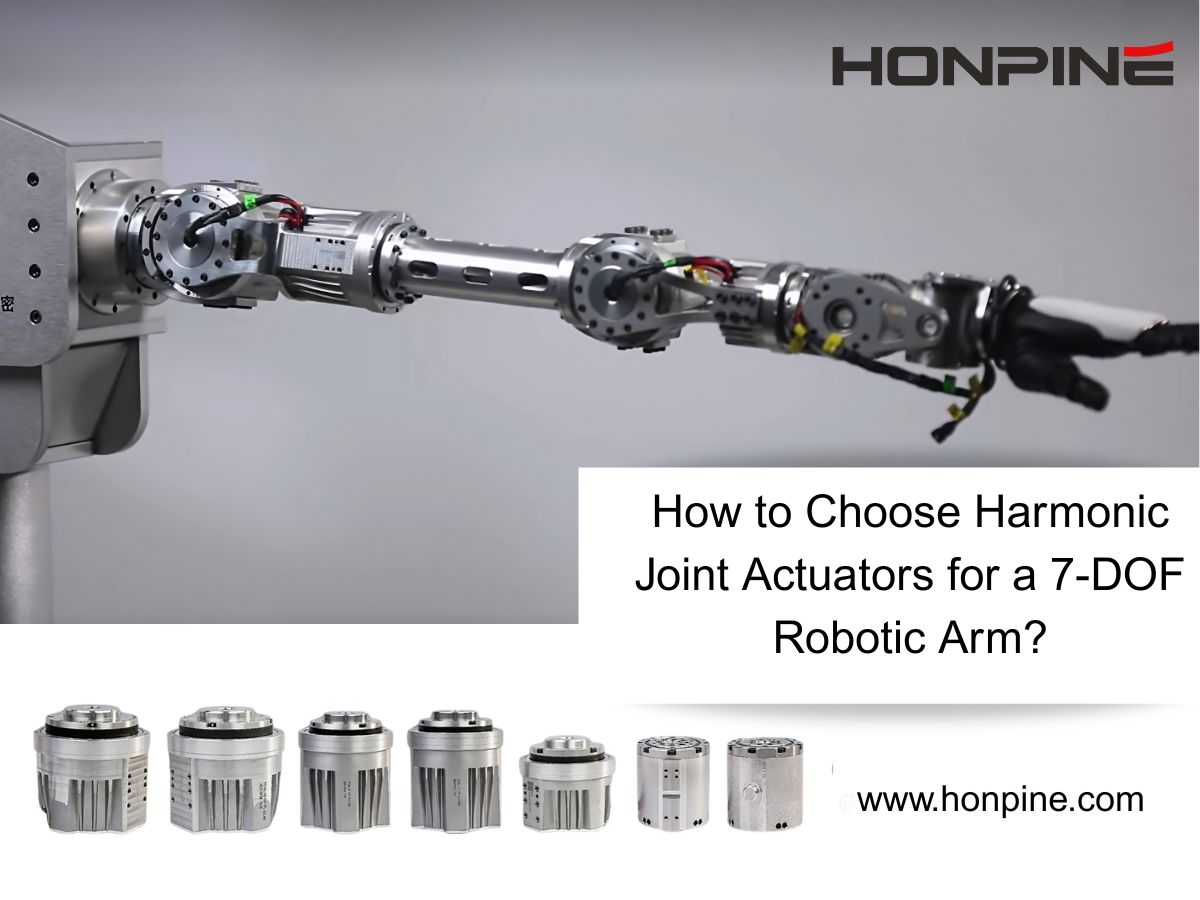
 How to Choose Harmonic Joint Actuators for a 7-DOF Robotic Arm?I'm Theodore Li, Technical Director at HONPINE. Choosing harmonic joint actuators for a 7-DOF robotic arm starts with the torque, weight, and installation needs of each joint. This guide uses a TCHL 20 shoulder and TCHL 14 wrist configuration as an example, then explores torque sensing, compliant control, and HAG Series considerations for demanding robotic applications.
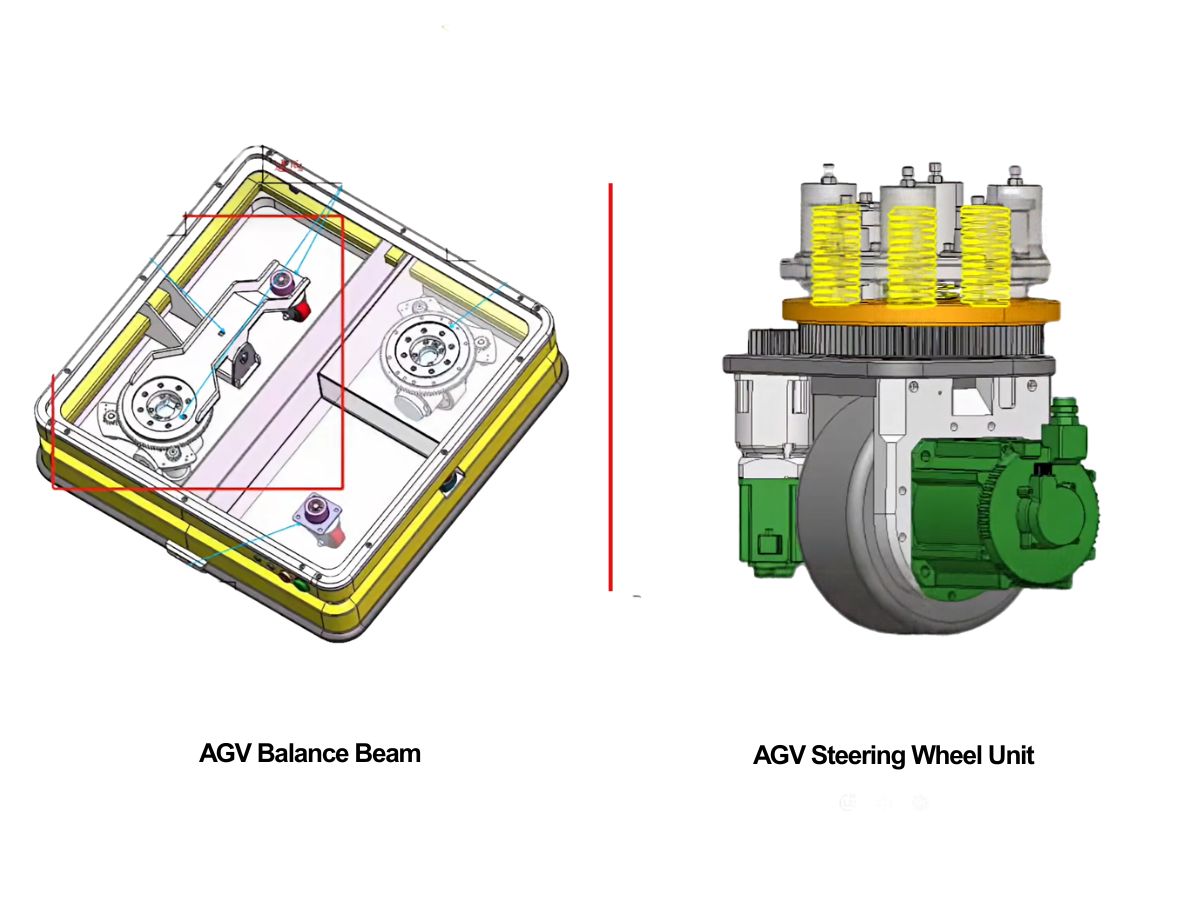
 AGV Suspension: Should You Choose a Balance Beam or a Spring-Loaded Steering Drive Unit?Choosing an AGV suspension system starts with the vehicle’s load range and floor conditions. Balance beams and spring-loaded steering drive units offer different approaches to maintaining wheel contact and managing wheel loads. This HONPINE guide compares both options and explains how to evaluate traction, suspension travel, installation space, and maintenance before choosing a configuration.
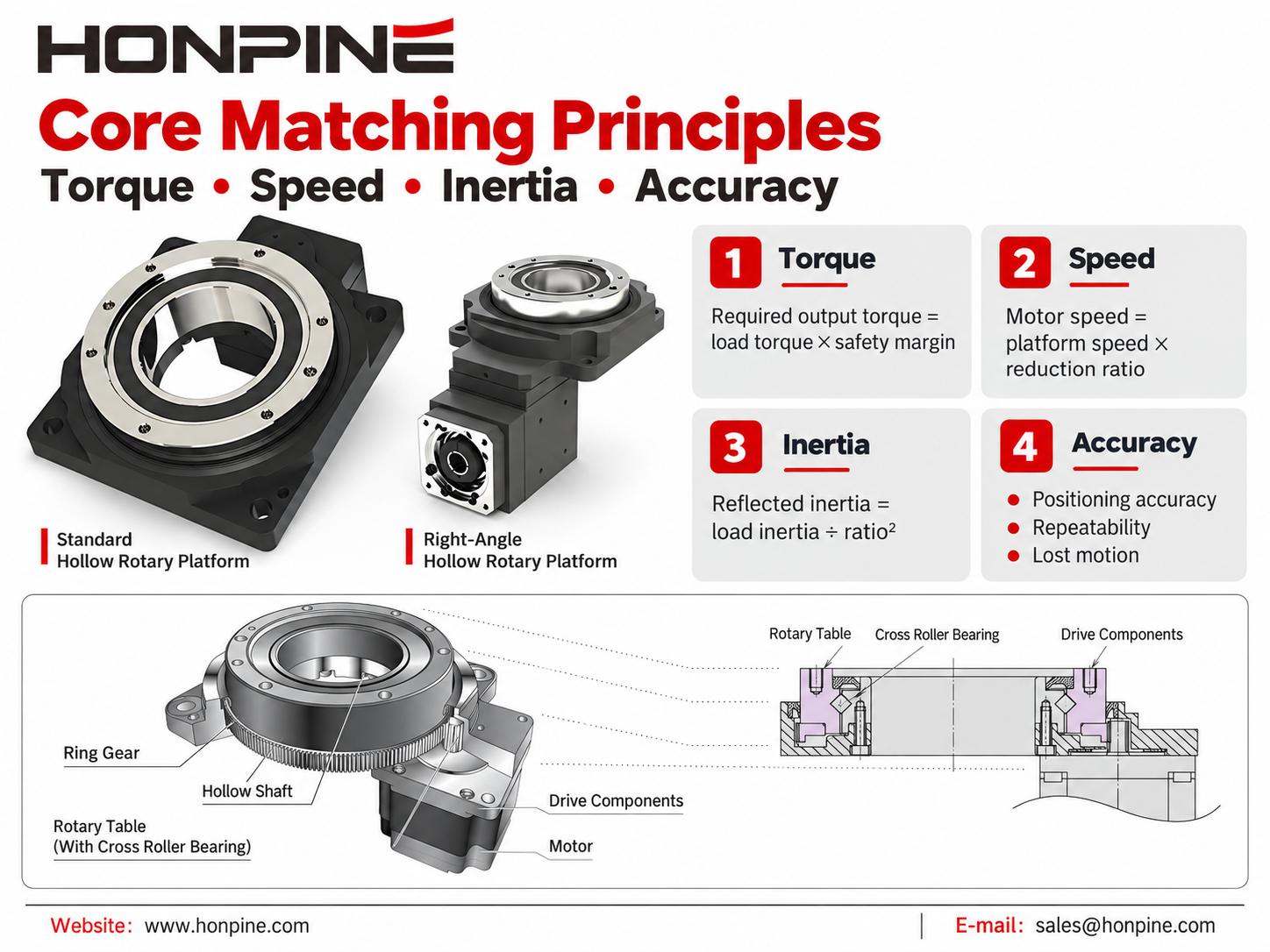
 Hollow Rotary Platform Motor Matching: A Complete GuideSelecting the right motor for a hollow rotary platform is essential for achieving precise positioning, stable operation, and efficient automation. This guide explains how to match servo motors, stepper motors, and brushless DC motors with hollow rotary platforms based on torque, speed, inertia, accuracy, and installation requirements. Explore practical motor selection guidelines, typical application combinations, and space-saving mounting solutions to find the right configuration for your automation project.
Double Click
We provide harmonic drive reducer,planetary reducer,robot joint motor,robot rotary actuators,RV gear reducer,robot end effector,dexterous robot hand
 The Role of Harmonic Drive Gears in Achieving 5–10 μm Accuracy in Dental Milling MachinesA dental milling machine is a CNC machining system used to directly process digital dental models into restorations such as crowns, bridges, veneers, inlays, and implant abutments. Dental milling machines require far higher operational accuracy and motion stability than ordinary equipment. This article explains how harmonic drive gear help dental milling machines achieve stable, continuous, and controllable operation.
 Why Are Harmonic Rotary Actuators Perfect for Medical Equipment?Harmonic rotary actuators (typically integrated systems consisting of a harmonic drive reducer, frameless torque motor, encoder, and optional brake) are regarded as key components in medical equipment. The core reason is that they simultaneously meet the most stringent medical requirements for precision, compact size, safety, and controllability. The following explanation is structured from three perspectives: technical characteristics, application scenarios, and medical value.
 High-Precision RV Reducers Perfectly Matched for Walking RobotsThe walking axis of a robot is a core component for power transmission and support. RV reducers provide extremely high rigidity, precision, and torque while maintaining a compact size and exceptional reliability, making them an ideal match for the demanding requirements of walking robot joints in terms of load capacity, impact resistance, and precision.
 Harmonic Rotary Actuator for Lithium Battery Roller Press EquipmentLithium battery manufacturing equipment requires higher precision, stability, and integration efficiency as production processes continue to evolve. In roller press equipment, accurate roller positioning, pressure control, and dynamic response are critical for ensuring electrode quality and consistency.
HONPINE harmonic rotary actuators provide high precision, high rigidity, fast response, and compact integration for lithium battery roller press equipment. With near-zero backlash, high torque density, and reliable motion control performance, they help improve equipment accuracy and production stability. Harmonic Robot Joint Actuators for Pipeline Robots and Other Special-Purpose EquipmentPipeline robots operate in narrow and complex environments where limited installation space, high load requirements, cable routing, and precise motion control are critical challenges. A reliable joint actuator must provide high torque output, compact dimensions, and stable performance while adapting to demanding operating conditions. Harmonic robot joint actuators integrate precision transmission, motor drive, and sensing capabilities into a compact motion unit, making them suitable for pipeline robots and other special-purpose robotic systems. This article explores the key design requirements of pipeline robots and explains how HONPINE HPJM harmonic robot joint modules help achieve compact, high-performance, and reliable robotic solutions.
 Harmonic Actuator for Lift Equipment: Precision, Torque Density and Compact Motion Control IntroductionModern lifting equipment requires more than simply moving a load vertically. Robotic lift axes, AGV and AMR lift modules, semiconductor equipment, inspection platforms, and specialized winches increasingly demand high torque density, precise positioning, low backlash, high rigidity, and compact motion control. A harmonic actuator integrates a harmonic drive with a motor and, depending on the configuration, encoders, brakes, servo drives, and communication interfaces into a compact motion module. This article explores how harmonic actuators can be applied to different lifting systems and why their combination of precision, torque density, rigidity, and integration makes them suitable for automated lifting and positioning applications.
 Harmonic Rotary Actuators for Semiconductor Equipment: Precision Motion, Hollow-Shaft Design and FOC ControlHello everyone, I’m Theodore Li, Technical Director at HONPINE. In semiconductor manufacturing equipment, rotary motion is not simply about making a mechanism rotate. Limited installation space, cable and tube routing, low-speed stability, precise positioning and continuously adjustable motion profiles can all influence the performance of the machine. This is why harmonic rotary actuators are becoming an important motion solution for semiconductor equipment. In this article, I will discuss how harmonic transmission, FOC-based motor control, encoder feedback, large hollow-shaft design and flexible mechanical interfaces work together to meet practical semiconductor motion requirements, based on our experience with developing equipment, overhead transport, wafer handling, cleaning and crystal-growth applications.
 Miniature Harmonic Drive for Minimally Invasive Surgical RobotsMinimally invasive surgical robots require highly compact transmission systems that can deliver precise motion within extremely limited mechanical spaces. As robotic instruments become smaller and more dexterous, conventional transmission architectures can face challenges related to size, tendon elasticity, friction, hysteresis, and mechanical integration. A miniature harmonic drive offers one potential approach by providing high-ratio precision transmission, low backlash, and compact dimensions in a small mechanical envelope. In this article, I will explain why miniature harmonic transmission is relevant to surgical robotics, compare external tendon-driven and distal transmission architectures, and discuss the key engineering considerations behind HONPINE’s CSF-mini miniature harmonic reducer for compact robotic joints, flexible robotic instruments, and other precision mechanisms.
 Why Laser Wobble Welding Systems Need a High-Precision Harmonic Rotary Actuator?Laser wobble welding is increasingly used in battery manufacturing, busbar welding, electronics, medical devices, robotic welding, and other precision manufacturing applications where beam movement must remain accurate and repeatable. In mechanical wobble welding systems, however, weld quality depends not only on laser parameters but also on the precision of the rotary motion mechanism driving the wobble head. Backlash, insufficient torsional rigidity, limited torque density, and positioning errors can directly affect the actual beam trajectory and molten pool stability. This is why a high-precision rotary motion solution is becoming an important part of modern laser wobble welding equipment. A Harmonic Rotary Actuator combines precision transmission, high rigidity, low backlash, and compact integration, making it well suited for mechanical wobble heads that require controlled rotary motion under dynamic loads.
 When Does Outboard Motor Steering Require a Harmonic Rotary Actuator?Electric outboard motor steering is evolving from a simple mechanical function into a precision motion-control application. This article explains when a Harmonic Rotary Actuator becomes a suitable solution and examines the role of precision transmission, low backlash, high torque density, encoder feedback, and compact mechanical integration. It also explores applications in electric boats, autonomous surface vessels, unmanned boats, marine robotics, and electric marine propulsion, helping engineers understand how to select the right rotary actuator according to steering torque, speed, positioning accuracy, operating conditions, and installation requirements.
 How to Choose the Right Robot Joint Actuator for Specialized Robotic Applications?Choosing the right robot joint actuator is no longer simply a matter of comparing torque specifications or selecting a motor and gearbox separately. As humanoid robots, collaborative robots, industrial robotic arms, medical robots, mobile manipulators, and specialized robotic systems become more diverse, robot manufacturers must balance torque, speed, precision, stiffness, weight, installation space, feedback, communication, and safety at the same time. This article explains how engineers can select the right harmonic joint actuator or robot joint motor by starting with the actual application problem and building a joint-level solution that matches the mechanical structure and control requirements of the complete robot.
 Harmonic Rotary Actuator for CNC Rotary Axis: A Precision Solution for Engraving MachinesDiscover how harmonic rotary actuators improve CNC rotary-axis performance for 4-axis and 5-axis engraving machines with precise positioning, low backlash, high rigidity and compact integration.