

In-Depth Analysis of Core RV Reducer Technologies: Cycloidal Profile Modification, Precision Manufacturing, and Long-Term Accuracy Retention
As one of the core transmission components in industrial robots, humanoid robots, and high-end automation equipment, the RV reducer plays a decisive role in motion accuracy, load capacity, and service life. As a professional manufacturer specializing in precision harmonic reducers, robot joint actuators, planetary gearboxes, and RV reducers, HONPINE (Suzhou Honpine Precision Industry Co., Ltd.) continuously focuses on the evolution of precision transmission technologies and is committed to delivering reliable, high-performance motion solutions for global automation industries.
This article explores three critical dimensions of RV reducer technology—cycloidal gear profile modification, precision manufacturing processes, and long-term accuracy retention—to provide engineers, OEMs, and automation professionals with valuable technical insights into one of the industry's most demanding engineering challenges.
1. Cycloidal Gear Profile Modification: The Core of RV Reducer Technology
The transmission principle of an RV reducer is based on the engagement between cycloidal gears and pin wheels. Although a standard cycloidal tooth profile theoretically provides conjugate meshing, practical operation requires carefully designed profile modification.
Without profile modification, tooth interference and seizure may occur. Proper modification creates the necessary backlash to accommodate lubricant film formation, thermal expansion, and elastic deformation during operation.
The profile modification strategy directly influences five critical performance indicators:
Backlash
Transmission accuracy
Load capacity
Noise level
Service life
Three Fundamental Profile Modification Strategies
Negative Equidistant + Negative Shift
Uniform backlash distribution
Excellent lubrication conditions
Suitable for high-speed, light-load applications
Negative Equidistant + Positive Shift
More uniform load distribution
Better suited for heavy-load applications
Positive Equidistant + Negative Shift
Superior backlash control
Ideal for high-precision positioning applications
While many manufacturers understand these three methods, the true challenge lies in selecting the optimal combination and parameter set for different operating conditions. This requires extensive experimental databases, accumulated engineering experience, and continuous optimization—forming one of the industry's most significant technical barriers.
Academic research also indicates that equidistant and shift modifications essentially introduce a crowned tooth profile. Appropriate crowning within an optimized range significantly improves both meshing performance and durability.
Recent multi-objective optimization studies further demonstrate that RV reducers designed for industrial robotics must simultaneously satisfy multiple objectives, including high transmission accuracy, high torque density, and excellent load-carrying capability.
Dynamic Compensation Under Variable Loads
Modern industrial and humanoid robots operate under highly dynamic conditions, making static profile modification insufficient.
Typical dynamic challenges include:
Startup torque spikes reaching 3–5 times the rated torque
Rapid elastic deformation under impact loading
Abrupt contact transitions during braking and reverse motion
Frequent acceleration and deceleration causing accelerated wear
Without dynamic compensation, transmission accuracy deteriorates rapidly.
Currently, many domestic RV reducer developments still rely heavily on reverse engineering and iterative trial-and-error optimization.
A true forward-design methodology requires an integrated engineering toolchain combining:
Multi-body dynamics (MBD)
Finite Element Analysis (FEA)
Thermo-mechanical coupling simulation
Contact mechanics analysis
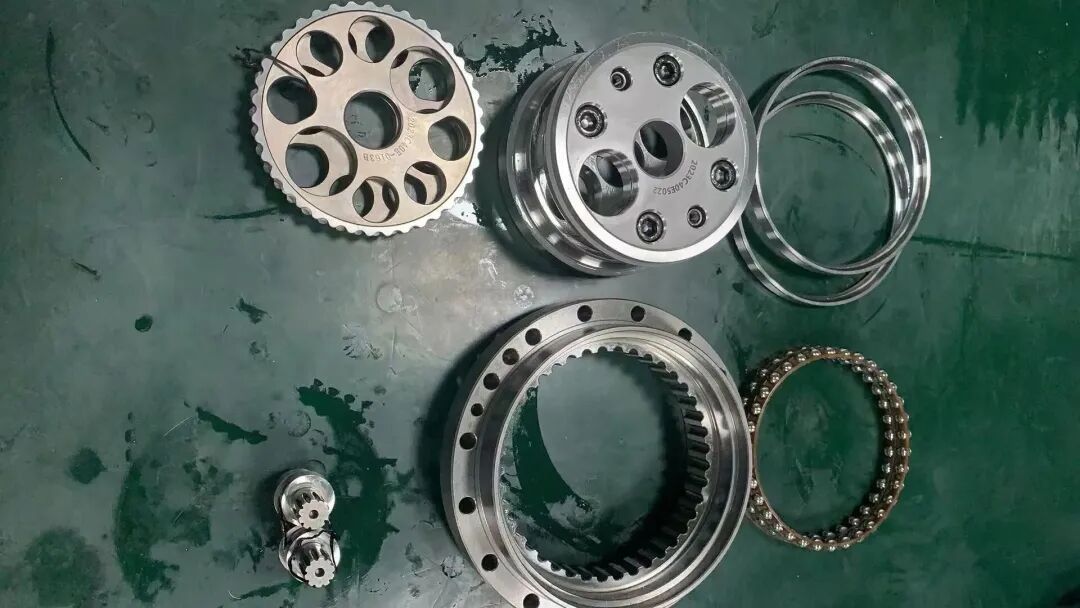
2. Precision Manufacturing of Cycloidal Gears: Where Microns Make the Difference
Form Grinding vs. Generating Grinding
Cycloidal gear grinding is primarily performed using two methods:
Form grinding
Generating grinding
One of the major limitations for high-precision RV manufacturing is machine capability.
Five-axis CNC cycloidal grinding machines remain a significant equipment barrier, with many high-end systems still relying on imported technologies. These machines require substantial investment and long procurement cycles.
Leading manufacturers have addressed these challenges through national research programs and intelligent manufacturing initiatives, enabling the development of precision grinding technologies for RV reducers covering payloads from 3 kg to over 1,000 kg.
Controlling Heat-Treatment Distortion
The manufacturing sequence of a cycloidal gear typically includes:
Carburizing
Quenching
Tempering
Precision grinding
During quenching, martensitic transformation causes significant volume expansion.
Uneven cooling can produce end-face distortion of 10–20 μm, creating a difficult manufacturing challenge.
Excessive grinding to remove distortion may reduce the effective carburized layer depth, negatively affecting fatigue strength and service life.
Achieving an optimal balance between dimensional accuracy and hardened layer integrity is therefore essential.
Micron-Level Matching of Cycloidal Gear Pairs
An RV reducer typically employs two cycloidal discs (A and B discs) positioned 180° apart.
The matching accuracy between these paired components directly determines:
Backlash
Torque ripple
Motion smoothness
Transmission precision
Typical matching requirements include:
Radial dimensional difference below 1 μm
Angular deviation around 5 arcseconds
For compact RV reducers, fully automated A/B disc matching remains an industry challenge because current automation systems struggle to simultaneously achieve micron-level measurement accuracy and ultra-precise adjustment.
This bottleneck also limits large-scale production efficiency.
3. Service Life and Long-Term Accuracy Retention: The Real Competitive Challenge
Initial Accuracy vs. Long-Term Precision
Many domestic RV reducers are capable of achieving approximately 1 arc-minute backlash when leaving the factory.
However, maintaining that accuracy over years of continuous operation remains considerably more difficult.
Industrial robot manufacturers increasingly evaluate reducers not only by initial precision but by how well that precision is preserved throughout the product lifecycle.
The gap is less about mechanical design and more about a complete engineering system involving:
Material fatigue resistance
Heat treatment consistency
Surface engineering
Lubrication technology
Contact Fatigue Strength
The contact fatigue strength of cycloidal gear teeth largely determines reducer lifespan.
Many domestic products use 20CrNiMoA carburized alloy steel, achieving approximately 80% of the contact fatigue strength of leading international products.
Industry-leading manufacturers typically employ:
Proprietary carburizing steels
Vacuum high-pressure gas quenching
Advanced surface strengthening technologies
Under identical loading conditions, lower fatigue resistance leads to earlier crack initiation and shorter operational life.
Emerging Surface Engineering Technologies
Several advanced technologies are showing promising results for future RV reducer development.
Nano-Composite Coatings
Multi-layer coatings such as TiAlN/AlCrN provide:
Higher hardness
Improved wear resistance
Better thermal stability
Lower friction coefficients
Reduced operating temperature
Laser Surface Texturing
Laser-generated micro-dimple arrays on gear surfaces serve as lubricant reservoirs, helping maintain oil film stability and reducing lubrication failure.
Although these technologies have demonstrated significant benefits in laboratory environments and pilot production, they have not yet been widely adopted in mass-produced domestic RV reducers.
Nevertheless, they represent an important future direction for improving durability and long-term accuracy.
4. Remaining Technical Challenges and Forward Engineering Capability
Current domestic RV reducer research primarily focuses on six major technical areas.
However, one of the industry's largest remaining research gaps involves multi-physics coupling among:
Actual pin-gear kinematics
Flash temperature
Elastohydrodynamic lubrication (EHL)
In practice, pin gears experience a complex combination of:
Sliding motion
Self-rotation
Orbital motion
rather than ideal pure rolling.
During meshing, localized flash temperatures may reach 100–200°C, directly influencing lubricant film thickness and friction behavior.
To accurately predict performance, future design methodologies must simultaneously model:
Lubricant film thickness
Surface roughness
Tooth profile modification
Contact pressure
Thermal effects
Forward Design as the Next Competitive Advantage
Leading RV reducer manufacturers are gradually transitioning from reverse engineering toward comprehensive forward design.
A systematic development framework integrates:
Fundamental mechanism research
Digital design
Precision manufacturing
Performance validation
Collaboration among manufacturers, universities, and research institutes has become increasingly important for advancing RV technology, establishing technical standards, and accelerating innovation.
Long-term competitiveness ultimately depends on sustained investment in R&D, manufacturing capability, and engineering expertise rather than isolated technological breakthroughs.
Conclusion: From Functional Products to World-Class Precision Transmission Systems
The competitive advantage of an RV reducer is built upon four interconnected technological pillars:
Comprehensive tooth profile modification databases
Ultra-precision manufacturing equipment
Integrated material, heat-treatment, and lubrication technologies
Forward engineering and simulation capabilities
While domestic RV reducers have made significant progress in market adoption, achieving world-class performance requires systematic improvements across the entire engineering ecosystem rather than incremental advances in individual technologies.
At HONPINE (Suzhou Honpine Precision Industry Co., Ltd.), we continuously monitor the latest developments in RV reducers, harmonic drive reducers, planetary gearboxes, and robotic joint actuators. Through ongoing innovation in precision transmission technology, we are committed to providing global customers with highly reliable, high-performance motion solutions for industrial robotics, humanoid robots, automation systems, and intelligent manufacturing.
As forward engineering methodologies mature, precision manufacturing equipment becomes increasingly localized, and material technologies continue to evolve, the next generation of RV reducers will move beyond simply "working" toward delivering consistently superior precision, durability, and long-term reliability.
Read More
Learn more about the story of HONPINE and industry trends related to precision transmission.
 What is robot joint actuator?How to Choose the Best Robot Rotary Joint Actuator?In core robot joint transmission solutions, planetary and harmonic rotary actuators each have their own strengths. Choosing the right type based on application requirements is essential to achieve the optimal balance between performance and cost.
 DD Motors VS Harmonic Rotary ActuatorsThis article provides an in-depth comparison between Direct Drive (DD) motors and harmonic rotary actuators, covering their transmission principles, advantages and disadvantages, and typical application fields.
 OMG Ultra Compact Harmonic Drive Joint Module with Built-in Torque SensorHONPINE TCHL series harmonic drive joint module is a game-changing product that achieves disruptive improvements in multiple aspects such as lightweight design, integration level, and connection convenience. This article will analyze its revolutionary enhancements with you.
 The Role of Harmonic Drive Gears in Achieving 5–10 μm Accuracy in Dental Milling MachinesA dental milling machine is a CNC machining system used to directly process digital dental models into restorations such as crowns, bridges, veneers, inlays, and implant abutments. Dental milling machines require far higher operational accuracy and motion stability than ordinary equipment. This article explains how harmonic drive gear help dental milling machines achieve stable, continuous, and controllable operation.
 Why Are Harmonic Rotary Actuators Perfect for Medical Equipment?Harmonic rotary actuators (typically integrated systems consisting of a harmonic drive reducer, frameless torque motor, encoder, and optional brake) are regarded as key components in medical equipment. The core reason is that they simultaneously meet the most stringent medical requirements for precision, compact size, safety, and controllability. The following explanation is structured from three perspectives: technical characteristics, application scenarios, and medical value.
 High-Precision RV Reducers Perfectly Matched for Walking RobotsThe walking axis of a robot is a core component for power transmission and support. RV reducers provide extremely high rigidity, precision, and torque while maintaining a compact size and exceptional reliability, making them an ideal match for the demanding requirements of walking robot joints in terms of load capacity, impact resistance, and precision.
 How to Choose High-Precision Rotary Actuators for Industrial Automation?High-precision rotary actuators play an important role in industrial automation, where positioning accuracy, repeatability, durability and installation flexibility directly affect equipment performance. HONPINE offers four main series of precision rotary actuators, including HAT, HAM and HAS harmonic rotary actuators and HPG low-backlash planetary actuators. With torque ratings ranging from 4 to 1,494 Nm across the product range, these solutions are designed for applications in semiconductor manufacturing, 3C automation, laser processing and CNC machine tools. Learn how to identify the right rotary actuator based on operating conditions, precision requirements and mechanical integration needs.
 Why Are Harmonic Reducers Suitable for High-Precision Automation Equipment?Precision automation equipment depends on consistent rotary motion, reliable positioning and compact transmission design. From dispensing head orientation and component angular alignment to automated inspection indexing, harmonic reducers offer a practical solution for applications requiring low backlash and high reduction ratios in limited installation space. This article explains how harmonic reducers support repeatable motion, compares key design configurations, and outlines how to select a suitable reduction ratio and reducer structure based on load, speed, accuracy and machine cycle-time requirements.
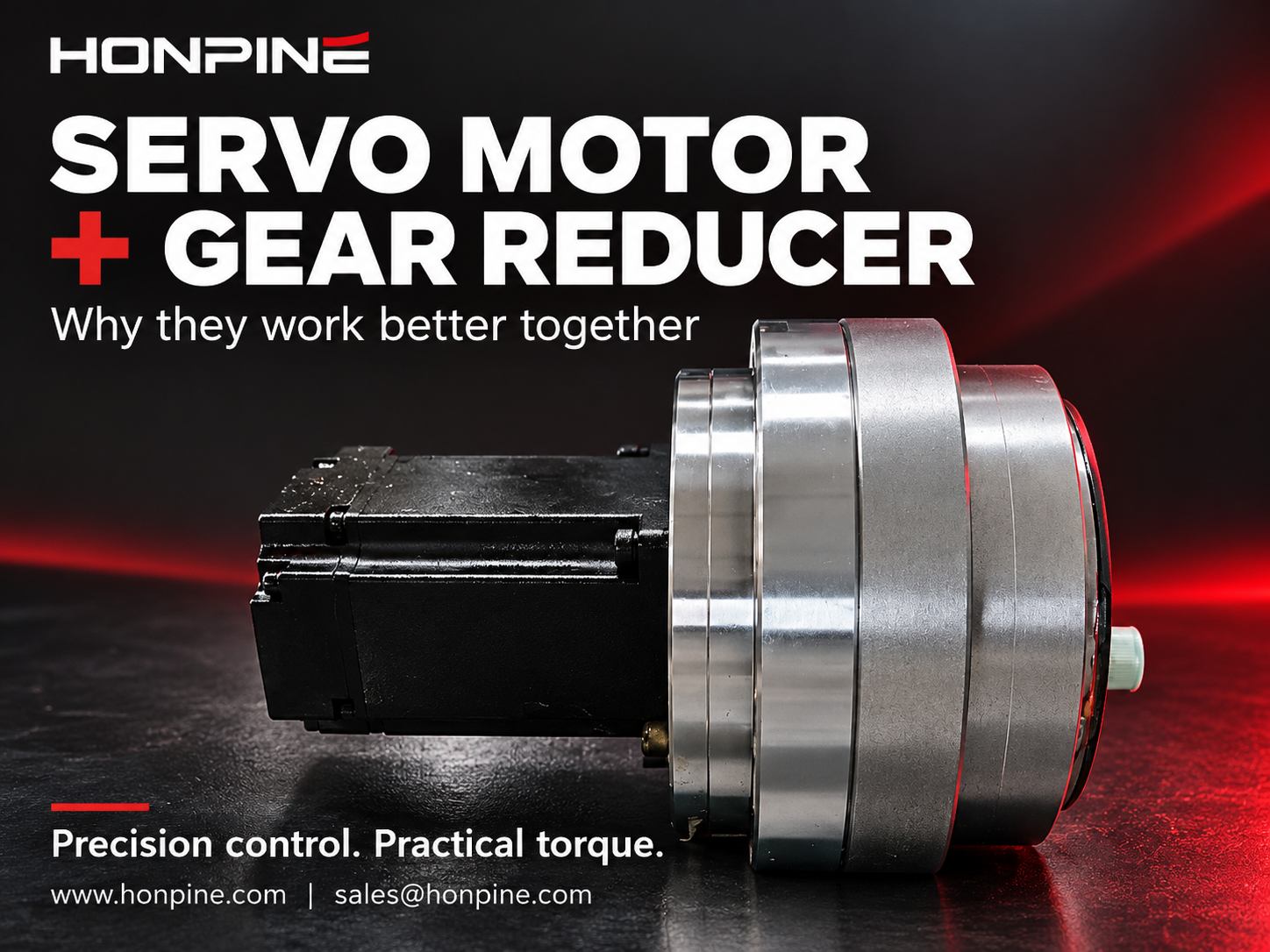
 Why Are Servo Motors and Gear Reducers an Ideal Match?Servo motors provide fast, precise motion control, while gear reducers adapt their speed and torque to the load. This guide explains how servo motors and gear reducers work together through torque multiplication, reflected inertia reduction and finer theoretical position resolution. Learn how inertia matching, backlash, torsional stiffness and reduction ratio influence performance in robotics and industrial automation.
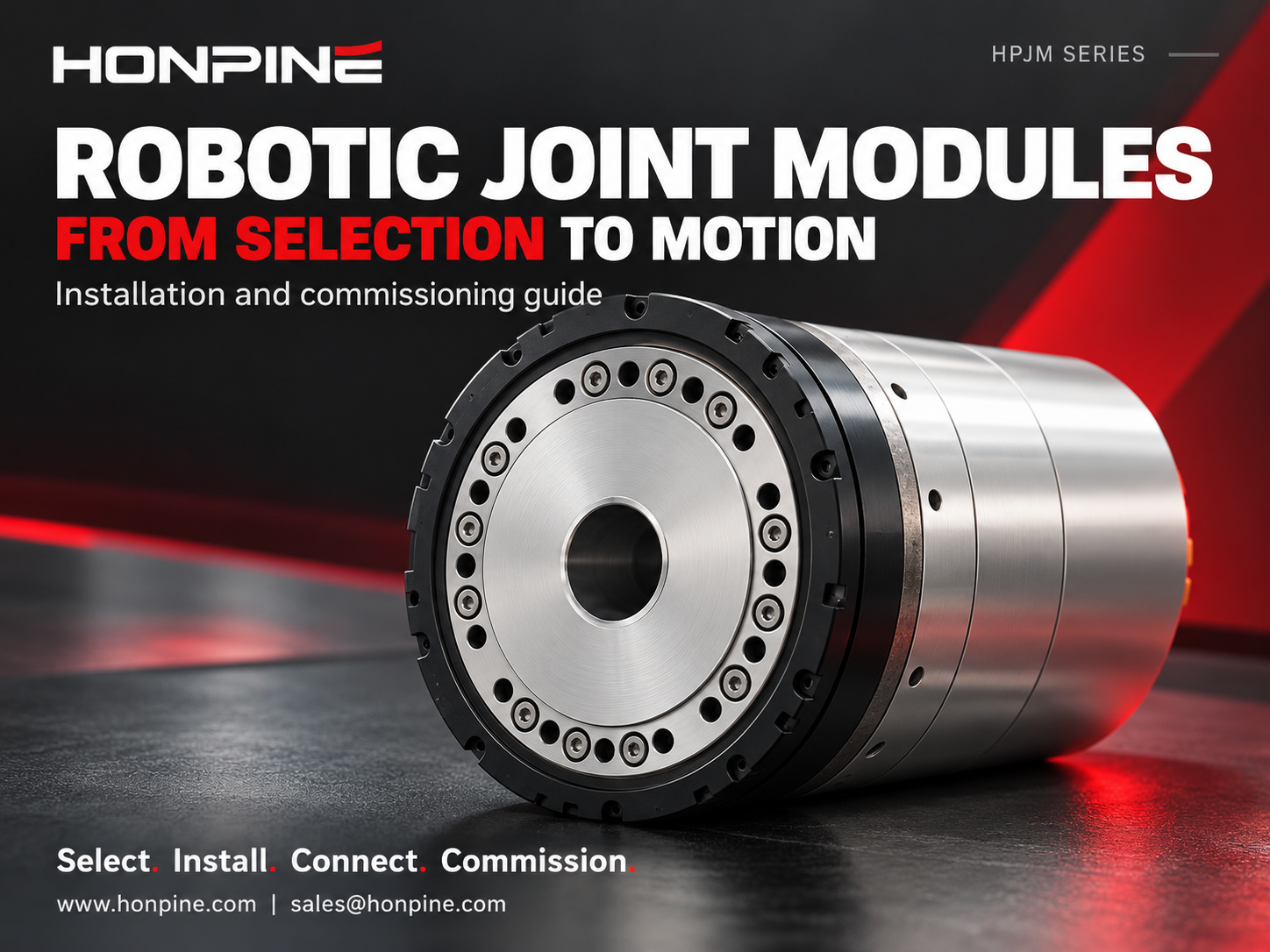
 How to Select and Use Robotic Joint Modules?How do you take robotic joint modules from selection to controlled motion? Using the HONPINE HPJM harmonic joint module as an example, Technical Director Theodore Li explains the key steps in mechanical installation, electrical wiring, CAN and EtherCAT configuration, and control commissioning. Learn what to confirm before integration and how to approach setup so each joint can respond correctly to your controller.
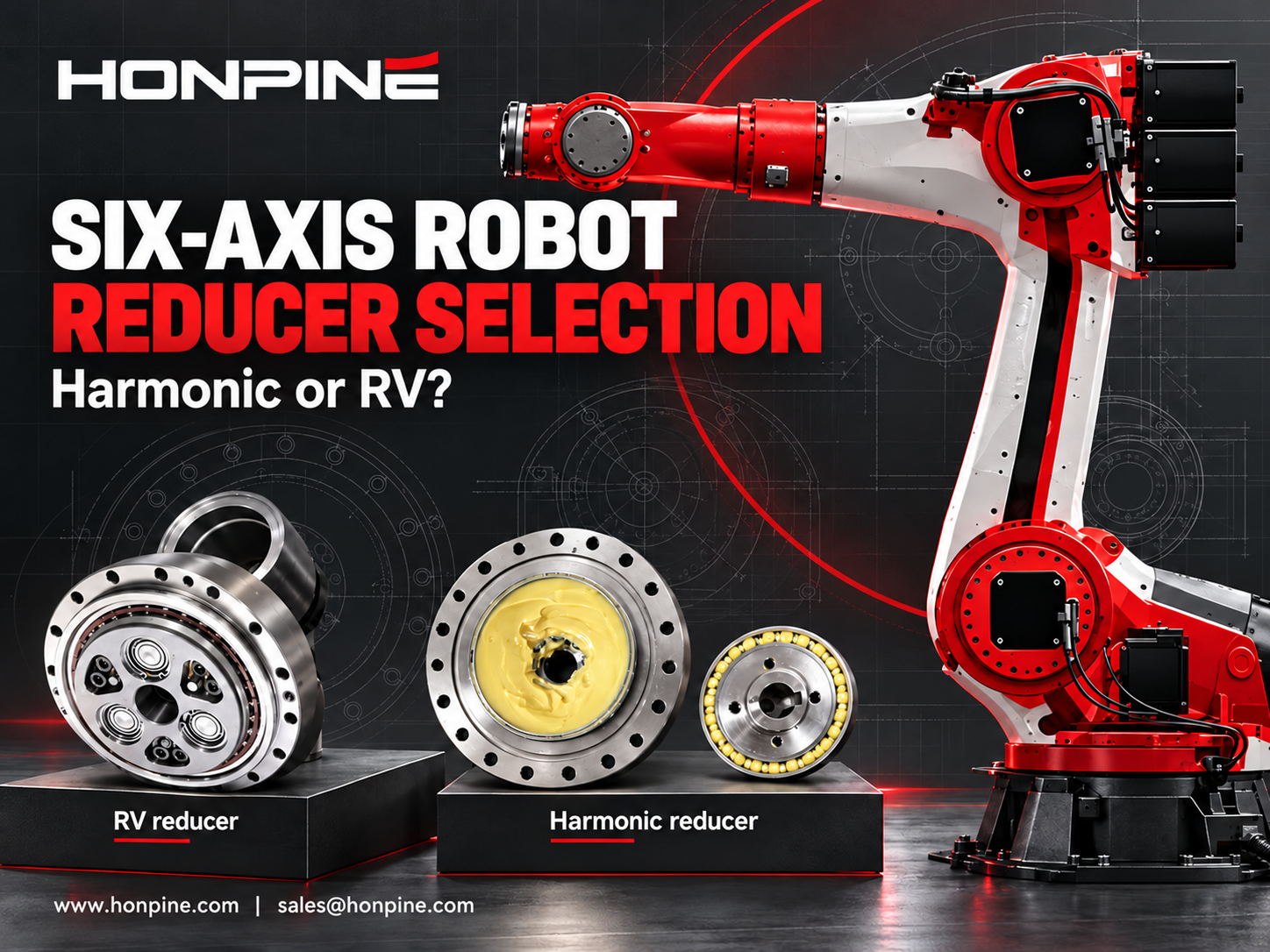
 How to Select Harmonic and RV Reducers for Each Axis of a Six-Axis Robot?What determines whether a six-axis robot joint needs a harmonic reducer or an RV reducer? The answer depends on torque, inertia, impact loads, bearing loads and installation space. This guide explains how to evaluate harmonic and RV reducers for the base, shoulder, elbow and wrist, with practical checks for stiffness, backlash and service life. Use the requirements of each axis to select a suitable reducer configuration.
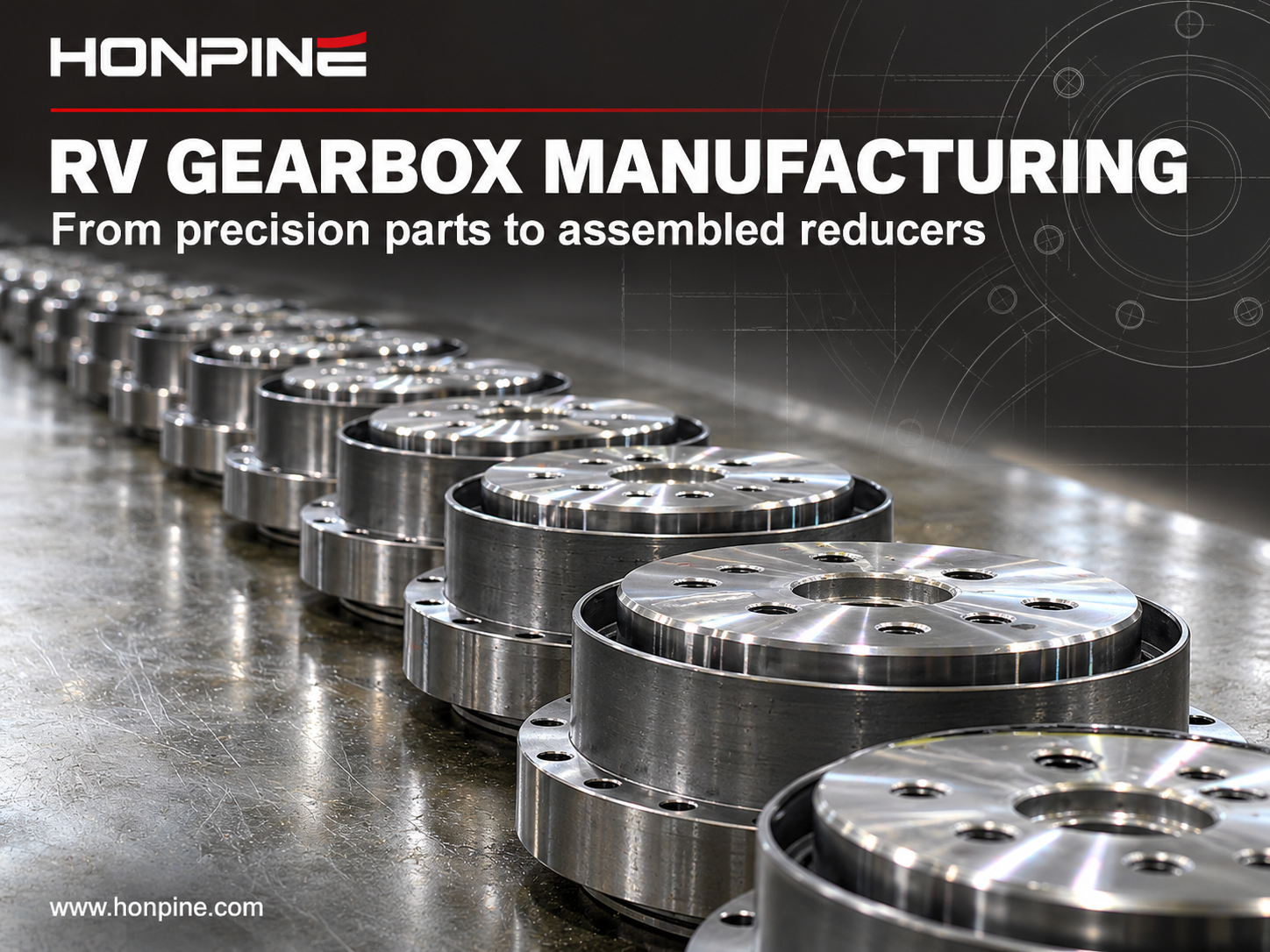
 Top 7 RV Reducer Gearbox Manufacturers: Why Does Nabtesco Still Dominate?What sets RV reducer gearbox manufacturers apart, and why does Nabtesco remain a benchmark in this market? RV reducer production demands precise component machining, careful assembly and extensive engineering know-how. This article introduces seven manufacturers across RV reducers and related transmission technologies, examines the strengths behind Nabtesco's position, and explores HONPINE's development capabilities to help you understand the supplier landscape.
Double Click
We provide harmonic drive reducer,planetary reducer,robot joint motor,robot rotary actuators,RV gear reducer,robot end effector,dexterous robot hand
 What is robot joint actuator?How to Choose the Best Robot Rotary Joint Actuator?In core robot joint transmission solutions, planetary and harmonic rotary actuators each have their own strengths. Choosing the right type based on application requirements is essential to achieve the optimal balance between performance and cost.
 DD Motors VS Harmonic Rotary ActuatorsThis article provides an in-depth comparison between Direct Drive (DD) motors and harmonic rotary actuators, covering their transmission principles, advantages and disadvantages, and typical application fields.
 OMG Ultra Compact Harmonic Drive Joint Module with Built-in Torque SensorHONPINE TCHL series harmonic drive joint module is a game-changing product that achieves disruptive improvements in multiple aspects such as lightweight design, integration level, and connection convenience. This article will analyze its revolutionary enhancements with you.
 How to Choose High-Precision Rotary Actuators for Industrial Automation?High-precision rotary actuators play an important role in industrial automation, where positioning accuracy, repeatability, durability and installation flexibility directly affect equipment performance. HONPINE offers four main series of precision rotary actuators, including HAT, HAM and HAS harmonic rotary actuators and HPG low-backlash planetary actuators. With torque ratings ranging from 4 to 1,494 Nm across the product range, these solutions are designed for applications in semiconductor manufacturing, 3C automation, laser processing and CNC machine tools. Learn how to identify the right rotary actuator based on operating conditions, precision requirements and mechanical integration needs.
 Why Are Harmonic Reducers Suitable for High-Precision Automation Equipment?Precision automation equipment depends on consistent rotary motion, reliable positioning and compact transmission design. From dispensing head orientation and component angular alignment to automated inspection indexing, harmonic reducers offer a practical solution for applications requiring low backlash and high reduction ratios in limited installation space. This article explains how harmonic reducers support repeatable motion, compares key design configurations, and outlines how to select a suitable reduction ratio and reducer structure based on load, speed, accuracy and machine cycle-time requirements.
 Why Are Servo Motors and Gear Reducers an Ideal Match?Servo motors provide fast, precise motion control, while gear reducers adapt their speed and torque to the load. This guide explains how servo motors and gear reducers work together through torque multiplication, reflected inertia reduction and finer theoretical position resolution. Learn how inertia matching, backlash, torsional stiffness and reduction ratio influence performance in robotics and industrial automation.
 How to Select and Use Robotic Joint Modules?How do you take robotic joint modules from selection to controlled motion? Using the HONPINE HPJM harmonic joint module as an example, Technical Director Theodore Li explains the key steps in mechanical installation, electrical wiring, CAN and EtherCAT configuration, and control commissioning. Learn what to confirm before integration and how to approach setup so each joint can respond correctly to your controller.
 How to Select Harmonic and RV Reducers for Each Axis of a Six-Axis Robot?What determines whether a six-axis robot joint needs a harmonic reducer or an RV reducer? The answer depends on torque, inertia, impact loads, bearing loads and installation space. This guide explains how to evaluate harmonic and RV reducers for the base, shoulder, elbow and wrist, with practical checks for stiffness, backlash and service life. Use the requirements of each axis to select a suitable reducer configuration.
 Top 7 RV Reducer Gearbox Manufacturers: Why Does Nabtesco Still Dominate?What sets RV reducer gearbox manufacturers apart, and why does Nabtesco remain a benchmark in this market? RV reducer production demands precise component machining, careful assembly and extensive engineering know-how. This article introduces seven manufacturers across RV reducers and related transmission technologies, examines the strengths behind Nabtesco's position, and explores HONPINE's development capabilities to help you understand the supplier landscape.
 How to Calculate Torque for a Harmonic Rotary Actuator in a Flipping Mechanism?How much torque does a harmonic rotary actuator need to flip a 10 kg load through 180 degrees? The answer depends on more than weight. Center-of-gravity offset, load inertia, acceleration and operating frequency all affect actuator selection. In this guide, Theodore Li, Technical Director at HONPINE, explains the calculation process using a horizontal-axis flipping example and outlines the checks needed for peak torque, continuous operation, output speed and bearing loads.
 Why Are Harmonic Reducers Suitable for CNC Machine Tool Rotary Tables?Why choose harmonic reducers for CNC rotary tables? Accurate indexing depends on more than the motor: backlash, torsional stiffness and torque capacity all affect how reliably a rotary table holds its position during machining. This guide explains the key transmission requirements of fourth and fifth axis rotary tables, explores common machine tool applications, and introduces HONPINE harmonic reducer configurations for different installation and load requirements.
 What’s the Difference Between Single and Dual Encoder Robot Joint Modules?Does your robot need a dual encoder joint module, or is a single encoder enough? The answer depends on positioning requirements, transmission behavior, force control strategy and budget. This guide compares motor-side and output-side feedback, explains where dual encoders can improve control, and examines their costs and limitations. Learn when a single encoder can meet your needs and when additional output feedback is worth considering.