


How Does a Robot Joint Module Affect Motion Control in Humanoid Robots and Collaborative Arms?
As humanoid robots, collaborative robots, and industrial automation equipment continue to evolve, the requirements for robotic motion control are becoming increasingly demanding. From walking, climbing stairs, and grasping objects with humanoid robots to precision assembly and compliant manipulation with collaborative robotic arms, multiple joints must work together accurately and consistently.
A robot's motion capabilities are not determined by motor torque alone. They depend on the combined performance of mechanical transmission, power output, position feedback, drive control, and system integration. The Robot Joint Module is the core execution unit that connects these essential functions.
A high-performance robot joint module affects not only motion accuracy, payload capacity, and dynamic response but also the overall mechanical design, control system integration, and subsequent mass production of the robot. As a result, joint module design and manufacturing capabilities are becoming increasingly important factors in the performance of humanoid robots and collaborative robotic arms.
What Is a Robot Joint Module?
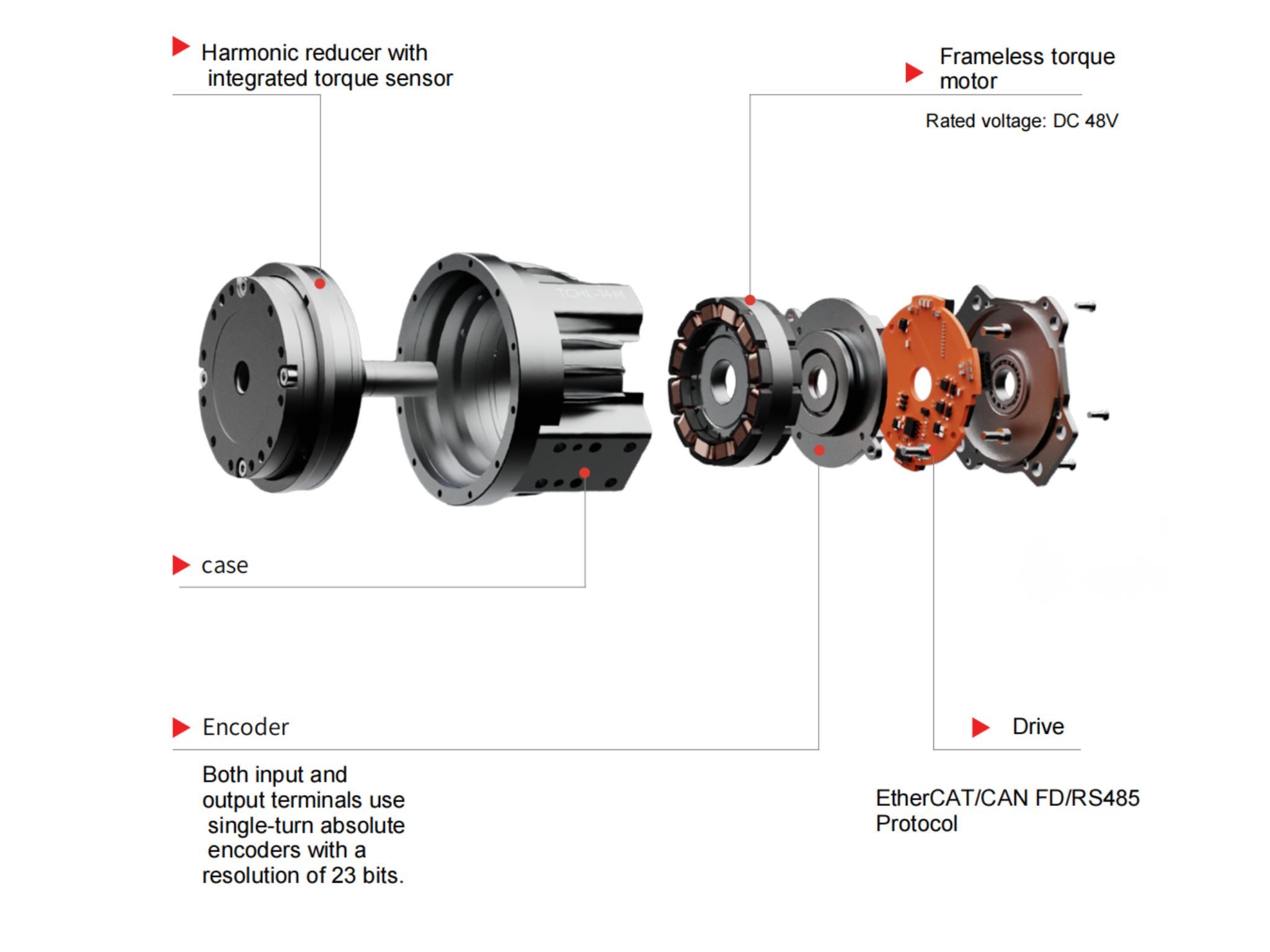
A robot joint module, also known as a rotary actuator or electromechanical joint, is not a single mechanical component. It is a standardized power unit that integrates several key components into a compact housing, typically including a drive motor, reduction mechanism, position encoder, servo drive, and braking system. Depending on the design, torque sensors and other feedback components may also be integrated.
Unlike traditional distributed architectures, where individual components must be selected and assembled separately, an integrated robot joint module provides a more complete and coordinated joint solution.
Its primary advantage is simplified system integration. Robot manufacturers do not need to independently develop and validate every motor-and-reducer combination or repeatedly match electrical and control components. Instead, they can select a suitable joint module based on the required torque, speed, dimensions, and control functions.
When a joint requires maintenance, the modular architecture can also allow the entire joint assembly to be replaced or serviced as a unit, depending on the maintenance strategy.
For complex systems such as humanoid robots, which may contain thousands of individual components, this modular approach helps shorten development cycles, simplify assembly, and reduce after-sales maintenance complexity.
1. How Does a Robot Joint Module Affect Overall Robot Motion Performance?
Traditional robot joints are often assembled from separate components, including motors, reducers, encoders, and servo drives. Robot manufacturers must independently complete mechanical design, electrical connections, and control system integration.
This approach offers considerable design flexibility, but component matching and integration quality can affect the final joint performance.
An integrated robot joint module combines the motor, reducer, encoder, servo drive, and, where required, a brake or torque sensor into a relatively independent joint actuator. Through unified mechanical structures, electrical interfaces, and control configurations, it can reduce component compatibility issues and improve coordination within the joint system.
For the complete robot, joint modules primarily influence motion performance in three key areas.
1. Motion Capability and Payload Performance
Different robot joints require different torque and speed characteristics depending on their positions and motion tasks.
For example, the hip and knee joints of humanoid robots must support substantial loads during walking, standing, and climbing stairs. In contrast, wrist and ankle joints place greater emphasis on compact dimensions, low weight, and movement flexibility.
A robot joint module must deliver sufficient output power within limited installation space and weight constraints. Higher torque density provides more design flexibility when balancing robot weight, payload capacity, and dynamic motion performance.
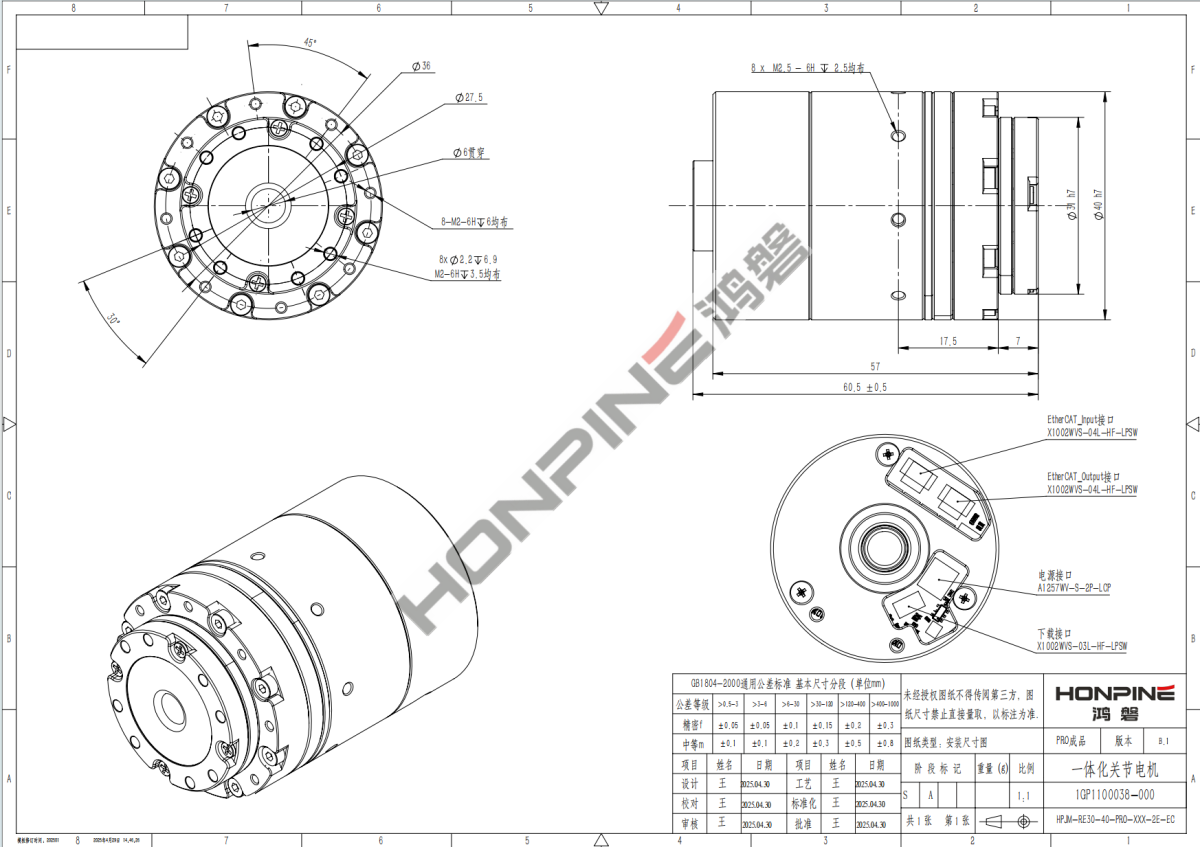
Take the HONPINE HPJM-PRO RE30-40 as an example. Its rated torque is available in two configurations: 1.8 N·m and 2.8 N·m, while the module weighs approximately 0.18 kg.
Based on these specifications, its rated torque-to-weight ratios are approximately 10 N·m/kg and 15.6 N·m/kg, respectively.
Different gear ratio configurations also provide different output speed characteristics, allowing robot manufacturers to select a suitable configuration according to the requirements of individual joints.
2. Motion Accuracy and Dynamic Control Performance
Robots must not only reach target positions but also maintain stable trajectories and responsive motion throughout operation.
For example, a collaborative robotic arm performing precision assembly needs to accurately follow position commands. A humanoid robot walking or adjusting its posture must coordinate multiple joints and respond promptly to control commands while continuously adapting to changes in body position and external conditions.
Therefore, the transmission characteristics, position feedback capability, and drive control performance of a joint module must work together.
High positioning accuracy helps improve joint positioning performance, while good dynamic response enables the robot to maintain more stable motion during rapid movements and changing load conditions.
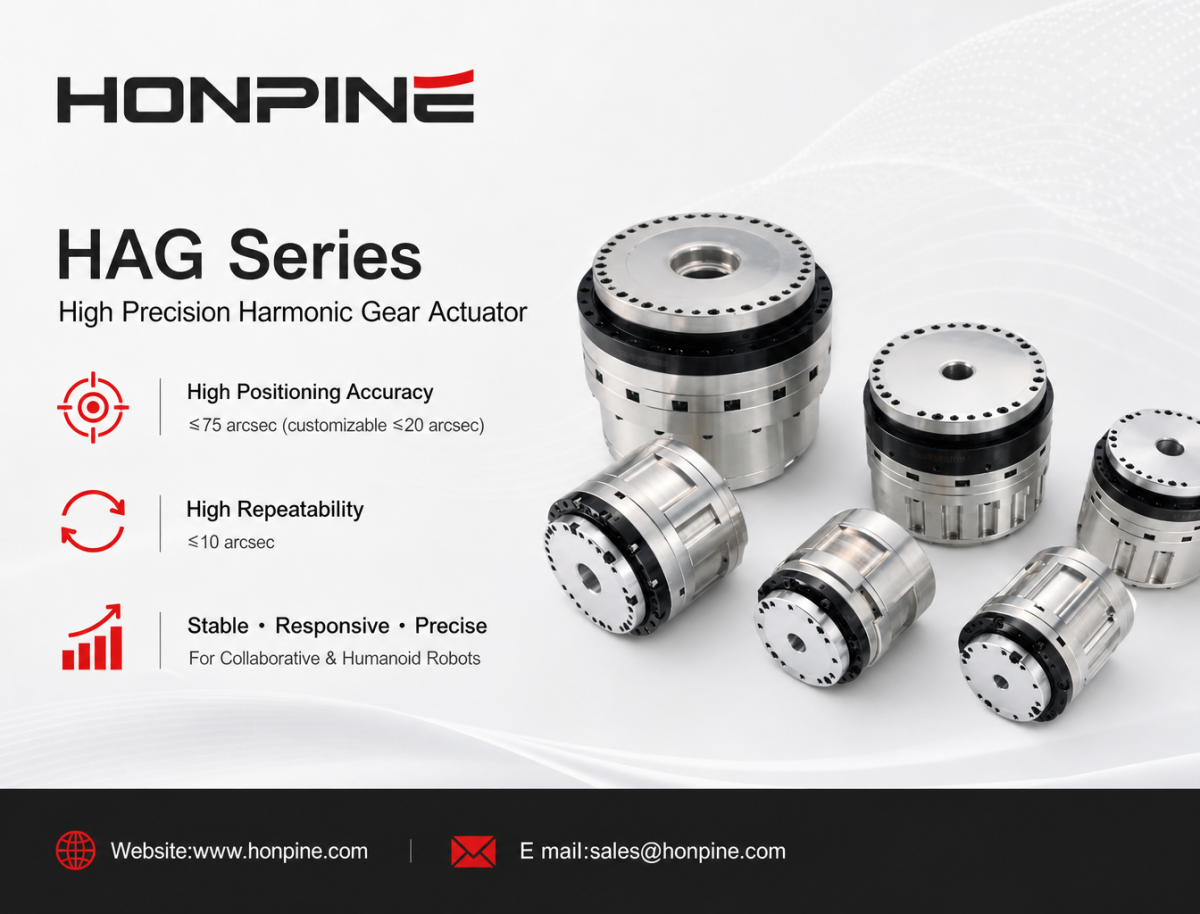
According to the HONPINE HAG series product specifications, positioning accuracy is specified at ≤75 arcsec, with single-direction positioning accuracy customizable to ≤20 arcsec. Repeatability is specified at ≤10 arcsec.
These specifications provide useful reference points for robot manufacturers evaluating joint positioning performance and selecting suitable actuator configurations.
3. Force Control Capability and Long-Term Operating Stability
As robotic applications evolve from conventional position control toward compliant control and human-robot interaction, joint modules require more comprehensive feedback capabilities.
For example, when a collaborative robot comes into contact with an external object, it needs to adjust its motion according to the applied force. Similarly, when a humanoid robot grasps objects with different weights and stiffness levels, it must adapt its output torque according to the actual load.
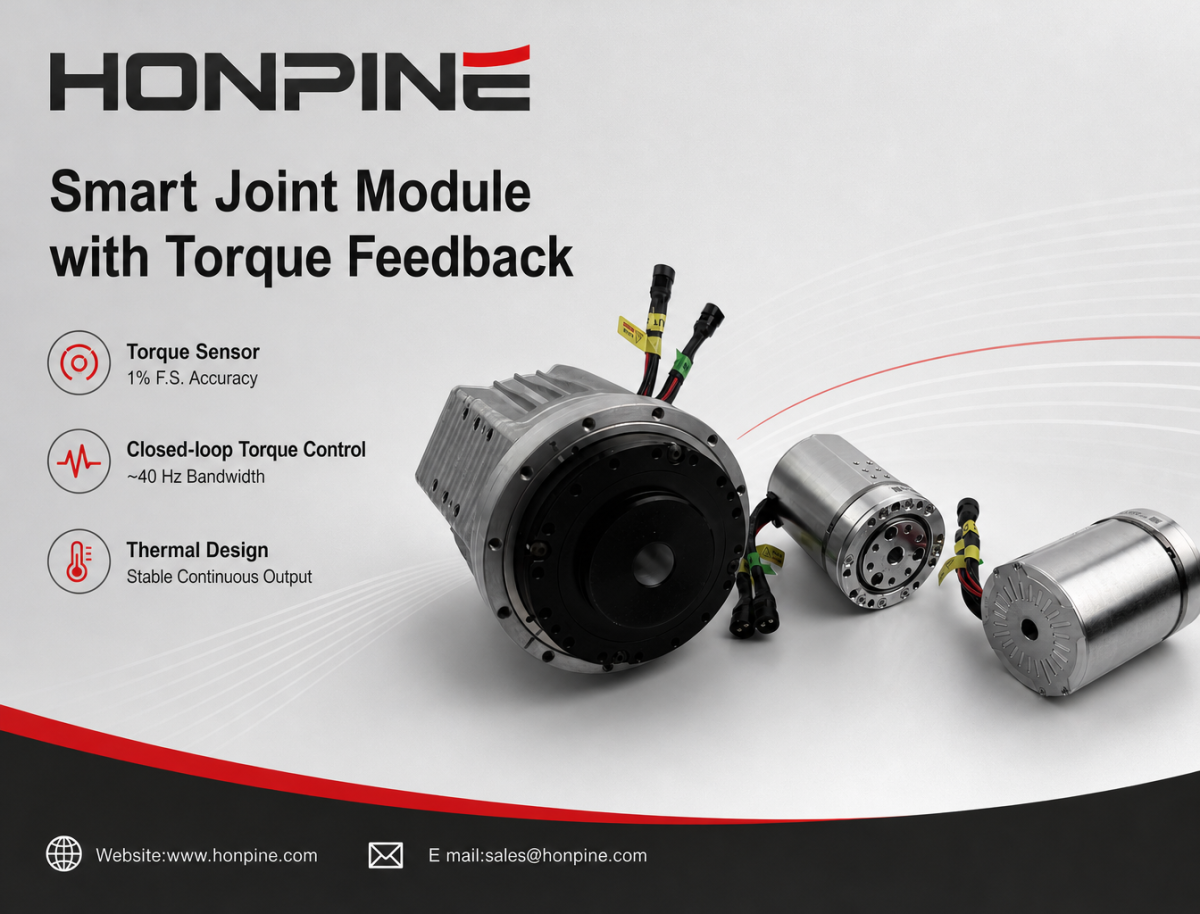
Integrating a torque sensor at the joint output provides more direct torque feedback for the robot control system.
At the same time, an appropriate thermal design helps manage temperature rise during extended operation, supporting more stable continuous output performance.
The HONPINE TCHL series offers an optional output-side torque sensor. For sizes 14–32, its closed-loop torque control bandwidth is approximately 40 Hz, with torque sensor measurement accuracy of 1% F.S.
These characteristics provide a hardware foundation for dynamic force control, impedance control, and compliant robotic motion.
2. Why Are Standardized Integrated Robot Joint Modules Becoming Increasingly Important?
When robots move from laboratory prototypes toward commercial production, manufacturers must solve more than the performance requirements of individual joints. They also need to ensure that different joints can be assembled, commissioned, and maintained according to consistent design standards.
If every joint uses different components and integration solutions, robot manufacturers must invest additional resources in mechanical design, electrical adaptation, control commissioning, and quality inspection.
Standardized integrated robot joint modules help reduce this repeated work through unified product designs and manufacturing processes.
First, standardized modules can provide consistent mechanical mounting dimensions, electrical connections, and communication interfaces, reducing interface adaptation during robot system design.
Second, unified assembly procedures, factory testing, and calibration processes help reduce performance variations between production batches and improve consistency during robot assembly.
In addition, standardized designs simplify maintenance. When a joint develops a fault, maintenance engineers can use diagnostic information to identify the problem and determine whether module-level replacement or repair is appropriate, reducing complicated on-site disassembly and troubleshooting.
For robots requiring multiple joint sizes and configurations, a standardized product portfolio also simplifies component selection and supply chain management, making it easier for manufacturers to establish repeatable production processes.
3. How Do Integrated Robot Joint Modules Reduce Overall Robot Manufacturing Costs?
The purchase price of a robot joint module represents only part of the total robot manufacturing cost.
Robot manufacturers must also consider component procurement, mechanical design, electrical integration, control commissioning, assembly testing, and supply chain management.
Using integrated robot joint modules can reduce the workload associated with purchasing and assembling multiple independent components.
During the development stage, pre-integrated joint modules help reduce repeated component selection, mechanical design, and electrical adaptation. This allows engineering teams to complete prototype development more efficiently.
During mass production, standardized modules can reduce assembly time, wiring work, and repeated testing procedures. They can also lower coordination costs among multiple component suppliers.
This is particularly important for humanoid robots, which contain numerous joints with different dimensional, torque, and motion performance requirements.
If a supplier offers a standardized range of joint modules, robot manufacturers can configure different products for the shoulder, hip, knee, ankle, and wrist according to their specific requirements, without having to develop an entirely new drive and transmission system for every joint.
Therefore, the value of integrated robot joint modules goes beyond reducing the number of individual components. More importantly, they help reduce system integration complexity and overall manufacturing costs while shortening the development cycle from prototype validation to mass production.
4. HONPINE Integrated Robot Joint Module Solutions
HONPINE specializes in precision transmission and robotic motion control products, offering harmonic reducers, RV reducers, planetary gearboxes, rotary actuators, and integrated robot joint modules.
To address different robotic structures and motion control requirements, HONPINE provides several joint module product families, including HPJM, TCHL, and HAG.
HPJM Series: Compact Integrated Robot Joint Modules
The HPJM seriesintegrates a frameless torque motor, harmonic reducer, encoders, and related drive components into a compact joint module.
It supports communication configurations including CAN, CANopen, and EtherCAT, making it suitable for robotic applications with demanding requirements for joint dimensions, weight, and system integration.
The HPJM series provides different torque and gear ratio configurations to accommodate different robotic joint positions and load requirements.
TCHL Series: Torque Sensor Harmonic Joint Modules
The TCHL series is designed for robotic applications requiring dynamic force control and compliant motion.
It offers an optional output-side torque sensor and supports corresponding communication and control configurations.
For sizes 14–32, the closed-loop torque control bandwidth is approximately 40 Hz. This provides output-side torque feedback to support force control and impedance control applications.
HAG Series: Integrated Harmonic Joint Modules with Advanced Control Functions
The HAG series integrates harmonic transmission components, servo drive electronics, encoders, and other essential joint components.
Optional functions include a braking system, torque sensor, and Safe Torque Off (STO), allowing manufacturers to configure the module according to their integration and control requirements.
It is suitable for robotic applications requiring a high level of joint integration, advanced control functions, and configurable safety features.
Through different product families and configurations, HONPINE aims to help robot manufacturers reduce repeated joint development work, improve system integration efficiency, and support the transition from prototype development to volume production.
Conclusion: Robot Joint Modules Are Essential to Robotic Performance and Scalable Manufacturing
A Robot Joint Module is more than an actuator that generates rotary motion. It is a core component connecting mechanical structures, power output, feedback sensing, and motion control.
Joint module performance influences the types of movements a robot can achieve, the loads it can handle, and its ability to maintain stable and accurate control under complex operating conditions.
Meanwhile, standardized designs, integrated architectures, and scalable manufacturing processes further influence robot development efficiency, manufacturing costs, product consistency, and delivery capabilities.
As humanoid robots and collaborative robotic arms move toward wider commercial adoption, the market requires more than individual high-performance joints. It needs integrated joint module solutions that can be validated at the system level, manufactured consistently, and delivered reliably at scale.
Ultimately, robot joint modules influence not only the motion performance of individual robots but also the robotics industry's ability to achieve mass production with shorter development cycles, more consistent product quality, and competitive manufacturing costs.
Read More
Learn more about the story of HONPINE and industry trends related to precision transmission.
 What is robot joint actuator?How to Choose the Best Robot Rotary Joint Actuator?In core robot joint transmission solutions, planetary and harmonic rotary actuators each have their own strengths. Choosing the right type based on application requirements is essential to achieve the optimal balance between performance and cost.
 DD Motors VS Harmonic Rotary ActuatorsThis article provides an in-depth comparison between Direct Drive (DD) motors and harmonic rotary actuators, covering their transmission principles, advantages and disadvantages, and typical application fields.
 OMG Ultra Compact Harmonic Drive Joint Module with Built-in Torque SensorHONPINE TCHL series harmonic drive joint module is a game-changing product that achieves disruptive improvements in multiple aspects such as lightweight design, integration level, and connection convenience. This article will analyze its revolutionary enhancements with you.
 The Role of Harmonic Drive Gears in Achieving 5–10 μm Accuracy in Dental Milling MachinesA dental milling machine is a CNC machining system used to directly process digital dental models into restorations such as crowns, bridges, veneers, inlays, and implant abutments. Dental milling machines require far higher operational accuracy and motion stability than ordinary equipment. This article explains how harmonic drive gear help dental milling machines achieve stable, continuous, and controllable operation.
 Why Are Harmonic Rotary Actuators Perfect for Medical Equipment?Harmonic rotary actuators (typically integrated systems consisting of a harmonic drive reducer, frameless torque motor, encoder, and optional brake) are regarded as key components in medical equipment. The core reason is that they simultaneously meet the most stringent medical requirements for precision, compact size, safety, and controllability. The following explanation is structured from three perspectives: technical characteristics, application scenarios, and medical value.
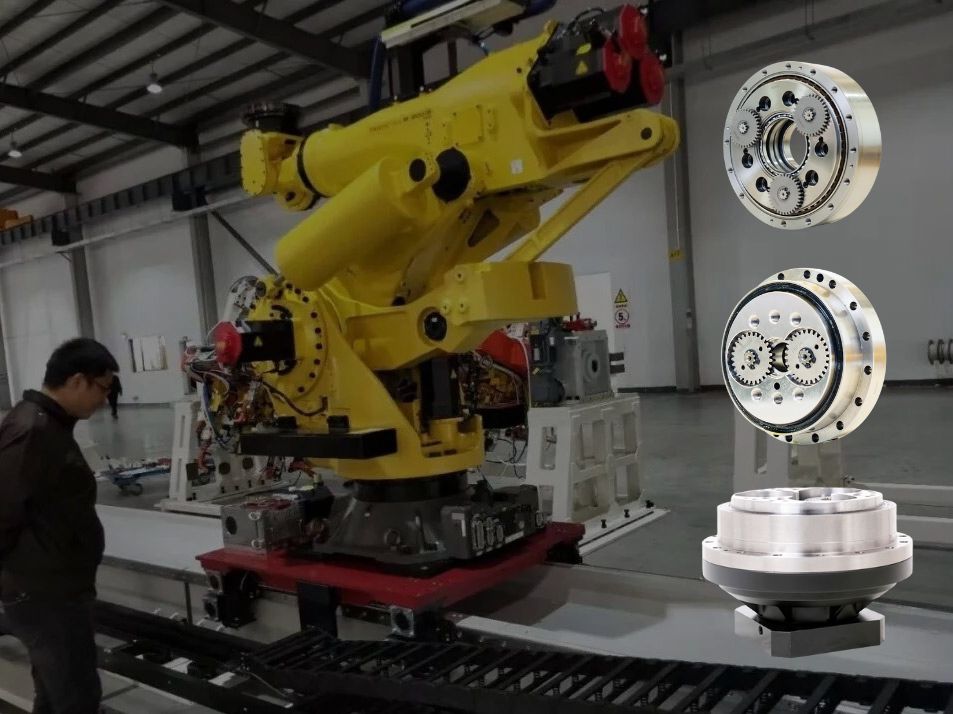
 High-Precision RV Reducers Perfectly Matched for Walking RobotsThe walking axis of a robot is a core component for power transmission and support. RV reducers provide extremely high rigidity, precision, and torque while maintaining a compact size and exceptional reliability, making them an ideal match for the demanding requirements of walking robot joints in terms of load capacity, impact resistance, and precision.
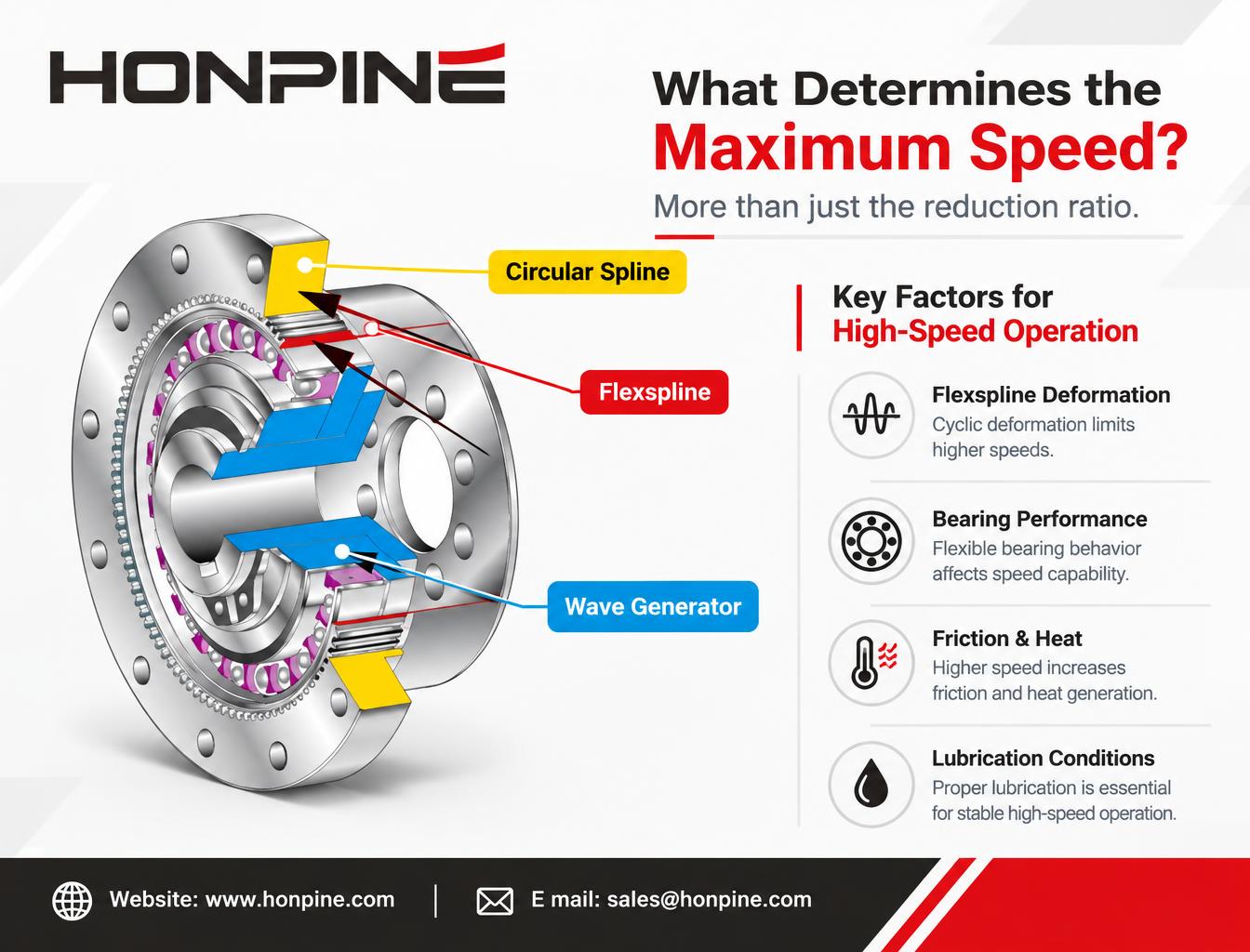
 What Limits the Maximum Speed of a Harmonic Drive Reducer?Learn what limits the maximum speed of a harmonic drive reducer. This guide explains the relationship between input and output speed, and examines how flexspline fatigue, flexible bearing performance, heat generation, and lubrication affect operating speed. Discover how to evaluate speed, torque, and duty cycle when selecting a harmonic drive for high-speed applications.
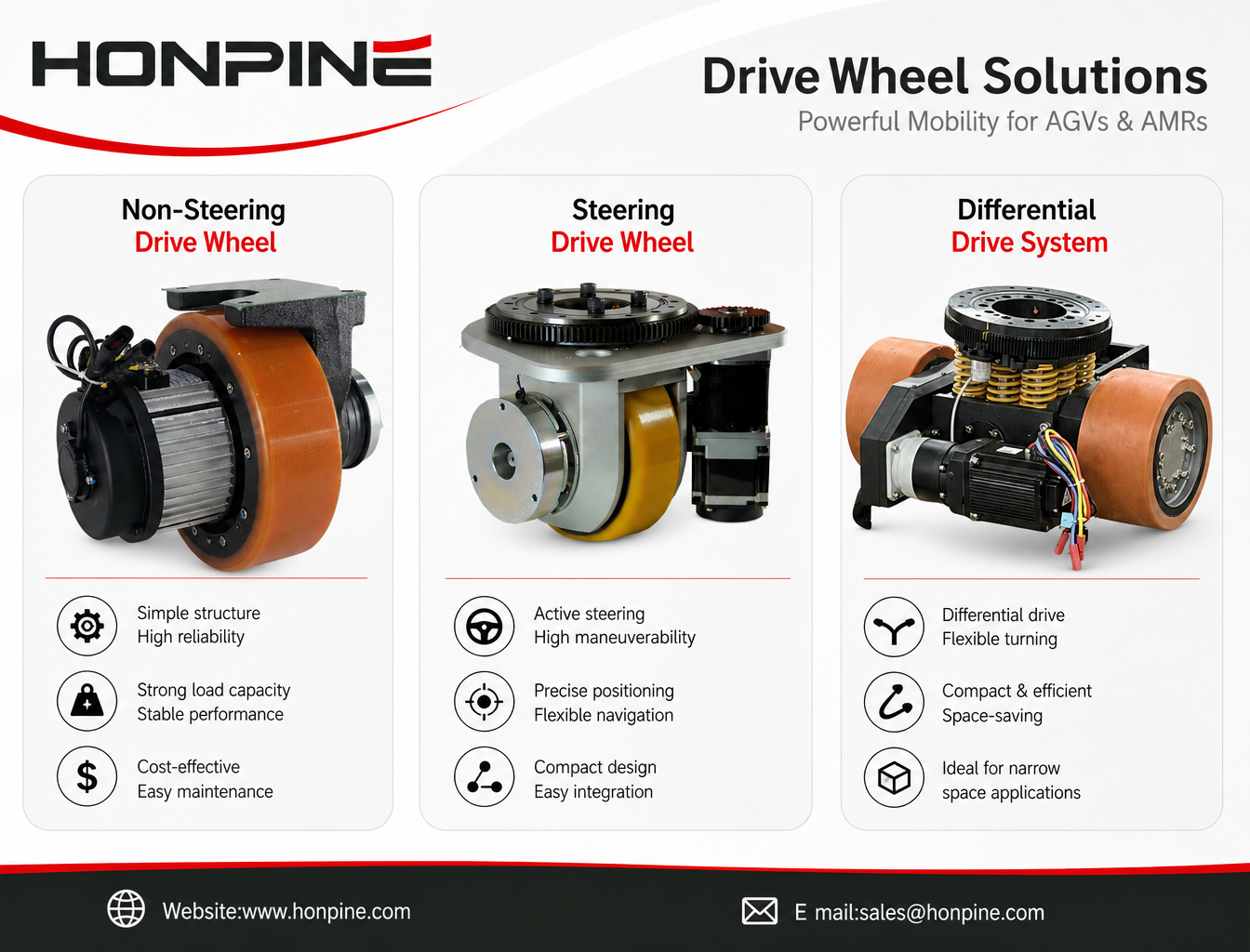
 AGV Drive Wheel Selection Guide: Non-Steering Drive Wheels vs. Differential Drive vs. Steering Drive WheelsChoosing the right AGV drive wheels is essential for achieving the required mobility, load capacity, and positioning performance in mobile robots. Different drive configurations offer different advantages in terms of maneuverability, mechanical complexity, control requirements, and overall cost. This guide compares three common AGV drive wheel types: non-steering drive wheels, differential drive systems, and steering drive wheels. By understanding how each configuration works and where it performs best, AGV and AMR manufacturers can make more informed decisions when designing their mobile robot platforms.
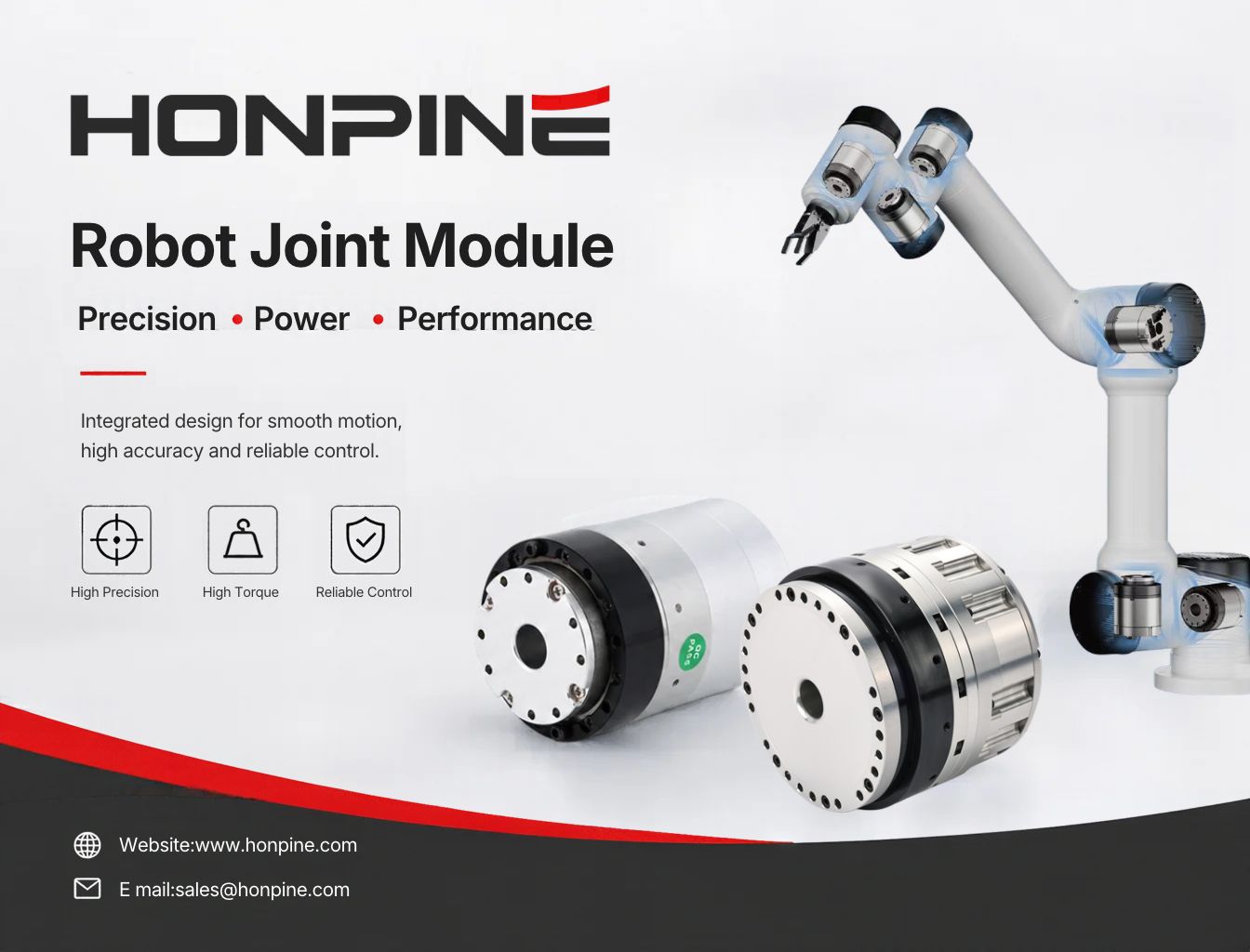
 How Does a Robot Joint Module Affect Motion Control in Humanoid Robots and Collaborative Arms?Robot motion performance depends on more than the motor or reducer alone. The robot joint module integrates key transmission and control components, directly influencing torque output, positioning accuracy, dynamic response, and force control capability. For humanoid robots and collaborative robot arms, these factors determine how smoothly, accurately, and reliably each joint operates under different working conditions. This article explores how robot joint modules affect overall motion control, why integrated designs are becoming increasingly important, and how different joint module architectures support the development of advanced robotic systems.
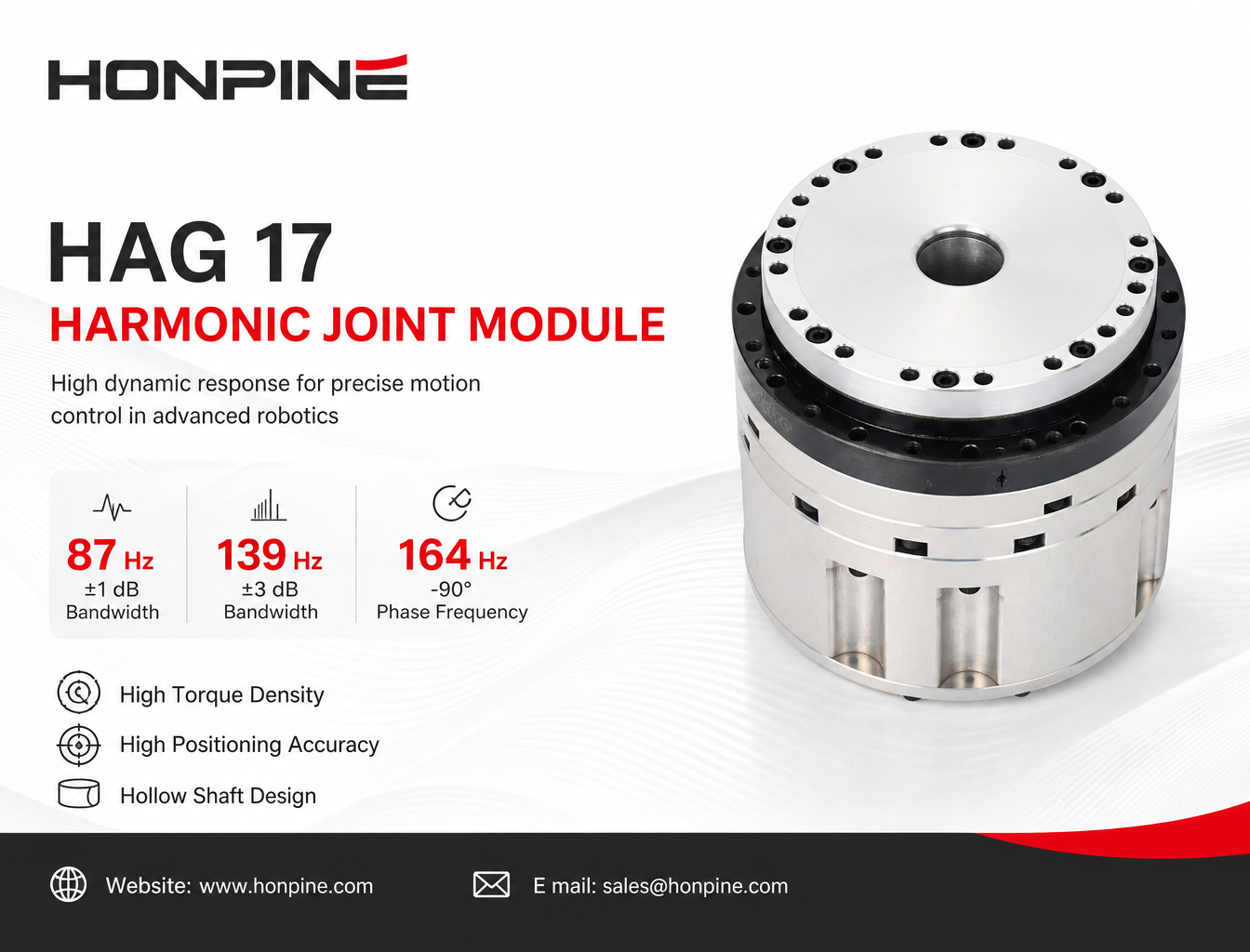
 HONPINE HAG Harmonic Joint Module: Redefining Robotic Motion Control with Wide Bandwidth, Low Phase Lag, and High CoherenceWhen a robot experiences joint vibration, inaccurate trajectory tracking, or delayed force feedback, the problem may lie in the dynamic response of its joint actuator. Bandwidth, phase lag, and signal coherence are critical indicators of robotic motion performance. In this article, we examine the actual sine-sweep test results of the HONPINE HAG 17 harmonic joint module, including its 87 Hz ±1 dB bandwidth, 139 Hz ±3 dB bandwidth, and 164 Hz -90° phase frequency. We also explore how its torque density, positioning accuracy, and hollow-shaft design support advanced humanoid robots and collaborative robotic applications.
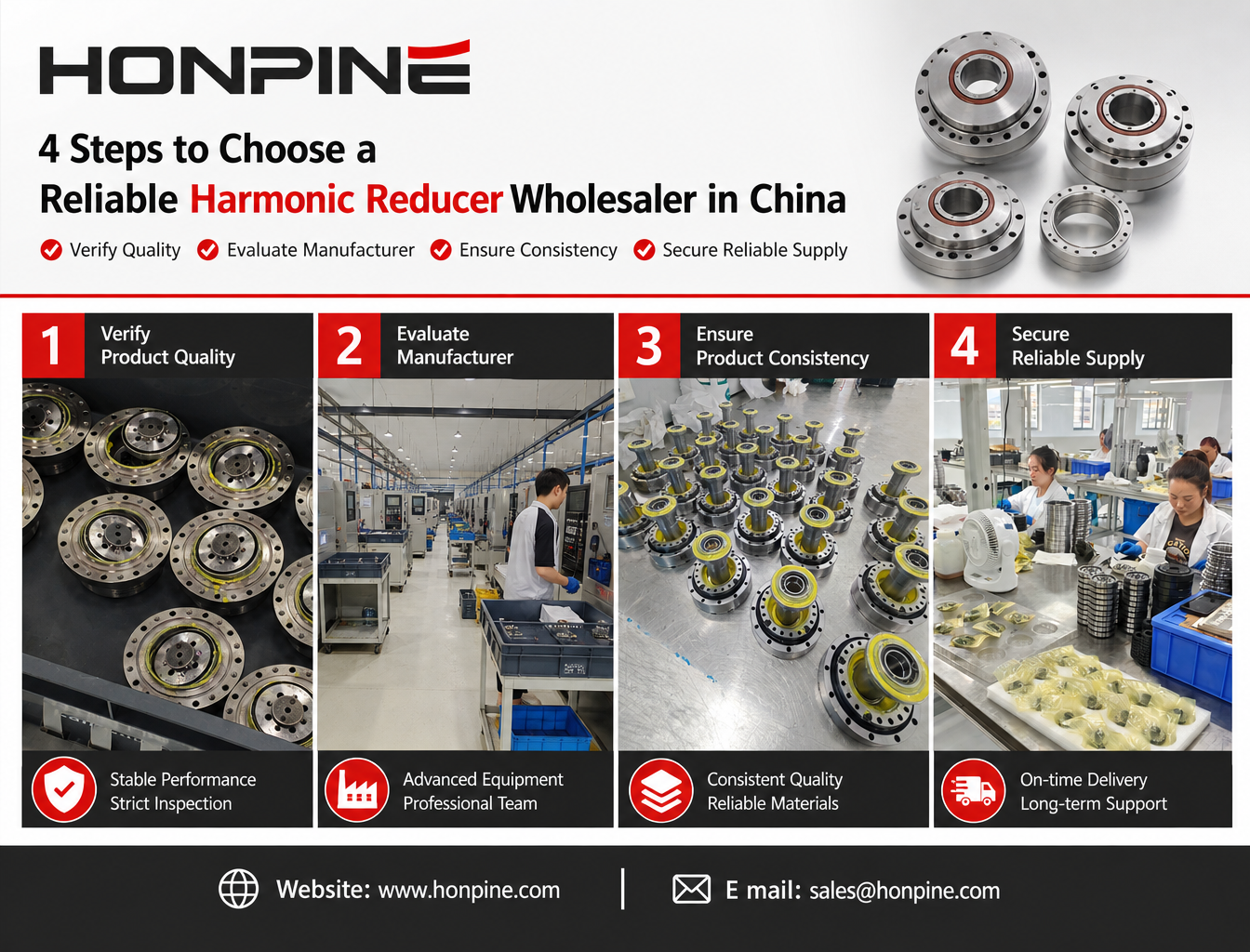
 How to Find a Reliable Harmonic Reducer Wholesaler in China?Choosing a reliable harmonic reducer wholesaler in China involves more than comparing prices and product specifications. Buyers need to evaluate technical capabilities, manufacturing quality, product consistency, and long-term supply reliability. Whether you are sourcing harmonic reducers for robotics, semiconductor equipment, CNC machinery, or industrial automation, understanding how to assess suppliers is essential. This guide outlines four practical steps to help you verify product performance, evaluate manufacturers, and make informed bulk purchasing decisions.
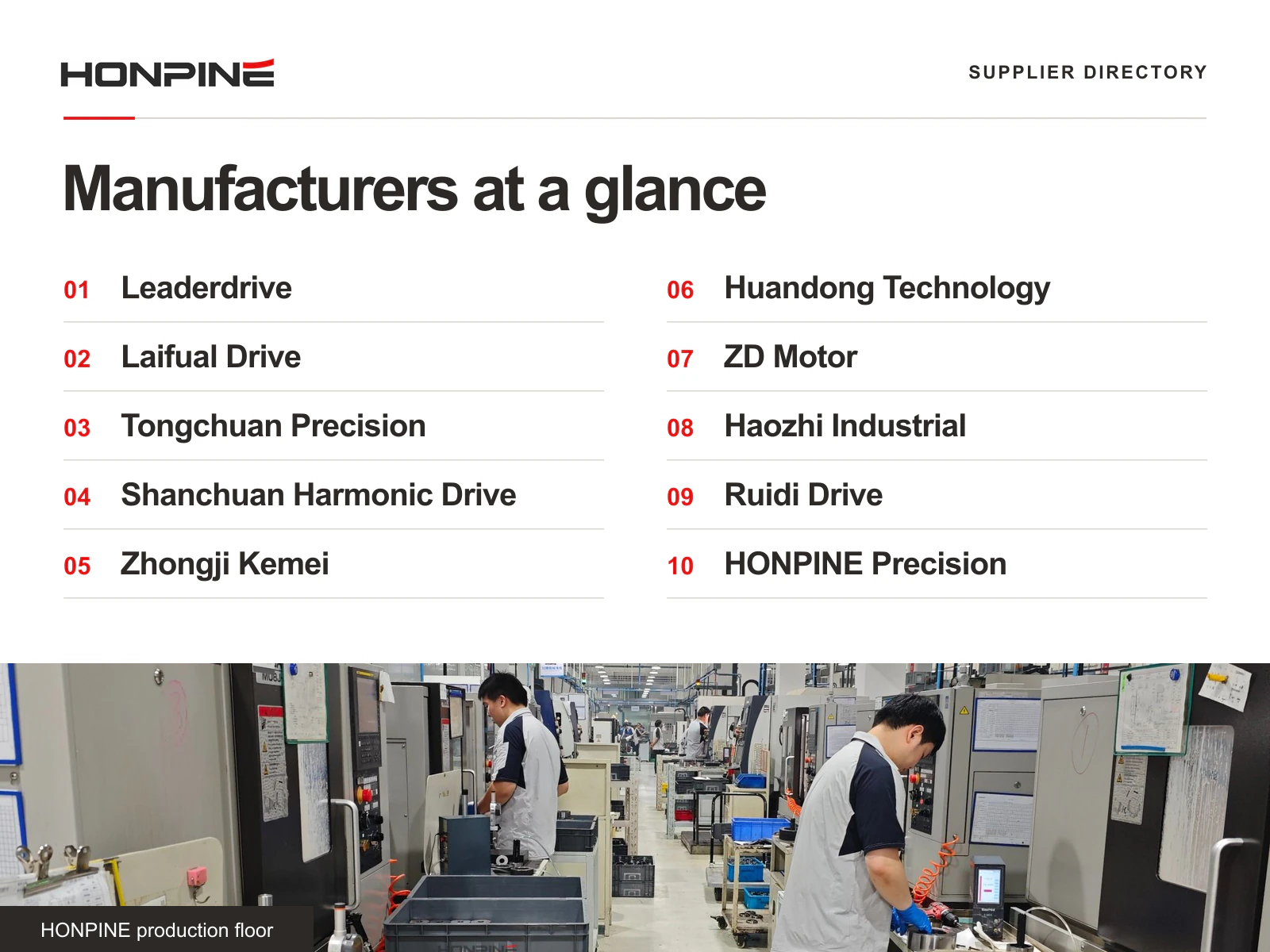
 Top 10 Harmonic Drive Reducer Manufacturers in ChinaChina has become an important manufacturing base for harmonic drive reducers, supplying precision transmission components to industrial robots, collaborative robots, humanoid robots, and high-end automation equipment. As more international buyers explore Chinese suppliers, understanding the differences between manufacturers is essential. In this article, we introduce 10 harmonic drive reducer manufacturers in China, examining their company backgrounds, product portfolios, technical capabilities, and typical applications to help engineers and procurement professionals identify potential suppliers.
Double Click
We provide harmonic drive reducer,planetary reducer,robot joint motor,robot rotary actuators,RV gear reducer,robot end effector,dexterous robot hand
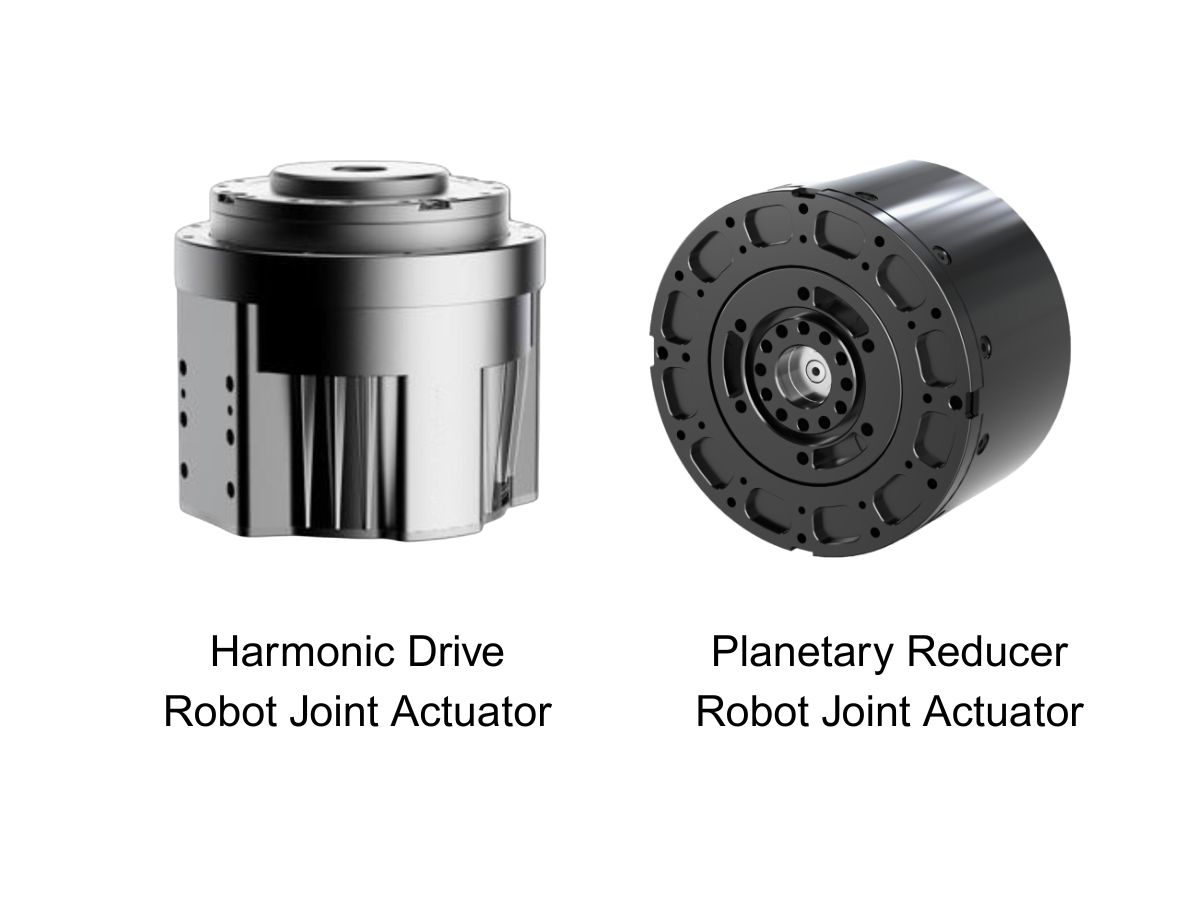
 What is robot joint actuator?How to Choose the Best Robot Rotary Joint Actuator?In core robot joint transmission solutions, planetary and harmonic rotary actuators each have their own strengths. Choosing the right type based on application requirements is essential to achieve the optimal balance between performance and cost.
 DD Motors VS Harmonic Rotary ActuatorsThis article provides an in-depth comparison between Direct Drive (DD) motors and harmonic rotary actuators, covering their transmission principles, advantages and disadvantages, and typical application fields.
 OMG Ultra Compact Harmonic Drive Joint Module with Built-in Torque SensorHONPINE TCHL series harmonic drive joint module is a game-changing product that achieves disruptive improvements in multiple aspects such as lightweight design, integration level, and connection convenience. This article will analyze its revolutionary enhancements with you.
 What Limits the Maximum Speed of a Harmonic Drive Reducer?Learn what limits the maximum speed of a harmonic drive reducer. This guide explains the relationship between input and output speed, and examines how flexspline fatigue, flexible bearing performance, heat generation, and lubrication affect operating speed. Discover how to evaluate speed, torque, and duty cycle when selecting a harmonic drive for high-speed applications.
 AGV Drive Wheel Selection Guide: Non-Steering Drive Wheels vs. Differential Drive vs. Steering Drive WheelsChoosing the right AGV drive wheels is essential for achieving the required mobility, load capacity, and positioning performance in mobile robots. Different drive configurations offer different advantages in terms of maneuverability, mechanical complexity, control requirements, and overall cost. This guide compares three common AGV drive wheel types: non-steering drive wheels, differential drive systems, and steering drive wheels. By understanding how each configuration works and where it performs best, AGV and AMR manufacturers can make more informed decisions when designing their mobile robot platforms.
 How Does a Robot Joint Module Affect Motion Control in Humanoid Robots and Collaborative Arms?Robot motion performance depends on more than the motor or reducer alone. The robot joint module integrates key transmission and control components, directly influencing torque output, positioning accuracy, dynamic response, and force control capability. For humanoid robots and collaborative robot arms, these factors determine how smoothly, accurately, and reliably each joint operates under different working conditions. This article explores how robot joint modules affect overall motion control, why integrated designs are becoming increasingly important, and how different joint module architectures support the development of advanced robotic systems.
 HONPINE HAG Harmonic Joint Module: Redefining Robotic Motion Control with Wide Bandwidth, Low Phase Lag, and High CoherenceWhen a robot experiences joint vibration, inaccurate trajectory tracking, or delayed force feedback, the problem may lie in the dynamic response of its joint actuator. Bandwidth, phase lag, and signal coherence are critical indicators of robotic motion performance. In this article, we examine the actual sine-sweep test results of the HONPINE HAG 17 harmonic joint module, including its 87 Hz ±1 dB bandwidth, 139 Hz ±3 dB bandwidth, and 164 Hz -90° phase frequency. We also explore how its torque density, positioning accuracy, and hollow-shaft design support advanced humanoid robots and collaborative robotic applications.
 How to Find a Reliable Harmonic Reducer Wholesaler in China?Choosing a reliable harmonic reducer wholesaler in China involves more than comparing prices and product specifications. Buyers need to evaluate technical capabilities, manufacturing quality, product consistency, and long-term supply reliability. Whether you are sourcing harmonic reducers for robotics, semiconductor equipment, CNC machinery, or industrial automation, understanding how to assess suppliers is essential. This guide outlines four practical steps to help you verify product performance, evaluate manufacturers, and make informed bulk purchasing decisions.
 Top 10 Harmonic Drive Reducer Manufacturers in ChinaChina has become an important manufacturing base for harmonic drive reducers, supplying precision transmission components to industrial robots, collaborative robots, humanoid robots, and high-end automation equipment. As more international buyers explore Chinese suppliers, understanding the differences between manufacturers is essential. In this article, we introduce 10 harmonic drive reducer manufacturers in China, examining their company backgrounds, product portfolios, technical capabilities, and typical applications to help engineers and procurement professionals identify potential suppliers.
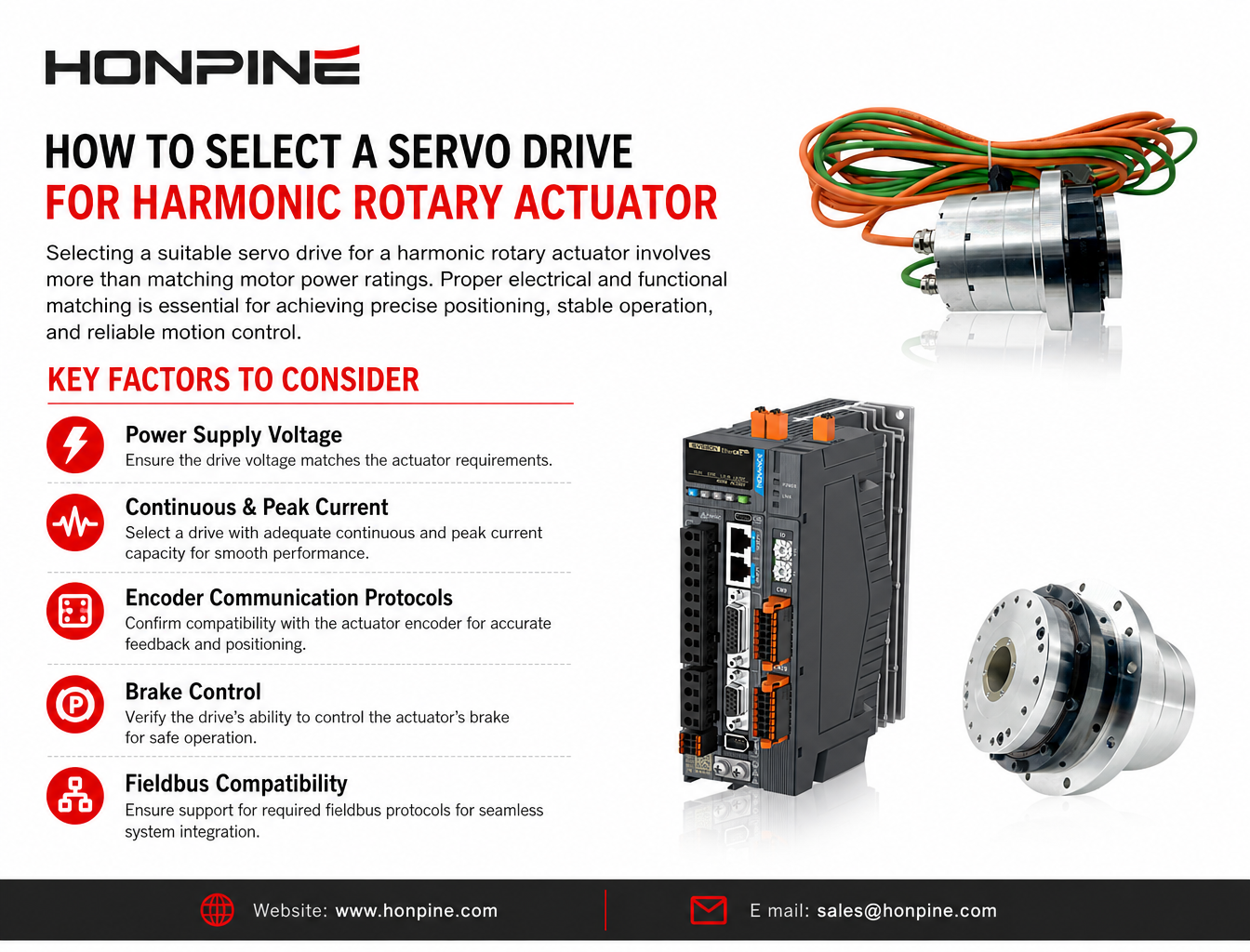
 How to Select a Servo Drive for HONPINE Harmonic Rotary Actuators with External Drives?Selecting a suitable servo drive for a harmonic rotary actuator involves more than matching motor power ratings. Power supply voltage, continuous and peak current, encoder communication protocols, brake control, and fieldbus compatibility all affect system performance. For HONPINE harmonic rotary actuators with external servo drives, proper electrical and functional matching is essential for achieving precise positioning, stable operation, and reliable motion control. In this guide, Theodore Li, Technical Director at HONPINE, explains the key factors engineers should consider when selecting and integrating an external servo drive.
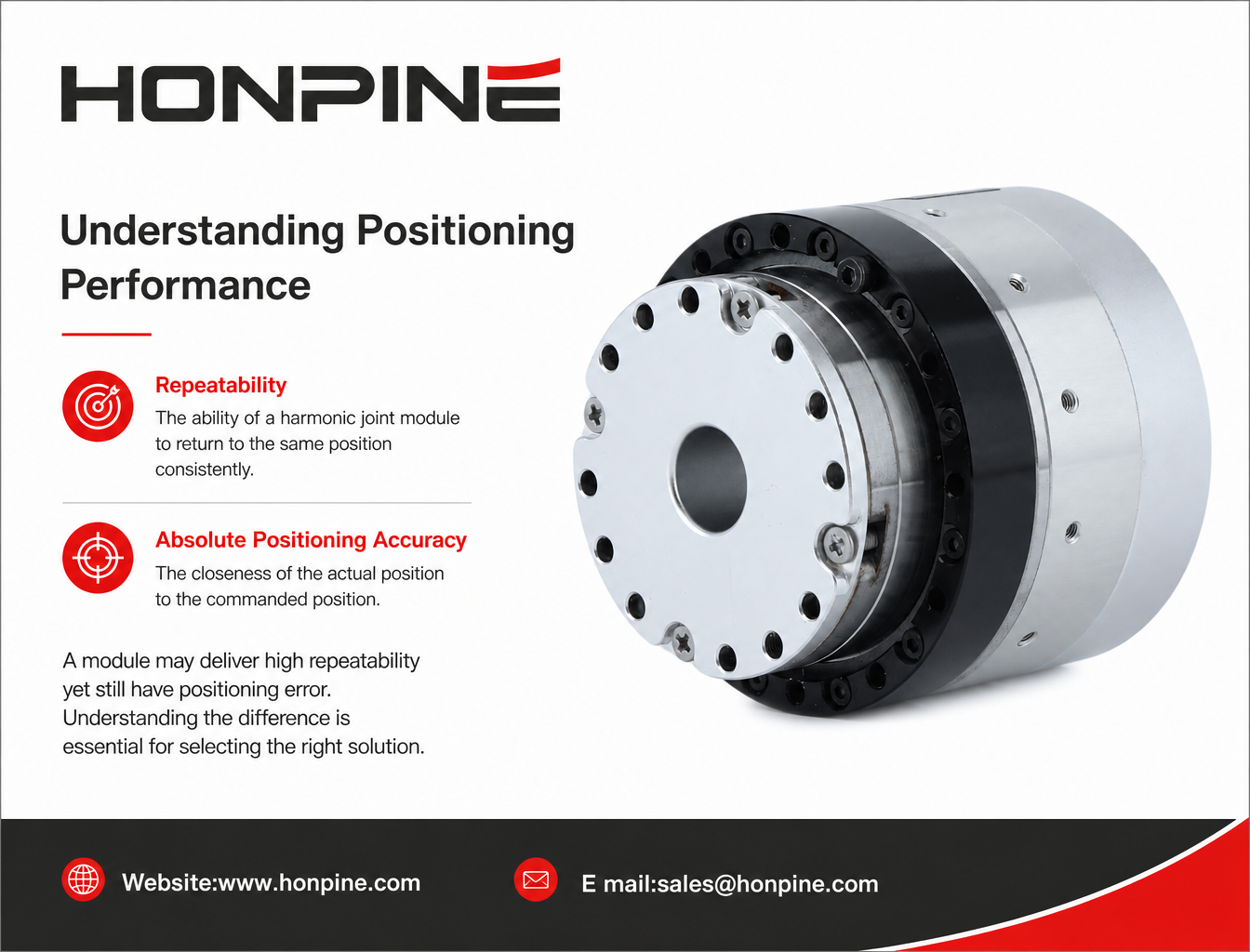
 Repeatability vs. Absolute Positioning Accuracy in Harmonic Joint Modules: Differences and Industrial ApplicationsWhen evaluating the positioning performance of a harmonic joint module, repeatability and absolute positioning accuracy are two important but often misunderstood specifications. A module may repeatedly reach the same position with high consistency while still having a noticeable deviation from the commanded position. Understanding this distinction is essential when selecting motion components for robotics, semiconductor equipment, precision machining, and medical devices. This article explains how the two specifications differ, what factors affect them, and which positioning performance should take priority in different industrial applications.
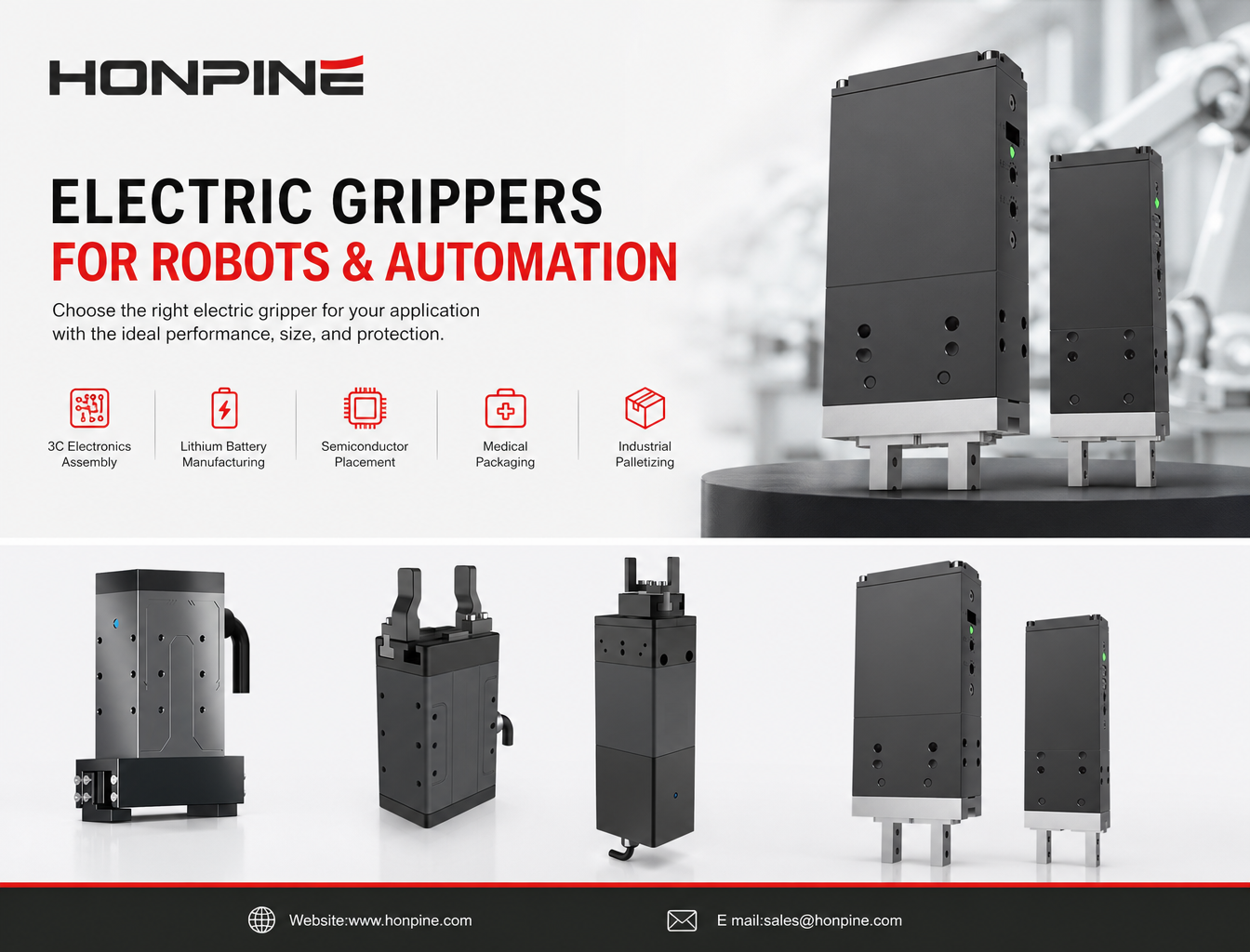
 How to Select Electric Grippers for Robots and Industrial Automation Production Lines?Electric grippers are essential robot end-effectors in modern industrial automation, enabling precise workpiece handling, assembly, positioning, and packaging. However, different applications require different gripping forces, stroke lengths, payload capacities, force control accuracy, and protection ratings. How should engineers select the right electric gripper for delicate 3C components, heavy lithium battery modules, semiconductor placement, medical packaging, or general industrial handling? In this article, Theodore Li, Technical Director at HONPINE, explains how to choose suitable electric grippers and linear rotary actuators based on actual application requirements.
- harmonic reducer
- harmonic transmission
- planetary gearboxes
- robot joint module
- joint module
- frameless torque motor
- honpine
- precision transmission
- harmonic reducers
- robot joint
- rotary actuator
- harmonic
- planetary
- torque motor
- robotic joint
- humanoid robot
- servo
- actuator
- joint actuator
- integrated joint module
- collaborative robotic arm
- robotic arm
- collaborative robot