

HONPINE HAG Harmonic Joint Module: Redefining Robotic Motion Control with Wide Bandwidth, Low Phase Lag, and High Coherence
As robotics advances toward higher precision and more dynamic motion, the frequency response of a robotic joint module—including bandwidth, resonance, and phase lag—has become a critical factor determining a robot's motion performance and control limits.
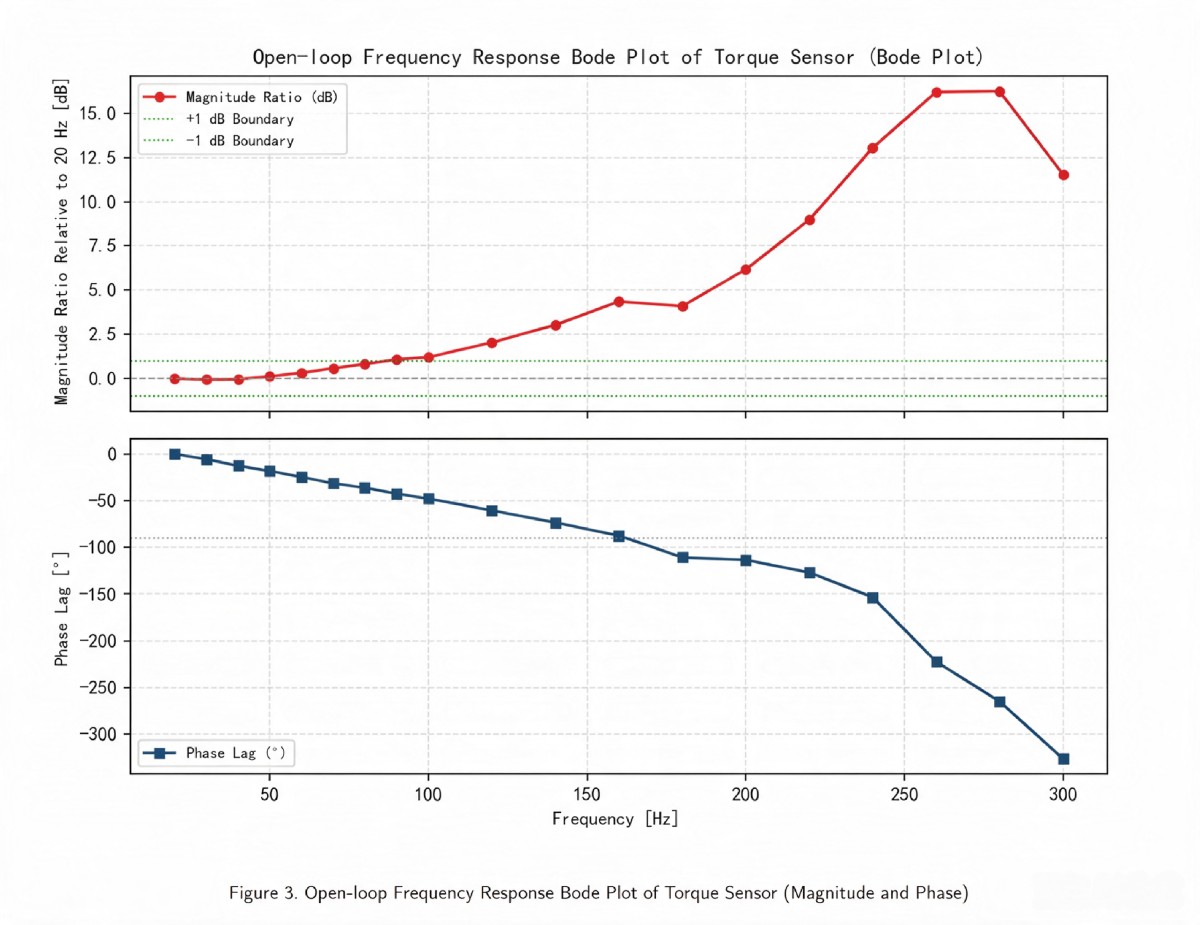
Recently, the HONPINE laboratory conducted a sine-sweep frequency response test on the HAG 17 harmonic joint module, evaluating its dynamic response under different excitation frequencies.
The test results demonstrate the HAG 17's ability to balance high mechanical stiffness with responsive motion control. With wide bandwidth, low phase lag, and excellent signal coherence, the HAG 17 provides a high-performance motion platform for advanced humanoid robots, collaborative robotic arms, and other precision robotic applications.
Let's take a closer look at the measured results and understand what they mean for real-world robotic motion control.
HAG 17 Harmonic Joint Module: Frequency Response Test Results
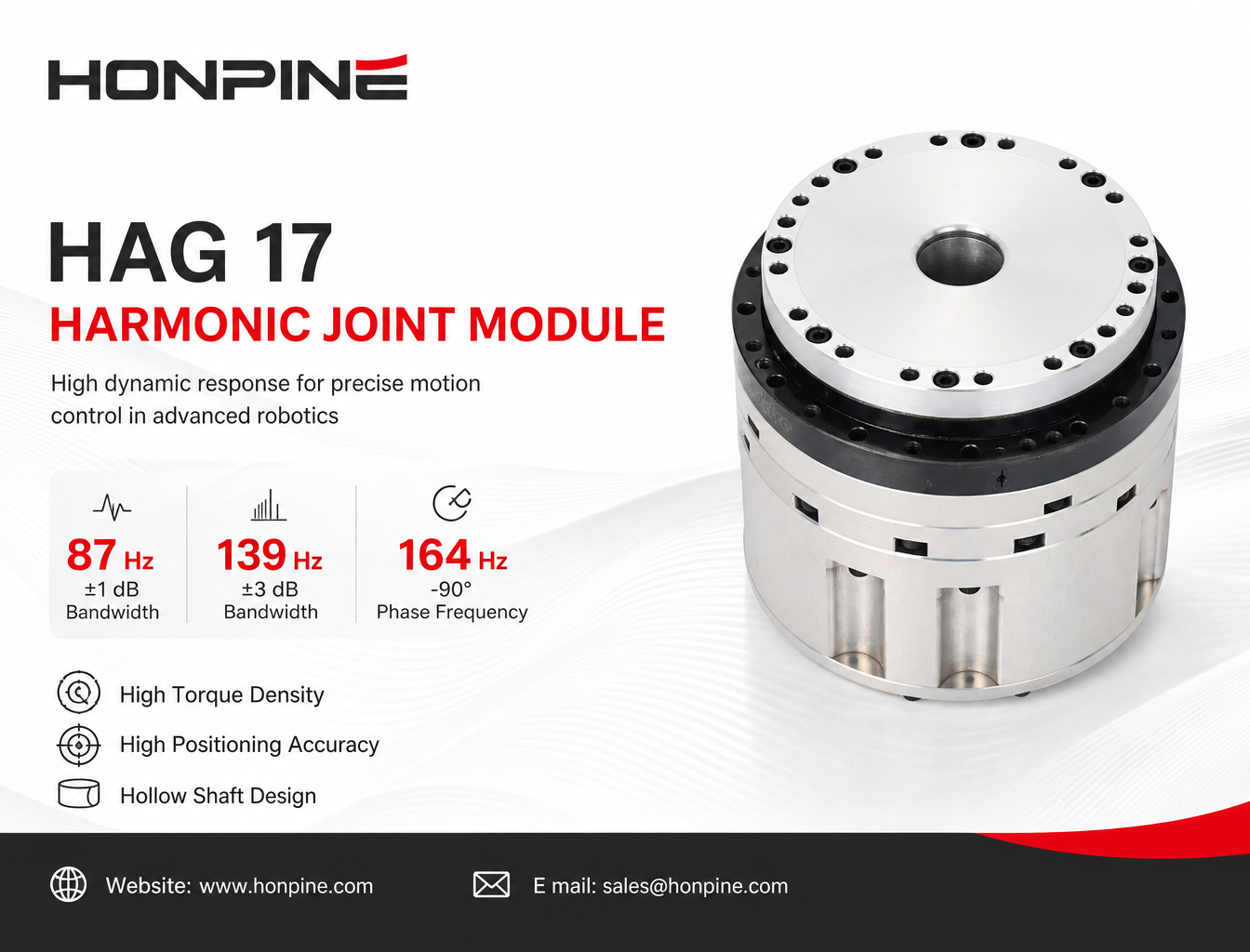
1. Wide Flat Frequency Response – ±1 dB Bandwidth of 87 Hz
According to the test report, the HAG 17 maintains an output amplitude deviation within ±1.0 dB across the 20–87 Hz frequency range.
This wide flat response range indicates consistent amplitude tracking and excellent dynamic performance within its qualified operating bandwidth. For robotic applications requiring accurate trajectory tracking and responsive motion commands, this provides a solid foundation for stable control.
2. Extended Dynamic Operating Range – ±3 dB Bandwidth of 139 Hz
The HAG 17 achieves a qualified bandwidth of 139 Hz under the ±3 dB criterion.
This means the joint module maintains an acceptable amplitude response even at higher excitation frequencies. Such performance is valuable in dynamic applications involving rapid acceleration and deceleration, high-frequency motion commands, and force-control compensation.
3. Low Phase Lag – -90° Phase Frequency at 164 Hz
The measured phase response reaches -90° at 164 Hz.
Low phase lag is important because it helps reduce the phase delay between commanded motion and actual mechanical response. Within the relevant control frequency range, this provides additional phase margin for the overall control system.
For collaborative robots and force-controlled robotic arms, responsive joint behavior is particularly important during physical interaction, contact detection, and collision response.
What Do the HAG 17 Frequency Response Results Mean for Robot Motion Control?
Beyond the individual bandwidth and phase measurements, three aspects of the test results deserve particular attention.
1. An 87 Hz ±1 dB Bandwidth for Consistent Motion Tracking
An ±1 dB bandwidth of 87 Hz indicates that the HAG 17 maintains a relatively flat amplitude response over a broad frequency range.
In practical terms, this helps the joint module reproduce dynamic motion commands with less amplitude variation, supporting more consistent trajectory tracking in applications requiring rapid and precise movements.
2. A -90° Phase Frequency of 164 Hz for Greater Control-System Flexibility
The -90° phase frequency reaches 164 Hz, providing useful dynamic response headroom for higher-level control systems.
A favorable phase response can help engineers maintain adequate phase margin when designing closed-loop motion and force-control systems. However, the actual stability margin also depends on the controller, communication delay, sampling frequency, and other mechanical and electrical characteristics of the complete robot.
3. Average Coherence of 0.979 for Reliable Measurement Data
The average coherence measured during the frequency sweep reaches 0.979.
Coherence is an indicator of the consistency of the relationship between the excitation signal and measured response. A value close to 1 indicates a strong linear relationship within the measured frequency range.
For a torque-sensor-equipped harmonic joint module, this provides confidence in the measured dynamic response and supports the evaluation of torque feedback characteristics during motion and interaction.
What Other Advantages Does the HONPINE HAG Harmonic Joint Module Offer?
In addition to its frequency response performance, the HAG 17 combines compact dimensions, high torque density, precision positioning, and a hollow-shaft design to meet the structural and control requirements of advanced robotic joints.
1. High Torque Density: Up to 54 N·m Peak Torque in a Compact Design
Key specifications:
Outer diameter: 80 mm
Overall length: 71.9 mm
Rated torque: Up to 32 N·m
Peak torque: Up to 54 N·m
Despite its compact dimensions of just 80 mm in diameter and 71.9 mm in length, the HAG 17 delivers up to 32 N·m of rated torque and 54 N·m of peak torque.
For humanoid robot elbow, wrist, and ankle joints, as well as medium-sized collaborative robot joints, installation space and weight are often major design constraints.
The HAG 17 offers a high torque-to-size ratio, allowing robot manufacturers to develop more compact and lightweight mechanical structures without compromising the torque required for dynamic movements such as rapid gripping, acceleration, and landing impact compensation.
2. High Positioning Accuracy and Repeatability for Precision Robotic Applications
Key specifications:
Positioning accuracy: ±20 arcsec
Repeatability: ±5 arcsec
The HAG 17 achieves positioning accuracy of ±20 arcseconds (approximately 0.0056°) and repeatability of ±5 arcseconds (approximately 0.0014°).
These specifications make it suitable for robotic applications requiring precise and repeatable positioning.
In semiconductor wafer handling, medical robotic equipment, precision assembly, and optical positioning systems, even small positioning deviations can affect overall equipment performance.
Combined with appropriate feedback and motion-control algorithms, the HAG 17 helps robotic systems achieve consistent positioning across repeated motion cycles.
3. Hollow-Shaft Cable Routing and Multiple Gear Ratios for Flexible Robot Design
Key specifications:
Hollow-shaft diameter: 16.8 mm
Available gear ratios: 51:1, 81:1, and 101:1
16.8 mm Hollow Shaft for Integrated Cable Routing
Cable management is a common challenge in robotic arm design. The HAG 17 features a 16.8 mm hollow shaft, allowing motor cables, encoder wires, and pneumatic lines to pass through the center of the joint.
This design helps simplify internal cable routing, reduce external wiring, and minimize repeated cable bending during joint movement. It can also improve the overall maintainability and reliability of the robotic system.
Three Gear Ratios for Different Joint Requirements
The HAG 17 offers three gear ratio options: 51:1, 81:1, and 101:1.
Different gear ratios allow engineers to balance output speed and torque according to the requirements of each robotic joint.
For example, a lower gear ratio may be preferred when higher output speed is required, while a higher gear ratio can provide greater torque multiplication at a given motor speed.
This flexibility allows robot manufacturers to configure different joints, such as shoulders, elbows, and wrists, using a common mechanical platform while adapting the transmission ratio to specific application requirements.
Is Your Robot Experiencing Motion Control Problems?
Are you encountering any of the following problems during robot development?
Inaccurate trajectory tracking during high-speed movements
Joint vibration or jitter when the robot stops
Low-frequency oscillation during operation
Jerky or inconsistent zero-force hand-guiding
Delayed or false-positive collision detection
Excessive stiffness during impedance control
Insufficient responsiveness during physical human-robot interaction
These problems may be related to the dynamic response of the joint module, torque feedback characteristics, mechanical stiffness, or the overall motion-control architecture.
The HONPINE HAG harmonic joint module combines a harmonic transmission system, integrated torque sensing, and a compact joint structure to support high-performance robotic motion and force control.
For humanoid robots, collaborative robotic arms, and other precision automation equipment, selecting a joint module with suitable bandwidth, phase response, torque capacity, and positioning accuracy is an important step toward improving overall system performance.
Contact HONPINE to discuss your robotic joint requirements and explore a suitable HAG harmonic joint module configuration.
Read More
Learn more about the story of HONPINE and industry trends related to precision transmission.
 What is robot joint actuator?How to Choose the Best Robot Rotary Joint Actuator?In core robot joint transmission solutions, planetary and harmonic rotary actuators each have their own strengths. Choosing the right type based on application requirements is essential to achieve the optimal balance between performance and cost.
 DD Motors VS Harmonic Rotary ActuatorsThis article provides an in-depth comparison between Direct Drive (DD) motors and harmonic rotary actuators, covering their transmission principles, advantages and disadvantages, and typical application fields.
 OMG Ultra Compact Harmonic Drive Joint Module with Built-in Torque SensorHONPINE TCHL series harmonic drive joint module is a game-changing product that achieves disruptive improvements in multiple aspects such as lightweight design, integration level, and connection convenience. This article will analyze its revolutionary enhancements with you.
 The Role of Harmonic Drive Gears in Achieving 5–10 μm Accuracy in Dental Milling MachinesA dental milling machine is a CNC machining system used to directly process digital dental models into restorations such as crowns, bridges, veneers, inlays, and implant abutments. Dental milling machines require far higher operational accuracy and motion stability than ordinary equipment. This article explains how harmonic drive gear help dental milling machines achieve stable, continuous, and controllable operation.
 Why Are Harmonic Rotary Actuators Perfect for Medical Equipment?Harmonic rotary actuators (typically integrated systems consisting of a harmonic drive reducer, frameless torque motor, encoder, and optional brake) are regarded as key components in medical equipment. The core reason is that they simultaneously meet the most stringent medical requirements for precision, compact size, safety, and controllability. The following explanation is structured from three perspectives: technical characteristics, application scenarios, and medical value.
 High-Precision RV Reducers Perfectly Matched for Walking RobotsThe walking axis of a robot is a core component for power transmission and support. RV reducers provide extremely high rigidity, precision, and torque while maintaining a compact size and exceptional reliability, making them an ideal match for the demanding requirements of walking robot joints in terms of load capacity, impact resistance, and precision.
 HONPINE HAG Harmonic Joint Module: Redefining Robotic Motion Control with Wide Bandwidth, Low Phase Lag, and High CoherenceWhen a robot experiences joint vibration, inaccurate trajectory tracking, or delayed force feedback, the problem may lie in the dynamic response of its joint actuator. Bandwidth, phase lag, and signal coherence are critical indicators of robotic motion performance. In this article, we examine the actual sine-sweep test results of the HONPINE HAG 17 harmonic joint module, including its 87 Hz ±1 dB bandwidth, 139 Hz ±3 dB bandwidth, and 164 Hz -90° phase frequency. We also explore how its torque density, positioning accuracy, and hollow-shaft design support advanced humanoid robots and collaborative robotic applications.
 How to Find a Reliable Harmonic Reducer Wholesaler in China?Choosing a reliable harmonic reducer wholesaler in China involves more than comparing prices and product specifications. Buyers need to evaluate technical capabilities, manufacturing quality, product consistency, and long-term supply reliability. Whether you are sourcing harmonic reducers for robotics, semiconductor equipment, CNC machinery, or industrial automation, understanding how to assess suppliers is essential. This guide outlines four practical steps to help you verify product performance, evaluate manufacturers, and make informed bulk purchasing decisions.
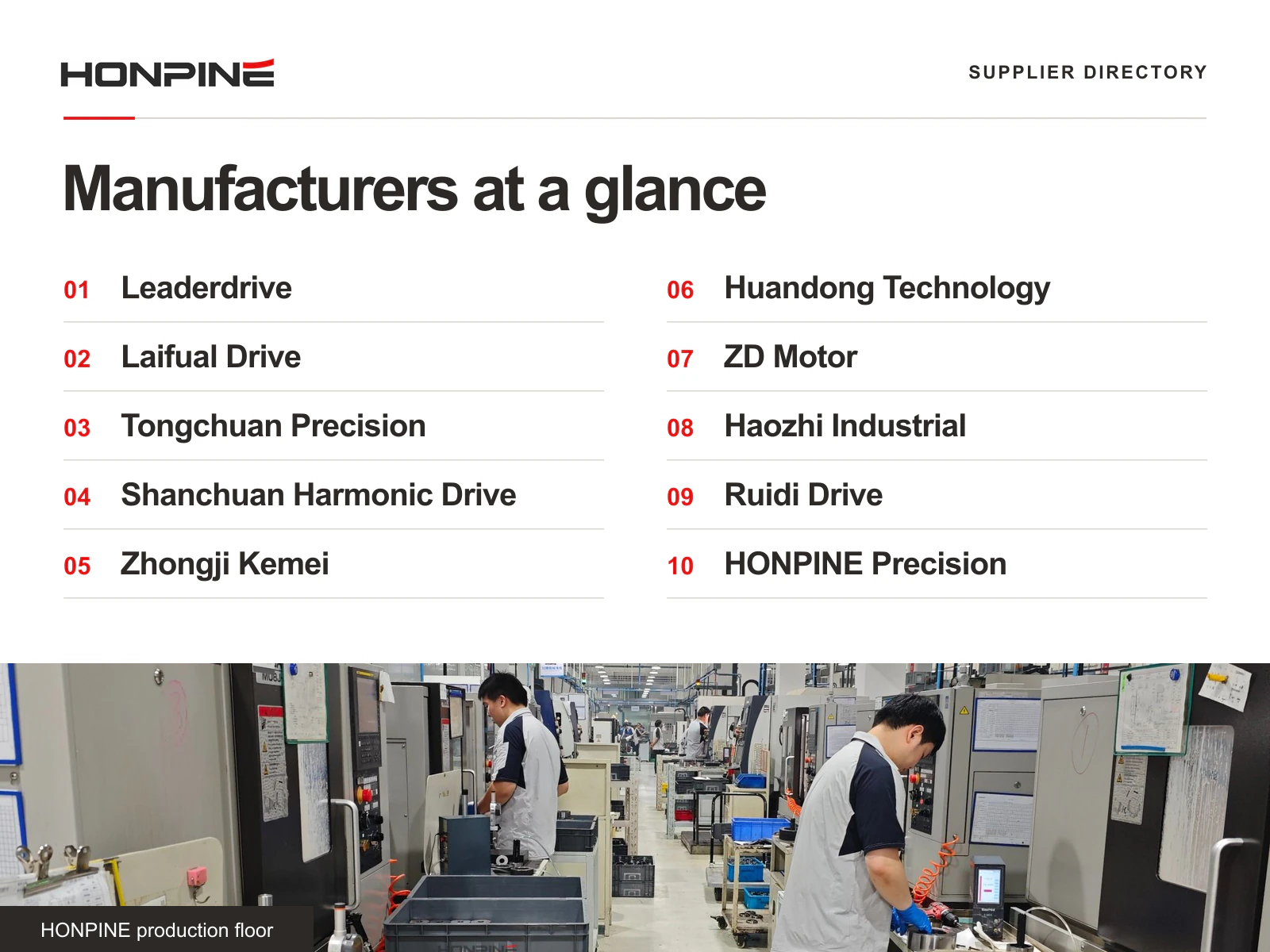
 Top 10 Harmonic Drive Reducer Manufacturers in ChinaChina has become an important manufacturing base for harmonic drive reducers, supplying precision transmission components to industrial robots, collaborative robots, humanoid robots, and high-end automation equipment. As more international buyers explore Chinese suppliers, understanding the differences between manufacturers is essential. In this article, we introduce 10 harmonic drive reducer manufacturers in China, examining their company backgrounds, product portfolios, technical capabilities, and typical applications to help engineers and procurement professionals identify potential suppliers.
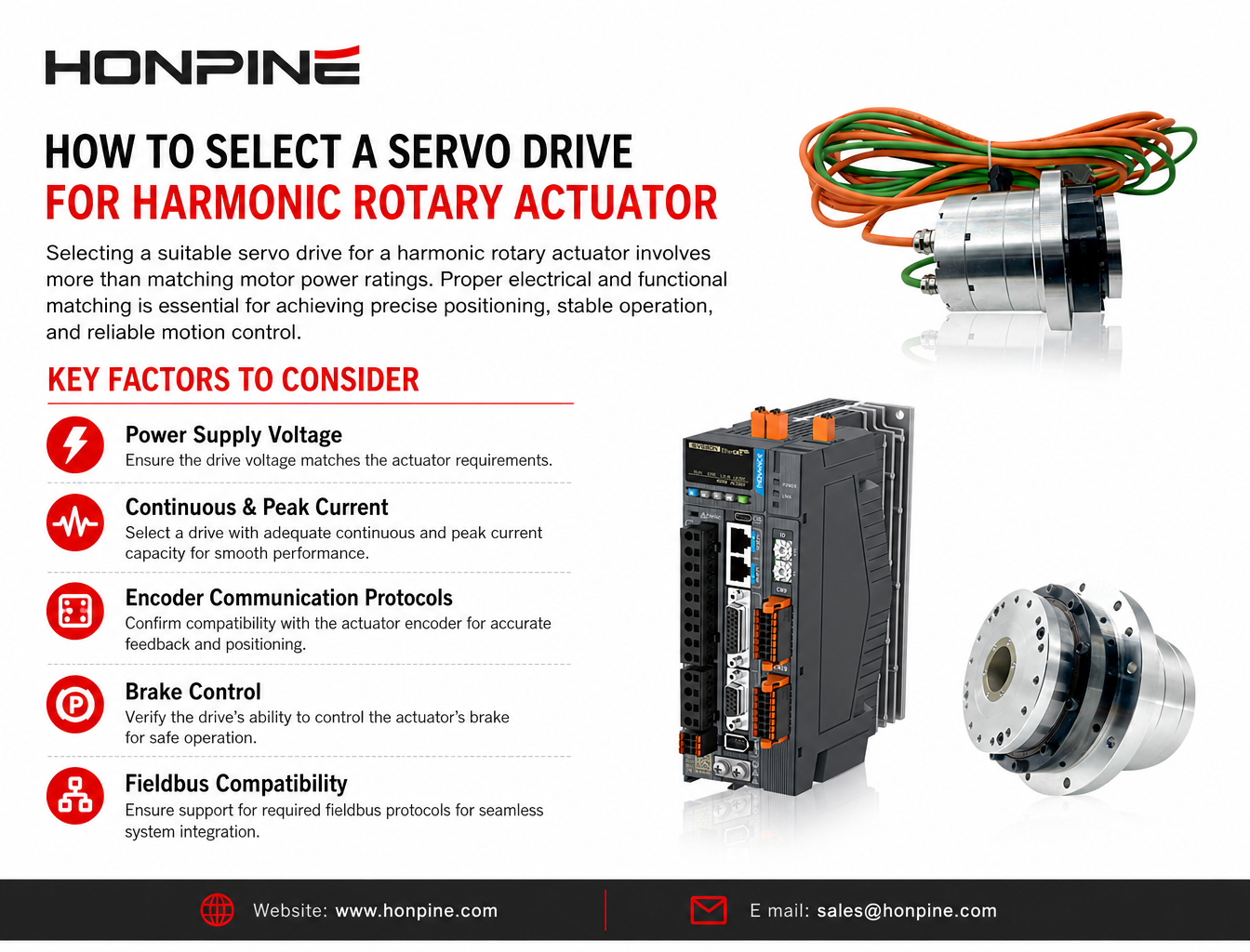
 How to Select a Servo Drive for HONPINE Harmonic Rotary Actuators with External Drives?Selecting a suitable servo drive for a harmonic rotary actuator involves more than matching motor power ratings. Power supply voltage, continuous and peak current, encoder communication protocols, brake control, and fieldbus compatibility all affect system performance. For HONPINE harmonic rotary actuators with external servo drives, proper electrical and functional matching is essential for achieving precise positioning, stable operation, and reliable motion control. In this guide, Theodore Li, Technical Director at HONPINE, explains the key factors engineers should consider when selecting and integrating an external servo drive.
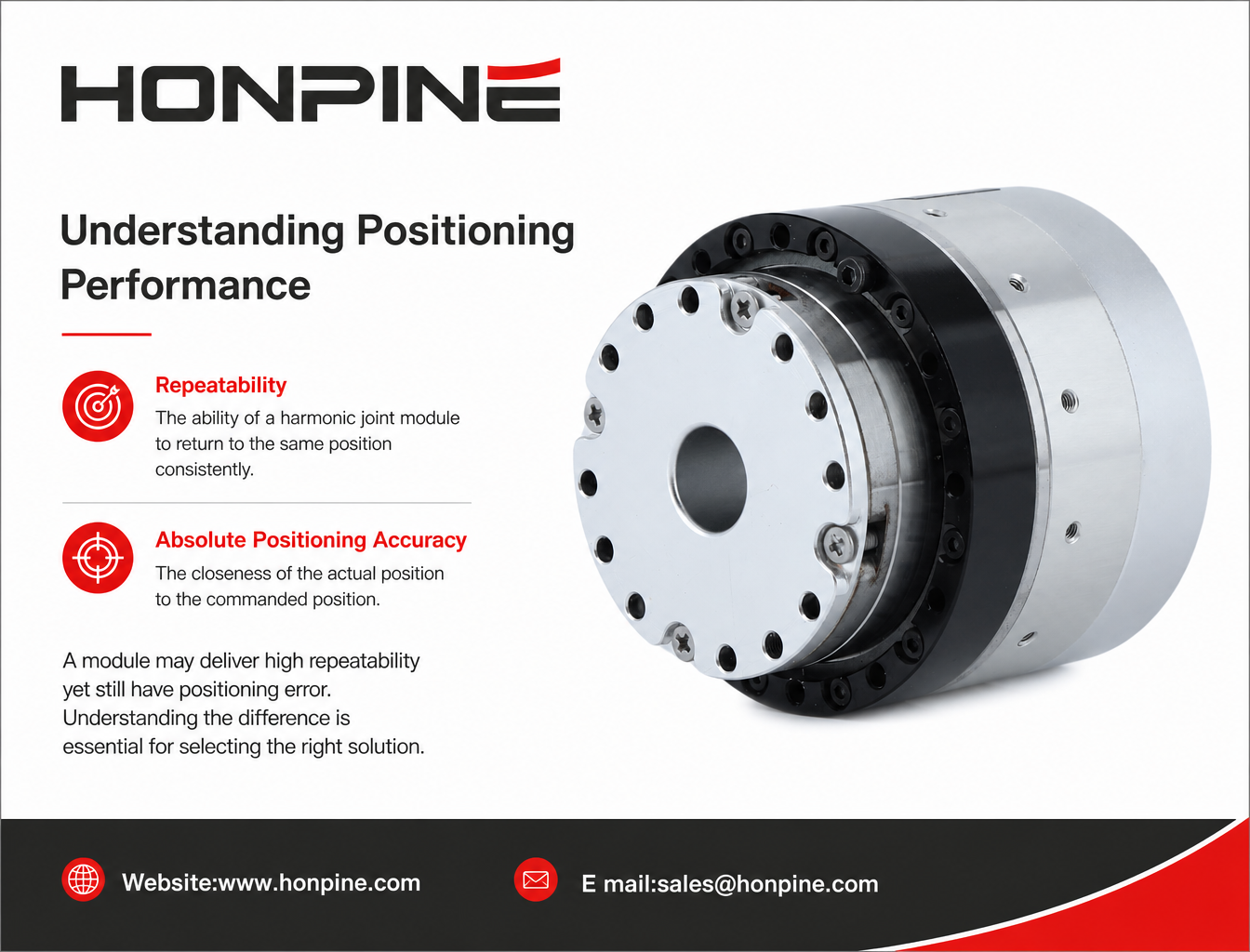
 Repeatability vs. Absolute Positioning Accuracy in Harmonic Joint Modules: Differences and Industrial ApplicationsWhen evaluating the positioning performance of a harmonic joint module, repeatability and absolute positioning accuracy are two important but often misunderstood specifications. A module may repeatedly reach the same position with high consistency while still having a noticeable deviation from the commanded position. Understanding this distinction is essential when selecting motion components for robotics, semiconductor equipment, precision machining, and medical devices. This article explains how the two specifications differ, what factors affect them, and which positioning performance should take priority in different industrial applications.
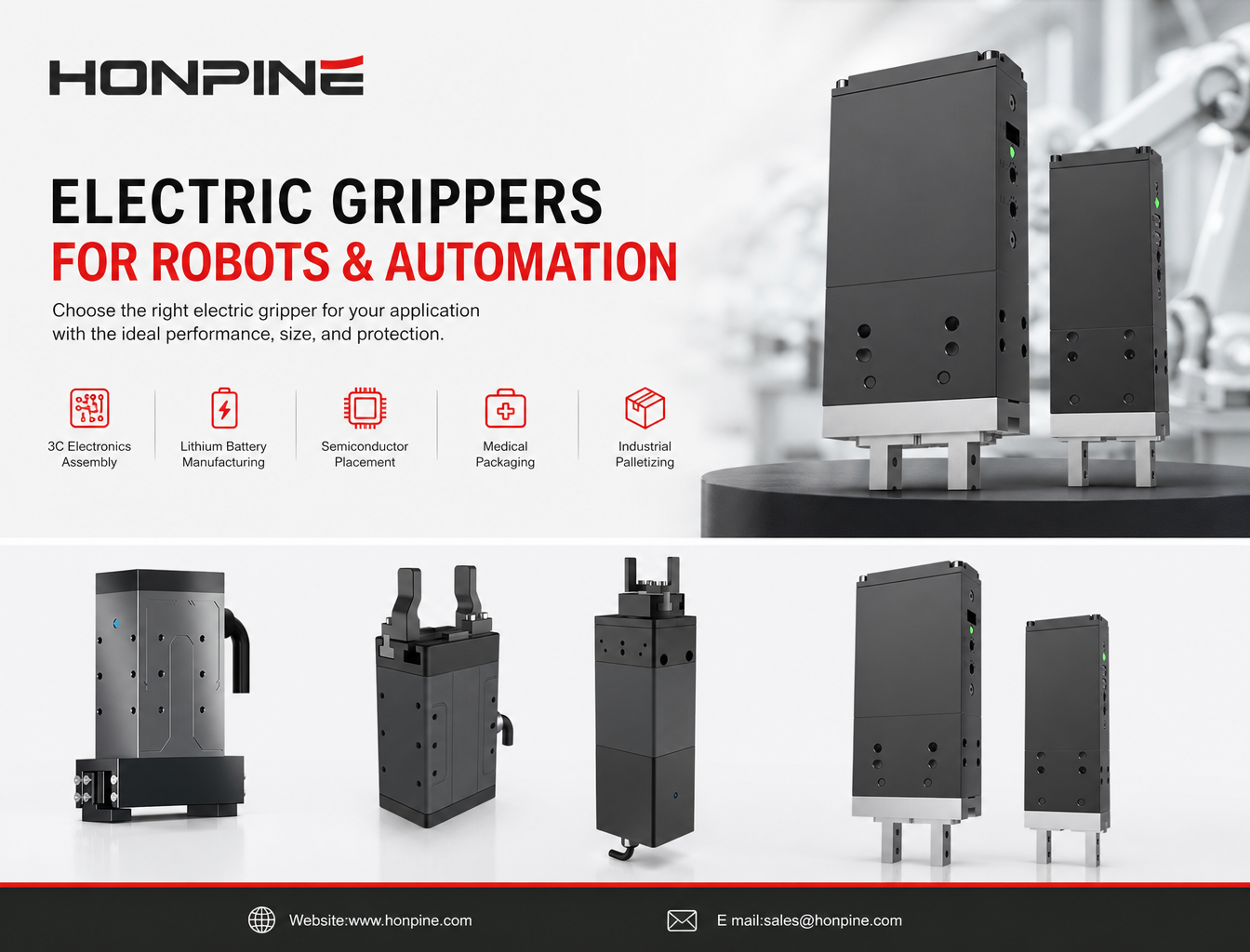
 How to Select Electric Grippers for Robots and Industrial Automation Production Lines?Electric grippers are essential robot end-effectors in modern industrial automation, enabling precise workpiece handling, assembly, positioning, and packaging. However, different applications require different gripping forces, stroke lengths, payload capacities, force control accuracy, and protection ratings. How should engineers select the right electric gripper for delicate 3C components, heavy lithium battery modules, semiconductor placement, medical packaging, or general industrial handling? In this article, Theodore Li, Technical Director at HONPINE, explains how to choose suitable electric grippers and linear rotary actuators based on actual application requirements.
Double Click
We provide harmonic drive reducer,planetary reducer,robot joint motor,robot rotary actuators,RV gear reducer,robot end effector,dexterous robot hand
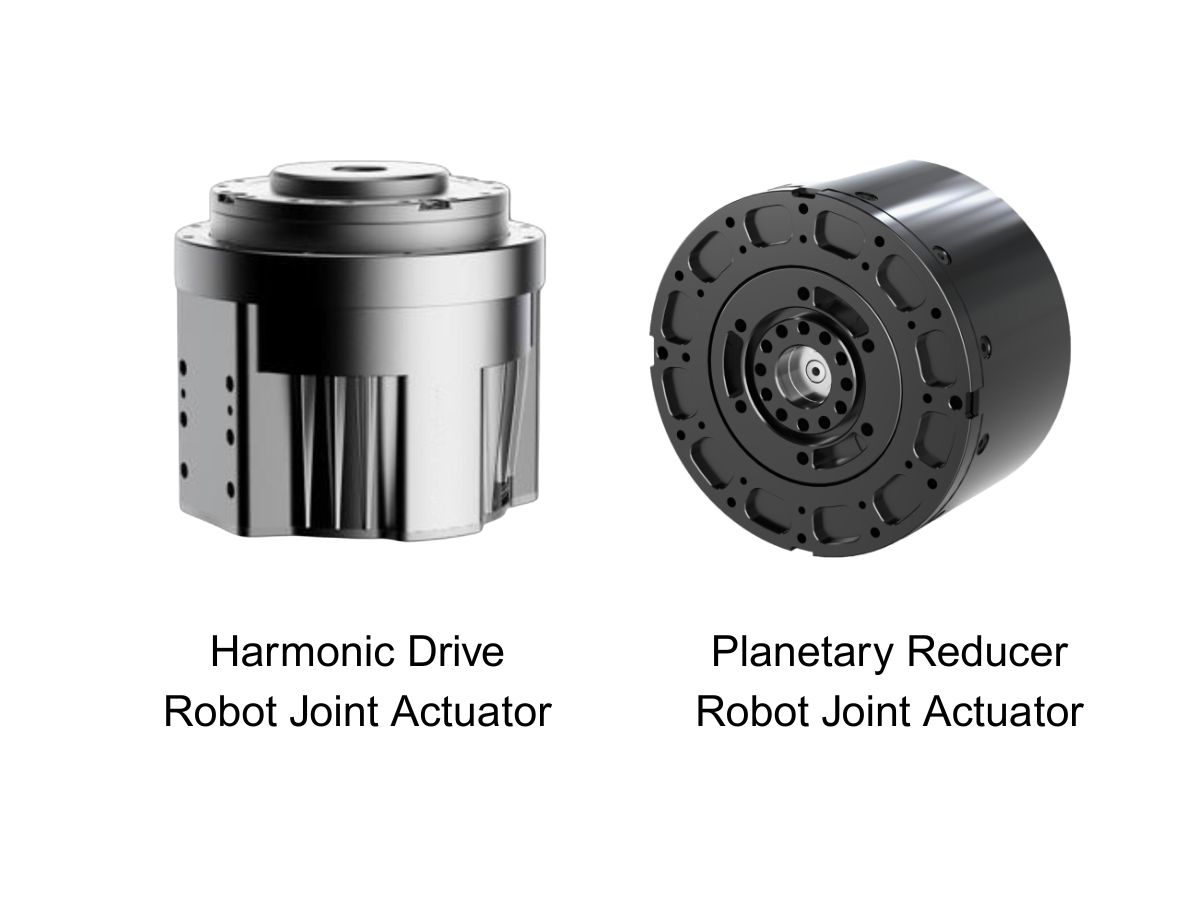
 What is robot joint actuator?How to Choose the Best Robot Rotary Joint Actuator?In core robot joint transmission solutions, planetary and harmonic rotary actuators each have their own strengths. Choosing the right type based on application requirements is essential to achieve the optimal balance between performance and cost.
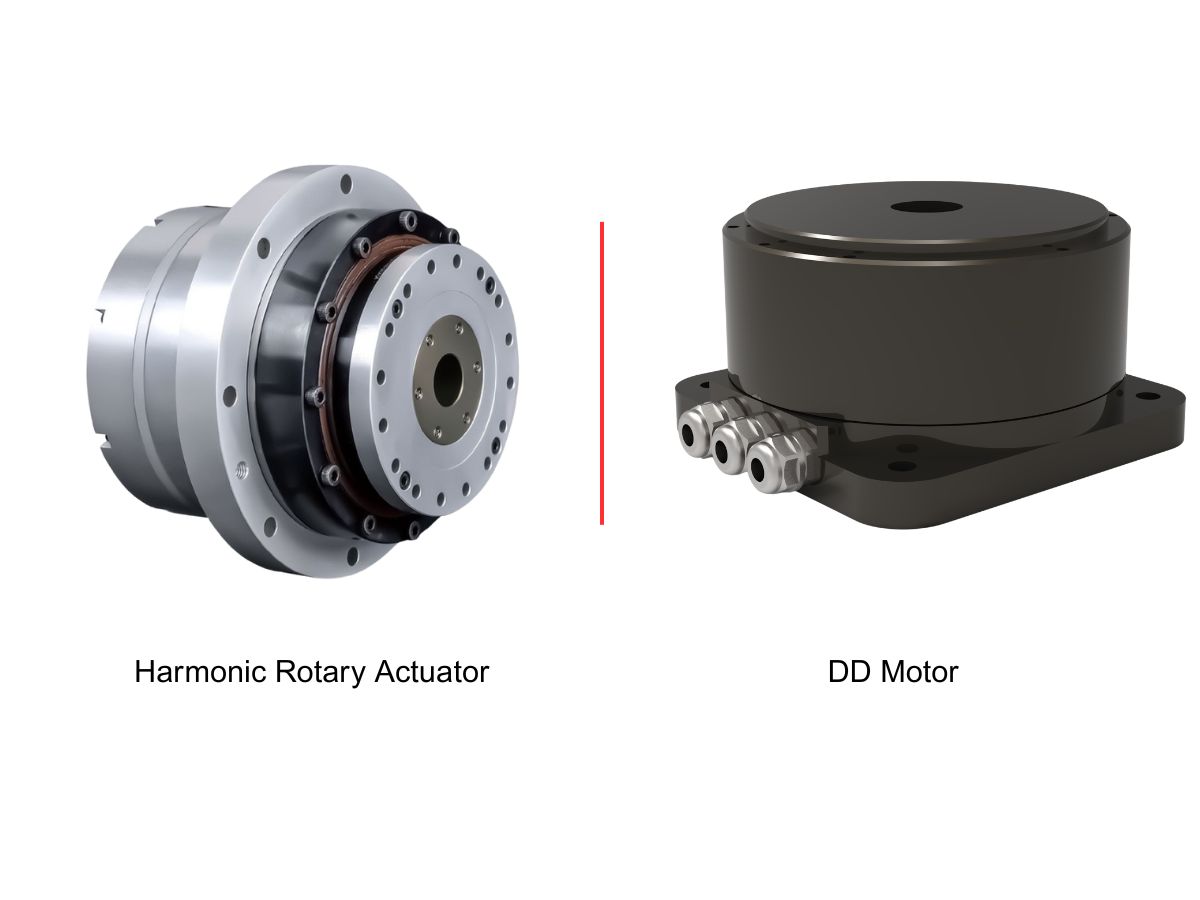
 DD Motors VS Harmonic Rotary ActuatorsThis article provides an in-depth comparison between Direct Drive (DD) motors and harmonic rotary actuators, covering their transmission principles, advantages and disadvantages, and typical application fields.
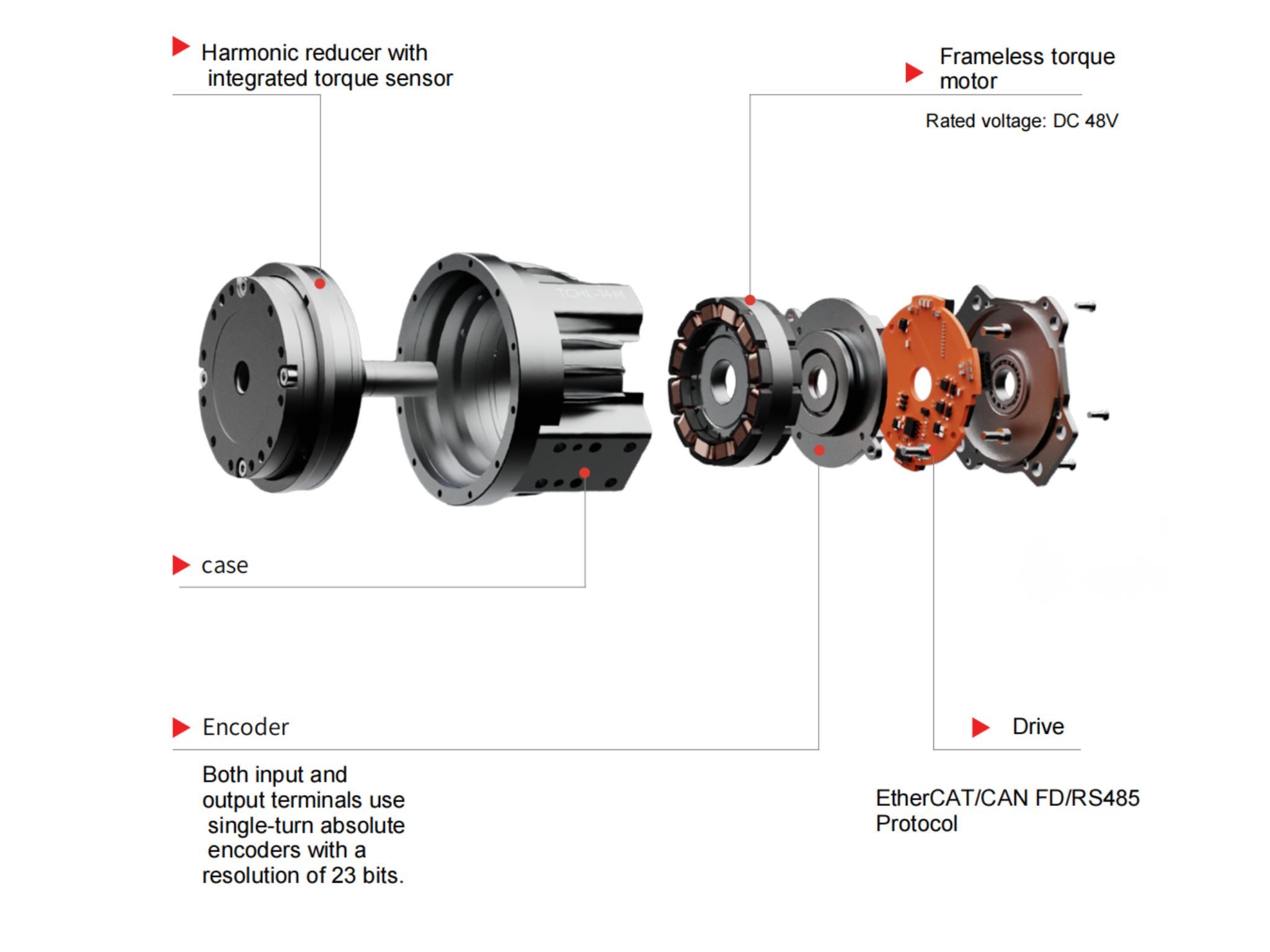
 OMG Ultra Compact Harmonic Drive Joint Module with Built-in Torque SensorHONPINE TCHL series harmonic drive joint module is a game-changing product that achieves disruptive improvements in multiple aspects such as lightweight design, integration level, and connection convenience. This article will analyze its revolutionary enhancements with you.
 HONPINE HAG Harmonic Joint Module: Redefining Robotic Motion Control with Wide Bandwidth, Low Phase Lag, and High CoherenceWhen a robot experiences joint vibration, inaccurate trajectory tracking, or delayed force feedback, the problem may lie in the dynamic response of its joint actuator. Bandwidth, phase lag, and signal coherence are critical indicators of robotic motion performance. In this article, we examine the actual sine-sweep test results of the HONPINE HAG 17 harmonic joint module, including its 87 Hz ±1 dB bandwidth, 139 Hz ±3 dB bandwidth, and 164 Hz -90° phase frequency. We also explore how its torque density, positioning accuracy, and hollow-shaft design support advanced humanoid robots and collaborative robotic applications.
 How to Find a Reliable Harmonic Reducer Wholesaler in China?Choosing a reliable harmonic reducer wholesaler in China involves more than comparing prices and product specifications. Buyers need to evaluate technical capabilities, manufacturing quality, product consistency, and long-term supply reliability. Whether you are sourcing harmonic reducers for robotics, semiconductor equipment, CNC machinery, or industrial automation, understanding how to assess suppliers is essential. This guide outlines four practical steps to help you verify product performance, evaluate manufacturers, and make informed bulk purchasing decisions.
 Top 10 Harmonic Drive Reducer Manufacturers in ChinaChina has become an important manufacturing base for harmonic drive reducers, supplying precision transmission components to industrial robots, collaborative robots, humanoid robots, and high-end automation equipment. As more international buyers explore Chinese suppliers, understanding the differences between manufacturers is essential. In this article, we introduce 10 harmonic drive reducer manufacturers in China, examining their company backgrounds, product portfolios, technical capabilities, and typical applications to help engineers and procurement professionals identify potential suppliers.
 How to Select a Servo Drive for HONPINE Harmonic Rotary Actuators with External Drives?Selecting a suitable servo drive for a harmonic rotary actuator involves more than matching motor power ratings. Power supply voltage, continuous and peak current, encoder communication protocols, brake control, and fieldbus compatibility all affect system performance. For HONPINE harmonic rotary actuators with external servo drives, proper electrical and functional matching is essential for achieving precise positioning, stable operation, and reliable motion control. In this guide, Theodore Li, Technical Director at HONPINE, explains the key factors engineers should consider when selecting and integrating an external servo drive.
 Repeatability vs. Absolute Positioning Accuracy in Harmonic Joint Modules: Differences and Industrial ApplicationsWhen evaluating the positioning performance of a harmonic joint module, repeatability and absolute positioning accuracy are two important but often misunderstood specifications. A module may repeatedly reach the same position with high consistency while still having a noticeable deviation from the commanded position. Understanding this distinction is essential when selecting motion components for robotics, semiconductor equipment, precision machining, and medical devices. This article explains how the two specifications differ, what factors affect them, and which positioning performance should take priority in different industrial applications.
 How to Select Electric Grippers for Robots and Industrial Automation Production Lines?Electric grippers are essential robot end-effectors in modern industrial automation, enabling precise workpiece handling, assembly, positioning, and packaging. However, different applications require different gripping forces, stroke lengths, payload capacities, force control accuracy, and protection ratings. How should engineers select the right electric gripper for delicate 3C components, heavy lithium battery modules, semiconductor placement, medical packaging, or general industrial handling? In this article, Theodore Li, Technical Director at HONPINE, explains how to choose suitable electric grippers and linear rotary actuators based on actual application requirements.
 How to Select Harmonic Rotary Actuators for Precision Assembly, Dispensing, and Inspection in 3C Automation Equipment?Harmonic rotary actuators play an important role in modern 3C automation equipment, particularly in applications requiring high positioning accuracy, compact installation, and stable rotary motion. From precision dispensing machines and smartphone assembly lines to machine vision inspection, laser processing, and semiconductor manufacturing equipment, different applications have different requirements for torque, rigidity, rotational speed, and shaft configuration. In this article, Theodore Li, Technical Director at HONPINE, introduces the HAT, HAS, HATF, and HAM series harmonic rotary actuators and explains how to select suitable models for different 3C automation applications.
 Top 10 Humanoid Robot Joint Motor ManufacturersThe rapid development of humanoid robotics is driving demand for high-performance joint motors and integrated actuator modules. From harmonic and planetary joint modules to frameless torque motors and intelligent drive systems, manufacturers are developing different solutions to meet the requirements of humanoid robot joints. But which supplier should you choose? In this article, we introduce 10 humanoid robot joint motor manufacturers from China and Japan, comparing their product portfolios, technical features, torque capabilities, and application areas to help robotics developers and manufacturers make more informed sourcing decisions.
 FHG-IV Harmonic Drive Reducer: Eliminate the Coupling for a More Compact DesignThe FHG-IV harmonic drive reducer features an integrated protruding input shaft that simplifies motor connection without requiring a separate coupling in compatible configurations. Compared with conventional hollow shaft harmonic reducers, this design helps reduce axial installation space, minimize component quantities, and streamline mechanical assembly. From custom automation machinery to multi-axis transmission systems and compact robotic equipment, the FHG-IV provides a flexible solution for applications where installation space, integration efficiency, and transmission reliability matter.