

AGV Drive Wheel Selection Guide: Non-Steering Drive Wheels vs. Differential Drive vs. Steering Drive Wheels
In AGVs, AMRs, service robots, and intelligent mobile platforms, the drive wheel system is one of the key components determining mobility, stability, load capacity, and overall operating performance.
Three common drive configurations are widely used in mobile robot applications: non-steering drive wheels, differential drive systems, and steering drive wheels. Each configuration has a different mechanical structure, steering principle, performance characteristics, and cost profile. Choosing the right solution depends on factors such as payload, maneuverability, positioning requirements, floor conditions, and operating environment.
This article explains how these three drive configurations work, compares their advantages and limitations, and explores their typical applications to help AGV and AMR manufacturers select the right drive wheel solution for their mobile robot platforms.
What Are the Main Types of AGV Drive Wheels?
AGV drive wheel systems can be designed in different ways depending on how the wheels generate traction and control vehicle direction.
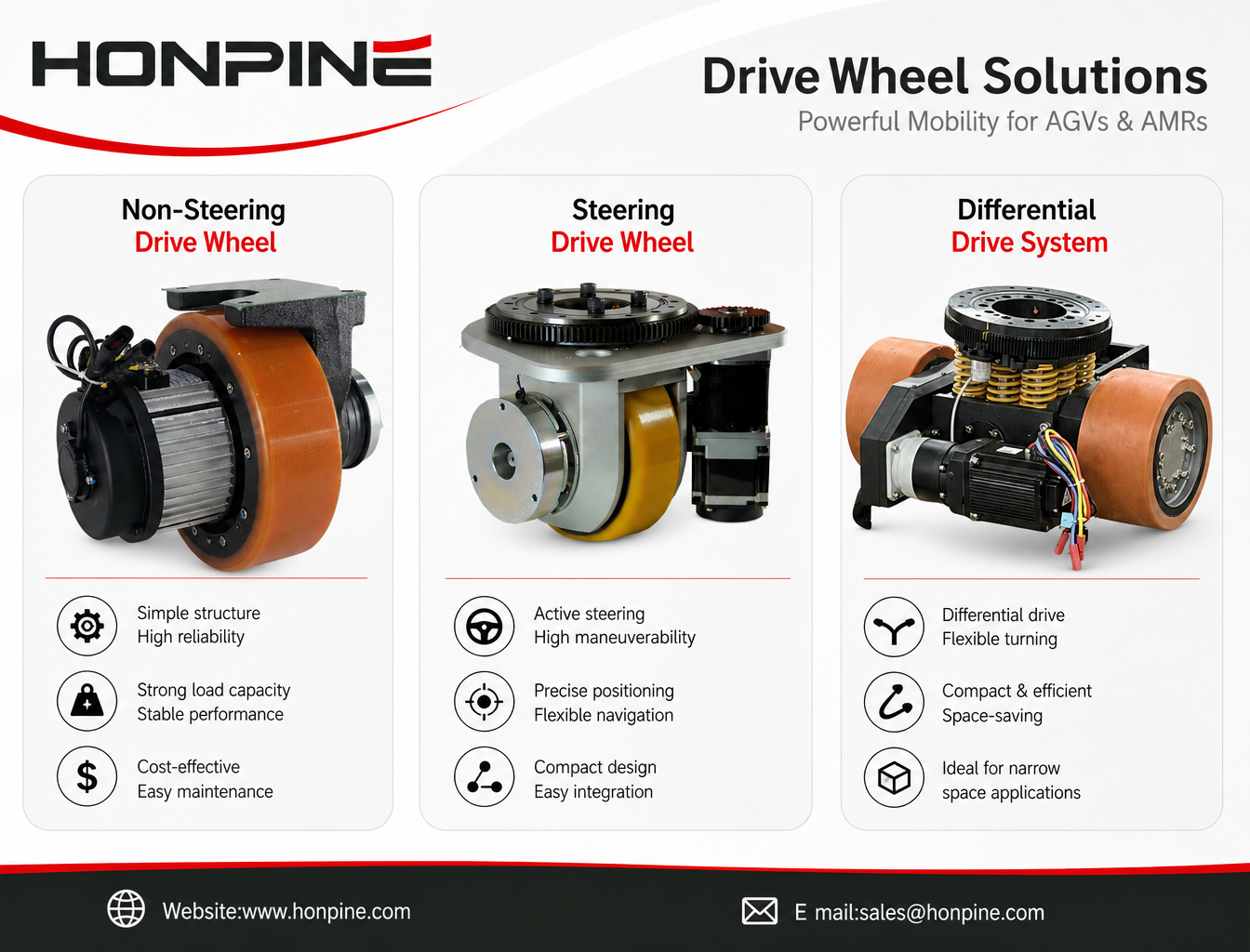
A non-steering drive wheel provides propulsion in a fixed direction and relies on the overall chassis layout to achieve turning. A differential drive system changes direction by adjusting the speed difference between independently driven wheels. A steering drive wheel combines propulsion and active steering, allowing the wheel to change its orientation while generating driving force.
These configurations are used in different types of mobile robots. Understanding their mechanical structures and movement characteristics is the first step in selecting an appropriate AGV drive system.
1. Non-Steering Drive Wheels: Simple Structure for Basic AGV Applications
How Does a Non-Steering Drive Wheel Work?
A non-steering drive wheel is one of the simplest drive configurations used in mobile robots. Its mounting direction remains fixed, and the wheel can only rotate to move the vehicle forward or backward. It does not have an active steering mechanism.
In a typical chassis layout, non-steering drive wheels work together with passive caster wheels or other supporting wheels. The vehicle's turning behavior depends on the overall wheel arrangement and chassis design rather than an independent steering mechanism integrated into the drive wheel.
Advantages and Limitations of Non-Steering Drive Wheels
The main advantages of non-steering drive wheels are their simple mechanical structure, low cost, and ease of maintenance.
First, the structure does not require additional steering motors, steering transmissions, or complex rotary mechanisms. This reduces hardware costs and the number of mechanical components that may require maintenance.
Second, the control system is relatively straightforward. The controller mainly regulates wheel speed and does not need to coordinate an independent steering angle control loop for the drive wheel.
Third, non-steering drive wheels can provide stable propulsion in applications where the vehicle mainly travels along predetermined routes or in relatively simple operating environments.
However, this configuration also has limitations. Since the wheel direction cannot be actively adjusted, the vehicle's maneuverability depends heavily on the chassis layout. Some configurations require a relatively large turning space and are not suitable for applications involving frequent direction changes in narrow areas.
In addition, when passive caster wheels are used, their alignment and response during turning can affect vehicle movement. Caster wheel wear, floor debris, and uneven floor conditions may also influence long-term operating reliability.
Typical Applications of Non-Steering Drive Wheels
Non-steering drive wheels are suitable for mobile equipment with relatively simple movement requirements, especially applications involving regular routes, straightforward transportation tasks, and limited maneuverability requirements.
Typical applications include basic towing AGVs, simple material transport equipment, and mobile platforms operating along predefined paths.
2. Differential Drive Systems: Flexible Maneuverability for Compact AMRs
How Does a Differential Drive System Work?
Differential drive is one of the most widely used drive configurations in small and medium-sized mobile robots.
A typical differential drive system consists of two independently controlled drive wheels mounted on opposite sides of the chassis, together with passive caster wheels or other supporting wheels.
Its steering principle is based on the speed difference between the left and right drive wheels.
When both wheels rotate at the same speed in the same direction, the robot moves straight forward or backward. When the two wheels rotate at different speeds, the robot follows a curved path. If the wheels rotate in opposite directions at the same speed, the robot can rotate around its center, achieving zero-radius turning.
This simple steering principle allows differential drive robots to maneuver effectively without requiring a separate active steering mechanism.
Advantages and Limitations of Differential Drive Systems
The biggest advantage of differential drive is its excellent maneuverability in confined spaces. It can turn in place, change direction quickly, and operate in areas where the available turning radius is limited.
Compared with steering drive systems, differential drive generally has a simpler mechanical structure and lower hardware costs. Its control algorithms are also well established, making system development, commissioning, and maintenance relatively straightforward.
Another advantage is the absence of complex steering transmission components. This reduces mechanical complexity and simplifies routine maintenance.
However, differential drive also has several limitations.
First, turning depends on the difference in rotational speed between the two drive wheels. During certain turning movements, lateral wheel slip may occur between the tires and the floor. This can increase tire wear, create floor friction, and introduce positioning errors.
Second, actual movement accuracy is affected by floor conditions, tire friction, wheel diameter consistency, load distribution, and wheel wear. Uneven floors or insufficient traction may cause the robot to deviate from its intended path.
For long-distance travel, wheel diameter differences and accumulated odometry errors may also affect positioning accuracy. Proper calibration and navigation feedback are therefore important.
In heavy-duty applications, the load distribution between the two drive wheels must be carefully considered. Excessive or uneven wheel loading can affect traction, stability, and motion control performance.
Typical Applications of Differential Drive Systems
Differential drive systems are widely used in lightweight mobile robots that require high maneuverability and relatively simple mechanical structures.
Typical applications include food delivery robots, inspection robots, educational mobile robot platforms, and small warehouse AMRs.
They are particularly suitable for applications where compact dimensions, flexible turning, and cost-effective drive systems are important.
3. Steering Drive Wheels: Active Steering for Industrial AGVs
How Does an AGV Steering Drive Wheel Work?
A steering drive wheel is an integrated drive unit that combines a driving motor and a steering motor in one assembly. It provides both propulsion and active steering, allowing the wheel to independently control its rotational speed and steering angle.
Depending on the chassis configuration, AGVs can use single-steering-wheel, dual-steering-wheel, or four-steering-wheel layouts.
Unlike differential drive, which changes direction through the speed difference between two wheels, a steering drive wheel changes the wheel's physical orientation to control the vehicle's movement direction.
With a properly designed multi-wheel configuration and coordinated motion control, steering drive systems can support different movement modes, including forward and backward travel, turning, lateral movement, diagonal movement, and in-place rotation.
The actual movement capabilities depend on the number of steering drive wheels, their installation positions, steering range, and chassis kinematics.
Advantages and Limitations of Steering Drive Wheels
Steering drive wheels offer several advantages in industrial mobile robot applications, particularly in terms of maneuverability, motion control, and adaptability to different load requirements.
First, steering is achieved by actively changing the wheel angle rather than relying primarily on differential wheel slip. This can reduce lateral tire sliding during turning and help improve motion consistency when the steering system is properly coordinated.
Second, steering drive systems can support accurate path tracking in industrial applications. With suitable encoders, navigation feedback, and motion control algorithms, they can meet the movement requirements of applications involving precise positioning and repeated transportation routes.
Third, steering drive wheels can be designed for demanding load conditions. Their mechanical structure and transmission configuration can be selected according to the required wheel load, traction force, and operating environment.
However, steering drive wheels also have some limitations.
The first is hardware cost. A typical steering drive unit integrates multiple components, including a driving motor, steering motor, reducer, rotary mechanism, and encoders. Its overall cost is generally higher than that of a basic non-steering drive wheel or differential drive configuration.
The second limitation is mechanical complexity. More components and motion interfaces increase design and assembly requirements. The steering mechanism also needs to withstand the loads and operating conditions encountered during vehicle movement.
The third is control complexity. The system must coordinate driving speed and steering angle, often requiring independent control loops and synchronization between multiple wheel units. This increases commissioning time and places higher demands on the control system.
In addition, a single steering drive wheel does not automatically provide omnidirectional movement or zero-radius turning. These capabilities depend on the overall chassis layout and the coordination of multiple wheels.
Single, Dual, and Four-Wheel Steering Configurations
Different steering drive wheel layouts provide different movement capabilities.
A single steering drive wheel can provide propulsion and active steering, but the vehicle's turning and maneuverability still depend on the arrangement of its supporting wheels.
Dual steering drive wheel configurations can offer more flexible movement control and may support in-place rotation or other advanced movement modes when the chassis is properly designed.
Four-wheel steering configurations provide greater flexibility for larger mobile platforms. With coordinated steering and drive control, they can support forward movement, lateral movement, diagonal movement, and in-place rotation, depending on the mechanical layout and control strategy.
These configurations are commonly considered for industrial AGVs and AMRs that require flexible movement, high load capacity, and reliable operation in complex working environments.
Typical Applications of Steering Drive Wheels
Steering drive wheels are commonly used in industrial mobile robots and material handling equipment with demanding requirements for load capacity, positioning, and movement stability.
Typical applications include heavy-duty transport AGVs, automated forklifts, production line material handling robots, and large warehouse AMRs.
They are particularly suitable for applications where the vehicle needs to carry heavy loads, operate in relatively confined industrial spaces, or perform repeated and accurately controlled transportation tasks.
Non-Steering Drive vs. Differential Drive vs. Steering Drive: What Are the Differences?
Although all three configurations provide propulsion for mobile robots, their steering principles and mechanical structures are quite different.
There is no universally optimal drive wheel configuration. Non-steering drive wheels are suitable for relatively simple movement requirements, differential drive offers flexible turning with a compact structure, and steering drive wheels provide more advanced movement control for demanding industrial applications.
The appropriate choice depends on the actual operating conditions and the overall chassis design.
How Do You Choose the Right Drive Wheel for Your AGV or AMR?
Selecting a drive wheel system requires more than comparing the mechanical structures or purchase costs of different solutions. The drive configuration should match the vehicle's payload, movement requirements, floor conditions, positioning accuracy, and available installation space.
Choose Based on Payload and Wheel Load
Payload is one of the most important factors in AGV drive wheel selection.
The total vehicle weight includes the chassis, battery, drive system, control equipment, and payload. The load distribution between individual wheels must also be considered.
For heavy-duty AGVs, the selected drive wheel must provide sufficient load capacity and traction under the expected operating conditions. The design should also account for acceleration, deceleration, turning, uneven load distribution, and other dynamic factors.
A drive wheel with an insufficient load rating may experience excessive mechanical stress, reduced traction, overheating, or premature wear.
Choose Based on Turning Radius and Maneuverability
The available operating space determines how much maneuverability the AGV needs.
For robots operating in narrow aisles or compact indoor environments, differential drive can be a practical option because it supports zero-radius turning.
For industrial vehicles that require controlled steering and more flexible movement patterns, steering drive wheels may be more suitable. Multi-wheel steering configurations can provide additional movement capabilities when the chassis design supports them.
If the vehicle mainly travels along simple routes with limited direction changes, a non-steering drive wheel configuration may be sufficient.
Choose Based on Floor Conditions and Positioning Requirements
Floor conditions directly affect wheel traction, wear, and positioning performance.
Smooth industrial floors generally provide more consistent traction, while uneven surfaces, floor joints, dust, oil, and other contaminants can influence wheel-ground interaction.
For applications requiring accurate positioning and repeated path tracking, the drive wheel system should be evaluated together with the navigation method, encoder feedback, wheel material, and motion control strategy.
Neither differential drive nor steering drive automatically guarantees high positioning accuracy. The complete mobile robot system determines the final result.
Choose Based on Chassis Space and Total System Cost
Installation space and overall system cost should also be considered.
Non-steering drive wheels and differential drive systems generally have simpler mechanical structures and can be easier to integrate into compact chassis designs.
Steering drive wheels require additional installation space for the steering mechanism and sufficient clearance for wheel rotation. They may also require more sophisticated control hardware and software.
When comparing costs, manufacturers should consider not only the initial purchase price but also integration time, commissioning, maintenance, component replacement, and long-term operating costs.
HONPINE AGV Drive Wheel Solutions
HONPINE provides drive wheel solutions for AGVs, AMRs, and other intelligent mobile equipment. Its product range includes AGV steering drive wheels, electric steering drive wheels, and differential drive wheels for different chassis configurations and operating requirements.
For industrial applications requiring active steering, steering drive wheel solutions integrate driving and steering functions to support controlled movement and flexible chassis layouts.
For mobile robots requiring a compact and cost-effective drive configuration, differential drive wheels provide independent left-right wheel control and flexible turning capability.
When selecting a drive wheel solution, manufacturers should evaluate the required load capacity, traction force, wheel diameter, steering range, speed, installation dimensions, and control interface to ensure compatibility with the complete vehicle system.
By matching the drive wheel configuration to the actual operating conditions, AGV and AMR manufacturers can improve vehicle performance, simplify system integration, and build more reliable mobile robot platforms.
Frequently Asked Questions About AGV Drive Wheels
What Is the Difference Between a Drive Wheel and a Steering Drive Wheel?
A drive wheel provides propulsion by rotating to move the vehicle. Its installation direction may be fixed or adjustable, depending on its design.
A steering drive wheel combines propulsion and active steering functions. It can rotate to generate driving force and change its physical orientation to control the vehicle's movement direction.
Which Drive Wheel Is Better for a Heavy-Duty AGV?
Steering drive wheels are commonly used in heavy-duty AGVs because they can be designed to provide the required wheel load capacity, traction, and active steering performance.
However, the best solution depends on the vehicle's total weight, load distribution, floor conditions, movement requirements, and chassis configuration. The rated load capacity of each wheel and the complete vehicle's dynamic performance should be evaluated before selection.
Can a Differential Drive AGV Turn in Place?
Yes. A differential drive AGV can achieve zero-radius turning by rotating its left and right drive wheels in opposite directions.
The vehicle rotates around a point determined by its wheel arrangement and geometry. Actual turning performance depends on wheel traction, floor friction, load distribution, and control accuracy.
Can a Steering Drive Wheel Support Omnidirectional Movement?
A steering drive wheel can support omnidirectional movement when used in a suitable multi-wheel chassis configuration.
For example, certain dual-wheel or four-wheel steering layouts can support lateral movement, diagonal movement, and in-place rotation through coordinated steering and speed control. These capabilities are determined by the overall chassis kinematics rather than the steering drive wheel alone.
How Do I Calculate the Required AGV Drive Wheel Load Capacity?
The required load capacity depends on the total vehicle weight, payload, number of supporting wheels, wheel load distribution, and dynamic operating conditions.
A basic preliminary estimate can be made by dividing the total vehicle weight by the number of load-bearing wheels. However, this assumes equal load distribution, which may not reflect actual operating conditions.
For a reliable selection, manufacturers should consider the maximum load on each wheel, acceleration and braking forces, turning conditions, floor unevenness, and an appropriate safety factor. The selected wheel should meet the required load rating under the actual operating conditions.
Conclusion
Non-steering drive wheels, differential drive systems, and steering drive wheels each have distinct advantages and limitations in AGV and AMR applications.
Non-steering drive wheels offer a simple and economical solution for basic transportation tasks. Differential drive provides flexible maneuverability and zero-radius turning for compact mobile robots. Steering drive wheels offer active steering and greater flexibility for industrial mobile platforms with demanding load and positioning requirements.
The right choice should be based on the vehicle's payload, movement requirements, floor conditions, positioning targets, installation space, and total system cost.
By understanding the differences between these drive configurations, AGV and AMR manufacturers can select a suitable drive wheel system and develop mobile robot platforms that meet their application requirements.
Read More
Learn more about the story of HONPINE and industry trends related to precision transmission.
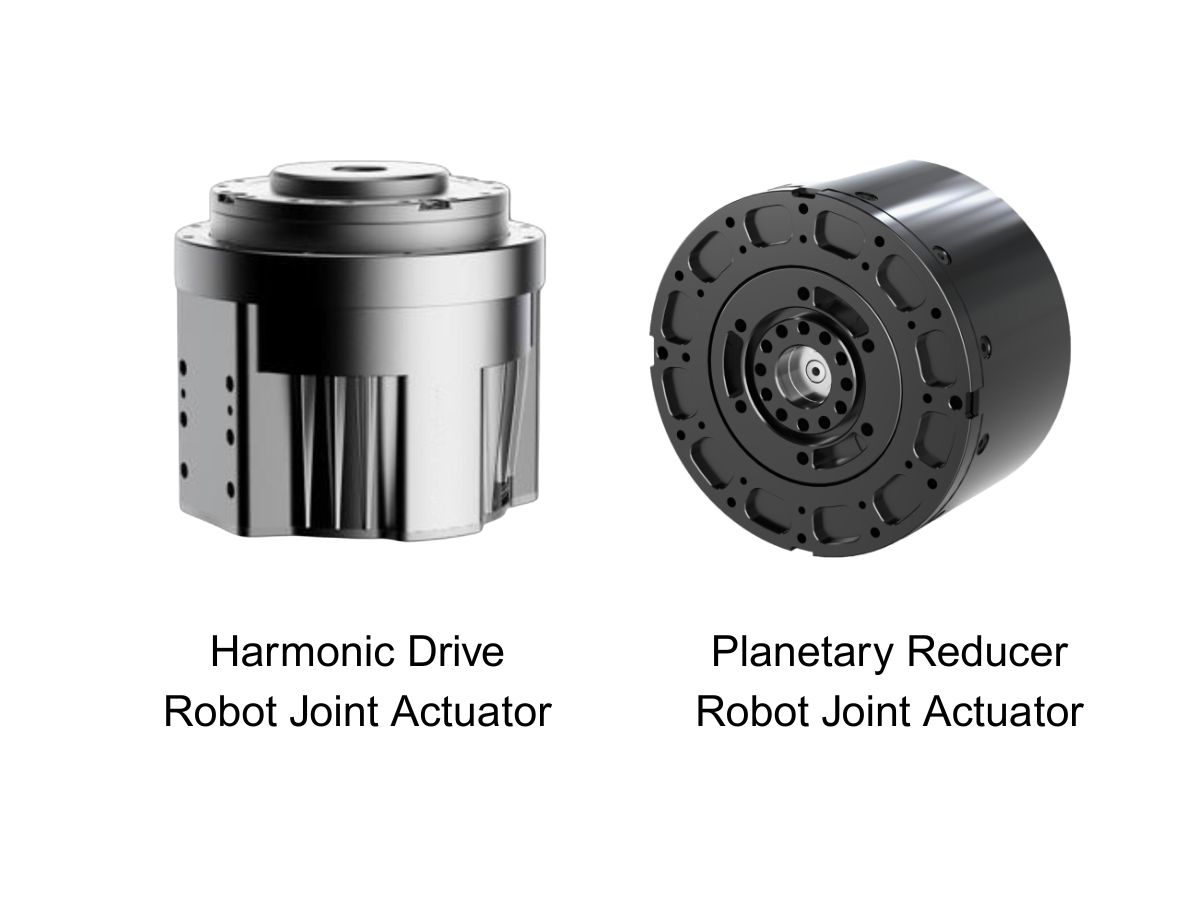
 What is robot joint actuator?How to Choose the Best Robot Rotary Joint Actuator?In core robot joint transmission solutions, planetary and harmonic rotary actuators each have their own strengths. Choosing the right type based on application requirements is essential to achieve the optimal balance between performance and cost.
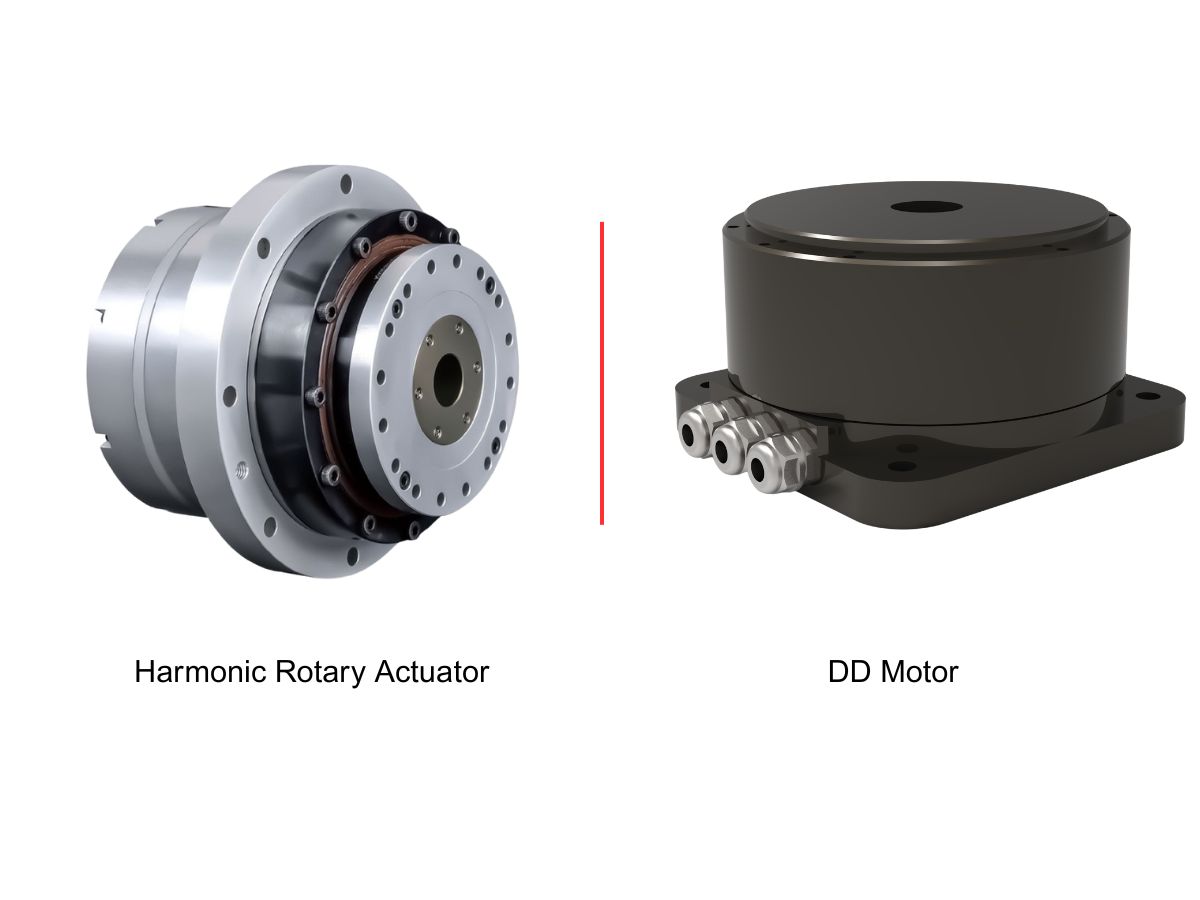
 DD Motors VS Harmonic Rotary ActuatorsThis article provides an in-depth comparison between Direct Drive (DD) motors and harmonic rotary actuators, covering their transmission principles, advantages and disadvantages, and typical application fields.
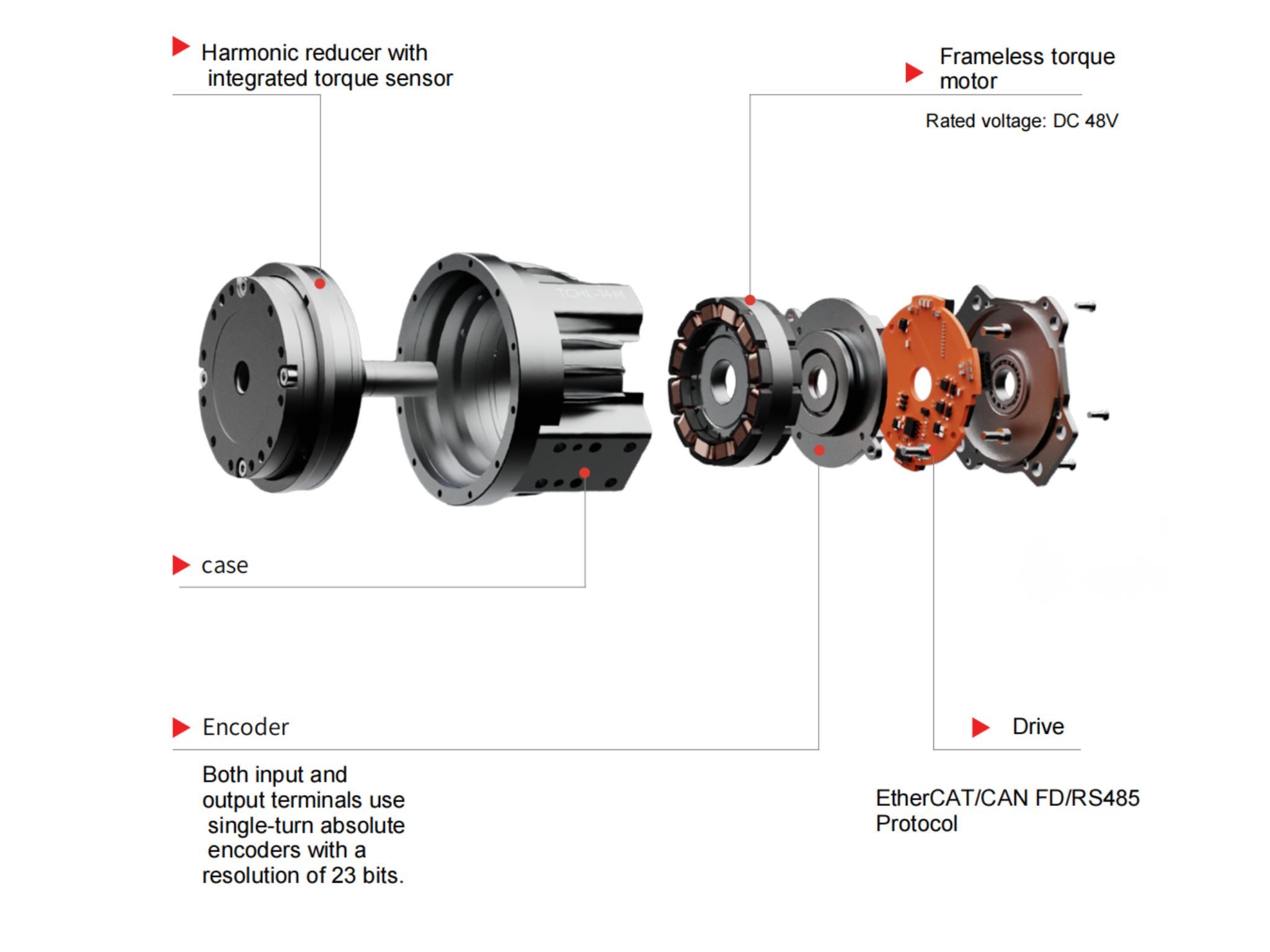
 OMG Ultra Compact Harmonic Drive Joint Module with Built-in Torque SensorHONPINE TCHL series harmonic drive joint module is a game-changing product that achieves disruptive improvements in multiple aspects such as lightweight design, integration level, and connection convenience. This article will analyze its revolutionary enhancements with you.
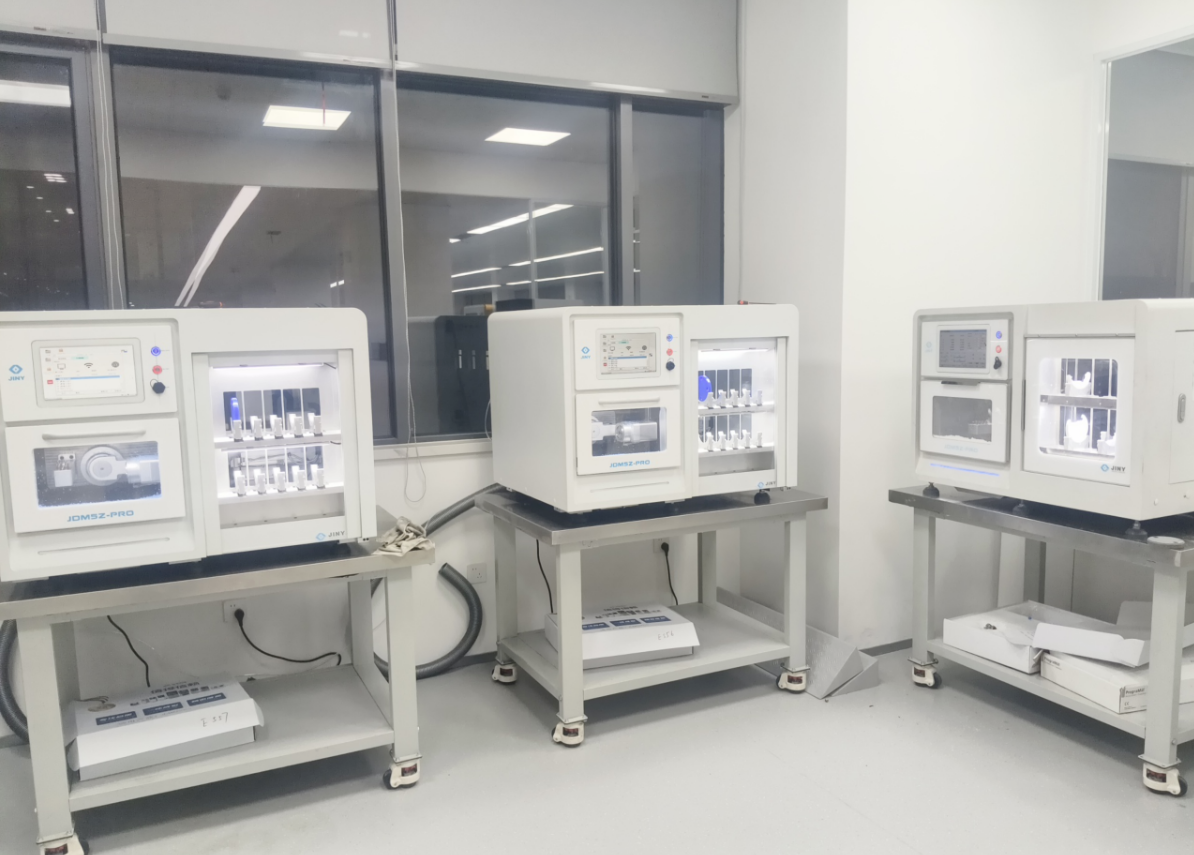
 The Role of Harmonic Drive Gears in Achieving 5–10 μm Accuracy in Dental Milling MachinesA dental milling machine is a CNC machining system used to directly process digital dental models into restorations such as crowns, bridges, veneers, inlays, and implant abutments. Dental milling machines require far higher operational accuracy and motion stability than ordinary equipment. This article explains how harmonic drive gear help dental milling machines achieve stable, continuous, and controllable operation.
 Why Are Harmonic Rotary Actuators Perfect for Medical Equipment?Harmonic rotary actuators (typically integrated systems consisting of a harmonic drive reducer, frameless torque motor, encoder, and optional brake) are regarded as key components in medical equipment. The core reason is that they simultaneously meet the most stringent medical requirements for precision, compact size, safety, and controllability. The following explanation is structured from three perspectives: technical characteristics, application scenarios, and medical value.
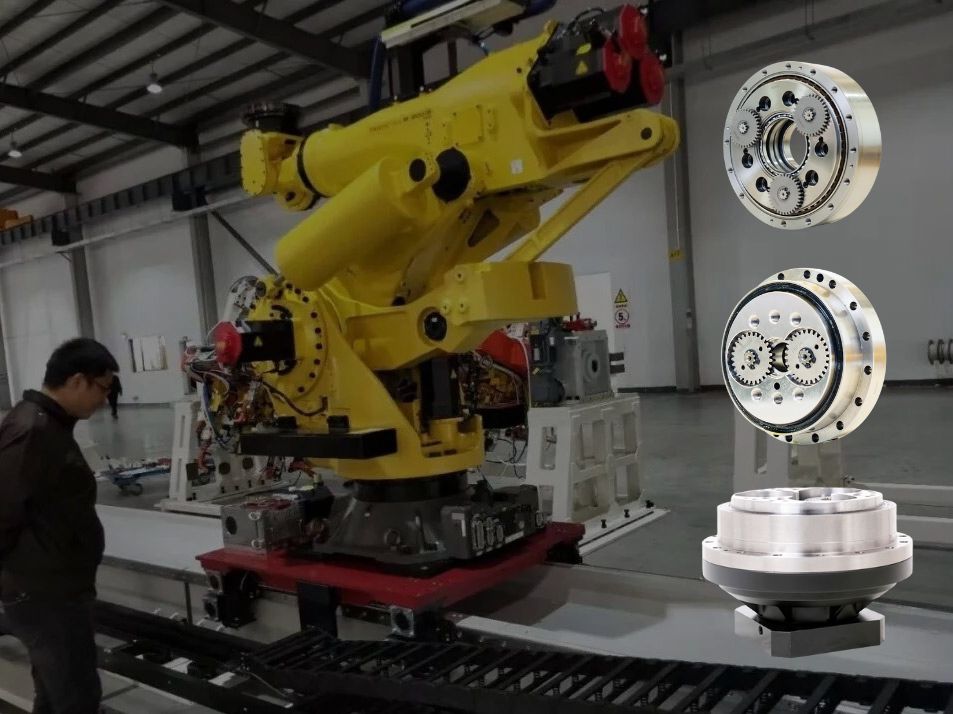
 High-Precision RV Reducers Perfectly Matched for Walking RobotsThe walking axis of a robot is a core component for power transmission and support. RV reducers provide extremely high rigidity, precision, and torque while maintaining a compact size and exceptional reliability, making them an ideal match for the demanding requirements of walking robot joints in terms of load capacity, impact resistance, and precision.
 AGV Drive Wheel Selection Guide: Non-Steering Drive Wheels vs. Differential Drive vs. Steering Drive WheelsChoosing the right AGV drive wheels is essential for achieving the required mobility, load capacity, and positioning performance in mobile robots. Different drive configurations offer different advantages in terms of maneuverability, mechanical complexity, control requirements, and overall cost. This guide compares three common AGV drive wheel types: non-steering drive wheels, differential drive systems, and steering drive wheels. By understanding how each configuration works and where it performs best, AGV and AMR manufacturers can make more informed decisions when designing their mobile robot platforms.
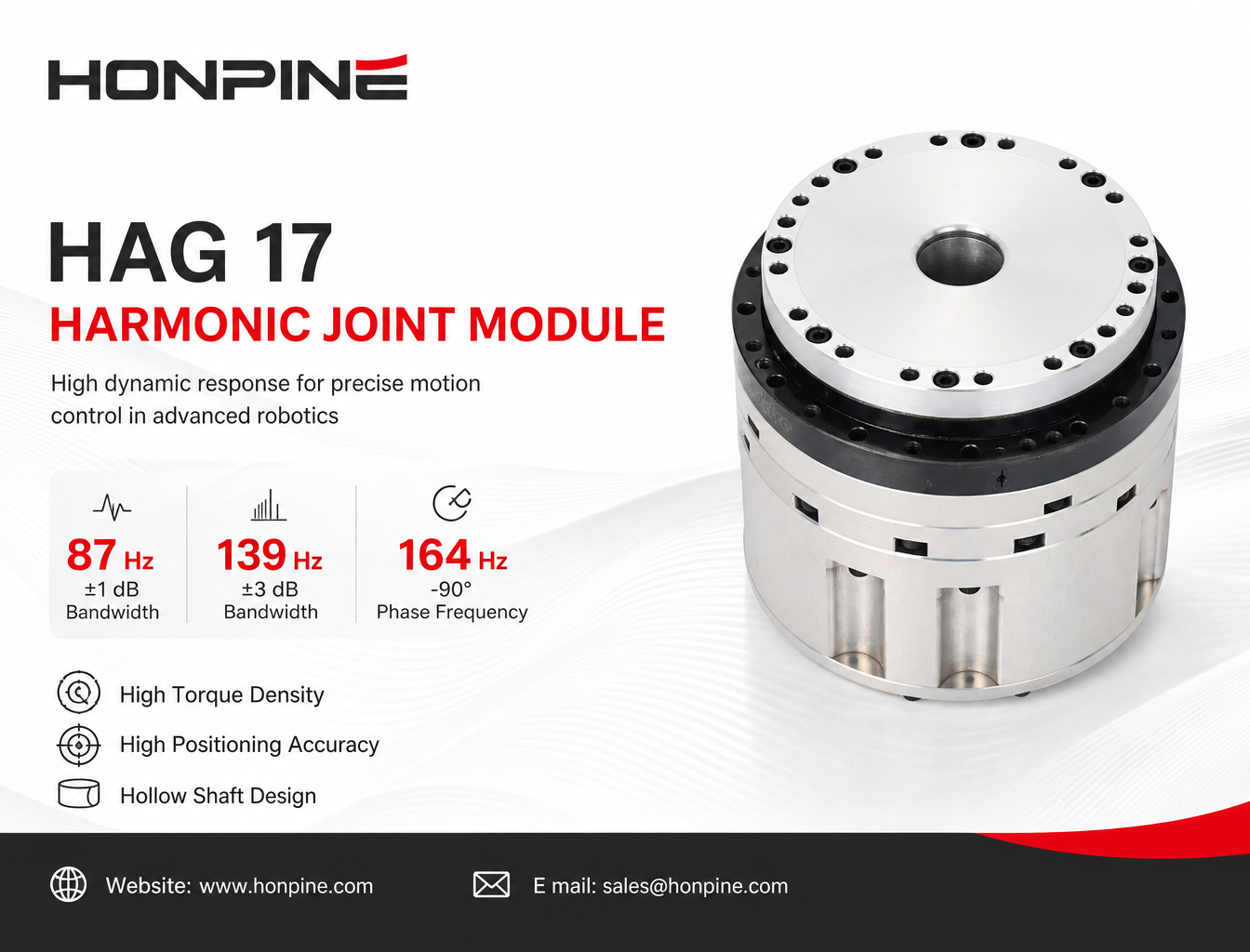
 HONPINE HAG Harmonic Joint Module: Redefining Robotic Motion Control with Wide Bandwidth, Low Phase Lag, and High CoherenceWhen a robot experiences joint vibration, inaccurate trajectory tracking, or delayed force feedback, the problem may lie in the dynamic response of its joint actuator. Bandwidth, phase lag, and signal coherence are critical indicators of robotic motion performance. In this article, we examine the actual sine-sweep test results of the HONPINE HAG 17 harmonic joint module, including its 87 Hz ±1 dB bandwidth, 139 Hz ±3 dB bandwidth, and 164 Hz -90° phase frequency. We also explore how its torque density, positioning accuracy, and hollow-shaft design support advanced humanoid robots and collaborative robotic applications.
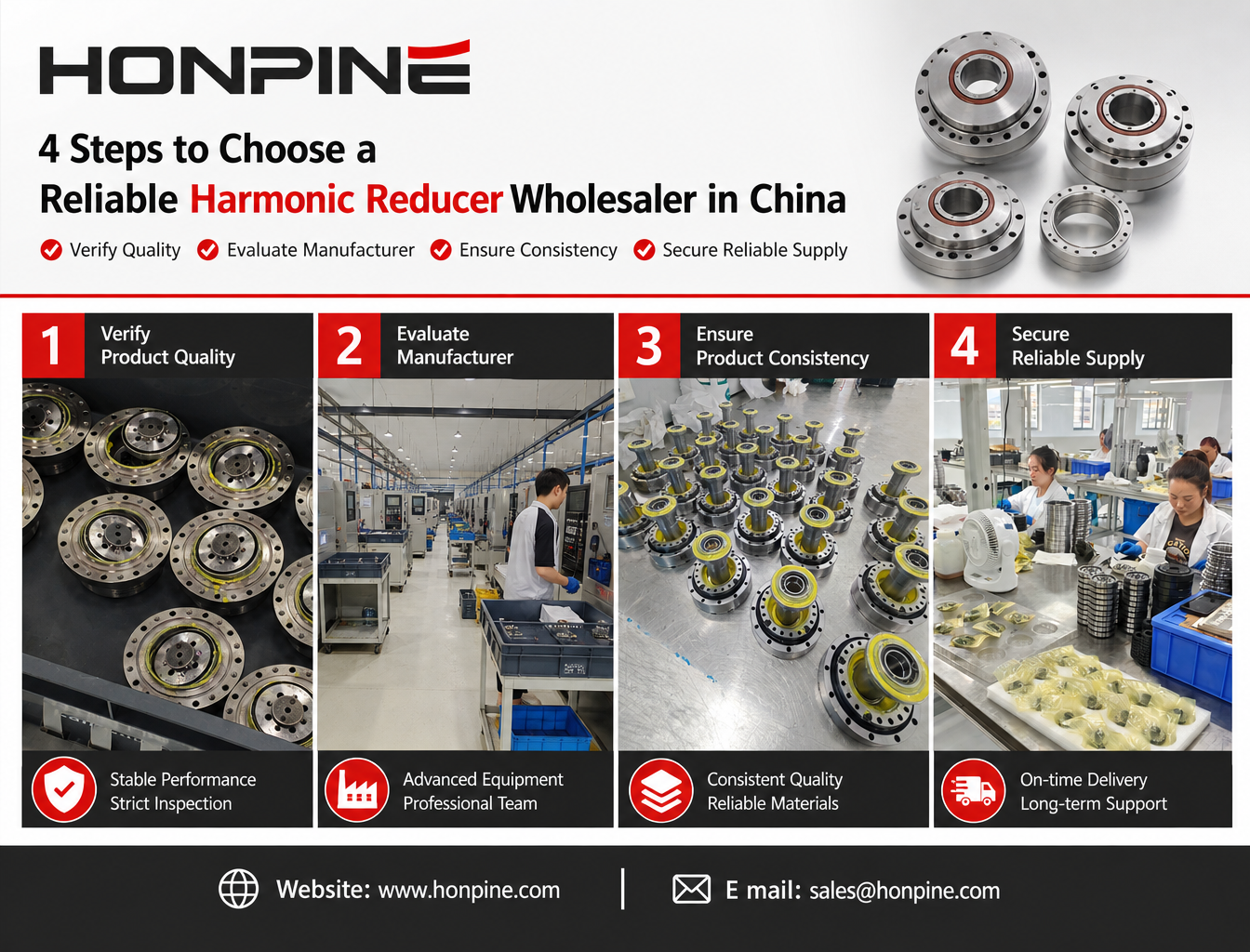
 How to Find a Reliable Harmonic Reducer Wholesaler in China?Choosing a reliable harmonic reducer wholesaler in China involves more than comparing prices and product specifications. Buyers need to evaluate technical capabilities, manufacturing quality, product consistency, and long-term supply reliability. Whether you are sourcing harmonic reducers for robotics, semiconductor equipment, CNC machinery, or industrial automation, understanding how to assess suppliers is essential. This guide outlines four practical steps to help you verify product performance, evaluate manufacturers, and make informed bulk purchasing decisions.
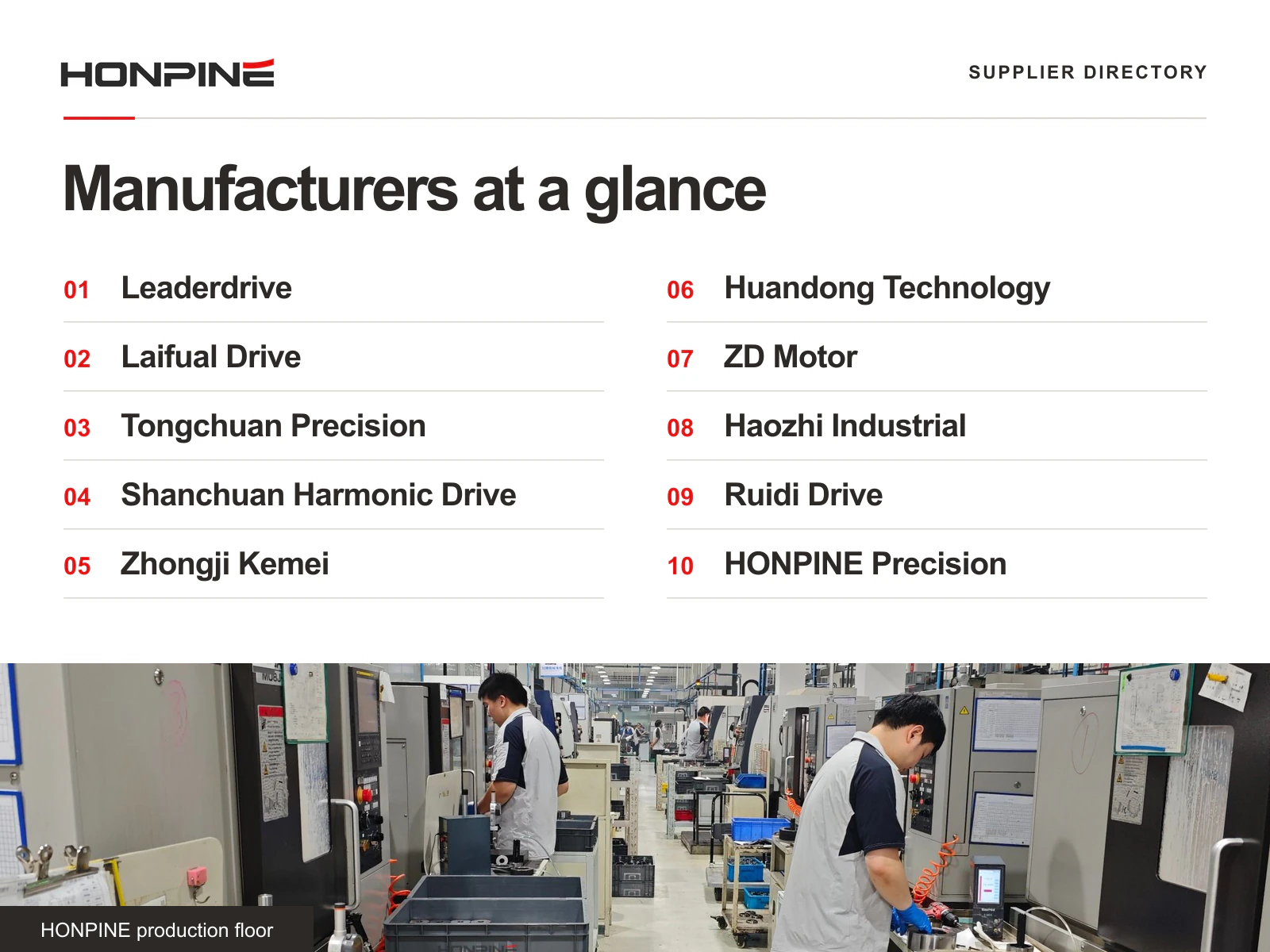
 Top 10 Harmonic Drive Reducer Manufacturers in ChinaChina has become an important manufacturing base for harmonic drive reducers, supplying precision transmission components to industrial robots, collaborative robots, humanoid robots, and high-end automation equipment. As more international buyers explore Chinese suppliers, understanding the differences between manufacturers is essential. In this article, we introduce 10 harmonic drive reducer manufacturers in China, examining their company backgrounds, product portfolios, technical capabilities, and typical applications to help engineers and procurement professionals identify potential suppliers.
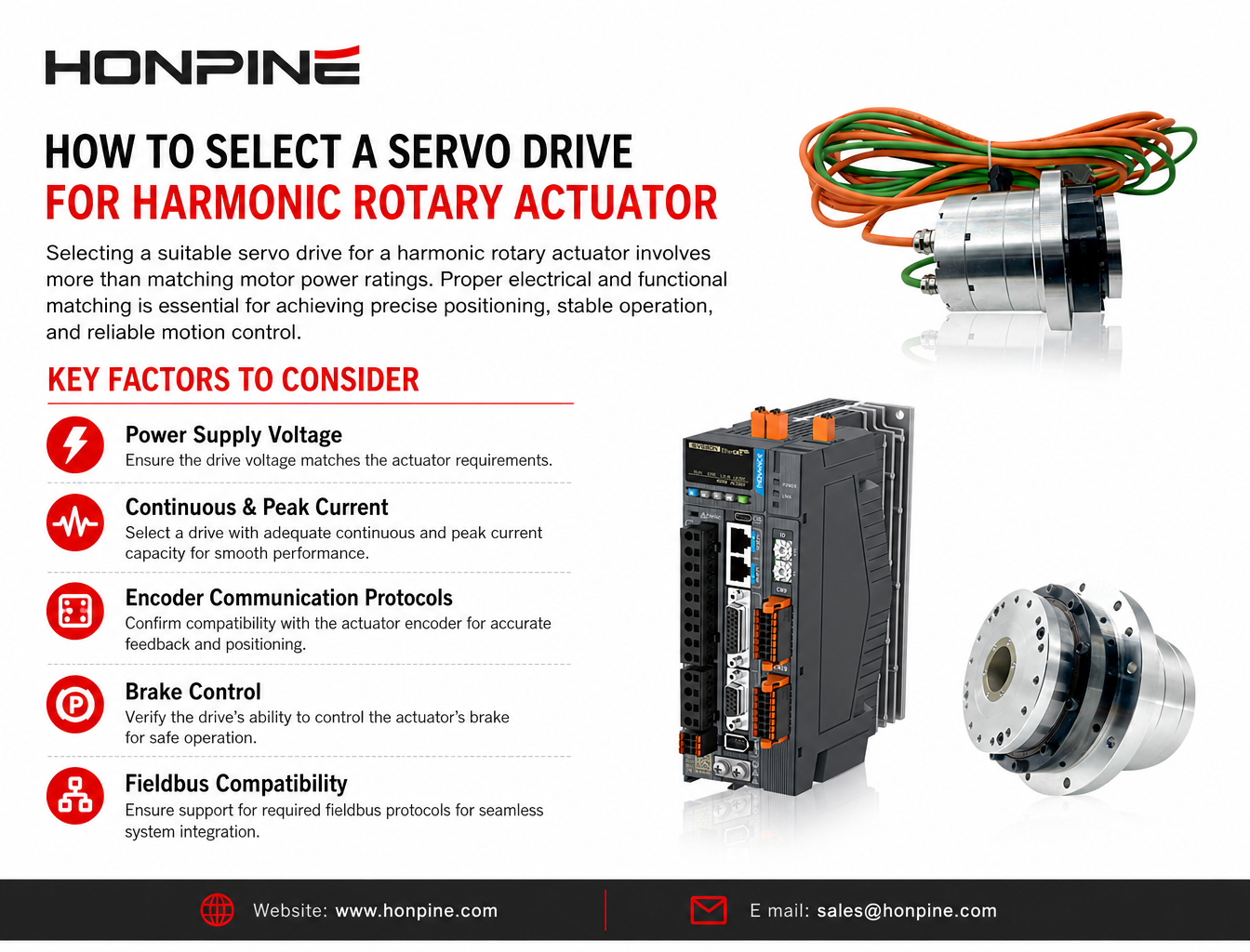
 How to Select a Servo Drive for HONPINE Harmonic Rotary Actuators with External Drives?Selecting a suitable servo drive for a harmonic rotary actuator involves more than matching motor power ratings. Power supply voltage, continuous and peak current, encoder communication protocols, brake control, and fieldbus compatibility all affect system performance. For HONPINE harmonic rotary actuators with external servo drives, proper electrical and functional matching is essential for achieving precise positioning, stable operation, and reliable motion control. In this guide, Theodore Li, Technical Director at HONPINE, explains the key factors engineers should consider when selecting and integrating an external servo drive.
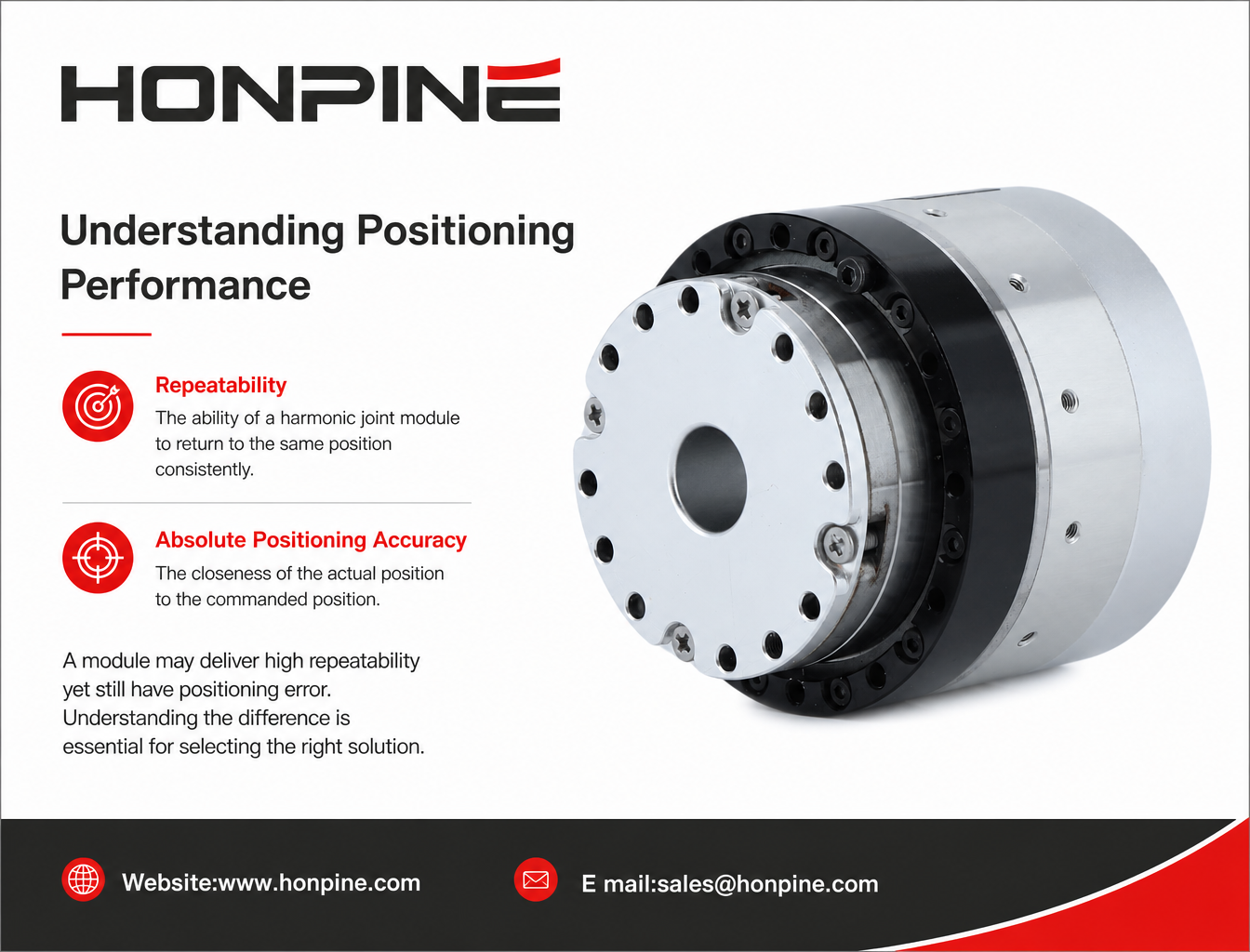
 Repeatability vs. Absolute Positioning Accuracy in Harmonic Joint Modules: Differences and Industrial ApplicationsWhen evaluating the positioning performance of a harmonic joint module, repeatability and absolute positioning accuracy are two important but often misunderstood specifications. A module may repeatedly reach the same position with high consistency while still having a noticeable deviation from the commanded position. Understanding this distinction is essential when selecting motion components for robotics, semiconductor equipment, precision machining, and medical devices. This article explains how the two specifications differ, what factors affect them, and which positioning performance should take priority in different industrial applications.
Double Click
We provide harmonic drive reducer,planetary reducer,robot joint motor,robot rotary actuators,RV gear reducer,robot end effector,dexterous robot hand
 What is robot joint actuator?How to Choose the Best Robot Rotary Joint Actuator?In core robot joint transmission solutions, planetary and harmonic rotary actuators each have their own strengths. Choosing the right type based on application requirements is essential to achieve the optimal balance between performance and cost.
 DD Motors VS Harmonic Rotary ActuatorsThis article provides an in-depth comparison between Direct Drive (DD) motors and harmonic rotary actuators, covering their transmission principles, advantages and disadvantages, and typical application fields.
 OMG Ultra Compact Harmonic Drive Joint Module with Built-in Torque SensorHONPINE TCHL series harmonic drive joint module is a game-changing product that achieves disruptive improvements in multiple aspects such as lightweight design, integration level, and connection convenience. This article will analyze its revolutionary enhancements with you.
 AGV Drive Wheel Selection Guide: Non-Steering Drive Wheels vs. Differential Drive vs. Steering Drive WheelsChoosing the right AGV drive wheels is essential for achieving the required mobility, load capacity, and positioning performance in mobile robots. Different drive configurations offer different advantages in terms of maneuverability, mechanical complexity, control requirements, and overall cost. This guide compares three common AGV drive wheel types: non-steering drive wheels, differential drive systems, and steering drive wheels. By understanding how each configuration works and where it performs best, AGV and AMR manufacturers can make more informed decisions when designing their mobile robot platforms.
 HONPINE HAG Harmonic Joint Module: Redefining Robotic Motion Control with Wide Bandwidth, Low Phase Lag, and High CoherenceWhen a robot experiences joint vibration, inaccurate trajectory tracking, or delayed force feedback, the problem may lie in the dynamic response of its joint actuator. Bandwidth, phase lag, and signal coherence are critical indicators of robotic motion performance. In this article, we examine the actual sine-sweep test results of the HONPINE HAG 17 harmonic joint module, including its 87 Hz ±1 dB bandwidth, 139 Hz ±3 dB bandwidth, and 164 Hz -90° phase frequency. We also explore how its torque density, positioning accuracy, and hollow-shaft design support advanced humanoid robots and collaborative robotic applications.
 How to Find a Reliable Harmonic Reducer Wholesaler in China?Choosing a reliable harmonic reducer wholesaler in China involves more than comparing prices and product specifications. Buyers need to evaluate technical capabilities, manufacturing quality, product consistency, and long-term supply reliability. Whether you are sourcing harmonic reducers for robotics, semiconductor equipment, CNC machinery, or industrial automation, understanding how to assess suppliers is essential. This guide outlines four practical steps to help you verify product performance, evaluate manufacturers, and make informed bulk purchasing decisions.
 Top 10 Harmonic Drive Reducer Manufacturers in ChinaChina has become an important manufacturing base for harmonic drive reducers, supplying precision transmission components to industrial robots, collaborative robots, humanoid robots, and high-end automation equipment. As more international buyers explore Chinese suppliers, understanding the differences between manufacturers is essential. In this article, we introduce 10 harmonic drive reducer manufacturers in China, examining their company backgrounds, product portfolios, technical capabilities, and typical applications to help engineers and procurement professionals identify potential suppliers.
 How to Select a Servo Drive for HONPINE Harmonic Rotary Actuators with External Drives?Selecting a suitable servo drive for a harmonic rotary actuator involves more than matching motor power ratings. Power supply voltage, continuous and peak current, encoder communication protocols, brake control, and fieldbus compatibility all affect system performance. For HONPINE harmonic rotary actuators with external servo drives, proper electrical and functional matching is essential for achieving precise positioning, stable operation, and reliable motion control. In this guide, Theodore Li, Technical Director at HONPINE, explains the key factors engineers should consider when selecting and integrating an external servo drive.
 Repeatability vs. Absolute Positioning Accuracy in Harmonic Joint Modules: Differences and Industrial ApplicationsWhen evaluating the positioning performance of a harmonic joint module, repeatability and absolute positioning accuracy are two important but often misunderstood specifications. A module may repeatedly reach the same position with high consistency while still having a noticeable deviation from the commanded position. Understanding this distinction is essential when selecting motion components for robotics, semiconductor equipment, precision machining, and medical devices. This article explains how the two specifications differ, what factors affect them, and which positioning performance should take priority in different industrial applications.
 How to Select Electric Grippers for Robots and Industrial Automation Production Lines?Electric grippers are essential robot end-effectors in modern industrial automation, enabling precise workpiece handling, assembly, positioning, and packaging. However, different applications require different gripping forces, stroke lengths, payload capacities, force control accuracy, and protection ratings. How should engineers select the right electric gripper for delicate 3C components, heavy lithium battery modules, semiconductor placement, medical packaging, or general industrial handling? In this article, Theodore Li, Technical Director at HONPINE, explains how to choose suitable electric grippers and linear rotary actuators based on actual application requirements.
 How to Select Harmonic Rotary Actuators for Precision Assembly, Dispensing, and Inspection in 3C Automation Equipment?Harmonic rotary actuators play an important role in modern 3C automation equipment, particularly in applications requiring high positioning accuracy, compact installation, and stable rotary motion. From precision dispensing machines and smartphone assembly lines to machine vision inspection, laser processing, and semiconductor manufacturing equipment, different applications have different requirements for torque, rigidity, rotational speed, and shaft configuration. In this article, Theodore Li, Technical Director at HONPINE, introduces the HAT, HAS, HATF, and HAM series harmonic rotary actuators and explains how to select suitable models for different 3C automation applications.
 Top 10 Humanoid Robot Joint Motor ManufacturersThe rapid development of humanoid robotics is driving demand for high-performance joint motors and integrated actuator modules. From harmonic and planetary joint modules to frameless torque motors and intelligent drive systems, manufacturers are developing different solutions to meet the requirements of humanoid robot joints. But which supplier should you choose? In this article, we introduce 10 humanoid robot joint motor manufacturers from China and Japan, comparing their product portfolios, technical features, torque capabilities, and application areas to help robotics developers and manufacturers make more informed sourcing decisions.