









TYCD Horizontal Differential Speed Drive Two Wheel Motor
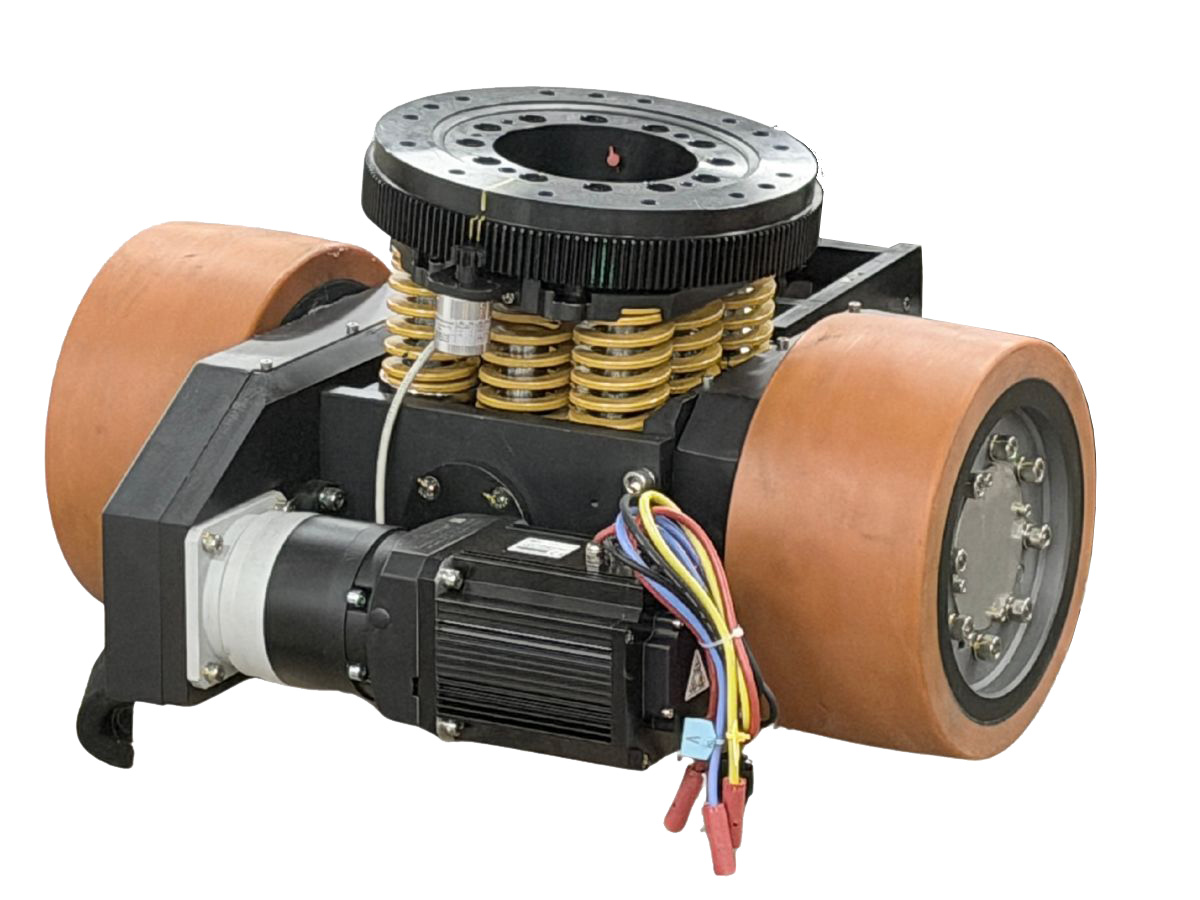
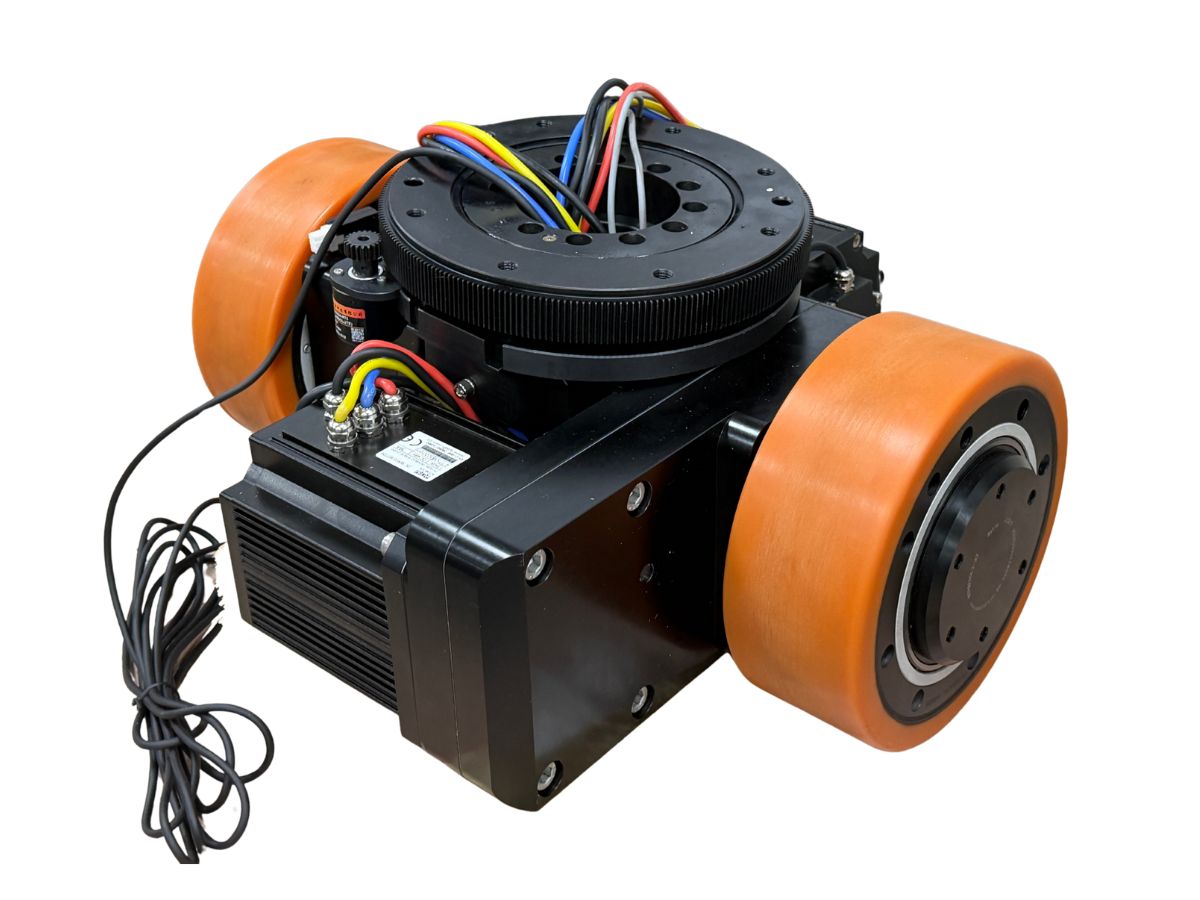
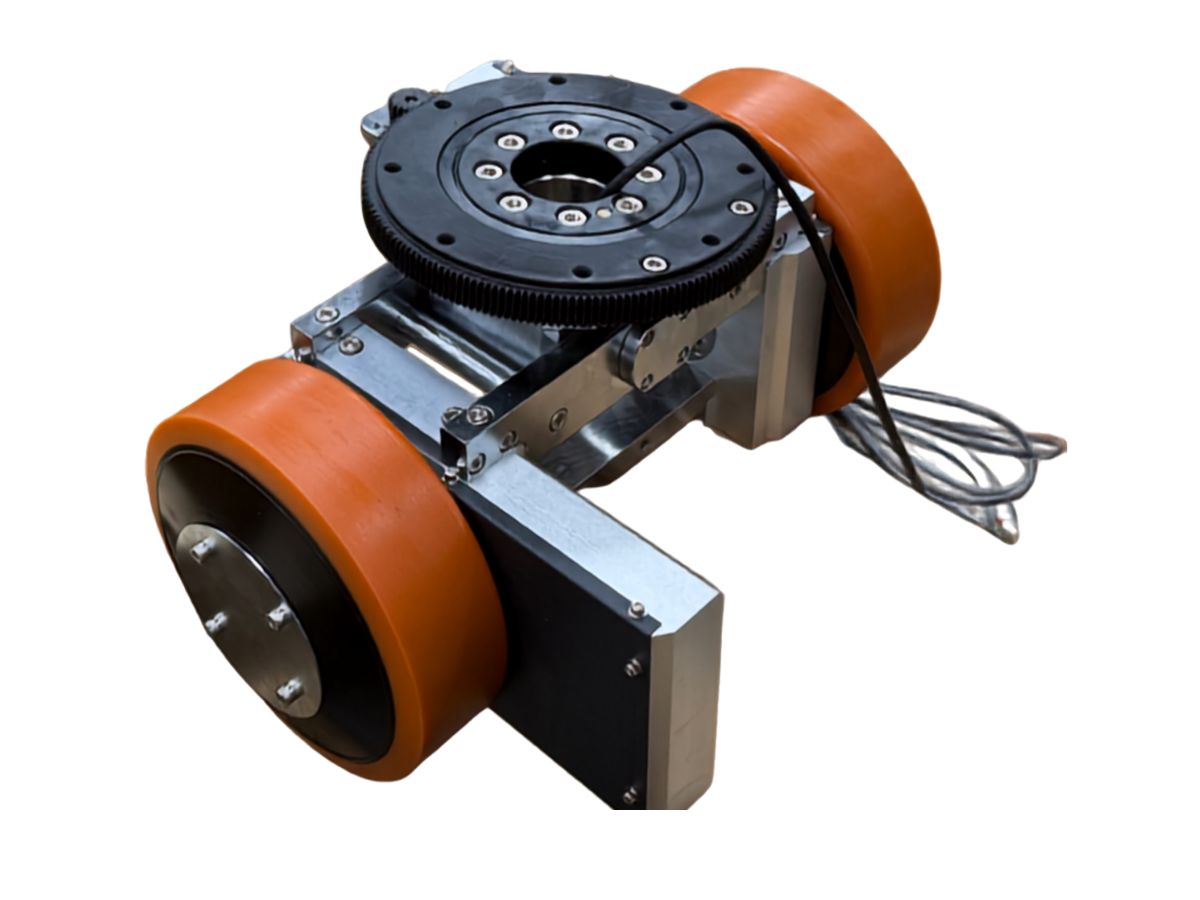
● Introduction
With its horizontal layout, when the left wheel rotates faster than the right wheel, the vehicle turns to the right. When the two drive wheels rotate in opposite directions, the vehicle can rotate in place.
The TYCD differential drive wheel can be configured according to application requirements, including wheel diameter, maximum load capacity, motor power, and gearbox reduction ratio. Optional configurations include rubber tires and different suspension solutions such as pivoting, spring, and hydraulic suspension systems.
Features
1. Flat and Compact Structure
Because the two drive wheels are fixed in one direction, the drive motors can be installed completely horizontally inside the vehicle chassis. This flat configuration improves the utilization of vertical space and makes the differential drive system suitable for compact AGV and AMR chassis designs.
2. Lower Cost Compared with Steering Wheel Modules
The differential drive system requires fewer mechanical components than a steering wheel module.
There is no need for a dedicated steering motor, complex slewing bearings, or the precision gear transmission typically required by a steering wheel mechanism. The basic configuration consists of two drive motors with gearboxes and two passive caster wheels.
The control system is also simpler. Only two motor drives are required, without the coordinated control of separate drive and steering motors used in a steering wheel module.
3. Zero Turning Radius and Excellent Maneuverability
The differential drive system can achieve 360° in-place rotation. When the left and right drive wheels rotate at the same speed but in opposite directions, the vehicle can rotate around its geometric center without moving forward or backward.
This makes differential-drive AGVs highly suitable for confined spaces. In crowded warehouse aisles, restaurant corridors, or elevator entrances, the vehicle can turn around and adjust its orientation without the repeated forward-and-reverse maneuvers required by conventional forklifts, improving space utilization and operational flexibility.
4. Simple Motion Control and Fast Development
The kinematic model of a differential-drive vehicle is one of the most fundamental and well-established models in mobile robotics. The relationship between vehicle linear velocity and angular velocity is relatively simple, resulting in low computational requirements for the main controller and a shorter development cycle.
5. Fast Dynamic Response for High-Frequency Operation
Differential drive systems are well suited to applications involving frequent starting and stopping, rapid acceleration, and rapid deceleration.
For high-frequency operations such as e-commerce sorting and material handling, the two-wheel differential drive configuration provides fast dynamic response and precise speed control, supporting high-throughput AGV operation.
6. High Reliability and Easy Maintenance
The mechanical structure is relatively simple, without complex steering gears, timing belts, or slewing mechanisms. Fewer mechanical components mean fewer potential failure points and simplified maintenance.
If one drive wheel or motor requires service, the affected component can typically be removed and replaced independently. This can reduce maintenance downtime compared with steering wheel modules that may require disassembly of a more integrated steering mechanism.
7. Good Traction and Grip Under Suitable Conditions
On flat indoor floors, the two drive wheels typically carry a significant portion of the vehicle weight, while caster wheels provide additional support to form a three-point or four-point support configuration.
The resulting wheel load provides sufficient ground contact and helps reduce wheel slip, delivering good traction for applications such as light-duty towing AGVs and material transport vehicles.
The TYCD differential drive wheel provides a compact and economical motion solution for AGVs, AMRs, warehouse transport vehicles, e-commerce sorting systems, and light-duty towing applications, especially where simple control, high maneuverability, and efficient chassis space utilization are required.
Specification
Sheet 1
Product specifications for the standard model are currently being updated; please contact us for professional guidance on customization.