








How to Choose a Reliable Harmonic Drive Manufacturer in China
Choosing a reliable harmonic drive manufacturer in China is essential for machine tool equipment buyers who need precision, durability, and stable performance. With so many suppliers in the market, knowing how to evaluate manufacturing strength, quality control, customization capability, and delivery reliability can help you avoid costly mistakes. This guide will show you the key factors to consider before making the right sourcing decision.
TOP Harmonic drive reducers manufacturer list
Why does manufacturer selection matter so much in machine tool equipment?
In machine tool equipment, a harmonic drive is not just a transmission part. It directly affects positioning accuracy, repeatability, vibration control, and long-term maintenance cost.
If the supplier lacks process stability, the reducer may show backlash growth, torque fluctuation, noise, or premature wear. These problems can reduce machining quality and disrupt production schedules.
For buyers sourcing from China, the main challenge is not finding suppliers. It is identifying which harmonic drive manufacturer can consistently support precision machine tools under real operating conditions.
- CNC systems require stable transmission accuracy during continuous interpolation and high-speed motion.
- Rotary tables and indexing mechanisms need low backlash and predictable rigidity.
- Compact machine structures often demand a hollow shaft design for cable routing, pneumatic lines, or spindle-related integration.
- Downtime in industrial production means lost output, delayed orders, and higher service cost.
Typical buyer concerns before placing an order
Most procurement teams compare price first, but price alone rarely reflects actual value. A lower initial quote may hide weak material control, inconsistent assembly, or poor after-sales response.
A reliable harmonic drive manufacturer in China should be evaluated through technical capability, production discipline, communication quality, and supply stability, not through catalog claims alone.
How to assess a harmonic drive manufacturer in China step by step
A practical sourcing process helps machine tool equipment buyers avoid guesswork. The following checklist focuses on what directly affects performance, risk, and project execution.
- Check whether the supplier understands machine tool application loads, duty cycles, precision demands, and structural integration limits.
- Review manufacturing capability, including machining accuracy, heat treatment consistency, assembly control, and inspection procedures.
- Request key technical data such as rated torque, peak torque, backlash range, torsional rigidity, efficiency, and expected service conditions.
- Confirm whether customization is available for flange dimensions, hollow shaft size, input interface, lubrication approach, and mounting constraints.
- Evaluate sample quality, communication speed, lead time clarity, and problem-solving attitude before moving to volume orders.
Questions worth asking during supplier screening
- What is the typical backlash range under standard inspection conditions?
- How is torque capacity verified during development or outgoing inspection?
- Which parts are controlled in-house, and which are outsourced?
- What is the normal sample lead time and mass production lead time?
How are nonconforming parts handled if issues appear after installation?
What technical indicators should machine tool buyers focus on?
Not every specification has the same importance. In machine tool equipment, the right harmonic drive selection depends on dynamic motion, payload, accuracy target, and installation space.
This table summarizes the most useful evaluation dimensions when comparing a harmonic drive manufacturer for machine tool projects.
When a harmonic drive manufacturer provides clear answers to these points, buyers can better judge whether the supplier understands real machine tool requirements instead of offering generic industrial parts.
Why hollow shaft and hat style designs attract attention
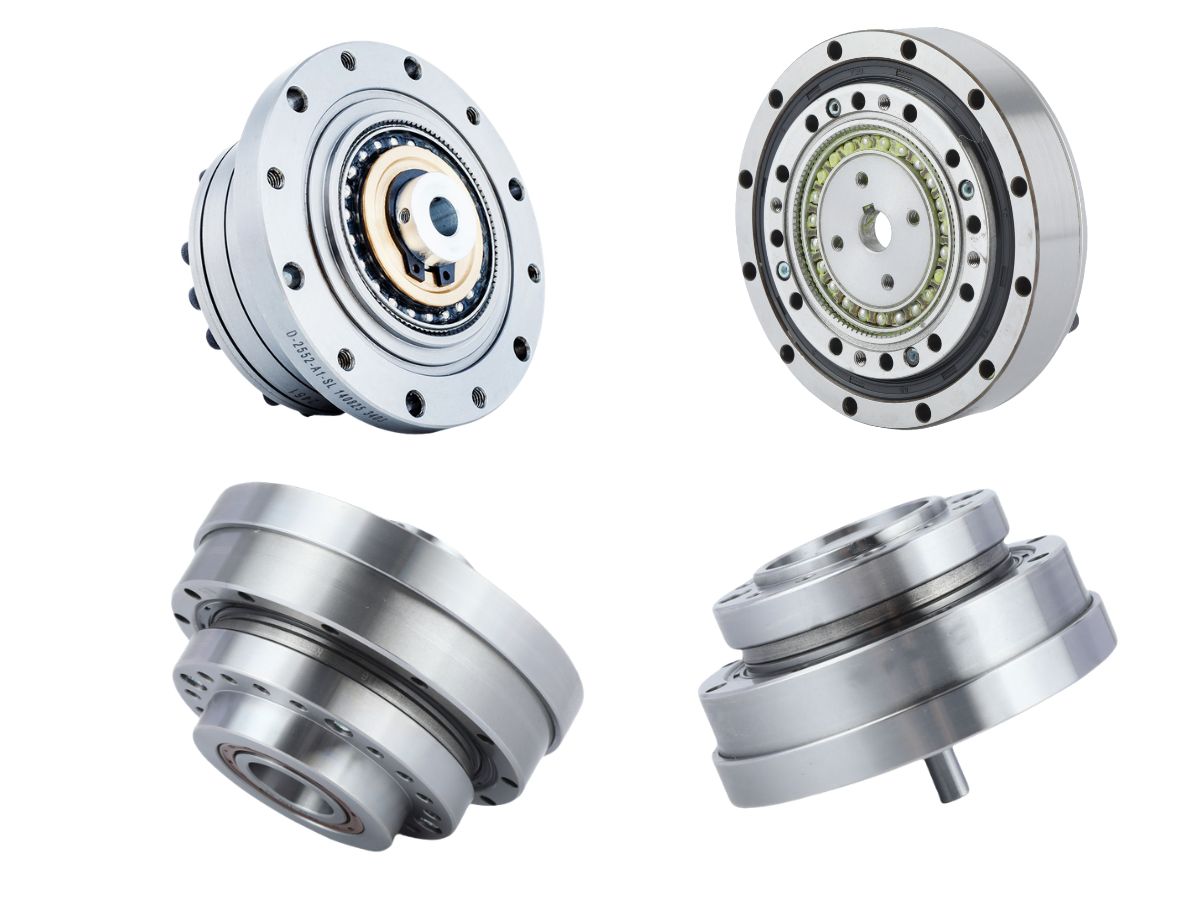
Many machine tool builders prefer compact transmission solutions that simplify routing and save installation space. A hat style large hollow shaft design can support cleaner integration in rotary axes, automation modules, or compact indexing structures.
If your project needs high torque with internal passage space, it is worth reviewing options such as High Torque Hat Style Large Hollow Shaft Harmonic Reduction Gear during early selection discussions.
How to compare Chinese suppliers beyond price
Price is important, especially for competitive equipment manufacturing. Still, machine tool buyers should compare suppliers through total project value, not unit cost only.
The table below helps procurement teams compare a harmonic drive manufacturer in China across sourcing risks that often affect project outcomes.
In many projects, the more dependable supplier is not the lowest quoted one. The better choice is often the manufacturer that reduces technical uncertainty, delivery risk, and future maintenance issues.
Which factory capabilities indicate long-term reliability?
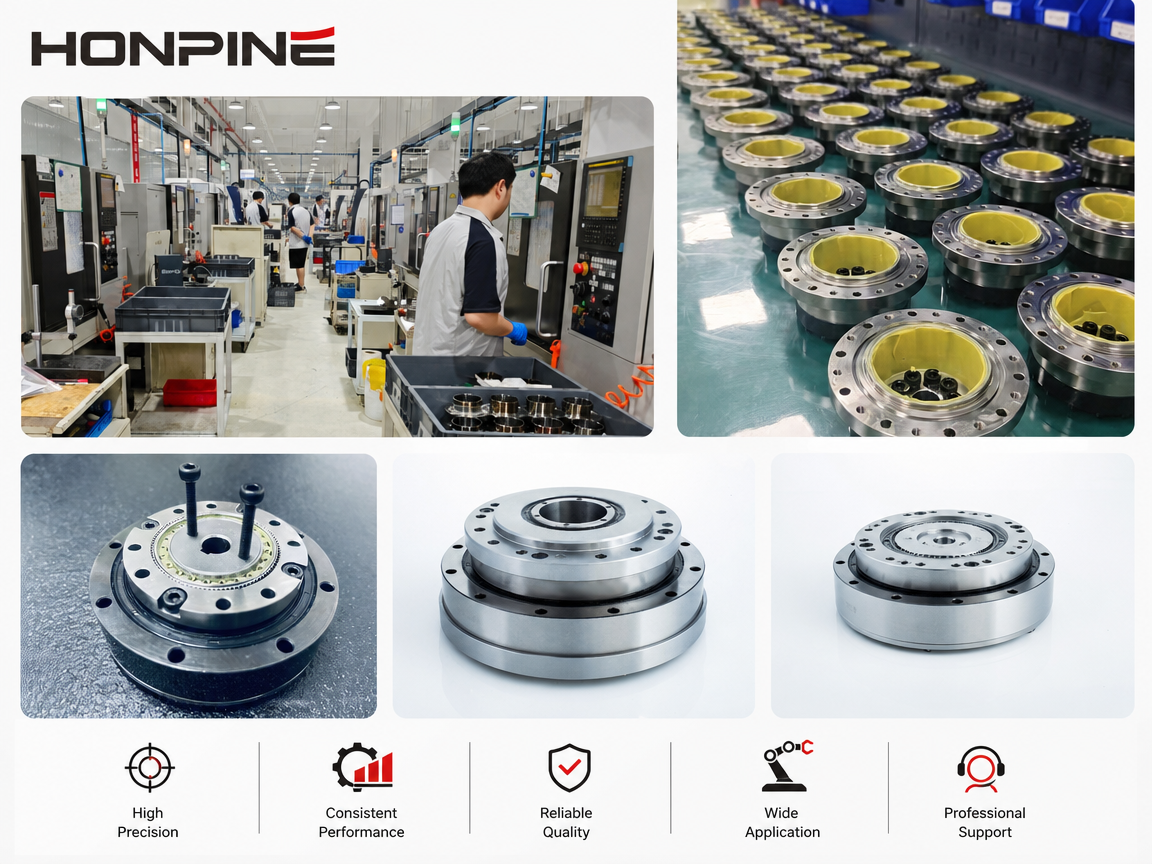
A reliable harmonic drive manufacturer usually shows discipline in process control rather than relying only on sales claims. Buyers should pay attention to how the factory manages precision from incoming material to final shipment.
Manufacturing and quality points to verify
- Machining capability for critical components that influence concentricity, tooth geometry, and surface quality.
- Heat treatment consistency, because hardness variation can shorten service life and affect wear behavior.
- Assembly control for preload, alignment, lubrication amount, and sealing details.
- Inspection records for backlash, torque performance, noise level, and dimensional tolerances.
- Corrective action process when defects, field feedback, or design changes appear.
Why application understanding matters as much as manufacturing
A factory may produce acceptable parts yet still fail your project if it does not understand machine tool duty conditions. Axis acceleration, impact load, thermal environment, and mounting stiffness all influence harmonic drive selection.
That is why strong suppliers ask for operating details before offering a final recommendation. For example, if compact torque transmission and internal routing are required, a solution like High Torque Hat Style Large Hollow Shaft Harmonic Reduction Gear may fit certain machine tool assemblies better than a conventional layout.
How to manage customization, lead time, and sourcing risk
Many machine tool equipment projects do not use fully standard reducers. Servo matching, flange design, installation envelope, and cable routing often require adaptation. This makes communication quality especially important.
A practical sourcing workflow
- Share operating data, expected torque, speed range, duty cycle, space constraints, and target accuracy.
- Confirm drawing details, shaft interfaces, mounting dimensions, lubrication expectations, and environmental conditions.
- Request a technical proposal with model suggestion, main parameters, and commercial lead time.
- Review sample performance or pilot order results before committing to larger volume.
- Agree on inspection standards, packing method, spare part support, and response time for quality issues.
Lead time should always be discussed together with engineering readiness. A short quoted delivery window means little if drawings are unclear or if the supplier has not validated the selected configuration.
What standards, documentation, and compliance points should buyers check?
Not every project needs the same level of documentation, but machine tool procurement teams should still verify basic compliance readiness. This is especially important for export equipment or systems delivered to regulated customers.
- Dimensional drawings with key tolerances for installation review.
- Performance data sheets covering torque, ratio, backlash, speed limits, and lubrication notes.
- Inspection or test reports when required by the project agreement.
- Material or process traceability where quality control procedures demand it.
- Packing, labeling, and shipping protection suitable for export handling.
A reliable harmonic drive manufacturer in China should be able to explain what documents can be supplied as standard and what requires project-specific preparation.
Common mistakes buyers make when selecting a harmonic drive manufacturer
Mistake 1: Choosing by price without checking load assumptions
A low-cost model may look acceptable on paper but fail when acceleration peaks, shock loads, or continuous duty are considered. Always confirm the actual operating profile.
Mistake 2: Ignoring installation details until late in the project
Hollow shaft size, flange geometry, motor interface, and surrounding structure can affect both performance and assembly time. Early integration review saves redesign cost.
Mistake 3: Assuming sample quality guarantees mass production consistency
A good sample is useful, but repeatability across batches matters more. Ask how the manufacturer controls precision during ongoing production.
Mistake 4: Overlooking service response and replacement planning
For machine tool equipment, a delayed replacement can stop an entire line. Support speed, spare availability, and problem escalation process deserve attention before purchase.
FAQ for buyers sourcing harmonic drives from China
How do I know whether a supplier really understands machine tool applications?
Ask about your axis conditions, duty cycle, accuracy target, and installation limits. A capable supplier will discuss load spectrum, rigidity, backlash, and interface details instead of sending a simple price list only.
What is more important, rated torque or peak torque?
Both matter. Rated torque reflects continuous operating ability, while peak torque matters during acceleration and short overload events. Machine tool equipment often needs balanced evaluation of both values.
Are customized harmonic drives worth the extra effort?
Yes, when standard dimensions create integration problems or limit performance. Customization can reduce assembly complexity, improve compactness, and lower secondary machining or adapter costs.
How long does sourcing usually take?
It depends on whether you need a standard or custom configuration. Technical confirmation, drawing review, sample preparation, and production scheduling all affect the timeline. Clear requirements usually shorten the process.
Why choose us for harmonic drive sourcing support?
If you are sourcing for machine tool equipment, the right supplier should help you reduce selection risk, not just send quotations. We focus on practical communication around torque demand, structural space, precision expectations, and project timing.
You can contact us to discuss parameter confirmation, model selection, hollow shaft requirements, customization feasibility, drawing review, lead time planning, sample support, certification expectations, and quotation details based on your actual machine tool application.
A clear technical discussion at the beginning often prevents costly redesign, unstable performance, and avoidable delivery delays later. If you are comparing a harmonic drive manufacturer in China, start with your application data and let the evaluation be driven by engineering facts.
What are the advantages of the HONPINE harmonic drive reducer factory?
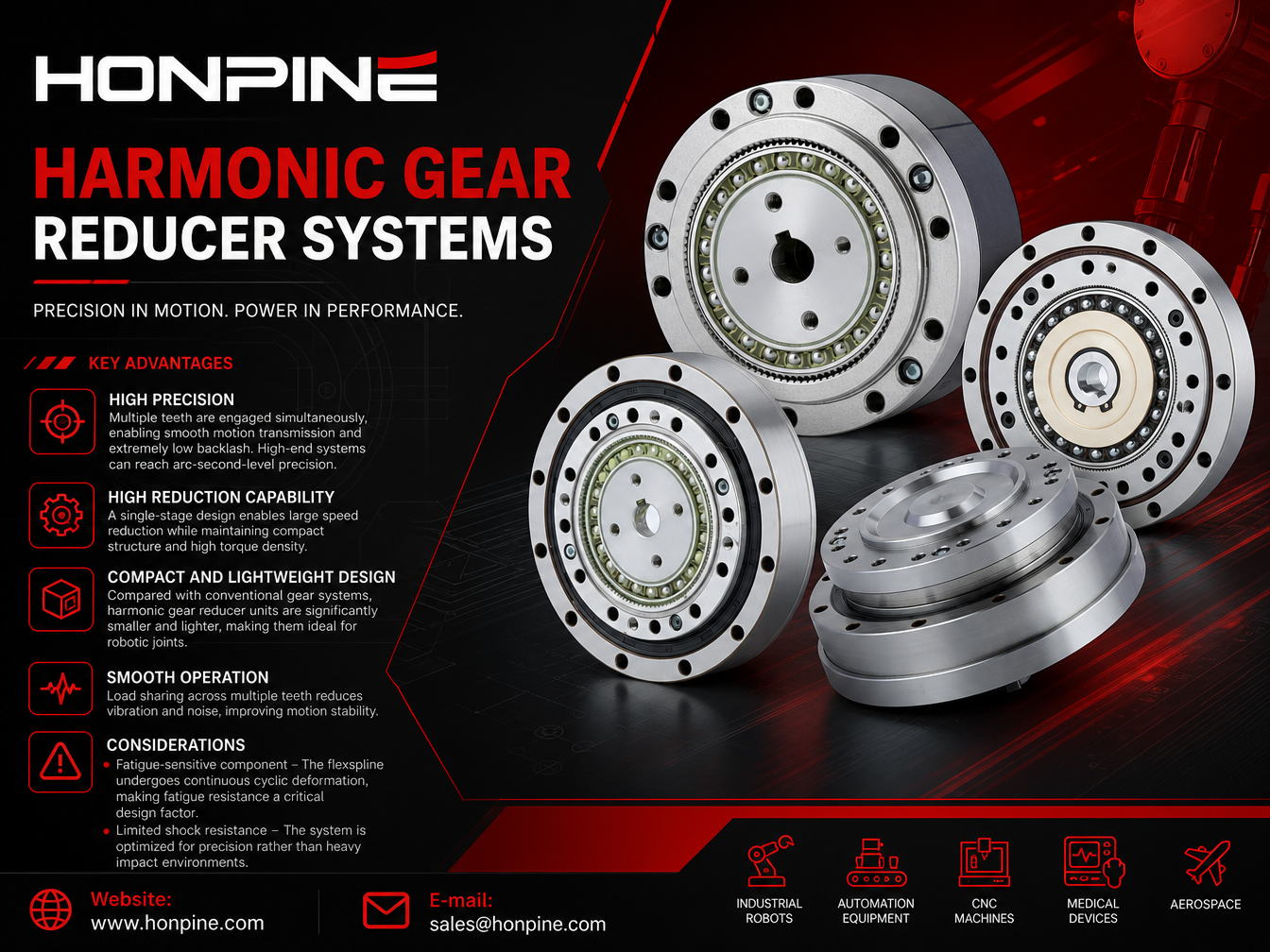
HONPINE harmonic drive reducers achieve a positioning accuracy of ±15 arc-seconds and a service life exceeding 10,000 hours. The company is one of the few in the industry to possess full-stack in-house R&D capabilities for transmission technology; it has achieved breakthroughs in materials and processing to produce lightweight harmonic drives. Its products are undergoing validation by leading humanoid robot manufacturers, and its integrated solutions significantly reduce assembly costs for OEMs, with production volumes steadily ramping up. These achievements have laid a solid foundation for the future R&D and mass production of integrated harmonic joint modules.
Read More
Learn more about the story of HONPINE and industry trends related to precision transmission.
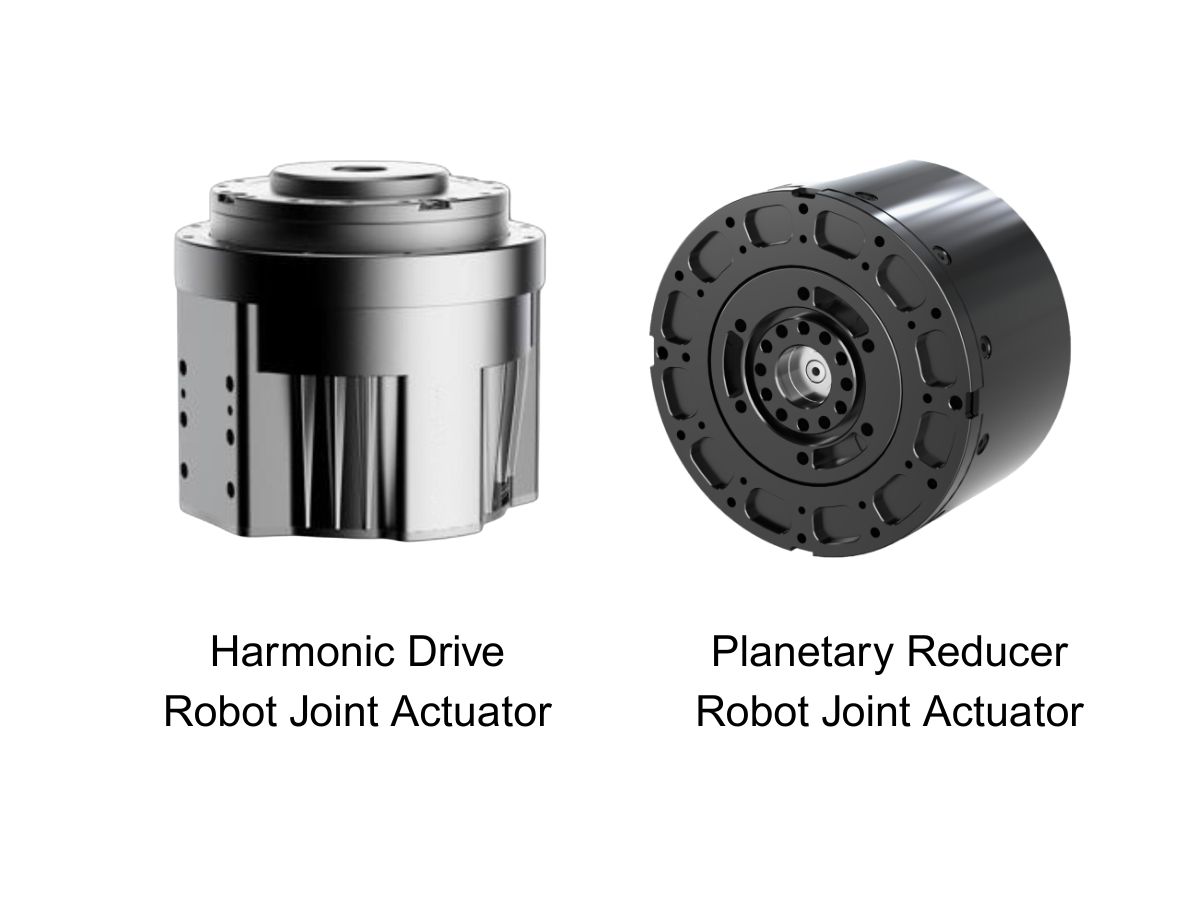
 What is robot joint actuator?How to Choose the Best Robot Rotary Joint Actuator?In core robot joint transmission solutions, planetary and harmonic rotary actuators each have their own strengths. Choosing the right type based on application requirements is essential to achieve the optimal balance between performance and cost.
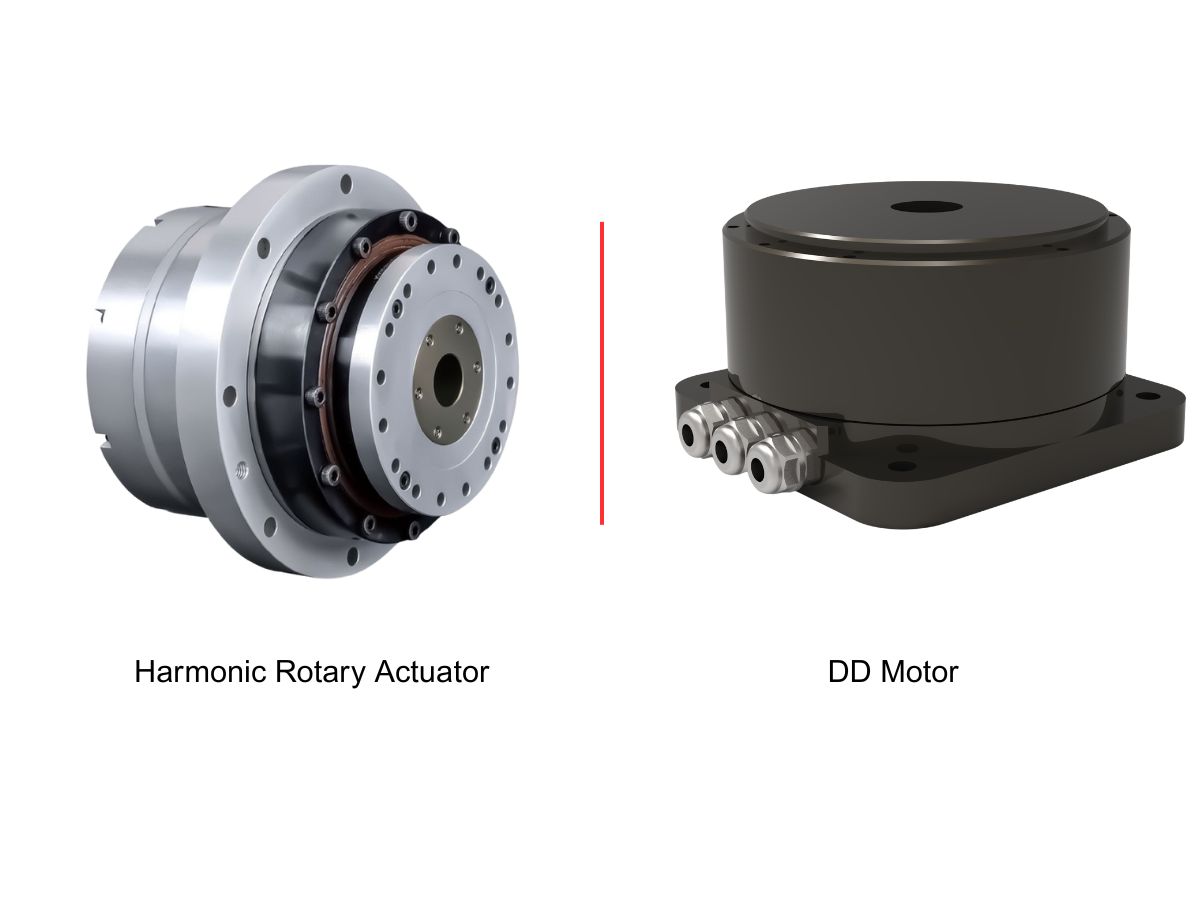
 DD Motors VS Harmonic Rotary ActuatorsThis article provides an in-depth comparison between Direct Drive (DD) motors and harmonic rotary actuators, covering their transmission principles, advantages and disadvantages, and typical application fields.
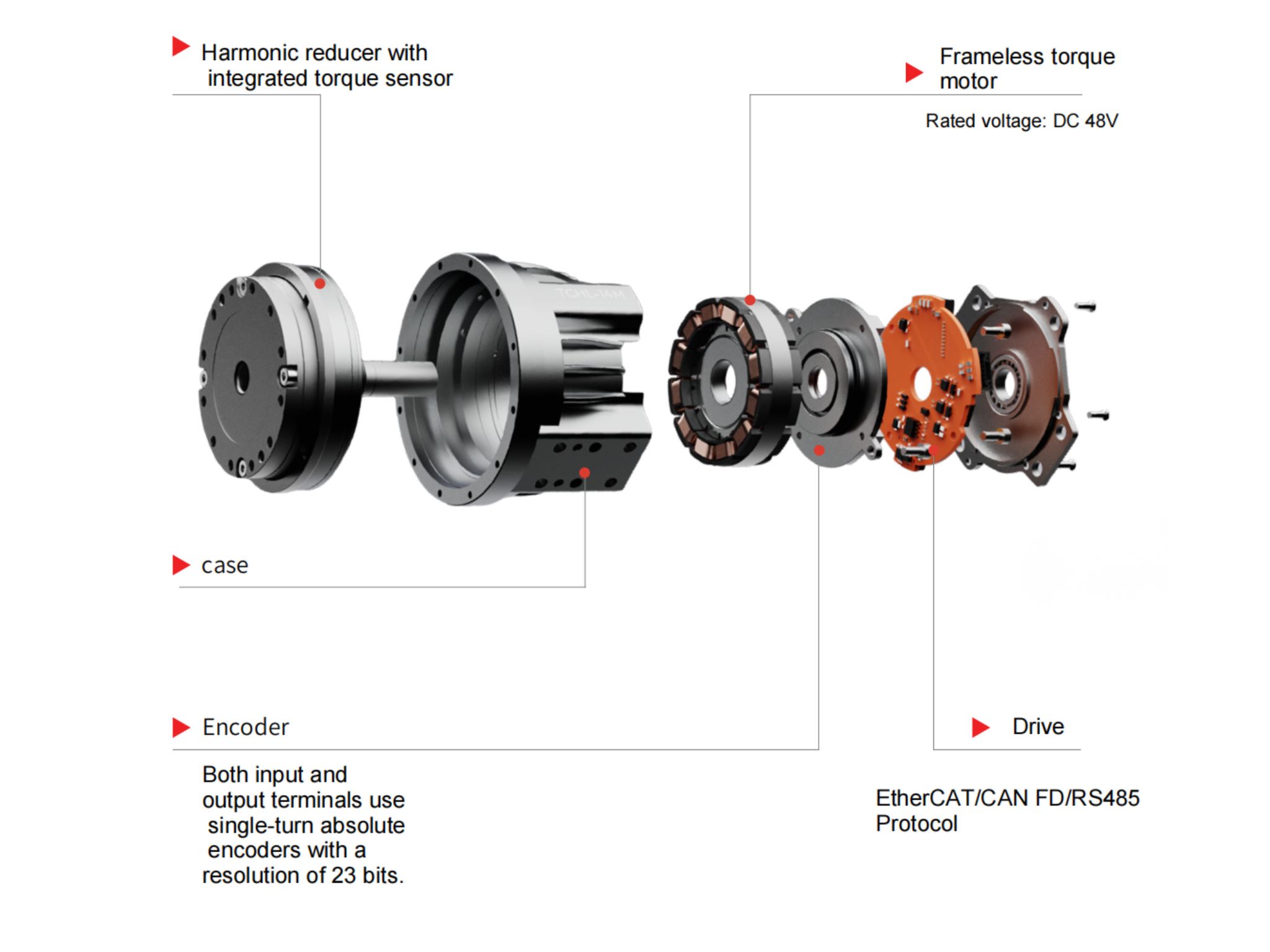
 OMG Ultra Compact Harmonic Drive Joint Module with Built-in Torque SensorHONPINE TCHL series harmonic drive joint module is a game-changing product that achieves disruptive improvements in multiple aspects such as lightweight design, integration level, and connection convenience. This article will analyze its revolutionary enhancements with you.
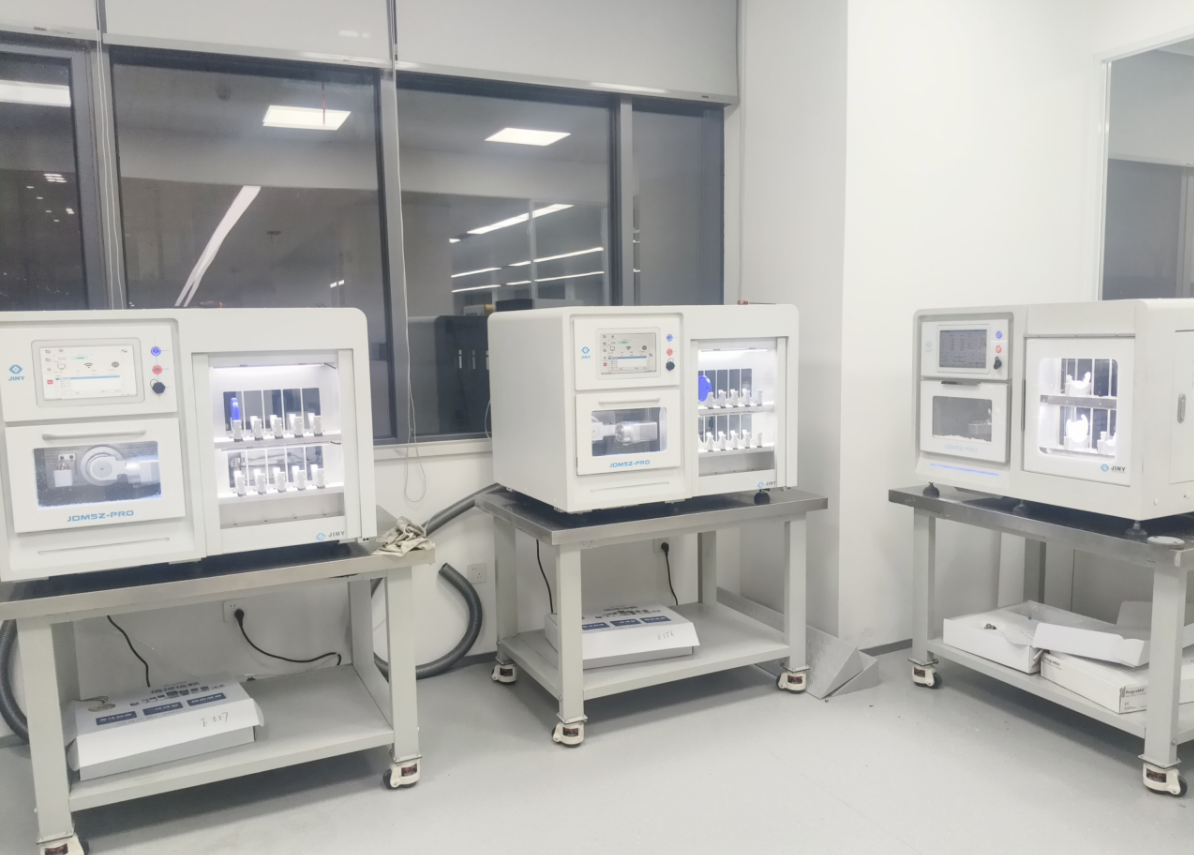
 The Role of Harmonic Drive Gears in Achieving 5–10 μm Accuracy in Dental Milling MachinesA dental milling machine is a CNC machining system used to directly process digital dental models into restorations such as crowns, bridges, veneers, inlays, and implant abutments. Dental milling machines require far higher operational accuracy and motion stability than ordinary equipment. This article explains how harmonic drive gear help dental milling machines achieve stable, continuous, and controllable operation.
 Why Are Harmonic Rotary Actuators Perfect for Medical Equipment?Harmonic rotary actuators (typically integrated systems consisting of a harmonic drive reducer, frameless torque motor, encoder, and optional brake) are regarded as key components in medical equipment. The core reason is that they simultaneously meet the most stringent medical requirements for precision, compact size, safety, and controllability. The following explanation is structured from three perspectives: technical characteristics, application scenarios, and medical value.
 High-Precision RV Reducers Perfectly Matched for Walking RobotsThe walking axis of a robot is a core component for power transmission and support. RV reducers provide extremely high rigidity, precision, and torque while maintaining a compact size and exceptional reliability, making them an ideal match for the demanding requirements of walking robot joints in terms of load capacity, impact resistance, and precision.
 Hollow Robot Joint Module: Why Cable Routing Matters in Robotic Joints?A hollow robot joint module provides an internal passage for power cables, signal lines, pneumatic tubes, and other end-effector connections. Compared with external cable routing, a hollow joint module can help reduce cable exposure, improve system integration, and create a cleaner motion path for robotic arms. This article explains why internal cable routing matters in robotic joints and what to consider when selecting a hollow joint module for robotic applications.
 Robot Joint Actuator Selection: From Inertia Matching to System-Level OptimizationSelecting a robot joint actuator is not simply a matter of matching motor torque or achieving a suitable inertia ratio. In a real robotic system, reduction ratio, load spectrum, thermal performance, mechanical stiffness, transmission nonlinearity, encoder architecture, control bandwidth, and service life all interact to determine the final result. A joint may meet its peak torque requirement and still experience vibration, overheating, positioning errors, or premature wear in real operation. This article examines the engineering logic behind robot joint actuator selection and explains why moving from single-parameter matching to system-level optimization can lead to more reliable and predictable robotic joint performance.
 How to Choose a Small Harmonic Actuator?HONPINE Series 11 small harmonic actuators provide a compact, high-performance rotary motion solution for precision automation applications. Available with hollow or solid shafts, 48V or 220V options, optional brakes, absolute encoders, and different reduction ratios, the Series 11 is designed for applications requiring compact dimensions, controlled torque, and precise positioning.
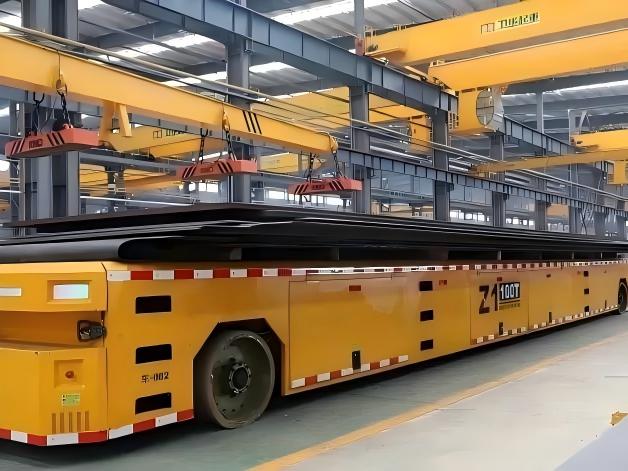
 How to Choose a Wheel Motor for a Heavy-Duty AGV? Key Challenges from Dynamic Loads to 120-Ton AGV Drive Wheel SystemsSelecting a Heavy-Duty AGV Wheel Motor is more than matching motor power or rated torque to the vehicle's payload. As AGVs move from conventional material handling to multi-ton and even 120-ton-class applications, the drive wheel system must handle dynamic loads, acceleration, braking, turning forces, traction, and long-term mechanical stress. The actual challenge lies in matching wheel load capacity, wheel-end torque, gearbox performance, steering architecture, suspension, and chassis design under real operating conditions. This article examines the key challenges of Heavy-Duty AGV Wheel Motor selection and explains how Steering Drive Wheels and Differential Drive Wheels can be evaluated for different heavy-duty AGV applications.
 DD Motor Servo System: How to Understand Mechanical Resonance and Solve Machine Vibration?This article explains the relationship between DD motor servo tuning, mechanical resonance, and servo bandwidth in direct drive motion systems. It examines why vibration and instability can occur even after repeated servo parameter adjustments, and explains how mechanical stiffness, moving mass, bearing conditions, load distribution, and structural geometry affect resonance frequency. The article also compares approaches for high- and low-frequency resonance, explains when digital notch filtering can be effective, and provides a practical tuning strategy for engineers working with DD motors, direct drive torque motors, and linear motors.
 Small Size Harmonic Drive Reducer: Advantages, Applications and Selection GuideSmall size harmonic drive reducer for compact precision motion systems, offering high reduction ratio, near-zero backlash, low weight and accurate transmission.
Double Click
We provide harmonic drive reducer,planetary reducer,robot joint motor,robot rotary actuators,RV gear reducer,robot end effector,dexterous robot hand
 The Role of Harmonic Drive Gears in Achieving 5–10 μm Accuracy in Dental Milling MachinesA dental milling machine is a CNC machining system used to directly process digital dental models into restorations such as crowns, bridges, veneers, inlays, and implant abutments. Dental milling machines require far higher operational accuracy and motion stability than ordinary equipment. This article explains how harmonic drive gear help dental milling machines achieve stable, continuous, and controllable operation.
 How HONPINE Manufactures Precision Harmonic Reducers: Technology, Quality and Manufacturing Challenges?A precision harmonic reducer is more than a compact high-ratio transmission component. Its actual performance depends on how accurately every critical component is designed, manufactured, assembled, and tested. Tooth profile accuracy, flexspline material, heat treatment, machining tolerances, wave generator geometry, assembly precision, and production consistency can all influence backlash, torsional stiffness, efficiency, durability, and positioning accuracy. For robotics, CNC equipment, semiconductor manufacturing, optical inspection, and other precision automation applications, these factors become even more important. This article explores how HONPINE manufactures precision harmonic reducers, the key technologies and manufacturing challenges involved, and why stable production capability is essential for achieving reliable transmission performance at scale.
 Cup Type vs. Hat Type vs. Pancake Harmonic Reducer: How to Choose the Right Strain Wave Gear IntroductionAs industrial automation equipment becomes more compact and precise, the structural design of a harmonic reducer has become an important factor in motion system selection. Cup type, hat type, and pancake harmonic reducers use the same basic strain wave gearing principle, but their different flexspline structures result in different characteristics in axial size, torque capacity, rigidity, hollow space, and mechanical integration. For applications such as 3C automation, semiconductor equipment, CNC machinery, and precision inspection systems, choosing the right configuration requires more than simply comparing reduction ratios or dimensions. This article compares the three major harmonic reducer configurations and explains how to select the most suitable solution based on the actual requirements of an industrial motion system.
 Mini Harmonic Reducer for Small Robot Arms and Desktop 6-Axis Robots
 Harmonic Gear Reducer Technology: Working Principle, Manufacturing Barriers, and Industry InsightsGlobally, only a limited number of manufacturers are capable of producing high-precision harmonic gear reducer systems. This article explains how these precision transmission systems work, why they are difficult to manufacture, and HONPINE’s perspective on the global supply chain.
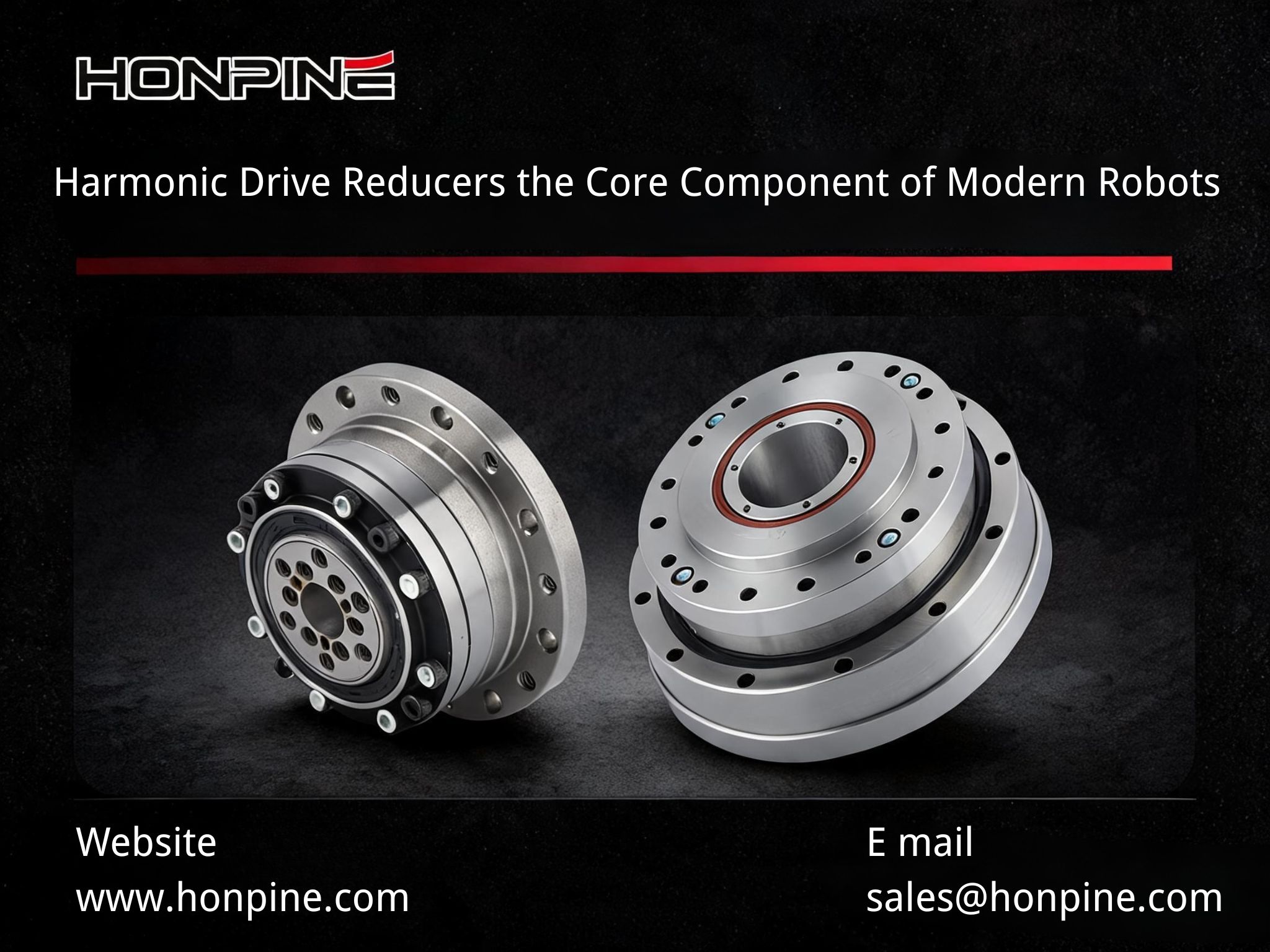
 Why Are Harmonic Drive Reducers the Core Component of Modern Robots?As the core transmission component inside robotic joints, the design, manufacturing quality, and selection of a harmonic drive reducer directly determine a robot's motion accuracy, reliability, and service life. Whether in industrial robots, collaborative robots, or next-generation humanoid robots, harmonic drives have become one of the most critical enabling technologies for high-performance motion control.
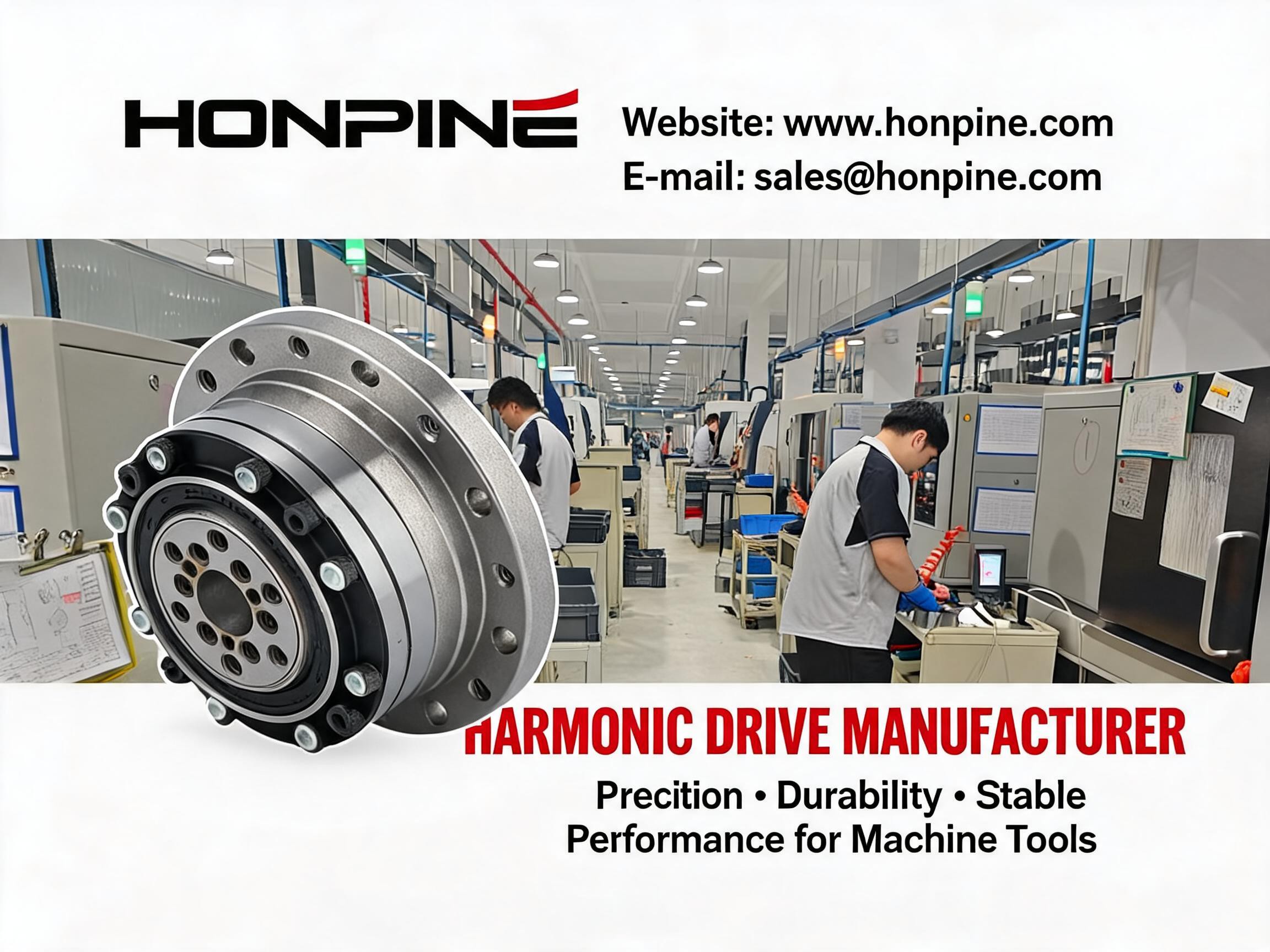
 How to Choose a Reliable Harmonic Drive Manufacturer in ChinaHow to Choose a Reliable Harmonic Drive Manufacturer in China: learn how machine tool buyers can assess precision, quality control, customization, and delivery reliability before sourcing.
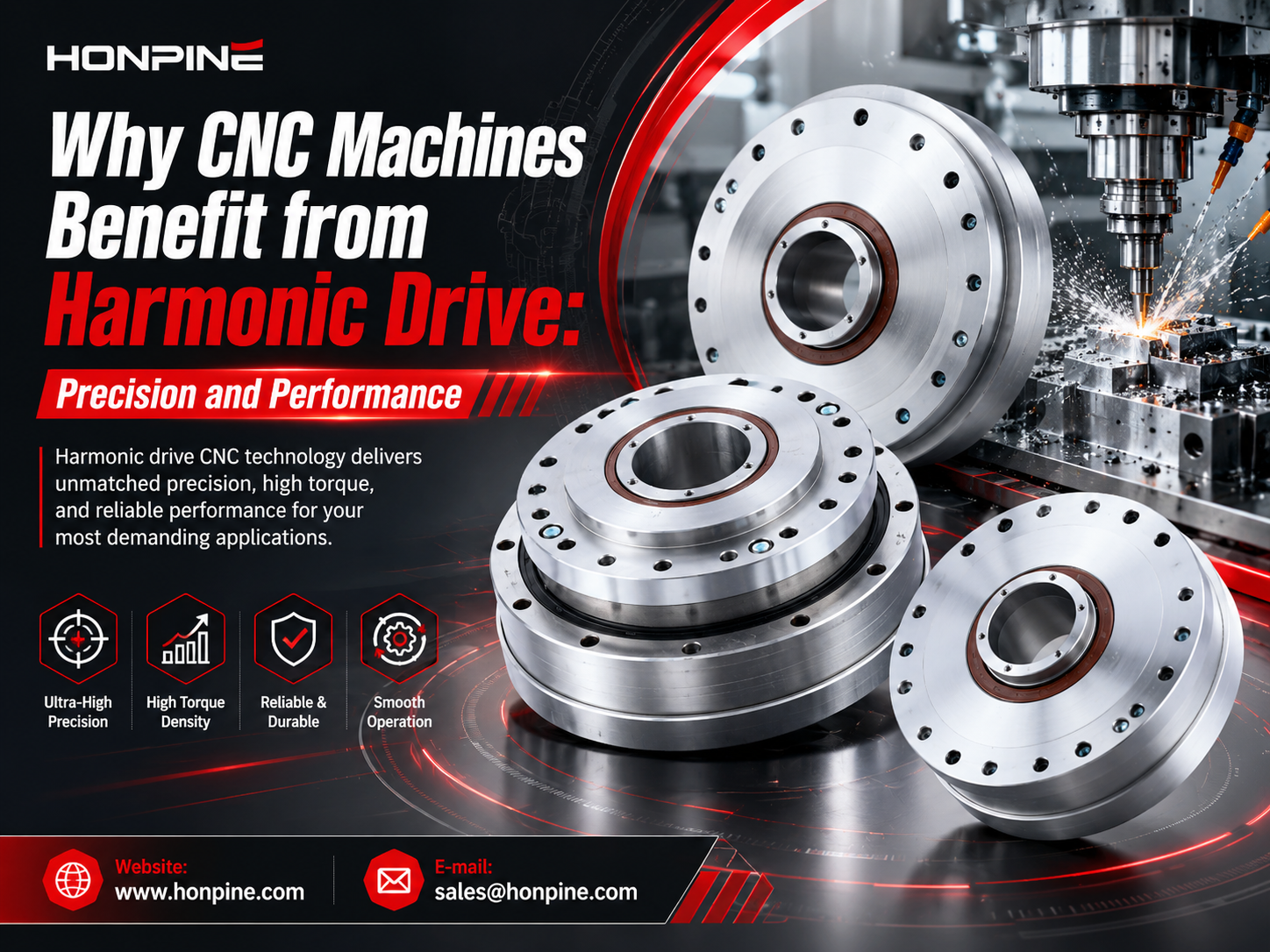
 Why CNC Machines Benefit from Harmonic Drive: Precision and Performance?In modern manufacturing, CNC machines are widely used for turning, taper turning, drilling, tapping, contouring with linear and circular interpolation, and threading (both parallel and tapered). While these machines excel at traditional operations, performing milling tasks on standard CNC turning centers presents significant challenges. This is where harmonic drive CNC technology comes into play, offering a solution that addresses these limitations effectively.
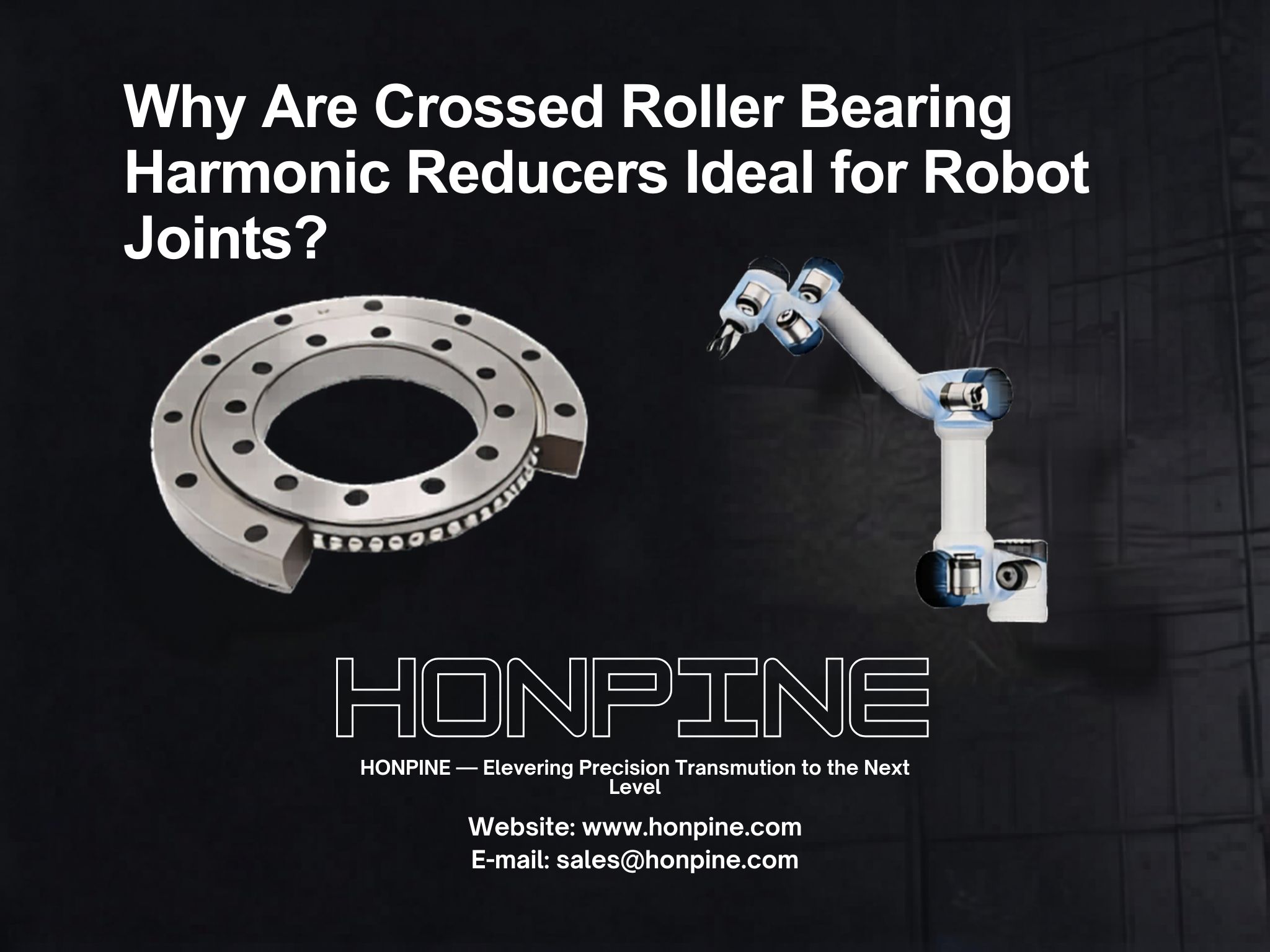
 Why Are Crossed Roller Bearing Harmonic Reducers Ideal for Robot Joints?In robotic harmonic reducers, crossed roller bearings are the key components that ensure motion accuracy and structural rigidity. Their performance directly affects the robot’s repeat positioning accuracy, load capacity, and service life.
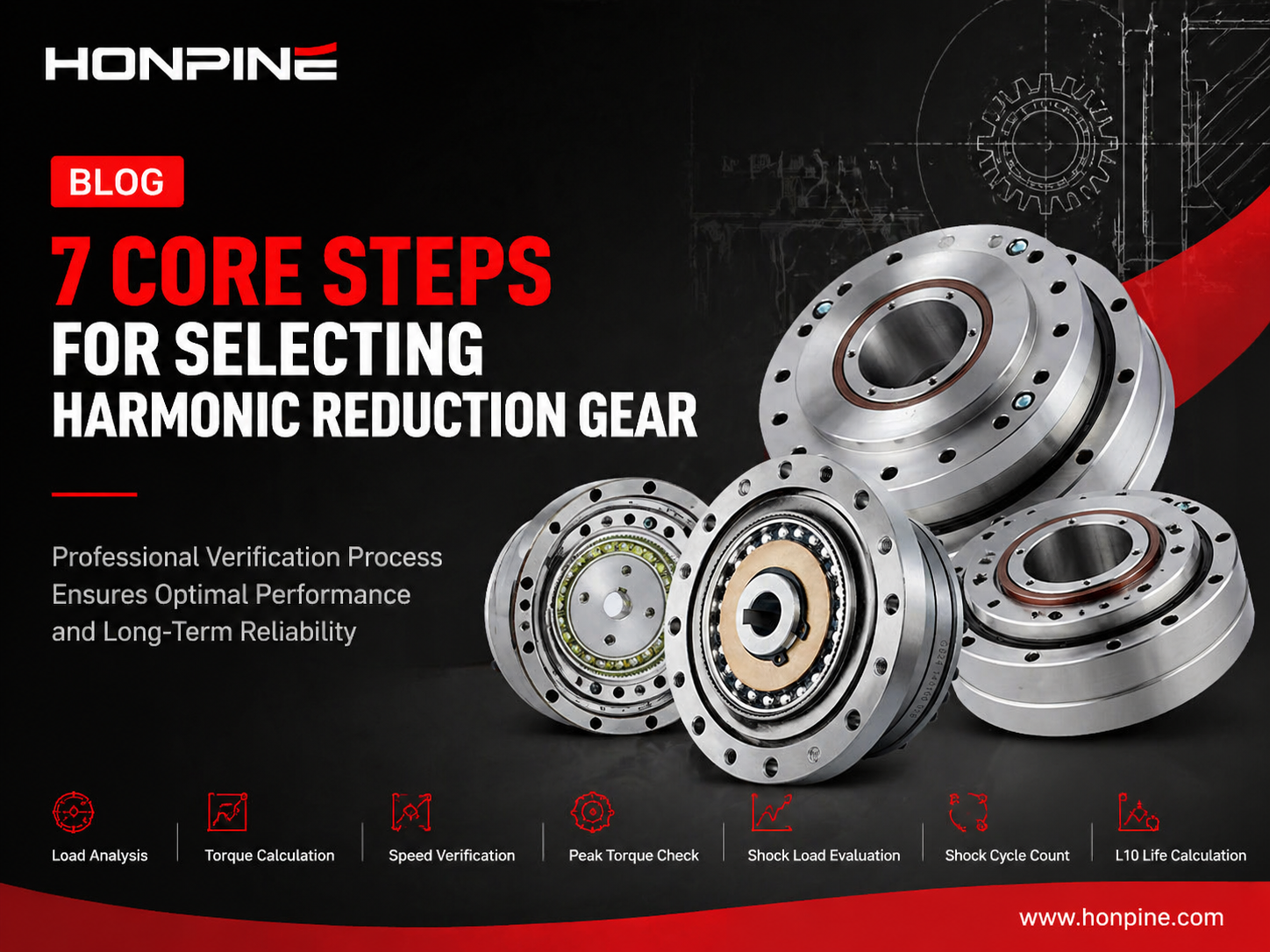
 How to Selection Harmonic Reduction Gear?This article explains how to select harmonic reduction gears based on specific equipment, covering aspects such as average load torque, input speed, start-stop peak torque, comparison of impact torque, permissible number of impact torque cycles, and service life. It concludes with a mention of Honpine's star products, harmonic reduction gears.
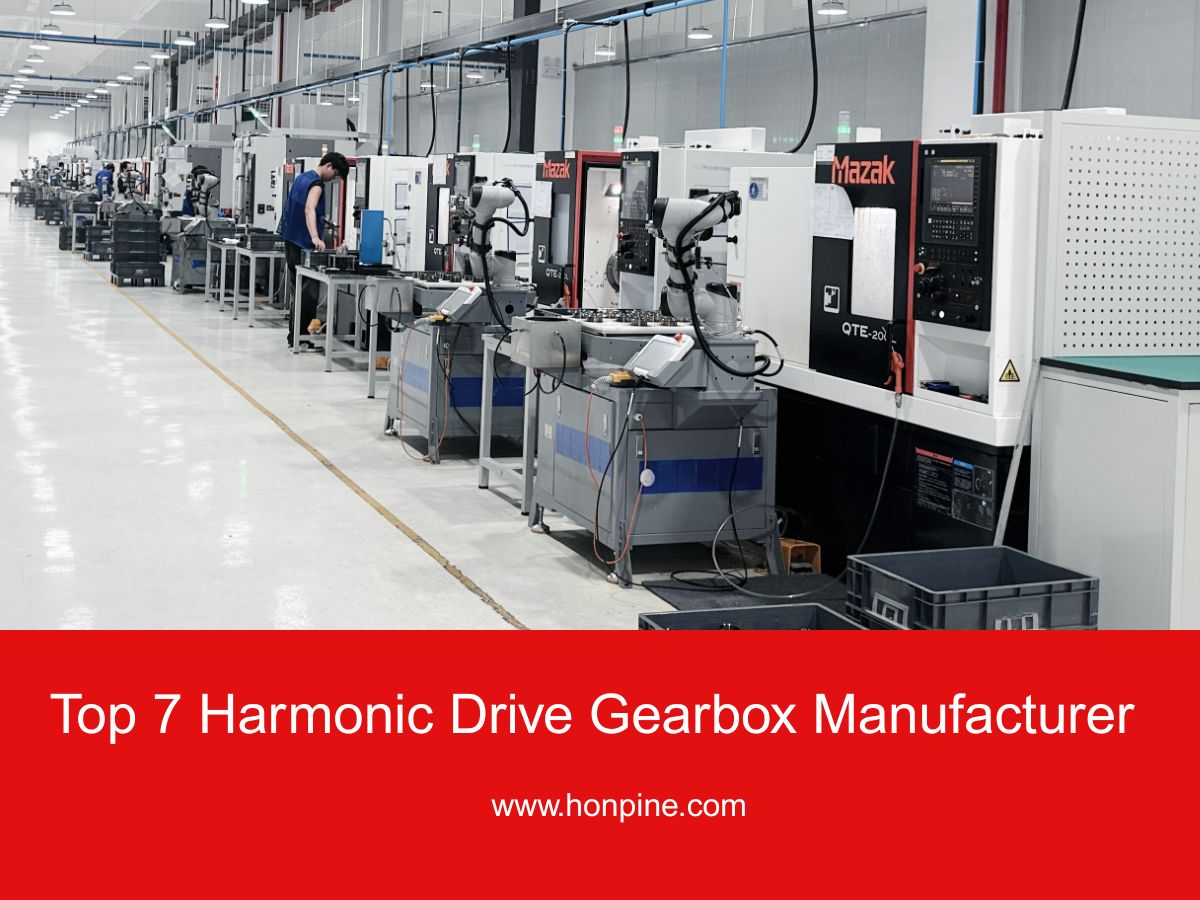
 Top 7 Harmonic Drive Reducer ManufacturersThis article introduces seven manufacturers of harmonic drive reducers, primarily companies from China and Japan.
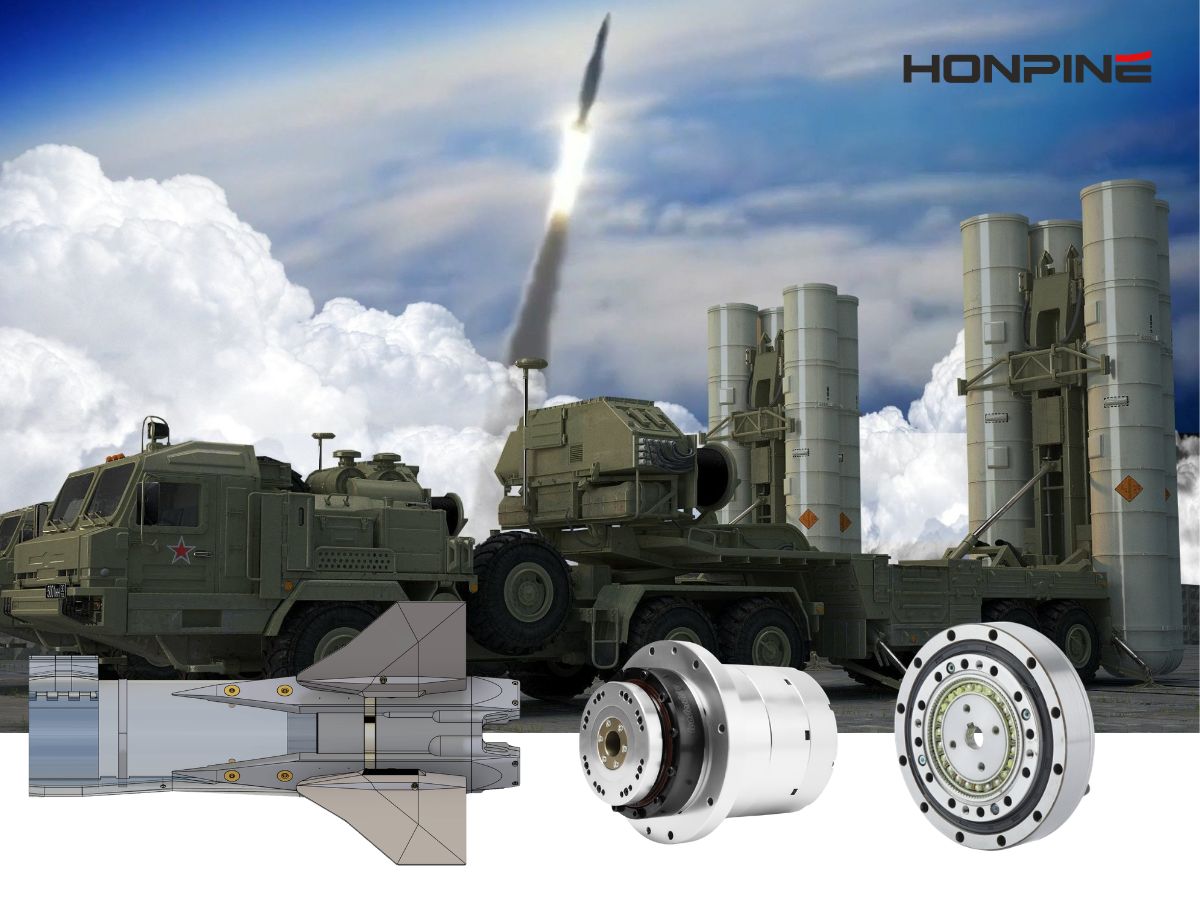
 Why Harmonic Drive Gear Systems Are Ideal for Missile Guidance and Precision Control Applications?Harmonic drive gear systems and harmonic drive actuator systems are highly suitable for applications such as turret rotation, missile fin control, and stabilized sensor gimbal systems.
This is mainly because they offer unique advantages in precision, compact size, fast response, and reliability, making them ideal for high-precision electromechanical systems.