

How HONPINE Manufactures Precision Harmonic Reducers: Technology, Quality and Manufacturing Challenges?
Introduction
For a precision harmonic reducer, performance is determined by far more than reduction ratio, rated torque, or backlash listed in a product catalog. As a harmonic reducer manufacturer, HONPINE recognizes that precision transmission performance is the result of multiple factors working together, including mechanical design, tooth profile optimization, flexspline material, precision machining, assembly accuracy, manufacturing equipment, and quality control.
This becomes particularly important in industrial robots, collaborative robots, humanoid robots, CNC rotary axes, semiconductor equipment, optical inspection systems, and other precision automation applications. In these systems, customers are not simply looking for one sample that meets a specified tolerance. They need harmonic reducers that can maintain consistent performance across batches and continue operating reliably over long service periods.
For this reason, HONPINE approaches harmonic reducer manufacturing as a complete engineering and production process rather than focusing on a single specification.
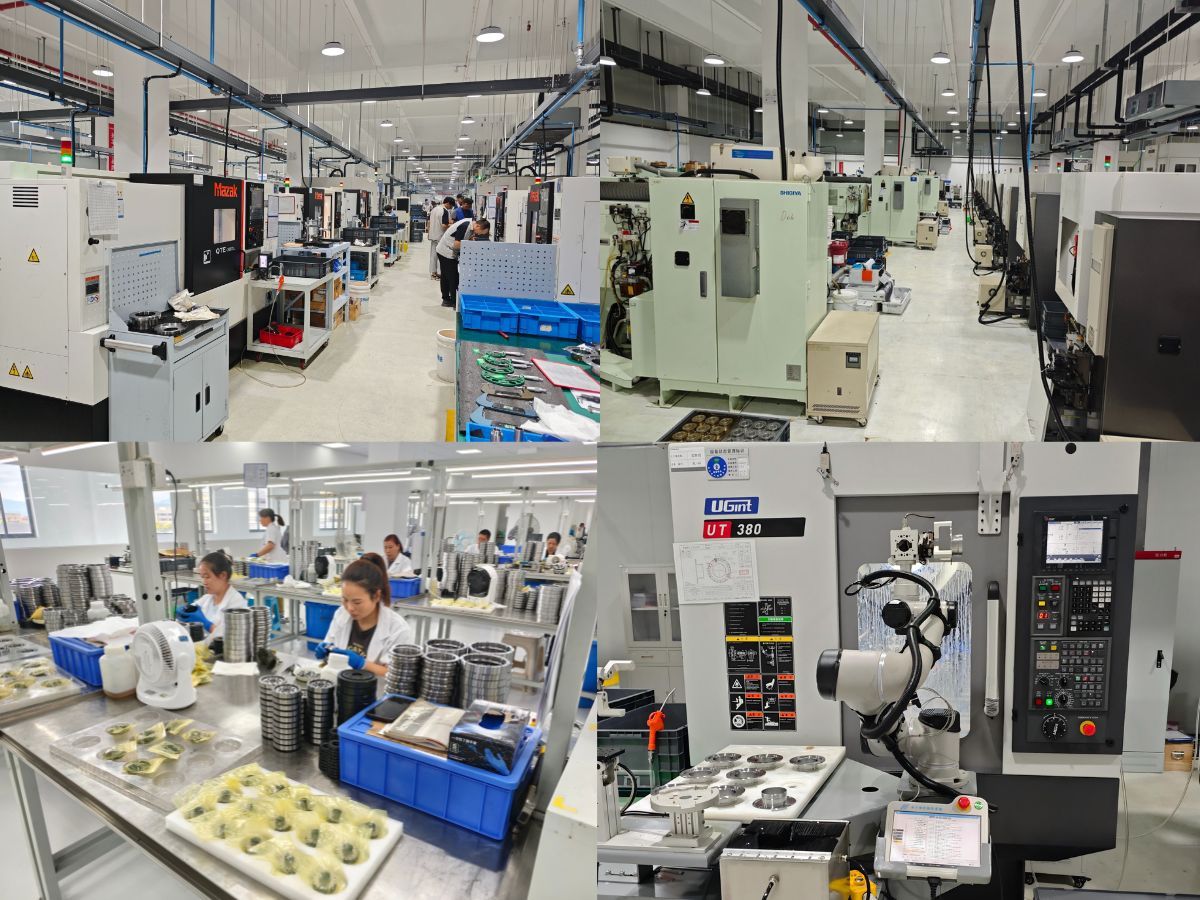
Why Manufacturing Capability Matters in a Harmonic Reducer?
The operating principle of a harmonic reducer is well established. The greater challenge lies in converting a mechanical design into a product that can be manufactured accurately, consistently, and reliably at scale.
HONPINE's manufacturing capability covers multiple factors that influence final transmission performance, including tooth profile design, flexspline material, heat treatment, precision machining, wave generator manufacturing, component matching, assembly accuracy, and final inspection.
These factors are closely interconnected.
For example, a tooth profile may theoretically support extremely low backlash, but inconsistent machining accuracy, material properties, or assembly tolerances can prevent the finished harmonic reducer from achieving the expected positioning accuracy and service life.
Therefore, HONPINE evaluates harmonic reducer performance from a system-level manufacturing perspective rather than relying on a single design parameter.
HONPINE's Approach to Harmonic Reducer Tooth Profile Design
Tooth profile design is one of the key technical factors in harmonic reducer development.
The meshing relationship between the flexspline and circular spline directly affects transmission accuracy, torsional stiffness, efficiency, noise, and service life. For precision applications, tooth profile design must consider not only theoretical meshing conditions but also actual manufacturing tolerances, material deformation, load variations, and long-term operating conditions.
HONPINE evaluates tooth geometry, tooth surface contact, meshing clearance, and load distribution together during product development.
This is particularly important for robot joints, precision rotary axes, and automated positioning systems. A harmonic reducer may operate under continuously changing loads and frequent acceleration and deceleration, so stable transmission performance must be maintained across different operating conditions.
Rather than pursuing high precision through a single parameter, HONPINE considers the interaction between the transmission components and optimizes the overall system.
Flexspline Material and Fatigue Resistance
The flexspline is one of the most critical components in a harmonic reducer because it undergoes repeated elastic deformation during operation. Its material properties therefore have a direct influence on fatigue resistance, reliability, and service life.
Flexspline material selection cannot simply focus on maximum strength. A suitable material must provide an appropriate balance between strength, toughness, fatigue resistance, dimensional stability, and machinability.
Material inconsistency can lead to performance variations even when machining accuracy is well controlled. For applications involving frequent reciprocating motion, the long-term fatigue behavior of the flexspline becomes particularly important.
HONPINE therefore considers material selection, heat treatment, machining, and subsequent inspection as interconnected parts of flexspline manufacturing.
For robotic joints and other high-cycle applications, evaluating only the initial accuracy is not sufficient. Long-term performance and fatigue behavior must also be considered.
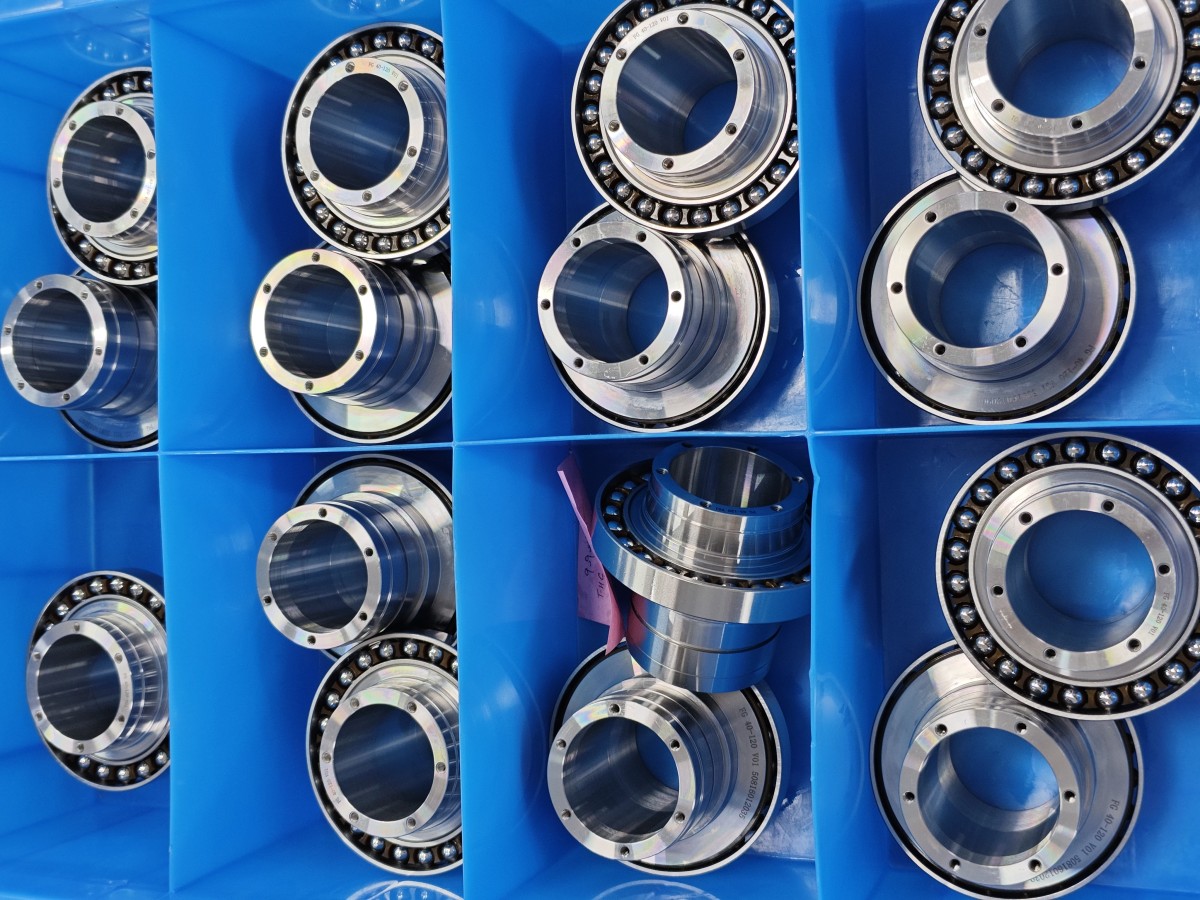
Precision Machining Is a Core Part of HONPINE's Manufacturing Capability
The final performance of a harmonic reducer is closely related to the machining accuracy of its critical components.
H3: Machining Accuracy and Component Tolerances
Flexsplines, circular splines, wave generators, bearings, and other precision components require tight control of dimensional accuracy and geometric tolerances. At the same time, the relationship between individual components must remain within the required assembly tolerances.
Manufacturing Equipment Is Only Part of the Solution
High-end manufacturing equipment alone does not guarantee high-quality harmonic reducers.
A precision machine can produce highly accurate components, but if process parameters, tooling conditions, equipment status, inspection methods, and production standards are not consistently controlled, significant performance variations can still occur during mass production.
Process Control from Machining to Final Inspection
HONPINE therefore focuses on process stability across machining, inspection, assembly, and final testing.
This approach helps ensure that the performance achieved during product development can be reproduced during continuous production.
Why Production Consistency Is Critical?
For B2B customers, a single qualified sample does not demonstrate a supplier's ability to provide stable mass production.
This distinction is particularly important for harmonic reducers used in industrial robots, CNC machines, semiconductor equipment, and automated production systems.
A customer may require dozens, hundreds, or thousands of harmonic reducers. If performance varies significantly between batches, the resulting differences can affect robot positioning accuracy, machine calibration, assembly processes, and maintenance requirements.
HONPINE therefore considers production consistency to be a core part of harmonic reducer quality.
Backlash, torsional stiffness, transmission efficiency, starting torque, temperature rise, and other performance parameters need to remain within controlled ranges during continuous production.
For HONPINE, manufacturing capability is not simply the ability to produce one high-precision harmonic reducer. It is the ability to repeatedly manufacture high-precision harmonic reducers with stable and predictable performance.
From Prototype Validation to Mass Production
Moving from prototype development to mass production requires more than simply reproducing the original design.
Prototype and Small-Batch Validation
During the prototype stage, HONPINE evaluates the structural design, component specifications, materials, machining processes, and basic performance of the harmonic reducer.
As production volume increases, additional challenges emerge. Manufacturing processes must become stable, equipment capacity must match production requirements, component consistency must be maintained, and assembly and inspection processes must remain controlled.
Transitioning from Validation to Mass Production
HONPINE therefore treats prototype validation, small-batch verification, reliability testing, process optimization, and mass-production validation as interconnected stages of product development.
This is especially important for robotics applications. A robot manufacturer may first evaluate a small number of samples before conducting long-term testing under actual operating conditions.
Only after the product demonstrates stable performance can the harmonic reducer move toward larger-scale application.
Reliability Testing for Industrial Harmonic Reducers
For industrial harmonic reducers, reliability cannot be evaluated through one parameter alone.
Key Performance Parameters
In addition to rated torque and reduction ratio, HONPINE considers backlash, torsional stiffness, transmission efficiency, temperature rise, noise, durability, and long-term performance stability.
Endurance and Cyclic Load Testing
For robotic joints and other high-cycle applications, repeated forward and reverse rotation places continuous cyclic loads on the transmission system. Fatigue resistance and long-term durability therefore become important evaluation factors.
HONPINE uses performance testing and endurance evaluation to verify whether harmonic reducers can maintain their required characteristics under representative operating conditions.
Testing also provides valuable feedback for product optimization and manufacturing process improvement.
Why Low Backlash Requires More Than Gear Design?
Backlash is one of the most important parameters for precision transmission, but achieving low backlash is not simply a matter of optimizing tooth geometry.
Actual backlash is influenced by multiple factors, including tooth profile accuracy, component machining tolerances, material properties, wave generator geometry, assembly accuracy, and manufacturing consistency.
A harmonic reducer may be designed to achieve extremely low backlash under theoretical conditions. However, if component tolerances or assembly variations are not adequately controlled, the finished product may not consistently achieve the expected performance.
HONPINE therefore treats low backlash as a system-level manufacturing result rather than merely a design specification.
This approach is particularly relevant for precision positioning applications where even small transmission errors can affect the final motion accuracy of the machine.
Why Both Very Small and Very Large Harmonic Reducers Are Difficult to Manufacture?
Size introduces different manufacturing challenges at both ends of the harmonic reducer range.
Challenges of Miniature Harmonic Reducers
For miniature harmonic reducers, component dimensions become extremely small, making machining tolerances increasingly significant relative to the overall component size. Assembly and inspection also become more demanding.
Challenges of Large Harmonic Reducers
Large harmonic reducers present different challenges. Larger components require greater machining capacity and introduce additional considerations related to material deformation, heat treatment, dimensional stability, equipment capability, and assembly accuracy.
Therefore, manufacturing a harmonic reducer cannot simply be viewed as scaling the same design up or down.
Different sizes require manufacturing processes, inspection methods, and engineering controls suited to their specific structural characteristics.
Standard Harmonic Reducer or Customized Solution?
Not every precision motion system has the same requirements.
When Standard Harmonic Reducers Are the Better Choice?
Standard harmonic reducers are often appropriate for mature applications such as industrial robots, collaborative robots, CNC equipment, and conventional automation systems. Using a standard product can shorten development time and reduce engineering costs.
When Customization Becomes Necessary?
Specialized applications may require different installation dimensions, output structures, bearing configurations, encoder arrangements, shaft designs, or performance characteristics.
These requirements can arise in semiconductor equipment, precision inspection systems, special robots, optical equipment, and space-constrained rotary mechanisms.
As a harmonic reducer manufacturer, HONPINE evaluates customization requirements based on the customer's actual application conditions rather than simply selecting a model according to rated torque.
Installation space, load characteristics, rotational speed, positioning accuracy, duty cycle, service life, and control requirements should all be considered when determining the appropriate transmission solution.
Harmonic Reducers for Robotics and Precision Automation
HONPINE harmonic reducers are designed for motion systems where precision, compactness, torque density, and reliability are important.
Industrial Robots and Collaborative Robots
In industrial robots and collaborative robots, harmonic reducers are commonly integrated into joint transmission systems where limited installation space must be combined with high reduction ratios and precise positioning.
Humanoid Robot Joint Systems
Humanoid robots place even greater demands on joint transmission systems. Weight, size, torque density, response characteristics, positioning accuracy, and durability must be considered together.
CNC and Precision Automation
CNC rotary axes, semiconductor equipment, optical inspection systems, precision automation machinery, and other positioning systems also require stable transmission accuracy and controlled backlash.
For these applications, HONPINE focuses on how the harmonic reducer performs under actual motion conditions rather than relying only on laboratory specifications.
What B2B Customers Should Evaluate Beyond the Catalog?
When selecting a harmonic reducer supplier, comparing rated torque, reduction ratio, and backlash is only the beginning.
For high-end equipment manufacturers, supplier evaluation should also include production consistency, long-term supply capability, customization capability, reliability validation, quality control, and technical support.
This is particularly important when a harmonic reducer becomes part of a robot joint, CNC axis, semiconductor machine, or precision automation system. A problem with one transmission component can affect machine calibration, commissioning, delivery schedules, and long-term maintenance.
A capable supplier should therefore provide more than a catalog product.
The supplier should be able to support the complete process from product selection and engineering validation to mass production and long-term supply.
Why Choose HONPINE as a Harmonic Reducer Manufacturer?
As a harmonic reducer manufacturer, HONPINE integrates product development, precision machining, component manufacturing, assembly, testing, and mass-production control into its manufacturing process.
HONPINE's goal is not simply to provide a harmonic reducer with a set of catalog specifications. The objective is to provide a precision transmission solution that matches the customer's actual mechanical system.
For robotics, CNC machines, semiconductor equipment, optical inspection systems, and industrial automation, HONPINE evaluates the requirements of the complete motion system, including precision, stiffness, backlash, efficiency, durability, installation constraints, and operating conditions.
HONPINE provides standard harmonic reducer solutions for established applications while also supporting customized development when customers have special requirements related to structure, dimensions, output configuration, load conditions, or integration.
This combination of product development and manufacturing capability allows HONPINE to support customers beyond the initial product selection stage.
Conclusion
The core competitiveness of a high-precision harmonic reducer does not come from a single technical specification.
Long-term performance depends on the combined capabilities of mechanical design, material control, precision machining, assembly, reliability testing, quality management, and mass-production consistency.
For equipment manufacturers, selecting a harmonic reducer supplier should therefore involve more than comparing catalog parameters. The supplier's ability to repeatedly manufacture stable products and support long-term application is equally important.
As a harmonic reducer manufacturer, HONPINE continues to focus on precision transmission technology and manufacturing capability, with the goal of providing harmonic reducers that deliver stable performance in demanding robotic and precision automation applications.
Read More
Learn more about the story of HONPINE and industry trends related to precision transmission.
 What is robot joint actuator?How to Choose the Best Robot Rotary Joint Actuator?In core robot joint transmission solutions, planetary and harmonic rotary actuators each have their own strengths. Choosing the right type based on application requirements is essential to achieve the optimal balance between performance and cost.
 DD Motors VS Harmonic Rotary ActuatorsThis article provides an in-depth comparison between Direct Drive (DD) motors and harmonic rotary actuators, covering their transmission principles, advantages and disadvantages, and typical application fields.
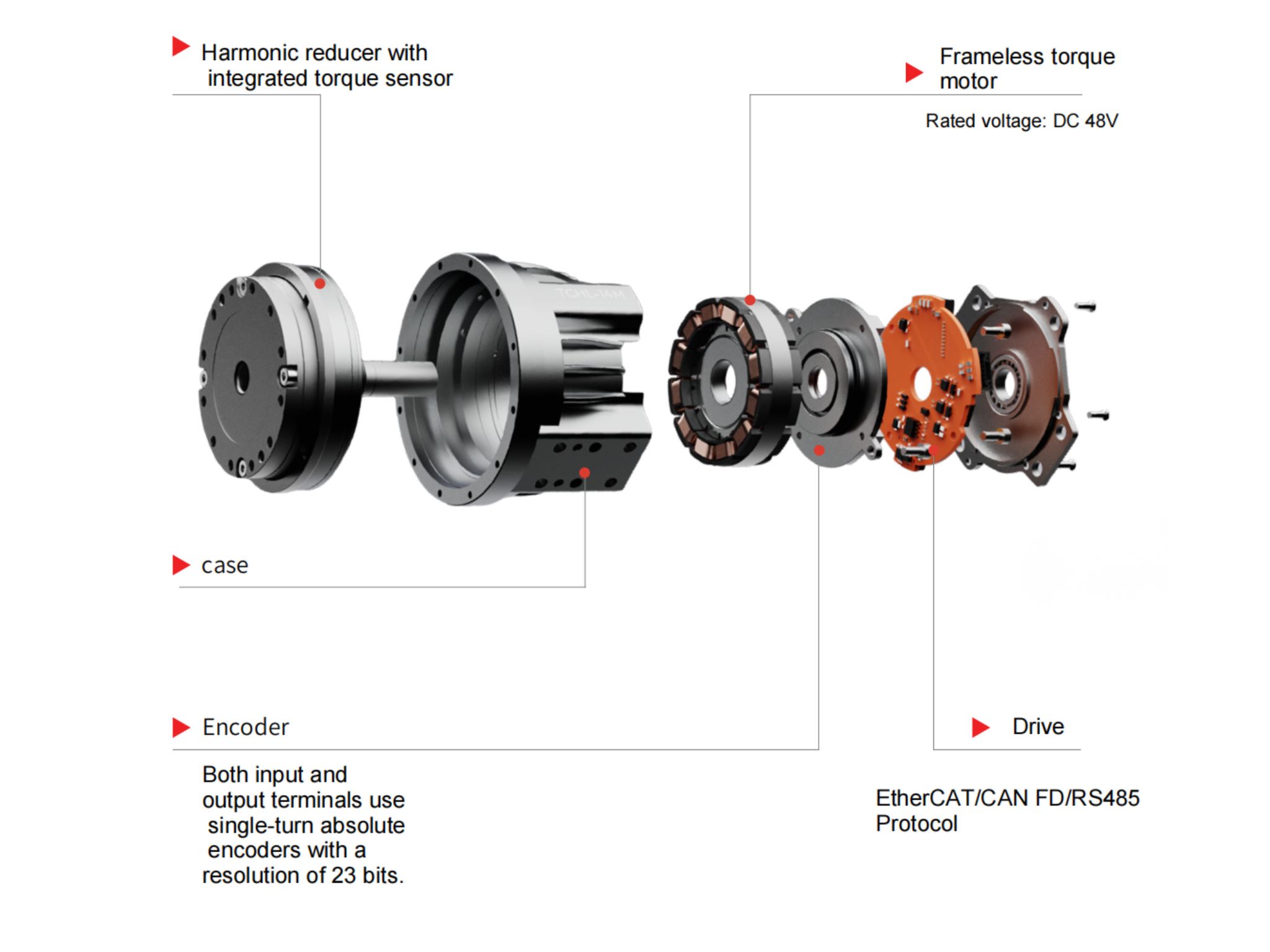
 OMG Ultra Compact Harmonic Drive Joint Module with Built-in Torque SensorHONPINE TCHL series harmonic drive joint module is a game-changing product that achieves disruptive improvements in multiple aspects such as lightweight design, integration level, and connection convenience. This article will analyze its revolutionary enhancements with you.
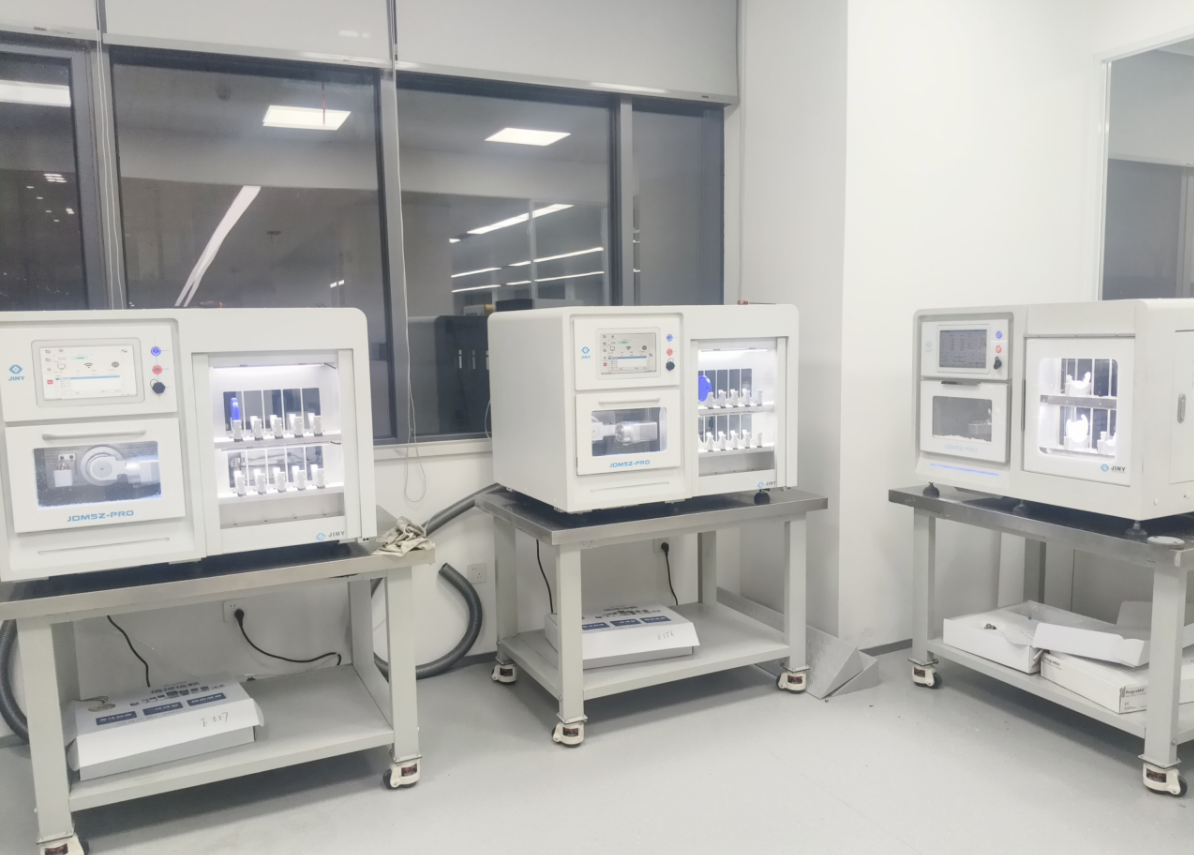
 The Role of Harmonic Drive Gears in Achieving 5–10 μm Accuracy in Dental Milling MachinesA dental milling machine is a CNC machining system used to directly process digital dental models into restorations such as crowns, bridges, veneers, inlays, and implant abutments. Dental milling machines require far higher operational accuracy and motion stability than ordinary equipment. This article explains how harmonic drive gear help dental milling machines achieve stable, continuous, and controllable operation.
 Why Are Harmonic Rotary Actuators Perfect for Medical Equipment?Harmonic rotary actuators (typically integrated systems consisting of a harmonic drive reducer, frameless torque motor, encoder, and optional brake) are regarded as key components in medical equipment. The core reason is that they simultaneously meet the most stringent medical requirements for precision, compact size, safety, and controllability. The following explanation is structured from three perspectives: technical characteristics, application scenarios, and medical value.
 High-Precision RV Reducers Perfectly Matched for Walking RobotsThe walking axis of a robot is a core component for power transmission and support. RV reducers provide extremely high rigidity, precision, and torque while maintaining a compact size and exceptional reliability, making them an ideal match for the demanding requirements of walking robot joints in terms of load capacity, impact resistance, and precision.
 HSG Laser Brings Next-Generation Cutting and Automation to FABTECH 2026HSG Laser at FABTECH 2026: Explore the TS2 PRO tube laser cutting machine and AI CutPilot automation, plus key procurement checks to guide your next equipment investment.
 How Does a Harmonic Joint Actuator with a Torque Sensor Improve Robot Force Control?Learn how the HONPINE TCHL harmonic joint actuator uses an integrated output torque sensor to support force feedback, collision detection, compliant assembly, rehabilitation robotics, and teleoperation.
 Ultra-Compact Harmonic Joint Module with a 6 mm Hollow ShaftAs humanoid robots and compact robotic systems evolve, joint modules must deliver high torque density, precise motion control, and flexible cable routing within increasingly limited installation space. The HONPINE HPJM-RE30-40-PRO harmonic joint module addresses these challenges with a compact design, a 6 mm hollow shaft, dual-encoder feedback, and an integrated motor and FOC drive. In this article, we explore its key design features and explain how its hollow-shaft structure, EtherCAT connectivity, and flexible mounting options support the development of humanoid robots, drones, optical platforms, and precision automation equipment.
 How Does the HONPINE HPG Backlash-Free Planetary Rotary Actuator Balance CNC Accuracy and Rigidity?Discover the HONPINE HPG precision backlash-free planetary rotary actuator for CNC rotary tables. Explore positioning accuracy, torsional rigidity, low backlash, and drive selection.
 Harmonic Drive Actuator Accuracy: Why It Should Be Evaluated at Four LevelsHarmonic drive actuator accuracy involves more than encoder resolution. Why should engineers evaluate it at four levels? Resolution, repeatability, unidirectional positioning accuracy, and bidirectional positioning accuracy describe different aspects of motion performance. Understanding these differences helps engineers select harmonic rotary actuators for semiconductor equipment, EFEM systems, and 3C automation without confusing theoretical encoder increments with actual positioning performance.
 Why Do Many Customers Choose HONPINE HPJM Harmonic Joint Modules for Just 2 mm More Hollow Bore Diameter?Why do many customers choose HONPINE HPJM harmonic joint modules for just 2 mm more hollow bore diameter? In compact robotic joints, this small dimensional difference can create a surprisingly large increase in available space. Because the cross-sectional area of a circular bore increases with the square of its diameter, an extra 2 mm can significantly improve internal cable routing and simplify system integration. This article examines the impact of hollow bore diameter, compares selected HONPINE HPJM models with comparable harmonic joint modules, and explains why bore size matters in humanoid robots, collaborative robots, and industrial automation.
Double Click
We provide harmonic drive reducer,planetary reducer,robot joint motor,robot rotary actuators,RV gear reducer,robot end effector,dexterous robot hand
 What is robot joint actuator?How to Choose the Best Robot Rotary Joint Actuator?In core robot joint transmission solutions, planetary and harmonic rotary actuators each have their own strengths. Choosing the right type based on application requirements is essential to achieve the optimal balance between performance and cost.
 DD Motors VS Harmonic Rotary ActuatorsThis article provides an in-depth comparison between Direct Drive (DD) motors and harmonic rotary actuators, covering their transmission principles, advantages and disadvantages, and typical application fields.
 OMG Ultra Compact Harmonic Drive Joint Module with Built-in Torque SensorHONPINE TCHL series harmonic drive joint module is a game-changing product that achieves disruptive improvements in multiple aspects such as lightweight design, integration level, and connection convenience. This article will analyze its revolutionary enhancements with you.
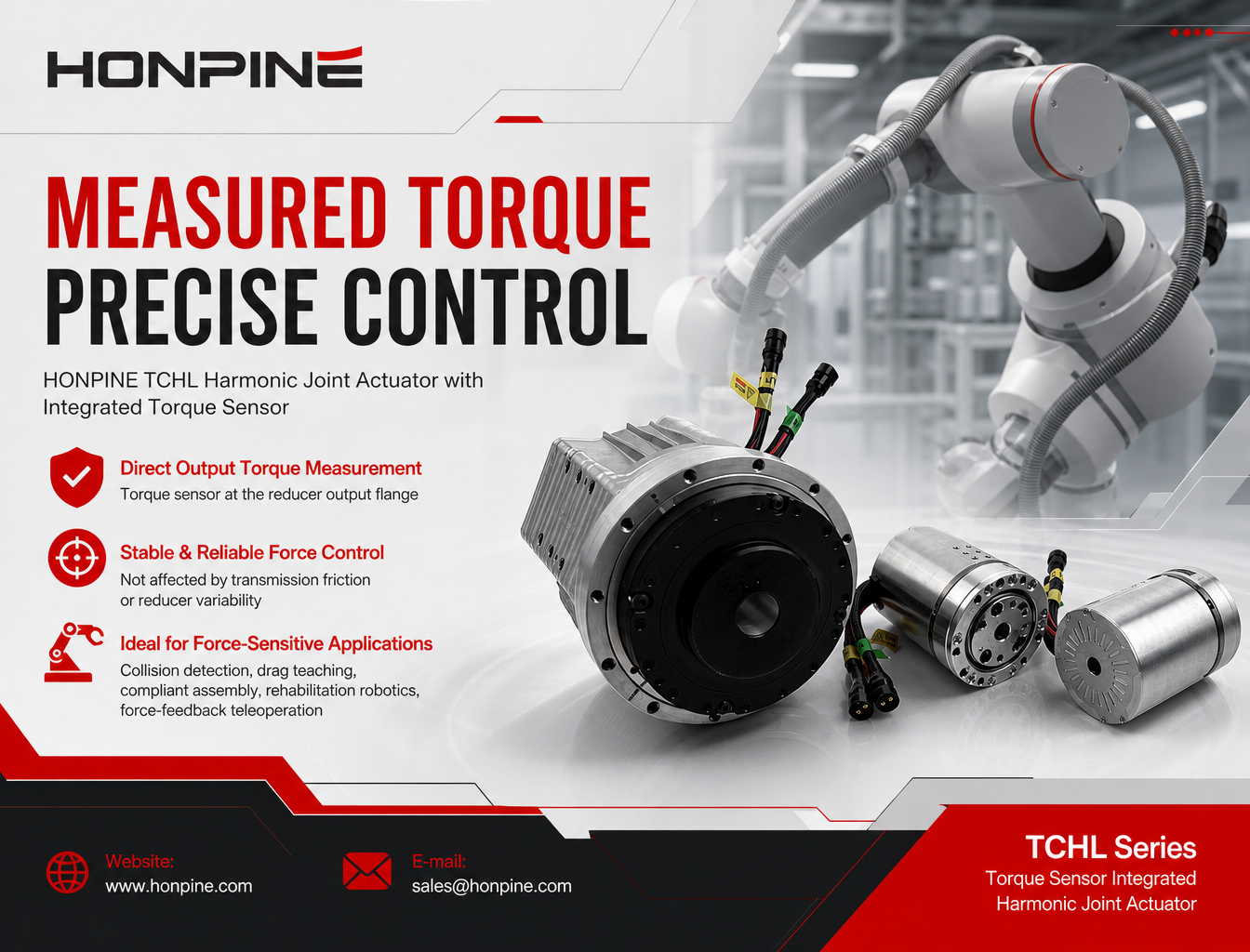
 How Does a Harmonic Joint Actuator with a Torque Sensor Improve Robot Force Control?Learn how the HONPINE TCHL harmonic joint actuator uses an integrated output torque sensor to support force feedback, collision detection, compliant assembly, rehabilitation robotics, and teleoperation.
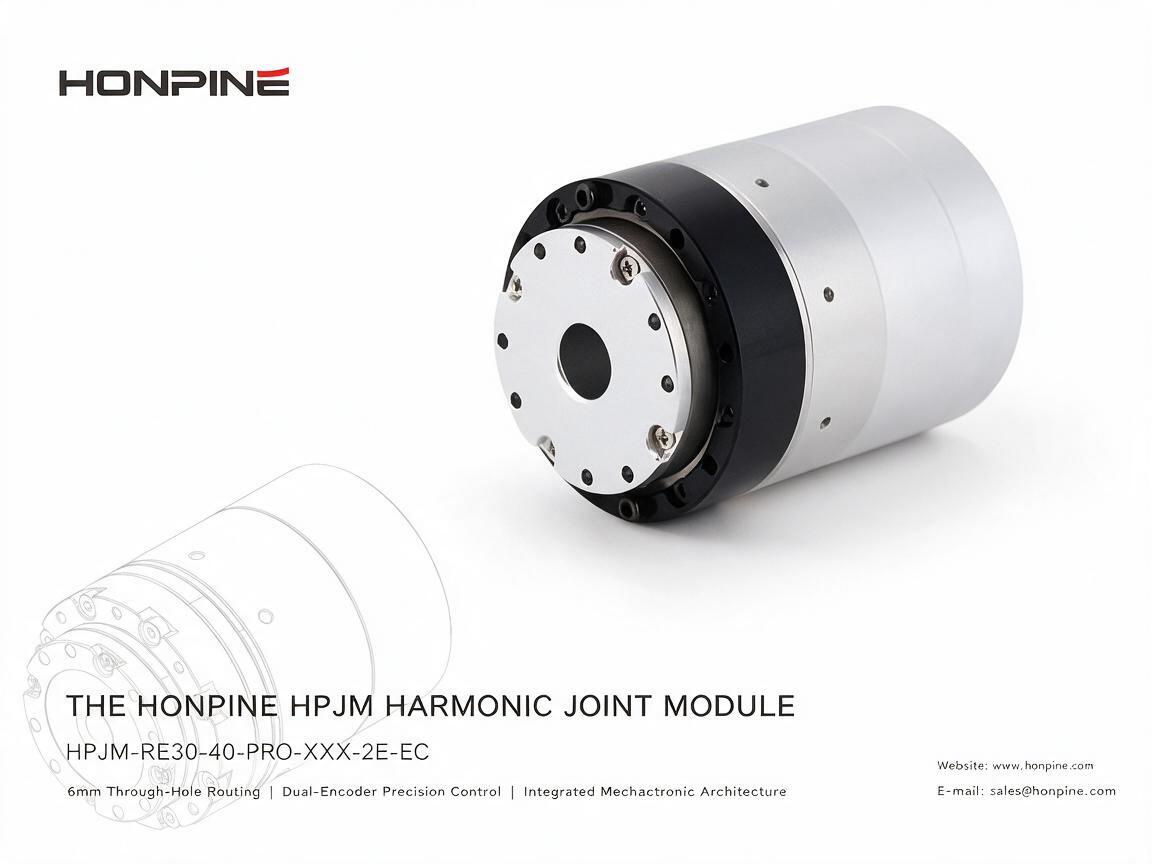
 Ultra-Compact Harmonic Joint Module with a 6 mm Hollow ShaftAs humanoid robots and compact robotic systems evolve, joint modules must deliver high torque density, precise motion control, and flexible cable routing within increasingly limited installation space. The HONPINE HPJM-RE30-40-PRO harmonic joint module addresses these challenges with a compact design, a 6 mm hollow shaft, dual-encoder feedback, and an integrated motor and FOC drive. In this article, we explore its key design features and explain how its hollow-shaft structure, EtherCAT connectivity, and flexible mounting options support the development of humanoid robots, drones, optical platforms, and precision automation equipment.
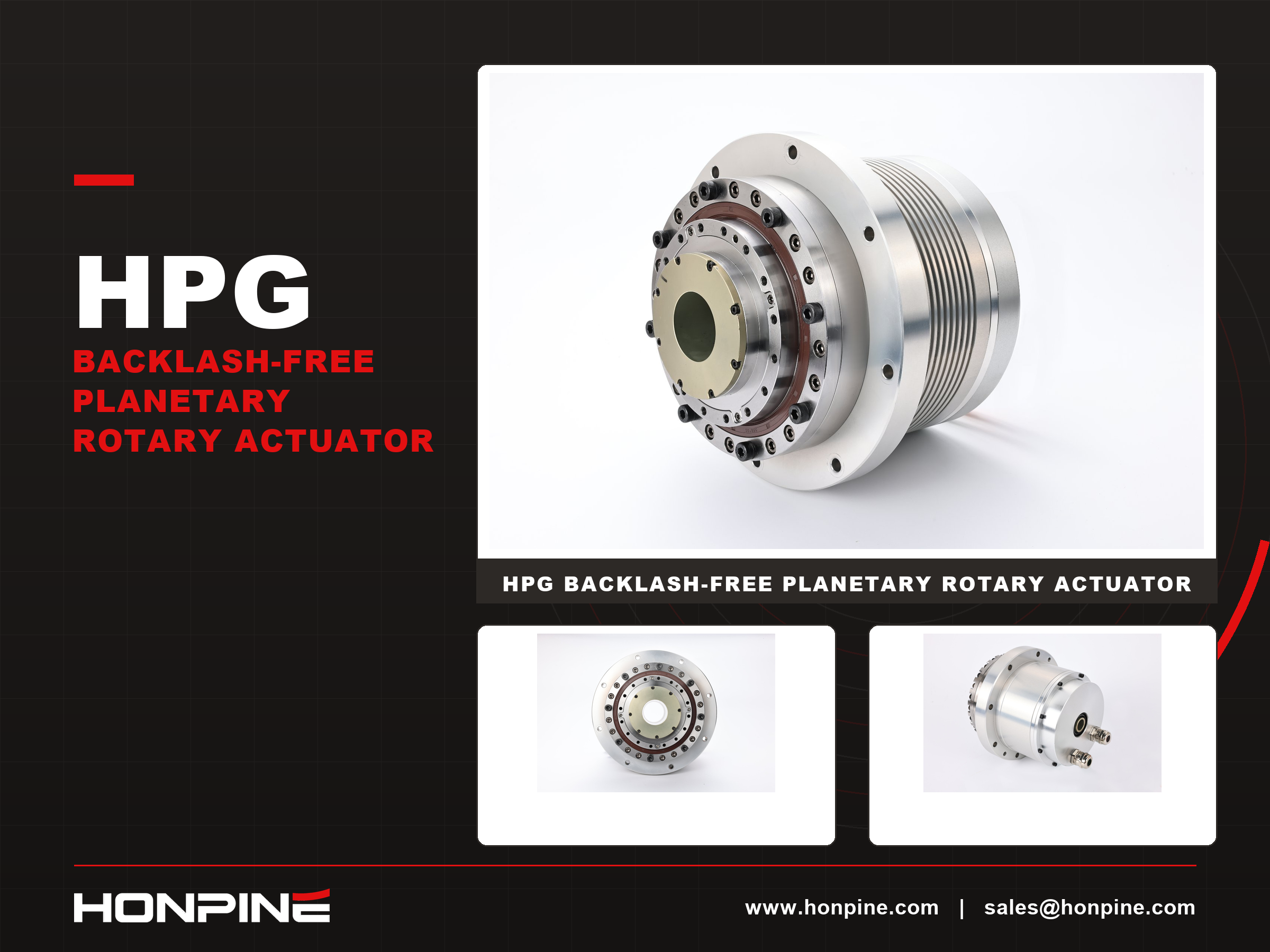
 How Does the HONPINE HPG Backlash-Free Planetary Rotary Actuator Balance CNC Accuracy and Rigidity?Discover the HONPINE HPG precision backlash-free planetary rotary actuator for CNC rotary tables. Explore positioning accuracy, torsional rigidity, low backlash, and drive selection.
 Harmonic Drive Actuator Accuracy: Why It Should Be Evaluated at Four LevelsHarmonic drive actuator accuracy involves more than encoder resolution. Why should engineers evaluate it at four levels? Resolution, repeatability, unidirectional positioning accuracy, and bidirectional positioning accuracy describe different aspects of motion performance. Understanding these differences helps engineers select harmonic rotary actuators for semiconductor equipment, EFEM systems, and 3C automation without confusing theoretical encoder increments with actual positioning performance.
 Why Do Many Customers Choose HONPINE HPJM Harmonic Joint Modules for Just 2 mm More Hollow Bore Diameter?Why do many customers choose HONPINE HPJM harmonic joint modules for just 2 mm more hollow bore diameter? In compact robotic joints, this small dimensional difference can create a surprisingly large increase in available space. Because the cross-sectional area of a circular bore increases with the square of its diameter, an extra 2 mm can significantly improve internal cable routing and simplify system integration. This article examines the impact of hollow bore diameter, compares selected HONPINE HPJM models with comparable harmonic joint modules, and explains why bore size matters in humanoid robots, collaborative robots, and industrial automation.
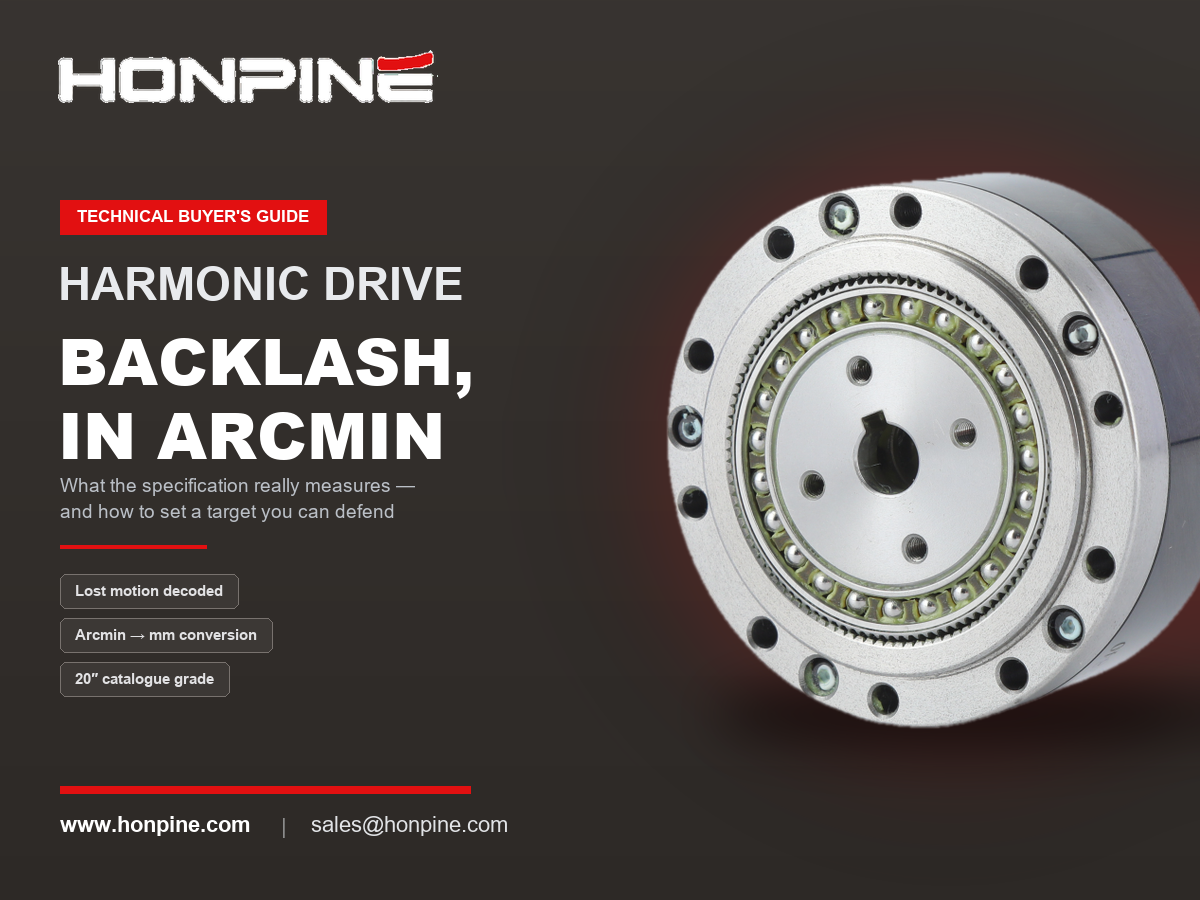
 Harmonic Drive Backlash in Arcmin: What the Specification Really Tells YouChoosing the right force control harmonic joint actuator involves more than comparing torque and dimensions. Torque sensor specifications, encoder feedback, communication protocols, functional safety, and hollow-shaft size can all affect system integration and control performance. In this guide, HONPINE Technical Director compares the TCHL and HAG harmonic joint actuator series, explaining their key differences and providing a practical selection framework for humanoid robots, collaborative manipulators, precision assembly, polishing, and other force-controlled applications.
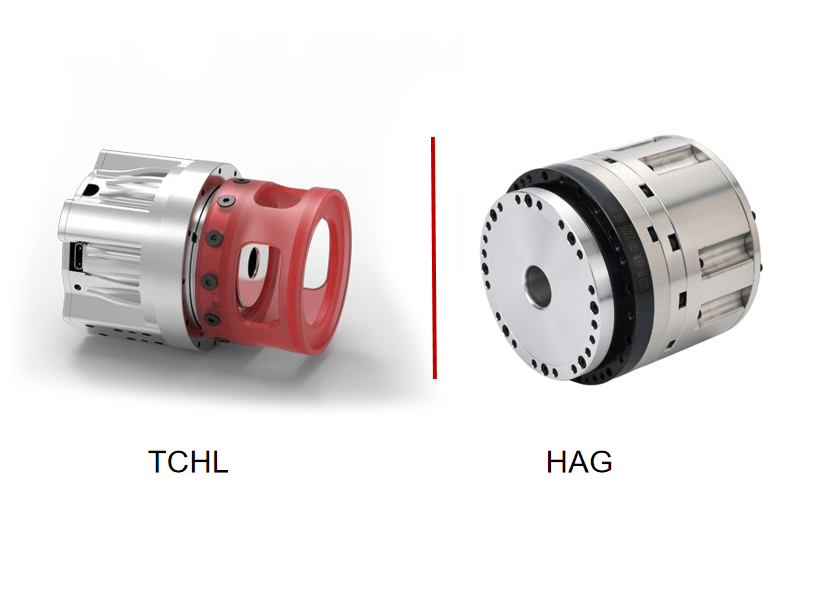
 How to Choose a Force Control Harmonic Joint Actuator? An In-Depth Comparison of HONPINE TCHL and HAGChoosing the right force control harmonic joint actuator involves more than comparing torque and dimensions. Torque sensor specifications, encoder feedback, communication protocols, functional safety, and hollow-shaft size can all affect system integration and control performance. In this guide, HONPINE Technical Director compares the TCHL and HAG harmonic joint actuator series, explaining their key differences and providing a practical selection framework for humanoid robots, collaborative manipulators, precision assembly, polishing, and other force-controlled applications.
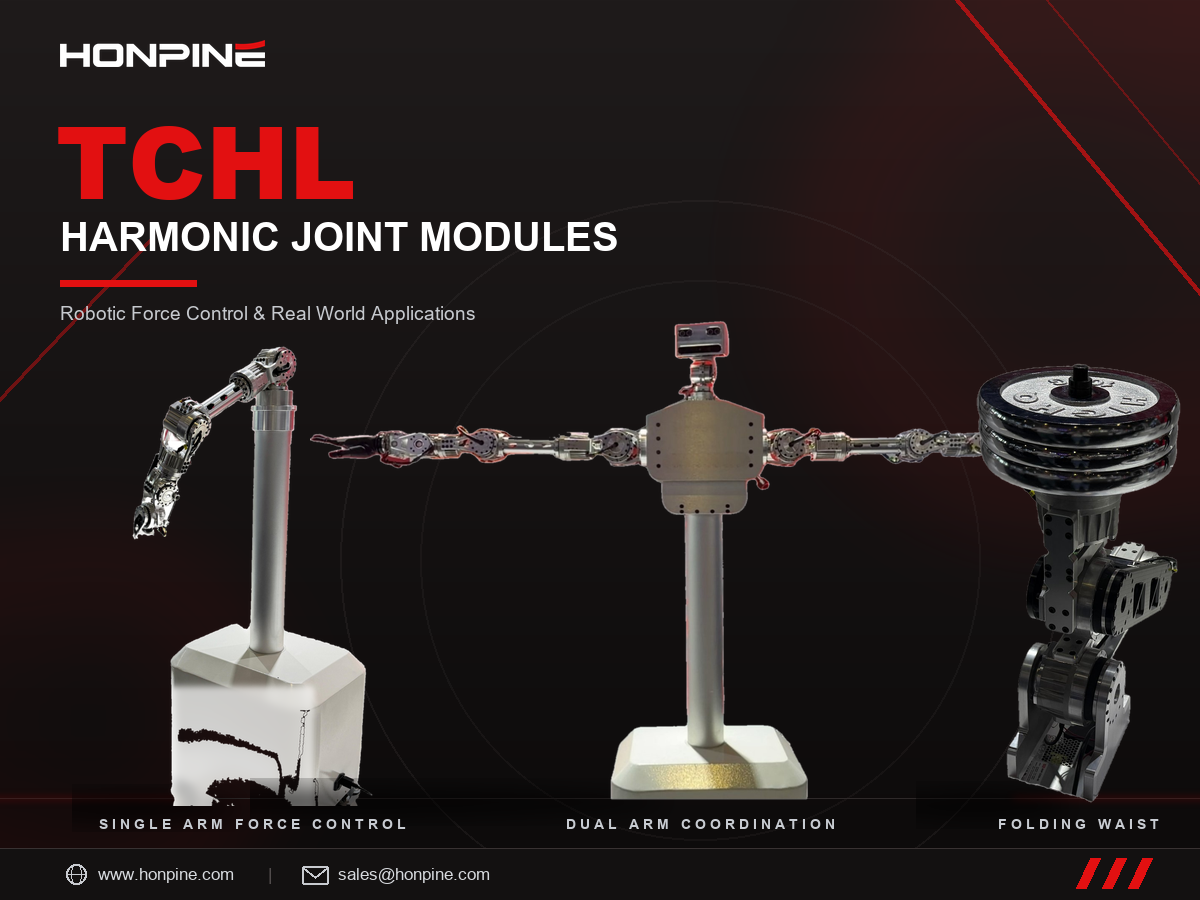
 HONPINE TCHL Harmonic Joint Modules: Robotic Force Control and Real-World ApplicationsHello everyone, I’m Theodore Li, Technical Director at HONPINE.
HONPINE TCHL harmonic joint modules have been deployed in a range of robotic motion-control applications, including dual-arm humanoid robots, single-arm compliant force control, and folding waist mechanisms for wheeled humanoid robots. As integrated motion components, they support a wide range of applications in robotics, intelligent manufacturing, and industrial automation.
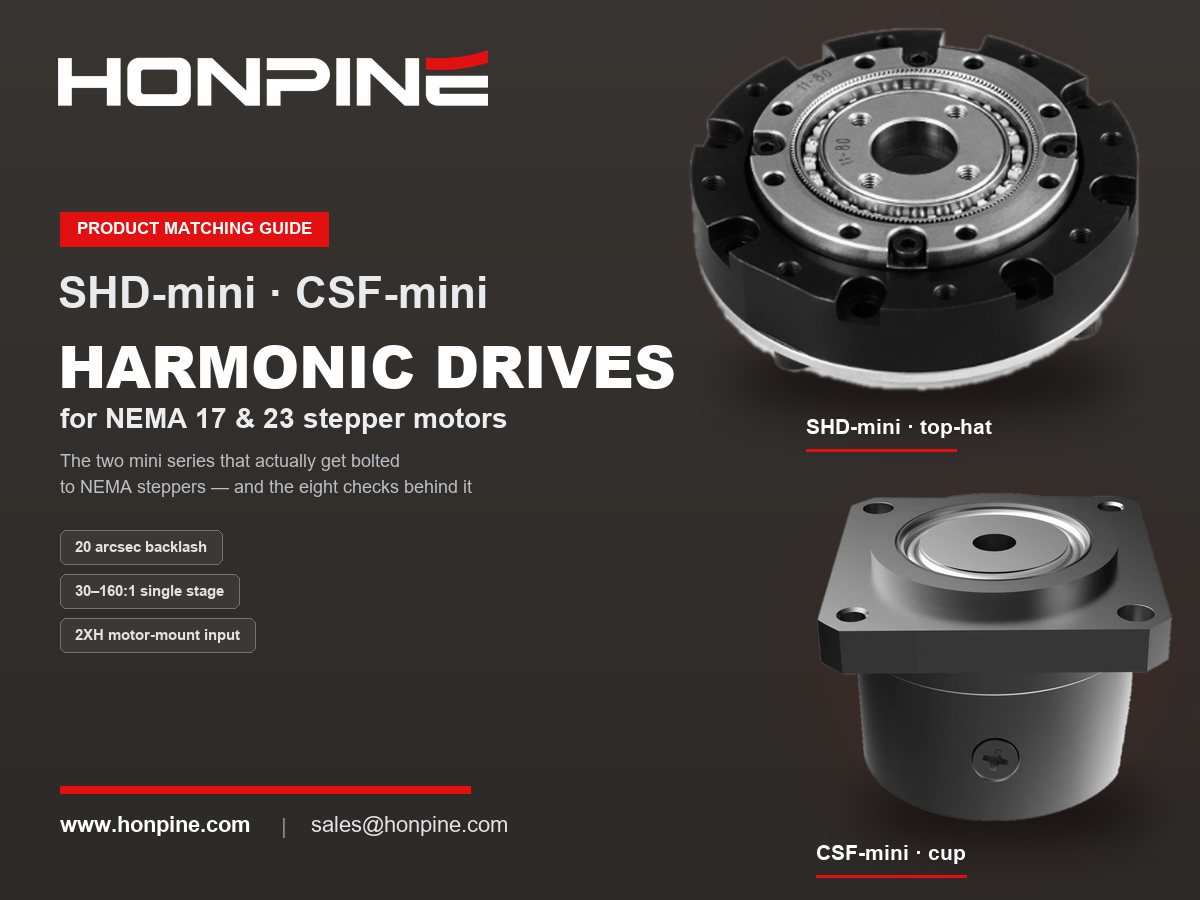
From core components to integrated motion units, HONPINE showcases the possibilities of precision transmission technology across different robotic applications through a diverse product portfolio and practical motion demonstrations. NEMA 17 & NEMA 23 Harmonic Drive Matching Guide: Pairing Stepper Motors with Harmonic ReducersPairing a stepper motor with a harmonic drive is not a budget compromise. A stepper's weak points — the coarse step angle, torque collapse above roughly 400 rpm, and the lack of a precision transmission — are exactly what a harmonic drive fixes: it pulls the operating point into the low-speed, high-torque sweet spot, refines a 1.8° step angle into arc-second resolution, and delivers near-zero backlash. This guide explains what NEMA frame sizes mean at the mounting interface, which harmonic frames match NEMA 17 and NEMA 23, the eight checks to run in order — including the input-side no-load starting torque most often missed — and the pairing's real weakness: silent failure. Includes HONPINE SHD and CSF specifications.