





Driving a Harmonic Drive DC Torque Motor via TwinCAT After-Sales Solution
Although the device status indicated Ready, the motor could not be driven using the customer’s own CiA-402 implementation.
Even when the CSV mode command was written to 0x6060 via PDO, the Mode Display (0x6061) always remained 0.
Customer Question 1
Which exact dual-encoder brand is used internally?
HONPINE Answer
In TwinCAT, the encoder is displayed as “Encoder CANopen DS402 / MDP 513”.
Internally, the dual-encoder system may vary depending on the supply chain and HONPINE’s in-house development. Multiple encoder brands are used.
Customer Question 2
Please confirm the encoder pulses per degree for this specific motor
a. Is 262,144 counts per revolution correct, as stated in your TwinCAT setup manual?
b. I originally assumed the encoder had 20-bit resolution, meaning 1,048,576 increments per revolution.
c. Is the encoder factory-configured to operate at 18-bit, resulting in 262,144 increments per revolution?
HONPINE Answer
a. The 2E encoder version is 18-bit.
262,144 counts correspond to 360 degrees of output rotation.
b. The internal encoder is a DPT dual magnetic encoder.
Due to MCU control algorithm limitations, the maximum calculation resolution is 18 bits.
c. Yes. The driver MCU processes data at 18-bit resolution, therefore
262,144 counts = 360 degrees.
Customer Question 3
Why is the “Actual Position” different from the value at object 0x200D?
Is this caused by a stored power-off offset?
When I manually move the motor, the value at 0x200D changes, but the Actual Position (0x6064) remains unchanged.
HONPINE Answer
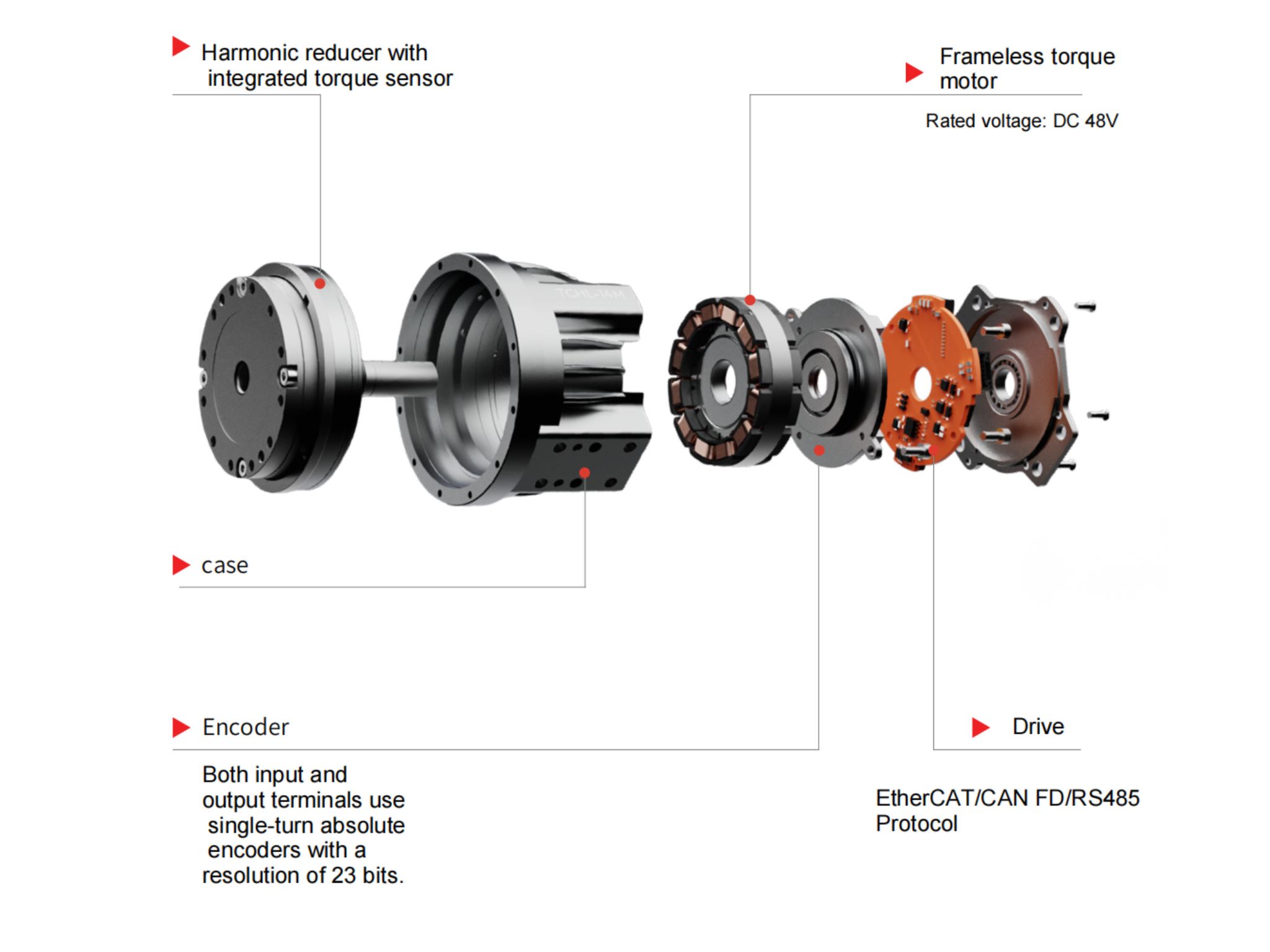
This behavior is due to the dual-encoder architecture.
The product integrates a gear reducer.
One encoder measures the motor side, and the other measures the output side.
When the output position is within 0–360°(or ±180°), the encoder records values from 0–262,144.
If the output exceeds this range, absolute position information is lost.
Customer Question 4
Can you confirm the unit of “Target Velocity” (0x60FF)?
a. According to the datasheet, the maximum output speed is 24 RPM, corresponding to 2904 RPM on the motor side.
Multiplying this by 262,144 (18-bit encoder) results in 12,687,769.6 inc/s.
When I force this value via PDO in TwinCAT, the motor does not move.
b. However, when I set 1/10 of this value (1,268,776), the motor accepts it and starts moving.
HONPINE Answer
a. The velocity unit is 0.01 revolutions per second (motor side).
b. During factory testing, the maximum speed is limited via SDO 0x6080.
Please check this parameter.
Customer Question 5
How can I reset the stored absolute encoder information?
(As stated in the manual: “The output shaft angle is saved after power-off without a battery.”)
HONPINE Answer
The motor supports the standard CiA-402 protocol.
Any position can be set as zero using standard position commands.
Please follow the procedure described in the documentation.
Regarding 0x8611, it is suspected to be a network-related error:
Check cables
Check whether the PC network card is supported
Check Distributed Clock (DC) synchronization loss
This monitoring is performed by all master devices and is not motor-specific, for example:
TwinCAT, PLC, MCU, Linux systems, PC-based masters, etc.
Customer Question 6
Even after disabling all position monitoring in TwinCAT, error code 0x8611 still appears
a. Which SDOs should we use to configure this in our own software?
I cannot find detailed information in the manual.
b. Is this monitoring feature specific to TwinCAT, or is it implemented inside the motor?
HONPINE Answer
0x8611 is likely a network-related error.
Please check cabling, PC network card compatibility, and DC synchronization.
Monitoring functions are part of the master system, not the motor itself.
They apply to all master devices (TwinCAT, PLC, MCU, Linux, PC, etc.).
Customer Question 7
What is the difference between “Profile Acceleration” and “Maximum Profile Acceleration”? When is the latter used?
HONPINE Answer
These parameters are valid only in Profile Mode.
Profile Velocity: controls the target running speed
Profile Acceleration: controls the acceleration profile during motion
Customer Question 8
In the EtherCAT manual, you wrote: “(16) What are the units of velocity and acceleration?”
Does this refer to the maximum acceleration value?
Because both “Profile Acceleration” and “Maximum Profile Acceleration” clearly state the unit as cnt/s².
HONPINE Answer
The velocity unit is 0.01 revolutions per second.
Customer Question 9
Which SDOs are linked to the “Maximum Dynamics” parameters on the TwinCAT parameter page?
HONPINE Answer
All SDOs can be controlled.
Please refer to the SDO object dictionary file and apply parameters according to the required function.
Read More
Learn more about the story of HONPINE and industry trends related to precision transmission.
 What is robot joint actuator?How to Choose the Best Robot Rotary Joint Actuator?In core robot joint transmission solutions, planetary and harmonic rotary actuators each have their own strengths. Choosing the right type based on application requirements is essential to achieve the optimal balance between performance and cost.
 DD Motors VS Harmonic Rotary ActuatorsThis article provides an in-depth comparison between Direct Drive (DD) motors and harmonic rotary actuators, covering their transmission principles, advantages and disadvantages, and typical application fields.
 OMG Ultra Compact Harmonic Drive Joint Module with Built-in Torque SensorHONPINE TCHL series harmonic drive joint module is a game-changing product that achieves disruptive improvements in multiple aspects such as lightweight design, integration level, and connection convenience. This article will analyze its revolutionary enhancements with you.
 The Role of Harmonic Drive Gears in Achieving 5–10 μm Accuracy in Dental Milling MachinesA dental milling machine is a CNC machining system used to directly process digital dental models into restorations such as crowns, bridges, veneers, inlays, and implant abutments. Dental milling machines require far higher operational accuracy and motion stability than ordinary equipment. This article explains how harmonic drive gear help dental milling machines achieve stable, continuous, and controllable operation.
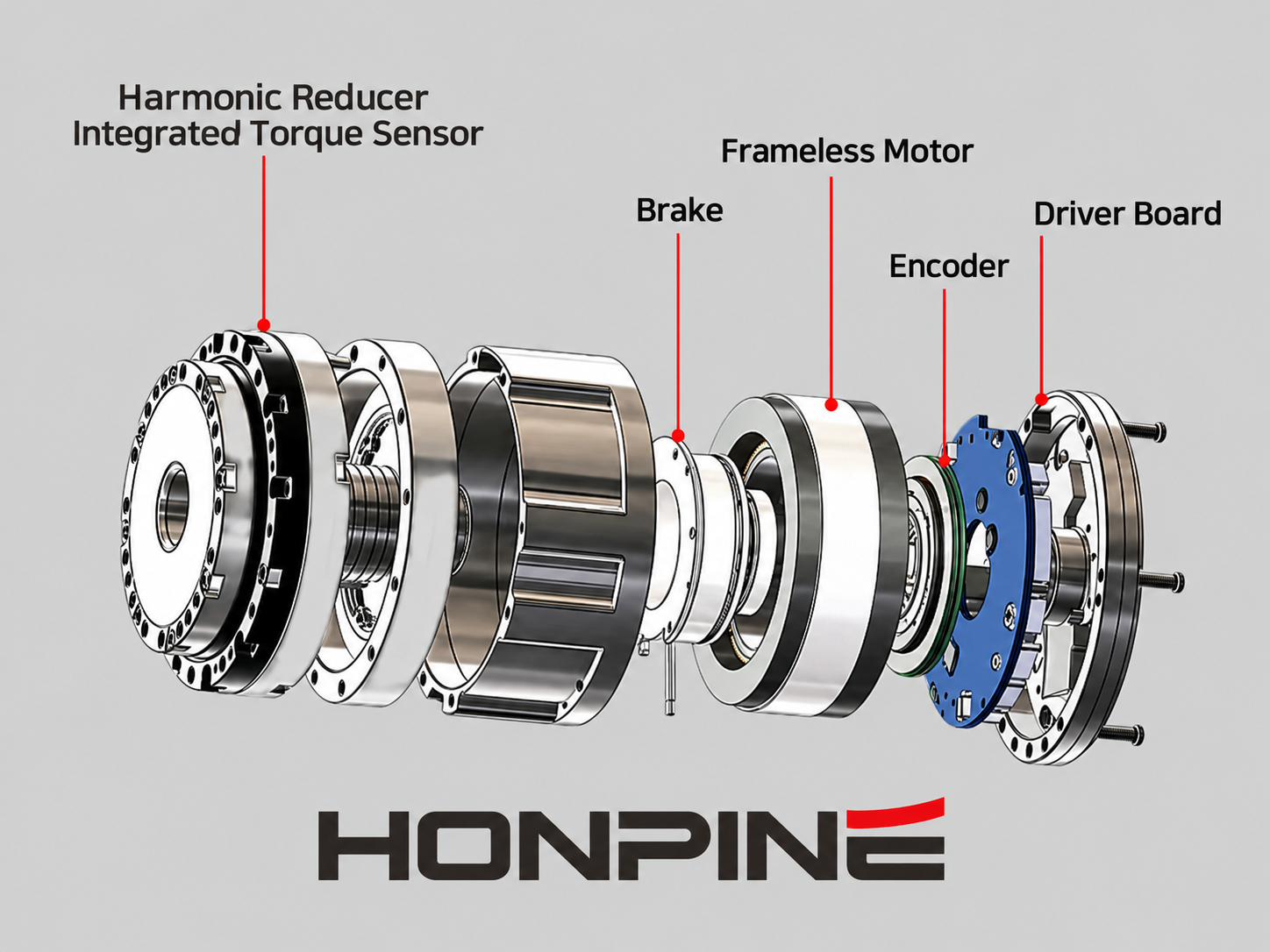
 Why Are Harmonic Rotary Actuators Perfect for Medical Equipment?Harmonic rotary actuators (typically integrated systems consisting of a harmonic drive reducer, frameless torque motor, encoder, and optional brake) are regarded as key components in medical equipment. The core reason is that they simultaneously meet the most stringent medical requirements for precision, compact size, safety, and controllability. The following explanation is structured from three perspectives: technical characteristics, application scenarios, and medical value.
 High-Precision RV Reducers Perfectly Matched for Walking RobotsThe walking axis of a robot is a core component for power transmission and support. RV reducers provide extremely high rigidity, precision, and torque while maintaining a compact size and exceptional reliability, making them an ideal match for the demanding requirements of walking robot joints in terms of load capacity, impact resistance, and precision.
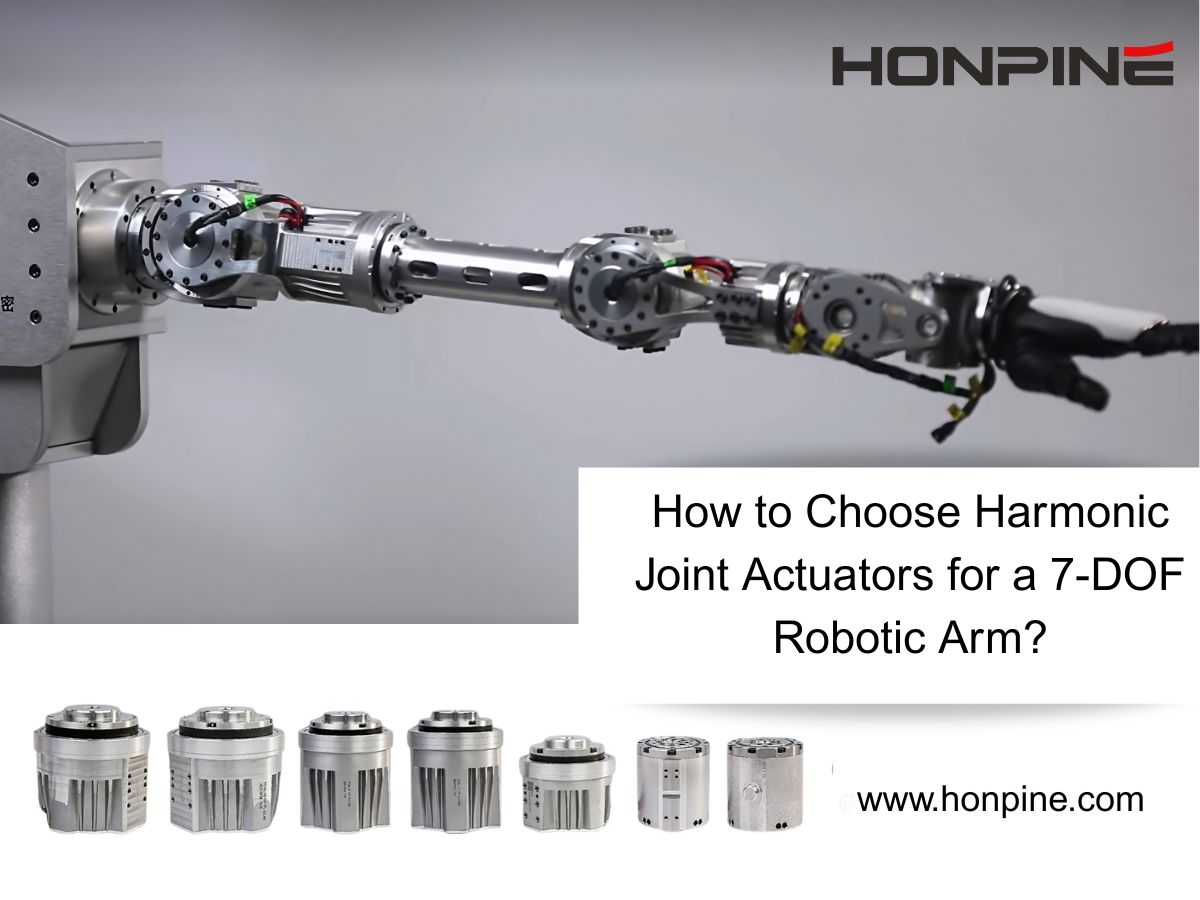
 How to Choose Harmonic Joint Actuators for a 7-DOF Robotic Arm?I'm Theodore Li, Technical Director at HONPINE. Choosing harmonic joint actuators for a 7-DOF robotic arm starts with the torque, weight, and installation needs of each joint. This guide uses a TCHL 20 shoulder and TCHL 14 wrist configuration as an example, then explores torque sensing, compliant control, and HAG Series considerations for demanding robotic applications.
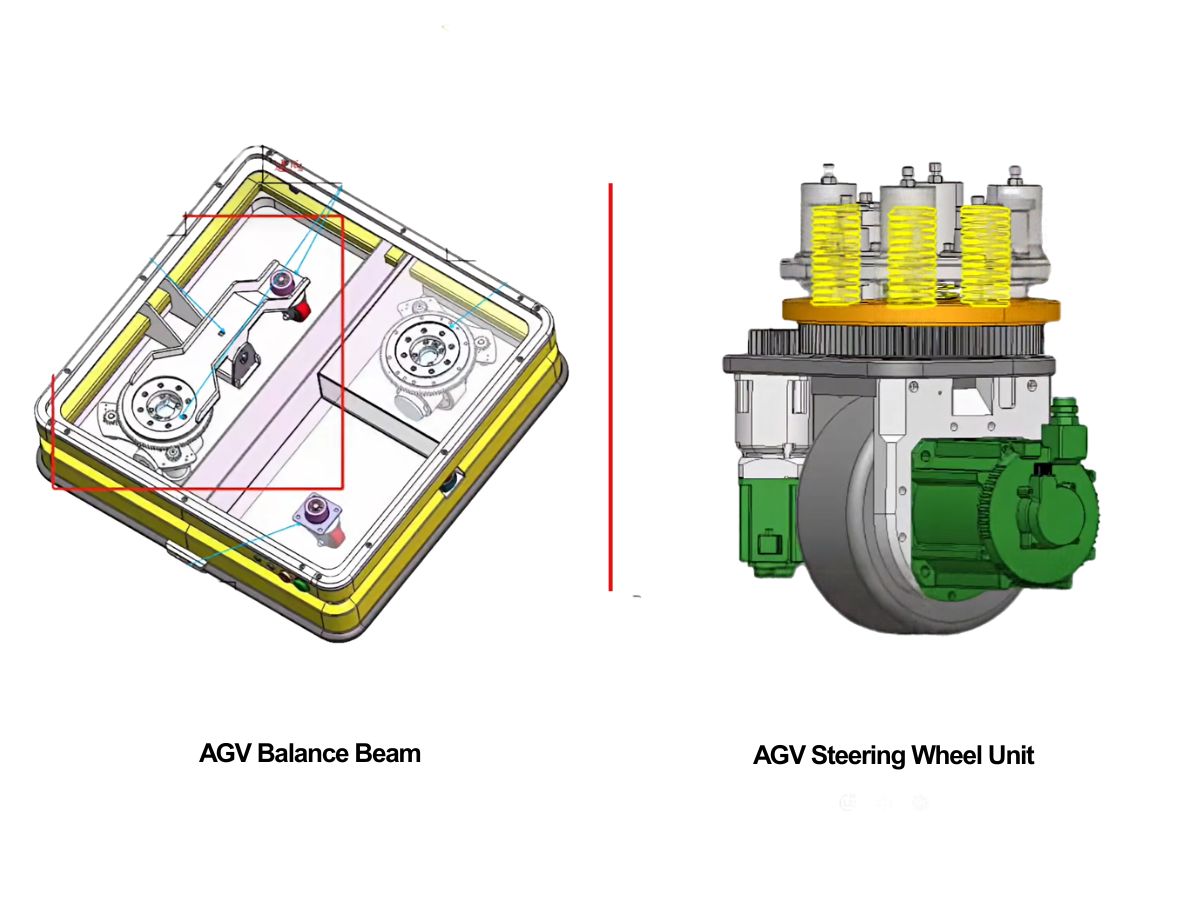
 AGV Suspension: Should You Choose a Balance Beam or a Spring-Loaded Steering Drive Unit?Choosing an AGV suspension system starts with the vehicle’s load range and floor conditions. Balance beams and spring-loaded steering drive units offer different approaches to maintaining wheel contact and managing wheel loads. This HONPINE guide compares both options and explains how to evaluate traction, suspension travel, installation space, and maintenance before choosing a configuration.
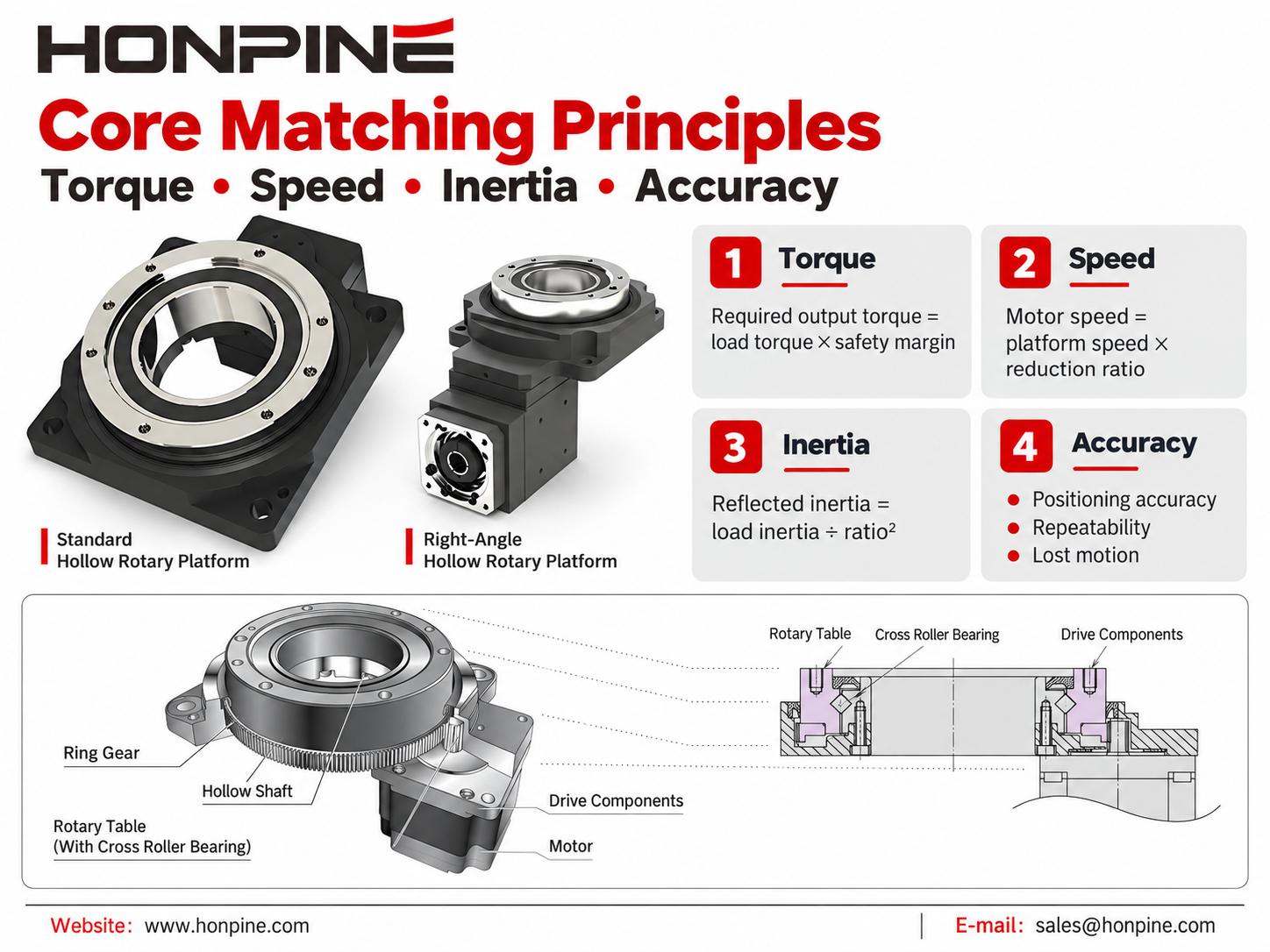
 Hollow Rotary Platform Motor Matching: A Complete GuideSelecting the right motor for a hollow rotary platform is essential for achieving precise positioning, stable operation, and efficient automation. This guide explains how to match servo motors, stepper motors, and brushless DC motors with hollow rotary platforms based on torque, speed, inertia, accuracy, and installation requirements. Explore practical motor selection guidelines, typical application combinations, and space-saving mounting solutions to find the right configuration for your automation project.
 Can Robots Feel Touch? HONPINE HAG Force-Controlled Harmonic Robot Joint MotorsCan robots respond to a gentle touch? The HONPINE HAG robot joint motor with torque sensor combines a harmonic reducer, integrated torque sensing, and closed-loop control to detect external forces and support smooth, compliant motion. In this article, HONPINE founder Allen Li demonstrates the module's response to light contact and hand-guided movement, explains its key force-control technologies, and shares the vision behind joint modules designed for practical industrial robotics.
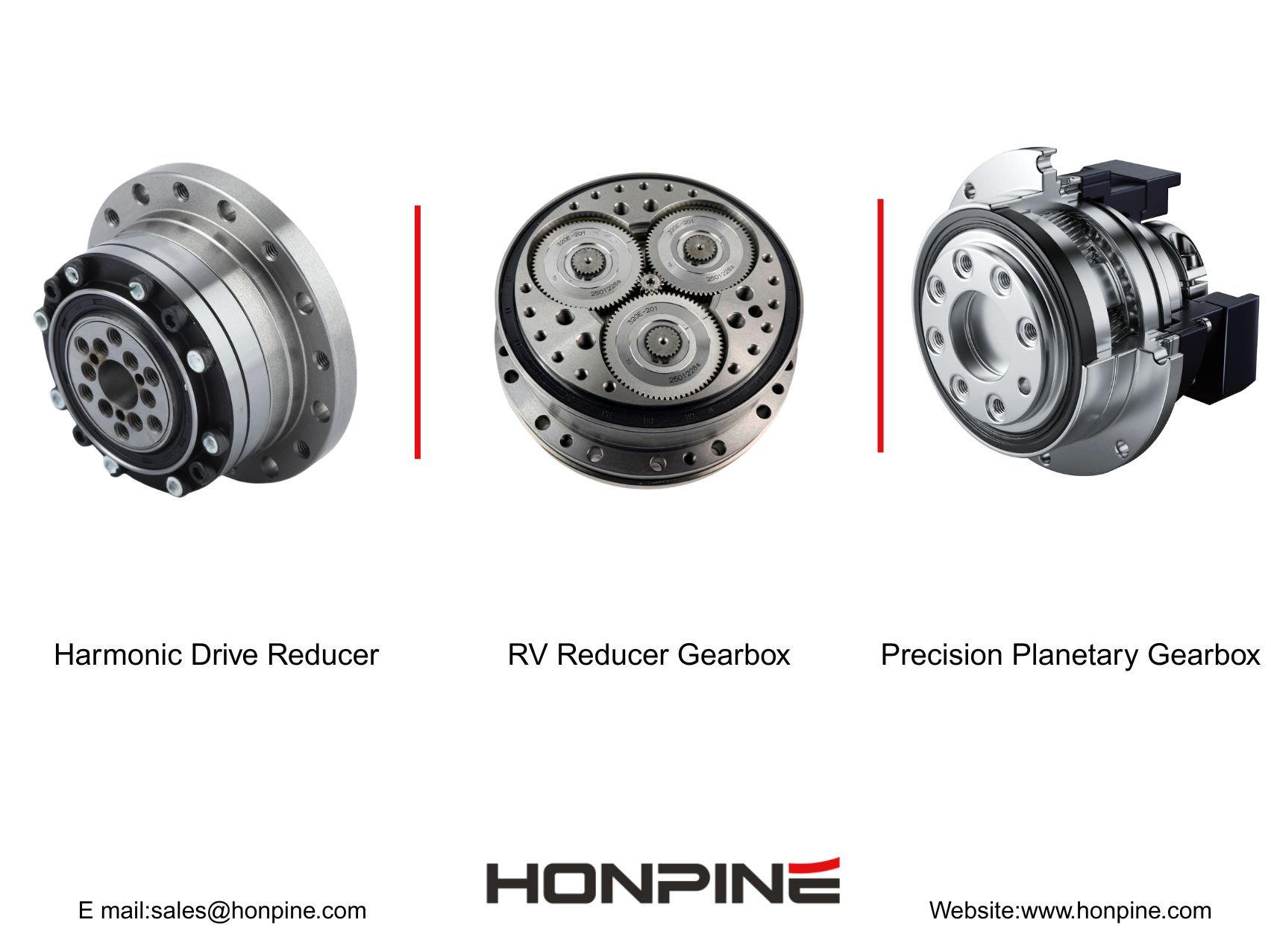
 Does a Higher Gearbox Ratio Mean More Torque? Planetary, Harmonic, and RV Gearboxes ExplainedDoes a higher gearbox ratio mean more torque? This engineering guide explains the relationship between gearbox ratio, output torque, and output speed, and compares planetary gearboxes, harmonic gearboxes, and RV gearboxes. Learn why reduction ratio alone cannot determine gearbox torque capacity, efficiency, dynamic response, precision, or service life, and what engineers should consider when selecting a gearbox for robotics, CNC machines, servo systems, and industrial motion control.
 High-Precision Hollow Harmonic Rotary Actuator for CNC Machines and Heavy-Duty Rotary AxesHONPINE 58 Series Hollow Harmonic Rotary Actuator is designed for CNC rotary tables, precision rotary axes, laser processing equipment, and heavy-duty rotary positioning applications. With a 50 mm hollow bore, up to 2,722 N·m peak torque, integrated crossed roller bearing, multi-turn absolute encoder options, positioning accuracy below 30 arcsec, and repeat positioning accuracy below 5 arcsec, it combines high torque capacity with precision rotary motion and flexible mechanical integration.
Double Click
We provide harmonic drive reducer,planetary reducer,robot joint motor,robot rotary actuators,RV gear reducer,robot end effector,dexterous robot hand
 Harmonic Drive Actuators Explained: 10 Advantages and Disadvantages Every Robotics and Automation Engineer Should KnowWhen selecting a motion control solution, understanding the strengths and limitations of a harmonic rotary actuator is essential. While these actuators are widely recognized for their exceptional precision and compact design, they also have inherent limitations that make them unsuitable for certain heavy-duty applications.
This guide provides a comprehensive overview of the advantages and disadvantages of harmonic actuators, helping engineers choose the right transmission solution based on their specific application requirements.![]() Driving a Harmonic Drive DC Torque Motor via TwinCAT After-Sales SolutionA customer purchased a harmonic drive DC torque motor from HONPINE, model HPJM-RE100-120-PRO-121-B-2E-EC, and attempted to drive the motor using TwinCAT software.
Driving a Harmonic Drive DC Torque Motor via TwinCAT After-Sales SolutionA customer purchased a harmonic drive DC torque motor from HONPINE, model HPJM-RE100-120-PRO-121-B-2E-EC, and attempted to drive the motor using TwinCAT software.
Although the device status indicated Ready, the motor could not be driven using the customer’s own CiA-402 implementation.
Even when the CSV mode command was written to 0x6060 via PDO, the Mode Display (0x6061) always remained 0.![]() Solution to Harmonic Joint Motor Driver Initialization Sequence IssueA customer purchased a HONPINE harmonic joint motor, model HPJM-RE40-52-PRO-101-B-2E, and encountered issues during testing.
Solution to Harmonic Joint Motor Driver Initialization Sequence IssueA customer purchased a HONPINE harmonic joint motor, model HPJM-RE40-52-PRO-101-B-2E, and encountered issues during testing.
This article describes how HONPINE provides technical support when customers face driver initialization sequence problems.![]() After-Sales Solution for Harmonic Joint Motor Encoder Battery Connector DetachmentThis is a complaint from a HONPINE customer regarding the issue of the encoder battery interface becoming detached after prolonged use of the harmonic joint motor they purchased. HONPINE immediately provided a solution and pointed out the cause of the problem.
After-Sales Solution for Harmonic Joint Motor Encoder Battery Connector DetachmentThis is a complaint from a HONPINE customer regarding the issue of the encoder battery interface becoming detached after prolonged use of the harmonic joint motor they purchased. HONPINE immediately provided a solution and pointed out the cause of the problem.