








EU EN IEC 61800-3:2025 Takes Effect for Harmonic Drives
On August 1, 2026, the EU put EN IEC 61800-3:2025 into force and, in doing so, brought harmonic drive reducers into a stricter EMC compliance framework for integrated harmonic drive products exported to the European market. The change is worth close attention from drive product suppliers, exporters, certification teams, purchasing functions, and delivery planners because it directly ties market access to EMC testing classification and CE marking, while also affecting certification routes and shipment timing for suppliers including HONPINE, NB, and NBR.
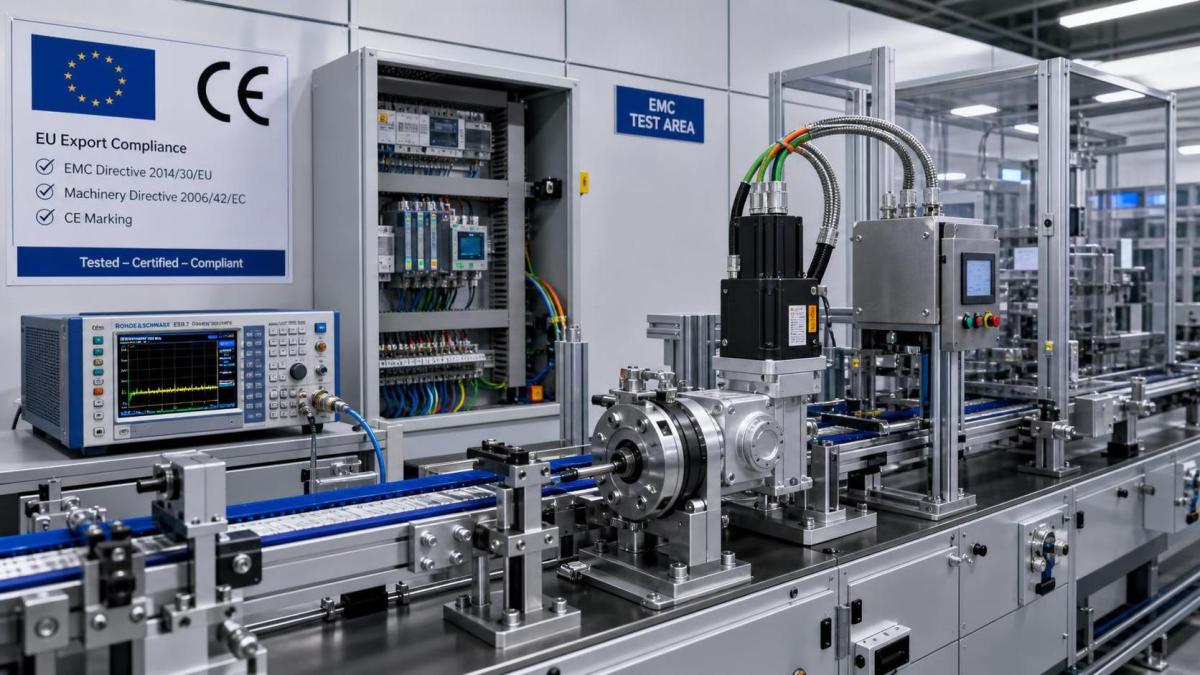
What the New Requirement Confirms
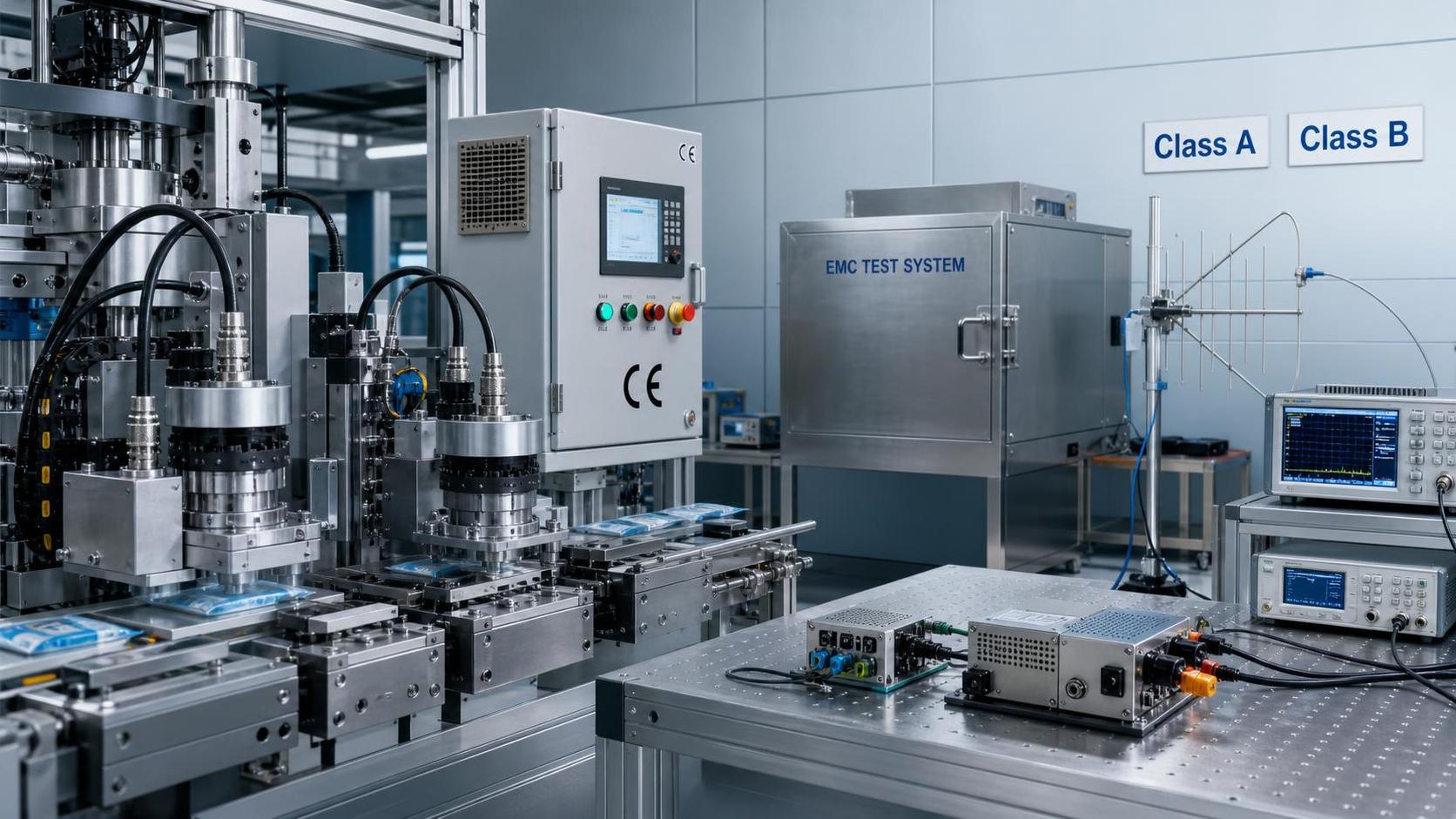
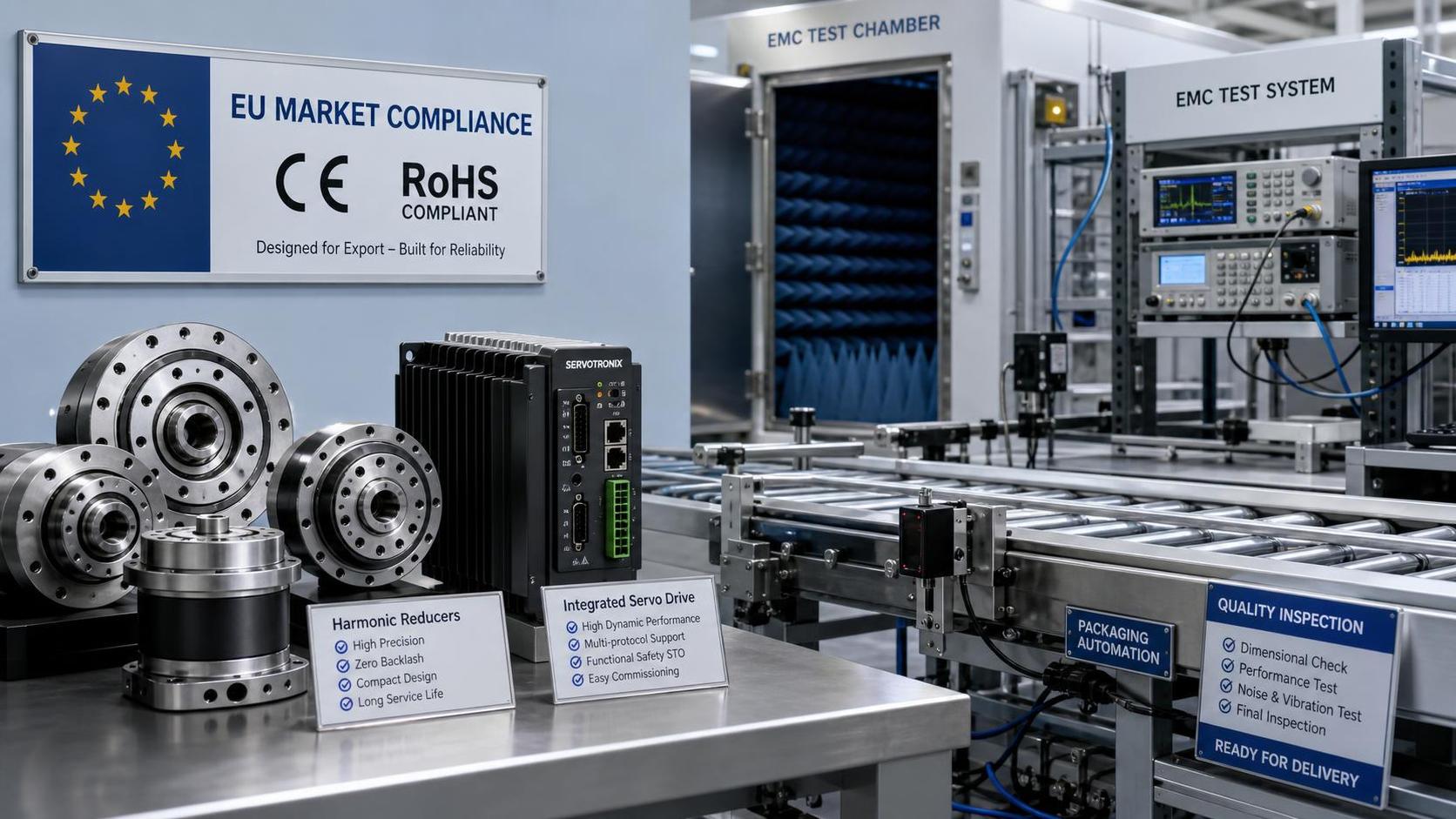
The confirmed change is straightforward. From August 1, 2026, the EU formally implemented the updated drive-system electromagnetic compatibility standard EN IEC 61800-3:2025. Under the information provided, the standard explicitly places harmonic drive reducers within the scope of mandatory EMC compliance when they are part of integrated harmonic drive products exported to the EU.
The same information also confirms that these products must pass Class A or Class B testing and carry the CE mark before entering the EU market. It further states that the new requirement directly affects the export certification pathway and delivery cycle of suppliers such as HONPINE, NB, and NBR.
Where the Pressure Will Be Felt First
Export-facing suppliers will see compliance move closer to shipment release
From an industry perspective, suppliers selling integrated harmonic drive products into the EU are the first group exposed to the practical effect of the rule. The reason is clear: EMC classification and CE marking are no longer peripheral documentation issues in this context, but part of the conditions tied to export readiness. The main impact is likely to appear in certification sequencing, shipment preparation, and customer acceptance timing.
Manufacturing and integration teams may face tighter coordination needs
Analysis shows that manufacturers and product integration teams could be affected where product configuration, testing preparation, and documentation handling intersect. Even without adding assumptions beyond the provided facts, the new rule indicates that EMC compliance must now be addressed for the covered integrated harmonic drive products before EU export can proceed normally. What deserves closer attention is whether internal workflows are aligned with the required test class and CE-marking process.
Procurement and delivery functions will need to watch timing risk
Purchasing teams, supply coordinators, and delivery planners may not be the formal compliance owners, but they can still be affected through lead-time changes. The provided information already points to an effect on certification routes and delivery cycles for named suppliers. In business terms, that means procurement schedules, promised delivery windows, and supplier confirmation processes may require closer review where EU-bound orders are involved.
EU-side buyers and channel partners may focus more on document readiness
Observably, customers, distributors, and other channel participants serving the EU market may pay closer attention to whether a covered product has completed the relevant EMC testing route and CE-marking requirements. The practical concern is less about technical interpretation at this stage and more about whether the product can move through the transaction and delivery process without compliance-related delay.
Practical Points Companies Should Track Now
Watch for how the requirement is described in official materials
One immediate point for companies is to keep checking how EN IEC 61800-3:2025 and the covered product scope are described in formal or market-facing materials. The current confirmed information establishes the rule change and its compliance consequence, but businesses still need to make sure their operational interpretation matches the wording used in the applicable compliance process.
Identify which EU-bound product lines are exposed first
What deserves closer attention is not every product in general, but the specific integrated harmonic drive products shipped to the EU that fall under the requirement described in the provided information. Companies should focus first on product lines that are already active in EU orders or are close to shipment, because those are the cases where certification timing and customer commitments may be most sensitive.
Review supplier qualification and compliance documents early
For teams buying from or coordinating with suppliers such as HONPINE, NB, and NBR, the practical issue is document and qualification readiness. Analysis shows that once certification routes change, questions around EMC test classification, CE-marking status, and supporting paperwork can move from a later-stage check to an earlier commercial checkpoint. This matters for order confirmation, contract execution, and customer communication.
Prepare for delivery and communication adjustments
It is more appropriate to understand this as a compliance change with operational consequences, not just a standards update in isolation. Companies involved in EU shipments should be ready to explain potential timing changes to internal teams and customers where certification steps affect dispatch or acceptance schedules. The focus should remain on realistic delivery planning rather than broad claims about market impact.
Why This Looks Like More Than a Short-Term Notice
As an editorial observation, this development should not be read merely as a temporary procedural update. The confirmed facts show that EMC compliance for integrated harmonic drive products exported to the EU has been made more explicit and more binding through the stated testing and CE-marking requirements. That gives the event a concrete near-term effect.
At the same time, it is still more appropriate to understand the broader market meaning with caution. The information provided confirms a regulatory threshold and its immediate effect on certification pathways and delivery cycles, but it does not by itself prove longer-term market restructuring or wider commercial outcomes. Continued attention is warranted because the rule directly touches market access mechanics.
How This Update Is Best Understood Today
At this stage, the clearest reading is that EN IEC 61800-3:2025 has moved EMC compliance for covered harmonic drive products into a more operationally significant position for EU trade. The immediate significance lies in testing classification, CE-marking readiness, export certification handling, and possible delivery adjustments for affected suppliers and customers.
A neutral conclusion is that this is already a concrete compliance event rather than a speculative signal, but its broader commercial implications still need to be observed through actual certification practice and delivery execution. For industry participants, the sensible approach is to treat it as an active trade and compliance requirement with follow-on effects that deserve continued monitoring.
Basis of This Article and What Still Needs Verification
This article is based on the user-provided news title, event date, and event summary concerning the EU implementation of EN IEC 61800-3:2025 and the upgraded EMC compliance requirement for harmonic drive reducers in integrated harmonic drive products. In this type of industry update, commonly relevant source categories may include official notices, company announcements, industry association releases, authoritative media coverage, and standards organization documents.
No specific official source link was provided in the input, so the precise official reference path still requires ongoing verification. Further attention should remain on formal wording, scope interpretation for covered products, and any downstream effect on certification handling and delivery timelines in EU-bound business.
Read More
Learn more about the story of HONPINE and industry trends related to precision transmission.
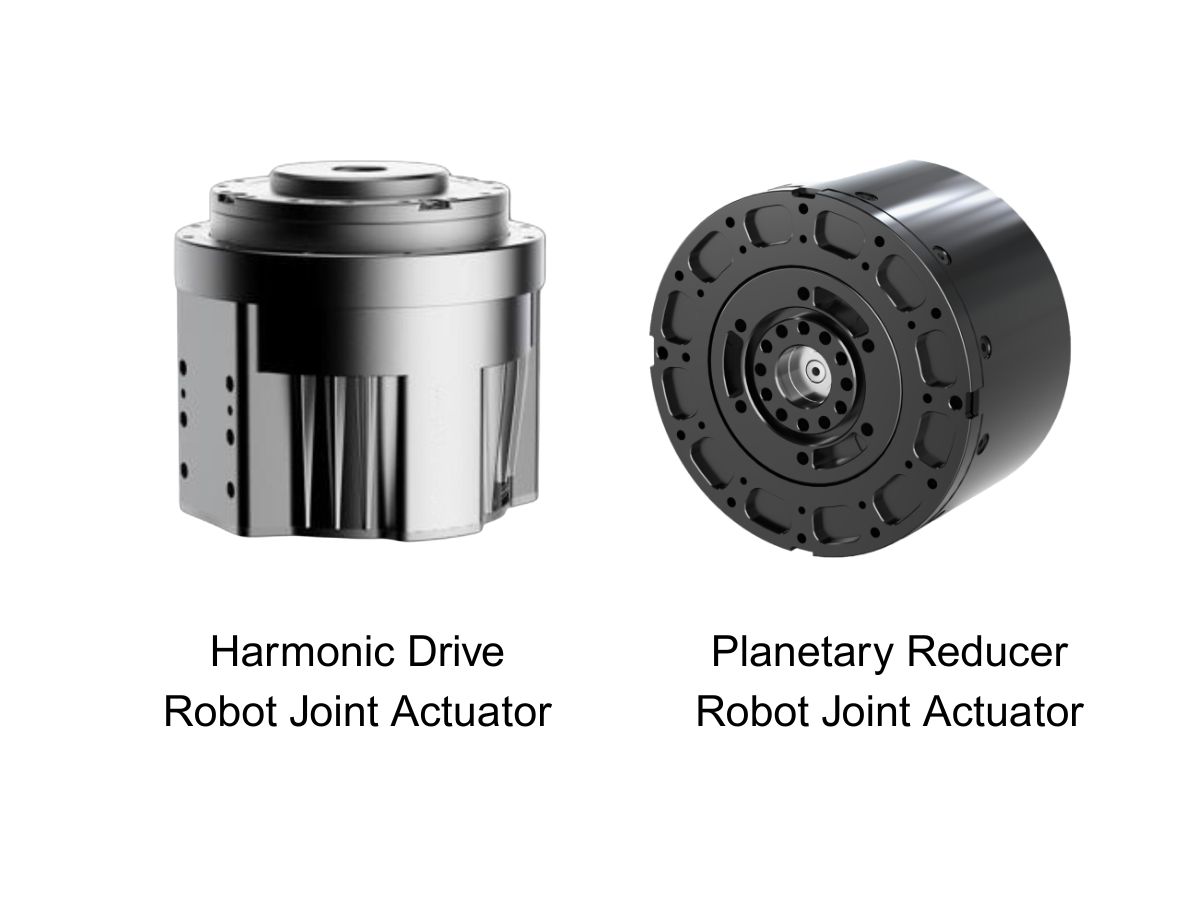
 What is robot joint actuator?How to Choose the Best Robot Rotary Joint Actuator?In core robot joint transmission solutions, planetary and harmonic rotary actuators each have their own strengths. Choosing the right type based on application requirements is essential to achieve the optimal balance between performance and cost.
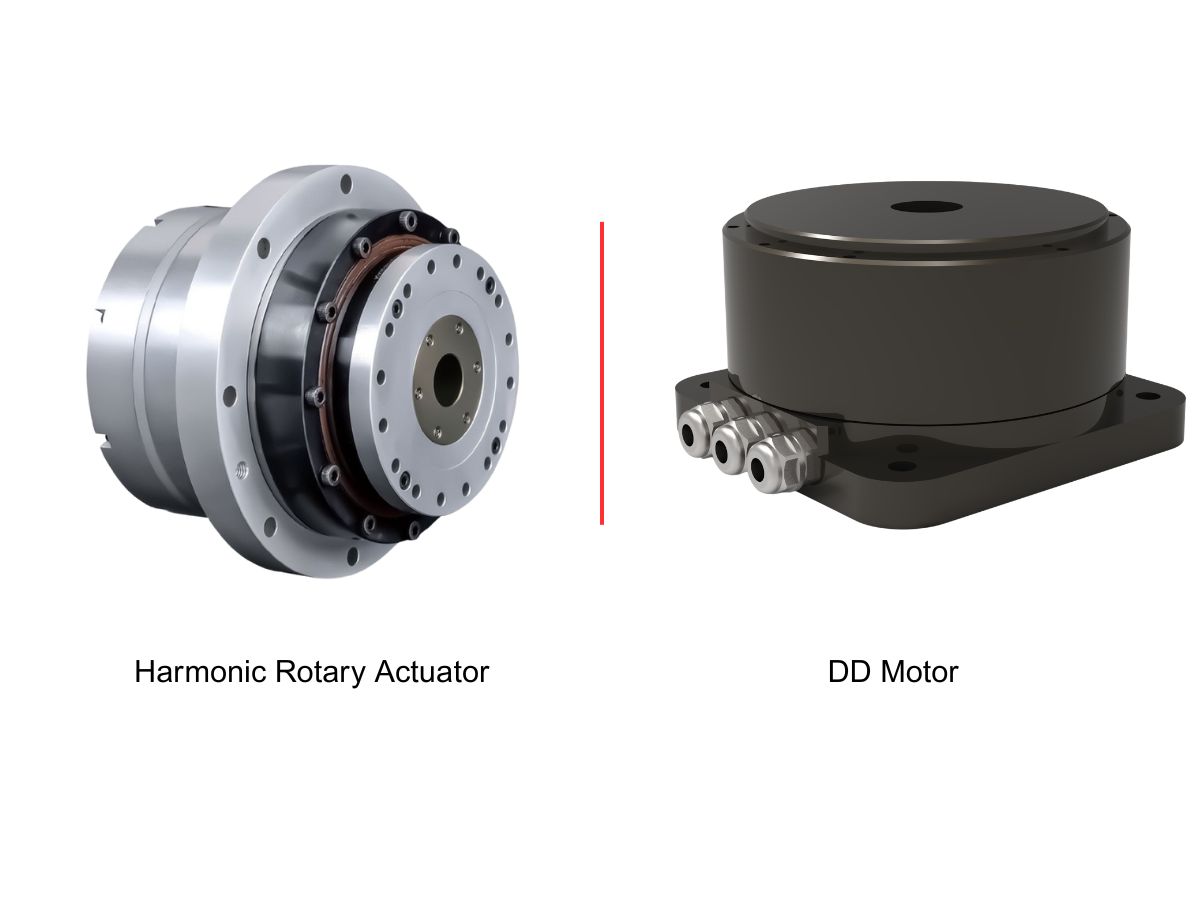
 DD Motors VS Harmonic Rotary ActuatorsThis article provides an in-depth comparison between Direct Drive (DD) motors and harmonic rotary actuators, covering their transmission principles, advantages and disadvantages, and typical application fields.
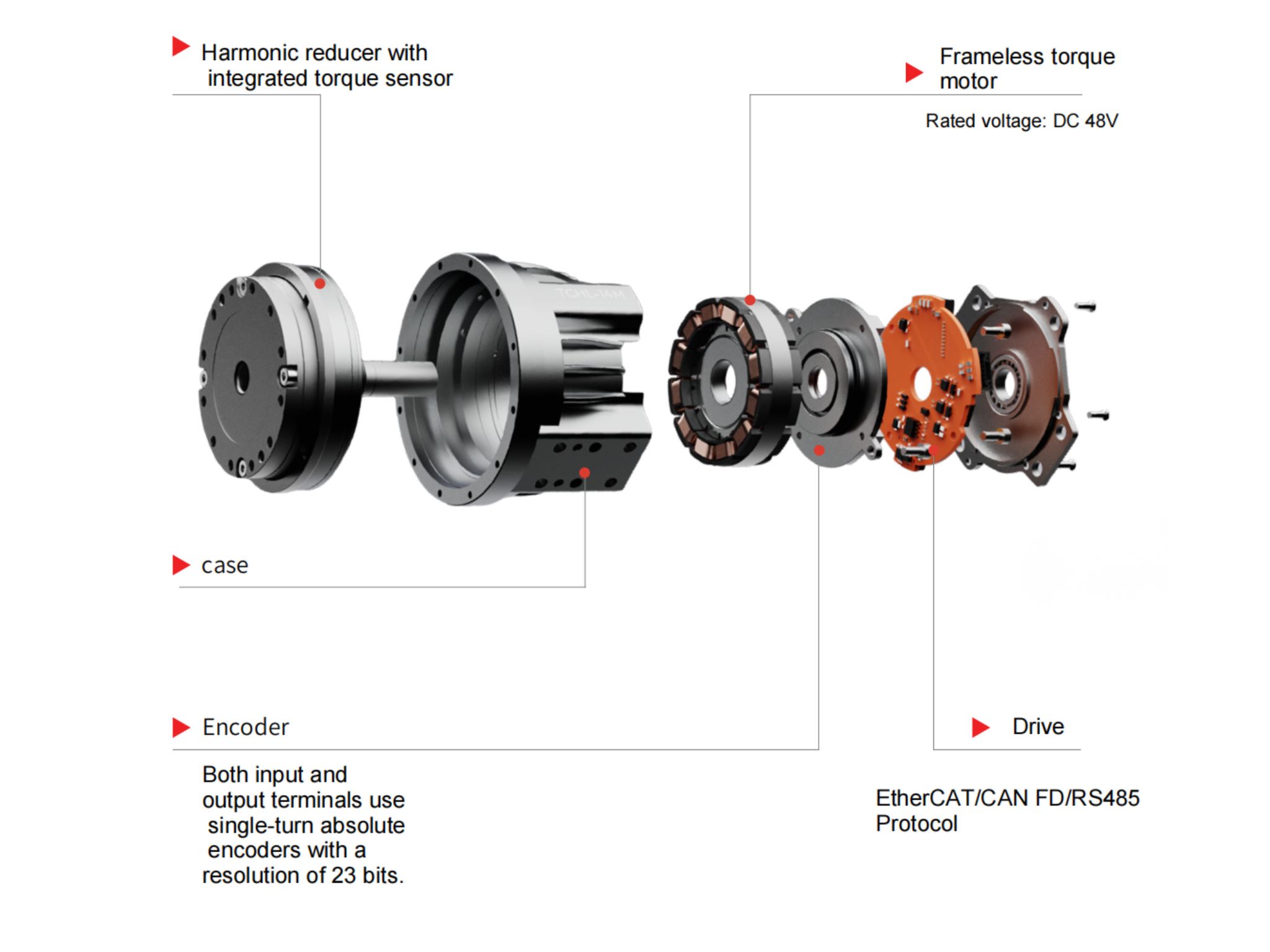
 OMG Ultra Compact Harmonic Drive Joint Module with Built-in Torque SensorHONPINE TCHL series harmonic drive joint module is a game-changing product that achieves disruptive improvements in multiple aspects such as lightweight design, integration level, and connection convenience. This article will analyze its revolutionary enhancements with you.
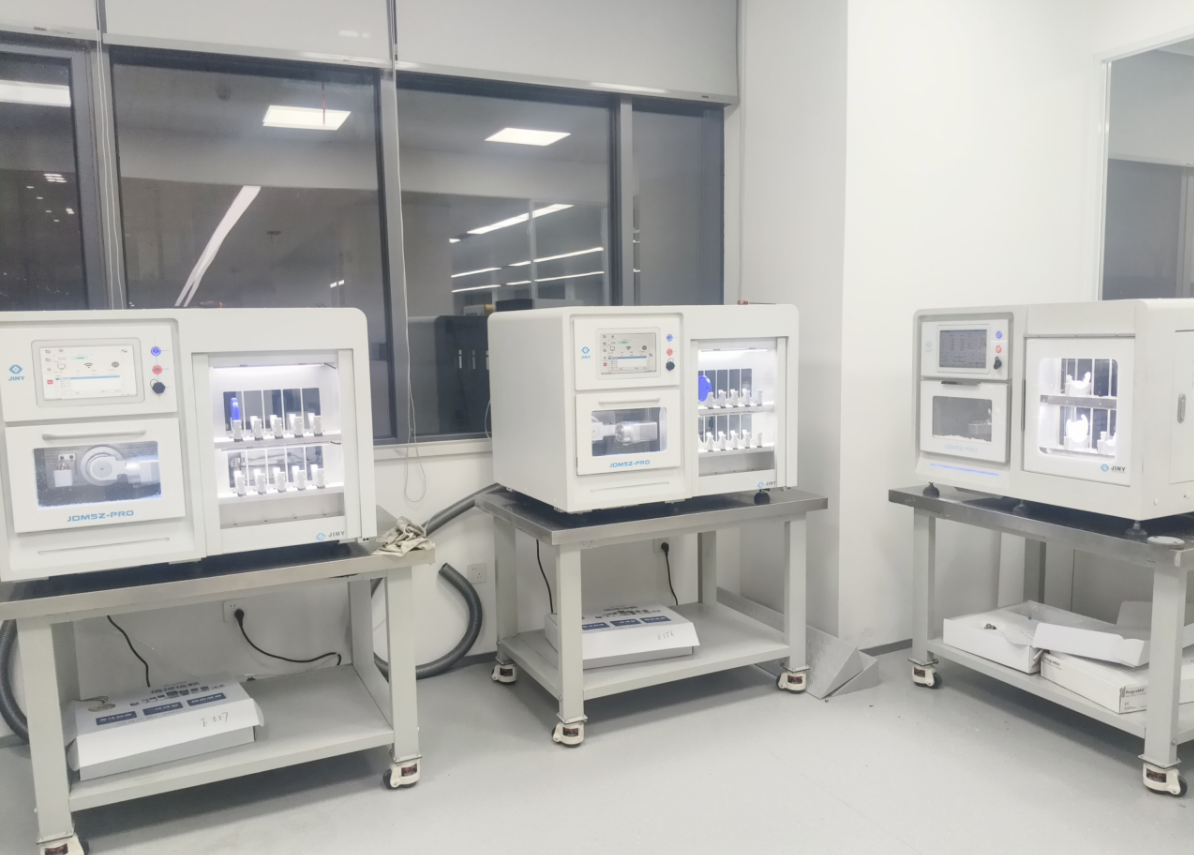
 The Role of Harmonic Drive Gears in Achieving 5–10 μm Accuracy in Dental Milling MachinesA dental milling machine is a CNC machining system used to directly process digital dental models into restorations such as crowns, bridges, veneers, inlays, and implant abutments. Dental milling machines require far higher operational accuracy and motion stability than ordinary equipment. This article explains how harmonic drive gear help dental milling machines achieve stable, continuous, and controllable operation.
 Why Are Harmonic Rotary Actuators Perfect for Medical Equipment?Harmonic rotary actuators (typically integrated systems consisting of a harmonic drive reducer, frameless torque motor, encoder, and optional brake) are regarded as key components in medical equipment. The core reason is that they simultaneously meet the most stringent medical requirements for precision, compact size, safety, and controllability. The following explanation is structured from three perspectives: technical characteristics, application scenarios, and medical value.
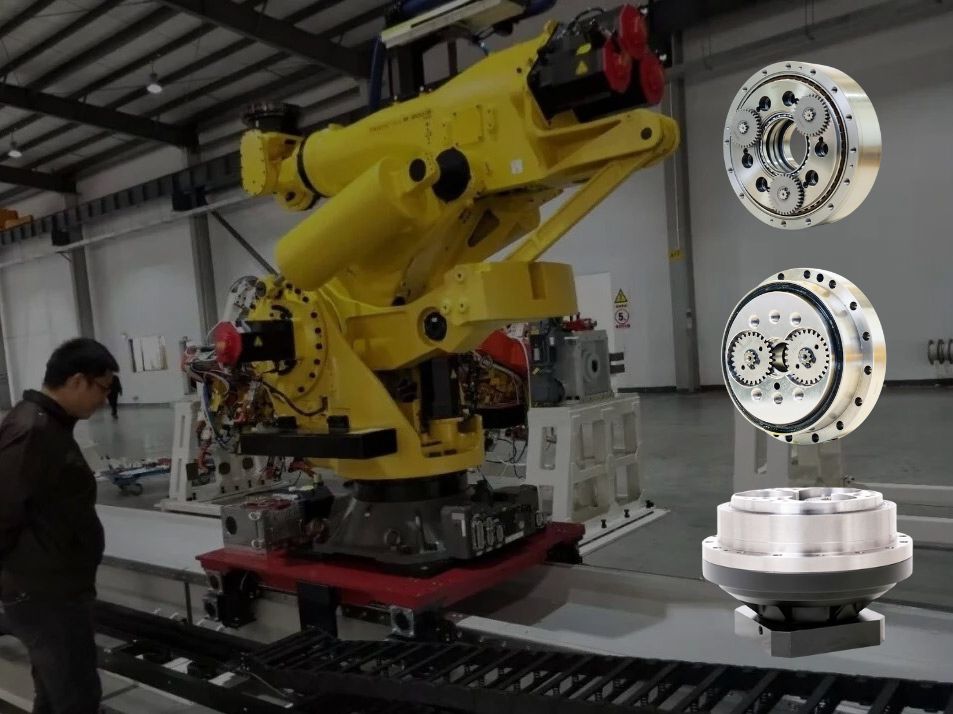
 High-Precision RV Reducers Perfectly Matched for Walking RobotsThe walking axis of a robot is a core component for power transmission and support. RV reducers provide extremely high rigidity, precision, and torque while maintaining a compact size and exceptional reliability, making them an ideal match for the demanding requirements of walking robot joints in terms of load capacity, impact resistance, and precision.
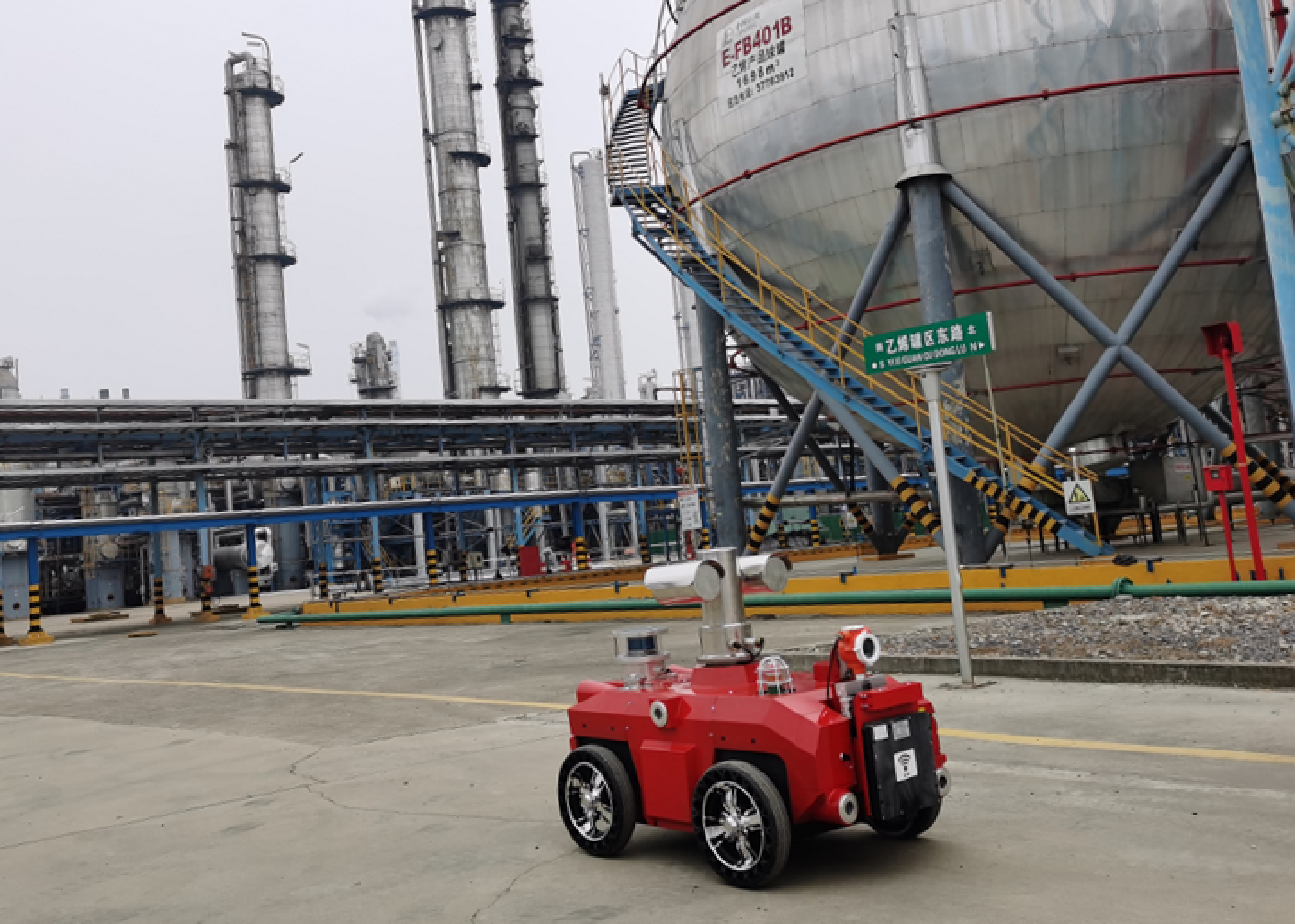
 Inspection Robot Applications: Why Harmonic Gear Motors Are the Preferred Motion Solution?Inspection robots have become essential across modern industries, helping companies automate equipment inspection, improve worker safety, and collect high-quality operational data. From manufacturing plants and power stations to oil & gas facilities, warehouses, railways, and smart cities, autonomous inspection robots are transforming maintenance and asset management.
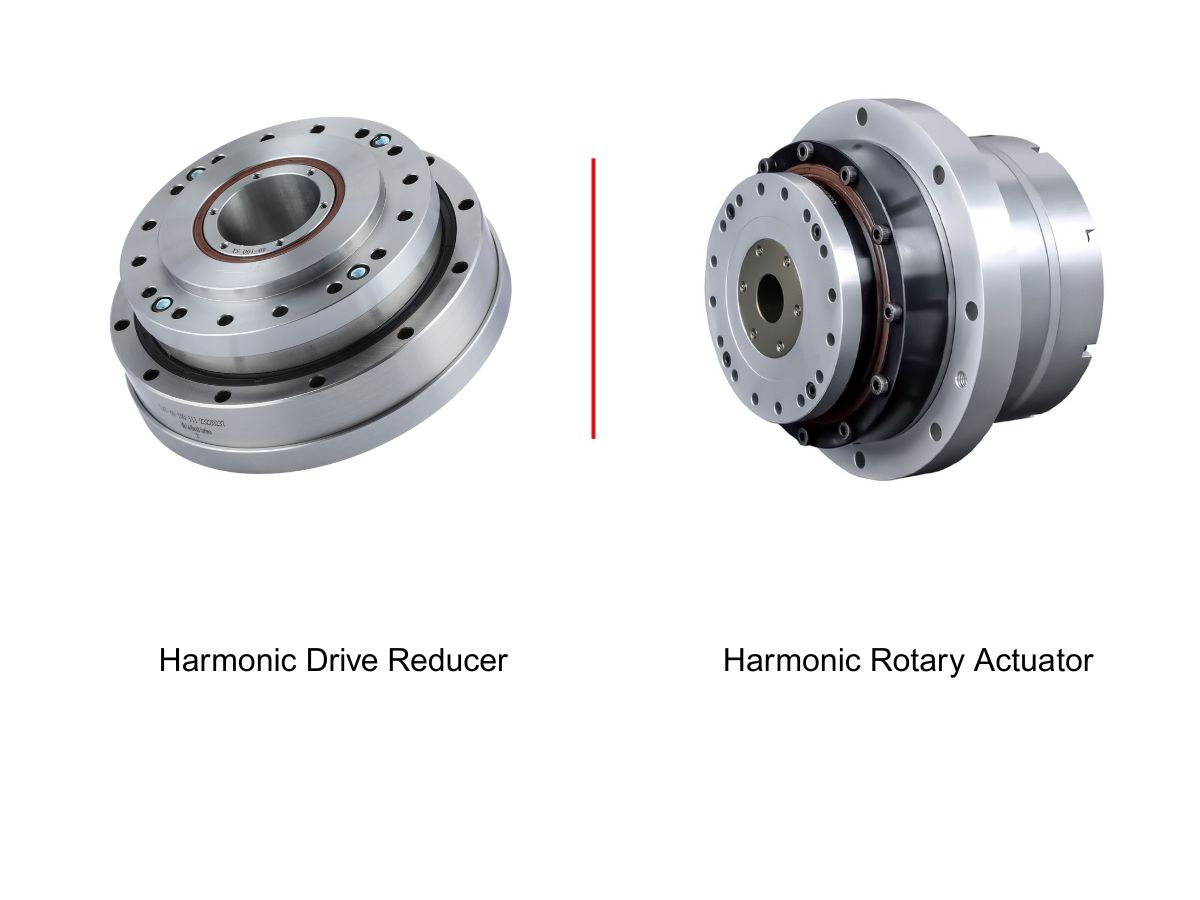
Every movement of an inspection robot—from rotating a thermal camera to positioning a LiDAR scanner or operating an inspection arm—depends on the accuracy of its motion system. HONPINE Harmonic Gear Motors combine near-zero backlash, compact size, high torque density, and exceptional positioning accuracy, making them an ideal solution for next-generation inspection robots. What Is the Difference Between a Harmonic Drive Reducer and a Harmonic Rotary Actuator?A Harmonic Drive Reducer is a precision transmission component that provides high reduction ratios, near-zero backlash, and exceptional torsional stiffness. It is one of the core mechanical elements used in industrial robots, semiconductor equipment, medical devices, and precision automation systems.
A Harmonic Rotary Actuator is a complete rotary motion solution that integrates a frameless torque motor, harmonic drive reducer, encoder, brake, bearings, and servo electronics into a compact module. Rather than being a single transmission component, it is a fully integrated actuator designed for precise motion control and simplified machine integration.
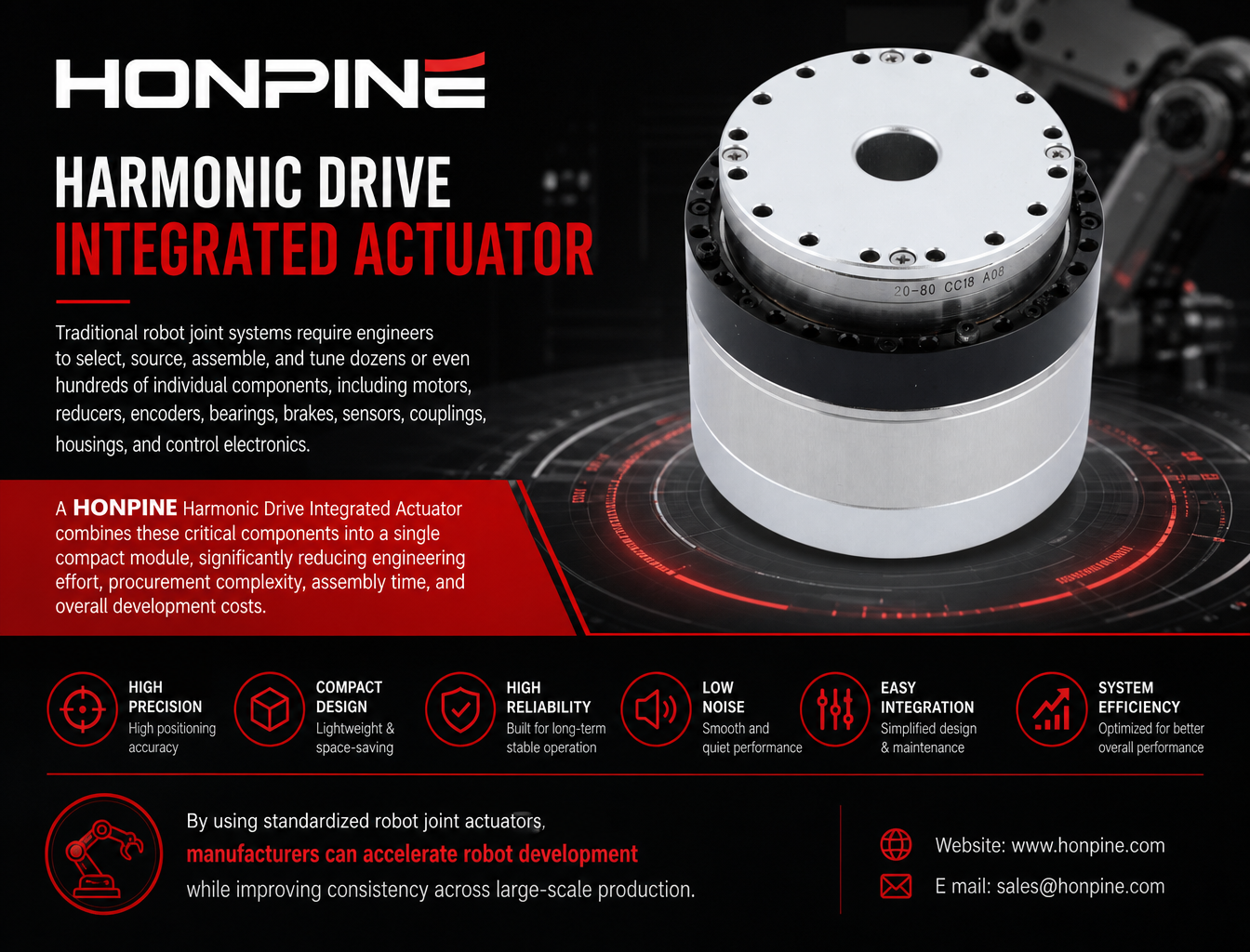
In short, a harmonic drive reducer provides precision transmission, while a harmonic rotary actuator delivers complete rotary motion. Why Choose an Integrated Harmonic Drive Actuator? Benefits, Features and ApplicationsTraditional robot joint systems require engineers to select, source, assemble, and tune dozens or even hundreds of individual components, including motors, reducers, encoders, bearings, brakes, sensors, couplings, housings, and control electronics. A HONPINE Harmonic Drive Integrated Actuator combines these critical components into a single compact module, significantly reducing engineering effort, procurement complexity, assembly time, and overall development costs. The integrated design also provides lightweight construction, high positioning accuracy, compact dimensions, simplified maintenance, improved reliability, low noise, and optimized system efficiency. By using standardized robot joint actuators, manufacturers can accelerate robot development while improving consistency across large-scale production.
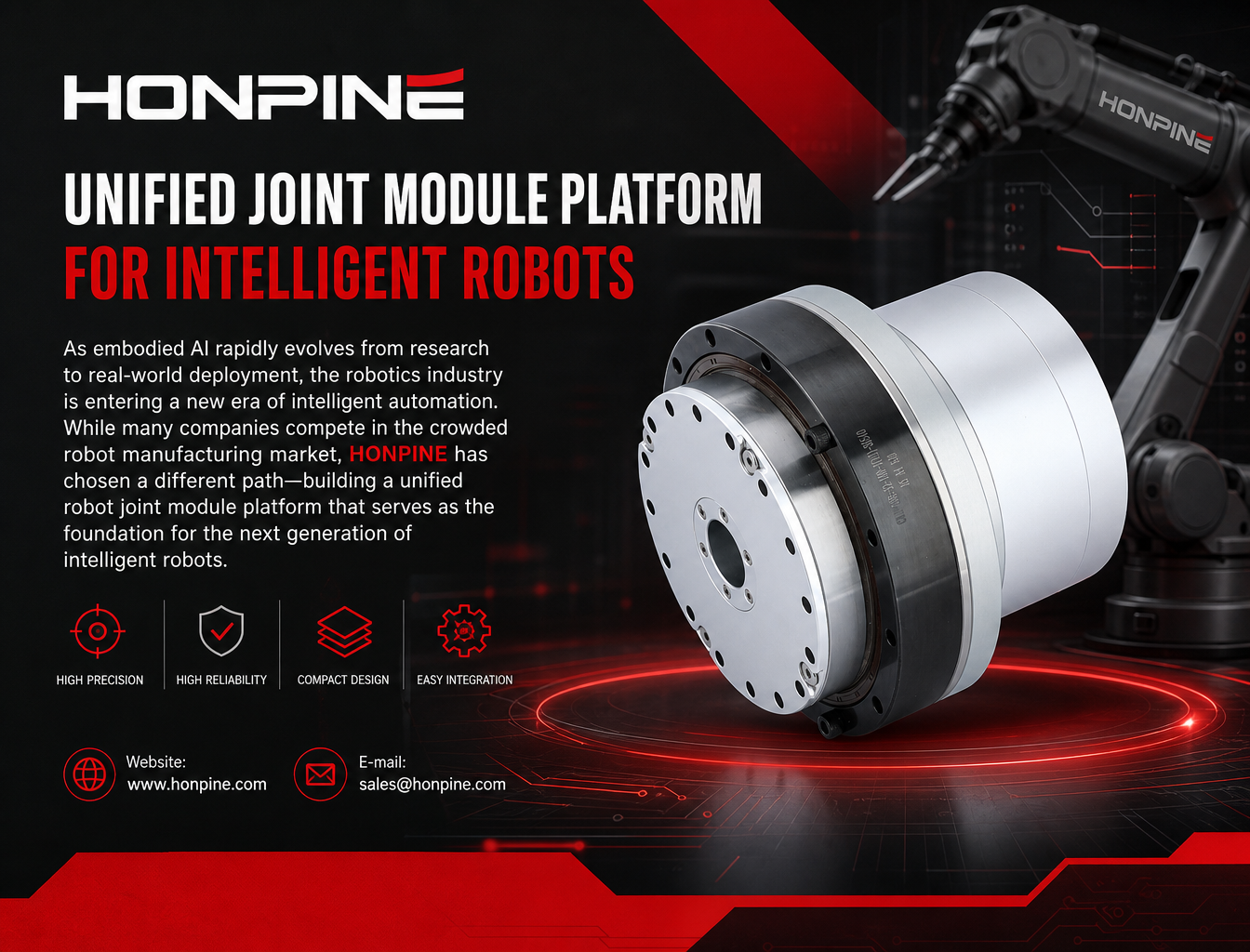
 Why HONPINE Is Building a Unified Robot Joint Module Platform to Accelerate Embodied AI?As embodied AI rapidly evolves from research to real-world deployment, the robotics industry is entering a new era of intelligent automation. While many companies compete in the crowded robot manufacturing market, HONPINE has chosen a different path—building a unified robot joint module platform that serves as the foundation for the next generation of intelligent robots.
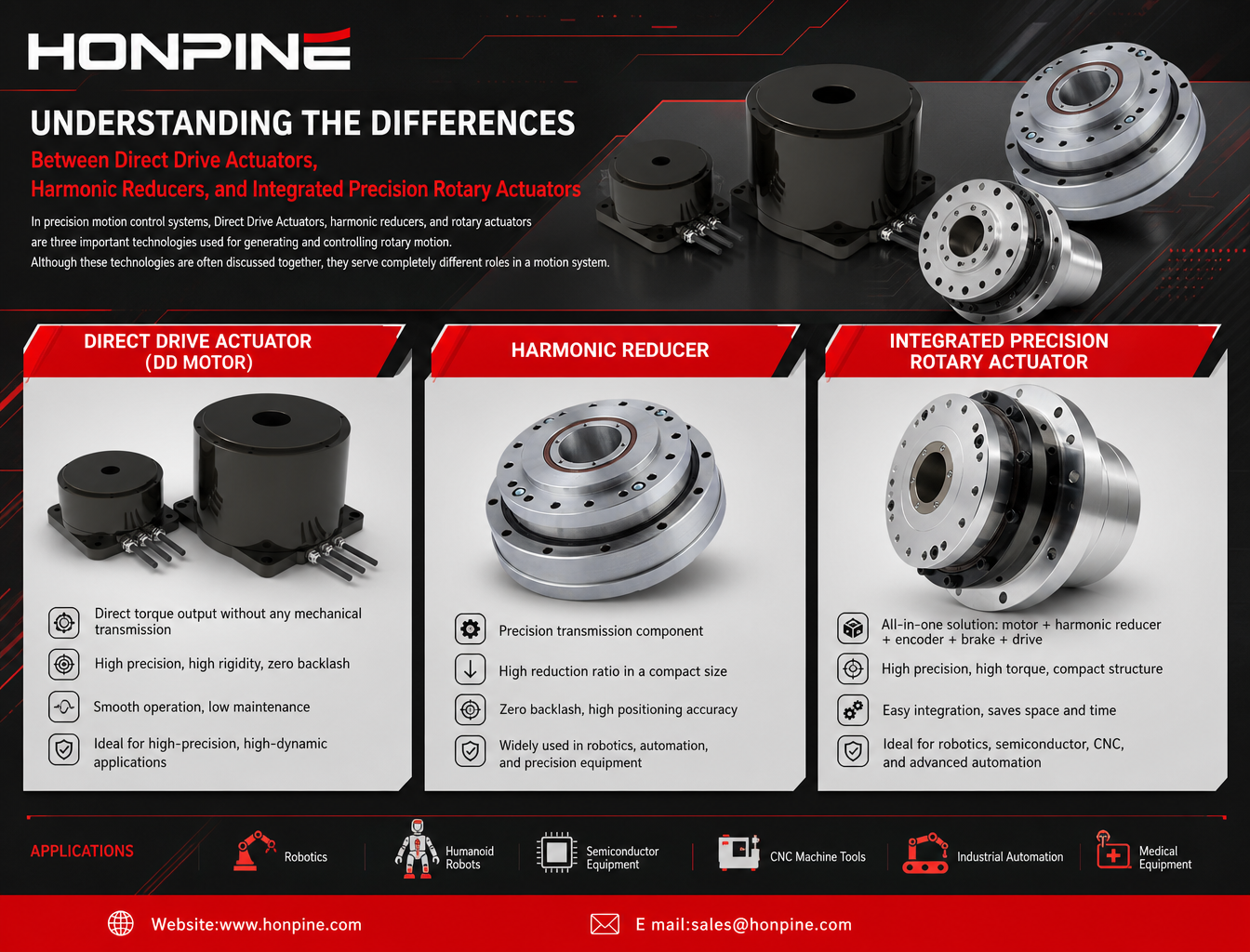
According to HONPINE Founder, the company's long-term vision is clear: to become the "power heart" and hardware foundation of the robotics era. Direct Drive Actuator vs Precision Rotary Actuator vs Harmonic Reducer: Complete Comparison GuideUnderstanding the Differences Between Direct Drive Actuators, Harmonic Reducers, and Integrated Precision Rotary Actuators
In precision motion control systems, Direct Drive Actuators, harmonic reducers, and rotary actuators are three important technologies used for generating and controlling rotary motion.
Although these technologies are often discussed together, they serve completely different roles in a motion system. Top 7 Robot Joint Motor Manufacturers: The Ultimate Guide for Robot EngineersThe production of a robot joint motor integrates multiple advanced technologies, including electric motor design, precision reduction systems, encoder technology, servo control, torque sensing, mechanical structure design, communication protocol development, and reliability testing. As a result, the technical barrier for developing a high-performance robot joint actuator is significantly higher than that of a conventional servo motor or standalone gearbox.
This article introduces several companies that have entered the market with commercially available robot joint motors and integrated joint actuator solutions.
Double Click
We provide harmonic drive reducer,planetary reducer,robot joint motor,robot rotary actuators,RV gear reducer,robot end effector,dexterous robot hand
 EU EN IEC 61800-3:2025 Takes Effect for Harmonic DrivesEN IEC 61800-3:2025 reshapes EU EMC compliance for harmonic drives. Learn how CE marking, Class A/B testing, certification, and delivery timelines may impact exporters and buyers.
 EU Mandates EMC Testing for Harmonic Drive ReducersHarmonic drive reducers face new EU EMC testing rules from Aug 1, 2026. Learn how the mandate impacts packaging machinery exports, compliance, customs clearance and market access.
 EU CE Rule Makes PL Certification MandatoryEU CE Rule Makes PL Certification Mandatory: learn how new EU requirements affect harmonic reducers, ISO 13849-1 PLd compliance, customs clearance, and market access.
 harmonic drive reducer certifications