









RCEP Cuts Tariffs to Zero for HS8466 Fixtures and Tool Holders in ASEAN from June 2026
Effective 1 June 2026, the Regional Comprehensive Economic Partnership (RCEP) agreement will eliminate import tariffs on machine tool fixtures and tool holders classified under HS code 8466 for all ten ASEAN member states — a development with direct implications for global metalworking supply chains, trade compliance teams, and regional manufacturing strategies.
RCEP Tariff Elimination Takes Effect for HS8466 Components
Pursuant to the latest RCEP schedule, as of 1 June 2026, duties on goods falling under HS heading 8466 — specifically fixtures, tool holders, and other essential machine tool accessories — will be reduced to zero when imported into ASEAN countries. This measure applies uniformly across all ten ASEAN economies and is grounded solely in the RCEP tariff liberalization timetable.
Impact Across Supply Chain Roles
Exporters and Direct Trading Enterprises
Chinese manufacturers exporting HS8466 components face immediate opportunities to enhance price competitiveness in ASEAN markets. With tariff barriers removed, landed costs decrease, potentially enabling more aggressive pricing or improved margin retention — provided origin certification (e.g., RCEP Certificate of Origin) is properly maintained and validated.
Procurement and Sourcing Organizations
ASEAN-based procurement teams — especially those serving local assembly operations — can now revise cost models and reorder thresholds. Lower effective costs may justify increased safety stock levels or shorter-order cycles, reducing exposure to logistics volatility without inflating total landed cost.
Contract Manufacturers and Local Assembly Facilities
Firms engaged in final assembly of machine tools or CNC systems in ASEAN countries gain greater flexibility in sourcing critical interfacing components. Zero tariffs support localization strategies by making Chinese-made fixtures and holders more viable for just-in-time integration, easing constraints previously imposed by duty-inflated lead times and inventory planning.
Logistics and Trade Compliance Service Providers
Third-party customs brokers and compliance consultants must update tariff classification guidance, origin documentation workflows, and client advisories for HS8466. Emphasis shifts toward verifying preferential origin claims — including production process substantiation and documentation traceability — rather than duty calculation alone.
Key Actions for Enterprises
Validate RCEP Origin Eligibility Now
Companies must confirm whether their HS8466 products meet RCEP’s Rules of Origin — particularly the regional value content (RVC) or change-in-tariff-heading (CTH) criteria. Pre-emptive audits of bill-of-materials and manufacturing records are advisable ahead of June 2026.
Align Procurement and Delivery Timelines
Importers should reassess minimum order quantities, lead time buffers, and warehouse rotation policies in light of predictable cost reductions. Early engagement with freight forwarders on updated customs clearance protocols is recommended to avoid processing delays at ASEAN ports.
Update Technical Documentation for Local Compliance
While tariff treatment changes, technical standards (e.g., ISO, JIS, or ASEAN harmonized specifications) remain unchanged. Exporters must ensure accompanying technical files — including dimensional drawings, material certifications, and surface finish reports — conform to local regulatory expectations beyond tariff eligibility.
Strategic Implications Beyond Tariff Savings
Analysis shows this tariff adjustment is less about isolated cost reduction and more about reinforcing China’s role as a high-precision component hub within ASEAN-integrated manufacturing ecosystems. Observably, it accelerates the shift from ‘final-product imports’ toward ‘regional component sourcing’, increasing demand for certified, traceable, and technically interoperable parts — not merely low-cost alternatives. What deserves closer attention is how quickly ASEAN OEMs adjust their supplier qualification frameworks to accommodate newly competitive Chinese suppliers, particularly regarding quality assurance protocols and after-sales technical responsiveness.
What This Means for the Industry
This measure signals a maturing phase in RCEP implementation — one where tariff cuts move beyond consumer goods into mission-critical industrial inputs. It does not guarantee market share gains, but it removes a structural cost disadvantage for qualified exporters. Success will depend less on tariff status and more on consistent technical alignment, responsive logistics, and demonstrable compliance discipline.
Source Information and Verification Notes
This article was generated exclusively from the user-provided title, event date (2026-06-01), and summary text. Specific official source links were not provided in the input and should be verified continuously. Stakeholders are advised to monitor updates from national customs administrations, ASEAN Secretariat bulletins, and RCEP Joint Committee notifications — particularly regarding origin verification procedures, transitional safeguard clauses, and any sector-specific implementation guidelines that may emerge ahead of the 1 June 2026 effective date.
Read More
Learn more about the story of HONPINE and industry trends related to precision transmission.
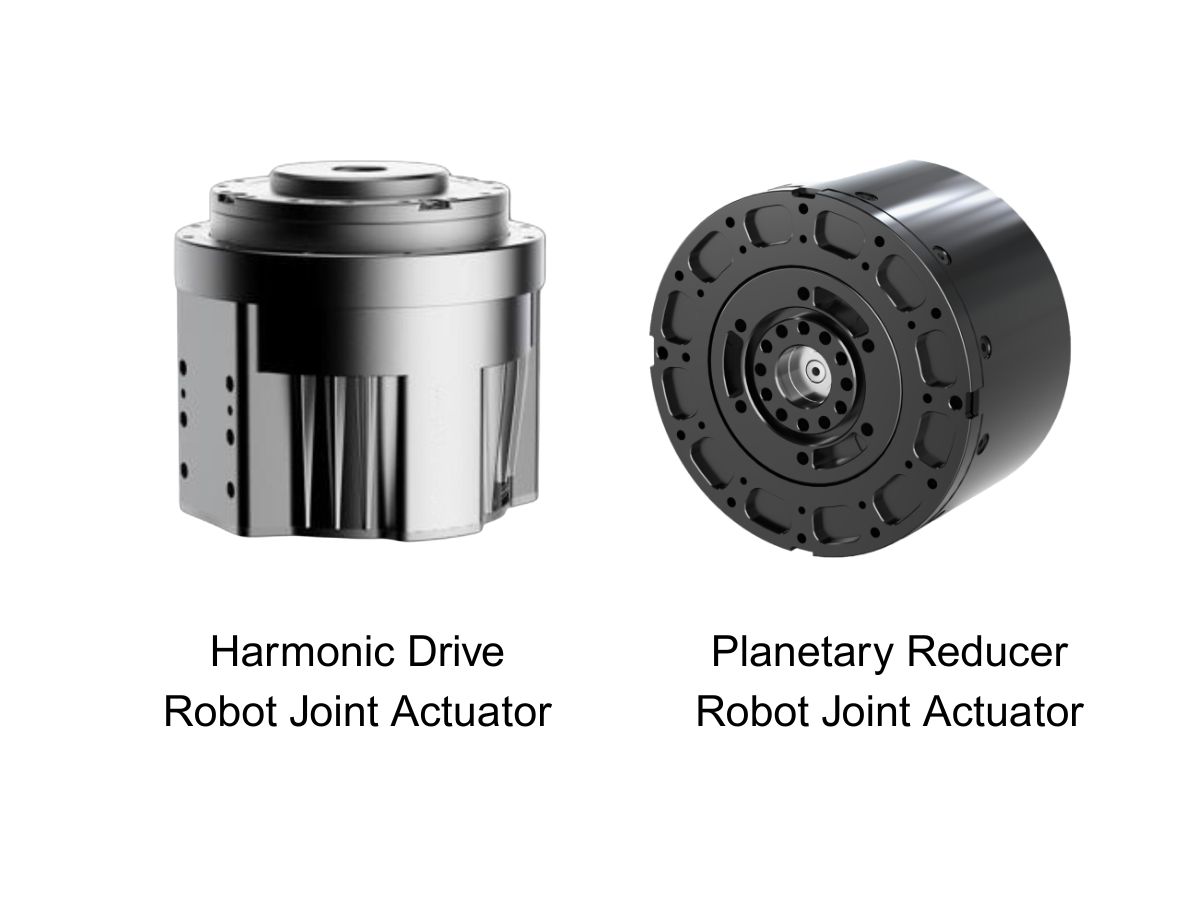
 What is robot joint actuator?How to Choose the Best Robot Rotary Joint Actuator?In core robot joint transmission solutions, planetary and harmonic rotary actuators each have their own strengths. Choosing the right type based on application requirements is essential to achieve the optimal balance between performance and cost.
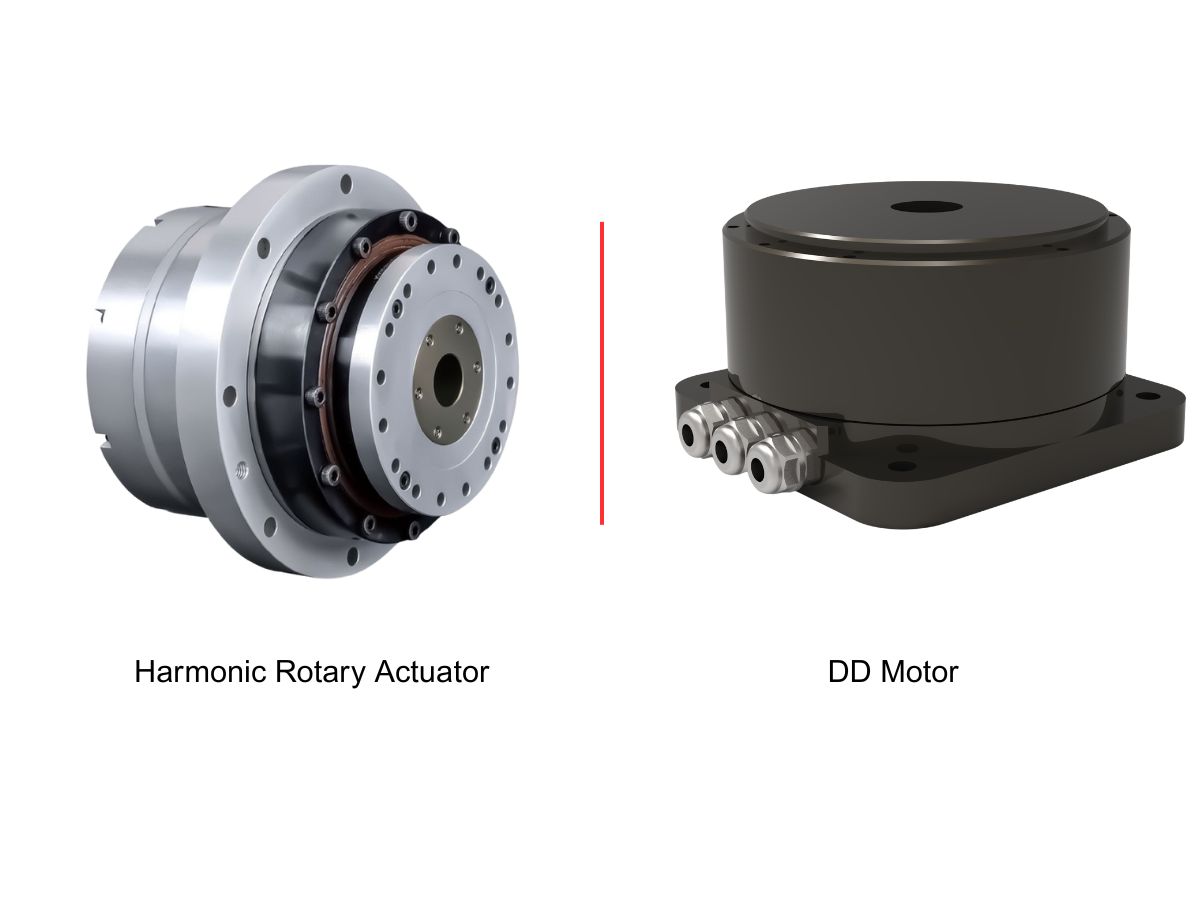
 DD Motors VS Harmonic Rotary ActuatorsThis article provides an in-depth comparison between Direct Drive (DD) motors and harmonic rotary actuators, covering their transmission principles, advantages and disadvantages, and typical application fields.
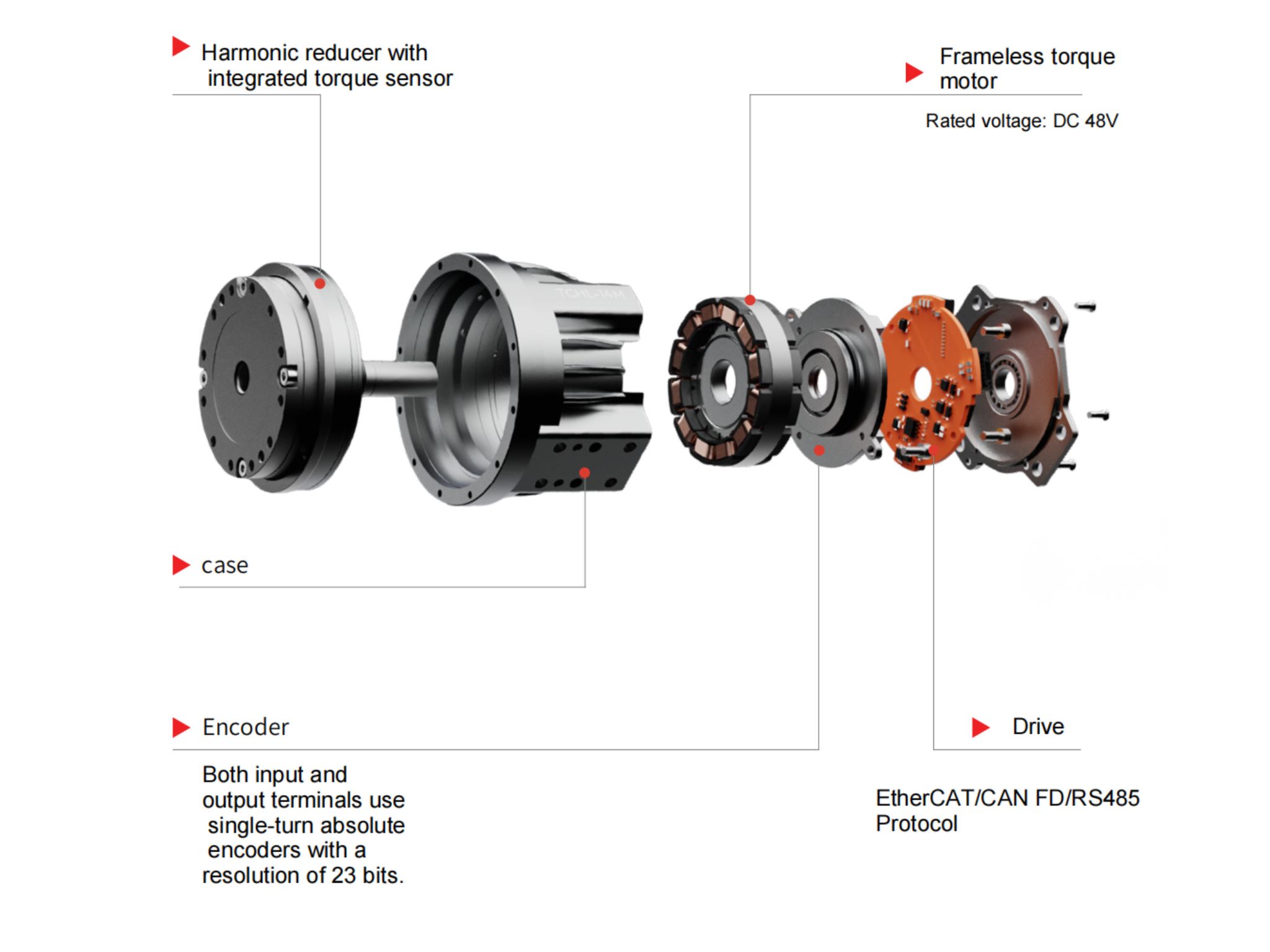
 OMG Ultra Compact Harmonic Drive Joint Module with Built-in Torque SensorHONPINE TCHL series harmonic drive joint module is a game-changing product that achieves disruptive improvements in multiple aspects such as lightweight design, integration level, and connection convenience. This article will analyze its revolutionary enhancements with you.
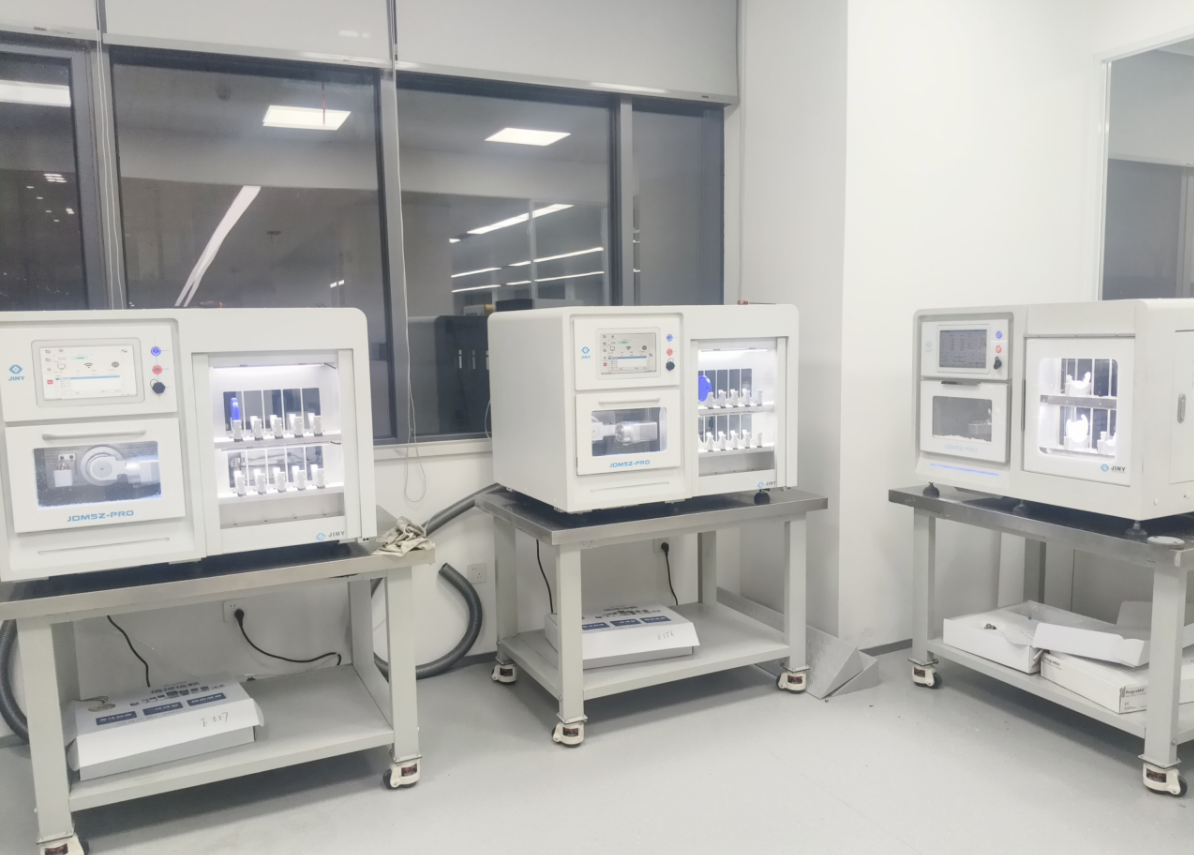
 The Role of Harmonic Drive Gears in Achieving 5–10 μm Accuracy in Dental Milling MachinesA dental milling machine is a CNC machining system used to directly process digital dental models into restorations such as crowns, bridges, veneers, inlays, and implant abutments. Dental milling machines require far higher operational accuracy and motion stability than ordinary equipment. This article explains how harmonic drive gear help dental milling machines achieve stable, continuous, and controllable operation.
 Why Are Harmonic Rotary Actuators Perfect for Medical Equipment?Harmonic rotary actuators (typically integrated systems consisting of a harmonic drive reducer, frameless torque motor, encoder, and optional brake) are regarded as key components in medical equipment. The core reason is that they simultaneously meet the most stringent medical requirements for precision, compact size, safety, and controllability. The following explanation is structured from three perspectives: technical characteristics, application scenarios, and medical value.
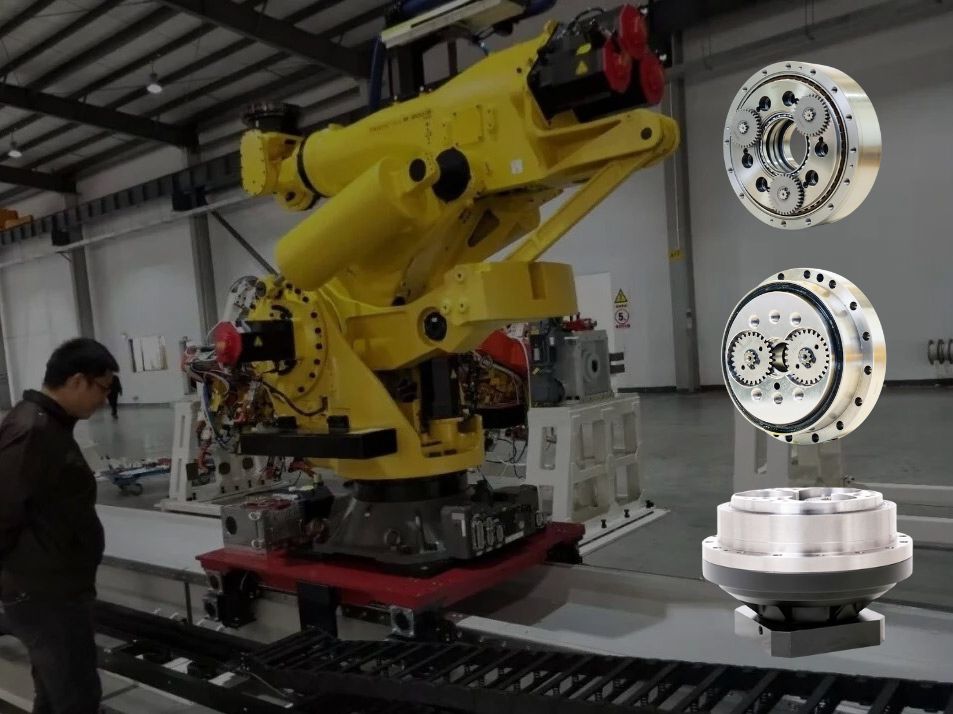
 High-Precision RV Reducers Perfectly Matched for Walking RobotsThe walking axis of a robot is a core component for power transmission and support. RV reducers provide extremely high rigidity, precision, and torque while maintaining a compact size and exceptional reliability, making them an ideal match for the demanding requirements of walking robot joints in terms of load capacity, impact resistance, and precision.
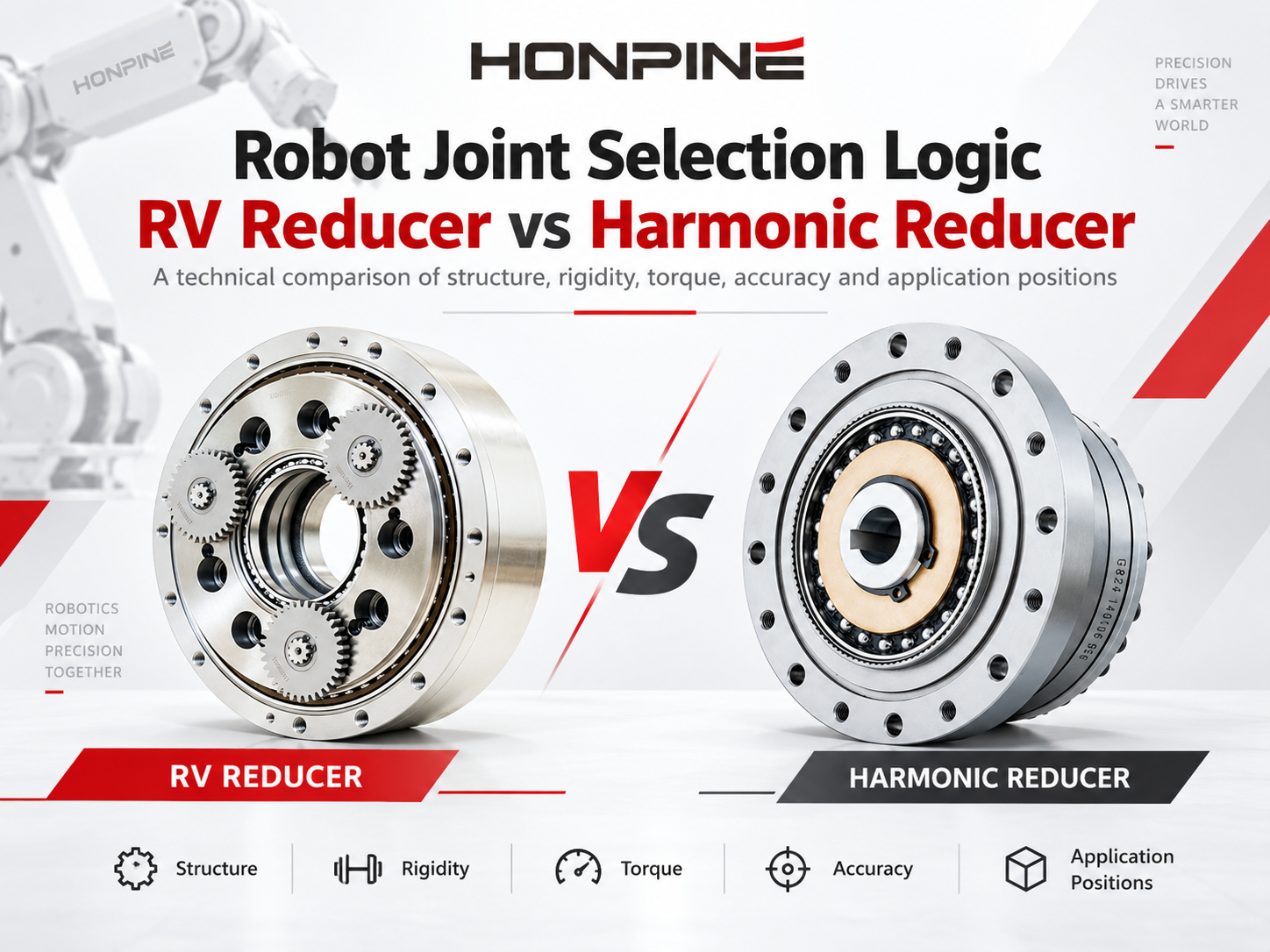
 RV vs Harmonic Reducer: How to Choose the Right Gearbox for Robot Joints?RV vs harmonic reducer: which gearbox is right for your robot joint? The answer depends on torque, rigidity, accuracy, installation space and operating conditions. This guide compares their working principles and five key performance factors, then explains how to evaluate joint loads, reducer life, temperature and lubrication. Whether you are designing a robot base, shoulder, elbow or wrist, use these considerations to match the reducer to the requirements of each joint.
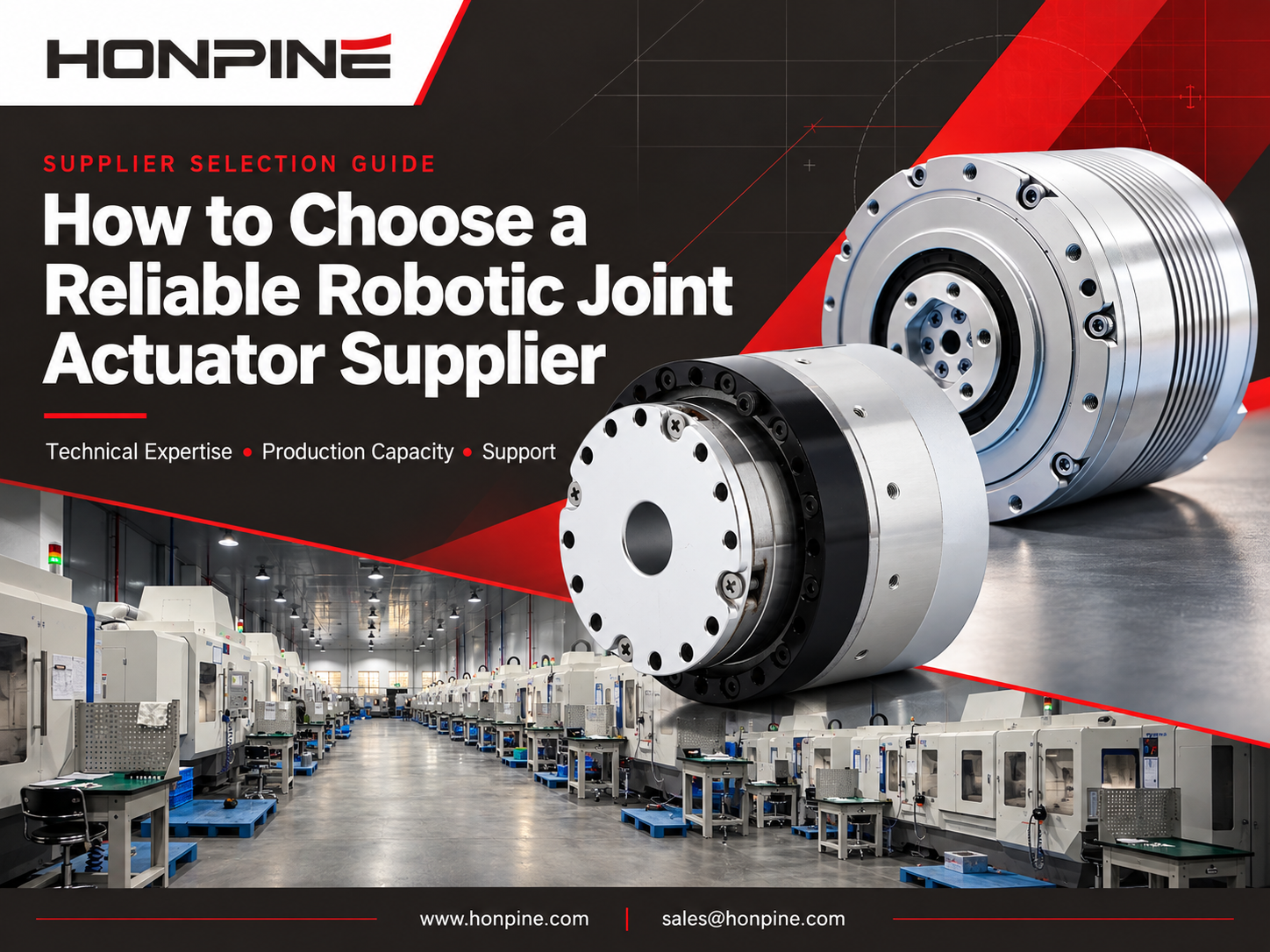
 How to Find a Reliable Robotic Joint Actuator Supplier?Choosing the right robotic joint actuator supplier is essential for reliable performance, smooth integration and long-term project success. Beyond product specifications, you need to understand a supplier’s technical expertise, production capacity and after-sales support. In this guide, Allen Li, Founder of HONPINE, explains how to assess these three factors when sourcing harmonic and planetary joint actuators for robotics and industrial automation.
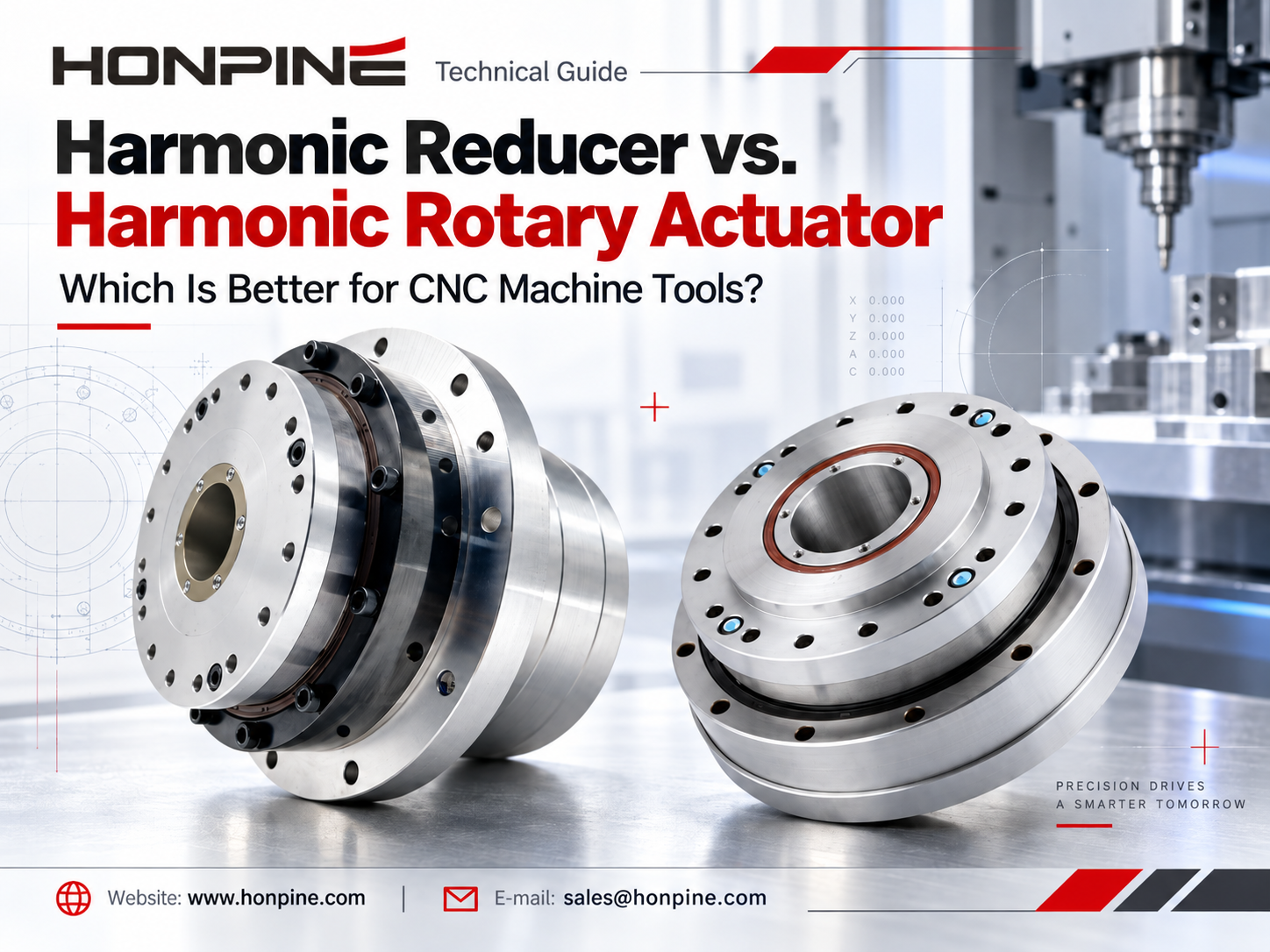
 Harmonic Reducer vs. Harmonic Rotary Actuator: Which Is Better for CNC Machine Tools?Choosing between a harmonic reducer and a harmonic rotary actuator is an important decision in CNC machine tool design. Both solutions offer high-precision motion control, but they differ in integration, installation requirements, rigidity, and system flexibility. For CNC fourth-axis rotary tables and compact five-axis machining systems, selecting the right harmonic drive can significantly influence machine performance. In this article, HONPINE Technical Director Theodore Li compares harmonic reducers and harmonic rotary actuators to help engineers identify the most suitable solution for their CNC applications.
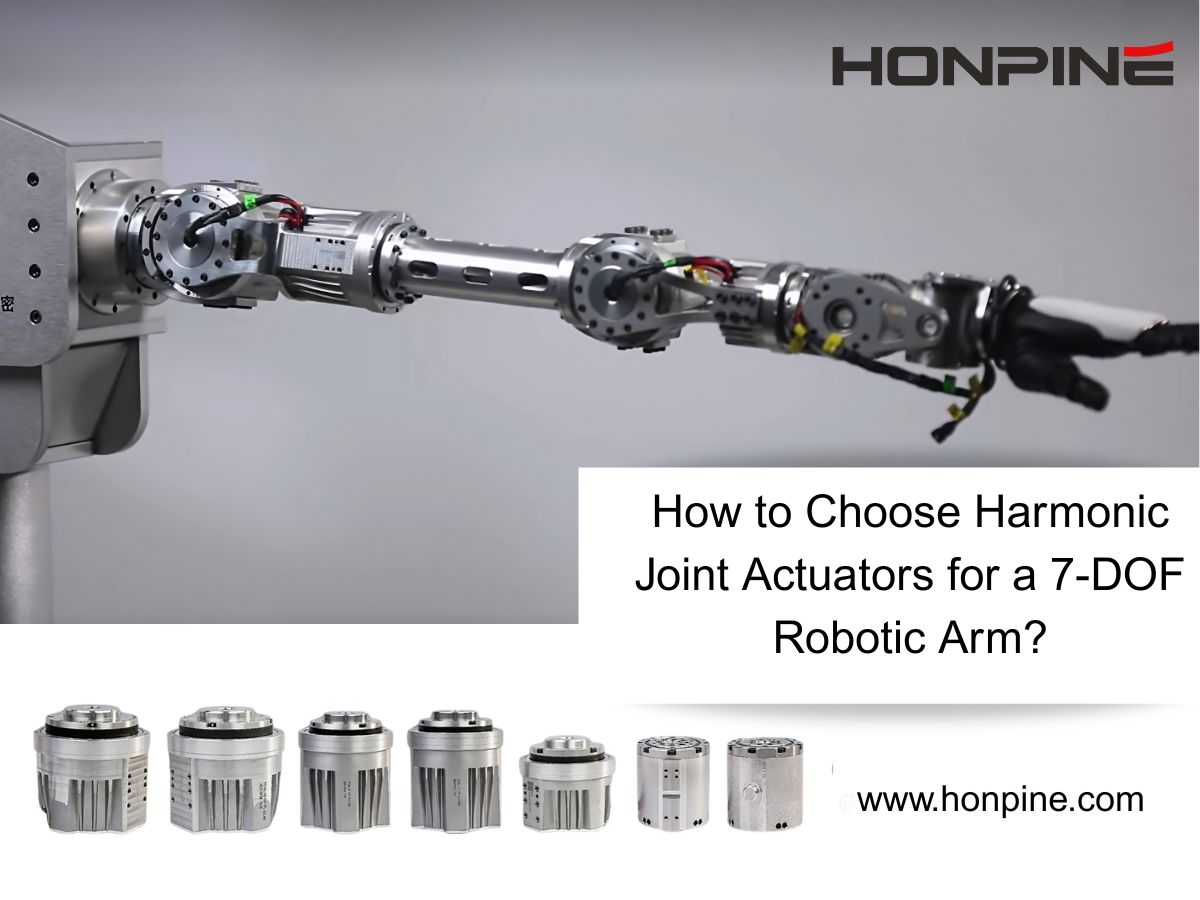
 How to Choose Harmonic Joint Actuators for a 7-DOF Robotic Arm?I'm Theodore Li, Technical Director at HONPINE. Choosing harmonic joint actuators for a 7-DOF robotic arm starts with the torque, weight, and installation needs of each joint. This guide uses a TCHL 20 shoulder and TCHL 14 wrist configuration as an example, then explores torque sensing, compliant control, and HAG Series considerations for demanding robotic applications.
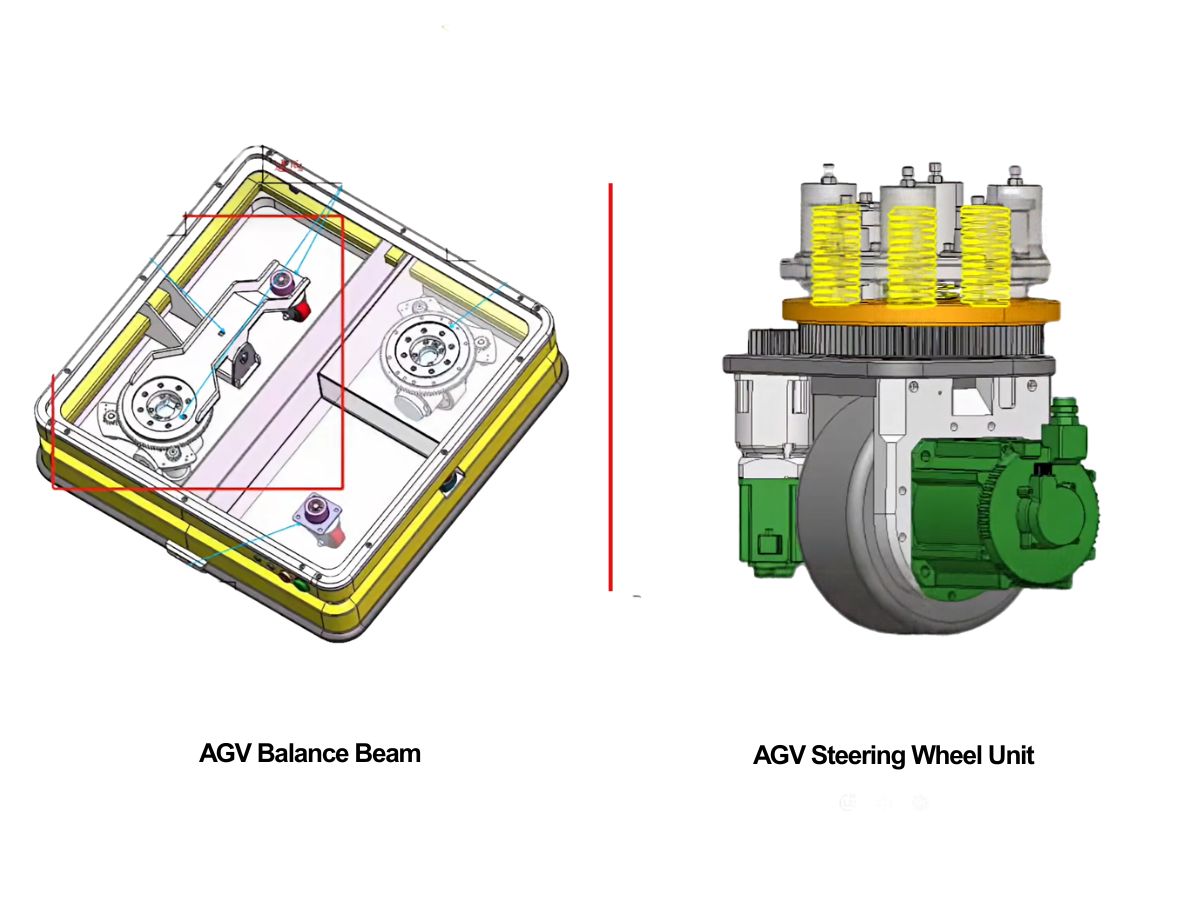
 AGV Suspension: Should You Choose a Balance Beam or a Spring-Loaded Steering Drive Unit?Choosing an AGV suspension system starts with the vehicle’s load range and floor conditions. Balance beams and spring-loaded steering drive units offer different approaches to maintaining wheel contact and managing wheel loads. This HONPINE guide compares both options and explains how to evaluate traction, suspension travel, installation space, and maintenance before choosing a configuration.
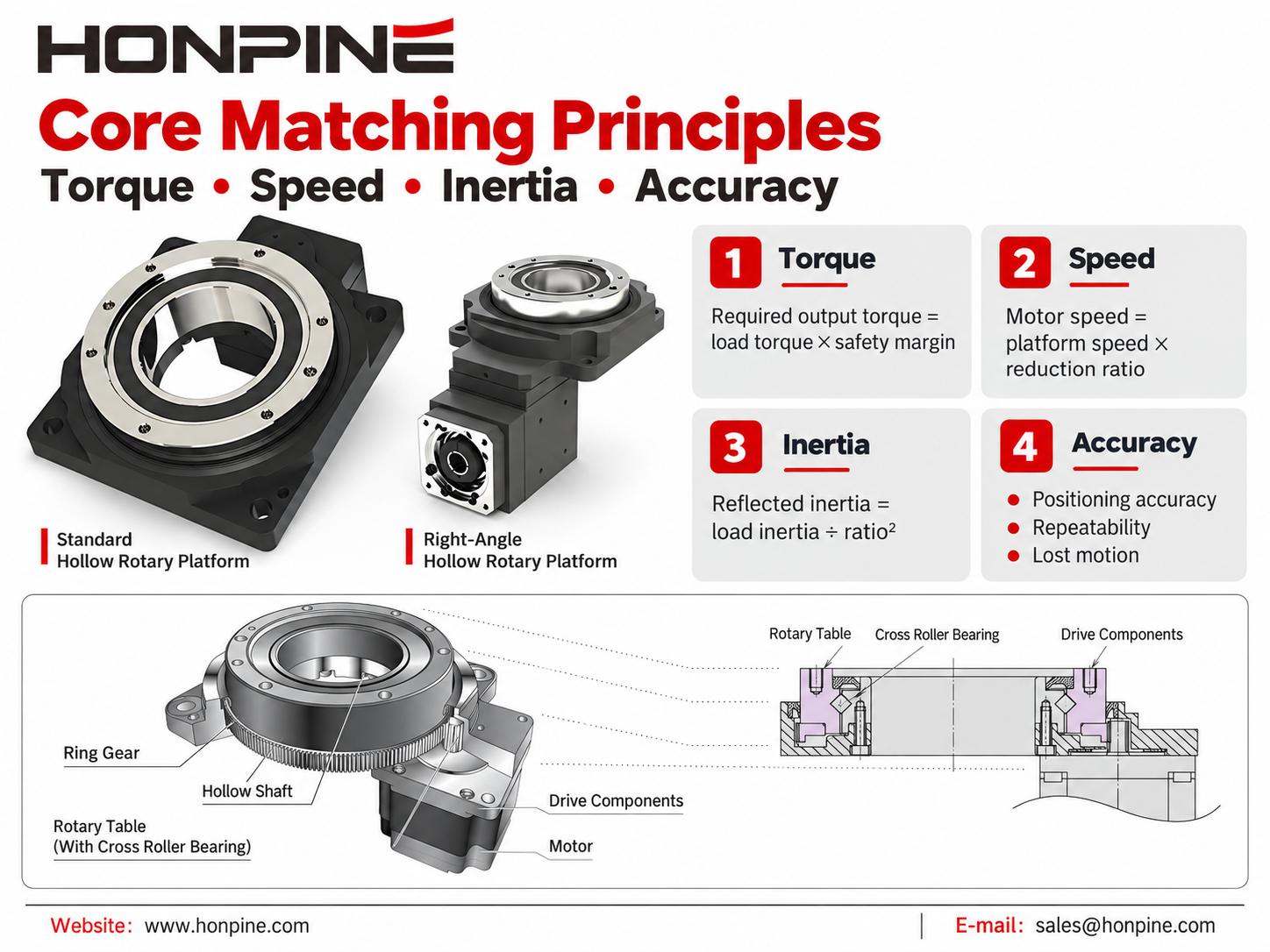
 Hollow Rotary Platform Motor Matching: A Complete GuideSelecting the right motor for a hollow rotary platform is essential for achieving precise positioning, stable operation, and efficient automation. This guide explains how to match servo motors, stepper motors, and brushless DC motors with hollow rotary platforms based on torque, speed, inertia, accuracy, and installation requirements. Explore practical motor selection guidelines, typical application combinations, and space-saving mounting solutions to find the right configuration for your automation project.
Double Click
We provide harmonic drive reducer,planetary reducer,robot joint motor,robot rotary actuators,RV gear reducer,robot end effector,dexterous robot hand
 What is robot joint actuator?How to Choose the Best Robot Rotary Joint Actuator?In core robot joint transmission solutions, planetary and harmonic rotary actuators each have their own strengths. Choosing the right type based on application requirements is essential to achieve the optimal balance between performance and cost.
 DD Motors VS Harmonic Rotary ActuatorsThis article provides an in-depth comparison between Direct Drive (DD) motors and harmonic rotary actuators, covering their transmission principles, advantages and disadvantages, and typical application fields.
 OMG Ultra Compact Harmonic Drive Joint Module with Built-in Torque SensorHONPINE TCHL series harmonic drive joint module is a game-changing product that achieves disruptive improvements in multiple aspects such as lightweight design, integration level, and connection convenience. This article will analyze its revolutionary enhancements with you.
 The Role of Harmonic Drive Gears in Achieving 5–10 μm Accuracy in Dental Milling MachinesA dental milling machine is a CNC machining system used to directly process digital dental models into restorations such as crowns, bridges, veneers, inlays, and implant abutments. Dental milling machines require far higher operational accuracy and motion stability than ordinary equipment. This article explains how harmonic drive gear help dental milling machines achieve stable, continuous, and controllable operation.
 Why Are Harmonic Rotary Actuators Perfect for Medical Equipment?Harmonic rotary actuators (typically integrated systems consisting of a harmonic drive reducer, frameless torque motor, encoder, and optional brake) are regarded as key components in medical equipment. The core reason is that they simultaneously meet the most stringent medical requirements for precision, compact size, safety, and controllability. The following explanation is structured from three perspectives: technical characteristics, application scenarios, and medical value.
 High-Precision RV Reducers Perfectly Matched for Walking RobotsThe walking axis of a robot is a core component for power transmission and support. RV reducers provide extremely high rigidity, precision, and torque while maintaining a compact size and exceptional reliability, making them an ideal match for the demanding requirements of walking robot joints in terms of load capacity, impact resistance, and precision.
 RV vs Harmonic Reducer: How to Choose the Right Gearbox for Robot Joints?RV vs harmonic reducer: which gearbox is right for your robot joint? The answer depends on torque, rigidity, accuracy, installation space and operating conditions. This guide compares their working principles and five key performance factors, then explains how to evaluate joint loads, reducer life, temperature and lubrication. Whether you are designing a robot base, shoulder, elbow or wrist, use these considerations to match the reducer to the requirements of each joint.
 How to Find a Reliable Robotic Joint Actuator Supplier?Choosing the right robotic joint actuator supplier is essential for reliable performance, smooth integration and long-term project success. Beyond product specifications, you need to understand a supplier’s technical expertise, production capacity and after-sales support. In this guide, Allen Li, Founder of HONPINE, explains how to assess these three factors when sourcing harmonic and planetary joint actuators for robotics and industrial automation.
 Harmonic Reducer vs. Harmonic Rotary Actuator: Which Is Better for CNC Machine Tools?Choosing between a harmonic reducer and a harmonic rotary actuator is an important decision in CNC machine tool design. Both solutions offer high-precision motion control, but they differ in integration, installation requirements, rigidity, and system flexibility. For CNC fourth-axis rotary tables and compact five-axis machining systems, selecting the right harmonic drive can significantly influence machine performance. In this article, HONPINE Technical Director Theodore Li compares harmonic reducers and harmonic rotary actuators to help engineers identify the most suitable solution for their CNC applications.
 How to Choose Harmonic Joint Actuators for a 7-DOF Robotic Arm?I'm Theodore Li, Technical Director at HONPINE. Choosing harmonic joint actuators for a 7-DOF robotic arm starts with the torque, weight, and installation needs of each joint. This guide uses a TCHL 20 shoulder and TCHL 14 wrist configuration as an example, then explores torque sensing, compliant control, and HAG Series considerations for demanding robotic applications.
 AGV Suspension: Should You Choose a Balance Beam or a Spring-Loaded Steering Drive Unit?Choosing an AGV suspension system starts with the vehicle’s load range and floor conditions. Balance beams and spring-loaded steering drive units offer different approaches to maintaining wheel contact and managing wheel loads. This HONPINE guide compares both options and explains how to evaluate traction, suspension travel, installation space, and maintenance before choosing a configuration.
 Hollow Rotary Platform Motor Matching: A Complete GuideSelecting the right motor for a hollow rotary platform is essential for achieving precise positioning, stable operation, and efficient automation. This guide explains how to match servo motors, stepper motors, and brushless DC motors with hollow rotary platforms based on torque, speed, inertia, accuracy, and installation requirements. Explore practical motor selection guidelines, typical application combinations, and space-saving mounting solutions to find the right configuration for your automation project.