








RV Reducer Explained: Working Principle, Advantages, Applications, and Selection Guide
As industrial robots, humanoid robots, CNC machine tools, and precision automation continue to evolve, the RV reducer has become one of the most critical components in modern motion control systems. It directly affects a robot's positioning accuracy, load capacity, rigidity, service life, and overall reliability.
For engineers, equipment manufacturers, and robot developers, understanding how an RV reducer works and how it differs from other precision reducers is essential when selecting the right transmission solution.
This guide explains the working principle, structure, advantages, applications, and selection considerations of RV reducers while clarifying several common misconceptions.
What Is an RV Reducer?
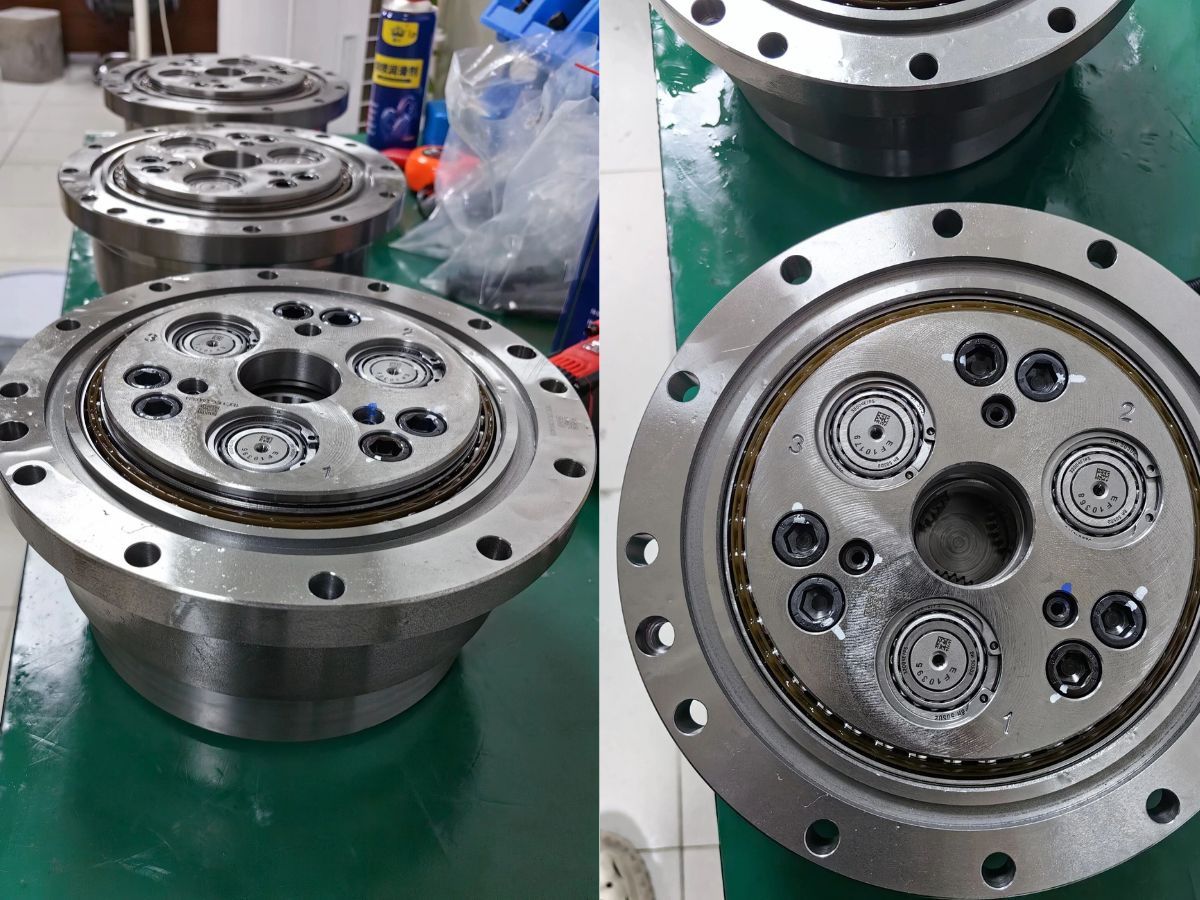
An RV reducer (Rotary Vector Reducer) is a high-precision cycloidal reduction gearbox that combines a planetary gear stage with a cycloidal pin gear stage to achieve high reduction ratios, exceptional rigidity, and excellent positioning accuracy.
Unlike ordinary industrial gearboxes, an RV reducer is specifically designed for applications requiring:
High torque transmission
High torsional rigidity
Low backlash
High positioning accuracy
Long service life
Heavy-duty continuous operation
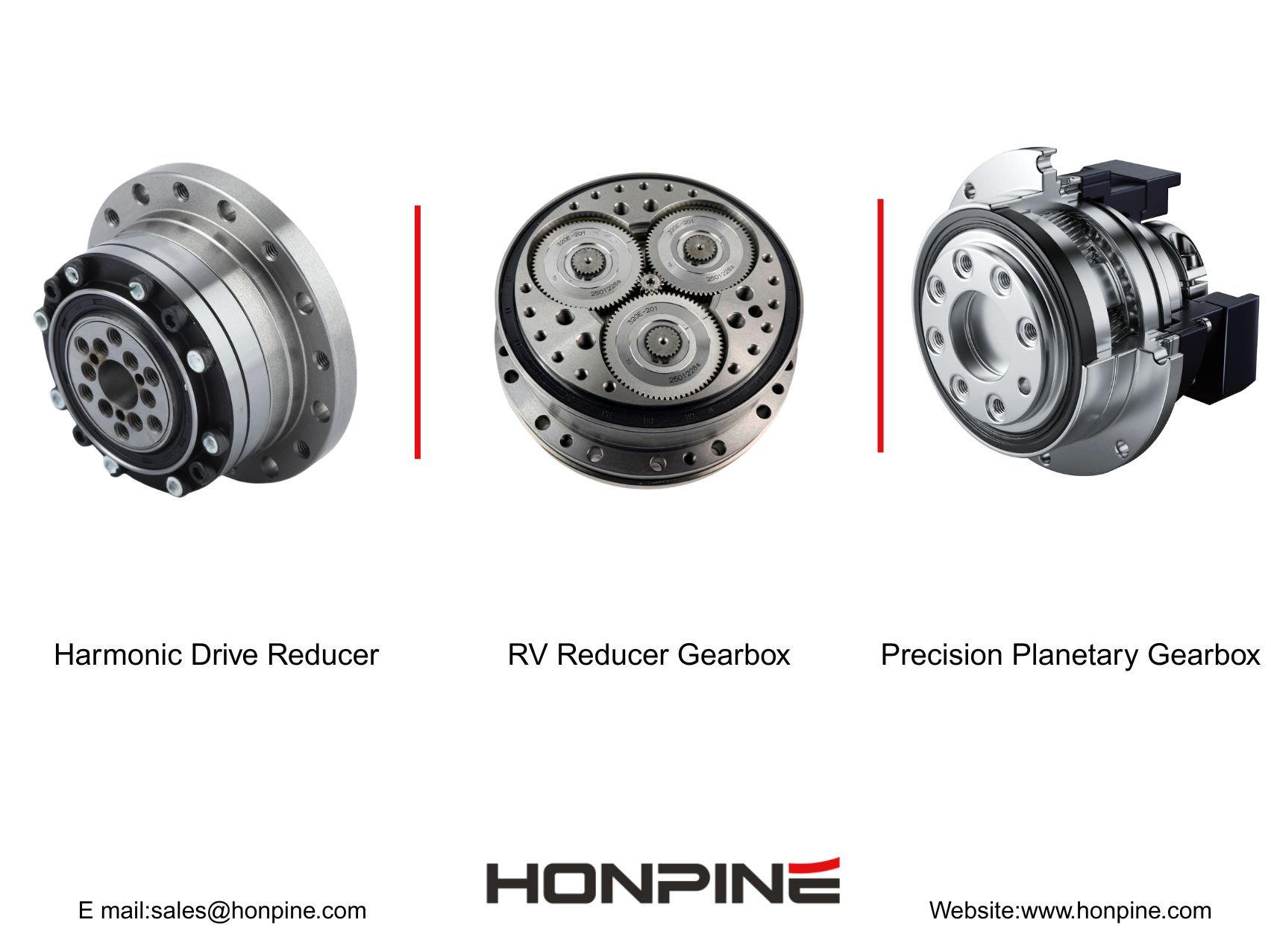
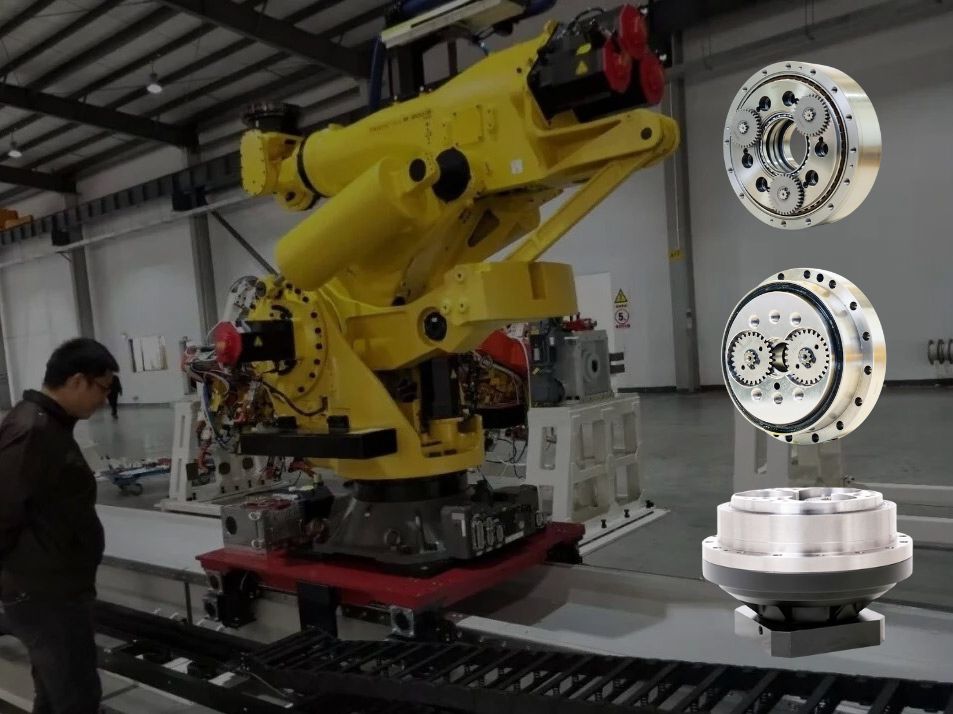
Today, RV reducers are widely used in industrial robots, robotic positioners, CNC rotary tables, machine tools, automated production lines, and heavy-duty intelligent equipment.
How Does an RV Reducer Work?
The RV reducer uses a two-stage reduction mechanism.
First Stage: Planetary Gear Reduction
The servo motor drives the input shaft, which rotates the sun gear. The planetary gears reduce the motor speed while increasing torque and simultaneously drive the eccentric shaft.
Second Stage: Cycloidal Pin Gear Reduction
The eccentric shaft causes the cycloidal disc to perform an eccentric motion inside the fixed ring of pins.
Because the cycloidal disc contains one fewer tooth than the pin gear ring, each revolution creates a small relative displacement, producing a large reduction ratio with extremely high transmission accuracy.
Finally, output pins transfer the motion to the output flange, delivering high torque with minimal backlash.
This combination of planetary gears and cycloidal transmission enables RV reducers to achieve both high precision and outstanding load capacity.
Why Are RV Reducers So Accurate?
Several structural advantages contribute to the exceptional precision of an RV reducer.
Large Multi-Tooth Engagement
Unlike conventional gearboxes where only a few teeth share the load, an RV reducer distributes force across multiple cycloidal teeth simultaneously.
This design greatly reduces contact stress while improving rigidity and durability.
Extremely Low Backlash
High-quality RV reducers typically achieve backlash below 1 arc-minute, while premium products may reach 0.5 arc-minute (30 arc-seconds).
Low backlash allows robots to repeatedly return to the same position with excellent repeatability.
High Torsional Rigidity
The cycloidal mechanism provides excellent resistance to deformation under heavy loads, making RV reducers particularly suitable for industrial robot joints carrying significant payloads.
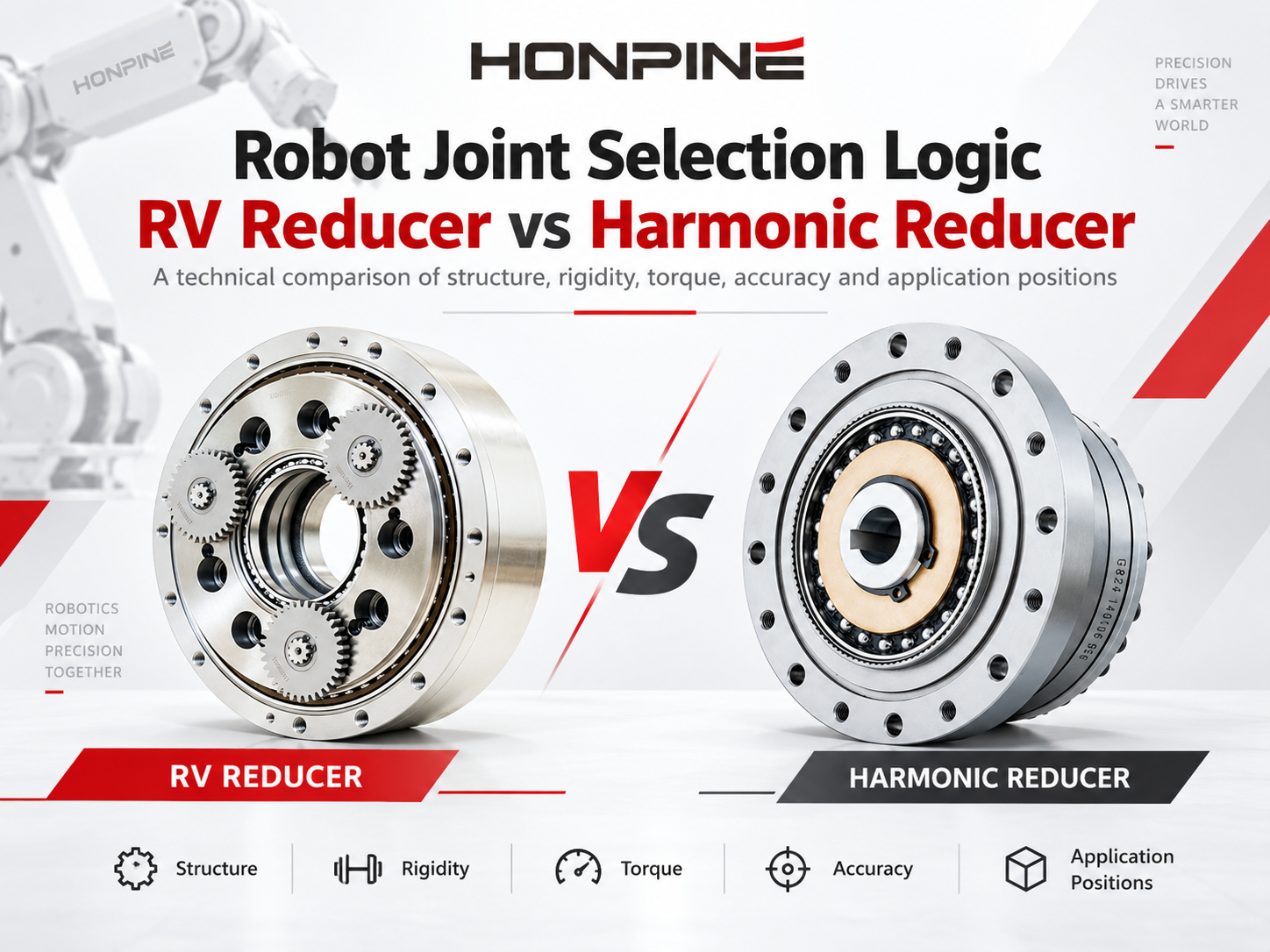
RV Reducer vs Harmonic Reducer
Many engineers ask whether they should choose an RV reducer or a harmonic reducer.
The answer depends on the application.
RV Reducer Best suited for:
Robot base joints
Shoulder joints
Waist joints
Heavy-duty industrial robots
Rotary positioning tables
CNC equipment
Advantages:
High rigidity
High load capacity
Excellent impact resistance
Long service life
Stable performance under continuous heavy loads
Harmonic Reducer Best suited for:
Robot wrists
Elbows
Humanoid robot arms
Medical robots
Semiconductor equipment
Precision automation
Advantages:
Compact size
Lightweight design
Extremely low backlash
High positioning accuracy
In most six-axis industrial robots, RV reducers are typically used in joints 1–3 or joints 1–4, while harmonic reducers are used in wrist joints, where compactness and precision are more important than maximum load capacity.
Common Misconception: RV Reducer vs Worm Gear Reducer
One of the most common misunderstandings is confusing an RV reducer with a worm gear reducer.
These are completely different transmission technologies.
RV Reducer
Planetary gear + cycloidal pin gear structure
High precision
Low backlash
High rigidity
Designed for robotics and precision machinery
Worm Gear Reducer
Worm and worm wheel transmission
Simple structure
Lower manufacturing cost
Can provide self-locking capability
Commonly used in conveyors, lifting equipment, and general machinery
Although both are reduction gearboxes, they serve entirely different purposes and should not be considered interchangeable.
Main Applications of RV Reducers
Thanks to their high rigidity and excellent torque capacity, RV reducers are widely used in:
Industrial robots
Robotic welding systems
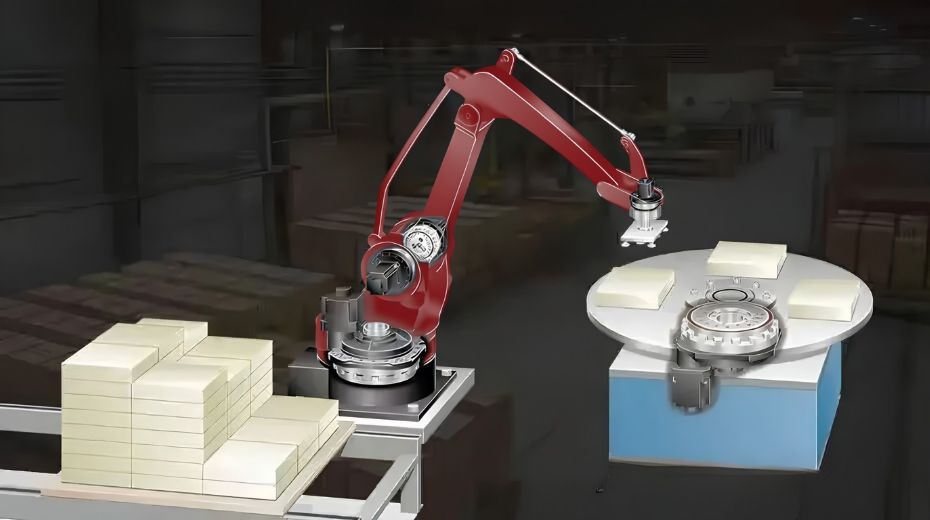
Palletizing robots
CNC rotary tables
Machine tools
Automated production lines
Laser processing equipment
Aerospace manufacturing
Precision positioning systems
Heavy-duty intelligent equipment
As robot payloads increase, RV reducers become increasingly important in maintaining positioning accuracy under dynamic loading conditions.
How to Choose the Right RV Reducer?
Selecting the correct RV reducer involves more than simply comparing reduction ratios.
Engineers should evaluate:
Rated Torque
Ensure the reducer can continuously handle the required operating torque with sufficient safety margin.
Peak Torque
Applications involving acceleration, deceleration, or impact loads require adequate overload capability.
Reduction Ratio
Different robot joints require different speed and torque characteristics.
Backlash
Precision assembly and CNC applications require lower backlash than general automation.
Torsional Rigidity
Higher rigidity improves robot trajectory accuracy and reduces vibration.
Service Life
Most industrial RV reducers are designed for 6,000–10,000 hours under rated operating conditions, depending on load, lubrication, and working environment.
Mounting Configuration
Consider shaft type, flange dimensions, hollow or solid shaft design, and compatibility with the servo motor.
Domestic Development of RV Reducers
For many years, the global high-end RV reducer market was dominated by Japanese manufacturers.
Today, continuous improvements in precision machining, heat treatment, gear manufacturing, bearing technology, and quality control have enabled Chinese manufacturers to significantly improve product performance.
Modern domestic RV reducers now offer:
Improved positioning accuracy
Better manufacturing consistency
Shorter lead times
Competitive cost
Reliable batch production capability
These advances provide robot manufacturers with greater supply chain flexibility while supporting the rapid growth of intelligent manufacturing.
Conclusion
The RV reducer remains one of the most important precision transmission components in modern robotics and industrial automation.
Its unique combination of planetary gears and cycloidal pin gear technology delivers exceptional rigidity, high torque capacity, low backlash, and long service life, making it the preferred solution for heavy-load robotic joints and precision motion systems.
Whether you are developing an industrial robot, CNC machine, automated production line, or intelligent equipment, selecting the appropriate RV reducer based on torque, rigidity, accuracy, and application requirements is essential for achieving reliable long-term performance.
As precision manufacturing technologies continue to advance, RV reducers will play an increasingly important role in the next generation of robotics, intelligent automation, and advanced manufacturing systems.

About Author
Theodore Li serves as the Technical Director at HONPINE, overseeing the R&D strategy for replication products, guiding team selection, and managing both pre-sales and after-sales operations.

Read More
Learn more about the story of HONPINE and industry trends related to precision transmission.
 What is robot joint actuator?How to Choose the Best Robot Rotary Joint Actuator?In core robot joint transmission solutions, planetary and harmonic rotary actuators each have their own strengths. Choosing the right type based on application requirements is essential to achieve the optimal balance between performance and cost.
 DD Motors VS Harmonic Rotary ActuatorsThis article provides an in-depth comparison between Direct Drive (DD) motors and harmonic rotary actuators, covering their transmission principles, advantages and disadvantages, and typical application fields.
 OMG Ultra Compact Harmonic Drive Joint Module with Built-in Torque SensorHONPINE TCHL series harmonic drive joint module is a game-changing product that achieves disruptive improvements in multiple aspects such as lightweight design, integration level, and connection convenience. This article will analyze its revolutionary enhancements with you.
 The Role of Harmonic Drive Gears in Achieving 5–10 μm Accuracy in Dental Milling MachinesA dental milling machine is a CNC machining system used to directly process digital dental models into restorations such as crowns, bridges, veneers, inlays, and implant abutments. Dental milling machines require far higher operational accuracy and motion stability than ordinary equipment. This article explains how harmonic drive gear help dental milling machines achieve stable, continuous, and controllable operation.
 Why Are Harmonic Rotary Actuators Perfect for Medical Equipment?Harmonic rotary actuators (typically integrated systems consisting of a harmonic drive reducer, frameless torque motor, encoder, and optional brake) are regarded as key components in medical equipment. The core reason is that they simultaneously meet the most stringent medical requirements for precision, compact size, safety, and controllability. The following explanation is structured from three perspectives: technical characteristics, application scenarios, and medical value.
 High-Precision RV Reducers Perfectly Matched for Walking RobotsThe walking axis of a robot is a core component for power transmission and support. RV reducers provide extremely high rigidity, precision, and torque while maintaining a compact size and exceptional reliability, making them an ideal match for the demanding requirements of walking robot joints in terms of load capacity, impact resistance, and precision.
 RV vs Harmonic Reducer: How to Choose the Right Gearbox for Robot Joints?RV vs harmonic reducer: which gearbox is right for your robot joint? The answer depends on torque, rigidity, accuracy, installation space and operating conditions. This guide compares their working principles and five key performance factors, then explains how to evaluate joint loads, reducer life, temperature and lubrication. Whether you are designing a robot base, shoulder, elbow or wrist, use these considerations to match the reducer to the requirements of each joint.
 How to Find a Reliable Robotic Joint Actuator Supplier?Choosing the right robotic joint actuator supplier is essential for reliable performance, smooth integration and long-term project success. Beyond product specifications, you need to understand a supplier’s technical expertise, production capacity and after-sales support. In this guide, Allen Li, Founder of HONPINE, explains how to assess these three factors when sourcing harmonic and planetary joint actuators for robotics and industrial automation.
 Harmonic Reducer vs. Harmonic Rotary Actuator: Which Is Better for CNC Machine Tools?Choosing between a harmonic reducer and a harmonic rotary actuator is an important decision in CNC machine tool design. Both solutions offer high-precision motion control, but they differ in integration, installation requirements, rigidity, and system flexibility. For CNC fourth-axis rotary tables and compact five-axis machining systems, selecting the right harmonic drive can significantly influence machine performance. In this article, HONPINE Technical Director Theodore Li compares harmonic reducers and harmonic rotary actuators to help engineers identify the most suitable solution for their CNC applications.
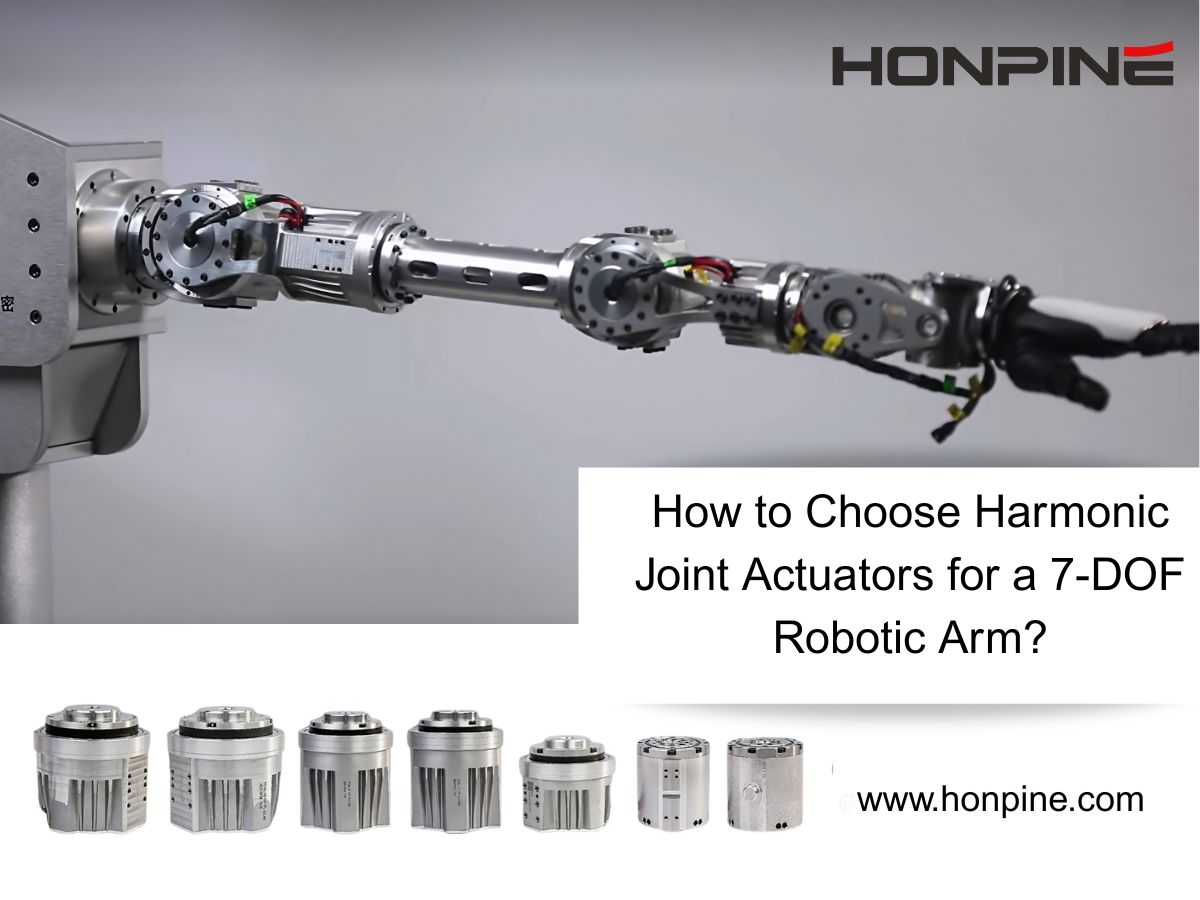
 How to Choose Harmonic Joint Actuators for a 7-DOF Robotic Arm?I'm Theodore Li, Technical Director at HONPINE. Choosing harmonic joint actuators for a 7-DOF robotic arm starts with the torque, weight, and installation needs of each joint. This guide uses a TCHL 20 shoulder and TCHL 14 wrist configuration as an example, then explores torque sensing, compliant control, and HAG Series considerations for demanding robotic applications.
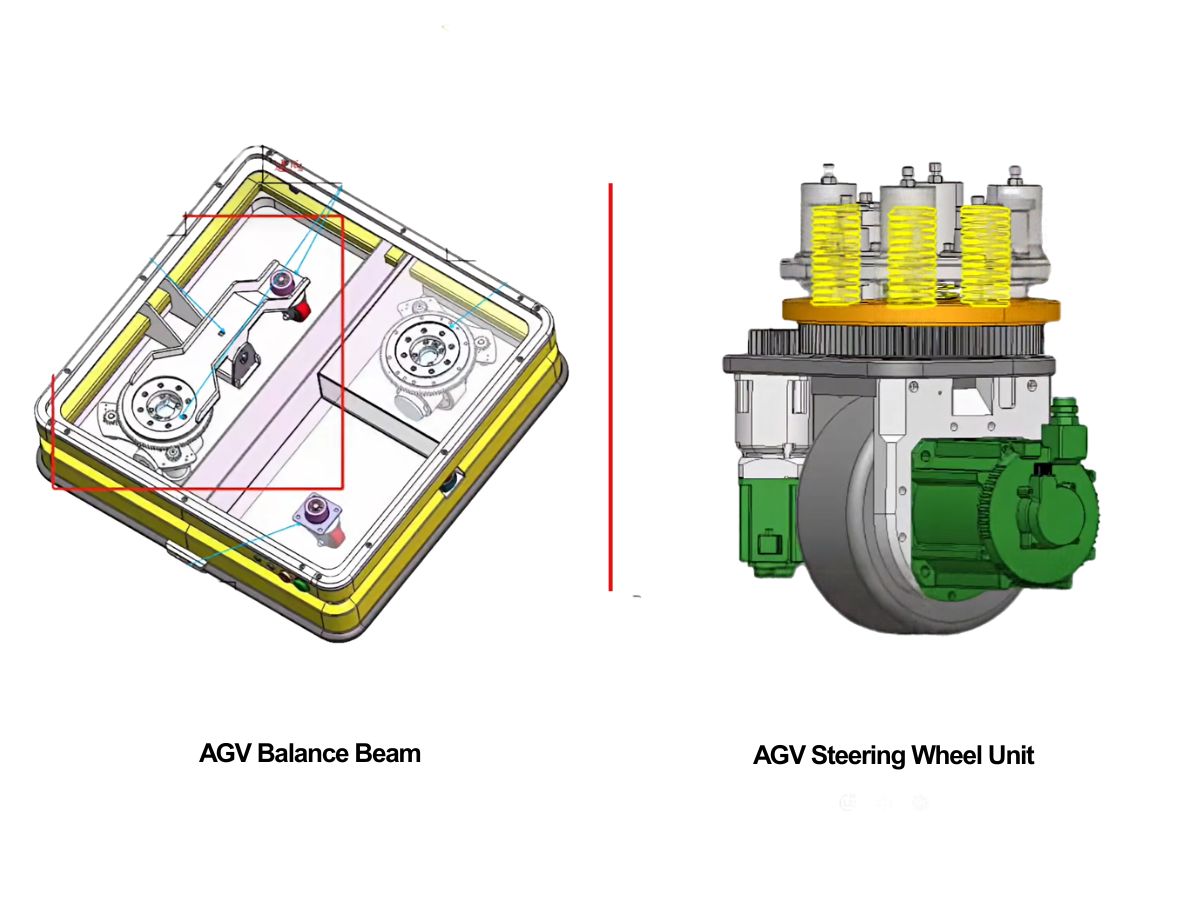
 AGV Suspension: Should You Choose a Balance Beam or a Spring-Loaded Steering Drive Unit?Choosing an AGV suspension system starts with the vehicle’s load range and floor conditions. Balance beams and spring-loaded steering drive units offer different approaches to maintaining wheel contact and managing wheel loads. This HONPINE guide compares both options and explains how to evaluate traction, suspension travel, installation space, and maintenance before choosing a configuration.
 Hollow Rotary Platform Motor Matching: A Complete GuideSelecting the right motor for a hollow rotary platform is essential for achieving precise positioning, stable operation, and efficient automation. This guide explains how to match servo motors, stepper motors, and brushless DC motors with hollow rotary platforms based on torque, speed, inertia, accuracy, and installation requirements. Explore practical motor selection guidelines, typical application combinations, and space-saving mounting solutions to find the right configuration for your automation project.
Double Click
We provide harmonic drive reducer,planetary reducer,robot joint motor,robot rotary actuators,RV gear reducer,robot end effector,dexterous robot hand
 What is robot joint actuator?How to Choose the Best Robot Rotary Joint Actuator?In core robot joint transmission solutions, planetary and harmonic rotary actuators each have their own strengths. Choosing the right type based on application requirements is essential to achieve the optimal balance between performance and cost.
 DD Motors VS Harmonic Rotary ActuatorsThis article provides an in-depth comparison between Direct Drive (DD) motors and harmonic rotary actuators, covering their transmission principles, advantages and disadvantages, and typical application fields.
 OMG Ultra Compact Harmonic Drive Joint Module with Built-in Torque SensorHONPINE TCHL series harmonic drive joint module is a game-changing product that achieves disruptive improvements in multiple aspects such as lightweight design, integration level, and connection convenience. This article will analyze its revolutionary enhancements with you.
 RV vs Harmonic Reducer: How to Choose the Right Gearbox for Robot Joints?RV vs harmonic reducer: which gearbox is right for your robot joint? The answer depends on torque, rigidity, accuracy, installation space and operating conditions. This guide compares their working principles and five key performance factors, then explains how to evaluate joint loads, reducer life, temperature and lubrication. Whether you are designing a robot base, shoulder, elbow or wrist, use these considerations to match the reducer to the requirements of each joint.
 How to Find a Reliable Robotic Joint Actuator Supplier?Choosing the right robotic joint actuator supplier is essential for reliable performance, smooth integration and long-term project success. Beyond product specifications, you need to understand a supplier’s technical expertise, production capacity and after-sales support. In this guide, Allen Li, Founder of HONPINE, explains how to assess these three factors when sourcing harmonic and planetary joint actuators for robotics and industrial automation.
 Harmonic Reducer vs. Harmonic Rotary Actuator: Which Is Better for CNC Machine Tools?Choosing between a harmonic reducer and a harmonic rotary actuator is an important decision in CNC machine tool design. Both solutions offer high-precision motion control, but they differ in integration, installation requirements, rigidity, and system flexibility. For CNC fourth-axis rotary tables and compact five-axis machining systems, selecting the right harmonic drive can significantly influence machine performance. In this article, HONPINE Technical Director Theodore Li compares harmonic reducers and harmonic rotary actuators to help engineers identify the most suitable solution for their CNC applications.
 How to Choose Harmonic Joint Actuators for a 7-DOF Robotic Arm?I'm Theodore Li, Technical Director at HONPINE. Choosing harmonic joint actuators for a 7-DOF robotic arm starts with the torque, weight, and installation needs of each joint. This guide uses a TCHL 20 shoulder and TCHL 14 wrist configuration as an example, then explores torque sensing, compliant control, and HAG Series considerations for demanding robotic applications.
 AGV Suspension: Should You Choose a Balance Beam or a Spring-Loaded Steering Drive Unit?Choosing an AGV suspension system starts with the vehicle’s load range and floor conditions. Balance beams and spring-loaded steering drive units offer different approaches to maintaining wheel contact and managing wheel loads. This HONPINE guide compares both options and explains how to evaluate traction, suspension travel, installation space, and maintenance before choosing a configuration.
 Hollow Rotary Platform Motor Matching: A Complete GuideSelecting the right motor for a hollow rotary platform is essential for achieving precise positioning, stable operation, and efficient automation. This guide explains how to match servo motors, stepper motors, and brushless DC motors with hollow rotary platforms based on torque, speed, inertia, accuracy, and installation requirements. Explore practical motor selection guidelines, typical application combinations, and space-saving mounting solutions to find the right configuration for your automation project.
 Can Robots Feel Touch? HONPINE HAG Force-Controlled Harmonic Robot Joint MotorsCan robots respond to a gentle touch? The HONPINE HAG robot joint motor with torque sensor combines a harmonic reducer, integrated torque sensing, and closed-loop control to detect external forces and support smooth, compliant motion. In this article, HONPINE founder Allen Li demonstrates the module's response to light contact and hand-guided movement, explains its key force-control technologies, and shares the vision behind joint modules designed for practical industrial robotics.
 Does a Higher Gearbox Ratio Mean More Torque? Planetary, Harmonic, and RV Gearboxes ExplainedDoes a higher gearbox ratio mean more torque? This engineering guide explains the relationship between gearbox ratio, output torque, and output speed, and compares planetary gearboxes, harmonic gearboxes, and RV gearboxes. Learn why reduction ratio alone cannot determine gearbox torque capacity, efficiency, dynamic response, precision, or service life, and what engineers should consider when selecting a gearbox for robotics, CNC machines, servo systems, and industrial motion control.
 High-Precision Hollow Harmonic Rotary Actuator for CNC Machines and Heavy-Duty Rotary AxesHONPINE 58 Series Hollow Harmonic Rotary Actuator is designed for CNC rotary tables, precision rotary axes, laser processing equipment, and heavy-duty rotary positioning applications. With a 50 mm hollow bore, up to 2,722 N·m peak torque, integrated crossed roller bearing, multi-turn absolute encoder options, positioning accuracy below 30 arcsec, and repeat positioning accuracy below 5 arcsec, it combines high torque capacity with precision rotary motion and flexible mechanical integration.