







How Does a Direct Drive Motor Improve Turret Indexing Speed and Precision?
In high-speed semiconductor sorting and packaging equipment, turret indexing must achieve two goals at the same time: short cycle time and repeatable positioning accuracy.
Many engineers initially assume that the key to faster turret indexing is simply using a higher-power motor. In practice, however, the performance of the complete transmission system is often more important than motor power alone.
A conventional turret drive may use a servo motor combined with a gearbox, coupling, belt or other mechanical transmission components. These components can introduce backlash, elastic deformation, friction, transmission error and additional inertia.
A Direct Drive Motor takes a different approach. By directly connecting the motor to the turret, the system can eliminate the need for a conventional reduction gearbox and reduce the number of mechanical transmission components between the motor and the rotating load.
Combined with a high-resolution encoder and high-performance servo drive, a Direct Drive Motor for turret indexing can provide fast acceleration and deceleration, accurate positioning and short settling times.
This makes direct drive technology particularly attractive for semiconductor sorting machines, die bonders, inspection equipment, testing systems and other high-speed automation applications.
What Is a Direct Drive Motor for Turret Indexing?
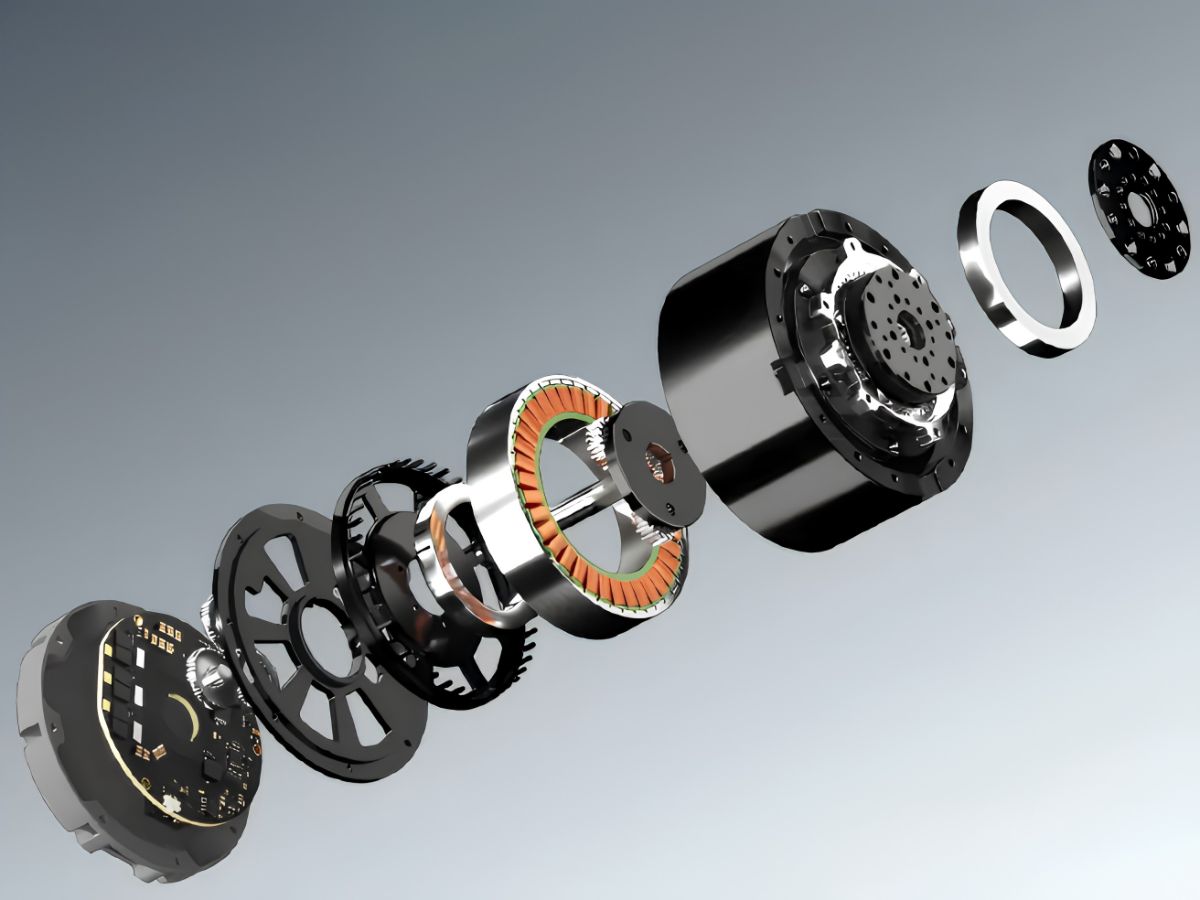
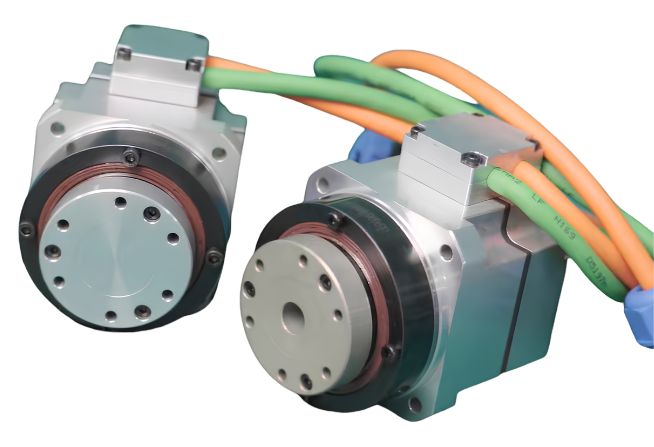
A Direct Drive Motor is a motor designed to drive a rotary load directly without a conventional reduction gearbox.
In a turret indexing application, the motor rotor is directly connected to the main turret:
Servo Drive → Direct Drive Motor → Turret
This is different from a conventional transmission:
Servo Motor → Gearbox → Coupling → Turret
or:
Servo Motor → Belt → Pulley → Turret
By removing intermediate transmission components, a direct drive system creates a shorter mechanical path between the motor and the rotating load.
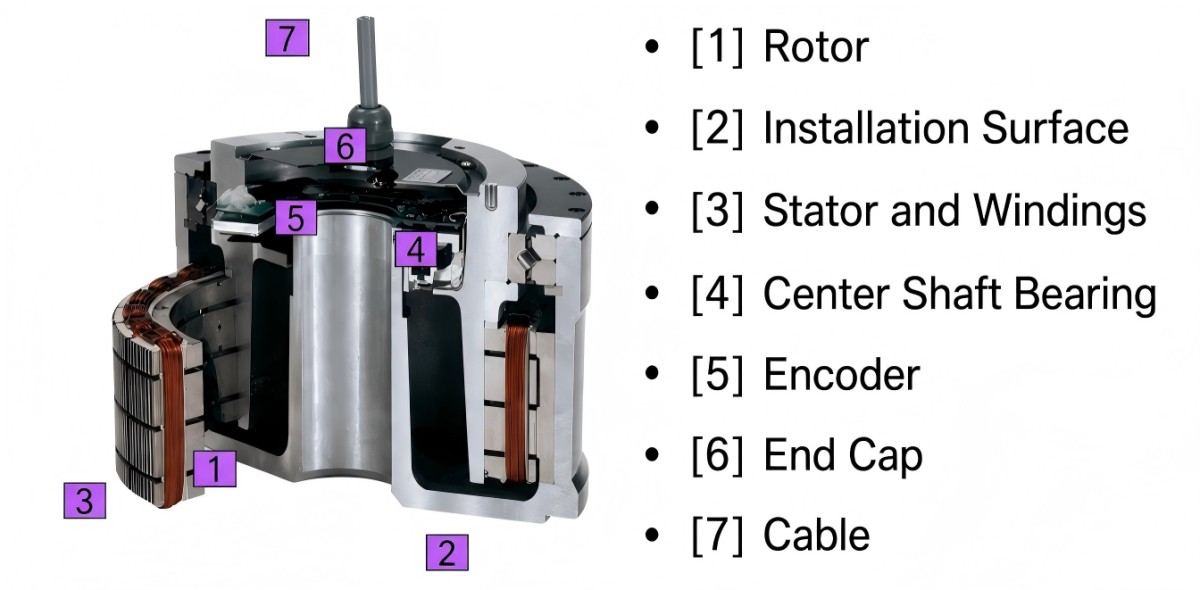
A typical high-speed turret indexing system may include a Direct Drive Motor, high-resolution encoder, servo drive, motion controller, turret, Z-axis mechanism and vision or inspection system.
The encoder continuously measures the rotary position, allowing the servo system to control the turret's position, velocity and acceleration through closed-loop feedback.
For rotary applications, a Direct Drive Motor may also be described as a Direct Drive Rotary Motor or DD torque motor.
Why Use a Direct Drive Motor for High-Speed Turret Indexing?
The primary advantage of a Direct Drive Motor is not simply high motor power.
The more important advantage is the reduction of mechanical transmission components between the motor and the load.
A conventional transmission may introduce:
Gear backlash
Coupling compliance
Belt elasticity
Friction
Transmission error
Additional rotating inertia
These effects become particularly important when a turret repeatedly accelerates, decelerates and changes direction.
A Direct Drive Motor eliminates the need for a conventional gearbox or belt transmission, allowing the servo system to control the rotary load more directly.
This can help improve:
Indexing speed + positioning repeatability + settling performance
at the same time.
However, direct drive should not be interpreted as meaning that the complete machine has absolutely zero mechanical error. Bearing runout, encoder installation, structural deformation, thermal expansion and servo tuning can still affect final positioning performance.
What Determines Turret Indexing Speed?
Turret throughput is not determined by motor power alone.
The actual indexing cycle depends on the complete motion system, including:
Turret inertia
Motor torque
Acceleration and deceleration
Encoder feedback
Servo bandwidth
Motion profile
Mechanical rigidity
Settling time
Z-axis movement
Testing time
Number of turret stations
This is why selecting a high-torque Direct Drive Motor does not automatically make a turret faster.
The overall machine cycle can be understood as:
Turret Indexing + Z-Axis Motion + Processing Time + Synchronization
For example, high-speed semiconductor sorting systems may use short indexing cycles in the tens of milliseconds. The actual achievable cycle time depends on turret inertia, indexing angle, motor torque, servo tuning and the required settling time.
Therefore, motor selection should always start from the complete motion profile rather than the motor's maximum speed or peak torque alone.
Why Does Low Inertia Matter for a Direct Drive Motor?
Turret indexing is a repeated acceleration-and-deceleration process.
The motor must accelerate the rotating load, reach the target position and then decelerate rapidly enough for the next operation to begin.
The required acceleration torque can be expressed as:
T = J × α
where T is acceleration torque, J is rotational inertia and α is angular acceleration.
Reducing unnecessary rotating inertia can therefore improve dynamic response.
A properly selected Direct Drive Motor can accelerate and decelerate the turret without relying on a mechanical reduction gearbox.
However, motor rotor inertia is only one part of the overall calculation.
The complete rotating inertia should include:
Motor + Turret + Tooling + Workpiece + Other Rotating Components
The Direct Drive Motor must provide sufficient peak torque for the required acceleration while maintaining acceptable thermal performance during continuous high-cycle operation.
How Does a Direct Drive Motor Improve Turret Positioning Accuracy?
A conventional motor-and-gearbox system can introduce backlash, compliance and transmission errors between the motor and turret.
A direct drive architecture simplifies the mechanical path:
Motor → Turret
The servo controller can therefore regulate the rotary load without a conventional reduction stage between the motor and the turret.
This can be particularly beneficial for repeated angular indexing.
However, a Direct Drive Motor does not automatically guarantee perfect positioning accuracy.
Final system performance depends on:
Encoder accuracy
Encoder resolution
Bearing runout
Turret rigidity
Thermal expansion
Motor cogging
Mechanical vibration
Servo tuning
Load variation
Calibration and mapping
The more accurate engineering statement is therefore:
A Direct Drive Motor eliminates backlash associated with conventional gear transmission while reducing mechanical transmission errors, but final positioning accuracy depends on the complete motion system.
Repeatability, Accuracy and Resolution Are Different
These three specifications are often confused when selecting a Direct Drive Motor for turret indexing.
Resolution
Resolution describes the smallest angular increment that an encoder or motion system can distinguish.
A high-resolution encoder provides finer measurement of rotary position, but encoder resolution alone does not determine system accuracy.
Repeatability
Repeatability describes how consistently the turret returns to the same commanded position during repeated movements.
This is especially important for semiconductor sorting and testing equipment because the turret may repeat the same indexing movement thousands or millions of times.
Accuracy
Accuracy describes the difference between the commanded position and the actual physical position.
A system can therefore have extremely high encoder resolution but lower absolute accuracy because of mechanical tolerances, thermal effects, bearing runout or installation errors.
For precision turret systems, resolution, repeatability and accuracy should always be evaluated separately.
How Fast Can a Direct Drive Motor Index a Turret?
There is no universal maximum indexing speed for a Direct Drive Motor.
The achievable performance depends on:
Motor torque
Turret inertia
Indexing angle
Required cycle time
Acceleration profile
Settling time
Encoder performance
Servo drive
Mechanical rigidity
For example, an 18° turret indexing movement completed within approximately 20 ms requires a very different motor and mechanical design from a 30° movement completed within 100 ms.
The correct approach is to calculate the required acceleration and torque from:
Indexing Angle + Cycle Time + Rotational Inertia + Motion Profile
rather than selecting a Direct Drive Motor based only on its rated rpm.
For high-speed semiconductor equipment, reducing settling time can be just as important as increasing peak rotational speed.
Direct Drive Motor vs. Gearbox Drive for Turret Indexing
The difference between a Direct Drive Motor and a conventional geared drive becomes particularly important in high-cycle indexing applications.
A Direct Drive Motor is therefore not automatically the best solution for every turret.
A gearbox can still be useful when the application requires substantial torque multiplication, has a large load inertia or has strict cost constraints.
Direct drive becomes particularly attractive when the machine prioritizes:
High-speed indexing + low transmission error + high repeatability + flexible motion control
Direct Drive Motor vs. Cam Indexing
Cam indexing mechanisms remain a mature solution for repetitive rotary motion and are widely used in industrial automation.
Their major advantage is mechanical simplicity and a predefined motion profile.
A Direct Drive Motor takes a programmable motion-control approach.
The controller can adjust:
Acceleration
Deceleration
Velocity
Dwell
Jerk
Index angle
Motion profile
This flexibility can be valuable when one machine needs to handle different products, station configurations or operating conditions.
The choice between a Direct Drive Motor and cam indexing should therefore be based on:
Throughput + flexibility + positioning requirements + maintenance + total machine cost
rather than assuming that one technology is always superior.
Why S-Curve Motion Profiles Matter in Turret Indexing?
High-speed indexing is not simply about reaching the target position as quickly as possible.
The turret must also stop without excessive vibration.
A sudden change in acceleration can generate high jerk and excite mechanical resonances, increasing settling time.
An S-curve motion profile gradually changes acceleration and can help reduce mechanical shock and vibration.
This is particularly important when the turret carries:
Semiconductor packages
Pick-and-place nozzles
Inspection fixtures
Test sockets
Vision components
The objective is:
Move Fast → Stop Smoothly → Settle Quickly
A high-performance turret system can therefore combine a low-inertia Direct Drive Motor with a high-resolution encoder, optimized servo tuning and vibration suppression.
Why Encoder Performance Matters in a Direct Drive Turret System?
The encoder is one of the most important components in a direct-drive indexing system.
Because there is no conventional reduction gearbox between the motor and load, encoder feedback can be used to control rotary position more directly.
Depending on the application, a turret may use:
Optical encoders
Magnetic encoders
Absolute encoders
Incremental encoders
High-resolution rotary scales
Encoder selection should consider more than bit resolution.
Important specifications include:
Accuracy
Repeatability
Update rate
Signal integrity
Thermal stability
Installation accuracy
For semiconductor equipment, high cycle rates and micron-level positioning requirements make encoder and mechanical integration particularly important.
How Does Direct Drive Turret Indexing Affect Semiconductor Equipment Throughput?
A semiconductor sorting machine may perform several sequential operations:
Feeding → Indexing → Alignment → Testing → Inspection → Sorting → Taping
The turret cannot simply rotate as fast as possible.
Its motion must be synchronized with the other machine axes and process stations.
A high-speed turret system may achieve a short indexing cycle, but overall UPH is determined by the complete machine cycle.
For example:
UPH = Motion Cycle + Processing Time + Synchronization + Machine Utilization
Therefore, a Direct Drive Motor should be evaluated as part of the complete production system rather than as an isolated component.
The motor can reduce transmission-related limitations, but total throughput still depends on testing time, Z-axis motion, handling time and station synchronization.
Turret Indexing Accuracy Is Not the Same as Pick-and-Place Accuracy
This is an important consideration when designing semiconductor equipment.
A turret may achieve excellent angular repeatability while the pick-and-place nozzle still has positioning errors.
Turret positioning can be affected by:
Rotary encoder feedback
Turret runout
Bearing accuracy
Structural deformation
Servo tuning
Nozzle positioning can additionally depend on:
Z-axis repeatability
Nozzle installation
Vacuum stability
Workpiece position
Vision calibration
Mechanical tolerances
Therefore, the rotary turret and pick-and-place mechanism should be evaluated and calibrated as separate motion systems.
A high-performance Direct Drive Motor can improve turret indexing performance, but it cannot independently guarantee the final micron-level placement accuracy of the complete machine.
How to Select a Direct Drive Motor for Turret Indexing?
When selecting a Direct Drive Motor, engineers should consider more than rated torque.
1. Required Indexing Time
Determine the required indexing angle and cycle time.
For example:
18° in 22 ms
is a very different motion requirement from:
30° in 100 ms.
The required acceleration and peak torque can therefore be significantly different.
2. Total Rotational Inertia
Calculate the complete rotating load:
Jtotal = Jmotor + Jturret + Jtooling + Jworkpiece
The Direct Drive Motor must provide sufficient acceleration torque for the complete system.
3. Peak and Continuous Torque
Peak torque determines dynamic acceleration capability.
Continuous torque determines whether the motor can maintain the required operating cycle without excessive thermal loading.
4. Encoder Accuracy and Resolution
Select the encoder according to the required repeatability, absolute accuracy and control bandwidth.
5. Hollow Bore Size
A large hollow shaft can simplify:
Electrical wiring
Pneumatic tubing
Vacuum lines
Optical paths
Laser routing
This can be particularly useful in compact semiconductor equipment.
6. Servo Drive Compatibility
The Direct Drive Motor and servo drive should be evaluated as one motion system.
Important factors include:
Current-loop bandwidth
Speed-loop bandwidth
Position-loop update rate
Encoder interface
Vibration suppression
Notch filters
Feedforward control
Motion profile generation
A servo drive may advertise a speed-loop bandwidth of several kHz, but this is a servo-drive specification, not an inherent specification of every Direct Drive Motor.
How Can Vibration Be Reduced in a High-Speed Direct Drive Turret?
High-speed indexing can generate vibration when the mechanical structure or motion profile excites a resonance.
Common engineering methods include:
Low-Inertia Motor Design
A properly selected low-inertia Direct Drive Motor can reduce the torque required for rapid acceleration and deceleration.
Rigid Mechanical Structure
A rigid turret and mounting structure can reduce unwanted deformation and vibration.
S-Curve Motion
S-curve acceleration reduces jerk and mechanical shock.
Servo Gain Optimization
Servo gains must balance response speed and stability.
Notch Filtering
Notch filters can suppress known mechanical resonance frequencies.
Feedforward Compensation
Feedforward control can reduce tracking error during rapid movements.
High-Resolution Encoder Feedback
Accurate position feedback allows the servo controller to continuously correct position deviation.
The final vibration performance therefore depends on the:
Direct Drive Motor + Encoder + Mechanical Structure + Servo Drive + Motion Algorithm
Applications of Direct Drive Motors in Semiconductor Equipment
Direct Drive Motors can be used in a wide range of semiconductor and precision automation applications.
Semiconductor Test and Sorting Machines
The main turret rotates semiconductor packages between feeding, testing, inspection and sorting stations.
A Direct Drive Motor can support rapid indexing while maintaining repeatable angular positioning.
Die Bonders
Direct Drive Motors and torque motors can drive rotary mechanisms used to transfer or position semiconductor dies.
Inspection Rotary Tables
High-resolution rotary positioning can be used for optical inspection, dimensional measurement and multi-station testing.
MEMS and Sensor Testing
Precision rotary indexing can position small devices repeatedly during automated testing.
Electronics Assembly
Direct Drive Motors can provide programmable indexing for high-cycle electronic component handling.
Five Common Mistakes When Designing a Direct Drive Turret
Mistake 1 — Selecting the Motor by Peak Torque Only
A high peak torque rating does not guarantee a faster turret.
The complete system inertia and required acceleration must be considered first.
Mistake 2 — Treating Encoder Resolution as Positioning Accuracy
A high-resolution encoder improves measurement capability, but it does not automatically eliminate mechanical error.
Resolution, repeatability and accuracy must be evaluated separately.
Mistake 3 — Ignoring Settling Time
The turret reaching the commanded position is not necessarily the same as the turret being ready for the next process.
For high-throughput equipment:
Move Time + Settling Time
is more meaningful than move time alone.
Mistake 4 — Ignoring Thermal Effects
Continuous high-frequency indexing generates heat in both the motor and surrounding mechanical structure.
Thermal expansion can affect positioning accuracy during long production cycles.
Mistake 5 — Optimizing the Turret Without Optimizing the Machine
The turret is only one part of the equipment.
Overall UPH depends on the synchronization of:
Turret + Z Axis + Testing + Vision + Feeding + Sorting + Taping
Optimizing one axis alone does not necessarily increase total machine throughput.
FAQ About Direct Drive Motors for Turret Indexing
Is a Direct Drive Motor better than a gearbox for turret indexing?
Not necessarily for every application.
A Direct Drive Motor is particularly attractive when the system requires high-speed indexing, low transmission error, high repeatability and reduced mechanical maintenance.
A gearbox may still be preferable when mechanical torque multiplication, cost or a particular load profile is more important.
Does a Direct Drive Motor have zero backlash?
A Direct Drive Motor does not require a conventional gearbox or belt transmission, so it avoids backlash associated with those transmission components.
However, the complete system can still have mechanical errors caused by bearings, structural deformation, encoder installation and other factors.
Therefore, “no gearbox backlash” is more accurate than claiming that the entire machine has zero mechanical error.
What does ±1 arcsec mean?
One arcsecond equals:
1/3600 degree ≈ 4.848 μrad
For a 200 mm diameter turret, the radius is 100 mm. At that radius, 1 arcsec corresponds to approximately:
0.485 μm
of circumferential displacement.
This illustrates why arcsecond-level rotary positioning represents a high-precision requirement.
Does a Direct Drive Motor need a gearbox?
A Direct Drive Motor is designed to drive the load directly, so a conventional reduction gearbox is not required.
However, the motor must be correctly sized for the required torque, speed and load inertia.
How can vibration be reduced during turret indexing?
Typical methods include low-inertia motor selection, rigid mechanical design, S-curve motion profiles, optimized servo gains, notch filters, feedforward compensation and vibration suppression algorithms.
How does turret indexing affect UPH?
Turret indexing is an important motion cycle in a high-speed sorting machine, but UPH is determined by the complete machine cycle.
Indexing time, Z-axis movement, testing, inspection, feeding, sorting and other process times must be synchronized to achieve the target throughput.
The Future of Direct Drive Motor Turret Indexing
As semiconductor packages become smaller and automated equipment moves toward higher UPH, turret motion systems will need to combine speed, repeatability, thermal stability and flexible motion control.
The next generation of turret systems is likely to combine:
Direct Drive Motors
High-resolution absolute encoders
High-bandwidth servo drives
Advanced vibration suppression
Motion-profile optimization
Online calibration and mapping
Integrated machine-level motion control
The objective is not simply to make the turret rotate faster.
The real engineering goal is:
Shorter indexing time + shorter settling time + stable positioning + higher machine throughput
This is why Direct Drive Motors and DD torque motors are becoming increasingly attractive for semiconductor sorting machines, die bonding equipment, inspection systems and other high-speed indexing applications.
For equipment manufacturers evaluating a Direct Drive Motor for turret indexing, the most important step is to size the motor according to the complete motion profile rather than selecting the motor based only on peak torque or maximum speed.
A properly matched Direct Drive Motor, encoder and servo system can reduce unnecessary mechanical transmission stages and provide a strong foundation for fast, precise and flexible turret motion.
Read More
Learn more about the story of HONPINE and industry trends related to precision transmission.
 What is robot joint actuator?How to Choose the Best Robot Rotary Joint Actuator?In core robot joint transmission solutions, planetary and harmonic rotary actuators each have their own strengths. Choosing the right type based on application requirements is essential to achieve the optimal balance between performance and cost.
 DD Motors VS Harmonic Rotary ActuatorsThis article provides an in-depth comparison between Direct Drive (DD) motors and harmonic rotary actuators, covering their transmission principles, advantages and disadvantages, and typical application fields.
 OMG Ultra Compact Harmonic Drive Joint Module with Built-in Torque SensorHONPINE TCHL series harmonic drive joint module is a game-changing product that achieves disruptive improvements in multiple aspects such as lightweight design, integration level, and connection convenience. This article will analyze its revolutionary enhancements with you.
 The Role of Harmonic Drive Gears in Achieving 5–10 μm Accuracy in Dental Milling MachinesA dental milling machine is a CNC machining system used to directly process digital dental models into restorations such as crowns, bridges, veneers, inlays, and implant abutments. Dental milling machines require far higher operational accuracy and motion stability than ordinary equipment. This article explains how harmonic drive gear help dental milling machines achieve stable, continuous, and controllable operation.
 Why Are Harmonic Rotary Actuators Perfect for Medical Equipment?Harmonic rotary actuators (typically integrated systems consisting of a harmonic drive reducer, frameless torque motor, encoder, and optional brake) are regarded as key components in medical equipment. The core reason is that they simultaneously meet the most stringent medical requirements for precision, compact size, safety, and controllability. The following explanation is structured from three perspectives: technical characteristics, application scenarios, and medical value.
 High-Precision RV Reducers Perfectly Matched for Walking RobotsThe walking axis of a robot is a core component for power transmission and support. RV reducers provide extremely high rigidity, precision, and torque while maintaining a compact size and exceptional reliability, making them an ideal match for the demanding requirements of walking robot joints in terms of load capacity, impact resistance, and precision.
 Why Does an RV Reducer Need Profile Modification? How to Further Reduce Backlash and Transmission Error?An RV Reducer is designed to deliver high torque, high stiffness, and precise motion for demanding applications such as robotic joints, industrial rotary tables, and precision machinery. However, achieving low backlash and stable transmission accuracy requires more than high-precision machining. Cycloidal profile modification must also account for manufacturing tolerances, assembly errors, load-induced deformation, thermal expansion, and lubrication conditions. In this article, we examine why RV reducers require profile modification, how different modification methods affect meshing, and how engineers can further control backlash and transmission error through profile design, error budgeting, structural analysis, precision manufacturing, and validation testing.
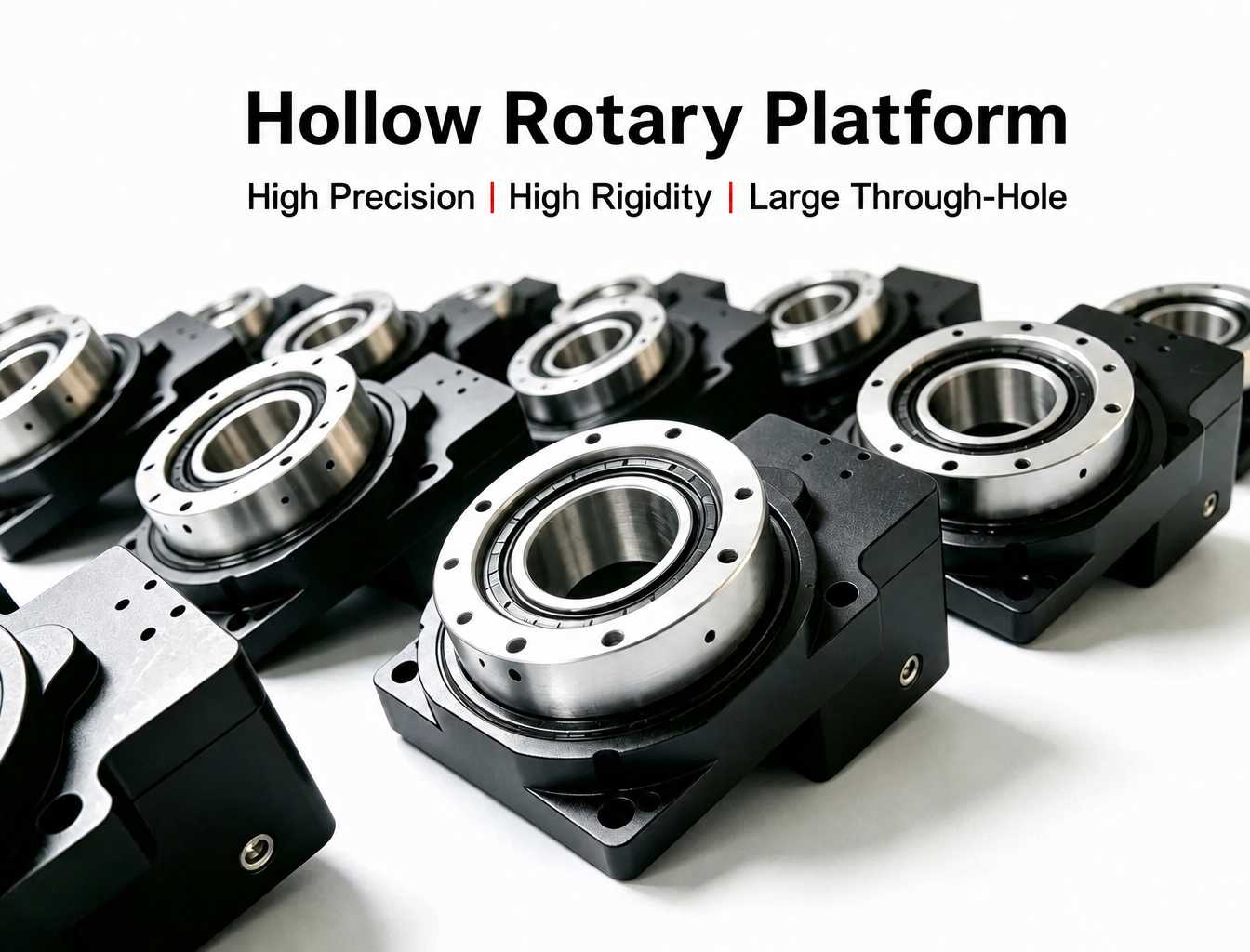
 How to Choose a Hollow Rotary Platform: A Complete Selection Guide?A hollow rotary platform is widely used in precision automation where rotary positioning, compact integration, and cable routing through the rotation axis are required. However, choosing the right platform involves more than comparing rated torque or maximum speed. Load, eccentricity, overturning moment, inertia, positioning accuracy, hollow bore, acceleration, duty cycle, and installation conditions all affect the actual performance of the rotary system. This guide explains the key parameters engineers should consider when selecting a hollow rotary platform for CNC indexing, wafer handling, vision inspection, laser processing, dispensing, and other precision rotary applications.
 Hollow Robot Joint Module: Why Cable Routing Matters in Robotic Joints?A hollow robot joint module provides an internal passage for power cables, signal lines, pneumatic tubes, and other end-effector connections. Compared with external cable routing, a hollow joint module can help reduce cable exposure, improve system integration, and create a cleaner motion path for robotic arms. This article explains why internal cable routing matters in robotic joints and what to consider when selecting a hollow joint module for robotic applications.
 Precision Reducers for Industrial Robots: From Conventional Transmission to Self-Compensating Backlash TechnologyHello everyone, I’m Theodore Li, Technical Director at HONPINE. Today, I would like to discuss precision reducers for industrial robots and the challenges of maintaining transmission accuracy over long-term operation. Harmonic, RV, cycloidal, and planetary transmissions each offer different combinations of precision, rigidity, torque density, and compactness, making reducer selection highly dependent on robot architecture and joint requirements. However, initial backlash is only part of the problem. As transmission components wear, changes in mechanical clearance can gradually affect positioning performance. This article examines the major precision transmission technologies used in industrial robots and introduces HONPINE’s self-compensating backlash technology, which is designed to address precision retention throughout the operating life of a transmission.
 Large-Bore Harmonic Joint Actuator for Humanoid Robot Waist Joints: A Practical Selection GuideThe humanoid robot waist joint is one of the most demanding motion joints in a humanoid robot. Unlike conventional robotic arm joints, it supports the upper body while handling bending, twisting, posture transitions, and continuously changing dynamic loads. At the same time, the limited internal space must accommodate power cables, signal lines, sensors, and structural components. These requirements make a large-bore harmonic joint actuator an important option for humanoid robot waist joints. This article explains how to select a suitable harmonic joint actuator by considering hollow bore size, dynamic torque, reduction ratio, mechanical rigidity, integration, and service life.
 Nabtesco RV vs Harmonic Drive vs WITTENSTEIN: Why Backlash-Free Planetary Actuators Are EmergingNabtesco RV, Harmonic Drive, and WITTENSTEIN have each established proven transmission solutions for robotics, machine tools, automation, and precision motion control. However, applications requiring both arc-second-level positioning and high mechanical rigidity can expose different trade-offs between backlash, torsional stiffness, load capacity, and transmission accuracy. This has created growing interest in a backlash-free planetary actuator that combines the rigidity and torque density of planetary transmission with advanced backlash compensation. In this article, we compare the characteristics of Nabtesco RV, Harmonic Drive, and WITTENSTEIN precision planetary gearboxes, and examine where a backlash-free planetary actuator can provide an alternative solution.
Double Click
We provide harmonic drive reducer,planetary reducer,robot joint motor,robot rotary actuators,RV gear reducer,robot end effector,dexterous robot hand
 What is robot joint actuator?How to Choose the Best Robot Rotary Joint Actuator?In core robot joint transmission solutions, planetary and harmonic rotary actuators each have their own strengths. Choosing the right type based on application requirements is essential to achieve the optimal balance between performance and cost.
 DD Motors VS Harmonic Rotary ActuatorsThis article provides an in-depth comparison between Direct Drive (DD) motors and harmonic rotary actuators, covering their transmission principles, advantages and disadvantages, and typical application fields.
 OMG Ultra Compact Harmonic Drive Joint Module with Built-in Torque SensorHONPINE TCHL series harmonic drive joint module is a game-changing product that achieves disruptive improvements in multiple aspects such as lightweight design, integration level, and connection convenience. This article will analyze its revolutionary enhancements with you.
 Why Does an RV Reducer Need Profile Modification? How to Further Reduce Backlash and Transmission Error?An RV Reducer is designed to deliver high torque, high stiffness, and precise motion for demanding applications such as robotic joints, industrial rotary tables, and precision machinery. However, achieving low backlash and stable transmission accuracy requires more than high-precision machining. Cycloidal profile modification must also account for manufacturing tolerances, assembly errors, load-induced deformation, thermal expansion, and lubrication conditions. In this article, we examine why RV reducers require profile modification, how different modification methods affect meshing, and how engineers can further control backlash and transmission error through profile design, error budgeting, structural analysis, precision manufacturing, and validation testing.
 How to Choose a Hollow Rotary Platform: A Complete Selection Guide?A hollow rotary platform is widely used in precision automation where rotary positioning, compact integration, and cable routing through the rotation axis are required. However, choosing the right platform involves more than comparing rated torque or maximum speed. Load, eccentricity, overturning moment, inertia, positioning accuracy, hollow bore, acceleration, duty cycle, and installation conditions all affect the actual performance of the rotary system. This guide explains the key parameters engineers should consider when selecting a hollow rotary platform for CNC indexing, wafer handling, vision inspection, laser processing, dispensing, and other precision rotary applications.
 Hollow Robot Joint Module: Why Cable Routing Matters in Robotic Joints?A hollow robot joint module provides an internal passage for power cables, signal lines, pneumatic tubes, and other end-effector connections. Compared with external cable routing, a hollow joint module can help reduce cable exposure, improve system integration, and create a cleaner motion path for robotic arms. This article explains why internal cable routing matters in robotic joints and what to consider when selecting a hollow joint module for robotic applications.
 Precision Reducers for Industrial Robots: From Conventional Transmission to Self-Compensating Backlash TechnologyHello everyone, I’m Theodore Li, Technical Director at HONPINE. Today, I would like to discuss precision reducers for industrial robots and the challenges of maintaining transmission accuracy over long-term operation. Harmonic, RV, cycloidal, and planetary transmissions each offer different combinations of precision, rigidity, torque density, and compactness, making reducer selection highly dependent on robot architecture and joint requirements. However, initial backlash is only part of the problem. As transmission components wear, changes in mechanical clearance can gradually affect positioning performance. This article examines the major precision transmission technologies used in industrial robots and introduces HONPINE’s self-compensating backlash technology, which is designed to address precision retention throughout the operating life of a transmission.
 Large-Bore Harmonic Joint Actuator for Humanoid Robot Waist Joints: A Practical Selection GuideThe humanoid robot waist joint is one of the most demanding motion joints in a humanoid robot. Unlike conventional robotic arm joints, it supports the upper body while handling bending, twisting, posture transitions, and continuously changing dynamic loads. At the same time, the limited internal space must accommodate power cables, signal lines, sensors, and structural components. These requirements make a large-bore harmonic joint actuator an important option for humanoid robot waist joints. This article explains how to select a suitable harmonic joint actuator by considering hollow bore size, dynamic torque, reduction ratio, mechanical rigidity, integration, and service life.
 Nabtesco RV vs Harmonic Drive vs WITTENSTEIN: Why Backlash-Free Planetary Actuators Are EmergingNabtesco RV, Harmonic Drive, and WITTENSTEIN have each established proven transmission solutions for robotics, machine tools, automation, and precision motion control. However, applications requiring both arc-second-level positioning and high mechanical rigidity can expose different trade-offs between backlash, torsional stiffness, load capacity, and transmission accuracy. This has created growing interest in a backlash-free planetary actuator that combines the rigidity and torque density of planetary transmission with advanced backlash compensation. In this article, we compare the characteristics of Nabtesco RV, Harmonic Drive, and WITTENSTEIN precision planetary gearboxes, and examine where a backlash-free planetary actuator can provide an alternative solution.
 Robot Joint Actuator Selection: From Inertia Matching to System-Level OptimizationSelecting a robot joint actuator is not simply a matter of matching motor torque or achieving a suitable inertia ratio. In a real robotic system, reduction ratio, load spectrum, thermal performance, mechanical stiffness, transmission nonlinearity, encoder architecture, control bandwidth, and service life all interact to determine the final result. A joint may meet its peak torque requirement and still experience vibration, overheating, positioning errors, or premature wear in real operation. This article examines the engineering logic behind robot joint actuator selection and explains why moving from single-parameter matching to system-level optimization can lead to more reliable and predictable robotic joint performance.
 How to Choose a Small Harmonic Actuator?HONPINE Series 11 small harmonic actuators provide a compact, high-performance rotary motion solution for precision automation applications. Available with hollow or solid shafts, 48V or 220V options, optional brakes, absolute encoders, and different reduction ratios, the Series 11 is designed for applications requiring compact dimensions, controlled torque, and precise positioning.
 How to Choose a Wheel Motor for a Heavy-Duty AGV? Key Challenges from Dynamic Loads to 120-Ton AGV Drive Wheel SystemsSelecting a Heavy-Duty AGV Wheel Motor is more than matching motor power or rated torque to the vehicle's payload. As AGVs move from conventional material handling to multi-ton and even 120-ton-class applications, the drive wheel system must handle dynamic loads, acceleration, braking, turning forces, traction, and long-term mechanical stress. The actual challenge lies in matching wheel load capacity, wheel-end torque, gearbox performance, steering architecture, suspension, and chassis design under real operating conditions. This article examines the key challenges of Heavy-Duty AGV Wheel Motor selection and explains how Steering Drive Wheels and Differential Drive Wheels can be evaluated for different heavy-duty AGV applications.