








Frameless Torque Motors: From Cogging Torque Elimination to the Three Major Technological Breakthroughs of 2026
This article begins with the principle of cogging torque in frameless motors, explains how slotless core technology eliminates torque ripple and vibration, and highlights the three major breakthroughs achieved by frameless torque motors in 2025: increasing low-speed torque through high pole-pair designs exceeding 32 pole pairs, adopting hollow frameless structures for compact and lightweight designs, and utilizing high-grade NdFeB permanent magnets to enhance torque density.
The article also summarizes the advantages of frameless torque motors, including compact size and high torque density, while discussing challenges such as magnetic circuit optimization and thermal management. Finally, it provides practical selection guidelines based on the principle of "torque first," along with key engineering considerations for installation and heat dissipation.
Understanding the Basics: What Causes Cogging Torque?
To fully understand motor operation, it is essential to first understand the three fundamental components of a motor core.
The continuous circular ring located on the outermost part of the stator is called the yoke. The tooth-shaped protrusions extending inward from the yoke are called teeth. The spaces between adjacent teeth are known as slots, while the opening at the front of each slot is referred to as the slot opening.
To enable motor operation, conductive copper windings are wrapped around the teeth. Because the teeth possess excellent magnetic permeability, they help strengthen the magnetic field.
When a rotor is placed inside the stator and begins rotating, a noticeable periodic resistance or "jerking" sensation can be felt. In motor engineering, this phenomenon is known as cogging torque.
For example, consider a six-slot, four-pole stator paired with a four-pole rotor. Since the number of magnetic poles and slots cannot align perfectly, the magnetic attraction between the rotor magnets and stator teeth fluctuates periodically during rotation. Each time the rotor passes a slot position, a torque disturbance occurs, resulting in vibration and uneven motion.
One of the most effective methods of eliminating cogging torque is the use of a slotless core structure.
As the name implies, a slotless motor contains neither slots nor teeth. Instead, copper windings are directly attached to the smooth inner surface of the iron core. Without teeth, the magnetic attraction between the rotor magnets and the stator remains constant during rotation.
As a result, slotless motors completely eliminate cogging torque, providing:
Ultra-smooth operation
No jerking or vibration
Extremely low torque ripple
High positioning accuracy
This is one of the most important performance advantages of slotless motor technology.
What Technological Breakthroughs Have Frameless Torque Motors Achieved in 2025?
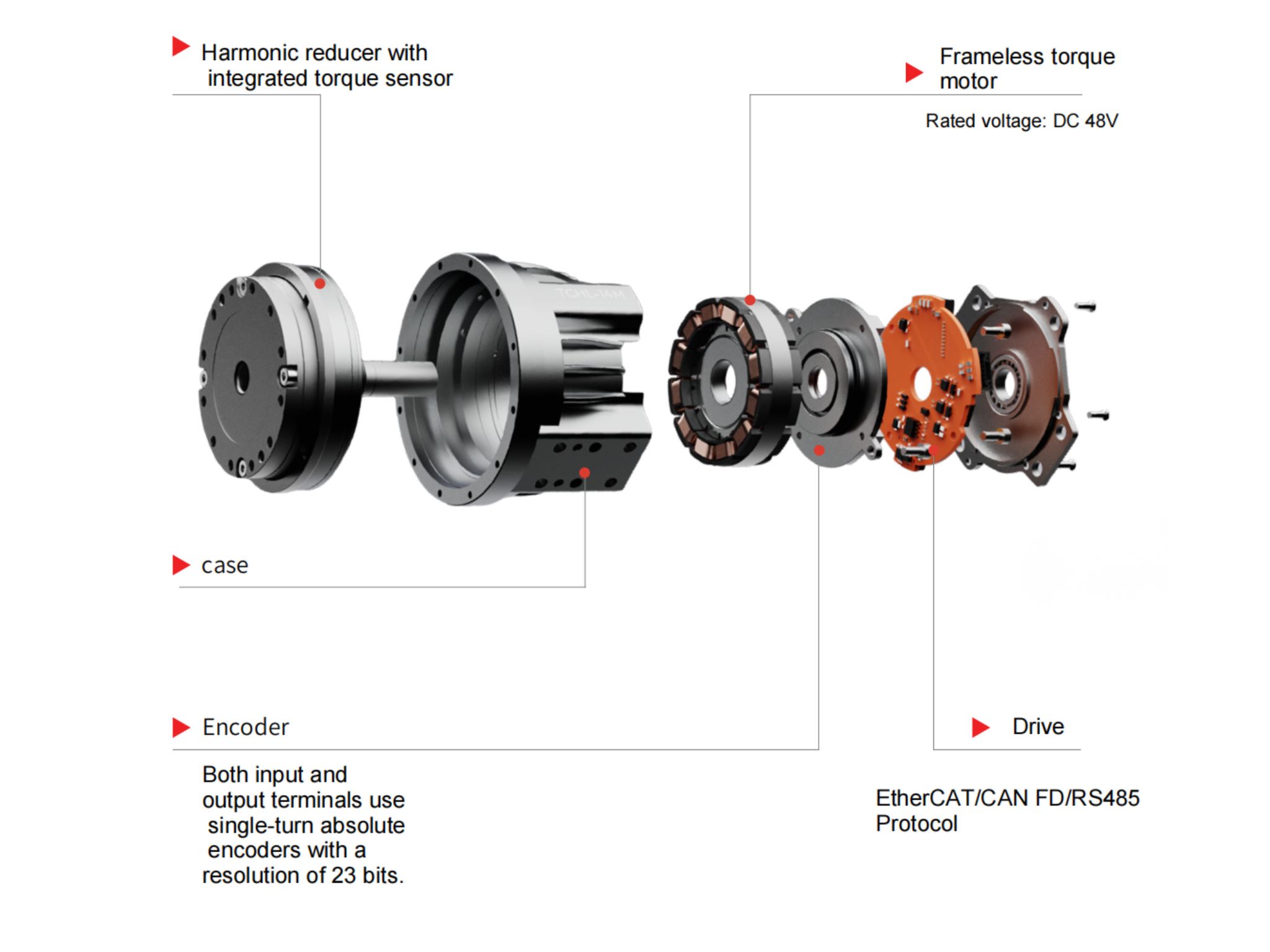
Frameless torque motors are multi-pole permanent magnet synchronous direct-drive motors. Unlike conventional motors, they eliminate non-essential structures such as housings, bearings, and output shafts.
Their development focuses on three key objectives:
Constant torque at low speed
High torque density
Low torque ripple
In 2025, major technological advances have been achieved across electromagnetic design, structural innovation, and material development, making frameless torque motors ideally suited for the compact, flexible, and high-precision requirements of humanoid robot joints.
1. Electromagnetic Design: Solving Low-Speed Vibration
Increasing the number of pole pairs has become the key factor driving performance improvements.
Compared with the mainstream 12-pole-pair configurations common five years ago, high-end frameless torque motors now feature 32, 64, or even more pole pairs.
The higher pole count enables the motor to deliver stable rated torque even at zero speed or ultra-low speeds as low as 0.1°/s, effectively eliminating crawling, sticking, and vibration issues associated with conventional motors.
At the same time, the industry widely adopts optimized fractional-slot concentrated winding configurations such as 48 poles and 324 slots, reducing cogging torque to less than 1% of rated torque.
This enables exceptionally smooth motion control for demanding applications such as:
Surgical robots
Humanoid robot joints
Semiconductor equipment
Precision automation systems
2. Structural Innovation: Compact Design for Humanoid Robots
Frameless torque motors have become the preferred motor architecture for humanoid robots.
Unlike integrated framed DD (Direct Drive) motors, frameless motors feature:
No external housing
No bearings
No output shaft
This minimalist architecture offers significant integration advantages.
The stator can be directly embedded into the robot housing, while the rotor is mounted directly onto the load shaft.
Key benefits include:
Axial length reduced to approximately one-third of conventional drive motors
More than 30% reduction in overall weight
Significantly smaller joint dimensions
Internal routing space for cables, sensors, and fluid lines
The hollow structure is particularly well suited to the compact installation requirements of humanoid robot joints.
3. Material Advancements: Stable High-Torque Performance Across Wide Temperatures
High-end frameless torque motors commonly utilize N52H-grade and higher NdFeB permanent magnets, offering remanence values of up to 1.45 Tesla.
Combined with high-conductivity copper alloy windings, these materials significantly improve:
Electromagnetic conversion efficiency
Torque density
Continuous output capability
The complete material system supports operation across a wide temperature range of -40°C to 125°C, ensuring stable torque output under demanding conditions such as:
High-temperature environments
Low-temperature environments
Frequent start-stop cycles
Mild overload conditions
This approach balances both performance and long-term reliability.
Advantages and Challenges of Frameless Torque Motors
1. Core Advantages
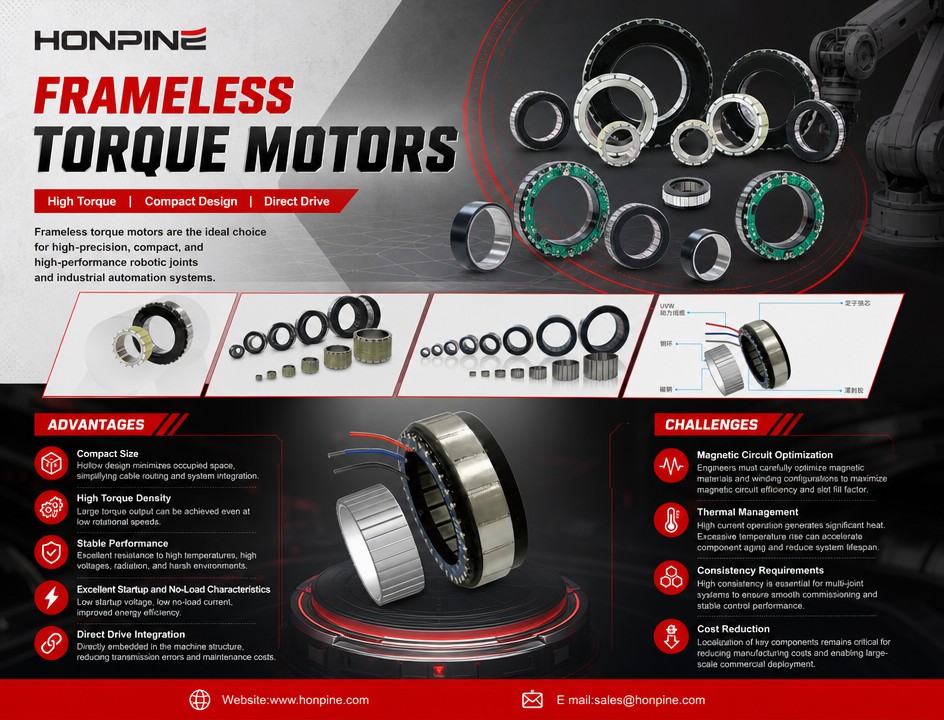
Compact Size
The hollow design minimizes occupied space, simplifying cable routing and system integration within robotic joints.
High Torque Density
Large torque output can be achieved even at low rotational speeds, making frameless torque motors ideal for low-speed, high-load robotic applications.
Stable Performance
Direct integration into machine structures enhances resistance to:
High temperatures
High voltages
Radiation exposure
Harsh industrial environments
Excellent Startup and No-Load Characteristics
Low startup voltage
Low no-load current
Improved energy efficiency
2. Technical Challenges
Magnetic Circuit Optimization
Engineers must carefully optimize magnetic materials and winding configurations to maximize magnetic circuit efficiency and slot fill factor.
Thermal Management
Low-voltage systems often require high current operation, generating substantial heat. Excessive temperature rise can accelerate component aging and reduce system lifespan.
Consistency Requirements
Multi-joint robotic systems require highly consistent motor performance across all joints. Variations increase commissioning complexity and negatively impact control performance.
Cost Reduction
Localization of key components remains critical for reducing manufacturing costs and enabling large-scale commercial deployment.
How to Select the Right Frameless Torque Motor?
1. Golden Selection Principle
The most important rule is:
Torque First, Speed Second
Humanoid robots frequently experience start-stop operation and rapidly changing dynamic loads.
Recommended design margins include:
Continuous torque ≥ 1.2–1.5 × steady-state load torque
Peak torque ≥ 2 × impact load torque
For robotic joints, inertia matching must also be carefully controlled.
The ratio of load inertia to motor inertia should remain:
≤ 5:1
to prevent vibration, instability, and oscillation.
Encoder Selection
For standard humanoid robot applications:
23-bit absolute encoder
Resolution approximately 0.0001°
For ultra-high-precision applications such as:
Medical robotics
Semiconductor manufacturing
a 29-bit ultra-high-resolution encoder is recommended.
2. Critical Integration Considerations
Coaxiality Control
Excessive coaxiality error is one of the most common causes of frameless motor failure.
The concentricity between stator and rotor should be maintained within:
0.02 mm
Excessive misalignment can result in:
Increased torque ripple
Localized overheating
Bearing failure
Precision dial indicators should be used during assembly for accurate alignment.
Thermal Management
Because frameless motors operate at low speed and high current, heat generation can be substantial.
Under conditions such as:
Continuous stall
Maximum power operation
forced-air cooling or liquid-cooling systems are strongly recommended.
Advanced joint designs can employ:
Heat pipes integrated into the joint housing
Dielectric coolant circulation
to increase continuous torque density by up to four times.
Structural Rigidity
Direct-drive systems lack gearbox damping.
Insufficient structural stiffness can lead to resonance and vibration.
Recommended solutions include:
Hollow integrated joint structures
Reinforced cast-iron support bases
Increased system rigidity
3. Commissioning and EMI Optimization
During commissioning, three key functions should be enabled:
Cogging torque compensation
Harmonic suppression
Friction feedforward compensation
The current-loop bandwidth should exceed:
2 kHz for standard applications
5 kHz for high-end precision applications
These measures effectively reduce torque ripple and improve motion smoothness.
For example, in surgical robotics applications, tuning the PI controller to:
Kp = 0.35
Ki = 1200
can achieve current response times as fast as 0.5 ms.
EMI Suppression
To address fixed-frequency noise sources such as 1.2 MHz interference, recommended solutions include:
Copper foil shielding on stator windings
Nanocrystalline magnetic shielding layers
Conductive fabric shielding
Ferrite cores installed on power cables
Increasing PWM frequency from 15 kHz to 18 kHz can slightly increase switching losses but helps avoid mechanical resonance frequencies and reduce electromagnetic noise peaks by approximately 8 dB.
Contact HONPINE
Contact HONPINE today to obtain more information, technical specifications, and application materials regarding frameless torque motors.
Read More
Learn more about the story of HONPINE and industry trends related to precision transmission.
 What is robot joint actuator?How to Choose the Best Robot Rotary Joint Actuator?In core robot joint transmission solutions, planetary and harmonic rotary actuators each have their own strengths. Choosing the right type based on application requirements is essential to achieve the optimal balance between performance and cost.
 DD Motors VS Harmonic Rotary ActuatorsThis article provides an in-depth comparison between Direct Drive (DD) motors and harmonic rotary actuators, covering their transmission principles, advantages and disadvantages, and typical application fields.
 OMG Ultra Compact Harmonic Drive Joint Module with Built-in Torque SensorHONPINE TCHL series harmonic drive joint module is a game-changing product that achieves disruptive improvements in multiple aspects such as lightweight design, integration level, and connection convenience. This article will analyze its revolutionary enhancements with you.
 The Role of Harmonic Drive Gears in Achieving 5–10 μm Accuracy in Dental Milling MachinesA dental milling machine is a CNC machining system used to directly process digital dental models into restorations such as crowns, bridges, veneers, inlays, and implant abutments. Dental milling machines require far higher operational accuracy and motion stability than ordinary equipment. This article explains how harmonic drive gear help dental milling machines achieve stable, continuous, and controllable operation.
 Why Are Harmonic Rotary Actuators Perfect for Medical Equipment?Harmonic rotary actuators (typically integrated systems consisting of a harmonic drive reducer, frameless torque motor, encoder, and optional brake) are regarded as key components in medical equipment. The core reason is that they simultaneously meet the most stringent medical requirements for precision, compact size, safety, and controllability. The following explanation is structured from three perspectives: technical characteristics, application scenarios, and medical value.
 High-Precision RV Reducers Perfectly Matched for Walking RobotsThe walking axis of a robot is a core component for power transmission and support. RV reducers provide extremely high rigidity, precision, and torque while maintaining a compact size and exceptional reliability, making them an ideal match for the demanding requirements of walking robot joints in terms of load capacity, impact resistance, and precision.
 How to Choose a Reliable Robot Joint Motor Manufacturer for Humanoid Robots?Choosing a reliable robot joint motor manufacturer is a critical step when developing humanoid robots and other advanced robotic systems. A robotic joint must balance torque, speed, precision, torque density, thermal performance, feedback, mechanical stiffness, and long-term reliability within a compact structure. For B2B robotics companies, supplier evaluation should therefore go beyond a product datasheet and consider engineering capability, manufacturing capacity, joint integration, testing, and production scalability. In this article, Allen Li, Founder of HONPINE, explains the key factors to consider when selecting a robot joint motor manufacturer and how integrated harmonic robot joint technology can support humanoid robot development.
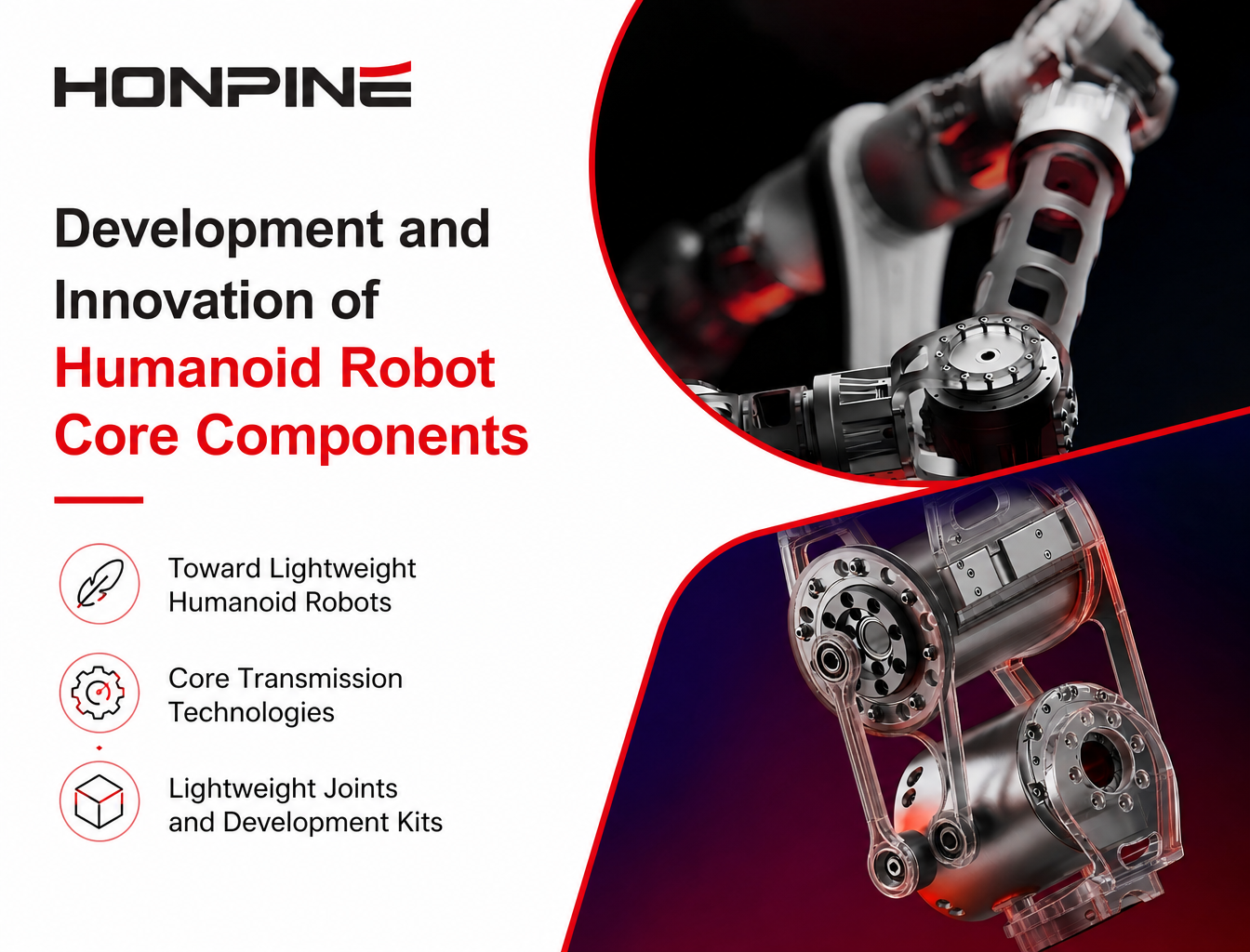
 Lightweight Humanoid Robots Start with Precision TransmissionAs humanoid robots move from experimental prototypes toward practical applications, lightweight design, energy efficiency, motion performance, and long-term reliability are becoming increasingly important. At the center of these challenges is precision transmission. From harmonic reducers and lightweight robot joints to integrated development kits, the design of each core component directly affects the overall performance of a humanoid robot. In this article, Allen Li, Founder of HONPINE, shares his perspective on how precision transmission technology can support the development of lightweight humanoid robots and how HONPINE is extending its expertise from harmonic reducers toward lightweight robot joints and integrated robotics solutions.
 Harmonic Rotary Actuators for Semiconductor Equipment: Precision Motion, Hollow-Shaft Design and FOC ControlHello everyone, I’m Theodore Li, Technical Director at HONPINE. In semiconductor manufacturing equipment, rotary motion is not simply about making a mechanism rotate. Limited installation space, cable and tube routing, low-speed stability, precise positioning and continuously adjustable motion profiles can all influence the performance of the machine. This is why harmonic rotary actuators are becoming an important motion solution for semiconductor equipment. In this article, I will discuss how harmonic transmission, FOC-based motor control, encoder feedback, large hollow-shaft design and flexible mechanical interfaces work together to meet practical semiconductor motion requirements, based on our experience with developing equipment, overhead transport, wafer handling, cleaning and crystal-growth applications.
 Miniature Harmonic Drive for Minimally Invasive Surgical RobotsMinimally invasive surgical robots require highly compact transmission systems that can deliver precise motion within extremely limited mechanical spaces. As robotic instruments become smaller and more dexterous, conventional transmission architectures can face challenges related to size, tendon elasticity, friction, hysteresis, and mechanical integration. A miniature harmonic drive offers one potential approach by providing high-ratio precision transmission, low backlash, and compact dimensions in a small mechanical envelope. In this article, I will explain why miniature harmonic transmission is relevant to surgical robotics, compare external tendon-driven and distal transmission architectures, and discuss the key engineering considerations behind HONPINE’s CSF-mini miniature harmonic reducer for compact robotic joints, flexible robotic instruments, and other precision mechanisms.
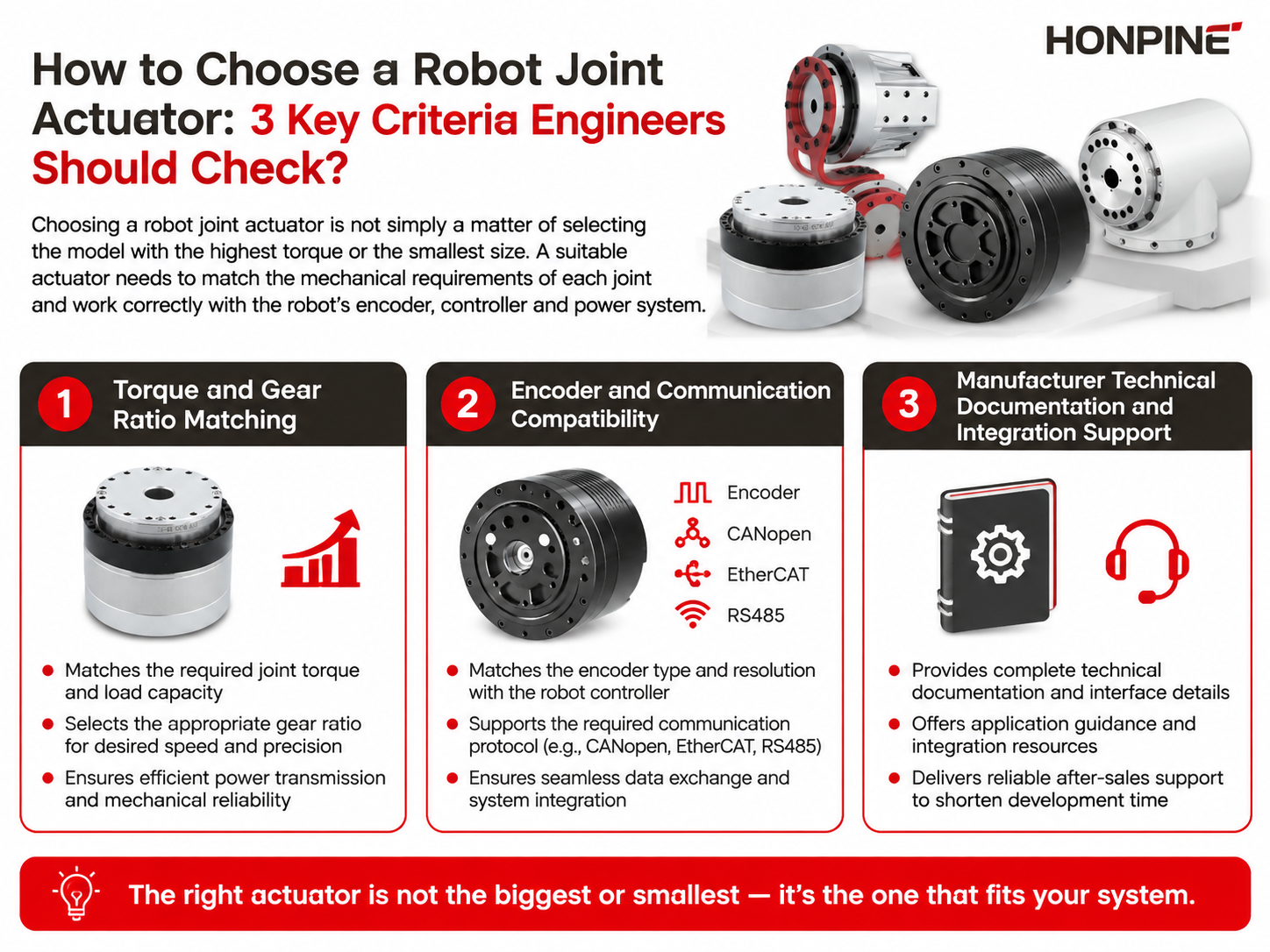
 How to Choose a Robot Joint Actuator: 3 Key Criteria Engineers Should Check?Choosing a robot joint actuator is an engineering decision that affects not only torque and motion performance, but also control stability, mechanical integration, and development time. For industrial robots, collaborative robots, humanoid robots, and other robotic systems, the right actuator must match the actual requirements of each joint while remaining compatible with the robot’s motor, encoder, controller, communication network, and power architecture. In this article, I will explain three key criteria engineers should evaluate when selecting a robot joint actuator: torque and gear ratio matching, encoder and communication compatibility, and the manufacturer’s technical documentation and engineering support.
 Outdoor Robot Joint Solution: Harmonic Joint Module with Built-in Torque SensorHello everyone, I’m Theodore Li, Technical Director at HONPINE. As robots move beyond controlled factory environments, outdoor robotic applications are creating new requirements for robot joint design. Rain, dust, humidity, temperature fluctuations, low-temperature conditions, and unpredictable external loads can all affect how a robotic joint performs in the field. In these environments, a joint needs to provide more than precise rotation. It also needs reliable torque feedback, suitable environmental protection, stable operation under changing temperatures, and practical mechanical integration. In this article, I will explain the key engineering considerations behind our outdoor robot joint solution, including the harmonic joint module, built-in torque sensor, IP65 protection, low-temperature lubrication, cable outlet protection, and mechanical integration, based on our experience with outdoor robotic applications such as solar panel installation, construction, and cleaning robots.

Double Click
We provide harmonic drive reducer,planetary reducer,robot joint motor,robot rotary actuators,RV gear reducer,robot end effector,dexterous robot hand
 What is robot joint actuator?How to Choose the Best Robot Rotary Joint Actuator?In core robot joint transmission solutions, planetary and harmonic rotary actuators each have their own strengths. Choosing the right type based on application requirements is essential to achieve the optimal balance between performance and cost.
 DD Motors VS Harmonic Rotary ActuatorsThis article provides an in-depth comparison between Direct Drive (DD) motors and harmonic rotary actuators, covering their transmission principles, advantages and disadvantages, and typical application fields.
 OMG Ultra Compact Harmonic Drive Joint Module with Built-in Torque SensorHONPINE TCHL series harmonic drive joint module is a game-changing product that achieves disruptive improvements in multiple aspects such as lightweight design, integration level, and connection convenience. This article will analyze its revolutionary enhancements with you.
 How to Choose a Reliable Robot Joint Motor Manufacturer for Humanoid Robots?Choosing a reliable robot joint motor manufacturer is a critical step when developing humanoid robots and other advanced robotic systems. A robotic joint must balance torque, speed, precision, torque density, thermal performance, feedback, mechanical stiffness, and long-term reliability within a compact structure. For B2B robotics companies, supplier evaluation should therefore go beyond a product datasheet and consider engineering capability, manufacturing capacity, joint integration, testing, and production scalability. In this article, Allen Li, Founder of HONPINE, explains the key factors to consider when selecting a robot joint motor manufacturer and how integrated harmonic robot joint technology can support humanoid robot development.
 Lightweight Humanoid Robots Start with Precision TransmissionAs humanoid robots move from experimental prototypes toward practical applications, lightweight design, energy efficiency, motion performance, and long-term reliability are becoming increasingly important. At the center of these challenges is precision transmission. From harmonic reducers and lightweight robot joints to integrated development kits, the design of each core component directly affects the overall performance of a humanoid robot. In this article, Allen Li, Founder of HONPINE, shares his perspective on how precision transmission technology can support the development of lightweight humanoid robots and how HONPINE is extending its expertise from harmonic reducers toward lightweight robot joints and integrated robotics solutions.
 How to Choose a Robot Joint Actuator: 3 Key Criteria Engineers Should Check?Choosing a robot joint actuator is an engineering decision that affects not only torque and motion performance, but also control stability, mechanical integration, and development time. For industrial robots, collaborative robots, humanoid robots, and other robotic systems, the right actuator must match the actual requirements of each joint while remaining compatible with the robot’s motor, encoder, controller, communication network, and power architecture. In this article, I will explain three key criteria engineers should evaluate when selecting a robot joint actuator: torque and gear ratio matching, encoder and communication compatibility, and the manufacturer’s technical documentation and engineering support.
 Outdoor Robot Joint Solution: Harmonic Joint Module with Built-in Torque SensorHello everyone, I’m Theodore Li, Technical Director at HONPINE. As robots move beyond controlled factory environments, outdoor robotic applications are creating new requirements for robot joint design. Rain, dust, humidity, temperature fluctuations, low-temperature conditions, and unpredictable external loads can all affect how a robotic joint performs in the field. In these environments, a joint needs to provide more than precise rotation. It also needs reliable torque feedback, suitable environmental protection, stable operation under changing temperatures, and practical mechanical integration. In this article, I will explain the key engineering considerations behind our outdoor robot joint solution, including the harmonic joint module, built-in torque sensor, IP65 protection, low-temperature lubrication, cable outlet protection, and mechanical integration, based on our experience with outdoor robotic applications such as solar panel installation, construction, and cleaning robots.
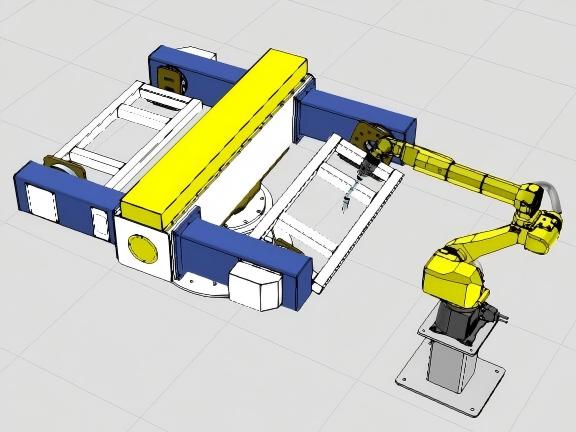
 RV Reducer for Welding Positioners: Selection and Torque Calculation for Heavy-Duty Welding ApplicationsSelecting the right RV reducer for a welding positioner requires more than simply matching the reducer to the workpiece weight. A heavy-duty welding positioner must provide sufficient output torque, high torsional rigidity, stable low-speed rotation, accurate positioning, and reliable performance during acceleration, deceleration, and reversing. In this article, we explain how to select an RV reducer and servo motor for a welding positioner by calculating output speed, reduction ratio, workpiece inertia, gravity load torque, acceleration torque, motor torque, and peak torque. A practical 500 kg welding positioner example is also used to show how these parameters affect RV reducer selection.
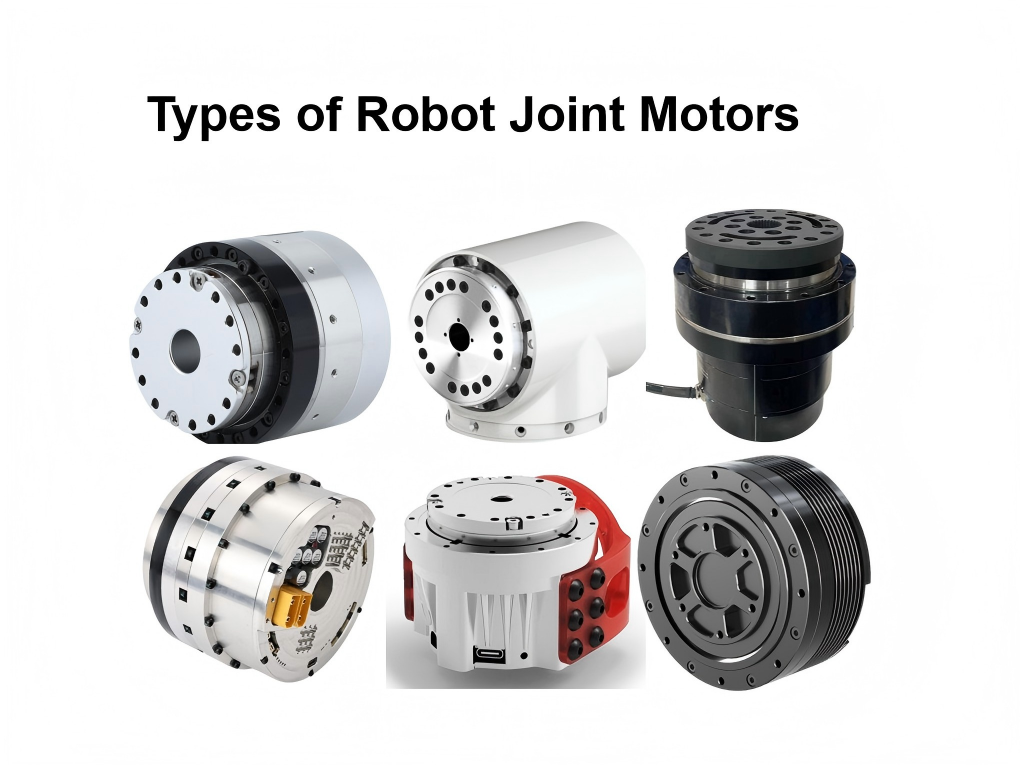
 Types of Robot Joint Motors: Model Selection, Advantages and DisadvantagesRobot joint motors are one of the key components that determine the performance, precision, efficiency, and load capacity of a robot. Depending on the application, robot joints can use electric, hydraulic, pneumatic, or other drive technologies. Among them, electric-drive solutions have become the mainstream choice for modern robots, especially humanoid robots, industrial robots, collaborative robots, and mobile robots. Electric robot joint motors can be further divided according to their transmission methods, including harmonic drive, planetary reducer, cycloidal reducer, ball screw, and direct drive solutions. Each type has its own advantages and disadvantages in terms of precision, torque density, efficiency, impact resistance, size, cost, and backdrivability. Understanding these differences is essential for selecting the right robot joint motor for a specific application.
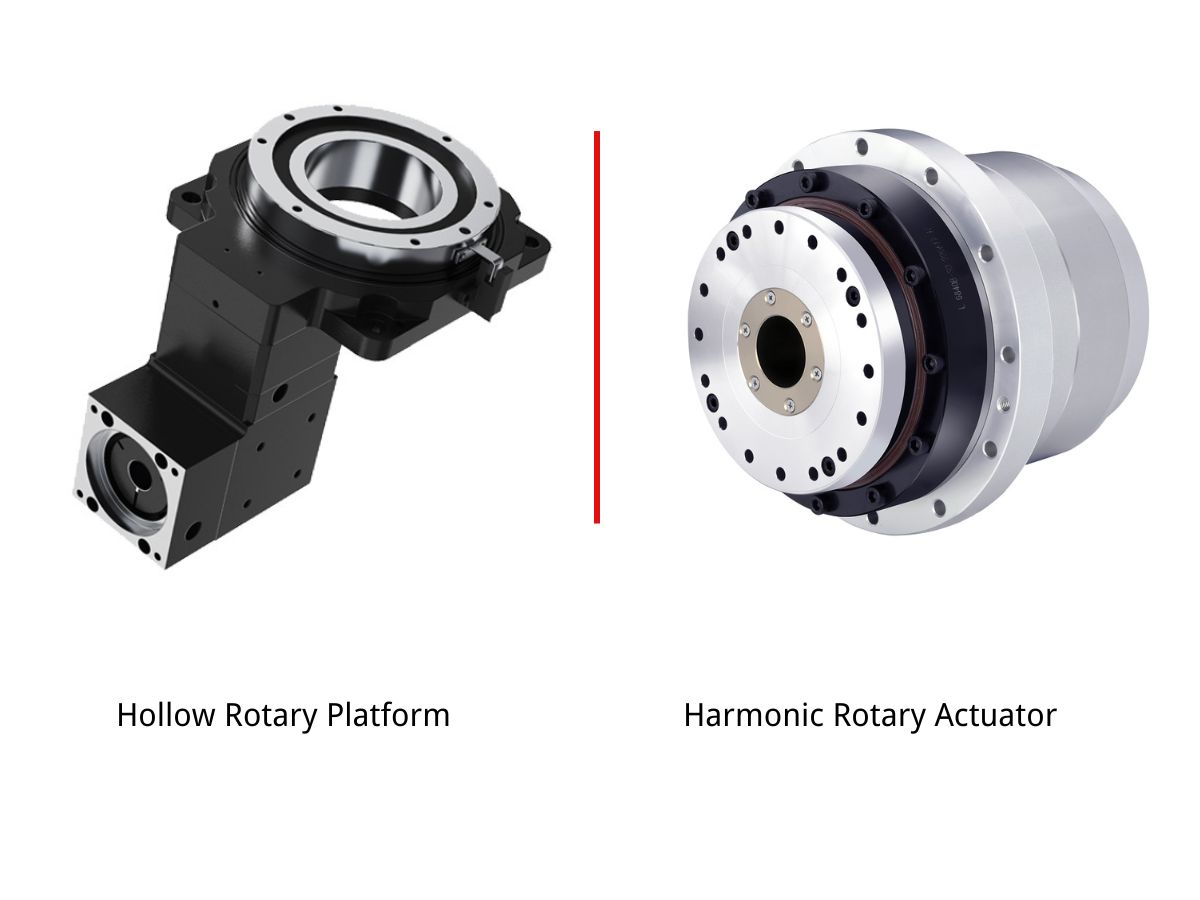
 Hollow Rotary Platform vs. Harmonic Rotary Actuator: Application Comparison and InterchangeabilityHello everyone, I’m Theodore Li, Technical Director at HONPINE. For engineers designing precision rotary stations for industrial automation, one question often comes up: when a machine requires high-precision rotation, indexing, or rotary positioning, should you choose a hollow rotary platform or a harmonic rotary actuator? Can they be used interchangeably? Although both are precision rotary motion solutions, their mechanical structures and application characteristics are quite different. In actual equipment, choosing the wrong solution can lead to insufficient load capacity, inadequate rigidity, vibration, speed limitations, or reduced service life. In this article, I’ll compare their application characteristics and explain where they can be used interchangeably, where one is more suitable than the other, and what engineers should check before making a replacement.
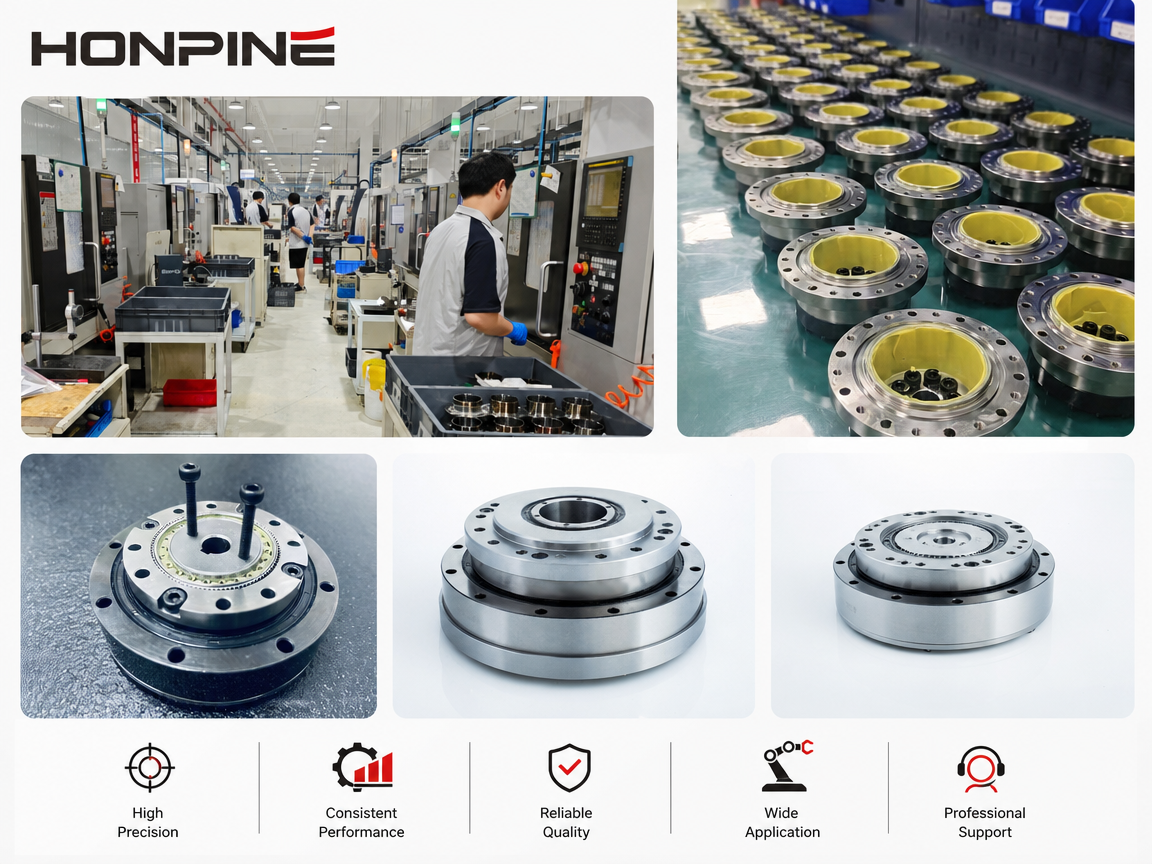
 How HONPINE Manufactures Precision Harmonic Reducers: Technology, Quality and Manufacturing Challenges?A precision harmonic reducer is more than a compact high-ratio transmission component. Its actual performance depends on how accurately every critical component is designed, manufactured, assembled, and tested. Tooth profile accuracy, flexspline material, heat treatment, machining tolerances, wave generator geometry, assembly precision, and production consistency can all influence backlash, torsional stiffness, efficiency, durability, and positioning accuracy. For robotics, CNC equipment, semiconductor manufacturing, optical inspection, and other precision automation applications, these factors become even more important. This article explores how HONPINE manufactures precision harmonic reducers, the key technologies and manufacturing challenges involved, and why stable production capability is essential for achieving reliable transmission performance at scale.
 HONPINE HAG Harmonic Joint Actuator Real Load Test for Heavy Duty Robot ArmTest the HONPINE HAG40 harmonic joint actuator with an 80 kg payload, 800 N·m peak torque and 557 N·m rated torque for heavy-duty robotic arms.