









Malaysia Tightens Authorization Letter Requirements for Used Industrial Equipment Imports
On 27 May 2026, Malaysia’s Ministry of International Trade and Industry (MITI) updated its Guidelines for Importing Used Industrial Equipment, mandating that Letters of Authorization submitted by Chinese exporters must be computer-printed—not handwritten or scanned—and that the signatory’s full name, position, and identification number (NRIC or passport) must exactly match the records registered with the Companies Commission of Malaysia (SSM). Non-compliant documents will be rejected by Malaysian customs, triggering clearance suspension. This update directly affects exporters and service providers handling used industrial machinery imports into Malaysia—particularly in manufacturing support, remanufacturing, and capital equipment resale sectors—where authorization documentation is routinely required for regulatory compliance.
Event Overview
On 27 May 2026, MITI issued an updated version of the Guidelines for Importing Used Industrial Equipment. The revision specifies two mandatory requirements for Letters of Authorization: (1) they must be produced via computer printing; handwritten versions or scanned copies are explicitly prohibited; and (2) the name, official position, and government-issued ID number (Malaysian NRIC or foreign passport number) of the signatory must correspond precisely with the information on file at SSM for the authorized Malaysian entity. Failure to meet either condition results in document rejection and temporary suspension of customs clearance.
Which Subsectors Are Affected
Direct Exporters (China-based)
Chinese manufacturers and trading companies exporting used industrial equipment to Malaysia rely on Letters of Authorization to appoint local agents or importers. Under the new rule, discrepancies—even minor ones such as title abbreviations (e.g., ‘GM’ vs. ‘General Manager’) or mismatched ID formats—will invalidate submissions. Impact manifests in delayed shipments, re-submission cycles, and potential demurrage costs at Malaysian ports.
Malaysian Import Agents & Local Representatives
Local entities acting as authorized importers must ensure their SSM registration details are current and publicly verifiable before requesting authorization from overseas suppliers. Any prior registration inconsistency—such as outdated director information or unupdated passport numbers following renewal—now creates a direct compliance gap. This increases administrative due diligence before accepting new authorizations.
Third-Party Logistics & Customs Brokerage Firms
Logistics providers facilitating used equipment imports must now verify both document format and data alignment during pre-clearance checks. Previously accepted scanned authorizations or manually annotated amendments no longer satisfy regulatory criteria. This elevates internal quality control requirements and may extend document review timelines ahead of submission.
Aftermarket Equipment Resellers & Refurbishers
Firms sourcing decommissioned production lines, CNC machines, or packaging systems from China often use third-party authorizations to streamline ownership transfer. With stricter identity verification, resellers face higher coordination overhead—especially when managing multiple supplier authorizations across varying corporate structures and registration statuses in Malaysia.
What Relevant Enterprises or Practitioners Should Focus On and How to Respond Now
Verify SSM registration status proactively
Malaysian import partners should confirm, via the official SSM portal, that all authorized signatories’ names, positions, and ID numbers are accurately reflected in active company records—including any recent changes due to director resignations, passport renewals, or corporate restructuring.
Standardize authorization templates and internal sign-off protocols
Chinese exporters should adopt a single, validated template for Letters of Authorization, ensuring fields for name, position, and ID number are pre-formatted for exact SSM-matching input. Internal approval workflows must require cross-checking against the latest SSM extract before final printing and signing.
Avoid reliance on scanned or edited PDFs for submission
All Letters of Authorization must originate from editable source files (e.g., Word or PDF forms filled digitally), then printed on physical paper. Scanned copies—even of originally printed documents—or digitally signed PDFs do not satisfy the ‘computer-printed’ requirement as clarified in MITI’s guidance.
Coordinate early with Malaysian counterparts on document readiness
Given the zero-tolerance stance on data mismatches, exporters should request up-to-date SSM registration extracts from their Malaysian agents at least 10 business days prior to preparing authorization letters—allowing time for corrections if discrepancies are identified.
Editorial Perspective / Industry Observation
Observably, this update signals a broader shift toward formalized digital traceability in Malaysia’s import control framework—not merely a procedural tweak. While the rule applies narrowly to used industrial equipment, its emphasis on real-time alignment between physical documents and central registry data suggests increasing integration between MITI, SSM, and Royal Malaysian Customs Department systems. Analysis shows that enforcement appears focused on eliminating ambiguity in signatory authority rather than expanding scope; there is no indication yet of retroactive application or extension to other import categories. From an industry perspective, it is better understood as an operational signal—highlighting the growing importance of registry hygiene and document provenance—rather than an immediate policy escalation.
This update underscores how seemingly administrative adjustments in destination-market documentation can materially affect cross-border equipment trade flows. It reflects tightening inter-agency coordination in Malaysian trade administration and highlights the need for exporters to treat corporate registration data as a live, auditable component of export compliance—not just a one-time filing. Current practice favors treating this as a sustained operational requirement, not a transitional measure.
Information Sources
Main source: Ministry of International Trade and Industry (MITI), Malaysia — Guidelines for Importing Used Industrial Equipment, updated 27 May 2026.
Further monitoring is advised for potential clarifications from MITI or SSM regarding acceptable ID formats for foreign nationals and applicability to joint-venture or nominee-owned entities.
Read More
Learn more about the story of HONPINE and industry trends related to precision transmission.
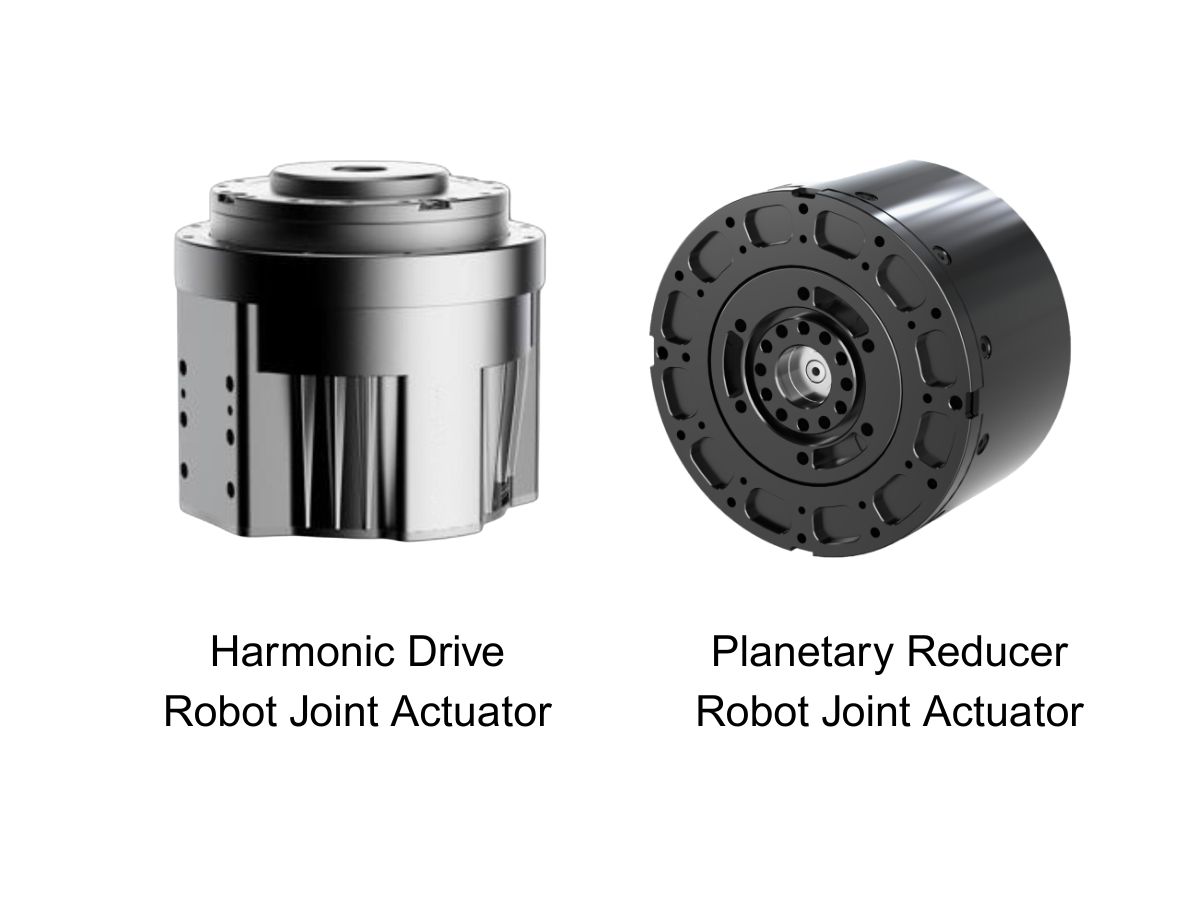
 What is robot joint actuator?How to Choose the Best Robot Rotary Joint Actuator?In core robot joint transmission solutions, planetary and harmonic rotary actuators each have their own strengths. Choosing the right type based on application requirements is essential to achieve the optimal balance between performance and cost.
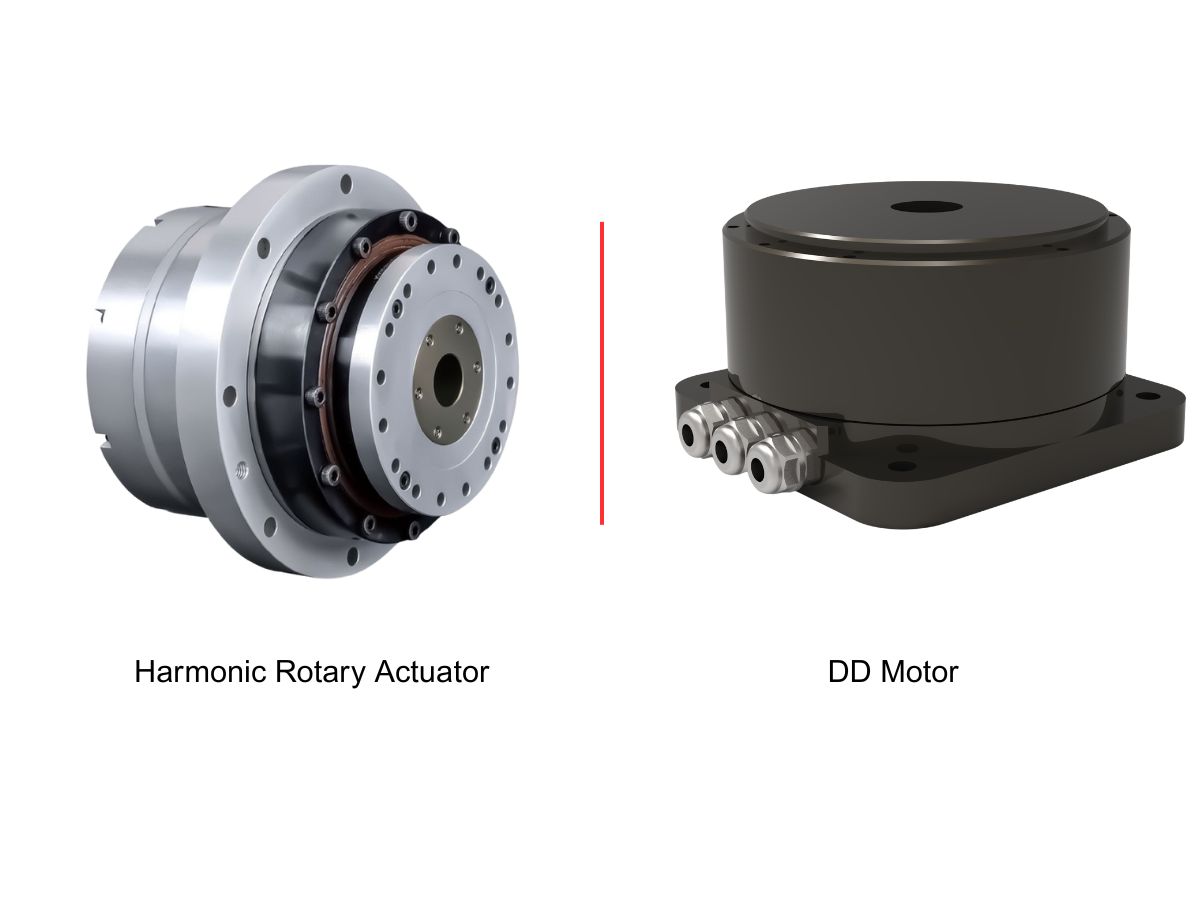
 DD Motors VS Harmonic Rotary ActuatorsThis article provides an in-depth comparison between Direct Drive (DD) motors and harmonic rotary actuators, covering their transmission principles, advantages and disadvantages, and typical application fields.
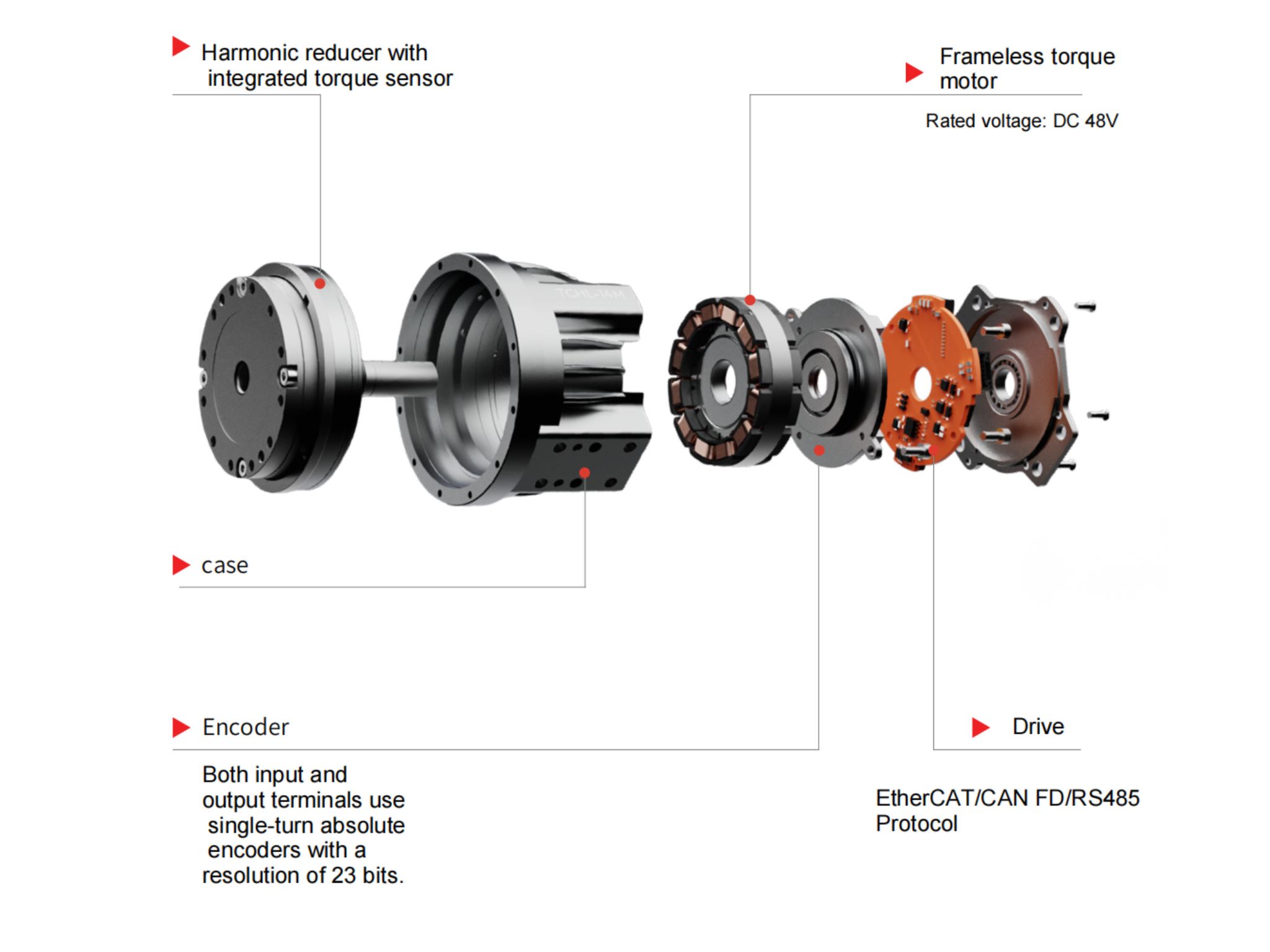
 OMG Ultra Compact Harmonic Drive Joint Module with Built-in Torque SensorHONPINE TCHL series harmonic drive joint module is a game-changing product that achieves disruptive improvements in multiple aspects such as lightweight design, integration level, and connection convenience. This article will analyze its revolutionary enhancements with you.
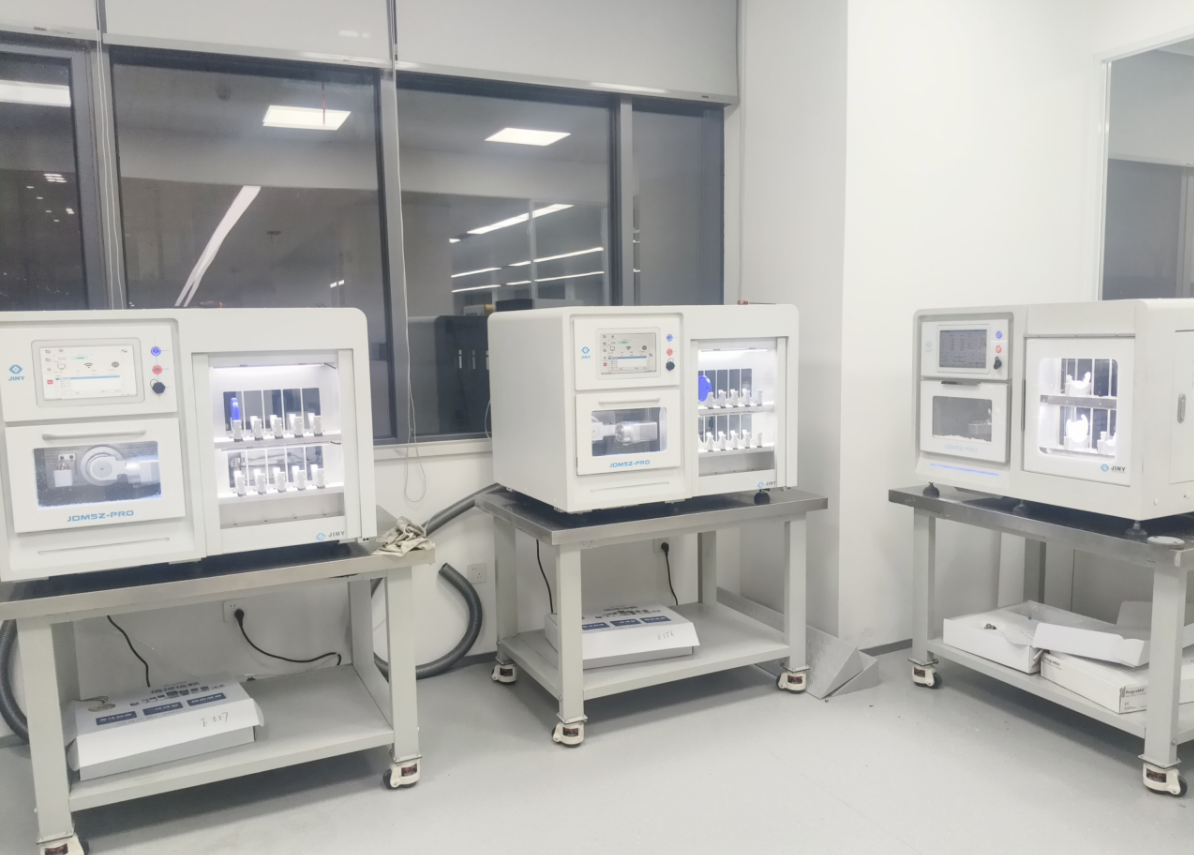
 The Role of Harmonic Drive Gears in Achieving 5–10 μm Accuracy in Dental Milling MachinesA dental milling machine is a CNC machining system used to directly process digital dental models into restorations such as crowns, bridges, veneers, inlays, and implant abutments. Dental milling machines require far higher operational accuracy and motion stability than ordinary equipment. This article explains how harmonic drive gear help dental milling machines achieve stable, continuous, and controllable operation.
 Why Are Harmonic Rotary Actuators Perfect for Medical Equipment?Harmonic rotary actuators (typically integrated systems consisting of a harmonic drive reducer, frameless torque motor, encoder, and optional brake) are regarded as key components in medical equipment. The core reason is that they simultaneously meet the most stringent medical requirements for precision, compact size, safety, and controllability. The following explanation is structured from three perspectives: technical characteristics, application scenarios, and medical value.
 High-Precision RV Reducers Perfectly Matched for Walking RobotsThe walking axis of a robot is a core component for power transmission and support. RV reducers provide extremely high rigidity, precision, and torque while maintaining a compact size and exceptional reliability, making them an ideal match for the demanding requirements of walking robot joints in terms of load capacity, impact resistance, and precision.
 How to Select Harmonic and RV Reducers for Each Axis of a Six-Axis Robot?What determines whether a six-axis robot joint needs a harmonic reducer or an RV reducer? The answer depends on torque, inertia, impact loads, bearing loads and installation space. This guide explains how to evaluate harmonic and RV reducers for the base, shoulder, elbow and wrist, with practical checks for stiffness, backlash and service life. Use the requirements of each axis to select a suitable reducer configuration.
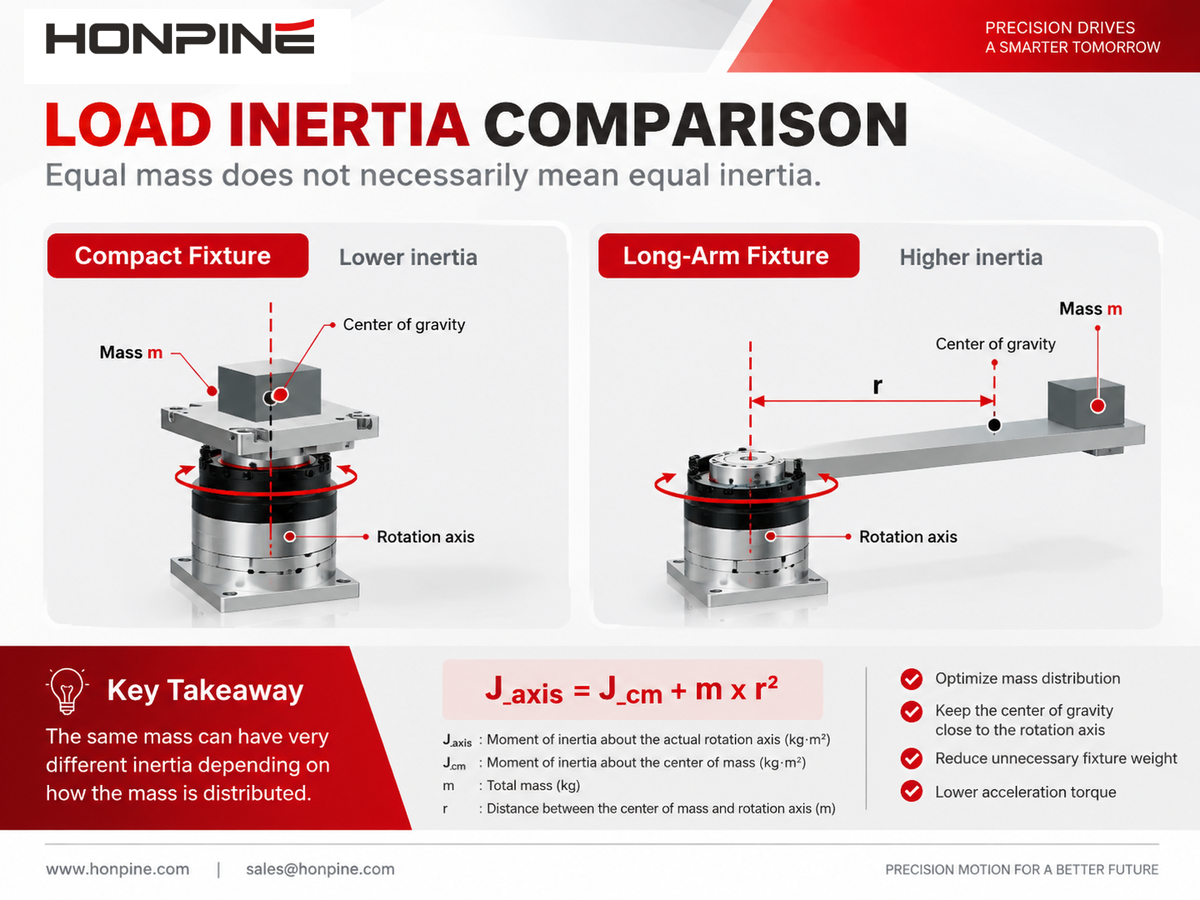
 How to Calculate Torque for a Harmonic Rotary Actuator in a Flipping Mechanism?How much torque does a harmonic rotary actuator need to flip a 10 kg load through 180 degrees? The answer depends on more than weight. Center-of-gravity offset, load inertia, acceleration and operating frequency all affect actuator selection. In this guide, Theodore Li, Technical Director at HONPINE, explains the calculation process using a horizontal-axis flipping example and outlines the checks needed for peak torque, continuous operation, output speed and bearing loads.
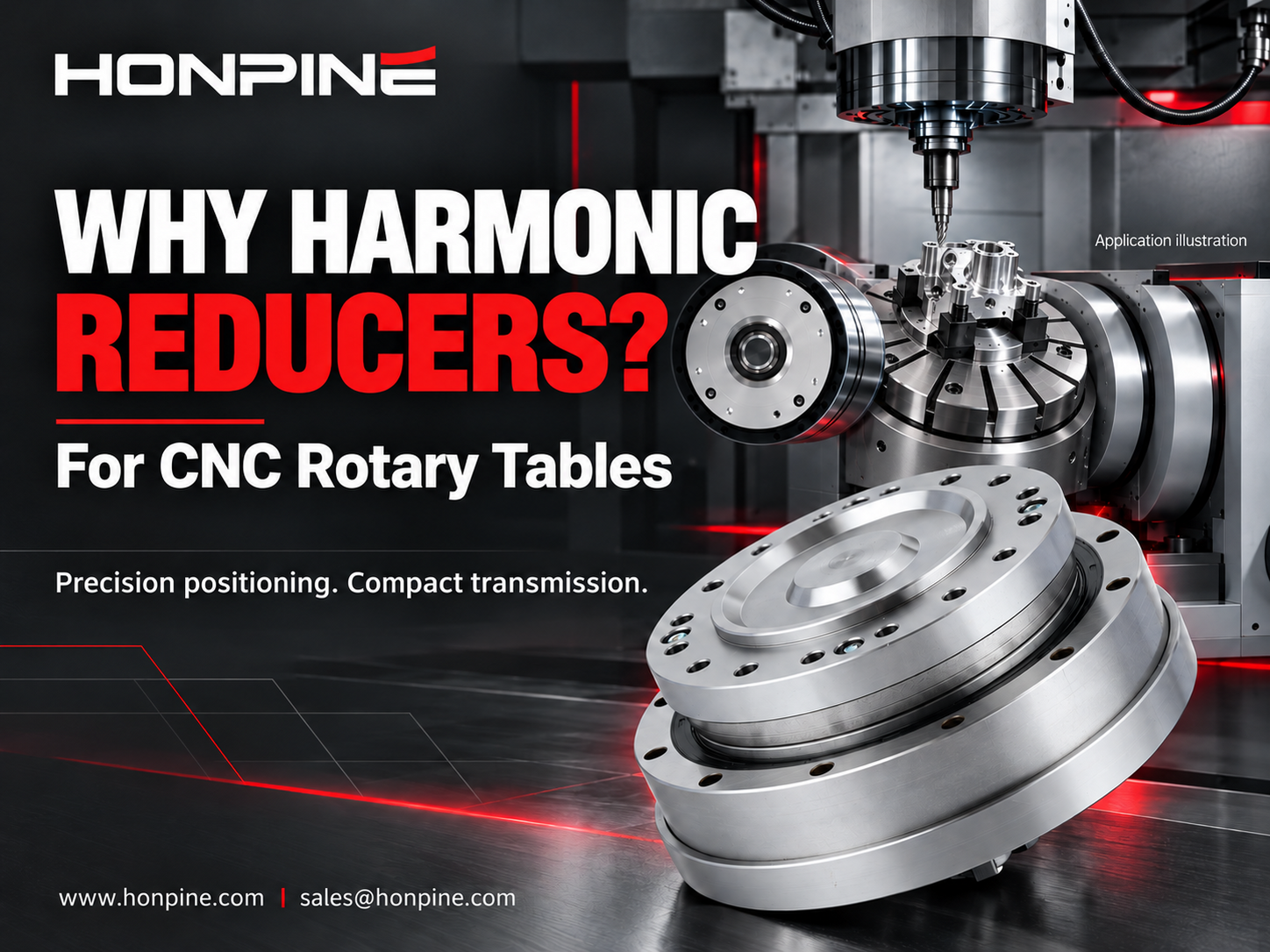
 Why Are Harmonic Reducers Suitable for CNC Machine Tool Rotary Tables?Why choose harmonic reducers for CNC rotary tables? Accurate indexing depends on more than the motor: backlash, torsional stiffness and torque capacity all affect how reliably a rotary table holds its position during machining. This guide explains the key transmission requirements of fourth and fifth axis rotary tables, explores common machine tool applications, and introduces HONPINE harmonic reducer configurations for different installation and load requirements.
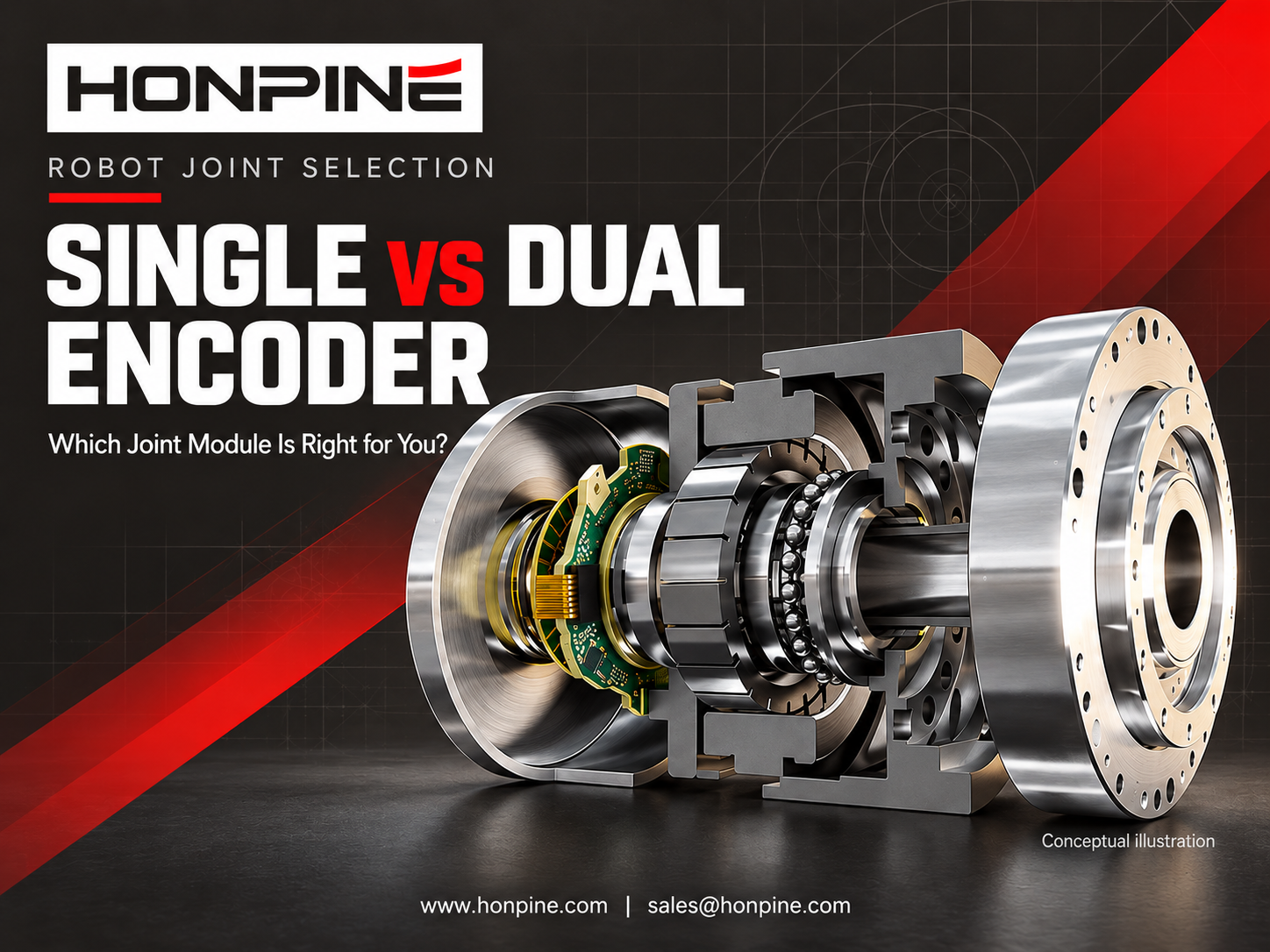
 What’s the Difference Between Single and Dual Encoder Robot Joint Modules?Does your robot need a dual encoder joint module, or is a single encoder enough? The answer depends on positioning requirements, transmission behavior, force control strategy and budget. This guide compares motor-side and output-side feedback, explains where dual encoders can improve control, and examines their costs and limitations. Learn when a single encoder can meet your needs and when additional output feedback is worth considering.
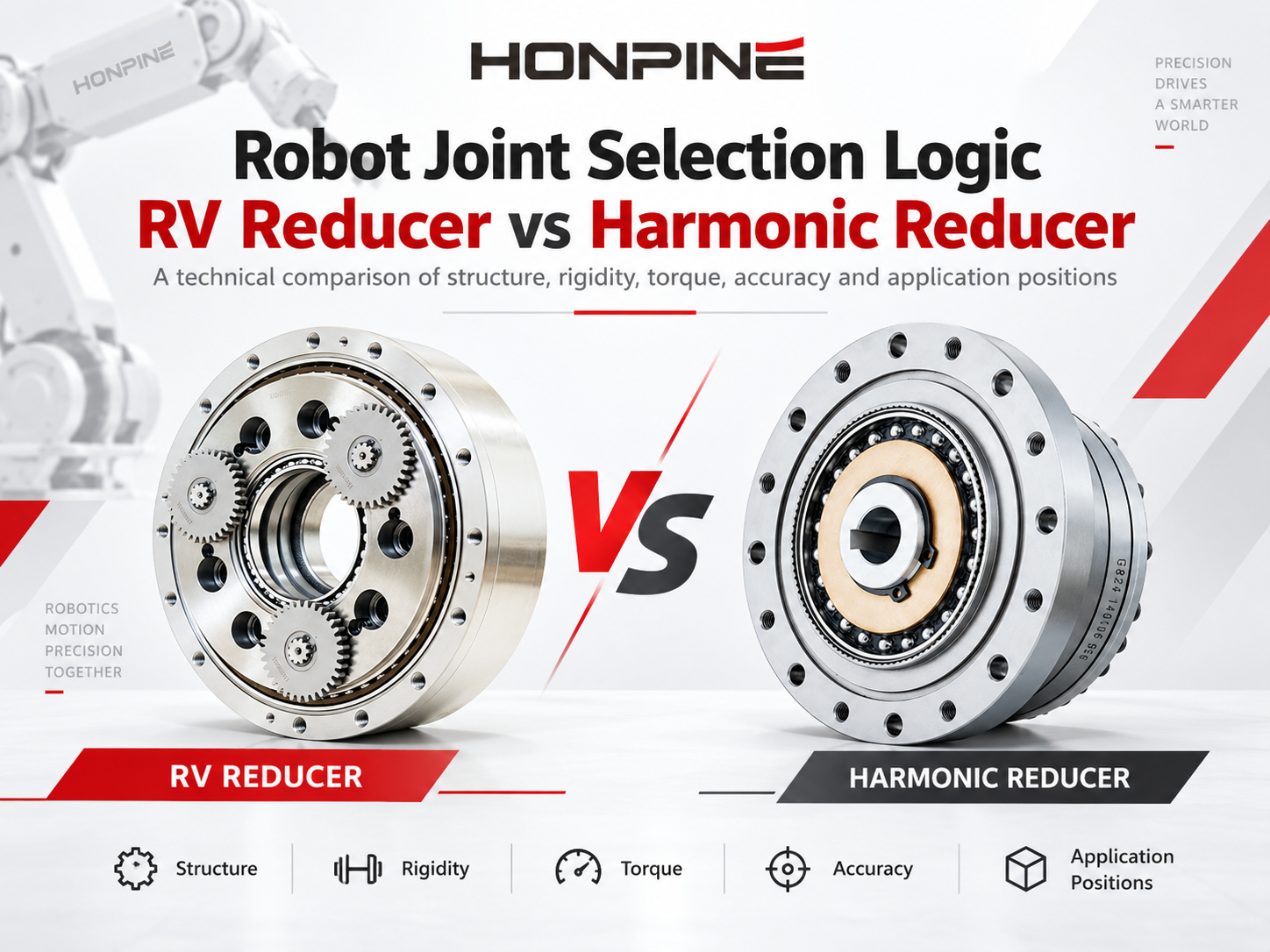
 RV vs Harmonic Reducer: How to Choose the Right Gearbox for Robot Joints?RV vs harmonic reducer: which gearbox is right for your robot joint? The answer depends on torque, rigidity, accuracy, installation space and operating conditions. This guide compares their working principles and five key performance factors, then explains how to evaluate joint loads, reducer life, temperature and lubrication. Whether you are designing a robot base, shoulder, elbow or wrist, use these considerations to match the reducer to the requirements of each joint.
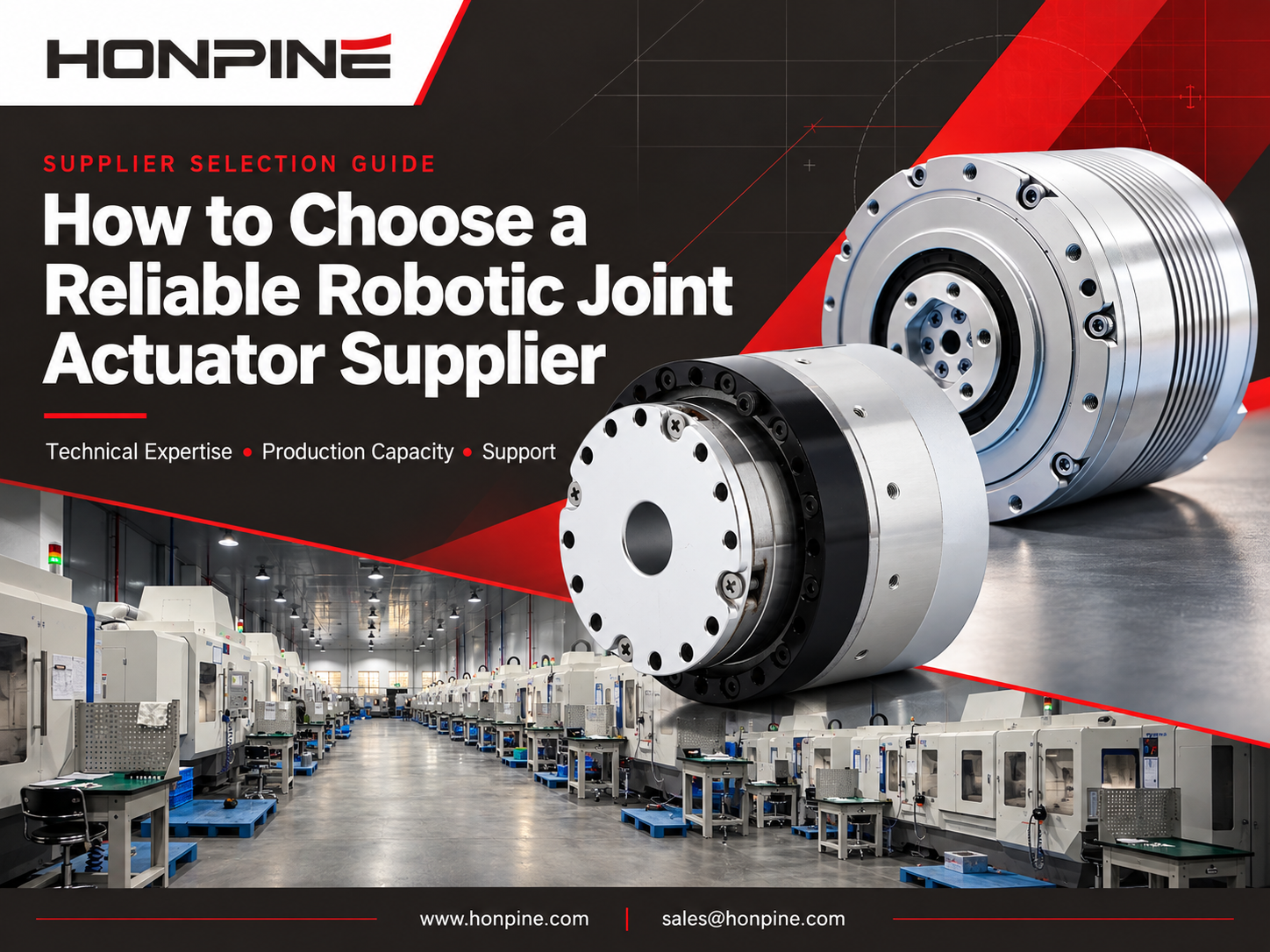
 How to Find a Reliable Robotic Joint Actuator Supplier?Choosing the right robotic joint actuator supplier is essential for reliable performance, smooth integration and long-term project success. Beyond product specifications, you need to understand a supplier’s technical expertise, production capacity and after-sales support. In this guide, Allen Li, Founder of HONPINE, explains how to assess these three factors when sourcing harmonic and planetary joint actuators for robotics and industrial automation.
Double Click
We provide harmonic drive reducer,planetary reducer,robot joint motor,robot rotary actuators,RV gear reducer,robot end effector,dexterous robot hand
 What is robot joint actuator?How to Choose the Best Robot Rotary Joint Actuator?In core robot joint transmission solutions, planetary and harmonic rotary actuators each have their own strengths. Choosing the right type based on application requirements is essential to achieve the optimal balance between performance and cost.
 DD Motors VS Harmonic Rotary ActuatorsThis article provides an in-depth comparison between Direct Drive (DD) motors and harmonic rotary actuators, covering their transmission principles, advantages and disadvantages, and typical application fields.
 OMG Ultra Compact Harmonic Drive Joint Module with Built-in Torque SensorHONPINE TCHL series harmonic drive joint module is a game-changing product that achieves disruptive improvements in multiple aspects such as lightweight design, integration level, and connection convenience. This article will analyze its revolutionary enhancements with you.
 The Role of Harmonic Drive Gears in Achieving 5–10 μm Accuracy in Dental Milling MachinesA dental milling machine is a CNC machining system used to directly process digital dental models into restorations such as crowns, bridges, veneers, inlays, and implant abutments. Dental milling machines require far higher operational accuracy and motion stability than ordinary equipment. This article explains how harmonic drive gear help dental milling machines achieve stable, continuous, and controllable operation.
 Why Are Harmonic Rotary Actuators Perfect for Medical Equipment?Harmonic rotary actuators (typically integrated systems consisting of a harmonic drive reducer, frameless torque motor, encoder, and optional brake) are regarded as key components in medical equipment. The core reason is that they simultaneously meet the most stringent medical requirements for precision, compact size, safety, and controllability. The following explanation is structured from three perspectives: technical characteristics, application scenarios, and medical value.
 High-Precision RV Reducers Perfectly Matched for Walking RobotsThe walking axis of a robot is a core component for power transmission and support. RV reducers provide extremely high rigidity, precision, and torque while maintaining a compact size and exceptional reliability, making them an ideal match for the demanding requirements of walking robot joints in terms of load capacity, impact resistance, and precision.
 How to Select Harmonic and RV Reducers for Each Axis of a Six-Axis Robot?What determines whether a six-axis robot joint needs a harmonic reducer or an RV reducer? The answer depends on torque, inertia, impact loads, bearing loads and installation space. This guide explains how to evaluate harmonic and RV reducers for the base, shoulder, elbow and wrist, with practical checks for stiffness, backlash and service life. Use the requirements of each axis to select a suitable reducer configuration.
 How to Calculate Torque for a Harmonic Rotary Actuator in a Flipping Mechanism?How much torque does a harmonic rotary actuator need to flip a 10 kg load through 180 degrees? The answer depends on more than weight. Center-of-gravity offset, load inertia, acceleration and operating frequency all affect actuator selection. In this guide, Theodore Li, Technical Director at HONPINE, explains the calculation process using a horizontal-axis flipping example and outlines the checks needed for peak torque, continuous operation, output speed and bearing loads.
 Why Are Harmonic Reducers Suitable for CNC Machine Tool Rotary Tables?Why choose harmonic reducers for CNC rotary tables? Accurate indexing depends on more than the motor: backlash, torsional stiffness and torque capacity all affect how reliably a rotary table holds its position during machining. This guide explains the key transmission requirements of fourth and fifth axis rotary tables, explores common machine tool applications, and introduces HONPINE harmonic reducer configurations for different installation and load requirements.
 What’s the Difference Between Single and Dual Encoder Robot Joint Modules?Does your robot need a dual encoder joint module, or is a single encoder enough? The answer depends on positioning requirements, transmission behavior, force control strategy and budget. This guide compares motor-side and output-side feedback, explains where dual encoders can improve control, and examines their costs and limitations. Learn when a single encoder can meet your needs and when additional output feedback is worth considering.
 RV vs Harmonic Reducer: How to Choose the Right Gearbox for Robot Joints?RV vs harmonic reducer: which gearbox is right for your robot joint? The answer depends on torque, rigidity, accuracy, installation space and operating conditions. This guide compares their working principles and five key performance factors, then explains how to evaluate joint loads, reducer life, temperature and lubrication. Whether you are designing a robot base, shoulder, elbow or wrist, use these considerations to match the reducer to the requirements of each joint.
 How to Find a Reliable Robotic Joint Actuator Supplier?Choosing the right robotic joint actuator supplier is essential for reliable performance, smooth integration and long-term project success. Beyond product specifications, you need to understand a supplier’s technical expertise, production capacity and after-sales support. In this guide, Allen Li, Founder of HONPINE, explains how to assess these three factors when sourcing harmonic and planetary joint actuators for robotics and industrial automation.