


Horgos Rail Clearance Speeds Machine Tools to Russia
According to a June 2 notice from Urumqi Customs, the Horgos railway port has shortened customs clearance for large industrial equipment, including complete five-axis machining centers, to within 30 minutes under an arrival-inspection-release model. The disclosed information also points to an average seven-calendar-day delivery time from Chinese factories to Moscow or Yekaterinburg through China-Europe freight trains combined with multimodal transport within Russia. This development is worth attention for industrial equipment exporters, machinery manufacturers, cross-border logistics providers, and companies serving the Russian market because it may affect delivery planning, customs coordination, and supply chain responsiveness.
Event Overview
Urumqi Customs reported on June 2 that the Horgos railway port has implemented an “inspect on arrival, release after inspection” model for large industrial equipment. Under this model, the customs clearance time for complete five-axis machining centers transported as whole machines has been compressed to within 30 minutes.
The publicly disclosed information also states that, with the addition of a new route combining China-Europe freight trains and multimodal transport within Russia, shipments from Chinese factories to Moscow or Yekaterinburg take an average of seven calendar days. Compared with sea transport, the route is reported to shorten delivery time by 35 days.
The exact date on which the clearance adjustment began was not specified in the disclosed information. The confirmed public timing is the June 2 report by Urumqi Customs.
Which Segments May Be Affected
Industrial Equipment Exporters
Industrial equipment exporters are directly relevant to this development because the disclosed case involves large industrial machinery shipped as complete units. The main impact lies in the potential shortening of border clearance time and the improved predictability of cross-border delivery for qualifying cargo.
From an industry perspective, exporters of large machine tools may need to pay closer attention to whether their products, documentation, and shipment formats meet the operational requirements of the faster clearance model. The impact is not only on transport speed, but also on order fulfillment commitments and communication with overseas buyers.
Machine Tool and Processing Equipment Manufacturers
Manufacturers of five-axis machining centers and other large processing equipment may be affected because the reported clearance improvement specifically concerns complete-machine transportation. Faster customs handling can influence production-to-delivery scheduling when goods are destined for Moscow, Yekaterinburg, or related Russian market channels through the disclosed route.
Analysis shows that for manufacturers, the practical value may be reflected in shorter delivery windows and reduced uncertainty at the railway port. However, this should not be interpreted as a universal change for all machinery categories unless further official information confirms broader coverage.
Cross-Border Logistics and Supply Chain Service Providers
Logistics companies, freight forwarders, and multimodal transport coordinators are also closely connected to this update. The disclosed route combines China-Europe freight trains with multimodal transport inside Russia, which means the operational focus extends beyond the Chinese border clearance stage.
What deserves closer attention now is how customs clearance, rail transport, and Russian domestic multimodal delivery are coordinated in actual operations. For service providers, the main impact is likely to appear in route design, time commitment management, documentation preparation, and customer communication.
Companies Supplying the Russian Industrial Market
Enterprises supplying machinery, equipment, or production-related assets to Russian customers may be affected because the reported delivery time to Moscow or Yekaterinburg is significantly shorter than the sea transport comparison disclosed by Urumqi Customs.
Observably, this may help companies reassess whether rail-based delivery is suitable for time-sensitive equipment shipments. The impact may be strongest where buyers require faster installation, replacement, or production capacity planning, but the applicability still depends on product type, route availability, and actual transport arrangements.
What Companies and Practitioners Should Watch and How to Respond
Track Further Official Clarification on Scope
Companies should continue monitoring official customs statements to determine whether the 30-minute clearance model applies only to the disclosed category of large industrial equipment or whether it may extend to other machinery types. The current public information specifically mentions large industrial equipment and complete five-axis machining centers.
It is more appropriate to understand this as a specific operational update at the Horgos railway port rather than a confirmed universal rule for all exported equipment categories.
Review Product Category and Documentation Readiness
Exporters and manufacturers should check whether their shipment documents, cargo descriptions, inspection materials, and complete-machine loading arrangements are consistent with the requirements implied by rapid customs inspection and release. For large machinery, document accuracy can directly affect whether faster clearance can be achieved in practice.
Analysis shows that the reported time reduction will be most useful only when customs declaration, inspection preparation, and logistics handover are aligned before the shipment reaches the port.
Reassess Delivery Plans for Moscow and Yekaterinburg
Companies serving customers in Moscow or Yekaterinburg should evaluate whether the China-Europe freight train plus Russian multimodal transport route fits current order cycles. The disclosed average delivery time of seven calendar days provides a reference for planning, but enterprises should avoid treating it as a guaranteed result for every shipment.
From an industry perspective, the more practical approach is to compare route options by cargo type, customer urgency, and operational feasibility, rather than relying only on a single transit-time figure.
Distinguish Between Policy Signal and Business Execution
The customs clearance improvement is a meaningful signal for cross-border industrial logistics, but companies should still verify implementation details with logistics partners and port-related service providers before adjusting contractual delivery commitments.
What deserves closer attention now is whether the shorter clearance time can be consistently matched by stable railway scheduling and smooth multimodal transfer within Russia. The value of the update depends on the full transport chain, not only the border clearance stage.
Editor’s View / Industry Observation
Observably, this update indicates that the Horgos railway port is improving customs handling efficiency for certain large industrial equipment shipments. For enterprises involved in machine tools, industrial equipment exports, and Russia-bound logistics, the development is important because customs clearance has a direct connection with delivery reliability.
Analysis shows that this is both a visible operational result and a signal worth watching. The reported 30-minute clearance time and seven-day average delivery to Moscow or Yekaterinburg are concrete figures disclosed by Urumqi Customs, but their broader industry significance will depend on whether similar efficiency can be maintained across more shipments, product categories, and transport conditions.
It is more appropriate to understand this as a development that may improve the competitiveness of rail-based industrial equipment logistics on specific China-Russia routes, rather than as a complete replacement for other transport modes in all scenarios.
Conclusion
The June 2 disclosure from Urumqi Customs highlights a notable improvement in customs clearance efficiency at the Horgos railway port for large industrial equipment, with complete five-axis machining centers reportedly cleared within 30 minutes and delivered from Chinese factories to Moscow or Yekaterinburg in an average of seven calendar days through the disclosed rail and multimodal route.
For the industry, the key significance lies in delivery-cycle optimization, supply chain coordination, and better planning possibilities for machinery exports to the Russian market. At the current stage, a rational and neutral reading is that this update should be treated as a route-specific and category-specific efficiency signal, while companies should continue to verify operational scope and implementation details before making broader business adjustments.
Information Sources
Main source: Urumqi Customs notice reported on June 2.
Matters requiring continued observation: whether the rapid clearance model will apply to more categories of industrial equipment, whether the reported delivery time can be maintained across different shipment conditions, and how the China-Europe freight train plus Russian multimodal transport route performs in actual business operations.
Read More
Learn more about the story of HONPINE and industry trends related to precision transmission.
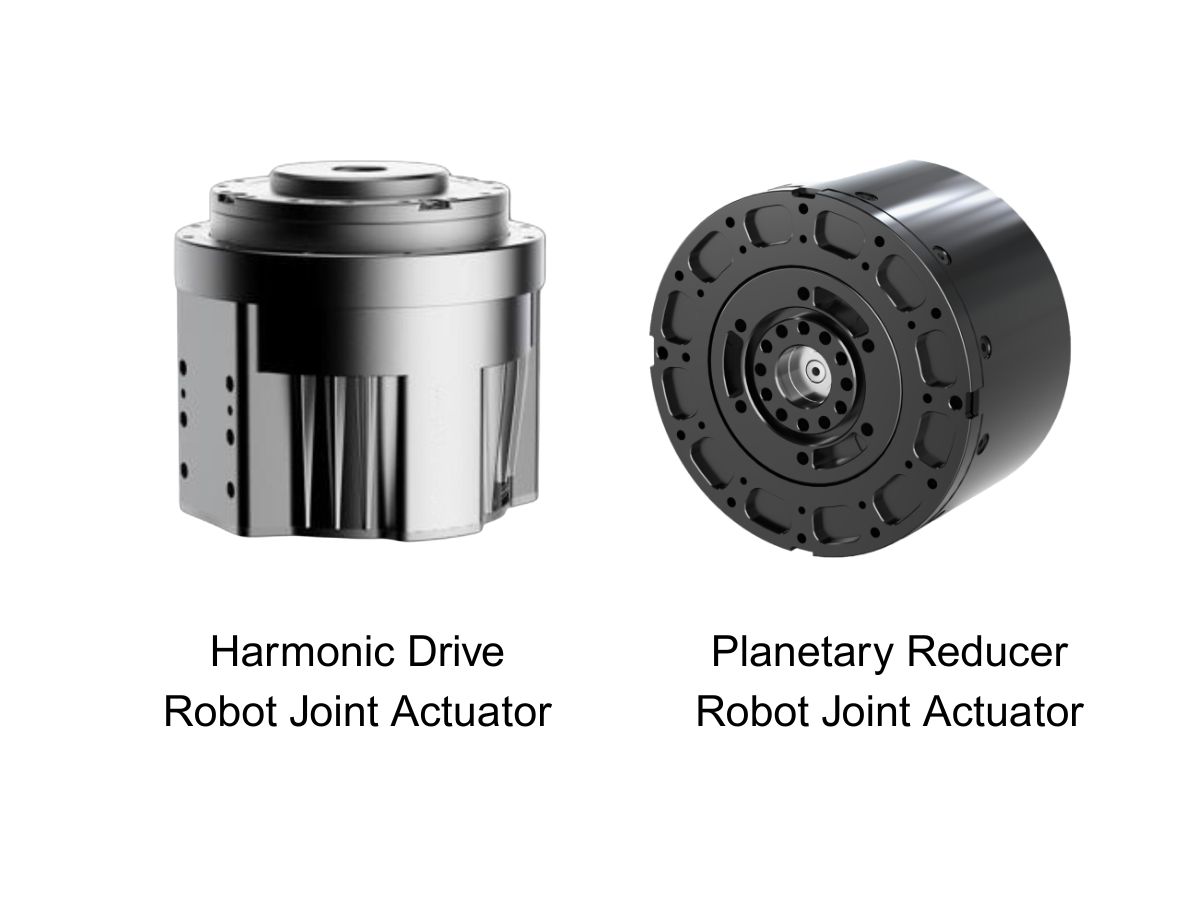
 What is robot joint actuator?How to Choose the Best Robot Rotary Joint Actuator?In core robot joint transmission solutions, planetary and harmonic rotary actuators each have their own strengths. Choosing the right type based on application requirements is essential to achieve the optimal balance between performance and cost.
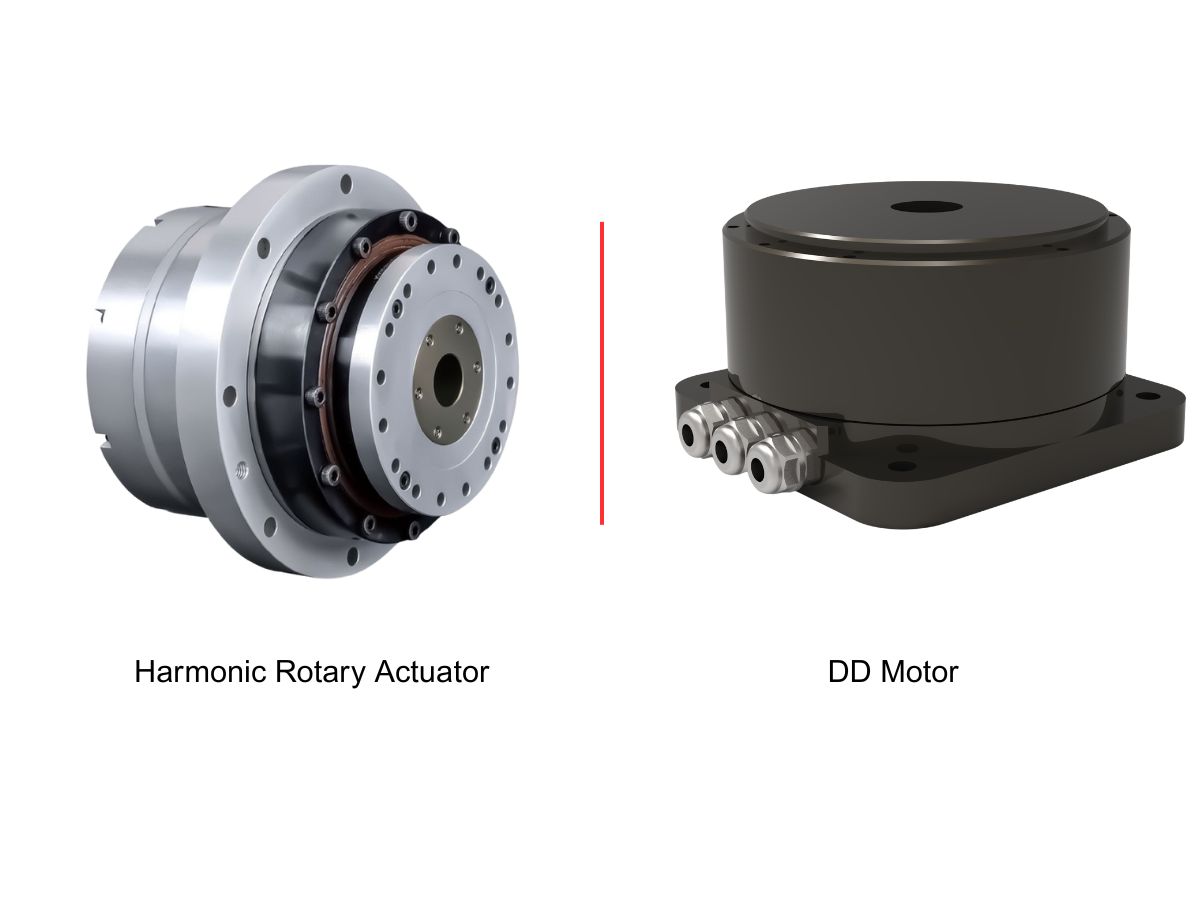
 DD Motors VS Harmonic Rotary ActuatorsThis article provides an in-depth comparison between Direct Drive (DD) motors and harmonic rotary actuators, covering their transmission principles, advantages and disadvantages, and typical application fields.
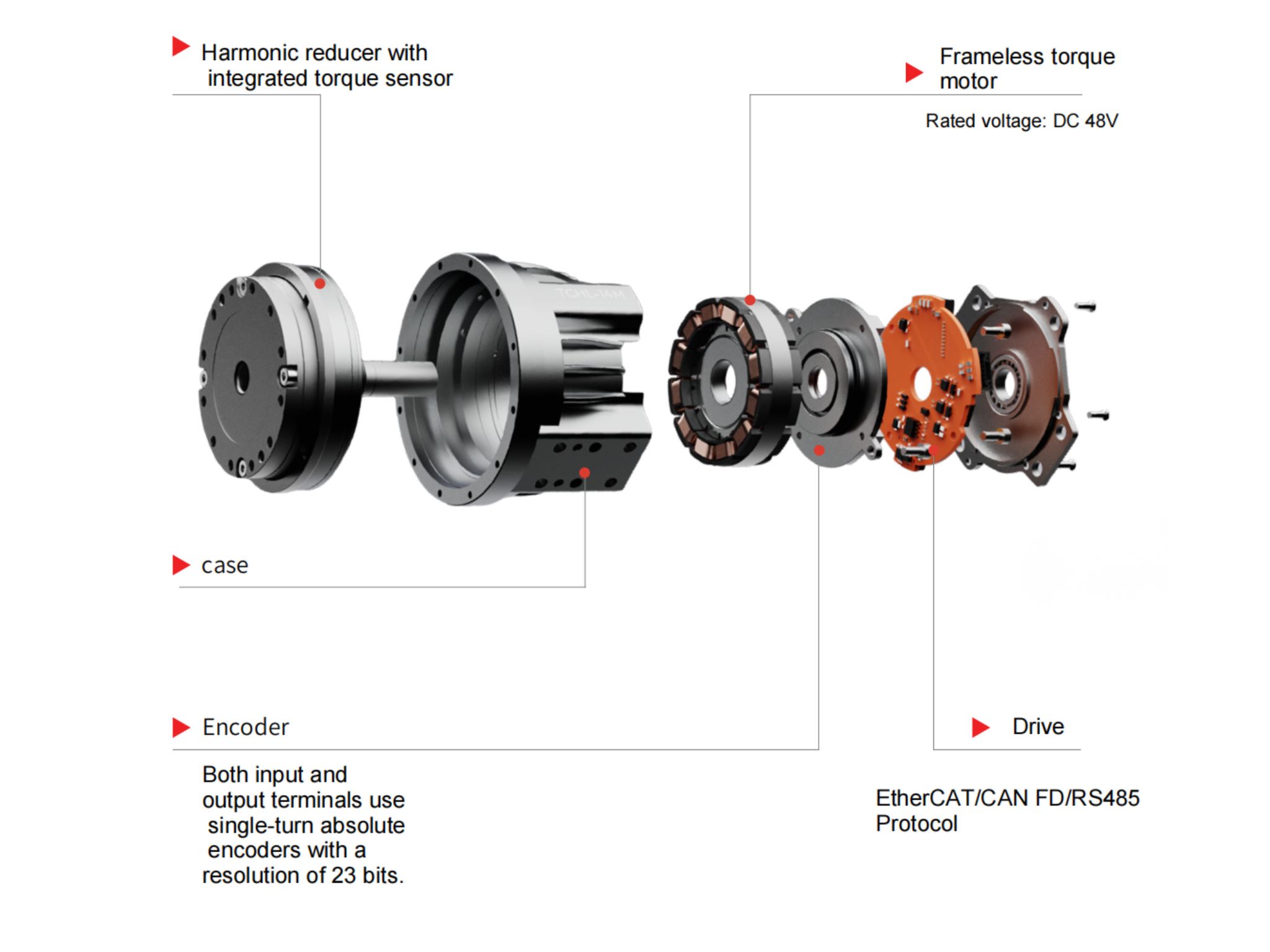
 OMG Ultra Compact Harmonic Drive Joint Module with Built-in Torque SensorHONPINE TCHL series harmonic drive joint module is a game-changing product that achieves disruptive improvements in multiple aspects such as lightweight design, integration level, and connection convenience. This article will analyze its revolutionary enhancements with you.
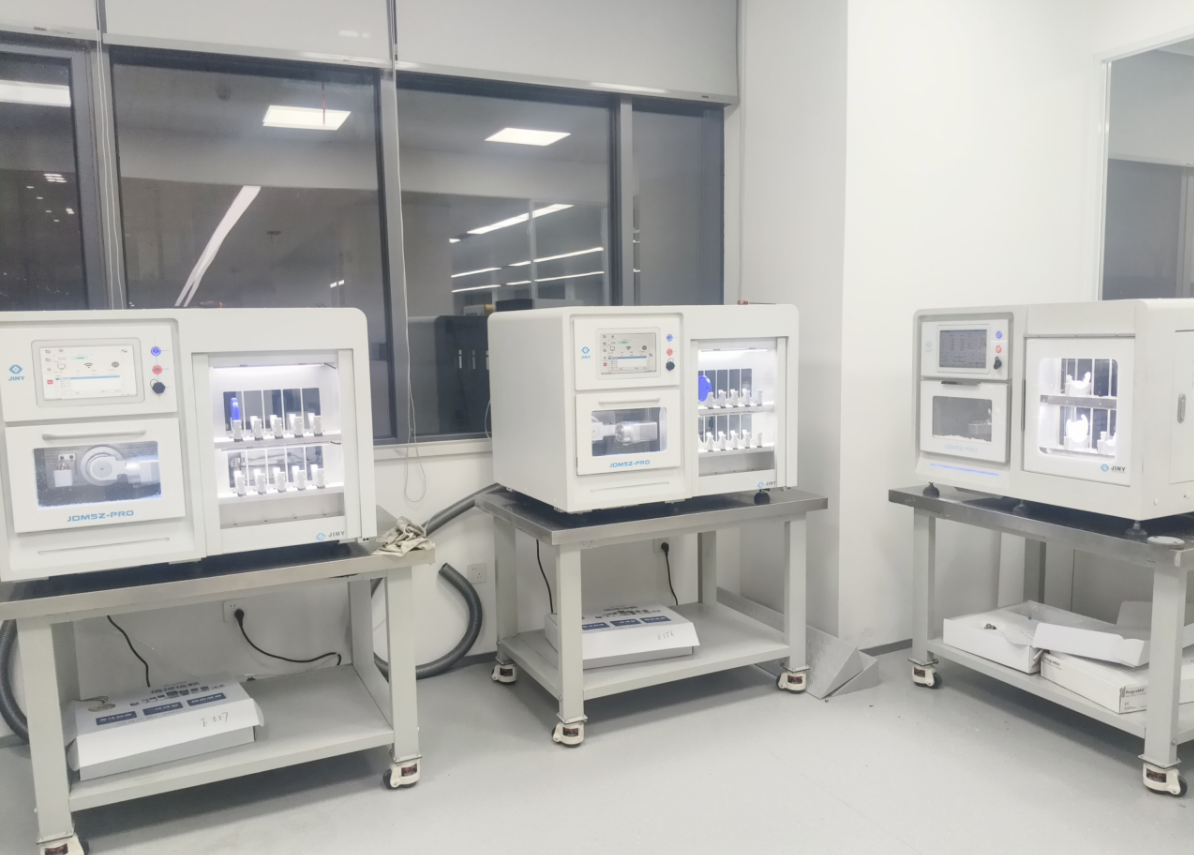
 The Role of Harmonic Drive Gears in Achieving 5–10 μm Accuracy in Dental Milling MachinesA dental milling machine is a CNC machining system used to directly process digital dental models into restorations such as crowns, bridges, veneers, inlays, and implant abutments. Dental milling machines require far higher operational accuracy and motion stability than ordinary equipment. This article explains how harmonic drive gear help dental milling machines achieve stable, continuous, and controllable operation.
 Why Are Harmonic Rotary Actuators Perfect for Medical Equipment?Harmonic rotary actuators (typically integrated systems consisting of a harmonic drive reducer, frameless torque motor, encoder, and optional brake) are regarded as key components in medical equipment. The core reason is that they simultaneously meet the most stringent medical requirements for precision, compact size, safety, and controllability. The following explanation is structured from three perspectives: technical characteristics, application scenarios, and medical value.
 High-Precision RV Reducers Perfectly Matched for Walking RobotsThe walking axis of a robot is a core component for power transmission and support. RV reducers provide extremely high rigidity, precision, and torque while maintaining a compact size and exceptional reliability, making them an ideal match for the demanding requirements of walking robot joints in terms of load capacity, impact resistance, and precision.
 How to Choose High-Precision Rotary Actuators for Industrial Automation?High-precision rotary actuators play an important role in industrial automation, where positioning accuracy, repeatability, durability and installation flexibility directly affect equipment performance. HONPINE offers four main series of precision rotary actuators, including HAT, HAM and HAS harmonic rotary actuators and HPG low-backlash planetary actuators. With torque ratings ranging from 4 to 1,494 Nm across the product range, these solutions are designed for applications in semiconductor manufacturing, 3C automation, laser processing and CNC machine tools. Learn how to identify the right rotary actuator based on operating conditions, precision requirements and mechanical integration needs.
 Why Are Harmonic Reducers Suitable for High-Precision Automation Equipment?Precision automation equipment depends on consistent rotary motion, reliable positioning and compact transmission design. From dispensing head orientation and component angular alignment to automated inspection indexing, harmonic reducers offer a practical solution for applications requiring low backlash and high reduction ratios in limited installation space. This article explains how harmonic reducers support repeatable motion, compares key design configurations, and outlines how to select a suitable reduction ratio and reducer structure based on load, speed, accuracy and machine cycle-time requirements.
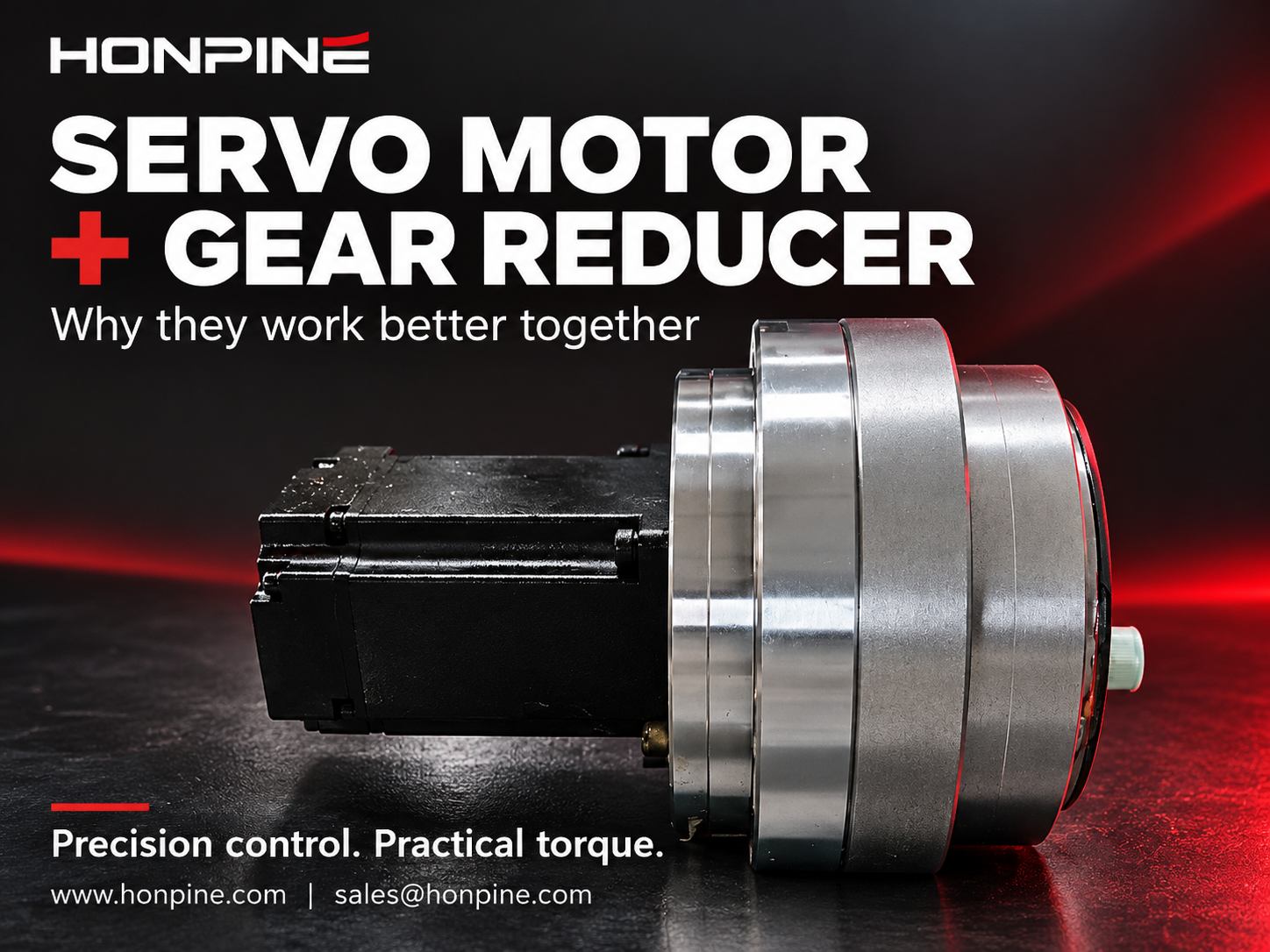
 Why Are Servo Motors and Gear Reducers an Ideal Match?Servo motors provide fast, precise motion control, while gear reducers adapt their speed and torque to the load. This guide explains how servo motors and gear reducers work together through torque multiplication, reflected inertia reduction and finer theoretical position resolution. Learn how inertia matching, backlash, torsional stiffness and reduction ratio influence performance in robotics and industrial automation.
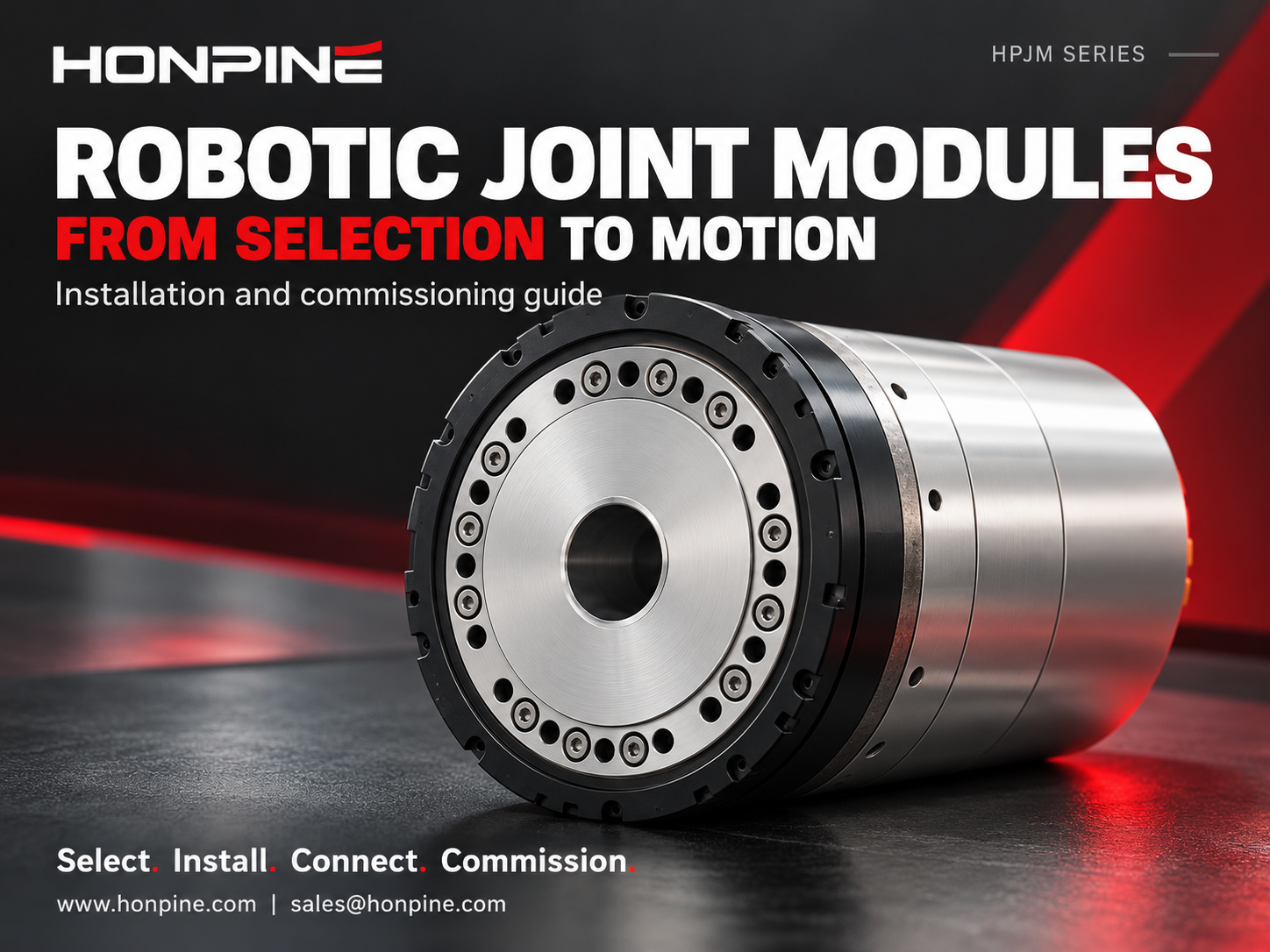
 How to Select and Use Robotic Joint Modules?How do you take robotic joint modules from selection to controlled motion? Using the HONPINE HPJM harmonic joint module as an example, Technical Director Theodore Li explains the key steps in mechanical installation, electrical wiring, CAN and EtherCAT configuration, and control commissioning. Learn what to confirm before integration and how to approach setup so each joint can respond correctly to your controller.
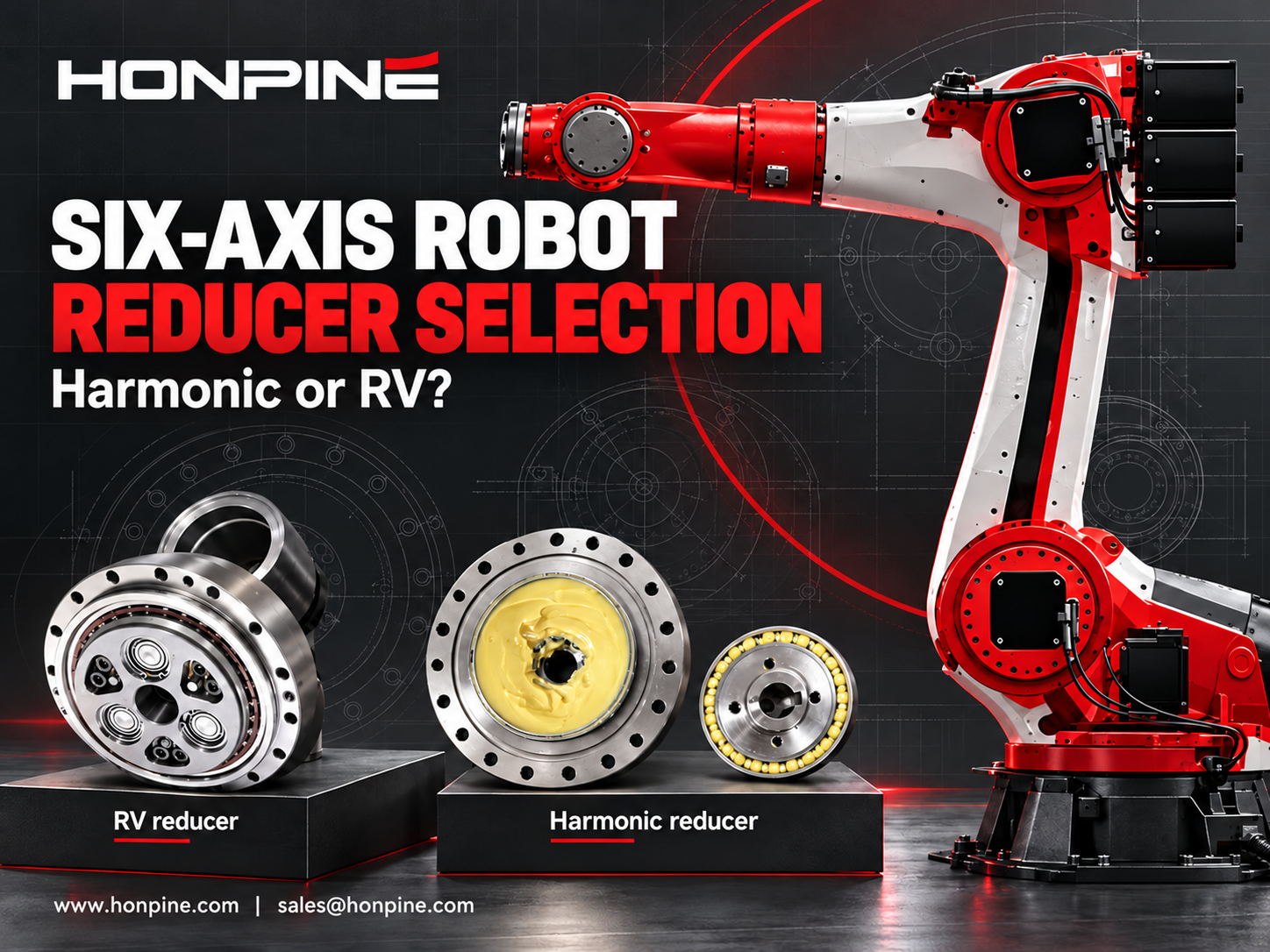
 How to Select Harmonic and RV Reducers for Each Axis of a Six-Axis Robot?What determines whether a six-axis robot joint needs a harmonic reducer or an RV reducer? The answer depends on torque, inertia, impact loads, bearing loads and installation space. This guide explains how to evaluate harmonic and RV reducers for the base, shoulder, elbow and wrist, with practical checks for stiffness, backlash and service life. Use the requirements of each axis to select a suitable reducer configuration.
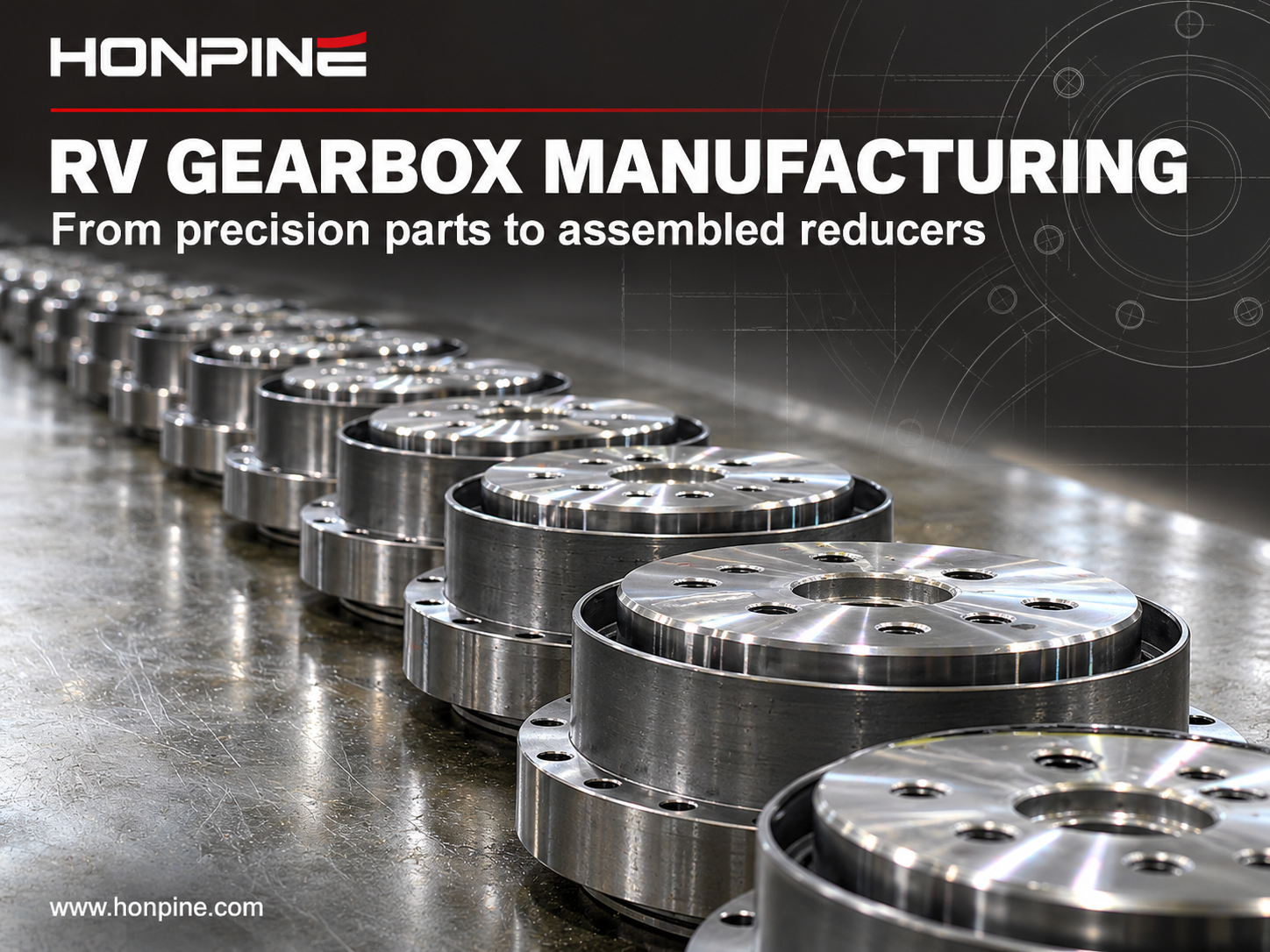
 Top 7 RV Reducer Gearbox Manufacturers: Why Does Nabtesco Still Dominate?What sets RV reducer gearbox manufacturers apart, and why does Nabtesco remain a benchmark in this market? RV reducer production demands precise component machining, careful assembly and extensive engineering know-how. This article introduces seven manufacturers across RV reducers and related transmission technologies, examines the strengths behind Nabtesco's position, and explores HONPINE's development capabilities to help you understand the supplier landscape.
Double Click
We provide harmonic drive reducer,planetary reducer,robot joint motor,robot rotary actuators,RV gear reducer,robot end effector,dexterous robot hand
 What is robot joint actuator?How to Choose the Best Robot Rotary Joint Actuator?In core robot joint transmission solutions, planetary and harmonic rotary actuators each have their own strengths. Choosing the right type based on application requirements is essential to achieve the optimal balance between performance and cost.
 DD Motors VS Harmonic Rotary ActuatorsThis article provides an in-depth comparison between Direct Drive (DD) motors and harmonic rotary actuators, covering their transmission principles, advantages and disadvantages, and typical application fields.
 OMG Ultra Compact Harmonic Drive Joint Module with Built-in Torque SensorHONPINE TCHL series harmonic drive joint module is a game-changing product that achieves disruptive improvements in multiple aspects such as lightweight design, integration level, and connection convenience. This article will analyze its revolutionary enhancements with you.
 The Role of Harmonic Drive Gears in Achieving 5–10 μm Accuracy in Dental Milling MachinesA dental milling machine is a CNC machining system used to directly process digital dental models into restorations such as crowns, bridges, veneers, inlays, and implant abutments. Dental milling machines require far higher operational accuracy and motion stability than ordinary equipment. This article explains how harmonic drive gear help dental milling machines achieve stable, continuous, and controllable operation.
 Why Are Harmonic Rotary Actuators Perfect for Medical Equipment?Harmonic rotary actuators (typically integrated systems consisting of a harmonic drive reducer, frameless torque motor, encoder, and optional brake) are regarded as key components in medical equipment. The core reason is that they simultaneously meet the most stringent medical requirements for precision, compact size, safety, and controllability. The following explanation is structured from three perspectives: technical characteristics, application scenarios, and medical value.
 High-Precision RV Reducers Perfectly Matched for Walking RobotsThe walking axis of a robot is a core component for power transmission and support. RV reducers provide extremely high rigidity, precision, and torque while maintaining a compact size and exceptional reliability, making them an ideal match for the demanding requirements of walking robot joints in terms of load capacity, impact resistance, and precision.
 How to Choose High-Precision Rotary Actuators for Industrial Automation?High-precision rotary actuators play an important role in industrial automation, where positioning accuracy, repeatability, durability and installation flexibility directly affect equipment performance. HONPINE offers four main series of precision rotary actuators, including HAT, HAM and HAS harmonic rotary actuators and HPG low-backlash planetary actuators. With torque ratings ranging from 4 to 1,494 Nm across the product range, these solutions are designed for applications in semiconductor manufacturing, 3C automation, laser processing and CNC machine tools. Learn how to identify the right rotary actuator based on operating conditions, precision requirements and mechanical integration needs.
 Why Are Harmonic Reducers Suitable for High-Precision Automation Equipment?Precision automation equipment depends on consistent rotary motion, reliable positioning and compact transmission design. From dispensing head orientation and component angular alignment to automated inspection indexing, harmonic reducers offer a practical solution for applications requiring low backlash and high reduction ratios in limited installation space. This article explains how harmonic reducers support repeatable motion, compares key design configurations, and outlines how to select a suitable reduction ratio and reducer structure based on load, speed, accuracy and machine cycle-time requirements.
 Why Are Servo Motors and Gear Reducers an Ideal Match?Servo motors provide fast, precise motion control, while gear reducers adapt their speed and torque to the load. This guide explains how servo motors and gear reducers work together through torque multiplication, reflected inertia reduction and finer theoretical position resolution. Learn how inertia matching, backlash, torsional stiffness and reduction ratio influence performance in robotics and industrial automation.
 How to Select and Use Robotic Joint Modules?How do you take robotic joint modules from selection to controlled motion? Using the HONPINE HPJM harmonic joint module as an example, Technical Director Theodore Li explains the key steps in mechanical installation, electrical wiring, CAN and EtherCAT configuration, and control commissioning. Learn what to confirm before integration and how to approach setup so each joint can respond correctly to your controller.
 How to Select Harmonic and RV Reducers for Each Axis of a Six-Axis Robot?What determines whether a six-axis robot joint needs a harmonic reducer or an RV reducer? The answer depends on torque, inertia, impact loads, bearing loads and installation space. This guide explains how to evaluate harmonic and RV reducers for the base, shoulder, elbow and wrist, with practical checks for stiffness, backlash and service life. Use the requirements of each axis to select a suitable reducer configuration.
 Top 7 RV Reducer Gearbox Manufacturers: Why Does Nabtesco Still Dominate?What sets RV reducer gearbox manufacturers apart, and why does Nabtesco remain a benchmark in this market? RV reducer production demands precise component machining, careful assembly and extensive engineering know-how. This article introduces seven manufacturers across RV reducers and related transmission technologies, examines the strengths behind Nabtesco's position, and explores HONPINE's development capabilities to help you understand the supplier landscape.