









China's机电 exports hit record high in April 2026, up 20.4% YoY
On April 30, 2026, China’s mechanical and electrical exports reached a new monthly high—driven by surging global demand for cost-effective, high-performance remanufactured equipment—marking a significant shift in international procurement patterns for industrial machinery.
Record Export Performance in April 2026
According to data released by China’s General Administration of Customs on May 9, 2026, mechanical and electrical product exports totaled USD 19.23 billion in April 2026—the highest monthly figure on record—and rose 20.4% year-on-year. Cumulative exports for the first four months of 2026 amounted to USD 84.904 billion, an increase of 21.1% compared to the same period last year. Notably, export unit prices for mid-to-high-end equipment—including machine tools, injection molding machines, and automated production lines—rose more than 70% year-on-year.
Impact Across Industry Stakeholders
Export-oriented trading enterprises
These firms face intensified pressure to scale production capacity and ensure consistent compliance with destination-market technical and safety standards—especially as higher unit prices signal tighter buyer scrutiny on documentation, certification validity, and traceability of remanufacturing processes.
Raw material and component procurement enterprises
Rising export volumes and premium pricing for high-end equipment imply greater demand for certified-grade materials (e.g., heat-treated steels, precision bearings) and compliant control systems. Procurement planning must now align with longer lead times for certified components and stricter origin verification requirements.
Manufacturing enterprises
Producers of machine tools and automation lines are increasingly required to maintain dual-track quality records: one for original equipment manufacturing and another for remanufactured units—including lifecycle validation reports, non-destructive testing documentation, and updated CE or other conformity assessment evidence.
Supply chain service providers
Logistics, customs brokerage, and technical documentation agencies must adapt to heightened regulatory expectations—particularly regarding proof of remanufacturing compliance, environmental performance declarations, and harmonized tariff classification for refurbished vs. new equipment under evolving WTO and regional trade agreement interpretations.
Key Operational Priorities for Enterprises
Strengthen remanufacturing-specific compliance documentation
With unit prices rising over 70%, buyers are prioritizing verifiable technical integrity. Firms must ensure all remanufactured units carry updated conformity certificates, calibration logs, and third-party validation reports aligned with IEC, ISO 15232, or applicable regional standards.
Align technical specifications with evolving tender requirements
International tenders—especially in infrastructure and smart manufacturing projects—are increasingly specifying lifecycle assurance, interoperability protocols (e.g., OPC UA), and cybersecurity readiness. Technical bid alignment must now include embedded firmware versioning, secure boot verification, and documented cyber-resilience testing.
Optimize delivery scheduling amid tightening capacity
The record export volume reflects constrained global supply of advanced automation systems. Exporters should proactively coordinate with logistics partners and customs agents to pre-clear documentation, avoid port congestion delays, and meet strict delivery windows stipulated in high-value contracts.
Enhance post-sale technical traceability
Buyers are requesting granular digital service histories—including part-level replacement logs, firmware update trails, and predictive maintenance readiness—for remanufactured assets. Implementing standardized electronic technical dossiers (ETDs) is becoming a de facto prerequisite for competitive bidding.
Industry Observation: A Structural Shift in Global Equipment Sourcing
Analysis shows this surge is not merely cyclical—it signals a structural recalibration in how industrial markets assess value. Observably, buyers in Southeast Asia, Latin America, and Eastern Europe are shifting from price-driven procurement toward total cost-of-ownership models that prioritize reliability, upgradeability, and compliance transparency. It is more appropriate to understand this as a convergence of tightening global sustainability regulations (e.g., EU Ecodesign for energy-related products) and accelerated digitalization of factory operations—both of which favor Chinese remanufacturers demonstrating robust technical documentation and modular design practices. What deserves closer attention is whether this trend accelerates standardization of remanufacturing process certifications—potentially leading to new ISO or IEC working groups focused on industrial equipment reconditioning.
Strategic Implications for the Sector
This milestone underscores that competitiveness in global机电 markets is increasingly defined not only by cost efficiency but also by demonstrable compliance maturity, lifecycle transparency, and technical agility. For manufacturers and exporters, sustained advantage will hinge less on volume scaling alone and more on building trusted, auditable, and digitally enabled remanufacturing capabilities—backed by internationally recognized conformity evidence.
Source Attribution and Monitoring Guidance
This article was generated exclusively from the provided title, event date (2026-04-30), and summary. Specific official source links were not provided in the input and should be verified continuously. Stakeholders are advised to monitor upcoming updates from China’s General Administration of Customs, national standardization bodies (e.g., SAC), and international conformity assessment frameworks—including potential revisions to ISO/IEC Guide 46 (for remanufactured products) and regional market entry requirements related to circular economy compliance.
Read More
Learn more about the story of HONPINE and industry trends related to precision transmission.
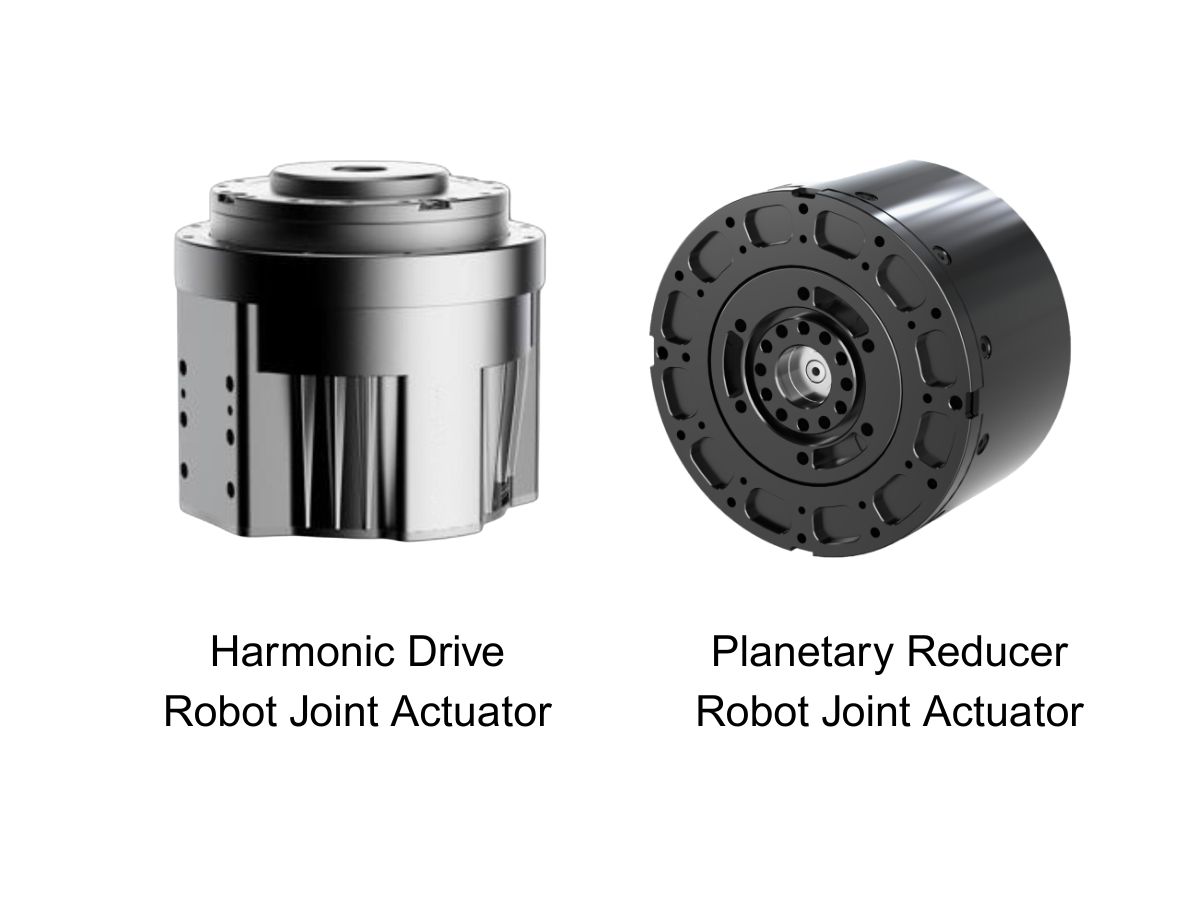
 What is robot joint actuator?How to Choose the Best Robot Rotary Joint Actuator?In core robot joint transmission solutions, planetary and harmonic rotary actuators each have their own strengths. Choosing the right type based on application requirements is essential to achieve the optimal balance between performance and cost.
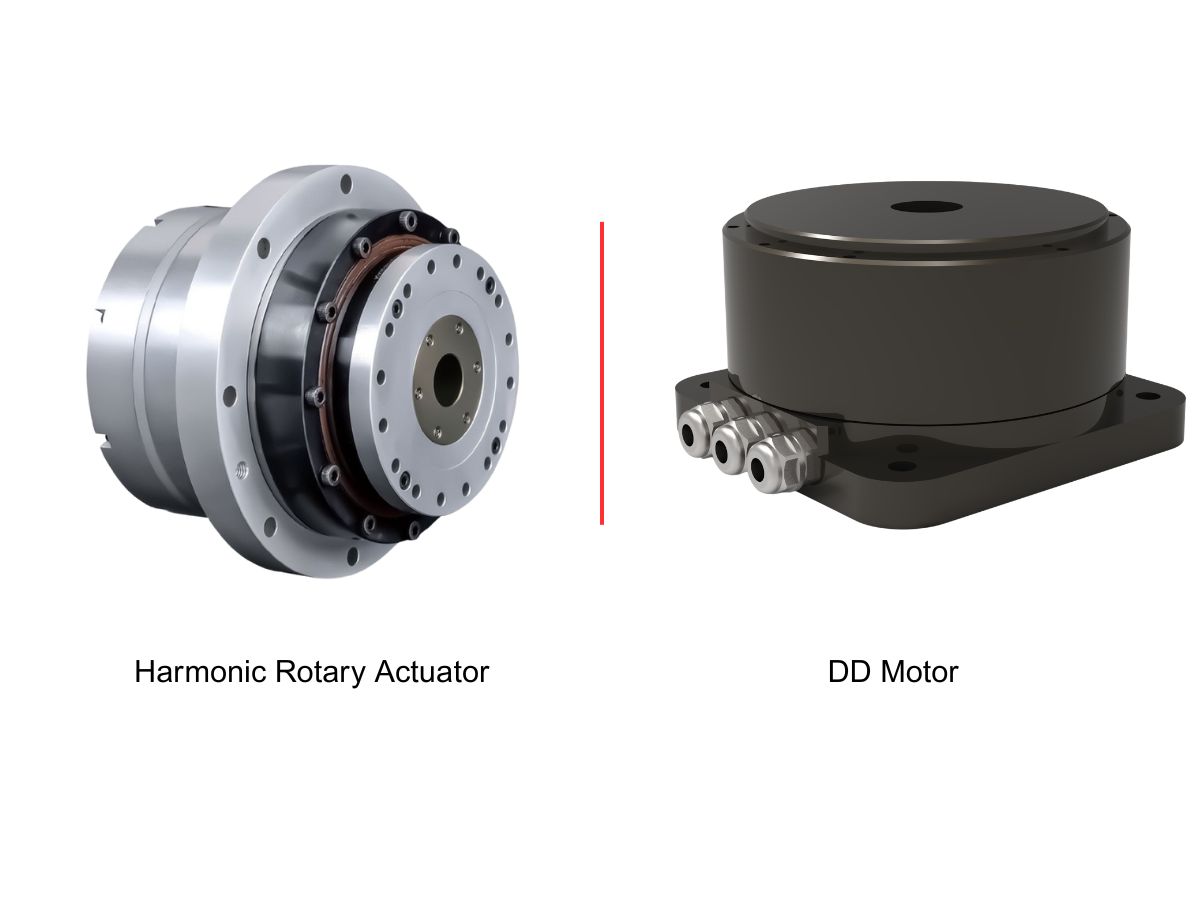
 DD Motors VS Harmonic Rotary ActuatorsThis article provides an in-depth comparison between Direct Drive (DD) motors and harmonic rotary actuators, covering their transmission principles, advantages and disadvantages, and typical application fields.
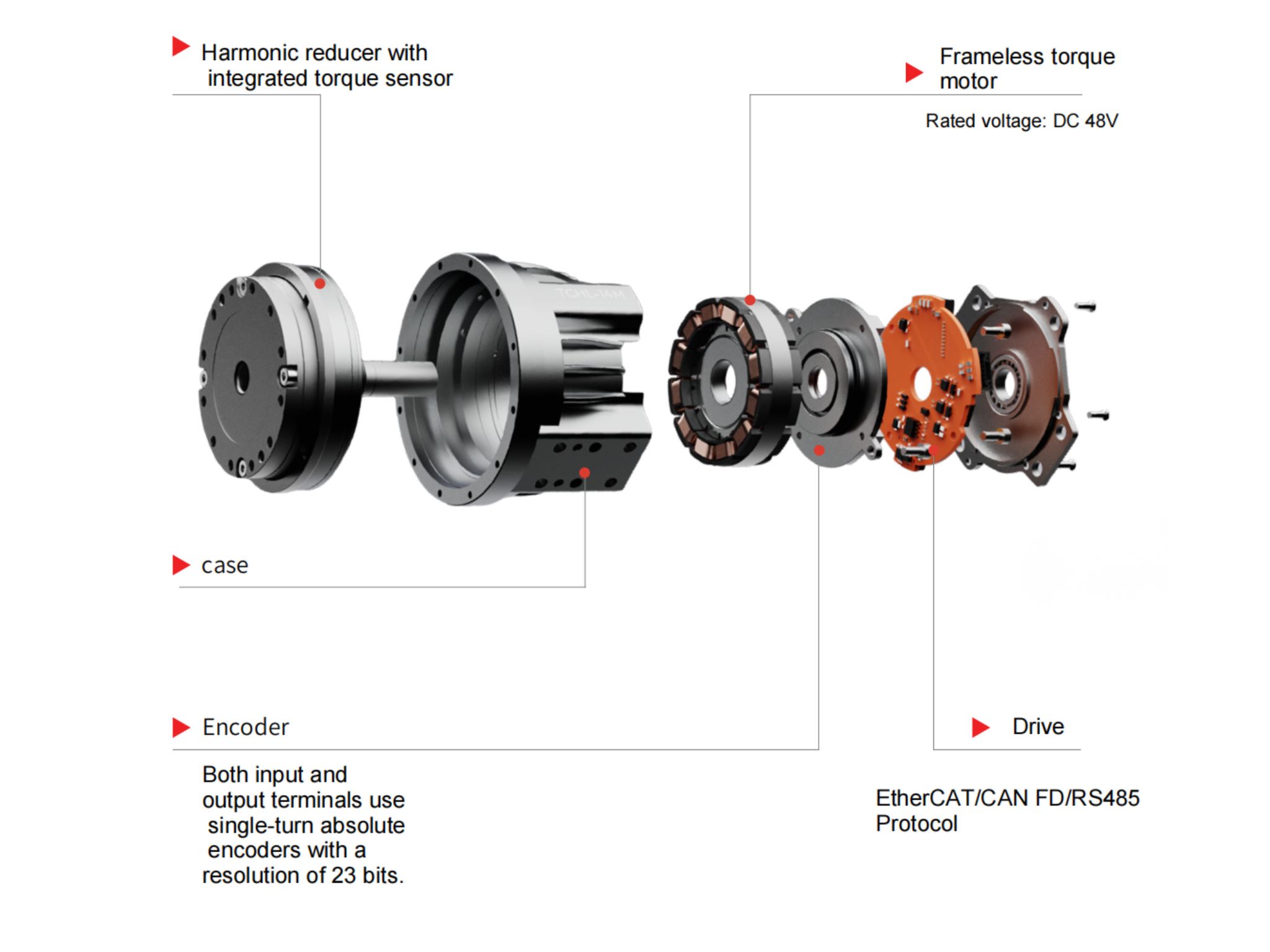
 OMG Ultra Compact Harmonic Drive Joint Module with Built-in Torque SensorHONPINE TCHL series harmonic drive joint module is a game-changing product that achieves disruptive improvements in multiple aspects such as lightweight design, integration level, and connection convenience. This article will analyze its revolutionary enhancements with you.
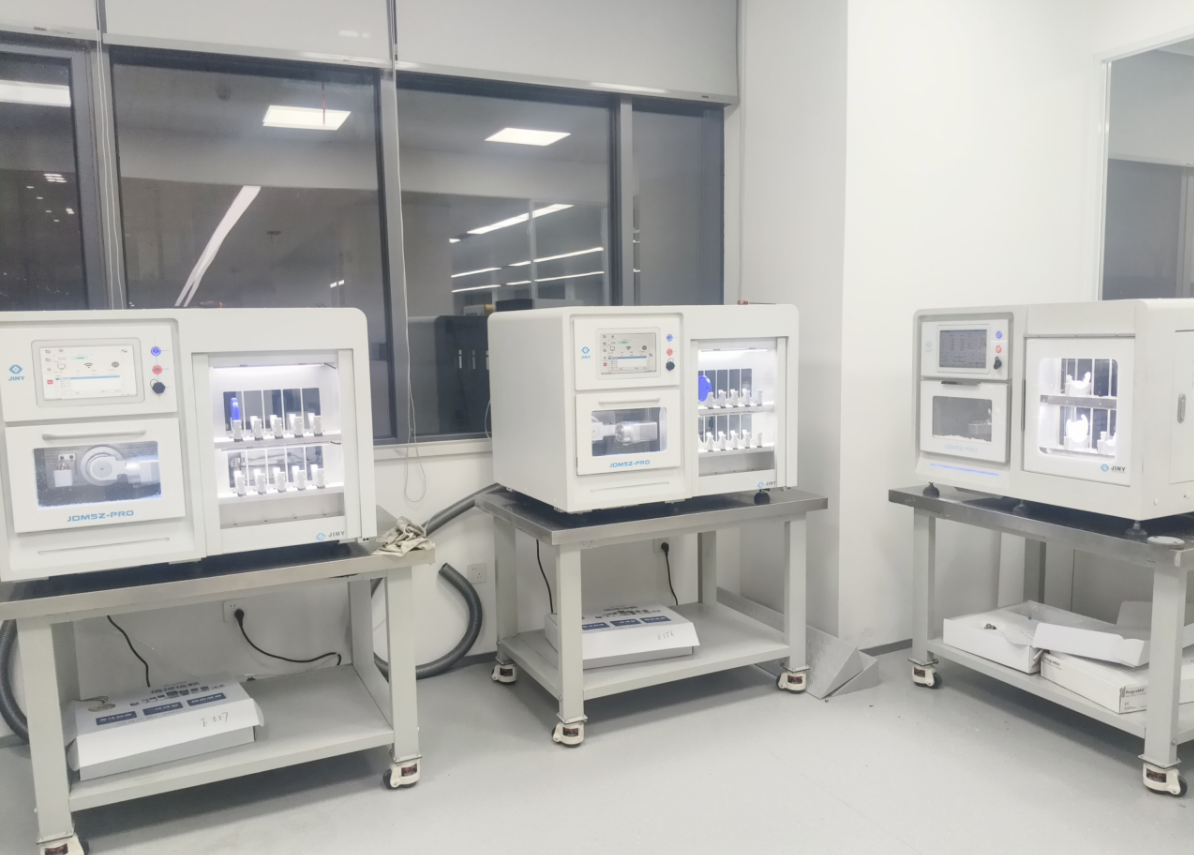
 The Role of Harmonic Drive Gears in Achieving 5–10 μm Accuracy in Dental Milling MachinesA dental milling machine is a CNC machining system used to directly process digital dental models into restorations such as crowns, bridges, veneers, inlays, and implant abutments. Dental milling machines require far higher operational accuracy and motion stability than ordinary equipment. This article explains how harmonic drive gear help dental milling machines achieve stable, continuous, and controllable operation.
 Why Are Harmonic Rotary Actuators Perfect for Medical Equipment?Harmonic rotary actuators (typically integrated systems consisting of a harmonic drive reducer, frameless torque motor, encoder, and optional brake) are regarded as key components in medical equipment. The core reason is that they simultaneously meet the most stringent medical requirements for precision, compact size, safety, and controllability. The following explanation is structured from three perspectives: technical characteristics, application scenarios, and medical value.
 High-Precision RV Reducers Perfectly Matched for Walking RobotsThe walking axis of a robot is a core component for power transmission and support. RV reducers provide extremely high rigidity, precision, and torque while maintaining a compact size and exceptional reliability, making them an ideal match for the demanding requirements of walking robot joints in terms of load capacity, impact resistance, and precision.
 How to Select Harmonic and RV Reducers for Each Axis of a Six-Axis Robot?What determines whether a six-axis robot joint needs a harmonic reducer or an RV reducer? The answer depends on torque, inertia, impact loads, bearing loads and installation space. This guide explains how to evaluate harmonic and RV reducers for the base, shoulder, elbow and wrist, with practical checks for stiffness, backlash and service life. Use the requirements of each axis to select a suitable reducer configuration.
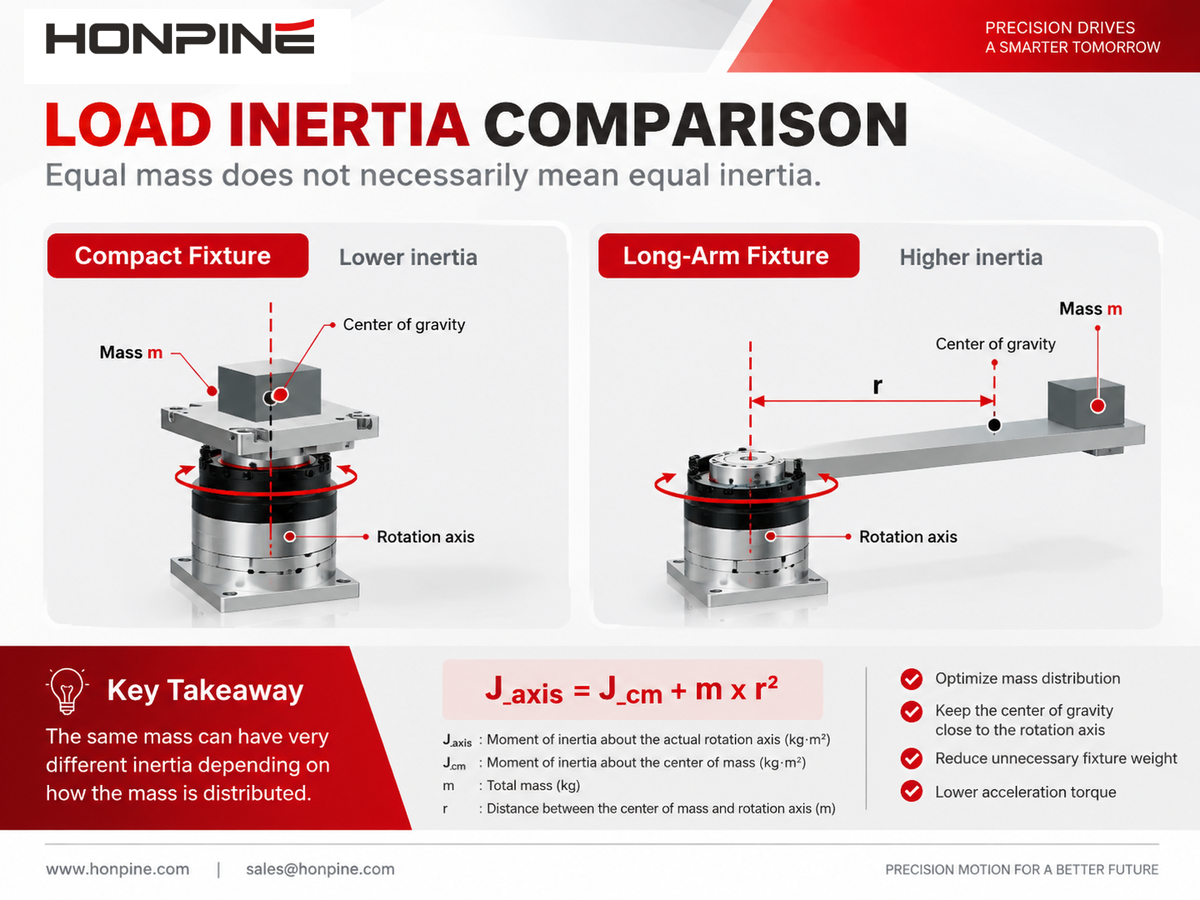
 How to Calculate Torque for a Harmonic Rotary Actuator in a Flipping Mechanism?How much torque does a harmonic rotary actuator need to flip a 10 kg load through 180 degrees? The answer depends on more than weight. Center-of-gravity offset, load inertia, acceleration and operating frequency all affect actuator selection. In this guide, Theodore Li, Technical Director at HONPINE, explains the calculation process using a horizontal-axis flipping example and outlines the checks needed for peak torque, continuous operation, output speed and bearing loads.
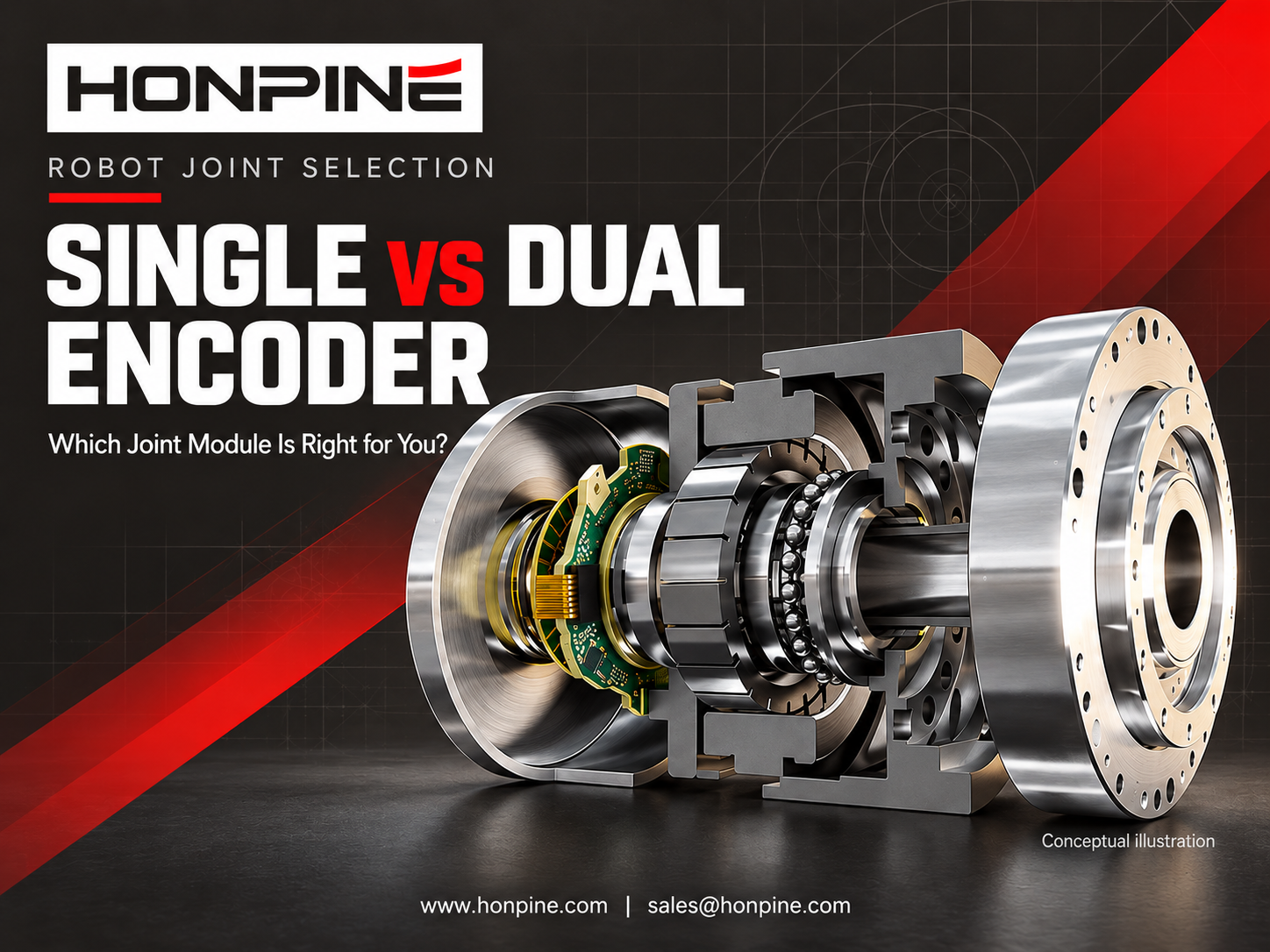
 What’s the Difference Between Single and Dual Encoder Robot Joint Modules?Does your robot need a dual encoder joint module, or is a single encoder enough? The answer depends on positioning requirements, transmission behavior, force control strategy and budget. This guide compares motor-side and output-side feedback, explains where dual encoders can improve control, and examines their costs and limitations. Learn when a single encoder can meet your needs and when additional output feedback is worth considering.
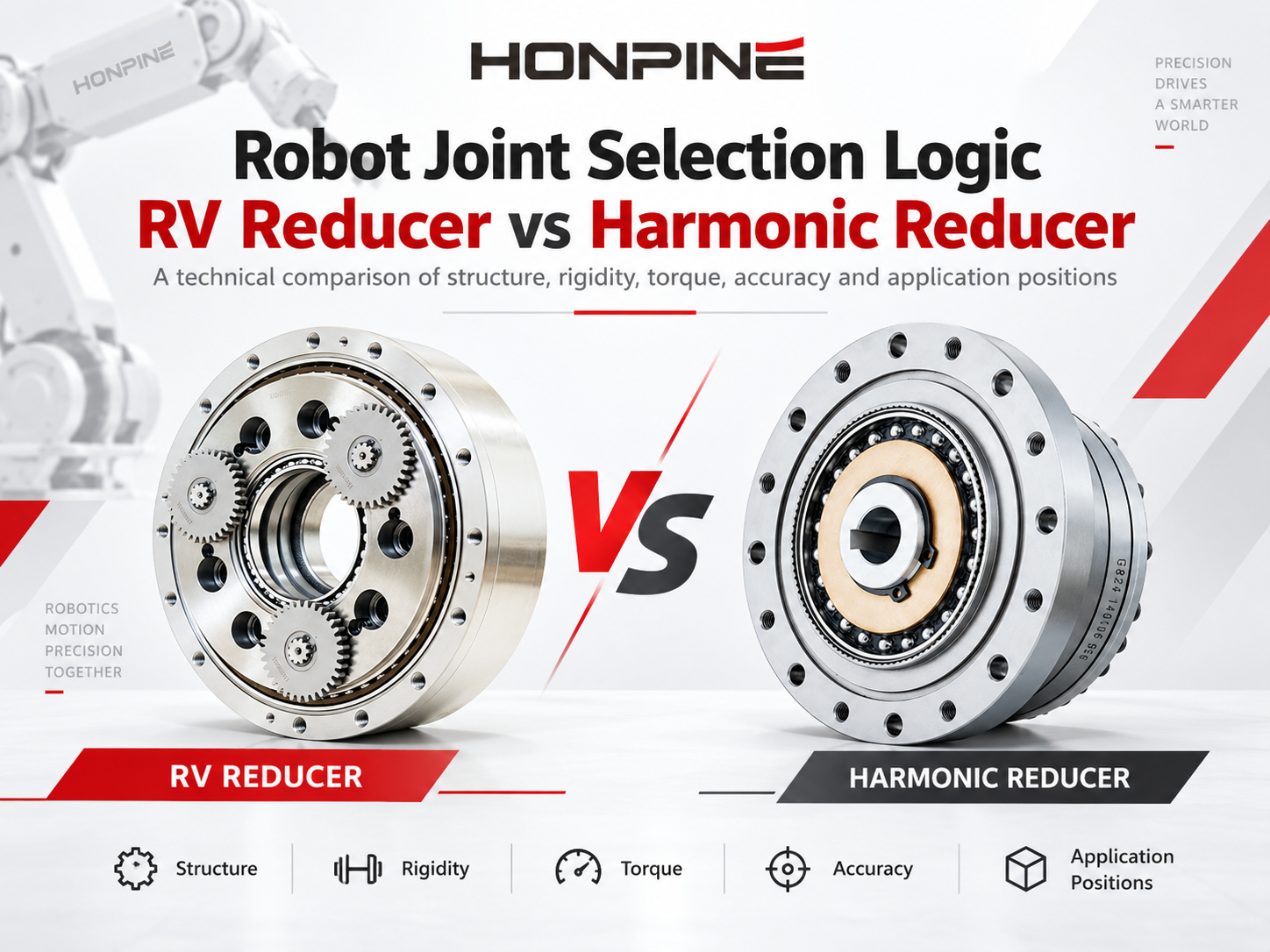
 RV vs Harmonic Reducer: How to Choose the Right Gearbox for Robot Joints?RV vs harmonic reducer: which gearbox is right for your robot joint? The answer depends on torque, rigidity, accuracy, installation space and operating conditions. This guide compares their working principles and five key performance factors, then explains how to evaluate joint loads, reducer life, temperature and lubrication. Whether you are designing a robot base, shoulder, elbow or wrist, use these considerations to match the reducer to the requirements of each joint.
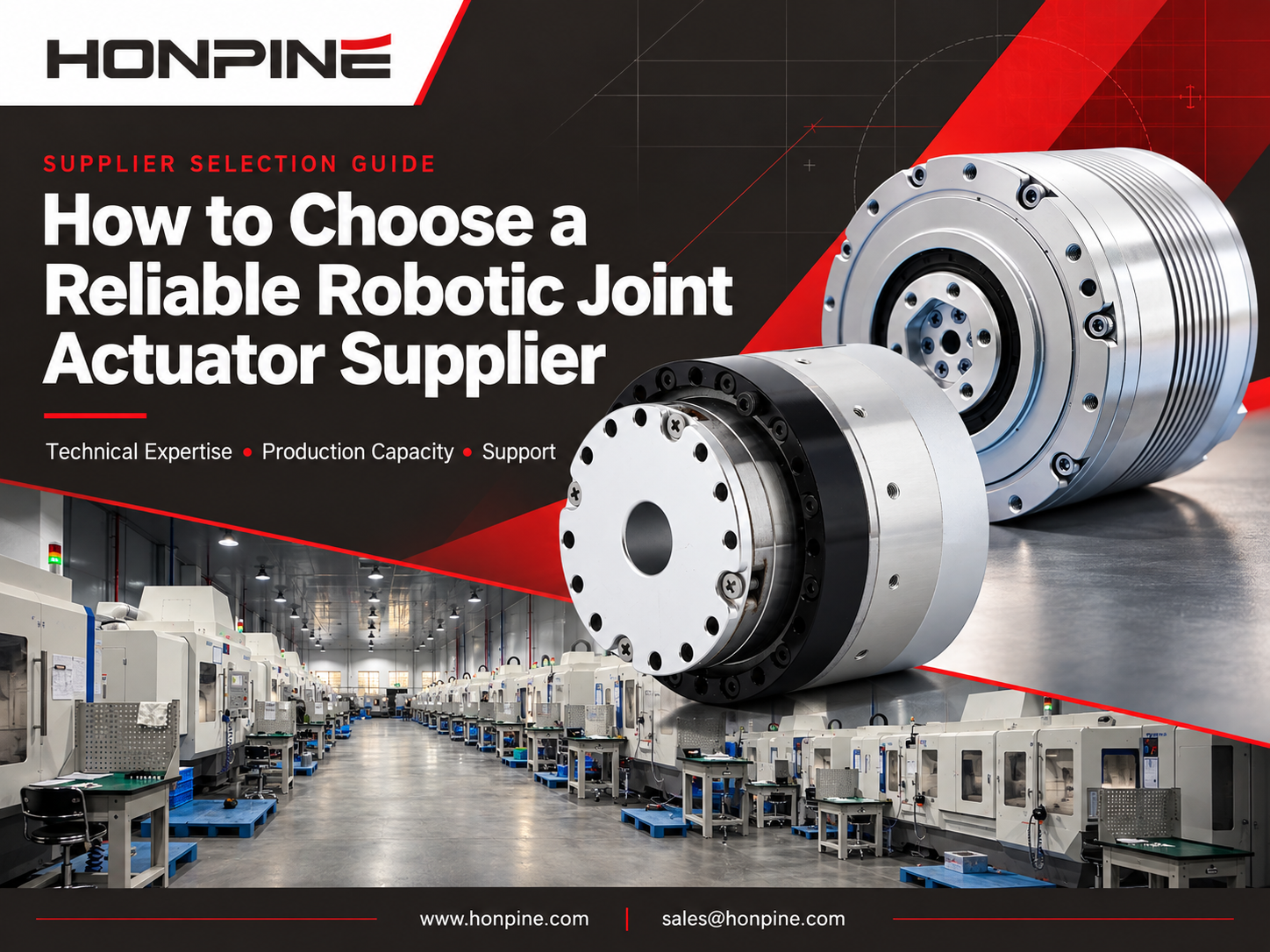
 How to Find a Reliable Robotic Joint Actuator Supplier?Choosing the right robotic joint actuator supplier is essential for reliable performance, smooth integration and long-term project success. Beyond product specifications, you need to understand a supplier’s technical expertise, production capacity and after-sales support. In this guide, Allen Li, Founder of HONPINE, explains how to assess these three factors when sourcing harmonic and planetary joint actuators for robotics and industrial automation.
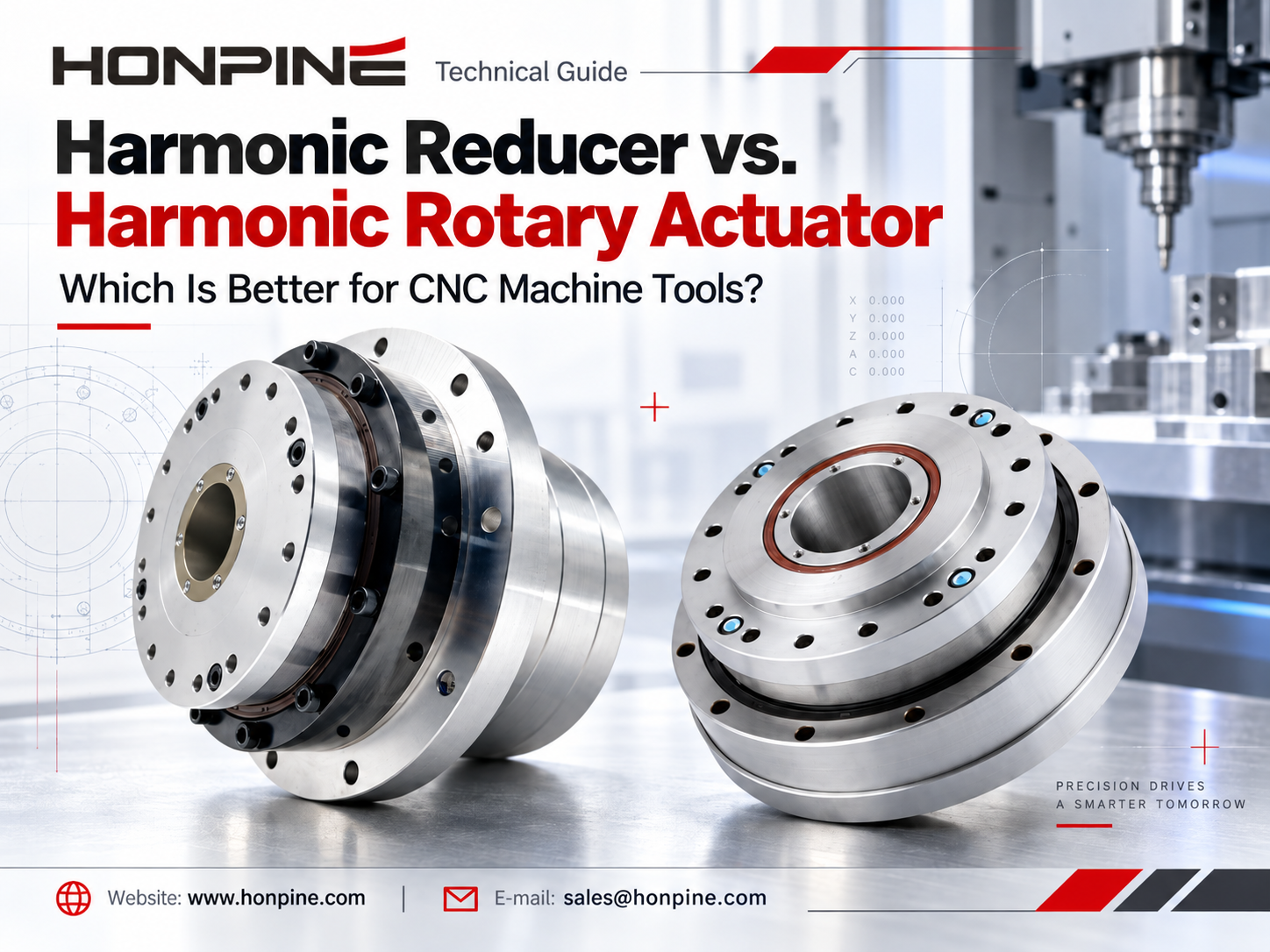
 Harmonic Reducer vs. Harmonic Rotary Actuator: Which Is Better for CNC Machine Tools?Choosing between a harmonic reducer and a harmonic rotary actuator is an important decision in CNC machine tool design. Both solutions offer high-precision motion control, but they differ in integration, installation requirements, rigidity, and system flexibility. For CNC fourth-axis rotary tables and compact five-axis machining systems, selecting the right harmonic drive can significantly influence machine performance. In this article, HONPINE Technical Director Theodore Li compares harmonic reducers and harmonic rotary actuators to help engineers identify the most suitable solution for their CNC applications.
Double Click
We provide harmonic drive reducer,planetary reducer,robot joint motor,robot rotary actuators,RV gear reducer,robot end effector,dexterous robot hand
 What is robot joint actuator?How to Choose the Best Robot Rotary Joint Actuator?In core robot joint transmission solutions, planetary and harmonic rotary actuators each have their own strengths. Choosing the right type based on application requirements is essential to achieve the optimal balance between performance and cost.
 DD Motors VS Harmonic Rotary ActuatorsThis article provides an in-depth comparison between Direct Drive (DD) motors and harmonic rotary actuators, covering their transmission principles, advantages and disadvantages, and typical application fields.
 OMG Ultra Compact Harmonic Drive Joint Module with Built-in Torque SensorHONPINE TCHL series harmonic drive joint module is a game-changing product that achieves disruptive improvements in multiple aspects such as lightweight design, integration level, and connection convenience. This article will analyze its revolutionary enhancements with you.
 The Role of Harmonic Drive Gears in Achieving 5–10 μm Accuracy in Dental Milling MachinesA dental milling machine is a CNC machining system used to directly process digital dental models into restorations such as crowns, bridges, veneers, inlays, and implant abutments. Dental milling machines require far higher operational accuracy and motion stability than ordinary equipment. This article explains how harmonic drive gear help dental milling machines achieve stable, continuous, and controllable operation.
 Why Are Harmonic Rotary Actuators Perfect for Medical Equipment?Harmonic rotary actuators (typically integrated systems consisting of a harmonic drive reducer, frameless torque motor, encoder, and optional brake) are regarded as key components in medical equipment. The core reason is that they simultaneously meet the most stringent medical requirements for precision, compact size, safety, and controllability. The following explanation is structured from three perspectives: technical characteristics, application scenarios, and medical value.
 High-Precision RV Reducers Perfectly Matched for Walking RobotsThe walking axis of a robot is a core component for power transmission and support. RV reducers provide extremely high rigidity, precision, and torque while maintaining a compact size and exceptional reliability, making them an ideal match for the demanding requirements of walking robot joints in terms of load capacity, impact resistance, and precision.
 How to Select Harmonic and RV Reducers for Each Axis of a Six-Axis Robot?What determines whether a six-axis robot joint needs a harmonic reducer or an RV reducer? The answer depends on torque, inertia, impact loads, bearing loads and installation space. This guide explains how to evaluate harmonic and RV reducers for the base, shoulder, elbow and wrist, with practical checks for stiffness, backlash and service life. Use the requirements of each axis to select a suitable reducer configuration.
 How to Calculate Torque for a Harmonic Rotary Actuator in a Flipping Mechanism?How much torque does a harmonic rotary actuator need to flip a 10 kg load through 180 degrees? The answer depends on more than weight. Center-of-gravity offset, load inertia, acceleration and operating frequency all affect actuator selection. In this guide, Theodore Li, Technical Director at HONPINE, explains the calculation process using a horizontal-axis flipping example and outlines the checks needed for peak torque, continuous operation, output speed and bearing loads.
 What’s the Difference Between Single and Dual Encoder Robot Joint Modules?Does your robot need a dual encoder joint module, or is a single encoder enough? The answer depends on positioning requirements, transmission behavior, force control strategy and budget. This guide compares motor-side and output-side feedback, explains where dual encoders can improve control, and examines their costs and limitations. Learn when a single encoder can meet your needs and when additional output feedback is worth considering.
 RV vs Harmonic Reducer: How to Choose the Right Gearbox for Robot Joints?RV vs harmonic reducer: which gearbox is right for your robot joint? The answer depends on torque, rigidity, accuracy, installation space and operating conditions. This guide compares their working principles and five key performance factors, then explains how to evaluate joint loads, reducer life, temperature and lubrication. Whether you are designing a robot base, shoulder, elbow or wrist, use these considerations to match the reducer to the requirements of each joint.
 How to Find a Reliable Robotic Joint Actuator Supplier?Choosing the right robotic joint actuator supplier is essential for reliable performance, smooth integration and long-term project success. Beyond product specifications, you need to understand a supplier’s technical expertise, production capacity and after-sales support. In this guide, Allen Li, Founder of HONPINE, explains how to assess these three factors when sourcing harmonic and planetary joint actuators for robotics and industrial automation.
 Harmonic Reducer vs. Harmonic Rotary Actuator: Which Is Better for CNC Machine Tools?Choosing between a harmonic reducer and a harmonic rotary actuator is an important decision in CNC machine tool design. Both solutions offer high-precision motion control, but they differ in integration, installation requirements, rigidity, and system flexibility. For CNC fourth-axis rotary tables and compact five-axis machining systems, selecting the right harmonic drive can significantly influence machine performance. In this article, HONPINE Technical Director Theodore Li compares harmonic reducers and harmonic rotary actuators to help engineers identify the most suitable solution for their CNC applications.