









130,000+ China-Europe Freight Trains: Machinery Cargo Hits 38%, Timed-Service Trains Boost Per-Container Value by 41%
On May 9, 2026, the cumulative number of China-Europe freight trains surpassed 130,000, with total cargo value exceeding USD 52 billion. This milestone reflects evolving trade logistics infrastructure and regulatory alignment across Eurasian corridors — directly impacting equipment exporters, supply chain service providers, and manufacturing enterprises operating under international delivery commitments.
Confirmed Operational Milestone
As of May 9, 2026, the China-Europe freight train network reached 130,000 total departures. Customs data confirms that machinery-related cargo accounted for 38% of total shipment value — the highest share among all commodity categories. Timed-service trains — operating on 22 designated routes including China–Germany, China–Poland, and China–Hungary — achieved an average per-container cargo value 41% higher than standard services, with on-time performance exceeding 99.2%. These trains are now the preferred transport channel for high-value exports such as full-size CNC machine tools and five-axis machining centers.
Impact Across Supply Chain Roles
Direct Exporters
Exporters of precision machinery face tighter delivery windows and heightened expectations for documentation integrity. The rise in timed-service utilization means customs clearance timelines, certificate of origin validity, and conformity declarations (e.g., CE marking for EU-bound goods) must align precisely with scheduled departure windows — any delay risks cascading penalties or loss of priority allocation.
Raw Material & Component Procurement Firms
Firms sourcing critical subsystems (e.g., servo drives, linear guides, or control panels) for final assembly must now coordinate procurement cycles with train schedules rather than port-based maritime lead times. Shorter, more predictable inland transit durations compress buffer periods — increasing sensitivity to upstream supplier reliability and technical documentation readiness.
Manufacturing Enterprises
Equipment manufacturers exporting complete machines must ensure factory-ready units meet both destination-market regulatory requirements (e.g., EMC, safety, energy efficiency standards) and logistical constraints — such as dimensional limits, weight distribution, and vibration resistance during rail transit. Pre-shipment verification now includes transport-condition validation alongside functional testing.
Supply Chain Service Providers
Logistics integrators and freight forwarders specializing in rail-based Eurasian trade are shifting from capacity brokerage to end-to-end compliance orchestration. Services increasingly include pre-clearance advisory, harmonized system (HS) code verification, and real-time coordination with border inspection agencies — especially along key nodes like Malaszewicze, Brest, and Duisburg.
Strategic Priorities for Enterprise Response
Align Technical Documentation with Timed-Service Requirements
CE, UKCA, or EAC certifications must be validated not only for product compliance but also for timely submission — as timed-service trains operate on fixed weekly slots; incomplete or outdated certificates may disqualify shipments from priority loading.
Optimize Production & Packaging for Rail-Specific Handling
Five-axis machining centers and other large-scale equipment require reinforced crating, anti-vibration mounting, and ISO container compatibility assessments — particularly for double-stack or gauge-adjusted routes. Packaging specifications must now reflect rail-specific mechanical stress profiles, not just maritime or road transport norms.
Integrate Train Schedule into Delivery Commitments
Sales contracts and export quotations should reference confirmed timed-service frequency (e.g., ‘weekly China–Munich direct service’) and associated transit duration (typically 14–18 days), enabling more accurate lead time promises and reducing reliance on air-freight contingency buffers.
Strengthen Supplier Compliance Oversight
Sub-tier suppliers providing certified components (e.g., motors, controllers, or human-machine interfaces) must provide up-to-date test reports and declaration of conformity — traceable to recognized third-party labs — to avoid last-minute certification gaps during consolidated customs filing.
Industry Observation: Beyond Capacity — Toward Regulatory Synchronization
Analysis shows this milestone is less about volume growth and more about institutional maturation: the 99.2% on-time rate signals improved cross-border customs interoperability, standardized digital documentation exchange (e.g., e-CMR adoption), and harmonized phytosanitary and technical inspection protocols. What deserves closer attention is how national regulatory authorities — particularly in Central and Eastern Europe — are adapting conformity assessment procedures to accommodate rail-specific risk profiles, such as extended vibration exposure or temperature fluctuations across climatic zones. This trend implies rising demand for transport-condition validation in type approval processes — a shift that may gradually influence IEC, ISO, and EN standard development agendas.
Broader Implications for Industrial Trade Infrastructure
This milestone underscores a structural transition: China-Europe rail is no longer a cost-driven alternative to maritime shipping, but a premium, schedule-governed logistics layer supporting high-integrity industrial exports. Its growing dominance in high-value machinery transport reflects tightening integration between physical infrastructure, regulatory frameworks, and digital trade systems — reshaping how manufacturers define ‘readiness’ for international markets.
Source Attribution & Verification Guidance
This article synthesizes the provided headline, event date (May 9, 2026), and summary. It draws no external data, proprietary reports, or unverified policy documents. Typical authoritative sources for such developments include national railway administration bulletins (e.g., China State Railway Group), EU Commission transport statistics, UNECE intergovernmental working group outputs, and customs authority trade flow dashboards. Specific official source links were not provided in the input and should be verified continuously. Stakeholders are advised to monitor upcoming updates on rail-specific conformity guidance, bilateral customs mutual recognition arrangements, and tender requirements for public-sector machinery procurement in target markets.
Read More
Learn more about the story of HONPINE and industry trends related to precision transmission.
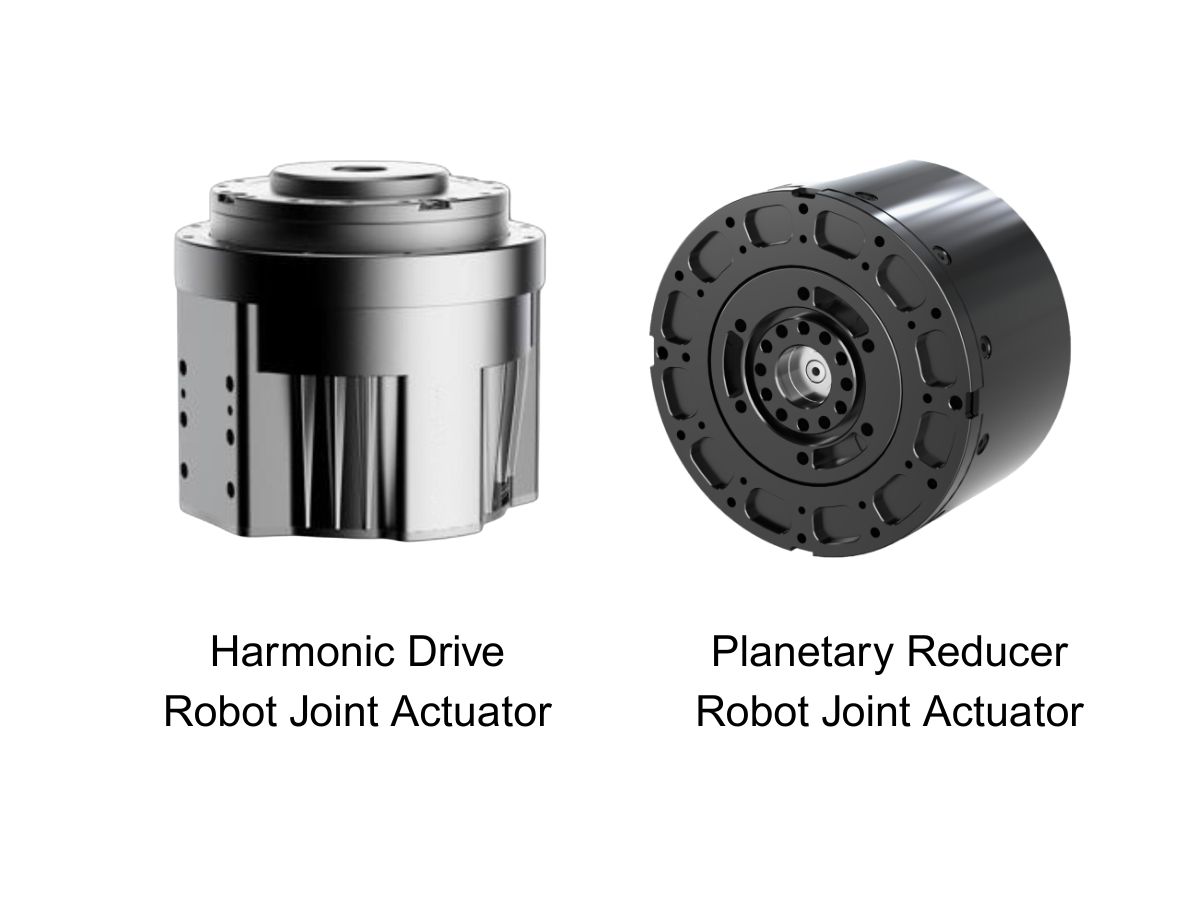
 What is robot joint actuator?How to Choose the Best Robot Rotary Joint Actuator?In core robot joint transmission solutions, planetary and harmonic rotary actuators each have their own strengths. Choosing the right type based on application requirements is essential to achieve the optimal balance between performance and cost.
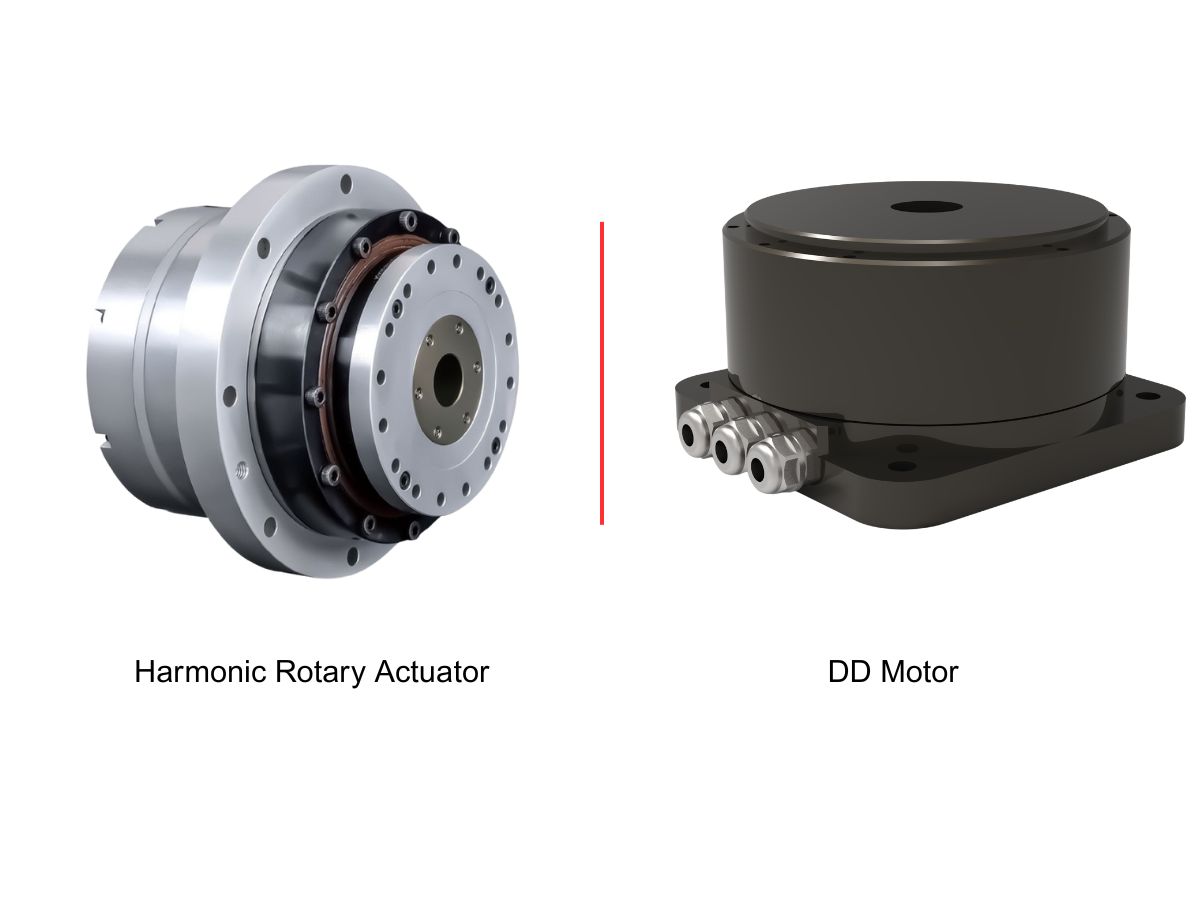
 DD Motors VS Harmonic Rotary ActuatorsThis article provides an in-depth comparison between Direct Drive (DD) motors and harmonic rotary actuators, covering their transmission principles, advantages and disadvantages, and typical application fields.
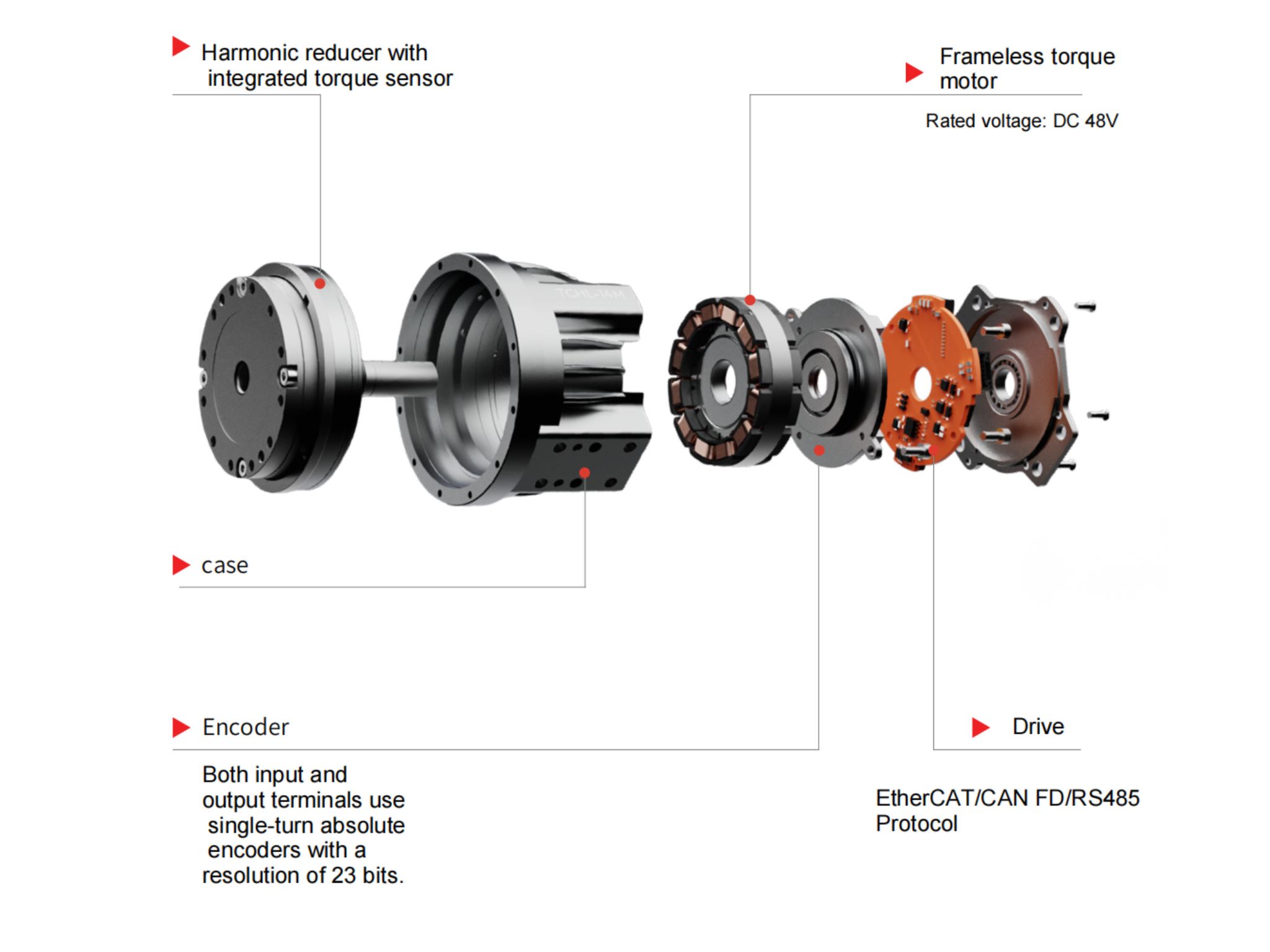
 OMG Ultra Compact Harmonic Drive Joint Module with Built-in Torque SensorHONPINE TCHL series harmonic drive joint module is a game-changing product that achieves disruptive improvements in multiple aspects such as lightweight design, integration level, and connection convenience. This article will analyze its revolutionary enhancements with you.
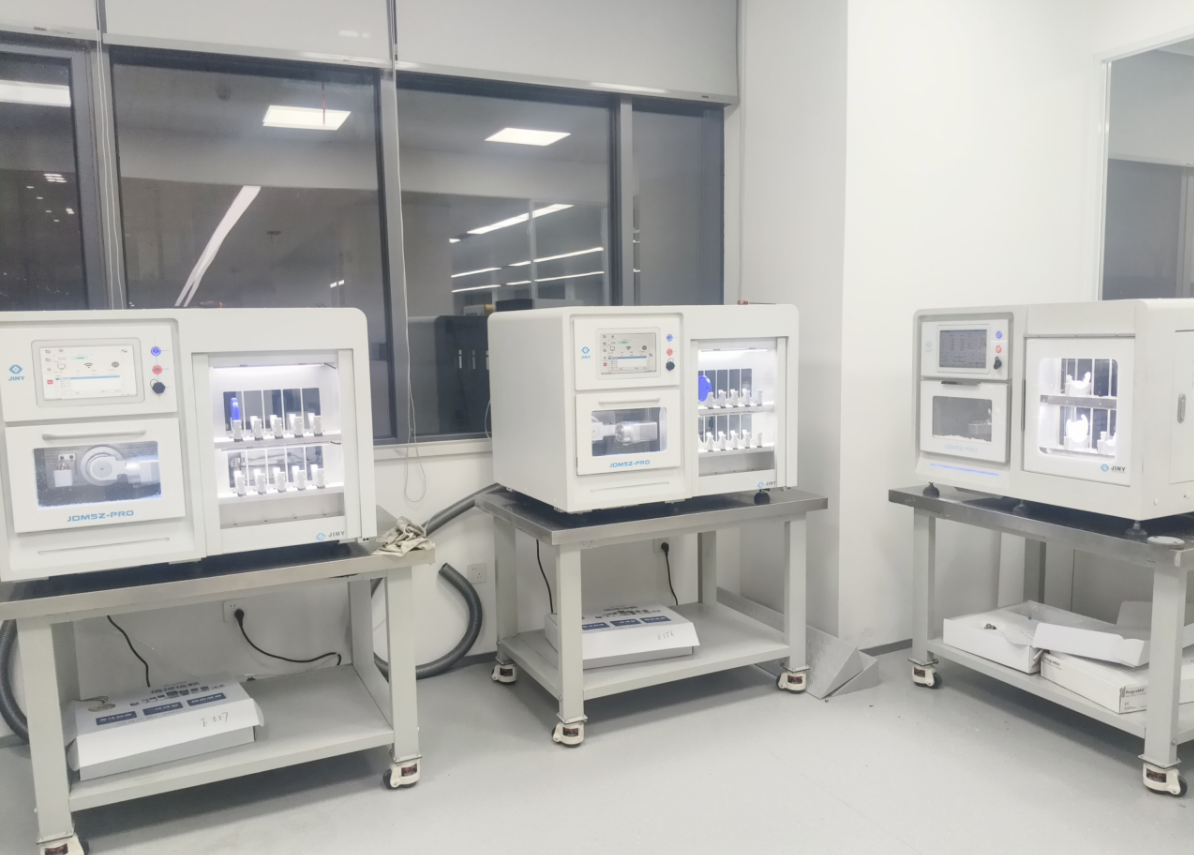
 The Role of Harmonic Drive Gears in Achieving 5–10 μm Accuracy in Dental Milling MachinesA dental milling machine is a CNC machining system used to directly process digital dental models into restorations such as crowns, bridges, veneers, inlays, and implant abutments. Dental milling machines require far higher operational accuracy and motion stability than ordinary equipment. This article explains how harmonic drive gear help dental milling machines achieve stable, continuous, and controllable operation.
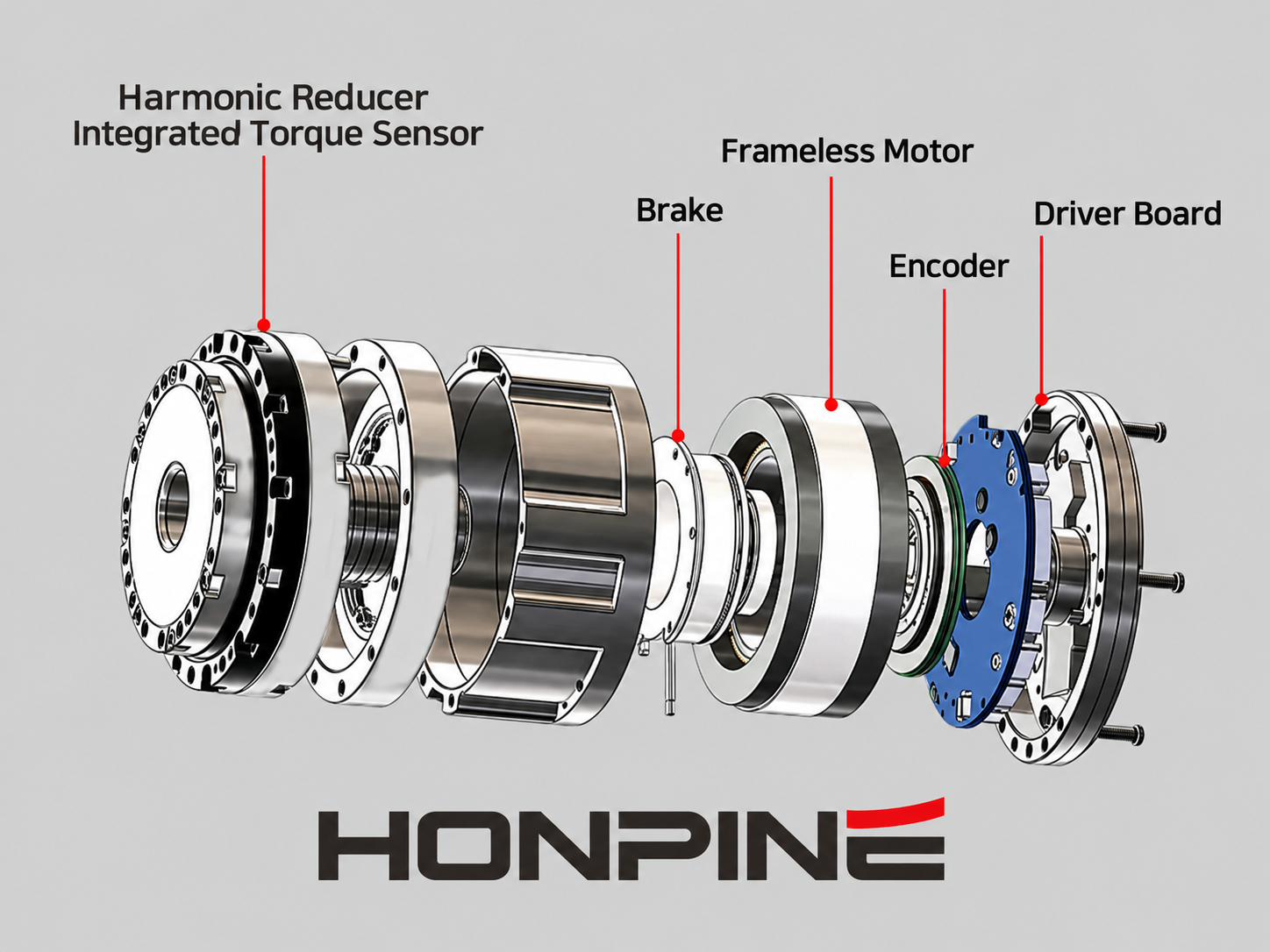
 Why Are Harmonic Rotary Actuators Perfect for Medical Equipment?Harmonic rotary actuators (typically integrated systems consisting of a harmonic drive reducer, frameless torque motor, encoder, and optional brake) are regarded as key components in medical equipment. The core reason is that they simultaneously meet the most stringent medical requirements for precision, compact size, safety, and controllability. The following explanation is structured from three perspectives: technical characteristics, application scenarios, and medical value.
 High-Precision RV Reducers Perfectly Matched for Walking RobotsThe walking axis of a robot is a core component for power transmission and support. RV reducers provide extremely high rigidity, precision, and torque while maintaining a compact size and exceptional reliability, making them an ideal match for the demanding requirements of walking robot joints in terms of load capacity, impact resistance, and precision.
 Harmonic Reducer vs. Harmonic Rotary Actuator: Which Is Better for CNC Machine Tools?Choosing between a harmonic reducer and a harmonic rotary actuator is an important decision in CNC machine tool design. Both solutions offer high-precision motion control, but they differ in integration, installation requirements, rigidity, and system flexibility. For CNC fourth-axis rotary tables and compact five-axis machining systems, selecting the right harmonic drive can significantly influence machine performance. In this article, HONPINE Technical Director Theodore Li compares harmonic reducers and harmonic rotary actuators to help engineers identify the most suitable solution for their CNC applications.
 How to Choose Harmonic Joint Actuators for a 7-DOF Robotic Arm?I'm Theodore Li, Technical Director at HONPINE. Choosing harmonic joint actuators for a 7-DOF robotic arm starts with the torque, weight, and installation needs of each joint. This guide uses a TCHL 20 shoulder and TCHL 14 wrist configuration as an example, then explores torque sensing, compliant control, and HAG Series considerations for demanding robotic applications.
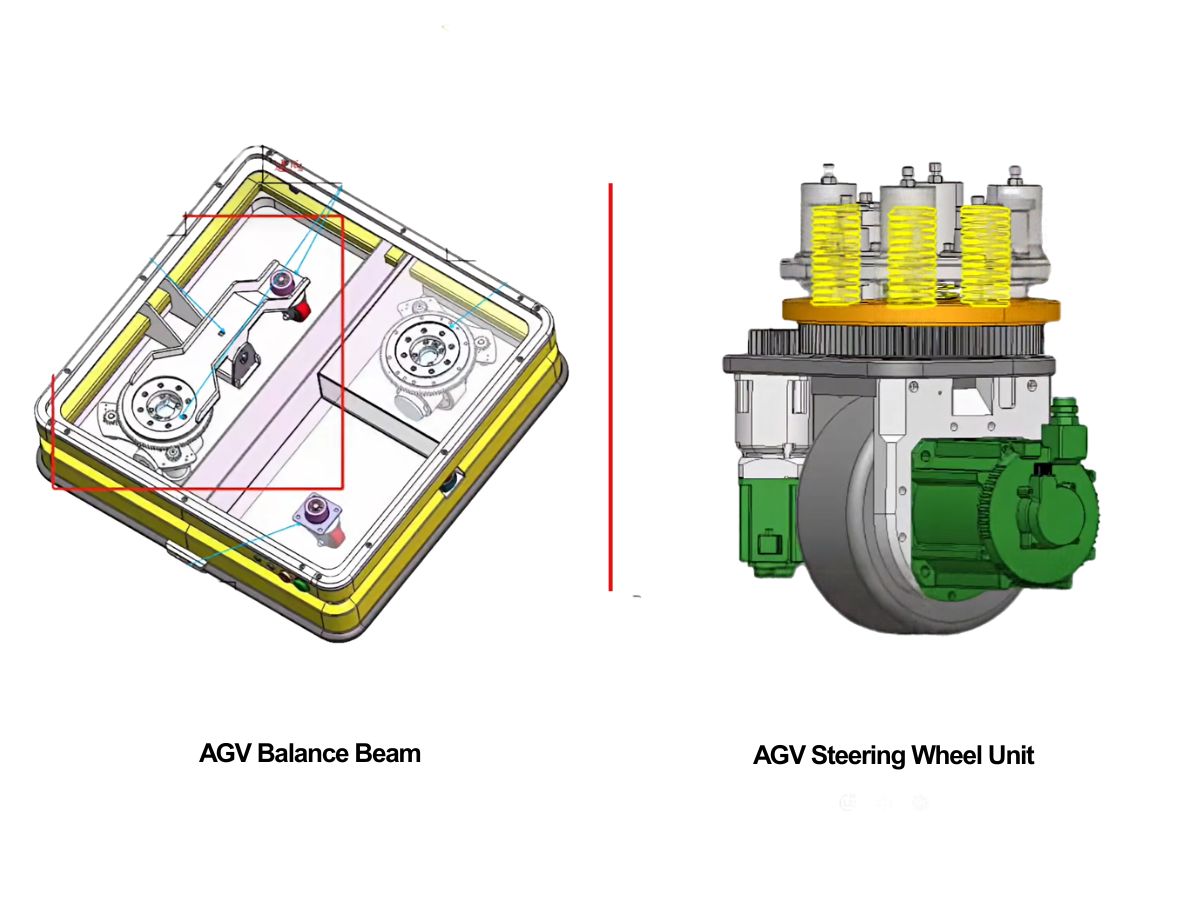
 AGV Suspension: Should You Choose a Balance Beam or a Spring-Loaded Steering Drive Unit?Choosing an AGV suspension system starts with the vehicle’s load range and floor conditions. Balance beams and spring-loaded steering drive units offer different approaches to maintaining wheel contact and managing wheel loads. This HONPINE guide compares both options and explains how to evaluate traction, suspension travel, installation space, and maintenance before choosing a configuration.
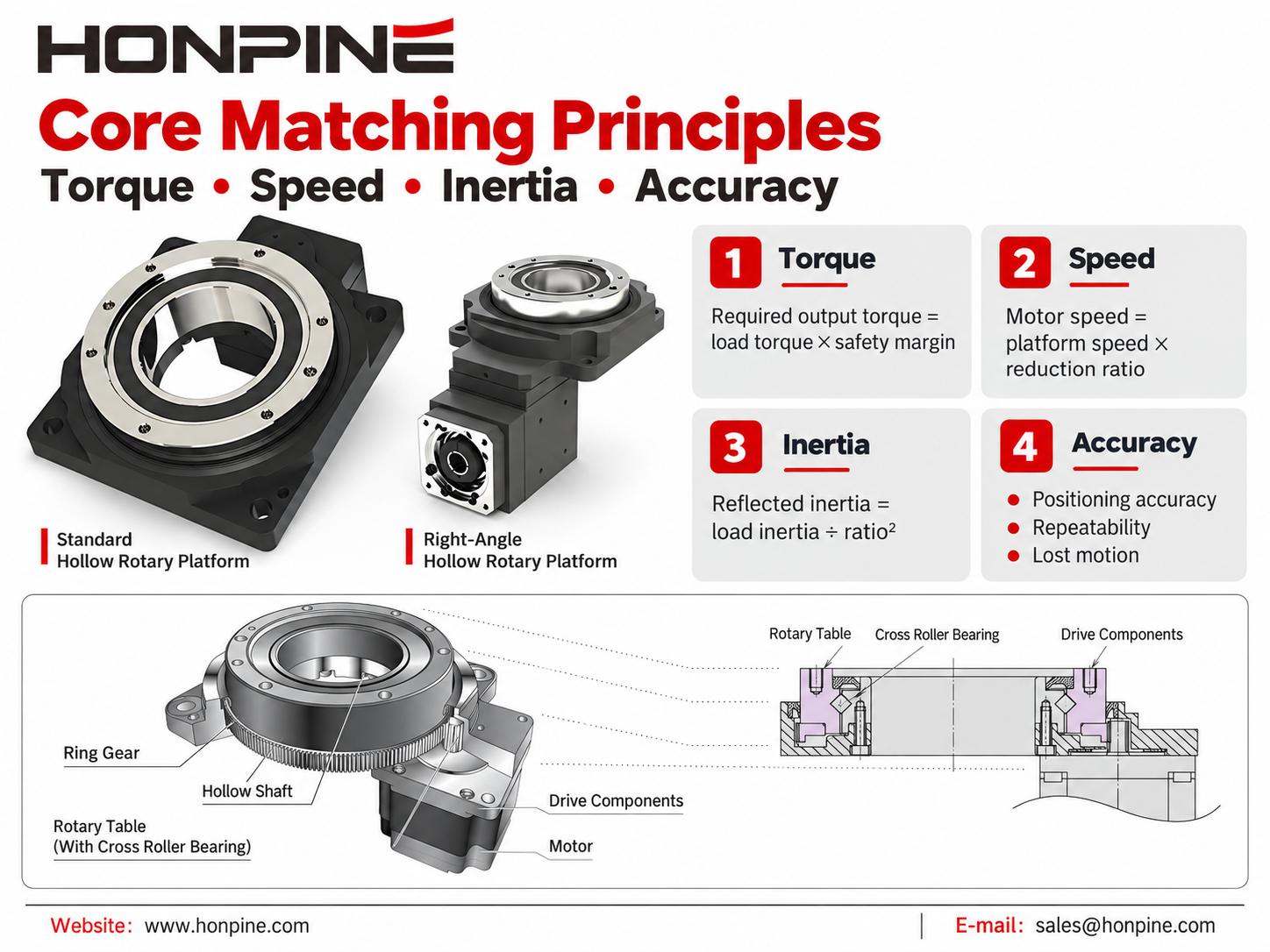
 Hollow Rotary Platform Motor Matching: A Complete GuideSelecting the right motor for a hollow rotary platform is essential for achieving precise positioning, stable operation, and efficient automation. This guide explains how to match servo motors, stepper motors, and brushless DC motors with hollow rotary platforms based on torque, speed, inertia, accuracy, and installation requirements. Explore practical motor selection guidelines, typical application combinations, and space-saving mounting solutions to find the right configuration for your automation project.
 Can Robots Feel Touch? HONPINE HAG Force-Controlled Harmonic Robot Joint MotorsCan robots respond to a gentle touch? The HONPINE HAG robot joint motor with torque sensor combines a harmonic reducer, integrated torque sensing, and closed-loop control to detect external forces and support smooth, compliant motion. In this article, HONPINE founder Allen Li demonstrates the module's response to light contact and hand-guided movement, explains its key force-control technologies, and shares the vision behind joint modules designed for practical industrial robotics.
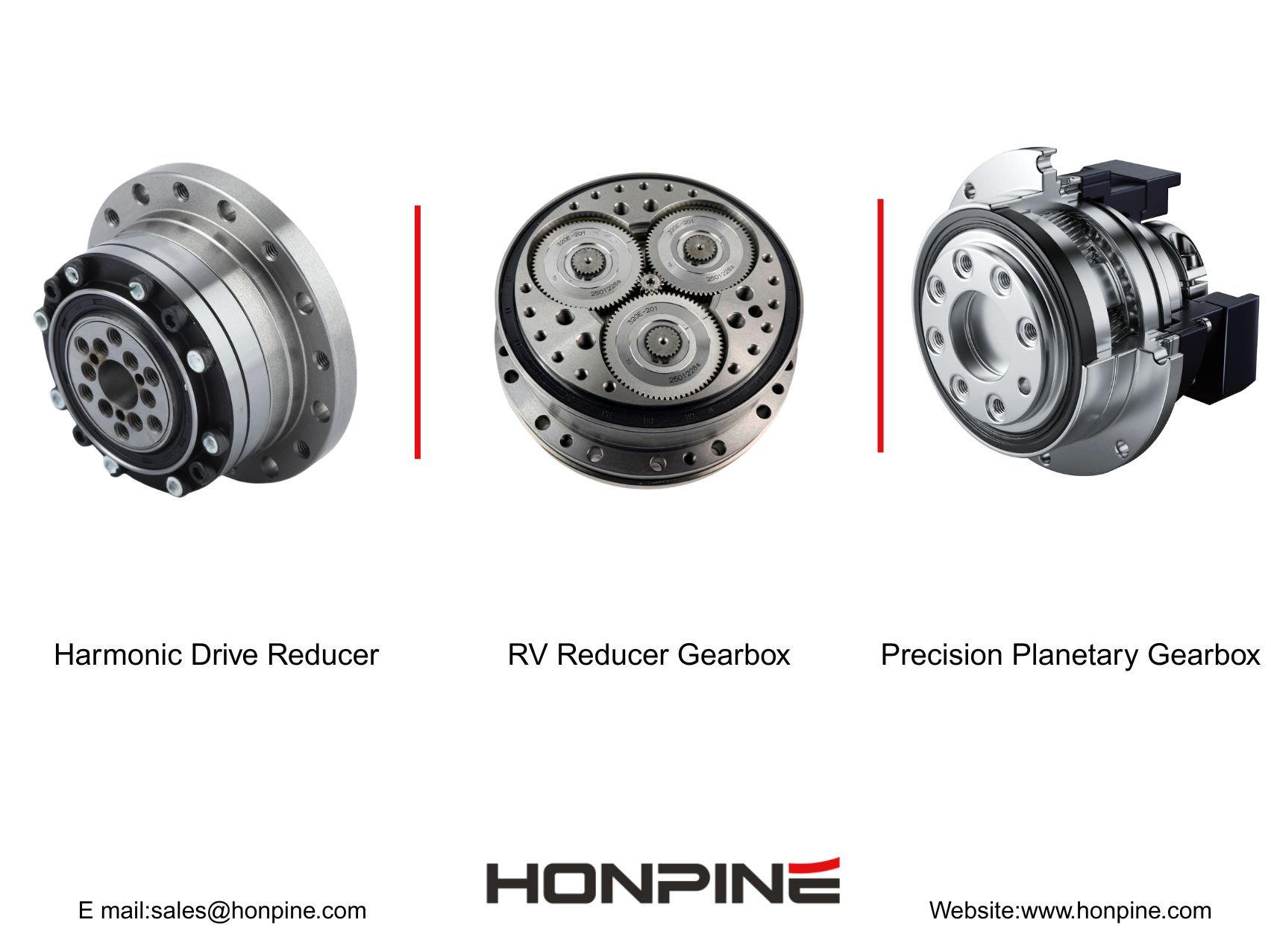
 Does a Higher Gearbox Ratio Mean More Torque? Planetary, Harmonic, and RV Gearboxes ExplainedDoes a higher gearbox ratio mean more torque? This engineering guide explains the relationship between gearbox ratio, output torque, and output speed, and compares planetary gearboxes, harmonic gearboxes, and RV gearboxes. Learn why reduction ratio alone cannot determine gearbox torque capacity, efficiency, dynamic response, precision, or service life, and what engineers should consider when selecting a gearbox for robotics, CNC machines, servo systems, and industrial motion control.
Double Click
We provide harmonic drive reducer,planetary reducer,robot joint motor,robot rotary actuators,RV gear reducer,robot end effector,dexterous robot hand
 What is robot joint actuator?How to Choose the Best Robot Rotary Joint Actuator?In core robot joint transmission solutions, planetary and harmonic rotary actuators each have their own strengths. Choosing the right type based on application requirements is essential to achieve the optimal balance between performance and cost.
 DD Motors VS Harmonic Rotary ActuatorsThis article provides an in-depth comparison between Direct Drive (DD) motors and harmonic rotary actuators, covering their transmission principles, advantages and disadvantages, and typical application fields.
 OMG Ultra Compact Harmonic Drive Joint Module with Built-in Torque SensorHONPINE TCHL series harmonic drive joint module is a game-changing product that achieves disruptive improvements in multiple aspects such as lightweight design, integration level, and connection convenience. This article will analyze its revolutionary enhancements with you.
 The Role of Harmonic Drive Gears in Achieving 5–10 μm Accuracy in Dental Milling MachinesA dental milling machine is a CNC machining system used to directly process digital dental models into restorations such as crowns, bridges, veneers, inlays, and implant abutments. Dental milling machines require far higher operational accuracy and motion stability than ordinary equipment. This article explains how harmonic drive gear help dental milling machines achieve stable, continuous, and controllable operation.
 Why Are Harmonic Rotary Actuators Perfect for Medical Equipment?Harmonic rotary actuators (typically integrated systems consisting of a harmonic drive reducer, frameless torque motor, encoder, and optional brake) are regarded as key components in medical equipment. The core reason is that they simultaneously meet the most stringent medical requirements for precision, compact size, safety, and controllability. The following explanation is structured from three perspectives: technical characteristics, application scenarios, and medical value.
 High-Precision RV Reducers Perfectly Matched for Walking RobotsThe walking axis of a robot is a core component for power transmission and support. RV reducers provide extremely high rigidity, precision, and torque while maintaining a compact size and exceptional reliability, making them an ideal match for the demanding requirements of walking robot joints in terms of load capacity, impact resistance, and precision.
 Harmonic Reducer vs. Harmonic Rotary Actuator: Which Is Better for CNC Machine Tools?Choosing between a harmonic reducer and a harmonic rotary actuator is an important decision in CNC machine tool design. Both solutions offer high-precision motion control, but they differ in integration, installation requirements, rigidity, and system flexibility. For CNC fourth-axis rotary tables and compact five-axis machining systems, selecting the right harmonic drive can significantly influence machine performance. In this article, HONPINE Technical Director Theodore Li compares harmonic reducers and harmonic rotary actuators to help engineers identify the most suitable solution for their CNC applications.
 How to Choose Harmonic Joint Actuators for a 7-DOF Robotic Arm?I'm Theodore Li, Technical Director at HONPINE. Choosing harmonic joint actuators for a 7-DOF robotic arm starts with the torque, weight, and installation needs of each joint. This guide uses a TCHL 20 shoulder and TCHL 14 wrist configuration as an example, then explores torque sensing, compliant control, and HAG Series considerations for demanding robotic applications.
 AGV Suspension: Should You Choose a Balance Beam or a Spring-Loaded Steering Drive Unit?Choosing an AGV suspension system starts with the vehicle’s load range and floor conditions. Balance beams and spring-loaded steering drive units offer different approaches to maintaining wheel contact and managing wheel loads. This HONPINE guide compares both options and explains how to evaluate traction, suspension travel, installation space, and maintenance before choosing a configuration.
 Hollow Rotary Platform Motor Matching: A Complete GuideSelecting the right motor for a hollow rotary platform is essential for achieving precise positioning, stable operation, and efficient automation. This guide explains how to match servo motors, stepper motors, and brushless DC motors with hollow rotary platforms based on torque, speed, inertia, accuracy, and installation requirements. Explore practical motor selection guidelines, typical application combinations, and space-saving mounting solutions to find the right configuration for your automation project.
 Can Robots Feel Touch? HONPINE HAG Force-Controlled Harmonic Robot Joint MotorsCan robots respond to a gentle touch? The HONPINE HAG robot joint motor with torque sensor combines a harmonic reducer, integrated torque sensing, and closed-loop control to detect external forces and support smooth, compliant motion. In this article, HONPINE founder Allen Li demonstrates the module's response to light contact and hand-guided movement, explains its key force-control technologies, and shares the vision behind joint modules designed for practical industrial robotics.
 Does a Higher Gearbox Ratio Mean More Torque? Planetary, Harmonic, and RV Gearboxes ExplainedDoes a higher gearbox ratio mean more torque? This engineering guide explains the relationship between gearbox ratio, output torque, and output speed, and compares planetary gearboxes, harmonic gearboxes, and RV gearboxes. Learn why reduction ratio alone cannot determine gearbox torque capacity, efficiency, dynamic response, precision, or service life, and what engineers should consider when selecting a gearbox for robotics, CNC machines, servo systems, and industrial motion control.