








China Tightens Five-Axis CNC Export Controls
On June 1, 2026, China began implementing penetrating export supervision on high-precision CNC machine tools, including five-axis simultaneous machining centers. The rule is especially relevant to machine tool exporters, overseas importers in Europe, the United States, Southeast Asia and the Middle East, precision manufacturing buyers, distribution channels, and customs compliance service providers, because it changes how certain equipment must be licensed, purchased, declared, and cleared.
Event Overview
Starting June 1, 2026, customs authorities apply penetrating export supervision to high-precision CNC machine tools such as five-axis simultaneous machining centers.
According to the disclosed information, equipment with X/Y-axis positioning accuracy of 6 micrometers or less, or equipment containing more than two rotary axes, must apply for a Dual-Use Items Export License before export.
Exports without the required license will be considered illegal. The disclosed penalties include fines of up to three times the value of the goods and possible criminal liability.
The new requirements directly affect procurement procedures and customs clearance compliance preparations for importers in Europe, the United States, Southeast Asia, and the Middle East.
Which Industry Segments Are Affected
Machine Tool Exporters and Direct Trade Companies
Exporters of five-axis simultaneous machining centers and other high-precision CNC machine tools are the most directly affected because the rule links export eligibility to technical parameters and licensing status.
The impact is mainly reflected in pre-export review, license application, contract execution, and shipment timing. Companies involved in direct exports need to verify whether a product falls under the stated thresholds, including X/Y-axis positioning accuracy of 6 micrometers or less and configurations with more than two rotary axes.
From an industry perspective, the main compliance risk is no longer limited to general trade documentation. It now extends to whether the technical specification of the equipment triggers dual-use export license requirements.
Overseas Importers and Procurement Teams
Importers in Europe, the United States, Southeast Asia, and the Middle East may face changes in procurement procedures because the new requirement affects whether the supplier can legally export the equipment and whether the shipment can pass customs clearance.
The impact may appear in purchase lead times, supplier qualification checks, contract clauses, and import documentation preparation. Buyers of high-precision CNC machine tools need to confirm whether the Chinese exporter has obtained the required license before arranging payment, shipping, or downstream production scheduling.
Analysis shows that overseas buyers should treat export license status as a key procurement condition for affected equipment, rather than as a post-order administrative step.
Precision Manufacturing Enterprises Using High-End CNC Equipment
Manufacturers that rely on five-axis machining centers for precision processing may be affected when sourcing from China, especially if the equipment meets the stated technical conditions.
The impact is mainly on procurement planning and equipment delivery certainty. If a machine requires a Dual-Use Items Export License, the procurement process may need additional verification before shipment and customs clearance.
It is more appropriate to understand this as a compliance factor that may influence equipment sourcing timelines, rather than as a general restriction on all CNC machine tools.
Channel Distributors and Equipment Resellers
Distributors and resellers dealing in high-precision CNC machine tools may need to adjust how they manage product information, customer commitments, and export documentation.
The rule affects them because they often operate between manufacturers, exporters, overseas buyers, and customs brokers. If the equipment falls within the stated scope, any missing license may expose the transaction to serious compliance risk.
Observably, distributors should pay closer attention to whether product specifications, sales contracts, and customs declarations are consistent, particularly for machines involving high positioning accuracy or multiple rotary axes.
Customs Brokers, Freight Forwarders, and Supply Chain Service Providers
Supply chain service providers may be affected because customs clearance for the relevant machine tools now requires closer alignment between technical classification, license documents, and export declarations.
The impact is likely to concentrate in document review, shipment release coordination, and risk communication with exporters and importers. Service providers handling affected CNC equipment need to confirm whether the Dual-Use Items Export License is required before arranging export clearance.
From an industry perspective, the service role becomes more compliance-sensitive because unlicensed exports may lead to fines and even criminal liability for illegal export activity.
What Companies and Practitioners Should Watch and How to Respond
Track Official Follow-Up and Policy Clarification
Companies should continue monitoring official statements related to the implementation of the export supervision rule, especially any further clarification on product scope, license application procedures, and customs enforcement practices.
What is more worth watching now is how the stated technical thresholds are applied in actual declaration and review. Companies should avoid relying only on general product names and should instead review detailed technical specifications.
Review Key Product Categories and Technical Parameters
Enterprises involved in exporting, purchasing, or distributing CNC equipment should check whether their machines meet either of the disclosed criteria: X/Y-axis positioning accuracy of 6 micrometers or less, or more than two rotary axes.
This review should be carried out before contract signing, shipment booking, and customs declaration. For affected equipment, the export license should be treated as a necessary compliance document.
Analysis shows that the most practical first step is to create an internal checklist linking product model, positioning accuracy, rotary-axis configuration, export destination, and license status.
Distinguish Policy Signal from Business Execution
The rule has already taken effect, but its business impact will depend on how each transaction matches the stated scope. Companies should not assume that all CNC machine tools are covered, nor should they assume that a high-value machine is automatically exempt.
It is more appropriate to understand this as a technical-parameter-based compliance requirement. Business teams should coordinate with compliance, logistics, and customs personnel before making delivery commitments.
Prepare Procurement, Contract, and Clearance Plans in Advance
Importers and exporters should adjust procurement and delivery schedules where the equipment may require a Dual-Use Items Export License. Contracts may need clearer provisions on license responsibility, shipment timing, and consequences if clearance documents are incomplete.
Supply chain teams should confirm documentation before cargo movement. For overseas buyers, asking suppliers to confirm license status early can reduce the risk of delayed shipment or customs clearance uncertainty.
From an industry perspective, early communication between exporters, importers, customs brokers, and logistics providers is now more important for affected five-axis and high-precision CNC equipment transactions.
Editor’s View / Industry Observation
Analysis shows that this development is significant because it shifts attention from ordinary export execution to technical compliance for high-precision CNC machine tools. The focus is not only whether a machine can be sold, but whether its accuracy and axis configuration place it under dual-use export licensing requirements.
It is more appropriate to understand this as both an active regulatory requirement and a policy signal. The rule has already taken effect, and unlicensed exports of covered equipment may face serious penalties. At the same time, it signals that companies in the precision manufacturing equipment trade need stronger documentation and classification discipline.
What is more worth watching now is how exporters, importers, and customs service providers adapt their operational processes. The practical impact will likely be seen in purchase review, license preparation, customs declaration, and shipment planning for affected equipment.
Conclusion
The June 1, 2026 implementation of China’s export supervision on certain five-axis and high-precision CNC machine tools adds a clear compliance requirement for equipment meeting the disclosed technical conditions. For exporters, overseas importers, precision manufacturers, distributors, and supply chain service providers, the issue is not only market access but also licensing, documentation, and customs clearance readiness.
Observably, the industry should approach this development in a rational and practical way. It should be understood as a compliance change tied to specific machine tool parameters, rather than as a broad conclusion about all CNC equipment exports. The current priority is to verify product scope, confirm license requirements, and prepare transaction documents before shipment.
Source Note
Main source: Provided event information on China’s five-axis machine tool export rule taking effect on June 1, 2026.
Items requiring continued observation: further official clarification on implementation details, customs review practices, and how licensing requirements are applied in actual export transactions for affected high-precision CNC machine tools.
Read More
Learn more about the story of HONPINE and industry trends related to precision transmission.
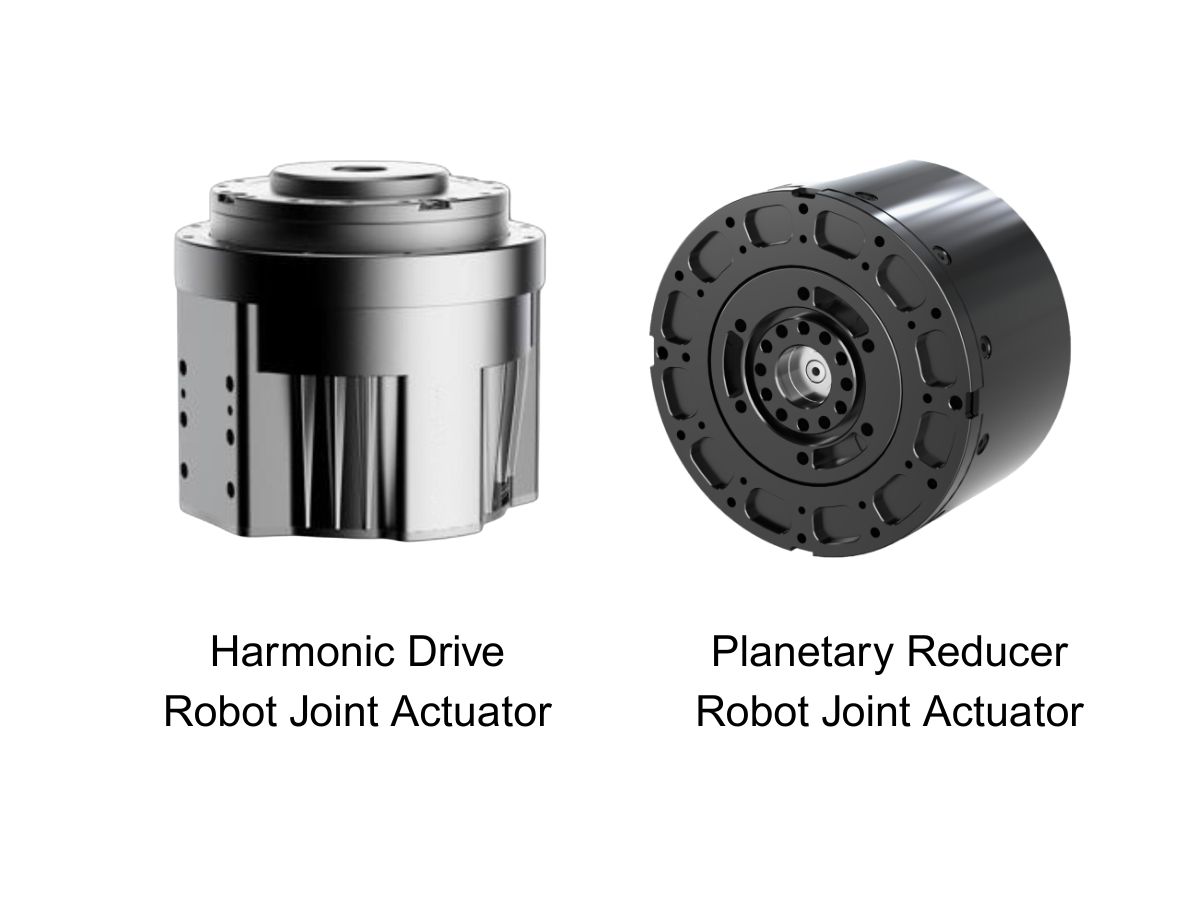
 What is robot joint actuator?How to Choose the Best Robot Rotary Joint Actuator?In core robot joint transmission solutions, planetary and harmonic rotary actuators each have their own strengths. Choosing the right type based on application requirements is essential to achieve the optimal balance between performance and cost.
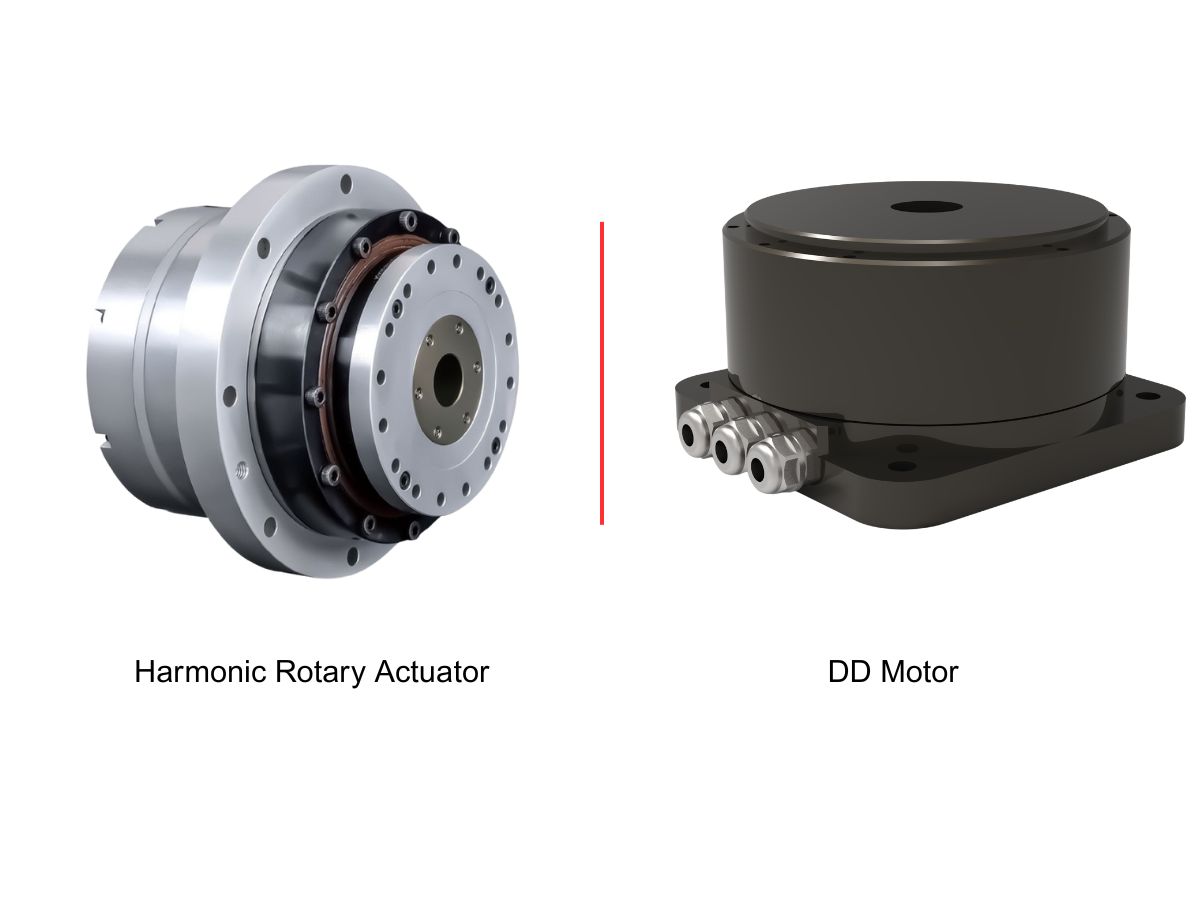
 DD Motors VS Harmonic Rotary ActuatorsThis article provides an in-depth comparison between Direct Drive (DD) motors and harmonic rotary actuators, covering their transmission principles, advantages and disadvantages, and typical application fields.
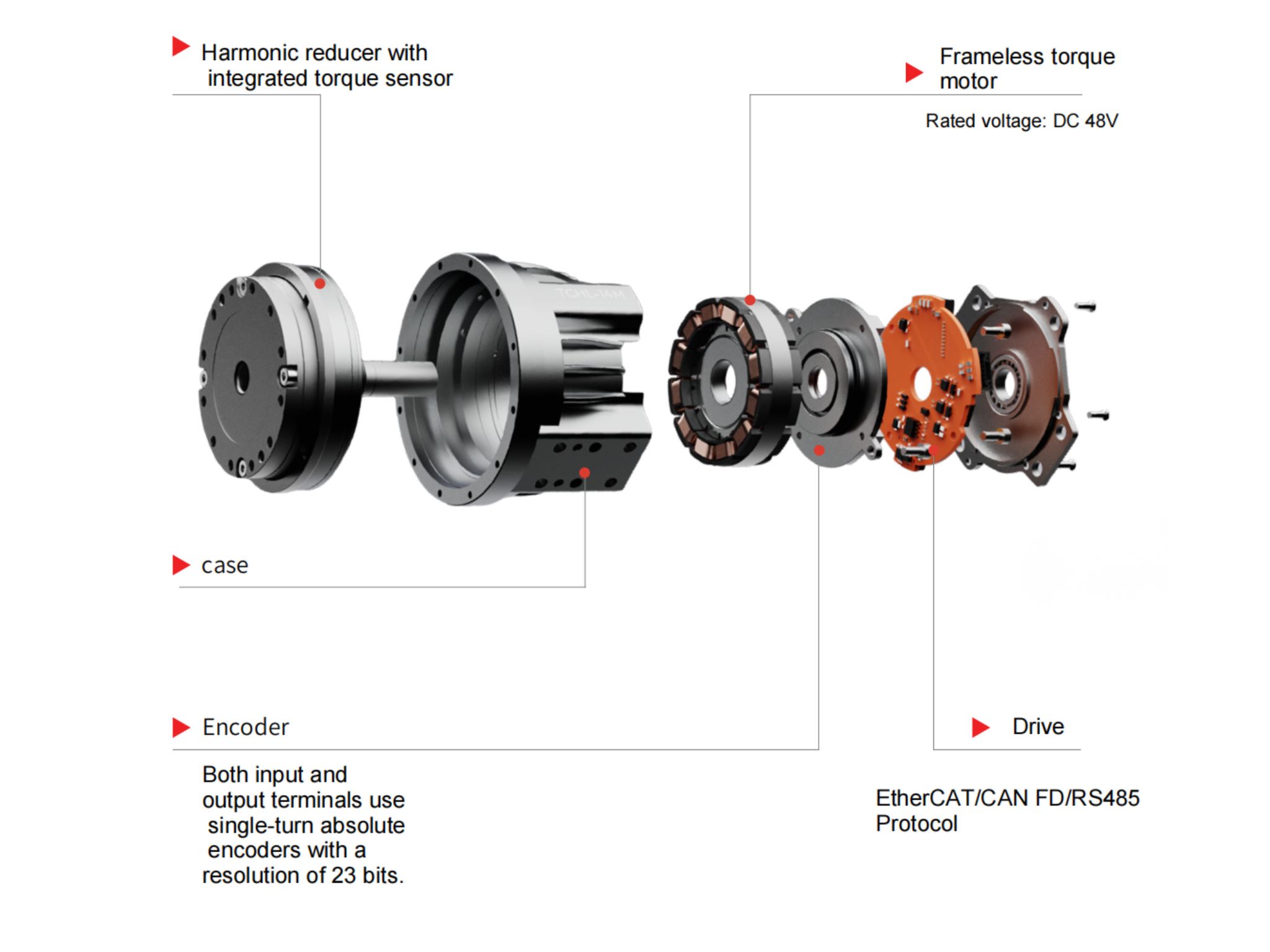
 OMG Ultra Compact Harmonic Drive Joint Module with Built-in Torque SensorHONPINE TCHL series harmonic drive joint module is a game-changing product that achieves disruptive improvements in multiple aspects such as lightweight design, integration level, and connection convenience. This article will analyze its revolutionary enhancements with you.
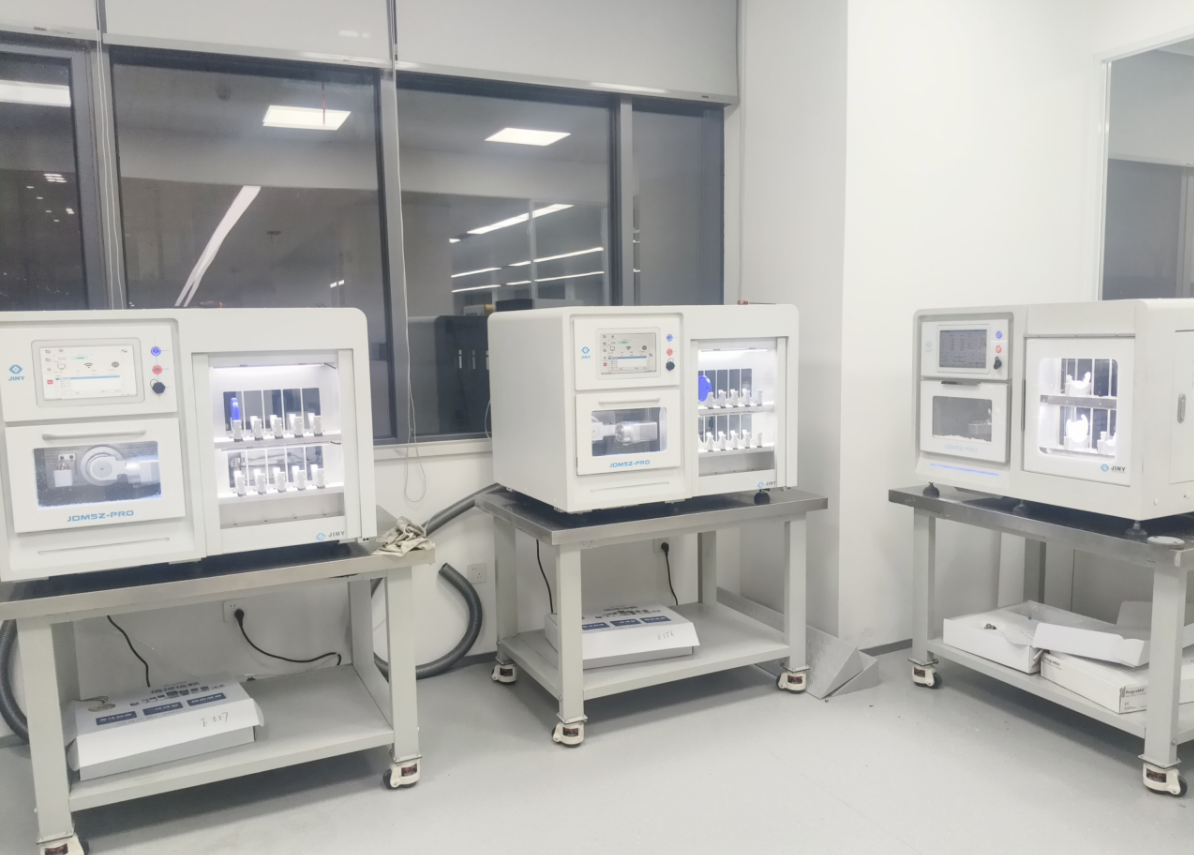
 The Role of Harmonic Drive Gears in Achieving 5–10 μm Accuracy in Dental Milling MachinesA dental milling machine is a CNC machining system used to directly process digital dental models into restorations such as crowns, bridges, veneers, inlays, and implant abutments. Dental milling machines require far higher operational accuracy and motion stability than ordinary equipment. This article explains how harmonic drive gear help dental milling machines achieve stable, continuous, and controllable operation.
 Why Are Harmonic Rotary Actuators Perfect for Medical Equipment?Harmonic rotary actuators (typically integrated systems consisting of a harmonic drive reducer, frameless torque motor, encoder, and optional brake) are regarded as key components in medical equipment. The core reason is that they simultaneously meet the most stringent medical requirements for precision, compact size, safety, and controllability. The following explanation is structured from three perspectives: technical characteristics, application scenarios, and medical value.
 High-Precision RV Reducers Perfectly Matched for Walking RobotsThe walking axis of a robot is a core component for power transmission and support. RV reducers provide extremely high rigidity, precision, and torque while maintaining a compact size and exceptional reliability, making them an ideal match for the demanding requirements of walking robot joints in terms of load capacity, impact resistance, and precision.
 China Pavilion at INNOPROM 2026 Expands by 50%China Pavilion at INNOPROM 2026 expands by 50%, spotlighting AI smart factory solutions, CNC machine tools, robotics, and new opportunities for Russia-CIS industrial markets.
 India Tops China Machine Tool Exports, Up 41.2%India tops China machine tool exports as Q1 shipments rise 41.2%. See what this shift means for CNC suppliers, tenders, delivery risks, and after-sales strategy.
 What Makes HONPINE HAG Harmonic Actuators Different from Traditional Robot Joints?HONPINE has successfully developed seven HAG series harmonic reducer robotic servo actuators, including sizes 11, 14, 17, 20, 25, 32, and 40. These products can cover humanoid robot applications such as neck joints, upper limbs, waist joints, hip joints, and knee joints, with a torque range from 4.6 N·m to 556 N·m.
 In-Depth Analysis of Core AGV Mobility Components: Technical Applications and Selection Logic of Drive Wheels, Steering Wheels, and CastersThe article analyzes the technical characteristics, advantages, limitations, and selection logic of AGV drive wheels, steering wheels, and casters, explaining how these three core mobility components determine AGV precision, flexibility, load capacity, and overall system performance.
 How the HONPINE JRM Planetary Joint Module Improves Robot Motion Performance?The JRM-C Planetary Joint Module is a lightweight, high-torque actuator module specially designed for humanoid robots, wheeled robots, quadruped robots, and other intelligent robotic systems.
 Why Do Most People Choose Nabtesco as Their RV Reducer Gearbox Supplier?The article explains Nabtesco’s dominance in RV reducers due to its high precision and reliability, while noting that the industry has few suppliers because of extreme manufacturing difficulty. It also briefly mentions competitors like Sumitomo, Spinea, and HONPINE offering cost and delivery advantages.
Double Click
We provide harmonic drive reducer,planetary reducer,robot joint motor,robot rotary actuators,RV gear reducer,robot end effector,dexterous robot hand
 Malaysia Sets SSM Match Rule for Used Machine ToolsMalaysia’s new SSM match rule for used machine tools tightens import documentation. Learn how to avoid customs rejection and keep equipment shipments on schedule.
 EU CE Update Makes CNC PL Certification MandatoryEU CE update makes CNC PL certification mandatory: learn how EN ISO 13849-1:2026, PLd/PLe validation and FSR records affect CNC machine tool exports to Europe.
![]() China Tightens Five-Axis CNC Export ControlsChina five-axis CNC export controls now affect high-precision machine tool licensing, customs clearance, and global procurement planning. Learn key risks and compliance steps.
China Tightens Five-Axis CNC Export ControlsChina five-axis CNC export controls now affect high-precision machine tool licensing, customs clearance, and global procurement planning. Learn key risks and compliance steps. Malaysia Tightens Used Machine Tool Import LettersMalaysia tightens used machine tool import letters with PDF, e-signature and SSM matching rules. Learn compliance steps to avoid shipment returns and costly delays.
 EU EN ISO 13849-1:2026 Mandates CNC PL CertificationEU EN ISO 13849-1:2026 now makes CNC PL certification essential for EU market access. Learn compliance risks, CE impact, and export preparation priorities.