



Shanghai Port Enforces CNC Machine Export Compliance from May 2026
Starting 1 May 2026, Shanghai Customs will require exporters of numerical control (CNC) machine tools—including machining centers, turning-milling compound machines, and five-axis systems—to submit a mandatory Technical Parameter Compliance Statement. This measure directly affects manufacturers, exporters, and logistics providers engaged in high-precision metalworking equipment trade, particularly those serving global industrial markets where technical specifications are subject to regulatory scrutiny.
Event Overview
Effective 1 May 2026, Shanghai Customs has introduced a new requirement for exports of CNC machine tools through Shanghai Port. Exporters must submit a Technical Parameter Compliance Statement covering 12 core technical parameters: positioning accuracy, repeatability, spindle speed, maximum cutting force, among others. The statement must be accompanied by a comparative test report issued by a laboratory accredited by the China National Accreditation Service for Conformity Assessment (CNAS). Publicly reported data indicates an initial declaration rejection rate of 18% during the first week, primarily due to inconsistent unit usage or missing tolerance annotations.
Industries Affected by Segment
Direct Exporters (OEMs & Trading Companies)
Exporters of CNC machine tools face immediate operational impact: customs declarations now require standardized, lab-verified parameter documentation. Rejection risks increase where internal technical documentation lacks alignment with CNAS test report formats or omits required tolerances—directly delaying shipment clearance and increasing administrative overhead.
Manufacturers (CNC Equipment Producers)
Domestic CNC machine builders must ensure production records and factory test reports reflect all 12 mandated parameters with consistent units and explicit tolerance ranges. Any deviation between factory specifications and CNAS-validated values may trigger compliance review, affecting export eligibility—even if the equipment meets functional performance standards.
Supply Chain & Logistics Service Providers
Cargo agents and customs brokers handling CNC machinery shipments must update internal checklists and staff training to include verification of both the Compliance Statement and its supporting CNAS report. Absence of either document—or mismatched parameter entries—now constitutes a non-negotiable submission failure, not a correctable omission.
Key Considerations and Recommended Actions for Enterprises
Verify alignment between internal technical specs and CNAS reporting requirements
Review current product datasheets and factory test protocols against the 12 listed parameters. Confirm that units (e.g., µm vs. mm for positioning accuracy), decimal precision, and tolerance notation (±X or X/Y/Z) match CNAS lab reporting conventions—not just internal engineering standards.
Prioritize CNAS lab engagement before shipment scheduling
Factor in typical lead time for CNAS comparative testing (typically 5–10 working days) when planning export timelines. Avoid batching multiple models for single lab submissions unless parameter sets are fully harmonized; mixed-model reports risk rejection if any one entry fails validation.
Update internal documentation workflows—not just customs templates
Integrate parameter verification into pre-shipment QA checkpoints. Assign responsibility across engineering, quality assurance, and export departments—not solely to customs compliance staff—to prevent last-minute discovery of unit mismatches or missing tolerances.
Monitor official updates from Shanghai Customs and CNAS
No consolidated guidance document or parameter interpretation manual has been publicly released as of mid-2026. Enterprises should subscribe to Shanghai Customs’ official notices and CNAS bulletin updates for clarifications on acceptable test methodologies, permissible deviations, or phased implementation adjustments.
Editorial Perspective / Industry Observation
Observably, this requirement signals a shift toward formalized technical traceability—not merely tariff classification or end-use verification—for high-precision capital goods. It is less a standalone policy change and more an operational extension of existing dual-use technology oversight frameworks, now applied to routine commercial exports. Analysis shows the 18% initial rejection rate reflects procedural friction rather than systemic non-compliance, suggesting the rule functions primarily as a process discipline mechanism. From an industry perspective, this is currently best understood as a signal of tightening technical documentation rigor—not yet evidence of broader export restriction escalation.
Concluding, the introduction of the Technical Parameter Compliance Statement underscores growing expectations for verifiable, lab-backed technical transparency in CNC machine tool trade. Its immediate significance lies in operational readiness—not strategic redirection. For affected enterprises, it is more accurately interpreted as a documentation standardization milestone than a market access barrier, provided parameter governance is embedded early in the export workflow.
Source: Official notice issued by Shanghai Customs (effective 1 May 2026); publicly reported rejection statistics from Shanghai Port customs declaration logs (first-week aggregate, May 2026). Note: Interpretation of parameter tolerance definitions and CNAS test scope remains under observation pending further guidance.
Read More
Learn more about the story of HONPINE and industry trends related to precision transmission.
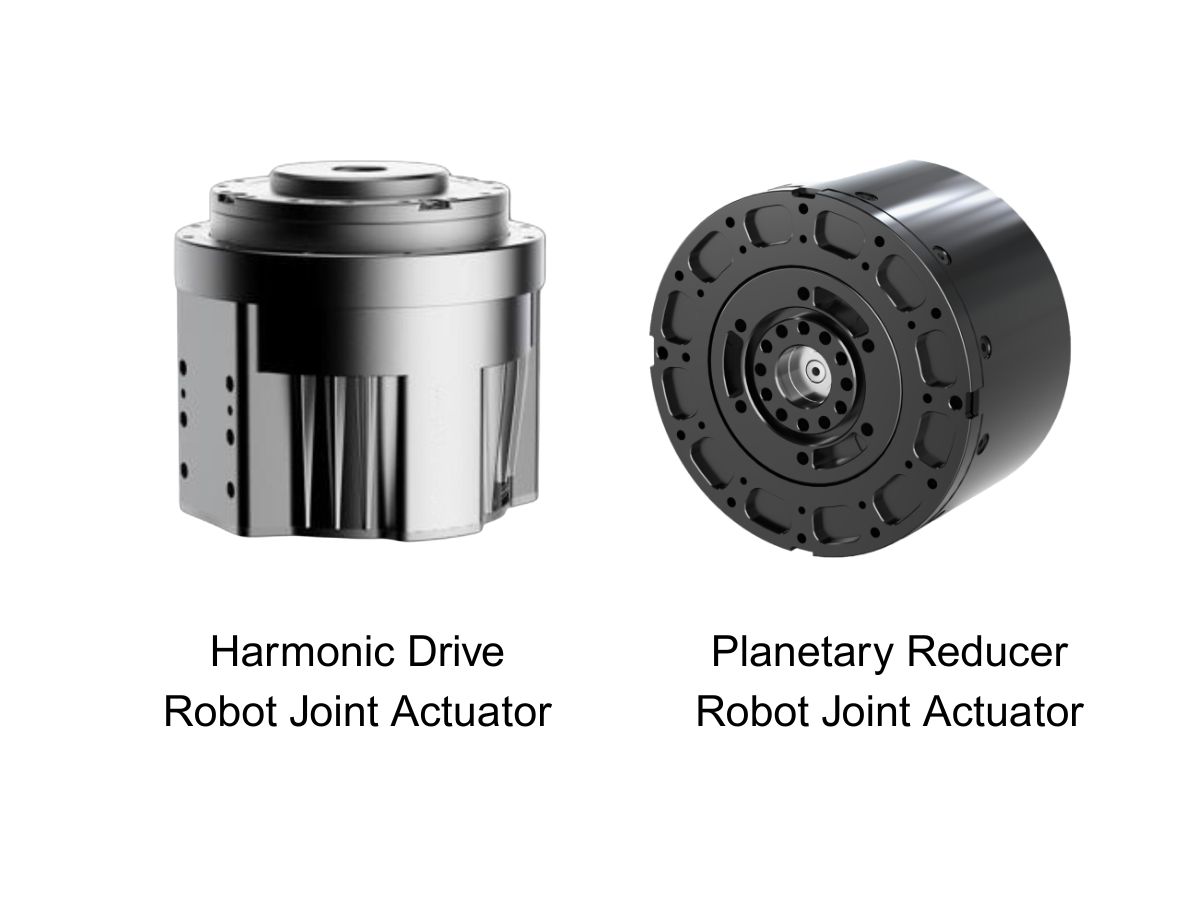
 What is robot joint actuator?How to Choose the Best Robot Rotary Joint Actuator?In core robot joint transmission solutions, planetary and harmonic rotary actuators each have their own strengths. Choosing the right type based on application requirements is essential to achieve the optimal balance between performance and cost.
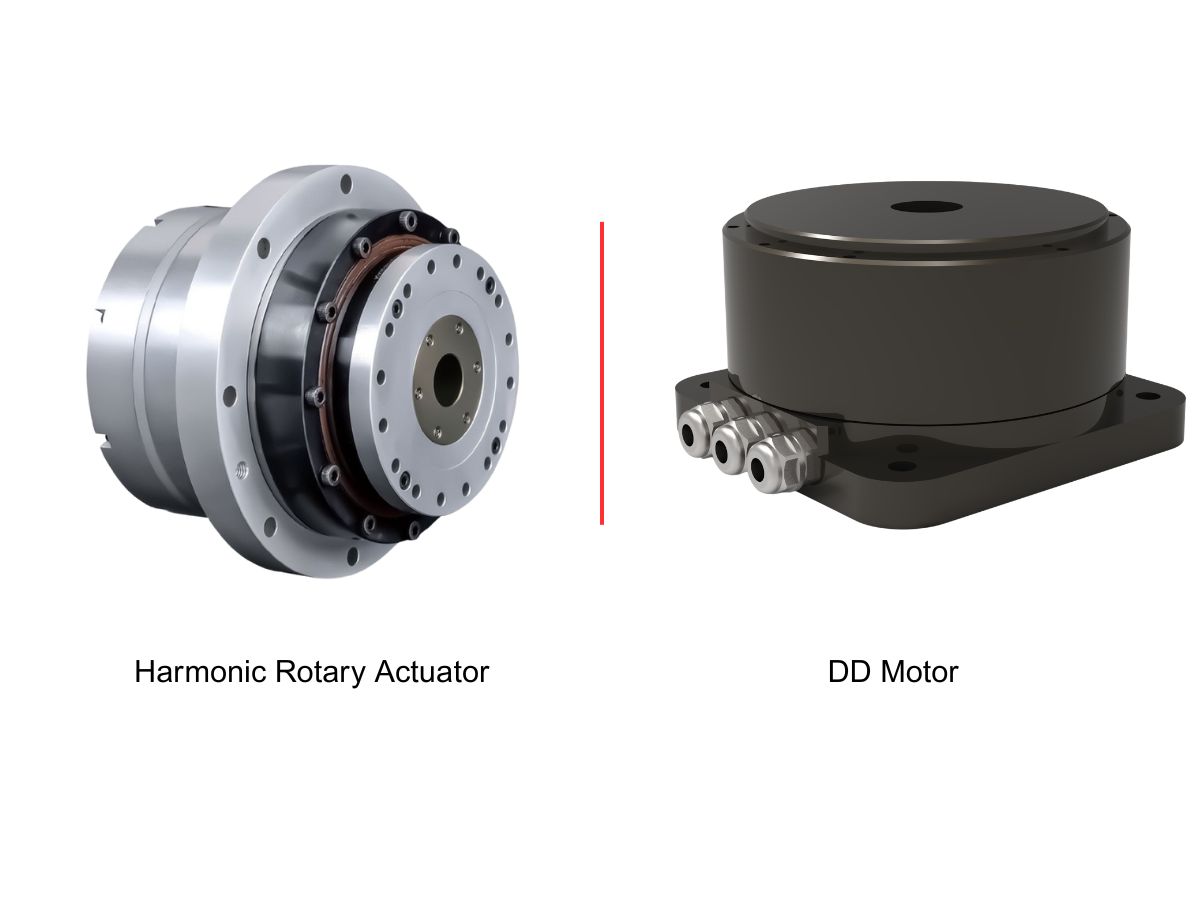
 DD Motors VS Harmonic Rotary ActuatorsThis article provides an in-depth comparison between Direct Drive (DD) motors and harmonic rotary actuators, covering their transmission principles, advantages and disadvantages, and typical application fields.
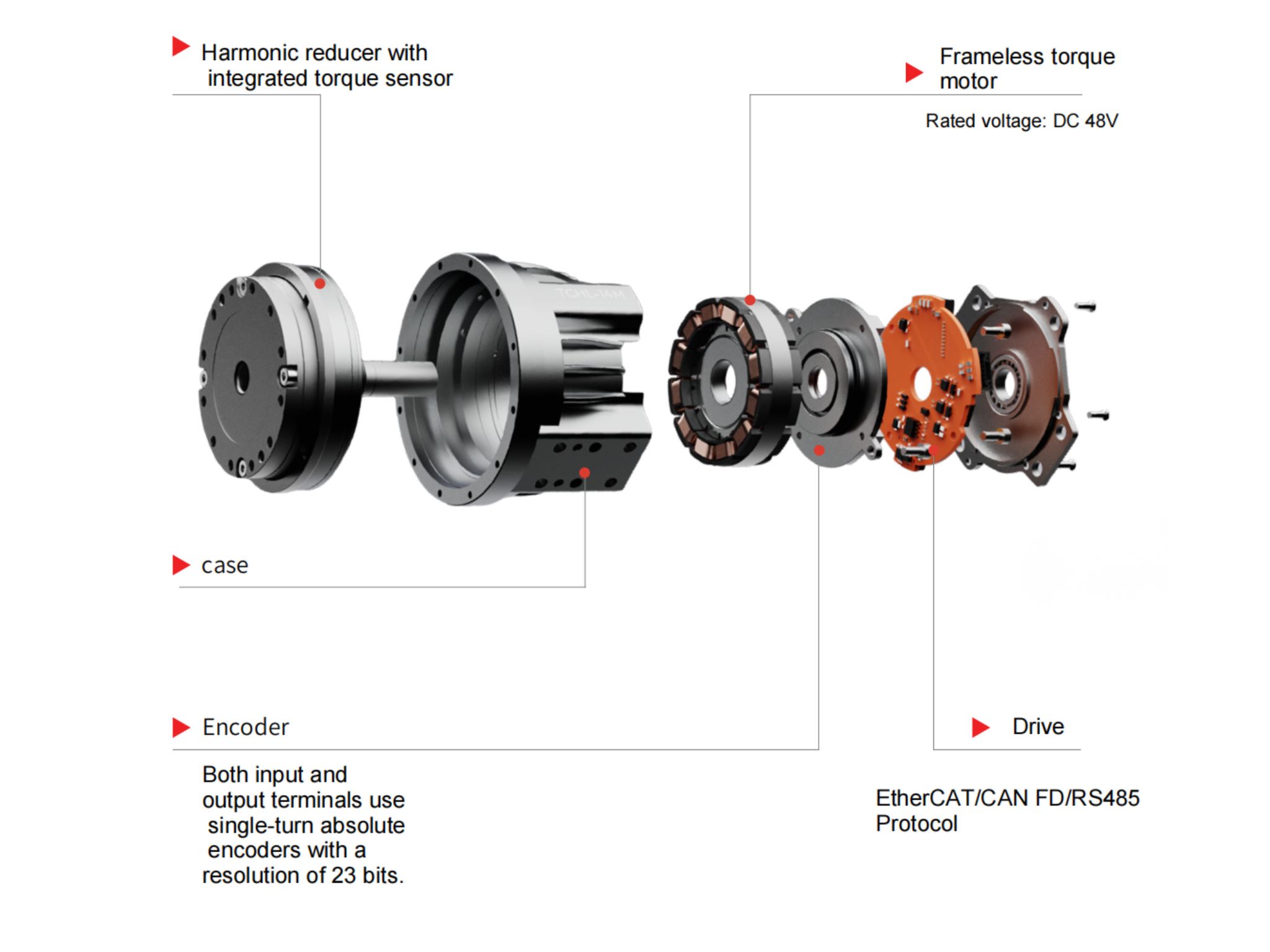
 OMG Ultra Compact Harmonic Drive Joint Module with Built-in Torque SensorHONPINE TCHL series harmonic drive joint module is a game-changing product that achieves disruptive improvements in multiple aspects such as lightweight design, integration level, and connection convenience. This article will analyze its revolutionary enhancements with you.
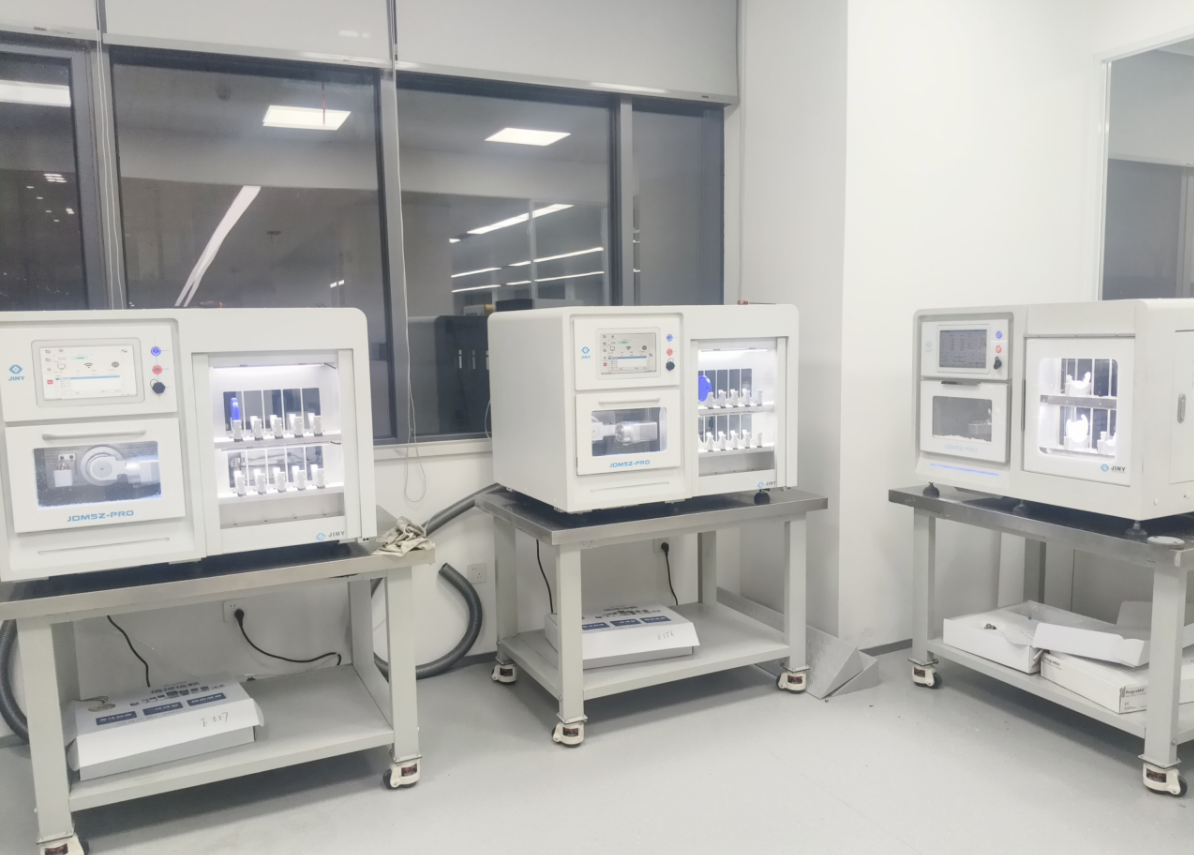
 The Role of Harmonic Drive Gears in Achieving 5–10 μm Accuracy in Dental Milling MachinesA dental milling machine is a CNC machining system used to directly process digital dental models into restorations such as crowns, bridges, veneers, inlays, and implant abutments. Dental milling machines require far higher operational accuracy and motion stability than ordinary equipment. This article explains how harmonic drive gear help dental milling machines achieve stable, continuous, and controllable operation.
 Why Are Harmonic Rotary Actuators Perfect for Medical Equipment?Harmonic rotary actuators (typically integrated systems consisting of a harmonic drive reducer, frameless torque motor, encoder, and optional brake) are regarded as key components in medical equipment. The core reason is that they simultaneously meet the most stringent medical requirements for precision, compact size, safety, and controllability. The following explanation is structured from three perspectives: technical characteristics, application scenarios, and medical value.
 High-Precision RV Reducers Perfectly Matched for Walking RobotsThe walking axis of a robot is a core component for power transmission and support. RV reducers provide extremely high rigidity, precision, and torque while maintaining a compact size and exceptional reliability, making them an ideal match for the demanding requirements of walking robot joints in terms of load capacity, impact resistance, and precision.
![]() DMG MORI Halts Five-Axis CNC Supply to Russia & BelarusDMG MORI halts five-axis CNC supply to Russia & Belarus—impact on precision machining, CELOS systems, and alternatives like BYJC GT1200 Pro.
DMG MORI Halts Five-Axis CNC Supply to Russia & BelarusDMG MORI halts five-axis CNC supply to Russia & Belarus—impact on precision machining, CELOS systems, and alternatives like BYJC GT1200 Pro.![]() CCMT2026: Middle East Demand for ATEX/IECEx Five-Axis Machining Centers Surges 370%ATEX/IECEx five-axis machining centers see 370% surge in Middle East demand at CCMT2026 — unlock explosive growth in energy & petrochemical markets.
CCMT2026: Middle East Demand for ATEX/IECEx Five-Axis Machining Centers Surges 370%ATEX/IECEx five-axis machining centers see 370% surge in Middle East demand at CCMT2026 — unlock explosive growth in energy & petrochemical markets.![]() CCMT2026: Middle East Buyers Seek ATEX/IECEx-Certified 5-Axis Machining CentersATEX/IECEx-certified 5-axis machining centers in high demand at CCMT2026—Middle East buyers seek certified solutions for oil & gas infrastructure. Act now!
CCMT2026: Middle East Buyers Seek ATEX/IECEx-Certified 5-Axis Machining CentersATEX/IECEx-certified 5-axis machining centers in high demand at CCMT2026—Middle East buyers seek certified solutions for oil & gas infrastructure. Act now!![]() CCMT2026: 37% Order Intent Rise from MENA & LatAm, Local After-sales Consortium Demand SurgesCCMT2026 reveals 37% order intent surge from MENA & LatAm — with 62.3% of buyers demanding Local After-sales Consortium models. Discover strategic implications for machine tool exporters and service providers.
CCMT2026: 37% Order Intent Rise from MENA & LatAm, Local After-sales Consortium Demand SurgesCCMT2026 reveals 37% order intent surge from MENA & LatAm — with 62.3% of buyers demanding Local After-sales Consortium models. Discover strategic implications for machine tool exporters and service providers.![]() CCMT2026 Closes with 37% Rise in Overseas Order IntentionsCCMT2026 drives 37% surge in overseas order intentions — discover how CNC machine tool exporters can leverage localization-based after-sales joint entities for competitive advantage.
CCMT2026 Closes with 37% Rise in Overseas Order IntentionsCCMT2026 drives 37% surge in overseas order intentions — discover how CNC machine tool exporters can leverage localization-based after-sales joint entities for competitive advantage.![]() CCMT2026 Attendance Up 22.7%, Overseas Buyers Rise SharplyCCMT2026 attendance up 22.7% — overseas buyers surge 35%+ from Germany, Mexico & Vietnam. Discover key trends in five-axis machining, harmonic drives & smart tooling.
CCMT2026 Attendance Up 22.7%, Overseas Buyers Rise SharplyCCMT2026 attendance up 22.7% — overseas buyers surge 35%+ from Germany, Mexico & Vietnam. Discover key trends in five-axis machining, harmonic drives & smart tooling.

Double Click
We provide harmonic drive reducer,planetary reducer,robot joint motor,robot rotary actuators,RV gear reducer,robot end effector,dexterous robot hand
![]() Shanghai Port Enforces CNC Machine Export Compliance from May 2026CNC machine export compliance from Shanghai Port starts May 2026—mandatory Technical Parameter Compliance Statement & CNAS test report required. Act now to avoid shipment delays!
Shanghai Port Enforces CNC Machine Export Compliance from May 2026CNC machine export compliance from Shanghai Port starts May 2026—mandatory Technical Parameter Compliance Statement & CNAS test report required. Act now to avoid shipment delays!![]() US BIS Extends Anti-Circumvention Probe to Chinese HMI+PLC KitsUS BIS extends anti-circumvention probe to Chinese HMI+PLC kits—critical for CNC machine tool exporters. Stay compliant, avoid delays & protect supply chains.
US BIS Extends Anti-Circumvention Probe to Chinese HMI+PLC KitsUS BIS extends anti-circumvention probe to Chinese HMI+PLC kits—critical for CNC machine tool exporters. Stay compliant, avoid delays & protect supply chains.![]() US BIS Launches Anti-Circumvention Probe on Chinese CNC G-Code ModulesUS BIS anti-circumvention probe targets Chinese CNC G-code modules—impacting servo drives, HMIs & motion control firmware. Stay compliant & ahead of regulatory shifts.
US BIS Launches Anti-Circumvention Probe on Chinese CNC G-Code ModulesUS BIS anti-circumvention probe targets Chinese CNC G-code modules—impacting servo drives, HMIs & motion control firmware. Stay compliant & ahead of regulatory shifts.![]() US Proposes 25% Tariff on Chinese CNC System ComponentsCNC system components face 25% US tariff proposal—key for machine tool OEMs, automation suppliers & global procurement teams. Act now.
US Proposes 25% Tariff on Chinese CNC System ComponentsCNC system components face 25% US tariff proposal—key for machine tool OEMs, automation suppliers & global procurement teams. Act now. FDS-100-XXX-CJ
 FDS-100-XXX-CJ
 FDS-80-XXX-CJ
 FDS-65-XXX-CJ
 FDS-50-XXX-CJ
 FDS-40-XXX-CJ
 FDS-32-XXX-CJ
 FDS-25-XXX-CJ