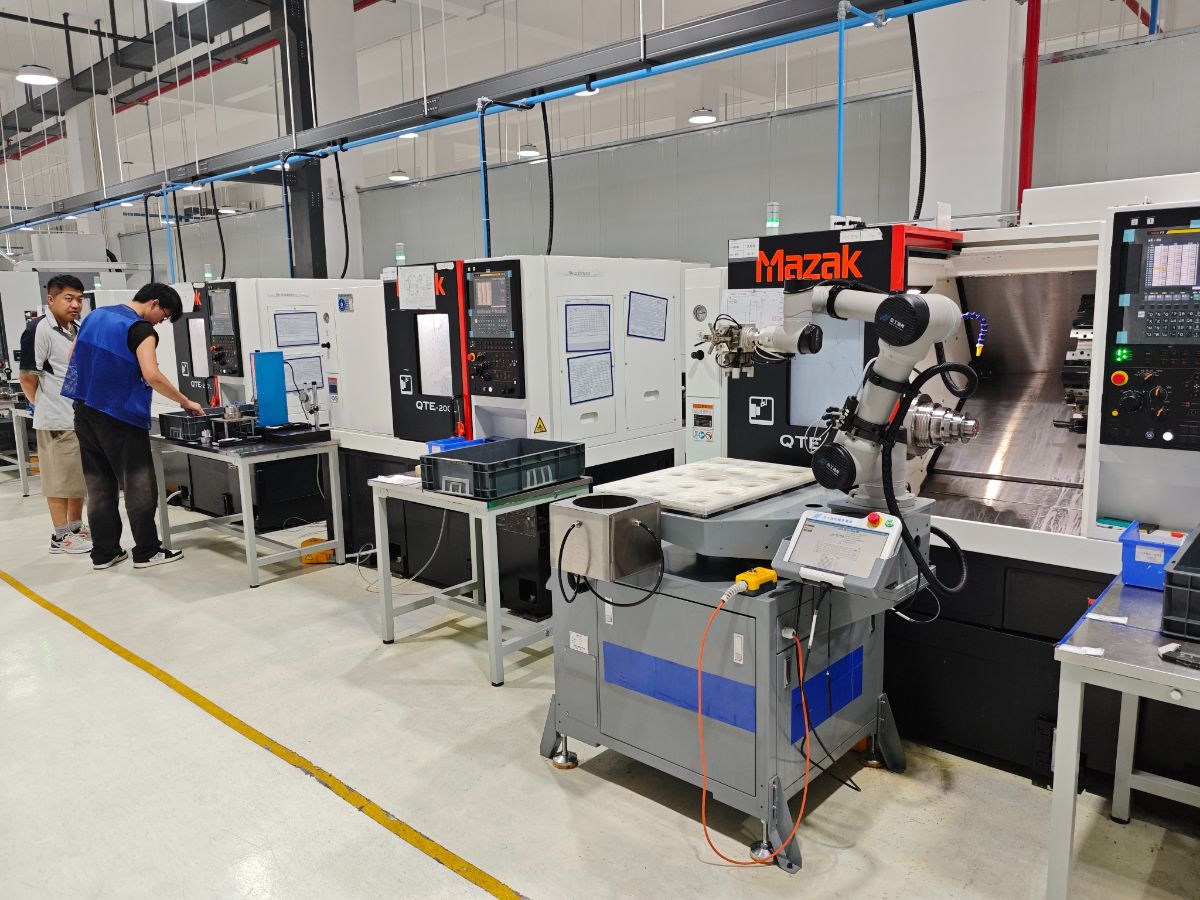



DMG MORI Halts Five-Axis CNC Supply to Russia & Belarus
German machine tool manufacturer DMG MORI announced on May 3, 2026, the immediate suspension of all five-axis machining centers and associated CNC systems—including the CELOS platform—for the Russian and Belarusian markets. This development carries implications for international trade, precision manufacturing, and supply chain resilience in Eastern Europe and Central Asia.
Event Overview
On May 3, 2026, DMG MORI issued a global channel notice confirming the suspension of supply of its full range of five-axis联动 (five-axis simultaneous) machining centers and配套 (accompanying) CNC systems—including CELOS—to Russia and Belarus. Remote diagnostic services and software updates for these systems are also discontinued effective immediately.
Industries Affected
Direct Importers & Distributors
Importers and authorized distributors in Russia and Belarus can no longer source new DMG MORI five-axis machines or receive post-sale technical support. The impact is direct and operational: existing service contracts are suspended, and no new equipment deliveries will be processed.
Contract Manufacturers & Precision Machining Firms
Firms relying on DMG MORI five-axis platforms for high-precision aerospace, energy, or medical component production face capacity constraints. With no new units available and limited upgrade paths, maintenance windows and spare part availability become critical bottlenecks.
Regional Resellers & Channel Integrators
Resellers across Eastern Europe and Central Asia—particularly those serving customers seeking alternatives to Western-sourced five-axis systems—are observing sharp increases in inquiries for Chinese-made models. Demand signals suggest shifting procurement behavior beyond immediate replacement needs.
Key Considerations and Recommended Actions
Monitor official policy updates from both EU export control authorities and national trade agencies
This action follows broader export restriction frameworks; however, DMG MORI’s decision is a commercial implementation—not a legal mandate. Stakeholders should track whether future regulatory guidance expands scope or duration.
Track inquiry and quotation trends for specific alternative models
The reported 210% MoM rise in inquiries for models such as the BYJC GT1200 Pro and HAITIAN HTM8025 reflects real-time market response. Companies should assess lead times, certification status (e.g., ISO 2768, ISO 9001), and local service coverage—not just list price—before committing.
Distinguish between policy signals and actual delivery capability
A surge in inquiries does not guarantee equivalent order fulfillment. Buyers must verify production capacity, export licensing status, and shipping logistics for any alternative supplier—especially where dual-use technology concerns apply.
Prepare contingency plans for software integration and staff training
Switching from CELOS-based workflows to other platforms involves more than hardware replacement. Evaluate compatibility with existing CAM environments, data security protocols, and internal upskilling requirements before initiating transition planning.
Editorial Observation / Industry Perspective
Observably, this move is less a discrete business decision and more a structural signal: it reflects tightening alignment between major European OEMs and geopolitical trade boundaries. Analysis shows that while the suspension itself is narrow in scope—limited to five-axis systems and related digital services—it triggers cascading reassessments across regional sourcing strategies. From an industry perspective, it is better understood as a stress test for supply chain diversification, not merely a product withdrawal. Continued monitoring is warranted—not for reversal, but for ripple effects on service infrastructure, calibration standards, and aftermarket parts ecosystems.
Conclusion
This announcement marks a concrete shift in the availability of high-end five-axis machining solutions within sanctioned markets. Its significance lies not in scale alone, but in how it accelerates evaluation cycles for non-Western alternatives—and reveals latent dependencies in digitally integrated manufacturing workflows. Currently, it is more accurately interpreted as a procurement inflection point than a full-scale market exit.
Information Source
Main source: DMG MORI Global Channel Notice, issued May 3, 2026.
Points requiring ongoing observation: Further statements from DMG MORI regarding potential exceptions, timeline extensions, or revised service terms; official clarifications from EU export control bodies on applicability to similar OEMs.
Read More
Learn more about the story of HONPINE and industry trends related to precision transmission.
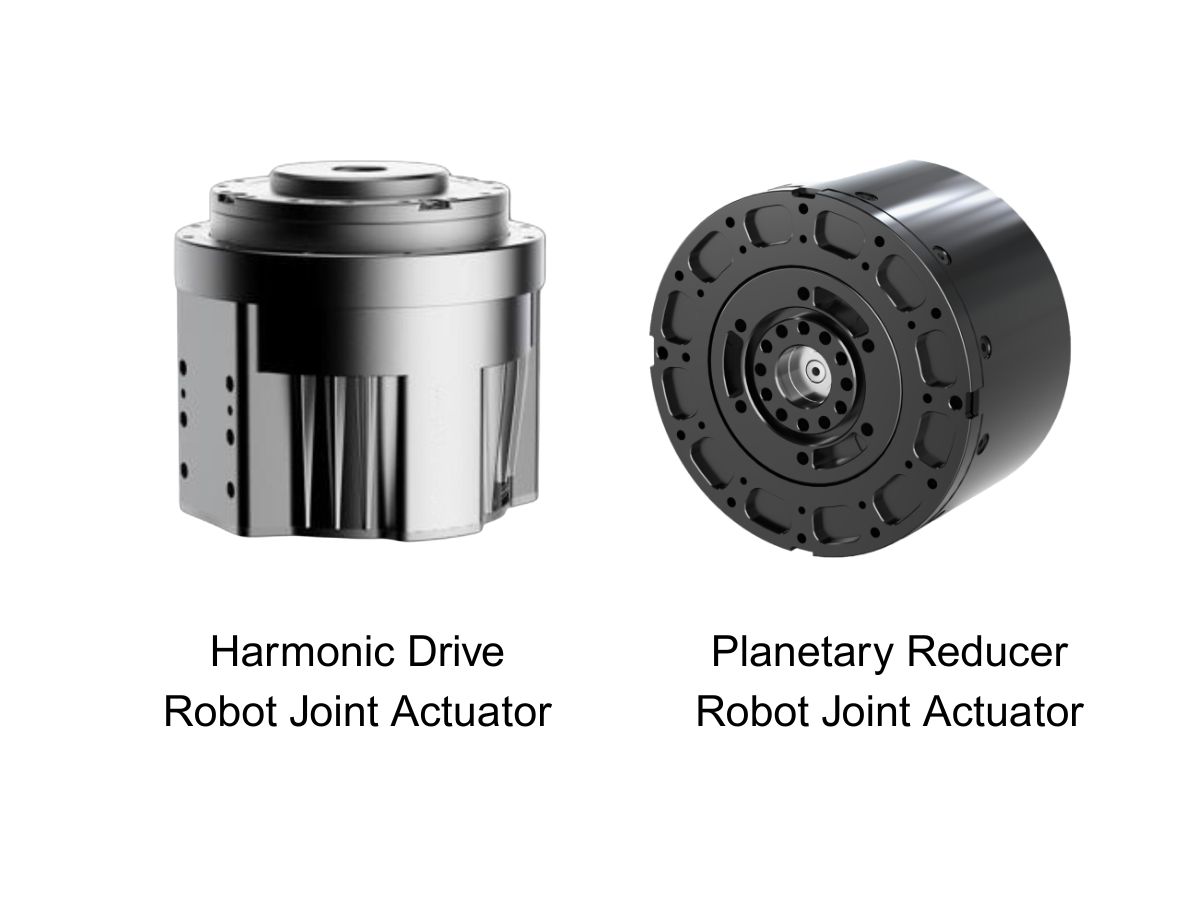
 What is robot joint actuator?How to Choose the Best Robot Rotary Joint Actuator?In core robot joint transmission solutions, planetary and harmonic rotary actuators each have their own strengths. Choosing the right type based on application requirements is essential to achieve the optimal balance between performance and cost.
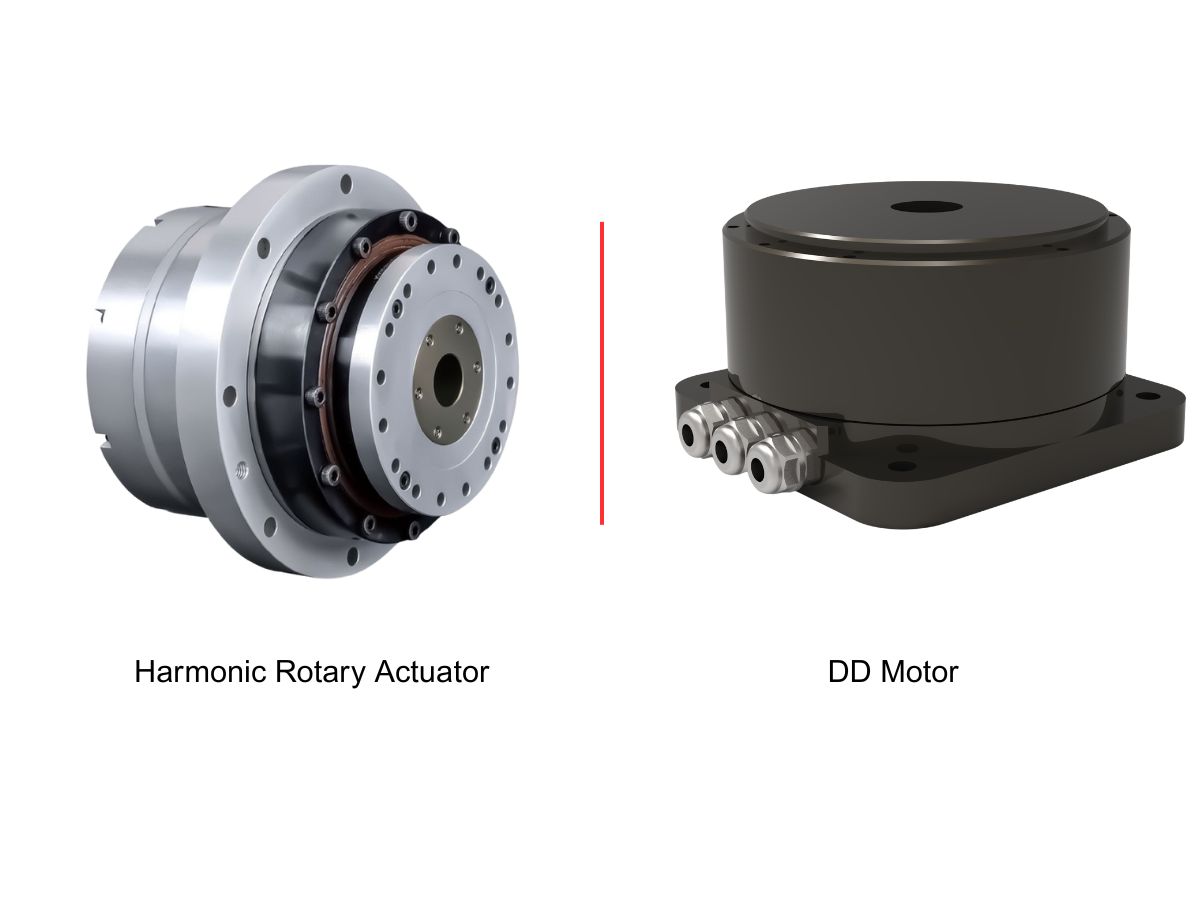
 DD Motors VS Harmonic Rotary ActuatorsThis article provides an in-depth comparison between Direct Drive (DD) motors and harmonic rotary actuators, covering their transmission principles, advantages and disadvantages, and typical application fields.
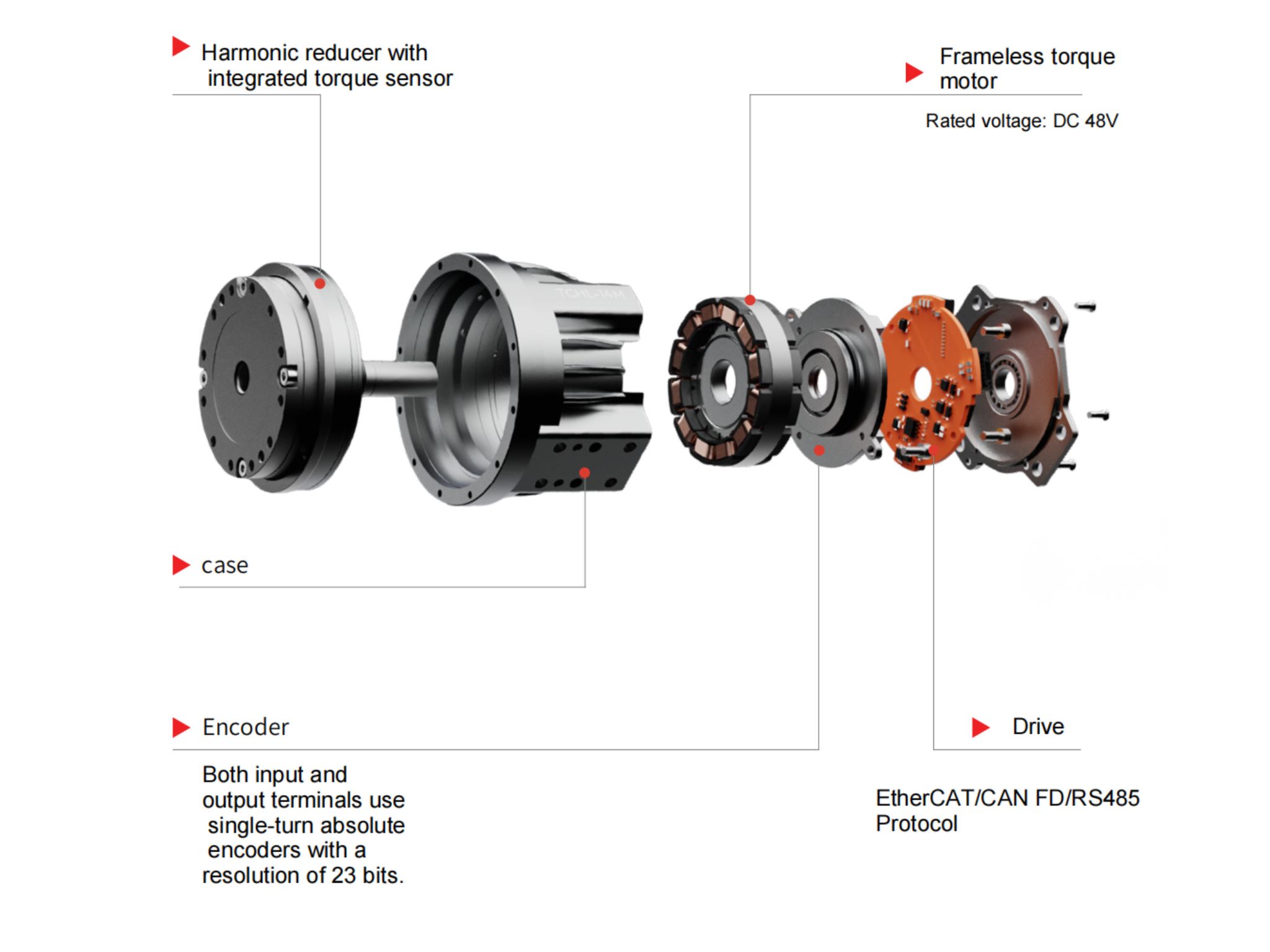
 OMG Ultra Compact Harmonic Drive Joint Module with Built-in Torque SensorHONPINE TCHL series harmonic drive joint module is a game-changing product that achieves disruptive improvements in multiple aspects such as lightweight design, integration level, and connection convenience. This article will analyze its revolutionary enhancements with you.
 The Role of Harmonic Drive Gears in Achieving 5–10 μm Accuracy in Dental Milling MachinesA dental milling machine is a CNC machining system used to directly process digital dental models into restorations such as crowns, bridges, veneers, inlays, and implant abutments. Dental milling machines require far higher operational accuracy and motion stability than ordinary equipment. This article explains how harmonic drive gear help dental milling machines achieve stable, continuous, and controllable operation.
 Why Are Harmonic Rotary Actuators Perfect for Medical Equipment?Harmonic rotary actuators (typically integrated systems consisting of a harmonic drive reducer, frameless torque motor, encoder, and optional brake) are regarded as key components in medical equipment. The core reason is that they simultaneously meet the most stringent medical requirements for precision, compact size, safety, and controllability. The following explanation is structured from three perspectives: technical characteristics, application scenarios, and medical value.
 High-Precision RV Reducers Perfectly Matched for Walking RobotsThe walking axis of a robot is a core component for power transmission and support. RV reducers provide extremely high rigidity, precision, and torque while maintaining a compact size and exceptional reliability, making them an ideal match for the demanding requirements of walking robot joints in terms of load capacity, impact resistance, and precision.
![]() DMG MORI Halts Five-Axis CNC Supply to Russia & BelarusDMG MORI halts five-axis CNC supply to Russia & Belarus—impact on precision machining, CELOS systems, and alternatives like BYJC GT1200 Pro.
DMG MORI Halts Five-Axis CNC Supply to Russia & BelarusDMG MORI halts five-axis CNC supply to Russia & Belarus—impact on precision machining, CELOS systems, and alternatives like BYJC GT1200 Pro.![]() CCMT2026: Middle East Demand for ATEX/IECEx Five-Axis Machining Centers Surges 370%ATEX/IECEx five-axis machining centers see 370% surge in Middle East demand at CCMT2026 — unlock explosive growth in energy & petrochemical markets.
CCMT2026: Middle East Demand for ATEX/IECEx Five-Axis Machining Centers Surges 370%ATEX/IECEx five-axis machining centers see 370% surge in Middle East demand at CCMT2026 — unlock explosive growth in energy & petrochemical markets.![]() CCMT2026: Middle East Buyers Seek ATEX/IECEx-Certified 5-Axis Machining CentersATEX/IECEx-certified 5-axis machining centers in high demand at CCMT2026—Middle East buyers seek certified solutions for oil & gas infrastructure. Act now!
CCMT2026: Middle East Buyers Seek ATEX/IECEx-Certified 5-Axis Machining CentersATEX/IECEx-certified 5-axis machining centers in high demand at CCMT2026—Middle East buyers seek certified solutions for oil & gas infrastructure. Act now!![]() CCMT2026: 37% Order Intent Rise from MENA & LatAm, Local After-sales Consortium Demand SurgesCCMT2026 reveals 37% order intent surge from MENA & LatAm — with 62.3% of buyers demanding Local After-sales Consortium models. Discover strategic implications for machine tool exporters and service providers.
CCMT2026: 37% Order Intent Rise from MENA & LatAm, Local After-sales Consortium Demand SurgesCCMT2026 reveals 37% order intent surge from MENA & LatAm — with 62.3% of buyers demanding Local After-sales Consortium models. Discover strategic implications for machine tool exporters and service providers.![]() CCMT2026 Closes with 37% Rise in Overseas Order IntentionsCCMT2026 drives 37% surge in overseas order intentions — discover how CNC machine tool exporters can leverage localization-based after-sales joint entities for competitive advantage.
CCMT2026 Closes with 37% Rise in Overseas Order IntentionsCCMT2026 drives 37% surge in overseas order intentions — discover how CNC machine tool exporters can leverage localization-based after-sales joint entities for competitive advantage.![]() CCMT2026 Attendance Up 22.7%, Overseas Buyers Rise SharplyCCMT2026 attendance up 22.7% — overseas buyers surge 35%+ from Germany, Mexico & Vietnam. Discover key trends in five-axis machining, harmonic drives & smart tooling.
CCMT2026 Attendance Up 22.7%, Overseas Buyers Rise SharplyCCMT2026 attendance up 22.7% — overseas buyers surge 35%+ from Germany, Mexico & Vietnam. Discover key trends in five-axis machining, harmonic drives & smart tooling.

Double Click
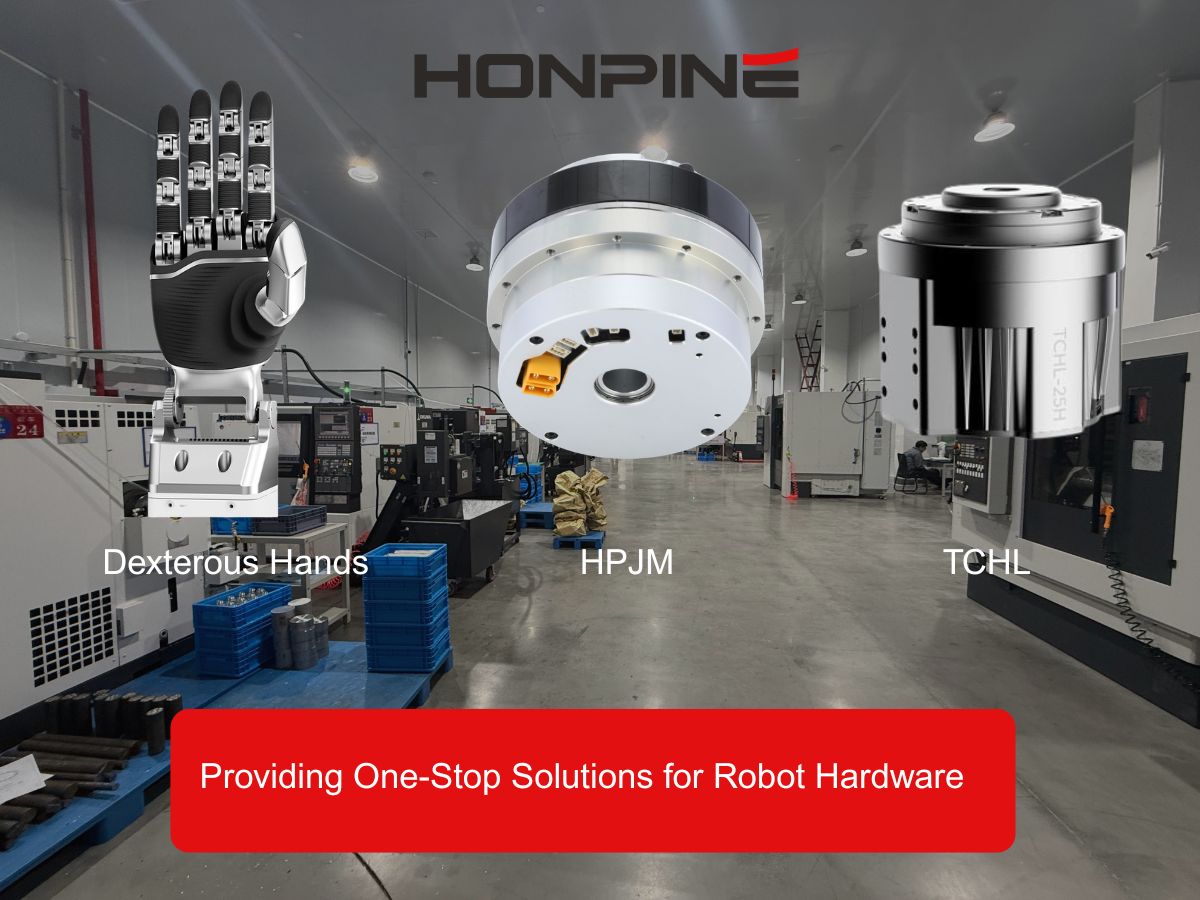
We provide harmonic drive reducer,planetary reducer,robot joint motor,robot rotary actuators,RV gear reducer,robot end effector,dexterous robot hand
![]() DMG MORI Halts Five-Axis CNC Supply to Russia & BelarusDMG MORI halts five-axis CNC supply to Russia & Belarus—impact on precision machining, CELOS systems, and alternatives like BYJC GT1200 Pro.
DMG MORI Halts Five-Axis CNC Supply to Russia & BelarusDMG MORI halts five-axis CNC supply to Russia & Belarus—impact on precision machining, CELOS systems, and alternatives like BYJC GT1200 Pro. HONPINE’s New Factory: Building the Future of Robot Joint Actuators and Dexterous HandsHONPINE is set to establish a new factory in Yuhang, Hangzhou, China, focusing on the development, manufacturing, and sales of robot joint actuators,dexterous hands and other high-end robotic hardware, while providing integrated solutions.
 HONPINE 2026 Chinese New Year Holiday NoticeAs the Chinese New Year (Spring Festival) approaches, HONPINE will observe a holiday from February 11 to February 23, 2026
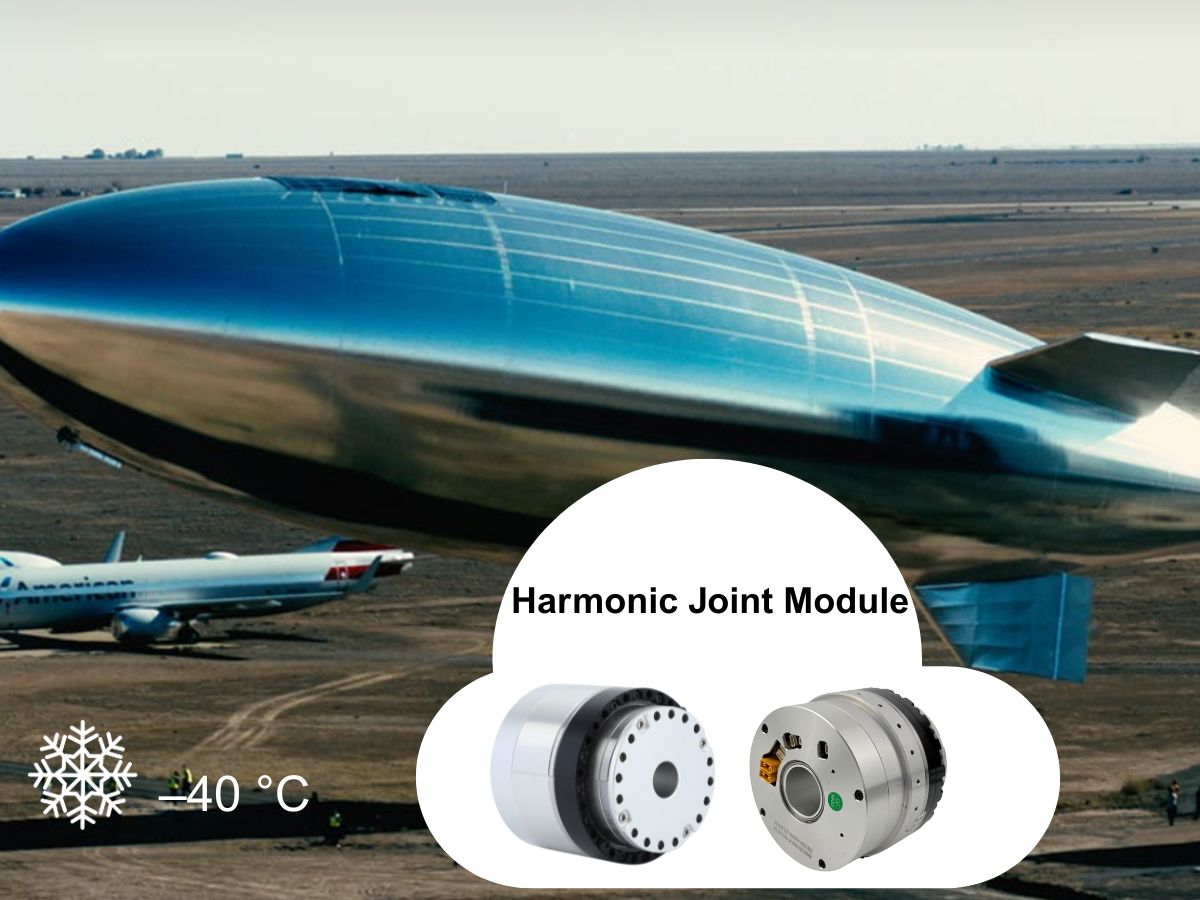
 HONPINE Harmonic Joint Modules Empower Airplanes & Drones to Operate in the Stratosphere and Extreme Space-Like EnvironmentsHONPINE harmonic joint modules are now widely used in humanoid robots, exoskeleton robots, medical devices, and industrial automation systems, supporting a wide range of high-precision applications.At the same time, HONPINE is actively providing solutions and customized services for aerospace operations, underwater robots, and other extreme-environment precision applications.
 HONPINE combines Christmas celebrations with team buildingWith a strong spirit of unity and collaboration, this dedicated team at HONPINE is committed to delivering precision transmission solutions to customers around the world.
 HONPINE Harmonic Joint Motor Powers the World’s First Offshore Robot BarA humanoid robot server has made its debut at the Laohutan Offshore Bar, attracting visitors eager to experience this innovative setup. With smooth and natural movements, the robot delivers drinks to customers—even while operating in a dynamic offshore environment. Behind its stable and precise performance is the HONPINE Harmonic Joint Motor, providing the core motion capability that enables reliable operation at sea.
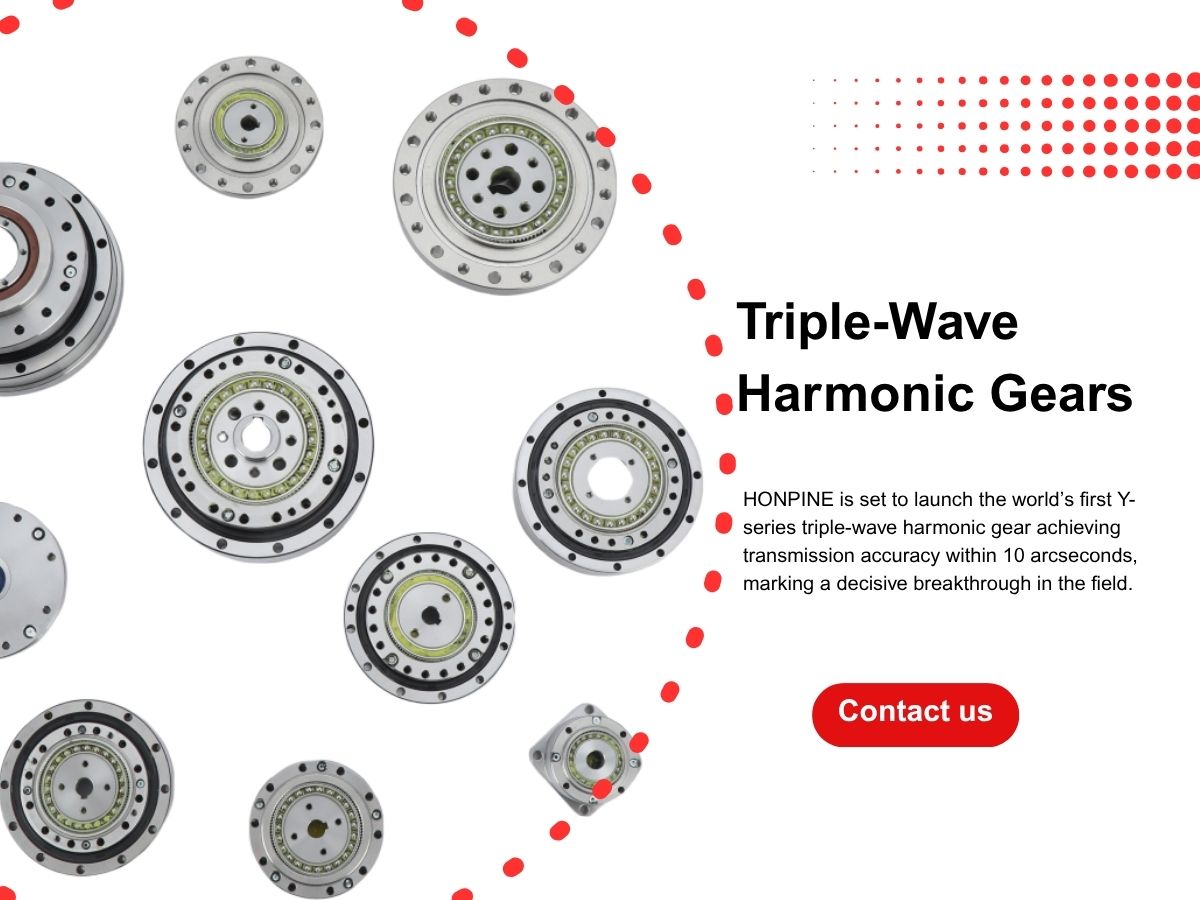
 Triple-Wave Harmonic Gear: A Dual Breakthrough in Precision and RigidityAs the “joints” of robots, harmonic gears directly determine the motion accuracy and stability of robotic systems. For years, the market has been dominated by second-harmonic technology. Now, HONPINE is set to launch the world’s first Y-series triple-wave harmonic gear achieving transmission accuracy within 10 arcseconds, marking a decisive breakthrough in the field.
 HONPINE Extends Thanksgiving Gratitude to Every Employee Dedicated to the Precision Transmission IndustryDuring this Thanksgiving season, HONPINE would like to express our sincere gratitude to every employee who has contributed to the field of precision transmission.
 HONPINE Departments Rush Final Production and Shipments Before National Day HolidayThe period from October 1 to October 8, 2025, marks China's National Day holiday, and HONPINE will follow the national schedule with an 8-day break. Due to advancements in humanoid robotics this year, orders for harmonic drives and harmonic drive motors are already scheduled three months out. In the final week of September, we are expediting the processing of urgent orders.
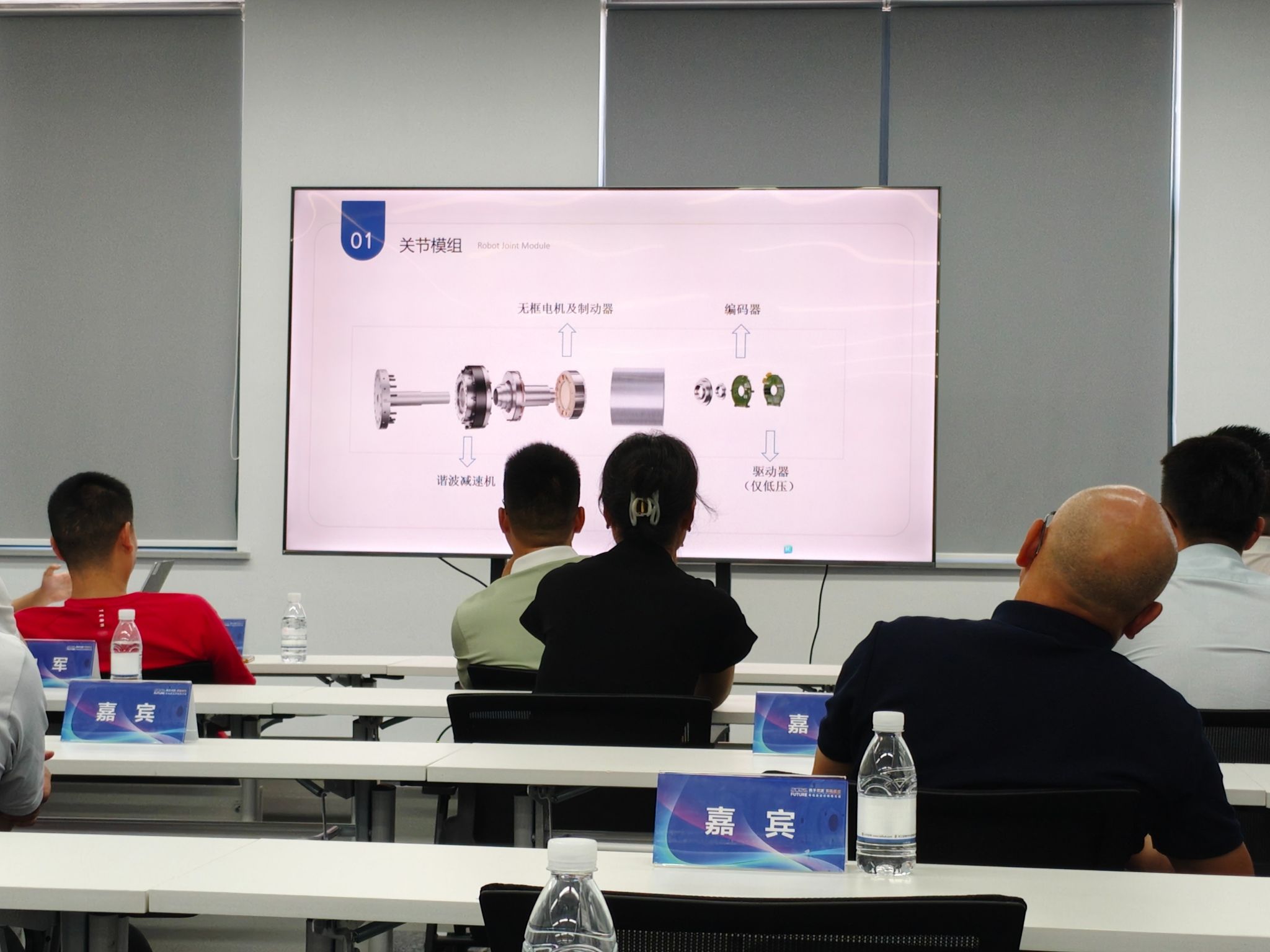
 HONPINE Hosts Harmonic Drive Motor SeminarHONPINE recently organized a seminar focused on harmonic drive motor, bringing together experts from various fields including software engineers, algorithm engineers, mechatronics specialists, system architects, and HONPINE's R&D technical representatives.
 Harmonic reducers, humanoid robots, and CNC machine tools are mutually promoting sales growthThe rapid growth of the humanoid robotics industry is driving increased demand for harmonic reducers, which in turn is boosting the need for precision CNC machine tools. Amid this trend, HONPINE continues to improve itself by expanding production scale and shortening delivery times to support customers' R&D and production cycles.
 HONPINE Micro Harmonic Joint Motor Supports Zhejiang University College of Engineering in Completing Drone R&D ProjectHONPINE technical engineer Akon is currently providing on-site guidance for the latest drone R&D project at Zhejiang University College of Engineering. The HONPINE micro harmonic joint motor serves as the actuator for high-performance intelligent drones.