









DD Motor vs Harmonic Reducer: 10 Key Factors for Choosing the Right Rotary Drive
Introduction
Choosing a rotary drive for a robot joint, CNC rotary table, semiconductor handling system, or precision automation machine is not simply a question of selecting the motor with the highest torque or the reducer with the lowest backlash.
Two fundamentally different approaches are commonly considered: a DD Motor (Direct Drive Motor) that connects directly to the load, and a Harmonic Reducercombined with a servo motor.
A DD motor eliminates the mechanical reduction stage and generates torque directly at the output shaft. A harmonic reducer, also known as a harmonic gearbox or strain wave gear reducer, uses a wave generator, flexspline, and circular spline to achieve a high reduction ratio within a compact package.
Both technologies can provide high positioning accuracy, low backlash, and excellent motion control, but they achieve these results in very different ways.
For engineers selecting a rotary drive, the more useful question is therefore not simply “Which is better, a DD motor or a harmonic reducer?”
The better question is:
Which technology matches the torque, speed, accuracy, inertia, installation space, duty cycle, stiffness, and control requirements of the application?
This article compares DD Motor vs Harmonic Reducer across 10 key factors and explains where each technology has a practical advantage.
1. DD Motor vs Harmonic Reducer: How Do the Two Rotary Drive Systems Work?
How a DD Motor Works?
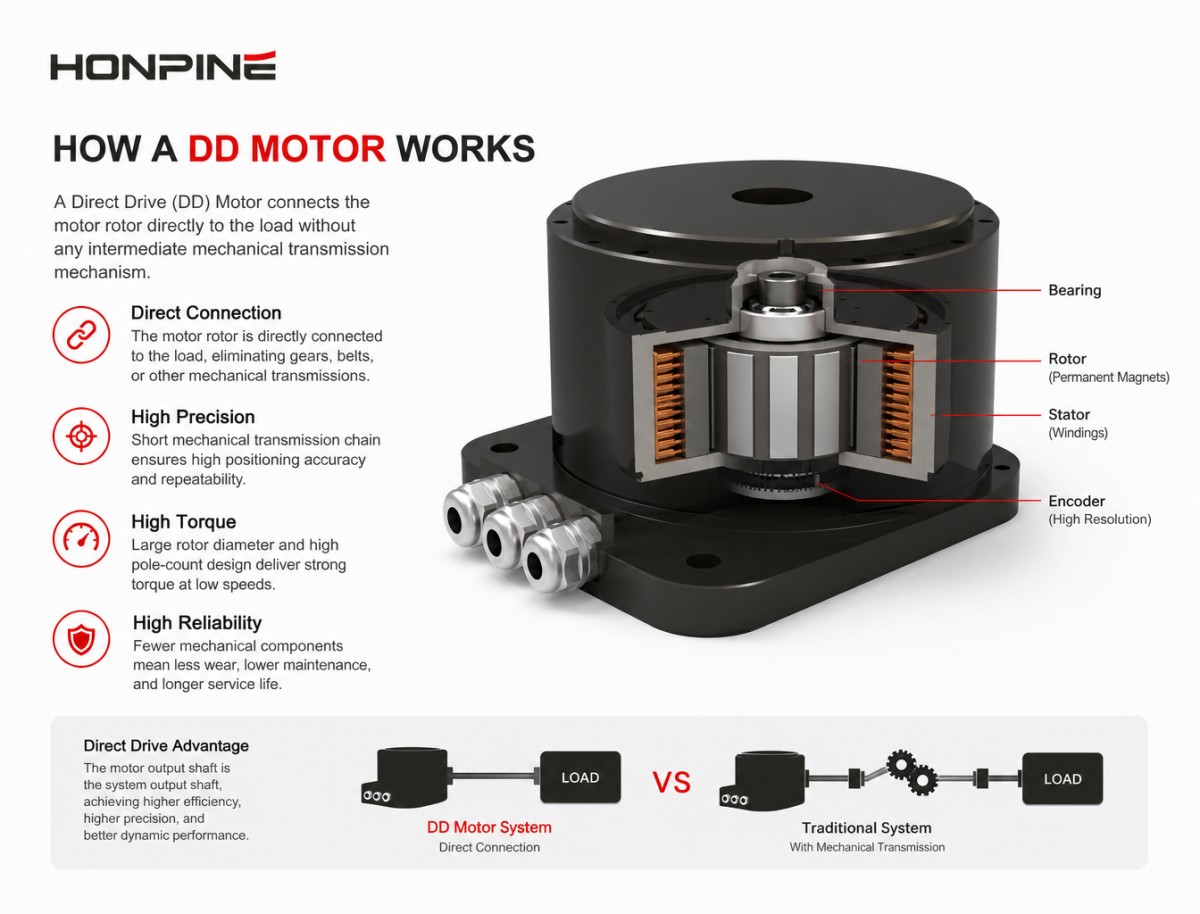
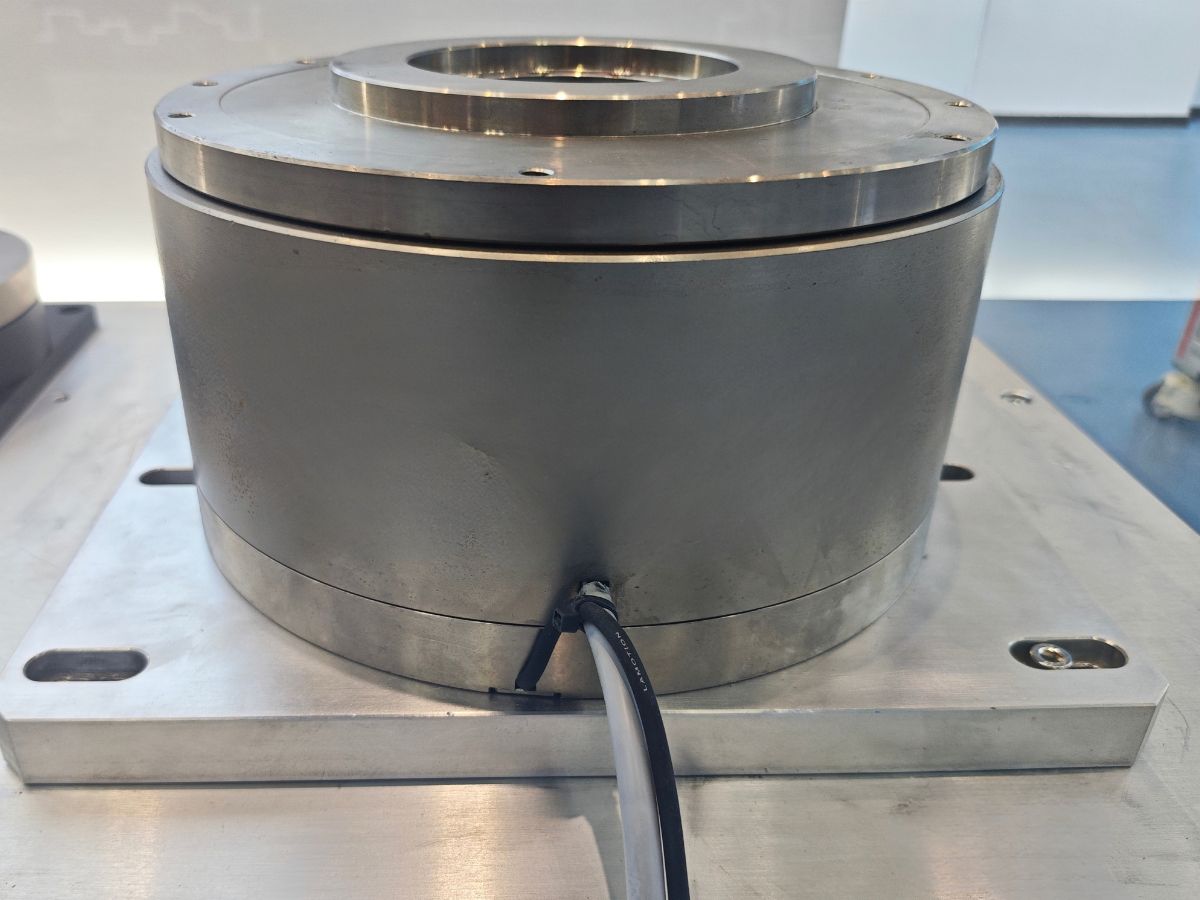
A DD Motor, or Direct Drive Motor, connects the motor rotor directly to the driven load without an intermediate gearbox, belt, pulley, or other mechanical transmission mechanism.
Most rotary DD motors used in industrial equipment are based on high-pole-count permanent-magnet motor structures. A relatively large rotor diameter allows the motor to generate substantial torque at low rotational speeds.
Because there is no mechanical reduction stage, the output shaft of the motor is also the output shaft of the motion system.
This creates a very short mechanical transmission chain.
There is no gear mesh, no flexspline, and no mechanical reduction ratio between the motor and the load.
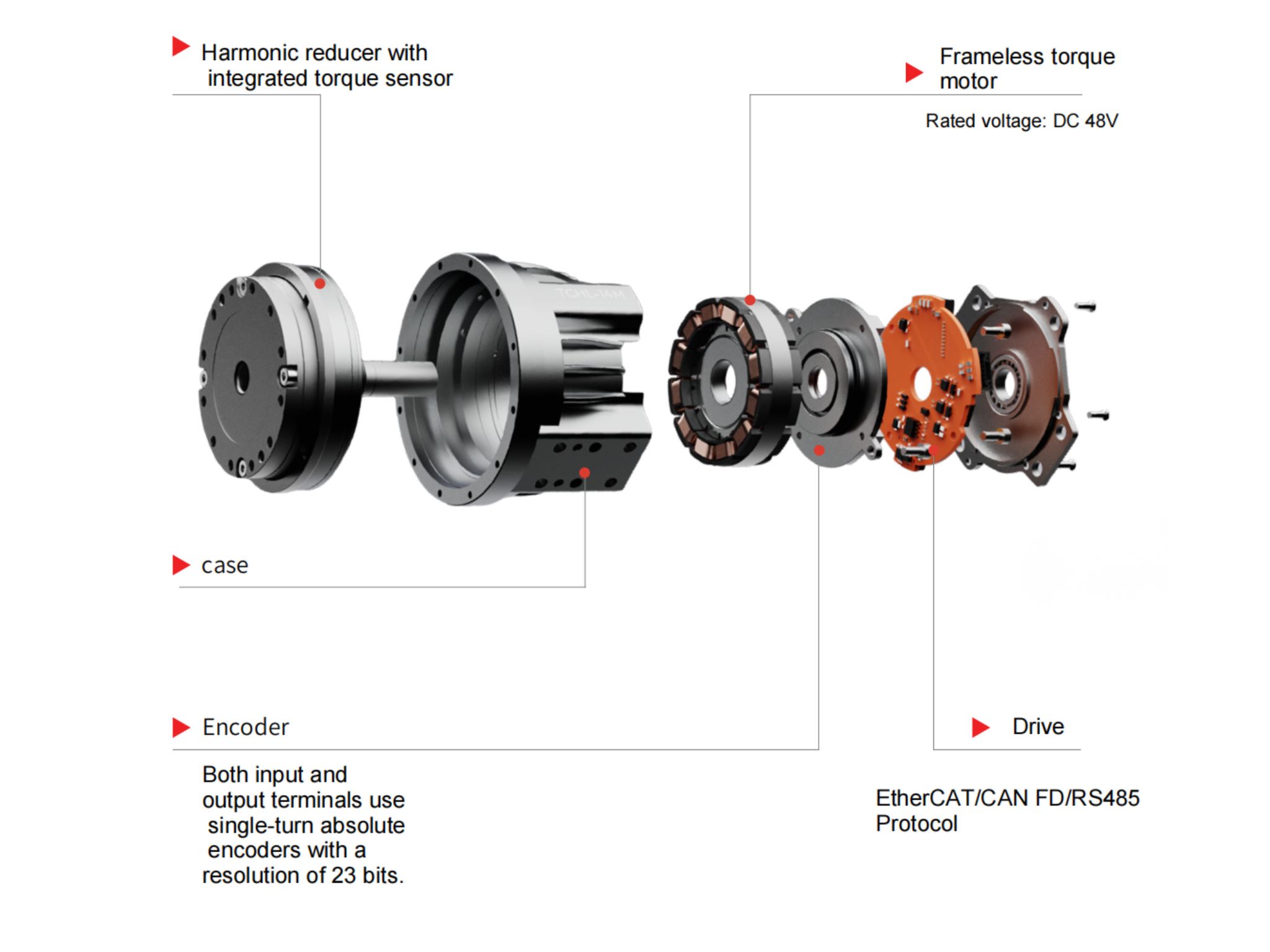
The main components typically include the stator, rotor, permanent magnets, windings, bearings, and high-resolution encoder.
The encoder becomes particularly important because the motor position is directly connected to the load position.
How a Harmonic Reducer Works?
A Harmonic Reducer takes a different approach.
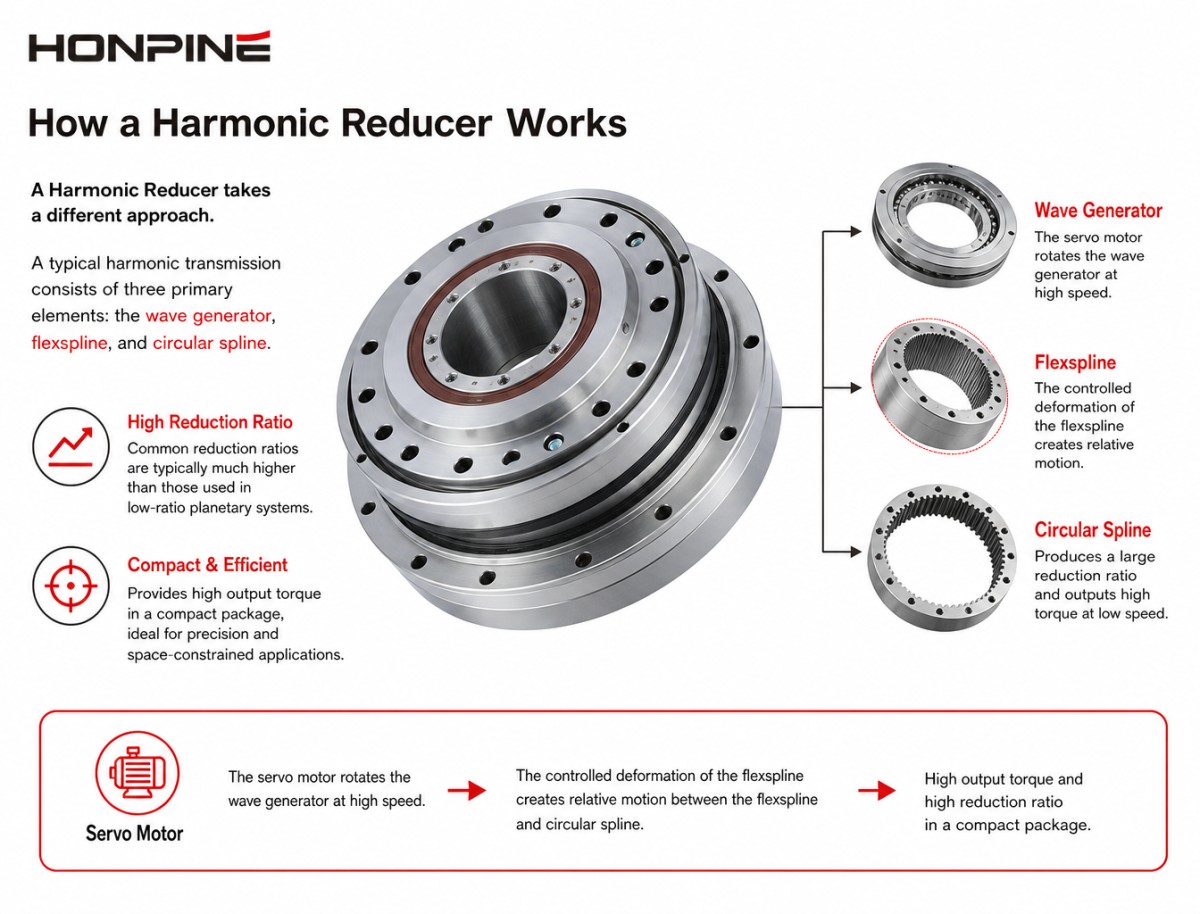
A typical harmonic transmission consists of three primary elements: the wave generator, flexspline, and circular spline.
The servo motor rotates the wave generator at high speed. The controlled deformation of the flexspline creates relative motion between the flexspline and circular spline, producing a large reduction ratio.
Common reduction ratios are typically much higher than those used in low-ratio planetary systems.
This allows a relatively small, high-speed servo motor to generate a much higher output torque at a lower speed.
The harmonic reducer therefore provides an important mechanical advantage:
high output torque and high reduction ratio in a compact package.
This is one of the main reasons harmonic gearboxes are widely used in robot joints, precision rotary axes, and compact automation equipment.
2. DD Motor vs Harmonic Reducer: Reduction Ratio and Output Torque
One of the biggest differences between the two technologies is the way they generate output torque.
A DD motor does not use a reduction ratio to multiply motor torque.
The motor itself must generate the required output torque.
For this reason, increasing the required torque often means increasing the motor diameter, active magnetic volume, winding capacity, or cooling capability.
A harmonic reducer generates torque amplification through its reduction ratio.
For example, a servo motor operating at high speed can be combined with a harmonic reducer with a reduction ratio of 50:1 or 100:1.
The theoretical relationship can be simplified as:
Output Torque ≈ Motor Torque × Reduction Ratio × Transmission Efficiency
The actual output torque must also account for reducer efficiency, thermal conditions, acceleration requirements, and duty cycle.
This gives harmonic reducers a significant advantage when the application requires high torque from a relatively small motor package.
A DD motor becomes more attractive when the required output speed is relatively low and the application benefits from direct torque generation.
Engineering Consideration
If the application requires:
very high torque
limited radial space
high reduction ratio
compact motor dimensions
a harmonic reducer is often easier to integrate.
If the application requires:
low-speed continuous rotation
direct torque control
high dynamic response
zero mechanical transmission backlash
a DD motor may be more appropriate.
3. Backlash and Positioning Accuracy
Backlash is one of the most frequently discussed differences between a DD Motor and Harmonic Reducer.
A DD motor has no mechanical gear transmission between the motor and load.
Therefore, there is no gear backlash in the conventional sense.
This is particularly valuable in applications where the direction of rotation changes frequently and the load must respond immediately to small command changes.
Examples include precision inspection stages, semiconductor equipment, high-speed indexing systems, and certain robot joints.
However, saying that a DD motor automatically provides perfect positioning accuracy would be misleading.
The final positioning accuracy of a DD system still depends on:
encoder accuracy
servo tuning
bearing runout
mechanical stiffness
thermal deformation
installation accuracy
load disturbance
A harmonic reducer, on the other hand, is a mechanical transmission system.
High-quality harmonic reducers can achieve extremely low backlash, making them suitable for precision robotic and automation applications.
The important distinction is that low backlash is not the same as zero mechanical transmission.
For many industrial applications, the backlash of a precision harmonic reducer is already sufficiently low that the remaining error is dominated by other elements of the machine.
Therefore, engineers should not select a DD motor solely because the application specification says “high accuracy.”
The actual positioning and repeatability requirements must be evaluated at the complete machine level.
4. Dynamic Response: DD Motor vs Harmonic Gearbox
Dynamic response is another area where DD motors have a strong advantage.
A DD motor directly applies electromagnetic torque to the load.
There is no gearbox between the motor and the load introducing mechanical compliance, transmission error, or additional rotating elements.
This can simplify the dynamic behavior of the system.
The result can be:
fast acceleration
rapid deceleration
smooth reversing
high servo bandwidth
excellent torque response
This makes DD motors particularly attractive for high-speed indexing and precision motion applications.
However, a harmonic reducer is not necessarily “slow.”
A properly designed harmonic drive system can also achieve excellent dynamic performance, particularly when the reducer is correctly sized and the servo control system is properly tuned.
The main difference is that the harmonic transmission introduces mechanical stiffness and compliance into the motion chain.
For applications requiring extremely fast torque changes or highly transparent force control, this distinction becomes increasingly important.
5. Torque Density and Installation Space
This is one of the areas where harmonic reducers often outperform DD motors.
A DD motor needs sufficient electromagnetic radius and active magnetic volume to generate torque directly.
As output torque increases, the motor may become relatively large in diameter.
This can be acceptable for rotary tables and other equipment where radial space is available.
It becomes more challenging in robot joints.
A robot joint may have a very limited diameter while simultaneously requiring:
high output torque
high reduction ratio
low weight
high stiffness
compact packaging
This is exactly where a harmonic gearbox becomes attractive.
A small servo motor combined with a harmonic reducer can generate substantial output torque without requiring an extremely large motor diameter.
For compact robot joints, this can be a decisive advantage.
Practical Comparison
A large-format rotary table may have sufficient space for a large DD motor.
A six-axis robot joint may not.
Therefore, the physical architecture of the equipment should be considered before selecting the drive technology.
6. Efficiency, Heat Generation and Duty Cycle
Efficiency is more complicated than simply comparing the number of mechanical components.
A DD motor eliminates mechanical transmission losses associated with a gearbox.
This can provide a very efficient mechanical power path.
However, DD motors can operate at relatively low speeds while generating high torque.
Under continuous low-speed, high-torque operation, the motor may require substantial current.
Copper losses can therefore become an important thermal consideration.
A harmonic reducer introduces transmission losses through its mechanical deformation and friction.
Its efficiency is generally lower than a direct mechanical connection, and the actual value depends strongly on reduction ratio, speed, load, lubrication, temperature, and operating conditions.
Therefore, engineers should evaluate efficiency over the actual duty cycle, rather than using a single nominal efficiency number.
For example, a DD motor may be particularly attractive for a continuously rotating precision rotary table.
A harmonic reducer may still be the better choice for a robot joint that operates intermittently but requires very high peak torque within a small envelope.
7. Rigidity and Mechanical Compliance
System rigidity is often overlooked when comparing a DD motor with a harmonic reducer.
A DD motor eliminates the gearbox and therefore removes one major source of mechanical compliance.
The load is directly coupled to the motor.
This can simplify the mechanical system and improve torque transmission transparency.
However, the overall rigidity of a DD system still depends on the motor housing, bearings, shaft, mounting structure, and machine frame.
A harmonic reducer has its own torsional stiffness characteristics.
The flexspline is intentionally designed to deform elastically during operation.
This provides the harmonic transmission principle but also introduces a degree of torsional compliance.
For ordinary robot motion, this is not necessarily a disadvantage.
In fact, the mechanical characteristics of a harmonic reducer can work well with servo control and contribute to smooth robot motion.
But in extremely high-bandwidth force control applications, the mechanical compliance must be included in the control model.
8. Encoder Requirements
Encoder selection is particularly important when comparing DD motors and harmonic reducers.
With a DD motor, the encoder is directly related to the output position.
Any encoder error is therefore directly reflected in the output measurement.
This places high demands on:
encoder resolution
encoder accuracy
installation concentricity
thermal stability
servo tuning
High-resolution absolute encoders are commonly used in precision DD applications.
A harmonic reducer provides a mechanical reduction ratio between the motor and output.
This means motor-side encoder resolution is effectively multiplied by the mechanical reduction ratio when viewed from the output.
However, engineers should not interpret this as meaning that a reducer automatically eliminates all positioning errors.
The reducer introduces its own transmission errors, torsional deformation, temperature-related changes, and mechanical tolerances.
Therefore:
High encoder resolution does not automatically equal high system accuracy.
The encoder, transmission mechanism, bearings, mechanical structure, and control algorithm must be considered together.
9. Reliability, Maintenance and Service Life
A DD motor has a relatively simple mechanical transmission structure.
There is no gearbox requiring gear lubrication, and there are no flexsplines or gear teeth undergoing mechanical transmission cycles.
This can reduce maintenance requirements.
For cleanroom semiconductor equipment or machines where maintenance access is difficult, this can be valuable.
However, a DD motor is not maintenance-free in an absolute sense.
Bearings, encoder systems, cooling systems, and electrical components still have service-life considerations.
A harmonic reducer also requires proper lubrication and must be operated within its rated load, speed, temperature, and duty cycle.
The flexspline is a critical component and experiences repeated elastic deformation during operation.
Therefore, reducer selection should consider expected service life rather than simply assuming that all harmonic reducers have the same lifetime.
For a high-cycle robot joint operating continuously, reducer fatigue life can become a major selection factor.
For a cleanroom rotary stage operating under controlled conditions, the maintenance advantages of a DD motor may become more important.
10. DD Motor vs Harmonic Reducer: Which One Is Better for Your Application?
There is no universal winner.
The right choice depends on the mechanical requirements of the equipment.
DD Motor for Precision Rotary Tables
DD motors are particularly suitable for applications such as:
semiconductor inspection stages, wafer inspection equipment, precision indexing tables, optical inspection systems, laser processing machines, and high-speed rotary positioning systems.
These applications can benefit from direct drive, low mechanical backlash, fast response, and smooth rotation.
For example, a semiconductor inspection rotary stage may prioritize angular positioning accuracy, repeatability, vibration control, and fast indexing.
In this situation, the advantages of a DD motor can outweigh its larger diameter and higher initial cost.
Harmonic Reducer for Robot Joints
Harmonic reducers are particularly attractive for:
industrial robot joints, collaborative robots, humanoid robot joints, camera gimbals, AGV steering mechanisms, and compact rotary actuators.
The main reason is not simply precision.
It is the combination of:
high reduction ratio + high torque density + compact dimensions + low backlash.
A robot shoulder or wrist joint has limited installation space.
Using a large DD motor may increase the joint diameter and weight.
A harmonic reducer allows the designer to use a smaller high-speed servo motor while generating high output torque.
This is one of the most important practical advantages of harmonic transmission.
DD Motor vs Harmonic Reducer for Collaborative Robots
Collaborative robots deserve special consideration because they require both precision and interaction with humans.
A DD motor provides direct torque transmission and can offer excellent torque response.
This can be beneficial for force control.
However, the motor may become relatively large when high output torque is required.
A harmonic reducer can provide a more compact joint architecture.
Its low backlash and high torque density make it widely applicable to collaborative robot joints.
The trade-off is that the mechanical transmission introduces compliance and transmission characteristics that must be considered when designing force-control algorithms.
Therefore, for collaborative robot applications, the question is not simply whether DD or harmonic is “better.”
The designer should evaluate:
joint torque, joint speed, robot payload, external force requirements, joint diameter, weight, backdrivability, stiffness, control bandwidth, and safety strategy.
DD Motor vs Harmonic Reducer for CNC Rotary Tables
CNC rotary tables provide another useful comparison.
A precision CNC rotary table may require:
high angular positioning accuracy
high repeatability
smooth interpolation
rapid indexing
high stiffness
continuous operation
low vibration
DD motors can be highly attractive for high-speed direct-drive rotary tables because the motor directly drives the table.
This eliminates gearbox backlash and can simplify the transmission architecture.
However, a harmonic reducer can still be useful when the rotary table requires high torque within a relatively compact package.
The correct choice depends heavily on table diameter, workpiece inertia, required speed, cutting force, acceleration, and positioning accuracy.
For heavy-duty machining, the mechanical stiffness and load capacity of the complete rotary axis may be more important than simply eliminating backlash.
When Should You Choose a DD Motor?
A DD motor is worth considering when the application places strong emphasis on direct torque control and dynamic response.
Typical conditions include:
low to moderate output speed
high positioning accuracy
frequent acceleration and deceleration
frequent direction changes
continuous rotary motion
minimal mechanical transmission
low maintenance requirements
sufficient installation diameter
Typical applications include semiconductor equipment, inspection systems, precision rotary tables, optical equipment, high-speed indexing machines, and selected robot joints.
When Is a Harmonic Reducer the Better Choice?
A harmonic reducer is generally more attractive when compactness and torque density are major design constraints.
Typical conditions include:
high output torque
limited installation space
high reduction ratio
low backlash
compact robot joints
high load-to-weight requirements
moderate to high positioning accuracy
servo motor speed available at the input
Typical applications include industrial robots, collaborative robots, humanoid robots, robotic rotary actuators, camera systems, AGV steering mechanisms, and compact automation equipment.
DD Motor and Harmonic Reducer Are Not Always Competitors
An important point is that DD motors and harmonic reducers do not necessarily compete in every application.
They solve different mechanical problems.
A DD motor removes the mechanical reduction stage.
A harmonic reducer creates a compact high-ratio mechanical transmission.
In some systems, the best solution may even involve different technologies on different axes.
For example, a precision automation machine may use DD motors on high-speed rotary positioning axes while using harmonic reducers on compact auxiliary rotary axes.
A robot may use harmonic transmission on high-torque joints while another mechanism uses direct drive where low inertia and torque transparency are more important.
Therefore, the best engineering approach is to select the transmission architecture according to the requirements of each axis.
DD Motor vs Harmonic Reducer: Quick Selection Guide
DD Motor vs Harmonic Reducer: The Final Decision
The choice between a DD Motor and Harmonic Reducer should not be based on a single specification such as backlash, torque, or price.
A DD motor is attractive when the machine benefits from direct torque transmission, high dynamic response, smooth motion, and minimal mechanical transmission.
A harmonic reducer is attractive when the machine requires high torque density, compact dimensions, high reduction ratios, and low backlash.
For precision rotary tables, semiconductor equipment, optical systems, and high-speed indexing mechanisms, a Direct Drive Rotary Motor can provide significant advantages.
For robot joints, collaborative robots, humanoid robots, and compact rotary actuators, a Harmonic Reducer or Harmonic Gearbox can often provide a better balance between torque, size, accuracy, and cost.
The most important engineering principle is therefore simple:
Do not choose the motor or reducer first. Choose the motion architecture first.
Once the required torque, speed, inertia, positioning accuracy, duty cycle, installation space, stiffness, thermal conditions, and maintenance requirements are defined, the appropriate rotary drive technology becomes much easier to identify.
For equipment manufacturers, this approach also makes it possible to evaluate DD motors, harmonic reducers, planetary reducers, and integrated rotary actuators on the same application-specific basis rather than comparing individual products only by catalog specifications.
FAQ: DD Motor vs Harmonic Reducer
Is a DD motor more accurate than a harmonic reducer?
Not necessarily.
A DD motor eliminates mechanical gear backlash, which is a major advantage for precision motion. However, final system accuracy also depends on encoder accuracy, bearing runout, mechanical stiffness, thermal deformation, servo tuning, and installation.
A high-quality harmonic reducer can achieve very low backlash and can provide excellent positioning performance in a properly designed servo system.
Is a DD motor better for robot joints?
Not always.
DD motors can provide excellent torque response and direct force transmission, but high-torque DD motors can require relatively large diameters.
For compact robot joints, harmonic reducers often provide a better combination of torque density, reduction ratio, size, and low backlash.
Why are DD motors usually larger?
A DD motor does not have a gearbox to multiply torque.
The motor itself must generate the required output torque. Increasing the motor's effective radius and active magnetic volume is one way to increase torque, which can result in a larger motor diameter.
Can a harmonic reducer provide zero backlash?
A precision harmonic reducer can provide extremely low backlash, but it should not be described as equivalent to a completely gearless direct-drive system.
The mechanical transmission still has its own stiffness, elastic deformation, manufacturing tolerances, and transmission characteristics.
Which is better for CNC rotary tables?
Both can be suitable.
DD motors are particularly attractive for high-speed precision rotary tables where direct drive, smooth motion, and rapid indexing are important.
Harmonic reducers can be attractive when high torque and compact packaging are more important.
The final choice should consider workpiece inertia, cutting force, table diameter, speed, acceleration, positioning accuracy, and stiffness.
Which is better for semiconductor equipment?
DD motors are often attractive for precision rotary positioning and inspection equipment because they provide direct drive, low mechanical backlash, and fast response.
However, the final selection depends on the specific equipment architecture, payload, cleanroom requirements, speed, accuracy, and thermal constraints.
Conclusion
The comparison between DD Motor vs Harmonic Reducer is ultimately a comparison between two different approaches to rotary motion.
The DD motor removes the mechanical reduction stage and focuses on direct torque generation, high dynamic response, and minimal mechanical transmission.
The harmonic reducer uses a high-ratio strain wave gear mechanism to achieve high torque density and compact mechanical integration.
Neither technology is universally superior.
The right solution depends on what the machine actually needs.
For precision rotary tables, semiconductor inspection systems, optical equipment, and high-speed indexing, DD motors can provide compelling advantages.
For robot joints, collaborative robots, humanoid robots, compact rotary actuators, and other space-constrained mechanisms, harmonic reducers can offer a more practical combination of torque, size, accuracy, and mechanical integration.
For engineers designing the next generation of automation and robotic equipment, the real question is therefore not “DD Motor or Harmonic Reducer?”
It is:
“Which rotary drive architecture delivers the required performance within the available mechanical, thermal, control, and cost constraints?”
Read More
Learn more about the story of HONPINE and industry trends related to precision transmission.
 What is robot joint actuator?How to Choose the Best Robot Rotary Joint Actuator?In core robot joint transmission solutions, planetary and harmonic rotary actuators each have their own strengths. Choosing the right type based on application requirements is essential to achieve the optimal balance between performance and cost.
 DD Motors VS Harmonic Rotary ActuatorsThis article provides an in-depth comparison between Direct Drive (DD) motors and harmonic rotary actuators, covering their transmission principles, advantages and disadvantages, and typical application fields.
 OMG Ultra Compact Harmonic Drive Joint Module with Built-in Torque SensorHONPINE TCHL series harmonic drive joint module is a game-changing product that achieves disruptive improvements in multiple aspects such as lightweight design, integration level, and connection convenience. This article will analyze its revolutionary enhancements with you.
 The Role of Harmonic Drive Gears in Achieving 5–10 μm Accuracy in Dental Milling MachinesA dental milling machine is a CNC machining system used to directly process digital dental models into restorations such as crowns, bridges, veneers, inlays, and implant abutments. Dental milling machines require far higher operational accuracy and motion stability than ordinary equipment. This article explains how harmonic drive gear help dental milling machines achieve stable, continuous, and controllable operation.
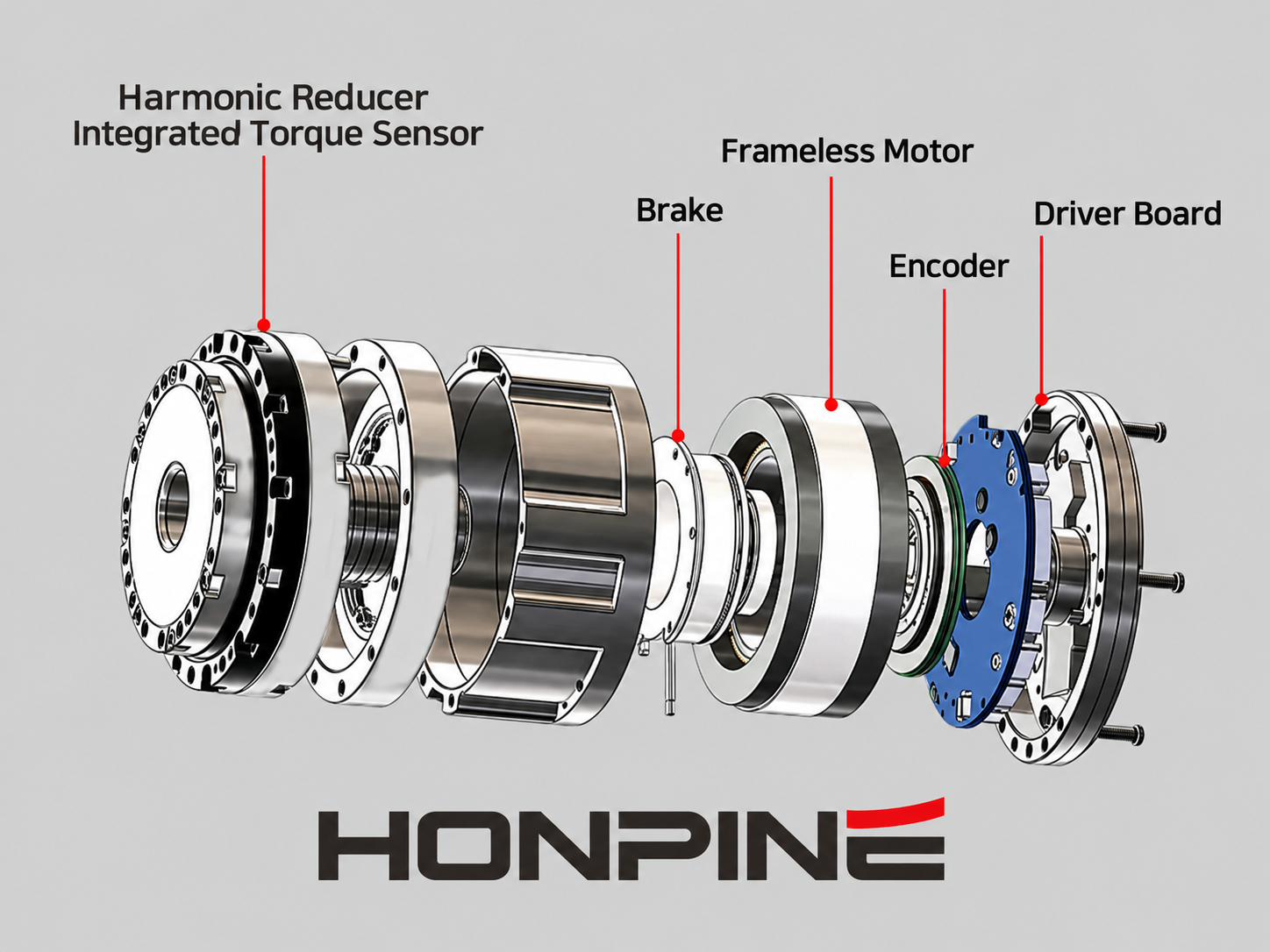
 Why Are Harmonic Rotary Actuators Perfect for Medical Equipment?Harmonic rotary actuators (typically integrated systems consisting of a harmonic drive reducer, frameless torque motor, encoder, and optional brake) are regarded as key components in medical equipment. The core reason is that they simultaneously meet the most stringent medical requirements for precision, compact size, safety, and controllability. The following explanation is structured from three perspectives: technical characteristics, application scenarios, and medical value.
 High-Precision RV Reducers Perfectly Matched for Walking RobotsThe walking axis of a robot is a core component for power transmission and support. RV reducers provide extremely high rigidity, precision, and torque while maintaining a compact size and exceptional reliability, making them an ideal match for the demanding requirements of walking robot joints in terms of load capacity, impact resistance, and precision.
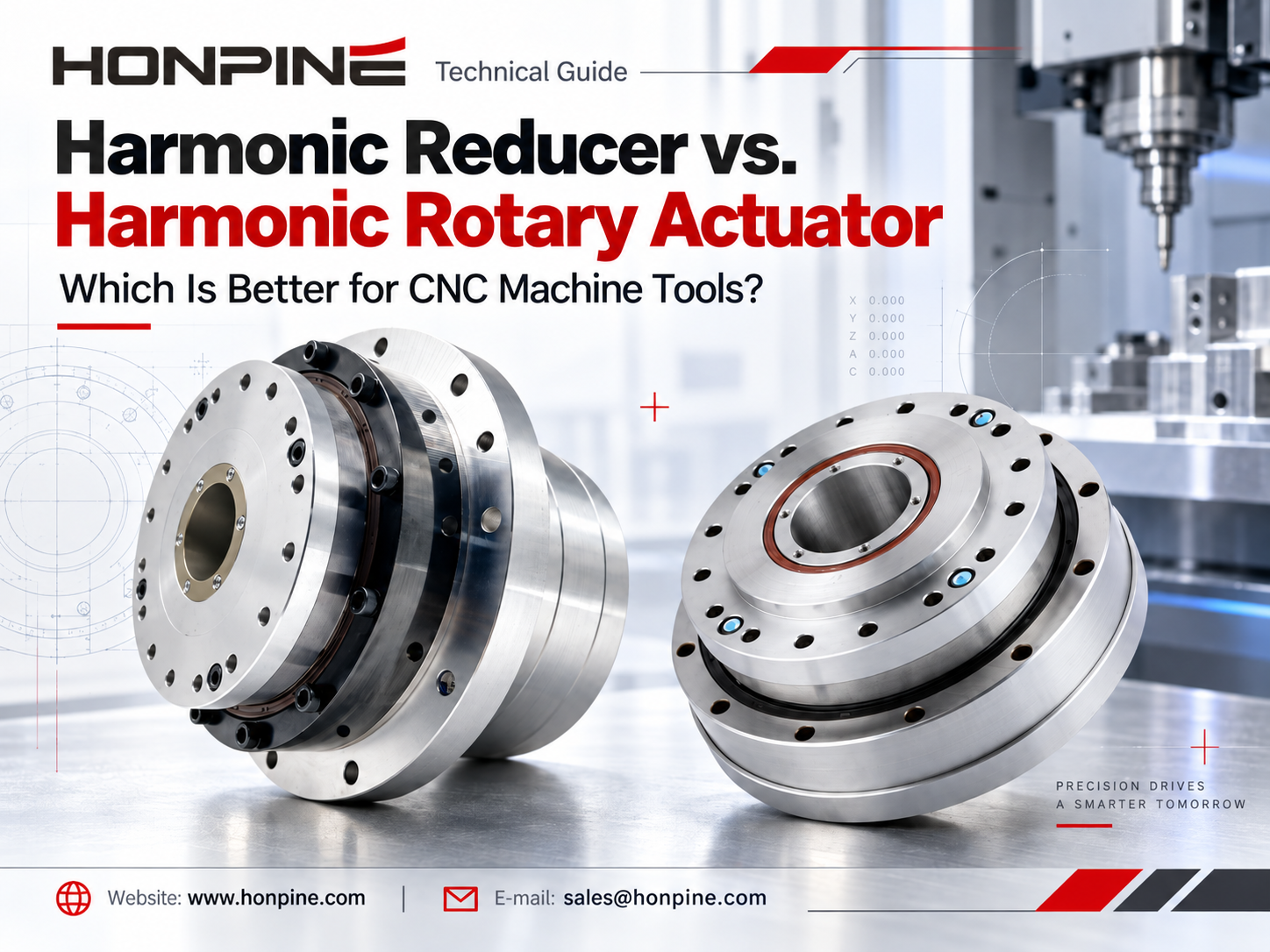
 Harmonic Reducer vs. Harmonic Rotary Actuator: Which Is Better for CNC Machine Tools?Choosing between a harmonic reducer and a harmonic rotary actuator is an important decision in CNC machine tool design. Both solutions offer high-precision motion control, but they differ in integration, installation requirements, rigidity, and system flexibility. For CNC fourth-axis rotary tables and compact five-axis machining systems, selecting the right harmonic drive can significantly influence machine performance. In this article, HONPINE Technical Director Theodore Li compares harmonic reducers and harmonic rotary actuators to help engineers identify the most suitable solution for their CNC applications.
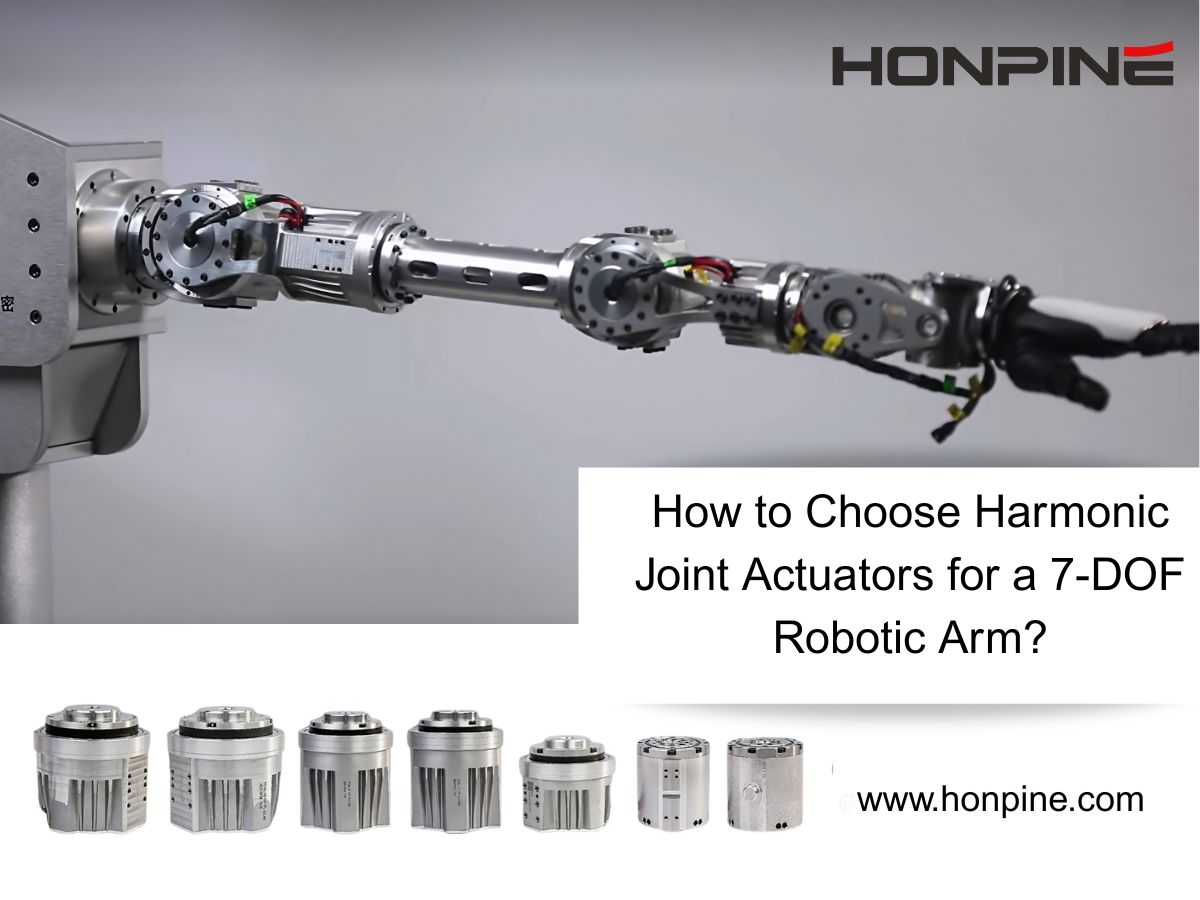
 How to Choose Harmonic Joint Actuators for a 7-DOF Robotic Arm?I'm Theodore Li, Technical Director at HONPINE. Choosing harmonic joint actuators for a 7-DOF robotic arm starts with the torque, weight, and installation needs of each joint. This guide uses a TCHL 20 shoulder and TCHL 14 wrist configuration as an example, then explores torque sensing, compliant control, and HAG Series considerations for demanding robotic applications.
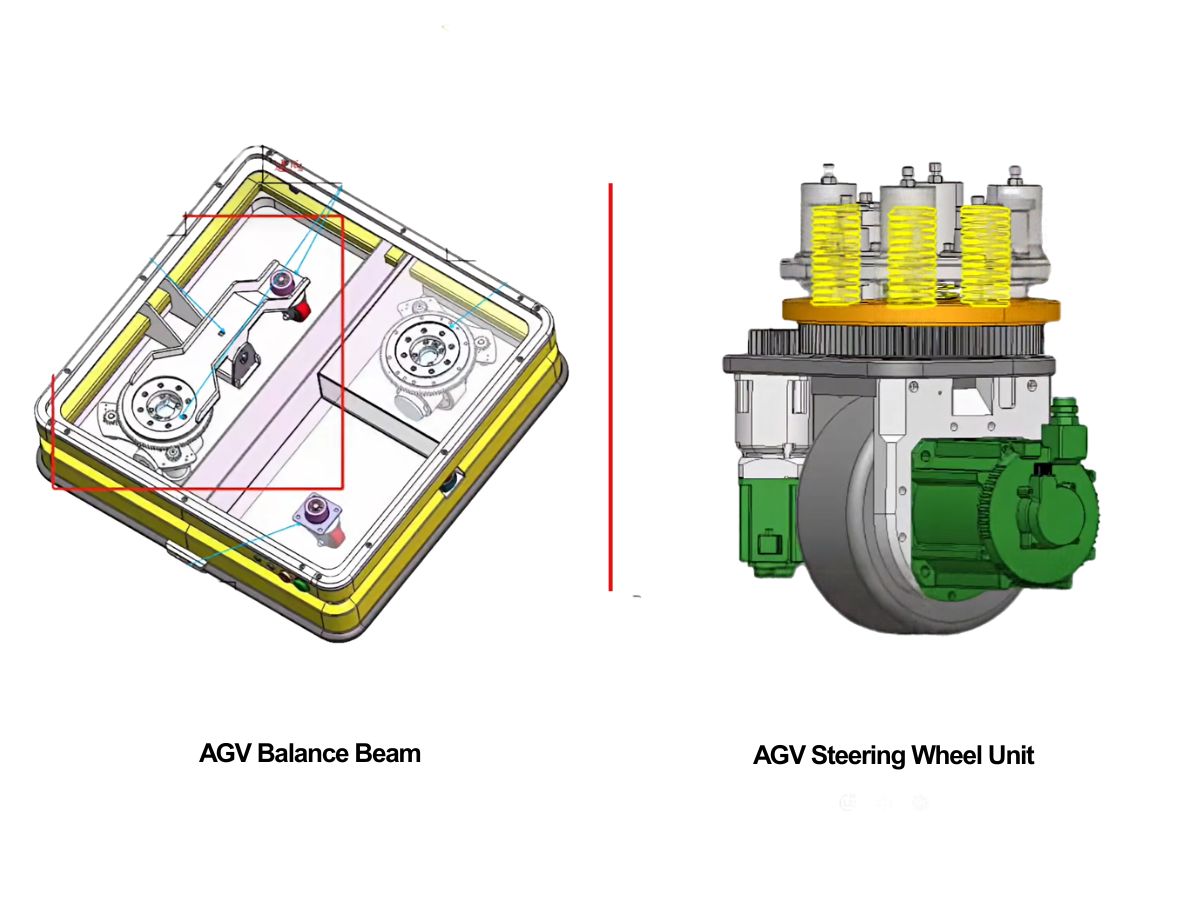
 AGV Suspension: Should You Choose a Balance Beam or a Spring-Loaded Steering Drive Unit?Choosing an AGV suspension system starts with the vehicle’s load range and floor conditions. Balance beams and spring-loaded steering drive units offer different approaches to maintaining wheel contact and managing wheel loads. This HONPINE guide compares both options and explains how to evaluate traction, suspension travel, installation space, and maintenance before choosing a configuration.
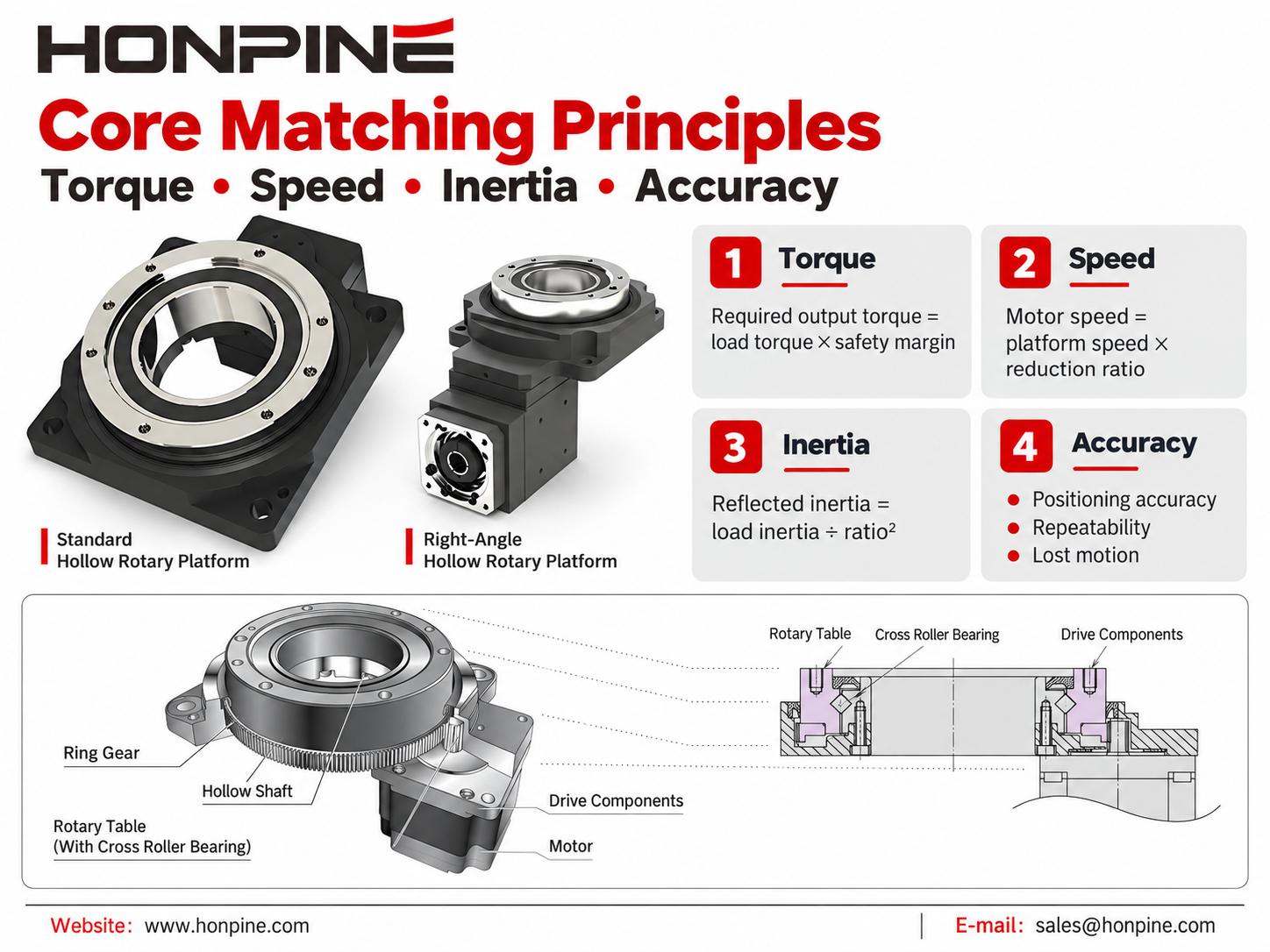
 Hollow Rotary Platform Motor Matching: A Complete GuideSelecting the right motor for a hollow rotary platform is essential for achieving precise positioning, stable operation, and efficient automation. This guide explains how to match servo motors, stepper motors, and brushless DC motors with hollow rotary platforms based on torque, speed, inertia, accuracy, and installation requirements. Explore practical motor selection guidelines, typical application combinations, and space-saving mounting solutions to find the right configuration for your automation project.
 Can Robots Feel Touch? HONPINE HAG Force-Controlled Harmonic Robot Joint MotorsCan robots respond to a gentle touch? The HONPINE HAG robot joint motor with torque sensor combines a harmonic reducer, integrated torque sensing, and closed-loop control to detect external forces and support smooth, compliant motion. In this article, HONPINE founder Allen Li demonstrates the module's response to light contact and hand-guided movement, explains its key force-control technologies, and shares the vision behind joint modules designed for practical industrial robotics.
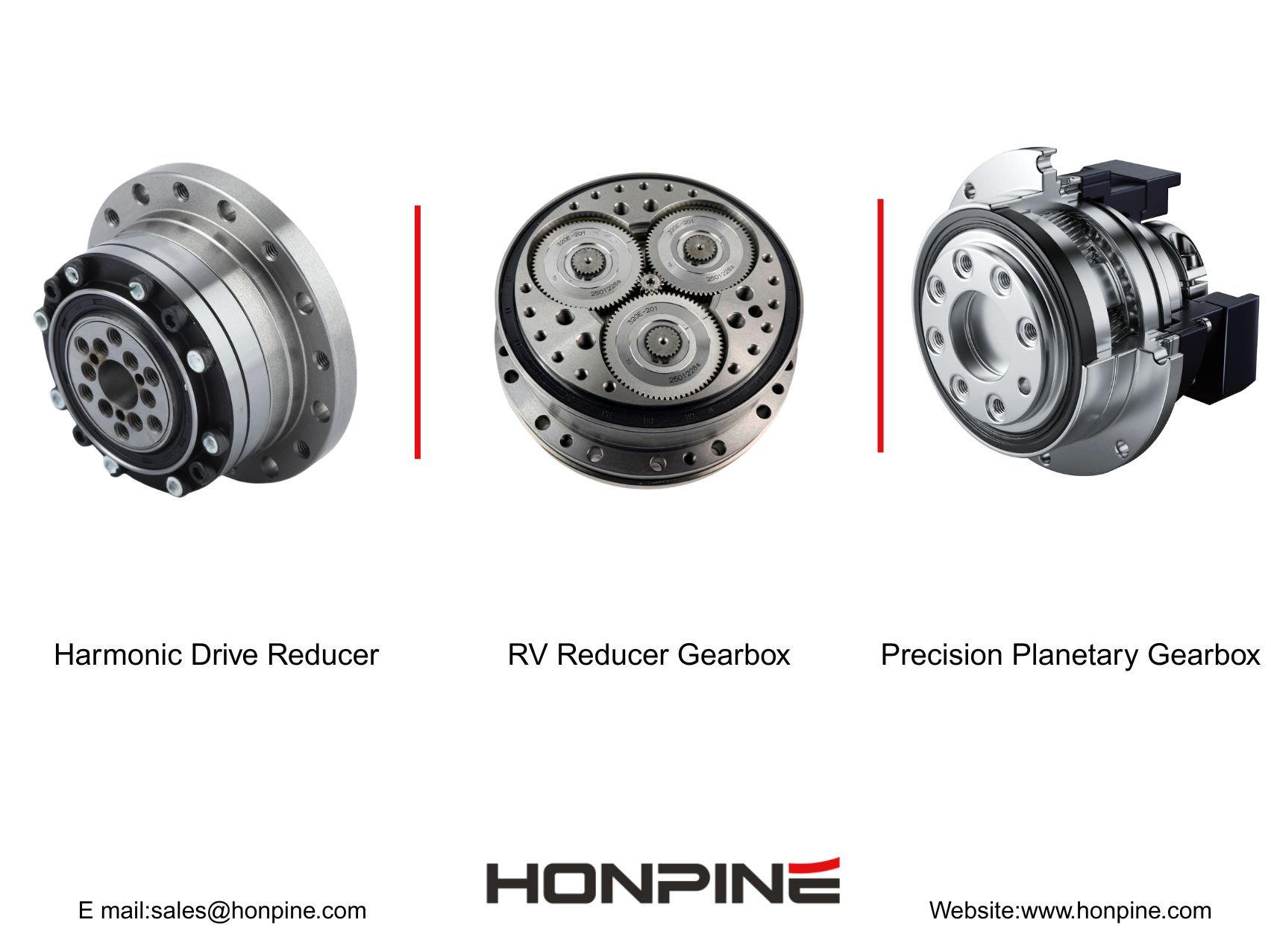
 Does a Higher Gearbox Ratio Mean More Torque? Planetary, Harmonic, and RV Gearboxes ExplainedDoes a higher gearbox ratio mean more torque? This engineering guide explains the relationship between gearbox ratio, output torque, and output speed, and compares planetary gearboxes, harmonic gearboxes, and RV gearboxes. Learn why reduction ratio alone cannot determine gearbox torque capacity, efficiency, dynamic response, precision, or service life, and what engineers should consider when selecting a gearbox for robotics, CNC machines, servo systems, and industrial motion control.
Double Click
We provide harmonic drive reducer,planetary reducer,robot joint motor,robot rotary actuators,RV gear reducer,robot end effector,dexterous robot hand
 What is robot joint actuator?How to Choose the Best Robot Rotary Joint Actuator?In core robot joint transmission solutions, planetary and harmonic rotary actuators each have their own strengths. Choosing the right type based on application requirements is essential to achieve the optimal balance between performance and cost.
 DD Motors VS Harmonic Rotary ActuatorsThis article provides an in-depth comparison between Direct Drive (DD) motors and harmonic rotary actuators, covering their transmission principles, advantages and disadvantages, and typical application fields.
 OMG Ultra Compact Harmonic Drive Joint Module with Built-in Torque SensorHONPINE TCHL series harmonic drive joint module is a game-changing product that achieves disruptive improvements in multiple aspects such as lightweight design, integration level, and connection convenience. This article will analyze its revolutionary enhancements with you.
 Harmonic Reducer vs. Harmonic Rotary Actuator: Which Is Better for CNC Machine Tools?Choosing between a harmonic reducer and a harmonic rotary actuator is an important decision in CNC machine tool design. Both solutions offer high-precision motion control, but they differ in integration, installation requirements, rigidity, and system flexibility. For CNC fourth-axis rotary tables and compact five-axis machining systems, selecting the right harmonic drive can significantly influence machine performance. In this article, HONPINE Technical Director Theodore Li compares harmonic reducers and harmonic rotary actuators to help engineers identify the most suitable solution for their CNC applications.
 How to Choose Harmonic Joint Actuators for a 7-DOF Robotic Arm?I'm Theodore Li, Technical Director at HONPINE. Choosing harmonic joint actuators for a 7-DOF robotic arm starts with the torque, weight, and installation needs of each joint. This guide uses a TCHL 20 shoulder and TCHL 14 wrist configuration as an example, then explores torque sensing, compliant control, and HAG Series considerations for demanding robotic applications.
 AGV Suspension: Should You Choose a Balance Beam or a Spring-Loaded Steering Drive Unit?Choosing an AGV suspension system starts with the vehicle’s load range and floor conditions. Balance beams and spring-loaded steering drive units offer different approaches to maintaining wheel contact and managing wheel loads. This HONPINE guide compares both options and explains how to evaluate traction, suspension travel, installation space, and maintenance before choosing a configuration.
 Hollow Rotary Platform Motor Matching: A Complete GuideSelecting the right motor for a hollow rotary platform is essential for achieving precise positioning, stable operation, and efficient automation. This guide explains how to match servo motors, stepper motors, and brushless DC motors with hollow rotary platforms based on torque, speed, inertia, accuracy, and installation requirements. Explore practical motor selection guidelines, typical application combinations, and space-saving mounting solutions to find the right configuration for your automation project.
 Can Robots Feel Touch? HONPINE HAG Force-Controlled Harmonic Robot Joint MotorsCan robots respond to a gentle touch? The HONPINE HAG robot joint motor with torque sensor combines a harmonic reducer, integrated torque sensing, and closed-loop control to detect external forces and support smooth, compliant motion. In this article, HONPINE founder Allen Li demonstrates the module's response to light contact and hand-guided movement, explains its key force-control technologies, and shares the vision behind joint modules designed for practical industrial robotics.
 Does a Higher Gearbox Ratio Mean More Torque? Planetary, Harmonic, and RV Gearboxes ExplainedDoes a higher gearbox ratio mean more torque? This engineering guide explains the relationship between gearbox ratio, output torque, and output speed, and compares planetary gearboxes, harmonic gearboxes, and RV gearboxes. Learn why reduction ratio alone cannot determine gearbox torque capacity, efficiency, dynamic response, precision, or service life, and what engineers should consider when selecting a gearbox for robotics, CNC machines, servo systems, and industrial motion control.
 High-Precision Hollow Harmonic Rotary Actuator for CNC Machines and Heavy-Duty Rotary AxesHONPINE 58 Series Hollow Harmonic Rotary Actuator is designed for CNC rotary tables, precision rotary axes, laser processing equipment, and heavy-duty rotary positioning applications. With a 50 mm hollow bore, up to 2,722 N·m peak torque, integrated crossed roller bearing, multi-turn absolute encoder options, positioning accuracy below 30 arcsec, and repeat positioning accuracy below 5 arcsec, it combines high torque capacity with precision rotary motion and flexible mechanical integration.
 How Does the HONPINE JRM Planetary Robot Joint Module Address Temperature Rise in Continuous Operation?HONPINE JRM planetary robot joint modules are designed for long-duration and high-load robotic operation. This article examines how motor electromagnetic optimization, high-efficiency planetary transmission, GaN-based drive technology, and system-level low-loss design help control temperature rise. Using the C6345 planetary robot joint module as a test example, HONPINE also presents full-load thermal validation under continuous operation, including motor efficiency up to 92%, planetary gearbox efficiency up to 97%, and a final equilibrium temperature of 61.42°C at a 25°C ambient temperature.
 Direct Drive Motor Sizing: A Complete Guide to Torque Calculation and SelectionSelecting a direct drive motor for a precision rotary system requires more than matching motor torque to the equipment weight. Engineers need to evaluate gravity torque, inertial torque, wind torque, friction, rotational inertia, speed, acceleration, duty cycle, and positioning requirements. In this guide, Theodore Li, Technical Director at HONPINE, explains a practical approach to direct drive motor sizing and torque calculation using an azimuth and elevation turntable as an engineering example. The article covers continuous and peak torque calculation, motor selection criteria, and the application of frameless direct drive motors in integrated rotary systems.
- harmonic reducer
- strain wave gear
- strain wave
- harmonic drive
- harmonic drive system
- harmonic transmission
- wave gear reducer
- harmonic reducers
- harmonic gearbox
- robot joint
- harmonic
- small
- wave gear
- planetary
- humanoid robot
- servo
- direct drive motor
- dd motor
- dd
- direct drive rotary motor
- collaborative robot