








Current tag:harmonic
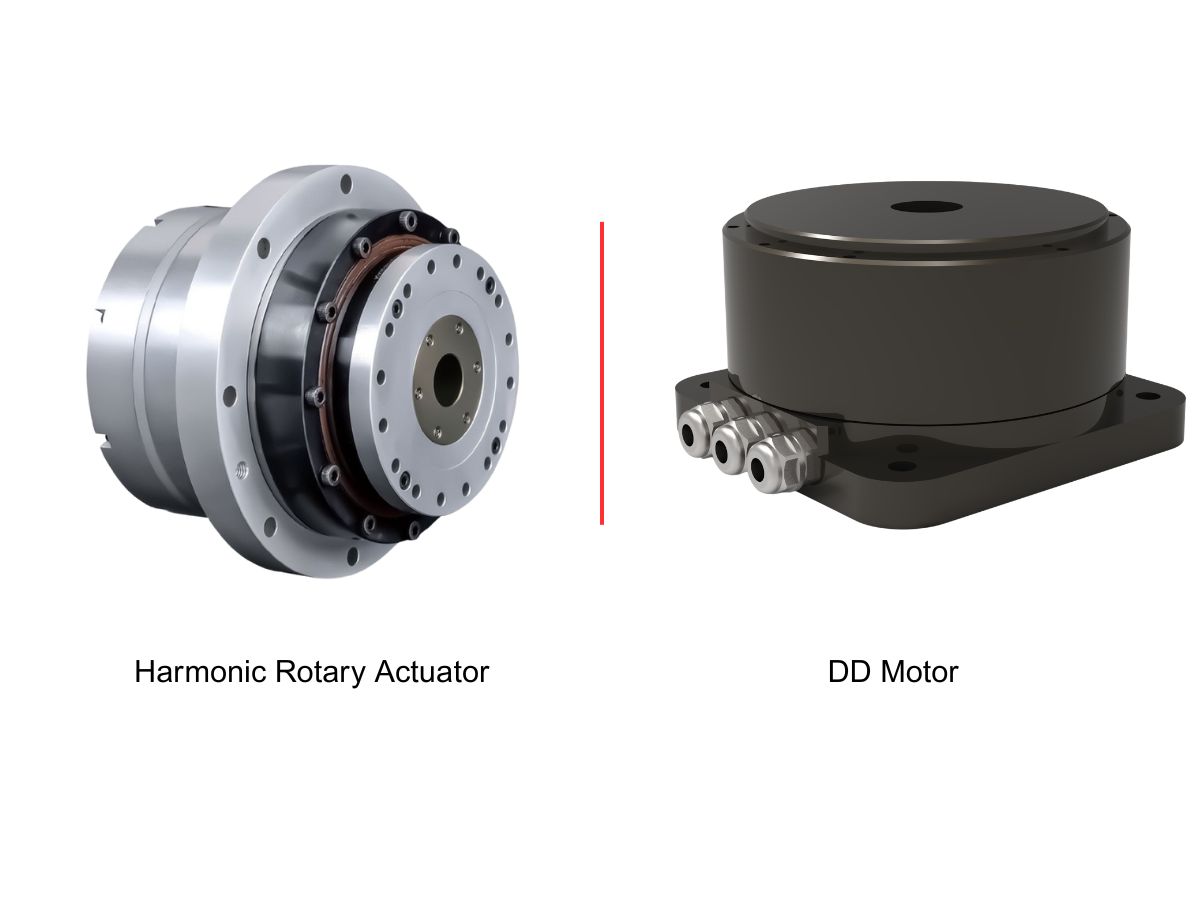
 DD Motors VS Harmonic Rotary ActuatorsThis article provides an in-depth comparison between Direct Drive (DD) motors and harmonic rotary actuators, covering their transmission principles, advantages and disadvantages, and typical application fields.
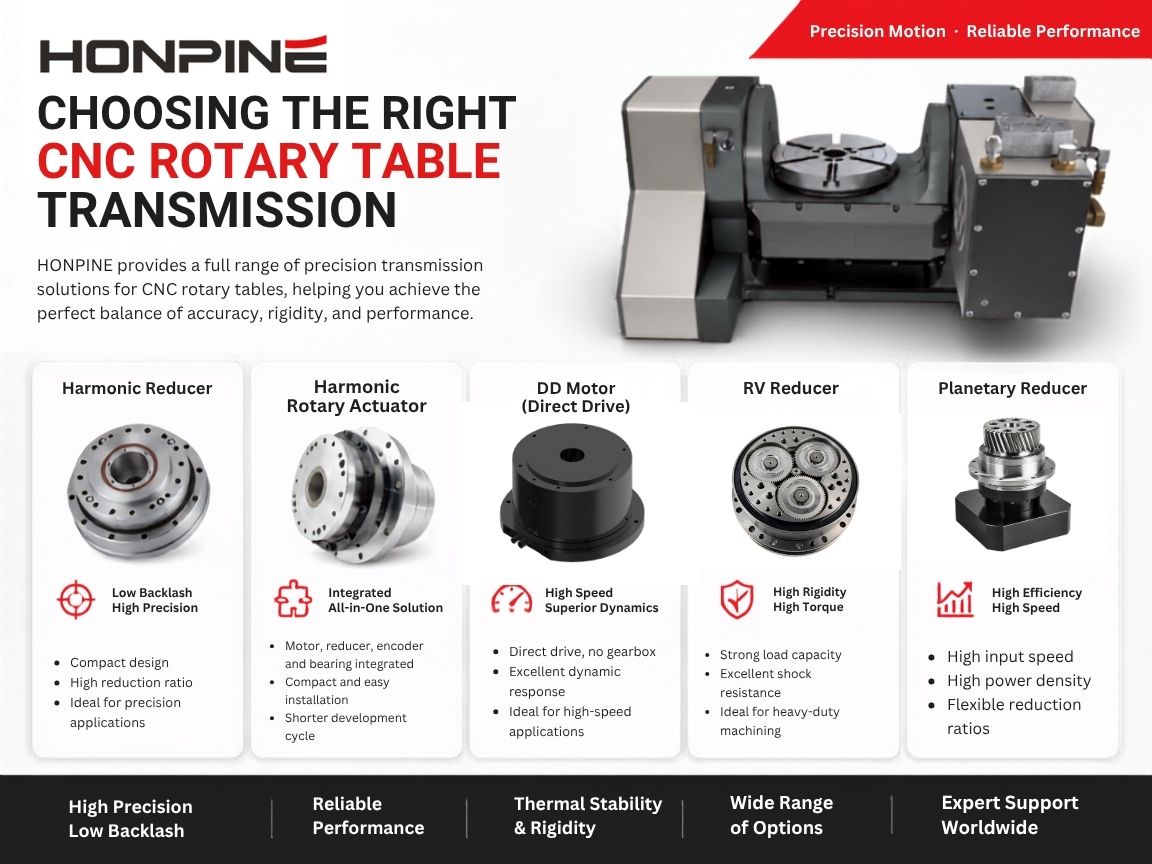
- 12 Tips for Choosing the Right CNC Rotary Table Transmission: Harmonic Reducer, Harmonic Rotary Actuator, DD Motor and Planetary ReducerLearn how to choose the right CNC rotary table transmission based on accuracy, backlash, torque, speed, rigidity, thermal stability and integration. Compare harmonic reducers, harmonic rotary actuators, DD motors, RV reducers and planetary reducers.
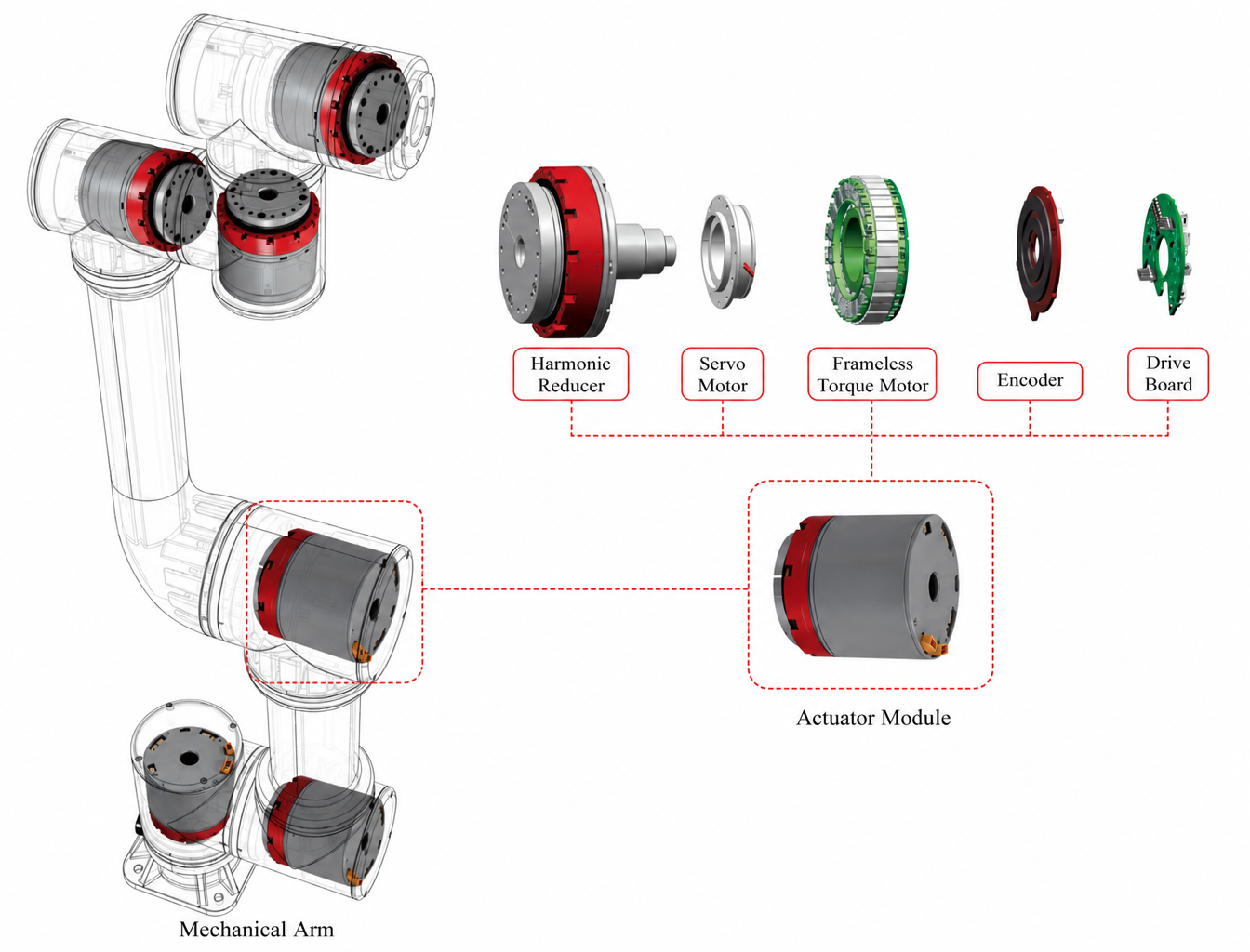
 HPJM Harmonic Joint Actuator PID Tuning: How to Reduce Positioning JitterLearn how to adjust PID parameters on the HPJM harmonic joint actuator to reduce positioning jitter and improve motion stability using CAN, CANopen, or EtherCAT.
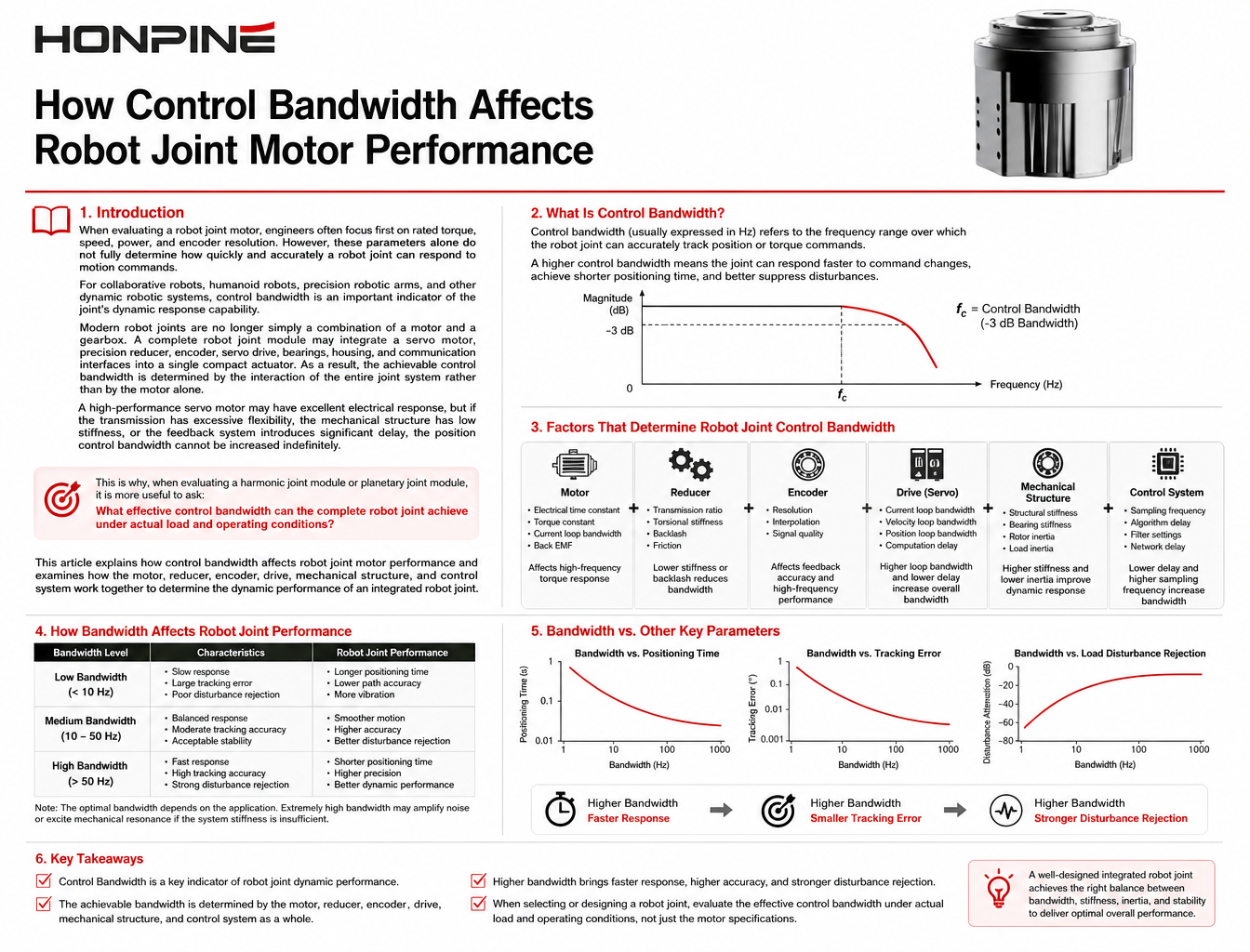
- How Control Bandwidth Affects Robot Joint Motor Performance?When evaluating a robot joint motor, engineers often focus on torque, speed, power, and encoder resolution. However, these specifications alone cannot fully describe how quickly and accurately a robot joint responds to changing motion commands. For humanoid robots, collaborative robots, robotic arms, and other dynamic systems, control bandwidth is an important factor affecting joint response, tracking accuracy, and motion stability. The achievable bandwidth depends not only on the motor, but also on the reducer, encoder, servo drive, mechanical stiffness, load inertia, and communication system. This article explains how control bandwidth affects robot joint motor performance and how harmonic joint modules and planetary joint modules can be evaluated from a system-level perspective.