

Vietnam VOSA Certification Rules for Industrial Machine Tools Take Effect May 2026
Vietnam’s Vietnam Standard and Quality Authority (VOSA) has introduced new mandatory requirements for imported industrial machine tools, effective 1 May 2026. The updated Technical Specifications for Imported Industrial Machinery (2026 Edition) directly impacts exporters and suppliers of CNC machine tools, metalworking equipment, and related industrial automation systems — particularly those based in China, Japan, Germany, and South Korea.
Event Overview
On 1 May 2026, VOSA formally implemented the enforcement provisions of the Technical Specifications for Imported Industrial Machinery (2026 Edition). Under this regulation, all imported industrial machine tools must: (1) feature a fully localized Vietnamese-language graphical user interface (GUI); (2) include printed and electronic Vietnamese-language operation and maintenance manuals; and (3) be accompanied by a VOSA-issued Type Approval Certificate — not merely a test report. Products failing to meet these requirements will be detained at Ho Chi Minh City Port, with an average clearance delay of 22 working days.
Which Subsectors Are Affected
Direct Exporters and Trading Enterprises
These entities face immediate compliance risk at customs entry. Since VOSA requires documentation and UI localization to be completed prior to shipment, export timelines, contract terms, and Incoterms (e.g., DAP vs. DDP) must be reassessed. Late-stage localization or retroactive certification is not permitted under current rules.
Machine Tool Manufacturers and OEMs
Manufacturers supplying to Vietnamese importers must now integrate Vietnamese GUI development and technical documentation into their product release cycles. This affects firmware updates, HMI software architecture, and version control — especially for vendors using proprietary or third-party control systems (e.g., Fanuc, Siemens, Mitsubishi).
After-Sales and Technical Support Providers
Local service partners in Vietnam will need certified Vietnamese-language training materials and diagnostic tools. The requirement extends beyond static manuals to interactive help functions, error message translations, and safety warning overlays — implying deeper integration than simple PDF translation.
Supply Chain and Compliance Service Providers
Third-party labs, certification consultants, and localization vendors specializing in industrial equipment are seeing increased demand for VOSA-specific type approval support. However, only VOSA-accredited bodies may issue the Type Approval Certificate; no mutual recognition agreements with foreign accreditation bodies have been announced.
What Relevant Companies or Practitioners Should Focus On Now
Verify VOSA’s official list of accredited testing and certification bodies
As of the published information, only certificates issued directly by VOSA — not by overseas affiliates or partner labs — satisfy the requirement. Companies should confirm which local or international labs currently hold VOSA accreditation for machine tool type approval, as this determines viable certification pathways.
Initiate Vietnamese UI localization early in product development cycles
GUI localization involves more than text substitution: it requires UI layout adaptation, font rendering validation, right-to-left compatibility checks (for bilingual interfaces), and functional testing of translated menu logic. Analysis shows that integrating localization at the firmware design stage reduces rework time by up to 40% compared to post-production retrofitting.
Confirm whether legacy models already in distribution require re-certification
The regulation applies to all imports arriving on or after 1 May 2026 — regardless of manufacturing date or prior shipment history. Observably, there is no grandfather clause for machines previously cleared under older standards. Importers holding inventory must assess whether existing stock qualifies or requires re-submission.
Update commercial contracts and delivery schedules to reflect new lead-time requirements
VOSA’s type approval process duration is not publicly specified. From industry perspective, typical type approval for electromechanical equipment in Vietnam takes 8–12 weeks when documentation is complete. Current lead times for Vietnamese GUI localization also range from 6–10 weeks depending on complexity. Suppliers should adjust order-to-delivery windows accordingly.
Editorial Observation / Industry Perspective
This regulation is better understood as a structural tightening of market access — not merely a procedural update. It signals Vietnam’s shift toward requiring deeper local integration for capital goods, moving beyond basic safety or EMC compliance. Analysis shows that similar localization mandates in Thailand (TISI) and Indonesia (SNI) preceded broader digital sovereignty policies; while no such expansion is confirmed here, the emphasis on native-language interface control suggests growing attention to end-user operability and regulatory traceability. For global suppliers, this is less about passing a one-time audit and more about embedding localization and certification readiness into core engineering and supply chain planning.
It is not yet clear whether VOSA will publish a phased implementation schedule for specific machine tool categories (e.g., lathes vs. EDM machines), nor whether transitional allowances apply for orders placed before 2026. These remain open questions requiring ongoing monitoring.
Conclusion: This rule does not represent a temporary administrative hurdle but reflects a durable policy direction — aligning technical conformity with linguistic and operational localization. For affected enterprises, treating it as a discrete compliance task risks underestimating its cross-functional impact on R&D, documentation, logistics, and customer support. A coordinated, cross-departmental readiness assessment — starting with UI architecture and certification pathway mapping — is now operationally necessary.
Source: Vietnam Standard and Quality Authority (VOSA), Technical Specifications for Imported Industrial Machinery (2026 Edition), effective 1 May 2026. Official implementation notice published by VOSA in Q4 2025. No supplementary guidance or FAQs have been released as of the effective date. Ongoing developments — including potential category-specific exemptions or updated accreditation lists — remain subject to official VOSA announcements.
Read More
Learn more about the story of HONPINE and industry trends related to precision transmission.
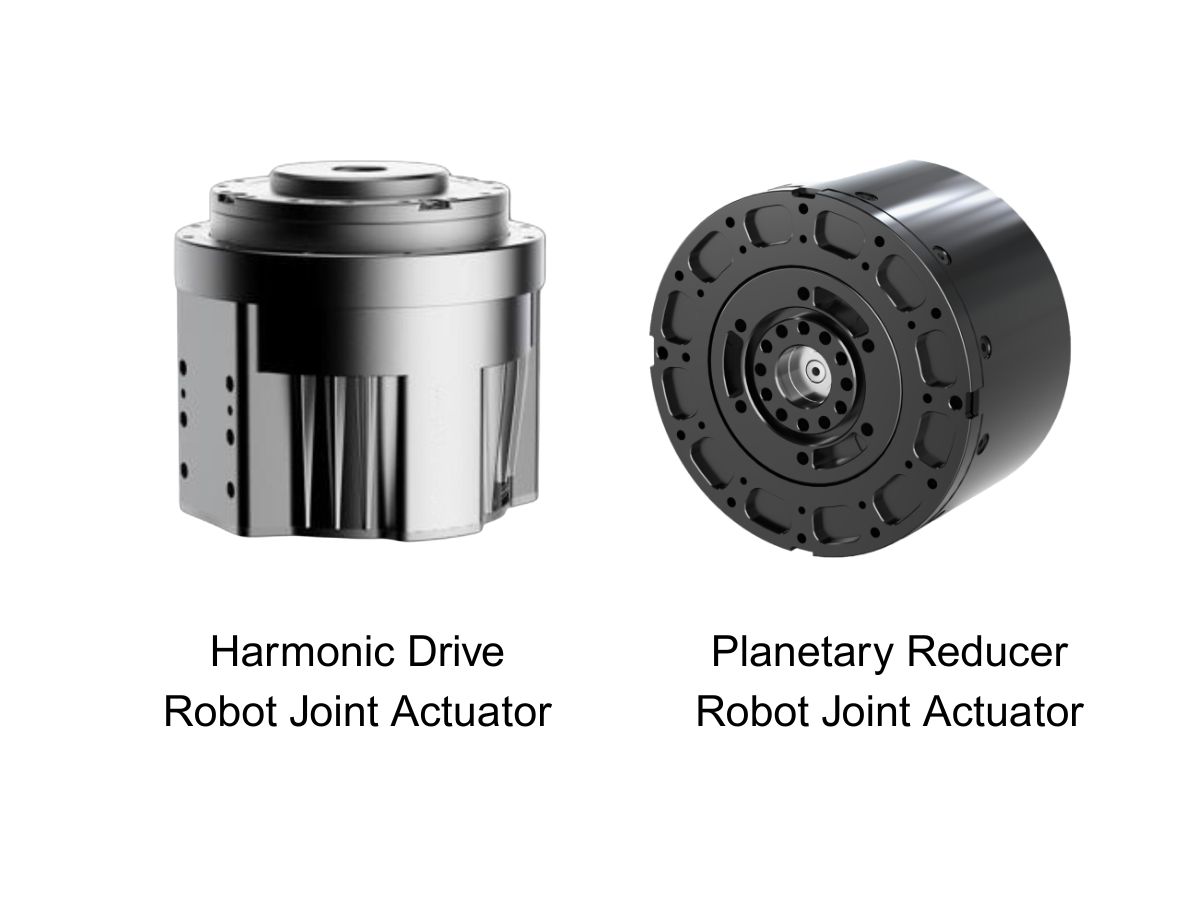
 What is robot joint actuator?How to Choose the Best Robot Rotary Joint Actuator?In core robot joint transmission solutions, planetary and harmonic rotary actuators each have their own strengths. Choosing the right type based on application requirements is essential to achieve the optimal balance between performance and cost.
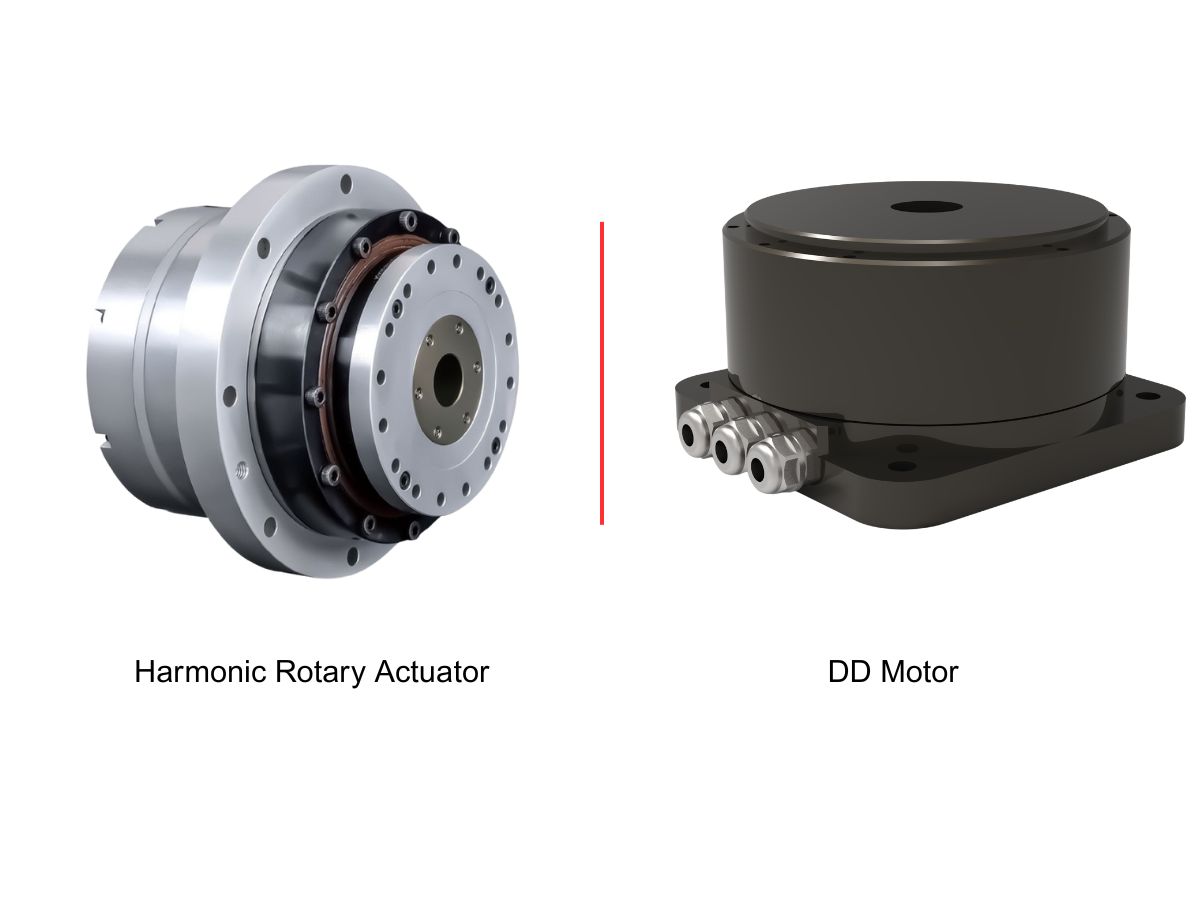
 DD Motors VS Harmonic Rotary ActuatorsThis article provides an in-depth comparison between Direct Drive (DD) motors and harmonic rotary actuators, covering their transmission principles, advantages and disadvantages, and typical application fields.
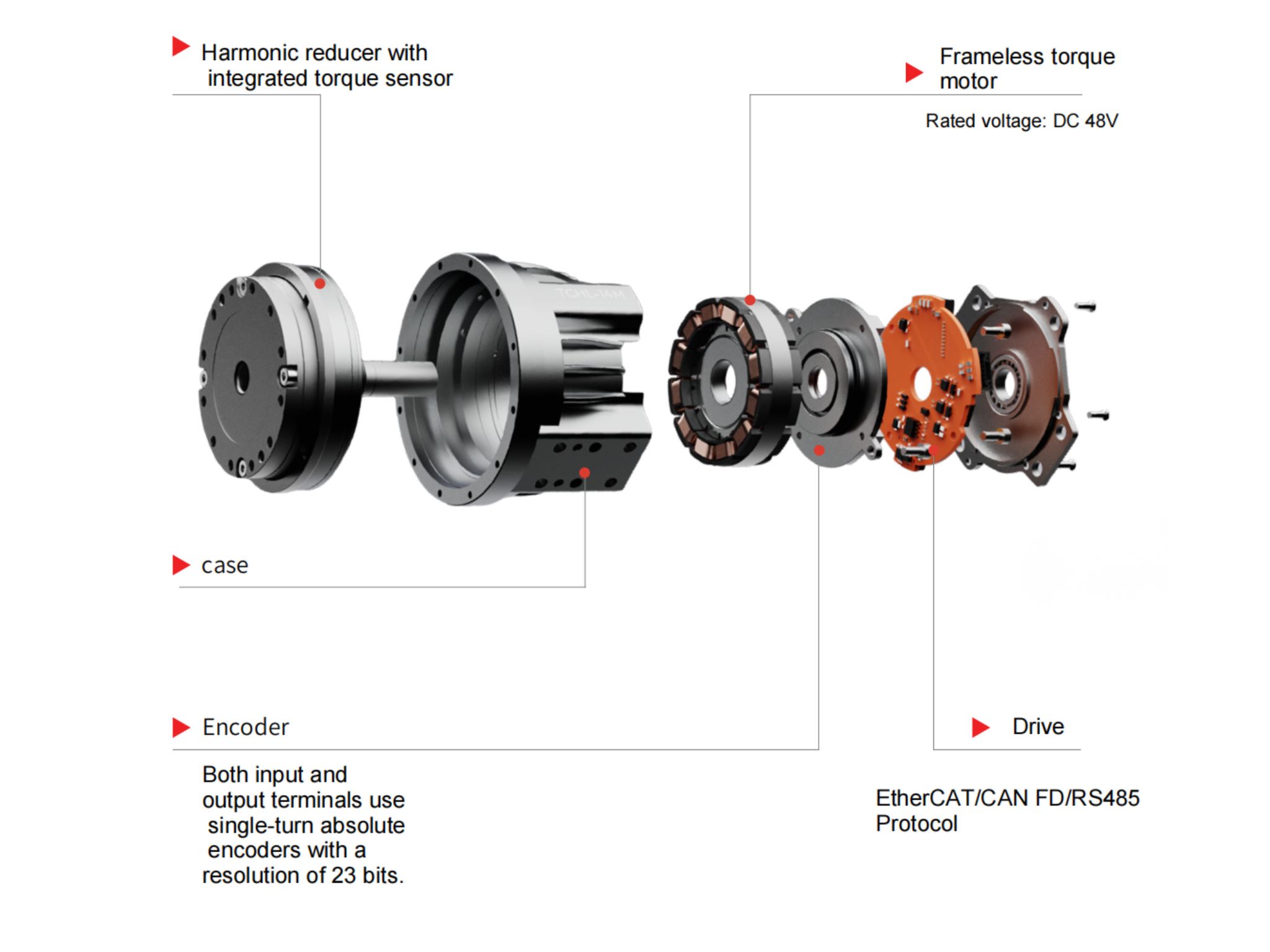
 OMG Ultra Compact Harmonic Drive Joint Module with Built-in Torque SensorHONPINE TCHL series harmonic drive joint module is a game-changing product that achieves disruptive improvements in multiple aspects such as lightweight design, integration level, and connection convenience. This article will analyze its revolutionary enhancements with you.
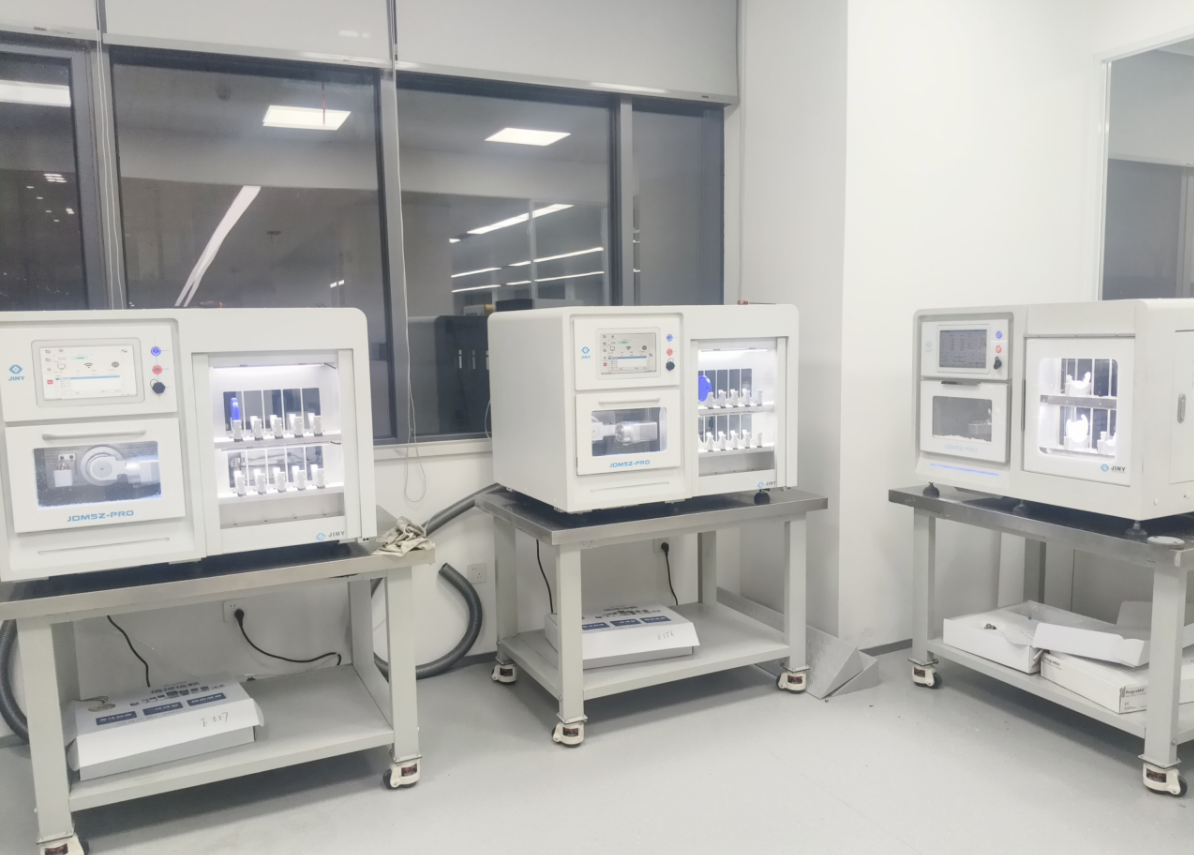
 The Role of Harmonic Drive Gears in Achieving 5–10 μm Accuracy in Dental Milling MachinesA dental milling machine is a CNC machining system used to directly process digital dental models into restorations such as crowns, bridges, veneers, inlays, and implant abutments. Dental milling machines require far higher operational accuracy and motion stability than ordinary equipment. This article explains how harmonic drive gear help dental milling machines achieve stable, continuous, and controllable operation.
 Why Are Harmonic Rotary Actuators Perfect for Medical Equipment?Harmonic rotary actuators (typically integrated systems consisting of a harmonic drive reducer, frameless torque motor, encoder, and optional brake) are regarded as key components in medical equipment. The core reason is that they simultaneously meet the most stringent medical requirements for precision, compact size, safety, and controllability. The following explanation is structured from three perspectives: technical characteristics, application scenarios, and medical value.
 High-Precision RV Reducers Perfectly Matched for Walking RobotsThe walking axis of a robot is a core component for power transmission and support. RV reducers provide extremely high rigidity, precision, and torque while maintaining a compact size and exceptional reliability, making them an ideal match for the demanding requirements of walking robot joints in terms of load capacity, impact resistance, and precision.
![]() CCMT2026: 37% Order Intent Rise from MENA & LatAm, Local After-sales Consortium Demand SurgesCCMT2026 reveals 37% order intent surge from MENA & LatAm — with 62.3% of buyers demanding Local After-sales Consortium models. Discover strategic implications for machine tool exporters and service providers.
CCMT2026: 37% Order Intent Rise from MENA & LatAm, Local After-sales Consortium Demand SurgesCCMT2026 reveals 37% order intent surge from MENA & LatAm — with 62.3% of buyers demanding Local After-sales Consortium models. Discover strategic implications for machine tool exporters and service providers.![]() CCMT2026 Closes with 37% Rise in Overseas Order IntentionsCCMT2026 drives 37% surge in overseas order intentions — discover how CNC machine tool exporters can leverage localization-based after-sales joint entities for competitive advantage.
CCMT2026 Closes with 37% Rise in Overseas Order IntentionsCCMT2026 drives 37% surge in overseas order intentions — discover how CNC machine tool exporters can leverage localization-based after-sales joint entities for competitive advantage.![]() CCMT2026 Attendance Up 22.7%, Overseas Buyers Rise SharplyCCMT2026 attendance up 22.7% — overseas buyers surge 35%+ from Germany, Mexico & Vietnam. Discover key trends in five-axis machining, harmonic drives & smart tooling.
CCMT2026 Attendance Up 22.7%, Overseas Buyers Rise SharplyCCMT2026 attendance up 22.7% — overseas buyers surge 35%+ from Germany, Mexico & Vietnam. Discover key trends in five-axis machining, harmonic drives & smart tooling. How to Select Robot Joint Modules for Arms, Torso, Head, and Legs in AGV and Humanoid RobotsRobot AGV platforms, lifting legs, folding legs, torso, head, and dual arms each have different functional requirements. Therefore, different types of harmonic gear joint modules and planetary joint modules should be selected accordingly.
 What is a DD Motor? How to Select a DD Motor?DD motor, full name Direct Drive motor, is a motor that directly drives the load without using reduction devices such as gears, belts or ball screws. Its working principle is based on high torque output, allowing it to be directly connected to the moving equipment, thereby eliminating the need for intermediate connection parts such as fasteners, gearboxes and belts.
 How to choose an RV reducer Gearbox?This article will explain the key selection points, advantages and disadvantages, brands and suppliers, as well as the differences between RV reducer gearboxes and harmonic drives.

Double Click
We provide harmonic drive reducer,planetary reducer,robot joint motor,robot rotary actuators,RV gear reducer,robot end effector,dexterous robot hand
![]() Vietnam VOSA Certification Rules for Industrial Machine Tools Take Effect May 2026Vietnam VOSA certification for industrial machine tools takes effect May 2026 — mandatory Vietnamese GUI, manuals & Type Approval. Act now to avoid port delays.
Vietnam VOSA Certification Rules for Industrial Machine Tools Take Effect May 2026Vietnam VOSA certification for industrial machine tools takes effect May 2026 — mandatory Vietnamese GUI, manuals & Type Approval. Act now to avoid port delays. FSD-32-XX-U-I-ø32
 FSD-25-XX-U-I-ø24
 FSD-20-XX-U-I
 FSD-17-XX-U-I
 FSD-14-XX-U-I
 LSG-20-XX-U-I
 FSD-32-XX-U-I
 FSD-25-XX-U-I
 FSD-20-XX-U-I
 FSD-17-XX-U-I
 FSD-14-XX-U-I