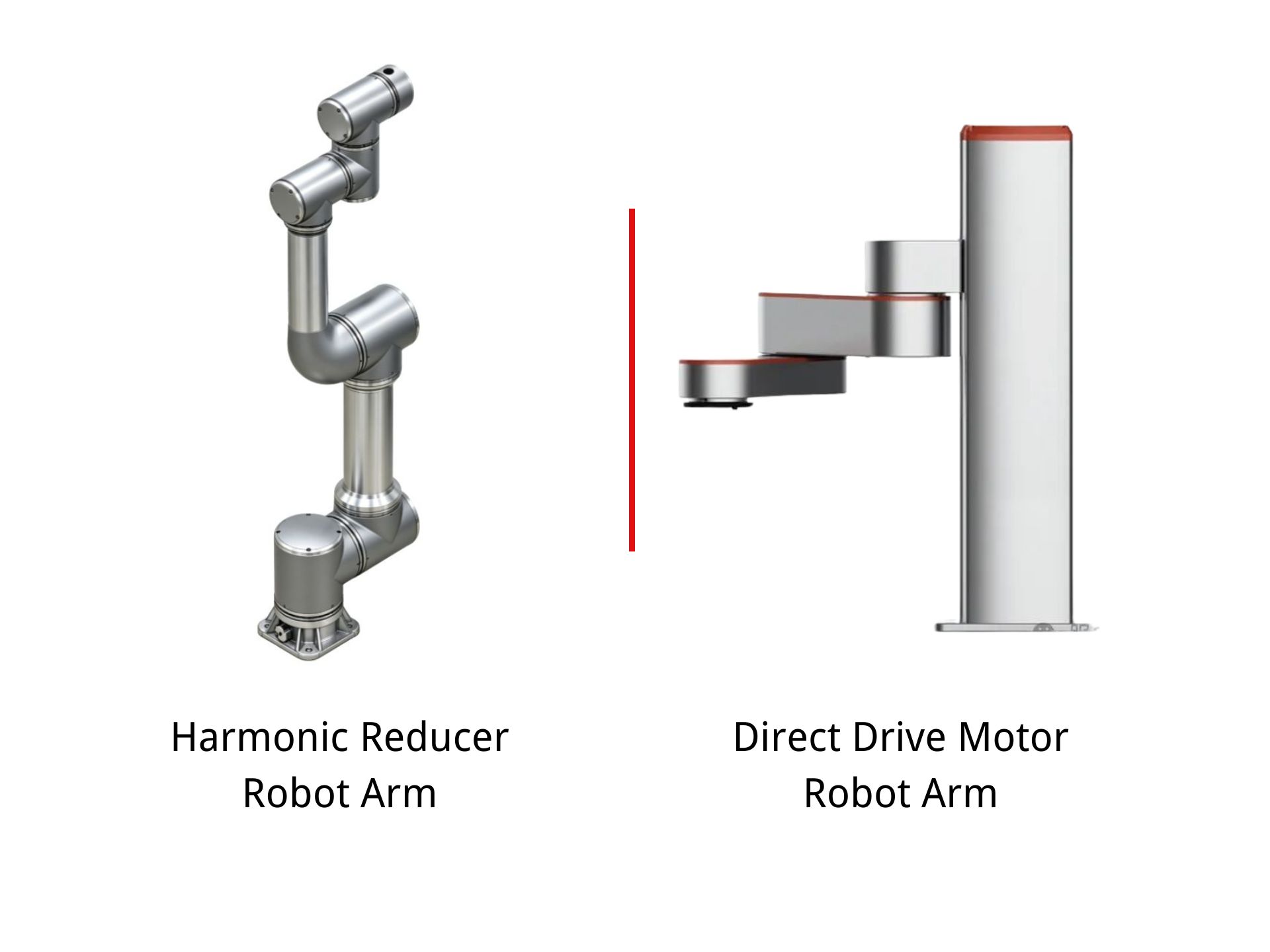
Collaborative robot joints must balance several competing requirements: high torque, compact size, low weight, precise positioning, fast response and responsive force interaction. This makes the choice of transmission architecture particularly important, especially as cobots are being designed for more dynamic motion and increasingly demanding human-robot interaction.
Two approaches are often considered for this type of application: the DD motor (direct-drive motor) and the harmonic reducer combined with a servo motor. A DD motor eliminates the mechanical reduction stage and provides a direct connection between the motor and joint output, while a harmonic reducer uses a high-ratio precision transmission to achieve high output torque from a compact motor.