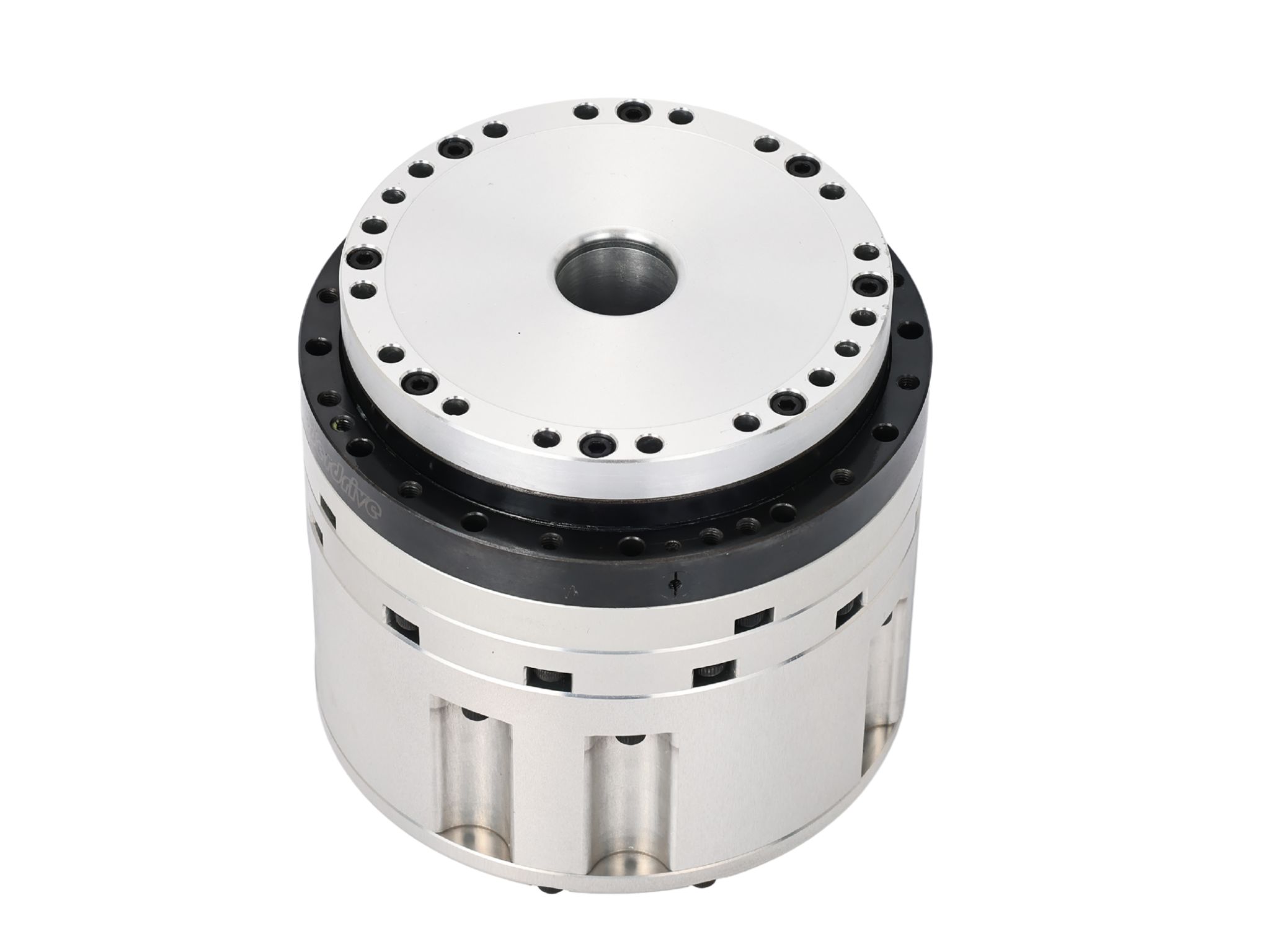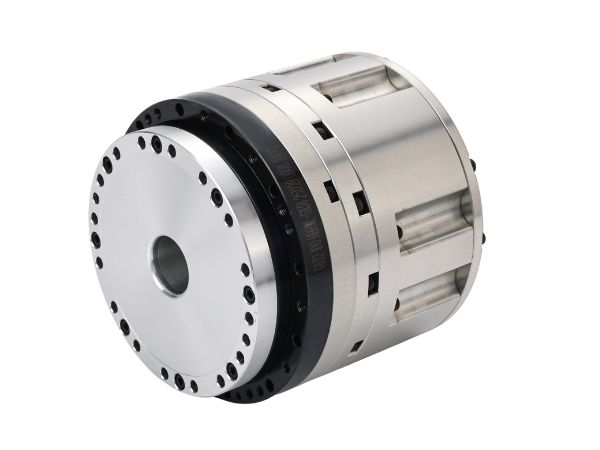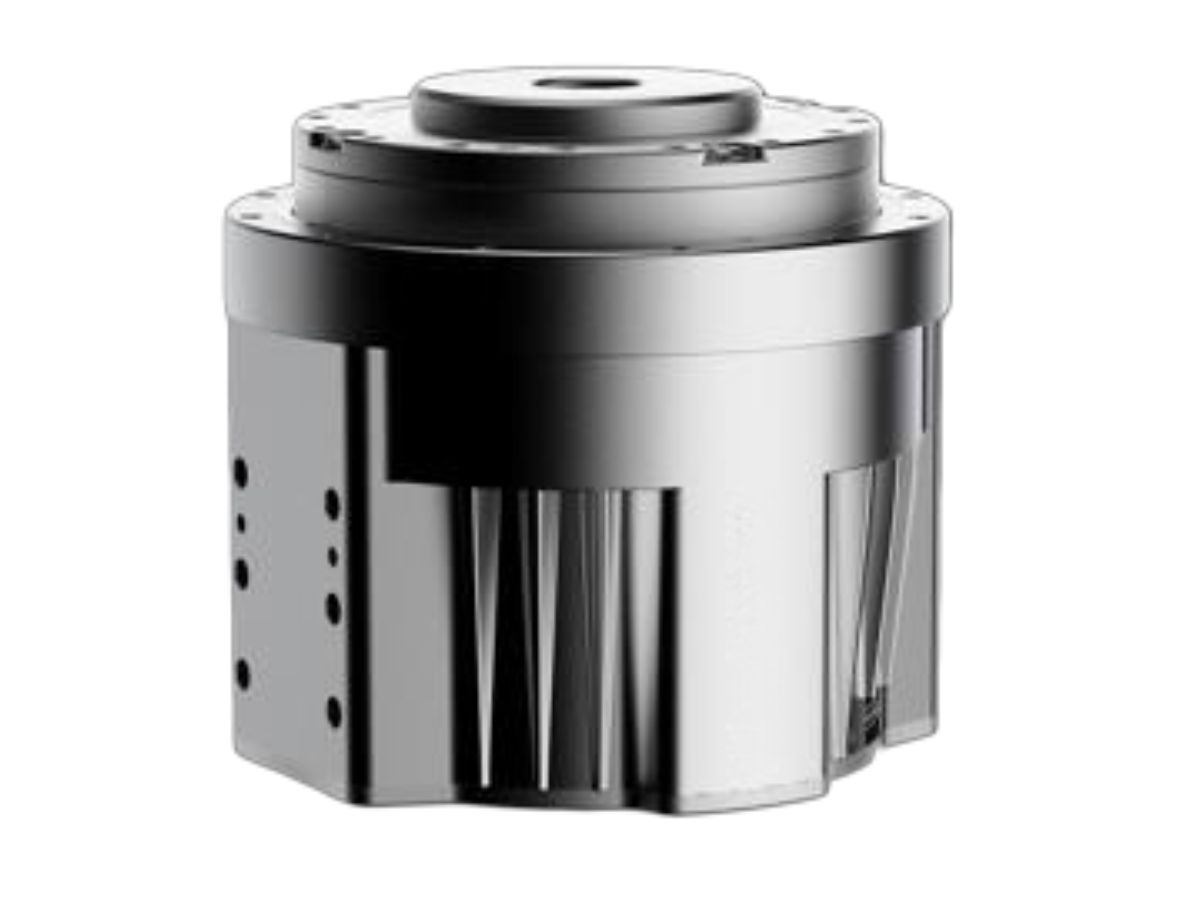









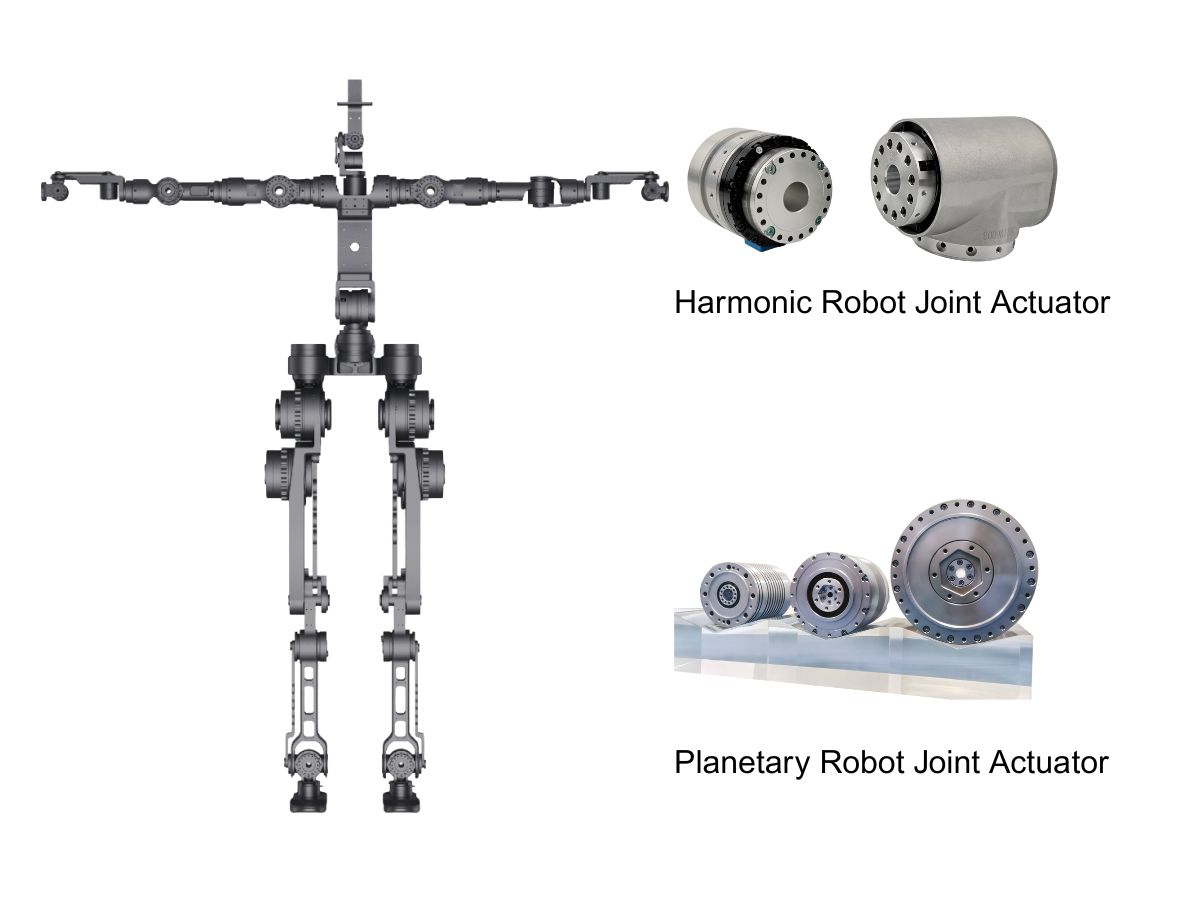
A harmonic gear robotic joint motor can be used across a wide range of robotic systems, but the actual requirements of each joint can vary significantly. Wrist, elbow, shoulder, hip, and other robot joints may require different combinations of torque, speed, precision, stiffness, size, and feedback.
Therefore, selecting a harmonic gear robot joint motor should always start with the mechanical requirements of the specific joint rather than simply looking at the overall robot type.
Industrial Robotic Arms
Industrial robotic arms typically have six or more axes, and each axis performs a different mechanical task. This makes actuator selection particularly important.
For wrist joints, a harmonic gear robotic joint motor is often an excellent choice because these axes require precise angular positioning, low backlash, compact dimensions, and relatively low moving inertia. The wrist must frequently change the orientation of a welding torch, gripper, polishing tool, machining spindle, or other end effector, so accurate and repeatable rotary motion is essential.
For elbow and forearm joints, the requirements become more demanding because the actuator must move the downstream arm structure and payload. A harmonic gear robotic joint motor can provide high torque density and low-backlash motion while keeping the arm relatively compact. The final selection should be based on the actual load inertia, required acceleration, continuous torque, and peak torque.
For large shoulder, base, or high-payload axes, the mechanical load can become substantially higher. These joints need to accelerate a large portion of the robot structure and may experience significant external forces. In heavy industrial robots, an RV reducer may also be considered when extremely high rigidity and load capacity are required. However, for compact and precision-oriented robot axes, a properly sized harmonic transmission can still provide an attractive balance between torque density, precision, and mechanical integration.
The key point is that even within one industrial robot, different axes can have very different actuator requirements.
Collaborative Robots
Collaborative robots place strong emphasis on compact size, low weight, smooth motion, and precise control.
A harmonic gear robotic joint motor is particularly suitable for compact cobot joints because harmonic transmission can provide a high reduction ratio and low backlash within a relatively small mechanical envelope.
The elbow and wrist are especially important. These joints directly affect the position and orientation of the end effector, so transmission accuracy has a direct influence on the robot's ability to perform assembly, picking, inspection, and human-robot interaction tasks.
For advanced collaborative robots, actuator selection should also consider encoder configuration, torque feedback, communication, safety functions, and control bandwidth rather than looking at gearbox specifications alone.
Humanoid Robots
Humanoid robots place some of the highest requirements on robotic joint actuators because the robot must combine compact dimensions, low weight, high torque density, accurate control, and dynamic movement.
A harmonic gear robotic joint motor can be particularly useful in the wrist and elbow, where the actuator needs to remain compact while providing precise movement and sufficient torque for manipulation.
The shoulder requires higher torque because it must accelerate the arm and any payload carried by the hand. Here, actuator size should be selected according to the arm length, downstream mass, inertia, and required acceleration rather than simply choosing the largest available motor.
For hip, knee, and ankle joints, the requirements become even more demanding because these joints are directly involved in supporting body weight and generating dynamic movement. High torque density, torsional rigidity, thermal performance, encoder feedback, and mechanical strength all become important.
For lightweight humanoid designs, harmonic gear robotic joint motors can provide a compact solution for achieving high reduction ratios, low backlash, and high torque density while keeping joint mass under control.
Precision Assembly Robots
Precision assembly is one of the applications where the low-backlash characteristics of harmonic transmission become particularly valuable.
Robots used for electronic assembly, connector insertion, optical component handling, precision positioning, and small-part manipulation often need to make repeated movements with very small angular errors.
In these applications, the wrist and orientation joints are especially sensitive to transmission backlash. A small amount of angular play at the joint can translate into a larger positional error at the end effector, particularly when the robot has a long arm.
A harmonic gear robotic joint motor with low backlash and high-resolution feedback can help improve repeatability and trajectory accuracy while maintaining a compact joint structure.
Semiconductor and Electronics Automation
Semiconductor and electronics manufacturing equipment often has strict requirements for positioning accuracy, repeatability, cleanliness, compactness, and controlled motion.
Robotic handling mechanisms may need to move wafers, trays, components, inspection systems, or other precision parts with highly repeatable rotary positioning.
For these applications, the robot joint does not necessarily need extremely high output torque. Instead, low backlash, precise feedback, stable motion, and compact installation can become the more important factors.
This makes harmonic gear robot joint motors particularly suitable for compact robotic positioning axes used in precision automation.
Vision-Guided Robots
Vision-guided robots rely on cameras and sensors to determine the position of objects and continuously adjust their motion.
However, accurate vision feedback cannot compensate for excessive mechanical play inside the robot joint.
If the controller commands a small angular correction but the transmission contains significant backlash, part of the commanded movement may be lost before the output shaft responds. This can reduce the accuracy of visual alignment and object manipulation.
A low-backlash harmonic gear robotic joint motor can therefore complement vision-based control by providing predictable and repeatable rotary motion.
This is particularly useful for applications such as precision picking, inspection, assembly, sorting, and camera-guided manipulation.
Robotic Welding
Robotic welding requires stable positioning and repeatable tool orientation throughout the welding trajectory.
For conventional arc welding, the robot wrist needs to continuously control the orientation of the welding torch while the larger arm joints handle the weight of the arm and welding equipment.
A harmonic gear robotic joint motor is particularly attractive for the wrist and other precision-oriented axes because low backlash helps maintain accurate torch orientation during repeated direction changes.
In laser welding systems, the requirements can become even more sensitive because small angular errors in an optical mechanism can influence the position of the laser beam.
For this reason, compact harmonic rotary motion can also be used in precision laser welding mechanisms where accurate rotary positioning and dynamic response are required.
Medical and Laboratory Robots
Medical and laboratory robots generally prioritize precise positioning, smooth motion, compact mechanical structures, and repeatability.
Examples include laboratory automation arms, sample handling systems, medical positioning mechanisms, inspection equipment, and robotic assistance systems.
Many of these mechanisms operate with relatively small loads but require controlled and repeatable movement.
A harmonic gear robotic joint motor can provide the required reduction ratio and positioning capability while keeping the actuator compact.
For laboratory automation in particular, a compact actuator can help reduce the size of the entire mechanism, which is important when multiple motion axes must be integrated into a limited installation space.
AGV and Mobile Manipulators
Mobile manipulators need to balance robot payload, arm performance, and overall vehicle weight.
Because every additional kilogram in the robotic arm can affect the mobile platform's energy consumption and dynamic stability, compact and high-torque-density actuators can be valuable.
Harmonic gear robotic joint motors can be used in the wrist, elbow, and other arm joints where low backlash, compact size, and accurate positioning are important.
For heavier mobile manipulators, the actuator size should be selected according to the payload, arm reach, acceleration, and joint inertia.
Inspection and Precision Positioning Systems
Robotic inspection systems often combine cameras, sensors, optical equipment, or measurement tools with multi-axis positioning mechanisms.
In these systems, the joint does not simply need to move. It must position the sensor or optical component accurately and repeatedly.
A harmonic gear robotic joint motor can provide a compact rotary axis with low backlash and precise feedback, making it suitable for inspection, optical alignment, measurement, and other precision positioning applications.
This is particularly useful when the robot must repeatedly return to the same angular position or perform small angular corrections.
Match the Harmonic Joint Motor to the Robot Joint
The application itself is only the first step. The final actuator should always be selected according to the actual requirements of each joint.
For example, the same robotic arm may use different actuator sizes for its wrist, elbow, and shoulder:
Wrist → Compact, low-backlash harmonic joint motor
Elbow → Higher-torque harmonic joint motor with sufficient torsional rigidity
Shoulder → High-torque, high-rigidity harmonic joint motor
The selection should then be verified against:
Required torque → Load inertia → Speed → Acceleration → Backlash → Torsional rigidity → Encoder → Thermal performance → Installation space
This approach allows robot manufacturers to avoid both undersizing and unnecessary oversizing.
A robotic joint should not be selected simply because it has the highest torque or the largest diameter. The goal is to find the harmonic gear robotic joint motor that provides the required performance while maintaining an appropriate balance between torque, precision, weight, size, and dynamic response.
For HONPINE, this means developing different robotic joint actuator configurations for different mechanical requirements rather than treating every robot joint as the same application.
- What is robot joint actuator?How to Choose the Best Robot Rotary Joint Actuator?Apr 14, 2026In core robot joint transmission solutions, planetary and harmonic rotary actuators each have their own strengths. Choosing the right type based on application requirements is essential to achieve the optimal balance between performance and cost.
- DD Motors VS Harmonic Rotary ActuatorsApr 01, 2026This article provides an in-depth comparison between Direct Drive (DD) motors and harmonic rotary actuators, covering their transmission principles, advantages and disadvantages, and typical application fields.
- OMG Ultra Compact Harmonic Drive Joint Module with Built-in Torque SensorJan 27, 2026HONPINE TCHL series harmonic drive joint module is a game-changing product that achieves disruptive improvements in multiple aspects such as lightweight design, integration level, and connection convenience. This article will analyze its revolutionary enhancements with you.
- How to Choose a Small Harmonic Actuator?Sep 20, 2026HONPINE Series 11 small harmonic actuators provide a compact, high-performance rotary motion solution for precision automation applications. Available with hollow or solid shafts, 48V or 220V options, optional brakes, absolute encoders, and different reduction ratios, the Series 11 is designed for applications requiring compact dimensions, controlled torque, and precise positioning.
- How to Choose a Wheel Motor for a Heavy-Duty AGV? Key Challenges from Dynamic Loads to 120-Ton AGV Drive Wheel SystemsSep 20, 2026Selecting a Heavy-Duty AGV Wheel Motor is more than matching motor power or rated torque to the vehicle's payload. As AGVs move from conventional material handling to multi-ton and even 120-ton-class applications, the drive wheel system must handle dynamic loads, acceleration, braking, turning forces, traction, and long-term mechanical stress. The actual challenge lies in matching wheel load capacity, wheel-end torque, gearbox performance, steering architecture, suspension, and chassis design under real operating conditions. This article examines the key challenges of Heavy-Duty AGV Wheel Motor selection and explains how Steering Drive Wheels and Differential Drive Wheels can be evaluated for different heavy-duty AGV applications.